Gold on Pause Awaiting the Fed’s Verdict

By RoboForex Analytical Department

Gold is trading in a holding pattern near 4,200 USD per ounce on Tuesday, as markets remain in a state of suspended animation ahead of the Federal Reserve’s policy decision.

While a 25-basis-point rate cut is almost fully priced in, investors will scrutinise the updated economic projections and Chair Jerome Powell’s subsequent press conference for clarity on the policy trajectory into 2026 and beyond.

Market-implied probabilities currently assign an 87% likelihood to a cut today. However, expectations for future easing have moderated, with just two rounds of cuts now anticipated for next year, down from three a week ago.

Before the Fed announcement, traders will also assess the latest JOLTS job openings data for additional labour market insights.

In a supportive development for the metal, the People’s Bank of China expanded its gold reserves for the 13th consecutive month, bringing its total holdings to 74.12 million troy ounces.

Technical Analysis: XAU/USD

H4 Chart:

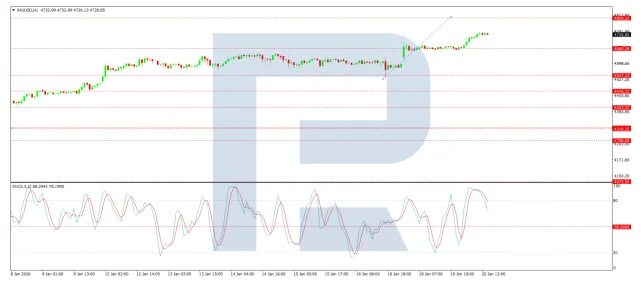
On the H4 chart, XAU/USD continues to consolidate in a sideways range following its late-November advance. The price is currently trading below the middle Bollinger Band, suggesting a gradual loss of bullish momentum. The upper band has flattened, confirming the consolidation phase within the 4,163–4,240 USD zone.

Support at 4,163 USD remains critical, with the price having rebounded from this level multiple times in recent sessions. A decisive break below would open the way to the next significant support near 4,136 USD, which aligns with the lower Bollinger Band.

Resistance is clearly defined at 4,240 USD. A sustained move above this level would provide the first strong signal for a renewed upward move, initially targeting 4,265 USD.

H1 Chart:

On the H1 chart, gold shows a near-term bearish bias after failing to break above resistance at 4,240 USD. The price is consistently positioned below the middle Bollinger Band, with the lower band reinforcing the selling pressure. Local support has solidified around 4,163 USD, a level tested repeatedly in recent trading.

The Stochastic oscillator remains near oversold territory, indicating weak momentum, though a clear reversal signal has yet to emerge.

Should buyers defend the 4,163 USD support and propel the price back above the middle Bollinger Band, a recovery toward 4,200 USD and later 4,240 USD would become likely. Conversely, a breakdown below 4,163 USD would signal a deeper corrective move toward 4,136–4,100 USD.

Conclusion

Gold remains in a state of cautious equilibrium as traders await the Fed’s policy signal and updated economic forecasts. While underlying physical demand – particularly from central banks – continues to provide a supportive floor, the technical picture reflects consolidation with a slight near-term bearish tilt.


Disclaimer:

Any forecasts contained herein are based on the author’s particular opinion. This analysis may not be treated as trading advice. RoboForex bears no responsibility for trading results based on trading recommendations and reviews contained herein.

What 38 million obituaries reveal about how Americans define a ‘life well lived’

By Stylianos Syropoulos, Arizona State University; David Markowitz, Michigan State University, and Kyle Fiore Law, Arizona State University 

Obituaries preserve what families most want remembered about the people they cherish most. Across time, they also reveal the values each era chose to honor.

In a study published in the journal Proceedings of the National Academy of Sciences, we analyzed 38 million obituaries of Americans published from 1998 to 2024. We identified the values families most often highlight, and how those values shift across generations, regions and major historical events.

Specifically, working with psychologists Liane Young and Thomas Mazzuchi, we examined the language used on Legacy.com, an online platform where families often post obituaries and share memories of loved ones.

During their lifetime, most people tend to be guided by a small set of broad values like caring for others, honoring tradition, keeping loved ones safe and seeking personal growth. To understand how these values showed up in remembrance, we used text-analysis tools built on curated lists of everyday words people use when talking about those themes.

By analyzing the words that appeared again and again in memorials, we could see which values communities chose to emphasize when looking back on the lives of their loved ones, and how those patterns changed over time. Because the dataset included 38 million obituaries, the analysis ran on a supercomputer.

Across nearly 30 years of obituaries, words related to the value “tradition” appeared most often – many tributes described religious participation and enduring customs. Words related to the value “benevolence” – caring for the welfare of others – were also consistently prominent. In fact, tradition and benevolence formed the dominant value profile across the dataset: They appeared in more than 70% of the obituaries. By contrast, words related to values like “achievement” and “power” appeared far less often.

Historical events did leave a mark. After the attacks of Sept. 11, 2001, the language families used to remember loved ones shifted compared with the period just before the attacks – and those shifts persisted for at least a year. Words related to the value “security” – including terms like “surviving,” “health” and “order” – showed up less often. At the same time, families used more language related to values like “benevolence” and “tradition.” Terms like “caring,” “loyal” and “service” showed up more often. These changes were especially strong in New York, where the attacks had the most direct impact.

COVID-19, however, produced the most dramatic shifts. Beginning in March 2020, benevolence-related language – including terms like “love,” “sympathy” and “family” – declined sharply, and hasn’t been the same since. Tradition-related language – terms like “service,” “faith” and “heritage” – initially declined as well, then rose above baseline levels during later stages of the pandemic.

These changes show that collective disruptions impact the moral vocabulary families use when commemorating loved ones. They shift what it means to have lived a good life.

We also saw differences that reflect stereotypes about gender and age. Obituaries for men contained more language linked to achievement, conformity and power. Meanwhile, obituaries for women contained more language associated with benevolence and enjoying life’s pleasures.

Older adults were often remembered more for valuing tradition. Younger adults, on the other hand, were often remembered more for valuing the welfare of all people and nature, and for being motivated to think and act independently. Value patterns in men’s obituaries shifted more across the lifespan than those in women’s. In other words, the values highlighted in younger and older men’s obituaries differed more from each other, while women’s value profiles stayed relatively consistent across age.

Why it matters

The most visited parts of print newspapers and online memorial sites, obituaries offer a window into what societies value at different points in time.

This study contributes to the broader scientific understanding of legacy. People often hold strong preferences about how they want to be remembered, but far less is known about how they actually are remembered, in part because large-scale evidence about real memorials is rare. Our analysis of millions of obituaries helps fill that gap.

What’s next

Obituaries allow researchers to trace cultural values across time, geography and social groups. Future work can examine differences across race and occupation, as well as across regions. It could also look to earlier periods using historical obituary archives, such as those preserved in older newspapers and local records.

Another direction is to examine whether highlighting how often kindness shows up in obituaries could inspire people to be more caring in daily life.

Understanding what endures in memory helps clarify what people consider meaningful; those values shape how they choose to live.

The Research Brief is a short take on interesting academic work.The Conversation

About the Author: 

Stylianos Syropoulos, Assistant Professor of Psychology, Arizona State University; David Markowitz, Associate Professor of Communication, Michigan State University, and Kyle Fiore Law, Postdoctoral Research Scholar in Sustainability, Arizona State University

This article is republished from The Conversation under a Creative Commons license. Read the original article.


How keeping down borrowing costs for mortgages and other loans is built into the Fed’s ‘dual mandate’

By Arabinda Basistha, West Virginia University 

What’s the point of monetary policy?

For most of us, the main impact tends to be how much we have to pay to borrow to buy a house or car. But for the Federal Reserve, the purpose of its monetary policy is mandated by Congress.

This is widely known as the Federal Reserve’s dual mandate: promoting maximum employment and stable prices. The Fed itself refers to these two objectives regularly in its Federal Open Market Committee statements announcing its monetary policy decisions.

A third objective of monetary policy, however, is less well-known: moderate long-term interest rates.

This “third mandate” was a big news story in September 2025, when the Trump administration’s newly appointed Fed governor, Stephen Miran, referred to it in his testimony before the Senate Banking Committee. Financial markets paid close attention to this aspect of the testimony because the comments suggested that Miran and other presidential appointees may focus on this third mandate – and on driving down long-term borrowing costs – more than the Fed has in the recent past.

I’ve been closely following how the Fed conducts monetary policy for many years. Miran is correct that Congress has tasked the U.S. central bank with all three of these objectives – but that’s not the whole story. In fact, none of these goals were originally spelled out in the act that set up the Fed over a century ago.

Since then, the Fed’s goals have been revised several times – typically in response to a crisis.

The Fed’s shifting goals

The original purpose of the Fed, as explained in the Federal Reserve Act of 1913, was to provide flexibility in the nation’s currency supply and to supervise the U.S. banking system. The current dual mandate was not part of the original goals of the Fed.

Instead, its core goal was to reduce the frequent banking panics that were costly to the economy and sharply increased interest rates.

The first big change in the goals, in response to the Great Depression, was the Employment Act of 1946 that stated the goal of federal government policy – and, therefore that of the Fed – is to “promote maximum employment, production and purchasing power.”

This is where the two goals of the dual mandate first began to emerge, with purchasing power implying the Fed needed to keep inflation low.

Following the macroeconomic instability of the 1970s with high unemployment and high inflation, Congress enacted the Federal Reserve Reform Act of 1977 that formalized the Fed mandate: “maintain long run growth of the monetary and credit aggregates commensurate with the economy’s long run potential to increase production, so as to promote the goals of maximum employment, stable prices, and moderate long-term interest rates.”

In other words, Congress gave the Fed three mandates to follow in monetary policy.

What happened to the third mandate?

So why doesn’t the Fed still talk about that third mandate?

Part of the answer is that moderate long-term interest rates are a natural by-product of successfully managing the other two.

In pursuit of low inflation and maximum employment, the Fed primarily uses a short-term interest rate, known as the Federal Funds rate. When journalists report that the Fed raised or lowered interest rates, this refers to the so-called target rate that the central bank uses to control the Fed Funds rate. For example, the current target rate is a range of 3.75% to 4%, while the effective Fed Funds rate is 3.89%. Banks use the funds rate as the cost other banks must pay to borrow reserve funds for one day.

However, most of the interest rates that matter to people, businesses and the economy at large have much longer terms – such as five, 10 or 30 years. Examples include mortgages, car loans and corporate bonds. The Fed does not directly control these longer-term interest rates, which are set by financial markets.

But studies have found that the Fed’s policy decisions can influence long-term rates, primarily due to “expectations theory.” That theory argues that long-term rates reflect financial markets’ expectations of future short-term rates.

So if markets believe the Fed has inflation under control, they tend to keep long-term rates on mortgages and everything else low because they don’t expect the Fed will increase its target rate. If inflation is running high, long-term rates tend to rise because markets expect the Fed to have to lift its short-term rate to deal with it. But if unemployment is running high, long-term rates tend to fall because markets expect the Fed to reduce its short-term rate to deal with that.

Longer-term rates are, therefore, not independent of the dual mandate of the Fed. They are often an outcome of how successfully the Fed is meeting the dual mandate of full employment and stable prices currently and in the future.

As a result, the Fed doesn’t typically talk about this third mandate.

Promoting economic stability

That said, the Fed has, at times, although very rarely, influenced long-term rates directly.

For example, in late 2010, following the Great Recession of 2007-2009, the Fed purchased billions of dollars’ worth of long-term Treasury bonds and other securities – a program known as “QE2” for quantitative easing – in an effort to lower the cost of borrowing for consumers and businesses. The Fed did something similar in 1961 with Operation Twist, similarly with an aim to support the U.S. economy by reducing long-term borrowing costs.

But even this phase of quantitative easing was primarily about meeting the Fed’s dual mandate. More specifically, since inflation was already low, the Fed was trying to boost hiring in the wake of the Great Recession.

The Fed is keenly aware that longer-term interest rates that are not aligned with its dual mandate can be an important source of instability in the economy. A modern central bank’s primary goal is to promote stability in the economy, so longer-term interest rates should be at levels that are appropriate to ensure current and future economic stability.The Conversation

About the Author:

Arabinda Basistha, Associate Professor of Economics, West Virginia University

This article is republished from The Conversation under a Creative Commons license. Read the original article.


Netflix-Warner deal would drive streaming market further down the road of ‘Big 3’ domination

By David R. King, Florida State University 

When it comes to major U.S. industries, three tends to be the magic number.

Historically, auto manufacturing was long dominated by Chrysler, Ford and General Motors – the so-called “Big Three,” which at one point controlled over 60% of the U.S. auto market. A dominant trio shows up elsewhere, too, in everything from the U.S. defense market – think Lockheed Martin, Boeing and Northrup Grumman – to cellphone service providers (AT&T, T-Mobile and Verizon). The same goes for the U.S. airline industry in which American, Delta and United fly higher than the rest.

The rule of three also applies to what Americans watch; the glory days of television was dominated by three giants: ABC, CBS and NBC.

Now, in the digital age, we are rapidly moving to a “Big Three” dominating streaming services: Netflix, Amazon and Disney.

The latest step in that process is Netflix’s plan to acquire Warner Bros. for US$72 billion. If approved, the move would solidify Netflix as the dominant streaming platform.

When streams converge

Starting life as a mail DVD subscription service, Netflix moved into streaming movies and TV shows in 2007, becoming a first-mover into the sphere.

Being an early adopter as viewing went from cable and legacy to online and streaming gave Netflix an advantages in also developing support technology and using subscriber data to create new content.

The subsequent impact was Netflix became a market leader, with quarterly profits now far exceeding its competitors, which often report losses.

Today, even without the Warner Bros. acquisition, Netflix has a dominant global base of over 300 million subscribers. Amazon Prime comes second with roughly 220 million subscribers, and Disney – which includes both Disney+ and Hulu – is third, with roughly 196 million subscribers. This means that between them, these three companies already control over 60% of the streaming market.

Netflix’s lead would only be reinforced by the proposed deal with Warner Bros., as it would add ownership of Warner subsidiary HBO Max, which is currently the fourth-biggest streamer in the U.S. with a combined 128 million subscribers. While some of them will overlap, Netflix is likely to still gain subscribers and better retain them with a broader selection of content.

Netflix’s move to acquire Warner Bros. also follows prior entertainment industry consolidation, driven by a desire to control content to retain streaming service subscribers.

In 2019, Disney acquired 21st Century Fox for $71.3 billion. Three years later, Amazon acquired Metro-Goldwyn-Mayer for $8.5 billion.

Should the Netflix deal go through, it would continue this trend of streaming consolidation. It would also leave a clear gap at the top between the emerging Big Three and other services, such as Paramount+ with 79 million subscribers and Apple TV+, which has around 45 million. Paramount+ was also a rival bidder for Warner Bros., and while it is protesting Netflix’s deal for Warner Bros., it likely will need to pursue other options to remain relevant in streaming.

Why industries come in threes

But why do industries converge to a handful of companies?

As an expert on mergers, I know the answer comes down to market forces relating to competition, which tends to drive consolidation of an industry into three to five firms.

From a customer perspective, there is a need for multiple options. Having more than one option avoids monopolistic practices that can see prices fixed at a higher rate. Competition between more than one big player is also a strong incentive for additional innovation to improve a product or service.

For these reasons, governments – in the U.S. and over 100 other countries – have antitrust laws and practices to avoid any industry displaying limited competition.

However, as industries become more stable, growth tends to slow and remaining businesses are forced to compete over a largely fixed market. This can separate companies into industry leaders and laggards. While leaders enjoy greater stability and predictable profits, laggards struggle to remain profitable.

Lagging companies often combine to increase their market share and reduce costs.

The result is that consolidating industries quite often land on three main players as a source of stability – one or two risks falling into the pitfalls of monopolies and duopolies, while many more than three to five can struggle to be profitable in mature industries.

What’s ahead for the laggards

The long-term viability of companies outside the “Big Three” streamers is in doubt, as the main players get bigger and smaller companies are unable to offer as much content.

A temporary solution for smaller streamers to gain subscribers is to offer teaser rates that later increase for people that forget to cancel until companies take more permanent steps. But lagging services will also face increased pressure to exit streaming by licensing content to the leading streaming services, cease operations or sell their services and content.

Additionally, companies outside the Big Three could be tempted to acquire smaller services in an attempt to maintain market share.

There are already rumors that Paramount, which was a competing bidder for Warner Bros., may seek to acquire Starz or create a joint venture with Universal, which owns Peacock.

Apple shows no immediate plan of discontinuing Apple TV+, but that may be due to the company’s high profitability and an overall cash flow that limits pressures to end its streaming service.

Still, if the Netflix-Warner Bros. deal completes, it will likely increase the valuation of other lagging streaming services due to increased scarcity of valuable content and subscribers. This is due to competitive limits that restrict the Big Three from getting bigger, making the combination of smaller streaming services more valuable.

This is reinforced by shareholders expecting similar or greater premiums from prior deals, driving the need to pay higher prices for the fewer remaining available assets.

The cost to consumers

So what does this all mean for consumers?

I believe that in general, consumers will largely not be impacted when it comes to the overall cost of entertainment, as inflationary pressures for food and housing limit available income for streaming services.

But where they access content will continue to shift away from cable television and movie theaters.

Greater stability in the streaming industry through consolidation into a Big Three model only confirms the decline in traditional cable.

Netflix’s rationale in acquiring Warner Bros. is likely to enable it to offer streaming at a lower price than the combined price of separate subscriptions, but more than Netflix alone.

This could be achieved through additional subscription tiers for Netflix subscribers wanting to add HBO Max content. Beyond competition with other members of the “Big Three,” another reason why Netflix is unlikely to raise prices significantly is that it will likely commit to not doing so in order to get the merger approved.

Netflix’s goal is to ensure it remains consumer’s first choice for streaming TV and films. So while streaming is fast becoming a Big Three industry, Netflix’s plan is to remain at the top of the triangle.The Conversation

About the Author: 

David R. King, Higdon Professor of Management, Florida State University

This article is republished from The Conversation under a Creative Commons license. Read the original article.


Canadian dollar hits 2‑month high. Mexican peso rises on carry trade appeal

By JustMarkets 

By Friday, the Dow Jones (US30) rose by 0.22% (weekly +0.79%), the S&P 500 (US500) gained 0.19% (weekly +0.85%), and the Nasdaq (US100) closed 0.43% higher (weekly +1.82%). Support came from fresh data: the PCE Price Index rose 0.3% in September vs. August, and the University of Michigan Consumer Sentiment Index improved for the first time in five months. This strengthened expectations of a Fed rate cut of 25 bp, with probability around 87%. Large‑cap stocks mostly rose: Amazon 0.7%, Alphabet 1.3%, Meta 0.7%, Broadcom 2.7%, Tesla 0.4%, while Apple was unchanged and Nvidia fell 0.2%.

The Canadian dollar strengthened above 1.39 per USD, reaching a two‑month high, supported by strong labor market data and US dollar weakness. November unemployment unexpectedly fell to 6.5%, with the number of unemployed down 80,000 to 1.5 million, signaling an easing domestic slowdown. This outcome increased the likelihood of a Bank of Canada pause after October’s rate cut, while expectations of a near‑certain Fed cut in December and further easing in 2026 pressured the dollar and supported CAD.

Mexican peso firmed to 18.16 per USD, its highest since July 2024, amid near‑certain expectations of a Fed rate cut in December, which weakened the dollar and boosted EM carry trade appeal. Additional support came from a stable labor market (unemployment at 2.6%), an October trade surplus, and Banxico’s lowered inflation expectations, maintaining positive real rates and attracting capital inflows.

European equities traded mixed on Friday, but posted a second week of gains. Germany’s DAX (DE40) rose by 0.61% (weekly +1.25%), France’s CAC 40 (FR40) fell by 0.09% (weekly +0.45%), Spain’s IBEX 35 (ES35) dropped 0.35% (weekly +2.23%), and the UK’s FTSE 100 (UK100) closed negative 0.45% (weekly -0.55%). Automakers Mercedes‑Benz, Volkswagen, and BMW showed solid gains again. Defense firms Rheinmetall and Leonardo ended the week higher amid fading expectations of a quick end to the war in Ukraine.

Silver prices rose above $58, nearing all‑time highs, supported by expectations of a Fed rate cut and renewed investor interest. Slowing private‑sector hiring and corporate layoff data reinforced confidence in easing. Additional drivers included low exchange inventories, active ETF accumulation, a projected 2025 supply deficit, and strong demand from solar and other green industries.

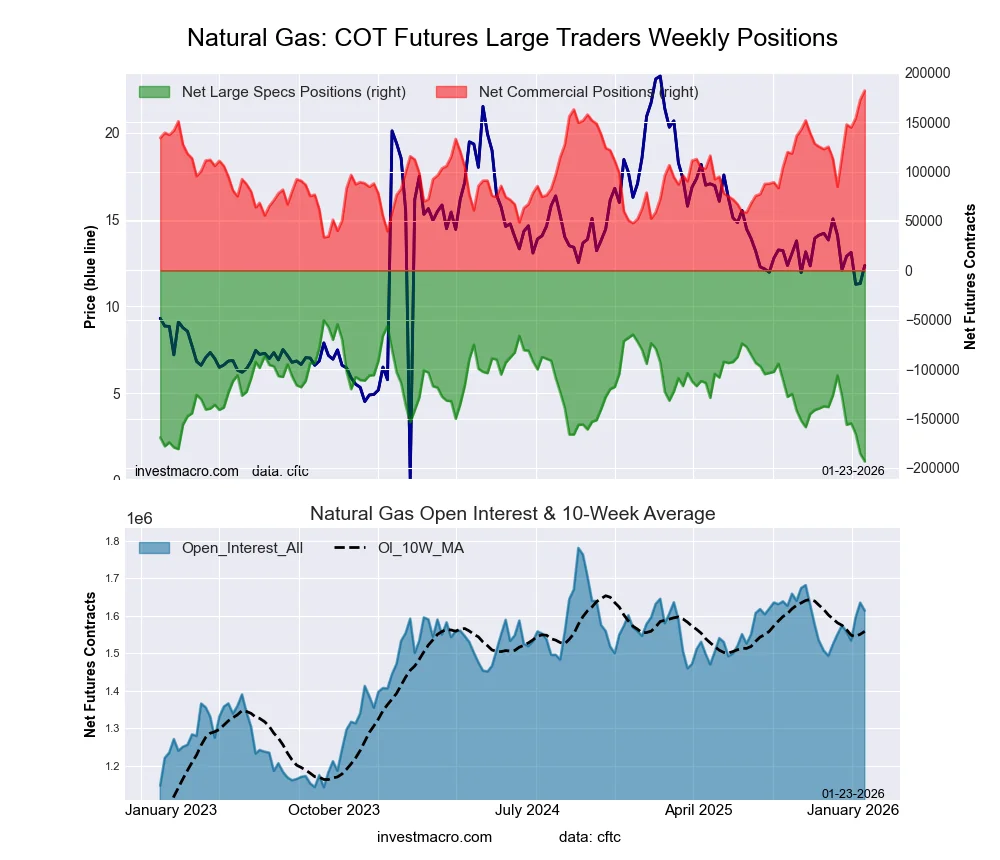
The natural gas prices exceeded $5/MMBtu, hitting a three‑year high and rising 70% from mid‑October lows amid surging export demand. European countries continued to reduce reliance on Russian gas, while US LNG exports in November rose 40% to 10.7 million tons. Further support came from cold‑winter expectations in the US Northeast and Great Lakes, while EIA data showed utilities withdrew 12 bcf of gas in the week ending November 21, slightly above expectations.

Asian equities mostly rose last week. Japan’s Nikkei 225 (JP225) gained 0.34%, China’s FTSE China A50 (CHA50) rose by 0.91%, Hong Kong’s Hang Seng (HK50) added 0.54%, and Australia’s ASX 200 (AU200) gained 0.24% over five days.

Offshore yuan held near 7.06 per USD, as strong external demand offset weak domestic activity. November exports rose 5.9% y/y on improved US relations, while imports grew just 1.9%, signaling sluggish domestic demand. The trade surplus widened to $111.7bn, a five‑month high, supporting GDP growth prospects toward the 5% target. Investors await inflation data to gauge the next steps in China’s monetary policy.

S&P 500 (US500) 6,870.40 +13.28 (+0.19%)

Dow Jones (US30) 47,954.99 +104.05 (+0.22%)

DAX (DE40) 24,028.14 +146.11 (+0.61%)

FTSE 100 (UK100) 9,667.01 −43.86 (−0.45%)

USD Index 99.99 0% (0%)

News feed for: 2025.12.08

  • Japan GDP (q/q) at 01:50 (GMT+2); – JPY (LOW)
  • China Trade Balance (m/m) at 05:00 (GMT+2); – CHA50, HK50 (LOW)
  • German Industrial Production (m/m) at 09:00 (GMT+2). – EUR (LOW)

By JustMarkets


This article reflects a personal opinion and should not be interpreted as an investment advice, and/or offer, and/or a persistent request for carrying out financial transactions, and/or a guarantee, and/or a forecast of future events.

EUR/USD Gains as Market Focus Fixes on the Fed

By RoboForex Analytical Department

The EUR/USD pair opened the week on a positive note, rising to 1.1653. The move was fuelled by mounting expectations for a Federal Reserve rate cut this Wednesday, which continues to weigh on the US dollar. Markets are currently pricing in an 88% probability of a 25-basis-point reduction, a significant increase from the 67% odds seen just one month ago.

However, uncertainty clouds the policy path beyond this week. A “hawkish cut” scenario also remains plausible, where Chair Jerome Powell could deliver the expected easing while simultaneously signalling a more cautious, data-dependent approach for 2026.

The data calendar will add to the volatility, starting with the delayed JOLTS job openings report for October, due Tuesday. This release will provide a crucial update on labour market tightness, including hiring, layoffs, and quit rates.

Globally, monetary policy decisions from the central banks of Australia, Brazil, Canada, and Switzerland will also be in focus this week, with all four expected to hold their benchmark rates steady.

Technical Analysis: EUR/USD

H4 Chart:

On the H4 chart, EUR/USD maintains a clear upward bias, trading just below a key resistance level at 1.1682. The pair’s position above the middle Bollinger Band confirms the dominance of buyers. The gradual expansion of the upper band indicates rising volatility and suggests the market is preparing for a potential breakout attempt.

A decisive close above 1.1682 would be a significant bullish signal, opening the path towards the next major resistance zone of 1.1770–1.1780. Conversely, should a pullback occur, the nearest notable support is at 1.1547. A break below this level would signal a deeper corrective move towards the lower Bollinger Band.

H1 Chart:

On the H1 chart, the pair is consolidating after a strong impulse that tested the 1.1680 resistance. It is currently holding above a key local support level at 1.1635, from which the most recent recovery originated.

The Stochastic oscillator is in overbought territory, increasing the likelihood of a near-term pause or shallow pullback. Despite this, the broader H1 structure remains moderately bullish, with the price trading above the middle Bollinger Band and its lower band providing dynamic support.

A sustained breakout above 1.1680 would confirm a continuation of the uptrend, targeting 1.1720 and potentially 1.1750. On the downside, a failure to hold 1.1635 would be the first sign of weakening momentum, potentially triggering a correction towards the next demand zone at 1.1600–1.1580.

Conclusion

EUR/USD is trading with a firm bid ahead of a pivotal Fed meeting. While the expectation of a rate cut is providing near-term support, the central bank’s forward guidance will be critical in determining the sustainability of the rally. Technically, the pair is at an inflection point, with a break above 1.1680/82 needed to unlock the next leg higher, while a hold below 1.1635 would suggest a period of consolidation or correction is due.


Disclaimer:

Any forecasts contained herein are based on the author’s particular opinion. This analysis may not be treated as trading advice. RoboForex bears no responsibility for trading results based on trading recommendations and reviews contained herein.

Week Ahead: Fed showdown to set market tone

By ForexTime 


  • Fed expected to cut rates for third time in 2025 
  • Updated dot plot and economic projections in focus
  • Trader’s pricing 27% chance of another cut by January 2026 
  • RUS2000: Fed decision forecasted to trigger moves of ↑ 1.8% & ↓ 2.5% 
  • XAGUSD & Bitcoin to see fresh volatility?

The Fed’s decision on December 10th could be the biggest event in Q4!

Such an event is likely to trigger fresh opportunities across markets.

To be clear, US rates are expected to be cut for the third time this year but the outlook for 2026 is harder to determine.

Considering the many variables at play, anything is on the table…

Before we take a deep dive, here is a calendar of events for the week ahead:

Monday, 8th December

  • CNY: China Balance of Trade (Nov)
  • EUR: Germany Industrial Production (Oct)
  • JPY: Japan GDP (Q3 final)
  • CHF: Swiss Consumer Confidence (Nov)


Tuesday, 9th December

  • GBP: BRC Retail Sales Monitor (Nov)
  • AUD: RBA Interest Rate Decision; NAB Business Confidence (Nov)
  • EUR: Germany Balance of Trade (Oct)
  • USD: US JOLTs Job Openings (Sep & Oct); ADP Employment Change Weekly; Nonfarm productivity (Q3)
  • WTI: API Crude Oil Stocks Change (w/e Dec 5)


Wednesday, 10th December

  • CNY: China Inflation Rate (Nov); PPI (Nov)
  • USD: Fed Interest Rate Decision; FOMC Economic Projections
  • CAD: BoC Interest Rate Decision
  • SPN35: Spain Consumer Confidence (Nov)
  • WTI: US EIA Crude Oil Stocks Change (w/e Dec 5)


Thursday, 11th December

  • GBP: RICS House Price Balance (Nov)
  • CHF: SNB Interest Rate Decision
  • USD: US Balance of Trade (Sep); Initial Jobless Claims (w/e Dec 6); PPI (Oct & Nov)
  • NZD: New Zealand Business PMI (Nov)
  • Brent: OPEC Monthly Report

Friday, 12th December

  • GBP: UK GDP (Oct); Industrial Production (Oct); Manufacturing Production (Oct)
  • USD: Fed Goolsbee Speech


Why is the December Fed meeting a big deal?

Missing economic data caused by the government shutdown and a deeply divided committee have left most scratching their heads over what to expect in 2026.

The absence of October’s NFP report and the latest CPI will force officials to decide based on incomplete information, at a time when the FOMC is more divided than in recent years.

Amidst the uncertainty, the Fed also publishes its updated economic projections and dot plot which may set the tone for policy in 2026.


Market expectations…

Traders are pricing in a 98% probability of a rate cut in December and expecting up to four rate cuts in 2026.

But these expectations may be heavily influenced by Fed Chair Powell’s press conference and the updated dot plot.

Will the dot plot tilt more in favour of hawks or doves? Whatever the outcome, it could rock financial markets.

Potential market impact…

Dovish tilt: supports risk assets (US equities), softens USD, lowers yields; bullish for gold/silver and Bitcoin.

Hawkish tilt: pressures equities, boosts USD, lifts yields; headwind for precious metals and cryptos.


Here is how these assets are forecasted to react in a 6-hour period after the Fed decision.


Source: Bloomberg.

  • USDInd: ↑ 0.6 % or ↓ 0.2%
  • NAS100: ↑ 1.6 % or ↓ 1.5%
  • US500: ↑ 1.3 % or ↓ 1.3%
  • XAUUSD: ↑ 0.3 % or ↓ 1.0%
  • BITCOIN: ↑ 2.0 % or ↓ 1.8%
  • RUS2000: ↑ 1.8 % or ↓ 2.5%
  • XAGUSD: ↑ 0.5 % or ↓ 1.4%


Looking at the charts, RUS2000, BITCOIN and XAGUSD could be set for significant price swings. Key price levels have been identified on the charts.


RUS2000

FXTM’s RUS2000 tracks the smallest 2000 publicly listed US companies that are more reflective of true economic conditions.

It has gained roughly 13% year-to-date, trading roughly 1% away from its all-time high.

Key levels of interest can be found at 2547.6, 2500. and 2465.0.


BITCOIN

Bitcoin is back above $90,000 but bulls need to take out the psychological $100,000 to regain back control.

As highlighted earlier, a dovish tile may boost prices higher while a hawkish tilt may spark a selloff.


XAGUSD

Silver is up almost 100% year-to-date, hitting an all-time high earlier in the week.

If the Fed signals further rate cuts in 2026, this could fuel the rally – opening a path to fresh highs.

Key levels can be found at $58.90, $54.40 and $49.50.


Forex-Time-LogoArticle by ForexTime


ForexTime Ltd (FXTM) is an award winning international online forex broker regulated by CySEC 185/12 www.forextime.com

Natural gas price nears $5/MMBtu. German DAX hits three-week high

By JustMarkets

The Dow Jones Index (US30) fell by 0.07% on Thursday. The S&P 500 Index (US500) rose by 0.11%. The technology-heavy Nasdaq Index (US100) closed lower by 0.10%. The US indices finished Thursday with mixed to slightly higher results as markets awaited the Fed’s decision, having generally already priced in a 25 basis point rate cut. Weak hiring data from ADP and a rise in announced layoffs bolstered expectations for policy easing, although initial jobless claims unexpectedly fell, giving a mixed signal on the labor market. Initial jobless claims in the US dropped to 191 thousand, the lowest level since September 2022. The figures confirm that the labor market is cooling due to weaker hiring. The number of continuing claims also slightly declined, remaining above post-pandemic recovery levels.

European stocks traded mixed on Thursday. The German DAX (DE40) rose by 0.79%, the French CAC 40 (FR 40) closed up by 0.43%, the Spanish IBEX 35 Index (ES35) gained 0.97%, and the British FTSE 100 (UK100) closed higher by 0.19%. The Frankfurt DAX reached a three-week high, outperforming most other European markets. The main driver was the auto sector after Bank of America upgraded its 2026 prognoses and EU officials hinted at a potential retreat from a complete ban on internal combustion engines. Against this backdrop, shares of Porsche, Daimler Truck, Mercedes-Benz, BMW, and Volkswagen saw solid gains, supporting the index’s overall rise.

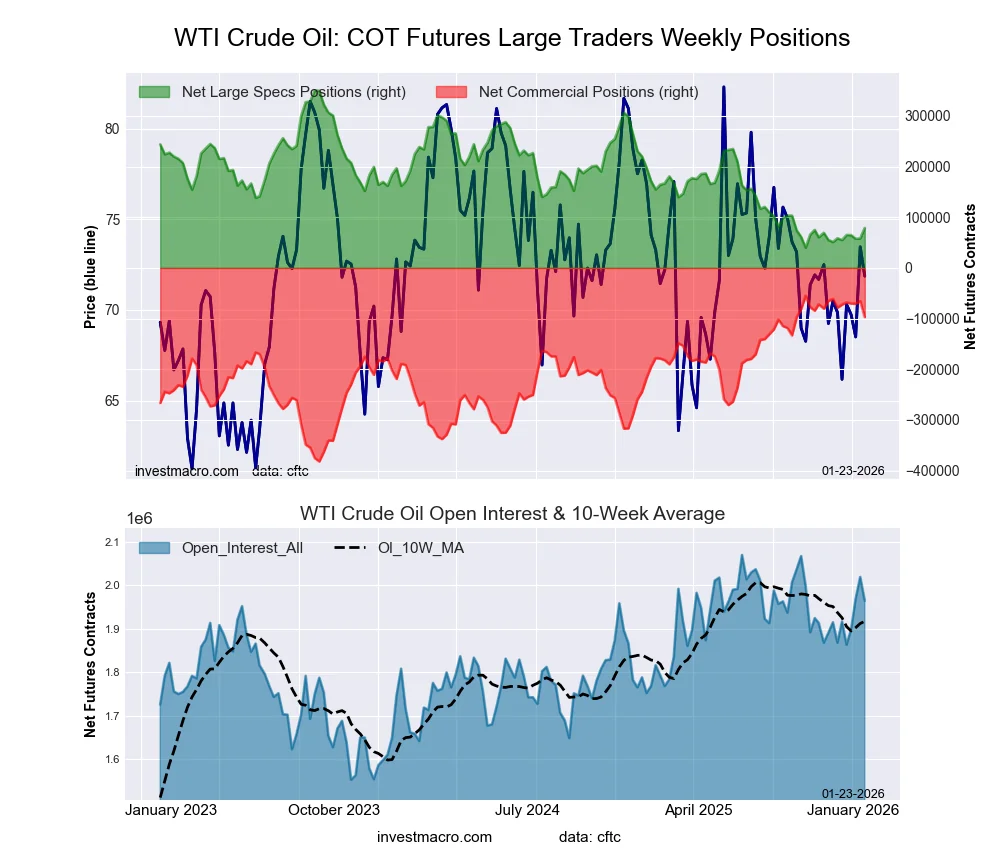
WTI crude oil prices held around $59.7 per barrel on Friday, remaining at a two-week high amid heightened geopolitical risks. Markets reacted to signals of potential US measures against Venezuela and the lack of progress in Ukraine negotiations, supporting supply concerns. Expectations of US rate cuts, which could stimulate demand, provided additional support to prices, although worries about weak consumption and supply surplus limited gains.

The US natural gas (XNG) prices fell to $4.95/MMBtu, correcting from a three-year peak after EIA data showed higher-than-expected inventory levels. Despite this, prices remain approximately 70% above October lows thanks to rising export demand: US LNG exports in November increased by 40% year-over-year, and Europe is accelerating its move away from Russian gas, planning to completely cease LNG imports from the Russian Federation by 2027.

Asian markets traded mixed yesterday. The Japanese Nikkei 225 (JP225) rose by 2.33%, the Chinese FTSE China A50 (CHA50) gained 0.43%, the Hong Kong Hang Seng (HK50) was up by 0.68%, and the Australian ASX 200 (AU200) showed a positive result of 0.27%.

S&P 500 (US500) 6,857.12 +7.40 (+0.11%)

Dow Jones (US30) 47,850.94 −31.96 (−0.07%)

DAX (DE40) 23,882.03 +188.32 (+0.79%)

FTSE 100 (UK100) 9,710.87 +18.80 (+0.19%)

USD Index 99.05 +0.20% (+0.20%)

News feed for: 2025.12.05

  • Eurozone GDP (q/q) at 12:00 (GMT+2); – EUR (MED)
  • Canada Unemployment Rate (m/m) at 15:30 (GMT+2) – CAD (HIGH);
  • US Core PCE Price Index (m/m) at 15:30 (GMT+2); – USD (HIGH)
  • US Michigan Consumer Sentiment (m/m) at 17:00 (GMT+2). – USD (MED)

By JustMarkets


This article reflects a personal opinion and should not be interpreted as an investment advice, and/or offer, and/or a persistent request for carrying out financial transactions, and/or a guarantee, and/or a forecast of future events.

Gold Steady Near 4,200 USD as Markets Await Key Data

By RoboForex Analytical Department

Gold prices held close to 4,200 USD per ounce on Friday, with investors focused on a significant, delayed inflation report ahead of next week’s Federal Reserve policy decision.

All attention is on the release of the September Personal Consumption Expenditures (PCE) index, the Fed’s preferred inflation gauge. The data could be decisive in shaping expectations for the timing and scale of upcoming monetary easing.

Earlier in the week, further signs of a cooling labour market emerged. ADP reported an unexpected decline of 32,000 in private sector payrolls, while the Challenger report recorded 71,000 layoffs in November – bringing the year-to-date total to nearly 1.17 million.

This combination of soft employment figures has reinforced investor conviction that the Fed will cut rates as early as next week, with the market-implied probability now standing at approximately 87%.

Adding to the dovish narrative are reports that White House economic adviser Kevin Hassett may succeed Jerome Powell as Fed Chair in May. Markets interpret this as a potential tilt towards more aggressive policy easing.

Despite a moderately lower weekly close, gold remains well-supported heading into the critical data release.

Technical Analysis: XAU/USD

H4 Chart:

On the H4 chart, gold (XAU/USD) is consolidating after its recent advance toward 4,220–4,230 USD. The price remains above the middle Bollinger Band, with the upper band turning slightly upward, suggesting an attempt to recover from recent weakness.

Key resistance is around 4,265 USD, a level the market has repeatedly tested without securing a decisive breakout. A sustained move above this level would clear the path towards 4,300 USD and beyond.

Immediate support is marked at 4,163 USD. A break below this level would increase selling pressure and raise the risk of a decline towards the next demand zone near 4,136 USD. A close below 4,136 USD would signal a transition into a deeper corrective phase.

H1 Chart:

On the H1 chart, XAU/USD is trading within a tightening range between 4,188 USD and 4,220 USD, reflecting mixed short-term momentum. The middle Bollinger Band is providing near-term equilibrium, confirming the absence of a clear directional bias.

The upper Bollinger Band is capping advances near 4,220–4,225 USD, with several rejections from this zone indicating local overbought conditions. The lower band is offering support around 4,185–4,190 USD.

A sustained move above 4,220 USD would signal a resumption of bullish momentum, initially targeting 4,235–4,240 USD, and potentially 4,265 USD. Conversely, a break below 4,185 USD would open the way towards 4,163 USD. A loss of this support could intensify corrective pressure and expose the 4,136 USD level.

Conclusion

Gold remains in a holding pattern near 4,200 USD as traders await the delayed PCE inflation report. While labour market softness has bolstered expectations for Fed easing, the technical picture reflects consolidation within a defined range. A decisive reaction to today’s data is likely to set the tone ahead of next week’s FOMC meeting, with a break above 4,265 USD opening the door to further gains, while a drop below 4,163 USD risks a deeper correction.


Disclaimer:

Any forecasts contained herein are based on the author’s particular opinion. This analysis may not be treated as trading advice. RoboForex bears no responsibility for trading results based on trading recommendations and reviews contained herein.

GBP/USD Extends Gains as Interest Rate Divergence Captures Focus

By RoboForex Analytical Department

The GBP/USD pair advanced decisively to 1.3338, marking its highest level since late October. Sterling found support from an upward revision of the UK’s November Services PMI, while the US dollar remained under broad pressure ahead of an anticipated Federal Reserve rate cut next week.

The UK Services PMI rose to 51.3 from a preliminary 50.5, remaining firmly in expansionary territory above the 50.0 threshold. The Composite PMI followed suit, climbing to 51.2.

Despite this improvement, S&P Global noted underlying softness, with business activity growth slowing and employment declining at the fastest pace since February. Furthermore, output price inflation fell to its lowest level since January 2021.

Markets continue to price in a 25-basis-point rate cut from the Bank of England in December. However, expectations are that the central bank will then enter a prolonged pause, wary of the persistent risk of renewed inflation.

Conversely, the US dollar remains on the back foot. Markets have fully priced in a third consecutive Fed rate cut for December, with at least two additional cuts anticipated in 2026. This widening interest rate differential is enhancing the pound’s relative appeal.

Technical Analysis: GBP/USD

H4 Chart:

On the H4 chart, GBP/USD continues its confident upward trajectory, approaching a key technical resistance level at 1.3354. The price is holding well above the middle Bollinger Band, confirming the dominance of the bullish trend. The expansion of the upper band signals rising volatility and sustained buying interest.

A decisive breakout and close above 1.3354 would open the path for an extension of the rally towards the next resistance zone around 1.3363–1.3380. Should a pullback occur, the nearest significant support is situated at 1.3280. A breach of this level would suggest a deeper correction, potentially targeting the lower Bollinger Band.

H1 Chart:

On the H1 chart, GBPUSD maintains an upward bias following a powerful impulse that pushed the price to the 1.3350–1.3360 resistance zone. The pair is now correcting, remaining above the local support of 1.3179, from which the growth began earlier. The upper Bollinger Band has turned down after a sharp expansion, indicating short-term market overheating and increasing the likelihood of a pullback. Nevertheless, the structure remains bullish: holding the price above the middle Bollinger Band supports a retest of 1.3350.

A breakout of the 1.3350–1.3360 resistance will open the way to the next target in the 1.3400 area. A consolidation below 1.3179 will be the first signal for a deeper correction, with targets in the 1.3120-1.3140 demand area.

Conclusion

GBP/USD strength is driven by a clear divergence in central bank policy expectations, favouring sterling in the near term. Technically, the pair is in a firm uptrend but is testing a critical resistance level at 1.3354. A successful breakout here could accelerate gains, while a rejection may trigger a consolidation or correction towards 1.3280. The upcoming Fed and BoE meetings will be pivotal in determining whether this momentum can be sustained.

Disclaimer:

Any forecasts contained herein are based on the author’s particular opinion. This analysis may not be treated as trading advice. RoboForex bears no responsibility for trading results based on trading recommendations and reviews contained herein.