COT Bonds Speculators Weekly Changes led by Eurodollar & 2-Year Bonds

By InvestMacro

Here are the latest charts and statistics for the Commitment of Traders (COT) reports data published by the Commodities Futures Trading Commission (CFTC).

The latest COT data is updated through Tuesday December 13th and shows a quick view of how large traders (for-profit speculators and commercial hedgers) were positioned in the futures markets.

Weekly Speculator Changes led by Eurodollar & 2-Year Bonds

The COT bond market speculator bets were higher this week as five out of the eight bond markets we cover had higher positioning while the other three markets had lower speculator contracts.

Leading the gains for the bond markets was the Eurodollar (29,641 contracts) with the 2-Year Bonds (12,741 contracts), Ultra 10-Year Bonds (5,481 contracts), Fed Funds (4,973 contracts) and the Ultra Treasury Bonds (4,605 contracts) also showing positive weeks.

The bond markets with declines in speculator bets for the week were the 5-Year Bonds (-32,931 contracts), the 10-Year Bonds (-7,232 contracts) and the US Treasury Bonds (-1,377 contracts).

Some Highlights of this week’s bonds data:

  • 5-Year Bonds bets fell again this week and dropped to the most bearish level in 216-weeks, dating back to October of 2018.
  • Eurodollar bets and futures prices have been improving steadily since hitting recent lows in August
  • 2-Year Bond speculator positions have improved in three out of the past four weeks since falling to a record low bearish position on November 15th
  • The 10-Year Bond speculator bets have fallen for two straight weeks and the overall position is at the most bearish level since August 30th at a total of -376,438 contracts

Data Snapshot of Bond Market Traders | Columns Legend
Dec-13-2022OIOI-IndexSpec-NetSpec-IndexCom-NetCOM-IndexSmalls-NetSmalls-Index
Eurodollar7,223,6270-1,614,221231,847,03774-232,81653
FedFunds1,402,58238-73,8943083,13070-9,23636
2-Year2,202,60419-521,79910519,176892,62353
Long T-Bond1,185,52140-116,7384776,2663840,47285
10-Year3,822,24452-376,43815474,93078-98,49257
5-Year4,114,02158-691,5370774,022100-82,48558


Strength Scores led by US Treasury Bonds & Ultra Treasury Bonds

COT Strength Scores (a normalized measure of Speculator positions over a 3-Year range, from 0 to 100 where above 80 is Extreme-Bullish and below 20 is Extreme-Bearish) showed that the US Treasury Bonds (47 percent) continues to lead the bond markets and is the only market close to the 50 percent or 3-Year midpoint.

On the downside, the 5-Year Bonds (0 percent), Ultra 10-Year Bonds (2 percent), 2-Year Bonds (10 percent) and the 10-Year Bond (15.2 percent) come in at the lowest strength levels currently and are all in Extreme-Bearish territory (below 20 percent).

Strength Statistics:
Fed Funds (30.5 percent) vs Fed Funds previous week (29.9 percent)
2-Year Bond (9.6 percent) vs 2-Year Bond previous week (7.7 percent)
5-Year Bond (0.0 percent) vs 5-Year Bond previous week (4.2 percent)
10-Year Bond (15.2 percent) vs 10-Year Bond previous week (16.3 percent)
Ultra 10-Year Bond (2.4 percent) vs Ultra 10-Year Bond previous week (1.0 percent)
US Treasury Bond (46.6 percent) vs US Treasury Bond previous week (47.0 percent)
Ultra US Treasury Bond (35.4 percent) vs Ultra US Treasury Bond previous week (33.5 percent)
Eurodollar (23.4 percent) vs Eurodollar previous week (22.9 percent)


Ultra Treasury Bonds & Eurodollar top the 6-Week Strength Trends

COT Strength Score Trends (or move index, calculates the 6-week changes in strength scores) showed that the Ultra Treasury Bonds (9 percent) and the Eurodollar (6 percent) lead the past six weeks trends for bonds.

The 5-Year Bonds (-20 percent) leads the downside trend scores currently with the 2-Year Bonds (-12.5 percent) and the 10-Year Bonds (-12 percent) following next with lower trend scores.

Strength Trend Statistics:
Fed Funds (-7.0 percent) vs Fed Funds previous week (-18.7 percent)
2-Year Bond (-12.5 percent) vs 2-Year Bond previous week (-27.4 percent)
5-Year Bond (-19.6 percent) vs 5-Year Bond previous week (-25.0 percent)
10-Year Bond (-11.9 percent) vs 10-Year Bond previous week (-18.5 percent)
Ultra 10-Year Bond (-4.7 percent) vs Ultra 10-Year Bond previous week (-7.2 percent)
US Treasury Bond (-7.0 percent) vs US Treasury Bond previous week (-12.6 percent)
Ultra US Treasury Bond (8.6 percent) vs Ultra US Treasury Bond previous week (-8.5 percent)
Eurodollar (6.2 percent) vs Eurodollar previous week (4.7 percent)


Individual Bond Markets:

3-Month Eurodollars Futures:

Eurodollar Bonds Futures COT ChartThe 3-Month Eurodollars large speculator standing this week reached a net position of -1,614,221 contracts in the data reported through Tuesday. This was a weekly boost of 29,641 contracts from the previous week which had a total of -1,643,862 net contracts.

This week’s current strength score (the trader positioning range over the past three years, measured from 0 to 100) shows the speculators are currently Bearish with a score of 23.4 percent. The commercials are Bullish with a score of 74.1 percent and the small traders (not shown in chart) are Bullish with a score of 53.2 percent.

3-Month Eurodollars StatisticsSPECULATORSCOMMERCIALSSMALL TRADERS
– Percent of Open Interest Longs:7.469.34.9
– Percent of Open Interest Shorts:29.843.78.1
– Net Position:-1,614,2211,847,037-232,816
– Gross Longs:534,8135,006,987353,101
– Gross Shorts:2,149,0343,159,950585,917
– Long to Short Ratio:0.2 to 11.6 to 10.6 to 1
NET POSITION TREND:
– Strength Index Score (3 Year Range Pct):23.474.153.2
– Strength Index Reading (3 Year Range):BearishBullishBullish
NET POSITION MOVEMENT INDEX:
– 6-Week Change in Strength Index:6.2-6.67.5


30-Day Federal Funds Futures:

Federal Funds 30-Day Bonds Futures COT ChartThe 30-Day Federal Funds large speculator standing this week reached a net position of -73,894 contracts in the data reported through Tuesday. This was a weekly lift of 4,973 contracts from the previous week which had a total of -78,867 net contracts.

This week’s current strength score (the trader positioning range over the past three years, measured from 0 to 100) shows the speculators are currently Bearish with a score of 30.5 percent. The commercials are Bullish with a score of 70.0 percent and the small traders (not shown in chart) are Bearish with a score of 36.1 percent.

30-Day Federal Funds StatisticsSPECULATORSCOMMERCIALSSMALL TRADERS
– Percent of Open Interest Longs:8.677.52.5
– Percent of Open Interest Shorts:13.971.63.1
– Net Position:-73,89483,130-9,236
– Gross Longs:121,1741,087,39834,439
– Gross Shorts:195,0681,004,26843,675
– Long to Short Ratio:0.6 to 11.1 to 10.8 to 1
NET POSITION TREND:
– Strength Index Score (3 Year Range Pct):30.570.036.1
– Strength Index Reading (3 Year Range):BearishBullishBearish
NET POSITION MOVEMENT INDEX:
– 6-Week Change in Strength Index:-7.06.411.6


2-Year Treasury Note Futures:

2-Year Treasury Bonds Futures COT ChartThe 2-Year Treasury Note large speculator standing this week reached a net position of -521,799 contracts in the data reported through Tuesday. This was a weekly increase of 12,741 contracts from the previous week which had a total of -534,540 net contracts.

This week’s current strength score (the trader positioning range over the past three years, measured from 0 to 100) shows the speculators are currently Bearish-Extreme with a score of 9.6 percent. The commercials are Bullish-Extreme with a score of 89.2 percent and the small traders (not shown in chart) are Bullish with a score of 53.2 percent.

2-Year Treasury Note StatisticsSPECULATORSCOMMERCIALSSMALL TRADERS
– Percent of Open Interest Longs:8.880.68.3
– Percent of Open Interest Shorts:32.557.08.2
– Net Position:-521,799519,1762,623
– Gross Longs:193,8121,774,593183,713
– Gross Shorts:715,6111,255,417181,090
– Long to Short Ratio:0.3 to 11.4 to 11.0 to 1
NET POSITION TREND:
– Strength Index Score (3 Year Range Pct):9.689.253.2
– Strength Index Reading (3 Year Range):Bearish-ExtremeBullish-ExtremeBullish
NET POSITION MOVEMENT INDEX:
– 6-Week Change in Strength Index:-12.58.313.0


5-Year Treasury Note Futures:

5-Year Treasury Bonds Futures COT ChartThe 5-Year Treasury Note large speculator standing this week reached a net position of -691,537 contracts in the data reported through Tuesday. This was a weekly lowering of -32,931 contracts from the previous week which had a total of -658,606 net contracts.

This week’s current strength score (the trader positioning range over the past three years, measured from 0 to 100) shows the speculators are currently Bearish-Extreme with a score of 0.0 percent. The commercials are Bullish-Extreme with a score of 100.0 percent and the small traders (not shown in chart) are Bullish with a score of 58.4 percent.

5-Year Treasury Note StatisticsSPECULATORSCOMMERCIALSSMALL TRADERS
– Percent of Open Interest Longs:5.985.67.4
– Percent of Open Interest Shorts:22.766.79.4
– Net Position:-691,537774,022-82,485
– Gross Longs:241,3453,519,766304,790
– Gross Shorts:932,8822,745,744387,275
– Long to Short Ratio:0.3 to 11.3 to 10.8 to 1
NET POSITION TREND:
– Strength Index Score (3 Year Range Pct):0.0100.058.4
– Strength Index Reading (3 Year Range):Bearish-ExtremeBullish-ExtremeBullish
NET POSITION MOVEMENT INDEX:
– 6-Week Change in Strength Index:-19.616.32.9


10-Year Treasury Note Futures:

10-Year Treasury Notes Bonds Futures COT ChartThe 10-Year Treasury Note large speculator standing this week reached a net position of -376,438 contracts in the data reported through Tuesday. This was a weekly decrease of -7,232 contracts from the previous week which had a total of -369,206 net contracts.

This week’s current strength score (the trader positioning range over the past three years, measured from 0 to 100) shows the speculators are currently Bearish-Extreme with a score of 15.2 percent. The commercials are Bullish with a score of 78.3 percent and the small traders (not shown in chart) are Bullish with a score of 56.7 percent.

10-Year Treasury Note StatisticsSPECULATORSCOMMERCIALSSMALL TRADERS
– Percent of Open Interest Longs:11.876.98.8
– Percent of Open Interest Shorts:21.764.411.4
– Net Position:-376,438474,930-98,492
– Gross Longs:452,1272,938,306336,813
– Gross Shorts:828,5652,463,376435,305
– Long to Short Ratio:0.5 to 11.2 to 10.8 to 1
NET POSITION TREND:
– Strength Index Score (3 Year Range Pct):15.278.356.7
– Strength Index Reading (3 Year Range):Bearish-ExtremeBullishBullish
NET POSITION MOVEMENT INDEX:
– 6-Week Change in Strength Index:-11.915.6-12.6


Ultra 10-Year Notes Futures:

Ultra 10-Year Treasury Notes Bonds Futures COT ChartThe Ultra 10-Year Notes large speculator standing this week reached a net position of -101,471 contracts in the data reported through Tuesday. This was a weekly lift of 5,481 contracts from the previous week which had a total of -106,952 net contracts.

This week’s current strength score (the trader positioning range over the past three years, measured from 0 to 100) shows the speculators are currently Bearish-Extreme with a score of 2.4 percent. The commercials are Bullish-Extreme with a score of 90.3 percent and the small traders (not shown in chart) are Bullish with a score of 64.9 percent.

Ultra 10-Year Notes StatisticsSPECULATORSCOMMERCIALSSMALL TRADERS
– Percent of Open Interest Longs:11.876.411.0
– Percent of Open Interest Shorts:18.962.817.6
– Net Position:-101,471195,085-93,614
– Gross Longs:169,2951,094,617158,109
– Gross Shorts:270,766899,532251,723
– Long to Short Ratio:0.6 to 11.2 to 10.6 to 1
NET POSITION TREND:
– Strength Index Score (3 Year Range Pct):2.490.364.9
– Strength Index Reading (3 Year Range):Bearish-ExtremeBullish-ExtremeBullish
NET POSITION MOVEMENT INDEX:
– 6-Week Change in Strength Index:-4.78.7-10.5


US Treasury Bonds Futures:

US Year Treasury Notes Long Bonds Futures COT ChartThe US Treasury Bonds large speculator standing this week reached a net position of -116,738 contracts in the data reported through Tuesday. This was a weekly fall of -1,377 contracts from the previous week which had a total of -115,361 net contracts.

This week’s current strength score (the trader positioning range over the past three years, measured from 0 to 100) shows the speculators are currently Bearish with a score of 46.6 percent. The commercials are Bearish with a score of 37.8 percent and the small traders (not shown in chart) are Bullish-Extreme with a score of 84.7 percent.

US Treasury Bonds StatisticsSPECULATORSCOMMERCIALSSMALL TRADERS
– Percent of Open Interest Longs:5.179.214.9
– Percent of Open Interest Shorts:14.972.711.4
– Net Position:-116,73876,26640,472
– Gross Longs:60,004938,513176,212
– Gross Shorts:176,742862,247135,740
– Long to Short Ratio:0.3 to 11.1 to 11.3 to 1
NET POSITION TREND:
– Strength Index Score (3 Year Range Pct):46.637.884.7
– Strength Index Reading (3 Year Range):BearishBearishBullish-Extreme
NET POSITION MOVEMENT INDEX:
– 6-Week Change in Strength Index:-7.04.18.0


Ultra US Treasury Bonds Futures:

Ultra US Year Treasury Notes Long Bonds Futures COT ChartThe Ultra US Treasury Bonds large speculator standing this week reached a net position of -367,168 contracts in the data reported through Tuesday. This was a weekly lift of 4,605 contracts from the previous week which had a total of -371,773 net contracts.

This week’s current strength score (the trader positioning range over the past three years, measured from 0 to 100) shows the speculators are currently Bearish with a score of 35.4 percent. The commercials are Bullish with a score of 64.5 percent and the small traders (not shown in chart) are Bullish with a score of 78.1 percent.

Ultra US Treasury Bonds StatisticsSPECULATORSCOMMERCIALSSMALL TRADERS
– Percent of Open Interest Longs:4.283.711.6
– Percent of Open Interest Shorts:29.962.07.7
– Net Position:-367,168310,75856,410
– Gross Longs:59,9081,194,785165,771
– Gross Shorts:427,076884,027109,361
– Long to Short Ratio:0.1 to 11.4 to 11.5 to 1
NET POSITION TREND:
– Strength Index Score (3 Year Range Pct):35.464.578.1
– Strength Index Reading (3 Year Range):BearishBullishBullish
NET POSITION MOVEMENT INDEX:
– 6-Week Change in Strength Index:8.6-13.33.4


Article By InvestMacroReceive our weekly COT Newsletter

*COT Report: The COT data, released weekly to the public each Friday, is updated through the most recent Tuesday (data is 3 days old) and shows a quick view of how large speculators or non-commercials (for-profit traders) were positioned in the futures markets.

The CFTC categorizes trader positions according to commercial hedgers (traders who use futures contracts for hedging as part of the business), non-commercials (large traders who speculate to realize trading profits) and nonreportable traders (usually small traders/speculators) as well as their open interest (contracts open in the market at time of reporting). See CFTC criteria here.

Soft Commodities Speculators boost Soybean Meal bullish bets to 236-week high

By InvestMacro

Here are the latest charts and statistics for the Commitment of Traders (COT) reports data published by the Commodities Futures Trading Commission (CFTC).

The latest COT data is updated through Tuesday December 13th and shows a quick view of how large traders (for-profit speculators and commercial entities) were positioned in the futures markets.

Weekly Speculator Changes led by Soybeans & Corn

The COT soft commodities markets speculator bets were higher this week as seven out of the eleven softs markets we cover had higher positioning while the other four markets had lower speculator contracts.

Leading the gains for the softs markets was Soybeans (23,398 contracts) with Corn (13,855 contracts), Soybean Meal (11,358 contracts), Sugar (9,927 contracts) with Cocoa (5,353 contracts), Coffee (5,172 contracts) and Live Cattle (3,552 contracts) also showing positive weeks.

The markets with the declines in speculator bets this week were Soybean Oil (-10,669 contracts) with Lean Hogs (-5,281 contracts), Cotton (-4,281 contracts) and Wheat (-21 contracts) also registering lower bets on the week.

Highlighting the COT soft commodities data this week is the continued gain in the Soybean Meal speculator positioning. The large speculator bets for Soybean Meal rose this week for a third consecutive week and for the seventh time out of the past ten weeks. Speculators bets have now pushed the overall net position standing for Soybean Meal (currently at +133,532 contracts) to the highest level in the past two-hundred and thirty-six weeks, dating back to June 5th of 2018.

Soybean Meal futures prices dipped this week despite the continued strong sentiment. The Soybean Meal futures price had previously gained for three straight weeks and hit the highest price level since March above the 470.0 threshold. The futures price closed out the week right around the 460.0 support/resistance area.


Data Snapshot of Commodity Market Traders | Columns Legend
Dec-13-2022OIOI-IndexSpec-NetSpec-IndexCom-NetCOM-IndexSmalls-NetSmalls-Index
WTI Crude1,450,4824229,5595-247,7479718,18829
Gold437,0404125,64924-138,5297612,88012
Silver125,555422,81939-35,8066112,98733
Copper162,191112,55638-6,559624,00348
Palladium7,4948-88320854772943
Platinum72,4164328,44547-32,624554,17924
Natural Gas996,8239-153,68132129,9607223,72136
Brent148,09710-28,5676225,351363,21653
Heating Oil270,7512417,30868-32,7713615,46352
Soybeans638,74414113,05946-82,01164-31,04819
Corn1,205,2590212,23057-173,22347-39,00721
Coffee198,70211-9,47088,451931,01914
Sugar899,77738193,05160-228,5933835,54252
Wheat335,35421-39,918042,894100-2,97695


Strength Scores led by Soybean Meal & Sugar

COT Strength Scores (a normalized measure of Speculator positions over a 3-Year range, from 0 to 100 where above 80 is Extreme-Bullish and below 20 is Extreme-Bearish) showed that Soybean Meal (100 percent) and Sugar (60 percent) lead the softs markets this week. Corn (57 percent), Live Cattle (53 percent) and Soybeans (46 percent) come in as the next highest in the weekly strength scores.

On the downside, Wheat (0 percent), Coffee (8 percent) and Cotton (18 percent) come in at the lowest strength levels currently and are in Extreme-Bearish territory (below 20 percent). The next lowest strength score this week was Lean Hogs (37 percent).

Strength Statistics:
Corn (57.1 percent) vs Corn previous week (55.4 percent)
Sugar (60.3 percent) vs Sugar previous week (56.9 percent)
Coffee (7.7 percent) vs Coffee previous week (1.8 percent)
Soybeans (45.9 percent) vs Soybeans previous week (38.5 percent)
Soybean Oil (41.2 percent) vs Soybean Oil previous week (48.5 percent)
Soybean Meal (100.0 percent) vs Soybean Meal previous week (93.8 percent)
Live Cattle (53.1 percent) vs Live Cattle previous week (48.7 percent)
Lean Hogs (37.2 percent) vs Lean Hogs previous week (43.6 percent)
Cotton (18.3 percent) vs Cotton previous week (21.5 percent)
Cocoa (39.9 percent) vs Cocoa previous week (34.6 percent)
Wheat (0.0 percent) vs Wheat previous week (0.0 percent)


Sugar & Cocoa top the 6-Week Strength Trends

COT Strength Score Trends (or move index, calculates the 6-week changes in strength scores) showed that Sugar (43 percent) and Cocoa (31 percent) lead the past six weeks trends for soft commodities. Soybeans (9 percent) and Soybean Meal (8 percent) are the next highest positive movers in the latest trends data.

Soybean Oil (-29 percent) leads the downside trend scores currently with Wheat (-24 percent), Corn (-16 percent) and Lean Hogs (-14 percent) following next with lower trend scores.

Strength Trend Statistics:
Corn (-16.4 percent) vs Corn previous week (-16.8 percent)
Sugar (42.6 percent) vs Sugar previous week (24.5 percent)
Coffee (-13.4 percent) vs Coffee previous week (-29.9 percent)
Soybeans (8.5 percent) vs Soybeans previous week (10.3 percent)
Soybean Oil (-28.5 percent) vs Soybean Oil previous week (-18.5 percent)
Soybean Meal (7.7 percent) vs Soybean Meal previous week (3.3 percent)
Live Cattle (-5.8 percent) vs Live Cattle previous week (-11.1 percent)
Lean Hogs (-14.4 percent) vs Lean Hogs previous week (-1.8 percent)
Cotton (-1.3 percent) vs Cotton previous week (-4.6 percent)
Cocoa (31.2 percent) vs Cocoa previous week (19.3 percent)
Wheat (-23.7 percent) vs Wheat previous week (-26.4 percent)


Individual Soft Commodities Markets:

CORN Futures:

CORN Futures COT ChartThe CORN large speculator standing this week recorded a net position of 212,230 contracts in the data reported through Tuesday. This was a weekly boost of 13,855 contracts from the previous week which had a total of 198,375 net contracts.

This week’s current strength score (the trader positioning range over the past three years, measured from 0 to 100) shows the speculators are currently Bullish with a score of 57.1 percent. The commercials are Bearish with a score of 47.2 percent and the small traders (not shown in chart) are Bearish with a score of 21.3 percent.

CORN Futures StatisticsSPECULATORSCOMMERCIALSSMALL TRADERS
– Percent of Open Interest Longs:26.247.310.2
– Percent of Open Interest Shorts:8.661.713.4
– Net Position:212,230-173,223-39,007
– Gross Longs:316,184570,199122,422
– Gross Shorts:103,954743,422161,429
– Long to Short Ratio:3.0 to 10.8 to 10.8 to 1
NET POSITION TREND:
– Strength Index Score (3 Year Range Pct):57.147.221.3
– Strength Index Reading (3 Year Range):BullishBearishBearish
NET POSITION MOVEMENT INDEX:
– 6-Week Change in Strength Index:-16.416.28.9


SUGAR Futures:

SUGAR Futures COT ChartThe SUGAR large speculator standing this week recorded a net position of 193,051 contracts in the data reported through Tuesday. This was a weekly lift of 9,927 contracts from the previous week which had a total of 183,124 net contracts.

This week’s current strength score (the trader positioning range over the past three years, measured from 0 to 100) shows the speculators are currently Bullish with a score of 60.3 percent. The commercials are Bearish with a score of 37.6 percent and the small traders (not shown in chart) are Bullish with a score of 51.8 percent.

SUGAR Futures StatisticsSPECULATORSCOMMERCIALSSMALL TRADERS
– Percent of Open Interest Longs:32.044.610.2
– Percent of Open Interest Shorts:10.670.06.2
– Net Position:193,051-228,59335,542
– Gross Longs:288,052401,48891,410
– Gross Shorts:95,001630,08155,868
– Long to Short Ratio:3.0 to 10.6 to 11.6 to 1
NET POSITION TREND:
– Strength Index Score (3 Year Range Pct):60.337.651.8
– Strength Index Reading (3 Year Range):BullishBearishBullish
NET POSITION MOVEMENT INDEX:
– 6-Week Change in Strength Index:42.6-39.717.4


COFFEE Futures:

COFFEE Futures COT ChartThe COFFEE large speculator standing this week recorded a net position of -9,470 contracts in the data reported through Tuesday. This was a weekly advance of 5,172 contracts from the previous week which had a total of -14,642 net contracts.

This week’s current strength score (the trader positioning range over the past three years, measured from 0 to 100) shows the speculators are currently Bearish-Extreme with a score of 7.7 percent. The commercials are Bullish-Extreme with a score of 93.1 percent and the small traders (not shown in chart) are Bearish-Extreme with a score of 13.6 percent.

COFFEE Futures StatisticsSPECULATORSCOMMERCIALSSMALL TRADERS
– Percent of Open Interest Longs:22.553.04.5
– Percent of Open Interest Shorts:27.248.74.0
– Net Position:-9,4708,4511,019
– Gross Longs:44,628105,2408,917
– Gross Shorts:54,09896,7897,898
– Long to Short Ratio:0.8 to 11.1 to 11.1 to 1
NET POSITION TREND:
– Strength Index Score (3 Year Range Pct):7.793.113.6
– Strength Index Reading (3 Year Range):Bearish-ExtremeBullish-ExtremeBearish-Extreme
NET POSITION MOVEMENT INDEX:
– 6-Week Change in Strength Index:-13.413.9-13.4


SOYBEANS Futures:

SOYBEANS Futures COT ChartThe SOYBEANS large speculator standing this week recorded a net position of 113,059 contracts in the data reported through Tuesday. This was a weekly rise of 23,398 contracts from the previous week which had a total of 89,661 net contracts.

This week’s current strength score (the trader positioning range over the past three years, measured from 0 to 100) shows the speculators are currently Bearish with a score of 45.9 percent. The commercials are Bullish with a score of 64.1 percent and the small traders (not shown in chart) are Bearish-Extreme with a score of 18.6 percent.

SOYBEANS Futures StatisticsSPECULATORSCOMMERCIALSSMALL TRADERS
– Percent of Open Interest Longs:27.050.77.5
– Percent of Open Interest Shorts:9.363.612.4
– Net Position:113,059-82,011-31,048
– Gross Longs:172,330324,12648,054
– Gross Shorts:59,271406,13779,102
– Long to Short Ratio:2.9 to 10.8 to 10.6 to 1
NET POSITION TREND:
– Strength Index Score (3 Year Range Pct):45.964.118.6
– Strength Index Reading (3 Year Range):BearishBullishBearish-Extreme
NET POSITION MOVEMENT INDEX:
– 6-Week Change in Strength Index:8.5-7.8-4.1


SOYBEAN OIL Futures:

SOYBEAN OIL Futures COT ChartThe SOYBEAN OIL large speculator standing this week recorded a net position of 55,642 contracts in the data reported through Tuesday. This was a weekly decrease of -10,669 contracts from the previous week which had a total of 66,311 net contracts.

This week’s current strength score (the trader positioning range over the past three years, measured from 0 to 100) shows the speculators are currently Bearish with a score of 41.2 percent. The commercials are Bullish with a score of 57.1 percent and the small traders (not shown in chart) are Bullish with a score of 61.5 percent.

SOYBEAN OIL Futures StatisticsSPECULATORSCOMMERCIALSSMALL TRADERS
– Percent of Open Interest Longs:23.249.58.6
– Percent of Open Interest Shorts:9.766.25.5
– Net Position:55,642-68,52912,887
– Gross Longs:95,349203,43335,470
– Gross Shorts:39,707271,96222,583
– Long to Short Ratio:2.4 to 10.7 to 11.6 to 1
NET POSITION TREND:
– Strength Index Score (3 Year Range Pct):41.257.161.5
– Strength Index Reading (3 Year Range):BearishBullishBullish
NET POSITION MOVEMENT INDEX:
– 6-Week Change in Strength Index:-28.526.7-4.1


SOYBEAN MEAL Futures:

SOYBEAN MEAL Futures COT ChartThe SOYBEAN MEAL large speculator standing this week recorded a net position of 133,532 contracts in the data reported through Tuesday. This was a weekly increase of 11,358 contracts from the previous week which had a total of 122,174 net contracts.

This week’s current strength score (the trader positioning range over the past three years, measured from 0 to 100) shows the speculators are currently Bullish-Extreme with a score of 100.0 percent. The commercials are Bearish-Extreme with a score of 3.8 percent and the small traders (not shown in chart) are Bearish with a score of 29.4 percent.

SOYBEAN MEAL Futures StatisticsSPECULATORSCOMMERCIALSSMALL TRADERS
– Percent of Open Interest Longs:37.836.212.2
– Percent of Open Interest Shorts:3.875.07.5
– Net Position:133,532-152,14118,609
– Gross Longs:148,357142,14947,862
– Gross Shorts:14,825294,29029,253
– Long to Short Ratio:10.0 to 10.5 to 11.6 to 1
NET POSITION TREND:
– Strength Index Score (3 Year Range Pct):100.03.829.4
– Strength Index Reading (3 Year Range):Bullish-ExtremeBearish-ExtremeBearish
NET POSITION MOVEMENT INDEX:
– 6-Week Change in Strength Index:7.7-3.6-37.0


LIVE CATTLE Futures:

LIVE CATTLE Futures COT ChartThe LIVE CATTLE large speculator standing this week recorded a net position of 58,815 contracts in the data reported through Tuesday. This was a weekly advance of 3,552 contracts from the previous week which had a total of 55,263 net contracts.

This week’s current strength score (the trader positioning range over the past three years, measured from 0 to 100) shows the speculators are currently Bullish with a score of 53.1 percent. The commercials are Bearish with a score of 37.7 percent and the small traders (not shown in chart) are Bullish with a score of 78.1 percent.

LIVE CATTLE Futures StatisticsSPECULATORSCOMMERCIALSSMALL TRADERS
– Percent of Open Interest Longs:38.732.911.0
– Percent of Open Interest Shorts:18.851.512.2
– Net Position:58,815-55,162-3,653
– Gross Longs:114,47997,37832,476
– Gross Shorts:55,664152,54036,129
– Long to Short Ratio:2.1 to 10.6 to 10.9 to 1
NET POSITION TREND:
– Strength Index Score (3 Year Range Pct):53.137.778.1
– Strength Index Reading (3 Year Range):BullishBearishBullish
NET POSITION MOVEMENT INDEX:
– 6-Week Change in Strength Index:-5.87.4-2.8


LEAN HOGS Futures:

LEAN HOGS Futures COT ChartThe LEAN HOGS large speculator standing this week recorded a net position of 33,627 contracts in the data reported through Tuesday. This was a weekly decline of -5,281 contracts from the previous week which had a total of 38,908 net contracts.

This week’s current strength score (the trader positioning range over the past three years, measured from 0 to 100) shows the speculators are currently Bearish with a score of 37.2 percent. The commercials are Bullish with a score of 69.2 percent and the small traders (not shown in chart) are Bearish with a score of 44.5 percent.

LEAN HOGS Futures StatisticsSPECULATORSCOMMERCIALSSMALL TRADERS
– Percent of Open Interest Longs:37.536.67.4
– Percent of Open Interest Shorts:19.549.013.1
– Net Position:33,627-23,073-10,554
– Gross Longs:69,91068,31213,877
– Gross Shorts:36,28391,38524,431
– Long to Short Ratio:1.9 to 10.7 to 10.6 to 1
NET POSITION TREND:
– Strength Index Score (3 Year Range Pct):37.269.244.5
– Strength Index Reading (3 Year Range):BearishBullishBearish
NET POSITION MOVEMENT INDEX:
– 6-Week Change in Strength Index:-14.413.26.9


COTTON Futures:

COTTON Futures COT ChartThe COTTON large speculator standing this week recorded a net position of 14,439 contracts in the data reported through Tuesday. This was a weekly decrease of -4,281 contracts from the previous week which had a total of 18,720 net contracts.

This week’s current strength score (the trader positioning range over the past three years, measured from 0 to 100) shows the speculators are currently Bearish-Extreme with a score of 18.3 percent. The commercials are Bullish-Extreme with a score of 82.6 percent and the small traders (not shown in chart) are Bearish-Extreme with a score of 12.8 percent.

COTTON Futures StatisticsSPECULATORSCOMMERCIALSSMALL TRADERS
– Percent of Open Interest Longs:31.349.56.1
– Percent of Open Interest Shorts:24.057.05.9
– Net Position:14,439-14,822383
– Gross Longs:62,06998,28612,021
– Gross Shorts:47,630113,10811,638
– Long to Short Ratio:1.3 to 10.9 to 11.0 to 1
NET POSITION TREND:
– Strength Index Score (3 Year Range Pct):18.382.612.8
– Strength Index Reading (3 Year Range):Bearish-ExtremeBullish-ExtremeBearish-Extreme
NET POSITION MOVEMENT INDEX:
– 6-Week Change in Strength Index:-1.30.92.3


COCOA Futures:

COCOA Futures COT ChartThe COCOA large speculator standing this week recorded a net position of 23,317 contracts in the data reported through Tuesday. This was a weekly gain of 5,353 contracts from the previous week which had a total of 17,964 net contracts.

This week’s current strength score (the trader positioning range over the past three years, measured from 0 to 100) shows the speculators are currently Bearish with a score of 39.9 percent. The commercials are Bullish with a score of 61.1 percent and the small traders (not shown in chart) are Bearish with a score of 30.1 percent.

COCOA Futures StatisticsSPECULATORSCOMMERCIALSSMALL TRADERS
– Percent of Open Interest Longs:31.946.54.2
– Percent of Open Interest Shorts:23.156.53.0
– Net Position:23,317-26,6693,352
– Gross Longs:84,900123,82511,260
– Gross Shorts:61,583150,4947,908
– Long to Short Ratio:1.4 to 10.8 to 11.4 to 1
NET POSITION TREND:
– Strength Index Score (3 Year Range Pct):39.961.130.1
– Strength Index Reading (3 Year Range):BearishBullishBearish
NET POSITION MOVEMENT INDEX:
– 6-Week Change in Strength Index:31.2-32.29.2


WHEAT Futures:

WHEAT Futures COT ChartThe WHEAT large speculator standing this week recorded a net position of -39,918 contracts in the data reported through Tuesday. This was a weekly fall of -21 contracts from the previous week which had a total of -39,897 net contracts.

This week’s current strength score (the trader positioning range over the past three years, measured from 0 to 100) shows the speculators are currently Bearish-Extreme with a score of 0.0 percent. The commercials are Bullish-Extreme with a score of 100.0 percent and the small traders (not shown in chart) are Bullish-Extreme with a score of 95.0 percent.

WHEAT Futures StatisticsSPECULATORSCOMMERCIALSSMALL TRADERS
– Percent of Open Interest Longs:28.140.99.7
– Percent of Open Interest Shorts:40.028.210.6
– Net Position:-39,91842,894-2,976
– Gross Longs:94,335137,31632,455
– Gross Shorts:134,25394,42235,431
– Long to Short Ratio:0.7 to 11.5 to 10.9 to 1
NET POSITION TREND:
– Strength Index Score (3 Year Range Pct):0.0100.095.0
– Strength Index Reading (3 Year Range):Bearish-ExtremeBullish-ExtremeBullish-Extreme
NET POSITION MOVEMENT INDEX:
– 6-Week Change in Strength Index:-23.724.019.5


Article By InvestMacroReceive our weekly COT Newsletter

*COT Report: The COT data, released weekly to the public each Friday, is updated through the most recent Tuesday (data is 3 days old) and shows a quick view of how large speculators or non-commercials (for-profit traders) were positioned in the futures markets.

The CFTC categorizes trader positions according to commercial hedgers (traders who use futures contracts for hedging as part of the business), non-commercials (large traders who speculate to realize trading profits) and nonreportable traders (usually small traders/speculators) as well as their open interest (contracts open in the market at time of reporting). See CFTC criteria here.

Stock Market Speculator bets trend lower led by S&P500-Mini & VIX

By InvestMacro

Here are the latest charts and statistics for the Commitment of Traders (COT) data published by the Commodities Futures Trading Commission (CFTC).

The latest COT data is updated through Tuesday December 13th and shows a quick view of how large traders (for-profit speculators and commercial entities) were positioned in the futures markets.

Weekly Speculator Changes led lower by S&P500-Mini & VIX

The COT stock markets speculator bets were lower this week as two out of the seven stock markets we cover had higher positioning while the other five markets had lower speculator contracts.

Leading the gains for the stock markets was Russell-Mini (9,651 contracts) with the Nasdaq-Mini (5,681 contracts) also showing a positive week.

The markets with the declines in speculator bets this week were the S&P500-Mini (-26,403 contracts), VIX (-8,399 contracts), MSCI EAFE-Mini (-7,969 contracts), DowJones-Mini (-939 contracts) and the Nikkei 225 (-356 contracts) also registering lower bets on the week.


Data Snapshot of Stock Market Traders | Columns Legend
Dec-13-2022OIOI-IndexSpec-NetSpec-IndexCom-NetCOM-IndexSmalls-NetSmalls-Index
S&P500-Mini2,477,14015-230,12214212,7267917,39630
Nikkei 22518,81323-2,964631,418371,54648
Nasdaq-Mini312,9847919,19886-12,77919-6,41940
DowJones-Mini106,45479-12,5422420,24985-7,7071
VIX347,72351-82,9785785,45342-2,47579
Nikkei 225 Yen39,328198,049593,51120-11,56057


Strength Scores led by Nasdaq-Mini & Nikkei 225

COT Strength Scores (a normalized measure of Speculator positions over a 3-Year range, from 0 to 100 where above 80 is Extreme-Bullish and below 20 is Extreme-Bearish) showed that the Nasdaq-Mini (86 percent) and the Nikkei 225 (63 percent) lead the stock markets this week. The VIX (57 percent) comes in as the next highest in the weekly strength scores.

On the downside, the S&P500-Mini (14 percent) is at the lowest strength level currently and is in Extreme-Bearish territory (below 20 percent). The next lowest strength score is the DowJones-Mini (24.2 percent).

Strength Statistics:
VIX (57.4 percent) vs VIX previous week (63.0 percent)
S&P500-Mini (13.6 percent) vs S&P500-Mini previous week (18.5 percent)
DowJones-Mini (24.2 percent) vs DowJones-Mini previous week (25.6 percent)
Nasdaq-Mini (85.8 percent) vs Nasdaq-Mini previous week (82.6 percent)
Russell2000-Mini (31.5 percent) vs Russell2000-Mini previous week (26.1 percent)
Nikkei USD (63.4 percent) vs Nikkei USD previous week (65.1 percent)
EAFE-Mini (25.4 percent) vs EAFE-Mini previous week (35.0 percent)


Nasdaq-Mini tops the 6-Week Strength Trends

COT Strength Score Trends (or move index, calculates the 6-week changes in strength scores) showed that the Nasdaq-Mini (19.2 percent) leads the past six weeks trends for the stock markets. The MSCI EAFE-Mini (13 percent) is the next highest positive mover in the latest trends data.

The Nikkei 225 (-14 percent) and the Russell-Mini (-8 percent) lead the downside trend scores currently.

Strength Trend Statistics:
VIX (-12.5 percent) vs VIX previous week (-14.3 percent)
S&P500-Mini (-10.2 percent) vs S&P500-Mini previous week (2.9 percent)
DowJones-Mini (-6.5 percent) vs DowJones-Mini previous week (3.4 percent)
Nasdaq-Mini (19.2 percent) vs Nasdaq-Mini previous week (4.4 percent)
Russell2000-Mini (-7.9 percent) vs Russell2000-Mini previous week (4.0 percent)
Nikkei USD (-14.1 percent) vs Nikkei USD previous week (-19.9 percent)
EAFE-Mini (13.2 percent) vs EAFE-Mini previous week (25.8 percent)


Individual Stock Market Charts:

VIX Volatility Futures:

VIX Volatility Futures COT ChartThe VIX Volatility large speculator standing this week came in at a net position of -82,978 contracts in the data reported through Tuesday. This was a weekly decline of -8,399 contracts from the previous week which had a total of -74,579 net contracts.

This week’s current strength score (the trader positioning range over the past three years, measured from 0 to 100) shows the speculators are currently Bullish with a score of 57.4 percent. The commercials are Bearish with a score of 41.8 percent and the small traders (not shown in chart) are Bullish with a score of 79.3 percent.

VIX Volatility Futures StatisticsSPECULATORSCOMMERCIALSSMALL TRADERS
– Percent of Open Interest Longs:16.254.37.4
– Percent of Open Interest Shorts:40.129.78.1
– Net Position:-82,97885,453-2,475
– Gross Longs:56,330188,88325,721
– Gross Shorts:139,308103,43028,196
– Long to Short Ratio:0.4 to 11.8 to 10.9 to 1
NET POSITION TREND:
– Strength Index Score (3 Year Range Pct):57.441.879.3
– Strength Index Reading (3 Year Range):BullishBearishBullish
NET POSITION MOVEMENT INDEX:
– 6-Week Change in Strength Index:-12.510.614.8


S&P500 Mini Futures:

SP500 Mini Futures COT ChartThe S&P500 Mini large speculator standing this week came in at a net position of -230,122 contracts in the data reported through Tuesday. This was a weekly fall of -26,403 contracts from the previous week which had a total of -203,719 net contracts.

This week’s current strength score (the trader positioning range over the past three years, measured from 0 to 100) shows the speculators are currently Bearish-Extreme with a score of 13.6 percent. The commercials are Bullish with a score of 78.7 percent and the small traders (not shown in chart) are Bearish with a score of 30.0 percent.

S&P500 Mini Futures StatisticsSPECULATORSCOMMERCIALSSMALL TRADERS
– Percent of Open Interest Longs:9.173.311.3
– Percent of Open Interest Shorts:18.464.810.6
– Net Position:-230,122212,72617,396
– Gross Longs:226,5071,816,921279,775
– Gross Shorts:456,6291,604,195262,379
– Long to Short Ratio:0.5 to 11.1 to 11.1 to 1
NET POSITION TREND:
– Strength Index Score (3 Year Range Pct):13.678.730.0
– Strength Index Reading (3 Year Range):Bearish-ExtremeBullishBearish
NET POSITION MOVEMENT INDEX:
– 6-Week Change in Strength Index:-10.22.18.3


Dow Jones Mini Futures:

Dow Jones Mini Futures COT ChartThe Dow Jones Mini large speculator standing this week came in at a net position of -12,542 contracts in the data reported through Tuesday. This was a weekly decrease of -939 contracts from the previous week which had a total of -11,603 net contracts.

This week’s current strength score (the trader positioning range over the past three years, measured from 0 to 100) shows the speculators are currently Bearish with a score of 24.2 percent. The commercials are Bullish-Extreme with a score of 85.2 percent and the small traders (not shown in chart) are Bearish-Extreme with a score of 1.2 percent.

Dow Jones Mini Futures StatisticsSPECULATORSCOMMERCIALSSMALL TRADERS
– Percent of Open Interest Longs:22.055.913.0
– Percent of Open Interest Shorts:33.836.820.3
– Net Position:-12,54220,249-7,707
– Gross Longs:23,41159,47713,855
– Gross Shorts:35,95339,22821,562
– Long to Short Ratio:0.7 to 11.5 to 10.6 to 1
NET POSITION TREND:
– Strength Index Score (3 Year Range Pct):24.285.21.2
– Strength Index Reading (3 Year Range):BearishBullish-ExtremeBearish-Extreme
NET POSITION MOVEMENT INDEX:
– 6-Week Change in Strength Index:-6.55.91.2


Nasdaq Mini Futures:

Nasdaq Mini Futures COT ChartThe Nasdaq Mini large speculator standing this week came in at a net position of 19,198 contracts in the data reported through Tuesday. This was a weekly increase of 5,681 contracts from the previous week which had a total of 13,517 net contracts.

This week’s current strength score (the trader positioning range over the past three years, measured from 0 to 100) shows the speculators are currently Bullish-Extreme with a score of 85.8 percent. The commercials are Bearish-Extreme with a score of 18.6 percent and the small traders (not shown in chart) are Bearish with a score of 40.0 percent.

Nasdaq Mini Futures StatisticsSPECULATORSCOMMERCIALSSMALL TRADERS
– Percent of Open Interest Longs:23.458.611.8
– Percent of Open Interest Shorts:17.262.713.9
– Net Position:19,198-12,779-6,419
– Gross Longs:73,103183,30636,975
– Gross Shorts:53,905196,08543,394
– Long to Short Ratio:1.4 to 10.9 to 10.9 to 1
NET POSITION TREND:
– Strength Index Score (3 Year Range Pct):85.818.640.0
– Strength Index Reading (3 Year Range):Bullish-ExtremeBearish-ExtremeBearish
NET POSITION MOVEMENT INDEX:
– 6-Week Change in Strength Index:19.2-25.814.1


Russell 2000 Mini Futures:

Russell 2000 Mini Futures COT ChartThe Russell 2000 Mini large speculator standing this week came in at a net position of -63,784 contracts in the data reported through Tuesday. This was a weekly lift of 9,651 contracts from the previous week which had a total of -73,435 net contracts.

This week’s current strength score (the trader positioning range over the past three years, measured from 0 to 100) shows the speculators are currently Bearish with a score of 31.5 percent. The commercials are Bullish with a score of 65.5 percent and the small traders (not shown in chart) are Bearish with a score of 45.6 percent.

Russell 2000 Mini Futures StatisticsSPECULATORSCOMMERCIALSSMALL TRADERS
– Percent of Open Interest Longs:8.682.25.4
– Percent of Open Interest Shorts:20.971.14.2
– Net Position:-63,78457,6476,137
– Gross Longs:44,847426,83127,878
– Gross Shorts:108,631369,18421,741
– Long to Short Ratio:0.4 to 11.2 to 11.3 to 1
NET POSITION TREND:
– Strength Index Score (3 Year Range Pct):31.565.545.6
– Strength Index Reading (3 Year Range):BearishBullishBearish
NET POSITION MOVEMENT INDEX:
– 6-Week Change in Strength Index:-7.96.73.9


Nikkei Stock Average (USD) Futures:

Nikkei Stock Average (USD) Futures COT ChartThe Nikkei Stock Average (USD) large speculator standing this week came in at a net position of -2,964 contracts in the data reported through Tuesday. This was a weekly decrease of -356 contracts from the previous week which had a total of -2,608 net contracts.

This week’s current strength score (the trader positioning range over the past three years, measured from 0 to 100) shows the speculators are currently Bullish with a score of 63.4 percent. The commercials are Bearish with a score of 36.7 percent and the small traders (not shown in chart) are Bearish with a score of 47.7 percent.

Nikkei Stock Average Futures StatisticsSPECULATORSCOMMERCIALSSMALL TRADERS
– Percent of Open Interest Longs:17.045.922.0
– Percent of Open Interest Shorts:32.738.413.7
– Net Position:-2,9641,4181,546
– Gross Longs:3,1938,6344,132
– Gross Shorts:6,1577,2162,586
– Long to Short Ratio:0.5 to 11.2 to 11.6 to 1
NET POSITION TREND:
– Strength Index Score (3 Year Range Pct):63.436.747.7
– Strength Index Reading (3 Year Range):BullishBearishBearish
NET POSITION MOVEMENT INDEX:
– 6-Week Change in Strength Index:-14.19.214.2


MSCI EAFE Mini Futures:

MSCI EAFE Mini Futures COT ChartThe MSCI EAFE Mini large speculator standing this week came in at a net position of -14,886 contracts in the data reported through Tuesday. This was a weekly decline of -7,969 contracts from the previous week which had a total of -6,917 net contracts.

This week’s current strength score (the trader positioning range over the past three years, measured from 0 to 100) shows the speculators are currently Bearish with a score of 25.4 percent. The commercials are Bullish with a score of 66.1 percent and the small traders (not shown in chart) are Bullish-Extreme with a score of 100.0 percent.

MSCI EAFE Mini Futures StatisticsSPECULATORSCOMMERCIALSSMALL TRADERS
– Percent of Open Interest Longs:4.290.54.6
– Percent of Open Interest Shorts:7.789.42.2
– Net Position:-14,8864,9269,960
– Gross Longs:18,081386,03119,545
– Gross Shorts:32,967381,1059,585
– Long to Short Ratio:0.5 to 11.0 to 12.0 to 1
NET POSITION TREND:
– Strength Index Score (3 Year Range Pct):25.466.1100.0
– Strength Index Reading (3 Year Range):BearishBullishBullish-Extreme
NET POSITION MOVEMENT INDEX:
– 6-Week Change in Strength Index:13.2-24.573.6


Article By InvestMacroReceive our weekly COT Newsletter

*COT Report: The COT data, released weekly to the public each Friday, is updated through the most recent Tuesday (data is 3 days old) and shows a quick view of how large speculators or non-commercials (for-profit traders) were positioned in the futures markets.

The CFTC categorizes trader positions according to commercial hedgers (traders who use futures contracts for hedging as part of the business), non-commercials (large traders who speculate to realize trading profits) and nonreportable traders (usually small traders/speculators) as well as their open interest (contracts open in the market at time of reporting). See CFTC criteria here.

Murrey Math Lines 16.12.2022 (Brent, S&P 500)

By RoboForex.com

BRENT

On H4, Brent quotes are under the 200-day Moving Average, which indicates a downtrend. The RSI has broken through the descending trendline. In this situation, further falling to the support level of 1/8 (78.12) is expected. The scenario can be cancelled by an upwards breakaway of the resistance level of 3/8 (84.38), which might lead to a trend reversal and growth to the resistance level of 4/8 (87.50).

BRENTH4
Risk Warning: the result of previous trading operations do not guarantee the same results in the future

On M15, the lower line of VoltyChannel is broken away, which confirms a downtrend and increases the probability of further price falling.

BRENT_M15
Risk Warning: the result of previous trading operations do not guarantee the same results in the future

S&P 500

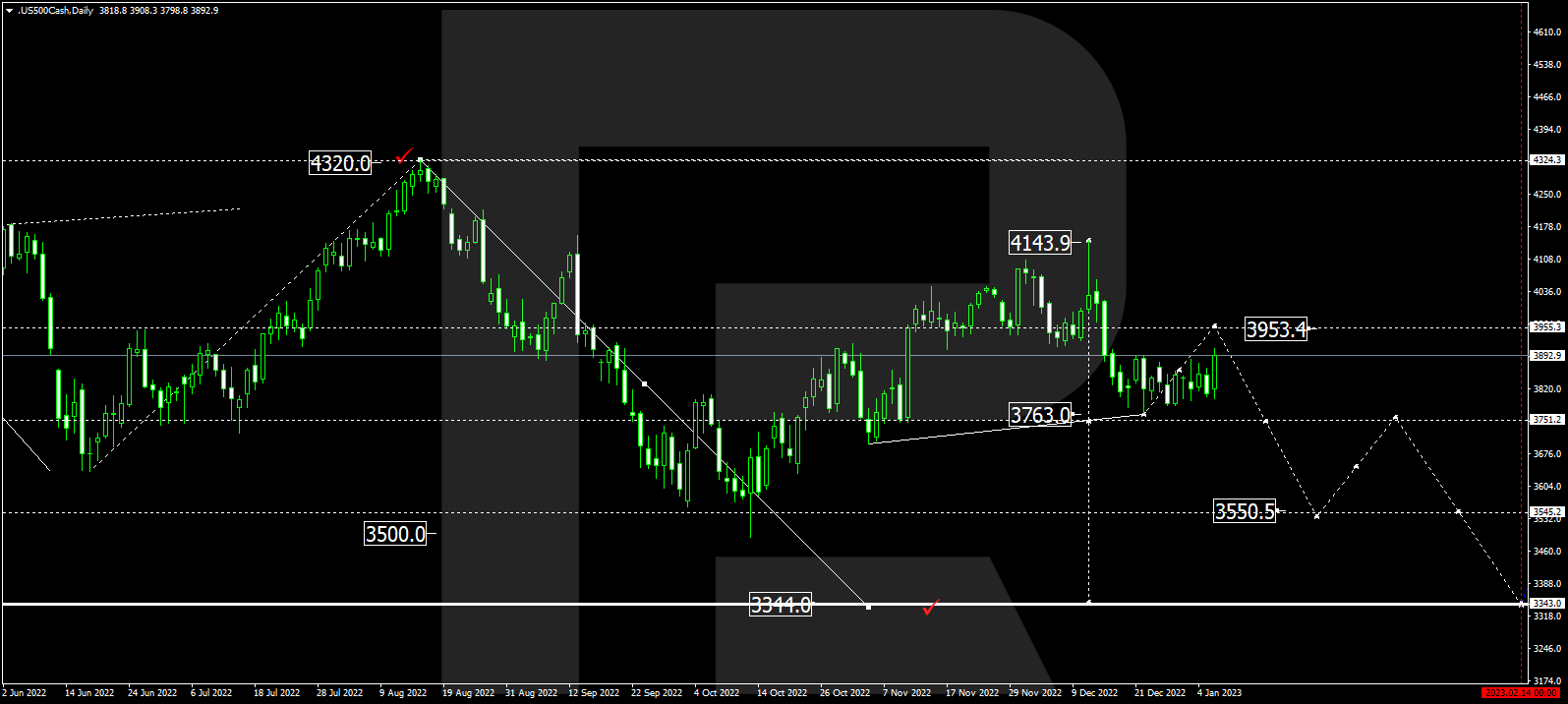
On H4, the quotes have dropped under the 200-day Moving Average, indicating the prevalence of a downtrend. The RSI has broken through the support level downwards. As a result, further falling of the quotes to 0/8 (3750.0) is expected. The scenario can be cancelled by rising over the resistance level of 2/8 (4062.5). This might lead to a trend reversal and growth to 3/8 (4218.8).

S&P 500_H4
Risk Warning: the result of previous trading operations do not guarantee the same results in the future

On M15, the lower line of VoltyChannel is broken away, which increases the probability of further price falling.

S&P 500_M15

Article By RoboForex.com

Attention!
Forecasts presented in this section only reflect the author’s private opinion and should not be considered as guidance for trading. RoboForex LP bears no responsibility for trading results based on trading recommendations described in these analytical reviews.

EUR holds positions. Overview for 16.12.2022

By RoboForex.com

The market major used the US statistics quite efficiently. The current quote is 1.0650.

EURUSD is trying and trying to grow, though investors look quite tired after the active week.

The US statistics published yesterday demonstrated a decline in November retail sales by 0.6% m/m, while a decline by 0.2% had been forecast after previous growth by 1.3% m/m. Retail sales minus cars dropped by 0.2% m/m, while the forecast had suggested growth by 0.2%. Industrial production in the US in November dropped by 0.2% m/m upon falling in October by 0.1% m/m. Meanwhile, growth by 0.2% m/m had been expected. Production power load dropped to 79.7% from 79.9% previously.

Obviously, the US economy is falling deeper in recession though officials would not admit it.

The December meeting of the European Central Bank resulted in the expected increase in the interest rate by 50 base points, to 2.50% a year. The rhetoric of the regulator was unexpectedly tough, but this only supported the EUR. Christine Lagarde commented that global growth had slowed down due to tightening of financial conditions; weakening of the economy might lead to a certain increase in unemployment. Financial measures can increase inflation stress but the ECB risks it to reach long-term goals. Judging by their reactions, investors were satisfied.

Article By RoboForex.com

Attention!
Forecasts presented in this section only reflect the author’s private opinion and should not be considered as guidance for trading. RoboForex LP bears no responsibility for trading results based on trading recommendations described in these analytical reviews.

The Analytical Overview of the Main Currency Pairs on 2022.12.16

By JustMarkets

The EUR/USD currency pair

Technical indicators of the currency pair:
  • Prev Open: 1.0680
  • Prev Close: 1.0626
  • % chg. over the last day: -0.50 %

The European Central Bank (ECB) raised its interest rate by another 50 basis points (bps) at its December meeting, bringing its discount rate to the upper limit of most estimates of a neutral configuration for the eurozone, at 2%. The ECB’s new macroeconomic forecasts predict inflation above the ECB’s price stability definition for the entire three-year forecast horizon. The peak discount rate is forecast at 3.25%. Eurozone’s inflation data will be released today. Analysts forecast that consumer prices will remain unchanged.

Trading recommendations
  • Support levels: 1.0580, 1.0549, 1.0483, 1.0361, 1.0332, 1.0284, 1.0193
  • Resistance levels: 1.0695

The trend on the EUR/USD currency pair on the hourly time frame is bullish. The price is trading above the moving averages. The price is trading above the moving averages, but there is selling pressure on the lower time frames. The MACD indicator has become inactive. Under such market conditions, buy trades are best considered from the support level of 1.0580 or 1.0549, but with additional confirmation. Sell deals can be considered from the resistance level of 1.0695, but it is better with a confirmation in the form of a reverse initiative or a false breakout because the level has already been tested.

Alternative scenario: if the price breaks down through the support level of 1.0446 and fixes below it, the downtrend will likely resume.

EUR/USD
News feed for 2022.12.16:
  • – French Manufacturing PMI (m/m) at 10:15 (GMT+2);
  • – German Manufacturing PMI (m/m) at 10:30 (GMT+2);
  • – Eurozone Manufacturing PMI (m/m) at 11:00 (GMT+2);
  • – Italian Consumer Price Index (m/m) at 12:00 (GMT+2);
  • – Eurozone Consumer Price Index (m/m) at 12:00 (GMT+2);
  • – US Manufacturing PMI (m/m) at 16:45 (GMT+2).

The GBP/USD currency pair

Technical indicators of the currency pair:
  • Prev Open: 1.2414
  • Prev Close: 1.2177
  • % chg. over the last day: -1.95 %

Yesterday the Bank of England raised its interest rate by 0.5% as expected, but it did not help the British currency to keep the fall, as dollar index growth provoked a sell-off in major currency pairs. The Bank of England said that further rate hikes might be needed to meet the bank’s goal of 2%. Investors expect the Bank of England to raise its key rate to 4.5% by the middle of next year, which implies two more hikes of 0.5% each.

Trading recommendations
  • Support levels: 1.2177, 1.2024, 1.1964, 1.1684, 1.1476, 1.1418
  • Resistance levels: 1.2308, 1.2431, 1.2519

From the technical point of view, the trend on the GBP/USD currency pair on the hourly time frame is bullish. But the price is trading below the moving averages, and selling prevails inside the day. The MACD indicator is in the negative zone. Under such market conditions, buy trades are better to look for from the support level of 1.2177, but with confirmation on intraday time frames. Sell trades are best sought from the resistance level of 1.2308, but also better with confirmation.

Alternative scenario: if the price breaks down of the 1.2100 support level and fixes below it, the downtrend will likely resume.

GBP/USD
News feed for 2022.12.16:
  • – UK Retail Sales (m/m) at 09:00 (GMT+2);
  • – UK Manufacturing PMI (m/m) at 11:30 (GMT+2).

The USD/JPY currency pair

Technical indicators of the currency pair:
  • Prev Open: 135.43
  • Prev Close: 137.78
  • % chg. over the last day: +1.73 %

Japan’s manufacturing PMI fell to 48.8 in December from 49.0 in the previous month. For the second month, the index is below the 50 mark, which separates contraction from growth. Meanwhile, service sector activity rose due to a rebound in tourism. The Services Business Activity Index (PMI) rose to a seasonally adjusted 51.7 in December, up from 50.3 in the previous month. The Japanese yen is still under pressure as the Bank of Japan firmly sticks to its soft monetary policy.

Trading recommendations
  • Support levels: 137.18, 135.61
  • Resistance levels: 139.09, 140.75, 143.17, 145.16

From the technical point of view, the medium-term trend on the currency pair USD/JPY is bearish, but the probability of trend change is increasing as the price has consolidated above the moving averages, and the MACD indicator shows buying pressure. Sell deals can be sought from the resistance level of 139.09, provided that there is a reverse reaction. Buy trades are best considered on intraday time frames from the support level of 137.18, but only with confirmation, as the level is quite high relative to the growth wave.

Alternative scenario: If the price fixes above 139.00, the uptrend will likely resume.

USD/JPY
There is no news feed for today.

The USD/CAD currency pair

Technical indicators of the currency pair:
  • Prev Open: 1.3544
  • Prev Close: 1.3655
  • % chg. over the last day: +0.82 %

The Canadian dollar lost some ground yesterday due to the rise in the dollar index and the decline in oil prices. In the medium term, the Canadian dollar has strong fundamental support from the Bank of Canada as the BoC holds one of the highest interest rates, on par with the US Federal Reserve. Therefore, only oil prices will have the greatest impact on the USD/CAD quotes.

Trading recommendations
  • Support levels: 1.3601, 1.3521, 1.3438, 1.3386, 1.3360, 1.3281, 1.3212
  • Resistance levels: 1.3690, 1.3776, 1.3855

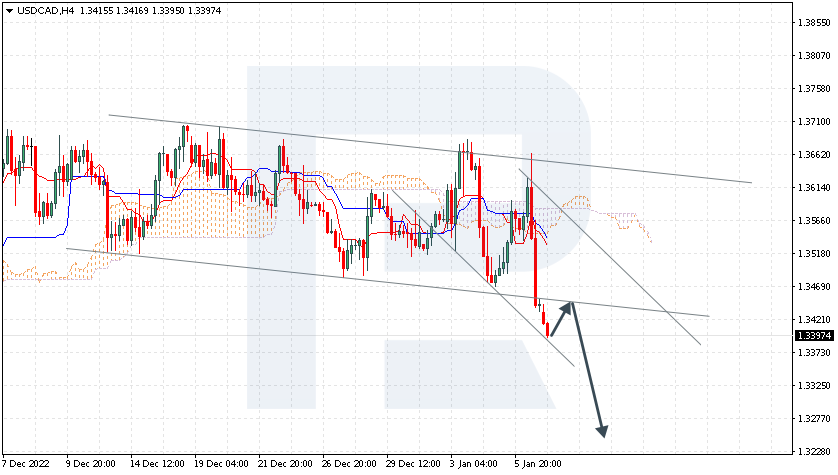
From the point of view of technical analysis, the trend on the USD/CAD currency pair has changed to bullish. The price is trading above the moving averages, and the MACD indicator is positive again. Buy trades should be considered from the support level of 1.3601, but with additional confirmation. For sell deals, it is best to consider the resistance level of 1.3690, but with confirmation in the form of a reverse initiative or after a false breakout, since the level has already been tested.

Alternative scenario: if the price breaks down and consolidates below the support level of 1.3386, the downtrend will likely resume.

USD/CAD
There is no news feed for today.

By JustMarkets


This article reflects a personal opinion and should not be interpreted as an investment advice, and/or offer, and/or a persistent request for carrying out financial transactions, and/or a guarantee, and/or a forecast of future events.

Week Ahead: Can USDJPY break below 200-day SMA?

By ForexTime 

After the Fed, BOE and the ECB have all had their say this week, up steps the Bank of Japan over the coming week, amid these other scheduled economic data releases and events:


Monday, December 19

Tuesday, December 20

  • NZD: New Zealand November external trade, December business confidence
  • AUD: Reserve Bank of Australia meeting minutes
  • CNH: China loan prime rates
  • JPY: Bank of Japan rate decision
  • EUR: Eurozone December consumer confidence
  • CAD: Canada October retail sales
  • Nike earnings

Wednesday, December 21

  • NZD: New Zealand December consumer confidence
  • Crude: EIA weekly oil inventories
  • CAD: Canada November consumer price index (CPI)
  • USD: US December consumer confidence

Thursday, December 22

  • GBP: UK 3Q GDP (final)
  • USD: US weekly initial jobless claims; 3Q GDP

Friday, December 23

  • JPY: Japan November CPI, BOJ releases October meeting minutes
  • USD: US November PCE deflator, personal income and spending; December manufacturing activity, consumer sentiment (final)


To be clear, the Bank of Japan is not expected to change anything next week: no rate hike, no policy adjustments, nada.

However, it’s what the BOJ Governor Haruhiko Kuroda says about plans for policy changes in the future, that might be catalyst for major moves for the Japanese Yen.

In the lead up to next week’s meeting, several BOJ officials are reported to be open to reviewing their policy settings in 2023.

Markets now need confirmation from the BOJ’s top boss.


BOJ wants stronger demand-pull inflation before exiting negative rate regime

Keep in mind that, as the rest of the world embarked on an aggressive series of rate hikes in 2022, Japan’s policy balance rate has remained rooted in negative territory, currently at -0.10%.

This is because the BOJ wants to see inflationary pressures become more entrenched in the world’s third largest economy.

Against such a context, we’re due to learn of Japan’s national consumer price index (CPI) – which measures inflation – a week from today:

  • The November CPI is forecasted to reach 3.9%, which would be almost double the BOJ’s 2% target.
  • A 3.9% print would also be its highest since January 1991.


However, the BOJ believes even these higher CPI prints are only reflective of higher costs, as opposed to stronger consumer demand that’s pushing these prices higher.

Hence, given the forward-looking nature of the markets, the mere hint that the BOJ is finally ready to hop onto this global policy tightening bandwagon could jolt the Japanese Yen.


JPY bulls ready to pounce

Note how the Japanese Yen remains the worst-performing G10 currency versus the US dollar in 2022, despite recovering by some 10% since weakening to almost 152 against the greenback back in October.


Hence, Yen bulls are raring to go, eager to make the most out of every opportunity to extend JPY’s recovery after being bashed for most of this year.


200-day SMA key support for USDJPY

Looking at the charts, Yen bulls have struggled to push USDJPY below its 200-day simple moving average (SMA) so far this month. This widely-used technical indicator has acted as a crucial support level.

However, this key support level could be broken by hawkish signals out of the BOJ over the coming week.

Hawkish signal = Governor Kuroda confirms that he and his colleagues are willing to review the central bank’s policy settings in 2023.


A successful break below its 200-day SMA may even see yen bulls sizing up a new cycle low below 133.620.


On the flip side, if the BOJ persists with its dovish messaging, still keeping its policy settings untouched for the foreseeable future, that may prompt USDJPY to retest resistance around the 139 region which has served as a key battle ground between bulls and bears in 2022.

A breach of the psychologically-important 140 mark may invite Yen bears to have USDJPY revisit the previous cycle high around 142.25.


Forex-Time-LogoArticle by ForexTime

ForexTime Ltd (FXTM) is an award winning international online forex broker regulated by CySEC 185/12 www.forextime.com

Federal Reserve just hiked interest rates for the 7th time this year – so why are mortgage rates coming down?

By D. Brian Blank, Mississippi State University 

The Federal Reserve raised interest rates by half a percentage point on Dec. 14, 2022, to a range of 4.25 to 4.5%, the seventh increase this year. So far in 2022, the Fed has lifted its benchmark short-term rate, which influences most other borrowing costs in the economy, by 4.25 percentage points from a low of near zero as recently as March.

But even as the U.S. central bank lifts rates – and plans to keep doing so in 2023 – homebuyers are beginning to notice a pleasant surprise: Mortgage rates have been falling.

What’s going on?

We asked Brian Blank, a finance professor who has researched mortgage rates and bank loans, to explain the paradox of falling mortgage costs at a time of rising base interest rates.

What’s happening with mortgage rates?

After soaring for much of 2022, mortgage rates and other long-term rates are starting to come down.

The average rate on a 30-year mortgage has fallen 0.75 percentage points in the past month or so, after hitting a 20-year high of 7.08% in early November. Rates reached 6.33% on Dec. 8, the lowest level since September. This occurred over the same period as the Fed lifted its benchmark interest rate 2 percentage points.

Another key rate that fell is the yield on 10-year Treasury bonds, which has declined by a similar amount, to 3.5%.

Why are mortgage rates falling if the Fed is still hiking?

The short and rather boring technical answer is that bond markets anticipated this rate hike many months ago. And as market factors largely dictate the costs of borrowing, the increase was already absorbed into home loan rates.

Mortgage rates, while rising due to the Federal Reserve’s rapid hiking pace, are actually more closely linked to the interest rate on Treasury securities, specifically the yield on the 10-year Treasury bond. That security began to anticipate the Fed’s interest rate increases a year ago and rose from less than 1.5% in December 2021 to more than 3.25% by June.

And now, with signs that inflation has already peaked and amid growing concerns of a slowing economy, these longer-term rates are coming down in anticipation of fewer future Fed rate hikes than expected only a short time ago. In fact, mortgage and other long-term rates may keep falling over the coming months – assuming the Fed manages to get inflation under control so it is able to lower its benchmark rate again.

Why do mortgage rates follow the yield on the 10-year Treasury bond?

Even though 30-year mortgages can be held for three decades, most people sell their house or refinance within a decade, which means the investor who is receiving the mortgage payments is effectively investing in a 10-year bond.

As a result, the average 30-year fixed rate mortgage interest rate is normally 1 to 2 percentage points higher than the yield on the 10-year Treasury bond.

However, when the economy has more uncertainty than usual, like earlier this year, this spread can get as large as 3 percentage points. This uncertainty can be the result of a potential economic downturn, the possibility of the Fed raising rates more than expected, inflation, Fed balance sheet changes or all of the above – as happened in 2022.

Why are mortgage rates higher than Treasury yields?

Since the United States Treasury is more likely to pay investors back than almost any individual homeowner, investors charge a higher interest rate due to the additional risk they are taking.

Even though individuals go to banks to borrow, banks often sell those loans to investors, who then receive the money individuals pay back on the loan.

Since individuals default on mortgages more often than the U.S. government defaults on Treasury bonds, investors require a higher return to purchase the rights to receive the payments from those mortgages.

If mortgage rates fall, will the Fed have to raise rates even higher to control inflation?

Falling mortgage rates preceded an increase in the home purchase index, which is a measure of current market conditions to purchase homes. This suggests the housing market may finally start to pick up steam after slowing down all year.

Since the Fed is trying to slow economic activity to bring down inflation, this could cause housing prices to increase again, thus forcing the Fed to raise its target rate more than planned.

However, I believe the effective federal funds rate, which is the market rate directly influenced by the Fed’s target range, is already sufficiently restrictive to slow the housing market and restore more normal economic conditions in 2023. Moreover, the decline in mortgage rates is still quite small – they remain over double what they were a year ago – so the drop isn’t likely to have much of an impact alone.

What the Fed itself thinks about this challenge – and where it projects to take interest rates next year – is what I and many other economists and investors will be monitoring closely after it met for the last time of 2022. It should tell us what to expect in 2023 – so stay tuned.

Article updated to include Fed raising rates.The Conversation

About the Author:

D. Brian Blank, Assistant Professor of Finance, Mississippi State University

This article is republished from The Conversation under a Creative Commons license. Read the original article.

Murrey Math Lines 15.12.2022 (USDCHF, XAUUSD)

By RoboForex.com

USDCHF, “US Dollar vs Swiss Franc”

On H4, the quotes are in the oversold area. The RSI has bounced off the support line. An upwards breakaway of 0/8 (0.9277) is expected, followed by growth to the resistance level of 2/8 (0.9521). The scenario can be cancelled by a downward breakaway of the support level of -1/8 (0.9155). In this case, the quotes may go on falling and reach -2/8 (0.9033).

USDCHFH4
Risk Warning: the result of previous trading operations do not guarantee the same results in the future

On M15, growth can be supported by a breakaway of the upper border of VoltyChannel.

USDCHF_M15
Risk Warning: the result of previous trading operations do not guarantee the same results in the future

XAUUSD, “Gold vs US Dollar”

On H4, gold quotes are above the 200-day Moving Average, which indicates the prevalence of an uptrend. The RSI is testing the support line. In the end, a test of 5/8 (1781.25) is expected, followed by a bounce off it and growth to the resistance level of 6/8 (1812.50). The scenario can be cancelled by a downward breakaway of the support level of 5/8 (1781.25). In this case, gold quotes may drop to 4/8 (1750.00).

XAUUSD_H4
Risk Warning: the result of previous trading operations do not guarantee the same results in the future

On M15, the upper line of VoltyChannel is too far away from the current price, hence, growth will be supported by a bounce off 5/8 (1781.25) on H4.

XAUUSD_M15
Risk Warning: the result of previous trading operations do not guarantee the same results in the future

Article By RoboForex.com

Attention!
Forecasts presented in this section only reflect the author’s private opinion and should not be considered as guidance for trading. RoboForex LP bears no responsibility for trading results based on trading recommendations described in these analytical reviews.

Ichimoku Cloud Analysis 15.12.2022 (EURUSD, BRENT, AUDUSD)

By RoboForex.com

EURUSD, “Euro vs US Dollar”

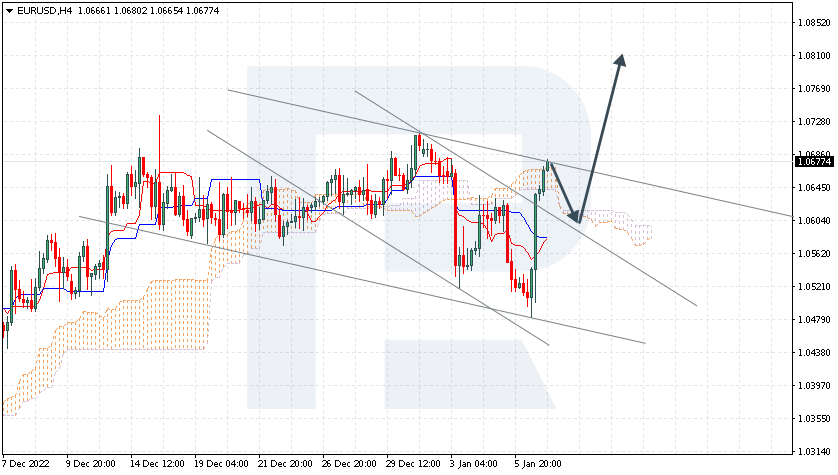
EURUSD is testing the Tenkan-Sen line. The instrument is going above the Ichimoku Cloud, which suggests an uptrend. A test of the Kijun-Sen line at 1.0610 is expected, followed by growth to 1.0935. An additional signal confirming the growth will be a bounce off the lower border of the bullish channel. The scenario can be cancelled by a breakaway of the lower border of the Cloud and securing under 1.0395, which will mean further falling to 1.0305.

EURUSD
Risk Warning: the result of previous trading operations do not guarantee the same results in the future

BRENT

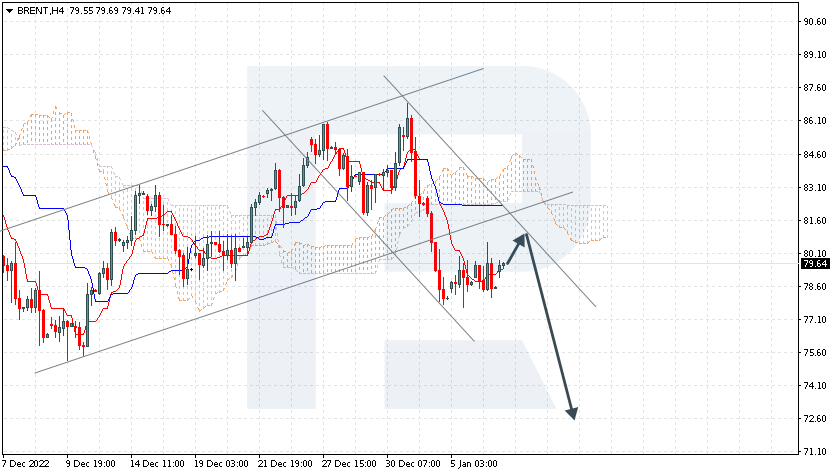
Crude oil is pushing off the lower border of the Cloud. The instrument is going inside the Ichimoku Cloud, which suggests a flat. A test of the lower border of the Cloud at 80.05 is expected, followed by growth to 91.75. An additional signal confirming the growth will be a bounce off the upper border of the descending channel. The scenario can be cancelled by a breakaway of the lower border of the Cloud and securing under 75.00, which will mean further falling to 70.00. The growth will be confirmed by a breakaway of the upper border of the bearish channel and securing above 85.05.

BRENT
Risk Warning: the result of previous trading operations do not guarantee the same results in the future

AUDUSD, “Australian Dollar vs US Dollar”

AUDUSD has secured above the resistance level. The instrument is going above the Ichimoku Cloud, which suggests an uptrend. A test of the Kijun-Sen line at 0.6795 is expected, followed by growth to 0.7005. An additional signal confirming the growth will be a bounce off the lower border of the bullish channel. The scenario can be cancelled by a breakaway of the lower border of the Cloud and securing under 0.6715, which will mean further falling to 0.6620.

AUDUSD

Article By RoboForex.com

Attention!
Forecasts presented in this section only reflect the author’s private opinion and should not be considered as guidance for trading. RoboForex LP bears no responsibility for trading results based on trading recommendations described in these analytical reviews.