AI agents arrived in 2025 – here’s what happened and the challenges ahead in 2026

By Thomas Şerban von Davier, Carnegie Mellon University 

In artificial intelligence, 2025 marked a decisive shift. Systems once confined to research labs and prototypes began to appear as everyday tools. At the center of this transition was the rise of AI agents – AI systems that can use other software tools and act on their own.

While researchers have studied AI for more than 60 years, and the term “agent” has long been part of the field’s vocabulary, 2025 was the year the concept became concrete for developers and consumers alike.

AI agents moved from theory to infrastructure, reshaping how people interact with large language models, the systems that power chatbots like ChatGPT.

In 2025, the definition of AI agent shifted from the academic framing of systems that perceive, reason and act to AI company Anthropic’s description of large language models that are capable of using software tools and taking autonomous action. While large language models have long excelled at text-based responses, the recent change is their expanding capacity to act, using tools, calling APIs, coordinating with other systems and completing tasks independently.

This shift did not happen overnight. A key inflection point came in late 2024, when Anthropic released the Model Context Protocol. The protocol allowed developers to connect large language models to external tools in a standardized way, effectively giving models the ability to act beyond generating text. With that, the stage was set for 2025 to become the year of AI agents.

AI agents are a whole new ballgame compared with generative AI.

The milestones that defined 2025

The momentum accelerated quickly. In January, the release of Chinese model DeepSeek-R1 as an open-weight model disrupted assumptions about who could build high-performing large language models, briefly rattling markets and intensifying global competition. An open-weight model is an AI model whose training, reflected in values called weights, is publicly available. Throughout 2025, major U.S. labs such as OpenAI, Anthropic, Google and xAI released larger, high-performance models, while Chinese tech companies including Alibaba, Tencent, and DeepSeek expanded the open-model ecosystem to the point where the Chinese models have been downloaded more than American models.

Another turning point came in April, when Google introduced its Agent2Agent protocol. While Anthropic’s Model Context Protocol focused on how agents use tools, Agent2Agent addressed how agents communicate with each other. Crucially, the two protocols were designed to work together. Later in the year, both Anthropic and Google donated their protocols to the open-source software nonprofit Linux Foundation, cementing them as open standards rather than proprietary experiments.

These developments quickly found their way into consumer products. By mid-2025, “agentic browsers” began to appear. Tools such as Perplexity’s Comet, Browser Company’s Dia, OpenAI’s GPT Atlas, Copilot in Microsoft’s Edge, ASI X Inc.’s Fellou, MainFunc.ai’s Genspark, Opera’s Opera Neon and others reframed the browser as an active participant rather than a passive interface. For example, rather than helping you search for vacation details, it plays a part in booking the vacation.

At the same time, workflow builders like n8n and Google’s Antigravity lowered the technical barrier for creating custom agent systems beyond what has already happened with coding agents like Cursor and GitHub Copilot.

New power, new risks

As agents became more capable, their risks became harder to ignore. In November, Anthropic disclosed how its Claude Code agent had been misused to automate parts of a cyberattack. The incident illustrated a broader concern: By automating repetitive, technical work, AI agents can also lower the barrier for malicious activity.

This tension defined much of 2025. AI agents expanded what individuals and organizations could do, but they also amplified existing vulnerabilities. Systems that were once isolated text generators became interconnected, tool-using actors operating with little human oversight.

The business community is gearing up for multiagent systems.

What to watch for in 2026

Looking ahead, several open questions are likely to shape the next phase of AI agents.

One is benchmarks. Traditional benchmarks, which are like a structured exam with a series of questions and standardized scoring, work well for single models, but agents are composite systems made up of models, tools, memory and decision logic. Researchers increasingly want to evaluate not just outcomes, but processes. This would be like asking students to show their work, not just provide an answer.

Progress here will be critical for improving reliability and trust, and ensuring that an AI agent will perform the task at hand. One method is establishing clear definitions around AI agents and AI workflows. Organizations will need to map out exactly where AI will integrate into workflows or introduce new ones.

Another development to watch is governance. In late 2025, the Linux Foundation announced the creation of the Agentic AI Foundation, signaling an effort to establish shared standards and best practices. If successful, it could play a role like the World Wide Web Consortium in shaping an open, interoperable agent ecosystem.

There is also a growing debate over model size. While large, general-purpose models dominate headlines, smaller and more specialized models are often better suited to specific tasks. As agents become configurable consumer and business tools, whether through browsers or workflow management software, the power to choose the right model increasingly shifts to users rather than labs or corporations.

The challenges ahead

Despite the optimism, significant socio-technical challenges remain. Expanding data center infrastructure strains energy grids and affects local communities. In workplaces, agents raise concerns about automation, job displacement and surveillance.

From a security perspective, connecting models to tools and stacking agents together multiplies risks that are already unresolved in standalone large language models. Specifically, AI practitioners are addressing the dangers of indirect prompt injections, where prompts are hidden in open web spaces that are readable by AI agents and result in harmful or unintended actions.

Regulation is another unresolved issue. Compared with Europe and China, the United States has relatively limited oversight of algorithmic systems. As AI agents become embedded across digital life, questions about access, accountability and limits remain largely unanswered.

Meeting these challenges will require more than technical breakthroughs. It demands rigorous engineering practices, careful design and clear documentation of how systems work and fail. Only by treating AI agents as socio-technical systems rather than mere software components, I believe, can we build an AI ecosystem that is both innovative and safe.The Conversation

About the Author:

Thomas Şerban von Davier, Affiliated Faculty Member, Carnegie Mellon Institute for Strategy and Technology, Carnegie Mellon University

This article is republished from The Conversation under a Creative Commons license. Read the original article.


Week Ahead: dollar faces first key test

By ForexTime 

  • USDInd ends 2025 ↓ 9.4% lower, biggest drop since 2017 
  • December NFP report may shape Fed cut bets for Q1 2026 
  • Ongoing Ukraine peace talks = heightened volatility? 
  • Over past year NFP triggered moves of ↑ 0.6% & ↓ 0.4% 
  • Technical levels: 100.00, 99.00 & 98.00 

The first full trading week of 2026 is packed with high-risk events!

Another round of Ukraine peace talks, a speech by Nvidia’s CEO and December’s US jobs report could spark fresh levels of volatility:


Sunday, 4th January

  • OIL: OPEC+ meeting on production levels


Monday, 5th January

  • CNY: China RatingDog services PMI
  • JPY: Japan S&P Global manufacturing PMI
  • USDInd: US ISM manufacturing, vehicle sales
  • Nvidia CEO Jensen Huang speech on innovation & productivity


Tuesday, 6th January

  • EUR: Eurozone HCOB services PMI
  • FRA40: France CPI, HCOB services PMI
  • GER40: Germany CPI, HCOB services PMI
  • USDInd: Richmond Fed President Tom Barkin


Wednesday, 7th January

  • AUD: Australia building approvals, CPI
  • EUR: Eurozone CPI
  • GER40: Germany unemployment
  • USDInd: ISM services index, ADP employment change, JOLTS job openings, Fed Michelle Bowman speech


Thursday, 8th January

  • AUD: Australia trade
  • EUR: ECB publishes 1-year and 3-year CPI expectations
  • EU50: Eurozone PPI, consumer confidence, economic confidence, unemployment
  • GER40: Germany factory orders
  • USDInd: US wholesale inventories, initial jobless claims, trade


Friday, 9th January

  • CAD: Canada unemployment
  • CNY: China PPI, CPI
  • SP35: Spain industrial production
  • EUR: Eurozone retail sales
  • USDInd: US unemployment, nonfarm payrolls, University of Michigan consumer sentiment, housing starts

The spotlight shines on FXTM’s USDInd which ended last year 9.4% lower, its biggest drop in eight years.

A screenshot of a video game  AI-generated content may be incorrect.

Note: The USD Index tracks how the dollar is performing against a basket of six different G10 currencies, including the Euro, British Pound, Japanese Yen, and Canadian dollar.

2025 was rough and rocky for the dollar thanks to worries about the US fiscal deficit, while Trump’s global trade war and lower US interest rates fuelled the downside.

With the USD entering 2026 on a shaky note, could more pain be on the horizon?

Here are three factors to watch out for:


1) December NFP – Friday 9th January

Markets expect the US economy to have created only 55,000 jobs in December while the unemployment rate is expected to drop to 4.5% from 4.6% in the previous month. The low numbers may be a result of the government shutdown as the negative knock-on effects hit labour markets.

  • A stronger-than-expected US jobs report could cool rate cut bets, boosting the USDInd higher as a result.
  • However, further evidence of a cooling US jobs market could reinforce expectations around lower US rates – pulling the USDInd lower.

USDInd is forecast to move 0.6% up or 0.4% down in a 6-hour window after the US NFP report.

Note: Before the key US NFP report, the dollar is likely to be rocked by Fed speeches and other key data including ISM Manufacturing, ADP employment and initial jobless claims.


Traders are currently pricing in a 47% chance that the Fed cuts interest rates by March 2026.

A screen shot of a price list  AI-generated content may be incorrect.


2) Ongoing Ukraine peace talks

According to Ukrainian President Volodymyr Zelensky, the peace agreement to end the war with Russia is “90% ready”.

However, recent drone strikes in Russia have rekindled tensions between the two nations despite diplomats expressing optimism over peace talks.

  • Should tensions intensify, this may weaken the Euro and spark fresh risk aversion – boosting the USDInd as a result.
  • Any signs of cooling tensions could boost the Euro and support overall risk sentiment – weighing on the USDInd.

Note: The Euro accounts for almost 60% of the USDInd weight. A weaker euro tends to push the index higher and vice versa.


3) Technical forces

FXTM’s USDInd remains under pressure on the daily charts.

  • A solid breakout and daily close above the 200-day SMA at 99.00 could trigger an incline toward 100-day SMA.
  • Should prices break below 98.00, bears could be encouraged to hit 97.20 and 96.50.


Forex-Time-LogoArticle by ForexTime


ForexTime Ltd (FXTM) is an award winning international online forex broker regulated by CySEC 185/12 www.forextime.com

Investors are entering 2026 with a cautious stance.

By JustMarkets 

The US equities concluded the final trading day of 2025 with declines as risks were trimmed and expectations for Fed policy were reassessed. At the close of Wednesday, the Dow Jones (US30) fell by -0.63%, the S&P 500 (US500) dropped by -0.74%, and the Nasdaq (US100) closed -0.76% lower. Despite the weak finish, the year proved strong: the S&P 500 gained approximately +16.6%, the Nasdaq +20.4%, and the Dow +13.2%. AI-related companies remained the primary driver, while the broader market balanced geopolitical risks, tariff uncertainty, high valuations, and shifting rate expectations. Disagreements within the Fed regarding the pace of easing in 2026 and sharp volatility in the precious metals market in late December amplified the cautious investor sentiment at the start of the new year.

The Canadian dollar weakened above the 1.37 level per U.S. dollar, retreating from its highest point since July amid deteriorating domestic macroeconomic signals and year-end strength in the greenback. Statistics Canada recorded a -0.3% contraction in real GDP for October, confirming an economic slowdown in the fourth quarter and weakening the case for a tighter policy stance compared to the U.S. Additional pressure came from falling oil prices, which reduced export revenues, as well as a widening yield spread: Canada’s 10-year bond yield dipped toward 3%, while the US 10-year yield holds near 4%.

On the final trading day of 2025, European equities held near all-time highs, closing the year with their best performance since 2021. The German DAX (DE40) was not traded on Wednesday, the French CAC 40 (FR40) closed down -0.23%, the Spanish IBEX 35 (ES35) fell -0.27%, and the British FTSE 100 (UK100) finished Wednesday down -0.09%. Growth was supported by relatively resilient macroeconomic dynamics and expectations for expanded fiscal spending in the region; key contributions came from the banking sector, which posted its best results since the late 1990s, and basic resource companies following the rally in precious metals.

On Wednesday, silver plummeted by more than -5% to $72 per ounce, correcting from a record high of $86.62 reached earlier in the week due to year-end profit-taking. The correction is technical in nature following a meteoric rally: in 2025, the metal appreciated by more than 150%, significantly outperforming gold and making it the strongest year in silver’s history. Looking ahead, analysts expect continued interest from both retail and institutional investors, especially given the likelihood of further Fed easing in 2026, which may limit the depth of corrections after such powerful growth.

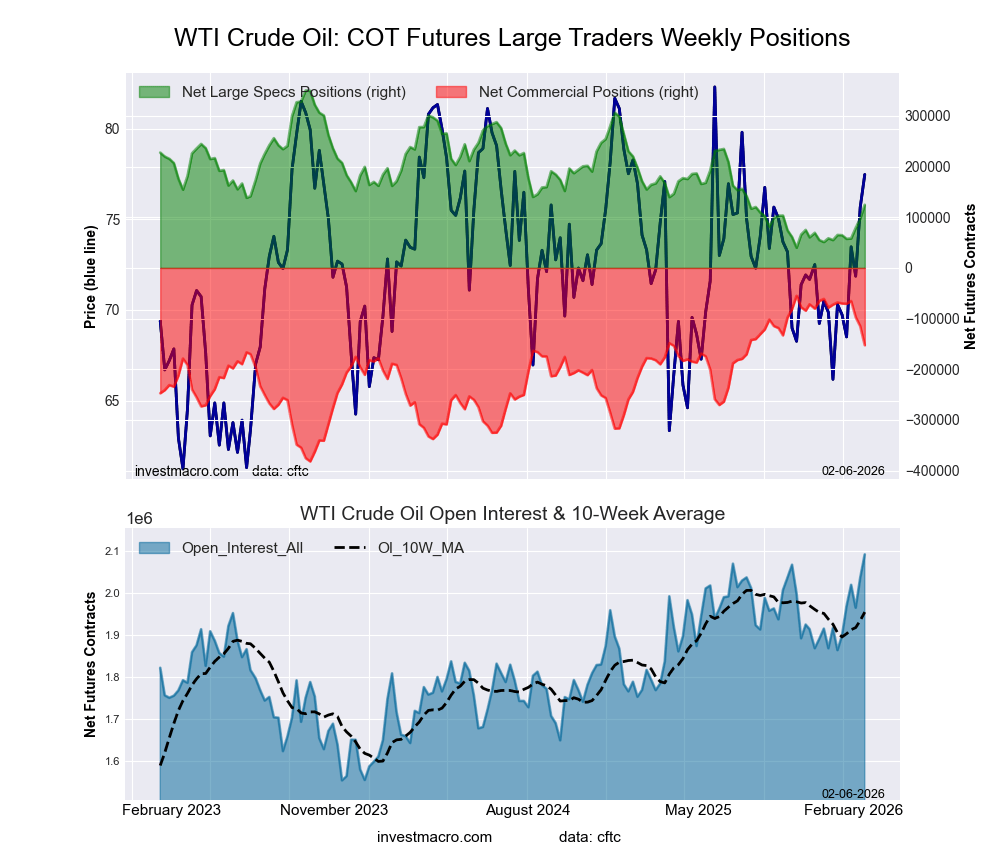
The US crude oil (WTI) inventories for the week ending December 26 decreased by 1.93 million barrels, the largest weekly decline since mid-November and notably exceeding market expectations. Nevertheless, total commercial inventories remain high at year-end, approximately 423 million barrels, which is significantly above historical norms and points to a persistent global supply surplus despite geopolitical constraints, including the blockade of Venezuelan supplies and sanctions against Russian producers.

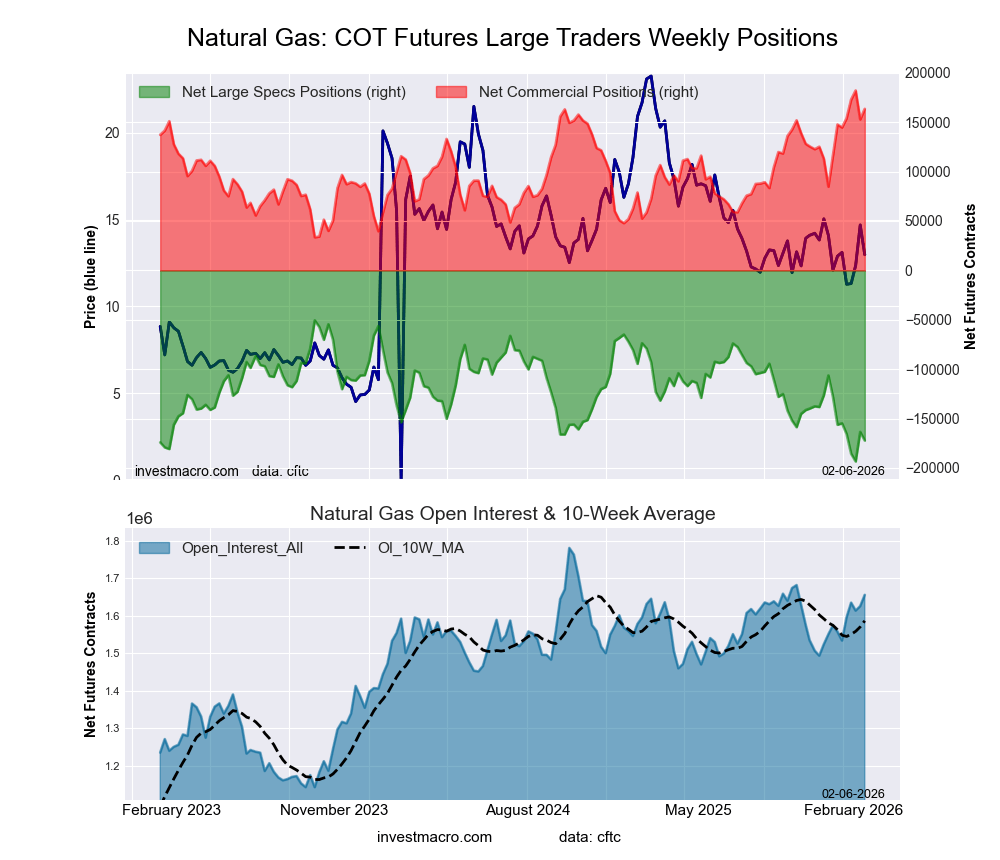
The US natural gas prices declined toward approximately $3.70 per MMBtu, a minimum since late October, amid forecasts of warmer weather and weakening short-term heating demand. The expected reduction in heating degree days and downward revisions to consumption forecasts suggest lower demand in the coming weeks, while prospects for production growth add pressure to prices. However, in the broader horizon, the market remains relatively resilient: in 2025, gas prices may rise by about 4% thanks to record LNG exports. In 2026, the market will likely be supported by structural factors, including increased electrification and higher gas usage in power generation, despite the expected further expansion of supply.

Asian markets mostly declined on the final day of 2025. The Japanese Nikkei 225 was not traded, the FTSE China A50 (CHA50) fell by -0.59%, the Hong Kong Hang Seng (HK50) dropped -0.87%, and the Australian ASX 200 (AU200) showed a negative result of -0.03% on Wednesday.
President Xi Jinping stated that China’s economy is on track to meet its 5% growth target for 2025. Furthermore, Xi Jinping indicated that in 2026, authorities intend to move toward a more proactive macroeconomic policy to sustain growth rates. The focus will be on innovative development and maintaining stability amid ongoing global uncertainty, signaling Beijing’s readiness to ramp up stimulus measures if necessary.

S&P 500 (US500) 6,845.50 −50.74 (−0.74%)

Dow Jones (US30) 48,063.29 −303.77 (−0.63%)

DAX (DE40) 24,490.41 0 (0%)

FTSE 100 (UK100) 9,931.38 −9.33 (−0.09%)

USD Index 98.28 +0.04% (+0.04%)

News feed for: 2026.01.02

  • Australia Manufacturing PMI (m/m) at 00:00 (GMT+2); – AUD (MED)
  • Eurozone Manufacturing PMI (m/m) at 11:00 (GMT+2); – EUR (MED)
  • UK Manufacturing PMI (m/m) at 11:30 (GMT+2); – GBP (MED)
  • Canada Manufacturing PMI (m/m) at 16:30 (GMT+2); – CAD (MED)
  • US Manufacturing PMI (m/m) at 16:45 (GMT+2). – USD (MED)

By JustMarkets


This article reflects a personal opinion and should not be interpreted as an investment advice, and/or offer, and/or a persistent request for carrying out financial transactions, and/or a guarantee, and/or a forecast of future events.

Has the Fed fixed the economy yet? And other burning economic questions for 2026

By D. Brian Blank, Mississippi State University and Brandy Hadley, Appalachian State University 

The U.S. economy heads into 2026 in an unusual place: Inflation is down from its peak in mid-2022, growth has held up better than many expected, and yet American households say that things still feel shaky. Uncertainty is the watchword, especially with a major Supreme Court ruling on tariffs on the horizon.

To find out what’s coming next, The Conversation U.S. checked in with finance professors Brian Blank and Brandy Hadley, who study how businesses make decisions amid uncertainty. Their forecasts for 2025 and 2024 held up notably well. Here’s what they’re expecting from 2026 – and what that could mean for households, workers, investors and the Federal Reserve:

What’s next for the Federal Reserve?

The Fed closed out 2025 by slashing its benchmark interest rate by a quarter of a percentage point – the third cut in a year. The move reopened a familiar debate: Is the Fed’s easing cycle coming to an end, or does the cooling labor market signal a long-anticipated recession on the horizon?

While unemployment remains relatively low by historical standards, it has crept up modestly since 2023, and entry-level workers are starting to feel more pressure. What’s more, history reminds us that when unemployment rises, it can do so quickly. So economists are continuing to watch closely for signs of trouble.

So far, the broader labor market offers little evidence of widespread worsening, and the most recent employment report may even be more favorable than the top-line numbers made it appear. Layoffs remain low relative to the size of the workforce – though this isn’t uncommon – and more importantly, wage growth continues to hold up. That’s in spite of the economy adding fewer jobs than most periods outside of recessions.

Gross domestic product has been surprisingly resilient; it’s expected to continue growing faster than the pre-pandemic norm and on par with recent years. That said, the recent shutdown has prevented the government from collecting important economic data that Federal Reserve policymakers use to make their decisions. Does that raise the risk of a policy miscue and potential downturn? Probably. Still, we aren’t concerned yet.

And we aren’t alone, with many economists noting that low unemployment is more important than slow job growth. Other economists continue to signal caution without alarm.

Consumers, the largest driver of economic growth, continue spendingperhaps unsustainably – with strength becoming increasingly uneven. Delinquency rates – the share of borrowers who are behind on required loan payments in housing, autos and elsewherehave risen from historic lows, while savings balances have declined from unusually high post-pandemic levels. A more pronounced K-shaped pattern in household financial health has emerged, with older higher-income households benefiting from labor markets and already seeming past the worst financial hardship.

Still, other households are stretched, even as gas prices fall. This contributes to a continuing “vibecession,” a term popularized by Kyla Scanlon to describe the disconnect between strong aggregate economic data and weaker lived experiences amid economic growth. As lower-income households feel the pinch of tariffs, wealthier households continue to drive consumer spending.

For the Fed, that’s the puzzle: solid top-line numbers, growing pockets of stress and noisier data – all at once. With this unevenness and weakness in some sectors, the next big question is what could tip the balance toward a slowdown or another year of growth. And increasingly, all eyes are on AI.

Is artificial intelligence a bubble?

The dreaded “B-word” is popping up in AI market coverage more often, and comparisons to everything from the railroad boom to the dot-com era are increasingly common.

Stock prices in some technology firms undoubtedly look expensive as they rise faster than earnings. This may be because markets expect more rate cuts coming from the Fed soon, and it is also why companies are talking more about going public. In some ways, this looks similar to bubbles of the past. At the risk of repeating the four most dangerous words in investing: Is this time different?

Comparisons are always imperfect, so we won’t linger on the differences between this time and two decades ago when the dot-com bubble burst. Let’s instead focus on what we know about bubbles.

Economists often categorize bubbles into two types. Inflection bubbles are driven by genuine technological breakthroughs and ultimately transform the economy, even if they involve excess along the way. Think the internet or transcontinental railroad. Mean-reversion bubbles, by contrast, are fads that inflate and collapse without transforming the underlying industry. Some examples include the subprime mortgage crisis of 2008 and The South Sea Company collapse of 1720.

If AI represents a true technological inflection – and early productivity gains and rapid cost declines suggest it may – then the more important questions center on how this investment is being financed.

Debt is best suited for predictable, cash-generating investments, while equity is more appropriate for highly uncertain innovations. Private credit is riskier still and often signals that traditional financing is unavailable. So we’re watching bond markets and the capital structure of AI investment closely. This is particularly important given the growing reliance on debt financing in some large-scale infrastructure projects, especially at firms like Oracle and CoreWeave, which already seem overextended.

For now, caution, not panic, is warranted. Concentrated bets on single firms with limited revenues remain risky. At the same time, it may be premature to lose sleep over “technology companies” broadly defined or even investments in data centers. Innovation is diffusing across the economy, and these tech firms are all quite different. And, as always, if it helps you sleep better, changing your investments to safer bonds and cash is rarely a risky decision.

A quiet but meaningful shift is also underway beneath the surface. Market gains are beginning to broaden beyond mega-cap technology firms, the largest and most heavily weighted companies in major stock indexes. Financials, consumer discretionary companies and some industrials are benefiting from improving sentiment, cost efficiencies and the prospect of greater policy clarity ahead. Still, policy challenges remain ahead for AI and housing with midterms looming.

Will things ever feel affordable again?

Policymakers, economists and investors have increasingly shifted their focus from “inflation” to “affordability,” with housing remaining one of the largest pressure points for many Americans, particularly first-time buyers.

In some cases, housing costs have doubled as a share of income over the past decade, forcing households to delay purchases, take more risk or even give up on hopes of homeownership entirely. That pressure matters not only for housing itself, but for sentiment and consumption more broadly.

Still, there are early signs of relief: Rents have begun to decline in many markets, especially where new supply is coming online, like in Las Vegas, Atlanta and Austin, Texas. Local conditions such as zoning rules, housing supply, population growth and job markets continue to dominate, but even modest improvements in affordability can meaningfully affect household balance sheets and confidence.

Looking beyond the housing market, inflation has fallen considerably since 2021, but certain types of services, such as insurance, remain sticky. Immigration policy also plays an important role here, and changes to labor supply could influence wage pressures and inflation dynamics going forward.

There are real challenges ahead: high housing costs, uneven consumer health, fiscal pressures amid aging demographics and persistent geopolitical risks.

But there are also meaningful offsets: tentative rent declines, broadening equity market participation, falling AI costs and productivity gains that may help cool inflation without breaking the labor market.

Encouragingly, greater clarity on taxes, tariffs, regulation and monetary policy may arrive in the coming year. When it does, it could help unlock delayed business investment across multiple sectors, an outcome the Federal Reserve itself appears to be anticipating.

If there is one lesson worth emphasizing, it’s this: Uncertainty is always greater than anyone expects. As the oft-quoted baseball sage Yogi Berra memorably put it, “It’s tough to make predictions, especially about the future.”

Still, these forces may converge in a way that keeps the expansion intact long enough for sentiment to catch up with the data. Perhaps 2026 will be even better than 2025, as attention shifts from markets and macroeconomics toward things that money can’t buy.The Conversation

About the Authors:

D. Brian Blank, Associate Professor of Finance, Mississippi State University and Brandy Hadley, Associate Professor of Finance and Distinguished Scholar of Applied Investments, Appalachian State University

This article is republished from The Conversation under a Creative Commons license. Read the original article.

The US Federal Reserve plans to continue cutting rates. The Chinese yuan has strengthened to its highest level since 2020

By JustMarkets 

On Tuesday, the US stock markets showed restrained dynamics and are likely to end the year near recent all-time highs. The Dow Jones (US30) decreased by 0.20%. The S&P 500 (US500) fell by 0.14%. The technology-heavy Nasdaq (US100) closed lower by 0.24%. Investors are balancing expectations of sustainable economic growth and potential further Fed rate cuts on one hand, with persistent concerns regarding the overvaluation of AI-related companies on the other.

The minutes of the December Fed meeting showed that the majority of FOMC representatives allow for further interest rate cuts next year, provided that inflationary pressures gradually ease. However, notable disagreements persist within the committee: some participants fear that high inflation may become entrenched and believe it is necessary to keep borrowing costs elevated, while others advocate for more active policy easing amid signs of a cooling labor market. In December, the Fed lowered the federal funds rate by 25 bps to a range of 3.5-3.75%, marking the third cut of the year and meeting market expectations, although the decision was accompanied by a non-unanimous vote.

European stock markets continued to hit new all-time highs on Tuesday, receiving strong support from the banking and commodity sectors. The German DAX (DE40) rose by 0.57%, the French CAC 40 (FR40) closed with a gain of 0.69%, the Spanish IBEX 35 (ES35) increased by 0.93%, and the British FTSE 100 (UK100) closed at positive 0.75%. Investors generally ignored the increased volatility in the precious metals market and renewed uncertainty surrounding peace negotiations for Ukraine, focusing instead on expectations of further Fed policy easing in 2026.

Switzerland’s KOF Economic Barometer rose by 1.7 points to 103.4 in December 2025, reaching its highest value since September 2024 and exceeding market expectations. This indicates an overall improvement in economic prospects, primarily driven by the manufacturing sector.

On Wednesday, silver fell by more than 5% to around $72 per ounce amid year-end profit-taking, sharply retracing from its recent gains. Nevertheless, in 2025, the metal showed outstanding performance, briefly exceeding $80 per ounce due to limited supply and low inventories, and ending the year up approximately 162%, becoming one of the most profitable commodity assets and outperforming most stock indices and currencies. In the longer term, analysts maintain a positive outlook on silver. Interest in metals from both retail and institutional investors remains high, and structural factors, including silver’s strategic importance and limited supply, are capable of offsetting short-term volatility and price corrections.

WTI oil prices traded around $57.9 per barrel on the last trading day of 2025 and are ending the year with the sharpest decline since 2020 amid persistent fears of a global supply glut. Over the year, quotes decreased by almost 20%, and December could be the fifth consecutive month of negative dynamics, reflecting a combination of production growth from OPEC+ countries and non-OPEC producers alongside moderate rates of demand growth.

Asian markets mostly rose yesterday. The Japanese Nikkei 225 (JP225) fell by 0.37%, the Chinese FTSE China A50 (CHA50) rose by 0.14%, the Hong Kong Hang Seng (HK50) gained 0.86%, and the Australian ASX 200 (AU200) showed a positive result of 0.13%. Consumer sector stocks in Hong Kong rose, and financial companies showed a moderate climb following the publication of November trade data, which recorded the strongest growth in exports and imports in the last four years, indicating resilient external and internal demand. Additional positive sentiment came from the successful debuts of six Chinese companies on the Hong Kong exchange: most of them began trading above their offering prices, confirming high investor interest and strengthening the city’s status as the region’s key financial hub.

On Wednesday, the offshore yuan strengthened beyond 6.98 per dollar and held near a fifteen-month high following strong data on business activity in China. The Composite PMI rose to 50.7 in December, reaching a six-month peak, while the Manufacturing Index returned to the growth zone for the first time since March, and the Non-Manufacturing Sector Index hit a five-month high. Sentiment was further supported by private survey data, which also pointed to a recovery in industrial activity. As a result, the yuan is moving toward its most significant annual strengthening since 2020.

S&P 500 (US500) 6,896.24 −9.50 (−0.14%)

Dow Jones (US30) 48,367.06 −94.87 (−0.20%)

DAX (DE40) 24,490.41 +139.29 (+0.57%)

FTSE 100 (UK100) 9,940.71 +74.18 (+0.75%)

USD Index 98.22 +0.18% (+0.18%)

News feed for: 2025.12.31

  • China Manufacturing PMI (m/m) at 03:30 (GMT+2); – CHA50, HK50 (MED)
  • China Non-Manufacturing PMI (m/m) at 03:30 (GMT+2); – CHA50, HK50 (MED)
  • US Crude Oil Reserves (w/w) at 17:30 (GMT+2); – WTI (HIGH)
  • US Natural Gas Storage (w/w) at 19:00 (GMT+2). – XNG (HIGH)

By JustMarkets


This article reflects a personal opinion and should not be interpreted as an investment advice, and/or offer, and/or a persistent request for carrying out financial transactions, and/or a guarantee, and/or a forecast of future events.

Rising electricity prices and an aging grid challenge the nation as data centers demand more power

By Barbara Kates-Garnick, Tufts University 

Everyone – politicians and the public – is talking about energy costs. In particular, they’re talking about data centers that drive artificial intelligence systems and their increasing energy demand, electricity costs and strain on the nation’s already overloaded energy grid.

As a former state energy official and utility executive, I know that many of the underlying questions involving energy affordability are very complex and have been festering for decades, in part because of how many groups are involved. Energy projects are expensive and take a long time to build. Where to build them is often also a difficult, even controversial, question. Consumers, regulators, utilities and developers all value energy reliability but have different interests, cost sensitivities and time frames in mind.

The problem of high energy prices is not new, but it is urgent. And it comes at a time when the U.S. is deeply divided on its approaches to energy policy and the politics of solving collective problems.

Rising costs

From September 2024 to September 2025, average U.S. residential electricity prices have risen 7.4%, from 16.8 to 18 cents per kilowatt-hour. Government analysts expect prices will continue to rise and outpace inflation in 2026.

With household earnings basically flat when adjusted for inflation, these increases hit consumers hard. They take up higher percentages of household expensesespecially for lower-income households. Electricity prices have effects throughout the economy, both directly on consumers’ budgets and indirectly by raising operating costs for business and industry, which pass them along to customers by raising prices for goods and services.

The problem

By 2030, energy analysts expect U.S. electricity demand to rise about 25%, and McKinsey estimates that data centers’ energy use could nearly triple from current levels by that year, using as much as 11.7% of all electricity in the U.S. – more than double their current share.

The nation’s current electricity grid is not ready to supply all that energy. And even if the electricity could be generated, transmission lines are aging and not up to carrying all that power. Their capacity would need to be expanded by about 60% by 2050.

Orders of key generating equipment often face multiyear delays. And construction of new and expanded transmission lines has been very slow.

A Brattle Group analysis estimates all that new and upgraded equipment could cost between US$760 billion and $1.4 trillion in the next 25 years.

The reasons

The enormous scale of the work needed is a result of a lack of investment over time and delays in the investments that have been made.

For instance, since at least 2011 there has been an effort to bring Canadian hydropower to the New England electricity grid. Political opposition to cutting a path for a transmission line through forestland meant the project was subjected to a statewide referendum in Maine – and then a court case that overturned the referendum results. During those delays, inflation raised the estimated price of the project by half, from $1 billion to $1.5 billion – an added cost that will be paid by Massachusetts electricity customers.

That multiyear effort is just one example of how the vast web of companies that generate power, transmit it from power plants to communities, and distribute it to homes and businesses complicates attempts to make changes to the power grid.

State and federal government agencies have roles in these processes. States’ public utilities commissions oversee the utility companies that distribute power to customers. The Federal Energy Regulatory Commission oversees connections of power generators to the grid and the transmission lines that move electricity across state lines.

Often, those efforts aren’t aligned with each other, leading to delays over jurisdiction and decision-making.

For instance, as new generators prepare to operate, whether they are solar farms or gas-fired power plants, they need permission from FERC to connect to the transmission grid. The commission typically requests technical engineering studies to determine how the project would affect the existing system. Delays in this process increase the timeline and cost of development and postpone adding new capacity to the grid.

The costs

A key question for regulators and consumers alike is who should pay for adding more electricity to the grid and making the system more reliable.

Utilities traditionally charge customers for the costs of generating and delivering power. And it’s not clear how much power the data centers will ultimately require.

Some large data centers have taken to paying to build their own on-site power plants, though often they can supply energy to the grid as well.

In some states, efforts have begun to address public concern about electricity bills. In November 2025, two utility commissioners in Georgia, who had consistently approved electricity rate hikes over the previous two years, were voted out of office in a landslide.

New Jersey’s Gov.-elect Mikie Sherrill has pledged to declare a utility-price emergency and freeze costs for a year.

In New York, Gov. Kathy Hochul has paused implementation of state law, driven by environmental concerns, requiring that all new buildings over seven stories tall only use electricity and not natural gas or other energy sources. Hochul has said that requirement would increase electricity demand too much, raising prices and making the grid less stable.

In Massachusetts, Gov. Maura Healey has filed legislation seeking to provide energy affordability, including eliminating some charges from utility bills, capping bill increases and barring utility companies from charging customers for advertisement costs.

Generating more power – from wind, nuclear or other sources – is only part of the potential solution.

The solutions

Clearly, there are no quick fixes or easy solutions to this complex situation.

However, innovation in regulation, combined with new technologies and even AI itself, may enable creative regulatory and technical solutions. For instance, devices that can be programmed to use energy efficiently, time-sensitive pricing and demand monitoring to smooth out peaks and valleys in electricity use can potentially ease both grid load and customers’ bills. But those solutions will work only if all the players are willing to cooperate.

There are a lot of ideas about how to lower the public’s burden of paying for data centers’ power. New ideas like this need careful scrutiny and possible revisions to ensure they are effective at lowering costs and increasing reliability.

As the country grapples with the effort to upgrade the grid, perform long-deferred maintenance and build new power plants, consumers’ costs are likely to continue to rise, further increasing pressure on Americans. Existing regulations and government oversight may no longer lower electricity costs immediately or help people plan for the rising costs over the long term.The Conversation

About the Author:

Barbara Kates-Garnick, Professor of Practice in Energy Policy, The Fletcher School, Tufts University

This article is republished from The Conversation under a Creative Commons license. Read the original article.


Profit-taking is observed in precious metals. The US natural gas prices are rising amid declining inventories

By JustMarkets 

On Monday, the US stock indices corrected after hitting record highs at the end of last week. The Dow Jones (US30) decreased by 0.51%. The S&P 500 (US500) fell by 0.35%. The tech-heavy Nasdaq (US100) closed lower by 0.46%. The primary pressure once again came from the technology sector amid growing doubts about the justification of high valuations for AI-related companies. The sell-off was led by Nvidia and Tesla, while weakness also affected Oracle and Palantir, as investors continue to question whether massive AI investments by software developers and data center operators can translate into comparable earnings growth.
European stock markets ended Monday with moderate gains, supported by strengthening shares in automakers and the technology sector. The German DAX (DE40) rose by 0.04%, the French CAC 40 (FR40) closed up 0.10%, the Spanish IBEX 35 (ES35) gained 0.13%, and the British FTSE 100 (UK100) closed at negative 0.04%. Investors continued to assess the regional geopolitical situation, attempting to gauge whether the momentum of the strong rally can persist into the beginning of next year.

On Tuesday, silver recovered by more than 1%, rising toward $73 per ounce following a sharp collapse in the previous session, the strongest daily decline in five years, triggered by profit-taking. The metal continues to find support from its safe-haven status amid ongoing geopolitical tensions, including prolonged and unstable negotiations between Russia and Ukraine, rising risks surrounding Iran, and increased Chinese military activity near Taiwan. Despite high short-term volatility, the medium-term outlook for silver remains positive.

WTI oil prices consolidated around $58.1 per barrel on Tuesday after a sharp increase of over 2% the day before, driven by intensified geopolitical risks. Uncertainty regarding a settlement of the conflict in Ukraine rose again following Moscow’s statements about a possible revision of its negotiating position, despite recent signals from the US and Ukraine of progress, with key issues remaining unresolved. Additional tension is building over the situation in Venezuela, where production has reportedly begun to halt in a key region following US actions. Nevertheless, despite short-term geopolitical support, the oil market overall remains under pressure: prices have declined by nearly 20% since the start of the year, marking the sharpest annual drop since 2020 amid expectations of sufficient global supply.

The US natural gas prices rose toward the $4 per MMBtu mark, maintaining most of their recovery from a two-month low recorded in late December. Prices were supported by prognoses of colder weather, which boosted expectations for increased heating demand in early January and prompted utility companies to build positions in short-term contracts. An additional factor was EIA data showing a storage withdrawal of 166 billion cubic feet for the week ending December 19, a level exceeding the seasonal norm that pushed inventories below five-year averages. This occurred despite record production, as the expansion of LNG export capacity and European restrictions on Russian gas continue to support external demand for American LNG.

Asian markets traded mixed yesterday. The Japanese Nikkei 225 (JP225) fell by 0.44%, the Chinese FTSE China A50 (CHA50) rose by 0.10%, the Hong Kong Hang Seng (HK50) dropped 0.71%, and the Australian ASX 200 (AU200) showed a negative result of 0.42%.

S&P 500 (US500) 6,929.94 −2.11 (−0.03%)

Dow Jones (US30) 48,710.97 −20.19 (−0.04%)

DAX (DE40) 24,340.06 +56.09 (+0.23%)

FTSE 100 (UK100) 9,870.68 −18.54 (−0.19%)

USD Index 98.05 +0.08% (+0.08%)

News feed for: 2025.12.30

  • Switzerland KOF Leading Indicators (m/m) at 10:00 (GMT+2); – CHF (MED)
  • US Chicago PMI (m/m) at 16:45 (GMT+2); – USD (MED)
  • US FOMC Meeting Minutes at 21:00 (GMT+2). – USD (MED)

By JustMarkets


This article reflects a personal opinion and should not be interpreted as an investment advice, and/or offer, and/or a persistent request for carrying out financial transactions, and/or a guarantee, and/or a forecast of future events.

XAG/USD: After Hitting Fresh Highs, Silver Tumbles Over 15%

By RoboForex Analytical Department 

Silver posted its strongest weekly gain since 1998, surging 18%, driven by the “China factor”—specifically, Beijing’s announcement of mandatory export licensing effective from 2026. This echoes the 1979 silver squeeze, when inflation soared and the Hunt brothers attempted to corner the market.

An ounce of silver now costs more than a barrel of oil, and daily trading volume in the SLV ETF reached USD 9.6 billion, a frenzy not seen since the peaks of 2011 and 2021. Octavio Costa of Crescat Capital even interprets this rally as a sign of hidden hyperinflation, largely overlooked by mainstream financial media.

The shift in sentiment has been extraordinary: silver has outperformed the British pound in market capitalisation terms and has soared 300% since October 2022, outpacing even high-flying AI stocks—a potent signal of speculative excess. However, the precious metals complex sold off sharply in the latter part of the session, with silver reaching a new daily low despite holding gains during Asian hours. The move appeared driven by forced short covering, a phenomenon often seen near market tops.

Underlying the volatility, silver inventories remain critically low, posing a potential supply threat to several key industries that rely on the metal in manufacturing.

Technical Analysis: XAG/USD

H4 Chart:

On the H4 chart, XAG/USD completed an impulsive wave up to 83.70 USD. The market is now developing a corrective decline toward 66.80 USD. Upon reaching this level, a subsequent upward wave toward 75.30 USD may materialise.

The MACD indicator supports the near-term bearish view, as its signal line—positioned above zero but having diverged from the histogram—suggests further downside momentum.

H1 Chart:

On the H1 chart, silver completed a downward impulse to 74.85 USD, followed by a correction to 80.60 USD. The market is currently forming another bearish impulse targeting 69.90 USD. A corrective bounce toward 75.30 USD is expected afterward, potentially setting the stage for another leg lower toward 66.80 USD.

The Stochastic oscillator aligns with this outlook, with its signal line above 80 but turning decisively downward.

Conclusion

Silver’s parabolic rise and subsequent sharp correction highlight extreme volatility and speculative positioning. While long-term fundamentals—including structural supply deficits and industrial demand—remain supportive, the near-term technical picture points to further downside toward 66.80–69.90 USD. The current pullback may offer a healthier foundation before the next sustained rally, but traders should monitor inventory data and Chinese policy signals closely. Expect elevated volatility to persist as the market digests recent extremes.


Disclaimer:

Any forecasts contained herein are based on the author’s particular opinion. This analysis may not be treated as trading advice. RoboForex bears no responsibility for trading results based on trading recommendations and reviews contained herein.

The Annual Tax Loss Fire Sale: Ten Bargains for the New Year Bounce

Source: Dominic Frisby (12/24/25) 

Dominic Frisby of The Flying Frisby shares how you can profit from December’s forced selling and why you need to be out by March.

In Canada and the U.S., the tax year ends on December 31. This creates a flurry of selling as the year draws to a close. Why? Investors want to realise losses which they can then offset against gains elsewhere and so reduce their tax bill.

This creates considerable selling pressure, especially amongst small-cap stocks, and they can become quite oversold. The selling can be quite indiscriminate in the last few days before Christmas, but it abates as soon as the year ends, and the stocks often rally — particularly if there is a reason for them to rally (such as them being cheap or, better, some positive newsflow or generally better market conditions for the sector in which that company operates: eg Bitcoin rallies a bit, so all Bitcoin related companies rally).

Some years this works better than others, some picks work better than others. But manage your risk — don’t take on position sizes which are too large, be prepared to sell if the trade goes against you, etc. — and the trade can work well.

You want to be exiting your positions by February-March, so the trade has a nice structured timescale around it.

Note: Companies often do badly because they are not very good companies, so that means you are often buying not-very-good companies. Be under no illusions.

The trade seems to work particularly well with small-cap Canadian resource stocks, so you will need a broker who deals in such things. I use Interactive Investor. If you want to open an account, use this affiliate link (I get a fee, and you get a year’s free trading.)

Anatomy of a tax loss candidate

The ideal candidate wants to have spiked at some point in the last couple of years so that it sucked in a lot of buyers at higher prices. It wants to have been flat or declining for some time, so that buyers will now hate it and want it out of their portfolio, happy to sell at any price just to get rid of the wretched thing.

It wants to be really oversold so there is room for a rebound.

Ideally, they want to have some cash so they are not coming to market for capital in the New Year and thereby killing any rally with a raise.

It’s better if the company has genuine assets and is a genuine business, not some lifestyle company. That lowers risk and betters chances of positive, real newsflow in the New Year.

Take a look at this chart of Company Unknown. You can see that three times this year it spiked above $10. Now it is trading at 84c. How many people have lost money, I dread to think. It has been a proverbial clusterfook.

If you bought anywhere above $2 or $3 — and especially up near $10 or $13 – you will HATE this company.

Meanwhile, there is a huge potential loss for you to realise. So you sell it and take the loss.

But look also at the volume — that has been quite high since the sell off (short sellers covering, increased stock coming to market as it became free trading, but also capitulation). There is a story there, too. Note also the volumes when the stock went from 80c to $1.80 in October.

It’s tailing off again.

This stock could easily rise 50% — and that would only take it to $1.25, which is nothing in the context of the greater volatility.

I’ve read the chatboards. Investors hate this stock. It is not a good company. It’s even been associated with scams.

But all we are looking for is a New Year bounce.

Imagine owning Company Unknown 2, meanwhile. It’s been falling for five years!

It was a $7 stock, now it’s 60c. Investors have had five years of relentless grind lower. It’s a copper company with resources in the Southwestern U.S. That should be a golden ticket in current markets.

Investors will be furious. No surprise they’re selling.

But it’s got capital. There’s some newsflow coming early next year. It looks like it has made a low around 50c. Could this be a dollar stock by March? Why not? The world needs copper. This company has lots of it.

You get the point.

Selling in my view will climax this Friday, December 19, and Monday, December 22,  but you have until New Year’s Eve to buy. (Most will have left their desks by Tuesday of next week I’d say).

The timeframe for the exit is February to March.

With all that in mind, here are 10 tax loss selling ideas for 2025-2-26:

I have been on a 2-day marathon scanning charts. Here are the best ten I could find.

This has been a hard year to find candidates, I must say, largely because resource stocks have had such a good time of it.

Crypto Treasury Companies, on the other hand, have had a terrible year, so — with a bit of help from Bitcoin (it needs to rebound) — they could enjoy a nice bounce.

I’ll tell you my ideas and then at the end of today’s piece, tell you the ones I am going for.

Tech

(NB $ = USD, unless otherwise stated).

1. Strategy Inc. (MSTR:NASDAQ)

Billionaire genius Michael Saylor’s Strategy has had a rotten time of it lately. Once trading at a premium to its Bitcoins, it’s now trading at a slight discount to them. If you want a long-term position in this company, now might not be a bad time to acquire it.

Trading at or near its lows for the year, it has properly puked.

It will only rally if Bitcoin rallies — and that particular engine has run out of steam — but it’s a prime candidate for a rebound.

2. SOL Strategies Inc. (HODL:CSE; STKE:NASDAQ).

To think I was CEO of this company once upon a time, in its earlier incarnation as a privacy company, Cypherpunk Holdings. The company changed focus a year or two ago and is now a Sol staking company.

Basically, it sinks or swims with Solana.

Earlier this year, it got to $34. Now it’s under $2. A proper puke job. One to sell and realise a loss. And so one for us to buy.

Like Strategy and Bitcoin, we will need some help from Solana. If it doesn’t rally, this remains dead in the water. But if it does, it makes a lovely flip.

This could quite easily go above $5.

3. Strive (ASST:NASDAQ) is the third of my crypto treasury ideas.

That’s the one with the chart above — Unnamed Company. I stress this trade is not about quality. It is unfortunately merging with Semler Scientific, which other readers and I hold (Semler is another tax loss candidate by the way, but there are better ones).

Again, with some help from Bitcoin, it could be a nice flip.

Here’s another tech-related idea for you.

4. Healwell AI (AIDX:TSX)

Three years ago, this was a CA$3 stock. Now it’s 85c. But it’s now a top pick of Canadian broker, Haywood Securities, which has put a target of $4.50, now that it has cleaned up its balance sheet and refocused its activities on AI.

We don’t need it to get that high. Pick it up in the low 80s and aim to flip at 1.20 is what I am looking to do.

Oil and Gas

I was looking for names in the oil and gas space as I think oil could prove a winner next year, but while oil itself has been weak, the stocks themselves have not been the disaster I have been looking for.

5. Vermilion Energy Corp. (VET:TSX; VET:NYSE) is not a bad option.

It looks like it made its low in April at CA$7. It was a CA$35 stock in 2022, so there are losers over that time frame, and this year it’s “only down” about 15% which means it is not a mega tax loss candidate. But if oil and gas rally, so will this.

I see it as quite a low-risk bet, although I don’t see mega gains either

6. SM Energy Co. (SM:NYSE)

This $2 billion market company is perhaps a bit larger than ideal, but its chart — going from $50 to $17 — fits the bill.

The reason for the declines is largely lower oil prices. Its production has increased, though its margins have been compressed, so profitability is in doubt. There are also doubts about its reserves.

Such things need not bother us. We are here for a good time, not a long time.

Just as the treasury companies sink or swim with Bitcoin (and Solana), these will need some help from oil and gas prices, but oil to me looks like it’s making a long-term low at $55.

A rally early next year will give this the filip it needs. A decline, though, won’t.

Uranium

7. Lightbridge Fuels (LTBR:NASDAQ) has been a big winner for readers.

I think we first wrote it up at $3 or thereabouts, and it was a great tax loss trade last year, too.

This uranium fuel tech company, with a market cap $420 million, is up and down like the proverbial, and it has just had one of its down phases, hence my adding it to this list.

Really, the chart doesn’t quite fit the bill, but it sort of does and it keeps on giving, so I include it here, if you can get it in the $12 range, here’s hoping in 2026 it will do its thang.

Mining

8. As mentioned, we have a shortage of good mining candidates, but Arizona Metals Corp. (AMC:TSX.V; AZMCF:OTCQX) is a beauty — Company Unknown 2 above.

This CA$80 million cap copper development play has been a right dog, and it has a lot of disgruntled shareholders, but it has some news flow to come early next year in the form of PEA plus about CA$15 million in cash. The chart to me looks like it has bottomed at 50c, which would make an ideal buy point.

I would have expected it to reach there, but it spiked a bit yesterday for some reason, so maybe it won’t go back there before year’s end.

9. NexMetals Mining Corp. (NEXM:TSX.V; NEXM; NASDAQ) Can’t really tell you much about this Botswana critical metals miner, except to say that it was a $50 stock 4 years ago and now it’s a $5. No surprise it’s now looking for a new CEO.

The declines have been relentless and inexorable, and now it’s near its lows. But this CA$180 million market cap company has some $90 million in cash, and some heavyweight promoters, including Frank Giustra, behind the scenes, so it fits our bill well.

Here’s the four-year chart of grimness.

10. I really shouldn’t be giving airtime to companies like this. It’s too small and too illiquid. But South Star Battery Metals Corp. (STS:TSX.V; STSBF:OTCBB) has a humdinger of a chart and plenty of cash — this CA$14 million market company just completed a highly dilutive, full warrants and all, raise CA$6.7 million.

That stock comes free trading in February 2026, so you don’t want to be around for that. Exit this one earlier than the others. But at 13c, it’s tempting.

What will be the trigger for this graphite miner? Lord knows, but the company could start by updating its presentation, which hasn’t been touched since February. What a joke.

Phew. That was some work. I need to go and get some fresh air.

Summary

So there are ten ideas here. Obviously, you can’t go for all of them. Maybe pick three or four — one from each category.

The risk with the treasury companies is that Bitcoin itself continues its declines, and we are unfortunately in crypto winter again, so that is not unlikely. Strategy is the safer option; Sol and Strive will see the bigger gains but also the bigger losses if they don’t work.

Healwell AI is tempting me too.

Oil-wise, I lean towards SM Energy.

And as for the miners, they all have their allure, but probably avoid South Star unless you are feeling really reckless.

A reminder. Don’t chase these things. Leave a stink bid under the market and let the price come to you. You have between now and New Year’s Eve to get your limit order filled.

The usual disclaimers all apply, but I should say this. If you are not an experienced trader, you might be better off not playing this game.

As always, watch your position sizes and manage your risk.

Good luck!

If you’d like to read more from Dominic, you can sign up for The Flying Frisby here.


Important Disclosures:

  1. As of the date of this article, officers, contractors, shareholders, and/or employees of Streetwise Reports LLC (including members of their household) own securities of NexMetals Mining Corp.
  2. Dominic Frisby: I, or members of my immediate household or family, own securities of: Strategy Inc., Sol Strategies, Healwell AI, Vermilion Energy Corp.,  SM Energy Co., NexMetals Mining Corp., and South Star Battery Metals Corp. . My company has a financial relationship with: None. My company has purchased stocks mentioned in this article for my management clients: None. I determined which companies would be included in this article based on my research and understanding of the sector.
  3. Dr. John Wolstencroft: I, or members of my immediate household or family, own securities of: ishares US treasury 1-3 year ETF, Volta, Aberdeen Diversified, Black Rock World Mining, Van Eck global mining ETF, Aberdeen Asian Income.. My company has a financial relationship with:None. My company has purchased stocks mentioned in this article for my management clients: None. I determined which companies would be included in this article based on my research and understanding of the sector.
  4. Statements and opinions expressed are the opinions of the author and not of Streetwise Reports, Street Smart, or their officers. The author is wholly responsible for the accuracy of the statements. Streetwise Reports was not paid by the author to publish or syndicate this article. Streetwise Reports requires contributing authors to disclose any shareholdings in, or economic relationships with, companies that they write about. Any disclosures from the author can be found  below. Streetwise Reports relies upon the authors to accurately provide this information and Streetwise Reports has no means of verifying its accuracy.
  5.  This article does not constitute investment advice and is not a solicitation for any investment. Streetwise Reports does not render general or specific investment advice and the information on Streetwise Reports should not be considered a recommendation to buy or sell any security. Each reader is encouraged to consult with his or her personal financial adviser and perform their own comprehensive investment research. By opening this page, each reader accepts and agrees to Streetwise Reports’ terms of use and full legal disclaimer. Streetwise Reports does not endorse or recommend the business, products, services or securities of any company.

For additional disclosures, please click here.

Dominic Frisby Disclosures: This letter is not regulated by the FCA or any other body as a financial advisor, so anything you read above does not constitute regulated financial advice. It is an expression of opinion only. Please do your own due diligence and if in any doubt consult with a financial advisor. Markets go down as well as up, especially junior resource stocks. We do not know your personal financial circumstances, only you do. Never speculate with money you can’t afford to lose.

Platinum and silver have hit new all-time highs. Oil prices are rising amid escalating geopolitical tensions

By JustMarkets 

On Tuesday, the Dow Jones (US30) rose by 0.16%, the S&P 500 (US500) gained 0.16%, and the Nasdaq (US100) closed 0.57% higher. The US equities saw a moderate decline on Wednesday after the S&P 500 hit a fresh all-time high the previous day, marking its fourth consecutive session of gains. Despite robust macro data, with US Q3 GDP growing at 4.3% YoY, its fastest pace in two years, driven by consumption, exports, and government spending, markets continue to price in Fed rate cuts for next year. Political pressure on the Fed intensified as National Economic Council Director Kevin Hassett stated the regulator is moving too slowly on easing, noting that the AI boom supports growth while simultaneously curbing inflation. The tech sector dominated again: Nvidia (+3%), Broadcom (+2.3%), and Amazon (+1.6%) extended their rallies, while Tesla corrected (-0.7%) after briefly hitting a new record. Trading activity is subdued due to the holiday schedule; US financial markets close early on Wednesday and will remain closed on Thursday and Friday for Christmas.

European equity markets mostly rose yesterday. The German DAX (DE40) climbed 0.23%, the French CAC 40 (FR40) dropped 0.21%, the Spanish IBEX 35 (ES35) rose by 0.14%, and the British FTSE 100 (UK100) closed up 0.24%. European stock markets opened without significant changes as the Christmas holidays began. Many platforms are operating on shortened schedules, and liquidity is noticeably decreasing. Investors are scaling back activity, and trading dynamics are expected to be driven by specific corporate news rather than macroeconomic factors. Most key regional exchanges will remain closed until Friday.
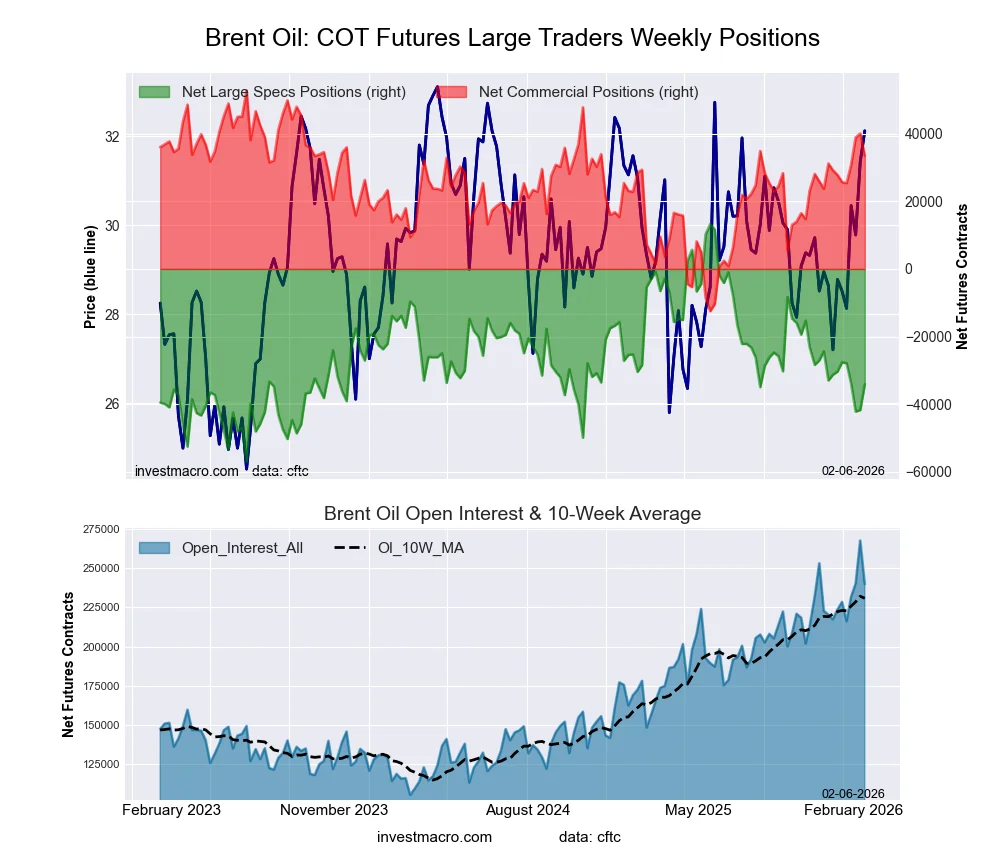
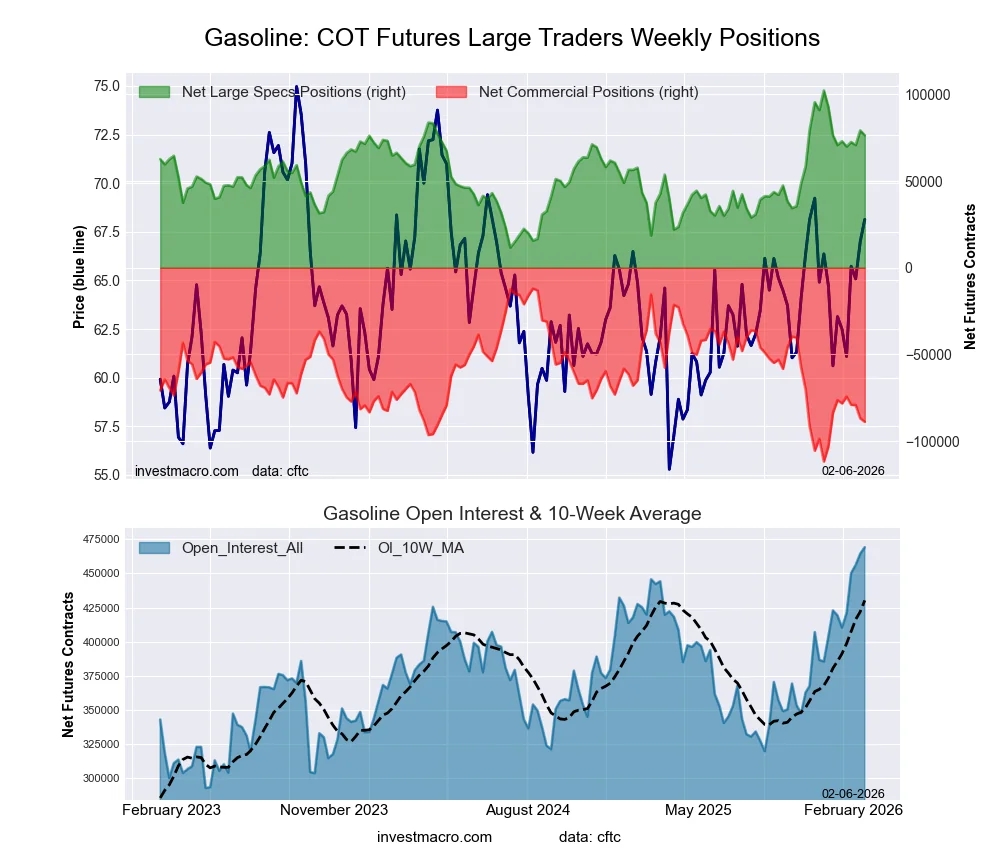
WTI prices rose to $58.6 per barrel on Wednesday, marking a sixth consecutive session of gains and reaching a two-week high fueled by geopolitical tensions. Prices were supported by US actions to intercept Venezuelan oil tankers and new strikes on energy infrastructure in the Black Sea region amid the Russia-Ukraine conflict. However, pressure remains from API data showing a 2.4 million barrel increase in crude inventories alongside builds in gasoline and distillates. Overall, oil remains influenced by expectations of a supply surplus next year, trending toward an annual decline of over 18%.

Silver (XAG) prices surpassed $72 per ounce on Wednesday, rising for a fourth straight session and hitting a new all-time high. The market is buoyed by expectations of US monetary easing and increased demand for safe-haven assets. Geopolitical tension added fuel to the rally after President Donald Trump ordered the blocking of Venezuelan oil tankers last week. Silver has gained approximately 149% year-to-date, supported by a structural supply deficit and its recent inclusion in the US critical minerals list.

Platinum (XPT) prices broke above $2,300 per ounce, marking a new historical peak amid supply shortages and high investment demand. This marks a ten-session winning streak, the longest since 2017. Year-to-date, the metal has soared over 150%, its best performance since the late 1980s. Key drivers include mining disruptions in South Africa, a third consecutive year of market deficit, anticipation of US Section 232 trade restrictions, and strong demand in China following the launch of platinum futures in Guangzhou.

Asian markets were predominantly higher yesterday. The Nikkei 225 (JP225) rose by 0.02%, the FTSE China A50 (CHA50) gained 0.69%, the Hang Seng (HK50) edged down 0.11%, and the ASX 200 (AU200) posted a strong gain of 1.10%.

The Hong Kong market saw moderate gains on Wednesday morning, supported by expectations of Chinese stimulus measures, including urban renewal plans and property market stabilization in the new 2026–2030 five-year plan. Gains were capped by local factors such as a narrowing current account surplus and inflation holding at 1.2%. Financials and developers outperformed, while consumer stocks traded cautiously ahead of the shortened session.

The “kiwi” strengthened to around $0.585, marking its third consecutive day of gains and reaching its highest level since late September. The rally is driven by expectations of a potential RBNZ rate hike in 2026, Q3 economic recovery data, and a weakening US dollar. RBNZ Governor Anna Breman signaled that rates will likely remain on hold for some time. Overall, the NZD is on track for an annual gain of over 4% in 2025.

S&P 500 (US500) 6,909.79 +31.30 (+0.46%)

Dow Jones (US30) 48,442.41 +79.73 (+0.16%)

DAX (DE40) 24,340.06 +56.09 (+0.23%)

FTSE 100 (UK100) 9,889.22 +23.25 (+0.24%)

USD Index 97.95 −0.34% (−0.34%)

News feed for: 2025.12.24

  • Japan BoJ Monetary Policy Meeting Minutes at 01:50 (GMT+2); – JPY (MED)
  • US Initial Jobless Claims (w/w) at 15:30 (GMT+2); – USD (MED)
  • US Crude Oil Inventories (w/w) at 17:30 (GMT+2); – WTI (HIGH)
  • US Natural Gas Storage (w/w) at 19:00 (GMT+2). – XNG (HIGH)

By JustMarkets


This article reflects a personal opinion and should not be interpreted as an investment advice, and/or offer, and/or a persistent request for carrying out financial transactions, and/or a guarantee, and/or a forecast of future events.