The cryptocurrency market digest. Overview for 20.03.2023

By RoboForex.com

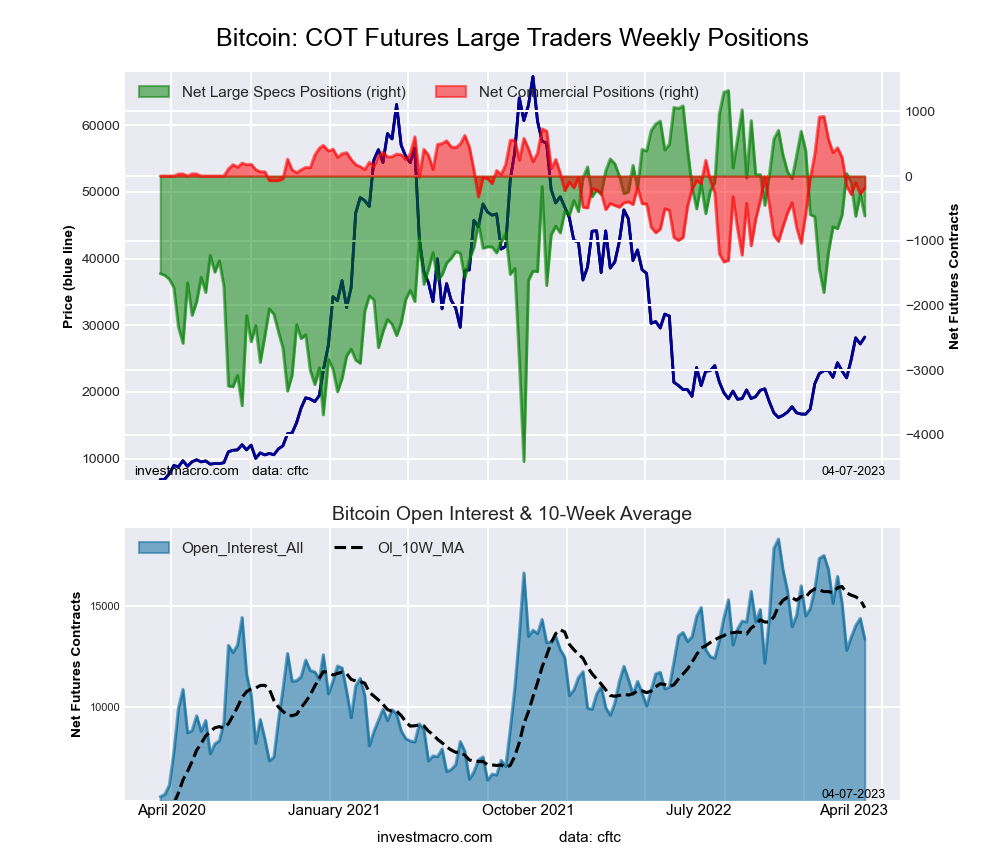
The weekly increase in the leading cryptocurrency is impressive – more than 25%.

The demand for risky assets grew after it became clear that the banking crisis in the US and Europe will be held back. Simultaneously, investors are interested in cryptocurrencies, while there are not many footholds in the US stock market.

The market has secured above important resistance at 25,250 USD. Practically, at the moment nothing prevents the BTC from growing to 35,000 USD. A more ambitious goal is 40,000 USD.

The capitalisation of the crypto sector is 1.181 trillion USD. The figure is growing, which is taken as a certainly positive signal. The share of the BTC keeps increasing and now amounts to 46.3%, while the ETH share is declining to 18.6%.

The FTX exchange might be restarted

Jefferies investment company is negotiating with potential FTX buyers over a potential restart of the exchange. The user base of the FTX looks like a very valuable asset, and the demand for it is high. In the market, they say that the start of the FTX in theory can liven up the whole sector.

Justin Sun missed the time to buy Credit Suisse

The TRON founder Justin Sun voiced a suggestion to buy the Credit Suisse bank for 1.5 billion USD. However, he missed the chance: UBS agreed to buy the troublesome bank for more than 2 billion USD. Its market capitalisation on Friday held above 7 billion USD.

Transaction volume in the Cardano network sky-rocketed

According to IntoTheBlock, the total volume of all transactions inside the Cardano ecosystem last week amounted to 30 billion USD. Last time the figures were so high in spring 2022.

Article By RoboForex.com

Attention!
Forecasts presented in this section only reflect the author’s private opinion and should not be considered as guidance for trading. RoboForex LP bears no responsibility for trading results based on trading recommendations described in these analytical reviews.

The Fed Will Set the Mood for EURUSD

By RoboForex Analytical Department

EUR/USD starts a new week of March by consolidating around 1.0670.

This week, investors will be anxious. The key event is the meeting of the US Federal Reserve System, where monetary politicians will have to make difficult decisions, specifically the ones concerning the interest rate. As soon as problematic spots emerged in the US banking sector, the market started discussing the necessity to make a pause in lifting the interest rate to stop the crisis from expanding.

On the other hand, there are appearing more and more arguments supporting the growth of the interest rate. Among them there are the increase in base inflation and the Core PCE inflation index, tracked by the Fed.

Earlier the ECB lifted its rate by 50 base points, dismissing banking problems, and continued tightening the monetary policy. Its main goal is still beating high prices.

By the end of the week, volatility of EUR/USD will have increased noticeably.

On H4, EUR/USD has formed a correctional structure to 1.0630. At the moment, the market is consolidating around it and with an escape from the range upwards might extend the structure to 1.0708. Then a decline to 1.0630 might follow. And then a link of growth to 1.0742 is not excluded. There the wave of growth will exhaust its potential. Next, the pair should go down by the trend to 1.0505. Technically, this scenario is confirmed by the MACD. Its signal line is above zero and is preparing to renew the highs.

On the H1 chart, EUR/USD has completed a wave of growth to 1.0650. Today the market has already formed a link of decline to 1.0620 and a link of growth to 1.0687. At the moment, a consolidation range is forming under this level. The price might escape it upwards, opening a pathway to 1.0708. Then a decline to 1.0620 and growth to 1.0742 are expected. Upon reaching this level, the price might fall to 1.0600, and if this level breaks, the quotes might drop to 1.0540. Technically, this scenario is confirmed by the Stochastic oscillator. Its signal line is near 50, and later it should fall to 20.

Disclaimer

Any forecasts contained herein are based on the author’s particular opinion. This analysis may not be treated as trading advice. RoboForex bears no responsibility for trading results based on trading recommendations and reviews contained herein.

Trade Of The Week: Gold Prices Top $2000…What Next?

By ForexTime 

The explosive price action gold has displayed in recent days mirrors a speeding train reaching maximum velocity, with fundamental forces fuelling the upside momentum.

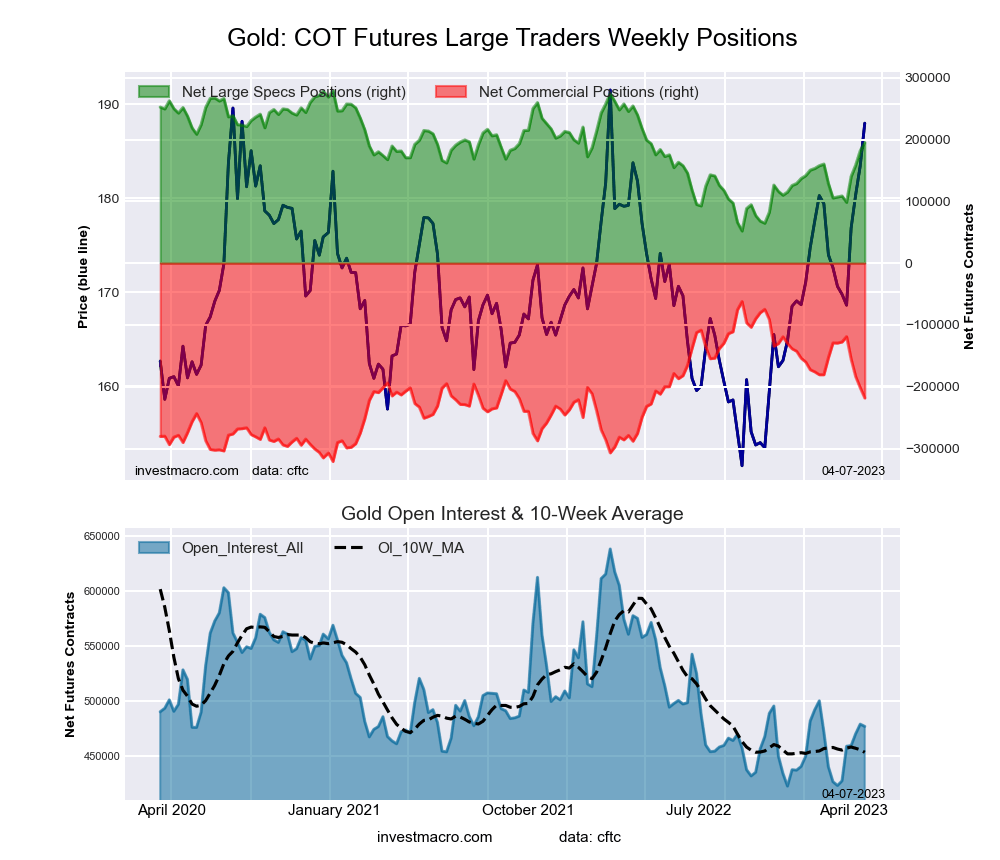
On Monday, gold punched above $2000 for the first time since March 2022 as concerns over the health of the banking system sweetened the appetite for safe-haven assets. This positive start builds on last week’s whooping 6.5% surge as mounting fears around Credit Suisse AG and the overall health of the banking system sent jitters across the board. A palpable sense of unease continues to linger across financial markets despite news over the emergency weekend sale of Credit Suisse AG to UBS Group AG. Contagion fears are rife and this will most likely accelerate the flight to safety, boosting attraction towards safe-haven gold.

Revisiting our 2023, we thoroughly discussed how gold could be one of the biggest winners these years based on speculation around the Fed pausing rate hikes. While gold prices have surged on contagion fears, the string of negative developments has also tempered expectations around the Fed keeping rates higher for longer. With gold hitting the psychological $2000 level, the key question is whether further upside could be on the cards or the party ends around this resistance.

Taking a quick looking at the technical picture, gold is heavily bullish on the daily charts. However, the $2000 level may be a tough nut to crack for bulls. The last time gold secured a weekly close above $2000 was back in August 2020.

The lowdown….

Gold has experienced a sharp change of fortune this month thanks to the market chaos triggered by the Silicon Valley Bank (SVB) collapse and Credit Suisse drama.

The horrible combination of events and growing fears around the banking system sent tremors across financial markets, leaving investors on edge. The wave of risk aversion prompted investors to scatter from riskier assets and rush to safe-haven destinations. Gold prices have gained over 8% this month not only due to contagion fears but expectations around the Fed adopting a less aggressive approach on rates to preserve the financial system.

Concerns over contagion risks and financial stability are likely to influence market sentiment and risk appetite. Any more negative news or developments could spark another wave of risk aversion – ultimately injecting gold bulls with fresh inspiration.

Keep an eye on the Fed meeting

Markets expect the Federal Reserve to raise interest rates by 25 basis points this month. However, this will be a tough meeting for the central bank as it decides whether to focus on macroeconomic data or the stability of the financial system following the SVB collapse and the Credit Suisse drama. There has been a lot of chatter around the recent string of negative developments empowering doves with traders now predicting a 65% chance of a 25bp hike in March – according to Fed Funds Futures.

If the Federal Reserve surprises markets by leaving rates unchanged, this could signal the end of the rate hike cycle with the next move being lower rates. Such a development is likely to send the dollar tumbling along with Treasury yields, which could see gold shine with renewed intensity. Whatever the outcome of the Fed meeting, it may influence gold’s outlook for the remainder of March and possibly beyond.

Can gold conquer $2000?

After bagging its biggest weekly gain since March 2020, gold bulls are clearly in a position of power. The precious metal is drawing strength from multiple sources, ranging from contagion fears, falling Fed hike bets, a softer dollar, and falling Treasury yields. The path of least resistance for the precious metal certainly points north, but can bulls conquer the $2000 level?

From a technical perspective, there have been consistently higher highs and higher lows while prices are trading above the 50, 100, and 200-day SMA. Given how $2000 has proved to be strong resistance in the past, bulls may need to put in the work to secure a solid weekly close above this point. Should $2000 prove to be too much for bulls to handle, prices may sink back toward $1955 before retesting $2000. A solid break above this psychological level may inspire a move higher toward $2070 and levels not seen since August 2020 above $2075.

If bears make a return and drag prices below $1955, the next point of interest can be found at $1935, $1915, and $1900, respectively.


Forex-Time-LogoArticle by ForexTime

ForexTime Ltd (FXTM) is an award winning international online forex broker regulated by CySEC 185/12 www.forextime.com

Central banks around the world cooperate to prevent liquidity problems

By JustMarkets

The US dollar came under pressure last week, falling about 0.8%, which was caused by a sharp drop in US bond yields. Traders and investors reassessed the Federal Reserve’s monetary policy in the US in the face of turmoil in the banking sector. Rates shifted dovish after the collapse of two mid-sized US regional banks heightened fears of financial Armageddon, prompting the Fed to take emergency measures to support depository institutions facing liquidity shortages. Late last week, the Fed injected $4.4 trillion into the Bank Term Funding Program (BTFP) to help banks. Many analysts consider this a hidden “quantitative easing” (QE). At the close of the stock market on Friday, the Dow Jones Index (US30) decreased by 1.19% (+0.13% for the week), while the S&P 500 (US500) fell by 1.10% (+2.13% for the week). The Technology Index NASDAQ (US100) lost 0.74% on Friday (+5.33% for the week).

This Wednesday is the important monetary policy meeting of the Fed, where the interest rate decision will be made. Market pricing is currently leaning toward a quarter-point interest rate hike, a move that would raise the cost of borrowing to 5.00%. The FOMC is likely to stress the importance of maintaining financial stability and its willingness to act to prevent the materialization of systemic risks. But there could be surprises, as GS strategists expect that the US Fed may announce the end of its tightening cycle. The implications of this announcement could lead to a further weakening of the US dollar.

The US Fed, the ECB, the Bank of England, the Bank of Japan, the Bank of Canada, and the Swiss National Bank from March 20 to the end of April, will conduct swap transactions between central banks on a daily basis rather than once a week. The reason is that central banks are preparing for bank liquidity problems.

Equity markets in Europe were mostly falling on Friday. German DAX (DE30) fell by 1.33% (-4.32% for the week), French CAC 40 (FR40) dropped by 1.43% (-3.97% for the week), Spanish IBEX 35 (ES35) lost 2.01% (-6.06% for the week), British FTSE 100 (UK100) was down by 1.01% (-5.33% for the week).

UBS Group AG agreed to buy Credit Suisse Group AG in a historic government-brokered deal aimed at curbing the crisis of confidence that has begun to spread to global financial markets. The Swiss bank will pay 3 billion francs ($3.3 billion) for its rival. The deal includes extensive government guarantees and liquidity provisions. The Swiss National Bank is offering UBS 100 billion francs in liquidity assistance, while the government is providing a guarantee of 9 billion francs to cover potential asset losses that UBS is taking on.

The International Criminal Court has issued arrest warrants for Russian President Vladimir Vladimirovich Putin. The ruling states that Putin is responsible for the war crimes of illegally deporting populations (children) and illegally transferring populations (children) from the occupied territories of Ukraine to the Russian Federation.

After a slight pullback on Thursday, gold prices resumed gains on Friday, rising more than 2%. Gold (XAUUSD) and silver (XAGUSD) are inversely correlated to US government bond yields. The turmoil in the banking sector has led to a drop in government bonds, which contributes to the strengthening of precious metals. But analysts expect a corrective movement as the situation begins to stabilize.

Fears of banking sector problems led both benchmarks of oil to their biggest weekly decline. Last week, Brent crude oil futures fell by 12%, while US West Texas Intermediate (WTI) crude fell by 13%. But analysts still expect tight global supply to support oil prices for the foreseeable future. OPEC+ representatives attributed the price decline to financial factors rather than supply and demand imbalances, adding that they expect the market to stabilize. Asian markets mostly declined last week. Japan’s Nikkei 225 (JP225) decreased by 1.98% for the week, China’s FTSE China A50 (CHA50) lost 0.88% for the week, Hong Kong’s Hang Seng (HK50) added 0.55% for the week, India’s NIFTY 50 (IND50) was down by 2.29%, and Australia’s S&P/ASX 200 (AU200) was negative by 2.10% for the week.
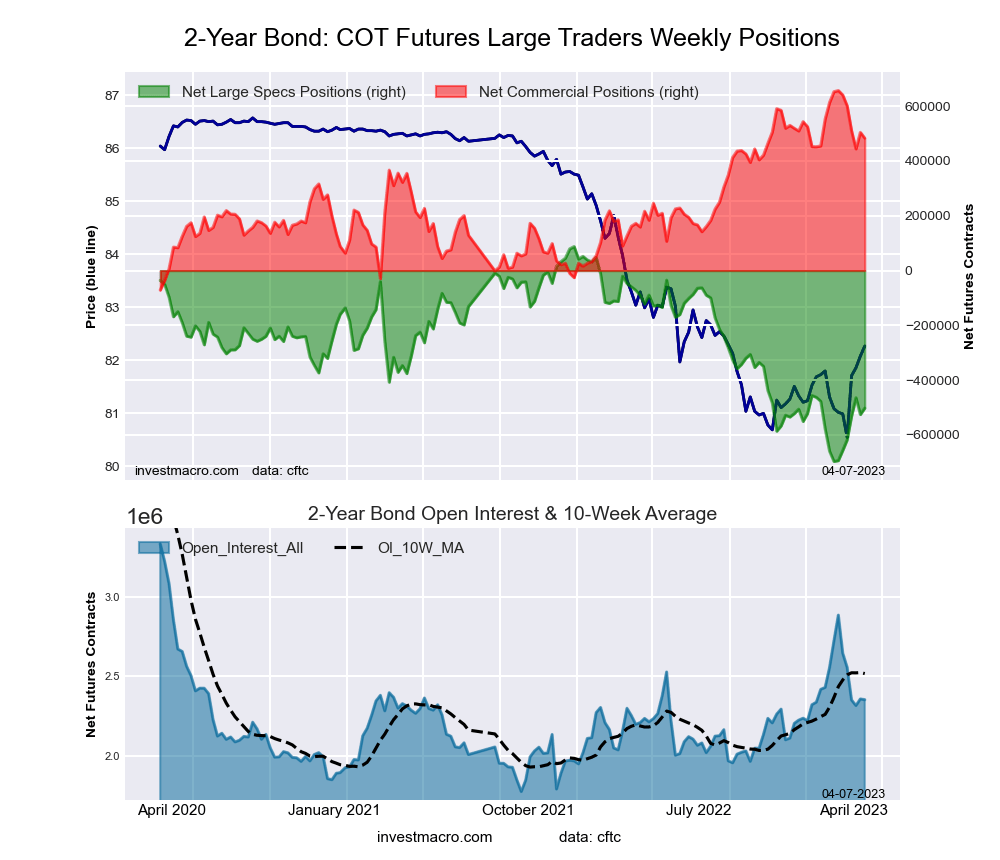
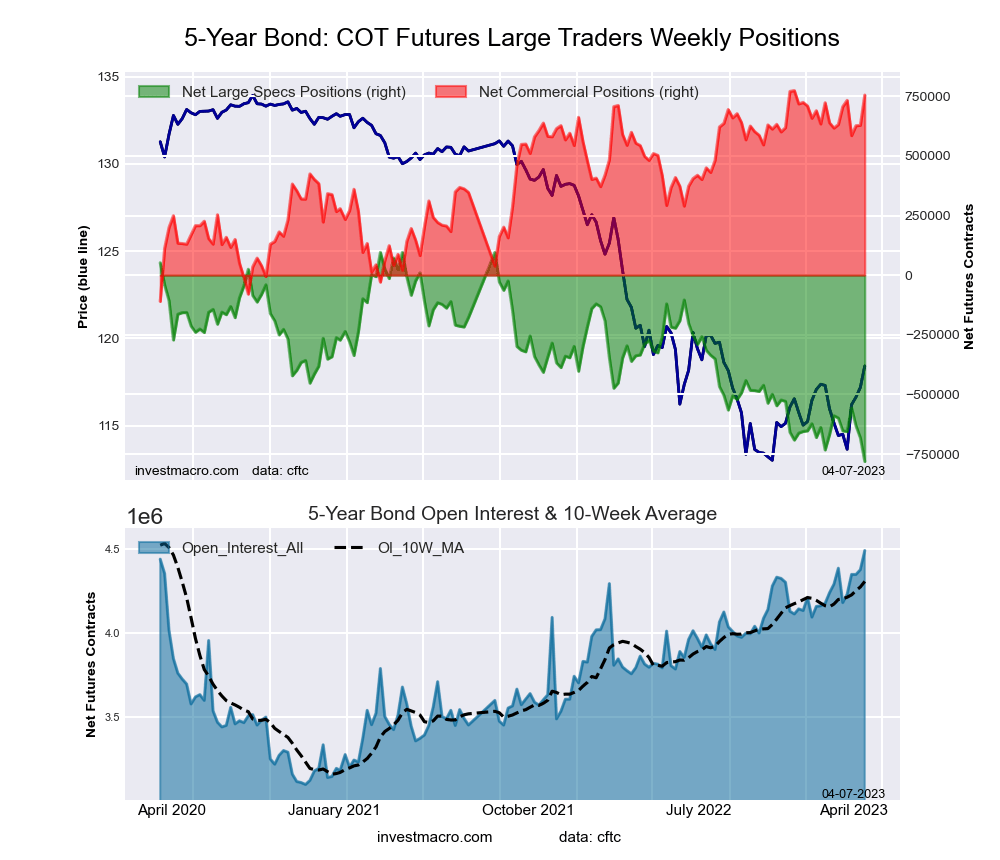
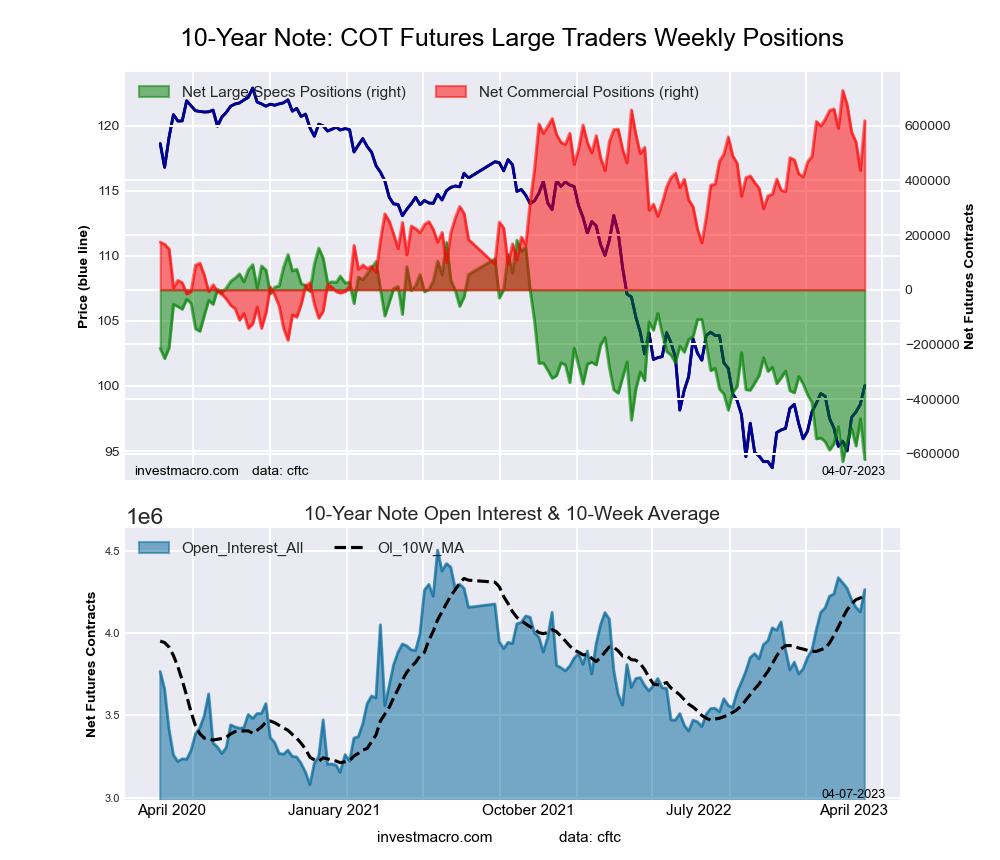
On Monday, the People’s Bank of China (PBOC) kept its annual LPR at 3.65% while the five-year LPR, which is used to determine mortgage rates, was kept at 4.30%. Both lending rates are the lowest in two decades. China’s central bank said Friday that for the first time this year, it would reduce the amount of cash banks must hold as reserves to help maintain sufficient liquidity and support the nascent economic recovery. The central bank has not yet estimated how much long-term liquidity will be released after the cuts, allowing banks to lend more money. Analysts estimate that the move freed up more than 500 billion yuan ($72.6 billion). Central bank governor Yi Gang said at a March 3 news conference that China’s real interest rates are at acceptable levels and that cutting banks’ reserve requirements will continue to be an effective tool to support the economy.

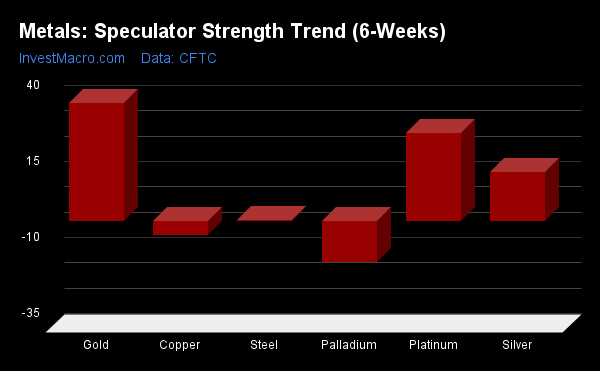
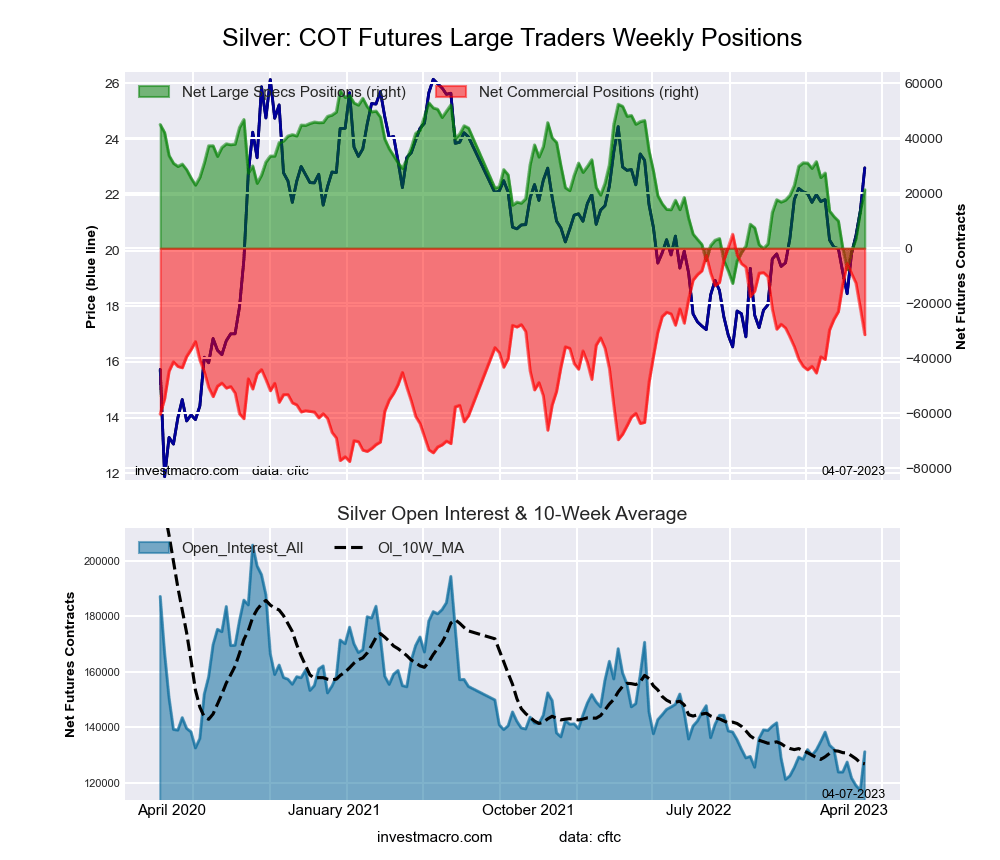
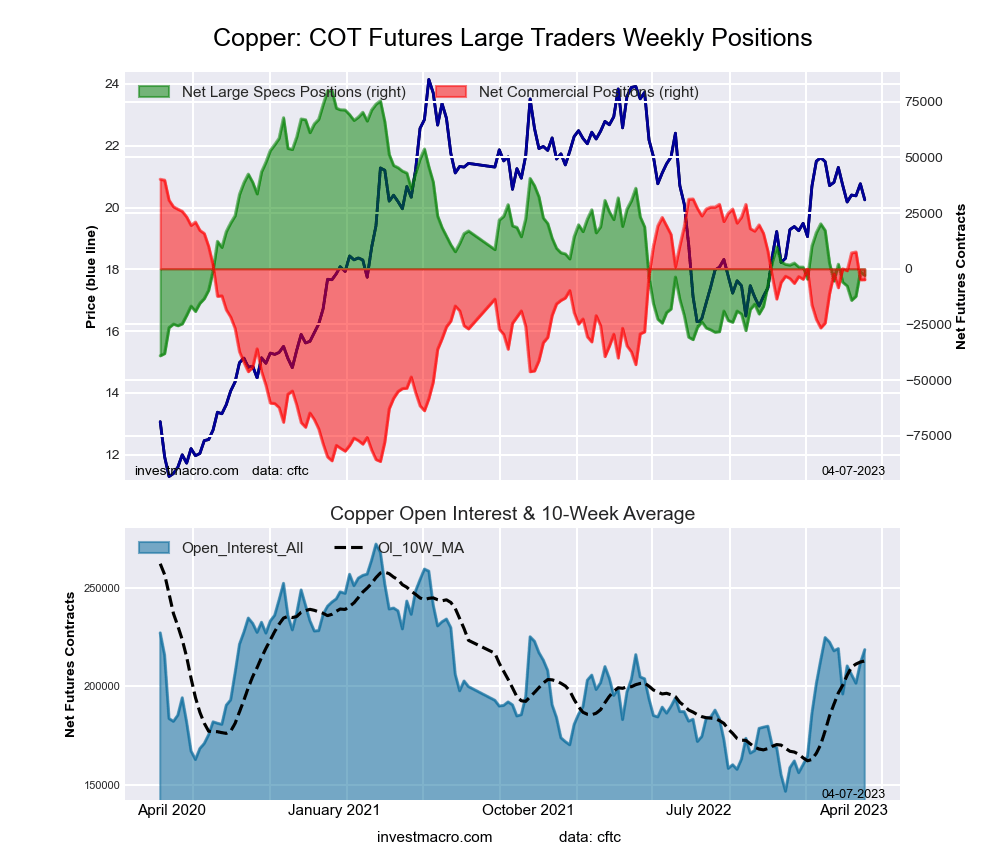
In the commodities market, futures on silver (+10.94%), lumber (+9.2%), gold (+6.77%), wheat (+4.42%), palladium (+3.87%), and corn (+2.84%) futures showed the biggest gains last week. Futures on WTI oil futures (-13.24%), Brent oil (-12.45%), gasoline (-5.81%), copper (-3.36%), and natural gas (-3.29%) showed the biggest drop.

S&P 500 (F) (US500) 3,916.64 −43.64 (−1.10%)

Dow Jones (US30)31,861.98 −384.57 (−1.19%)

DAX (DE40) 14,768.20 −198.90 (−1.33%)

FTSE 100 (UK100) 7,335.40 −74.63 (−1.01%)

USD Index 103.86 −0.55 (−0.53%)

Important events for today:
  • – China PBoC Loan Prime Rate at 03:15 (GMT+2);
  • – German Producer Price Index (m/m) at 09:00 (GMT+2);
  • – Eurozone Trade Balance (m/m) at 12:00 (GMT+2);
  • – New Zealand Trade Balance (q/q) at 23:45 (GMT+2).

By JustMarkets


This article reflects a personal opinion and should not be interpreted as an investment advice, and/or offer, and/or a persistent request for carrying out financial transactions, and/or a guarantee, and/or a forecast of future events.

How the global banking crisis could prove to be good for markets

By George Prior

The banking crisis that spooked investors and sent shockwaves around the world could ultimately be beneficial for global financial markets, says the CEO and founder of one of the world’s largest independent financial advisory, asset management and fintech organizations.

The comments from deVere Group’s Nigel Green come after UBS agreed to buy the embattled Credit Suisse for $3.2 billion on Sunday, with the Swiss National Bank also pledging a loan of up to $108 billion to back-up the takeover.

It came just days after the second and third biggest bank failures, Silicon Valley Bank and Signature respectively, in US history in recent days.

He says: “The events of the past week or so have sent global markets reeling as investors feared a credit crunch, and other issues, last seen during the 2008 financial crisis.

“Despite the shockwaves, we expect that the banking crisis could ultimately prove to be beneficial for global markets for several reasons.”

He continued: “The emergency lifelines being thrown to banks by regulators and governments, among others, appear to have now halted contagion within the sector, largely containing the crisis from hitting other firms and other sectors.

“Global investors’ nerves will be calmed after the US Federal Reserve, the Bank of Canada, the Bank of England, the Bank of Japan, the European Central Bank and the Swiss National Bank in a coordinated statement, which came ahead of the opening of financial markets in Asia on Monday, all vowed to boost liquidity to ease pressures in the international financial system.

“It underscores the commitment to do whatever it takes to avert another wholesale crash. This brings the confidence and certainty that markets crave.”

A harsh spotlight has been focused on banks in the last week and while it has been for many of the wrong reasons, it has also “served to highlight to investors that the rules imposed in the wake of the 2008 financial crisis mean that most banks are in a strong position to withstand shocks,” says Nigel Green.

“It shows that most financial institutions have plenty of capital and more than enough liquidity to meet operational needs and withdrawals – and that what went wrong at Credit Suisse and SVB were decisions made by a handful of former senior execs.”

The deVere CEO goes on to add that the crunch in the banking sector and so-far avoided fallout for the wider global financial system strengthens the case that central banks will “ease up on interest rate hikes.”

He notes: “Central banks know that besides having to try and tame stubbornly high inflation, they also need to ensure financial stability.  The events of the last week which rocked confidence will certainly give them cause for pause.

“The stepping back from interest rate hikes will be welcomed by investors who are concerned that overtightening now – when monetary policy time lags are notoriously long – could steer the economy into a recession.”

Both the Federal Reserve and the Bank of England meet this week.

The deVere CEO concludes: “It’s been a bumpy ride over the past few days but successful contagion containment, the solid fundamentals of most banks, central banks rushing to inject liquidity, and the growing case for interest rate hikes to be paused will be cheered by global markets.

About:

deVere Group is one of the world’s largest independent advisors of specialist global financial solutions to international, local mass affluent, and high-net-worth clients.  It has a network of offices across the world, over 80,000 clients and $12bn under advisement.

Week’s main events (March 20 – March 24)

By JustMarkets

This week will be full of important events. On Wednesday is the important monetary policy meeting of the Fed, where policymakers will announce their interest rate decision. Market pricing is leaning toward a quarter-point interest rate hike, which would raise borrowing costs to 5.00%. The Bank of England (BoE) and the Swiss National Bank (SNB) will hold their meetings on Thursday. Also, inflation data from the UK, Canada, and Japan will be released during the week. The volatile week will finish with data on business activity in different countries’ manufacturing and service sectors.

Monday, March 20
The People’s Bank of China (PBoC) will update the interest rate on Monday. No surprises are expected, but volatility in Asian markets may rise. Traders may also be interested in the Eurozone and New Zealand trade balance data.
Main events of the day:
  • – China PBoC Loan Prime Rate at 03:15 (GMT+2);
  • – German Producer Price Index (m/m) at 09:00 (GMT+2);
  • – Eurozone Trade Balance (m/m) at 12:00 (GMT+2);
  • – New Zealand Trade Balance (q/q) at 23:45 (GMT+2).
Tuesday, March 21
The main event on Tuesday will be the inflation data in Canada. Inflationary pressures are expected to be lower, but volatility with the Canadian dollar will increase. Traders should also not miss the RBA’s monetary policy minutes, which will show how RBA policymakers voted at the last meeting. It’s a bank holiday in Japan.
Main events of the day:
  • – Australia RBA Meeting Minutes at 02:30 (GMT+2);
  • – German ZEW Economic Sentiment (m/m) at 12:00 (GMT+2);
  • – Eurozone ZEW Economic Sentiment (m/m) at 12:00 (GMT+2);
  • – Canada Consumer Price Index (m/m) at 14:30 (GMT+2);
  • – Eurozone ECB President Lagarde Speaks at 14:30 (GMT+2);
  • – US Existing Home Sales (m/m) at 16:00 (GMT+2).
Wednesday, March 22
On Wednesday, the Fed will hold a meeting on monetary policy and interest rates. This is a crucial meeting that will show how policymakers will respond to banking sector problems. Analysts are expecting a 0.25% rate hike, but there is a 30% chance that the Fed may press pause in QT. Volatility with USD currency pairs will increase sharply. It should also be noted that the UK will publish inflation data in the morning, which will influence the Bank of England’s interest rate decision on Thursday. A decline in consumer prices is projected.
Main events of the day:
  • – UK Consumer Price Index (m/m) at 09:00 (GMT+2);
  • – UK Producer Price Index (m/m) at 09:00 (GMT+2);
  • – Eurozone ECB President Lagarde Speaks at 10:45 (GMT+2);
  • – US Crude Oil Reserves (w/w) at 16:30 (GMT+2);
  • – US FOMC Economic Projections at 20:00 (GMT+2);
  • – US Fed Interest Rate Decision at 20:00 (GMT+2);
  • – US FOMC Statement at 20:00 (GMT+2);
  • – US FOMC Press Conference at 20:30 (GMT+2).
Thursday, March 23
Thursday will also be a volatile day. The Asian session will release important inflation data in Singapore and Hong Kong. Next, the SNB will hold a monetary policy meeting where it is expected to raise the interest rate by 0.5%, which is highly unusual for the SNB. Then the Bank of England will hold its meeting. The BoE is expected to raise rates by 0.25% if inflation data does not disappoint on Tuesday.
Main events of the day:
  • – Hong Kong Interest Rate Decision at 04:30 (GMT+2);
  • – Singapore Consumer Price Index (m/m) at 07:00 (GMT+2);
  • – Hong Kong Consumer Price Index at 10:30 (GMT+2);
  • – Switzerland SNB Interest Rate Decision at 10:30 (GMT+2);
  • – Switzerland SNB Monetary Policy Assessment at 10:30 (GMT+2);
  • – Switzerland SNB Press Conference at 11:00 (GMT+2);
  • – UK BoE Interest Rate Decision at 14:00 (GMT+2);
  • – UK BoE MPC Meeting Minutes at 14:00 (GMT+2);
  • – US Initial Jobless Claims (w/w) at 14:30 (GMT+2);
  • – US New Home Sales (m/m) at 16:00 (GMT+2);
  • – US Natural Gas Storage (w/w) at 16:30 (GMT+2).
Friday, March 24
Friday will bring various Manufacturing PMI and Services PMI statistics for many countries. This data shows how the economy works in times of high-interest rates. Rising rates are a sign of a resilient economy. In Japan, consumer price data will be released. Analysts expect inflation to decline, but there may be surprises, so traders should be focused.
Main events of the day:
  • – Australia Manufacturing PMI (m/m) at 00:00 (GMT+2);
  • – Australia Services PMI (m/m) at 00:00 (GMT+2);
  • – Japan National Core CPI (m/m) at 01:30 (GMT+2);
  • – Japan Manufacturing PMI (m/m) at 02:30 (GMT+2);
  • – Japan Services PMI (m/m) at 02:30 (GMT+2);
  • – UK Retail Sales (m/m) at 09:00 (GMT+2);
  • – German Manufacturing PMI (m/m) at 10:30 (GMT+2);
  • – German Services PMI (m/m) at 10:30 (GMT+2);
  • – Eurozone Manufacturing PMI (m/m) at 11:00 (GMT+2);
  • – Eurozone Services PMI (m/m) at 11:00 (GMT+2);
  • – UK Manufacturing PMI (m/m) at 11:30 (GMT+2);
  • – UK Services PMI (m/m) at 11:30 (GMT+2);
  • – US Durable Goods Orders (m/m) at 14:30 (GMT+2);
  • – Canada Retail Sales (m/m) at 14:30 (GMT+2);
  • – US Manufacturing PMI (m/m) at 15:45 (GMT+2);
  • – US Services PMI (m/m) at 15:45 (GMT+2).

By JustMarkets


This article reflects a personal opinion and should not be interpreted as an investment advice, and/or offer, and/or a persistent request for carrying out financial transactions, and/or a guarantee, and/or a forecast of future events.

Is Philippines sleepwalking into economic and geopolitical minefield

By Dan Steinbock

Amid the worst global volatility since 1945, Philippines may to be aligning its future with secular erosion, political divisions, militarization and nuclear risks.

Only some six years ago, the Duterte administration was still recalibrating its foreign policy to balance between Chinese development and US military cooperation. The Philippines, finally, stood to benefit from both great powers, as many ASEAN nations had done for years.

But those days are fading fast. And the timing couldn’t be worse. Manila seems to be positioning in a way that could result in elevated economic and geopolitical collateral damage. If that’s the case, it’s unwarranted. Other options do exist.

Militarization with US, elevated nuclear risks in the region

Last week, the Philippines and the United States announced the two will hold their largest Balikatan [“shoulder-to-shoulder” military] exercise in history, with 17,600 expected participants. Starting in mid-April, it will feature live fire, 12,000 US troops, 5,000 Philippine soldiers, over 110 from Australia and Japanese observers.

Officially, the focus will be on “maritime defense, coast defense, and maritime domain awareness.” Yet, leading US observers say the aim is to increase interoperability among the allies, to contain China’s rise and to optimize US flexibility in its regional military bases.

That, however, is likely to pave the way to a premature military conflict, which will then be used to boost elusive unity and legitimize further mobilization.

Worse, last week also saw the nuclear risks increase drastically as the US nuclear alliance with the UK and Australia (AUKUS) revealed a plan to launch a fleet of nuclear-powered submarines in the region.

Australia’s defense minister Richard Marles said the deal to buy nuclear-powered attack submarines from the US was necessary to counter the biggest conventional military buildup in the region since World War II. The deal will cost up to $245 billion over the next three decades and create 20,000 jobs.

What Marles left unsaid was that the primary beneficiary of the deal, which will delegate geopolitical risks away from the US to Australia and Asia, is the US Big Defense. And let’s be real: those jobs, which will not benefit Australia’s civilian economy, represent only 0.14% of its total labor force. Far worse, the deal could drag 26 million Australians, along with hundreds of millions of Asians, into a nuclear holocaust.

Foreign policy reversal

In the process, the stated Philippine foreign policy of “friend to all, enemy to none” appears to be dissolving, while the parallel domestic objective of “unifying the nation” is likely to be derailed. As the march of militarization proceeds, associated economic, political, military and ethnic tensions will increase accordingly. The path from Afghanistan and Iraq to Syria and Ukraine has been a series of colossal devastations. Should the same fate fall to Taiwan or the Philippines, the outcome is not likely to prove that different.

Worse, while the new, more malleable foreign policy could drag the Philippines into hostilities that the wide majority of the Filipinos oppose, it would also split the ASEAN.

Instead of opposing the AUKUS, which violates Philippine constitution, Southeast Asia Nuclear Weapon-Free Zone (SEANWFZ Treaty) and the UN nuclear weapon ban treaty that the government has ratified, Manila seems to be aligning its future with the very countries driving the arms races and nuclear proliferation in the region.

Furthermore, this alignment takes place at a historical moment when the economies of these allies are struggling with the worst economic challenges since 1945. Perhaps that’s why they now resort to misguided military mobilization, which is exploited as a diversionary technique to distract the governed and pacify the markets.

Cost-of-living crises in the West, rising volatility

US annual inflation rate, which had soared close to 10 percent in summer 2022, slowed only to 6.0 percent in February. Although the interest rate has been hiked to almost 5 percent, the US remains three times above the Fed’s target of 2%.

In euro area, the situation was worse as inflation remained 8.5 percent in February 2023 after peaking at 11.1 percent in November. Last week, The ECB raised interest rates by 0.5%, further pushing borrowing costs to the highest level since late 2008. Due to persistent inflation, the hikes are expected to continue.

Even in Japan, where inflation was negative until the fall of 2021, it soared to 4.3 percent in January 2023, the highest since 1981, and continues to rise. As a result, Japanese central bank’s new chief Kazuo Ueda will have to raise the interest rate in the coming months, which will further penalize the ailing consumption.

Despite a decade of historical fiscal packages, past monetary easing and massive debt-taking, British living standards are crumbling, French workers are rioting, Italy remains under colossal debt burden, and even in Germany the recession fears are returning.

If the SVB risks and contagion spreads…

The Fed raised the interest rate to 4.5-4.75 percent in its February 2023 meeting, still pushing borrowing costs to the highest since 2007. Despite increasing financial instability, Fed Chairman Jerome Powell warned of more rate hikes and seems to be aiming at 5.25 to 5.5 percent, thus flirting with a recession, or worse.

Indeed, new data shows that the collapse of Silicon Valley Bank (SVB) wasn’t an anomaly, but reflects systemic pressures in the US financial sector. Some 200 American banks face SVB-like risks. They do not have enough assets to pay all customers, even if half of uninsured depositors tried to withdraw their money.

Last week, the ratings agency Moody’s downgraded its outlook for the US banking system from stable to negative, due to the “rapidly deteriorating operating environment.”

These are the economies Manila is now pivoting to, possibly for years to come.

The lessons of history

Last time, the Philippines served as a battleground of the Great Powers, Japanese troops butchered at least 100,000 Filipino civilians in Manila, while the Battle of Manila caused massive civilian devastation: 100,000 killed and 250,000 in total casualties, thanks to Japanese atrocities and US firepower. Like Berlin and Warsaw, the city became one of the most devastated capitals.

Lessons of history: destroyed walled city of Intramuros (May 1945)

Source: Wikimedia Commons

During World War II, total Filipino deaths amounted to 560,000-1 million; almost 4.9% of the then-population. In relative terms, that’s far higher than the losses of the US (0.3%) or even Japan (3.9%); and higher than in Burma, China, Korea, or Malaya/Singapore. In Southeast Asia, the devastation was worse only in Indochina.

Today the destructive power of Philippine allies’ conventional and nuclear weapons is far, far more lethal than in 1945.

Without a genuine “friend to all, enemy to none” foreign policy, the inclusive rise of the Philippines is not viable.

About the Author:

Dr. Dan Steinbock is an internationally recognized strategist of the multipolar world and the founder of Difference Group. He has served at the India, China and America Institute (USA), Shanghai Institutes for International Studies (China) and the EU Center (Singapore). For more, see https://www.differencegroup.net

The ECB raised the interest rate by 0.5%. The US Launches BTFP Program for Banks

By JustMarkets

The US indices rose Thursday after reports that major Wall Street banks pledged billions of dollars to bail out First Republic Bank. JPMorgan Chase & Co (JPM), Bank of America Corp (BAC), and Wells Fargo & Company (WFC) led a group of major banks that will rescue First Republic Bank (FRC) deposits totaling $30 billion. As the stock market closed on Thursday, the Dow Jones Index (US30) increased by 1.17%, and the S&P 500 Index (US500) added 1.76%. NASDAQ Technology Index (US100) gained 2.48% yesterday.

The new Bank Term Funding Program (BTFP) is very popular among banks. The US banks took $303 billion in “cash” from the Fed over the week. Many analysts believe the new BTFP instrument is a hidden quantitative easing (QE) program. In general, if you evaluate the situation in a comprehensive way: bankruptcies of banks in the USA, the problem of Switzerland’s largest bank, and liquidity problems in a number of market segments (government debt). All these are direct consequences of the aggressive increase of rates in response to inflation, which was a consequence of previous unbridled monetary and fiscal policy. The Fed simply has no choice but to shift policy tightening toward easing. The US Federal Reserve’s monetary policy meeting next week will show the FOMC’s reaction.

The Federal Reserve’s cornerstone method for determining whether US banks can survive an economic crisis has had a huge misstep over the years: regulators have not tested a scenario resembling the 2023 economy and current financial conditions. Fed officials promoted annual stress tests as the primary supervisory method for assessing the health and soundness of the nation’s largest banks. According to regulatory experts, a more realistic stress-testing scenario would not have solved the institutional problems that led to SVB’s decline. But the lack of modeling of an interest rate hike does point to a hole in the way Fed officials think about financial risk.

European stocks rose yesterday. Germany’s DAX (DE30) gained 1.57%, France’s CAC 40 (FR40) jumped by 2.03%, Spain’s IBEX 35 index (ES35) added 1.50%, Britain’s FTSE 100 (UK100) closed up by 0.89%.

The ECB raised its rate by 50bp to 3.5% and will start cutting its bonds portfolio by 15bn euros a month. Further monetary policy will be determined by new data on inflation as well as the banking sector. The ECB’s latest set of forecasts, released Thursday, shows that inflation is still slightly above the bank’s medium-term target of 2% in 2025. At the same time, it raised growth forecasts for the single currency bloc and now sees GDP growth of 1% this year.

A rapid drop in US Treasury bond yields has driven the rise in precious metals in recent days. Yields are now near their lowest level since September 2022 amid a dovish revision to the Fed’s monetary policy outlook. Gold is considered a safe haven asset, so it performs well in times of heightened uncertainty, high volatility, and financial stress. Therefore, it is not surprising that it has rallied strongly over the past few trading sessions. If the US Federal Reserve announces its latest rate hike next week, gold and silver prices could get additional support, especially if bank problems worsen.

Asian markets were mostly down yesterday. Japan’s Nikkei 225 (JP225) decreased by 0.80%, China’s FTSE China A50 (CHA50) fell by 0.60%, Hong Kong’s Hang Seng (HK50) ended the day down by 1.72%, India’s NIFTY 50 (IND50) added 0.08%, and Australia’s S&P/ASX 200 (AU200) ended the day up by 0.40%.

New Zealand’s GDP fell by 0.6% in the last quarter. For the RBNZ, this is a clear signal that it is time to cut down the tightening program, as the economy has shrunk faster than the central bank forecasts. If the second quarter of 2023 also sees a decline, it would mean that New Zealand is in about a six-month recession. According to Stats NZ, the decline in manufacturing activity was the biggest contributor to the decline, with the sector down by 1.9%. Overall, 9 of the 16 industries tracked by Stats NZ fell, especially in retail, housing, arts, leisure, and transportation.

S&P 500 (F) (US500) 3,960.28 +68.35 (+1.76%)

Dow Jones (US30)32,246.55 +371.98 (+1.17%)

DAX (DE40) 14,967.10 +231.84 (+1.57%)

FTSE 100 (UK100) 7,410.03 +65.58 (+0.89%)

USD Index 104.44 -0.20 (-0.19%)

Important events for today:
  • – Eurozone Consumer Price Index (m/m) at 12:00 (GMT+2);
  • – US Industrial Production (m/m) at 15:15 (GMT+2);
  • – US Michigan Consumer Sentiment (m/m) at 16:00 (GMT+2).

By JustMarkets


This article reflects a personal opinion and should not be interpreted as an investment advice, and/or offer, and/or a persistent request for carrying out financial transactions, and/or a guarantee, and/or a forecast of future events.

Week Ahead: More big swings for USDCHF?

By ForexTime

The Swiss Franc has been the most volatile G10 currency against the US dollar this week.

The turmoil from recent days surrounding Silicon Valley Bank and Credit Suisse has roiled USDCHF, while altering the market’s expectations for key central bank meetings due in the coming week.

And there could be more volatility in store for this FX pair, in a week that features these economic data releases and events:

Monday, March 20

  • CNH: China loan prime rates
  • EUR: ECB President Christine Lagarde speech

Tuesday, March 21

  • AUD: RBA meeting minutes release
  • EUR: Germany March ZEW survey expectations
  • CAD: Canada February consumer price index (CPI)
  • Nike earnings

Wednesday, March 22

  • NZD: New Zealand 1Q consumer confidence
  • GBP: UK February CPI
  • USD: Fed rate decision

Thursday, March 23

  • CHF: Swiss National Bank rate decision
  • NOK: Norges Bank rate decision
  • GBP: Bank of England rate decision
  • USD: US weekly jobless claims

Friday, March 24

  • JPY: Japan February CPI
  • EUR: Eurozone January manufacturing and services PMIs
  • GBP: UK February retail sales; March PMIs, consumer confidence


Typically, in a week like the upcoming one, we’d be focusing on the US Federal Reserve (Fed) and the Bank of England (BOE), being the central banks of larger economies compared to the Swiss National Bank (SNB).

However, given the recent Credit Suisse crisis, the SNB has muscled its way into the spotlight, along with its currency, the Swiss Franc (CHF).


Here are 3 reasons to watch how USDCHF fares next week:

1) Swiss National Bank’s take on Credit Suisse crisis

The SNB carries out its monetary policy assessment just 4 times per year, half the number of policy meetings that the Fed has scheduled for 2023.

For the upcoming SNB meeting, markets had expected another hike of 50-basis points (bps), following the central bank’s hikes last year totalling 175bps.

Yet, the Credit Suisse saga that’s unfolding in the SNB’s own backyard, noting the irony of Switzerland’s long-held stature as a banking haven, adds a dramatic dimension to the press conference by SNB President Thomas Jordan next week.

And the Swiss Franc (CHF) may react less to the actual adjustment to the policy rate, but rather any commentary that President Jordan may offer surrounding the Credit Suisse crisis.

Note how CHF weakened against every single one of its G10 peers as the CS drama played out across global financial markets this week:

The stakes are high for the SNB.

After all, CS is Switzerland’s second biggest lender, with the bank’s assets equal to about 70% of the country’s GDP!

Furthermore, the Bank of International Settlements has listed Credit Suisse as one of the top-30 banks most important to the global financial system.


Credit Suisse’s importance prompted the SNB to step in and extend a US$ 54 billion (CHF 50 billion) credit line to the embattled bank to help shore up liquidity.

Also, following the central bank’s previous policy meeting in December 2022, the SNB President had deviated from the norm of not commenting on individual commercial banks and publicly supported Credit Suisse’s ongoing 3-year transformation to its business.

Having already extended verbal, written, and liquidity support, should the SNB even hint that it has to step in with further aid for CS, that may actually have the unintended effect of weakening the Swiss Franc on the notion that Credit Suisse’s turmoil is not yet over.

2) Fed’s dilemma between inflation and financial stability

Last week, markets had assigned a 70% chance that the Fed would trigger a 50-bps hike at its March meeting.

That would reassert its aggressiveness in its fight against inflation after having downshifted to a relatively smaller 25-bps hike at its previous policy meeting held on January 31 – February 1st, 2023.

But that calculus has been altered dramatically, as the collapse of Silicon Valley Bank continues reverberating across the US banking sector.

With the Fed having to shore up financial stability in its own backyard, markets believe policymakers cannot follow through with yet another larger rate hike, which are intended to incur further damage to the economy so as to subdue US inflation that’s still stubbornly elevated.

Hence, at the time of writing, markets have whittled down their forecasts to an 81% chance of a 25-bps hike by the Fed next week.

Similar to the SNB (and the ECB’s press conference this week), concerns surrounding financial stability risks are set to dominate Fed Chair Powell’s session with the media after the FOMC meeting concludes.

Should markets even get a whiff that Chair Powell and his colleagues are growing more concerned about potential contagion risks and are refusing the shut the door on winding down, or perhaps even an abrupt pause, to the Fed’s rate-hike cycle, such policy clues may weaken the US dollar and drag USDCHF lower.

3) USDCHF’s one-week implied volatility surges to fresh year-to-date high

All of the above is clearly not lost on markets, prompting a surge in the expected volatility for USDCHF over the next one-week period.


With the banking woes of late leaving policymakers, both the Fed and the SNB, between a rock and a hard place:

  • Do these central bankers keep focusing on their ongoing battle against inflation and persist with a 50-bps hike, risking further damage to its financial sector that’s still raw and vulnerable?
  • Or do the likes of the SNB and the Fed opt for a relatively smaller 25-bps hike to preserve the still-fragile sentiment surrounding banks, but risk letting inflation rage further?


With so much at stake, markets are ready to react to the slightest clues.

The central bank that shows the greater concern for its own banking sector, should see its currency weaken further.

  • Should fears surrounding Credit Suisse spike anew over the coming week, that could even launch USDCHF above its 100-day simple moving average.
  • On the other hand, if yet another US bank is added to this infamous list which already features the likes of Silicon Valley Bank, Signature Bank, and First Republic, fresh alarms surrounding the US banking sector may drag USDCHF back into sub-0.920 domain.


Key levels for USDCHF

RESISTANCE

  • 0.93393: previous cycle high
  • 100-day SMA
  • 0.9440 region: early-March peaks


SUPPORT

  • 50-day SMA
  • 0.920 psychologically-important region
  • 0.905 – 0.907: year-to-date lows


From current levels, Bloomberg’s FX model points to a 73% chance that USDCHF will trade within the 0.9088 to 0.9420 range over the next week.


Forex-Time-LogoArticle by ForexTime

ForexTime Ltd (FXTM) is an award winning international online forex broker regulated by CySEC 185/12 www.forextime.com

The Shocking Truth About the FDIC and Your Bank Deposits

Why you can’t rely on the FDIC if your bank goes under

By Elliott Wave International

Editor’s note: The failures of Silicon Valley Bank and Silvergate Bank have many observers of the banking system discussing the possibility of contagion. Even so, many depositors feel safe because their deposits are covered up to $250,000 by the F.D.I.C. (Federal Deposit Insurance Corporation). However, this feeling of safety may very well be misplaced.

Here are some important insights about the F.D.I.C. and the safety of your bank deposits.


Millions of U.S. bank depositors feel safe in the knowledge that the Federal Deposit Insurance Corporation will protect their accounts, even if their bank goes under.

Yes, it’s true that the FDIC says it will do so. As their website states:

The standard insurance amount is $250,000 per depositor, per insured bank, for each account ownership category.

But, the question is: Does the FDIC have the wherewithal to fulfill its promise?

In the event of a major financial crisis, the answer is an emphatic “no.” Not even close.

Here’s what the Elliott Wave Theorist said in August 2008, near the middle of the 2007-2009 financial crisis:

The FDIC is not funded well enough to bail out even a handful of the biggest banks in America. It has enough money to pay depositors of about three big banks. After that, it’s broke.

No doubt, most bank depositors would be shocked to learn this.

But think about it: No single entity could possibly insure all of the nation’s bank deposits.

Yet, that FDIC sticker on the front of your bank is very reassuring. The discussions with your banker about your deposit “insurance” might be reassuring.

But, something that is not quite so reassuring is from none other than a former vice-chairman of the FDIC itself. Here’s what Thomas Hoenig wrote for the Los Angeles Times in a Dec. 18, 2014 article titled, “FDIC couldn’t cover a big bank bailout without taxpayer support”:

As a reminder, when the financial industry imploded in 2008, Congress had to pass a special law to fund a $700-billion bailout… . The Federal Deposit Insurance Corp. had nowhere near enough resources to fund their resolution.

Today, with assets of nearly $11 trillion and derivatives worth $4 trillion, the eight largest U.S. banks are far bigger and hold more derivatives than in 2008. Compare those numbers with the FDIC insurance fund of $54 billion. [Emphasis added]

These are eye-opening statistics.

The best way to protect your deposits is to adequately research the banks in your community, and pick one where the banks’ officers handle their customers’ deposits prudently.

Indeed, the Theorist once remarked:

Relatively safe banks may become even safer. If they have the sense to inform the public of their relative safety aspect, depositors in a developing financial crisis will move funds out of weak banks into stronger ones, making the weak ones weaker and the relatively strong ones stronger.

But, as you’ve seen, it’s a myth that the FDIC can always protect your bank deposits, and it’s not the only myth. We have more.

You can see them in EWI’s classic report, “Market Myths Exposed.” It’s part of your free 21-day Elliott wave journey across U.S. markets — FreePass for a Changed World.

You’ll discover the 10 most nefarious myths and how they undermine your financial safety. Myths like:

  • News and Events Drive the Markets
  • Earnings Drive Stock Prices
  • To Do Well Investing, You Have to Diversify
  • And 7 more

Don’t delay. Join FreePass for a Changed World and read the FREE “Market Myths Exposed” report instantly.

This article was syndicated by Elliott Wave International and was originally published under the headline The Shocking Truth About the FDIC and Your Bank Deposits. EWI is the world’s largest market forecasting firm. Its staff of full-time analysts led by Chartered Market Technician Robert Prechter provides 24-hour-a-day market analysis to institutional and private investors around the world.