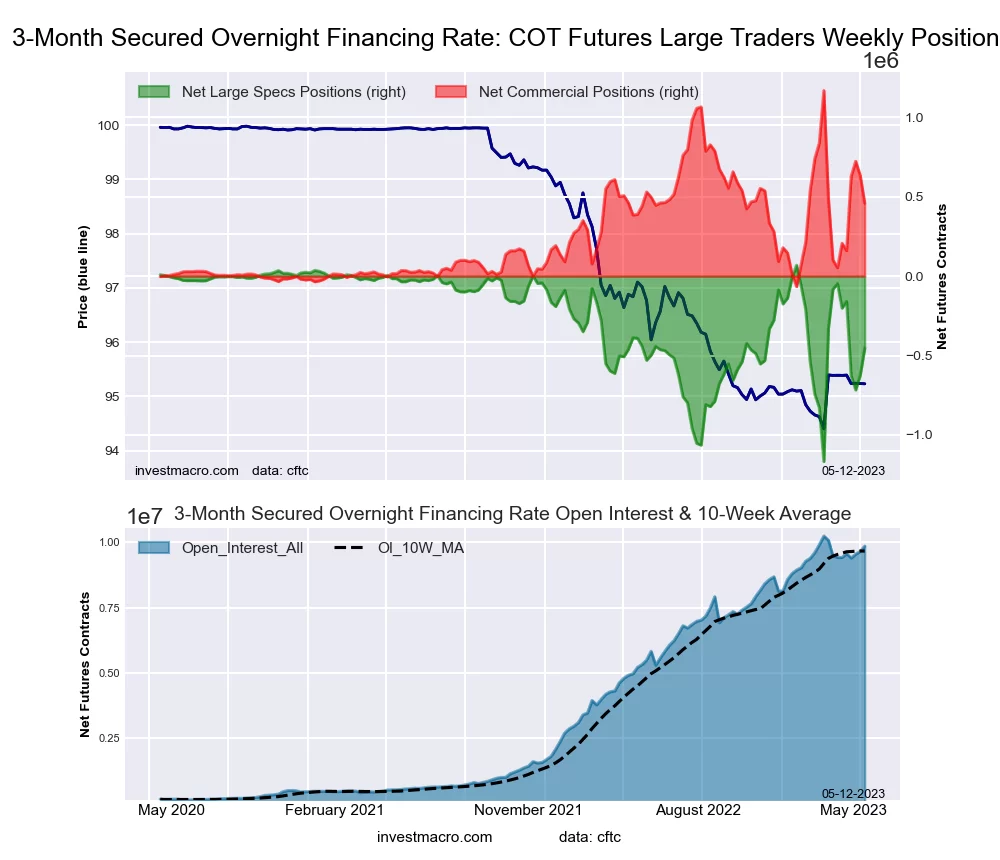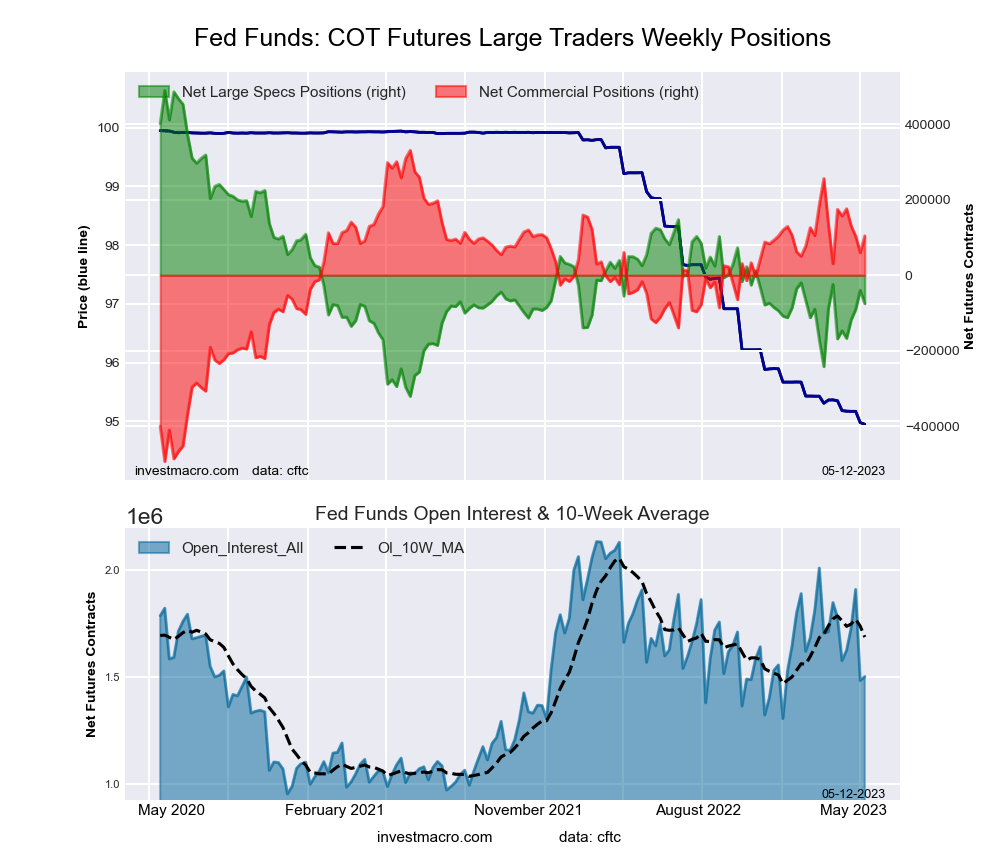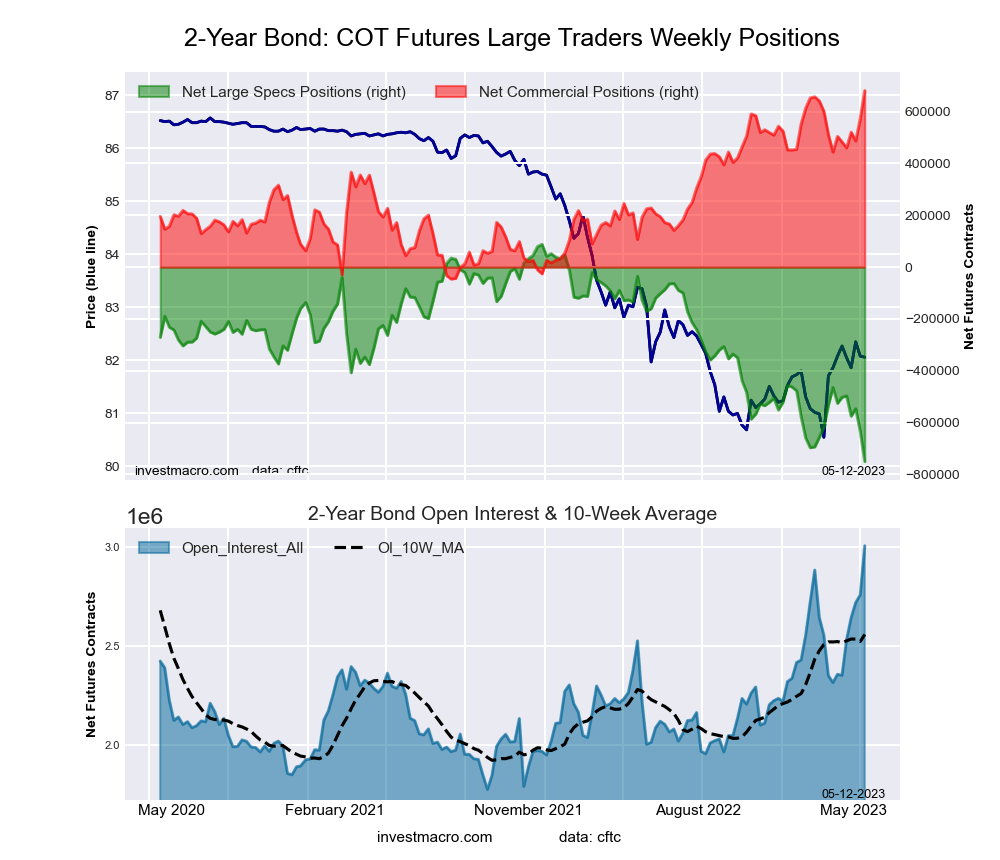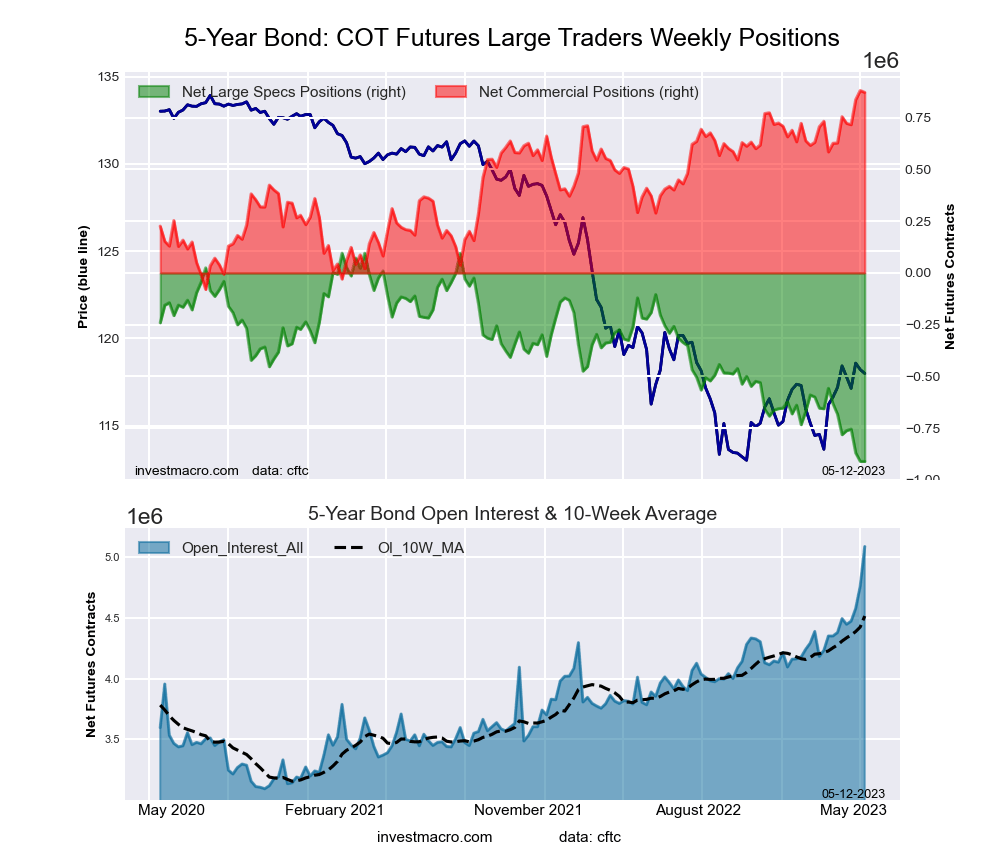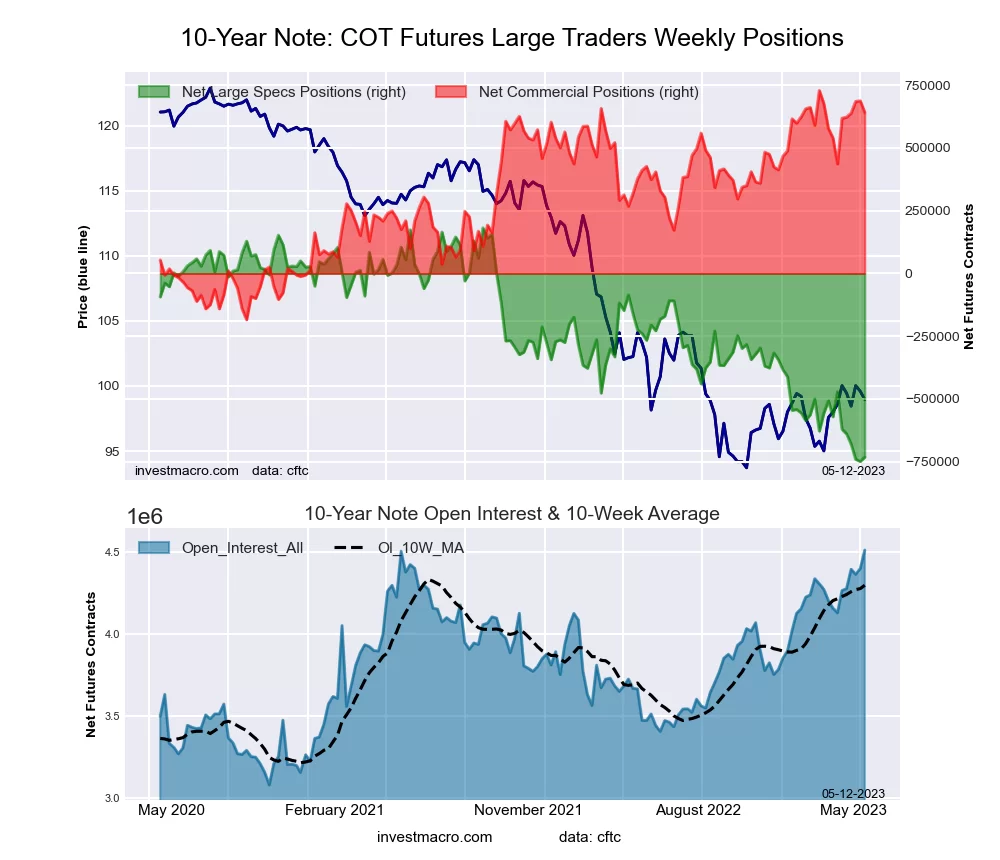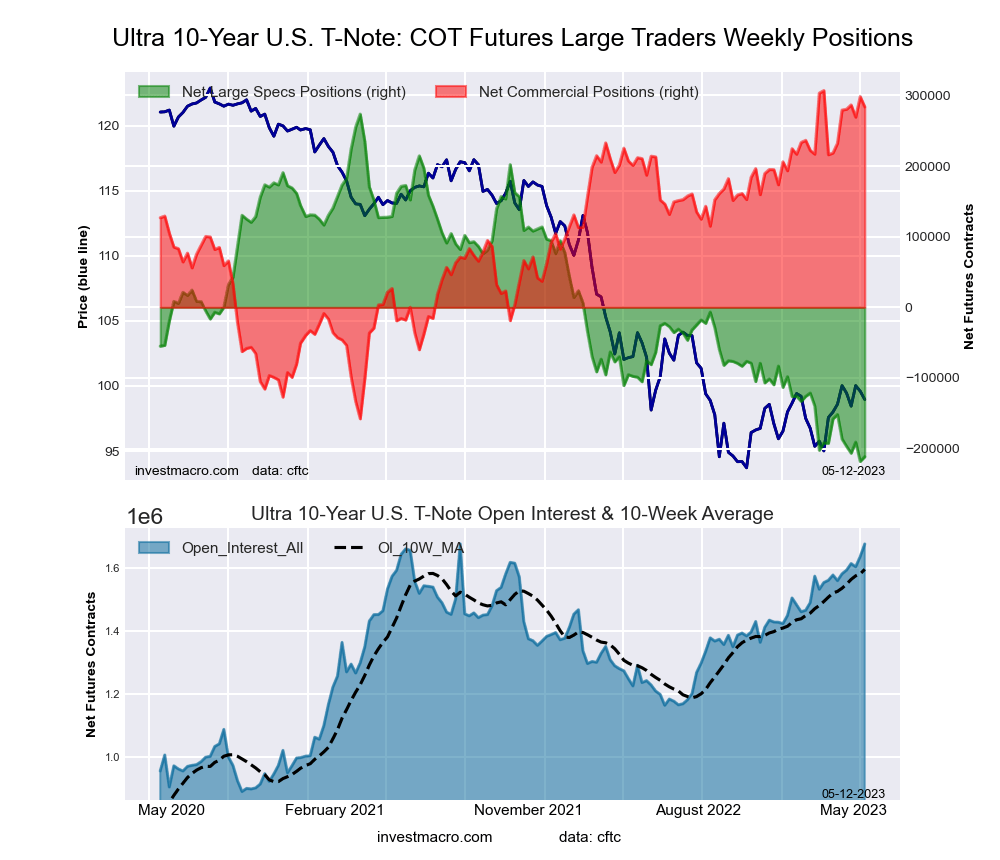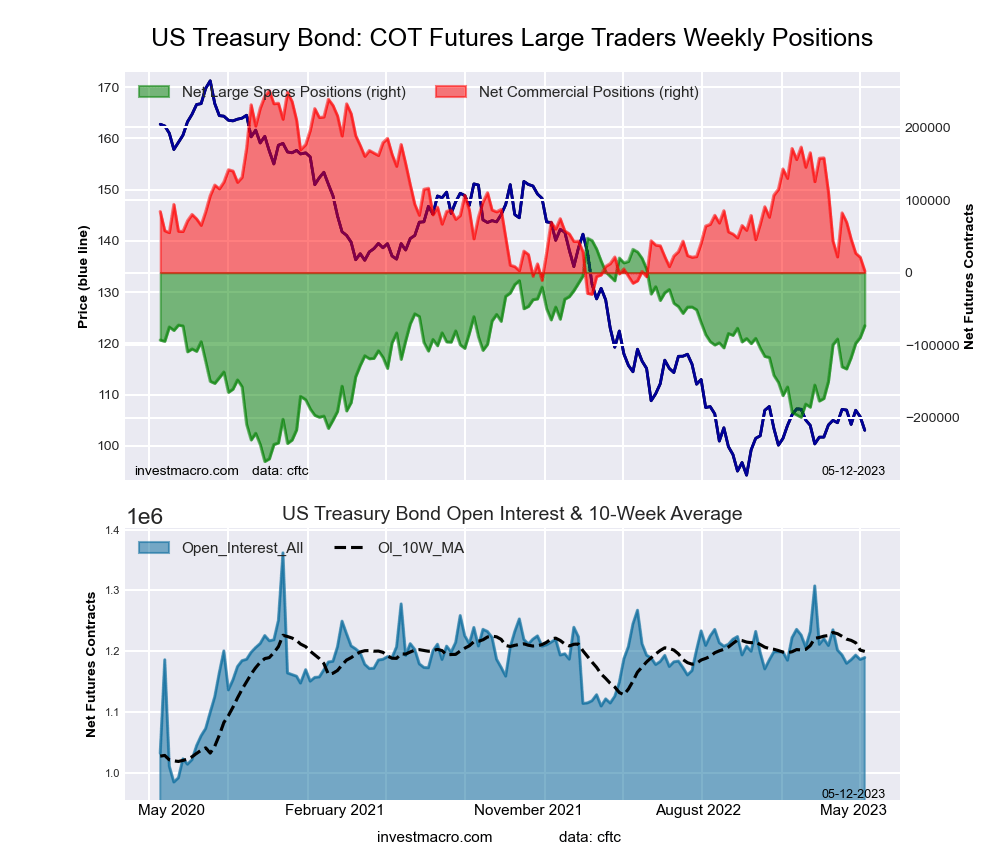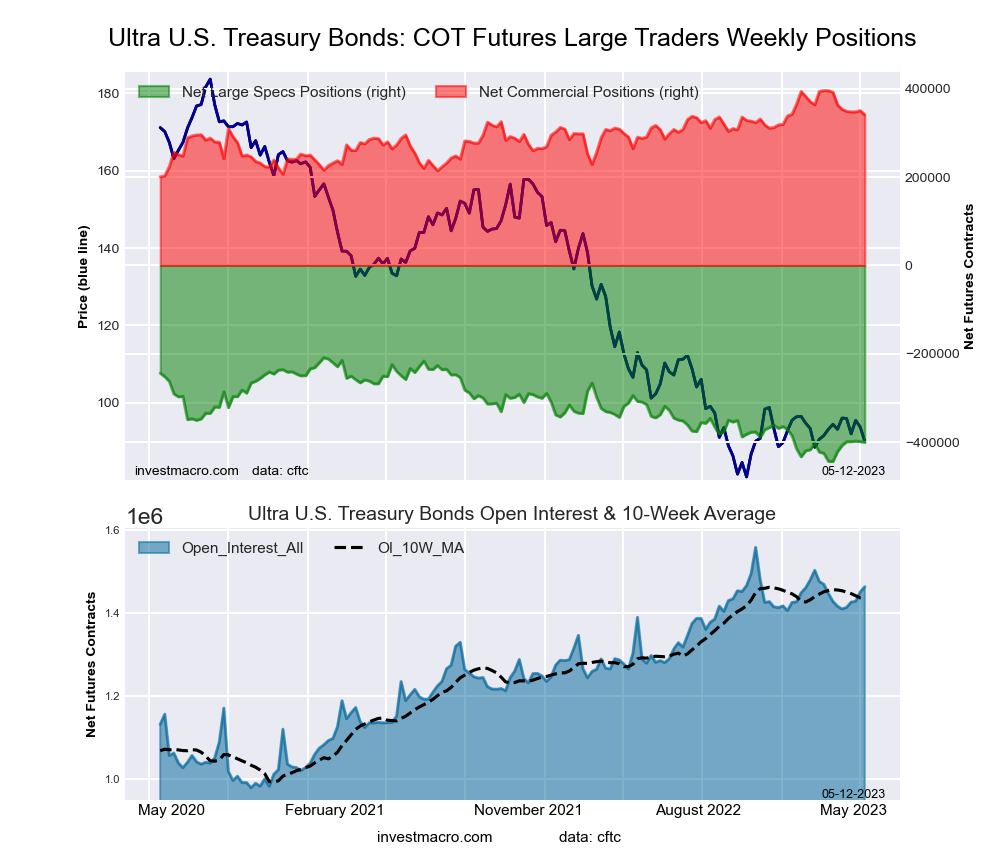
ECB, Bank of England (BoE), and Swiss National Bank (SNB) intend to keep raising interest rates

By JustMarkets

At Wednesday’s US stock market close, the Dow Jones Index (US30) decreased by 0.23%, while the S&P 500 Index (US500) lost 0.35%. Technology Index NASDAQ (US100) gained 0.03% yesterday. Stock indices remain under pressure due to recession fears and rate hikes. At the same time, the reporting season so far shows no signs of confidence.

On Wednesday, Tesla (TSLA) reported first-quarter earnings below Wall Street estimates. The company’s stock was down by 2%. A drop in semiconductor stocks also hurt technology companies, as ASML Holdings (ASML) shares fell by 3% after reporting a 46% drop in first-quarter net orders as buying demand remains low. Meta Platforms Inc (META), though not reporting yesterday, saw its shares fall by 1% after the company announced a new wave of job cuts as the drive to cut costs continues.

Stock markets in Europe were mostly up. Germany’s DAX (DE30) gained 0.08%, France’s CAC 40 (FR40) added 0.21%, Spain’s IBEX 35 (ES35) increased by 0.77%, and the British FTSE 100 (UK100) closed down by 0.13% on Wednesday.

ECB spokesman Lane said yesterday that if inflation in the Eurozone remains stable, he will vote for further rate hikes. These comments coincide with other comments from ECB officials. The inflation rate in the Eurozone was unchanged compared to the previous month. The consumer price index amounted to 6.9% year-on-year, while core inflation remained at 5.7%. Such data increases the likelihood of an additional 0.5% rate hike at the next ECB meeting.

Inflation in the UK has been above 10% for the seventh month in a row. This has been an important week for the UK economy, starting with yesterday’s employment report, which confirmed the difficult situation in the labor market in the UK. Against this backdrop of the labor market and inflation data, analysts predict that the Bank of England will raise interest rates by another 25 bps next month with almost 100% probability.

The Swiss National Bank’s recent 0.5% interest rate hike is still slowing inflation to just 2% in forecasts, said Andrea Maechler from the SNB, suggesting that additional tightening may be needed. Economists now expect the SNB to give another quarter-point hike, bringing the discount rate to 1.75%.

Crude oil inventories in the United States declined last week at the fastest pace in three weeks. But that hasn’t helped oil prices, which have already lost 4% since the start of this week. There are signs of a significant weakening in global demand for fuel, along with a drop in manufacturing activity. Normally oil prices rise in the run-up to summer on the back of increased travel demand, but at the moment, this is not happening.

Asian markets were mostly down yesterday. Japan’s Nikkei 225 (JP225) decreased by 0.18%, China’s FTSE China A50 (CHA50) was 0.74% lower, Hong Kong’s Hang Seng (HK50) fell by 1.37% by the end of the day, India’s NIFTY 50 (IND50) was 0.23% lower, while Australia’s S&P/ASX 200 (AU200) was 0.07% positive by Wednesday. Asian indices continue to decline, following weakness from Wall Street, as worries about rising interest rates and slowing economic growth made traders cautious about risk-oriented assets.

The People’s Bank of China kept interest rates at 3.65%. But Chinese indices did not get much support for this decision.

S&P 500 (F) (US500) 4,154.52 −0.35 (−0.0084%)

Dow Jones (US30)33,897.01 −79.62 (−0.23%)

DAX (DE40) 15,895.20 +12.53 (+0.079%)

FTSE 100 (UK100) 7,898.77 −10.67 (−0.13%)

USD Index 101.95 +0.20 +0.20%

Important events for today:
  • – New Zealand Consumer Price Index (q/q) at 01:45 (GMT+3);
  • – US FOMC Williams Speaks at 02:00 (GMT+3);
  • – Japan Trade Balance (m/m) at 02:50 (GMT+3);
  • – China Loan Prime Rate (m/m) at 04:15 (GMT+3);
  • – German Producer Price Index (m/m) at 09:00 (GMT+3);
  • – Eurozone Account Monetary Policy Meeting at 14:30 (GMT+3);
  • – US Initial Jobless Claims (w/w) at 15:30 (GMT+3);
  • – US Philadelphia Fed Manufacturing Index (m/m) at 15:30 (GMT+3);
  • – US FOMC Member Waller Speaks at 15:45 (GMT+3);
  • – US Existing Home Sales (m/m) at 17:00 (GMT+3);
  • – US Natural Gas Storage (w/w) at 17:30 (GMT+3);
  • – Canada BoC Gov Macklem Speaks at 18:30 (GMT+3);
  • – US FOMC Member Bowman Speaks at 22:00 (GMT+3).

By JustMarkets


This article reflects a personal opinion and should not be interpreted as an investment advice, and/or offer, and/or a persistent request for carrying out financial transactions, and/or a guarantee, and/or a forecast of future events.

Dollar holds onto recent gains in quiet trade

By ForexTime 

After touching the year-to-date bottom from early February at 100.82 last week, the DXY has rebounded this week. If it holds onto its gains and prints a positive, green candle, that will at least stop a run of five consecutive weeks of losses. This has come about chiefly as US Treasury bond yields have also bounced back after a few weeks of turmoil brought on by the March banking madness / crisis.

The dollar recovery which began late last week follows a jump in US inflation expectations data. CPI figures around the globe, including yesterday’s hot UK numbers, have added to the theme that core inflation will stick around at higher levels for potentially longer than many market watchers believe. For the US, the all-important bond markets are seeing bets on interest rate cuts being priced out. The Fed funds rate is now seen at 4.6% by year-end, which is the highest since the banking turmoil began. This implies money markets are pricing in only two full cuts from the Fed’s peak by then. We note that there is only roughly a 20% chance of another 25bp rate hike beyond the FOMC’s May meeting.

All of this still indicates that the upside for the greenback remains limited as the Fed tightening cycle nears the end. The DXY is still just about in its bearish, descending channel from the March top at 105.88. Prices look like they need to advance above 102.80 at a minimum to arrest the downtrend.

Other major central banks on the move

In contrast to the Fed, European central banks like the BoE, SNB and of course the ECB are seen as having more work to do to tame inflationary pressures. Strong UK data this week has rubber-stamped a 25bp rate hike at the Old Lady’s May meeting, the week after the FOMC and ECB rendezvous’. It has also seen another couple of rate rises priced in for MPC meetings into the summer. A peak UK rate of near 5% is the market bet though price action in the pound has been mixed this week. Support has been found on dips in GBP/USD with the mid-1.23s looking like solid support. But it is interesting we haven’t pushed higher towards 1.25, even with the solid data. A weekly close above the January top at 1.2447 would do nicely for the bulls.

EUR still in its uptrend

Those elevated core prices are also sustaining market bets that the ECB will lift rates in the coming months. Again if we check out bond market which have been driving the wider market price action this year, the peak rate in the eurozone is seen around 3.87%, so a strong rebound from the 3% low priced during the heat of the banking maelstrom. In fact, it’s not that far away from the early March top just above 4%.

We get more ECB speakers on the wires today though it appears that the bar for a hawkish surprise is now high ahead of that huge week of central bank meetings in early May. Similar to GBP, the rise in rate hike bets hasn’t pushed EUR/USD to its recent highs, above 1.10. But dips have been supported and prices remain in an ascending channel with a series of higher highs and higher lows since early March. A weekly close above 1.1032 is important to sustain the bull trend.


Forex-Time-LogoArticle by ForexTime

ForexTime Ltd (FXTM) is an award winning international online forex broker regulated by CySEC 185/12 www.forextime.com

Generative AI: 5 essential reads about the new era of creativity, job anxiety, misinformation, bias and plagiarism

By Eric Smalley, The Conversation 

The light and dark sides of AI have been in the public spotlight for many years. Think facial recognition, algorithms making loan and sentencing recommendations, and medical image analysis. But the impressive – and sometimes scary – capabilities of ChatGPT, DALL-E 2 and other conversational and image-conjuring artificial intelligence programs feel like a turning point.

The key change has been the emergence within the last year of powerful generative AI, software that not only learns from vast amounts of data but also produces things – convincingly written documents, engaging conversation, photorealistic images and clones of celebrity voices.

Generative AI has been around for nearly a decade, as long-standing worries about deepfake videos can attest. Now, though, the AI models have become so large and have digested such vast swaths of the internet that people have become unsure of what AI means for the future of knowledge work, the nature of creativity and the origins and truthfulness of content on the internet.

Here are five articles from our archives the take the measure of this new generation of artificial intelligence.

1. Generative AI and work

A panel of five AI experts discussed the implications of generative AI for artists and knowledge workers. It’s not simply a matter of whether the technology will replace you or make you more productive.

University of Tennessee computer scientist Lynne Parker wrote that while there are significant benefits to generative AI, like making creativity and knowledge work more accessible, the new tools also have downsides. Specifically, they could lead to an erosion of skills like writing, and they raise issues of intellectual property protections given that the models are trained on human creations.

University of Colorado Boulder computer scientist Daniel Acuña has found the tools to be useful in his own creative endeavors but is concerned about inaccuracy, bias and plagiarism.

University of Michigan computer scientist Kentaro Toyama wrote that human skill is likely to become costly and extraneous in some fields. “If history is any guide, it’s almost certain that advances in AI will cause more jobs to vanish, that creative-class people with human-only skills will become richer but fewer in number, and that those who own creative technology will become the new mega-rich.”

Florida International University computer scientist Mark Finlayson wrote that some jobs are likely to disappear, but that new skills in working with these AI tools are likely to become valued. By analogy, he noted that the rise of word processing software largely eliminated the need for typists but allowed nearly anyone with access to a computer to produce typeset documents and led to a new class of skills to list on a resume.

University of Colorado Anschutz biomedical informatics researcher Casey Greene wrote that just as Google led people to develop skills in finding information on the internet, AI language models will lead people to develop skills to get the best output from the tools. “As with many technological advances, how people interact with the world will change in the era of widely accessible AI models. The question is whether society will use this moment to advance equity or exacerbate disparities.”

2. Conjuring images from words

Generative AI can seem like magic. It’s hard to imagine how image-generating AIs can take a few words of text and produce an image that matches the words.

Hany Farid, a University of California, Berkeley computer scientist who specializes in image forensics, explained the process. The software is trained on a massive set of images, each of which includes a short text description.

“The model progressively corrupts each image until only visual noise remains, and then trains a neural network to reverse this corruption. Repeating this process hundreds of millions of times, the model learns how to convert pure noise into a coherent image from any caption,” he wrote.

3. Marking the machine

Many of the images produced by generative AI are difficult to distinguish from photographs, and AI-generated video is rapidly improving. This raises the stakes for combating fraud and misinformation. Fake videos of corporate executives could be used to manipulate stock prices, and fake videos of political leaders could be used to spread dangerous misinformation.

Farid explained how it’s possible to produce AI-generated photos and video that contain watermarks verifying that they are synthetic. The trick is to produce digital watermarks that can’t be altered or removed. “These watermarks can be baked into the generative AI systems by watermarking all the training data, after which the generated content will contain the same watermark,” he wrote.

4. Flood of ideas

For all the legitimate concern about the downsides of generative AI, the tools are proving to be useful for some artists, designers and writers. People in creative fields can use the image generators to quickly sketch out ideas, including unexpected off-the-wall material.

AI as an idea generator for designers.

Rochester Institute of Technology industrial designer and professor Juan Noguera and his students use tools like DALL-E or Midjourney to produce thousands of images from abstract ideas – a sort of sketchbook on steroids.

“Enter any sentence – no matter how crazy – and you’ll receive a set of unique images generated just for you. Want to design a teapot? Here, have 1,000 of them,” he wrote. “While only a small subset of them may be usable as a teapot, they provide a seed of inspiration that the designer can nurture and refine into a finished product.”

5. Shortchanging the creative process

However, using AI to produce finished artworks is another matter, according to Nir Eisikovits and Alec Stubbs, philosophers at the Applied Ethics Center at University of Massachusetts Boston. They note that the process of making art is more than just coming up with ideas.

The hands-on process of producing something, iterating the process and making refinements – often in the moment in response to audience reactions – are indispensable aspects of creating art, they wrote.

“It is the work of making something real and working through its details that carries value, not simply that moment of imagining it,” they wrote. “Artistic works are lauded not merely for the finished product, but for the struggle, the playful interaction and the skillful engagement with the artistic task, all of which carry the artist from the moment of inception to the end result.”

Editor’s note: This story is a roundup of articles from The Conversation’s archives.The Conversation

About the Author:

Eric Smalley, Science + Technology Editor, The Conversation

This article is republished from The Conversation under a Creative Commons license. Read the original article.


Rage On

Source: Michael Ballanger  (4/17/23)

Michael Ballanger of GGM Advisory Inc. takes a look at the current state of the market and the gold and silver sector to tell you where he believes it is all headed. 

Cornering (a market): In finance, cornering the market consists of obtaining sufficient control of a particular stockcommodity, or other asset in an attempt to manipulate the market price. One definition of cornering the market is “having the greatest market share in a particular industry without having a monopoly.”

Anyone old enough to recall the late, great, stagflationary 70s was around to witness one of the truly great market “cornerings” of modern market history and one which was carried out in compliance with all laws and statutes set out by regulators in the 1970s.

It involved two Texas brothers, Herbert and Nelson “Bunker” Hunt, heirs to the multi-billion-dollar A.L. Hunt oil fortune, who made the determination that profligate spending by the Democrats for social programs to create “The Great Society” under Lyndon Johnston and continued by Republicans under Nixon with the Vietnam War would eventually, if not immediately, bankrupt the nation and debase the U.S. currency, which had been ongoing since 1971 with the termination of the Bretton Woods Agreement.

Silver Thursday

I was in university in the U.S. when the Dean of Finance of the Saint Louis U. business school went off on one of his legendary pre-lecture rants one morning, and it was always a “morning after” his weekly Thursday pub crawl on Friday morning at 8:00 a.m. — the first class of the day — as “The Doc” (Dr. Fred Yeager) — would fire up a Camel non-filter, sipping black coffee from a Styrofoam cup and launch into a “fire and brimstone” narrative on something the Fed or the Treasury was doing.

This time, it was a news headline of 1976 where it was first reported in the Wall Street Journal that a certain “Southern group” was amassing hundreds of thousands of ounces of silver which continued all through the late 70s until finally, after silver had charged from US$2 per ounce to over US$50 that the U.S. government decided they had had enough.

They came down with a sledgehammer-like strategy of moral suasion (urging Hunt’s creditors to withhold loans) and increased minimum maintenance margin levels, the combination of which choked off the Hunts’ ability to carry the massive trade and starting on March 27, 1980, the brokers carrying the position began a gargantuan liquidation that took silver from over US$50 to a shade above US$5 by June.

It was called “Silver Thursday.”

Despite a sincere desire to protect their wealth from the dangers of out-of-control government spending, the Hunts were trotted out as “Enemies of the State” and were relieved of hundreds of millions of dollars by a government and the infamous Wall Street “old boys club” that arbitrarily changed all of the rules and even fabricated new ones to fit their mission. Once the hammer came down, memories of the enrichment created for early players in the 70’s silver squeeze were forever etched in the collective psyches the world over, but it took until 2011 until silver once again approached US$50 per ounce in response to massively inflationary bailouts of the Wall Street banks.

With silver outperforming gold and the miners outperforming the metals . . .  I get a perfect set-up for a continuation move into summer of 2023 with new highs on the horizon.

Those very bankers, fearing the negative connotations of the spirited silver run being linked to outrageous Congressional favoritism over banks versus the public taxpayer, organized a brilliant wee-hours raid on the silver market when all of the Western traders were asleep and the “Sunday Night Massacre” of April 4, 2013, ushered in an epic crash taking the shiny metal’s price down through all support levels and into a bear market until late 2015.

While the 2011-2016 silver bear was painful, there was never any blatant evidence, such as materialized in 1979, that the government was going to intervene in the market. Instead, it took the shape and form of a classic Watergate Break-in type of crime.

No smoking guns were ever recovered from the 2013 pistol-whipping, but it smelled of government intervention with its trademark punctuality and savagery. Body bags were everywhere, and losses within the retail ranks were deep and widespread, but stocks went on to new highs day in and day out, further placating an investing public that was being trained in masterful Pavlovian fashion what happens when you invest in “high-risk assets like silver.”

So, here we are again in the midst of a strong, multi-month advance in the precious metals, with silver outperforming gold and the miners outperforming the metals, and that has been the case if I use as my starting point November 3, which was the date of the 2022 low for gold, I get a perfect set-up for a continuation move into summer of 2023 with new highs on the horizon.

If I take a second reading off the March 8 lows of five weeks ago, I get an even better technical picture with the PM miners and silver neck-and-neck and outperforming gold by a lengthy margin.

GDX and GDXJ 

VanEck Gold Miners ETF (GDX:NYSEARCA:)

I have ample exposure to gold and silver through physical ownership and by way of the junior portfolios.

But it has been almost three tears since I exited the VanEck Gold Miners ETF (GDX:NYSEARCA:) after making one of the best calls in my career on March 16, 2020, at the exact days the precious metals all bottomed.

I exited the positions in August 2020, with GDX approaching US$44 per share.

Thirty months later, we have the perfect set-up for precious metals, and up til the recent decision to cut output by the producer nations, energy was moving in the miner’s favorite direction — down.

VanEck Junior Gold Miner ETF (GDXJ:NYSEArca), 

Today’s little hiccup was all profit-taking as silver’s RSI touched 79 briefly before closing out the week back below 70. Within the complex, silver needs to cool off for a few days, during which I will be buying back my GDX position, hopefully in the US$32-33 range, into an early-week pullback.

I will also be teeing up the VanEck Junior Gold Miner ETF (GDXJ:NYSEArca), and while it may appear “late,” it really isn’t on a fundamental basis.

The miners are all dirt cheap, but once we achieve escape velocity for gold above US$2,100, I see a doubling of both Senior and Junior Gold ETFs by Q1/2024.

That should hit home pretty hard because I have avoided these ETFs for what feels like a lifetime. (Subscribers will receive notifications next week as to price and strategy.)

Stocks

I get no fewer than twenty-five emails a day from services offering to help me “Navigate the Upcoming CRASH!” followed by pictures of some bombed-out war zone or children wandering in the night.

The entire world is preoccupied to the point of obsession with this pending Armageddon that is lurking somewhere just above the tree line, but for me, I cannot buy it. There are really bad places on this earth to call “HOME,” but unless you had the bad fortune of being born there, you could always leave.

I met an ultra-sound technician today that emigrated from northeast mainland China over ten years ago with his wife and mother, who gave up a general practitioner “M.D.” license to take a secondary profession in Canada.

I asked how he liked the move, and he said it was the best decision he had ever made despite the 50-hour work weeks helping out in off hours his wife’s laundry business. He was undoubtedly the most over-qualified medical technician in the history of the North Durham Medical Centre, and I walked away after a handshake and a smile, feeling pretty happy for the chap.

Oddly enough, that is how I feel about the SPX these days.

Bob Farrell Rule #9: “When all the experts and forecasts agree — something else is going to happen.”

On the topic of consensus, what is the most heavily-debated topic in a Wall Street boardroom these days? It is “When will the Fed pivot?” Thousands of guesses and thousands of theories camouflage the least debated topic, which is “Will there be a recession?”

Bob Farrell Rule #9: “When all the experts and forecasts agree — something else is going to happen.”

No one agrees on the “Fed Pivot” thing, but they all agree that there will be a recession and a really nasty one, so the only thing to banty about should be “How Bad?”

Well, Bob Farrell was a pretty good investor with a long, battle-tested track record, and I will go with his Rule #9, which would have me take the absolute unanimity of agreement over the pending recession, which falls into the category of “foregone conclusion,” verging upon “no-brainer” verging upon “Take it to the bank” and assume that a) there will be NO recession or b) there will be a recession, but stocks go UP, not DOWN, or c) the recession is not enough to cool off inflation and the old adage that I should “Never underestimate the replacement power of equities within an inflationary spiral” rings true.

Every CNBC Guest commentator, every podcast guru, and every armchair “investment strategist” is calling for new lows, and they all can cite technical and fundamental reasons for that event to occur.

And I say, “No way.”

Stocks just went through a month that had huge volumes of “smart money” exiting the bank stocks (Uncle Warren, too!), with commentators drawing comparisons to 2008 and 2001 and all boasting from the rooftops that they were positioned with “record cash” or adequately hedged” as March not only did not whimper into April, it rumbled into April knocking tables over and stopping traffic.

It is within earshot of the February highs, just under 4,200, and just out of the M4 range for the August highs at 4,325. We have the positive buy signal of the January Barometer, giving me not a guarantee of an up year but a historical probability of one. And I’ll take that, any day, all day.

Stocks are climbing that very annoying “Wall of Worry” like 1982 and 1988 and 2009 and 2020, where prognosticators gnash and gnarl their incisors, crying in despair as margin calls swarm their inboxes.

I learned after many years and hundreds of thousands of lost dollars that stocks to whatever the hell they choose to, and there is no preordained rule that says that the number of hours you spend on “due diligence” will ensure a favorable outcome. Stocks have a personality, and they have memory muscles far more hardened than anything you or I possess, so when they go against you, learn to respect the mortal danger inherent in the wounded animal.

Stocks gave us a little “growl” in March; make damn sure you are on the right side of the “roar” in April.


Michael Ballanger Disclaimer:

This letter makes no guarantee or warranty on the accuracy or completeness of the data provided. Nothing contained herein is intended or shall be deemed to be investment advice, implied or otherwise. This letter represents my views and replicates trades that I am making but nothing more than that. Always consult your registered advisor to assist you with your investments. I accept no liability for any loss arising from the use of the data contained on this letter. Options and junior mining stocks contain a high level of risk that may result in the loss of part or all invested capital and therefore are suitable for experienced and professional investors and traders only. One should be familiar with the risks involved in junior mining and options trading and we recommend consulting a financial adviser if you feel you do not understand the risks involved.

Disclosures:

1) Michael J. Ballanger: I, or members of my immediate household or family, own securities of the following companies mentioned in this article: None. I personally am, or members of my immediate household or family are, paid by the following companies mentioned in this article: None.

2) The following companies mentioned in this article are billboard sponsors of Streetwise Reports: None. Click here for important disclosures about sponsor fees. As of the date of this article, an affiliate of Streetwise Reports has a consulting relationship with: None. Please click here for more information.

3) Statements and opinions expressed are the opinions of the author and not of Streetwise Reports or its officers. The author is wholly responsible for the validity of the statements. The author was not paid by Streetwise Reports for this article. Streetwise Reports was not paid by the author to publish or syndicate this article. Streetwise Reports requires contributing authors to disclose any shareholdings in, or economic relationships with, companies that they write about. Streetwise Reports relies upon the authors to accurately provide this information and Streetwise Reports has no means of verifying its accuracy.

4) This article does not constitute investment advice. Each reader is encouraged to consult with his or her individual financial professional and any action a reader takes as a result of information presented here is his or her own responsibility. By opening this page, each reader accepts and agrees to Streetwise Reports’ terms of use and full legal disclaimer. This article is not a solicitation for investment. Streetwise Reports does not render general or specific investment advice and the information on Streetwise Reports should not be considered a recommendation to buy or sell any security. Streetwise Reports does not endorse or recommend the business, products, services or securities of any company mentioned on Streetwise Reports.

5) From time to time, Streetwise Reports LLC and its directors, officers, employees or members of their families, as well as persons interviewed for articles and interviews on the site, may have a long or short position in securities mentioned. Directors, officers, employees or members of their immediate families are prohibited from making purchases and/or sales of those securities in the open market or otherwise from the time of the decision to publish an article until three business days after the publication of the article. The foregoing prohibition does not apply to articles that in substance only restate previously published company releases.

RoboForex Introduces a Performance Fee Scheme for Copying Trades on Its R StocksTrader Platform

RoboForex, a leading global provider of financial services, is now enabling experienced Traders who use the CopyFX service for copy trading on its multi-asset trading platform R StocksTrader to set Performance fees on trades copied by Investors. The Performance fees paid by the Investor to the Trader are subject to profitable trades.

RoboForex launched the CopyFX copy trading service for users of the mobile version of its multi-asset trading platform R StocksTrader at the end of 2022.  At launch time, Traders could test the service, acquire their investment rating, and take their place on the list of top-rated traders. By now, CopyFX Traders, as the strategy providers, can charge performance fees from its Investors for the successful copy trading.

This novelty will allow Traders not only to make a profit on their own trades, but also receive added income in the form of Performance fee for their positions copied by Investors who are following them. It should be noted that the Investor pays the fee only if the trade turns out profitable. Read more about the Performance fee scheme in this article.

More about CopyFX services on the R StocksTrader platform

CopyFX is meant for Investors to benefit from the expertise of more experienced Traders by subscribing to the said Traders’ strategies, and thereby make a profit by copying their successful trades. Traders can, in their turn, benefit by receiving Performance fees from Investors who have used their successful strategies.

R StocksTrader clients can make use of a variety of functions:

  • Copy over 1500+ instruments, which is unique offer in the industry
  • An opportunity to copy positions of trades with the most popular instruments, including stocks, CFDs, FX, commodities, and ETFs
  • Copying is instant, and orders for the Trader and Investor are executed at the very same price
  • The same R StocksTrader account may be used for independent trading as well as for copying the positions of other Traders
  • There are no limits to the number of accounts a Trader and Investor can have

About RoboForex

RoboForex is a company that delivers trading services. The company provides traders who work in financial markets with access to its proprietary trading platforms. RoboForex Ltd operates under the licence FSC 000138/437. View more detailed information about the Company’s products and activities on the official website roboforex.com.


The cryptocurrency market digest (BTC, PEPE, WOJ). Overview for 19.04.2023

By RoboForex.com

The BTC on Wednesday is balancing near 29,337 USD. By the way, the first half of the week was much better: the leading crypto rose to 30,470 USD.

Something curious is happening: the BTC lost 3% over a couple of minutes because the whole sector slumped into a deep correction. And then the situation normalised. Practically, growth perspective faced a market correction challenge. Now the BTC needs to return to 29,700-29,800 USD.

The capitalisation of the crypto market by today has dropped to 1.227 trillion USD. The BTC share rose to 46.2%, while the ETH part declined to 19.4%.

Islamic Coin will come out in May

The world’s first cryptocurrency going by Shariah norms will be the Islamic Coin, and it will appear this May. For now, only closed sales are being carried out. The global Islamic community is assessed as 1.8 billion people, which makes the coin appealing for the sector.

Meme tokens are growing

The Pepe coin rose more than 300% overnight. It got it’s name after an Internet frog. This is a curious story: five days after the coin appeared on the exchange, its capitalisation reached 115 million USD, making the coin number six meme token in the crypto market in terms of capitalisation. Another meme coin Wojak, a symbol of another social media character, grew 120%.

Article By RoboForex.com

Attention!
Forecasts presented in this section only reflect the author’s private opinion and should not be considered as guidance for trading. RoboForex LP bears no responsibility for trading results based on trading recommendations described in these analytical reviews.

The Bank of Japan intends to keep its monetary policy soft. In the US, the reporting season is gaining momentum

By JustMarkets

The Dow Jones Index (US30) decreased by 0.03% at Tuesday’s close of the stock market, while the S&P 500 Index (US500) added 0.09%. NASDAQ Technology Index (US100) lost 0.04% yesterday. Concerns about interest rate hikes have returned to the markets in recent sessions as hawkish signals from Fed officials and signs of some resilience in the US economy have created uncertainty about when the Fed will suspend its rate hike cycle. Traders expect the Federal Reserve to raise rates by 25 basis points at its May meeting and bring the rate to a restrictive level of 5.25%.

Goldman Sachs Group Inc (GS) shares fell more than 1% after the broker reported first-quarter earnings that fell short of expectations triggered by the sale of consumer loans at its Marcus consumer business. Bank of America (BAC) reported increases in both the top and bottom lines, driven by a 25% jump in net interest income. Johnson & Johnson (JNJ) reported better-than-expected quarterly results but also noted that lawsuits indicating that its talcum powder products cause cancer persists. JNJ shares fell more than 2%. Lockheed Martin Corporation (LMT) also reported first-quarter results that beat expectations thanks to improvements in its supply chain, sending its shares up more than 2%. Netflix Inc (NFLX) posted a weak report. The company added fewer new customers than expected in the first quarter and delivered below analysts’ estimates for the next three months. Netflix shares initially fell by 11% in after-hours trading after the report was released but then quickly recovered.

Equity markets in Europe mostly rose. German DAX (DE30) gained 0.59%, French CAC 40 (FR40) added 0.47%, Spanish IBEX 35 (ES35) increased by 0.41%, and British FTSE 100 (UK100) closed on Tuesday up by 0.38%.

UK labor market data came out mixed. Estimated vacancies fell by 47,000 in the last quarter. The average pay index came out better than forecasts, but jobless claims rose by 28.2k with an expected 2.5k decline. The unemployment rate rose from 3.7% to 3.8%. Money market pricing in the May meeting now suggests an 83% probability of a 25 bps interest rate hike by the Bank of England. If today’s UK inflation figures do not show a slowdown, the Bank of England is likely to remain firm on another rate hike.

US oil inventories declined by 2.7 mln barrels last week. Oil prices were little changed on Tuesday as upbeat oil consumption data from China (the biggest importer) offset concerns that a possible interest rate hike in the US could slow growth.

Asian markets traded flat yesterday. Japan’s Nikkei 225 (JP225) gained 0.51%, China’s FTSE China A50 (CHA50) added 0.53%, Hong Kong’s Hang Seng (HK50) ended the day down by 0.63%, India’s NIFTY 50 (IND50) fell by 0.26%, and Australia’s S&P/ASX 200 (AU200) ended Tuesday negative by 0.29%. Rising interest rates are unfavorable for Asian indices as higher yields undermine the attractiveness of high-risk assets and also limit foreign capital inflows into the region.

Japan’s major manufacturers remain pessimistic for the fourth consecutive month as concerns over Western banks have exacerbated the slowdown in global growth, dampening prospects for an export-driven recovery. A Tankan survey showed that the economy is on track to recover from the coronavirus, supported by service sector companies, although the slowdown has hit manufacturers in global demand.

Japan will continue on course to meet the central bank’s 2% inflation target by continuing to ease monetary policy, even though it may take time, BoJ Governor Kazuo Ueda said on Tuesday, outlining his stance on maintaining soft conditions.

S&P 500 (F) (US500) 4,154.87 +3.55 (+0.086%)

Dow Jones (US30)33,976.63 −10.55 (−0.031%)

DAX (DE40) 15,882.67 +93.14 (+0.59%)

FTSE 100 (UK100) 7,909.44 +29.93 (+0.38%)

USD Index 101.74 -0.37 -0.36%

Important events for today:
  • – UK Consumer Price Index (m/m) at 09:00 (GMT+3);
  • – UK Producer Price Index (m/m) at 09:00 (GMT+3);
  • – Eurozone Consumer Price Index (m/m) at 12:00 (GMT+3);
  • – US Crude Oil Reserves (w/w) at 17:30 (GMT+3).

By JustMarkets


This article reflects a personal opinion and should not be interpreted as an investment advice, and/or offer, and/or a persistent request for carrying out financial transactions, and/or a guarantee, and/or a forecast of future events.

5 policies that could make future bank failures less likely or severe

By Brian Gendreau, University of Florida 

The abrupt failures of Silicon Valley Bank and Signature Bank and subsequent concerns about the stability of other banks have reignited a fierce debate among lawmakers, the financial industry, the Biden administration and former government officials about an array of banking reforms and regulatory changes.

The ideas floated within a month of Silicon Valley Bank’s collapse on March 10, 2023, range from calls to tweak banking regulations to a major overhaul of the government’s oversight of the banking system.

I’m a finance professor who previously worked for two major banks and was an economist at the Federal Reserve. Based on what I’ve learned from the banking crises that have occurred in the past 40 years, I’d put all the banking reform proposals under consideration into five categories.

stock market investing

1. Stronger supervision

Silicon Valley Bank reportedly ignored six separate warnings from the Federal Reserve Bank of San Francisco that it had too little cash on hand and was engaging in risky practices. So calls for stronger bank supervision and regulation should come as no surprise.

Any such reforms would at least, in part, reverse changes from a law Congress passed in 2018 that loosened some banking regulations.

Previously, the government had to pay especially close attention to banks with at least US$50 billion in assets. Among other things, it needed to subject them to stress tests – in which the authorities assess whether banks have the ability to respond to hypothetical economic shocks – by having enough cash on hand to meet relatively strict capital requirements.

The 2018 law raised the cutoff for what counts as a “systemically important” bank to $250 billion in assets, thus allowing many banks, including SVB, to avoid these more stringent regulations.

The White House has already called for new rules similar to what’s listed above for mid-sized banks — those with $100 billion to $250 billion in assets. SVB, which had about $210 billion in assets, fell in this category before its demise.

Sen. Elizabeth Warren of Massachusetts and Rep. Katie Porter of California have introduced legislation in the Senate and the House of Representatives that would simply repeal the 2018 law, returning the threshold to $50 billion.

Major banking trade groups, such as the Bank Policy Institute, which advocates on behalf of its large-bank members, have argued that the 2018 law was not a major factor in the failures of SVB and Signature Bank.

2. Higher deposit insurance threshold

The role that deposit insurance plays in staving off and alleviating banking crises could also change.

The Federal Deposit Insurance Corp. was only supposed to insure accounts of up to $100,000 during the 2008 financial crisis. But instead, it covered nearly all depositors, uninsured as well as insured, in most bank failures that occurred at that time.

The government subsequently raised that limit to $250,000 in October 2008. But the FDIC once again broke with its official mandate when it protected depositors from losses in excess of that ceiling during the March 2023 bank failures.

Some lawmakers have suggested raising the $250,000 cap on deposit insurance.

Rep. Maxine Waters, the highest-ranking Democrat on the House Financial Services Committee, says she supports that step. And Warren has suggested that she might support new limits that are in the millions of dollars rather than the hundreds of thousands.

“Is it $2 million? Is it $5 million? Is it 10 million?” she said in a television interview.

But those lawmakers have so far stopped short of calling for the FDIC to commit to always fully covering all losses among customers who experience losses when bank failures cause their deposits to vanish – rather than doing so on a case by case basis.

FDIC Chair Martin J. Gruenberg told the Senate Banking Committee during a recent hearing that the insurer plans to release its own proposals on May 1.

3. ‘Modified deposit payoff’

Other proposals go further.

For example, William Isaac, who chaired the FDIC from 1978 to 1986, is calling for the government to insure all non-interest-bearing checking accounts, regardless of size. But he also has a recommendation that might potentially discipline banks that run into trouble.

Isaac distinguishes between deposits that are essentially investments, such as certificates of deposit that people use for long-term savings purposes, and, say, a checking account a customer maintains primarily for basic transactions.

Investors with large sums of money held in CDs are generally wealthy individuals who can either assess financial risks on their own or with input from a paid adviser. People with CDs also have an incentive to leave them with the bank, because withdrawing the money tied up in them before maturity can mean paying a penalty or forfeiting the high interest rates that make them attractive investments.

Isaac also advocates returning to the way uninsured deposits – currently, those above the $250,000 mark – were treated in the 1980s. He calls this the “modified deposit payoff” model.

In resolving a bank failure, the FDIC would cover the full cost of compensating customers with uninsured deposits that don’t pay any interest, yet give uninsured depositors certificates worth 80% of their uninsured funds.

If the government were to recover at least 80% of its cost of covering the uninsured deposits, often by selling failed banks to financial institutions, investors with large deposits at a failed bank would get paid more, Isaac explained in a Wall Street Journal op-ed.

“This reform would protect business accounts that are essential to keeping the economy moving and would reduce substantially the risk of panics,” he wrote.

4. ‘Ring-fencing’

The most comprehensive proposals that call for restructuring the banking system would use what’s known as a “ring fence” model.

Ring-fencing segregates a portion of bank assets and liabilities from the rest. The United Kingdom already follows this approach.

Since 2019, British banks have had to segregate their retail banking activities from their presumably riskier investment banking and international lending.

The most radical of these proposals would lodge all insured deposits in “narrow banks” which would be allowed to hold only cash and U.S. Treasury securities.

All bank lending activity would occur outside of narrow banks, perhaps in finance companylike firms funded with uninsured borrowing and capital instruments such as stocks and bonds.

Economist Robert Litan wrote a book about narrow-banking in the 1980s, but the idea can be traced back to Milton Friedman – the late University of Chicago economist and Nobel Prize winner.

Banks are typically required to set aside a portion of their deposits as reserves held either as cash or deposits at their local Federal Reserve bank. However, the Fed reduced that share to zero in March 2020 – effectively eliminating the requirement altogether.

Some experts question whether ring-fencing, by preventing the transfer of capital among bank subdivisions, might make banks less flexible in responding to financial shocks – and therefore riskier.

Critics of the narrow-bank model point out that this approach would drastically reduce the amount of money banks could lend. As a result, systemic risks would shift from real banks into “shadow banks” – securities firms, hedge funds and other credit intermediaries that face less regulation and supervision. Shadow banks contributed to the 2007-2009 global financial crisis, according to the International Monetary Fund.

5. Compensation clawbacks

At the heart of the debate about banking reform is “moral hazard.” That’s a concept regarding how insurance can create an incentive to take bigger risks when people, institutions and even countries realize they won’t bear the full cost of that risk.

One way to reduce risks in this context is to make bank executives bear some of the costs when the banks they run fail.

A bipartisan group of senators have introduced a bill to do just that. It would require regulators to claw back compensation, including the bonuses and stock awards paid to bank executives in the five years preceding a failure.

In my view, it’s too early to tell whether policymakers will make minor adjustments or opt for more significant reforms.

One thing that I hope all policymakers will keep in mind is that there are trade-offs between the financial stability of banks and market discipline. Offering too much government support – such as insuring all liabilities in the event of a bank failure – creates incentives for banks and their customers to ignore risks or to engage in risky behavior.

This article was updated to clarify Robert Litan’s contributions to the debate over banking reform.The Conversation

About the Author:

Brian Gendreau, Director, Latin American Business Environment program, University of Florida

This article is republished from The Conversation under a Creative Commons license. Read the original article.

Financial Advisors Take Heat for Market Losses (Will Anger Intensify?)

Was 2022 an aberration for the 60/40 allocation?

By Elliott Wave International

Many financial advisors steer clients who are willing to take some risk toward a 60% stocks / 40% bonds portfolio.

Alas, investors who followed that strategy in 2022 saw the value of their portfolios decrease substantially.

In November, The Elliott Wave Theorist, a monthly publication which provides analysis of major financial and cultural trends, said:

Our long term bearish stance on stocks and bonds for 2022 is certainly panning out. In mid-October, [this] headline and chart, from Bank of America, made the rounds in the media:

The bond market was a big contributor to investors’ losses. The September 2020 issue of EWT depicted a 78-year cycle in 10-year U.S. Treasury note yields and concluded that after 39 years of rise and 39 years of fall, interest rates had just registered a historic bottom.

Since then, as you know, interest rates have risen substantially, which means bond prices have fallen.

Even today, many clients of financial advisors are still fuming (Marketwatch, April 4):

Investors are mad as hell at advisers …
With the S&P 500 down 18% in 2022 and bonds off, too, investor sentiment toward full-service investment firms dropped significantly from last year

Yet, there are some who suggest the 60/40 allocation is still worth considering, along with perhaps a few tweaks (Forbes, March 9):

The 60/40 Portfolio Is Not Dead; It’s Just Not Well-Balanced

As I write, the 60/40 strategy has performed better so far in 2023, but the remainder of the year is another matter.

Elliott wave analysis can be useful in helping you get a handle on what the remainder of 2023 holds for stocks and bonds.

If you’d like to learn how the Elliott wave method can help you analyze financial markets, read Frost & Prechter’s Wall Street best seller, Elliott Wave Principle: Key to Market Behavior. Here’s a quote from the book:

In markets, progress ultimately takes the form of five waves of a specific structure. Three of these waves, which are labeled 1, 3 and 5, actually effect the directional movement. They are separated by two countertrend interruptions, which are labeled 2 and 4. The two interruptions are apparently a requisite for overall directional movement to occur.

[R.N.] Elliott noted three consistent aspects of the five-wave form. They are: Wave 2 never moves beyond the start of wave 1; wave 3 is never the shortest wave; wave 4 never enters the price territory of wave 1.

… Elliott did not specifically say that there is only one overriding form, the “five-wave” pattern, but that is undeniably the case. At any time, the market may be identified as being somewhere in the basic five-wave pattern at the largest degree of trend. Because the five-wave pattern is the overriding form of market progress, all other patterns are subsumed by it.

Here’s some good news: You can read the entire online version of Elliott Wave Principle: Key to Market Behavior for free once you become a member of Club EWI, the world’s largest Elliott wave educational community (approximately 500,000 worldwide members).

A Club EWI membership is also free and allows for complimentary access to a wealth of Elliott wave resources (videos and articles) on investing and trading.

Join Club EWI now by following this link: Elliott Wave Principle: Key to Market Behavior.

This article was syndicated by Elliott Wave International and was originally published under the headline Financial Advisors Take Heat for Market Losses (Will Anger Intensify?). EWI is the world’s largest market forecasting firm. Its staff of full-time analysts led by Chartered Market Technician Robert Prechter provides 24-hour-a-day market analysis to institutional and private investors around the world.

Markets Digest China Data; Focus Remains On Earnings

By ForexTime

Asian shares finished mixed on Tuesday, shrugging off the initial boost from China’s better-than-expected Q1 GDP as signs of an uneven recovery stalled risk taking. The world’s second largest economy smashed forecasts by expanding 4.5% in the first quarter from a year earlier. However, the disappointing readings on industrial production suggested that weakness still lingered in the economy, even as retail sales surged. European markets edged higher despite the caution from Asia as investors focused on the global economic outlook and corporate earnings. Wall Street could be injected with fresh volatility this afternoon, especially when considering the slate of earnings from big banks and companies.

The British pound has appreciated against most G10 currencies this morning after data showed wages rose more than expected in February. This development has reinforced expectations that the Bank of England will raise interest rates in May, with traders currently pricing in a 90% probability of a 25-basis point hike.  Sterling is currently up 0.5% against the dollar today with prices pressing against 1.2445 weekly resistance. A break above this point could encourage a move back towards the 1.2500 region.

What next for the dollar?

Shifting expectations around future Fed policy tightening continue to heavily influence the dollar.

Expectations for a 25-basis point rate rise in May have risen to 86%, but the greenback has weakened against most G10 currencies this month with Fed official’s speeches and key US economic data this week impacting its short to medium-term outlook.

On Monday, Richmond Fed President Thomas Barkin said that he wanted to see more evidence that inflation was easing back to the Fed’s goal of 2%. The rest of the week is filled with a host of Fed speeches from policymakers who will give their final guidance in the run-up to the blackout period and the next FOMC meeting. This “Fedspeak” will be the main focus for markets, although it may be wise to also keep an eye on the US weekly initial jobless claims on Thursday and US PMI figures for April which are released on Friday.

Taking a technical look at the Dollar Index, prices remain in a bearish trend on the daily charts. Sustained weakness below 102.00 could result in a selloff back towards 100.79 and 100.00, a level not seen since April 2022.

Currency spotlight – EURUSD

The euro brushed off darkening investor sentiment in Germany’s economy in April amid fears over the banking sector and high inflation. The ZEW business survey expectations reading declined for a second month to 4.1 in April from 13 in March and well below market estimates of 15.3. But the current conditions did see a marked improvement, hitting the highest level since June last year. 

The euro is being supported by ECB rate hike expectations with markets pricing in a 25bp hike in May and two more similar size moves at the June and July meetings. Given how inflation remains well above the ECB’s target of 2%, hawks remain behind the wheel and this should keep euro bulls in a position of power.

Looking at the technical picture, EURUSD remains in an uptrend on the daily charts with prices again approaching 1.1000. A strong daily close above this point could encourage a move back toward the recent high at 1.1075. Should 1.1000 prove to be reliable resistance, prices may slip towards 1.0900.

Commodity Spotlight – Gold

Gold is attempting to nurse the deep wounds inflicted by the recent selloff that saw prices fall more than 2% in two days. Renewed expectations around the Fed extending its rate hike cycle deeper into 2023 hammered zero-yielding gold, with prices flirting around the psychological $2000 level as of writing. This could be another volatile week for the precious metal due to more speeches from Fed officials.

Focusing on the technical picture, last Friday’s heavily bearish daily could shift the balance of power in favour of the sellers. Sustained weakness below $2000 may open a path back towards $1950 and $1900 respectively. If bulls are able to close back above $2000, gold could see $2025 and $2048.50.


Forex-Time-LogoArticle by ForexTime

ForexTime Ltd (FXTM) is an award winning international online forex broker regulated by CySEC 185/12 www.forextime.com