RBA minutes provide no clear guidance. Markets watch second round of US-Iran talks

By JustMarkets 

There was no trading on the US stock market on Monday.

European markets ended Monday mixed, maintaining the subdued momentum of the previous week as investors assessed the impact of a strong euro and expectations that benchmark rates will remain unchanged. Germany’s DAX (DE40) declined by 0.46%, France’s CAC 40 (FR40) closed up 0.06%, Spain’s IBEX 35 (ES35) gained 0.99%, and the UK’s FTSE 100 (UK100) closed up 0.26%. Trading activity was low due to holidays in North America and China.

The Swiss franc (CHF) traded around 0.77 per US dollar, remaining near historic highs amid expectations that the Swiss National Bank (SNB) will maintain a loose monetary policy in the near term. Safe-haven demand continues to provide additional support to the currency, though its influence has diminished slightly of late. Preliminary Q4 GDP data showed economic growth of 0.2% following a 0.5% contraction in Q3. This points to the relative resilience of the Swiss economy even under external pressure, including the 39% tariffs imposed by the Donald Trump administration.

On Tuesday, silver (XAG) fell by more than 2% to drop below $76 per ounce, continuing a three-week correction amid low liquidity due to holiday closures in China, Hong Kong, and several other Asian countries. The speculative surge in January, largely driven by Chinese traders, has been replaced by a sharp reversal, prompting regulators to take measures to mitigate market risks. After reaching record levels above $120 in late January, prices fell toward $64 early this month due to the closing of leveraged positions and forced asset liquidations.

West Texas Intermediate (WTI) crude oil prices fluctuated near $63 per barrel on Monday following two consecutive weeks of declines. Markets are monitoring the second round of negotiations between the US and Iran amid an increased US military presence in the region and tough rhetoric from Donald Trump. Iran, for its part, has signaled a readiness to make concessions on its nuclear program in exchange for sanctions relief. Despite the geopolitics, pressure on prices persists due to oversupply. OPEC+ nations are discussing a potential production increase in April, while the International Energy Agency confirmed its projections of a significant oil surplus in 2026 and lowered its estimate for global demand growth.

Asian markets traded without a uniform trend last week. Japan’s Nikkei 225 (JP225) fell by 0.24%, China’s FTSE China A50 (CHA50) will not trade for the entire week due to Lunar New Year celebrations, Hong Kong’s Hang Seng (HK50) rose by 0.52%, and Australia’s ASX 200 (AU200) showed a positive result of 0.22%.

On Tuesday, the Australian dollar (AUD) fell toward $0.70 after the publication of the Reserve Bank of Australia (RBA) meeting minutes, which provided no clear guidance on the future interest rate trajectory. The regulator emphasized that future decisions will depend on incoming data and the balance of risks, noting that without further tightening, inflation could remain above the 2-3% target range for longer. Markets are now awaiting Q4 wage data and the January labor market report to assess the outlook for inflation and RBA policy.

S&P 500 (US500) 6,836.17 0 (0%)

Dow Jones (US30) 49,500.93 0 (0%)

DAX (DE40) 24,800.91 −113.97 (−0.46%)

FTSE 100 (UK100) 10,473.69 +27.34 (+0.26%)

USD Index 97.07 +0.16% (+0.16%)

News feed for: 2026.02.17

  • Australia RBA Meeting Minutes at 02:30 (GMT+2); – AUD (MED)
  • German Inflation Rate (m/m) at 09:00 (GMT+2); – EUR (MED)
  • UK Claimant Count Change (m/m) at 09:00 (GMT+2); – GBP (HIGH)
  • UK Average Earnings Index (m/m) at 09:00 (GMT+2); – GBP (HIGH)
  • UK Unemployment Rate (m/m) at 09:00 (GMT+2); – GBP (HIGH)
  • Eurozone ZEW Economic Sentiment (m/m) at 12:00 (GMT+2); – EUR (MED)
  • Canada Consumer Price Index (m/m) at 15:30 (GMT+2); – CAD (HIGH)
  • New Zealand Producer Price Index (q/q) at 23:45 (GMT+2). – NZD (MED)

By JustMarkets


This article reflects a personal opinion and should not be interpreted as an investment advice, and/or offer, and/or a persistent request for carrying out financial transactions, and/or a guarantee, and/or a forecast of future events.

Why is US health care still the most expensive in the world after decades of cost-cutting initiatives?

By Patrick Aguilar, Washington University in St. Louis 

In announcing its “Great Healthcare Plan” in January 2026, the Trump administration became the latest in a long history of efforts by the U.S. government to rein in the soaring cost of health care.

As a physician and professor studying the intersection of business and health, I know that the challenges in reforming the sprawling U.S. health care system are immense. That’s partly for political and even philosophical reasons.

But it also reflects a complex system fraught with competing interests – and the fact that patients, hospitals, health insurance companies and drug manufacturers change their behaviors in conflicting ways when faced with new rules.

Soaring costs

U.S. health care is the most expensive in the world, and according to a poll published in late January 2026, two-thirds of Americans are very worried about their ability to pay for it – whether it’s their medications, a doctor’s visit, health insurance or an unpredictably costly medical emergency.

Disputes over health policy even played a central role in the federal government shutdown in fall 2025.

Trump’s health care framework outlines no specific policy actions, but it does establish priorities to address a number of longtime concerns, including prescription drug costs, price transparency, lowering insurance premiums and making health insurance companies generally more accountable.

Why have these challenges been so difficult to address?

Drug price sticker shock

Prescription drug costs in the U.S. began rising sharply in the 1980s, when drugmakers increased the development of innovative new treatments for common diseases. But efforts to combat this trend have resembled a game of whack-a-mole because the factors driving it are so intertwined.

One issue is the unique set of challenges that define drug development. As with any consumer good, manufacturers price prescription drugs to cover costs and earn profits. Drug manufacturing, however, involves an expensive and time-consuming development process with a high risk of failure.

Patent protection is another issue. Drug patents last 20 years, but completing costly trials necessary for regulatory approval takes up much of that period, reducing the time when manufacturers have exclusive rights to sell the drug. After a patent expires, generic versions can be made and sold for significantly less, lowering the profits for the original manufacturer. Though some data challenges this claim, the pharmaceutical industry contends that high prices while drugs are under patent help companies recover their investment, which then funds the discovery of new drugs. And they often find ways to extend their patents, which keeps prices elevated for longer.

Then there are the intermediaries. Once a drug is on the market, prices are typically set through negotiations with administrators called pharmacy benefit managers, who negotiate discounts and rebates on prescription drugs for health insurers and employers offering benefits to their workers. Pharmacy benefit managers are paid based on those discounts, so they do not have an incentive to lower total drug prices, though new transparency rules enacted Feb. 3 aim to change payment practices. Drugmakers often raise the list price of drugs to make up for the markdowns that pharmacy benefit managers negotiate – and possibly even more than that.

In many countries, centralized government negotiators set the price for prescription drugs, resulting in lower drug prices. This has prompted American officials to consider using those prices as a reference for setting drug prices here. In its blueprint, the Trump administration has called for a “most-favored nation” drug pricing policy, under which some U.S. drug prices would match the lowest prices paid in other countries.

This may work in the short term, but manufacturers say it could also curtail investment in innovative new drugs. And some industry experts worry that it may push manufacturers to raise international prices.

Policy experts have questioned whether TrumpRx will bring down drug prices.

In late 2025, 16 pharmaceutical companies agreed to most-favored nation pricing for some drugs. Consumers can now buy them directly from manufacturers through TrumpRx, a portal that points consumers to drug manufacturers and provides coupons for purchasing more than 40 widely used brand-name drugs at a discount, which launched Feb. 5. However, many drugs available through the platform can be purchased at lower prices as generics

Increasing price transparency

Fewer than 1 in 20 Americans know how much health care services will cost before they receive them. One fix for this seems obvious: Make providers list their prices up front. That way, consumers could compare prices and choose the most cost-effective options for their care.

Spurred by bipartisan support in Congress, the government has embraced price transparency for health care services over the past decade. In February 2025, the Trump administration announced stricter enforcement for hospitals, which must now post actual prices, rather than estimates, for common medical procedures. Data is mixed on whether the approach is working as planned, however. Hospitals have reduced prices for people paying out of pocket, but not for those paying with insurance, according to a 2025 study.

For one thing, when regulations change, companies make strategic decisions to achieve their financial goals and meet the new rules – sometimes yielding unintended consequences. One study found, for example, that price transparency regulations in a series of clinics led to an increase in physician charges to insurance companies because some providers who had been charging less raised their prices to match more expensive competitors.

Additionally, a 2024 federal government study found that 46% of hospitals were not compliant. The American Hospital Association, a trade group, suggested price transparency imposes a high administrative burden on hospitals while providing confusing information to patients, whose costs may vary depending on unique aspects of their conditions. And the fine for noncompliance, US$300 per day, may be insufficient to offset the cost of disclosing this information, according to some health policy experts.

Beyond high costs, patients also worry that insurers won’t actually cover the care they receive. Cigna is currently fighting a lawsuit accusing its doctors of denying claims almost instantly – within an average of 1.2 seconds – but concerns about claims denial are rampant across the industry. Companies’ use of artificial intelligence to deny claims is compounding the problem.

Curbing the rise in health insurance premiums

Many Americans struggle to afford monthly insurance premiums. But curbing that increase significantly may be impossible without reining in overall health care costs and, paradoxically, keeping more people insured.

Insurance works by pooling money paid by members of an insurance plan. That money covers all members’ health care costs, with some using more than they contribute and others less. Premium prices therefore depend on how many people are in the plan, as well as the services insurance will cover and the services people actually use. Because health care costs are rising overall, commercial insurance companies may not be able to significantly lower premiums without reducing their ability to cover costs and absorb risk.

Nearly two-thirds of Americans under age 65 receive health insurance through employers. Another 6.9% of them get it through Affordable Care Act marketplaces, where enrollment numbers are extremely sensitive to premium costs.

Enrollment in ACA plans nearly doubled in 2021, from about 12 million to more than 24 million, when the government introduced subsidies to reduce premiums during the COVID-19 pandemic. But when the subsidies expired on Jan. 1, 2026, about 1.4 million dropped coverage, and for most who didn’t, premiums more than doubled. The Congressional Budget Office projects that another 3.7 million will become uninsured in 2027, reversing some of the huge gains made since the ACA was passed in 2010.

When health insurance costs rise, healthier people may risk going without. Those who remain insured tend to need more health services, requiring those more costly services to be covered by a smaller pool of people and raising premium prices even higher.

The Trump administration has proposed routing the money spent on subsidies directly to eligible Americans to help them purchase health insurance. How much people would receive is unclear, but amounts in previous proposals wouldn’t cover what the subsidies provided.

To sum it up, health care is extremely complicated and there are numerous barriers to reforms, as successive U.S. administrations have learned over the years. Whether the Trump administration finds some success will depend on how well the policies are able to surmount these and other obstacles.The Conversation

About the Author:

Patrick Aguilar, Managing Director of Health, Washington University in St. Louis

This article is republished from The Conversation under a Creative Commons license. Read the original article.


 

ZTS – Zoetis Inc. has been added to our Stock Watchlist

🚨 ZTS – Zoetis Inc. has just been added to our data-driven Watchlist.

Here are the details:

📈 ZTS – Zoetis Inc.
🏭 Sector: Healthcare
📊 Market Cap: Medium Cap
⚖️ Beta: 0.96 (Moderate Risk)
📉 52W Performance: -26.6%
📊 Quant Score: 50/100 (Watchlist)

Zoetis just beat it’s latest earnings data and has beaten its earnings-per-share estimates for four consecutive quarters. Currently, it has a dividend just below 1.70 percent, with a payout ratio of approximately 35%. The current P/E ratio is slightly above 20 with the 5-year average P/E coming in around 36.

The price trend for ZTS has been lower over the past couple of years with a -26.6% decline in the past 52-weeks. ZTS currently trades around the $126.65 per share level.

Full Disclosure: I do not currently own this stock. Disclaimer: Content is educational purposes and not intended as investment advice.

Week Ahead: USDJPY braces for quadruple risk cocktail

By ForexTime

  • USDJPY ↓ 2.5% YTD
  • Yen expected to be one of the most volatile G10 currencies vs USD
  • US PCE + Japan CPI combo = fresh volatility?
  • Japan CPI forecast to trigger moves of ↑ 0.4% & ↓ 0.2%
  • Bloomberg FX model – 74% USDJPY – (150.21 – 155.26)

Even as anticipation builds ahead of the US CPI report this afternoon (Friday, 13th February), traders are bracing for more high-risk events in the week ahead.

From the Fed’s meeting minutes to the Japan CPI report and the US December PCE index, among other key reports will be in focus:

Monday, 16th February

  • US Markets closed for Presidents’ Day holiday
  • JPY: Japan Q4 GDP, industrial production
  •  EUR: Eurozone Industrial Production (Dec)
  • CAD: Canada Housing Starts (Jan)


Tuesday, 17th February

  • AUD: RBA Meeting Minutes
  • GBP: UK Unemployment Rate (Dec)
  • EUR: Germany ZEW Economic Sentiment Index (Feb)
  • JPY: Japan Balance of Trade (Jan)
  • USD: US Empire manufacturing


Wednesday, 18th February

  • GBP: UK Inflation Rate (Jan)
  • USD: FOMC Minutes, US Building Permits (Nov, Dec), Durable Goods Orders (Dec), Housing Starts (Nov, Dec)
  • NZD: New Zealand rate decision
  • Crude (WTI, Brent): US API Crude Oil Stock Change (w/e Feb 13)


Thursday, 19th February

  • AUD: Australia Employment Data (Jan)
  • USD: US Balance of Trade (Dec), Initial Jobless Claims (w/e Feb 14)
  • EUR: Eurozone Consumer Confidence (Feb)
  • Crude (WTI, Brent): US EIA Crude Oil stocks Change (w/e Feb 13)
  • US30: Walmart earnings


Friday, 20th February

  • GBP: UK Retail Sales (Jan), S&P Global Manufacturing & Services PMIs (Feb)
  • EUR: Germany HCOB Manufacturing, Services & Composite PMIs (Feb)
  • CAD: Canada Retail Sales (Jan)
  • JPY: Japan CPI, S&P Global manufacturing
  • USD: US PCE Price Index (Dec), GDP Growth Rate (Q4), Personal Income & Spending (Dec)


The USDJPY is back in focus thanks to a string of high-impact data releases from the United States and Japan.

Over the past few weeks, the USDJPY has exhibited heightened volatility amid concerns about intervention, political risk in Japan, and overall dollar volatility.

With the Yen expected to be one of the most volatile G10 currencies versus the USD next week, this could spell fresh trading opportunities.


Here are 3 reasons why the USDJPY could see significant swings:


1) Fed minutes + US December PCE

The Federal Reserve releases minutes from its Jan 27 – 28 meeting, when it held interest rates steady. Any new clues regarding future policy moves may impact expectations for lower rates over the coming months.

But the major risk event for the dollar may be the Fed’s preferred inflation gauge – the Core PCE.

Markets are forecasting the core PCE deflator to rise 2.9% in December compared to 2.8% in the previous month. Ultimately, signs of rising inflationary pressures may further cool bets around the Fed cutting rates anytime soon.

USDJPY is forecast to move 0.2% up or 0.3% down in a 6-hour window after the US PCE report.


2) Japan Q4 GDP + Japan CPI

It’s a data heavy week in Japan with the latest GDP figures and key CPI report likely to shape bets around the BoJ hiking rates.

Economic growth is expected to have rebounded in Q4, while CPI is seen cooling 1.6% in January compared to the 2.1% in the previous month.

Traders are currently pricing in a 78% chance that the BoJ hikes rates by April. Any major shifts to these expectations could rock the Japanese Yen.


3) Technical forces

The USDJPY is under pressure on the daily charts with prices approaching the 152.00 support level. However, the RSI is approaching oversold levels.

  •  A solid breakout and daily close below 152.00 may open a path toward the 200-day SMA at 150.50.
  •  Should 152.00 prove to be reliable support, this could send prices toward the 100 and 50-day SMA.

Bloomberg’s FX model points to a 74.6% chance that USDJPY will trade within the 150.28 – 155.04 range over the next one-week period.


Forex-Time-LogoArticle by ForexTime


ForexTime Ltd (FXTM) is an award winning international online forex broker regulated by CySEC 185/12 www.forextime.com

EUR/USD Consolidates Ahead of US Inflation Data

By RoboForex Analytical Department

EUR/USD ended the week at 1.1868, remaining within a narrow sideways range for the fourth consecutive session. The market has adopted a wait-and-see approach ahead of the release of January’s US consumer price index. The report could influence expectations for Federal Reserve policy.

Forecasts suggest a slowdown in headline inflation to 2.5% year-on-year from 2.7%, while core inflation is expected to ease to 2.5% from 2.6%.

Earlier in the week, strong employment data confirmed the resilience of the labour market, although recent jobless claims came in higher than expected. Investors are now pricing in rates remaining unchanged in March, followed by two 25-basis-point cuts in the second half of the year, in June and September.

The broader backdrop for EUR/USD remains clear: most Fed officials have adopted a wait-and-see stance and are not ready to resume rate cuts imminently. Despite previous easing and the current rate range of 3.50-3.75%, inflation remains below 3%, and the economy continues to demonstrate stability. January’s employment data only strengthens the case for a pause.

While some Fed policymakers support further easing, they remain in the minority. The market is shifting expectations for the first cut closer to July. For EUR/USD, this maintains structural support for the dollar. The pair’s next move will depend on inflation and signs of a real cooling in the US economy.

Technical Analysis

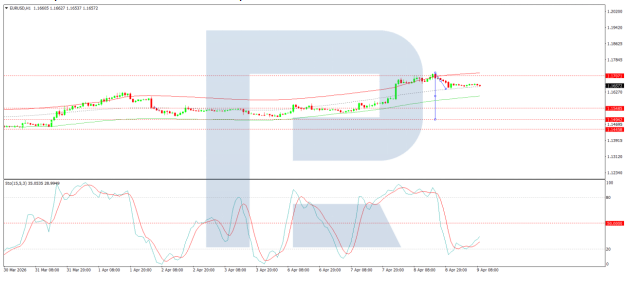
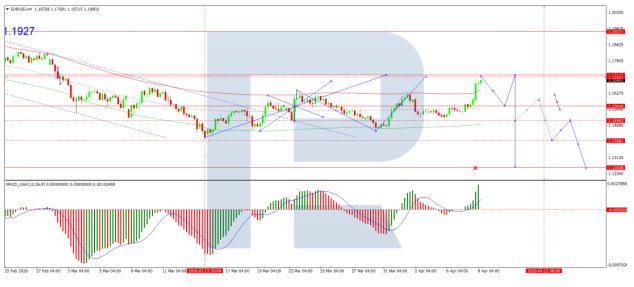
On the H4 chart, EUR/USD remains in a sideways consolidation phase following January’s upward momentum. The price is held within the 1.1785-1.1930 range and is currently trading near 1.1870. Bollinger Bands have narrowed, signalling declining volatility. The MACD is hovering near the zero line, indicating weak momentum, while the Stochastic oscillator remains neutral, without a clear directional signal. The market is trading in the middle of the range.

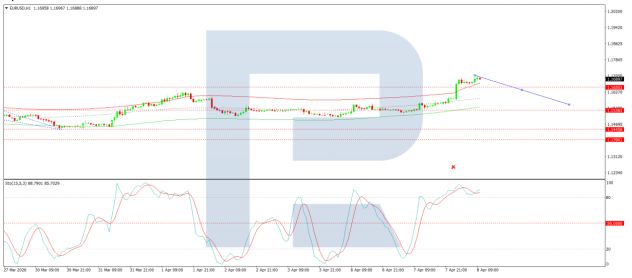
On the H1 chart, price action reflects a tight consolidation with occasional volatility spikes. Buyers quickly absorbed the latest downward move, but attempts to break above 1.1925 have failed. The price has stabilised near the midline of the Bollinger Bands. The MACD remains close to zero, and the Stochastic oscillator is turning lower in neutral territory. In the near term, range trading remains the preferred strategy.

Conclusion

In summary, EUR/USD remains in a state of consolidation, trapped in its narrowest range in weeks as markets await the crucial US inflation report. The pair is caught between two opposing forces: resilient US economic data and delayed Fed easing expectations (supporting the dollar), versus a relatively hawkish ECB stance and already priced-in policy divergence (supporting the euro).


Technically, compressed volatility and neutral indicators signal a breakout may be approaching, but its direction will depend entirely on tonight’s CPI outcome. A hotter-than-expected inflation reading would likely push the pair towards the lower boundary at 1.1785, while softer inflation could trigger a retest of resistance near 1.1930. Until then, the range remains the game.


Disclaimer

Any forecasts contained herein are based on the author’s particular opinion. This analysis may not be treated as trading advice. RoboForex bears no responsibility for trading results based on trading recommendations and reviews contained herein.

Silver fell by more than 10%. The Mexican peso reached its highest level since mid-2024

By JustMarkets 

On Thursday, the US stock market closed lower. The Dow Jones Index (US30) fell by 1.34%, the S&P 500 (US500) dropped by 1.57%, and the tech-heavy Nasdaq (US100) closed sharply lower by 2.03%. Early attempts at a rally quickly fizzled out amid ongoing pressure in the technology sector. Investors have become more skeptical regarding the scale and return on investment (ROI) of artificial intelligence infrastructure, triggering a sell-off in shares of major tech companies and software developers. Banks also faced pressure amid discussions regarding interest rates on credit products. The strong employment report released earlier in the week continued to weigh on expectations for an early Fed pivot, supporting bond yields and intensifying pressure on growth stocks. Meanwhile, defensive companies appeared more resilient than the broader market. Investors are now focused on upcoming inflation data, which may set the further direction for index dynamics.

The Mexican peso (MXN) strengthened beyond 17.15 per dollar, reaching its highest level since mid-2024, driven by declining US yields and capital inflows into emerging market assets. Even after recent cuts, the Banxico rate remains near 7%, providing one of the highest real yields and supporting demand for peso-denominated bonds, while the regulator maintains a cautious tone regarding further easing.

Bitcoin (BTC) dropped toward $66,000, surrendering most of its recent gains amid general pressure on the digital assets market. Sentiment soured following warnings from Standard Chartered about potential further declines and weak earnings from Coinbase, which recorded a quarterly loss of $667 million alongside a revenue drop of more than 20%. Since its October peak above $126,000, Bitcoin has lost over 45%, and recovery attempts remain fragile, indicating a slump in speculative demand. Analysts warn that consolidating below the $60,000-$58,000 zone could intensify the sell-off, with a potential move toward levels around $40,000.

European equity markets mostly declined yesterday. The German DAX (DE40) edged down by 0.01%, the French CAC 40 (FR40) closed up 0.33%, the Spanish IBEX 35 (ES35) fell by 0.82%, and the British FTSE 100 (UK100) closed down 0.67%. European stocks ended Thursday lower, tracking the sell-off in North American markets fueled by concerns over AI investment returns and the prospect of the Fed maintaining a restrictive policy.

Silver (XAG) collapsed by nearly 10% to below $76 per ounce, continuing a sharp reversal amid broad liquidation of positions across financial markets. Investors sold off precious metals to free up liquidity; the decline occurred even as US Treasury yields fell, suggesting market stress and position closures rather than a reassessment of rate expectations. The pressure also affected gold and copper, amplifying the general decline in the commodities segment.

Natural gas (XNG) prices in the US rose toward $3.23 per MMBtu, supported by active LNG exports and a significant reduction in inventories. For the week ending February 6, 249 billion cubic feet (bcf) were withdrawn from storage, following a record 360 bcf the previous week – substantially higher than both last year’s level and the five-year average. Deliveries to LNG export terminals remain near record highs. However, a prognosed warming through the end of February could reduce heating demand and limit the potential for further price increases.

Asian markets declined on Thursday. Japan’s Nikkei 225 (JP225) fell by 0.02%, the Chinese FTSE China A50 (CHA50) dropped 0.60%, Hong Kong’s Hang Seng (HK50) lost 0.86%, while the Australian ASX 200 (AU200) posted a positive result of 0.32%.

A quarterly survey by the Reserve Bank of New Zealand (RBNZ) showed an increase in inflation projections for Q1 2026. Businesses expect inflation at 2.37% over a two-year horizon (up from 2.28% previously), while one-year expectations rose to 2.59% – a seven-quarter high. At the same time, respondents await the Official Cash Rate (OCR) to remain unchanged at 2.25% by the end of March 2026. Previously, the regulator cut the rate by 25 bps to 2.25% in November 2025.
The Malaysian economy grew by 6.3% year-on-year in Q4 2025, exceeding the initial estimate of 5.7% and accelerating from 5.4% in the third quarter. This marks the highest growth rate since Q4 2022, indicating a steady recovery in domestic demand and the external sector toward the end of the year. On a quarterly basis, GDP increased by 0.8% following a stronger 2.7% growth in the previous quarter, suggesting some loss of momentum. For the full year 2025, the country’s economy expanded by 5.2%, maintaining a robust growth pace despite regional and global volatility.

S&P 500 (US500) 6,832.76 −108.71 (−1.57%)

Dow Jones (US30) 49,451.98 −669.42 (−1.34%)

DAX (DE40) 24,852.69 −3.46 (−0.014%)

FTSE 100 (UK100) 10,402.44 −69.67 (−0.67%)

USD Index 96.92 +0.08% (+0.08%)

News feed for: 2026.02.13

  • Switzerland Inflation Rate (m/m) at 09:30 (GMT+2); – CHF (HIGH)
  • Eurozone Employment Change (m/m) at 12:00 (GMT+2); – EUR (MED)
  • Eurozone GDP (m/m) at 12:00 (GMT+2); – EUR (MED)
  • Eurozone Trade Balance (m/m) at 12:00 (GMT+2); – EUR (MED)
  • US Consumer Price Index (m/m) at 15:30 (GMT+2). – USD (HIGH)

By JustMarkets


This article reflects a personal opinion and should not be interpreted as an investment advice, and/or offer, and/or a persistent request for carrying out financial transactions, and/or a guarantee, and/or a forecast of future events.

Strong employment data reduced expectations of imminent Fed easing

By JustMarkets

On Wednesday, the US stock market closed with a decline. The Dow Jones Index (US30) lost 0.13%, though it hit a new all-time high at the session opening. The S&P 500 (US500) edged down by 0.01%, and the tech-heavy Nasdaq (US100) closed 0.16% lower. Strong employment data (NFP growth of 130k and a decrease in unemployment) confirmed the resilience of the labor market and lowered expectations for an early easing of Fed policy. Non-Farm Payrolls rose by 130k due to private sector support, more than double the expectations, while the unemployment rate unexpectedly fell.

Stock markets in Europe mostly declined yesterday. The German DAX (DE40) dropped by 0.53%, the French CAC 40 (FR40) closed down 0.18%, and the Spanish IBEX 35 (ES35) fell 0.43%. Conversely, the British FTSE 100 (UK100) closed 1.14% higher. European indices ended Wednesday without a clear trend amid mixed corporate earnings reports. Siemens Energy surged 8.5% due to a nearly threefold increase in profit, and Ferrari rose by more than 4%.
Platinum prices (XPT) are holding just above $2,100 per ounce, remaining under pressure near annual lows. Weak demand for autocatalysts and rising US yields are offsetting the impact of mining restrictions in South Africa, while existing inventories and recycling mitigate deficit risks. Additional pressure comes from strong US labor market statistics and expectations of delayed Fed rate cuts, which support the dollar and reduce investment interest in precious metals.

WTI prices rose more than 1% to above $65 per barrel, approaching highs not seen since September amid intensifying tensions surrounding Iran. The market is reacting to reports of a possible tightening of the US stance, which could jeopardize oil supplies if negotiations fail. However, gains were limited by EIA data showing US crude inventories increased by 8.5 million barrels – the highest jump in a year. Investors are also awaiting reports from OPEC and the IEA, where signals of a possible supply surplus this year are expected.

Asian markets rose confidently on Wednesday. While Japan’s Nikkei 225 (JP225) did not trade, the Chinese FTSE China A50 (CHA50) fell by 0.22%, Hong Kong’s Hang Seng (HK50) gained 0.31%, and the Australian ASX 200 (AU200) posted a positive result of 1.66%.

On Thursday, the offshore yuan (CNH) strengthened beyond 6.89 per dollar, extending its winning streak to a sixth session and hitting its highest level since May 2023. The currency is supported by statements from Xi Jinping regarding the ambition to elevate the yuan’s global status as a reserve currency. Since the beginning of last year, the dollar has weakened against the yuan by approximately 6%. However, growth is limited by the People’s Bank of China’s “moderately dovish” stance and weak inflation data: in January, CPI slowed to 0.2%, and producer price deflation narrowed to 1.4% – a one-and-a-half-year low.

The Australian dollar (AUD) rose above $0.71, reaching a three-year high following hawkish signals from the RBA. Governor Michele Bullock stated a readiness for further rate hikes if inflation remains persistent, emphasizing that figures “starting with a three” are unacceptable. Inflation expectations rose to 5% in February, strengthening hawkish sentiment. The market is now pricing in the probability of a rate hike in May.

S&P 500 (US500) 6,941.47 −0.34 (−0.01%)

Dow Jones (US30) 50,121.40 −66.74 (−0.13%)

DAX (DE40) 24,856.15 −131.70 (−0.53%)

FTSE 100 (UK100) 10,472.11 +118.27 (+1.14%)

USD Index 96.92 +0.12% (+0.13%)

News feed for: 2026.02.12

  • Japan Producer Price Index (m/m) at 01:50 (GMT+2); – JPY (MED)
  • UK GDP (q/q) at 09:00 (GMT+2); – GBP (MED)
  • UK Industrial Production (m/m) at 09:00 (GMT+2); – GBP (MED)
  • UK Trade Balance (m/m) at 09:00 (GMT+2); – GBP (MED)
  • US Initial Jobless Claims (w/w) at 15:30 (GMT+2); – USD (MED)
  • US Existing Home Sales (m/m) at 17:00 (GMT+2); – USD (MED)
  • US Natural Gas Storage (w/w) at 17:30 (GMT+2). – XNG (HIGH)

By JustMarkets


This article reflects a personal opinion and should not be interpreted as an investment advice, and/or offer, and/or a persistent request for carrying out financial transactions, and/or a guarantee, and/or a forecast of future events.

GBP/USD Regains Ground After US Data and Finds an Equilibrium

By RoboForex Analytical Department

GBP/USD was trading at 1.3632 on Thursday. Sterling found an equilibrium point after volatility triggered by a stronger dollar following US labour market data.

The number of people employed in January increased by 130 thousand, marking the largest rise in more than a year. The unemployment rate unexpectedly fell to 4.3%. Against this backdrop, investors have revised expectations for the Fed rate path. The market now fully prices in the first rate cut for July rather than June, and the probability of a move in March is estimated at less than 5%.

Partial support for the pound came from a decline in domestic political uncertainty. British Prime Minister Keir Starmer received the backing of key cabinet members and Labour Party representatives after the resignation of Chief of Staff Morgan McSweeney amid the scandal surrounding Lord Peter Mandelson.

At the same time, market participants still expect further easing from the Bank of England. The regulator kept the rate at 3.75% but delivered softer guidance. It indicated that inflation could return to the 2% target from April.

Technical Analysis

The H4 chart for GBP/USD shows that after a brief rise to 1.3850, the pair entered a correction. A downward phase has formed, characterised by lower highs and lower lows. The price is now testing the 1.3580–1.3600 support zone. The Bollinger Bands are pointing downward, and volatility remains elevated. As long as the pair remains below 1.3710–1.3730, downside pressure is likely to persist.

On the lower H1 timeframe, a local recovery from 1.3580 is visible, but the structure remains neutral to bearish. The price is trading within the 1.3580–1.3650 range. The Bollinger Bands’ midline acts as short-term resistance. A sustained move above 1.3660 would open the way towards 1.3700. A move back below 1.3600 would increase the risk of a retest of recent lows.

Conclusion

In summary, GBP/USD has stabilised following a sharp repricing of Fed expectations triggered by robust US jobs data. The pair found technical equilibrium near key support, with political relief at home providing some offsetting support for sterling. However, the broader technical structure remains corrective and neutral-to-bearish, with resistance capping recovery attempts. The near-term direction hinges on two factors: whether the 1.3580–1.3600 support zone holds, and any further divergence in tone between a patient Fed and an increasingly dovish Bank of England. Until GBP/USD reclaims 1.3660–1.3700, downside risks remain elevated.


Disclaimer

Any forecasts contained herein are based on the author’s particular opinion. This analysis may not be treated as trading advice. RoboForex bears no responsibility for trading results based on trading recommendations and reviews contained herein.

The rise of ‘Merzoni’: How an alliance between Germany’s and Italy’s leaders is reshaping Europe

By Julia Khrebtan-Hörhager, Colorado State University 

“Merzoni” isn’t a neologism that easily trips off the tongue, and it hasn’t fully taken hold in the world of European politics.

Yet, for months, a pragmatic alliance between German Chancellor Friedrich Merz and Italian Prime Minister Giorgia Meloni has been building.

And despite the politicians being, in many ways, unlikely partners, the union has quietly been redefining Europe’s power balance. In the latest display of this dynamic, a joint-policy paper drawn up by Merz and Meloni is set to be delivered to European Union partners at an informal summit on Feb. 12, 2026, urging reforms to improve the bloc’s competitiveness.

As a scholar of European politics, history and culture, I see the union as being born of necessity but nonetheless serving the interests of both parties – and possibly those of the European Union, too.

Moving on from ‘Merkron’

Post-war European politics has seen the center of its gravity move before, but it has largely revolved around shifts to and from France or Germany, the bloc’s current two largest economies. The U.K.’s ability to dominate EU politics was always stymied by its lateness to the “European project” and ambivalence at home. And it was ended outright by a referendum in 2016 that saw the U.K.’s exit from the union.

For nearly a decade after Britain’s exit, Europe revolved around the axis of Germany’s Angela Merkel and France’s Emmanuel Macron, an alliance given the nickname “Merkron”: Merkel’s clumsy charm and cautious pragmatism paired with Macron’s charisma and sweeping European idealism. Their dual-stewardship helped steer the EU through Brexit, Donald Trump’s first presidency and the pandemic.

But times have changed.

Merkel is gone. She stepped down as German chancellor in December 2021. Macron, meanwhile, has struggled politically at home and increasingly resembles what diplomats and journalists describe as a European “Cassandra”: right in his warnings about global instability, yet less able to mobilize support domestically or across the continent to confront the issues.

The end of the “Merkron” era coincided with myriad crises confronting Europe, including Russia’s ongoing war in Ukraine, current U.S. unpredictability, growing climate pressures, never-stopping migration tensions and the collapse of arms-control regimes.

The comforting post-Cold War assumption that peace in Europe was permanent has vanished.

An unlikely partnership

Into this vacuum stepped Merz and Meloni. At first glance, the pairing looks odd.

Merz is a conservative Atlanticist and unapologetic economic liberal. His message, and the title of his 2008 book, “Dare More Capitalism,” signals a move toward an assertive pro-market agenda after years of cautious centrism under Merkel. Merz insists Germany must rebuild military capacity – a departure from decades of both German domestic and EU-wide reticence toward such a move.

Meloni, meanwhile, rose to power from Italy’s nationalist right. The lineage of her home party, Fratelli d’Italia, or Brothers of Italy, traces back to the rump of Mussolini’s fascists. Yet in office, she has proved politically agile, repositioning herself as a responsible and quite successful European actor. Meloni as prime minister has maintained support for Ukraine and cooperation with the European Union – shrugging off concerns over both areas prior to her coming to power. She has equally skillfully cultivated strong ties with Washington – including Trump’s political camp, and overall has demonstrated successful strategic chameleonism.

Critics call her opportunistic; admirers call her pragmatic. Either way, Meloni has mastered political shape-shifting, becoming a bridge between nationalist and mainstream Europe.

What unites Merz and Meloni is less ideology than necessity.

Germany remains Europe’s economic engine but needs partners to push Europe toward greater defense capacity and economic competitiveness. Italy is seeking greater influence and credibility at Europe’s core.

Both governments now speak the language of strategic autonomy: Europe must be able to defend itself and protect its interests even if the U.S. becomes unreliable. As the joint-paper reportedly being presented to other EU partners puts it: “Continuing on the current path is not an option. Europe must act now.”

Europe unites against a frenemy

Ironically, Europe’s unity has often emerged in response to crisis.

Brexit strengthened pro-EU sentiment on the mainland. Similarly, Vladimir Putin’s invasion of Ukraine revived NATO and EU cooperation.

Now, Trump – with his flirtation with abandoning NATO commitments, threatening tariffs and questioning of territorial arrangements in places like Greenland – has delivered a shock to European political consciousness.

Recent surveys show overwhelming European support for stronger EU defense cooperation and greater unity against global threats.

For leaders like Merz and Meloni, this creates political space for policies that would have seemed unthinkable, or certainly more difficult, a decade ago, such as military buildups, defense integration, industrial protection and tougher migration policies.

Defense and militarization

The most dramatic change is, arguably, happening in Germany. For decades, Berlin avoided military leadership, haunted by its history and sheltered under U.S. security guarantees. That era is ending. German officials increasingly speak about rearmament, European defense readiness and long-term strategic competition.

The timing could not be more urgent. Merz, framing Moscow’s ongoing aggression as a direct assault on European security and unity, stated in September 2025 that “we are not at war, but we are no longer at peace either.”

The new German-Italian action plan explicitly strengthens cooperation on defense, cybersecurity and strategic industries. Both governments stress NATO loyalty while simultaneously pushing for stronger European military capacity.

The idea of a future European defense force, once dismissed as fantasy, now circulates seriously in policy circles. Rome is reportedly planning a major procurement deal with German arms manufacturer Rheinmetall worth up to US$24 billion (20 billion euros). Including hundreds of armored vehicles and new-generation tanks, it would represent one of Europe’s largest joint defense projects.

The move reflects a shared push by Berlin and Rome to strengthen Europe’s military capacity while anchoring rearmament in European industrial partnerships.

What’s in it for Meloni and Merz?

For Meloni, partnership with Berlin delivers legitimacy. Italy has traditionally oscillated between European leadership and peripheral frustration. By aligning with Germany, Rome reenters Europe’s decision-making core.

At the same time, Meloni can present herself as both nationalist at home and indispensable to Europe. Her political positions allow her to maintain channels with Washington while remaining inside EU consensus – a balancing act few European leaders can manage.

Germany, meanwhile, gains political flexibility and a partner more aligned with big-picture EU politics.

Macron’s ambitious federalist vision has at times alienated more cautious partners in the bloc. Italy offers a pragmatic counterweight for Merz, focused on competitiveness, migration control and industrial policy rather than a grand European redesign.

Macron isn’t being entirely squeezed out. France still leads on nuclear deterrence and many diplomatic initiatives. Yet political momentum is shifting and now lies with governments willing to prioritize economic competitiveness and security over institutional reform.

Will it work?

The Merzoni partnership faces major tests.

Italy’s economy remains fragile, and Germany’s export model struggles amid global economic shifts. Far-right and populist movements still challenge EU cohesion. And defense integration remains politically sensitive across member nations.

Yet necessity often drives European integration. And as crises accumulate, cooperation becomes less optional.

The real question is whether Europe can move from reactive crisis management to having a proactive geopolitical strategy. For now, the unlikely German-Italian partnership suggests Europe’s political map is being redrawn – not through grand federal visions but through pragmatic alliances shaped by fear, necessity and opportunity.The Conversation

About the Author:

Julia Khrebtan-Hörhager, Associate Professor of Critical Cultural & International Studies, Colorado State University

This article is republished from The Conversation under a Creative Commons license. Read the original article.
 

Has globalization lessened the importance of physical distance? For economic shocks, new research suggests ‘yes’

By Josh Ederington, Miami University and Jenny Minier, Miami University 

National economies are increasingly moving in sync and responding to the same booms and busts as a result of near-instantaneous communications and interdependent global supply chains. This is a sharp change from much of the 21st century, when economies were primarily affected by economic shocks in neighboring countries.

That’s what we found in a paper published in the journal Economic Letters, in which we calculated measures of economic correlation using data on gross domestic product for 70 countries over the past 60 years. Along with fellow economic scholars Yoonseon Han and David Lindequist, we found that physical distance was indeed less important than it used to be, particularly with regard to how interconnected countries are to one another.

Specifically, we measured the extent to which countries have found their business cycles — the traditional boom-bust intervals of economic performance — in sync. For example, when there is a positive shock to production in Germany, to what extent does this affect incomes in the United States?

We were interested in whether the relationship between distance and economic correlation has changed over time.

What we found was that from 1960-1999, business cycles were strongly localized. That is, a country’s economy was much more likely to be impacted by shocks to nearby countries than by shocks in faraway countries. For example, the U.S. was more affected by economic conditions in Canada or Mexico than it was to economic conditions in the United Kingdom or South Korea.

This finding is not surprising and fits well with a long economic literature showing that countries are more likely to trade with nearby countries and that the volume of trade between two countries is a significant predictor of how synchronized their business cycles are.

However, we went on to find that this relationship between physical distance and economic correlation started to break down after 2000. Specifically, for the past 20 years, there has been no statistically significant relationship between the geographic distance between two countries and the extent to which incomes in the two countries move together — what economists refer to as their economic covariance.

Why it matters

In the late 1990s and early 2000s, a number of economists, including Frances Cairncross and Thomas Friedman, popularized the idea that new technologies like the internet and containerization had led to the death of distance, in which our new lives would be increasingly globalized. They imagined a future in which these new technologies not only impacted how goods were produced — like global supply chains — but also how we work and live.

Such theories were met with some skepticism by trade researchers at the time, and not all of the predictions have come true. For example, the link between distance and trade flows has proved stubbornly persistent. Even today, the top-two trading partners of the U.S. remain Canada and Mexico. And one only has to look at housing prices in major urban centers in the U.S. to see that physical location remains highly valued to most people.

However, our research suggests that at least some of the popular predictions about the globalized economy might be coming true. For instance, the world economy appears to have made countries increasingly susceptible to global, as opposed to localized, shocks.

This was made devastatingly clear to millions of people during the pandemic, when supply chain bottlenecks reverberated across the globe, subsequently generating a worldwide rise in prices. As a result, U.S. economic and trade policy discussions have been increasingly focused on potential vulnerabilities to foreign shocks. Indeed, a new buzzword during the Biden administration was “supply chain resiliance.”

What still isn’t known

Our work provides evidence that business cycles and economic shocks have become more globalized over the past couple of decades. Many of the main economic events from 1960-2000 – like the 1980s savings and loan crisis or the 1997 Asian currency crisis – had primarily localized effects. But more recently, the principal economic events of the past two decades — like the 2008 financial crisis — have had far more global implications.

What we don’t know is whether this pattern will continue, resulting in a new era in which most of the world’s economies move in tandem. Or will a new turn toward economic nationalism lead to a reversal in which economies – and economic shocks – become more localized once again?

The Research Brief is a short take on interesting academic work.The Conversation

About the Author:

Josh Ederington, Professor of Economics, Miami University and Jenny Minier, Julian Lange Professor of Economics, Miami University

This article is republished from The Conversation under a Creative Commons license. Read the original article.