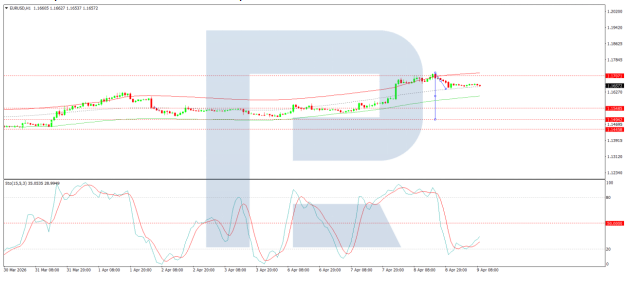
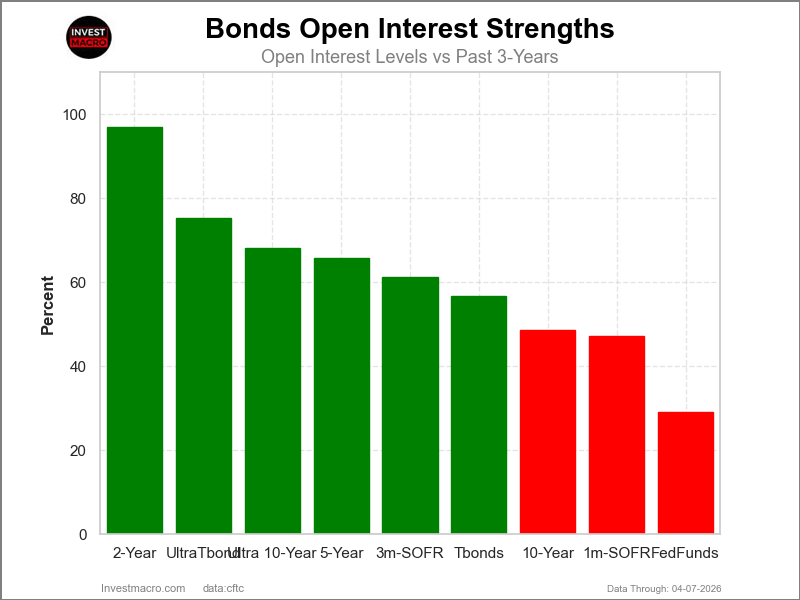
GBP/USD: Slide Enters Fifth Consecutive Day

By RoboForex Analytical Department 

GBP/USD fell for the fifth consecutive day, reaching 1.3445. The slowdown in headline price growth has boosted expectations of an imminent rate cut by the Bank of England, although underlying price pressures remain robust.

Annual inflation in January slowed to 3.0% from 3.4% in December, in line with forecasts. However, inflation in the services sector, which reflects domestic price pressures, only fell to 4.4% from 4.5%, above the expected 4.3%. This partly supported the pound. Earlier, sterling had fallen after weak labour data raised expectations of a rate cut.

According to Chris Turner, Head of Global Research at ING, the market had been counting on a more pronounced slowdown in inflation, but the data were not unambiguously weak. A better-than-expected figure for services gave sterling “only limited respite.”

Investors now price the chance of a 25bp rate cut by the Bank of England next month at around 85%. By the end of the year, the market fully prices in two 25bp reductions.

The political situation remains an additional factor of uncertainty. The upcoming parliamentary by-election in Greater Manchester could reignite discussions about Prime Minister Keir Starmer’s leadership in the event of a Labour defeat. According to ING, a major loss for the party could increase pressure on the pound and the government bond market.

Technical Analysis

The H4 chart maintains a pronounced downtrend. After a series of lower highs, the pair broke through the 1.3490–1.3500 zone and accelerated its decline to 1.3430–1.3440. The price moves along the lower band of the Bollinger Bands, confirming the dominance of sellers.

Local rebound attempts remain weak and are quickly sold into. The nearest resistance stands at 1.3490–1.3520, followed by 1.3660. Support is at 1.3430; a break below would open the path to further losses.

The H1 time frame shows a sharp sell-off on 19 February, followed by narrow consolidation at the lows. The Bollinger Bands have begun to narrow, suggesting volatility is easing after the recent sharp move.

The price is holding near 1.3430–1.3450. A sustained move above 1.3490 would allow for a more pronounced corrective pullback. The bearish scenario remains intact while the pair trades below 1.3490.

Conclusion

In summary, GBP/USD remains entrenched in a sustained downtrend, extending its losing streak to five sessions. While headline inflation softened as expected, sticky services inflation and resilient underlying pressures complicate the BoE’s policy calculus. The market remains firmly priced for a March rate cut, with political risks adding to the uncertainty. Technically, the pair has breached key support and trades with a clear bearish bias. Any corrective bounces are likely to be capped near 1.3490–1.3520, with a break below 1.3430 opening the door to deeper losses. The near-term outlook remains firmly negative unless prices can reclaim the 1.3490 level.


Disclaimer

Any forecasts contained herein are based on the author’s particular opinion. This analysis may not be treated as trading advice. RoboForex bears no responsibility for trading results based on trading recommendations and reviews contained herein.

The Arsenal Beneath Our Feet: Inside the US Defense Industrial Base Consortium

Source: Jason Williams (2/17/26) 

America is rebuilding its defense supply chain from the ground up, and a select group of mining companies now sits at the center of national security.

For decades, the U.S. defense conversation focused on jets, missiles, ships, and software — the visible hardware of military might.

What almost nobody talked about was the industrial engine underneath it all…

The Quiet Machine Behind American Power

The mines, processors, refiners, manufacturers, and logistics chains that turn rocks in the ground into weapons, infrastructure, and strategic leverage.

But that engine now has a name that’s finally entering the public conversation: the U.S. Defense Industrial Base Consortium.

At its core, the Consortium exists to strengthen, coordinate, and secure the Defense Industrial Base — often shortened to the DIB.

You can think of it as the full ecosystem of companies that supply materials, components, technology, and production capacity essential to U.S. national defense.

This includes not just traditional defense contractors, but the upstream producers that make everything else possible.

And in today’s geopolitical reality, upstream means minerals.

Why Washington Suddenly Cares About Where Materials Come From

For years, globalization made supply chains cheap, efficient, and fragile. Critical inputs were sourced wherever costs were lowest, often from geopolitical rivals.

That worked… until it didn’t.

Trade wars, sanctions, hot conflicts, cyber warfare, and industrial espionage exposed a dangerous truth…

The U.S. military cannot be stronger than its weakest supply chain link.

When rare earths, uranium, silver, or specialty metals come from hostile or unstable jurisdictions, national security becomes a hostage to foreign policy.

The Defense Industrial Base Consortium was built to fix that problem.

Its mission isn’t flashy, but it’s existential…

Identify vulnerabilities, coordinate domestic capacity, accelerate permitting and production, and align private companies with national defense priorities long before a crisis hits.

This isn’t about hypothetical future wars. It’s about readiness — today.

Why Membership Is a Strategic Asset, not a Press Release

For companies inside the Consortium’s orbit, participation is far more than symbolic…

It acts as a signal flare to Washington, the Pentagon, and capital markets that a company is strategically relevant.

Membership opens doors to federal coordination, long-term procurement visibility, and policy alignment that non-members simply don’t get.

It also places companies inside the conversation when rules are written around permitting reform, domestic sourcing mandates, stockpiling programs, and defense funding priorities.

In plain English, Consortium-aligned companies stop being “just another miner” or manufacturer. They become infrastructure.

That distinction matters when governments are deciding who gets funding, who gets fast-tracked, and who becomes indispensable.

And that brings us to a new and very important development: mining companies are now stepping into the defense spotlight.

Apollo Silver Corp: Silver as a Strategic Metal Again

One of the more interesting names to emerge in this shift is Apollo Silver Corp. (APGO:TSX.V; APGOF:OTCQB).

Silver rarely gets framed as a defense metal in popular discourse, but it absolutely should.

It is critical to advanced electronics, missile guidance systems, secure communications, solar-powered defense infrastructure, and a growing range of aerospace and energy applications.

Modern warfare is digital, electrified, and sensor-dense — and silver sits at the center of that reality.

Apollo Silver’s alignment with the Defense Industrial Base Consortium reflects a broader recognition that precious metals are no longer just financial hedges or industrial afterthoughts.

They’re strategic inputs.

Domestic silver supply, especially from stable U.S. jurisdictions, reduces exposure to foreign bottlenecks at a time when defense systems are becoming more metal-intensive, not less.

This is silver growing up. And investors who still think of it as a shiny relic are missing the plot.

MP Materials: Rare Earths, Real Power

If Apollo Silver represents the rediscovery of an old strategic metal, MP Materials Corp. (MP:NYSE) represents the hard lesson of losing an entire supply chain.

Rare earth elements are essential to fighter jets, precision-guided munitions, radar systems, drones, and electric propulsion.

For years, the U.S. outsourced this capability almost entirely. The result was a near-total dependence on China for materials that underpin modern warfare.

While it’s yet to become an official member, MP Materials and its government investment reflects a national effort to reverse that mistake.

By rebuilding domestic mining, processing, and magnet production capacity, MP isn’t just supplying materials — it’s restoring strategic autonomy.

This is what “onshoring” looks like when it actually matters. Not slogans. Capacity.

Energy Fuels: Nuclear Security Starts at the Mine

The third pillar in this emerging defense-miner alignment is Energy Fuels Inc. (EFR:TSX; UUUU:NYSE.American).

Nuclear energy sits at a strange intersection of civilian infrastructure and national defense.

Uranium fuels power grids, but it also underpins naval propulsion, deterrence credibility, and long-term strategic stability.

A nation that cannot secure its nuclear fuel cycle cannot fully secure its defense posture.

Energy Fuels’ participation in Defense Industrial Base initiatives reflects a recognition that uranium independence is not optional. It is foundational…

From fueling reactors to supporting advanced nuclear technologies, domestic uranium production is a national security imperative hiding in plain sight.

This is less about profits next quarter and more about sovereignty next decade.

The Bigger Picture Most Investors Are Missing

Here’s the part the market is still slow to price in…

The Defense Industrial Base Consortium represents a structural shift in how America thinks about industry.

Efficiency is no longer king. Resilience is. Redundancy is. Domestic capacity is.

That shift doesn’t happen overnight, but once it starts, it doesn’t reverse easily…

Defense supply chains are sticky. Relationships last decades. Contracts roll forward. Strategic suppliers become embedded.

For investors, that means something profound…

Companies aligned with national defense priorities often enjoy longer runways, stronger political tailwinds, and a margin of safety that purely commercial players don’t.

Apollo Silver, MP Materials, and Energy Fuels aren’t just operating in hot commodity markets. They’re operating in markets that Washington has decided it cannot afford to lose.

And historically, when that happens, capital follows policy.

This Isn’t a Trade—It’s a Theme

Let’s call this what it is…

The Defense Industrial Base is being rebuilt in real time, under pressure, with urgency. The Consortium is the connective tissue making that rebuild possible.

Mining companies inside this orbit are no longer background players. They are strategic assets.

The smartest investors won’t wait until everyone else starts calling these companies “defense stocks.”

By then, the easy money is gone.


Important Disclosures:

  1. As of the date of this article, officers, contractors, shareholders, and/or employees of Streetwise Reports LLC (including members of their household) own securities of Energy Fuels Inc.
  2. Jason Williams: I, or members of my immediate household or family, own securities of: Apollo Silver Corp. My company has a financial relationship with: None. My company has purchased stocks mentioned in this article for my management clients: None. I determined which companies would be included in this article based on my research and understanding of the sector.
  3. Statements and opinions expressed are the opinions of the author and not of Streetwise Reports, Street Smart, or their officers. The author is wholly responsible for the accuracy of the statements. Streetwise Reports was not paid by the author to publish or syndicate this article. Streetwise Reports requires contributing authors to disclose any shareholdings in, or economic relationships with, companies that they write about. Any disclosures from the author can be found  below. Streetwise Reports relies upon the authors to accurately provide this information and Streetwise Reports has no means of verifying its accuracy.
  4.  This article does not constitute investment advice and is not a solicitation for any investment. Streetwise Reports does not render general or specific investment advice and the information on Streetwise Reports should not be considered a recommendation to buy or sell any security. Each reader is encouraged to consult with his or her personal financial adviser and perform their own comprehensive investment research. By opening this page, each reader accepts and agrees to Streetwise Reports’ terms of use and full legal disclaimer. Streetwise Reports does not endorse or recommend the business, products, services or securities of any company.

For additional disclosures, please click here.

Week In Review: Brent rallies, hawkish Fed minutes, US PCE in focus

By ForexTime 

  • Mixed week for equities due to lack of catalyst
  • Brent hits $71 on geopolitical risk
  • Hawkish Fed minutes hit rate cut bets
  • Gold on standby ahead of US PCE

It has been a relatively quiet week for markets due to the absence of any significant fundamental drivers.

US equities got off to a slow start due to the public holiday on Monday, while Chinese markets were closed all week thanks to the Lunar New Year. Lingering worries over the outlook for artificial intelligence promoted some volatility, but this was nothing special compared to previous weeks.

Yesterday evening, the Fed minutes showed several officials suggesting the central bank may need to raise rates if inflation remains stubbornly high. With only two dissenters favoring a cut and no indications of further easing, this shaved Fed cut bets for 2026.

Before the meeting, traders were pricing a 50% chance of three Fed cuts this year; this figure had dipped to under 30%.

In response, the dollar gained with FXTM’s DXY punching above 97.70.

Prices are turning bullish on the daily charts with a solid breakout above 98.00, opening a path toward the 200-day and 10-day SMA.

Looking at commodities, oil extended its biggest daily jump since October amid mounting geopolitical risk. Growing concerns around the US and Iran sinking deeper into a fresh conflict sparked fears around supply.

Brent touched $71 a barrel on Wednesday after rallying over 4% on Wednesday. Oil benchmarks have gained over 15% year-to-date, with the risk of conflict pushing prices higher.

Indeed, a potential war in the region that pumps about a third of the world’s oil could result in major supply disruptions – boosting oil prices.

It’s been a flat week for gold with prices hovering around $5000. The precious metal seems to be waiting for the incoming US PCE/GDP combo which may shape Fed cut bets. A strong breakout above $5000 may open a path toward $5100. Weakness below $5000 could see prices test $4900.


Forex-Time-LogoArticle by ForexTime


ForexTime Ltd (FXTM) is an award winning international online forex broker regulated by CySEC 185/12 www.forextime.com

European indices hit new highs. Oil prices jump 4%

By JustMarkets 

On Wednesday, trading on the US stock market concluded with moderate gains. By the end of the day, the Dow Jones index (US30) rose by 0.23%. The S&P 500 (US500) climbed by 0.56%. The tech-heavy Nasdaq (US100) closed higher by 0.80%. The minutes from the January FOMC meeting revealed a divergence of positions within the US Federal Reserve regarding the future rate trajectory. Some participants allow for a resumption of federal funds rate cuts if inflation slows further, while others insist on maintaining current policy parameters for an extended period, and some do not rule out tightening in the event of persistently elevated price pressure. At the same time, the majority noted a decrease in risks to the labor market but highlighted lingering threats from inflation. The overall tone of the document emphasizes a cautious approach and the dependence of future decisions on incoming macro data.

European markets ended Tuesday with gains. Germany’s DAX (DE40) rose by 1.12%, France’s CAC 40 (FR40) closed up 0.81%, Spain’s IBEX 35 (ES35) gained 1.35%, and the UK’s FTSE 100 (UK100) closed up 1.23%. The French CAC 40 Index hit a new all-time high at 8,429 points amid slowing inflation and steady demand for defense and financial stocks. Annual price growth in France fell to 0.3% in January, a low since late 2020, which bolstered expectations that the ECB will maintain a dovish course. The British FTSE 100 also reached a record high, exceeding 10,691 points, as UK inflation slowed to 3%, its lowest level since March 2025. Lower prices for fuel, airfare, food, and education fueled expectations of Bank of England policy easing, supporting demand for equities.

WTI prices jumped by more than 4%, exceeding $65 per barrel and hitting monthly highs amid supply tightening and strengthening demand in Asia. According to the International Energy Agency, winter disruptions and export restrictions reduced global production by approximately 1.2 million barrels per day in January, while active purchasing from China and India further tightened available volumes on international markets. Geopolitical tensions in the Middle East and risks to shipping through the Strait of Hormuz added to the risk premium.

Palladium (XPD) prices exceeded $1,700, reaching a weekly high amid a general strengthening of platinum group metals despite a strong dollar. Prices were further supported by signals from China, where new measures to stabilize the automotive sector are intended to offset a sharp drop in sales in January. Expectations of an automotive market recovery are boosting demand prognoses for palladium, which is widely used in catalytic converters.
Asian markets traded mostly higher yesterday. Japan’s Nikkei 225 (JP225) rose by 1.02%, China’s FTSE China A50 (CHA50) will not trade for the entire week due to Lunar New Year celebrations, Hong Kong’s Hang Seng (HK50) also did not trade yesterday, and Australia’s ASX 200 (AU200) showed a positive result of 0.54%.

The Australian dollar (AUD) strengthened to 0.706, holding near three-year highs on the back of resilient employment data. Unemployment remained at 4.1% in January, a seven-month low, while the number of employed persons increased by 17.8k, confirming labor market tightness and strengthening the case for further Reserve Bank of Australia (RBA) policy tightening. Markets increased the probability of a rate hike to 4.10% in May to approximately 77%, although most analysts still expect a pause in March. Since the beginning of the year, the currency has gained more than 5.5%, becoming one of the strongest in the G10 group.

The New Zealand dollar (NZD) recovered to 0.597 after a sharp drop the previous day caused by a dovish signal from the Reserve Bank of New Zealand (RBNZ). At the first meeting chaired by Anna Breman, the regulator kept the rate at 2.25% and signaled that supportive policy would remain as inflation is expected to return to the midpoint of the target range within the year. While the possibility of a rate hike later this year remains, it will depend on actual economic dynamics and is not yet fully priced in. Following the decision, the market adjusted expectations, shifting the likely timing of tightening closer to the end of 2026.

S&P 500 (US500) 6,881.32 +38.10 (+0.56%)

Dow Jones (US30) 49,663.03 +129.84 (+0.26%)

DAX (DE40) 25,278.21 +279.81 (+1.12%)

FTSE 100 (UK100) 10,686.18 +130.01 (+1.23%)

USD Index 97.73 +0.57% (+0.59%)

News feed for: 2026.02.19

  • Australia Unemployment Rate (m/m) at 02:30 (GMT+2); – AUD (HIGH)
  • Indonesia BI Interest Rate Decision at 09:30 (GMT+2); – IDR (MED)
  • Canada Trade Balance (m/m) at 15:30 (GMT+2); – CAD (MED)
  • US Trade Balance (m/m) at 15:30 (GMT+2); – USD (MED)
  • US Initial Jobless Claims (w/w) at 15:30 (GMT+2); – USD (MED)
  • US Natural Gas Reserves (w/w) at 17:30 (GMT+2); – XNG (HIGH)
  • US Crude Oil Reserves (w/w) at 19:00 (GMT+2); – WTI (HIGH)
  • New Zealand Trade Balance (q/q) at 23:45 (GMT+2). – NZD (MED)

By JustMarkets


This article reflects a personal opinion and should not be interpreted as an investment advice, and/or offer, and/or a persistent request for carrying out financial transactions, and/or a guarantee, and/or a forecast of future events.

EUR/USD Forced Lower: US Dollar Has a Strong Case

By RoboForex Analytical Department

EUR/USD on Thursday stabilised at 1.1792 after a sharp decline the day before. The US dollar was supported by strong US macro data and unexpectedly tough signals from the Fed.

The minutes of the previous meeting showed that disagreements remain within the Federal Reserve regarding the future path of rates. This suggests that it may not be easy for the new chair to implement a rate cut. Some members had previously explicitly admitted the possibility of a rate hike if inflation remains above target.

The market has slightly reduced expectations for policy easing this year, but still prices in two 25-basis-point cuts before the end of the year.

Additional support for the dollar was provided by industrial production data. It grew at the highest rate in almost a year. Orders for core capital goods exceeded forecasts, and the number of new home mortgages reached a five-month high.

PMI indices and GDP data are due next, which may provide additional guidance on the path of interest rates.

Technical Analysis

On the H4 chart, EUR/USD stays close to 1.1790–1.1800 after breaking support at 1.1885 and accelerating the decline. The price has firmed below the Bollinger Bands’ midline; the bands have widened, indicating bearish momentum. The MACD is in negative territory; the histogram is deepening further, reinforcing downward momentum. The Stochastic oscillator has rebounded from oversold. Against this background, a brief correction is possible, but the structure remains weak. The nearest support is at 1.1765, and resistance is at 1.1885.

On the lower H1 time frame, a sharp downward move is visible, followed by local stabilisation. The price is forming a small bounce off 1.1780 but remains below the Bollinger Bands’ middle line. The MACD remains negative, although the pressure is gradually decreasing. The Stochastic oscillator is in the overbought zone, suggesting that any corrective rebound could fade in the 1.1820–1.1840 area.

The overall picture points to a short-term rebound within a broader bearish move.

Conclusion

In summary, EUR/USD remains under decisive pressure following hawkish Fed signals and resilient US economic data. The technical breakdown below key support has confirmed a bearish shift, with momentum indicators favouring further downside despite oversold conditions. The current stabilisation appears corrective rather than reversal, with any bounce likely capped near 1.1820–1.1840. Upcoming US PMI and GDP releases will shape the near-term direction. A break below 1.1765 would open the door to deeper losses towards 1.1700, while a sustained move above 1.1885 is needed to alleviate bearish pressure.


Disclaimer

Any forecasts contained herein are based on the author’s particular opinion. This analysis may not be treated as trading advice. RoboForex bears no responsibility for trading results based on trading recommendations and reviews contained herein.
AI Agent Firm With Payments Technology Expands Into Texas, New Jersey

Source: Streetwise Reports (2/17/26)

The FUTR Corp. (FTRC:TSX; FTRCF:OTC) announces it has signed agreements with four new dealerships, expanding the reach of its FUTR Payments product into Houston, Texas, and further strengthening its presence in New Jersey. Find out why one analyst says the company is uniquely positioned to take advantage of this “pivotal moment” in the history of AI.

The FUTR Corp. (FTRC:TSX; FTRCF:OTC) announced that it has signed agreements with four new auto dealerships, expanding the reach of its FUTR Payments product into Houston, Texas, and further strengthening its presence in New Jersey, according to a February 17 release from the company.

FUTR is the creator of the FUTR Agent App, which allows users to store, manage, access, and monetize their personal information and make real-time payments.

AI agents were at the center of what “is shaping up to be one of the most audacious branding plays in the history of the internet,” a new US$70 million mega deal for the domain name AI.com announced during last weekend’s Super Bowl.

The signed agreements mark FUTR Payments’ first dealer relationship in Texas and are the initial results of the company’s newly deployed sales resources aimed at geographic expansion and reinforcing its presence in existing markets. With these agreements, FUTR Payments’ U.S. footprint now includes Texas, New York, New Jersey, Delaware, Florida, Iowa, and Connecticut.

These initial dealership partnerships are expected to serve as reference points as FUTR Payments continues to grow its presence in U.S. regional markets. The company said it plans to provide future updates as more dealerships, dealer groups, and regions join the platform.

“Expanding our footprint in New Jersey and entering the Texas market represent an important inflection point for FUTR Payments as we scale our platform across major U.S. markets,” said FUTR Payments Chief Business Officer Mindy Bruns. “These early dealership partnerships validate the demand we’re seeing for intelligent payment infrastructure that helps consumers build financial security while enabling dealers to engage customers in more durable, data-driven ways. We believe this expansion is an early indicator of the broader national opportunity ahead.”

Texas is one of the largest and most diverse automotive markets in the United States, with a significant concentration of independent and used-vehicle dealerships. Trailer Wheel & Frame Co., the company’s first Houston dealer, introduces a new asset category for FUTR Payments, expanding the applicability of its intelligent payment rails beyond traditional automotive inventory. The newly signed agreement with Speedway Motors LLC in Paterson, N.J., further expands the company’s presence in New Jersey by adding three more storefronts.

FUTR Payments is part of FUTR’s broader strategy, which combines intelligent payment infrastructure with consented consumer data and AI-enabled Agents.

Analyst: A ‘Pivotal Moment’ in AI Marketing

According to an updated research note by Research Capital Corp. Analyst Greg McLeish on February 11, “This year’s Super Bowl marked a pivotal moment in how artificial intelligence is being marketed to consumers.”

AI-related advertising has emerged as a key theme, illustrating how quickly AI has transitioned from an abstract concept to a mainstream consumer offering, Business Insider reported. The focus has shifted from chatbots to utility-driven AI systems that can perform tasks on behalf of users. In this context, Crypto.com’s launch of AI.com garnered significant attention and traffic, highlighting the growing interest in “AI agents that do things,” rather than systems that merely respond to prompts. Additionally, OpenClaw’s viral success in late January provided further validation, showing that autonomous, task-executing agents are gaining traction across both consumer platforms and developer communities. These developments indicate that AI agents are becoming mainstream as everyday utilities, rather than novelty tools.

“Crypto.com’s Super Bowl debut of AI.com reinforced that AI agents are moving decisively beyond experimental chat interfaces into mass-market, action-oriented tools,” McLeish wrote. “By committing roughly US$70 million for the AI.com domain and positioning its product as a ‘private AI agent,’ the company highlighted a shift toward autonomous digital assistants capable of managing schedules, automating workflows, and completing tasks on behalf of users. Post-game traffic reportedly overwhelmed early infrastructure, reinforcing strong initial engagement and signaling that consumer adoption is increasingly driven by execution rather than conversation.”

While recent agent launches validate the rising demand for autonomous AI, many early entrants lack the infrastructure needed for durable, real-world deployment, the analyst said.

“The FUTR Corp. is differentiated by anchoring its AI Agent in a SOC 2–compliant digital vault and embedding it directly into regulated financial workflows,” McLeish wrote. “FUTR’s platform combines compliance-grade data infrastructure, live banking and payment rails, and enterprise integrations that allow an agent not only to recommend actions, but to execute them securely across payments, credit, insurance, and home finance. Unlike consumer-facing agents that rely on generic cloud access, or open-source solutions that place security and operational burdens on the user, FUTR’s agent operates within institutional guardrails and is distributed through enterprise partnerships.”

McLeish continued, “In our view, this positions FUTR as an AI-native financial infrastructure layer, rather than a chatbot alternative, as agents move from novelty to necessity.”

Research Capital Corp. maintained its Speculative Buy rating on the stock with a CA$3 target price, a 991% return based on a sum-of-the-parts valuation taken at the time of writing.

“The result is a high-conviction opportunity at the intersection of consumer data, tokenized incentives, and privacy-first infrastructure,” McLeish said.

Most Expensive Domain Purchase in History

The US$70 million acquisition of AI.com by Crypto.com founder Kris Marszalek marks the most expensive domain purchase in history, paid entirely in cryptocurrency to an undisclosed seller, as reported by the Financial Times and covered by Connie Loizos for TechCrunch on February 8. This transaction sets a new standard in domain sales, surpassing previous record holders such as CarInsurance.com at US$49.7 million (2010), VacationRentals.com at US$35 million (2007), and Voice.com at US$30 million (2019).

In a letter to shareholders following the announcement, Alex McDougall, CEO of The FUTR Corp. (FTRC:TSX; FTRCF:OTC), stated that this acquisition “officially marks the beginning of functional AI Agents going mainstream.”

McDougall expressed the belief that this will become “the largest category the world has ever seen and as foundational as the advent of the internet.” He emphasized that FUTR is “ideally positioned to be at the front of the wave that is here.”

McDougall outlined the company’s progress: “We have set up the infrastructure in Q2, built the technology stack through Q3, signed the first wave of commercial partnerships through Q4, and now in Q1 it’s coming to market and the timing couldn’t be better” for FUTR’s agent. The company’s agent offers significant real-world utility, such as rewarding users for taking a picture of their property tax slip, knowing when those taxes are due, helping reserve cash flow in the budget to pay the tax, reminding users 15 days before the due date, comparing property taxes to other neighborhoods and home values, making the payment, and even reporting the payment to credit bureaus to maximize credit scores.

“That’s deep real-world utility,” McDougall said.

AI Agents Tailored to Your Data

According to FUTR, the AI agent within their app is not only easily accessible but also operates under your guidance, tailored specifically to your data. This AI is designed for individuals and works exclusively for you around the clock to accomplish your tasks. It integrates data from various sources and smoothly handles complex financial queries and services. “Chat GPT can find you information. It can order you food. It can do things in your browser,” McDougall told Streetwise Reports. But “FUTR can take your insurance policy, tell you where it’s good, where it’s bad, and find you a better one from our curated brand partners. If you put your mortgage into it, FUTR can read it, learn about it, tell you what clauses are suspect, find a better payment schedule for you, and then actually connect to payment rails and make those payments for you to take that intelligence and turn it into real action.”

For renters, FUTR could track when to renew your lease and report your rent payments to the credit bureau to help build your credit. “That’s really a key differentiator,” McDougall said. “There are a lot of AI agents that can tell you things. FUTR can go and do things for you.”

In a unique feature, FUTR tokens, created by the FUTR Foundation on the BASE Blockchain that powers the FUTR ecosystem, reward consumers and enterprises with tokens for sharing data, which they can use to purchase goods and services from FUTR brand partners. “Brands can purchase FUTR tokens or earn them from consumers and use those tokens to pay for leads from FUTR,” the company stated on its website.

According to the company, upcoming catalysts that could impact the stock price include the broad launch of the FUTR AI Agent App and FUTR Token sometime this quarter. The company also plans to introduce a FUTR Visa card.

The Catalyst: ‘Your Person For Everything’

According to the company, FUTR’s agent “can be your person for everything,” as McDougall explained. Unlike Chat GPT, which is designed for billions and processes data in a generalized way, the FUTR AI creates a personalized AI stack for each user, which the company refers to as “high fidelity AI.” A key advantage is that instead of your data being monetized without your knowledge, “every piece of data that goes into this agent and into this engine, you’re getting paid for it,” he said.

AI-powered shopping, with agents like FUTR’s acting on our behalf, signifies a major shift in the marketplace, according to a report by McKinsey & Co. This development points to a future where AI anticipates consumer needs, explores shopping options, negotiates deals, and completes transactions, all aligned with human intentions but operating independently through multistep processes enabled by reasoning models.

“This isn’t just an evolution of e-commerce,” the report stated. “It’s a rethinking of shopping itself in which the boundaries between platforms, services, and experiences give way to an integrated intent-driven flow, through highly personalized consumer journeys that deliver a fast, frictionless outcome.”

Streetwise Ownership Overview*

Insiders and Management: 23%
Share Structure as of 2/3/2026

By 2030, the U.S. B2C retail market alone could see up to US$1 trillion in orchestrated revenue from agentic commerce, with global estimates ranging from US$3 trillion to US$5 trillion, according to McKinsey research. This trend is expected to have an impact comparable to previous web and mobile-commerce revolutions, but it could progress even more rapidly since agents can navigate the same digital paths to purchase as humans, effectively “riding on the rails” established by these earlier transformations, researchers noted.

“This presents both benefits and risks for today’s commerce ecosystem,” McKinsey explained. “All kinds of businesses — brands, retailers, marketplaces, logistics and commerce services providers, and payments players — will need to adapt to the new paradigm and successfully navigate the challenges of trust, risk, and innovation.”

Ownership and Share Structure1

Approximately 23% of the company is owned by management and insiders. The remainder is held by retail investors.

Top shareholders include G. Scott Paterson with 8.38%, Melrose Ventures LLC with 2.08%, Michael Hillmer with 0.74%, Ashish Kapoor with 0.55%, and Jason G. Ewart with 0.52%.

The company’s market cap on February 12 was CA$35.1 million with 125.36 million shares outstanding. It trades within a 52-week range of CA$0.09 and CA$0.42.


Important Disclosures:

  1. The FUTR Corp. is a billboard sponsor of Streetwise Reports and pays SWR a monthly sponsorship fee between US$3,000 and US$6,000.
  2. As of the date of this article, officers, contractors, shareholders, and/or employees of Streetwise Reports LLC (including members of their household) own securities of The FUTR Corp.
  3. Steve Sobek wrote this article for Streetwise Reports LLC and provides services to Streetwise Reports as an employee.
  4. This article does not constitute investment advice and is not a solicitation for any investment. Streetwise Reports does not render general or specific investment advice and the information on Streetwise Reports should not be considered a recommendation to buy or sell any security. Each reader is encouraged to consult with his or her personal financial adviser and perform their own comprehensive investment research. By opening this page, each reader accepts and agrees to Streetwise Reports’ terms of use and full legal disclaimer. Streetwise Reports does not endorse or recommend the business, products, services or securities of any company.

For additional disclosures, please click here.

1. Ownership and Share Structure Information

The information listed above was updated on the date this article was published and was compiled from information from the company and various other data providers.

RBNZ holds rates as expected and confirms dovish stance. Inflation declines in Canada

By JustMarkets 

On Tuesday, trading on the US stock market concluded with moderate gains. By the end of the day, the Dow Jones Index (US30) rose by 0.07%. The S&P 500 (US500) climbed by 0.10%. The tech-heavy Nasdaq (US100) closed higher by 0.14%. The financial sector outperformed the broader market: shares of JPMorgan Chase and Citigroup strengthened following statements from FOMC representatives regarding the likely maintenance of tight policy, which supports expectations for net interest margins. Investors are now awaiting the publication of the regulator’s minutes and core PCE inflation data to assess the sustainability of the disinflationary trend.

The Canadian dollar (CAD) weakened to 1.367 per US dollar, retreating from a 16-month high reached in late January amid slowing inflation and deteriorating foreign trade conditions. Consumer price growth slowed to 2.3% in January, while the Bank of Canada’s (BoC) core indicator dropped to 2.4%. This reinforced expectations of a pause in policy tightening at a rate of 2.25% and narrowed the yield differential that had previously supported the currency. Additional pressure is coming from the commodities factor: oil quotes are being held back amid discussions within OPEC+ regarding a potential production increase starting in April.

European markets ended the day with gains. Germany’s DAX (DE40) rose by 0.80%, France’s CAC 40 (FR40) closed up 0.54%, Spain’s IBEX 35 (ES35) gained 0.60%, and the UK’s FTSE 100 (UK100) closed up 0.79%. The German DAX 40 closed Tuesday at 24,998 points, a one-week high, reflecting improved sentiment across European trading floors.

WTI oil prices held above $62 per barrel, breaking the recent decline as markets assessed the outcome of negotiations between the US and Iran regarding the nuclear program. Tehran reported reaching a general understanding on key points of a potential deal, while the American side announced the continuation of dialogue in Geneva. However, uncertainty remains: Iran temporarily restricted shipping in the Strait of Hormuz due to military exercises, and the US dispatched a second aircraft carrier to the region.

Platinum (XPT) prices dropped to approximately $2,000 per ounce, hitting a two-month low amid a general decline in the precious metals segment and reduced trading activity due to holidays in Asia and the US. Despite the slowdown in US inflation, which bolstered expectations of Fed rate cuts later this year, investors remain cautious ahead of the release of new data and the regulator’s minutes.

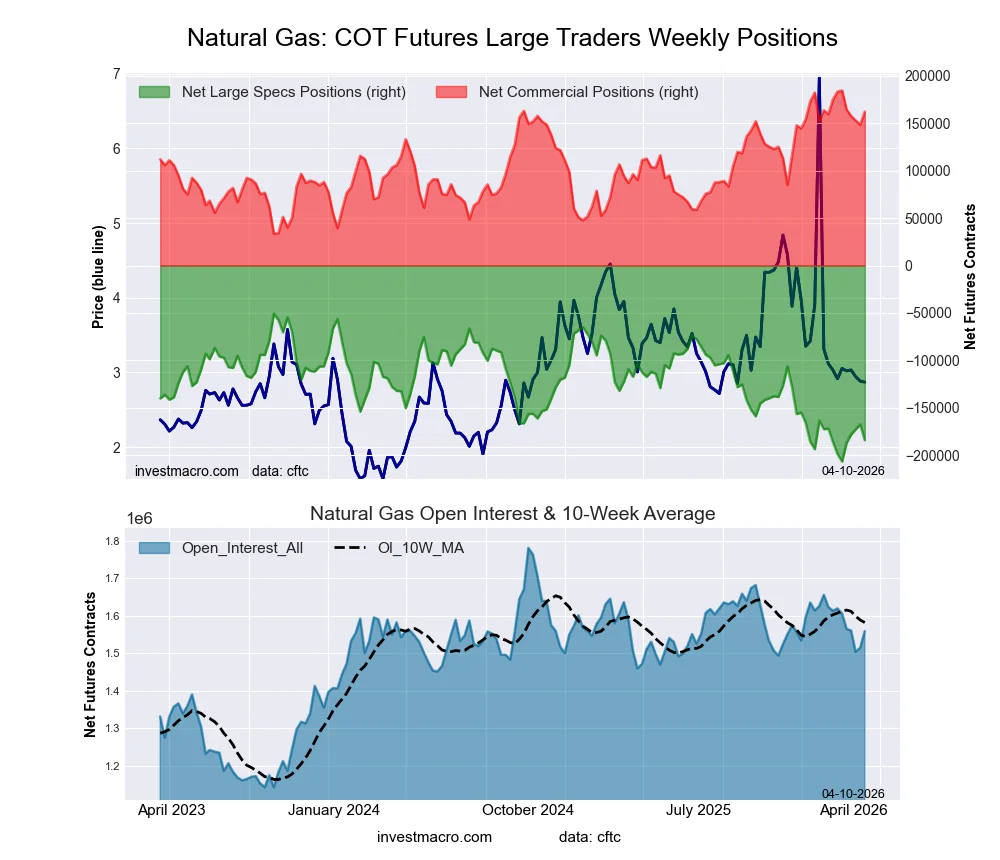
Natural gas (XNG) prices in the US fell by 5% to approximately $3.07 per MMBtu, hitting a low since October. Pressure on quotes was intensified by near-record production volumes and prognoses of warmer weather through early March, which weakens heating demand and allows for the accumulation of large inventories in storage. Average production in the Lower 48 states rose to 108.5 billion cubic feet per day (bcf/d) in February, up from 106.3 billion in January, with daily figures recently hitting 111 billion bcf/d, approaching historic highs. Additional market support comes from rising exports to LNG terminals, which increased to 18.6 bcf/d in February and could surpass the December record.

Asian markets traded without a uniform trend yesterday. Japan’s Nikkei 225 (JP225) declined by 0.42%, China’s FTSE China A50 (CHA50) will not trade for the entire week due to Lunar New Year celebrations, Hong Kong’s Hang Seng (HK50) also did not trade yesterday, and Australia’s ASX 200 (AU200) showed a positive result of 0.24%.

The New Zealand dollar (NZD) declined to $0.601 following the Reserve Bank of New Zealand’s (RBNZ) decision to maintain the key rate and confirm a dovish policy stance. The regulator signaled that supportive conditions will remain in the near term, and further steps will be gradual as the economy strengthens and inflation returns to the target level. Meanwhile, updated expectations allow for a possible 25 bp rate hike as early as the end of the year – significantly earlier than previous guidance for 2027.

S&P 500 (US500) 6,843.24 +7.07 (+0.10%)

Dow Jones (US30) 49,533.19 +32.26 (+0.07)

DAX (DE40) 24,998.40 +197.49 (+0.80%)

FTSE 100 (UK100) 10,556.17 +82.48 (+0.79%)

USD Index 97.16 +0.24% (+0.25%)

News feed for: 2026.02.18

  • Japan Trade Balance (m/m) at 01:50 (GMT+2); – JPY (LOW)
  • Australia Wage Price Index (m/m) at 02:30 (GMT+2); – AUD (MED)
  • New Zealand RNBZ Interest Rate Decision at 03:00 (GMT+2); – NZD (HIGH)
  • New Zealand RNBZ Monetary Policy Statement at 03:00 (GMT+2); – NZD (HIGH)
  • New Zealand RNBZ Press Conference at 04:00 (GMT+2); – NZD (MED)
  • UK Inflation Rate (m/m) at 09:00 (GMT+2); – GBP (HIGH)
  • US Durable Goods Orders (m/m) at 15:30 (GMT+2); – USD (MED)
  • US Building Permits (m/m) at 15:30 (GMT+2); – USD (LOW)
  • US Industrial Production (m/m) at 16:15 (GMT+2); – USD (LOW)
  • US FOMC Meeting Minutes at 21:00 (GMT+2). – USD (HIGH)

By JustMarkets


This article reflects a personal opinion and should not be interpreted as an investment advice, and/or offer, and/or a persistent request for carrying out financial transactions, and/or a guarantee, and/or a forecast of future events.

Gold and Silver Move in Different Directions

Source: Adrian Day (2/17/26)

Global Analyst Adrian Day looks at the action of gold and silver the week of February 7, 2026, and shares his view on how to invest. He also looks at developments from several companies on his list.

The action in gold and silver over the past week since the large drops is mixed. Since the Monday low for gold just above $4,000 (1:38 a.m. Eastern), the action has been encouraging, with gold gaining over $900, if not steadily. Silver, however, fell further.

It staged an impressive rally at the beginning of the week moving over $90, before dropping again, hitting its low of just over $64 an ounce on Friday morning in Asia, before recovering to close a tad below $78. That is 36% down from the high a week-ago Thursday, while gold is down just 11% from its peak.

We expect these trends to continue, with gold moving two steps forward, one back for the next few weeks before hitting new highs within a couple of months. I expect we have see the lows. Silver, however, I expect to be more volatile, and may retest its lows, but I expect it to be longer before we see new highs.

Should You Invest Now in the Precious Metals Equities?

We are buying the gold stocks, perhaps with a narrower focus, and opportunistically. Given the volatility, we are looking to buy the bests companies on the down days. Thursday was a good day to buy, but we were scarcely buying anything Friday. As for silver, the declines in the equities have been fairly muted given the large decline in the metal.

In fairness, though, many of the silver names had not moved higher in line with the silver price in December and January. However, a longer recovery with perhaps new lows for silver might see the stocks decline further. Thus, we have few “top buys” among the gold stocks below, but if you are an active trader, you should be alert to any pullbacks during the week.

Barrick Plans Reorganization With New CEO

Barrick Mining Corp. (ABX:TSX; B:NYSE) released year-end results and forward guidance, overshadowed by a flood of important announcements on the company’s strategy and future. Disturbingly, many details were omitted, even when questioned by analysts.

  • The company plans to proceed with an IPO of its North American assets, including the Nevada Gold Mines (NGM), saying it intended to IPO a minority of around 10-15% of its interest with a target completion in the fourth quarter of this year. However, details were light, and during its analyst call, it would not respond to several questions on the specifics.
  • It completed an operational review, with safety top priority. Business units have been restructured, with Pueblo Viejo going into the North American region, now overseen by Tim Crib, moved from Reko Diq; he is the group COO. The review appears to have been focused on Nevada which had had some operational issues in recent years, and difficulty attracting and retaining people. A Chief Technical Officer has been named at the group level.
  • Barrick said its board is concerned about security in Balochistan, the province hosting the Reko Diq copper project. A review of the project is underway, though the company says “all options are being considered.”
  • It named Mark Hill as permanent CEO after “an extensive search”. He stepped in as interim CEO when Mark Bristow abruptly left the company in September. Hill joined Barrick in 2019 after the merge with Randgold and was not seen as a Bristow loyalist.
  • Barrick also introduced a new dividend policy, increasing its base dividend, and changing its bonus dividend program to a target of 50% of free cash flow. This equates to an estimated yield of 3.7%, one of the largest in the industry. This replaces the policy based on free cash on the balance sheet that had been in place only a couple of years, and adds more discretion to the dividend.
  • The new dividend policy will replace buybacks going forward; the share buyback authorization has not been renewed for 2026. Last year, Barrick repurchased $1.5 billion of shares, representing about 3% of the shares outstanding. It was only a few years ago that Barrick started a buyback program, after stubbornly rejecting it for years under Bristow.

Pakistan Project’s Future Appears Uncertain

Barrick seems to be moving towards a smaller North American-focused company, with growing indications it will (or at least wants to) scale back its investments in Pakistan. One sign was its statement that it had paused proceeding with a loan for the project until its review had been concluded.

“It is too early to say” if a divestiture is on the table. As discussed before, the Saudi Arabian sovereign wealth fund wants into the project and was earlier rebuffed by Barrick who told the Saudis they should buy some of the Pakistan government’s stake. So there might be a ready buyer for part of Barrick’s interest.

North American IPO Only a Minority Interest, With Details Unclear

The North American assets proposed for the new company IPO represent just under 60% of Barrick’s NAV. The small spin off ensues that Barrick retains a controlling interest in NGMs and the other joint-venture mines. Separating the higher-quality North American assets will help to release some value but, if it spins off less than 15% of its interest–so less than 10% of the total mines–I question whether the new company would trade at the premium multiple the company is expecting. Conglomerate discounts are common, due to the complexity of organizations, and a partial spin off of assets partially owned, add to complexity.

Several question remain hanging over the transaction, most notably the ROFR held by Newmont Corp. (NEM:NYSE; NGT:TSX; NEM:ASX). Barrick, in answers to questions, said “we are well aware of our legal contracts,” which does not really answer the question. The last thing the company needs is a legal dispute with Newmont over rights.

Given that Newmont apparently has a ROFR on NGM, is a partner in the Pueblo Viejo mine, and has rights to invest in Fourmile, Newmont must be looking seriously at whether to make a bid for these assets. On the analyst call, Barrick would not say whether it had held talks with Newmont over its rights. In addition, Barrick has yet to address the use of proceeds; and the domicile of the new company, important for index inclusion.

A Large Dividend Boost, Despite Capital Needs

The new dividend policy represents an annual distribution of $2.8 billion or more. Given the company’s large capital requirements, one might question the wisdom of such a large dividend.

This might also be another signal on intentions regarding Reko Dik. Although one metric may be better than another, the large gold companies (Barrick and Newmont) have a history of introducing dividend policies only to abandon or change them, which defeats the point of having a policy in the first place. Barrick’s previous policy had only been in place a couple of years.

Results Were Strong, Though Guidance Soft

The announcements on the IPO, Pakistan, the new CEO, and the dividend, overshadowed the fourth-quarter results which were in line with expectations, though guidance was distinctly weak. The fourth-quarter saw strong financial results, with the highest production of the year (as indicated by Bristow last January that it would), and unsurprisingly, given the gold and copper prices, record cash flow and adjusted earnings per share.

Gold production was up 5% over the third-quarter, driven by large increases at the Nevada mines, while copper output was 13% higher than Q3, primarily driven by Lumwana in Zambia. However, costs in the fourth quarter were higher than anticipated. Annual shareholder returns in 2025, from share buybacks and the dividend, were the highest ever.

On specific mines, Barrick said it had restarted all three underground mines at Loulo-Gounkoto in Mali and said the relationship with the government is being reset. It paid the government over quarter-of-a-billion dollars to settle the dispute as well as committing to pay the government all retained earnings. In addition, it appears to have conceded the government’s demand to increase its ownership to 20%. Barrick said the mine complex was expected to produce this year only half its 2024 output as it ramps back up.

It also said that recoveries at the Pueblo Viejo mine in Dominican Republic remain a challenge, and it set a new lower target recovery rate. Currently recoveries are around 75% and the new target is 84%. Hill said that, despite lower recovery rates, the mine life would be extended to 2048 maintaining the same total output produced.

Guidance Calls for Lower Production and Higher Costs

Guidance for 2026 was soft, with no guidance beyond. The company said it expected the seventh consecutive year of lower gold production, 10% higher costs (14% above consensus estimates), and significantly higher capex than expected (again, questioning the dividend increase). The production drop comes despite the restart of Loulo-Gounkoto. Once again, the second-half is expected to be stronger with about 55% of the annual production. It would appear, however, that the company has deliberately set cautious guidance, which it aims to achieve, rather than the admittedly optimistic guidance provided by Bristow, which often seemed more like goals.

Longer term, the company indicated that the cost outlook beyond 2026 should remain flat, rather than the cost reductions earlier indicated. This was in response to a question. Interesting, and rather disturbingly, many of the more significant details (long-term cost outlook, size of NGM IPO and more) were only revealed in answers to questions rather than stated upfront by the company.

Barrick’s proven and probable reserves totaled 85 million ounces at year-end, calculated at $1,500, with 150 million ounces of measured and indicated resources, calculated at $2,000. These numbers are lower than 2024 due to the sale of two mines. Copper resources, calculated at $3.25/lb, remained stabled at 18 million ounces. For reference, spot prices at $4,964 and $5.88, so the assumed prices seem very low.

We are holding, awaiting progress on the North American IPO.

Transition at Wheaton as CEO Moves Up

Wheaton Precious Metals Corp. (WPM:TSX; WPM:NYSE) said founder and CEO Randy Smallwood would step down and become non-executive Chairman of the Board, to be replaced at CEO by current President, Haytham Hodaly. Helping to found the company in 2004, Smallwood has led the company for 15 years.

A mining engineer by training and former analyst at RBC, Hodaly joined Wheaton in 2012 and has recently been in charge of executing streaming transactions.

Hold.

Tether Strengthens Its Grip on Metalla

Metalla Royalty & Streaming Ltd. (MTA:TSX.V; MTA:NYSE American) saw Tether report additional share purchases, taking its stake to 8.9%. It last reported a month ago, with 7.8%. It appears to be buying in the market, consistently, rather than actively taking advantage of price dips. It is now the second largest holder, behind Beedie Investments (10.3%) which had provided debt facilities to the company before converting entirely to equity, and ahead of Euro Pacific at 6.2%.

(Disclosure: I manage Euro Pacific gold fund and gold accounts.)

Metalla is a buy independent of Tether’s growing interest.

Ares Maintains Dividend and Credit Standing

Ares Capital Corp. (ARCC:NASDAQ) reports a solid quarter, with 50 cents per share of core earnings, once again in excess of the dividend, which remains stable at 48 cents per quarter. Credit, both non-accruals and the investment grade, remained stable, while the Net Asset Value increased slightly over the year-ago quarter (though modestly down quarter-on-quarter). It is the highest rated BDC by all three ratings agencies.

New activity remains strong, with the majority for loans during the year to existing portfolio companies, for growth, while the second half saw a pick up of new borrowers, adding over 100 new companies. Exits averaged an IRR of 25%. The company remains in a great position to invest in undervalued areas with high cash balance and low leverage.

In keeping the dividend flat, the company said it was in a good position to maintain the dividend, despite lower rates in the economy. It has low leverage (1.08x), its portfolio companies have strong debt coverage, while its carry forward income equivalent to $1.38 per share, represents nearly three quarters of dividends, providing a cushion for any temporary income shortfalls. It estimates that the decline in rates, and therefore a decline in earnings, will represent about 1 cent per share in the current quarter.

How Exposed to Software Weakness in Ares?

On the analyst call, there was much discussion on the risks posed by the software industry. It was positive to see the company tackle the subject head on, and not wait for questions to respond. CEO Kort Schnabel said the company recognized the risks of new technology and obsolescence. But he added that Ares’s portfolio will remain “highly resistant”, since it invests in foundational technology, as well as software for regulated industries, which are much slower to change software.

Trading just below NAV with a yield of 9.95%, Ares is a buy for long-term income investors. Disruption in the sector, however, including possible dividend cuts or credit troubles, even at other companies, will raise concerns about even the strongest companies in the sector, so we may see increased volatility going forward.

Hutchison’s Revenue and Profits Increase as It Struggles With Global Trade

Hutchison Port Holdings Trust (HPHT:Singapore)  reported revenue up 2.6% for the year, with profit up over 15%. Despite this, the final distribution was cut again, to 6½ cents (HKD) down from 8 cents two years ago, representing a forward dividend of 6.7%. Revenue rose thanks to higher throughput at the Yantian terminals in Shenzhen. The company noted that though exports from Yantian remained strong, more ships were returning empty. Throughput at the Hong Kong terminals, which were the historic base of the company, fell again, by over 6%. The high profits increase was largely due to the revaluation of the company’s yuan-denominated financial assets, offset partly by higher capex.

The company said the outlook was uncertain, facing “a complex landscape marred by the constant shifting in trade and tariff policies.” The new “China plus one” strategy of diversifying dependence on China for materials, is unlikely to change back to sole reliance on China, even if the trade dispute smooths over, in my view. So this is a fundamental shift for Hutchison. At the same time, growth across Europe is expected to be subdued amid geopolitical tensions.

Hold, particularly as part of a diversified income portfolio.

TOP BUYS this week, in addition to above, include Kingsmen Creatives Ltd. (KMEN:SI), Lara Exploration Ltd. (LRA:TSX.V), and Orogen Royalties Inc. (OGN:TSXV; OGNNF:OTC).


Important Disclosures:

  1. As of the date of this article, officers and/or employees of Streetwise Reports LLC (including members of their household) own securities of Barrick Mining Corp., Wheaton Precious Metals Corp., Metalla Royalty & Streaming Ltd., Lara Exploration Ltd., and Orogen Royalties Inc.
  2. Adrian Day: I, or members of my immediate household or family, own securities of: All. My company has a financial relationship with: None. My company has purchased stocks mentioned in this article for my management clients: All. I determined which companies would be included in this article based on my research and understanding of the sector.
  3. Statements and opinions expressed are the opinions of the author and not of Streetwise Reports, Street Smart, or their officers. The author is wholly responsible for the accuracy of the statements. Streetwise Reports was not paid by the author to publish or syndicate this article. Streetwise Reports requires contributing authors to disclose any shareholdings in, or economic relationships with, companies that they write about. Any disclosures from the author can be found  below. Streetwise Reports relies upon the authors to accurately provide this information and Streetwise Reports has no means of verifying its accuracy.
  4.  This article does not constitute investment advice and is not a solicitation for any investment. Streetwise Reports does not render general or specific investment advice and the information on Streetwise Reports should not be considered a recommendation to buy or sell any security. Each reader is encouraged to consult with his or her personal financial adviser and perform their own comprehensive investment research. By opening this page, each reader accepts and agrees to Streetwise Reports’ terms of use and full legal disclaimer. Streetwise Reports does not endorse or recommend the business, products, services or securities of any company.

For additional disclosures, please click here.

Adrian Day Disclosures

Adrian Day’s Global Analyst is distributed for $990 per year by Investment Consultants International, Ltd., P.O. Box 6644, Annapolis, MD 21401. (410) 224-8885. www.AdrianDayGlobalAnalyst.com. Publisher: Adrian Day. Owner: Investment Consultants International, Ltd. Staff may have positions in securities discussed herein. Adrian Day is also President of Global Strategic Management (GSM), a registered investment advisor, and a separate company from this service. In his capacity as GSM president, Adrian Day may be buying or selling for clients securities recommended herein concurrently, before or after recommendations herein, and may be acting for clients in a manner contrary to recommendations herein. This is not a solicitation for GSM. Views herein are the editor’s opinion and not fact. All information is believed to be correct, but its accuracy cannot be guaranteed. The owner and editor are not responsible for errors and omissions. © 2023. Adrian Day’s Global Analyst. Information and advice herein are intended purely for the subscriber’s own account. Under no circumstances may any part of a Global Analyst e-mail be copied or distributed without prior written permission of the editor. Given the nature of this service, we will pursue any violations aggressively.

USD/JPY Moderately Higher: Market Balances Between Data and Forecasts

By RoboForex Analytical Department

USD/JPY rose to 153.50 on Wednesday. The yen gave up some of the gains from the previous session, despite strong foreign trade statistics.

Japan’s exports rose at their fastest pace in more than three years in January, driven by robust demand for AI-related chips. This data increased expectations of continued policy normalisation by the Bank of Japan.

At the same time, weak fourth-quarter GDP, which came in below forecasts and narrowly avoided a technical recession, is restraining optimism.

Investors believe Prime Minister Sanae Takaichi’s economic policy could support growth and indirectly strengthen the case for a gradual rate hike. The market is now pricing in the possibility of a tightening policy in April.

The IMF has previously stated that it does not set a specific target level for the yen, believing instead that the exchange rate is determined by market factors.

Technical Analysis

On the H4 chart, USD/JPY has entered a consolidation phase following a sharp drop from 157.50–158.00. The price is currently held in the range of 152.25–153.80. The Bollinger Bands have narrowed markedly, indicating that volatility is declining and the market is forming a base. The 153.80–153.95 area represents the nearest resistance. Support stands at 152.25. As long as the price remains below 153.80, the structure remains neutral to bearish.

On the shorter H1 time frame, there is a short-term local rebound from 152.80–153.00 with an attempt to exit towards the upper limit of the range. The price is approaching 153.90, where strong intraday resistance is forming. A break above 153.95 would open the way towards 154.60. Failure to break resistance could bring the pair back to 153.00 and then on to 152.25.

Overall, the market is compressing ahead of a potential move. A breakout of the range will set the direction for the next motion.

Conclusion

In summary, USD/JPY remains caught between conflicting fundamental factors: robust export data support BoJ normalisation expectations, but weak GDP and political uncertainty limit yen strength. Technically, the pair is coiling within a tightening range, signalling an imminent directional breakout. The neutral-bearish bias persists as long as the price holds below 153.80–153.95 resistance. A clear break above this level would target 154.60, while failure could trigger a retest of 152.25 support. With the BoJ’s April policy meeting in focus, the next significant move awaits a fresh catalyst.


Disclaimer

Any forecasts contained herein are based on the author’s particular opinion. This analysis may not be treated as trading advice. RoboForex bears no responsibility for trading results based on trading recommendations and reviews contained herein.
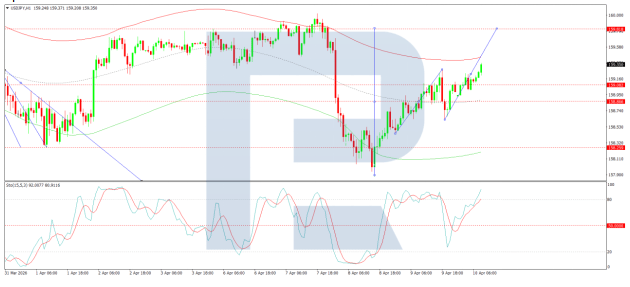
EURUSD Slides Smoothly: Fed Minutes in Focus

By RoboForex Analytical Department

EURUSD is moving smoothly downward and has touched 1.1840. Investors are preparing for the release of key US statistics that could affect expectations for the Fed’s future policy.

The focus is on the minutes of the last Fed meeting, a preliminary estimate of GDP, and the PCE core inflation index. The latter is a key policy gauge for the regulator.

The dollar came under pressure last week following softer inflation data, which increased expectations of rate easing in the second half of the year. However, a strong labour market report – showing the highest employment growth in more than a year and an unexpected decline in unemployment – pointed to the resilience of the economy.

The market is now pricing in the first rate cut in June. Overall, around 62 basis points of easing are expected for 2026, corresponding to two 25 bp reductions and roughly a 50% probability of a third step.

Technical Analysis

On the H4 time frame, EURUSD is consolidating after pulling back from January highs. The range has expanded, but the price is gradually moving towards its lower limit. The key level stands at 1.1835, an intermediate support within the wider range of 1.1765–1.2000. If it holds, sideways movement with attempts to correct upward is likely to persist. A break below 1.1835 would open the way to 1.1765. A return above 1.1890–1.1900 would ease bearish pressure and return the pair to the middle of the range.

Short-term downward pressure remains on the H1 chart for EURUSD. The price consistently forms lower highs and lows, trading near the bottom of the Bollinger Bands. The middle line acts as dynamic resistance.

The Stochastic oscillator is in the oversold zone, which allows for local rebounds, but the MACD remains in negative territory – momentum is still on the side of sellers. The nearest support is at 1.1835. Securing below it would intensify the decline towards 1.1810–1.1800. Resistance stands at 1.1860–1.1870.

Conclusion

In summary, EURUSD remains under steady selling pressure as markets await pivotal US data that will shape Fed expectations. The pair is testing critical support at 1.1835, with technical indicators confirming bearish momentum despite oversold conditions. The fundamental picture is mixed: softer inflation points to eventual Fed easing, but robust employment data complicates the timeline. The near-term direction hinges entirely on today’s releases. A break below 1.1835 would likely accelerate losses towards 1.1765, while a rebound above 1.1890–1.1900 could signal a temporary respite. Until then, the path of least resistance remains lower.


Disclaimer

Any forecasts contained herein are based on the author’s particular opinion. This analysis may not be treated as trading advice. RoboForex bears no responsibility for trading results based on trading recommendations and reviews contained herein.