Week Ahead: Central Bank Bonanza!

By ForexTime 

  • RBA expected to HIKE interest rates
  • BoC, Fed, BoJ, BoE, ECB, SNB and Riks seen leaving rates unchanged
  • Central banks may express caution conflict-induced inflation shocks 
  • AUD expected to be the most volatile FX vs USD
  • EURUSD, USDJPY & GBPUSD on breakout watch

Growing concerns around conflict-induced inflation shocks may prompt central banks to reassess their policy strategies for 2026.

The Federal Reserve (Fed), European Central Bank (ECB) and Bank of England (BoE), among many others will be under the spotlight in the week ahead.

These high-impact events will be complemented with ongoing geopolitical developments in the Middle East and top-tier data from across the globe:

Monday, 16th March

  • CN50: China retail sales, industrial production
  • USDInd: US Empire State manufacturing, industrial production
  • Nvidia’s GTC – a global AI conference in California

Tuesday, 17th March

  • AUD: RBA rate decision
  • EUR: Germany ZEW survey expectations
  • NZD: New Zealand food prices

Wednesday, 18th March

  • CAD: BoC rate decision
  • EUR: Eurozone CPI
  • ZAR: South Africa CPI, retail sales
  • USInd: Fed rate decision, PPI

Thursday, 19th March

  •  AUD: Australia unemployment
  • JPY: BoJ rate decision
  • EUR: ECB rate decision
  • GBP: BoE rate decision
  • CHF: SNB rate decision
  • SEK: Riksbank rate decision

Friday, 20th March

  • CAD: Canada retail sales
  • CNY: China loan prime rates
  • RUB: Russia rate decision
  • US500: Quadruple witching in US markets

Before we take a deep dive, it’s worth keeping in mind that the ongoing conflict in the Middle East has rocked global sentiment and sparked fears of inflation shocks amid surging oil prices.

This may force central banks to adopt a more hawkish stance – meaning favoring higher rates to combat inflation.
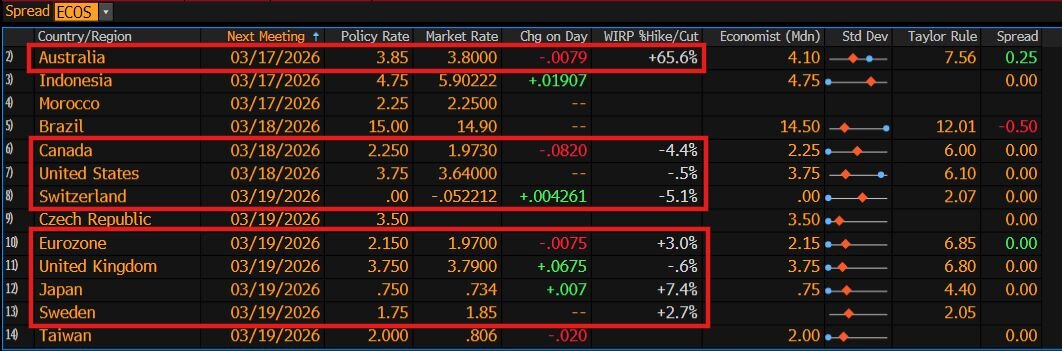
Note: A quick central bank’s cheat sheet of what to expect in the week ahead. (Source Bloomberg)

Here are 8 assets that could be rocked by 8 central bank announcements:

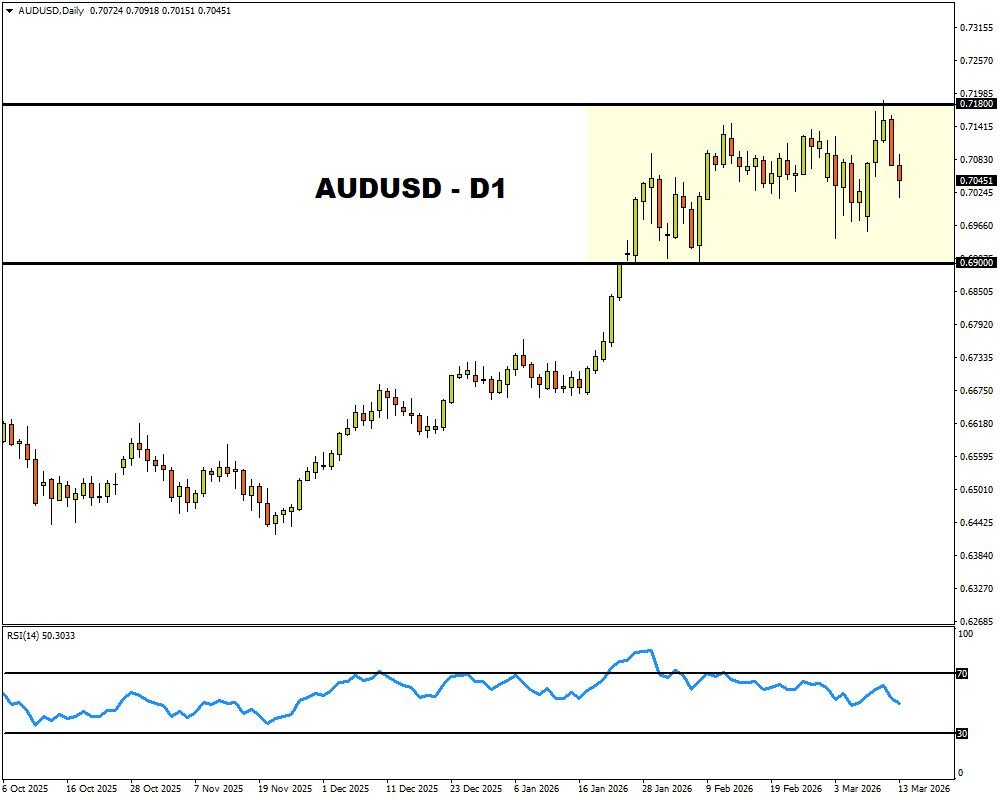
RBA meeting: AUDUSD

Traders are currently pricing a 65% chance that the RBA raises rates at its meeting on Tuesday 17th March.

This will be its second consecutive rate increase due to growing fears of conflict-induced inflation.

Note: The RBA decision is forecasted to trigger upside moves of as much as 0.5% up, or as much as 0.3% down in a 6-hour window post-release.
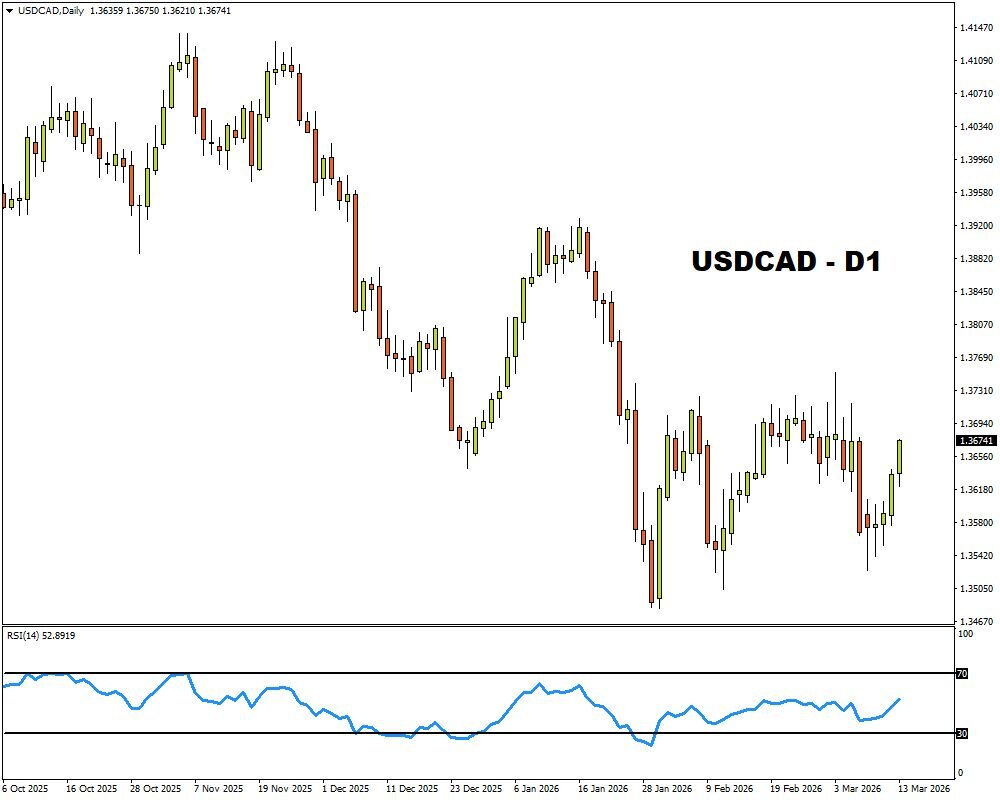
BoC meeting: USDCAD

The Bank of Canada is expected to leave rates unchanged at its meeting on 18th March.

However, any hint of potential rate hikes down the road to combat inflation may support the CAD which has already been boosted by surging oil prices.

Note: The BoC decision is forecasted to trigger upside moves of as much as 0.2% up, or as much as 0.5% down in a 6-hour window post-release.
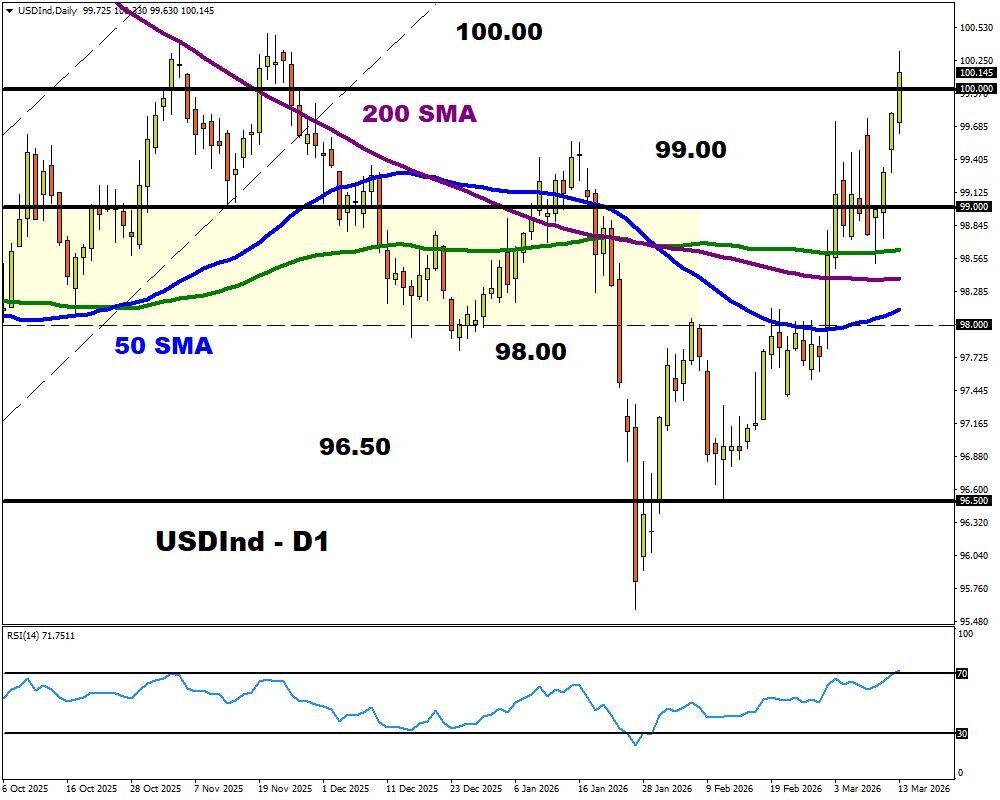
Fed meeting: USDInd

Market expectations have rapidly evaporated over the Fed cutting rates anytime soon with traders pricing a 75% chance of just one Fed cut in 2026.

The dollar is likely to surge further if the Fed strikes a hawkish note during its meeting on 18th March.

Note: The Fed decision is forecasted to trigger upside moves of as much as 0.4% up, or as much as 0.3% down in a 6-hour window post-release.
BoJ meeting: USDJPY

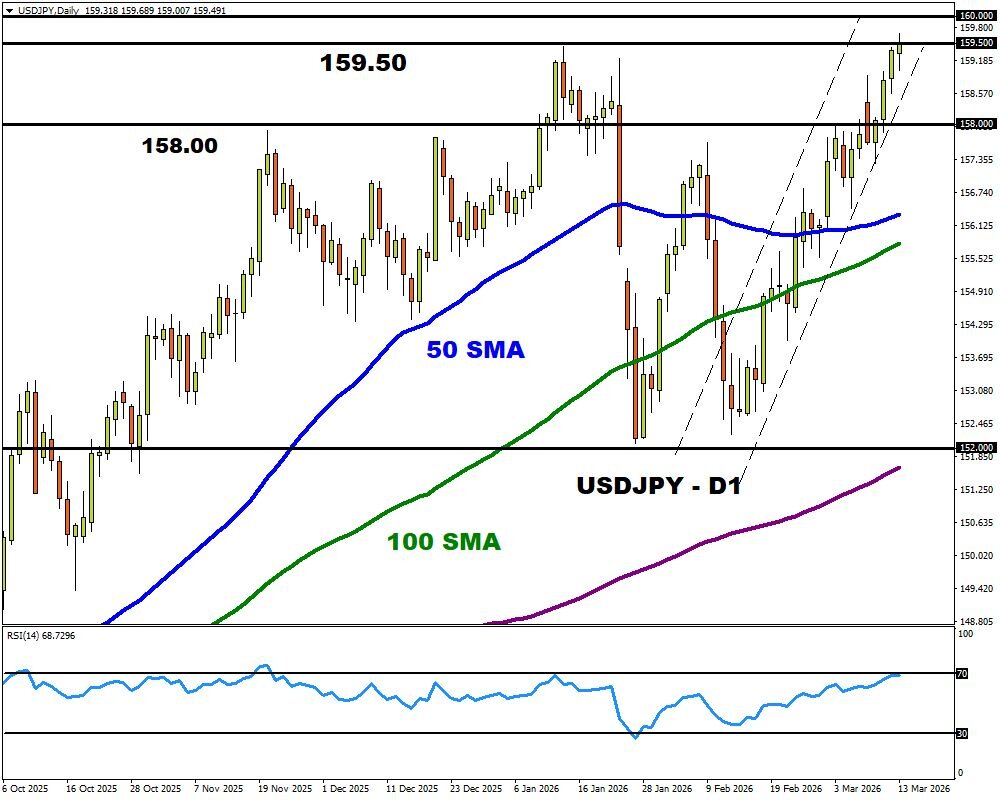
As the USDJPY ventures back into danger zones, traders are on high alert for any signs of potential intervention.

No changes are expected to interest rates but any clues about future policy moves may rock the USDJPY.

Note: The BoJ decision is forecasted to trigger upside moves of as much as 0.8% up, or as much as 0.1% down in a 6-hour window post-release.
ECB meeting: EURUSD

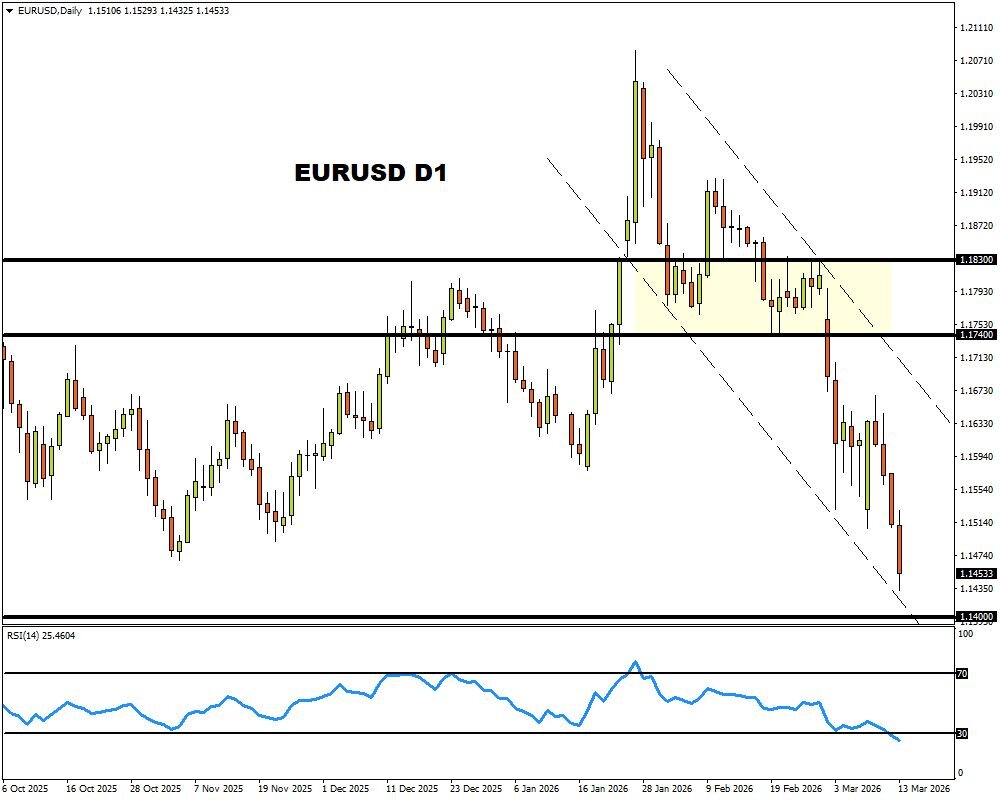
No changes are expected to interest rates when the ECB meets, but any hints about potential rate hikes in 2026 may boost the euro.

Note: The ECB decision is forecasted to trigger upside moves of as much as 0.3% up, or as much as 0.2% down in a 6-hour window post-release.
BoE meeting: GBPUSD

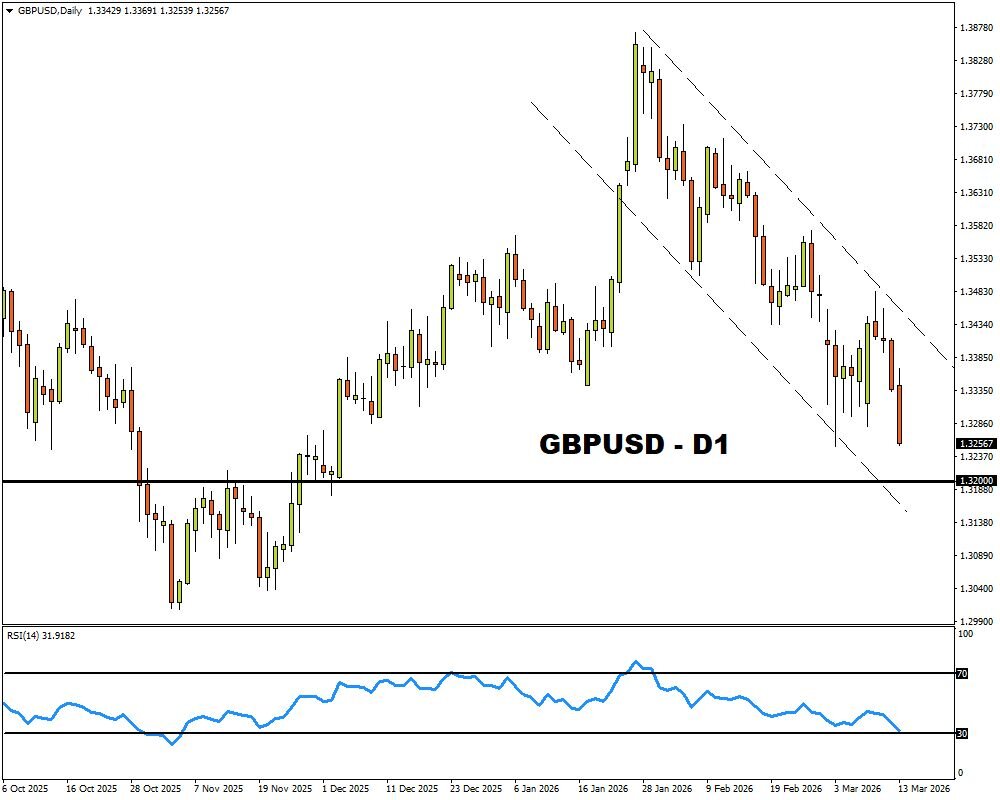
Fears of rising inflation have frightened away BoE doves with hawks likely to dominate the scene when the central bank meets on Thursday 19th March.

Note: The BoE decision is forecasted to trigger upside moves of as much as 0.3% up, or as much as 0.3% down in a 6-hour window post-release.
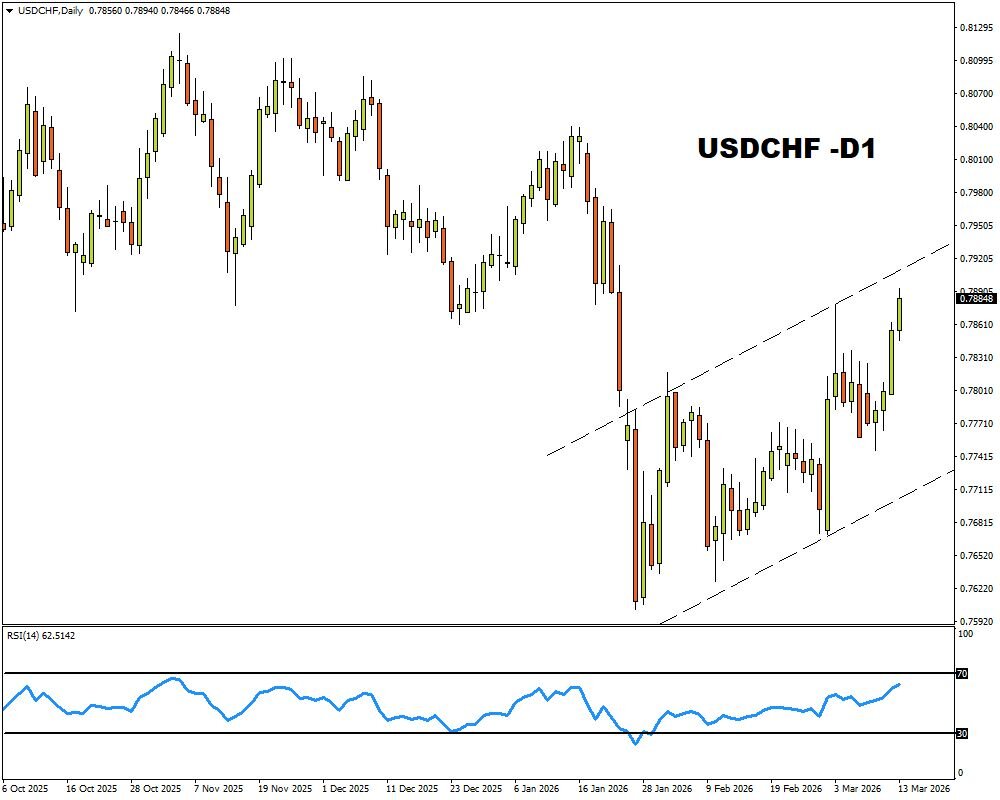
SNB meeting: USDCHF

The Swiss National Bank is expected to leave rates unchanged at its meeting on 19th March.

Note: The SNB decision is forecasted to trigger upside moves of as much as 0.5% up, or as much as 0.4% down in a 6-hour window post-release.
Riksbank meeting: USDSEK

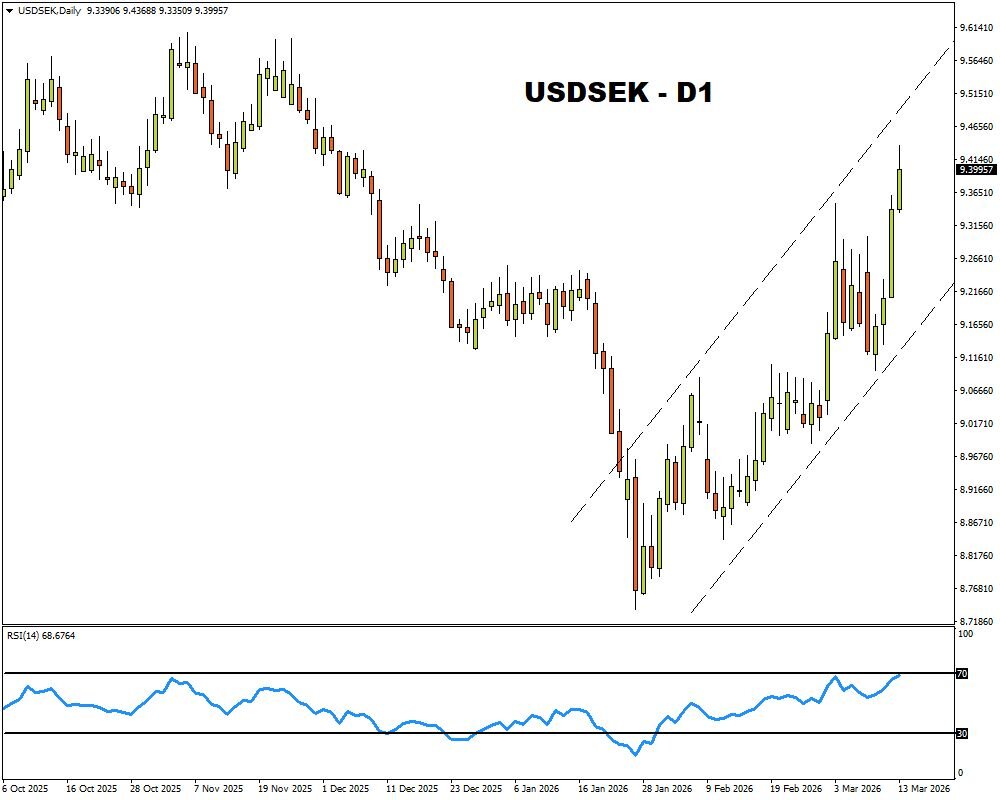
Sweden’s Riksbank will also keep rates unchanged, with a rate hike down the road a possibility amid inflation fears.

Note: The Riksbank decision is forecasted to trigger upside moves of as much as 0.4% up, or as much as 0.4% down in a 6-hour window post-release.


Forex-Time-LogoArticle by ForexTime


ForexTime Ltd (FXTM) is an award winning international online forex broker regulated by CySEC 185/12 www.forextime.com

USD/JPY at Highest Since July 2024: Market Awaits BoJ Intervention

By Analytical Department RoboForex

USD/JPY rose to 159.29 on Friday, marking one of the weakest levels for the Japanese yen since July 2024. The yen’s decline is heightening market concerns about possible intervention by authorities in the foreign exchange market.

Bank of Japan Governor Kazuo Ueda warned that a weak yen could exacerbate imported inflation amid rising oil prices. According to him, this may accelerate the BoJ’s transition towards normalising monetary policy.

Ueda also noted that exchange rate fluctuations are now having a more pronounced impact on inflation than in the past, increasing their significance for policy decisions.

Oil prices surged following a pledge by Iran’s new Supreme Leader, Mojtaba Khamenei, to maintain the effective closure of the Strait of Hormuz. Tehran is intensifying attacks on oil and transport infrastructure across the region.

There is no sign of de-escalation in the Middle East conflict. Tough rhetoric from both Tehran and Washington indicates that the confrontation involving Iran remains far from resolution as it enters its second week.

Technical Analysis

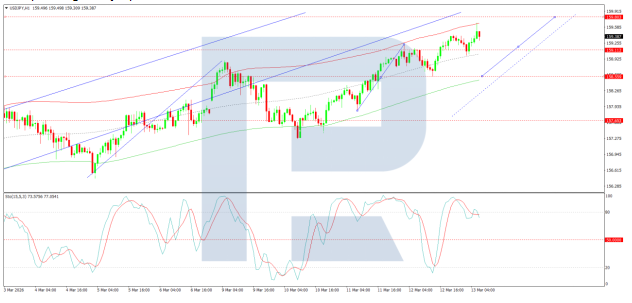
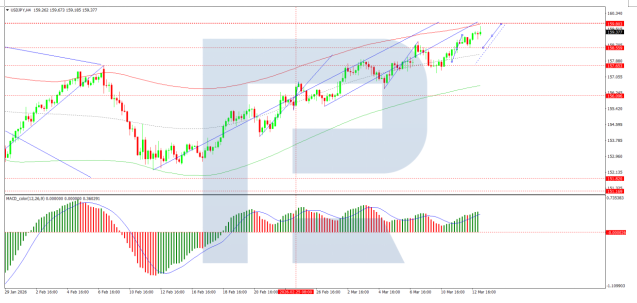
On the H4 USD/JPY chart, the market is forming a consolidation range around 159.12, currently extending to 159.60. A decline to test 159.20 from above is expected today, followed by a possible growth wave towards 159.88.

Technically, this scenario is confirmed by the MACD indicator, whose signal line is high above zero and pointing firmly upwards.

On the H1 chart, USD/JPY is forming a growth wave targeting 159.88, with a possible extension to 160.00. Thereafter, a downward correction is likely towards at least 158.55.

Technically, this scenario is supported by the Stochastic oscillator, whose signal line is above 80 and continuing to trend upwards.

Conclusion

USD/JPY has surged to multi-month highs amid a weakening yen, driven by rising oil prices and evolving expectations for BoJ policy. Governor Ueda’s remarks suggest that currency weakness may accelerate the Bank’s policy normalisation, though speculation over intervention continues to grow. With geopolitical tensions in the Middle East showing no signs of easing, and technical indicators pointing to further near-term upside, the pair appears poised to test the psychologically significant 160.00 level. However, verbal warnings from Japanese officials could amplify volatility.


Disclaimer

Any forecasts contained herein are based on the author’s particular opinion. This analysis may not be treated as trading advice. RoboForex bears no responsibility for trading results based on trading recommendations and reviews contained herein.

Oil continues to rise despite record strategic reserve releases by the IEA

By JustMarkets 

On Wednesday, US stock indices closed in the red amid the escalating conflict in the Persian Gulf. By the end of the trading session, the Dow Jones (US30) fell by 0.61%. The S&P 500 (US500) decreased by 0.08%, while the technology-heavy NASDAQ (US100) edged up by 0.03%. The primary trigger for the decline was new reports of tanker attacks near the Strait of Hormuz, which sparked a surge in WTI oil prices to $87 per barrel, despite the IEA’s emergency decision to release a record 400 million barrels from strategic reserves.

Published inflation data (CPI) for February aligned with analysts’ expectations, showing a 2.4% year-on-year increase. Nevertheless, the bond market reacted with rising Treasury yields as traders fear that the March spike in gasoline prices and logistical chaos will make February’s figures a “relic of the past.” The probability that the Fed will refrain from rate cuts throughout 2026 has risen to 19.3%, with the first potential policy easing now shifted to September.

The Canadian dollar (CAD) showed strong appreciation, rising above the 1.36 mark against the US dollar. The main growth driver was the sustained high cost of WTI crude, which consolidated above $87 per barrel during trading, highlighting Canada’s status as the most stable and secure energy supplier for the North American region. The “loonie” received additional support from the contrast between US and Canadian macroeconomic data. While the US labor market showed signs of cooling (an unexpected loss of 92,000 jobs leading to a drop in the Dollar Index), the Canadian economy appears more resilient. Canada’s unemployment rate fell to 6.5% in early 2026, a 16-month low.

European stock markets turned sharply downward, almost entirely erasing the optimism of the previous session. The German DAX (DE40) fell by 1.37%, the French CAC 40 (FR40) closed down 0.19%, the Spanish IBEX 35 (ES35) dropped 0.53%, and the British FTSE 100 (UK100) finished 0.56% lower yesterday. The primary pressure factor was the growing positive correlation between stocks and government bonds: investors sold off both asset classes amid fears that the energy shock would lead to a prolonged period of high inflation, forcing the ECB to hike rates.

The Swiss franc (CHF) traded around 0.78 against the US dollar on Wednesday, continuing to hold near record highs. Its “safe-haven” status ensured a powerful capital inflow for the franc amid the twelfth day of active hostilities in Iran and the de facto blockade of the Strait of Hormuz. Investors are ignoring risky assets in favor of the Swiss currency, viewing it as protection against global uncertainty. However, for the Swiss economy itself, such strength in the national currency is becoming a serious challenge. In response, the SNB moved from words to action: sight deposit data indicate that the regulator has already begun conducting foreign exchange interventions, buying foreign currency to weaken the franc.

On Thursday, the oil market entered a phase of extreme volatility: WTI futures jumped to $95 per barrel, gaining more than 8% in a single session. This rapid rise occurred against the backdrop of dramatic news from Iraq, where authorities were forced to completely suspend operations at oil terminals. The cause was attacks on two tankers in Iraqi territorial waters – the vessels were struck by explosive-laden drone boats and caught fire. This incident clearly confirmed that the risk zone in the Persian Gulf has expanded far beyond the Strait of Hormuz, encompassing the region’s key export hubs. The market’s reaction to the IEA’s decision to release 400 million barrels proved short-lived. Investors quickly concluded that even such massive interventions are merely a “temporary bandage” against the backdrop of a full blockade of the strait and production cuts by leading regional producers who no longer have storage space for oil that cannot be exported. The situation is exacerbated by Iran’s hawkish rhetoric: the republic’s military command openly warned the world of the prospect of $200 per barrel oil if the US and Israel do not cease their strikes.

Asian markets traded with mixed dynamics. The Japanese Nikkei 225 (JP225) rose by 1.43% during the session, the FTSE China A50 (CHA50) jumped 0.98%, Hong Kong’s Hang Seng (HK50) fell by 0.24%, and the Australian ASX 200 (AU200) showed a positive result of 0.59% on Wednesday.

On Thursday, a wave of sell-offs swept the Australian stock market: the S&P/ASX 200 Index fell by 1.3%, breaking a two-day recovery period. Investors were spooked by the new round of rising oil prices, which, combined with hawkish rhetoric from RBA officials, made an interest rate hike next week almost inevitable. As a result, the market instantly repriced the odds of a March 17 rate hike: the probability is now estimated at 75% (up from 30% at the start of the week). The country’s largest banks, including CBA, Westpac, and ANZ, simultaneously revised their predictions, expecting rate hikes in March and May to a peak level of 4.35%.

S&P 500 (US500) 6,775.80 −5.68 (−0.084%)

Dow Jones (US30) 47,417.27 −289.24 (−0.61%)

DAX (DE40) 23,640.03 −328.60 (−1.37%)

FTSE 100 (UK100) 10,353.77 −58.47 (−0.56%)

USD Index 99.26 +0.43% (+0.44%)

News feed for: 2026.03.12

  • Sweden Inflation Rate (m/m) at 09:00 (GMT+2); – SEK (MED)
  • UK BoE Gov Bailey Speech at 11:30 (GMT+2); – GBP (LOW)
  • Canada Trade Balance (m/m) at 14:30 (GMT+2); – CAD (LOW)
  • US Trade Balance (m/m) at 14:30 (GMT+2); – USD (MED)
  • US Building Permits (m/m) at 14:30 (GMT+2); – USD (MED)
  • US Initial Jobless Claims (w/w) at 14:30 (GMT+2); – USD (MED)
  • US Natural Gas Storage (w/w) at 16:30 (GMT+2). – XNG (HIGH)

By JustMarkets


This article reflects a personal opinion and should not be interpreted as an investment advice, and/or offer, and/or a persistent request for carrying out financial transactions, and/or a guarantee, and/or a forecast of future events.

Gold Moderately Lower as Market Pressures Intensify

By Analytical Department RoboForex

Gold prices fell below 5,150 USD per ounce on Thursday, marking a second consecutive session of decline. Pressure on the market has intensified amid a sharp rise in oil prices, which heightens inflation risks and reduces the likelihood of imminent interest rate cuts by central banks.

Oil has rallied for a second straight day. The market remains concerned about the prospect of a protracted conflict involving Iran, with these worries outweighing the effect of a coordinated release of strategic oil reserves by major economies.

Despite the International Energy Agency’s decision to execute the largest release in history—400 million barrels—investors considered the move insufficient to stabilise the market.

A strengthening US dollar and rising Treasury yields have added further pressure on gold. Increased inflation expectations have diminished the probability of Federal Reserve easing, with the market now pricing in only one rate cut before year-end.

Data released yesterday showed that core inflation in the United States remains moderate at the start of the year. Meanwhile, the European Union has warned that inflation in the region could exceed 3% in 2026.

Technical Analysis

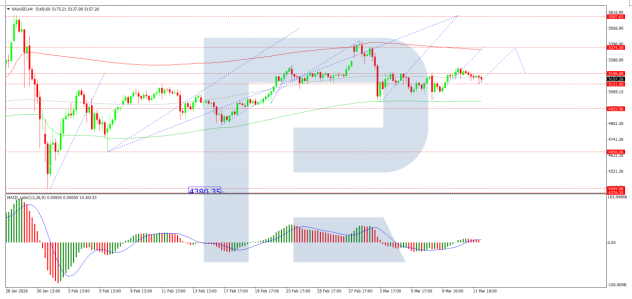
On the H4 XAU/USD chart, the market is forming a consolidation range around the 5,196 USD level. A downside breakout would open potential for a continuation of the correction towards 4,953 USD. Conversely, an upside breakout would suggest the development of a growth wave towards the 5,390 USD level. The MACD indicator confirms the current momentum, with its signal line above zero and pointing upwards.

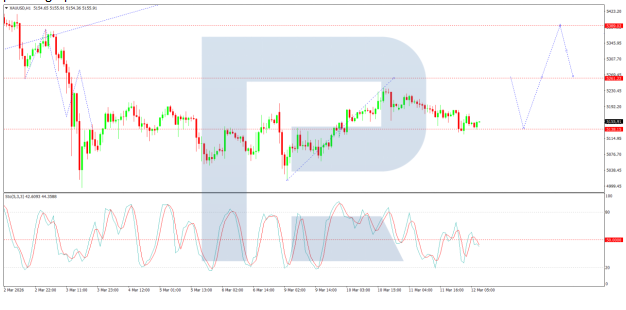
On the H1 chart, the market broke above the 5,135 USD level and completed a growth wave to 5,233 USD, before retracing to 5,140 USD. Looking ahead, the likelihood of a new growth wave developing towards the 5,262 USD level will be considered. The Stochastic oscillator supports this scenario, with its signal line remaining above the 50 level and retaining upside potential towards level 80.

Conclusion

Gold faces mounting headwinds as surging oil prices, driven by geopolitical tensions in the Middle East, reinforce inflation concerns and push central bank rate cut expectations further out. The dollar’s strength and rising yields compound the pressure on the non-yielding asset. While technical indicators suggest potential for a short-term bounce, the broader outlook remains cautious as markets digest the implications of sustained energy price inflation and its impact on monetary policy trajectories.


Disclaimer

Any forecasts contained herein are based on the author’s particular opinion. This analysis may not be treated as trading advice. RoboForex bears no responsibility for trading results based on trading recommendations and reviews contained herein.

Oil isn’t just fuel: Iran conflict could disrupt markets for everything from plastics to fertilizers

By André O. Hudson, Rochester Institute of Technology 

Tensions in the Middle East often trigger concerns about rising gasoline prices. But disruptions to oil supplies could affect much more than the cost of filling up a car. That’s because crude oil is not only burned as fuel. It is also the raw material for thousands of products that modern societies depend on, including plastics, fertilizers, clothing fibers, medicines and electronics.

As a biochemist, I’m interested in how certain chemicals can shape society, and oil is a prime example.

The stakes become clearer when looking at the Strait of Hormuz, a narrow waterway between Iran and Oman. About one-fifth of the world’s petroleum liquids consumption passes through the strait each day, making it one of the most important oil shipping routes on Earth. If conflict significantly disrupts traffic there, the effects could ripple far beyond energy markets.

A map of the Strait of Hormuz, which is a narrow body of water between Iran and Oman.
The Strait of Hormuz.
Goran_tek-en/Wikimedia Commons, CC BY-SA

Oil is a chemical starting point

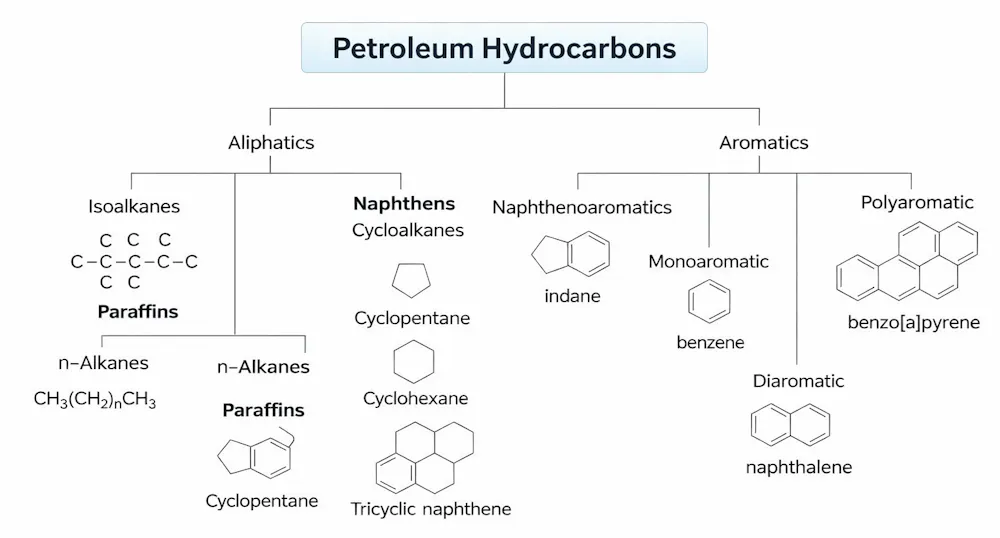
Crude oil is a complex mixture of hydrocarbons – molecules made mainly of carbon and hydrogen. Refineries and chemical plants separate and transform these molecules into smaller chemical building blocks known as petrochemicals.

Some of the most important petrochemical building blocks include chemicals such as ethylene, propylene and benzene. Manufacturers can then convert these building blocks into more complex forms, which make up plastics, solvents, synthetic rubber and other industrial materials.

While fuel is a well-known product, fuels actually represents only a portion of what is produced from crude oil. The refining process generates a wide range of petroleum-based materials used to manufacture everyday items, such as plastics, medicines, electronics, cosmetics, clothing fibers and household goods.

A diagram showing a bunch of different types of hydrocarbon molecules derived from petroleum
Hydrocarbons are molecules made predominantly from hydrogen and carbon. Different forms, derived from crude oil, are used in many types of manufacturing.
André O. Hudson/Patel & Shah, 2013

Plastics that shape modern life

One of the most visible uses of oil is the production of plastics. Scientists can link individual petrochemical molecules to form polymers, which are long chains of repeating units that create materials such as polyethylene, polypropylene and polystyrene.

Because plastics are lightweight, durable and relatively inexpensive, they have become essential to global manufacturing.

These plastics appear in countless products, including food packaging and water bottles; medical equipment, such as syringes and IV bags; electronics casings and appliances; automotive parts; and construction materials, such as pipes and insulation.

Even technologies designed to reduce carbon emissions depend on them. Wind turbines, solar panels and electric vehicles all contain plastic components derived from petrochemicals.

Fertilizer that feeds billions

Oil and natural gas also play a critical role in agriculture. Modern fertilizers rely on nitrogen compounds, such as ammonia. Ammonia is produced through the Haber-Bosch process, which uses hydrogen typically derived from natural gas or other fossil fuels.

These fertilizers replenish nutrients in soil and dramatically increase crop yields. Without them, global food production would be far lower. Petrochemicals are also used to produce pesticides, herbicides and plastics used in irrigation systems and agricultural equipment.

Clothing, cosmetics and medicines

Petrochemicals also appear in many everyday consumer goods. Synthetic fabrics, such as polyester, nylon and acrylic, are made from petrochemical feedstocks. These feedstocks are the basic chemicals, made from crude oil or natural gas, that serve as the starting ingredients for products widely used in clothing, carpets and furniture.

Petroleum-derived ingredients are also common in cosmetics and personal care products. Certain lotions, shampoos and lipsticks rely on these compounds because they help stabilize formulas and extend shelf life.

Petrochemicals are also important in medicine. Petroleum-derived chemical intermediates − compounds made during the process of turning raw materials into a final product − are used to manufacture pharmaceuticals, medical tubing, sterile packaging and disposable gloves.

These materials help hospitals maintain sterility and safety in health care environments.

Crude oil is far more than just a source of gasoline.

Why the Strait of Hormuz matters

Because oil and petrochemical feedstocks move through global shipping routes, disruptions in one region will affect supply chains worldwide. The Strait of Hormuz is particularly important. If conflict or political tensions continue to interrupt shipping through the Strait, oil prices will rise quickly. Energy analysts have long warned that disruptions to the strait could send shock waves through global markets. The impact would not be limited to transportation fuels.

Petrochemical industries depend on steady supplies of crude oil and natural gas liquids as raw materials. If those supplies become more expensive or harder to obtain, manufacturers could face higher production costs.

The proportion of crude oil used for petrochemical feedstocks to create plastics, fertilizers and other materials represents around 10% to 20% of oil consumption. Most crude oil is refined for fuel production, including gasoline, diesel and jet fuel, so these fuel supply chains would likely be the first to take a hit. But over time, disruptions could affect the availability and price of products ranging from plastics and packaging to fertilizers, synthetic clothing fibers and even food.

A hidden foundation of modern economies

Because petrochemicals are often used behind the scenes as ingredients rather than finished products, the connection many agricultural, medical and consumer goods have to oil is easy to overlook. Yet, petrochemicals form a hidden foundation for modern economies. They enable large-scale agriculture, advanced health care systems and global manufacturing supply chains.

At the same time, concerns about climate change and plastic pollution are driving research into alternatives. Scientists are developing bio-based plastics made from plant materials, improving recycling technologies and exploring new ways to produce fertilizers with lower carbon emissions.

For now, the modern world remains deeply dependent on oil, not only for energy but also for the materials that shape everyday life. When news headlines focus on disruptions to oil supply, the consequences may extend far beyond the gas pump, affecting the products that underpin modern society.The Conversation

About the Author:

André O. Hudson, Dean of the College of Science, Professor of Biochemistry, Rochester Institute of Technology

This article is republished from The Conversation under a Creative Commons license. Read the original article.


IEA deploys strategic reserves to halt soaring oil prices

By JustMarkets 

On Tuesday, the US stock market concluded the session with a slight decline. The Dow Jones (US30) fell by 0.07%, and the S&P 500 (US500) dropped 0.21%, while the tech-heavy NASDAQ (US100) managed a marginal gain of 0.01%. Investors found themselves in a state of uncertainty: the initial optimism sparked by President Trump’s claims of a swift end to the military operation met a harsh reality following clarifications from the White House. Official confirmation that naval escorts for tankers in the Strait of Hormuz have not yet commenced, combined with reports of a potential Iranian mining threat, forced traders to remain cautious and partially rotate into cash.

Market attention has now shifted entirely to the upcoming inflation data. Traders fear that the recent spike in energy prices has already permeated macroeconomic indicators, prompting the Federal Reserve to maintain a restrictive monetary policy for longer than previously anticipated.

European equity markets mostly trended higher. The German DAX (DE40) surged by 2.39%, the French CAC 40 (FR40) closed up 1.79%, the Spanish IBEX 35 (ES35) jumped to 3.05%, and the British FTSE 100 (UK100) finished at 1.59% higher. The primary catalyst for the optimism in Frankfurt was Donald Trump’s rhetoric regarding a potential de-escalation in the Middle East, which led to a retreat in oil prices and eased fears of runaway inflation in the Eurozone.

However, the WTI oil market became an arena for intense informational warfare. After a morning slump to $80 per barrel, triggered by Trump’s “peaceful” tweets, quotes rebounded sharply to close near $87. This reversal followed an official statement from the Islamic Revolutionary Guard Corps (IRGC), which labeled Washington’s claims of an imminent end to the war as “false,” promising to block regional oil exports until US and Israeli strikes cease entirely. The situation intensified as US Defense Secretary Pete Hegseth, overseeing Operation “Epic Fury,” called Tuesday the “most intense day of airstrikes” since the conflict began, signaling a phase of systematic destruction of Iran’s industrial and naval infrastructure. The IEA has proposed a record-breaking release of strategic oil reserves; however, the physical blockade of the Strait of Hormuz has led to a collapse in production from major Middle Eastern producers. This creates a supply deficit that reserves cannot fully offset, driving investors toward silver and other metals as a hedge against stagflation.

Asian markets also rebounded yesterday. The Japanese Nikkei 225 (JP225) rose by 2.88%, the FTSE China A50 (CHA50) jumped 1.06%, the Hang Seng (HK50) climbed 2.17%, and the Australian ASX 200 (AU200) posted a positive result of 1.09%. Drivers for this optimism included strong corporate news and trade statistics from mainland China. China’s trade data for January-February 2026 continues to impress, with exports growing by a record 21.8% and imports by 19.8%. However, these strong figures also breed caution; investors worry that Beijing may view the economy as sufficiently resilient and delay further stimulus measures, especially given the recently announced 4.5-5.0% GDP target – the lowest in decades.

On Wednesday, the Australian dollar (AUD) made an impressive leap to 0.716-0.718 USD, its highest level in nearly four years. This was driven by a sharp revision in interest rate expectations. The market reacted to signals from the RBA: the probability of a rate hike on March 17 skyrocketed from 30% to 75% in just days. RBA Deputy Governor Andrew Hauser confirmed that the spike in fuel prices (with petrol exceeding $2.15 per liter in major cities) poses a significant risk to inflation expectations, which already sit above the 23% target range.

The New Zealand dollar (NZD) stabilized at 0.593-0.594 USD on March 11, 2026, holding weekly highs. This rise reflects a hawkish shift in investor sentiment. While the RBNZ signaled rate stability at 2.25% as recently as February, the March energy shock has forced the market to price in imminent tightening. Leading banks such as Westpac and BNZ have revised their inflation prognosis upward, expecting the CPI to remain within the upper 3.0% target boundary for most of 2026.

S&P 500 (US500) 6,781.48 −14.51 (−0.21%)

Dow Jones (US30) 47,706.51 −34.29 (−0.072%)

DAX (DE40) 23,968.63 +559.26 (2.39%)

FTSE 100 (UK100) 10,412.24 +162.72 (+1.59%)

USD Index 98.94 -0.24% (−0.24%)

News feed for: 2026.03.11

  • Japan Producer Price Index (m/m) at 01:50 (GMT+2); – JPY (MED)
  • German Inflation Rate (m/m) at 09:00 (GMT+2); – EUR (MED)
  • US Consumer Price Index (m/m) at 14:30 (GMT+2); – USD, XAU (HIGH)
  • US Crude Oil Reserves (w/w) at 16:30 (GMT+2). – WTI (HIGH)

By JustMarkets


This article reflects a personal opinion and should not be interpreted as an investment advice, and/or offer, and/or a persistent request for carrying out financial transactions, and/or a guarantee, and/or a forecast of future events.

GBP/USD Managed to Rise, but Pressure Factors Remain in Place

By Analytical Department RoboForex

GBP/USD rose to 1.3450 on Wednesday. Expectations of de-escalation in the Middle East supported the pound, as lower oil prices reduced inflationary risks for the British economy, which is heavily dependent on energy imports.

Despite this localised strengthening, investors continue to monitor the development of the conflict between the United States, Israel and Iran closely. Its consequences could significantly affect the global economy. The situation remains uncertain: US President Donald Trump has suggested the war could end soon, but Iran’s Islamic Revolutionary Guard Corps stated that oil shipments through the Strait of Hormuz will not resume while attacks by the United States and Israel continue.

Amid these external risks, investors are also revising expectations for UK monetary policy. On average, a Bank of England interest rate cut in the second quarter is now considered possible.

Domestic factors continue to weigh on the pound. Weak economic statistics and political uncertainty in the UK maintain downside risks for the currency. An additional source of tension may be the local elections, scheduled to take place in two months.

Technical Analysis

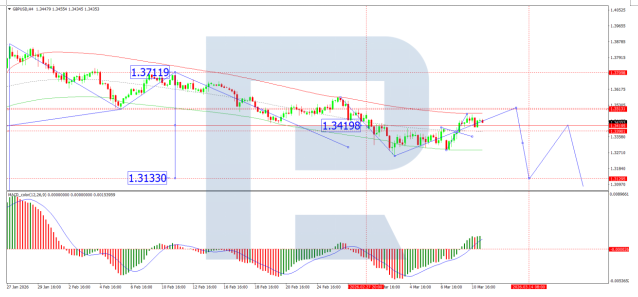
On the H4 GBP/USD chart, the market is forming a wide consolidation range around the 1.3382 level, currently extending up to 1.3474. A decline to 1.3384 is expected in the near term. Following the completion of this correction, the formation of a new consolidation range is likely. An upside breakout would open potential for a continuation wave to 1.3515, while a downside breakout would suggest further movement towards 1.3133. Technically, this scenario is confirmed by the MACD indicator, whose signal line is above the zero level and pointing strictly upwards.

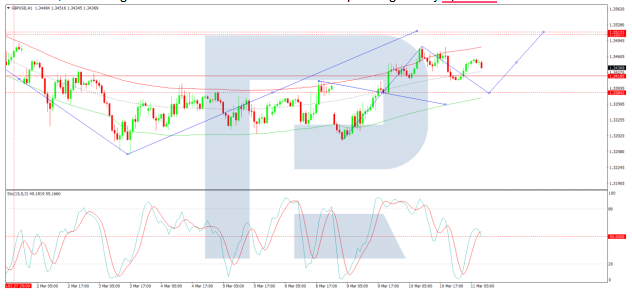
On the H1 chart, the market has formed a compact consolidation range around the 1.3434 level. A downside breakout would initiate a wave structure extending to 1.3382. Should this level be breached, further downside potential towards 1.3125 would open. Conversely, an upside breakout from the range could trigger a growth wave to the 1.3515 level. Technically, this scenario is supported by the Stochastic oscillator, with its signal line above the 50 level and pointing strictly upwards.

Conclusion

GBP/USD has found temporary relief amid hopes for Middle East de-escalation, which has helped moderate oil prices and ease inflationary concerns for the UK. However, the underlying picture remains uncertain, with geopolitical risks, domestic economic weakness, and political tensions continuing to cloud the outlook. While technical indicators suggest potential for further upside in the near term, the broader trend will likely depend on whether geopolitical conditions stabilise and whether the Bank of England signals a clearer policy direction.


Disclaimer

Any forecasts contained herein are based on the author’s particular opinion. This analysis may not be treated as trading advice. RoboForex bears no responsibility for trading results based on trading recommendations and reviews contained herein.

Mining the ocean floor: 5 deep‑sea sources of critical minerals essential to technology, and the fragile marine life at risk

By Leonardo Macelloni, University of Mississippi 

You may be hearing a lot lately about critical minerals and rare earth elements. These natural materials are essential to industry and modern technology – everything from cellphones to fighter jets.

They include lithium and cobalt used in batteries, neodymium for magnets in motors and hard drives, and rare earths that are essential in defense systems, lasers and medical imaging. Critical minerals are also indispensable for renewable energy systems, energy storage and digital infrastructure. Without them, modern society – and any realistic path to a world with net-zero emissions – would not be possible.

A mechanical claw holds a polymetallic nodule, one of several seafloor sources of critical minerals.
ROV-Team/GEOMAR via Wikimedia, CC BY

Critical minerals get their name because they’re also highly vulnerable to supply chain disruptions from global events, trade tensions or economic instability. And, today, one country dominates many critical mineral supply chains: China.

With that in mind, many governments are looking for alternative sources of critical minerals, and several companies are eyeing the ocean floor as a potential new frontier for mining them.

A map shows seafloor areas being considered for exploration and critical minerals mining. International Seabed Authority

As a marine geologist, I know the potential for seafloor minerals is vast. But that doesn’t mean those minerals are easy to harvest. They come in several forms, from potato-size rocks scattered on the seafloor to seafloor crusts at hydrothermal vents and underwater brine pools. And they are often found in sensitive locations that are home to fragile marine life, raising questions about damage to some of the least explored and least understood parts of our planet.

Polymetallic nodules on the seafloor

When you picture seafloor mining, polymetallic or manganese nodules are probably what come to mind.

Rock-like nodules are about the size of potatoes and are found scattered on vast deep-water plains, typically 3,000 to 6,000 meters deep, in several regions, including a large area of the Pacific Ocean southeast of Hawaii.

They primarily consist of manganese and iron, though they can contain significant amounts of other metals, including valuable nickel, cobalt, copper and small amounts of rare earth elements and platinum.

A seafloor covered with potato-sized nodules sitting on the surface
Polymetallic nodules spotted during a survey of the Blake Plateau, roughly 80 to 200 miles off the southeastern U.S. coast in the Atlantic Ocean.
NOAA Office of Ocean Exploration and Research, 2019 Southeastern U.S. Deep-sea Exploration

Nodules form from metals that get into the ocean through erosion or from seafloor hydrothermal vents in volcanically active areas. The metal ions attach to a nucleus, such as a rock or shell fragment. Over time, layers form around that core. The growth is very slow – only a few millimeters in a million years – so larger nodules can be several million years old.

More than 17 exploration licenses exist, primarily in the Pacific’s Clarion-Clipperton Zone. Tests there have involved suctioning nodules from the seafloor to ships above. But, as of early 2026, full-scale, commercial mining has not yet begun.

A map of areas rich in polymetalic modules.
A map shows mining targets in the Clarion-Clipperton Zone, southeast of Hawaii. Areas in red have the highest-known abundance of polymetalic nodules.
McQuaid KA, Attrill MJ, Clark MR, Cobley A, Glover AG, Smith CR and Howell KL, 2020, CC BY

Seafloor massive sulfides at hydrothermal vents

Another source of critical minerals is seafloor massive sulfides, which form near hydrothermal vents along oceanic ridges. Volcanic activity reacts with seawater, fueling bursts of marine life at these vents, and also forming rocks rich in copper, gold, zinc, lead, barium and silver.

These hot springs form where water rises through the oceanic crust at high temperatures, up to about 750 degrees Fahrenheit (400 degrees Celsius). The metals contained in these solutions precipitate on contact with the cold, oxygen-rich seawater, forming the ventlike structures known as “black smokers” because they look like factory chimneys.

A pinnacle with red creatures all along its sides and warm water that gives the appearance of smoke.
Tube worms cover a ‘black smoker,’ where warm, mineral-rich water emerges.
Ocean Networks Canada, CC BY-NC-SA

The technology for mining these deposits is currently being built. The first deep-sea tests were performed by Japanese miners in their coastal waters.

Cobalt-rich crusts at seamounts

Ferromanganese crusts are another source. They form on the slopes and summits of underwater mountains known as seamounts and contain manganese, iron and a wide array of trace metals such as cobalt, copper, nickel and platinum.

Over millions of years, metals in the surrounding seawater form coatings of iron and manganese oxides, with thicknesses ranging from a few millimeters to a few decimeters, depending on the age of the seamounts.

An underwater view shows corals and sponges.
Corals and sponges found at Northeast Canyons and Seamounts Marine National Monument.
NOAA

Crust mining is technically much more difficult than nodule mining. Nodules sit on soft sediment. Crusts, in contrast, are attached to substrate rock. For successful crust mining, it would be essential to recover the crusts without collecting too much substrate, which would dilute the ore quality.

However, little is known about the marine life found on seamounts, particularly those in the most likely regions for crust exploration and mining.

Underwater brine pools

Another possible ocean source of lithium and potentially rare earth elements may lie in unusual underwater lakes called hypersaline brine pools. These salty pools are found on the seafloor in several parts of the world, but they are especially common in the Gulf of Mexico.

Brine is already the source of much of the lithium used today. Companies extract it from salty water produced during oil and geothermal operations.

Lithium becomes concentrated in brines over millions of years. As water moves through deep rocks, minerals dissolve along the way and elements like lithium can accumulate.

Extracting lithium from deep-sea brines, if it is confirmed to be there, could be more straightforward than traditional seabed mining. Technologies already exist to separate lithium from salty water.

In the Gulf, this approach could potentially use existing offshore oil and gas infrastructure, reducing the need for new construction. The brine could be pumped up, processed to remove lithium, and then returned to the subsurface.

Deep-sea mud

In the Central Pacific Ocean and off Japan, deep-sea mud enriched with rare earth elements and yttrium has been recognized as another new resource.

These deposits form from the very slow accumulation of fish debris, composed of biogenic calcium phosphate, in the deepest parts of the ocean. In 2026, a Japanese research vessel successfully drilled and retrieved deep-sea sediment containing rare earth minerals from the seabed near the island of Minamitorishima, and the Japanese government announced a deep-sea mud extraction trial would begin in 2027.

The drawbacks for marine life

While these regions likely hold vast resources, scientists know very little about the ecological conditions at the boundary between deep-sea water and seafloor sediments, especially about the microbial communities that live there.

Microorganisms are the most widespread and fundamental forms of life on Earth. They play central roles in ecosystems, nutrient cycles, and the long-term stability of the planet. The potential impacts of mechanically removing nodules from the seafloor – through cutting, scraping or lifting – on these microscopic ecosystems remain largely unknown.

A visualization of deep-sea mining for polymetallic nodules. MIT Mechanical Engineering

In the Pacific Ocean, an experimental mining test carried out in 1978 was revisited more than two decades later. Even after 26 years, tracks left by mining vehicles were still visible on the seafloor. The disturbed areas had fewer bottom-dwelling organisms and less diversity compared to nearby undisturbed regions. Notably, no detailed assessment of microbial communities was conducted, leaving a significant gap in understanding.

An illustration shows a potentail. method for mining sufides from the sea floor. A pipe from a ship goes down to equipment at the seafloor.
An example of a sea-floor massive sulfide mining system and its potential environmental impacts.
GRID-Arendal via Wikimedia Commons, CC BY-NC-SA

Complicating the issue further, many prospective deep-sea mining areas lie in international waters, beyond the jurisdiction of individual nations.

The International Seabed Authority is responsible for regulating mineral activities in the deep ocean, but there is no global consensus on the rules, safeguards or acceptable risks associated with seabed mining. Some countries, including the United States, are discussing creating their own licenses to mine in international areas, while about 40 others are calling for a mining moratorium until the risks are better understood.

Critical minerals are the invisible foundation of modern life. As interest in deep-sea mining grows, these scientific uncertainties and governance challenges will be central to the debate.The Conversation

About the Author:

Leonardo Macelloni, Director of the Mississippi Mineral Resources Institute and Center for Marine Resources and Environmental Technology, University of Mississippi

This article is republished from The Conversation under a Creative Commons license. Read the original article.

Trump signals de-escalation in the Middle East; China’s trade surplus hits a new record

By JustMarkets

The US stock market concluded Monday’s session with gains. By the end of the trading day, the Dow Jones (US30) rose by 0.50%. The S&P 500 (US500) gained 0.83%, and the tech-heavy NASDAQ (US100) increased by 1.38%. The morning collapse, fueled by fears of stagflation, turned into a rally following statements by Donald Trump that the active phase of the war with Iran is “practically over” and that the Strait of Hormuz is reopening for tankers. This triggered a drop in WTI oil prices to $86 per barrel, removing the short-term threat of an energy collapse. The primary growth driver was the technology sector, where shares of AMD and Broadcom soared over 4.6% amid strong AI chip revenue predictions (Broadcom expects more than $100 billion in 2027). While the banking sector (Wells Fargo, Citigroup) remained under pressure due to private credit default risks, investors actively bought up discounted growth stocks.

On Tuesday, the Mexican peso (MXN) stabilized at 17.8 per dollar, breaking its fall toward seven-week lows. The rebound was sparked by Mexico’s February inflation data, which accelerated to 4.02%, breaching the central bank’s upper target threshold for the first time in a year. Despite local support, the peso remains a hostage to external shocks: the 10% global US tariffs and the war in the Middle East create a toxic backdrop for emerging market currencies. Although expensive oil bolsters Mexico’s budget, the peso’s status as a “proxy” for global risk makes it extremely vulnerable to every new wave of flight to the dollar.

Bitcoin (BTC) recovered the psychological $70,000 mark, gaining about 2% amid a sharp improvement in market sentiment. The upward momentum was provided by Donald Trump’s rhetoric, who described the war with Iran as “practically over” and predicted a swift resolution to the conflict. The digital assets market recovery synchronized with a powerful rally in Asia, where Japan’s Nikkei 225 jumped 2.8% to exceed 54,000 points. Altcoins followed the lead: Ether (ETH) returned to the $2,130 level, while Solana (SOL) stabilized near $91 ahead of the major Alpenglow network update later this month.

European stock markets mostly declined on Monday. The German DAX (DE40) fell by 0.77%, the French CAC 40 (FR40) closed down 0.98%, the Spanish IBEX 35 (ES35) lost 0.86%, and the British FTSE 100 (UK100) finished at 0.34% lower. The primary pressure came from the escalation of US and Israeli strikes on Iranian refineries, which paralyzed the Strait of Hormuz and sparked fears of a new inflationary spiral. Consequently, traders began pricing in ECB rate hikes. The transport and industrial sectors suffered most: Lufthansa shares fell 7.3% due to soaring jet fuel prices, while tire manufacturer Continental fell 4.4%. Automakers (Volkswagen, Porsche) also finished in the red due to global supply chain risks.

Silver (XNG) recouped most of its morning losses, stabilizing at $83.9 per ounce. Earlier in the session, quotes had collapsed nearly 6%, testing key support near $80 due to a sharp strengthening of the dollar and oil prices spiking above $100. The dual nature of the metal, as a safe haven and an industrial commodity, created conflicting flows: while geopolitical tension supported haven demand, the threat of a global recession and reduced industrial consumption (which accounts for 60% of silver demand) exerted powerful downward pressure.

WTI oil prices performed a dizzying turnaround, collapsing nearly 4% by the end of the day to $87 per barrel. This followed an earlier surge to $120 on news of production paralysis in Iraq, Kuwait, and the UAE. The market cooled rapidly thanks to a coordinated statement from G7 Finance Ministers regarding readiness for massive strategic reserve interventions, effectively guaranteeing the replenishment of any short-term supply deficits.

Asian markets were also under a sell-off yesterday. The Japanese Nikkei 225 (JP225) fell by 5.20% during the session, the FTSE China A50 (CHA50) declined 0.47%, the Hang Seng (HK50) shed 1.35%, and the Australian ASX 200 (AU200) closed down at 2.85%.

China’s trade surplus soared to a record $213 billion, with exports growing by 21.8% and imports by 19.8%. These figures significantly exceeded analyst prognosis and confirmed China’s status as a global manufacturing hub capable of scaling volumes even during periods of instability.

The Australian dollar (AUD) corrected to 0.70 against the US dollar on Tuesday, losing about 0.7% following the retreat in oil prices. As a “commodity” currency, the aussie faced pressure as brent fell to $91.37 and WTI to $86. This occurred after Donald Trump announced the military operation against Iran was significantly ahead of schedule, calling it “very complete” and predicting further fuel price declines. Domestic Australian statistics presented a mixed picture: the Westpac Index rose 1.2% to 91.6, while the NAB Business Confidence Index plummeted to 1, its first negative reading since April 2025.

S&P 500 (US500) 6,795.99 +55.97 (+0.83%)

Dow Jones (US30) 47,740.80 +239.25 (+0.50%)

DAX (DE40) 23,409.37 −181.66 (−0.77%)

FTSE 100 (UK100) 10,249.52 −35.23 (−0.34%)

USD Index 98.73 -0.25% (−0.26%)

News feed for: 2026.03.10

  • Australia Westpac Consumer Confidence Index (m/m) at 01:30 (GMT+2); – AUD (MED)
  • Japan GDP (q/q) at 01:50 (GMT+2); – JPY (MED)
  • Australia NAB Business Confidence (m/m) at 02:30 (GMT+2); – AUD (LOW)
  • China Trade Balance (m/m) at 05:00 (GMT+2); – CHA50, HK50 (MED)
  • German Trade Balance (m/m) at 09:00 (GMT+2); – EUR (LOW)
  • Norway Inflation Rate (m/m) at 09:00 (GMT+2); – NOK (MED)
  • US Existing Home Sales (m/m) at 16:00 (GMT+2). – USD (MED)

By JustMarkets


This article reflects a personal opinion and should not be interpreted as an investment advice, and/or offer, and/or a persistent request for carrying out financial transactions, and/or a guarantee, and/or a forecast of future events.

EUR/USD in Turbulence: Market Questions When Conflict Over Iran Will End

By Analytical Department RoboForex

EUR/USD is trading around 1.1608 on Tuesday. The US dollar attempted to recover from a sharp intraday decline the previous day, which had been driven by expectations of a faster resolution to the conflict involving Iran, temporarily reducing demand for the dollar as a safe-haven asset.

US President Donald Trump stated that the military operation in Iran is nearing completion and is progressing faster than initial estimates, which had suggested a duration of four to five weeks. He also announced plans to reduce oil sanctions and deploy US Navy ships to escort tankers through the Strait of Hormuz in an effort to contain rising oil prices.

Previously, the dollar had strengthened significantly due to safe-haven demand. The escalation of the Middle East conflict and rising energy prices had intensified fears of prolonged economic disruption and a fresh wave of inflation.

Investor attention is now shifting to macroeconomic statistics from the United States. The February consumer price index (CPI) is scheduled for release on Wednesday, followed by the January PCE index on Friday. Market participants believe these data points will not yet fully capture the conflict’s impact on inflation expectations.

Technical Analysis

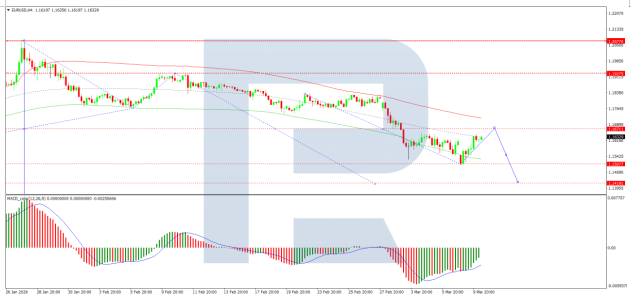
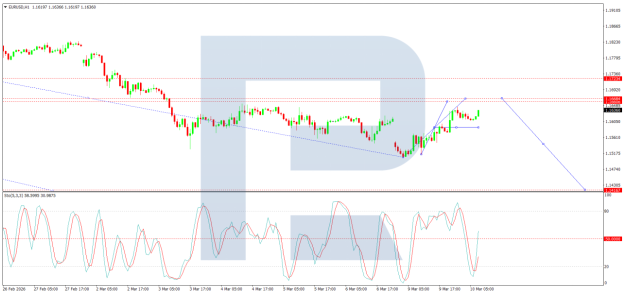
On the H4 chart of EUR/USD, the market is forming a consolidation range around the 1.1588 level. An upward wave is expected, with a continuation towards the 1.1668 level. Thereafter, the beginning of a new downward wave within the broader trend is anticipated, targeting 1.1419 as a local objective. Technically, this scenario is confirmed by the MACD indicator, whose signal line remains below zero and is pointing strictly downwards, reflecting sustained bearish momentum with potential for further downside.

On the H1 chart, the market is forming the structure of the next growth wave towards the 1.1668 level. After reaching this level, a decline to 1.1419 is expected, followed by the initiation of a new growth wave to 1.1650. Technically, this scenario is supported by the Stochastic oscillator, with its signal line below 50 and pointing strictly upwards towards the 80 level.

Conclusion

EUR/USD remains highly sensitive to geopolitical developments, with signals of a potential de-escalation in the Iran conflict temporarily weighing on the dollar’s safe-haven appeal. However, the broader technical picture suggests any upside may be limited, with bearish momentum likely to reassert itself once the current corrective wave completes. Upcoming US inflation data will provide crucial clues about whether recent energy price increases are beginning to filter through to consumer prices, potentially influencing Fed policy expectations.


Disclaimer

Any forecasts contained herein are based on the author’s particular opinion. This analysis may not be treated as trading advice. RoboForex bears no responsibility for trading results based on trading recommendations and reviews contained herein.