Archive for Forex and Currency News – Page 51

Trade Of The Week: EURCAD knocks on major resistance

By ForexTime

  • BoC/ECB combo could rattle EURCAD
  • Both central banks expected to hold rates
  • Keep eye on updated ECB economic projections
  • EURCAD bullish on D1 but RSI overbought
  • Key levels of interest at 1.4650 & 1.4750

A central bank combo featuring the Bank of Canada (BoC) and European Central Bank (ECB) may rock the EURCAD this week.

The minor currency pair has been trapped within a wide range since December 2023, with support at 1.4475 and resistance at 1.4750.

However, a bullish presence can be felt on the daily charts with prices approaching key resistance.

The EURCAD could be on the cusp of a major breakout.

Here are 3 reasons why:

  1. BoC rate decision

The Bank of Canada is expected to leave interest rates unchanged at 5% on Wednesday.

Given how economic growth surprised to the upside in Q4 and inflation fell to its lowest since June 2023 at 2.9%, the BoC may not be in a rush to cut interest rates. Nevertheless, much attention will be directed towards the policy statement for more clues on the central bank’s next policy move. Interestingly, traders are pricing in only a 32% probability of a 25-basis point BoC cut by April with this jumping to 86% by June 2024.

  • If the BoC signals that rates will remain higher for longer until there are more signs of cooling inflation, this may boost the Canadian Dollar.
  • Should the BoC strike a dovish note and hint that a rate cut could be around the corner, the CAD may weaken – pushing the USDCAD higher as a result.


  1. ECB rate decision

Markets widely expect the European Central Bank to leave interest rates unchanged on Thursday.

So much focus will be on the fresh forecasts from the ECB’s staff economists and Lagarde’s press conference for fresh clues on future policy moves. It is worth noting that inflation has edged lower in the euro area while economic data remains soft. Traders are currently pricing in a 21% probability of a 25-basis point ECB cut by April with this rising to 92% by June 2024.

  • Should the ECB sound more hawkish than expected and signals the rates will remain higher for longer, the euro may jump – pushing the EURCAD higher.
  • A dovish sounding ECB that confirms potential rate cuts later this year is likely to weaken the euro, dragging the EURCAD lower.


  1. Technical forces

The EURCAD is respecting a bullish channel on the daily charts with prices trading above the 50, 100 and 200-day SMA. However, the Relative Strength Index (RSI) signals that prices are approaching overbought levels.

  • A solid breakout above 1.4750 may spark a move higher towards 1.4850.
  • Should prices slip below the 100-day SMA at 1.4650, this may open a path towards the 50-day and 200-day SMA at 1.4590.

According to Bloomberg’s FX forecast model, there’s a 77% chance that EURCAD will trade within the 1.45895 – 1.48550 range over the next week.


Forex-Time-LogoArticle by ForexTime

ForexTime Ltd (FXTM) is an award winning international online forex broker regulated by CySEC 185/12 www.forextime.com

Japanese Yen Speculators sharply renew bearish bets for 7th straight week

By InvestMacro

Here are the latest charts and statistics for the Commitment of Traders (COT) data published by the Commodities Futures Trading Commission (CFTC).

The latest COT data is updated through Tuesday February 27th and shows a quick view of how large market participants (for-profit speculators and commercial traders) were positioned in the futures markets. All currency positions are in direct relation to the US dollar where, for example, a bet for the euro is a bet that the euro will rise versus the dollar while a bet against the euro will be a bet that the euro will decline versus the dollar.

Weekly Speculator Changes led by New Zealand Dollar & Australian Dollar

The COT currency market speculator bets were higher this week as six out of the eleven currency markets we cover had higher positioning while the other five markets had lower speculator contracts.

Leading the gains for the currency markets was the New Zealand Dollar (3,431 contracts) with the Australian Dollar (2,699 contracts), the Brazilian Real (1,004 contracts), the US Dollar Index (537 contracts), Bitcoin (131 contracts) and the British Pound (46 contracts) also having positive weeks.

The currencies seeing declines in speculator bets on the week were the Japanese Yen (-11,927 contracts), the EuroFX (-5,162 contracts), the Mexican Peso (-2,181 contracts), the Swiss Franc (-2,058 contracts) and the Canadian Dollar (-515 contracts) also registering lower bets on the week.

Japanese Yen Speculators sharply renew their bearish bets for 7th straight week

Highlighting the COT currency’s data this week is strong renewal in bearish bets for the Japanese yen speculators. Large speculative yen positions dropped for a seventh straight week this week and have now fallen by a total of -76,756 contracts over these past seven weeks.

This renewed bearishness for the yen has pushed the net position (currently at -132,705 contracts) to the most negative position since November 14th of 2017 (when it fell to -135,999 contracts), the lowest level in a span of 328 weeks.

Just a couple of months ago, the yen speculative positioning had been improving and was at it’s best level in 39-weeks (at -55,568 contracts on December 26th). This optimism was based on the hopes that the Bank of Japan (BOJ) would look to end its negative interest rate policy and its asset-buying program. However, the BOJ has maintained its policy so far in 2024 and speculator hopes for yen strength have been postponed.

The yen exchange rate has taken a large hit in the aftermath with the US Dollar’s exchange versus the yen shooting higher and closing in on the recent 2023 highs. The USDJPY currency pair is up by almost 7 percent since the beginning of the year and has risen in seven out of the past nine weeks. This week’s close was right above the 150.00 level is slightly below the November 2023 high of 151.90.

The USDJPY prices above the 150.00 level are very rare in recent years as these levels had not been reached since 1990 — until this threshold was breached in 2022, 2023 and now in 2024. The yen has now lost approximately 45 percent of its value versus the US Dollar since January of 2021 when the USDJPY traded around 103.00.


Currencies Net Speculators Leaderboard

Legend: Weekly Speculators Change | Speculators Current Net Position | Speculators Strength Score compared to last 3-Years (0-100 range)


Strength Scores led by Mexican Peso & British Pound

COT Strength Scores (a normalized measure of Speculator positions over a 3-Year range, from 0 to 100 where above 80 is Extreme-Bullish and below 20 is Extreme-Bearish) showed that the Mexican Peso (96 percent), the British Pound (88 percent) and New Zealand Dollar (82 percent) lead the currency markets this week. The Canadian Dollar (58 percent) and the Brazilian Real (57 percent) come in as the next highest in the weekly strength scores.

On the downside, the Japanese Yen (0 percent) and the Australian Dollar (16 percent) come in at the lowest strength levels currently and are in Extreme-Bearish territory (below 20 percent). The next lowest strength scores are the US Dollar Index (20 percent) and the Swiss Franc (25 percent).

Strength Statistics:
US Dollar Index (20.4 percent) vs US Dollar Index previous week (19.4 percent)
EuroFX (47.1 percent) vs EuroFX previous week (49.3 percent)
British Pound Sterling (87.9 percent) vs British Pound Sterling previous week (87.9 percent)
Japanese Yen (0.0 percent) vs Japanese Yen previous week (8.6 percent)
Swiss Franc (24.7 percent) vs Swiss Franc previous week (30.6 percent)
Canadian Dollar (57.9 percent) vs Canadian Dollar previous week (58.4 percent)
Australian Dollar (16.3 percent) vs Australian Dollar previous week (13.8 percent)
New Zealand Dollar (81.6 percent) vs New Zealand Dollar previous week (72.7 percent)
Mexican Peso (96.0 percent) vs Mexican Peso previous week (97.3 percent)
Brazilian Real (57.2 percent) vs Brazilian Real previous week (55.9 percent)
Bitcoin (36.8 percent) vs Bitcoin previous week (34.8 percent)


New Zealand Dollar & British Pound top the 6-Week Strength Trends

COT Strength Score Trends (or move index, calculates the 6-week changes in strength scores) showed that the New Zealand Dollar (34 percent) and the British Pound (11 percent) lead the past six weeks trends for the currencies. The Canadian Dollar (10 percent) and the Mexican Peso (7 percent) are the next highest positive movers in the latest trends data.

The Japanese Yen (-55 percent) leads the downside trend scores currently with the Australian Dollar (-29 percent), Swiss Franc (-24 percent) and the EuroFX (-18 percent) following next with lower trend scores.

Strength Trend Statistics:
US Dollar Index (1.5 percent) vs US Dollar Index previous week (-2.5 percent)
EuroFX (-17.6 percent) vs EuroFX previous week (-21.7 percent)
British Pound Sterling (10.7 percent) vs British Pound Sterling previous week (17.8 percent)
Japanese Yen (-54.7 percent) vs Japanese Yen previous week (-46.6 percent)
Swiss Franc (-23.5 percent) vs Swiss Franc previous week (-15.8 percent)
Canadian Dollar (10.1 percent) vs Canadian Dollar previous week (5.5 percent)
Australian Dollar (-28.7 percent) vs Australian Dollar previous week (-45.4 percent)
New Zealand Dollar (33.7 percent) vs New Zealand Dollar previous week (21.9 percent)
Mexican Peso (7.4 percent) vs Mexican Peso previous week (4.6 percent)
Brazilian Real (-9.3 percent) vs Brazilian Real previous week (-11.1 percent)
Bitcoin (-14.6 percent) vs Bitcoin previous week (-7.2 percent)


Individual COT Forex Markets:

US Dollar Index Futures:

US Dollar Index Forex Futures COT ChartThe US Dollar Index large speculator standing this week reached a net position of 2,083 contracts in the data reported through Tuesday. This was a weekly boost of 537 contracts from the previous week which had a total of 1,546 net contracts.

This week’s current strength score (the trader positioning range over the past three years, measured from 0 to 100) shows the speculators are currently Bearish with a score of 20.4 percent. The commercials are Bullish-Extreme with a score of 81.6 percent and the small traders (not shown in chart) are Bearish with a score of 25.6 percent.

Price Trend-Following Model: Downtrend

Our weekly trend-following model classifies the current market price position as: Downtrend. The current action for the model is considered to be: Hold – Maintain Short Position.

US DOLLAR INDEX StatisticsSPECULATORSCOMMERCIALSSMALL TRADERS
– Percent of Open Interest Longs:63.718.911.5
– Percent of Open Interest Shorts:56.730.27.3
– Net Position:2,083-3,3231,240
– Gross Longs:18,8275,5993,387
– Gross Shorts:16,7448,9222,147
– Long to Short Ratio:1.1 to 10.6 to 11.6 to 1
NET POSITION TREND:
– Strength Index Score (3 Year Range Pct):20.481.625.6
– Strength Index Reading (3 Year Range):BearishBullish-ExtremeBearish
NET POSITION MOVEMENT INDEX:
– 6-Week Change in Strength Index:1.5-3.714.5


Euro Currency Futures:

Euro Currency Futures COT ChartThe Euro Currency large speculator standing this week reached a net position of 62,854 contracts in the data reported through Tuesday. This was a weekly decrease of -5,162 contracts from the previous week which had a total of 68,016 net contracts.

This week’s current strength score (the trader positioning range over the past three years, measured from 0 to 100) shows the speculators are currently Bearish with a score of 47.1 percent. The commercials are Bullish with a score of 55.6 percent and the small traders (not shown in chart) are Bearish with a score of 22.1 percent.

Price Trend-Following Model: Uptrend

Our weekly trend-following model classifies the current market price position as: Uptrend. The current action for the model is considered to be: Hold – Maintain Long Position.

EURO Currency StatisticsSPECULATORSCOMMERCIALSSMALL TRADERS
– Percent of Open Interest Longs:28.757.511.2
– Percent of Open Interest Shorts:19.970.07.4
– Net Position:62,854-89,90127,047
– Gross Longs:205,234411,11780,334
– Gross Shorts:142,380501,01853,287
– Long to Short Ratio:1.4 to 10.8 to 11.5 to 1
NET POSITION TREND:
– Strength Index Score (3 Year Range Pct):47.155.622.1
– Strength Index Reading (3 Year Range):BearishBullishBearish
NET POSITION MOVEMENT INDEX:
– 6-Week Change in Strength Index:-17.617.4-8.6


British Pound Sterling Futures:

British Pound Sterling Futures COT ChartThe British Pound Sterling large speculator standing this week reached a net position of 46,358 contracts in the data reported through Tuesday. This was a weekly lift of 46 contracts from the previous week which had a total of 46,312 net contracts.

This week’s current strength score (the trader positioning range over the past three years, measured from 0 to 100) shows the speculators are currently Bullish-Extreme with a score of 87.9 percent. The commercials are Bearish-Extreme with a score of 16.8 percent and the small traders (not shown in chart) are Bullish with a score of 68.3 percent.

Price Trend-Following Model: Uptrend

Our weekly trend-following model classifies the current market price position as: Uptrend. The current action for the model is considered to be: Hold – Maintain Long Position.

BRITISH POUND StatisticsSPECULATORSCOMMERCIALSSMALL TRADERS
– Percent of Open Interest Longs:43.635.914.7
– Percent of Open Interest Shorts:21.660.412.2
– Net Position:46,358-51,5905,232
– Gross Longs:91,97075,76231,048
– Gross Shorts:45,612127,35225,816
– Long to Short Ratio:2.0 to 10.6 to 11.2 to 1
NET POSITION TREND:
– Strength Index Score (3 Year Range Pct):87.916.868.3
– Strength Index Reading (3 Year Range):Bullish-ExtremeBearish-ExtremeBullish
NET POSITION MOVEMENT INDEX:
– 6-Week Change in Strength Index:10.7-11.510.2


Japanese Yen Futures:

Japanese Yen Forex Futures COT ChartThe Japanese Yen large speculator standing this week reached a net position of -132,705 contracts in the data reported through Tuesday. This was a weekly decrease of -11,927 contracts from the previous week which had a total of -120,778 net contracts.

This week’s current strength score (the trader positioning range over the past three years, measured from 0 to 100) shows the speculators are currently Bearish-Extreme with a score of 0.0 percent. The commercials are Bullish-Extreme with a score of 98.9 percent and the small traders (not shown in chart) are Bullish-Extreme with a score of 84.9 percent.

Price Trend-Following Model: Weak Uptrend

Our weekly trend-following model classifies the current market price position as: Weak Uptrend. The current action for the model is considered to be: Hold – Maintain Long Position.

JAPANESE YEN StatisticsSPECULATORSCOMMERCIALSSMALL TRADERS
– Percent of Open Interest Longs:16.666.014.0
– Percent of Open Interest Shorts:59.423.413.7
– Net Position:-132,705131,982723
– Gross Longs:51,261204,42543,296
– Gross Shorts:183,96672,44342,573
– Long to Short Ratio:0.3 to 12.8 to 11.0 to 1
NET POSITION TREND:
– Strength Index Score (3 Year Range Pct):0.098.984.9
– Strength Index Reading (3 Year Range):Bearish-ExtremeBullish-ExtremeBullish-Extreme
NET POSITION MOVEMENT INDEX:
– 6-Week Change in Strength Index:-54.757.418.5


Swiss Franc Futures:

Swiss Franc Forex Futures COT ChartThe Swiss Franc large speculator standing this week reached a net position of -11,981 contracts in the data reported through Tuesday. This was a weekly fall of -2,058 contracts from the previous week which had a total of -9,923 net contracts.

This week’s current strength score (the trader positioning range over the past three years, measured from 0 to 100) shows the speculators are currently Bearish with a score of 24.7 percent. The commercials are Bullish with a score of 76.9 percent and the small traders (not shown in chart) are Bearish with a score of 23.9 percent.

Price Trend-Following Model: Weak Uptrend

Our weekly trend-following model classifies the current market price position as: Weak Uptrend. The current action for the model is considered to be: Hold – Maintain Long Position.

SWISS FRANC StatisticsSPECULATORSCOMMERCIALSSMALL TRADERS
– Percent of Open Interest Longs:24.362.412.7
– Percent of Open Interest Shorts:42.726.130.6
– Net Position:-11,98123,709-11,728
– Gross Longs:15,85740,7168,251
– Gross Shorts:27,83817,00719,979
– Long to Short Ratio:0.6 to 12.4 to 10.4 to 1
NET POSITION TREND:
– Strength Index Score (3 Year Range Pct):24.776.923.9
– Strength Index Reading (3 Year Range):BearishBullishBearish
NET POSITION MOVEMENT INDEX:
– 6-Week Change in Strength Index:-23.556.1-69.1


Canadian Dollar Futures:

Canadian Dollar Forex Futures COT ChartThe Canadian Dollar large speculator standing this week reached a net position of -1,378 contracts in the data reported through Tuesday. This was a weekly fall of -515 contracts from the previous week which had a total of -863 net contracts.

This week’s current strength score (the trader positioning range over the past three years, measured from 0 to 100) shows the speculators are currently Bullish with a score of 57.9 percent. The commercials are Bullish with a score of 51.1 percent and the small traders (not shown in chart) are Bearish with a score of 27.1 percent.

Price Trend-Following Model: Weak Uptrend

Our weekly trend-following model classifies the current market price position as: Weak Uptrend. The current action for the model is considered to be: Hold – Maintain Long Position.

CANADIAN DOLLAR StatisticsSPECULATORSCOMMERCIALSSMALL TRADERS
– Percent of Open Interest Longs:24.754.417.9
– Percent of Open Interest Shorts:25.554.716.7
– Net Position:-1,378-5731,951
– Gross Longs:41,15890,54629,731
– Gross Shorts:42,53691,11927,780
– Long to Short Ratio:1.0 to 11.0 to 11.1 to 1
NET POSITION TREND:
– Strength Index Score (3 Year Range Pct):57.951.127.1
– Strength Index Reading (3 Year Range):BullishBullishBearish
NET POSITION MOVEMENT INDEX:
– 6-Week Change in Strength Index:10.1-3.4-14.5


Australian Dollar Futures:

Australian Dollar Forex Futures COT ChartThe Australian Dollar large speculator standing this week reached a net position of -79,176 contracts in the data reported through Tuesday. This was a weekly advance of 2,699 contracts from the previous week which had a total of -81,875 net contracts.

This week’s current strength score (the trader positioning range over the past three years, measured from 0 to 100) shows the speculators are currently Bearish-Extreme with a score of 16.3 percent. The commercials are Bullish-Extreme with a score of 84.5 percent and the small traders (not shown in chart) are Bearish with a score of 27.5 percent.

Price Trend-Following Model: Weak Uptrend

Our weekly trend-following model classifies the current market price position as: Weak Uptrend. The current action for the model is considered to be: Hold – Maintain Long Position.

AUSTRALIAN DOLLAR StatisticsSPECULATORSCOMMERCIALSSMALL TRADERS
– Percent of Open Interest Longs:24.263.19.5
– Percent of Open Interest Shorts:62.819.314.6
– Net Position:-79,17689,777-10,601
– Gross Longs:49,640129,29219,390
– Gross Shorts:128,81639,51529,991
– Long to Short Ratio:0.4 to 13.3 to 10.6 to 1
NET POSITION TREND:
– Strength Index Score (3 Year Range Pct):16.384.527.5
– Strength Index Reading (3 Year Range):Bearish-ExtremeBullish-ExtremeBearish
NET POSITION MOVEMENT INDEX:
– 6-Week Change in Strength Index:-28.738.8-49.0


New Zealand Dollar Futures:

New Zealand Dollar Forex Futures COT ChartThe New Zealand Dollar large speculator standing this week reached a net position of 10,057 contracts in the data reported through Tuesday. This was a weekly gain of 3,431 contracts from the previous week which had a total of 6,626 net contracts.

This week’s current strength score (the trader positioning range over the past three years, measured from 0 to 100) shows the speculators are currently Bullish-Extreme with a score of 81.6 percent. The commercials are Bearish-Extreme with a score of 16.4 percent and the small traders (not shown in chart) are Bullish-Extreme with a score of 84.7 percent.

Price Trend-Following Model: Uptrend

Our weekly trend-following model classifies the current market price position as: Uptrend. The current action for the model is considered to be: Hold – Maintain Long Position.

NEW ZEALAND DOLLAR StatisticsSPECULATORSCOMMERCIALSSMALL TRADERS
– Percent of Open Interest Longs:49.436.110.4
– Percent of Open Interest Shorts:28.761.75.5
– Net Position:10,057-12,4252,368
– Gross Longs:23,94217,4745,020
– Gross Shorts:13,88529,8992,652
– Long to Short Ratio:1.7 to 10.6 to 11.9 to 1
NET POSITION TREND:
– Strength Index Score (3 Year Range Pct):81.616.484.7
– Strength Index Reading (3 Year Range):Bullish-ExtremeBearish-ExtremeBullish-Extreme
NET POSITION MOVEMENT INDEX:
– 6-Week Change in Strength Index:33.7-28.3-6.6


Mexican Peso Futures:

Mexican Peso Futures COT ChartThe Mexican Peso large speculator standing this week reached a net position of 93,814 contracts in the data reported through Tuesday. This was a weekly reduction of -2,181 contracts from the previous week which had a total of 95,995 net contracts.

This week’s current strength score (the trader positioning range over the past three years, measured from 0 to 100) shows the speculators are currently Bullish-Extreme with a score of 96.0 percent. The commercials are Bearish-Extreme with a score of 3.6 percent and the small traders (not shown in chart) are Bearish with a score of 43.6 percent.

Price Trend-Following Model: Uptrend

Our weekly trend-following model classifies the current market price position as: Uptrend. The current action for the model is considered to be: Hold – Maintain Long Position.

MEXICAN PESO StatisticsSPECULATORSCOMMERCIALSSMALL TRADERS
– Percent of Open Interest Longs:57.138.93.1
– Percent of Open Interest Shorts:20.477.61.1
– Net Position:93,814-98,8955,081
– Gross Longs:146,11899,7277,980
– Gross Shorts:52,304198,6222,899
– Long to Short Ratio:2.8 to 10.5 to 12.8 to 1
NET POSITION TREND:
– Strength Index Score (3 Year Range Pct):96.03.643.6
– Strength Index Reading (3 Year Range):Bullish-ExtremeBearish-ExtremeBearish
NET POSITION MOVEMENT INDEX:
– 6-Week Change in Strength Index:7.4-7.42.6


Brazilian Real Futures:

Brazil Real Futures COT ChartThe Brazilian Real large speculator standing this week reached a net position of 17,526 contracts in the data reported through Tuesday. This was a weekly gain of 1,004 contracts from the previous week which had a total of 16,522 net contracts.

This week’s current strength score (the trader positioning range over the past three years, measured from 0 to 100) shows the speculators are currently Bullish with a score of 57.2 percent. The commercials are Bearish with a score of 41.5 percent and the small traders (not shown in chart) are Bullish with a score of 53.7 percent.

Price Trend-Following Model: Weak Uptrend

Our weekly trend-following model classifies the current market price position as: Weak Uptrend. The current action for the model is considered to be: Hold – Maintain Long Position.

BRAZIL REAL StatisticsSPECULATORSCOMMERCIALSSMALL TRADERS
– Percent of Open Interest Longs:47.443.44.6
– Percent of Open Interest Shorts:23.370.31.7
– Net Position:17,526-19,5922,066
– Gross Longs:34,55031,6533,337
– Gross Shorts:17,02451,2451,271
– Long to Short Ratio:2.0 to 10.6 to 12.6 to 1
NET POSITION TREND:
– Strength Index Score (3 Year Range Pct):57.241.553.7
– Strength Index Reading (3 Year Range):BullishBearishBullish
NET POSITION MOVEMENT INDEX:
– 6-Week Change in Strength Index:-9.39.3-2.0


Bitcoin Futures:

Bitcoin Crypto Futures COT ChartThe Bitcoin large speculator standing this week reached a net position of -1,967 contracts in the data reported through Tuesday. This was a weekly gain of 131 contracts from the previous week which had a total of -2,098 net contracts.

This week’s current strength score (the trader positioning range over the past three years, measured from 0 to 100) shows the speculators are currently Bearish with a score of 36.8 percent. The commercials are Bullish-Extreme with a score of 89.1 percent and the small traders (not shown in chart) are Bearish with a score of 35.8 percent.

Price Trend-Following Model: Strong Uptrend

Our weekly trend-following model classifies the current market price position as: Strong Uptrend. The current action for the model is considered to be: Hold – Maintain Long Position.

BITCOIN StatisticsSPECULATORSCOMMERCIALSSMALL TRADERS
– Percent of Open Interest Longs:79.47.06.8
– Percent of Open Interest Shorts:87.23.22.8
– Net Position:-1,9679601,007
– Gross Longs:20,0341,7591,726
– Gross Shorts:22,001799719
– Long to Short Ratio:0.9 to 12.2 to 12.4 to 1
NET POSITION TREND:
– Strength Index Score (3 Year Range Pct):36.889.135.8
– Strength Index Reading (3 Year Range):BearishBullish-ExtremeBearish
NET POSITION MOVEMENT INDEX:
– 6-Week Change in Strength Index:-14.625.1-0.3


Article By InvestMacroReceive our weekly COT Newsletter

*COT Report: The COT data, released weekly to the public each Friday, is updated through the most recent Tuesday (data is 3 days old) and shows a quick view of how large speculators or non-commercials (for-profit traders) were positioned in the futures markets.

The CFTC categorizes trader positions according to commercial hedgers (traders who use futures contracts for hedging as part of the business), non-commercials (large traders who speculate to realize trading profits) and nonreportable traders (usually small traders/speculators) as well as their open interest (contracts open in the market at time of reporting). See CFTC criteria here.

Target Thursdays: USDJPY, EURNZD & Silver reach targets!

By ForexTime 

Check out these potential profits that you may have missed from our Daily Market Analysis.

  • USDJPY bears bag over 100 pips
  • EURNZD rallies almost 400 pips
  • Silver down 2.5% this week


    1) USDJPY bears strike key support level   

  • Where and when was Target Price (TP) published?

As discussed in our Week Ahead article on Friday, February 23rd:

“Should bulls get cold feet below 150.90, this may trigger a selloff towards 149.70 and potentially lower.”


  • What happened since TP was published?

The USDJPY was trapped within a range with bulls lacking the confidence to breach 150.90.

Hawkish remarks by a BoJ official on Thursday morning boosted the Japanese Yen, triggering a selloff as a result.


  • How much in potential profits?

Traders who shorted the USDJPY last Friday from the intraday high would have gained 107 pips!

The negative momentum briefly took prices below the 149.70 support with more volatility expected ahead of the US PCE report this afternoon.


    2) EURNZD charges through all bullish targets

  • Where and when was Target Price (TP) published?

As written in our Trade of The Week article on Monday, February 26th:

“A strong breakout above the 50-day SMA at 1.7600 may encourage an incline towards 1.7700 and the 100-day SMA at 1.7760”.


  • What happened since TP was published?

After kicking off the week on a positive note, the EURNZD exploded higher on Wednesday following the Reserve Bank of New Zealand (RBNZ) dovish pivot.

The currency pair charged through the 50- and 100-day SMA with the momentum taking prices to the 200-day SMA which was 400 pips away from the key 1. 7240 support!


  • How much in potential profits?

Traders who took advantage of the breakout above 1.7600 would have been rewarded 160 pips.


    3) Silver widens gap as negative momentum builds

  • Where and when was Target Price (TP) published?

In our technical article covering Silver on Tuesday, February 27th we discussed the near-term outlook for the precious metal.

“XAGUSD bears may look for a close below the 100 Fibonacci level at $22.614 with a retest and breach of $22.565 as a possible sign of a decline to lows below $22.437“


  • What happened since TP was published?

Silver prices were pressured by a stabilizing dollar and overall bearish price action with the metal shedding roughly 2.5% since the start of the week.


  • How much in potential profits?

177 points for traders who shorted silver at $22.614 and exited at $22.437.

At the time of writing silver remains under pressure and could be exposed to further volatility ahead of the incoming US PCE report.


Forex-Time-LogoArticle by ForexTime

ForexTime Ltd (FXTM) is an award winning international online forex broker regulated by CySEC 185/12 www.forextime.com
EUR/USD Shows Resilience Amid Risk Appetite

By RoboForex Analytical Department

The EUR/USD pair is trading close to 1.0821, demonstrating a strong stance in the current market environment. Investors are leaning towards riskier assets, buoyed by the anticipation of several key macroeconomic releases this week.

A critical focal point for the market will be the upcoming US inflation data, particularly the core Personal Consumption Expenditures (PCE) price index, a preferred measure of inflation by the Federal Reserve. The report, expected to be released on Thursday, is forecasted to show a 0.4% month-on-month increase. This data is crucial as it influences the Fed’s monetary policy decisions.

The prevailing market sentiment suggests that the Federal Reserve may not be poised to embark on a monetary easing cycle just yet, opting instead to maintain the current interest rate levels for a longer duration.

Technical Analysis for EUR/USD

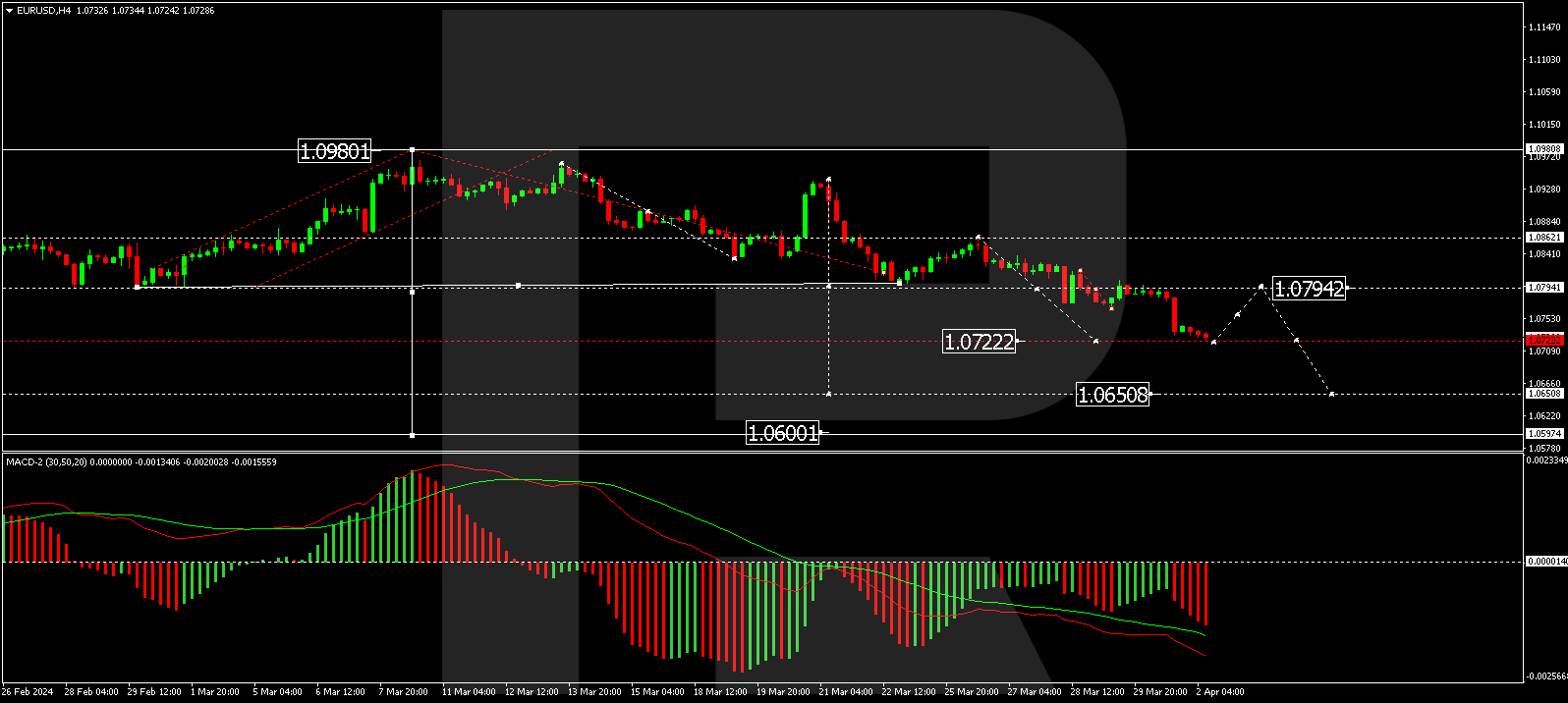
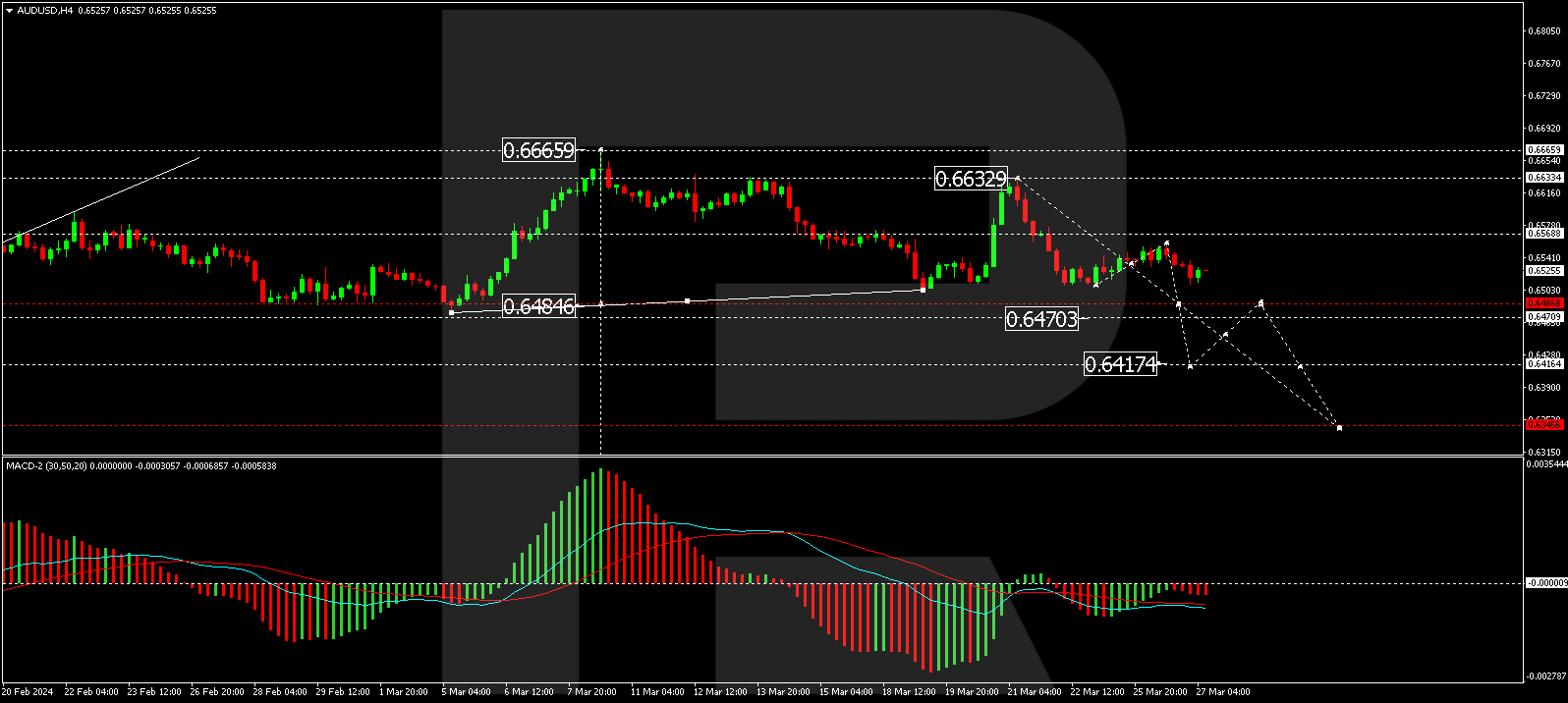
On the H4 chart, EUR/USD has shown a downtrend, reaching a low of 1.0802. It’s anticipated that a corrective movement could occur next. After this correction, the price is expected to decline to 1.0785, where it might form a consolidation range. A break below this range could lead to a further decrease towards the local target of 1.0720. This bearish scenario is supported by the MACD indicator, with its signal line positioned below zero and the histogram indicating a sharp decline, suggesting a potential further decline in the price to new lows.

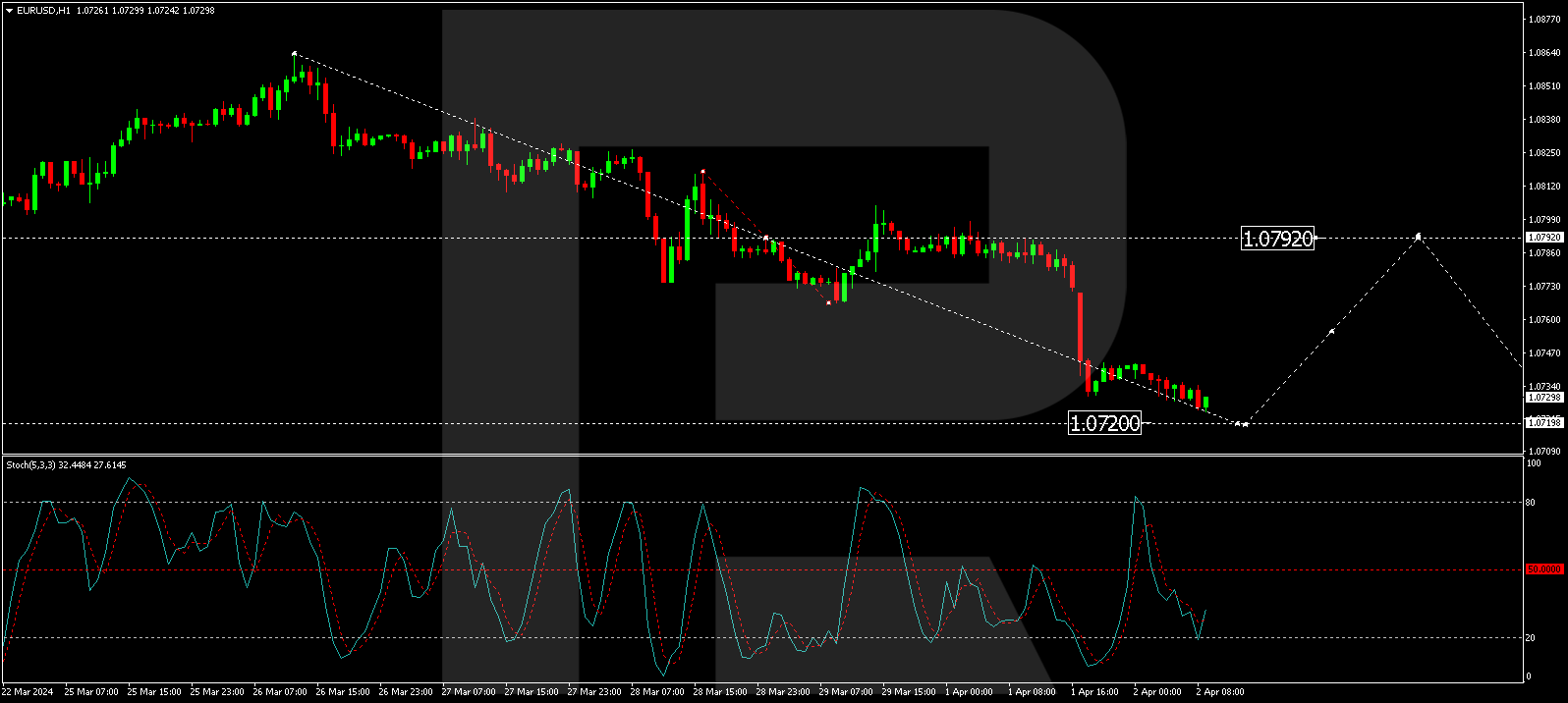
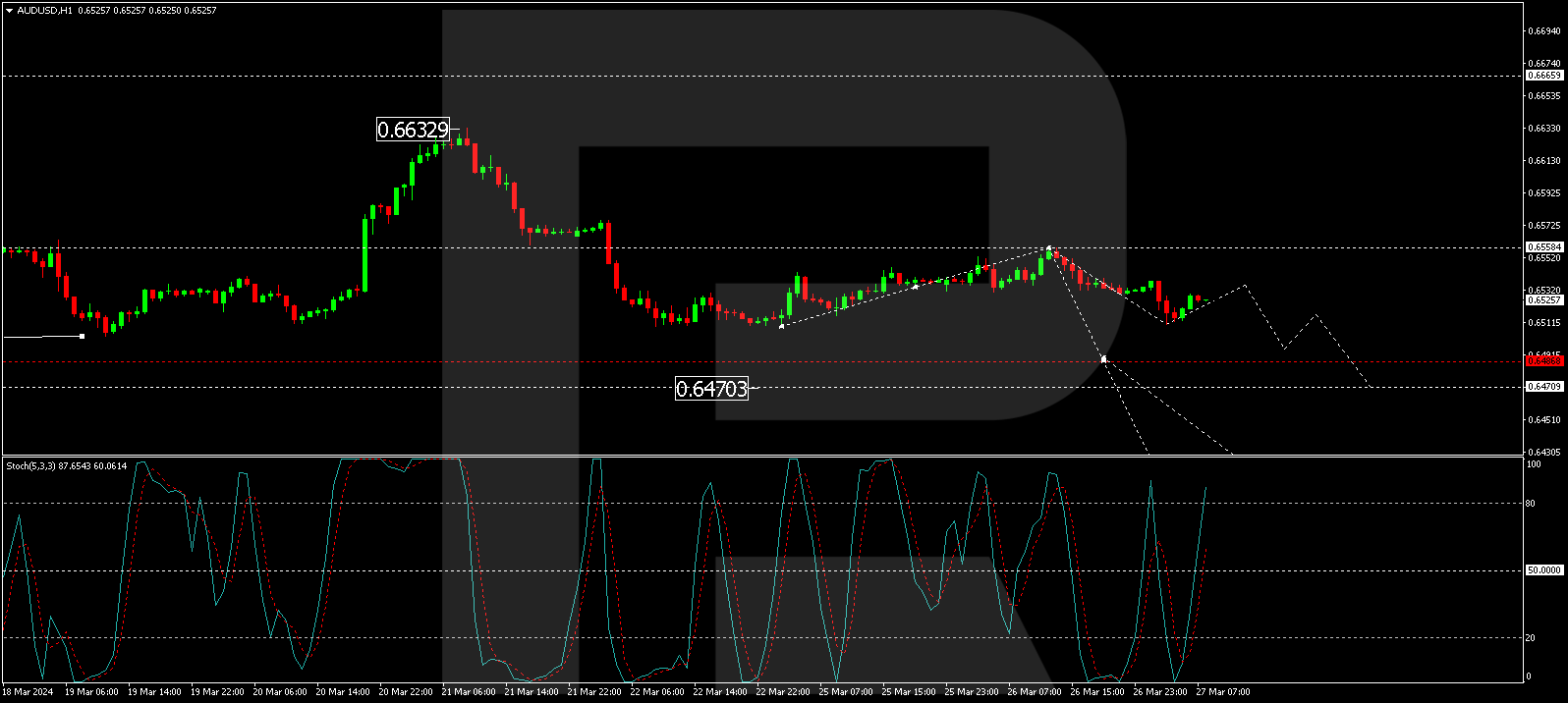
The H1 chart presents a consolidation phase around 1.0824, followed by a potential drop to 1.0784. After reaching this level, the price may rebound to 1.0850 before descending again to 1.0720. This analysis is corroborated by the Stochastic oscillator, with its signal line currently near 80 and anticipated to drop to 20, indicating the likelihood of further price movements within this trend.


Disclaimer: Any forecasts contained herein are based on the author’s particular opinion. This analysis may not be treated as trading advice. RoboForex bears no responsibility for trading results based on trading recommendations and reviews contained herein.

Trade Of The Week: EURNZD to keep above key support?

By ForexTime 

  • EURNZD rebounds from key support
  • RBNZ decision + EU data in focus
  • Trend bearish on D1 but bulls present
  • Key level of interest at 50-day SMA
  • Bloomberg model: 75% chance range 1.7384 – 1.7768

After practically erasing its 2024 gains last week, the EURNZD kicked off Monday with renewed bullish force!

Bulls returned to the scene, pushing prices back above 1.7550 ahead of a potentially volatile week for the minor currency pair.

Note: A minor currency pair does not include the USD but includes at least one of the world’s majors. 

Looking at the past few weeks, the EURNZD has been on a rollercoaster ride thanks to technical and fundamental forces. Although prices have been edging lower on the weekly charts, key support can be found at 1.7420.

To put things into context, the last time the EURNZD secured a weekly close below this level was back in early January 2023.

On the monthly charts, there is a similar picture with prices waiting for a fresh fundamental spark to trigger the next big move.

With all the above said, here are 3 reasons why this could be a wild week for the EURNZD:

  1. RBNZ rate decision

The Reserve Bank of New Zealand is widely expected to keep its key rates unchanged at 5.50% at its February 28th meeting.

Economic growth unexpectedly contracted in Q3 while there have been consistent signs of cooling price pressures. However, traders are still pricing in a 54% probability of one more rate hike by May 2024 with the first rate cut expected by November. Much attention will be directed towards the monetary policy statement which may provide fresh insight into the central bank’s thinking for 2024.

  • Should the RBNZ strike a hawkish note and signal one more hike could still be on the cards, this may strengthen the New Zealand Dollar. 
  • Any hint of doves or signs that the next move could be a cut has the potential to weaken the NZD, pushing the EURNZD higher as a result.
  1. Key EU data

It is a week packed with top-tier data from Europe, but the standouts are the Germany and Eurozone February inflation reports. 

These incoming inflation reports could influence expectations about when the European Central Bank (ECB) will start cutting interest rates in 2024. Traders are currently pricing in a 30% probability of a rate cut by April with a move by the ECB fully priced in by June 2024. 

Given how the inflation data and other data from Europe may influence these bets, it could be reflected in the EURNZD.

  • If overall data from Europe, including sticky inflation numbers, support the argument around the ECB keeping rates higher for longer – this could boost the euro.
  • Signs of cooling price pressures and soft data may fuel speculation around lower rates in Europe, dragging the euro lower. 
  1. Technical forces

The EURNZD remains in a noisy range on the daily charts with support at 1.7420 and resistance around 1.7700. Although the trend since mid-January points south, bulls are lingering in the vicinity.

  • A strong breakout and daily close above the 50-day SMA at 1.7600 may encourage an incline towards 1.7700 and the 100-day SMA at 1.7760. 
  • Should the 50-day SMA prove to be reliable resistance, this may trigger a decline back towards 1.7420 and 1.7384.

According to Bloomberg’s FX forecast model, there’s a 75% chance that EURNZD will trade within the 1.7384 – 1.7768 over the next week.


Forex-Time-LogoArticle by ForexTime

ForexTime Ltd (FXTM) is an award winning international online forex broker regulated by CySEC 185/12 www.forextime.com
Speculators push New Zealand Dollar bets to 51-week high

By InvestMacro

Here are the latest charts and statistics for the Commitment of Traders (COT) data published by the Commodities Futures Trading Commission (CFTC).

The latest COT data is updated through Tuesday February 20th and shows a quick view of how large market participants (for-profit speculators and commercial traders) were positioned in the futures markets. All currency positions are in direct relation to the US dollar where, for example, a bet for the euro is a bet that the euro will rise versus the dollar while a bet against the euro will be a bet that the euro will decline versus the dollar.

Weekly Speculator Changes led by Euro, Canadian Dollar & New Zealand Dollar

The COT currency market speculator bets were overall lower this week as three out of the eleven currency markets we cover had higher positioning while the other eight markets had lower speculator contracts.

Leading the gains for the currency markets was the EuroFX (15,178 contracts) with the Canadian Dollar (4,619 contracts) and the New Zealand Dollar (3,219 contracts) also having positive weeks.

The currencies seeing declines in speculator bets on the week were the Japanese Yen (-9,242 contracts), the Mexican Peso (-4,449 contracts), the British Pound (-4,160 contracts), the Swiss Franc (-3,909 contracts), the Australian Dollar (-2,899 contracts), the Brazilian Real (-2,826 contracts), the US Dollar Index (-456 contracts) and Bitcoin (-177 contracts) also seeing lower bets on the week.

Speculators push New Zealand Dollar bets to highest in just about a year

Highlighting the COT currency’s data this week is the recent increase in the speculator’s positioning for the New Zealand Dollar. The large speculative New Zealand Dollar (NZD) currency positions gained this week by over +3,000 net contracts and have now climbed for six consecutive weeks. The NZD bets have also risen in nine out of the past twelve weeks, going from a total net position of -16,450 contracts on December 5th to a total of +6,626 contracts this week.

This improvement has taken the NZD to it’s most bullish level in the past fifty-one weeks, dating back to February 28th of 2023.

Helping the NZD speculator sentiment is the possibility that the Reserve Bank of New Zealand (RBNZ) may increase the bank’s interest rate at the next policy meeting. The  RBNZ is on schedule to hold its next meeting on February 27th with the official cash rate residing at 5.5 percent. Investment services such as ANZ Bank and TD Bank are anticipating the RBNZ to increase the cash rate by 25 basis points because of high inflation. The New Zealand consumer price index (most recently at 4.7 percent for December) continues to be higher than the bank’s target range of between 1-3 percent annually. However, weak economic growth that unexpectedly contracted by -0.60 percent (annual) in the third quarter of 2023 may help to persuade the RBNZ to hold the rate steady.

The NZD exchange rate versus the US Dollar has been on the rise recently with a weekly close just below 0.6200 level. The NZDUSD hit a multi-year low of 0.5558 in October of 2022 and more recently hit a low of 0.5809 in October of 2023. Since then, the currency pair has been able to rise and break through the 0.6000 major resistance and bounce off the 200-day moving average. The currency has ridden an eight-day win-streak to rise into this week’s close near 0.6200.


Currencies Net Speculators Leaderboard


Legend: Weekly Speculators Change | Speculators Current Net Position | Speculators Strength Score compared to last 3-Years (0-100 range)


Strength Scores led by Mexican Peso & British Pound

COT Strength Scores (a normalized measure of Speculator positions over a 3-Year range, from 0 to 100 where above 80 is Extreme-Bullish and below 20 is Extreme-Bearish) showed that the Mexican Peso (97 percent) and the British Pound (88 percent) lead the currency markets this week. The New Zealand Dollar (73 percent), Canadian Dollar (58 percent) and the Brazilian Real (56 percent) come in as the next highest in the weekly strength scores.

On the downside, the Japanese Yen (6 percent) and the Australian Dollar (14 percent) come in at the lowest strength levels currently and are in Extreme-Bearish territory (below 20 percent). The next lowest strength scores are the US Dollar Index (21 percent) and the Swiss Franc (31 percent).

Strength Statistics:
US Dollar Index (21.1 percent) vs US Dollar Index previous week (22.0 percent)
EuroFX (49.3 percent) vs EuroFX previous week (42.8 percent)
British Pound Sterling (87.9 percent) vs British Pound Sterling previous week (90.8 percent)
Japanese Yen (6.3 percent) vs Japanese Yen previous week (12.5 percent)
Swiss Franc (30.6 percent) vs Swiss Franc previous week (41.8 percent)
Canadian Dollar (58.4 percent) vs Canadian Dollar previous week (54.5 percent)
Australian Dollar (13.8 percent) vs Australian Dollar previous week (16.5 percent)
New Zealand Dollar (72.7 percent) vs New Zealand Dollar previous week (64.3 percent)
Mexican Peso (97.3 percent) vs Mexican Peso previous week (100.0 percent)
Brazilian Real (55.9 percent) vs Brazilian Real previous week (59.6 percent)
Bitcoin (34.8 percent) vs Bitcoin previous week (37.5 percent)


New Zealand Dollar & British Pound top the 6-Week Strength Trends

COT Strength Score Trends (or move index, calculates the 6-week changes in strength scores) showed that the New Zealand Dollar (22 percent) and the British Pound (18 percent) lead the past six weeks trends for the currencies. The Canadian Dollar (5 percent) and the Mexican Peso (5 percent) are the next highest positive movers in the latest trends data.

The Australian Dollar (-45 percent) leads the downside trend scores currently with the Japanese Yen (-43 percent), the EuroFX (-22 percent) and the Swiss Franc (-16 percent) following next with lower trend scores.

Strength Trend Statistics:
US Dollar Index (-2.5 percent) vs US Dollar Index previous week (-0.8 percent)
EuroFX (-21.7 percent) vs EuroFX previous week (-28.4 percent)
British Pound Sterling (17.8 percent) vs British Pound Sterling previous week (24.5 percent)
Japanese Yen (-43.4 percent) vs Japanese Yen previous week (-36.3 percent)
Swiss Franc (-15.8 percent) vs Swiss Franc previous week (-2.3 percent)
Canadian Dollar (5.5 percent) vs Canadian Dollar previous week (13.1 percent)
Australian Dollar (-45.4 percent) vs Australian Dollar previous week (-33.0 percent)
New Zealand Dollar (21.9 percent) vs New Zealand Dollar previous week (10.3 percent)
Mexican Peso (4.6 percent) vs Mexican Peso previous week (6.9 percent)
Brazilian Real (-11.1 percent) vs Brazilian Real previous week (-19.4 percent)
Bitcoin (-7.2 percent) vs Bitcoin previous week (4.5 percent)


Individual COT Forex Markets:

US Dollar Index Futures:

US Dollar Index Forex Futures COT ChartThe US Dollar Index large speculator standing this week totaled a net position of 1,546 contracts in the data reported through Tuesday. This was a weekly decrease of -456 contracts from the previous week which had a total of 2,002 net contracts.

This week’s current strength score (the trader positioning range over the past three years, measured from 0 to 100) shows the speculators are currently Bearish with a score of 21.1 percent. The commercials are Bullish with a score of 78.6 percent and the small traders (not shown in chart) are Bearish with a score of 29.6 percent.

Price Trend-Following Model: Downtrend

Our weekly trend-following model classifies the current market price position as: Downtrend. The current action for the model is considered to be: Hold – Maintain Short Position.

US DOLLAR INDEX StatisticsSPECULATORSCOMMERCIALSSMALL TRADERS
– Percent of Open Interest Longs:62.518.813.1
– Percent of Open Interest Shorts:57.429.27.8
– Net Position:1,546-3,1261,580
– Gross Longs:18,7325,6253,916
– Gross Shorts:17,1868,7512,336
– Long to Short Ratio:1.1 to 10.6 to 11.7 to 1
NET POSITION TREND:
– Strength Index Score (3 Year Range Pct):21.178.629.6
– Strength Index Reading (3 Year Range):BearishBullishBearish
NET POSITION MOVEMENT INDEX:
– 6-Week Change in Strength Index:-2.5-1.626.5


Euro Currency Futures:

Euro Currency Futures COT ChartThe Euro Currency large speculator standing this week totaled a net position of 68,016 contracts in the data reported through Tuesday. This was a weekly rise of 15,178 contracts from the previous week which had a total of 52,838 net contracts.

This week’s current strength score (the trader positioning range over the past three years, measured from 0 to 100) shows the speculators are currently Bearish with a score of 49.3 percent. The commercials are Bullish with a score of 55.7 percent and the small traders (not shown in chart) are Bearish-Extreme with a score of 13.2 percent.

Price Trend-Following Model: Uptrend

Our weekly trend-following model classifies the current market price position as: Uptrend. The current action for the model is considered to be: Hold – Maintain Long Position.

EURO Currency StatisticsSPECULATORSCOMMERCIALSSMALL TRADERS
– Percent of Open Interest Longs:29.557.610.8
– Percent of Open Interest Shorts:20.170.07.8
– Net Position:68,016-89,45121,435
– Gross Longs:213,194416,18377,957
– Gross Shorts:145,178505,63456,522
– Long to Short Ratio:1.5 to 10.8 to 11.4 to 1
NET POSITION TREND:
– Strength Index Score (3 Year Range Pct):49.355.713.2
– Strength Index Reading (3 Year Range):BearishBullishBearish-Extreme
NET POSITION MOVEMENT INDEX:
– 6-Week Change in Strength Index:-21.725.2-26.4


British Pound Sterling Futures:

British Pound Sterling Futures COT ChartThe British Pound Sterling large speculator standing this week totaled a net position of 46,312 contracts in the data reported through Tuesday. This was a weekly reduction of -4,160 contracts from the previous week which had a total of 50,472 net contracts.

This week’s current strength score (the trader positioning range over the past three years, measured from 0 to 100) shows the speculators are currently Bullish-Extreme with a score of 87.9 percent. The commercials are Bearish-Extreme with a score of 18.2 percent and the small traders (not shown in chart) are Bullish with a score of 63.3 percent.

Price Trend-Following Model: Uptrend

Our weekly trend-following model classifies the current market price position as: Uptrend. The current action for the model is considered to be: Hold – Maintain Long Position.

BRITISH POUND StatisticsSPECULATORSCOMMERCIALSSMALL TRADERS
– Percent of Open Interest Longs:44.036.615.1
– Percent of Open Interest Shorts:20.761.213.7
– Net Position:46,312-49,0062,694
– Gross Longs:87,60272,90130,014
– Gross Shorts:41,290121,90727,320
– Long to Short Ratio:2.1 to 10.6 to 11.1 to 1
NET POSITION TREND:
– Strength Index Score (3 Year Range Pct):87.918.263.3
– Strength Index Reading (3 Year Range):Bullish-ExtremeBearish-ExtremeBullish
NET POSITION MOVEMENT INDEX:
– 6-Week Change in Strength Index:17.8-14.61.1


Japanese Yen Futures:

Japanese Yen Forex Futures COT ChartThe Japanese Yen large speculator standing this week totaled a net position of -120,778 contracts in the data reported through Tuesday. This was a weekly decrease of -9,242 contracts from the previous week which had a total of -111,536 net contracts.

This week’s current strength score (the trader positioning range over the past three years, measured from 0 to 100) shows the speculators are currently Bearish-Extreme with a score of 6.3 percent. The commercials are Bullish-Extreme with a score of 94.9 percent and the small traders (not shown in chart) are Bullish with a score of 66.7 percent.

Price Trend-Following Model: Weak Uptrend

Our weekly trend-following model classifies the current market price position as: Weak Uptrend. The current action for the model is considered to be: Hold – Maintain Long Position.

JAPANESE YEN StatisticsSPECULATORSCOMMERCIALSSMALL TRADERS
– Percent of Open Interest Longs:17.665.213.6
– Percent of Open Interest Shorts:57.224.015.3
– Net Position:-120,778125,854-5,076
– Gross Longs:53,862199,06141,618
– Gross Shorts:174,64073,20746,694
– Long to Short Ratio:0.3 to 12.7 to 10.9 to 1
NET POSITION TREND:
– Strength Index Score (3 Year Range Pct):6.394.966.7
– Strength Index Reading (3 Year Range):Bearish-ExtremeBullish-ExtremeBullish
NET POSITION MOVEMENT INDEX:
– 6-Week Change in Strength Index:-43.449.6-21.5


Swiss Franc Futures:

Swiss Franc Forex Futures COT ChartThe Swiss Franc large speculator standing this week totaled a net position of -9,923 contracts in the data reported through Tuesday. This was a weekly reduction of -3,909 contracts from the previous week which had a total of -6,014 net contracts.

This week’s current strength score (the trader positioning range over the past three years, measured from 0 to 100) shows the speculators are currently Bearish with a score of 30.6 percent. The commercials are Bullish with a score of 66.8 percent and the small traders (not shown in chart) are Bearish with a score of 33.8 percent.

Price Trend-Following Model: Weak Uptrend

Our weekly trend-following model classifies the current market price position as: Weak Uptrend. The current action for the model is considered to be: Hold – Maintain Long Position.

SWISS FRANC StatisticsSPECULATORSCOMMERCIALSSMALL TRADERS
– Percent of Open Interest Longs:21.762.415.7
– Percent of Open Interest Shorts:38.229.931.6
– Net Position:-9,92319,476-9,553
– Gross Longs:13,03637,4559,413
– Gross Shorts:22,95917,97918,966
– Long to Short Ratio:0.6 to 12.1 to 10.5 to 1
NET POSITION TREND:
– Strength Index Score (3 Year Range Pct):30.666.833.8
– Strength Index Reading (3 Year Range):BearishBullishBearish
NET POSITION MOVEMENT INDEX:
– 6-Week Change in Strength Index:-15.840.6-51.9


Canadian Dollar Futures:

Canadian Dollar Forex Futures COT ChartThe Canadian Dollar large speculator standing this week totaled a net position of -863 contracts in the data reported through Tuesday. This was a weekly boost of 4,619 contracts from the previous week which had a total of -5,482 net contracts.

This week’s current strength score (the trader positioning range over the past three years, measured from 0 to 100) shows the speculators are currently Bullish with a score of 58.4 percent. The commercials are Bullish with a score of 52.3 percent and the small traders (not shown in chart) are Bearish with a score of 21.7 percent.

Price Trend-Following Model: Uptrend

Our weekly trend-following model classifies the current market price position as: Uptrend. The current action for the model is considered to be: Hold – Maintain Long Position.

CANADIAN DOLLAR StatisticsSPECULATORSCOMMERCIALSSMALL TRADERS
– Percent of Open Interest Longs:23.555.918.5
– Percent of Open Interest Shorts:24.155.118.8
– Net Position:-8631,345-482
– Gross Longs:37,10888,20529,192
– Gross Shorts:37,97186,86029,674
– Long to Short Ratio:1.0 to 11.0 to 11.0 to 1
NET POSITION TREND:
– Strength Index Score (3 Year Range Pct):58.452.321.7
– Strength Index Reading (3 Year Range):BullishBullishBearish
NET POSITION MOVEMENT INDEX:
– 6-Week Change in Strength Index:5.52.0-21.4


Australian Dollar Futures:

Australian Dollar Forex Futures COT ChartThe Australian Dollar large speculator standing this week totaled a net position of -81,875 contracts in the data reported through Tuesday. This was a weekly fall of -2,899 contracts from the previous week which had a total of -78,976 net contracts.

This week’s current strength score (the trader positioning range over the past three years, measured from 0 to 100) shows the speculators are currently Bearish-Extreme with a score of 13.8 percent. The commercials are Bullish-Extreme with a score of 86.9 percent and the small traders (not shown in chart) are Bearish with a score of 27.2 percent.

Price Trend-Following Model: Uptrend

Our weekly trend-following model classifies the current market price position as: Uptrend. The current action for the model is considered to be: Hold – Maintain Long Position.

AUSTRALIAN DOLLAR StatisticsSPECULATORSCOMMERCIALSSMALL TRADERS
– Percent of Open Interest Longs:23.964.09.4
– Percent of Open Interest Shorts:63.719.014.6
– Net Position:-81,87592,611-10,736
– Gross Longs:49,100131,69419,375
– Gross Shorts:130,97539,08330,111
– Long to Short Ratio:0.4 to 13.4 to 10.6 to 1
NET POSITION TREND:
– Strength Index Score (3 Year Range Pct):13.886.927.2
– Strength Index Reading (3 Year Range):Bearish-ExtremeBullish-ExtremeBearish
NET POSITION MOVEMENT INDEX:
– 6-Week Change in Strength Index:-45.453.9-55.3


New Zealand Dollar Futures:

New Zealand Dollar Forex Futures COT ChartThe New Zealand Dollar large speculator standing this week totaled a net position of 6,626 contracts in the data reported through Tuesday. This was a weekly rise of 3,219 contracts from the previous week which had a total of 3,407 net contracts.

This week’s current strength score (the trader positioning range over the past three years, measured from 0 to 100) shows the speculators are currently Bullish with a score of 72.7 percent. The commercials are Bearish with a score of 26.9 percent and the small traders (not shown in chart) are Bullish with a score of 69.3 percent.

Price Trend-Following Model: Uptrend

Our weekly trend-following model classifies the current market price position as: Uptrend. The current action for the model is considered to be: Hold – Maintain Long Position.

NEW ZEALAND DOLLAR StatisticsSPECULATORSCOMMERCIALSSMALL TRADERS
– Percent of Open Interest Longs:48.235.011.2
– Percent of Open Interest Shorts:32.154.18.3
– Net Position:6,626-7,7991,173
– Gross Longs:19,75814,3414,580
– Gross Shorts:13,13222,1403,407
– Long to Short Ratio:1.5 to 10.6 to 11.3 to 1
NET POSITION TREND:
– Strength Index Score (3 Year Range Pct):72.726.969.3
– Strength Index Reading (3 Year Range):BullishBearishBullish
NET POSITION MOVEMENT INDEX:
– 6-Week Change in Strength Index:21.9-17.3-10.3


Mexican Peso Futures:

Mexican Peso Futures COT ChartThe Mexican Peso large speculator standing this week totaled a net position of 95,995 contracts in the data reported through Tuesday. This was a weekly decline of -4,449 contracts from the previous week which had a total of 100,444 net contracts.

This week’s current strength score (the trader positioning range over the past three years, measured from 0 to 100) shows the speculators are currently Bullish-Extreme with a score of 97.3 percent. The commercials are Bearish-Extreme with a score of 2.2 percent and the small traders (not shown in chart) are Bearish with a score of 45.2 percent.

Price Trend-Following Model: Uptrend

Our weekly trend-following model classifies the current market price position as: Uptrend. The current action for the model is considered to be: Hold – Maintain Long Position.

MEXICAN PESO StatisticsSPECULATORSCOMMERCIALSSMALL TRADERS
– Percent of Open Interest Longs:55.640.13.2
– Percent of Open Interest Shorts:17.979.91.1
– Net Position:95,995-101,3305,335
– Gross Longs:141,528102,0968,061
– Gross Shorts:45,533203,4262,726
– Long to Short Ratio:3.1 to 10.5 to 13.0 to 1
NET POSITION TREND:
– Strength Index Score (3 Year Range Pct):97.32.245.2
– Strength Index Reading (3 Year Range):Bullish-ExtremeBearish-ExtremeBearish
NET POSITION MOVEMENT INDEX:
– 6-Week Change in Strength Index:4.6-4.3-1.5


Brazilian Real Futures:

Brazil Real Futures COT ChartThe Brazilian Real large speculator standing this week totaled a net position of 16,522 contracts in the data reported through Tuesday. This was a weekly fall of -2,826 contracts from the previous week which had a total of 19,348 net contracts.

This week’s current strength score (the trader positioning range over the past three years, measured from 0 to 100) shows the speculators are currently Bullish with a score of 55.9 percent. The commercials are Bearish with a score of 43.0 percent and the small traders (not shown in chart) are Bullish with a score of 52.4 percent.

Price Trend-Following Model: Weak Uptrend

Our weekly trend-following model classifies the current market price position as: Weak Uptrend. The current action for the model is considered to be: Hold – Maintain Long Position.

BRAZIL REAL StatisticsSPECULATORSCOMMERCIALSSMALL TRADERS
– Percent of Open Interest Longs:55.738.85.2
– Percent of Open Interest Shorts:27.370.51.9
– Net Position:16,522-18,4531,931
– Gross Longs:32,45722,6193,031
– Gross Shorts:15,93541,0721,100
– Long to Short Ratio:2.0 to 10.6 to 12.8 to 1
NET POSITION TREND:
– Strength Index Score (3 Year Range Pct):55.943.052.4
– Strength Index Reading (3 Year Range):BullishBearishBullish
NET POSITION MOVEMENT INDEX:
– 6-Week Change in Strength Index:-11.111.7-6.6


Bitcoin Futures:

Bitcoin Crypto Futures COT ChartThe Bitcoin large speculator standing this week totaled a net position of -2,098 contracts in the data reported through Tuesday. This was a weekly decline of -177 contracts from the previous week which had a total of -1,921 net contracts.

This week’s current strength score (the trader positioning range over the past three years, measured from 0 to 100) shows the speculators are currently Bearish with a score of 34.8 percent. The commercials are Bullish-Extreme with a score of 95.3 percent and the small traders (not shown in chart) are Bearish with a score of 33.3 percent.

Price Trend-Following Model: Strong Uptrend

Our weekly trend-following model classifies the current market price position as: Strong Uptrend. The current action for the model is considered to be: Hold – Maintain Long Position.

BITCOIN StatisticsSPECULATORSCOMMERCIALSSMALL TRADERS
– Percent of Open Interest Longs:76.97.36.8
– Percent of Open Interest Shorts:85.12.63.2
– Net Position:-2,0981,202896
– Gross Longs:19,6241,8621,724
– Gross Shorts:21,722660828
– Long to Short Ratio:0.9 to 12.8 to 12.1 to 1
NET POSITION TREND:
– Strength Index Score (3 Year Range Pct):34.895.333.3
– Strength Index Reading (3 Year Range):BearishBullish-ExtremeBearish
NET POSITION MOVEMENT INDEX:
– 6-Week Change in Strength Index:-7.210.81.3


Article By InvestMacroReceive our weekly COT Newsletter

*COT Report: The COT data, released weekly to the public each Friday, is updated through the most recent Tuesday (data is 3 days old) and shows a quick view of how large speculators or non-commercials (for-profit traders) were positioned in the futures markets.

The CFTC categorizes trader positions according to commercial hedgers (traders who use futures contracts for hedging as part of the business), non-commercials (large traders who speculate to realize trading profits) and nonreportable traders (usually small traders/speculators) as well as their open interest (contracts open in the market at time of reporting). See CFTC criteria here.

Week Ahead: USDJPY timebomb triggered above 150?

By ForexTime 

  • JPY worst performing G10 YTD
  • Japan CPI & US PCE in focus
  • Yen back on intervention watch
  • USDJPY bullish but RSI overbought
  • Key level of interest at 150.90

Our focus lands on the Japanese Yen which has been the worst-performing G10 currency against the US Dollar year-to-date.

The final trading week of February promises to be eventful due to key economic data, speeches by numerous Fed officials, and threat of a partial US government shutdown:

Tuesday, 27th February

  • JPY: Japan CPI

Wednesday, 28th February

  • EUR: Eurozone economic confidence, consumer confidence
  • NZD: New Zealand rate decision
  • USD: Q4 GDP (2nd estimate), Atlanta Fed President Raphael Bostic, Boston Fed President Susan Collins, New York Fed President John Williams speech

Thursday, 29th February

  • AUD: Australia retail sales
  • CAD: Canada GDP
  • EUR: Germany CPI, unemployment
  • JPY: Japan industrial production, retail sales
  • USD: US January PCE report, Chicago Fed President Austan Goolsbee, Atlanta Fed President Raphael Bostic, Cleveland Fed President Loretta Mester speech

Friday, 1st March

  • CNH: China official PMI, Caixin manufacturing PMI
  • EUR: Eurozone CPI, unemployment, PMI, Germany Manufacturing PMI
  • GBP: UK S&P Global/CPIS Manufacturing PMI
  • USD: US ISM manufacturing, University of Michigan consumer sentiment, Fed speeches
  • Deadline for avoiding partial US government shutdown

Yen weakness has been a major theme this quarter thanks to a dovish BoJ, with the recession in Japan fuelling uncertainty about likely timings for a policy pivot.

Note: Yen down more than 6% versus the USD year-to-date.

The Yen’s recent depreciation below 150 per dollar has sparked warnings from Japanese officials, ultimately fuelling market fears of possible intervention.

With the USDJPY venturing closer to multi-year highs just below 152, a major move could be brewing.

With all the above said, here are 3 factors that could influence the USDJPY:

  1. Japan inflation data

Japan’s national consumer price index (CPI) is forecast to slow to 1.9% year on year in January from the 2.6% in January. The core measure which excludes fresh food is expected to cool 1.9% year on year, down from 2.3% in December.

Should expectations match reality, this will be the first time the core CPI has dipped below the BoJ’s 2% target since March 2022.

Traders are currently pricing in only a 29% probability that the BoJ will scrap negative rates by March, with the odds jumping to 78% by April.

  • A softer than expected inflation report may support the argument around the economy being too weak for rate hikes, weakening the Yen as a result.
  • Should the inflation report print above expectations, this could boost the Yen as expectations mount over the BoJ ending negative rates.
  1. US January PCE report

The Fed’s preferred inflation gauge – the Core Personal Consumption Expenditure is likely to influence rate cut expectations.

Traders are currently pricing in 79% probability of Fed rate cut by June, according to Fed fund futures.

The PCE core deflator is forecast to rise 0.4% month-over-month, from 0.2% in December while cooling 2.8% in January, down from 2.9% in the previous month.

  • Ultimately, more signs of cooling price pressures may boost bets around the Fed cutting interest rates down the road – hitting the dollar as a result.
  • If the PCE report prints above market forecasts, this could further dampen hopes for early rate cuts – pushing the USDJPY higher as a result.

Note: Looking beyond the PCE report and other key US data, it may be wise to keep an eye on the looming partial government shutdown.

The United States is facing another partial government shutdown deadline set to expire on 1st March. Should this become reality, it could impact the dollar and risk sentiment – reflecting on the USDJPY.

  1. Technical forces

The USDJPY is firmly bullish on the daily timeframe as there have been consistently higher highs and higher lows. However, the Relative Strength Index (RSI) is approaching 70 – signalling that prices are overbought.

  • A solid weekly close above 150.90 may encourage an incline towards the 151.90 level.
  • Should bulls get cold feet below 150.90, this may trigger a selloff towards 149.70 and potentially lower.

Bloomberg’s FX model points to a 78% chance that USDJPY will trade within the 149.18 – 151.95 range over the next one-week period.


Forex-Time-LogoArticle by ForexTime

ForexTime Ltd (FXTM) is an award winning international online forex broker regulated by CySEC 185/12 www.forextime.com
Trade Of The Week: EURUSD waits for directional spark

By ForexTime 

  • EURUSD enters standby mode
  • EU data + ECB minutes in focus
  • USD volatility could trigger breakout
  • Key levels of interest at 1.0800 & 1.0700

After bouncing within a 100-pip range since early February, the world’s most-traded FX pair may be set for a big move.

The trend is bearish on the H4/daily timeframe but bulls have put up a good fight with support at 1.0700 and resistance at 1.0800.

It is a similar story on the weekly charts with the bullish pin bar signalling a potential reversal if prices push back above the 50-week SMA.

Nevertheless, the recent price action suggests that the EURUSD needs fresh motivation to trigger a potential breakout.

Here are 3 potential catalysts to keep an eye on:

  1. EU data + ECB minutes

The euro could turn volatile from mid-week due to key EU data and the ECB meeting minutes.

Key reports in the form of the Eurozone consumer confidence and latest inflation readings among others may provide fresh insights on the future path of ECB interest rates. It will be wise to keep an eye on data from Germany, the largest economy in Europe.

Regarding the ECB minutes, investors are likely to closely scrutinise them for any clues on the timings of rate cuts.

Traders are currently pricing in a 45% probability of a 25-basis point rate cut by April, with a cut fully priced in by June.

These odds are likely to be influenced by the incoming data from Europe this week.

  • The EURUSD may push higher if overall EU economic data and minutes signal that the ECB may need more time before cutting interests.
  • Should economic data disappoint, inflation cools and the minutes sound dovish – the EURUSD may fall.
  1. Fed minutes + speeches

The Fed minutes and speeches by Federal Reserve officials may inject renewed life into the dollar.

Although much has changed since the January meeting, it could provide investors with some insight into why Fed officials held off on cutting rates in March despite signs of cooling inflation.  Speeches by Fed officials will be closely scrutinized by market players for fresh clues on the timings of Fed interest rate cuts.

  • Should the dollar end up weakening this week, the EURUSD is likely to push higher.
  • If the dollar strengthens as data and Fed officials further dampen hopes of early cuts, the EURUSD has the potential to tumble.
  1. Technical forces

The EURUSD is bearish on the daily timeframe as there have been consistently lower lows and lower highs. Prices are trading below the 50, 100 and 200-day SMA while the MACD trades below zero.

  • A bearish daily close below 1.0800 may trigger a selloff back towards the 1.0700 support.
  • A strong breakout and daily close above 1.0800 may encourage a move towards the 200-day SMA at 1.0825 and resistance at 1.0869 just below the 50-day SMA.

According to Bloomberg’s FX forecast model, there’s a 78% chance that EURUSD trades within the 1.0687 – 1.0869 over the next week.


Forex-Time-LogoArticle by ForexTime

ForexTime Ltd (FXTM) is an award winning international online forex broker regulated by CySEC 185/12 www.forextime.com

FX Speculators push British Pound bullish bets to 25-week high

By InvestMacro

Here are the latest charts and statistics for the Commitment of Traders (COT) data published by the Commodities Futures Trading Commission (CFTC).

The latest COT data is updated through Tuesday February 13th and shows a quick view of how large market participants (for-profit speculators and commercial traders) were positioned in the futures markets. All currency positions are in direct relation to the US dollar where, for example, a bet for the euro is a bet that the euro will rise versus the dollar while a bet against the euro will be a bet that the euro will decline versus the dollar.

Weekly Speculator Changes led by British Pound Sterling & Mexican Peso

The COT currency market speculator bets were slightly lower this week as five out of the eleven currency markets we cover had higher positioning while the other six markets had lower speculator contracts.

Leading the gains for the currency markets was the British Pound (15,997 contracts) with the Mexican Peso (13,615 contracts), the New Zealand Dollar (2,577 contracts), Canadian Dollar (2,254 contracts) and the US Dollar Index (463 contracts) also having positive weeks.

The currencies seeing declines in speculator bets on the week were the Japanese Yen (-27,306 contracts), the EuroFX (-9,315 contracts), the Australian Dollar (-7,163 contracts), the Swiss Franc (-447 contracts), the Brazilian Real (-314 contracts) and Bitcoin (-398 contracts) also registering lower bets on the week.

FX Speculators push British Pound bullish bets to 25-week high

Highlighting the COT currency’s data is the continued rise in the speculator’s positioning of the British Pound Sterling.

Large speculative Sterling positions rose this week by almost +16,000 contracts and have gained in seven consecutive weeks. The Sterling speculative level has added a total of +36,380 contracts to the net position over these last seven weeks and has brought the net level from a total of +14,092 contracts on December 26th to this week’s currently standing of +50,472 contracts. This marks the most bullish position for the GBP speculators since August 22nd, a span of twenty-five weeks.

The Pound Sterling exchange rate (GBPUSD currency pair) against the US Dollar has been oscillating around the 1.2500 exchange level over the past week despite recent downbeat economic news. The UK economy has recently dipped into a technical recession with declining GDP in both the 3rd and 4th quarters of 2023. However, with inflation still high, traders and market watchers still see the Bank of England holding their interest rates at high levels which could provide support for the UK currency.

The Pound exchange continues to be in a weekly uptrend since a recent dive in October when prices were falling and dipped as low as 1.2050. The currency has also come down from the most recent high levels of the current uptrend (topping out around 1.2800) and has now settled in right above the 200-day moving average with this week’s close trading at 1.2609.


Speculators Leaderboard

Legend: Weekly Speculators Change | Speculators Current Net Position | Speculators Strength Score compared to last 3-Years (0-100 range)


Strength Scores led by Mexican Peso & British Pound

COT Strength Scores (a normalized measure of Speculator positions over a 3-Year range, from 0 to 100 where above 80 is Extreme-Bullish and below 20 is Extreme-Bearish) showed that the Mexican Peso (100 percent) and the British Pound (91 percent) lead the currency markets this week. The New Zealand Dollar (64 percent), Brazilian Real (60 percent) and the Canadian Dollar (54 percent) come in as the next highest in the weekly strength scores.

On the downside, the Japanese Yen (12 percent) and the Australian Dollar (16 percent) come in at the lowest strength levels currently and are in Extreme-Bearish territory (below 20 percent). The next lowest strength scores are the US Dollar Index (27 percent) and Bitcoin (37 percent).

Strength Statistics:
US Dollar Index (26.9 percent) vs US Dollar Index previous week (26.1 percent)
EuroFX (42.8 percent) vs EuroFX previous week (46.8 percent)
British Pound Sterling (90.8 percent) vs British Pound Sterling previous week (79.7 percent)
Japanese Yen (11.8 percent) vs Japanese Yen previous week (29.0 percent)
Swiss Franc (41.8 percent) vs Swiss Franc previous week (43.0 percent)
Canadian Dollar (54.5 percent) vs Canadian Dollar previous week (52.6 percent)
Australian Dollar (16.5 percent) vs Australian Dollar previous week (23.0 percent)
New Zealand Dollar (64.3 percent) vs New Zealand Dollar previous week (57.6 percent)
Mexican Peso (100.0 percent) vs Mexican Peso previous week (91.7 percent)
Brazilian Real (59.6 percent) vs Brazilian Real previous week (60.0 percent)
Bitcoin (37.5 percent) vs Bitcoin previous week (43.5 percent)


British Pound & Canadian Dollar top the 6-Week Strength Trends

COT Strength Score Trends (or move index, calculates the 6-week changes in strength scores) showed that the British Pound (24 percent) and the Canadian Dollar (13 percent) lead the past six weeks trends for the currencies. The New Zealand Dollar (10 percent), the Mexican Peso (7 percent) and the Bitcoin (5 percent) are the next highest positive movers in the latest trends data.

The Japanese Yen (-34 percent) leads the downside trend scores currently with the Australian Dollar (-33 percent), the EuroFX (-28 percent) and the Brazilian Real (-19 percent) following next with lower trend scores.

Strength Trend Statistics:
US Dollar Index (-0.7 percent) vs US Dollar Index previous week (-2.7 percent)
EuroFX (-28.4 percent) vs EuroFX previous week (-23.5 percent)
British Pound Sterling (24.5 percent) vs British Pound Sterling previous week (14.1 percent)
Japanese Yen (-34.2 percent) vs Japanese Yen previous week (-18.0 percent)
Swiss Franc (-2.3 percent) vs Swiss Franc previous week (-6.1 percent)
Canadian Dollar (13.1 percent) vs Canadian Dollar previous week (22.6 percent)
Australian Dollar (-33.0 percent) vs Australian Dollar previous week (-18.8 percent)
New Zealand Dollar (10.3 percent) vs New Zealand Dollar previous week (11.7 percent)
Mexican Peso (6.9 percent) vs Mexican Peso previous week (-0.6 percent)
Brazilian Real (-19.4 percent) vs Brazilian Real previous week (-31.9 percent)
Bitcoin (4.5 percent) vs Bitcoin previous week (11.7 percent)


Individual COT Forex Markets:

US Dollar Index Futures:

US Dollar Index Forex Futures COT ChartThe US Dollar Index large speculator standing this week totaled a net position of 2,002 contracts in the data reported through Tuesday. This was a weekly boost of 463 contracts from the previous week which had a total of 1,539 net contracts.

This week’s current strength score (the trader positioning range over the past three years, measured from 0 to 100) shows the speculators are currently Bearish with a score of 26.9 percent. The commercials are Bullish with a score of 73.2 percent and the small traders (not shown in chart) are Bearish with a score of 24.9 percent.

Price Trend-Following Model: Downtrend

Our weekly trend-following model classifies the current market price position as: Downtrend. The current action for the model is considered to be: Hold – Maintain Short Position.

US DOLLAR INDEX StatisticsSPECULATORSCOMMERCIALSSMALL TRADERS
– Percent of Open Interest Longs:65.515.311.4
– Percent of Open Interest Shorts:59.225.17.8
– Net Position:2,002-3,1791,177
– Gross Longs:21,0964,9163,675
– Gross Shorts:19,0948,0952,498
– Long to Short Ratio:1.1 to 10.6 to 11.5 to 1
NET POSITION TREND:
– Strength Index Score (3 Year Range Pct):26.973.224.9
– Strength Index Reading (3 Year Range):BearishBullishBearish
NET POSITION MOVEMENT INDEX:
– 6-Week Change in Strength Index:-0.7-2.623.1


Euro Currency Futures:

Euro Currency Futures COT ChartThe Euro Currency large speculator standing this week totaled a net position of 52,838 contracts in the data reported through Tuesday. This was a weekly lowering of -9,315 contracts from the previous week which had a total of 62,153 net contracts.

This week’s current strength score (the trader positioning range over the past three years, measured from 0 to 100) shows the speculators are currently Bearish with a score of 42.8 percent. The commercials are Bullish with a score of 62.2 percent and the small traders (not shown in chart) are Bearish-Extreme with a score of 10.0 percent.

Price Trend-Following Model: Weak Uptrend

Our weekly trend-following model classifies the current market price position as: Weak Uptrend. The current action for the model is considered to be: Hold – Maintain Long Position.

EURO Currency StatisticsSPECULATORSCOMMERCIALSSMALL TRADERS
– Percent of Open Interest Longs:28.559.110.4
– Percent of Open Interest Shorts:21.368.87.8
– Net Position:52,838-72,26419,426
– Gross Longs:210,848437,26676,997
– Gross Shorts:158,010509,53057,571
– Long to Short Ratio:1.3 to 10.9 to 11.3 to 1
NET POSITION TREND:
– Strength Index Score (3 Year Range Pct):42.862.210.0
– Strength Index Reading (3 Year Range):BearishBullishBearish-Extreme
NET POSITION MOVEMENT INDEX:
– 6-Week Change in Strength Index:-28.431.9-29.5


British Pound Sterling Futures:

British Pound Sterling Futures COT ChartThe British Pound Sterling large speculator standing this week totaled a net position of 50,472 contracts in the data reported through Tuesday. This was a weekly increase of 15,997 contracts from the previous week which had a total of 34,475 net contracts.

This week’s current strength score (the trader positioning range over the past three years, measured from 0 to 100) shows the speculators are currently Bullish-Extreme with a score of 90.8 percent. The commercials are Bearish-Extreme with a score of 19.4 percent and the small traders (not shown in chart) are Bullish with a score of 51.0 percent.

Price Trend-Following Model: Uptrend

Our weekly trend-following model classifies the current market price position as: Uptrend. The current action for the model is considered to be: Hold – Maintain Long Position.

BRITISH POUND StatisticsSPECULATORSCOMMERCIALSSMALL TRADERS
– Percent of Open Interest Longs:45.536.312.6
– Percent of Open Interest Shorts:20.159.914.4
– Net Position:50,472-46,883-3,589
– Gross Longs:90,54572,28925,127
– Gross Shorts:40,073119,17228,716
– Long to Short Ratio:2.3 to 10.6 to 10.9 to 1
NET POSITION TREND:
– Strength Index Score (3 Year Range Pct):90.819.451.0
– Strength Index Reading (3 Year Range):Bullish-ExtremeBearish-ExtremeBullish
NET POSITION MOVEMENT INDEX:
– 6-Week Change in Strength Index:24.5-16.6-11.1


Japanese Yen Futures:

Japanese Yen Forex Futures COT ChartThe Japanese Yen large speculator standing this week totaled a net position of -111,536 contracts in the data reported through Tuesday. This was a weekly lowering of -27,306 contracts from the previous week which had a total of -84,230 net contracts.

This week’s current strength score (the trader positioning range over the past three years, measured from 0 to 100) shows the speculators are currently Bearish-Extreme with a score of 11.8 percent. The commercials are Bullish-Extreme with a score of 88.8 percent and the small traders (not shown in chart) are Bullish with a score of 71.2 percent.

Price Trend-Following Model: Weak Uptrend

Our weekly trend-following model classifies the current market price position as: Weak Uptrend. The current action for the model is considered to be: Hold – Maintain Long Position.

JAPANESE YEN StatisticsSPECULATORSCOMMERCIALSSMALL TRADERS
– Percent of Open Interest Longs:19.263.714.2
– Percent of Open Interest Shorts:55.825.915.4
– Net Position:-111,536115,172-3,636
– Gross Longs:58,554194,06743,189
– Gross Shorts:170,09078,89546,825
– Long to Short Ratio:0.3 to 12.5 to 10.9 to 1
NET POSITION TREND:
– Strength Index Score (3 Year Range Pct):11.888.871.2
– Strength Index Reading (3 Year Range):Bearish-ExtremeBullish-ExtremeBullish
NET POSITION MOVEMENT INDEX:
– 6-Week Change in Strength Index:-34.237.0-16.8


Swiss Franc Futures:

Swiss Franc Forex Futures COT ChartThe Swiss Franc large speculator standing this week totaled a net position of -6,014 contracts in the data reported through Tuesday. This was a weekly decline of -447 contracts from the previous week which had a total of -5,567 net contracts.

This week’s current strength score (the trader positioning range over the past three years, measured from 0 to 100) shows the speculators are currently Bearish with a score of 41.8 percent. The commercials are Bullish with a score of 60.2 percent and the small traders (not shown in chart) are Bearish with a score of 36.0 percent.

Price Trend-Following Model: Weak Uptrend

Our weekly trend-following model classifies the current market price position as: Weak Uptrend. The current action for the model is considered to be: Hold – Maintain Long Position.

SWISS FRANC StatisticsSPECULATORSCOMMERCIALSSMALL TRADERS
– Percent of Open Interest Longs:23.058.418.3
– Percent of Open Interest Shorts:34.031.034.8
– Net Position:-6,01415,080-9,066
– Gross Longs:12,68932,14810,071
– Gross Shorts:18,70317,06819,137
– Long to Short Ratio:0.7 to 11.9 to 10.5 to 1
NET POSITION TREND:
– Strength Index Score (3 Year Range Pct):41.860.236.0
– Strength Index Reading (3 Year Range):BearishBullishBearish
NET POSITION MOVEMENT INDEX:
– 6-Week Change in Strength Index:-2.323.8-46.0


Canadian Dollar Futures:

Canadian Dollar Forex Futures COT ChartThe Canadian Dollar large speculator standing this week totaled a net position of -5,482 contracts in the data reported through Tuesday. This was a weekly increase of 2,254 contracts from the previous week which had a total of -7,736 net contracts.

This week’s current strength score (the trader positioning range over the past three years, measured from 0 to 100) shows the speculators are currently Bullish with a score of 54.5 percent. The commercials are Bullish with a score of 55.8 percent and the small traders (not shown in chart) are Bearish-Extreme with a score of 19.5 percent.

Price Trend-Following Model: Uptrend

Our weekly trend-following model classifies the current market price position as: Uptrend. The current action for the model is considered to be: Hold – Maintain Long Position.

CANADIAN DOLLAR StatisticsSPECULATORSCOMMERCIALSSMALL TRADERS
– Percent of Open Interest Longs:22.157.118.7
– Percent of Open Interest Shorts:25.552.819.6
– Net Position:-5,4826,958-1,476
– Gross Longs:35,69892,18830,243
– Gross Shorts:41,18085,23031,719
– Long to Short Ratio:0.9 to 11.1 to 11.0 to 1
NET POSITION TREND:
– Strength Index Score (3 Year Range Pct):54.555.819.5
– Strength Index Reading (3 Year Range):BullishBullishBearish-Extreme
NET POSITION MOVEMENT INDEX:
– 6-Week Change in Strength Index:13.1-0.9-31.7


Australian Dollar Futures:

Australian Dollar Forex Futures COT ChartThe Australian Dollar large speculator standing this week totaled a net position of -78,976 contracts in the data reported through Tuesday. This was a weekly lowering of -7,163 contracts from the previous week which had a total of -71,813 net contracts.

This week’s current strength score (the trader positioning range over the past three years, measured from 0 to 100) shows the speculators are currently Bearish-Extreme with a score of 16.5 percent. The commercials are Bullish-Extreme with a score of 85.7 percent and the small traders (not shown in chart) are Bearish with a score of 23.2 percent.

Price Trend-Following Model: Weak Uptrend

Our weekly trend-following model classifies the current market price position as: Weak Uptrend. The current action for the model is considered to be: Hold – Maintain Long Position.

AUSTRALIAN DOLLAR StatisticsSPECULATORSCOMMERCIALSSMALL TRADERS
– Percent of Open Interest Longs:23.864.49.2
– Percent of Open Interest Shorts:63.418.815.2
– Net Position:-78,97690,985-12,009
– Gross Longs:47,405128,46518,320
– Gross Shorts:126,38137,48030,329
– Long to Short Ratio:0.4 to 13.4 to 10.6 to 1
NET POSITION TREND:
– Strength Index Score (3 Year Range Pct):16.585.723.2
– Strength Index Reading (3 Year Range):Bearish-ExtremeBullish-ExtremeBearish
NET POSITION MOVEMENT INDEX:
– 6-Week Change in Strength Index:-33.045.8-60.0


New Zealand Dollar Futures:

New Zealand Dollar Forex Futures COT ChartThe New Zealand Dollar large speculator standing this week totaled a net position of 3,407 contracts in the data reported through Tuesday. This was a weekly increase of 2,577 contracts from the previous week which had a total of 830 net contracts.

This week’s current strength score (the trader positioning range over the past three years, measured from 0 to 100) shows the speculators are currently Bullish with a score of 64.3 percent. The commercials are Bearish with a score of 34.4 percent and the small traders (not shown in chart) are Bullish with a score of 66.9 percent.

Price Trend-Following Model: Uptrend

Our weekly trend-following model classifies the current market price position as: Uptrend. The current action for the model is considered to be: Hold – Maintain Long Position.

NEW ZEALAND DOLLAR StatisticsSPECULATORSCOMMERCIALSSMALL TRADERS
– Percent of Open Interest Longs:46.937.511.5
– Percent of Open Interest Shorts:38.848.28.9
– Net Position:3,407-4,5051,098
– Gross Longs:19,63215,6684,819
– Gross Shorts:16,22520,1733,721
– Long to Short Ratio:1.2 to 10.8 to 11.3 to 1
NET POSITION TREND:
– Strength Index Score (3 Year Range Pct):64.334.466.9
– Strength Index Reading (3 Year Range):BullishBearishBullish
NET POSITION MOVEMENT INDEX:
– 6-Week Change in Strength Index:10.3-4.7-23.8


Mexican Peso Futures:

Mexican Peso Futures COT ChartThe Mexican Peso large speculator standing this week totaled a net position of 100,444 contracts in the data reported through Tuesday. This was a weekly rise of 13,615 contracts from the previous week which had a total of 86,829 net contracts.

This week’s current strength score (the trader positioning range over the past three years, measured from 0 to 100) shows the speculators are currently Bullish-Extreme with a score of 100.0 percent. The commercials are Bearish-Extreme with a score of 0.0 percent and the small traders (not shown in chart) are Bearish with a score of 40.5 percent.

Price Trend-Following Model: Uptrend

Our weekly trend-following model classifies the current market price position as: Uptrend. The current action for the model is considered to be: Hold – Maintain Long Position.

MEXICAN PESO StatisticsSPECULATORSCOMMERCIALSSMALL TRADERS
– Percent of Open Interest Longs:55.538.72.8
– Percent of Open Interest Shorts:17.678.31.1
– Net Position:100,444-105,0424,598
– Gross Longs:147,176102,6327,407
– Gross Shorts:46,732207,6742,809
– Long to Short Ratio:3.1 to 10.5 to 12.6 to 1
NET POSITION TREND:
– Strength Index Score (3 Year Range Pct):100.00.040.5
– Strength Index Reading (3 Year Range):Bullish-ExtremeBearish-ExtremeBearish
NET POSITION MOVEMENT INDEX:
– 6-Week Change in Strength Index:6.9-7.58.7


Brazilian Real Futures:

Brazil Real Futures COT ChartThe Brazilian Real large speculator standing this week totaled a net position of 19,348 contracts in the data reported through Tuesday. This was a weekly fall of -314 contracts from the previous week which had a total of 19,662 net contracts.

This week’s current strength score (the trader positioning range over the past three years, measured from 0 to 100) shows the speculators are currently Bullish with a score of 59.6 percent. The commercials are Bearish with a score of 39.4 percent and the small traders (not shown in chart) are Bullish with a score of 52.8 percent.

Price Trend-Following Model: Weak Uptrend

Our weekly trend-following model classifies the current market price position as: Weak Uptrend. The current action for the model is considered to be: Hold – Maintain Long Position.

BRAZIL REAL StatisticsSPECULATORSCOMMERCIALSSMALL TRADERS
– Percent of Open Interest Longs:58.635.45.8
– Percent of Open Interest Shorts:23.873.72.2
– Net Position:19,348-21,3211,973
– Gross Longs:32,62119,6933,211
– Gross Shorts:13,27341,0141,238
– Long to Short Ratio:2.5 to 10.5 to 12.6 to 1
NET POSITION TREND:
– Strength Index Score (3 Year Range Pct):59.639.452.8
– Strength Index Reading (3 Year Range):BullishBearishBullish
NET POSITION MOVEMENT INDEX:
– 6-Week Change in Strength Index:-19.419.4-3.7


Bitcoin Futures:

Bitcoin Crypto Futures COT ChartThe Bitcoin large speculator standing this week totaled a net position of -1,921 contracts in the data reported through Tuesday. This was a weekly lowering of -398 contracts from the previous week which had a total of -1,523 net contracts.

This week’s current strength score (the trader positioning range over the past three years, measured from 0 to 100) shows the speculators are currently Bearish with a score of 37.5 percent. The commercials are Bullish-Extreme with a score of 94.0 percent and the small traders (not shown in chart) are Bearish with a score of 30.4 percent.

Price Trend-Following Model: Strong Uptrend

Our weekly trend-following model classifies the current market price position as: Strong Uptrend. The current action for the model is considered to be: Hold – Maintain Long Position.

BITCOIN StatisticsSPECULATORSCOMMERCIALSSMALL TRADERS
– Percent of Open Interest Longs:77.36.17.0
– Percent of Open Interest Shorts:85.11.53.9
– Net Position:-1,9211,152769
– Gross Longs:19,1471,5141,725
– Gross Shorts:21,068362956
– Long to Short Ratio:0.9 to 14.2 to 11.8 to 1
NET POSITION TREND:
– Strength Index Score (3 Year Range Pct):37.594.030.4
– Strength Index Reading (3 Year Range):BearishBullish-ExtremeBearish
NET POSITION MOVEMENT INDEX:
– 6-Week Change in Strength Index:4.5-2.1-5.0


Article By InvestMacroReceive our weekly COT Newsletter

*COT Report: The COT data, released weekly to the public each Friday, is updated through the most recent Tuesday (data is 3 days old) and shows a quick view of how large speculators or non-commercials (for-profit traders) were positioned in the futures markets.

The CFTC categorizes trader positions according to commercial hedgers (traders who use futures contracts for hedging as part of the business), non-commercials (large traders who speculate to realize trading profits) and nonreportable traders (usually small traders/speculators) as well as their open interest (contracts open in the market at time of reporting). See CFTC criteria here.

Speculator Extremes: Mexican Peso, Dow, Corn & Palladium lead Bullish & Bearish Positions

By InvestMacro 

The latest update for the weekly Commitment of Traders (COT) report was released by the Commodity Futures Trading Commission (CFTC) on Friday for data ending on February 13th.

This weekly Extreme Positions report highlights the Most Bullish and Most Bearish Positions for the speculator category. Extreme positioning in these markets can foreshadow strong moves in the underlying market.

To signify an extreme position, we use the Strength Index (also known as the COT Index) of each instrument, a common method of measuring COT data. The Strength Index is simply a comparison of current trader positions against the range of positions over the previous 3 years. We use over 80 percent as extremely bullish and under 20 percent as extremely bearish. (Compare Strength Index scores across all markets in the data table or cot leaders table)


Here Are This Week’s Most Bullish Speculator Positions:

Mexican Peso


The Mexican Peso speculator position comes in as the most bullish extreme standing this week. The Mexican Peso speculator level is currently at a 100.0 percent score of its 3-year range.

The six-week trend for the percent strength score totaled 6.9 this week. The overall net speculator position was a total of 100,444 net contracts this week with a gain of 13,615 contract in the weekly speculator bets.


Speculators or Non-Commercials Notes:

Speculators, classified as non-commercial traders by the CFTC, are made up of large commodity funds, hedge funds and other significant for-profit participants. The Specs are generally regarded as trend-followers in their behavior towards price action – net speculator bets and prices tend to go in the same directions. These traders often look to buy when prices are rising and sell when prices are falling. To illustrate this point, many times speculator contracts can be found at their most extremes (bullish or bearish) when prices are also close to their highest or lowest levels.

These extreme levels can be dangerous for the large speculators as the trade is most crowded, there is less trading ammunition still sitting on the sidelines to push the trend further and prices have moved a significant distance. When the trend becomes exhausted, some speculators take profits while others look to also exit positions when prices fail to continue in the same direction. This process usually plays out over many months to years and can ultimately create a reverse effect where prices start to fall and speculators start a process of selling when prices are falling.


DowJones Mini


The DowJones Mini speculator position comes next in the extreme standings this week. The DowJones Mini speculator level is now at a 93.4 percent score of its 3-year range.

The six-week trend for the percent strength score was 1.3 this week. The speculator position registered 20,369 net contracts this week with a weekly dip of -616 contracts in speculator bets.


British Pound


The British Pound speculator position comes in third this week in the extreme standings. The British Pound speculator level resides at a 90.8 percent score of its 3-year range.

The six-week trend for the speculator strength score came in at 24.5 this week. The overall speculator position was 50,472 net contracts this week with a jump of 15,997 contracts in the weekly speculator bets.


3-Month Secured Overnight Financing Rate


The 3-Month Secured Overnight Financing Rate speculator position comes up number four in the extreme standings this week. The 3-Month Secured Overnight Financing Rate speculator level is at a 90.6 percent score of its 3-year range.

The six-week trend for the speculator strength score totaled a change of 4.2 this week. The overall speculator position was 586,542 net contracts this week with an increase by 30,099 contracts in the speculator bets.


Coffee


The Coffee speculator position rounds out the top five in this week’s bullish extreme standings. The Coffee speculator level sits at a 89.0 percent score of its 3-year range. The six-week trend for the speculator strength score was 17.1 this week.

The speculator position was 60,084 net contracts this week with a gain of 5,101 contracts in the weekly speculator bets.


This Week’s Most Bearish Speculator Positions:

Corn


The Corn speculator position comes in as the most bearish extreme standing this week. The Corn speculator level is at a 0.0 percent score of its 3-year range.

The six-week trend for the speculator strength score was -12.6 this week. The overall speculator position was -245,939 net contracts this week with a decline of -16,517 contracts in the speculator bets.


Palladium


The Palladium speculator position comes in next for the most bearish extreme standing on the week. The Palladium speculator level is at a 0.0 percent score of its 3-year range.

The six-week trend for the speculator strength score was -32.3 this week. The speculator position was -13,511 net contracts this week with a reduction of -2,509 contracts in the weekly speculator bets.


Soybean Meal


The Soybean Meal speculator position comes in as third most bearish extreme standing of the week. The Soybean Meal speculator level resides at a 0.0 percent score of its 3-year range.

The six-week trend for the speculator strength score was -32.5 this week. The overall speculator position was -45,467 net contracts this week with a drop of -11,545 contracts in the speculator bets.


Soybeans


The Soybeans speculator position comes in as this week’s fourth most bearish extreme standing. The Soybeans speculator level is at a 0.0 percent score of its 3-year range.

The six-week trend for the speculator strength score was -33.9 this week. The speculator position was -161,751 net contracts this week with an edge lower by -934 contracts in the weekly speculator bets.


Copper


Finally, the Copper speculator position comes in as the fifth most bearish extreme standing for this week. The Copper speculator level is at a 2.7 percent score of its 3-year range.

The six-week trend for the speculator strength score was -37.2 this week. The speculator position was -32,697 net contracts this week with a drop of -18,987 contracts in the weekly speculator bets.


Article By InvestMacroReceive our weekly COT Newsletter

*COT Report: The COT data, released weekly to the public each Friday, is updated through the most recent Tuesday (data is 3 days old) and shows a quick view of how large speculators or non-commercials (for-profit traders) were positioned in the futures markets.

The CFTC categorizes trader positions according to commercial hedgers (traders who use futures contracts for hedging as part of the business), non-commercials (large traders who speculate to realize trading profits) and nonreportable traders (usually small traders/speculators) as well as their open interest (contracts open in the market at time of reporting). See CFTC criteria here.