Archive for Forex and Currency News – Page 27

EUR/USD Stable as the Market Absorbs Fed Decision and Awaits ECB Meeting

By RoboForex Analytical Department 

The EUR/USD pair is consolidating around 1.0426 on Thursday as investors digest the Federal Reserve’s latest policy decision and shift their focus to the upcoming European Central Bank (ECB) meeting.

Key market influences

As widely expected, the Federal Reserve held its interest rate steady at 4.5% per annum. In its commentary, the central bank reaffirmed its commitment to reducing its balance sheet at a pace of 25 billion USD per month. Fed Chair Jerome Powell stated that inflation does not necessarily need to fall to 2% before considering rate cuts. He also supported banks’ provision of crypto services, a move that signals openness to financial innovation.

Notably, Powell indicated that the Fed is in no rush to lower interest rates. The central bank monitors stock market valuations closely, expressing concerns that some assets may be significantly overvalued. Interestingly, Powell avoided commenting on US President Donald Trump’s repeated calls for immediate rate cuts.

Earlier reports suggested that Trump may push for a policy allowing US presidents to have a say in setting interest rates. While the Fed remains independent for now, the issue could resurface in political discussions.

Technical analysis of EUR/USD

On the H4 chart, EUR/USD moved downward to 1.0382, forming a corrective wave towards 1.0437. After completing this correction, the pair is likely to resume its decline, with an initial target at 1.0345. A brief correction to 1.0437 may follow before the downtrend extends towards 1.0050. The MACD indicator supports this outlook, with its signal line positioned above zero but trending downwards, indicating bearish momentum.

On the H1 chart, the pair consolidated around 1.0437 before breaking lower to reach a local target at 1.0382. A corrective move towards 1.0437 is now likely before the pair resumes its decline towards 1.0345, with a potential continuation to 1.0160. The Stochastic oscillator confirms this scenario, with its signal line above 80 but pointing downward towards 20, signalling the likelihood of further losses.

Conclusion

The EUR/USD pair remains stable following the Fed’s policy announcement, with attention shifting to the ECB’s upcoming meeting. The Fed’s cautious stance on rate cuts supports the USD, while uncertainty surrounding Trump’s potential influence over monetary policy adds another layer of complexity. Technical indicators point to further downside potential for EUR/USD, with key targets at 1.0345 and 1.0160. The next major moves depend on the ECB’s policy outlook and broader market sentiment.


Disclaimer

Any forecasts contained herein are based on the author’s particular opinion. This analysis may not be treated as trading advice. RoboForex bears no responsibility for trading results based on trading recommendations and reviews contained herein.

Australian Dollar Declines as External Pressures and Rising Risks Weigh

By RoboForex Analytical Department 

The AUD/USD pair fell to 0.6257 on Tuesday, marking its second consecutive session of losses. The Australian dollar remains under pressure due to external factors, including a strengthening US dollar and growing global risks.

Key drivers behind the AUD decline

The US dollar has gained strength following renewed threats from US President Donald Trump to impose trade duties. Trump announced plans to levy tariffs on imported chips, pharmaceutical products, and raw materials such as aluminium, copper, and steel, aiming to stimulate domestic production. These developments have heightened market uncertainty and weighed on risk-sensitive currencies like the Australian dollar.

In addition, global markets are jittery due to a sharp sell-off in the US stock market. The sell-off was driven by concerns over the open-source AI model DeepSeek which poses a potential challenge to the dominance of US companies in the artificial intelligence sector. This risk-off sentiment has further pressured the aussie.

On the domestic front, Australia reported an improvement in business activity metrics for December. However, the focus is now on the upcoming inflation data, which will provide critical insights ahead of the Reserve Bank of Australia’s (RBA) February meeting to review interest rate policy.

AUD/USD technical analysis

On the H4 chart, AUD/USD has executed a downward wave to 0.6245. A correction towards 0.6290 is expected today. Subsequently, another downward wave targeting 0.6250 may develop, with the potential for a consolidation range forming around this level. If the pair breaks upwards from the consolidation, a further correction towards 0.6290 is possible. Conversely, a downward breakout would open the potential for a deeper decline to 0.6190, which serves as a local target. The MACD indicator confirms this scenario, with its signal line above the zero mark but pointing decisively downwards, indicating continued bearish momentum.

On the H1 chart, AUD/USD formed a consolidation range around 0.6290 before breaking downwards to 0.6245. The market is now consolidating at the current lows. An upward breakout could lead to a correction back to 0.6290 (as a test from below). However, a downward breakout would signal a continuation of the decline towards 0.6204, with the trend potentially extending to 0.6190. The Stochastic oscillator supports this outlook, with its signal line below the 20 mark but pointing upwards towards 80, suggesting a possible short-term correction before further declines.

Conclusion

The Australian dollar remains under pressure due to external uncertainties, including US trade policy developments and global risk aversion. While technical analysis suggests potential for a short-term correction, the broader trend remains bearish, with targets at 0.6204 and 0.6190. Upcoming Australian inflation data will play a key role in determining the currency’s near-term trajectory, particularly as the RBA’s February policy meeting approaches.


Disclaimer

Any forecasts contained herein are based on the author’s particular opinion. This analysis may not be treated as trading advice. RoboForex bears no responsibility for trading results based on trading recommendations and reviews contained herein.

The Mexican peso hit a one-month-high. Silver price under pressure from weak data from China and Trump’s tariff policy

By JustMarkets

The Dow Jones Index (US30) was down 0.32% on Friday (+2.57% for the week). The S&P 500 Index (US500) was down 0.29% (week-to-date +1.77%). The Nasdaq Technology Index (US100) fell by 0.58% (week-to-date +1.45%). The stock market traded quietly on Friday, helped by relative stability in the bond market, which has driven much of the activity on Wall Street of late. When worries about inflation and rising US government debt intensified, Treasury yields rose and helped push stock prices lower. When fears subside, such as after last week’s encouraging inflation data, yields fall and help stocks rise.

Earnings season is in full swing, with companies reporting Q4 results. Texas Instruments closed down more than 7% on Friday, topping the chipmaker’s list after estimating weaker-than-expected first-quarter earnings per share. According to Bloomberg Intelligence, analysts estimate S&P 500 earnings growth of 7.5% y/y in Q4, the second-highest preseason projection in three years.

Canadian dollar growth continues to be held back by ongoing tariff threats from the US, including a proposed 25% tariff hike on Canadian imports effective February 1, which could put further pressure on the Bank of Canada to cut its benchmark interest rate by 25 basis points this week. Additionally, crude oil prices, a key driver for commodity-linked longs, extended their decline as Trump threatened tariffs against China, Canada and Mexico, raising concerns about global economic growth and oil demand.

The Mexican peso (USD/MXN) rose to 20.2 per US dollar, hitting a 1-month-high, driven by easing tariff fears amid a lack of immediate tariff action from US President Trump that had previously driven the currency to three-year lows. The country’s economic activity grew at an annualized rate of 0.5% in November, down from an upwardly revised 0.8% in October and below estimates of 0.6%, though it marked the fifth straight month of growth.

Equity markets in Europe were mostly down on Friday. Germany’s DAX (DE40) fell by 0.08% (week-to-date +2.36%), France’s CAC 40 (FR40) closed higher by 0.44% (week-to-date +2.66%), Spain’s IBEX 35 (ES35) fell by 0.07% (week-to-date +0.46%), and the UK’s FTSE 100 (UK100) closed negative 0.73% (week-to-date -0.03%). The French Index marked its ninth consecutive session of gains and remains at its highest level in more than seven months. Companies such as Ryanair, ASML, LVMH, Shell and Roche are all due to report last quarter’s results this week.

WTI crude prices fell to $74 a barrel on Monday, recording the first weekly drop this year, as President Donald Trump stoked trade concerns and demanded OPEC+ cut oil prices. He also warned of sanctions on Russia if it doesn’t strike a deal to end the war in Ukraine. However, OPEC and its allies, including Russia, have yet to respond in any way to Trump’s call, with OPEC+ delegates instead pointing to a plan to increase production from April.

Silver prices (XAG/USD) fell by 1% on Monday, reversing gains from the previous session as the dollar recovered after US President Donald Trump’s threat to impose tariffs and sanctions on Colombia renewed fears of a broader trade conflict. Trump’s warning came after Colombia blocked two US military planes carrying deported migrants as part of a crackdown on illegal immigration. Market sentiment was also worsened by data showing that manufacturing activity in China, the world’s biggest silver consumer, unexpectedly contracted and growth in the services sector slowed sharply.

Asian markets were mostly up last week. Japan’s Nikkei 225 (JP225) added 3.26%, China’s FTSE China A50 (CHA50) was down 0.59%, Hong Kong’s Hang Seng (HK50) was up 1.32%, and Australia’s ASX 200 (AU200) was positive 1.19%.

The New Zealand dollar slid to $0.568 on Monday, retreating from a five-week high, as traders reacted to weak PMI data from China, New Zealand’s largest trading partner. China’s manufacturing output contracted for the first time since last September, the sharpest decline in five months, while services growth slowed sharply from a nine-month high. Domestically, softer Q4 2024 inflation data in New Zealand reinforced expectations of further rate cuts. Swap markets now estimate a 90% probability of a 50bp rate cut next month, with the RBNZ expected to cut rates by 100bp in 2025.

S&P 500 (US500) 6,101.24 −17.47 (−0.29%)

Dow Jones (US30) 44,424.25 −140.82 (−0.32%)

DAX (DE40) 21,394.93 −16.60 (−0.08%)

FTSE 100 (UK100) 8,502.35 −62.85 (−0.73%)

USD Index 107.47 +0.02 (+0.02%)

News feed for: 2025.01.27

  • China Manufacturing PMI (m/m) at 03:30 (GMT+2);
  • China Non-Manufacturing PMI (m/m) at 03:30 (GMT+2);
  • Eurozone ECB President Lagarde Speech at 10:10 (GMT+2);
  • German Ifo Business Climate (m/m) at 11:00 (GMT+2);
  • US New Home Sales (m/m) at 17:00 (GMT+2);
  • Switzerland SNB Chairman Schlegel Speaks at 23:25 (GMT+2).

By JustMarkets


This article reflects a personal opinion and should not be interpreted as an investment advice, and/or offer, and/or a persistent request for carrying out financial transactions, and/or a guarantee, and/or a forecast of future events.

Canadian Dollar Strengthens, But Its Outlook Hinges on Oil Prices and Trade Tariffs

By RoboForex Analytical Department 

The USD/CAD pair settled around 1.4393 after experiencing a volatile start to January. On Monday, the market showed interest in buying the Canadian dollar, which had earlier strengthened to a monthly high against the USD. This movement was driven by a weaker US dollar and a more favourable risk sentiment in global markets.

Factors influencing the Canadian dollar

The Loonie was boosted after US President Donald Trump called for an immediate interest rate cut by the Federal Reserve, which weighed on the USD. Additionally, enhanced risk appetite in the market supported currencies like the CAD.

However, the Canadian dollar’s ability to strengthen further is uncertain due to looming trade policy concerns. The potential of the US imposing 25% tariffs on Canadian imports in February 2025 has raised fears. This move could prompt the Bank of Canada to lower its interest rate by 25 basis points during its meeting.

Adding to the uncertainty is the continued decline in crude oil prices, a critical factor for the Canadian economy, given its reliance on commodities. The oil sector is particularly concerned about the potential impact of tariffs on Canada, Mexico, and China, as well as the broader implications for global energy demand and economic growth.

Technical analysis of USD/CAD

On the H4 chart, USD/CAD is in a broad consolidation range around the 1.4384 level. A short-term growth to 1.4455 is possible. After reaching this level, the pair may reverse and develop a downside wave targeting 1.4255. The MACD indicator supports this outlook, with its signal line positioned below the zero mark and signalling further potential for lower lows.

On the H1 chart, the pair completed a local decline wave to 1.4300 and then rebounded to 1.4377.  The market is forming a consolidation range near 1.4377. If the pair breaks upwards, the range could extend to 1.4455. Conversely, a downward breakout would open the potential for a move towards 1.4255. This scenario is supported by the Stochastic oscillator, which shows its signal line below the 80 mark and trending sharply downwards towards 20, indicating bearish momentum.

Conclusion

The Canadian dollar’s recent gains reflect short-term factors such as a weaker USD and improved market risk sentiment. However, its outlook remains uncertain, with oil prices and potential US trade tariffs presenting significant risks. Technically, the USD/CAD pair is consolidating, with key levels to watch at 1.4455 on the upside and 1.4255 on the downside. Market participants will closely monitor developments in US trade policy and the Bank of Canada’s upcoming rate decision for further direction.


Disclaimer

Any forecasts contained herein are based on the author’s particular opinion. This analysis may not be treated as trading advice. RoboForex bears no responsibility for trading results based on trading recommendations and reviews contained herein.

Speculators raise New Zealand Dollar bets after drop to all-time low

By InvestMacro

Here are the latest charts and statistics for the Commitment of Traders (COT) data published by the Commodities Futures Trading Commission (CFTC).

The latest COT data is updated through Tuesday January 21st and shows a quick view of how large market participants (for-profit speculators and commercial traders) were positioned in the futures markets. All currency positions are in direct relation to the US dollar where, for example, a bet for the euro is a bet that the euro will rise versus the dollar while a bet against the euro will be a bet that the euro will decline versus the dollar.

Weekly Speculator Changes led by New Zealand Dollar & Brazilian Real

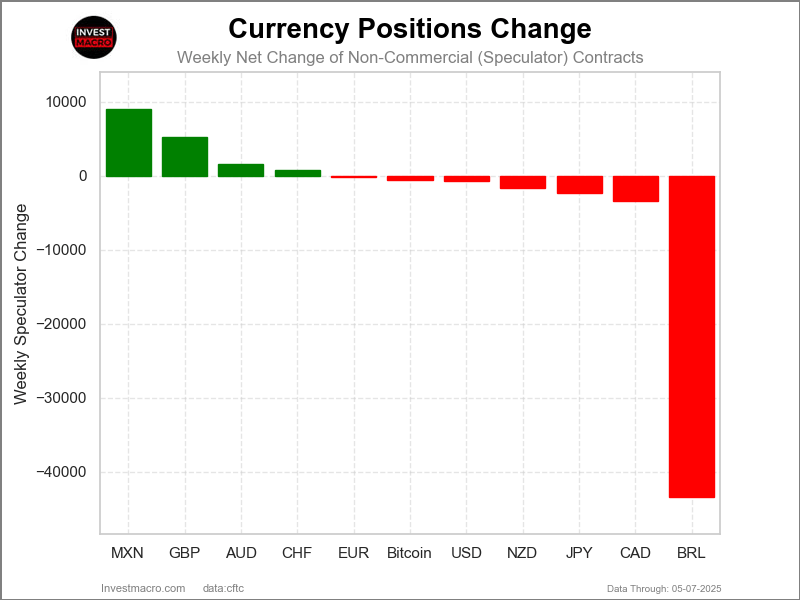
The COT currency market speculator bets were slightly higher this week as six out of the eleven currency markets we cover had higher positioning while the other five markets had lower speculator contracts.

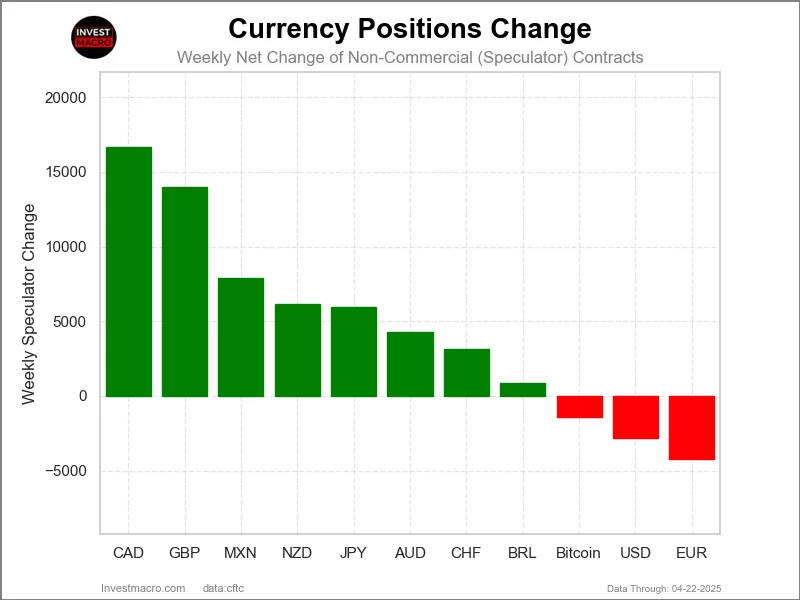
Leading the gains for the currency markets was the Canadian Dollar (16,366 contracts), the Japanese Yen (14,738 contracts), the Australian Dollar (6,335 contracts), the US Dollar Index (2,143 contracts), the New Zealand Dollar (866 contracts) and the Brazilian Real (743 contracts) also showing positive weeks.

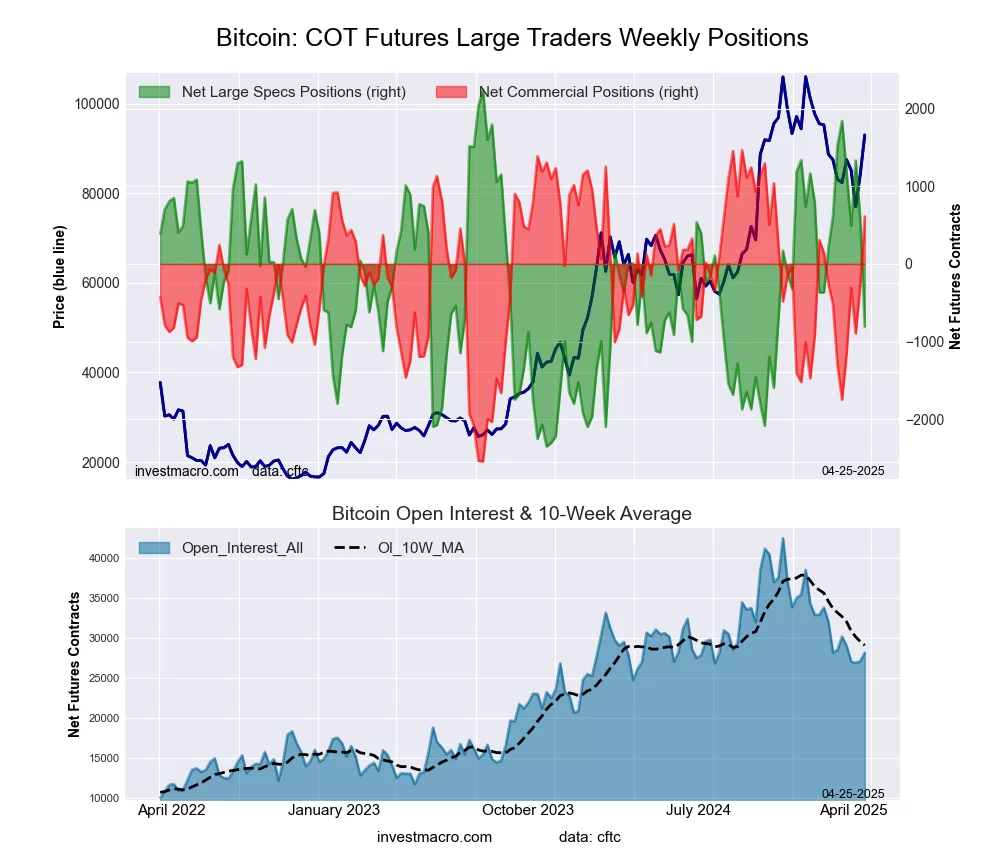
The currencies seeing declines in speculator bets on the week were the British Pound (-8,695 contracts), the Mexican Peso (-7,541 contracts), the Swiss Franc (-3,136 contracts), the EuroFX (-2,089 contracts) and with Bitcoin (-596 contracts) also registering lower bets on the week.

Speculators raise New Zealand Dollar bets after drop to all-time low

Highlighting the COT currency’s data this week is the recent speculator’s positioning for the New Zealand ‘Kiwi’ Dollar.

Large speculative New Zealand Dollar (NZD) currency positions rose modestly this week by +866 net contracts and have gained for two consecutive weeks. This follows significant weakness in the position over the past few months. The NZD spec position had declined for the previous five straight weeks and for thirteen out of the prior fourteen weeks for a total decline of -56,594 contracts over that period dating back to October.

This NZD weakness of the fourth quarter and into the first quarter of 2025 dropped the NZD speculator position into the lowest or most bearish level on record at -54,624 contracts on January 7th – surpassing the previous lows in 2019.

The NZD exchange rate versus the US Dollar has been on the decline in tandem with the drop in speculator bets, particularly since September. The NZDUSD started to slide in September and fell through the 0.6000 exchange level in November and continued to fall in December and into January, dropping all the way to the 0.5540 level in early January. This marked the lowest standing for the NZDUSD since October 2022.

This week, the NZD bounced higher by over 2.00 percent and managed to close above the 0.5700 exchange rate for the first time since early December.


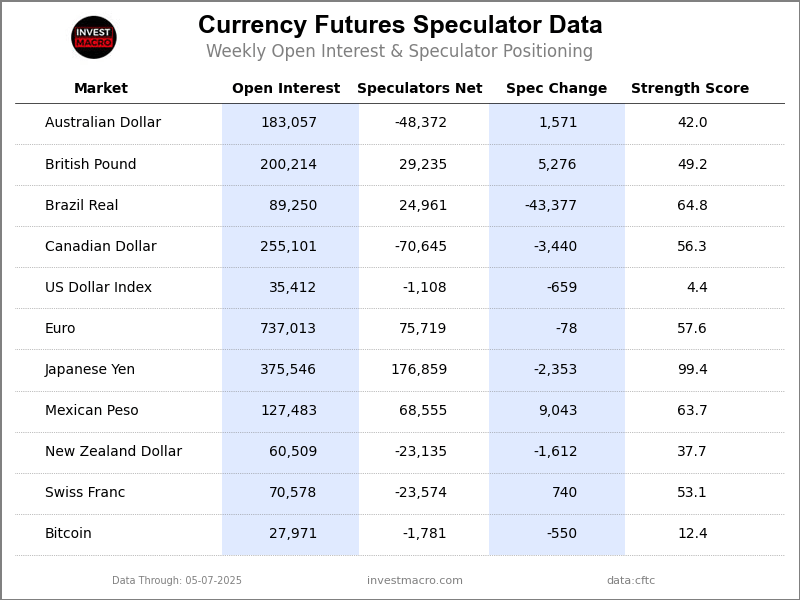
Currencies Net Speculators Leaderboard

Legend: Weekly Speculators Change | Speculators Current Net Position | Speculators Strength Score compared to last 3-Years (0-100 range)


Strength Scores led by Japanese Yen & Bitcoin

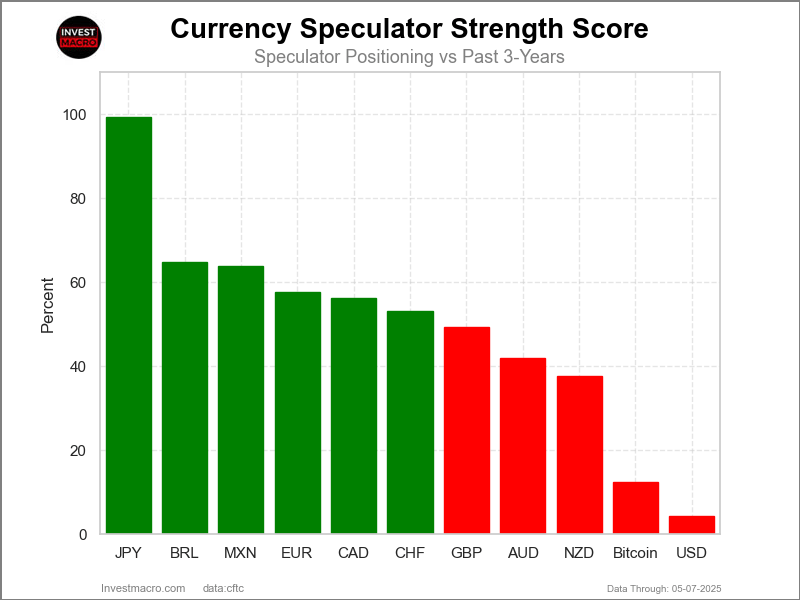
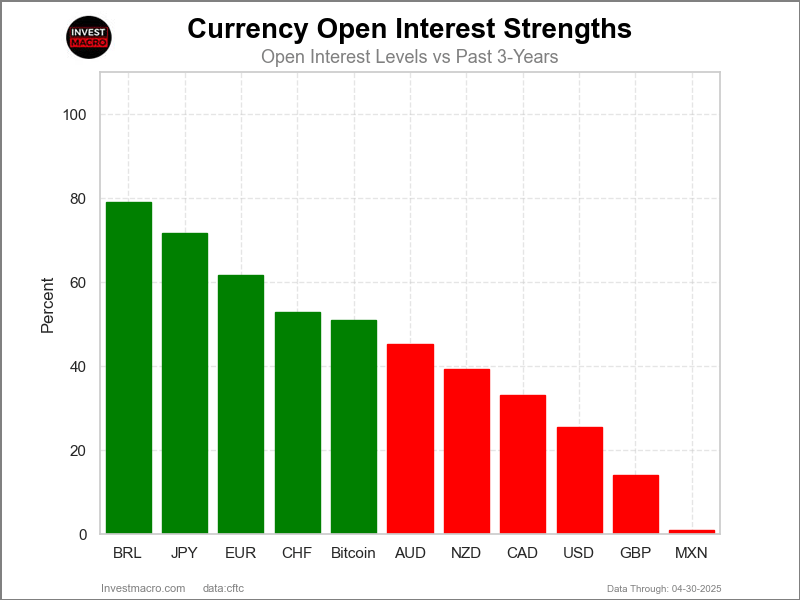
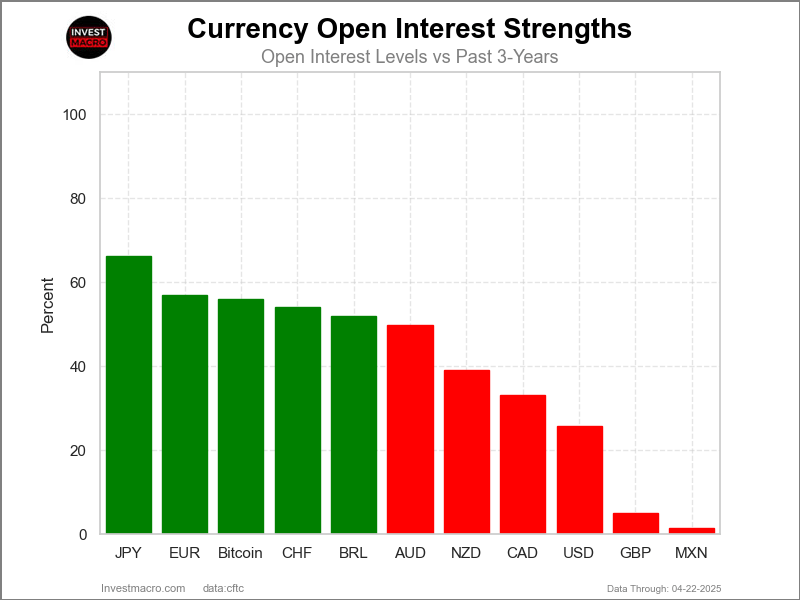
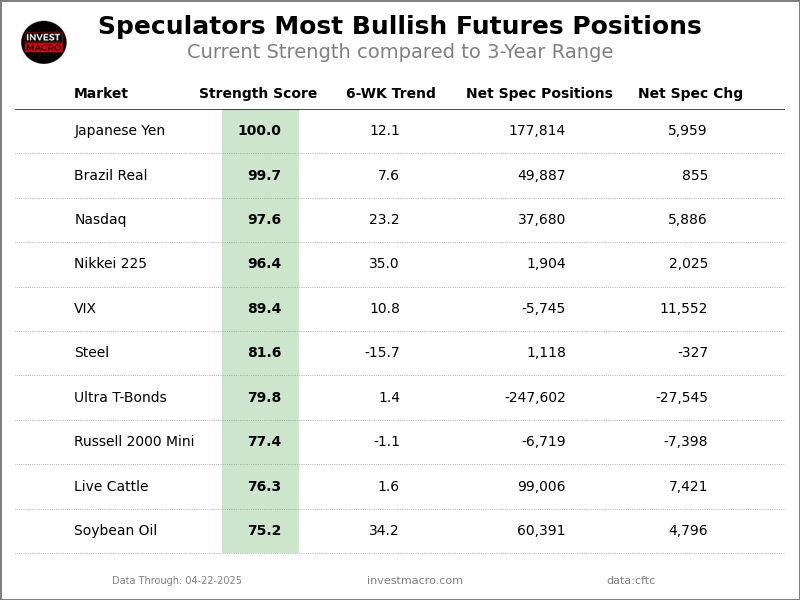
COT Strength Scores (a normalized measure of Speculator positions over a 3-Year range, from 0 to 100 where above 80 is Extreme-Bullish and below 20 is Extreme-Bearish) showed that the Japanese Yen (68 percent) and Bitcoin (67 percent) lead the currency markets this week.

On the downside, the New Zealand Dollar (4 percent), the EuroFX (5 percent), the Swiss Franc (16 percent) and the Brazilian Real (19.7 percent) come in at the lowest strength levels currently and are in Extreme-Bearish territory (below 20 percent).

3-Year Strength Statistics:
US Dollar Index (37.5 percent) vs US Dollar Index previous week (33.1 percent)
EuroFX (5.0 percent) vs EuroFX previous week (5.8 percent)
British Pound Sterling (32.4 percent) vs British Pound Sterling previous week (36.3 percent)
Japanese Yen (67.8 percent) vs Japanese Yen previous week (61.9 percent)
Swiss Franc (16.1 percent) vs Swiss Franc previous week (22.5 percent)
Canadian Dollar (20.4 percent) vs Canadian Dollar previous week (13.0 percent)
Australian Dollar (25.7 percent) vs Australian Dollar previous week (21.2 percent)
New Zealand Dollar (4.0 percent) vs New Zealand Dollar previous week (3.0 percent)
Mexican Peso (28.0 percent) vs Mexican Peso previous week (31.8 percent)
Brazilian Real (19.7 percent) vs Brazilian Real previous week (19.0 percent)
Bitcoin (67.4 percent) vs Bitcoin previous week (80.4 percent)


US Dollar Index & Bitcoin top the 6-Week Strength Trends

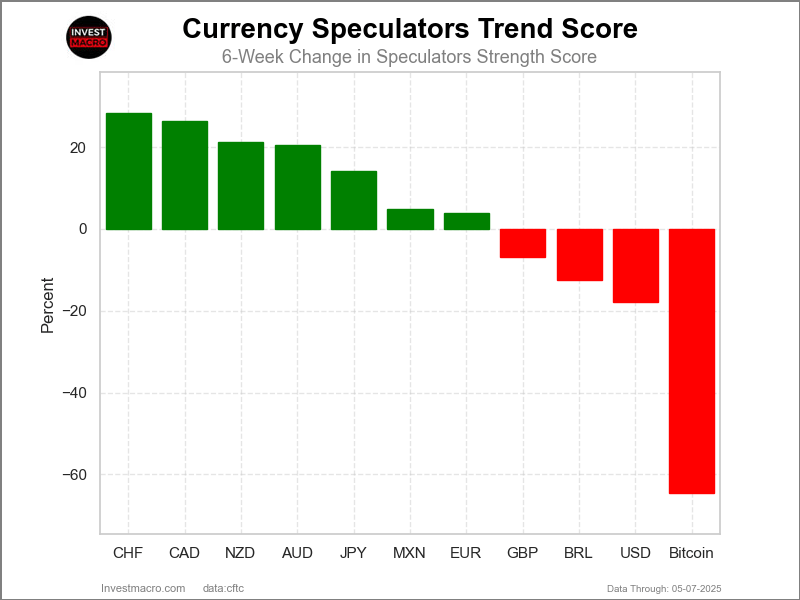
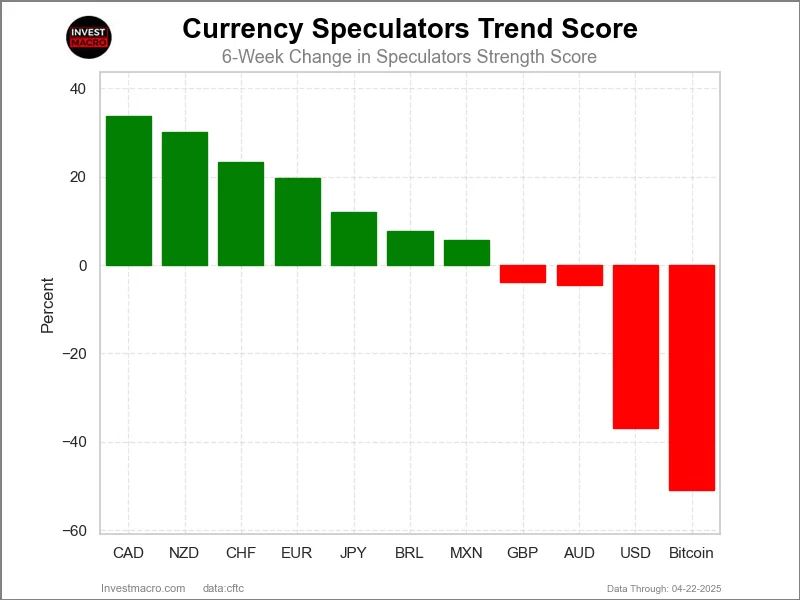
COT Strength Score Trends (or move index, calculates the 6-week changes in strength scores) showed that the US Dollar Index (38 percent) and Bitcoin (32 percent) lead the past six weeks trends for the currencies. The Canadian Dollar (14 percent) is the next highest positive movers in the 3-Year trends data.

The Australian Dollar (-57 percent) leads the downside trend scores currently with the New Zealand Dollar (-27 percent), Brazilian Real (-17 percent) and the Japanese Yen (-16 percent) following next with lower trend scores.

3-Year Strength Trends:
US Dollar Index (37.5 percent) vs US Dollar Index previous week (32.7 percent)
EuroFX (5.0 percent) vs EuroFX previous week (-1.1 percent)
British Pound Sterling (-15.9 percent) vs British Pound Sterling previous week (-8.5 percent)
Japanese Yen (-16.2 percent) vs Japanese Yen previous week (-12.7 percent)
Swiss Franc (-13.9 percent) vs Swiss Franc previous week (4.8 percent)
Canadian Dollar (13.8 percent) vs Canadian Dollar previous week (-3.5 percent)
Australian Dollar (-56.6 percent) vs Australian Dollar previous week (-70.3 percent)
New Zealand Dollar (-27.0 percent) vs New Zealand Dollar previous week (-33.7 percent)
Mexican Peso (-4.8 percent) vs Mexican Peso previous week (0.9 percent)
Brazilian Real (-16.8 percent) vs Brazilian Real previous week (-16.6 percent)
Bitcoin (31.8 percent) vs Bitcoin previous week (63.9 percent)


Individual COT Forex Markets:

US Dollar Index Futures:
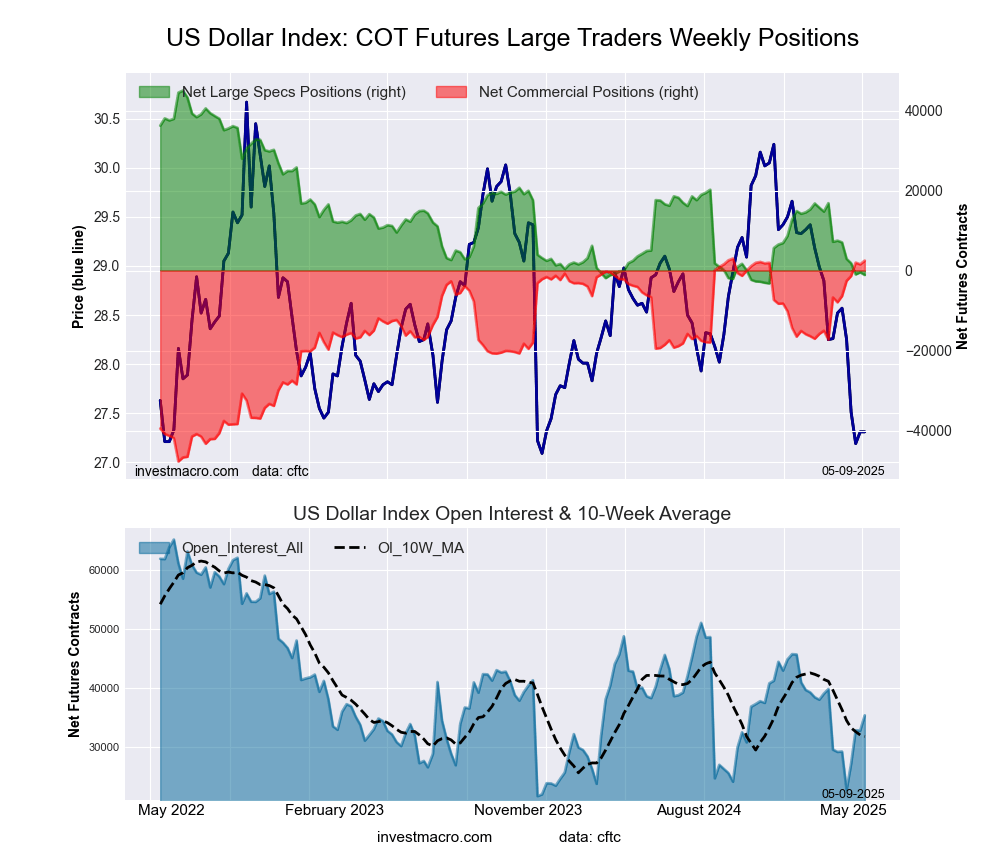
US Dollar Index Forex Futures COT ChartThe US Dollar Index large speculator standing this week reached a net position of 14,872 contracts in the data reported through Tuesday. This was a weekly increase of 2,143 contracts from the previous week which had a total of 12,729 net contracts.

This week’s current strength score (the trader positioning range over the past three years, measured from 0 to 100) shows the speculators are currently Bearish with a score of 37.5 percent. The commercials are Bullish with a score of 61.5 percent and the small traders (not shown in chart) are Bearish with a score of 40.6 percent.

Price Trend-Following Model: Weak Uptrend

Our weekly trend-following model classifies the current market price position as: Weak Uptrend.

US DOLLAR INDEX StatisticsSPECULATORSCOMMERCIALSSMALL TRADERS
– Percent of Open Interest Longs:63.024.69.0
– Percent of Open Interest Shorts:30.560.75.4
– Net Position:14,872-16,5201,648
– Gross Longs:28,81111,2474,133
– Gross Shorts:13,93927,7672,485
– Long to Short Ratio:2.1 to 10.4 to 11.7 to 1
NET POSITION TREND:
– Strength Index Score (3 Year Range Pct):37.561.540.6
– Strength Index Reading (3 Year Range):BearishBullishBearish
NET POSITION MOVEMENT INDEX:
– 6-Week Change in Strength Index:37.5-36.43.8


Euro Currency Futures:

Euro Currency Futures COT ChartThe Euro Currency large speculator standing this week reached a net position of -62,486 contracts in the data reported through Tuesday. This was a weekly reduction of -2,089 contracts from the previous week which had a total of -60,397 net contracts.

This week’s current strength score (the trader positioning range over the past three years, measured from 0 to 100) shows the speculators are currently Bearish-Extreme with a score of 5.0 percent. The commercials are Bullish-Extreme with a score of 96.3 percent and the small traders (not shown in chart) are Bearish-Extreme with a score of 13.6 percent.

Price Trend-Following Model: Downtrend

Our weekly trend-following model classifies the current market price position as: Downtrend.

EURO Currency StatisticsSPECULATORSCOMMERCIALSSMALL TRADERS
– Percent of Open Interest Longs:27.555.612.4
– Percent of Open Interest Shorts:37.848.39.4
– Net Position:-62,48644,29518,191
– Gross Longs:167,665338,71975,560
– Gross Shorts:230,151294,42457,369
– Long to Short Ratio:0.7 to 11.2 to 11.3 to 1
NET POSITION TREND:
– Strength Index Score (3 Year Range Pct):5.096.313.6
– Strength Index Reading (3 Year Range):Bearish-ExtremeBullish-ExtremeBearish-Extreme
NET POSITION MOVEMENT INDEX:
– 6-Week Change in Strength Index:5.0-3.6-5.9


British Pound Sterling Futures:

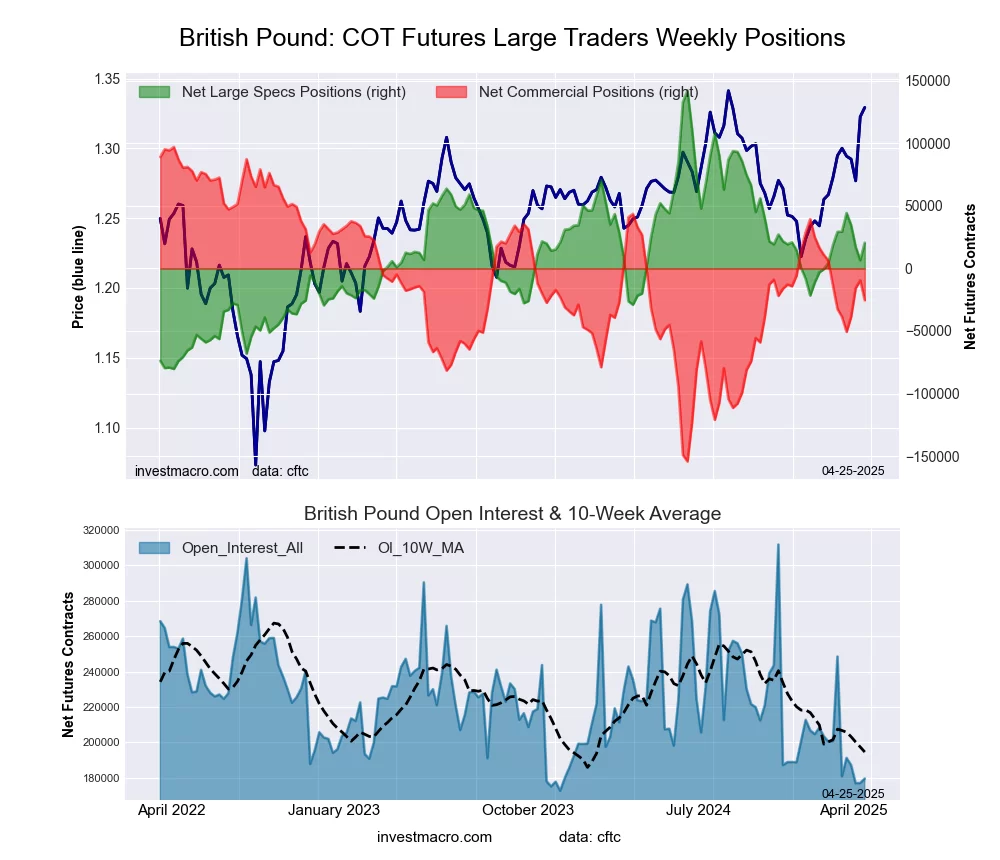
British Pound Sterling Futures COT ChartThe British Pound Sterling large speculator standing this week reached a net position of -8,257 contracts in the data reported through Tuesday. This was a weekly fall of -8,695 contracts from the previous week which had a total of 438 net contracts.

This week’s current strength score (the trader positioning range over the past three years, measured from 0 to 100) shows the speculators are currently Bearish with a score of 32.4 percent. The commercials are Bullish with a score of 72.8 percent and the small traders (not shown in chart) are Bearish-Extreme with a score of 19.1 percent.

Price Trend-Following Model: Downtrend

Our weekly trend-following model classifies the current market price position as: Downtrend.

BRITISH POUND StatisticsSPECULATORSCOMMERCIALSSMALL TRADERS
– Percent of Open Interest Longs:35.652.610.3
– Percent of Open Interest Shorts:39.539.119.9
– Net Position:-8,25728,749-20,492
– Gross Longs:75,696111,96821,903
– Gross Shorts:83,95383,21942,395
– Long to Short Ratio:0.9 to 11.3 to 10.5 to 1
NET POSITION TREND:
– Strength Index Score (3 Year Range Pct):32.472.819.1
– Strength Index Reading (3 Year Range):BearishBullishBearish-Extreme
NET POSITION MOVEMENT INDEX:
– 6-Week Change in Strength Index:-15.920.2-32.1


Japanese Yen Futures:

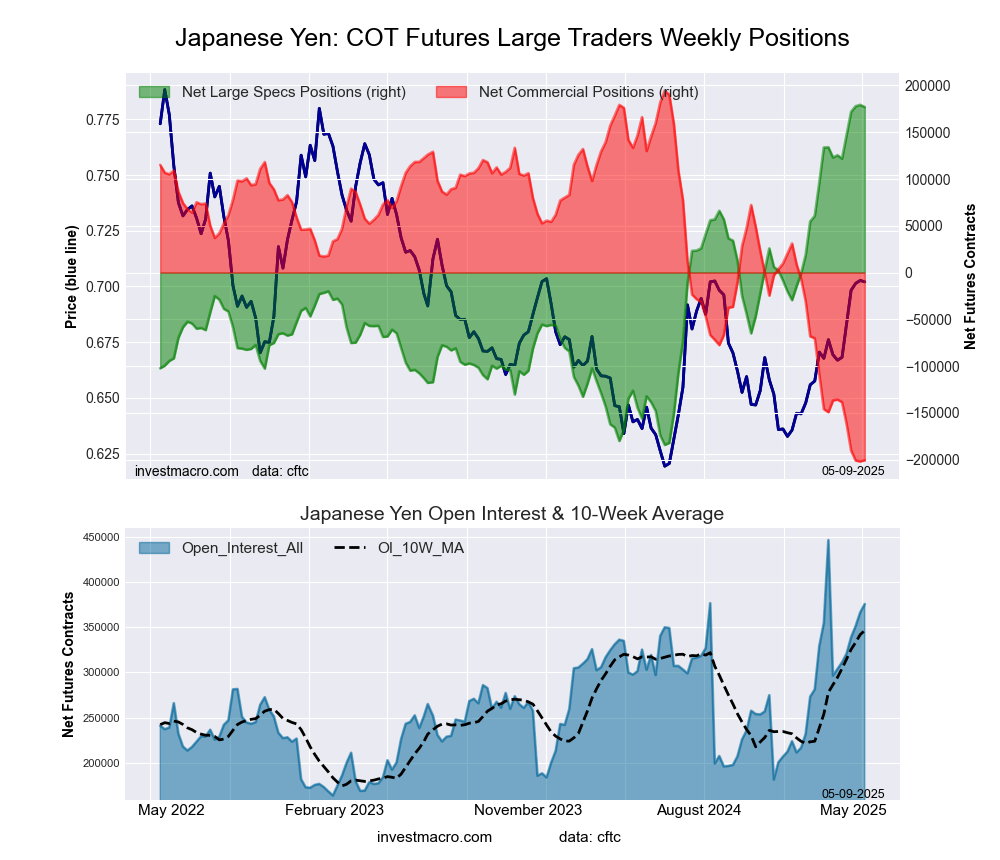
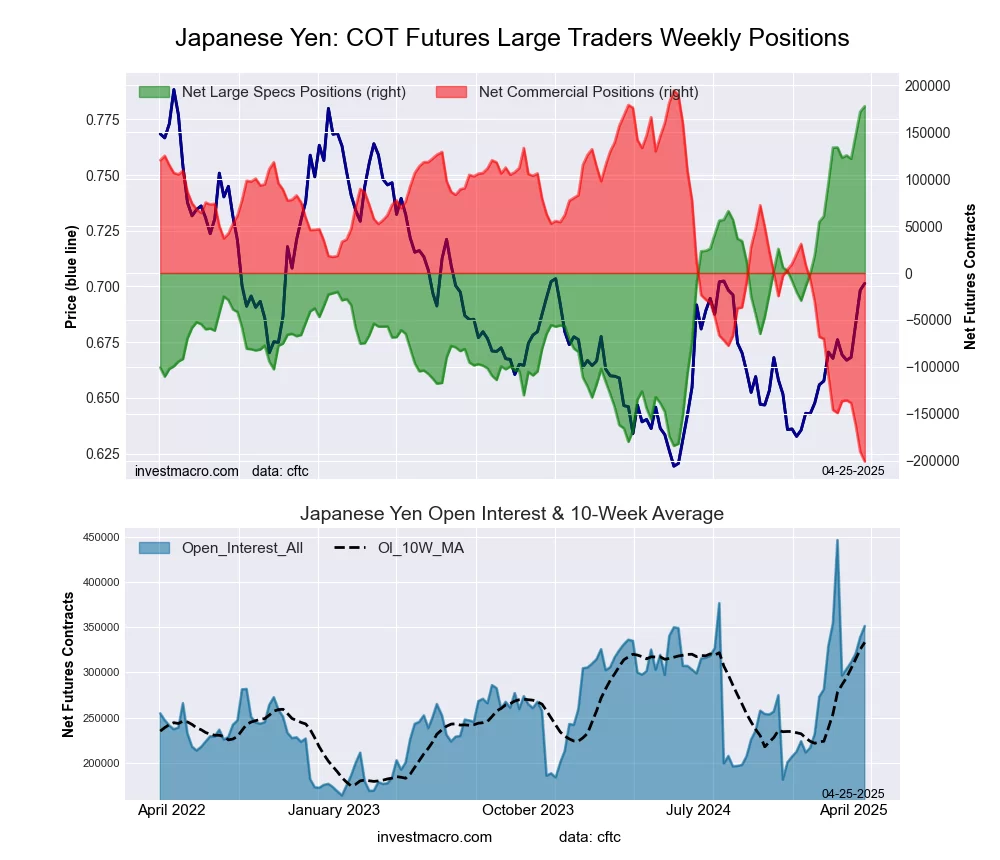
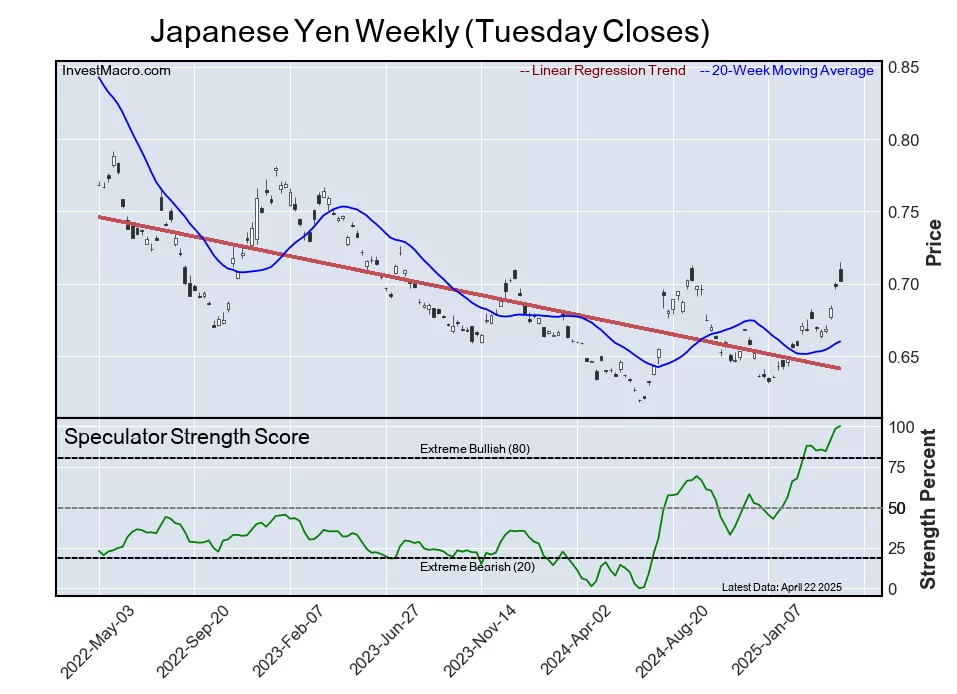
Japanese Yen Forex Futures COT ChartThe Japanese Yen large speculator standing this week reached a net position of -14,673 contracts in the data reported through Tuesday. This was a weekly lift of 14,738 contracts from the previous week which had a total of -29,411 net contracts.

This week’s current strength score (the trader positioning range over the past three years, measured from 0 to 100) shows the speculators are currently Bullish with a score of 67.8 percent. The commercials are Bearish with a score of 31.7 percent and the small traders (not shown in chart) are Bullish with a score of 77.8 percent.

Price Trend-Following Model: Downtrend

Our weekly trend-following model classifies the current market price position as: Downtrend.

JAPANESE YEN StatisticsSPECULATORSCOMMERCIALSSMALL TRADERS
– Percent of Open Interest Longs:44.532.520.6
– Percent of Open Interest Shorts:51.428.417.9
– Net Position:-14,6738,8295,844
– Gross Longs:94,15768,86843,642
– Gross Shorts:108,83060,03937,798
– Long to Short Ratio:0.9 to 11.1 to 11.2 to 1
NET POSITION TREND:
– Strength Index Score (3 Year Range Pct):67.831.777.8
– Strength Index Reading (3 Year Range):BullishBearishBullish
NET POSITION MOVEMENT INDEX:
– 6-Week Change in Strength Index:-16.212.316.9


Swiss Franc Futures:

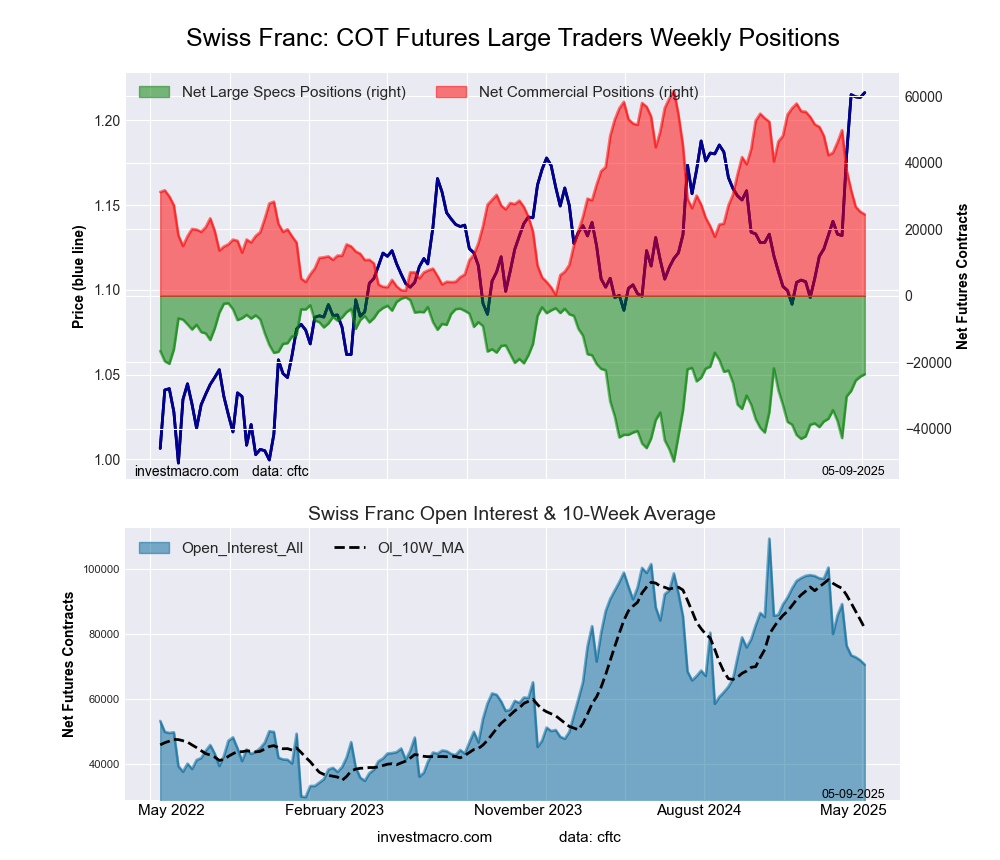
Swiss Franc Forex Futures COT ChartThe Swiss Franc large speculator standing this week reached a net position of -41,837 contracts in the data reported through Tuesday. This was a weekly decline of -3,136 contracts from the previous week which had a total of -38,701 net contracts.

This week’s current strength score (the trader positioning range over the past three years, measured from 0 to 100) shows the speculators are currently Bearish-Extreme with a score of 16.1 percent. The commercials are Bullish-Extreme with a score of 93.6 percent and the small traders (not shown in chart) are Bearish-Extreme with a score of 11.3 percent.

Price Trend-Following Model: Downtrend

Our weekly trend-following model classifies the current market price position as: Downtrend.

SWISS FRANC StatisticsSPECULATORSCOMMERCIALSSMALL TRADERS
– Percent of Open Interest Longs:6.884.28.6
– Percent of Open Interest Shorts:50.224.325.1
– Net Position:-41,83757,758-15,921
– Gross Longs:6,52681,1608,255
– Gross Shorts:48,36323,40224,176
– Long to Short Ratio:0.1 to 13.5 to 10.3 to 1
NET POSITION TREND:
– Strength Index Score (3 Year Range Pct):16.193.611.3
– Strength Index Reading (3 Year Range):Bearish-ExtremeBullish-ExtremeBearish-Extreme
NET POSITION MOVEMENT INDEX:
– 6-Week Change in Strength Index:-13.98.95.9


Canadian Dollar Futures:

Canadian Dollar Forex Futures COT ChartThe Canadian Dollar large speculator standing this week reached a net position of -150,787 contracts in the data reported through Tuesday. This was a weekly gain of 16,366 contracts from the previous week which had a total of -167,153 net contracts.

This week’s current strength score (the trader positioning range over the past three years, measured from 0 to 100) shows the speculators are currently Bearish with a score of 20.4 percent. The commercials are Bullish-Extreme with a score of 83.3 percent and the small traders (not shown in chart) are Bearish-Extreme with a score of 5.5 percent.

Price Trend-Following Model: Downtrend

Our weekly trend-following model classifies the current market price position as: Downtrend.

CANADIAN DOLLAR StatisticsSPECULATORSCOMMERCIALSSMALL TRADERS
– Percent of Open Interest Longs:5.984.08.2
– Percent of Open Interest Shorts:51.334.811.9
– Net Position:-150,787163,078-12,291
– Gross Longs:19,503278,53527,246
– Gross Shorts:170,290115,45739,537
– Long to Short Ratio:0.1 to 12.4 to 10.7 to 1
NET POSITION TREND:
– Strength Index Score (3 Year Range Pct):20.483.35.5
– Strength Index Reading (3 Year Range):BearishBullish-ExtremeBearish-Extreme
NET POSITION MOVEMENT INDEX:
– 6-Week Change in Strength Index:13.8-13.55.5


Australian Dollar Futures:

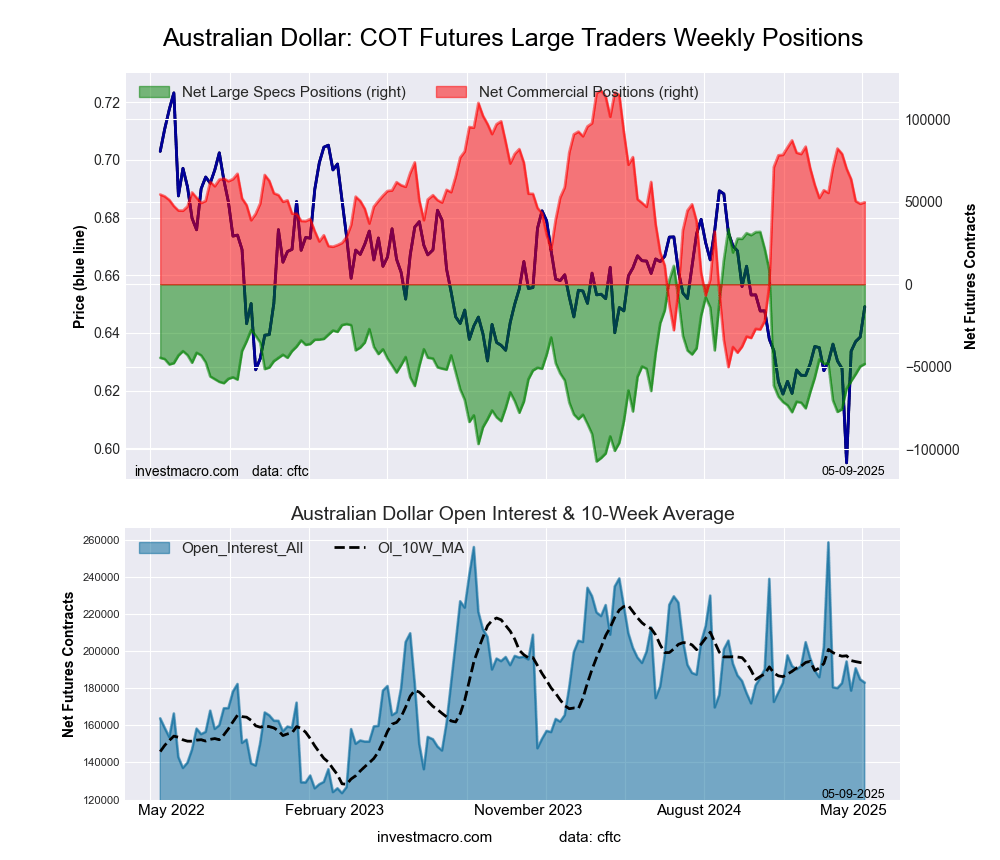
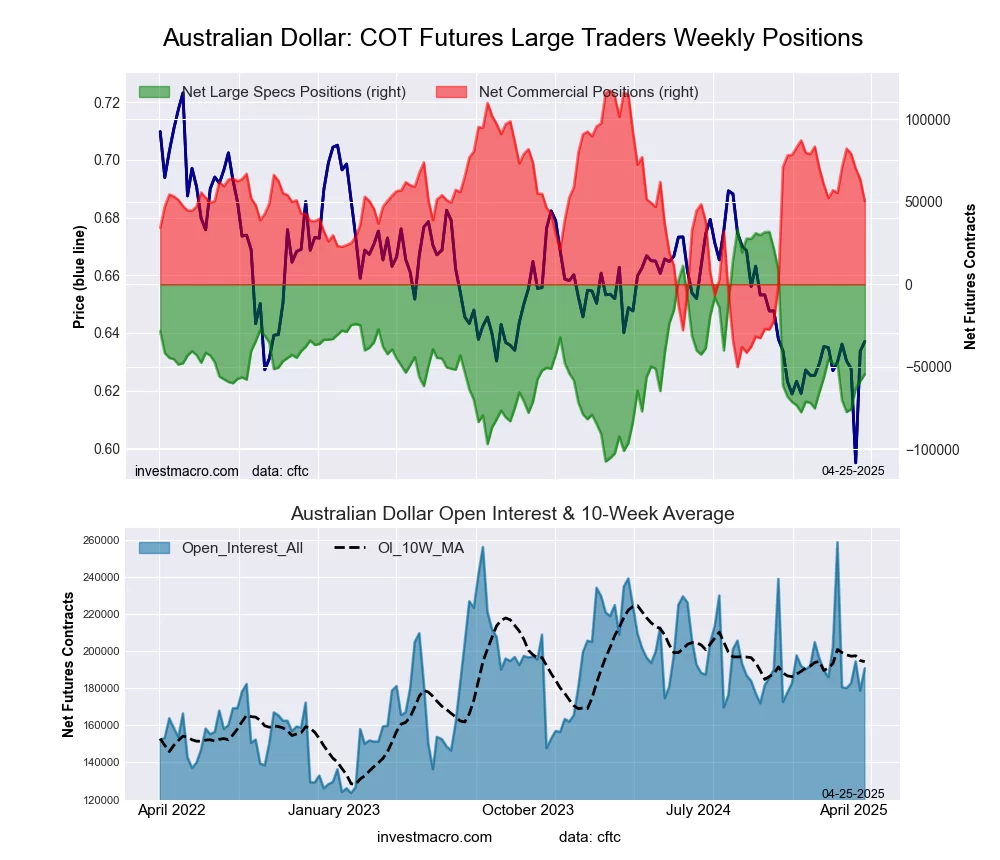
Australian Dollar Forex Futures COT ChartThe Australian Dollar large speculator standing this week reached a net position of -71,296 contracts in the data reported through Tuesday. This was a weekly gain of 6,335 contracts from the previous week which had a total of -77,631 net contracts.

This week’s current strength score (the trader positioning range over the past three years, measured from 0 to 100) shows the speculators are currently Bearish with a score of 25.7 percent. The commercials are Bullish with a score of 77.5 percent and the small traders (not shown in chart) are Bearish with a score of 26.7 percent.

Price Trend-Following Model: Downtrend

Our weekly trend-following model classifies the current market price position as: Downtrend.

AUSTRALIAN DOLLAR StatisticsSPECULATORSCOMMERCIALSSMALL TRADERS
– Percent of Open Interest Longs:16.467.012.7
– Percent of Open Interest Shorts:53.925.017.2
– Net Position:-71,29679,799-8,503
– Gross Longs:31,179127,37524,195
– Gross Shorts:102,47547,57632,698
– Long to Short Ratio:0.3 to 12.7 to 10.7 to 1
NET POSITION TREND:
– Strength Index Score (3 Year Range Pct):25.777.526.7
– Strength Index Reading (3 Year Range):BearishBullishBearish
NET POSITION MOVEMENT INDEX:
– 6-Week Change in Strength Index:-56.648.0-2.0


New Zealand Dollar Futures:

New Zealand Dollar Forex Futures COT ChartThe New Zealand Dollar large speculator standing this week reached a net position of -51,223 contracts in the data reported through Tuesday. This was a weekly lift of 866 contracts from the previous week which had a total of -52,089 net contracts.

This week’s current strength score (the trader positioning range over the past three years, measured from 0 to 100) shows the speculators are currently Bearish-Extreme with a score of 4.0 percent. The commercials are Bullish-Extreme with a score of 96.3 percent and the small traders (not shown in chart) are Bearish with a score of 20.1 percent.

Price Trend-Following Model: Downtrend

Our weekly trend-following model classifies the current market price position as: Downtrend.

NEW ZEALAND DOLLAR StatisticsSPECULATORSCOMMERCIALSSMALL TRADERS
– Percent of Open Interest Longs:9.985.83.9
– Percent of Open Interest Shorts:66.426.46.8
– Net Position:-51,22353,841-2,618
– Gross Longs:8,93877,7763,551
– Gross Shorts:60,16123,9356,169
– Long to Short Ratio:0.1 to 13.2 to 10.6 to 1
NET POSITION TREND:
– Strength Index Score (3 Year Range Pct):4.096.320.1
– Strength Index Reading (3 Year Range):Bearish-ExtremeBullish-ExtremeBearish
NET POSITION MOVEMENT INDEX:
– 6-Week Change in Strength Index:-27.025.113.0


Mexican Peso Futures:

Mexican Peso Futures COT ChartThe Mexican Peso large speculator standing this week reached a net position of -1,544 contracts in the data reported through Tuesday. This was a weekly fall of -7,541 contracts from the previous week which had a total of 5,997 net contracts.

This week’s current strength score (the trader positioning range over the past three years, measured from 0 to 100) shows the speculators are currently Bearish with a score of 28.0 percent. The commercials are Bullish with a score of 75.4 percent and the small traders (not shown in chart) are Bearish-Extreme with a score of 17.9 percent.

Price Trend-Following Model: Downtrend

Our weekly trend-following model classifies the current market price position as: Downtrend.

MEXICAN PESO StatisticsSPECULATORSCOMMERCIALSSMALL TRADERS
– Percent of Open Interest Longs:33.960.52.7
– Percent of Open Interest Shorts:34.958.83.4
– Net Position:-1,5442,423-879
– Gross Longs:47,98585,7633,886
– Gross Shorts:49,52983,3404,765
– Long to Short Ratio:1.0 to 11.0 to 10.8 to 1
NET POSITION TREND:
– Strength Index Score (3 Year Range Pct):28.075.417.9
– Strength Index Reading (3 Year Range):BearishBullishBearish-Extreme
NET POSITION MOVEMENT INDEX:
– 6-Week Change in Strength Index:-4.84.44.9


Brazilian Real Futures:

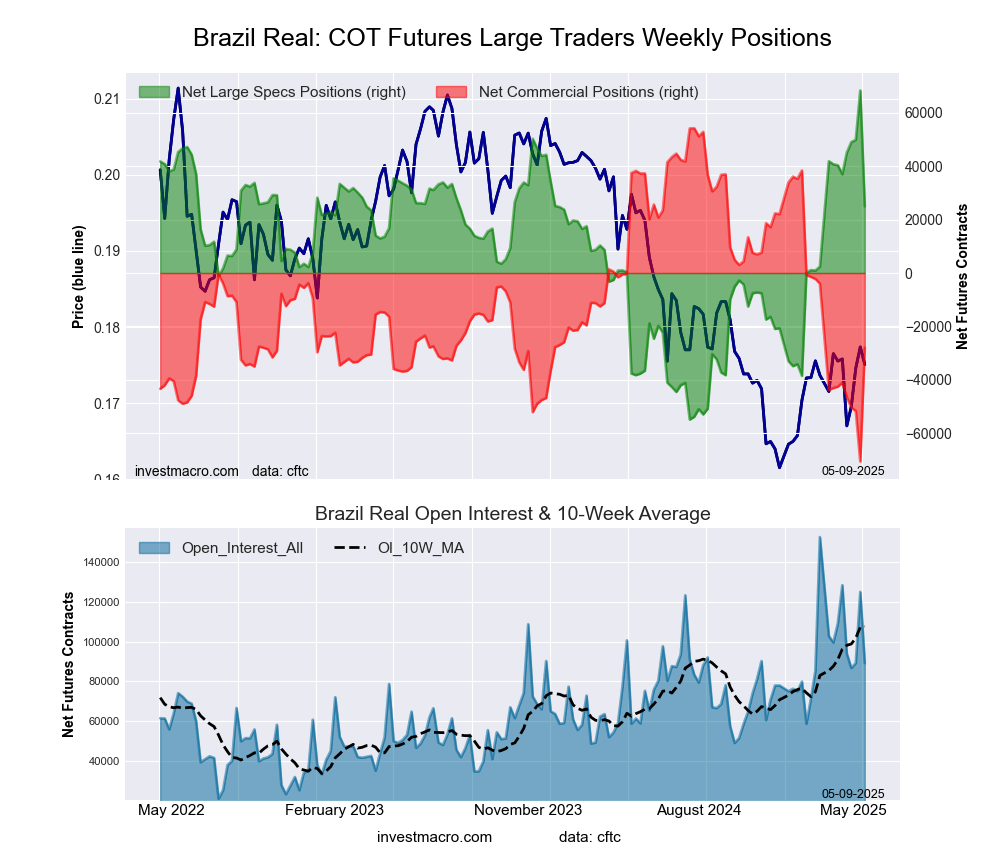
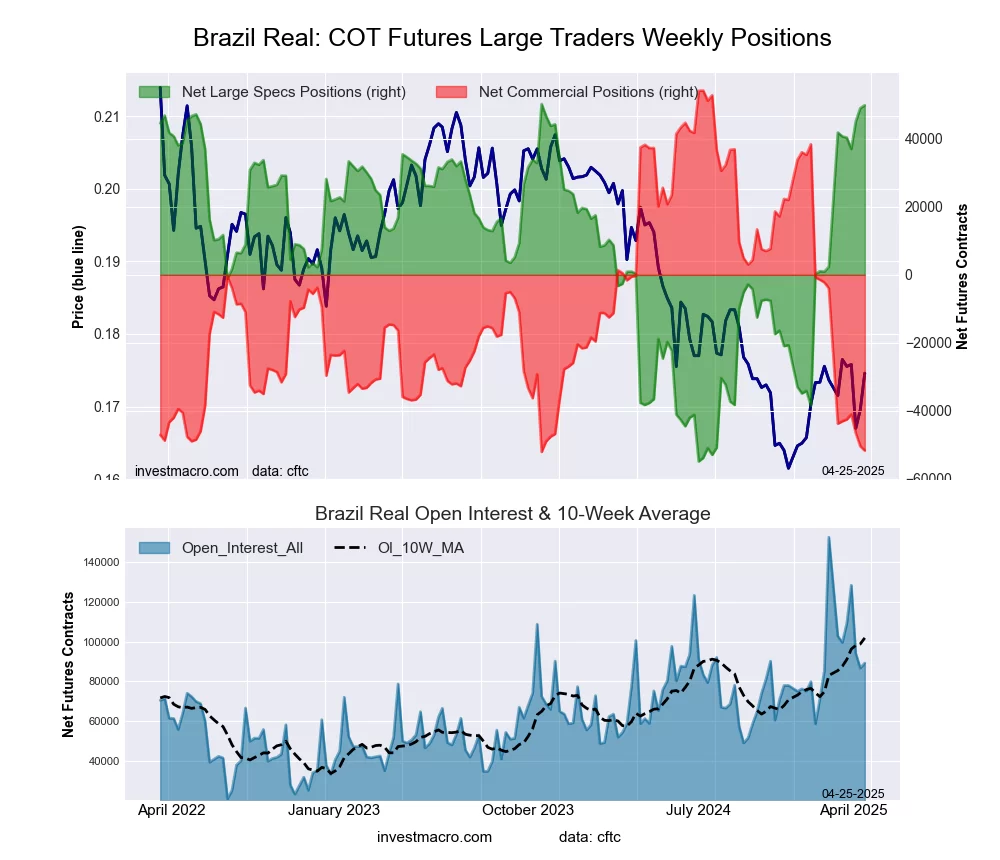
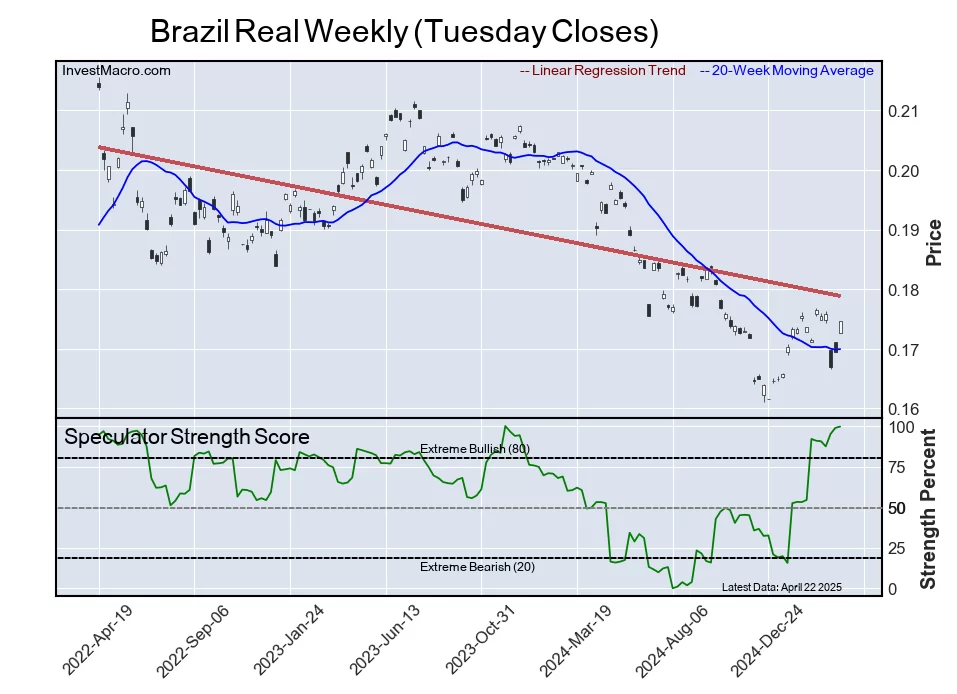
Brazil Real Futures COT ChartThe Brazilian Real large speculator standing this week reached a net position of -34,131 contracts in the data reported through Tuesday. This was a weekly increase of 743 contracts from the previous week which had a total of -34,874 net contracts.

This week’s current strength score (the trader positioning range over the past three years, measured from 0 to 100) shows the speculators are currently Bearish-Extreme with a score of 19.7 percent. The commercials are Bullish-Extreme with a score of 82.3 percent and the small traders (not shown in chart) are Bearish-Extreme with a score of 14.3 percent.

Price Trend-Following Model: Downtrend

Our weekly trend-following model classifies the current market price position as: Downtrend.

BRAZIL REAL StatisticsSPECULATORSCOMMERCIALSSMALL TRADERS
– Percent of Open Interest Longs:27.469.62.7
– Percent of Open Interest Shorts:72.822.64.3
– Net Position:-34,13135,292-1,161
– Gross Longs:20,60552,3032,046
– Gross Shorts:54,73617,0113,207
– Long to Short Ratio:0.4 to 13.1 to 10.6 to 1
NET POSITION TREND:
– Strength Index Score (3 Year Range Pct):19.782.314.3
– Strength Index Reading (3 Year Range):Bearish-ExtremeBullish-ExtremeBearish-Extreme
NET POSITION MOVEMENT INDEX:
– 6-Week Change in Strength Index:-16.817.0-2.1


Bitcoin Futures:

Bitcoin Crypto Futures COT ChartThe Bitcoin large speculator standing this week reached a net position of 739 contracts in the data reported through Tuesday. This was a weekly fall of -596 contracts from the previous week which had a total of 1,335 net contracts.

This week’s current strength score (the trader positioning range over the past three years, measured from 0 to 100) shows the speculators are currently Bullish with a score of 67.4 percent. The commercials are Bearish with a score of 38.3 percent and the small traders (not shown in chart) are Bearish with a score of 30.1 percent.

Price Trend-Following Model: Uptrend

Our weekly trend-following model classifies the current market price position as: Uptrend.

BITCOIN StatisticsSPECULATORSCOMMERCIALSSMALL TRADERS
– Percent of Open Interest Longs:75.54.23.9
– Percent of Open Interest Shorts:73.66.83.2
– Net Position:739-1,007268
– Gross Longs:29,1211,6251,486
– Gross Shorts:28,3822,6321,218
– Long to Short Ratio:1.0 to 10.6 to 11.2 to 1
NET POSITION TREND:
– Strength Index Score (3 Year Range Pct):67.438.330.1
– Strength Index Reading (3 Year Range):BullishBearishBearish
NET POSITION MOVEMENT INDEX:
– 6-Week Change in Strength Index:31.8-31.0-16.0


Article By InvestMacroReceive our weekly COT Newsletter

*COT Report: The COT data, released weekly to the public each Friday, is updated through the most recent Tuesday (data is 3 days old) and shows a quick view of how large speculators or non-commercials (for-profit traders) were positioned in the futures markets.

The CFTC categorizes trader positions according to commercial hedgers (traders who use futures contracts for hedging as part of the business), non-commercials (large traders who speculate to realize trading profits) and nonreportable traders (usually small traders/speculators) as well as their open interest (contracts open in the market at time of reporting). See CFTC criteria here.

Japanese Yen Strengthens as Interest Rate Reaches Highest Level Since 2008

By RoboForex Analytical Department 

The USD/JPY pair declined to 155.13 on Friday, as the yen gained robust support following the Bank of Japan’s (BoJ) decision to raise its interest rate during the January meeting.

BoJ’s interest rate hike and economic outlook

The BoJ increased the cost of borrowing by 25 basis points, bringing the benchmark interest rate to 0.5% per annum. This marks the highest rate in Japan since the 2008 global financial crisis, with monetary policymakers voting 8 to 1 in favour of the decision.

The central bank views Japan’s economic recovery as moderate and aligned with forecasts, estimating potential GDP growth at 0.5%. Additionally, the BoJ noted encouraging signs from companies, with many planning to offer substantial wage increases during spring negotiations. This development is seen as a positive factor for stabilising inflation, which remains a key focus for the BoJ.

However, the central bank expressed concern about rising import prices caused by the weak yen and increasing rice prices. Despite the interest rate hike, real rates in Japan remain deeply negative; however, conditions seem favourable for a shift into positive territory.

The BoJ is expected to maintain the current interest rate at its March meeting. For now, the central bank has fulfilled its immediate goals, and policymakers will assess the impact of higher borrowing costs on the economy.

Technical analysis of USD/JPY

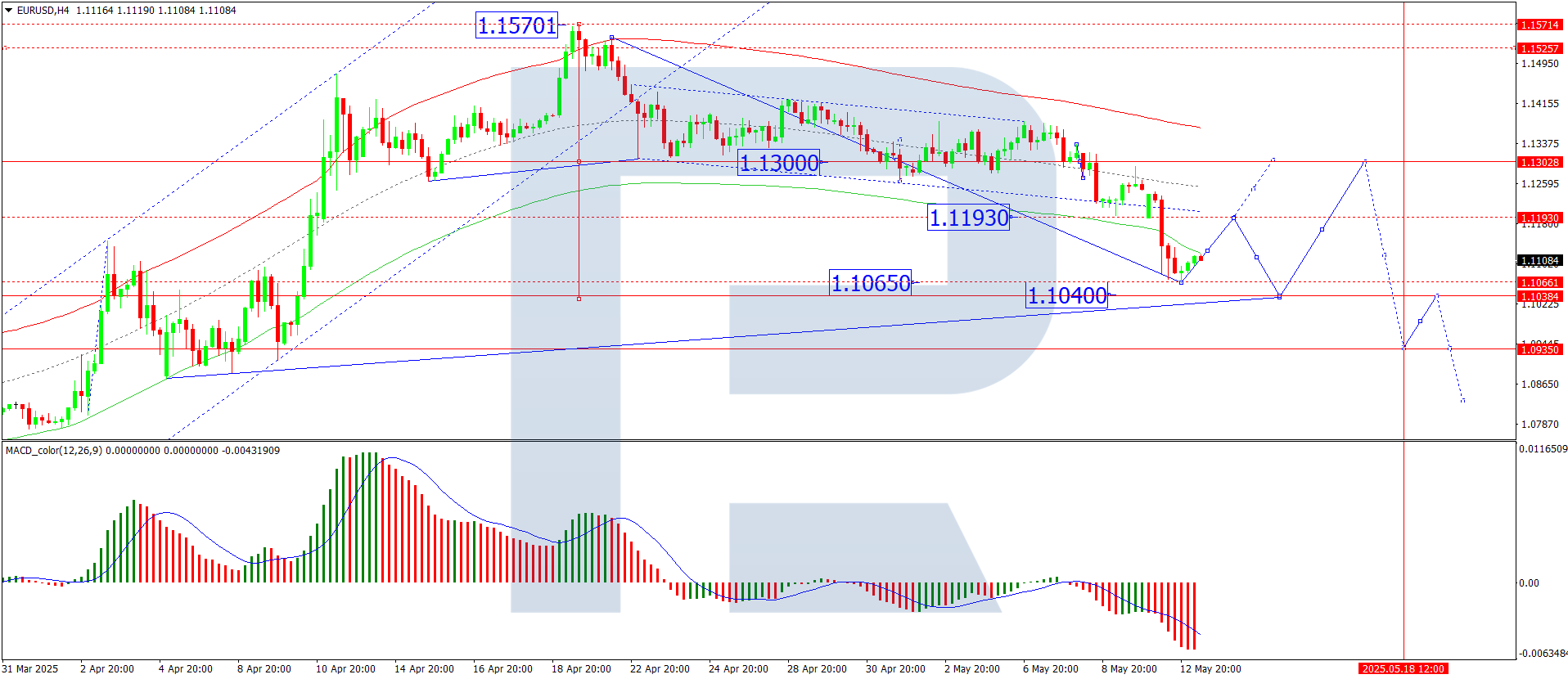
On the H4 chart, USD/JPY experienced a pullback from 156.56 and continues to develop a downward wave targeting 154.20. After reaching this level, there is potential for a corrective growth wave back to 156.56. The MACD indicator supports this scenario, with its signal line below the zero mark and sharply downwards, confirming the bearish momentum.

On the H1 chart, the pair is currently in the middle of a fifth wave of decline, with a target of 154.20. The market is forming a compact consolidation range near 155.55. A downward breakout from this range would likely lead to further declines to 154.20. After reaching this level, a corrective wave to 156.56 (a test from below) is possible. Looking further ahead, the development of a continued downward wave towards 153.20 is also possible. The Stochastic oscillator supports this USD/JPY forecast, with its signal line below 20 and pointing strongly downwards, reinforcing expectations of further bearish movement.

Conclusion

The Bank of Japan’s interest rate hike has provided substantial support to the yen, with USD/JPY trending lower as the market absorbs the decision. While the BoJ is expected to hold rates steady in the near term, its actions have set the stage for further currency strength. Technically, the pair remains in a downtrend, with immediate targets at 154.20 and 153.20. Investors will closely monitor Japan’s inflation dynamics, wage negotiations, and import price trends for additional cues on the yen’s trajectory.


Disclaimer

Any forecasts contained herein are based on the author’s particular opinion. This analysis may not be treated as trading advice. RoboForex bears no responsibility for trading results based on trading recommendations and reviews contained herein.

Japanese Yen Strengthens to a Monthly High as Markets Anticipate a Bank of Japan Rate Hike

By RoboForex Analytical Department

The USD/JPY pair fell to 155.08 on Tuesday, close to the monthly low. The Japanese yen gained strength as speculation grew regarding a potential interest rate hike by the Bank of Japan (BoJ), driven by hawkish commentary from BoJ officials, which increased the likelihood of this action.

Key factors driving yen strength

A possible rate hike would raise Japan’s short-term borrowing costs to 0.5%, the highest level since the 2008 global financial crisis. This decision would align with recent optimism about the economy’s ability to achieve sustainable inflation. Markets also expect the BoJ to revise its core inflation forecast upwards, with confidence growing that wage increases will help maintain the 2% inflation target.

Additionally, Japan’s Finance Minister Katsunobu Kato reiterated the government’s readiness to take measures to support the yen, adding further strength to the currency.

In the broader market context, investors are also evaluating the actions of US President Donald Trump on his first day in office, which included signing several executive orders and discussing plans for trade tariffs. These developments contribute to broader uncertainty, indirectly favouring the yen as a safe-haven currency.

Technical analysis of USD/JPY

On the H4 chart, USD/JPY experienced a pullback from the 156.56 level and is extending its downward wave towards 154.20. After reaching this level, a growth wave back to 156.56 is possible. This USD/JPY forecast is supported by the MACD indicator, with its signal line below zero and pointing downwards.

On the H1 chart, the pair is consolidating near 155.40, with expectations of a downward breakout to 154.20. After hitting this target, a corrective wave to 156.56 (a test from below) is possible. Further development of the downward wave could push the pair to 154.00. The Stochastic oscillator confirms this scenario, with its signal line below 50 and trending sharply downwards.

Conclusion

The strength of the Japanese yen reflects the growing expectations of a BoJ rate hike and supportive government policy. While technical analysis points to a further downside potential for USD/JPY in the short term, the pair’s movement will hinge on the BoJ’s upcoming decisions and broader market dynamics. On the downside, key levels to watch are 154.20 and 154.00, with 156.56 acting as a potential corrective target.


Disclaimer

Any forecasts contained herein are based on the author’s particular opinion. This analysis may not be treated as trading advice. RoboForex bears no responsibility for trading results based on trading recommendations and reviews contained herein.

Speculators continue to raise US Dollar Index Bets into 2025

By InvestMacro

Here are the latest charts and statistics for the Commitment of Traders (COT) data published by the Commodities Futures Trading Commission (CFTC).

The latest COT data is updated through Tuesday January 14th and shows a quick view of how large market participants (for-profit speculators and commercial traders) were positioned in the futures markets. All currency positions are in direct relation to the US dollar where, for example, a bet for the euro is a bet that the euro will rise versus the dollar while a bet against the euro will be a bet that the euro will decline versus the dollar.

Weekly Speculator Changes led by Canadian Dollar & US Dollar Index

The COT currency market speculator bets were just slightly lower this week as five out of the eleven currency markets we cover had higher positioning while the other six markets had lower speculator contracts.

Leading the gains for the currency markets was the Canadian Dollar (11,436 contracts) with the US Dollar Index (4,084 contracts), the EuroFX (3,727 contracts), the New Zealand Dollar (2,535 contracts) and Bitcoin (145 contracts) also showing positive weeks.

The currencies seeing declines in speculator bets on the week were the British Pound (-14,068 contracts), the Japanese Yen (-9,222 contracts), the Australian Dollar (-4,198 contracts), the Mexican Peso (-6,394 contracts), the Brazilian Real (-1,897 contracts) and the Swiss Franc (-813 contracts) also registering lower bets on the week.

Speculators continue to raise US Dollar Index Bets into 2025

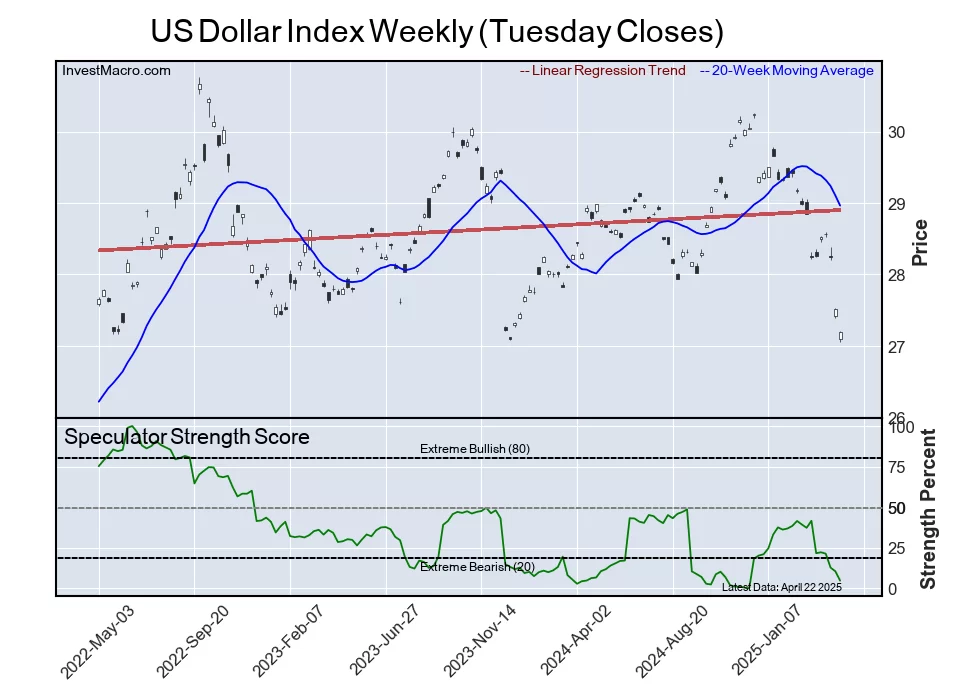
Highlighting the COT currency’s data this week is the increase in the speculator’s positioning for the US Dollar Index that’s carried over from December into the new year. The large speculative US Dollar Index positions rose this week by over 4,000+ contracts and have now gained for five consecutive weeks. This recent rise in speculator sentiment has been carried over each week from December 17th to January 14th for a total +15,953 net contract boost over the 5-week period.

This has pushed the overall bullish speculator position above the +10,000 contract threshold for the first time since September 10th. The Dollar Index bets, previously, had spent a total of seven weeks in October, November and early December in bearish or negative contract territory before finally turning around in mid-December.

The Dollar Index futures price (DX) was slightly lower to close this week but overall the trend has been higher for the DX. Since the last short-term bottom on the weekly charts in September – the DX has advanced by over 9 percent and broken through previous resistance areas from 107.50 to 109.00. Currently, the Dollar Index price is sitting right around the 109.40 level with the weekly RSI signaling a slightly overbought level of 70.10.


Currencies Net Speculators Leaderboard

Legend: Weekly Speculators Change | Speculators Current Net Position | Speculators Strength Score compared to last 3-Years (0-100 range)


Strength Scores led by Bitcoin & Japanese Yen

COT Strength Scores (a normalized measure of Speculator positions over a 3-Year range, from 0 to 100 where above 80 is Extreme-Bullish and below 20 is Extreme-Bearish) showed that the Bitcoin (80 percent) and the Japanese Yen (62 percent) lead the currency markets this week.

On the downside, the New Zealand Dollar (3 percent), the EuroFX (6 percent), the Canadian Dollar (13 percent) and the Brazilian Real (19 percent) come in at the lowest strength levels currently and are in Extreme-Bearish territory (below 20 percent).

3-Year Strength Statistics:
US Dollar Index (33.1 percent) vs US Dollar Index previous week (24.6 percent)
EuroFX (5.8 percent) vs EuroFX previous week (4.4 percent)
British Pound Sterling (36.3 percent) vs British Pound Sterling previous week (42.6 percent)
Japanese Yen (61.9 percent) vs Japanese Yen previous week (65.6 percent)
Swiss Franc (22.5 percent) vs Swiss Franc previous week (24.1 percent)
Canadian Dollar (13.0 percent) vs Canadian Dollar previous week (7.9 percent)
Australian Dollar (21.2 percent) vs Australian Dollar previous week (24.2 percent)
New Zealand Dollar (3.0 percent) vs New Zealand Dollar previous week (0.0 percent)
Mexican Peso (31.8 percent) vs Mexican Peso previous week (35.1 percent)
Brazilian Real (19.0 percent) vs Brazilian Real previous week (20.8 percent)
Bitcoin (80.4 percent) vs Bitcoin previous week (77.3 percent)


Bitcoin & US Dollar Index top the 6-Week Strength Trends

COT Strength Score Trends (or move index, calculates the 6-week changes in strength scores) showed that the Bitcoin (64 percent) and the US Dollar Index (33 percent) lead the past six weeks trends for the currencies.

The Australian Dollar (-70 percent) leads the downside trend scores currently with the New Zealand Dollar (-34 percent), Brazilian Real (-17 percent) and the Japanese Yen (-13 percent) following next with lower trend scores.

3-Year Strength Trends:
US Dollar Index (32.7 percent) vs US Dollar Index previous week (23.7 percent)
EuroFX (-1.1 percent) vs EuroFX previous week (-3.1 percent)
British Pound Sterling (-8.5 percent) vs British Pound Sterling previous week (-3.2 percent)
Japanese Yen (-12.7 percent) vs Japanese Yen previous week (1.0 percent)
Swiss Franc (4.8 percent) vs Swiss Franc previous week (3.6 percent)
Canadian Dollar (-3.5 percent) vs Canadian Dollar previous week (-11.0 percent)
Australian Dollar (-70.3 percent) vs Australian Dollar previous week (-74.6 percent)
New Zealand Dollar (-33.7 percent) vs New Zealand Dollar previous week (-35.4 percent)
Mexican Peso (0.9 percent) vs Mexican Peso previous week (4.6 percent)
Brazilian Real (-16.6 percent) vs Brazilian Real previous week (-24.1 percent)
Bitcoin (63.9 percent) vs Bitcoin previous week (52.1 percent)


Individual COT Forex Markets:

US Dollar Index Futures:

US Dollar Index Forex Futures COT ChartThe US Dollar Index large speculator standing this week resulted in a net position of 12,729 contracts in the data reported through Tuesday. This was a weekly lift of 4,084 contracts from the previous week which had a total of 8,645 net contracts.

This week’s current strength score (the trader positioning range over the past three years, measured from 0 to 100) shows the speculators are currently Bearish with a score of 33.1 percent. The commercials are Bullish with a score of 65.9 percent and the small traders (not shown in chart) are Bearish with a score of 39.7 percent.

Price Trend-Following Model: Uptrend

Our weekly trend-following model classifies the current market price position as: Uptrend.

US DOLLAR INDEX StatisticsSPECULATORSCOMMERCIALSSMALL TRADERS
– Percent of Open Interest Longs:64.524.08.8
– Percent of Open Interest Shorts:36.755.25.4
– Net Position:12,729-14,2881,559
– Gross Longs:29,51210,9784,033
– Gross Shorts:16,78325,2662,474
– Long to Short Ratio:1.8 to 10.4 to 11.6 to 1
NET POSITION TREND:
– Strength Index Score (3 Year Range Pct):33.165.939.7
– Strength Index Reading (3 Year Range):BearishBullishBearish
NET POSITION MOVEMENT INDEX:
– 6-Week Change in Strength Index:32.7-31.73.2


Euro Currency Futures:

Euro Currency Futures COT ChartThe Euro Currency large speculator standing this week resulted in a net position of -60,397 contracts in the data reported through Tuesday. This was a weekly advance of 3,727 contracts from the previous week which had a total of -64,124 net contracts.

This week’s current strength score (the trader positioning range over the past three years, measured from 0 to 100) shows the speculators are currently Bearish-Extreme with a score of 5.8 percent. The commercials are Bullish-Extreme with a score of 97.7 percent and the small traders (not shown in chart) are Bearish-Extreme with a score of 0.0 percent.

Price Trend-Following Model: Downtrend

Our weekly trend-following model classifies the current market price position as: Downtrend.

EURO Currency StatisticsSPECULATORSCOMMERCIALSSMALL TRADERS
– Percent of Open Interest Longs:26.956.412.0
– Percent of Open Interest Shorts:36.948.410.0
– Net Position:-60,39748,33712,060
– Gross Longs:162,760341,02572,682
– Gross Shorts:223,157292,68860,622
– Long to Short Ratio:0.7 to 11.2 to 11.2 to 1
NET POSITION TREND:
– Strength Index Score (3 Year Range Pct):5.897.70.0
– Strength Index Reading (3 Year Range):Bearish-ExtremeBullish-ExtremeBearish-Extreme
NET POSITION MOVEMENT INDEX:
– 6-Week Change in Strength Index:-1.14.7-24.4


British Pound Sterling Futures:

British Pound Sterling Futures COT ChartThe British Pound Sterling large speculator standing this week resulted in a net position of 438 contracts in the data reported through Tuesday. This was a weekly reduction of -14,068 contracts from the previous week which had a total of 14,506 net contracts.

This week’s current strength score (the trader positioning range over the past three years, measured from 0 to 100) shows the speculators are currently Bearish with a score of 36.3 percent. The commercials are Bullish with a score of 67.3 percent and the small traders (not shown in chart) are Bearish with a score of 29.8 percent.

Price Trend-Following Model: Strong Downtrend

Our weekly trend-following model classifies the current market price position as: Strong Downtrend.

BRITISH POUND StatisticsSPECULATORSCOMMERCIALSSMALL TRADERS
– Percent of Open Interest Longs:40.147.010.9
– Percent of Open Interest Shorts:39.939.518.5
– Net Position:43814,985-15,423
– Gross Longs:80,55794,31321,817
– Gross Shorts:80,11979,32837,240
– Long to Short Ratio:1.0 to 11.2 to 10.6 to 1
NET POSITION TREND:
– Strength Index Score (3 Year Range Pct):36.367.329.8
– Strength Index Reading (3 Year Range):BearishBullishBearish
NET POSITION MOVEMENT INDEX:
– 6-Week Change in Strength Index:-8.59.5-10.7


Japanese Yen Futures:

Japanese Yen Forex Futures COT ChartThe Japanese Yen large speculator standing this week resulted in a net position of -29,411 contracts in the data reported through Tuesday. This was a weekly decrease of -9,222 contracts from the previous week which had a total of -20,189 net contracts.

This week’s current strength score (the trader positioning range over the past three years, measured from 0 to 100) shows the speculators are currently Bullish with a score of 61.9 percent. The commercials are Bearish with a score of 39.9 percent and the small traders (not shown in chart) are Bullish with a score of 59.8 percent.

Price Trend-Following Model: Downtrend

Our weekly trend-following model classifies the current market price position as: Downtrend.

JAPANESE YEN StatisticsSPECULATORSCOMMERCIALSSMALL TRADERS
– Percent of Open Interest Longs:40.839.318.0
– Percent of Open Interest Shorts:54.025.518.7
– Net Position:-29,41131,023-1,612
– Gross Longs:91,43488,11340,268
– Gross Shorts:120,84557,09041,880
– Long to Short Ratio:0.8 to 11.5 to 11.0 to 1
NET POSITION TREND:
– Strength Index Score (3 Year Range Pct):61.939.959.8
– Strength Index Reading (3 Year Range):BullishBearishBullish
NET POSITION MOVEMENT INDEX:
– 6-Week Change in Strength Index:-12.711.51.4


Swiss Franc Futures:

Swiss Franc Forex Futures COT ChartThe Swiss Franc large speculator standing this week resulted in a net position of -38,701 contracts in the data reported through Tuesday. This was a weekly decline of -813 contracts from the previous week which had a total of -37,888 net contracts.

This week’s current strength score (the trader positioning range over the past three years, measured from 0 to 100) shows the speculators are currently Bearish with a score of 22.5 percent. The commercials are Bullish-Extreme with a score of 91.3 percent and the small traders (not shown in chart) are Bearish-Extreme with a score of 4.0 percent.

Price Trend-Following Model: Strong Downtrend

Our weekly trend-following model classifies the current market price position as: Strong Downtrend.

SWISS FRANC StatisticsSPECULATORSCOMMERCIALSSMALL TRADERS
– Percent of Open Interest Longs:8.083.77.8
– Percent of Open Interest Shorts:49.223.826.5
– Net Position:-38,70156,343-17,642
– Gross Longs:7,55778,6907,316
– Gross Shorts:46,25822,34724,958
– Long to Short Ratio:0.2 to 13.5 to 10.3 to 1
NET POSITION TREND:
– Strength Index Score (3 Year Range Pct):22.591.34.0
– Strength Index Reading (3 Year Range):BearishBullish-ExtremeBearish-Extreme
NET POSITION MOVEMENT INDEX:
– 6-Week Change in Strength Index:4.84.9-22.8


Canadian Dollar Futures:

Canadian Dollar Forex Futures COT ChartThe Canadian Dollar large speculator standing this week resulted in a net position of -167,153 contracts in the data reported through Tuesday. This was a weekly lift of 11,436 contracts from the previous week which had a total of -178,589 net contracts.

This week’s current strength score (the trader positioning range over the past three years, measured from 0 to 100) shows the speculators are currently Bearish-Extreme with a score of 13.0 percent. The commercials are Bullish-Extreme with a score of 90.8 percent and the small traders (not shown in chart) are Bearish-Extreme with a score of 0.1 percent.

Price Trend-Following Model: Downtrend

Our weekly trend-following model classifies the current market price position as: Downtrend.

CANADIAN DOLLAR StatisticsSPECULATORSCOMMERCIALSSMALL TRADERS
– Percent of Open Interest Longs:6.683.67.9
– Percent of Open Interest Shorts:54.331.811.9
– Net Position:-167,153181,481-14,328
– Gross Longs:23,031292,95727,533
– Gross Shorts:190,184111,47641,861
– Long to Short Ratio:0.1 to 12.6 to 10.7 to 1
NET POSITION TREND:
– Strength Index Score (3 Year Range Pct):13.090.80.1
– Strength Index Reading (3 Year Range):Bearish-ExtremeBullish-ExtremeBearish-Extreme
NET POSITION MOVEMENT INDEX:
– 6-Week Change in Strength Index:-3.56.6-21.6


Australian Dollar Futures:

Australian Dollar Forex Futures COT ChartThe Australian Dollar large speculator standing this week resulted in a net position of -77,631 contracts in the data reported through Tuesday. This was a weekly decline of -4,198 contracts from the previous week which had a total of -73,433 net contracts.

This week’s current strength score (the trader positioning range over the past three years, measured from 0 to 100) shows the speculators are currently Bearish with a score of 21.2 percent. The commercials are Bullish-Extreme with a score of 82.0 percent and the small traders (not shown in chart) are Bearish with a score of 23.6 percent.

Price Trend-Following Model: Downtrend

Our weekly trend-following model classifies the current market price position as: Downtrend.

AUSTRALIAN DOLLAR StatisticsSPECULATORSCOMMERCIALSSMALL TRADERS
– Percent of Open Interest Longs:13.669.912.1
– Percent of Open Interest Shorts:54.024.417.2
– Net Position:-77,63187,297-9,666
– Gross Longs:26,135134,23923,314
– Gross Shorts:103,76646,94232,980
– Long to Short Ratio:0.3 to 12.9 to 10.7 to 1
NET POSITION TREND:
– Strength Index Score (3 Year Range Pct):21.282.023.6
– Strength Index Reading (3 Year Range):BearishBullish-ExtremeBearish
NET POSITION MOVEMENT INDEX:
– 6-Week Change in Strength Index:-70.365.3-27.8


New Zealand Dollar Futures:

New Zealand Dollar Forex Futures COT ChartThe New Zealand Dollar large speculator standing this week resulted in a net position of -52,089 contracts in the data reported through Tuesday. This was a weekly advance of 2,535 contracts from the previous week which had a total of -54,624 net contracts.

This week’s current strength score (the trader positioning range over the past three years, measured from 0 to 100) shows the speculators are currently Bearish-Extreme with a score of 3.0 percent. The commercials are Bullish-Extreme with a score of 97.2 percent and the small traders (not shown in chart) are Bearish with a score of 20.9 percent.

Price Trend-Following Model: Downtrend

Our weekly trend-following model classifies the current market price position as: Downtrend.

NEW ZEALAND DOLLAR StatisticsSPECULATORSCOMMERCIALSSMALL TRADERS
– Percent of Open Interest Longs:11.983.83.9
– Percent of Open Interest Shorts:68.424.46.7
– Net Position:-52,08954,644-2,555
– Gross Longs:10,92177,1443,632
– Gross Shorts:63,01022,5006,187
– Long to Short Ratio:0.2 to 13.4 to 10.6 to 1
NET POSITION TREND:
– Strength Index Score (3 Year Range Pct):3.097.220.9
– Strength Index Reading (3 Year Range):Bearish-ExtremeBullish-ExtremeBearish
NET POSITION MOVEMENT INDEX:
– 6-Week Change in Strength Index:-33.733.1-1.7


Mexican Peso Futures:

Mexican Peso Futures COT ChartThe Mexican Peso large speculator standing this week resulted in a net position of 5,997 contracts in the data reported through Tuesday. This was a weekly reduction of -6,394 contracts from the previous week which had a total of 12,391 net contracts.

This week’s current strength score (the trader positioning range over the past three years, measured from 0 to 100) shows the speculators are currently Bearish with a score of 31.8 percent. The commercials are Bullish with a score of 72.3 percent and the small traders (not shown in chart) are Bearish-Extreme with a score of 10.3 percent.

Price Trend-Following Model: Strong Downtrend

Our weekly trend-following model classifies the current market price position as: Strong Downtrend.

MEXICAN PESO StatisticsSPECULATORSCOMMERCIALSSMALL TRADERS
– Percent of Open Interest Longs:40.054.52.7
– Percent of Open Interest Shorts:35.857.14.2
– Net Position:5,997-3,765-2,232
– Gross Longs:57,18877,8423,823
– Gross Shorts:51,19181,6076,055
– Long to Short Ratio:1.1 to 11.0 to 10.6 to 1
NET POSITION TREND:
– Strength Index Score (3 Year Range Pct):31.872.310.3
– Strength Index Reading (3 Year Range):BearishBullishBearish-Extreme
NET POSITION MOVEMENT INDEX:
– 6-Week Change in Strength Index:0.9-1.00.6


Brazilian Real Futures:

Brazil Real Futures COT ChartThe Brazilian Real large speculator standing this week resulted in a net position of -34,874 contracts in the data reported through Tuesday. This was a weekly reduction of -1,897 contracts from the previous week which had a total of -32,977 net contracts.

This week’s current strength score (the trader positioning range over the past three years, measured from 0 to 100) shows the speculators are currently Bearish-Extreme with a score of 19.0 percent. The commercials are Bullish-Extreme with a score of 83.0 percent and the small traders (not shown in chart) are Bearish-Extreme with a score of 14.1 percent.

Price Trend-Following Model: Downtrend

Our weekly trend-following model classifies the current market price position as: Downtrend.

BRAZIL REAL StatisticsSPECULATORSCOMMERCIALSSMALL TRADERS
– Percent of Open Interest Longs:26.168.02.8
– Percent of Open Interest Shorts:71.820.74.3
– Net Position:-34,87436,067-1,193
– Gross Longs:19,95151,8992,111
– Gross Shorts:54,82515,8323,304
– Long to Short Ratio:0.4 to 13.3 to 10.6 to 1
NET POSITION TREND:
– Strength Index Score (3 Year Range Pct):19.083.014.1
– Strength Index Reading (3 Year Range):Bearish-ExtremeBullish-ExtremeBearish-Extreme
NET POSITION MOVEMENT INDEX:
– 6-Week Change in Strength Index:-16.616.30.2


Bitcoin Futures:

Bitcoin Crypto Futures COT ChartThe Bitcoin large speculator standing this week resulted in a net position of 1,335 contracts in the data reported through Tuesday. This was a weekly gain of 145 contracts from the previous week which had a total of 1,190 net contracts.

This week’s current strength score (the trader positioning range over the past three years, measured from 0 to 100) shows the speculators are currently Bullish-Extreme with a score of 80.4 percent. The commercials are Bearish with a score of 25.5 percent and the small traders (not shown in chart) are Bearish with a score of 24.0 percent.

Price Trend-Following Model: Uptrend

Our weekly trend-following model classifies the current market price position as: Uptrend.

BITCOIN StatisticsSPECULATORSCOMMERCIALSSMALL TRADERS
– Percent of Open Interest Longs:81.73.73.7
– Percent of Open Interest Shorts:77.98.03.2
– Net Position:1,335-1,520185
– Gross Longs:28,9661,3301,304
– Gross Shorts:27,6312,8501,119
– Long to Short Ratio:1.0 to 10.5 to 11.2 to 1
NET POSITION TREND:
– Strength Index Score (3 Year Range Pct):80.425.524.0
– Strength Index Reading (3 Year Range):Bullish-ExtremeBearishBearish
NET POSITION MOVEMENT INDEX:
– 6-Week Change in Strength Index:63.9-63.9-27.4


Article By InvestMacroReceive our weekly COT Newsletter

*COT Report: The COT data, released weekly to the public each Friday, is updated through the most recent Tuesday (data is 3 days old) and shows a quick view of how large speculators or non-commercials (for-profit traders) were positioned in the futures markets.

The CFTC categorizes trader positions according to commercial hedgers (traders who use futures contracts for hedging as part of the business), non-commercials (large traders who speculate to realize trading profits) and nonreportable traders (usually small traders/speculators) as well as their open interest (contracts open in the market at time of reporting). See CFTC criteria here.
EUR/USD Stabilises as US Inflation Cools Without Major Surprises

By RoboForex Analytical Department 

Following a nervous session last night, the EUR/USD pair is trading near 1.0285 on Thursday morning. The market is now stabilising.

Key developments influencing EUR/USD

US inflation data showed moderate growth, aligning with expectations. As forecast, the Consumer Price Index (CPI) rose by 0.4% m/m in December, maintaining an annualised rate of 2.9% y/y. Core CPI, excluding volatile goods, offered a slight surprise with a ‘cooling’ effect. It increased by 0.2% m/m (3.2% y/y), below the forecasted 0.3% m/m (3.3% y/y).
US Treasury yields declined, negatively impacting the USD. However, the currency market’s reaction remained subdued.

The release of inflation statistics prompted investors to modestly revise their expectations for Federal Reserve interest rate cuts in 2025. Lending costs are now expected to drop by an average of 37 basis points throughout the year.

The USD demonstrated resilience in January and performed better than in December. If this trend continues, the current week will mark the fourth consecutive week of USD strengthening.

In contrast, European statistics provided little support for the euro. Industrial production in the Eurozone rose by 0.2% m/m in November, following stagnation in October. However, year-on-year figures revealed a deeper contraction, with production falling by 1.9%.

Investors now await key US economic data, including December retail sales and weekly jobless claims, which could further influence the pair.

Technical analysis of EUR/USD

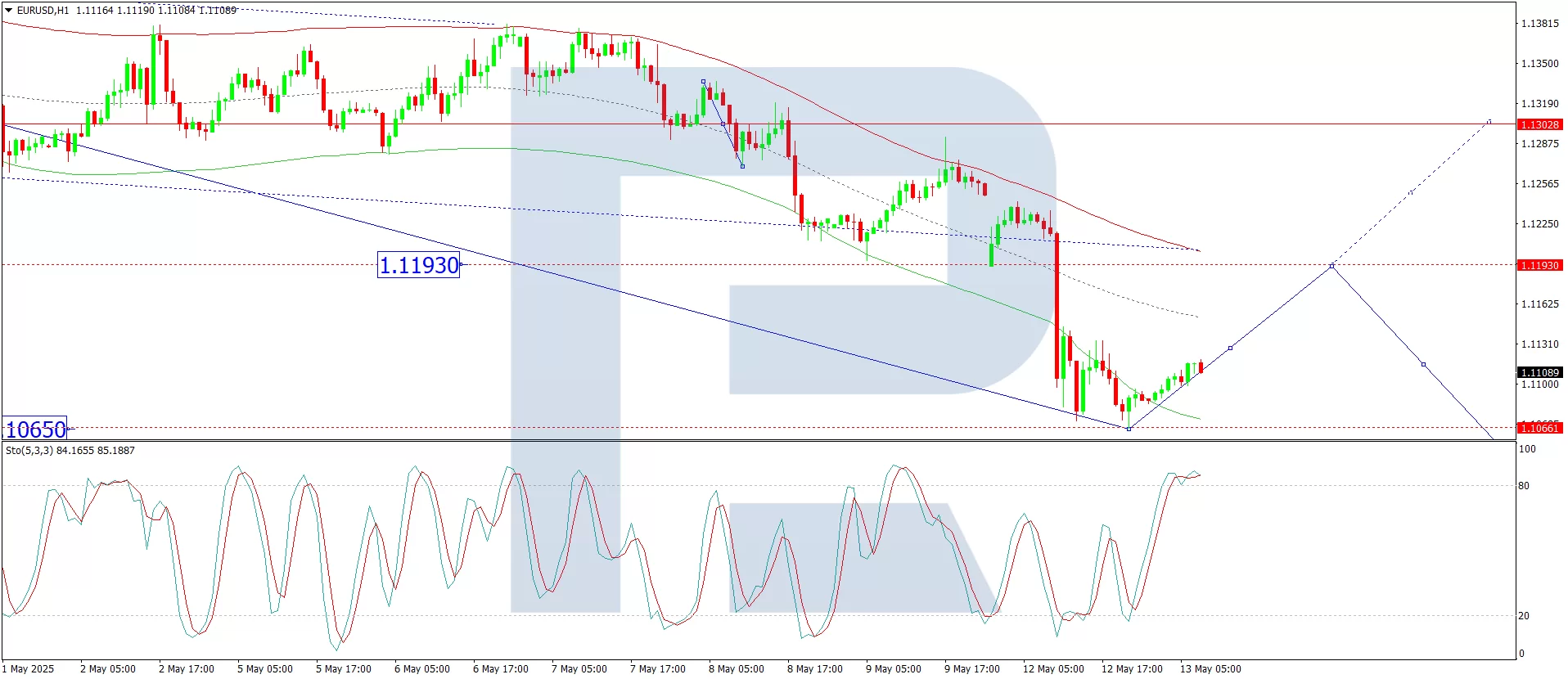
On the H4 chart, EUR/USD completed a corrective wave to 1.0350 before forming a new downward impulse to 1.0258. The current outlook suggests the potential development of a new downward wave targeting 1.0160. After reaching this level, a corrective move towards 1.0250 is likely, with a possible further decline to 1.0050. This scenario is supported by the MACD indicator, with its signal line below zero and trending downwards, indicating the likelihood of renewed lows.

On the H1 chart, the pair formed a downward impulse to 1.0258, with a correction expected to target 1.0300. Once this level is reached, the downward wave may resume, aiming for 1.0210 and potentially extending to 1.0160. The Stochastic oscillator supports this outlook, with its signal line below the 50 mark and heading towards 20, suggesting continued downward momentum.

Conclusion

EUR/USD remains under pressure as US inflation data bolstered the dollar’s resilience. While technical indicators point to further downside potential, the pair’s movements will largely depend on upcoming US retail sales and jobless claims data, as well as the overall strength of the USD. On the euro’s side, weak industrial production data highlights ongoing challenges in the eurozone, adding further weight to the bearish outlook.


Disclaimer

Any forecasts contained herein are based on the author’s particular opinion. This analysis may not be treated as trading advice. RoboForex bears no responsibility for trading results based on trading recommendations and reviews contained herein.

Australian Dollar Gains, but Rate Uncertainty Limits Potential

By RoboForex Analytical Department

The AUD/USD pair climbed to 0.6192 midweek, reflecting cautious optimism in the market. Traders remain vigilant ahead of key December inflation data from the US, which could influence expectations regarding the Federal Reserve’s potential interest rate cuts in 2025. Earlier, the Australian dollar recovered some of its losses as the US dollar reacted to Producer Price Index statistics.

Key upcoming events for the AUD

Australia will release its employment report on Thursday, a critical data point for assessing the state of the labour market. These figures are crucial for adjusting forecasts concerning the Reserve Bank of Australia’s (RBA) interest rate trajectory.

Fresh Q4 2024 inflation data for Australia will also be published at the end of the month. These data will be pivotal in shaping expectations for the RBA’s upcoming meeting and its decisions on borrowing costs.

Investors currently assign a 70% probability of a rate cut at the RBA’s February meeting. If realised, the rate could decrease by 25 basis points from the current 4.35% per annum. Market prices have already factored in this potential decision.

However, lingering uncertainty about the RBA’s future policy direction and the terminal rate target for the year keeps investors cautious, limiting the AUD’s upside potential.

Technical analysis of AUD/USD

On the H4 chart, AUD/USD is developing an upward wave targeting 0.6211. This level is expected to be tested today, followed by a potential decline towards 0.6161. A consolidation range is likely to form around 0.6161. If the pair breaks upwards from this range, a correction to 0.6290 could materialise. Conversely, a downward breakout could trigger a new wave targeting 0.6116. The MACD indicator supports this scenario, with its signal line below the zero mark but pointing sharply upwards.

On the H1 chart, the pair is building a growth wave towards 0.6211, which is expected to be reached today. Following this, a corrective move to 0.6161 may occur. The Stochastic oscillator confirms this scenario, with its signal line above the 50 mark and trending upwards towards 80.

Conclusion

The Australian dollar’s recent recovery is tempered by uncertainty surrounding the RBA’s future policy decisions. Key domestic data, including employment figures and Q4 inflation, heavily influence market expectations. While technical indicators suggest short-term growth potential for AUD/USD, further gains will depend on clarity regarding the RBA’s policy trajectory and broader economic conditions.

Disclaimer

Any forecasts contained herein are based on the author’s particular opinion. This analysis may not be treated as trading advice. RoboForex bears no responsibility for trading results based on trading recommendations and reviews contained herein.