Archive for Forex and Currency News – Page 22

GBP/USD Hits New High: The Pound Defies Market Pressures

By RoboForex Analytical Department 

The British pound has reached another three-year peak against the US dollar, stabilising around 1.3400.

Key factors driving GBP/USD strength

Sterling is closing April with its strongest monthly performance since November 2023, gaining over 3% against the US dollar.

Two key factors support the pound’s resilience:

  1. Monetary policy divergence – Markets expect the Bank of England (BoE) to slow the pace of interest rate cuts compared to other central banks. Current projections suggest the BoE will reduce rates by 85 basis points in 2025, roughly in line with expectations for the US Federal Reserve.
  2. Dollar alternatives in demand – Investors seek alternatives to the US dollar, and the UK appears less vulnerable to US tariff risks. A 90-day moratorium on increased US tariffs expires in late July, renewing global economic uncertainties.

Against this backdrop, the UK and its currency appear more stable than many peers.

Technical analysis: GBP/USD

H4 chart

  • GBP/USD continues to consolidate around 1.3344, with the range now extending to 1.3440.
  • A downside retest of 1.3344 is expected, followed by potential upward momentum towards 1.3455, defining the range boundaries.
  • A break below consolidation could trigger a downward wave targeting 1.3080 as the initial objective.
  • The MACD indicator supports this outlook, with its signal line above zero but poised for a decline.

H1 chart

  • The pair has broken above 1.3344, achieving a local target at 1.3440
  • A corrective decline towards 1.3344 is anticipated before potential renewed growth towards 1.3455
  • The Stochastic oscillator aligns with this scenario, with its signal line below 20 and primed for an upward move towards 80


Conclusion

The pound remains defensive yet strong, buoyed by relative monetary policy stability and its appeal as a dollar alternative. Technically, the pair is testing key levels, with further direction contingent on consolidation breaks.


Disclaimer

Any forecasts contained herein are based on the author’s particular opinion. This analysis may not be treated as trading advice. RoboForex bears no responsibility for trading results based on trading recommendations and reviews contained herein.

Gold Under Pressure as Market Hopes for US-China Trade Progress

By RoboForex Analytical Department 

The price of gold fell on Monday, dropping to 3,290 USD per troy ounce amid easing market tensions.

Key factors driving gold’s decline

The sell-off in the safe-haven asset was driven by reduced risk aversion, as trade tensions between the US and China showed signs of easing. This weakened gold’s appeal as a traditional hedge against uncertainty.

Earlier, US President Donald Trump hinted at a potential softening of his tough trade stance towards China, signalling the possibility of tariff negotiations. On Friday, China exempted certain US goods from its 25% tariffs, though Beijing stopped short of confirming any scheduled trade talks with Washington.

Additional downward pressure came from a strengthening US dollar, which made dollar-priced gold more expensive for foreign investors.

Upcoming US economic data in focus. This week, a raft of key US economic indicators will be released, including:

  • The first estimate of Q1 2025 GDP
  • Core PCE inflation data for March
  • April employment figures

These reports could provide fresh clues on the Federal Reserve’s next policy moves and the broader economic outlook.

Technical analysis: XAU/USD

On the H4 chart, XAU/USD is forming the fifth structure in the first wave of decline to the 3,232 level. A move to this target level seems likely. Further, a correction to the level of 3,365 is possible. After completing this correction, a new wave of decline to the 3,100 level is probable. The target is local. Technically, this scenario is confirmed by the MACD indicator, with its signal line under the zero level and directed strictly downwards.

On the H1 chart, XAU/USD has formed a consolidation range around the level of 3,300, and with an exit down, a decline to 3,232 is probable. Today, the fifth wave of the decline to at least 3,232 seems highly likely. Technically, this scenario is confirmed by the Stochastic oscillator. Its signal line is under the 50 level and directed strictly downwards to the 20 level.

Conclusion

Gold remains vulnerable to further losses amid improving US-China trade sentiment and a stronger dollar. Traders will closely monitor upcoming US data for further directional cues.


Disclaimer

Any forecasts contained herein are based on the author’s particular opinion. This analysis may not be treated as trading advice. RoboForex bears no responsibility for trading results based on trading recommendations and reviews contained herein.

Currency Speculators drop US Dollar Index Bets into Bearish territory

By InvestMacro

Speculators OI FX Futures COT Chart

Here are the latest charts and statistics for the Commitment of Traders (COT) data published by the Commodities Futures Trading Commission (CFTC).

The latest COT data is updated through Tuesday April 22nd and shows a quick view of how large market participants (for-profit speculators and commercial traders) were positioned in the futures markets. All currency positions are in direct relation to the US dollar where, for example, a bet for the euro is a bet that the euro will rise versus the dollar while a bet against the euro will be a bet that the euro will decline versus the dollar.

Weekly Speculator Changes led by Canadian Dollar & British Pound

Speculators Nets FX Futures COT Chart

The COT currency market speculator bets were higher this week as eight out of the eleven currency markets we cover had higher positioning while the other three markets had lower speculator contracts.

Leading the gains for the currency markets was the Canadian Dollar (16,693 contracts) with the British Pound (13,981 contracts), the Mexican Peso (7,896 contracts), the New Zealand Dollar (6,183 contracts), the Japanese Yen (5,959 contracts), the Australian Dollar (4,266 contracts), the Swiss Franc (3,110 contracts) and the Brazilian Real (855 contracts) also showing positive weeks.

The currencies seeing declines in speculator bets on the week were the EuroFX (-4,252 contracts), the US Dollar Index (-2,802 contracts) and with Bitcoin (-1,392 contracts) also registering lower bets on the week.

Currency Speculators drop US Dollar Index Bets into Bearish territory

Highlighting the COT currency’s data this week is the continued decrease in sentiment for the US Dollar Index. Speculative positions for the USD Index declined this week by -2,802 contracts and have fallen in five out of the last six weeks. This amounts to a total decline of approximately -10,000 net contracts over the past six weeks.

The deterioration in sentiment has brought the Dollar Index into its first bearish position (currently at -974 net contracts) since December, a span of 19 weeks dating back to December 10th 2024.

The Dollar Index (DXY) price has been falling sharply as well and the DXY closed this week under the major 100.00 level for the first time since a very brief spell in July of 2023. The DXY has tested this level numerous times over the past few years but has bounced higher each time. The DXY price has experienced a sharp decrease since January with an approximate decline by 10% which is a significant move for a major currency in a short amount of time.
The current pricing for the DXY is oversold and could bring dip buyers into the market but continued bearish action would bring the 95 level into play which looks to be the next major historical support level. The next level lower would by the 92-93 area which has not been touched since 2021.

Currencies Data:

Speculators FX Futures COT Data Table

Legend: Open Interest | Speculators Current Net Position | Weekly Specs Change | Specs Strength Score compared to last 3-Years (0-100 range)


Strength Scores led by Japanese Yen & Brazilian Real

Speculators Strength Scores FX Futures COT Chart

COT Strength Scores (a normalized measure of Speculator positions over a 3-Year range, from 0 to 100 where above 80 is Extreme-Bullish and below 20 is Extreme-Bearish) showed that the Japanese Yen (100 percent) and the Brazilian Real (100 percent) are at extreme high levels and lead the currency markets this week. The Canadian Dollar (58 percent) and the EuroFX (54 percent) come in as the next highest in the weekly strength scores.

On the downside, the US Dollar Index (5 percent) comes in at the lowest strength levels currently and is in Extreme-Bearish territory (below 20 percent). The next lowest strength scores are the New Zealand Dollar (33 percent), Bitcoin (34 percent) and the Australian Dollar (38 percent).

3-Year Strength Statistics:
US Dollar Index (4.7 percent) vs US Dollar Index previous week (10.5 percent)
EuroFX (53.5 percent) vs EuroFX previous week (55.1 percent)
British Pound Sterling (45.3 percent) vs British Pound Sterling previous week (39.0 percent)
Japanese Yen (100.0 percent) vs Japanese Yen previous week (98.4 percent)
Swiss Franc (49.3 percent) vs Swiss Franc previous week (43.0 percent)
Canadian Dollar (57.9 percent) vs Canadian Dollar previous week (50.4 percent)
Australian Dollar (37.6 percent) vs Australian Dollar previous week (34.5 percent)
New Zealand Dollar (33.4 percent) vs New Zealand Dollar previous week (26.2 percent)
Mexican Peso (49.7 percent) vs Mexican Peso previous week (45.7 percent)
Brazilian Real (99.7 percent) vs Brazilian Real previous week (98.8 percent)
Bitcoin (33.7 percent) vs Bitcoin previous week (64.1 percent)


Canadian Dollar & New Zealand Dollar top the 6-Week Strength Trends

Speculators Trends FX Futures COT Chart

COT Strength Score Trends (or move index, calculates the 6-week changes in strength scores) showed that the Canadian Dollar (34 percent) and the New Zealand Dollar (30 percent) lead the past six weeks trends for the currencies. The Swiss Franc (23 percent), the EuroFX (20 percent) and the Japanese Yen (12 percent) are the next highest positive movers in the 3-Year trends data.

Bitcoin (-51 percent) leads the downside trend scores currently with the US Dollar Index (-37 percent), Australian Dollar (-5 percent) and the British Pound (-4 percent) following next with lower trend scores.

3-Year Strength Trends:
US Dollar Index (-36.9 percent) vs US Dollar Index previous week (-26.8 percent)
EuroFX (19.8 percent) vs EuroFX previous week (30.2 percent)
British Pound Sterling (-3.9 percent) vs British Pound Sterling previous week (-5.4 percent)
Japanese Yen (12.1 percent) vs Japanese Yen previous week (10.6 percent)
Swiss Franc (23.3 percent) vs Swiss Franc previous week (18.6 percent)
Canadian Dollar (33.7 percent) vs Canadian Dollar previous week (26.8 percent)
Australian Dollar (-4.5 percent) vs Australian Dollar previous week (-7.5 percent)
New Zealand Dollar (30.1 percent) vs New Zealand Dollar previous week (26.2 percent)
Mexican Peso (5.7 percent) vs Mexican Peso previous week (7.0 percent)
Brazilian Real (7.6 percent) vs Brazilian Real previous week (5.6 percent)
Bitcoin (-50.9 percent) vs Bitcoin previous week (-0.6 percent)


Individual COT Forex Markets:

US Dollar Index Futures:

US Dollar Index Forex Futures COT ChartThe US Dollar Index large speculator standing this week came in at a net position of -974 contracts in the data reported through Tuesday. This was a weekly lowering of -2,802 contracts from the previous week which had a total of 1,828 net contracts.

This week’s current strength score (the trader positioning range over the past three years, measured from 0 to 100) shows the speculators are currently Bearish-Extreme with a score of 4.7 percent. The commercials are Bullish-Extreme with a score of 98.0 percent and the small traders (not shown in chart) are Bearish-Extreme with a score of 16.6 percent.

Price Trend-Following Model: Strong Downtrend

Our weekly trend-following model classifies the current market price position as: Strong Downtrend.

US DOLLAR INDEX StatisticsSPECULATORSCOMMERCIALSSMALL TRADERS
– Percent of Open Interest Longs:56.928.29.0
– Percent of Open Interest Shorts:59.822.212.0
– Net Position:-9741,985-1,011
– Gross Longs:18,6969,2862,951
– Gross Shorts:19,6707,3013,962
– Long to Short Ratio:1.0 to 11.3 to 10.7 to 1
NET POSITION TREND:
– Strength Index Score (3 Year Range Pct):4.798.016.6
– Strength Index Reading (3 Year Range):Bearish-ExtremeBullish-ExtremeBearish-Extreme
NET POSITION MOVEMENT INDEX:
– 6-Week Change in Strength Index:-36.938.0-19.8


Euro Currency Futures:

Euro Currency Futures COT ChartThe Euro Currency large speculator standing this week came in at a net position of 65,028 contracts in the data reported through Tuesday. This was a weekly decline of -4,252 contracts from the previous week which had a total of 69,280 net contracts.

This week’s current strength score (the trader positioning range over the past three years, measured from 0 to 100) shows the speculators are currently Bullish with a score of 53.5 percent. The commercials are Bearish with a score of 41.0 percent and the small traders (not shown in chart) are Bullish-Extreme with a score of 90.8 percent.

Price Trend-Following Model: Strong Uptrend

Our weekly trend-following model classifies the current market price position as: Strong Uptrend.

EURO Currency StatisticsSPECULATORSCOMMERCIALSSMALL TRADERS
– Percent of Open Interest Longs:27.355.813.4
– Percent of Open Interest Shorts:18.272.26.0
– Net Position:65,028-117,94152,913
– Gross Longs:196,205401,25796,353
– Gross Shorts:131,177519,19843,440
– Long to Short Ratio:1.5 to 10.8 to 12.2 to 1
NET POSITION TREND:
– Strength Index Score (3 Year Range Pct):53.541.090.8
– Strength Index Reading (3 Year Range):BullishBearishBullish-Extreme
NET POSITION MOVEMENT INDEX:
– 6-Week Change in Strength Index:19.8-23.940.4


British Pound Sterling Futures:

British Pound Sterling Futures COT ChartThe British Pound Sterling large speculator standing this week came in at a net position of 20,490 contracts in the data reported through Tuesday. This was a weekly advance of 13,981 contracts from the previous week which had a total of 6,509 net contracts.

This week’s current strength score (the trader positioning range over the past three years, measured from 0 to 100) shows the speculators are currently Bearish with a score of 45.3 percent. The commercials are Bullish with a score of 51.3 percent and the small traders (not shown in chart) are Bullish with a score of 72.6 percent.

Price Trend-Following Model: Strong Uptrend

Our weekly trend-following model classifies the current market price position as: Strong Uptrend.

BRITISH POUND StatisticsSPECULATORSCOMMERCIALSSMALL TRADERS
– Percent of Open Interest Longs:52.430.316.3
– Percent of Open Interest Shorts:41.044.513.6
– Net Position:20,490-25,4394,949
– Gross Longs:94,02154,47729,322
– Gross Shorts:73,53179,91624,373
– Long to Short Ratio:1.3 to 10.7 to 11.2 to 1
NET POSITION TREND:
– Strength Index Score (3 Year Range Pct):45.351.372.6
– Strength Index Reading (3 Year Range):BearishBullishBullish
NET POSITION MOVEMENT INDEX:
– 6-Week Change in Strength Index:-3.92.83.7


Japanese Yen Futures:

Japanese Yen Forex Futures COT ChartThe Japanese Yen large speculator standing this week came in at a new all-time record high net position of 177,814 contracts in the data reported through Tuesday. This was a weekly gain of 5,959 contracts from the previous week which had a total of 171,855 net contracts.

This week’s current strength score (the trader positioning range over the past three years, measured from 0 to 100) shows the speculators are currently Bullish-Extreme with a score of 100.0 percent. The commercials are Bearish-Extreme with a score of 0.0 percent and the small traders (not shown in chart) are Bullish-Extreme with a score of 100.0 percent.

Price Trend-Following Model: Strong Uptrend

Our weekly trend-following model classifies the current market price position as: Strong Uptrend.

JAPANESE YEN StatisticsSPECULATORSCOMMERCIALSSMALL TRADERS
– Percent of Open Interest Longs:57.628.612.7
– Percent of Open Interest Shorts:7.085.86.1
– Net Position:177,814-200,92223,108
– Gross Longs:202,373100,29944,643
– Gross Shorts:24,559301,22121,535
– Long to Short Ratio:8.2 to 10.3 to 12.1 to 1
NET POSITION TREND:
– Strength Index Score (3 Year Range Pct):100.00.0100.0
– Strength Index Reading (3 Year Range):Bullish-ExtremeBearish-ExtremeBullish-Extreme
NET POSITION MOVEMENT INDEX:
– 6-Week Change in Strength Index:12.1-13.118.1


Swiss Franc Futures:

Swiss Franc Forex Futures COT ChartThe Swiss Franc large speculator standing this week came in at a net position of -25,474 contracts in the data reported through Tuesday. This was a weekly increase of 3,110 contracts from the previous week which had a total of -28,584 net contracts.

This week’s current strength score (the trader positioning range over the past three years, measured from 0 to 100) shows the speculators are currently Bearish with a score of 49.3 percent. The commercials are Bearish with a score of 43.1 percent and the small traders (not shown in chart) are Bullish with a score of 73.4 percent.

Price Trend-Following Model: Strong Uptrend

Our weekly trend-following model classifies the current market price position as: Strong Uptrend.

SWISS FRANC StatisticsSPECULATORSCOMMERCIALSSMALL TRADERS
– Percent of Open Interest Longs:7.374.418.1
– Percent of Open Interest Shorts:42.237.719.8
– Net Position:-25,47426,742-1,268
– Gross Longs:5,32254,22613,198
– Gross Shorts:30,79627,48414,466
– Long to Short Ratio:0.2 to 12.0 to 10.9 to 1
NET POSITION TREND:
– Strength Index Score (3 Year Range Pct):49.343.173.4
– Strength Index Reading (3 Year Range):BearishBearishBullish
NET POSITION MOVEMENT INDEX:
– 6-Week Change in Strength Index:23.3-25.217.0


Canadian Dollar Futures:

Canadian Dollar Forex Futures COT ChartThe Canadian Dollar large speculator standing this week came in at a net position of -67,167 contracts in the data reported through Tuesday. This was a weekly boost of 16,693 contracts from the previous week which had a total of -83,860 net contracts.

This week’s current strength score (the trader positioning range over the past three years, measured from 0 to 100) shows the speculators are currently Bullish with a score of 57.9 percent. The commercials are Bearish with a score of 44.6 percent and the small traders (not shown in chart) are Bearish with a score of 26.8 percent.

Price Trend-Following Model: Strong Uptrend

Our weekly trend-following model classifies the current market price position as: Strong Uptrend.

CANADIAN DOLLAR StatisticsSPECULATORSCOMMERCIALSSMALL TRADERS
– Percent of Open Interest Longs:7.482.29.5
– Percent of Open Interest Shorts:34.352.911.9
– Net Position:-67,16773,173-6,006
– Gross Longs:18,357205,32523,821
– Gross Shorts:85,524132,15229,827
– Long to Short Ratio:0.2 to 11.6 to 10.8 to 1
NET POSITION TREND:
– Strength Index Score (3 Year Range Pct):57.944.626.8
– Strength Index Reading (3 Year Range):BullishBearishBearish
NET POSITION MOVEMENT INDEX:
– 6-Week Change in Strength Index:33.7-35.222.1


Australian Dollar Futures:

Australian Dollar Forex Futures COT ChartThe Australian Dollar large speculator standing this week came in at a net position of -54,582 contracts in the data reported through Tuesday. This was a weekly gain of 4,266 contracts from the previous week which had a total of -58,848 net contracts.

This week’s current strength score (the trader positioning range over the past three years, measured from 0 to 100) shows the speculators are currently Bearish with a score of 37.6 percent. The commercials are Bullish with a score of 60.0 percent and the small traders (not shown in chart) are Bullish with a score of 60.0 percent.

Price Trend-Following Model: Strong Uptrend

Our weekly trend-following model classifies the current market price position as: Strong Uptrend.

AUSTRALIAN DOLLAR StatisticsSPECULATORSCOMMERCIALSSMALL TRADERS
– Percent of Open Interest Longs:14.265.812.7
– Percent of Open Interest Shorts:42.939.410.5
– Net Position:-54,58250,4304,152
– Gross Longs:27,175125,58324,156
– Gross Shorts:81,75775,15320,004
– Long to Short Ratio:0.3 to 11.7 to 11.2 to 1
NET POSITION TREND:
– Strength Index Score (3 Year Range Pct):37.660.060.0
– Strength Index Reading (3 Year Range):BearishBullishBullish
NET POSITION MOVEMENT INDEX:
– 6-Week Change in Strength Index:-4.5-3.029.8


New Zealand Dollar Futures:

New Zealand Dollar Forex Futures COT ChartThe New Zealand Dollar large speculator standing this week came in at a net position of -26,895 contracts in the data reported through Tuesday. This was a weekly increase of 6,183 contracts from the previous week which had a total of -33,078 net contracts.

This week’s current strength score (the trader positioning range over the past three years, measured from 0 to 100) shows the speculators are currently Bearish with a score of 33.4 percent. The commercials are Bullish with a score of 65.0 percent and the small traders (not shown in chart) are Bearish with a score of 46.4 percent.

Price Trend-Following Model: Strong Uptrend

Our weekly trend-following model classifies the current market price position as: Strong Uptrend.

NEW ZEALAND DOLLAR StatisticsSPECULATORSCOMMERCIALSSMALL TRADERS
– Percent of Open Interest Longs:15.877.16.3
– Percent of Open Interest Shorts:58.733.37.2
– Net Position:-26,89527,449-554
– Gross Longs:9,89748,3333,948
– Gross Shorts:36,79220,8844,502
– Long to Short Ratio:0.3 to 12.3 to 10.9 to 1
NET POSITION TREND:
– Strength Index Score (3 Year Range Pct):33.465.046.4
– Strength Index Reading (3 Year Range):BearishBullishBearish
NET POSITION MOVEMENT INDEX:
– 6-Week Change in Strength Index:30.1-31.323.4


Mexican Peso Futures:

Mexican Peso Futures COT ChartThe Mexican Peso large speculator standing this week came in at a net position of 41,165 contracts in the data reported through Tuesday. This was a weekly increase of 7,896 contracts from the previous week which had a total of 33,269 net contracts.

This week’s current strength score (the trader positioning range over the past three years, measured from 0 to 100) shows the speculators are currently Bearish with a score of 49.7 percent. The commercials are Bullish with a score of 52.4 percent and the small traders (not shown in chart) are Bearish with a score of 29.3 percent.

Price Trend-Following Model: Strong Uptrend

Our weekly trend-following model classifies the current market price position as: Strong Uptrend.

MEXICAN PESO StatisticsSPECULATORSCOMMERCIALSSMALL TRADERS
– Percent of Open Interest Longs:51.943.23.7
– Percent of Open Interest Shorts:20.375.72.8
– Net Position:41,165-42,3481,183
– Gross Longs:67,62456,3414,828
– Gross Shorts:26,45998,6893,645
– Long to Short Ratio:2.6 to 10.6 to 11.3 to 1
NET POSITION TREND:
– Strength Index Score (3 Year Range Pct):49.752.429.3
– Strength Index Reading (3 Year Range):BearishBullishBearish
NET POSITION MOVEMENT INDEX:
– 6-Week Change in Strength Index:5.7-6.25.4


Brazilian Real Futures:

Brazil Real Futures COT ChartThe Brazilian Real large speculator standing this week came in at a net position of 49,887 contracts in the data reported through Tuesday. This was a weekly gain of 855 contracts from the previous week which had a total of 49,032 net contracts.

This week’s current strength score (the trader positioning range over the past three years, measured from 0 to 100) shows the speculators are currently Bullish-Extreme with a score of 99.7 percent. The commercials are Bearish-Extreme with a score of 0.4 percent and the small traders (not shown in chart) are Bearish with a score of 31.0 percent.

Price Trend-Following Model: Strong Uptrend

Our weekly trend-following model classifies the current market price position as: Strong Uptrend.

BRAZIL REAL StatisticsSPECULATORSCOMMERCIALSSMALL TRADERS
– Percent of Open Interest Longs:71.223.54.2
– Percent of Open Interest Shorts:15.381.52.2
– Net Position:49,887-51,6821,795
– Gross Longs:63,53421,0103,743
– Gross Shorts:13,64772,6921,948
– Long to Short Ratio:4.7 to 10.3 to 11.9 to 1
NET POSITION TREND:
– Strength Index Score (3 Year Range Pct):99.70.431.0
– Strength Index Reading (3 Year Range):Bullish-ExtremeBearish-ExtremeBearish
NET POSITION MOVEMENT INDEX:
– 6-Week Change in Strength Index:7.6-7.4-0.7


Bitcoin Futures:

Bitcoin Crypto Futures COT ChartThe Bitcoin large speculator standing this week came in at a net position of -806 contracts in the data reported through Tuesday. This was a weekly fall of -1,392 contracts from the previous week which had a total of 586 net contracts.

This week’s current strength score (the trader positioning range over the past three years, measured from 0 to 100) shows the speculators are currently Bearish with a score of 33.7 percent. The commercials are Bullish with a score of 78.7 percent and the small traders (not shown in chart) are Bearish with a score of 38.2 percent.

Price Trend-Following Model: Weak Downtrend

Our weekly trend-following model classifies the current market price position as: Weak Downtrend.

BITCOIN StatisticsSPECULATORSCOMMERCIALSSMALL TRADERS
– Percent of Open Interest Longs:81.83.84.4
– Percent of Open Interest Shorts:84.61.73.8
– Net Position:-806612194
– Gross Longs:23,0581,0801,253
– Gross Shorts:23,8644681,059
– Long to Short Ratio:1.0 to 12.3 to 11.2 to 1
NET POSITION TREND:
– Strength Index Score (3 Year Range Pct):33.778.738.2
– Strength Index Reading (3 Year Range):BearishBullishBearish
NET POSITION MOVEMENT INDEX:
– 6-Week Change in Strength Index:-50.947.725.7


Article By InvestMacroReceive our weekly COT Newsletter

*COT Report: The COT data, released weekly to the public each Friday, is updated through the most recent Tuesday (data is 3 days old) and shows a quick view of how large speculators or non-commercials (for-profit traders) were positioned in the futures markets.

The CFTC categorizes trader positions according to commercial hedgers (traders who use futures contracts for hedging as part of the business), non-commercials (large traders who speculate to realize trading profits) and nonreportable traders (usually small traders/speculators) as well as their open interest (contracts open in the market at time of reporting). See CFTC criteria here.

Speculator Extremes: Yen, BRL, 5-Year & Dollar Index lead Bullish & Bearish Positions

By InvestMacro

The latest update for the weekly Commitment of Traders (COT) report was released by the Commodity Futures Trading Commission (CFTC) on Friday for data ending on April 22nd.

This weekly Extreme Positions report highlights the Most Bullish and Most Bearish Positions for the speculator category. Extreme positioning in these markets can foreshadow strong moves in the underlying market.

To signify an extreme position, we use the Strength Index (also known as the COT Index) of each instrument, a common method of measuring COT data. The Strength Index is simply a comparison of current trader positions against the range of positions over the previous 3 years. We use over 80 percent as extremely bullish and under 20 percent as extremely bearish. (Compare Strength Index scores across all markets in the data table or cot leaders table)


Extreme Bullish Speculator Table


Here Are This Week’s Most Bullish Speculator Positions:

Japanese Yen

The Japanese Yen speculator position, once again, comes in as the most bullish extreme standing this week. The Japanese Yen speculator level is currently at a 100.0 percent score of its 3-year range as the speculator net positioning continues to make new all-time highs for the 3rd week in a row.

The six-week trend for the percent strength score increased by 12.1 this week. The overall net speculator position was a total of 177,814 net contracts this week with a gain of 5,959 contract in the weekly speculator bets.


Speculators or Non-Commercials Notes:

Speculators, classified as non-commercial traders by the CFTC, are made up of large commodity funds, hedge funds and other significant for-profit participants. The Specs are generally regarded as trend-followers in their behavior towards price action – net speculator bets and prices tend to go in the same directions. These traders often look to buy when prices are rising and sell when prices are falling. To illustrate this point, many times speculator contracts can be found at their most extremes (bullish or bearish) when prices are also close to their highest or lowest levels.

These extreme levels can be dangerous for the large speculators as the trade is most crowded, there is less trading ammunition still sitting on the sidelines to push the trend further and prices have moved a significant distance. When the trend becomes exhausted, some speculators take profits while others look to also exit positions when prices fail to continue in the same direction. This process usually plays out over many months to years and can ultimately create a reverse effect where prices start to fall and speculators start a process of selling when prices are falling.


Brazil Real

The Brazil Real speculator position comes up next in the extreme standings this week. The Brazil Real speculator level is now at a 99.7 percent score compared to its 3-year range.

The six-week trend for the percent strength score totaled 7.6 this week. The speculator position registered 49,887 net contracts this week with a weekly rise of 855 contracts in speculator bets.


Nasdaq

The Nasdaq speculator position comes in third this week in the extreme standings. The Nasdaq speculator level resides at a 97.6 percent score of its 3-year range.

The six-week trend for the speculator strength score came in at 23.2 this week. The overall speculator position was 37,680 net contracts this week with an increase by 5,886 contracts in the weekly speculator bets.


Nikkei 225

The Nikkei 225 speculator position comes in at number four in the extreme standings this week as the Nikkei 225 speculator level is at a 96.4 percent score over its 3-year range.

The six-week trend for the speculator strength score totaled a change of 35.0 this week. The overall speculator position was 1,904 net contracts this week with a gain of 2,025 contracts in the speculator bets.


VIX

The VIX speculator position rounds out the top five in this week’s bullish extreme standings with the VIX speculator level at a 89.4 percent score of its 3-year range. The six-week trend for the speculator strength score totaled 10.8 this week.

The speculator position sits at -5,745 net contracts this week with a rise of 11,552 contracts in the weekly speculator bets.


Extreme Bearish Speculator Table


This Week’s Most Bearish Speculator Positions:

5-Year Bond

The 5-Year Bond speculator position comes in as the most bearish extreme standing this week as the 5-Year Bond speculator level is at a 0.0 percent score or the bottom of the 3-year range.

The six-week trend for the speculator strength score was -15.2 this week. The overall speculator position was -2,191,434 net contracts this week with a decrease of -129,859 contracts in the speculator bets.


US Dollar Index

The US Dollar Index speculator position comes in next for the most bearish extreme standing on the week as USD sentiment has been deteriorating. The US Dollar Index speculator level is at just a 4.7 percent score of its 3-year range.

The six-week trend for the speculator strength score was -36.9 this week. The speculator position was -974 net contracts this week with a reduction of -2,802 contracts in the weekly speculator bets.


Wheat

The Wheat speculator position comes in as third most bearish extreme standing of the week. The Wheat speculator level resides at a 6.7 percent score of its 3-year range.

The six-week trend for the speculator strength score was -12.1 this week. The overall speculator position was -93,969 net contracts this week with a decline of -5,643 contracts in the speculator bets.


E-mini SP MidCap400

The E-mini SP MidCap400 speculator position comes in as this week’s fourth most bearish standing with the MidCap400 speculator level at a 11.1 percent score of its 3-year range.

The six-week trend for the speculator strength score was -23.4 this week while the speculator position totaled -86 net contracts this week with a tiny change of 5 contracts in the weekly speculator bets.


2-Year Bond

Finally, the 2-Year Bond speculator position comes in as the fifth most bearish standing for this week. The 2-Year Bond speculator level is at a 13.0 percent score of its 3-year range.

The six-week trend for the speculator strength score was -5.2 this week and the speculator position was -1,297,995 net contracts this week with a drop of -43,222 contracts in the weekly speculator bets.


Article By InvestMacroReceive our weekly COT Newsletter

*COT Report: The COT data, released weekly to the public each Friday, is updated through the most recent Tuesday (data is 3 days old) and shows a quick view of how large speculators or non-commercials (for-profit traders) were positioned in the futures markets.

The CFTC categorizes trader positions according to commercial hedgers (traders who use futures contracts for hedging as part of the business), non-commercials (large traders who speculate to realize trading profits) and nonreportable traders (usually small traders/speculators) as well as their open interest (contracts open in the market at time of reporting). See CFTC criteria here.

EUR/USD Stuck in Consolidation: Rumours Abound, but Facts Remain Scarce

By RoboForex Analytical Department 

On Friday, the major currency pair became further entrenched within a local sideways channel, hovering around 1.1339. The US dollar retained gains accumulated over recent sessions, supported by US President Donald Trump’s confirmation that trade negotiations with China would continue.

Key factors driving EUR/USD movements

The dollar received additional support from signs of progress in trade discussions with Japan and South Korea.

Earlier in the week, US Treasury Secretary Scott Bessent emphasised that substantial US-China negotiations would require significant tariff reductions, highlighting the importance of reducing tensions between the world’s two largest economies.

Trump also softened his stance on Federal Reserve Chair Jerome Powell, saying he had no plans to replace him. This statement helped alleviate investor uncertainty regarding the Fed’s leadership.

Meanwhile, Cleveland Fed President Beth Hammack suggested that an interest rate cut could materialise as early as June, contingent on economic data. While this initially weighed on the dollar, the currency regained strength amid renewed trade optimism.

Technical analysis: EUR/USD

H4 chart

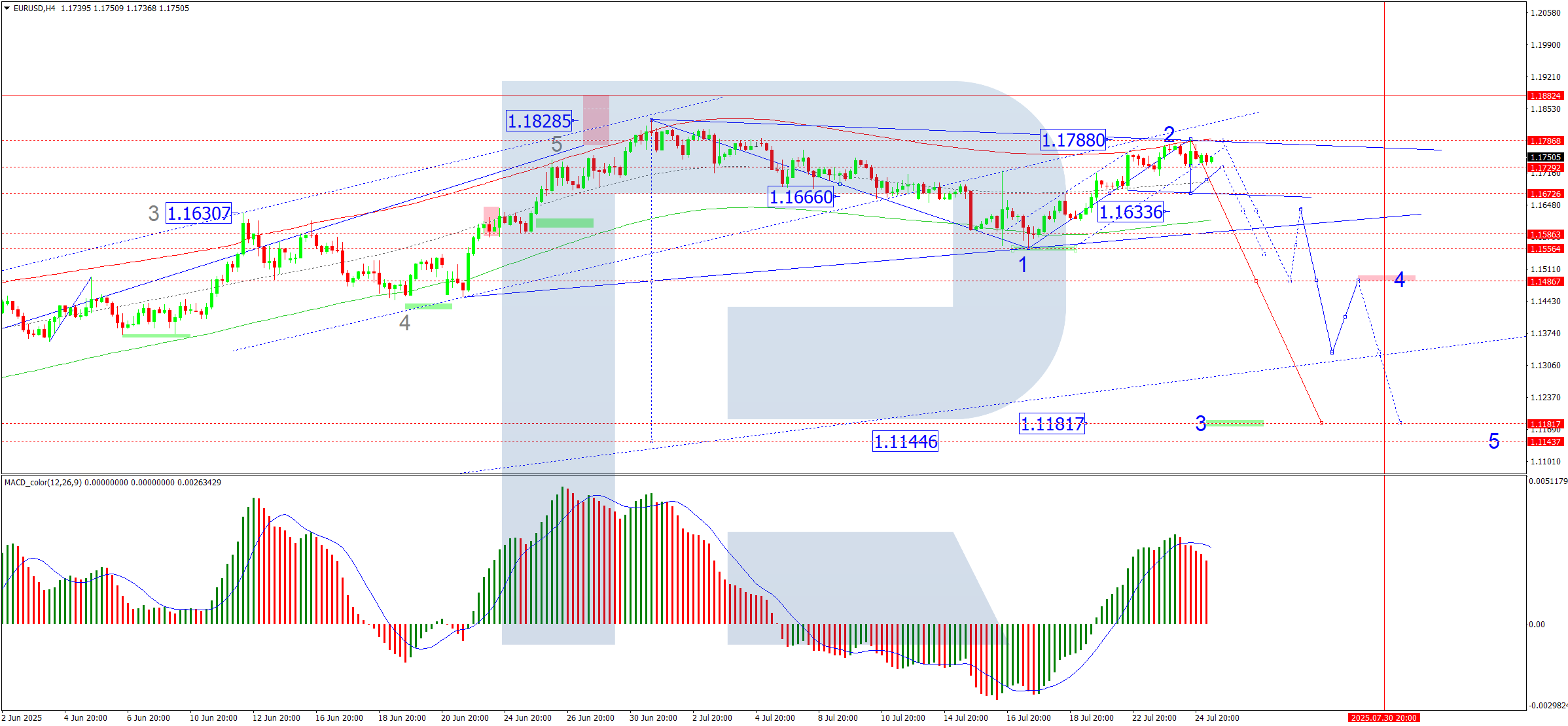
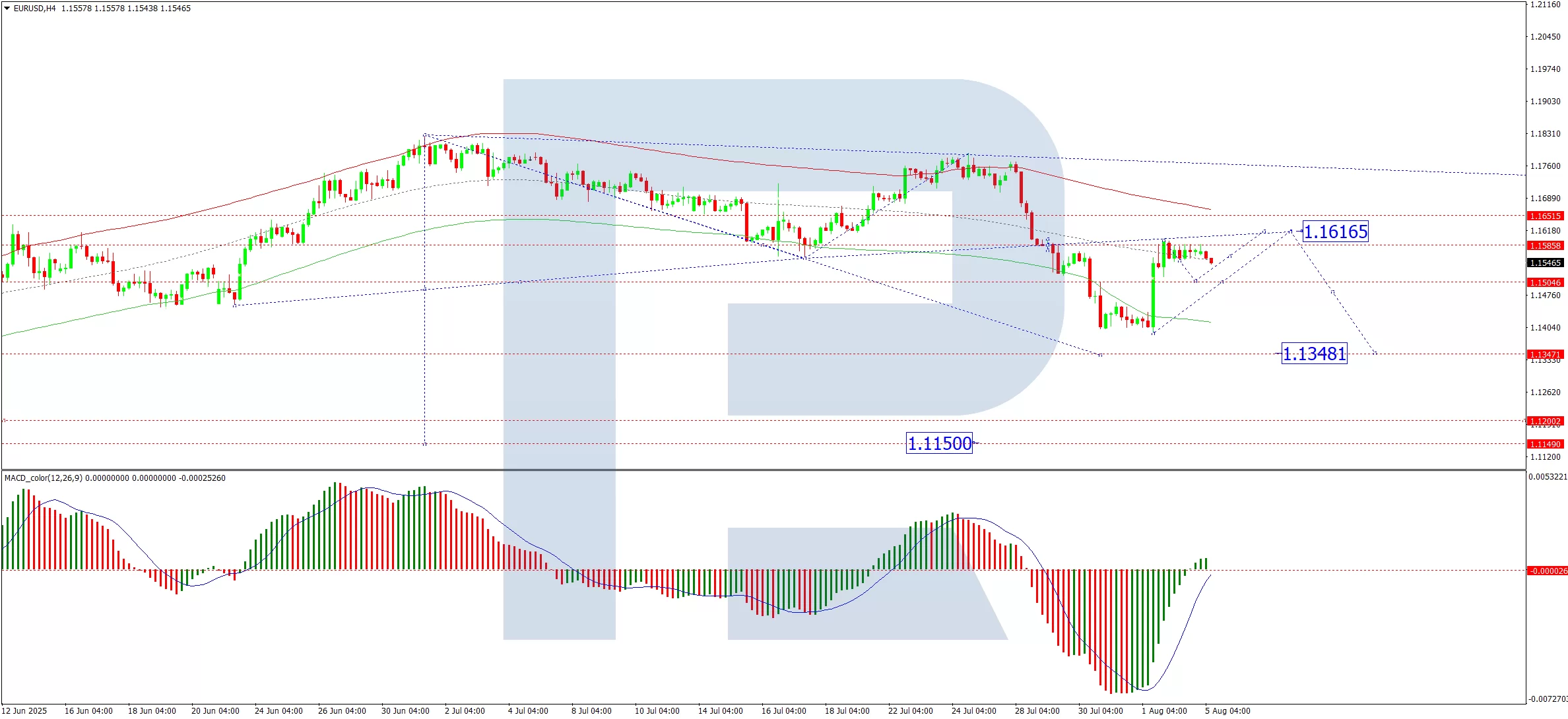
The EUR/USD pair has formed a consolidation range around 1.1358. We anticipate the downward wave to continue towards 1.1280, followed by a potential corrective rebound to 1.1427. A subsequent decline towards 1.1045 remains plausible. This scenario is technically supported by the MACD indicator, with its signal line firmly below zero and pointing downward.

H1 chart

On the hourly chart, the pair continues its downward trajectory towards 1.1280, with this level likely to be tested imminently. A corrective pullback towards 1.1427 may follow. The Stochastic oscillator corroborates this outlook, with its signal line currently below 20 and poised for an upward swing towards 80.

Conclusion

The EUR/USD remains confined within a consolidation phase, with trade developments and Fed policy expectations driving near-term volatility. Traders should monitor key support and resistance levels for confirmation of the next directional move.


Disclaimer

Any forecasts contained herein are based on the author’s particular opinion. This analysis may not be treated as trading advice. RoboForex bears no responsibility for trading results based on trading recommendations and reviews contained herein.

Pound Hits Fresh High Against the US Dollar Before Correcting: What’s Driving GBP/USD?

By RoboForex Analytical Department 

GBP/USD reached a seven-month peak at 1.3423 — its highest level since 26 September 2024 — before entering a corrective phase.

Key Drivers Behind GBP/USD Movements

Market concerns over US President Donald Trump’s criticism of Federal Reserve Chair Jerome Powell have eased. Trump has since clarified that Powell will not be dismissed, though he expressed frustration over the Fed’s reluctance to cut interest rates sooner.

The US Dollar’s rebound against the Pound followed the release of UK inflation data and a slightly weaker outlook for the labour market. Although the figures were published last week, the market has only now fully digested their implications.

In March, the UK Consumer Price Index (CPI) slowed to a three-month low. Meanwhile, the employment sector appears vulnerable ahead of another planned rise in employer taxes, due by the end of April.

Current market expectations suggest the Bank of England (BoE) will cut interest rates by 25 basis points (bps) in May, with an additional 85 bps of easing anticipated by year-end.

While US tariff policies are unlikely to directly impact UK inflation, their broader effect may contribute to lower rather than higher price pressures.

Technical Analysis: GBP/USD

H4 Chart Overview

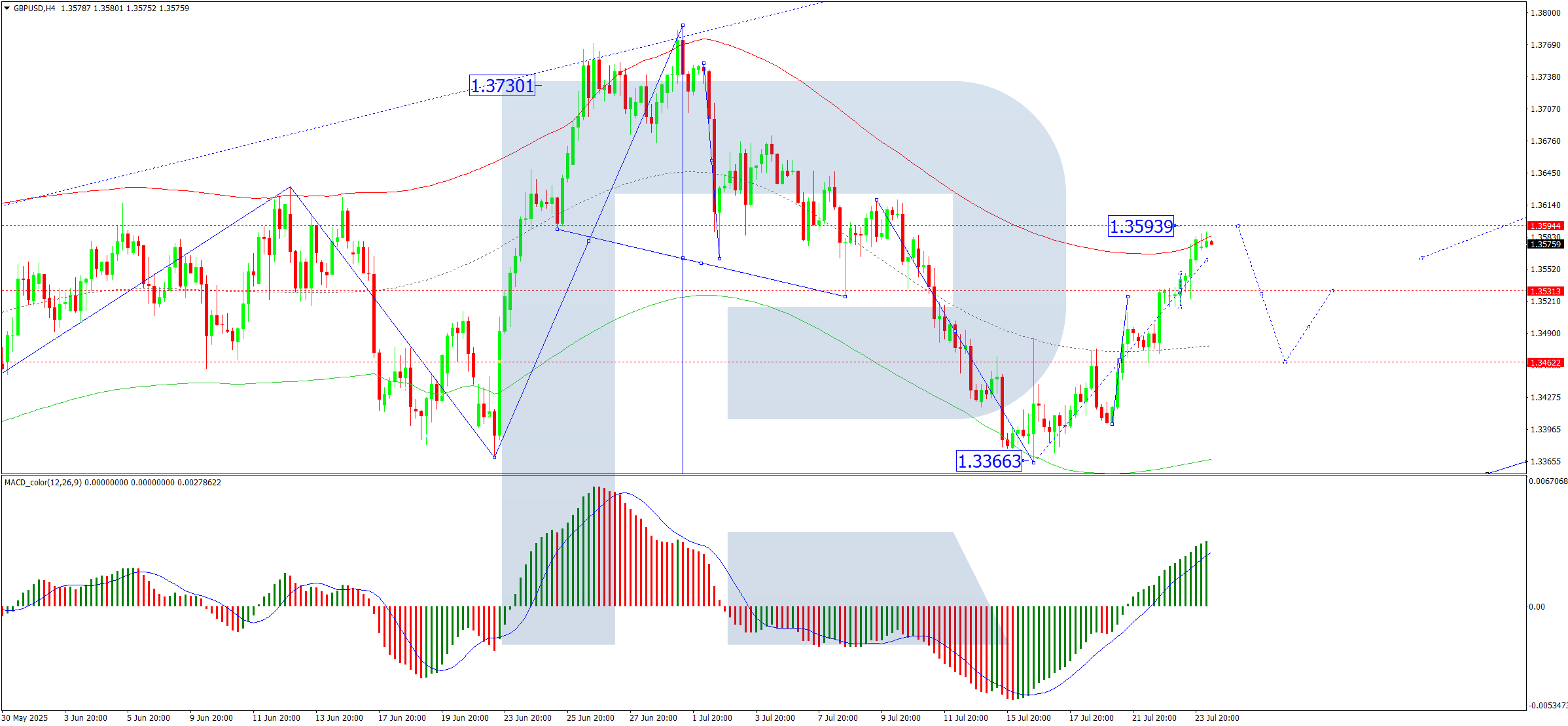
  • The pair formed a consolidation range near 1.3066 before breaking upwards in a wave structure towards 1.3420.
  • A corrective pullback to 1.3200 is now underway.
  • The next phase may see a resumption of upward momentum towards 1.3310, potentially establishing a new consolidation range around this level.
  • The MACD indicator supports this outlook, with its signal line exiting the histogram area and pointing sharply downward, suggesting near-term bearish momentum.


H1 Chart Overview

  • GBP/USD broke below 1.3310, hitting a local downside target at 1.3233.
  • Today, the pair retested 1.3310 from below, and further downside movement towards 1.3200 is now in focus.
  • The Stochastic oscillator aligns with this view, as its signal line remains below 80 and is trending downward towards 20, indicating weakening bullish momentum.


Conclusion

The GBP/USD rally has paused as traders assess mixed UK economic data and shifting Fed policy expectations. While near-term corrections are likely, the broader trend could see renewed upside if key support levels hold. Technical indicators suggest further consolidation before the next decisive move.


Disclaimer

Any forecasts contained herein are based on the author’s particular opinion. This analysis may not be treated as trading advice. RoboForex bears no responsibility for trading results based on trading recommendations and reviews contained herein.

Japanese Yen Appreciates Too Rapidly: Speed Poses Risks

By RoboForex Analytical Department 

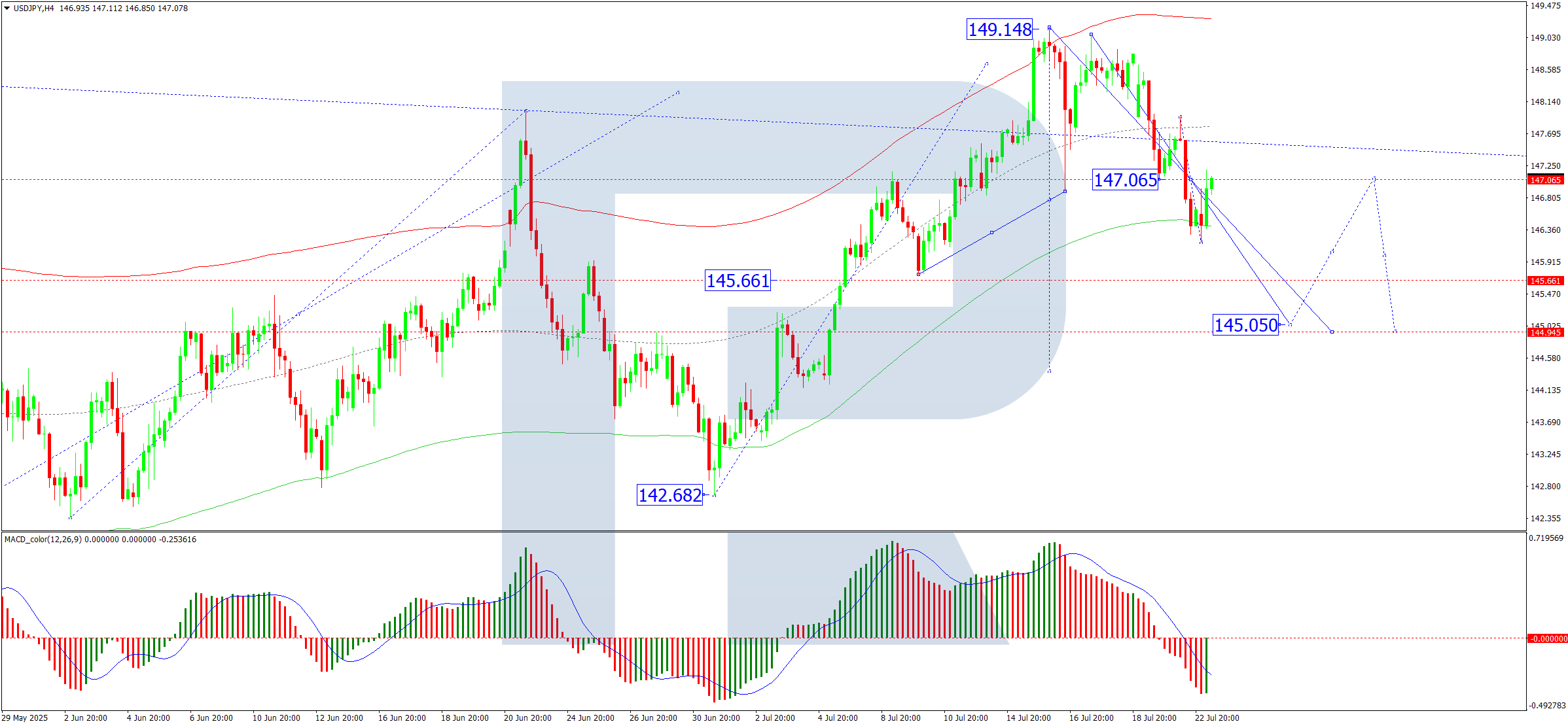
The USD/JPY pair dropped to 140.13 on Tuesday, marking yet another seven-month low.

Key Drivers Behind USD/JPY Movements

The yen’s rally is gaining momentum amid rising global trade risks. Additionally, investors are growing increasingly wary of US assets.

Last week’s tentative market optimism has now faded, with sentiment deteriorating following remarks from US President Donald Trump regarding the potential dismissal of Federal Reserve Chair Jerome Powell. Trump has expressed dissatisfaction with the Fed’s pace of decision-making, with the White House believing progress is too slow.

Domestically, Japanese investors are closely watching the upcoming Bank of Japan (BoJ) meeting on 1 May. While the key interest rate is expected to remain steady at 0.50% per annum, the central bank may revise its economic growth forecasts—prompted by mounting external risks, including the impact of US tariffs on Japanese exports.

The yen continues to perform strongly as a safe-haven asset. However, an excessively strong JPY also carries risks.

Technical Analysis: USD/JPY

H4 Chart

On the H4 chart, USD/JPY has broken below the 141.55 level, extending its downward wave towards 138.88. This is a near-term target, and upon reaching it, a corrective rebound towards 143.55 is possible. Beyond that, further downside towards 136.22 may be considered. This scenario is supported by the MACD indicator, with its signal line firmly below zero and pointing sharply downward.

H1 Chart

On the H1 chart, the pair continues to develop the third wave of its downtrend. The immediate target of 140.00 has been met, and a temporary rebound to 141.55 (testing from below) could occur today. Subsequently, another decline towards 138.88 may follow. This outlook is corroborated by the Stochastic oscillator, whose signal line is below 20 but turning upward towards 80.

Conclusion

While the yen’s strength reflects its defensive appeal, excessive appreciation could prove detrimental. Traders should monitor both fundamental developments and technical signals for further guidance.


Disclaimer

Any forecasts contained herein are based on the author’s particular opinion. This analysis may not be treated as trading advice. RoboForex bears no responsibility for trading results based on trading recommendations and reviews contained herein.

EUR/USD Hits Three-Year High as US White House Policy Concerns Mount

By RoboForex Analytical Department 

The EUR/USD pair surged to a fresh three-year peak on Monday, holding steady at 1.1518 amid growing unease over US economic policy.

Key Drivers Behind the EUR/USD Rally

Investors returning from the Easter break were met with renewed concerns over the US White House’s stance on the Federal Reserve and its Chair, Jerome Powell. Questions surrounding the Fed’s independence have unsettled markets, particularly after Donald Trump ramped up his criticism of Powell.

While the US President has previously threatened to dismiss Powell, legal and institutional barriers make such a move difficult. Nevertheless, Trump’s rhetoric has grown increasingly aggressive, as he pushes for swifter interest rate cuts and greater monetary policy flexibility. The Fed, however, remains caught between taming inflation and navigating a robust labour market—a delicate balancing act that has only heightened market anxiety.

These tensions compound existing worries over escalating trade conflicts and broader uncertainty surrounding the Trump administration’s economic policies. Over the weekend, Chicago Fed President Austan Goolsbee added to the unease, warning that US tariffs could dampen economic activity by summer.

Technical Analysis: EUR/USD

H4 Chart Outlook

  • The pair previously consolidated around 1.1333 before breaking upward.
  • After finding support at 1.1390, it formed a bullish wave towards 1.1530.
  • A downward correction towards 1.1390 is now anticipated. A break below this level could extend losses to 1.1245.
  • The MACD indicator supports this view, with its signal line above zero but pointing sharply downward.

H1 Chart Outlook

  • The market briefly consolidated near 1.1390 before rallying to 1.1530.
  • A pullback towards 1.1390 is now in focus, with a breakdown potentially opening the door to 1.1245.
  • The Stochastic oscillator aligns with this scenario, hovering above 80 and poised for a decline towards 20.


Conclusion

The EUR/USD rally reflects mounting scepticism towards US policy stability, with technical indicators now hinting at a potential retracement. Traders will be watching closely for further Fed commentary and political developments that could sway the pair’s trajectory.


Disclaimer

Any forecasts contained herein are based on the author’s particular opinion. This analysis may not be treated as trading advice. RoboForex bears no responsibility for trading results based on trading recommendations and reviews contained herein.

Speculator Extremes: Yen, Brazilian Real, 5-Year Bonds & WTI Crude Oil lead Weekly Positions

By InvestMacro 

The latest update for the weekly Commitment of Traders (COT) report was released by the Commodity Futures Trading Commission (CFTC) on Friday for data ending on April 15th.

This weekly Extreme Positions report highlights the Most Bullish and Most Bearish Positions for the speculator category. Extreme positioning in these markets can foreshadow strong moves in the underlying market.

To signify an extreme position, we use the Strength Index (also known as the COT Index) of each instrument, a common method of measuring COT data. The Strength Index is simply a comparison of current trader positions against the range of positions over the previous 3 years. We use over 80 percent as extremely bullish and under 20 percent as extremely bearish. (Compare Strength Index scores across all markets in the data table or cot leaders table)


Here Are This Week’s Most Bullish Speculator Positions:

Japanese Yen


The Japanese Yen speculator position continues to make new all-time record highs and comes in as the most bullish extreme standing again this week. The Japanese Yen speculator level is currently at a maximum 100.0 percent score of its 3-year range.

The six-week trend for the percent strength score totaled a gain of 10.7 this week. The overall net speculator position was a total of 171,855 net contracts this week with a boost by 24,788 contracts in the weekly speculator bets.


Speculators or Non-Commercials Notes:

Speculators, classified as non-commercial traders by the CFTC, are made up of large commodity funds, hedge funds and other significant for-profit participants. The Specs are generally regarded as trend-followers in their behavior towards price action – net speculator bets and prices tend to go in the same directions. These traders often look to buy when prices are rising and sell when prices are falling. To illustrate this point, many times speculator contracts can be found at their most extremes (bullish or bearish) when prices are also close to their highest or lowest levels.

These extreme levels can be dangerous for the large speculators as the trade is most crowded, there is less trading ammunition still sitting on the sidelines to push the trend further and prices have moved a significant distance. When the trend becomes exhausted, some speculators take profits while others look to also exit positions when prices fail to continue in the same direction. This process usually plays out over many months to years and can ultimately create a reverse effect where prices start to fall and speculators start a process of selling when prices are falling.


Brazil Real


The Brazil Real speculator position comes next in the extreme standings this week as the Brazil Real speculator level has seen rising sentiment and is now at a 98.8 percent score of its 3-year range.

The six-week trend for the percent strength score was 5.6 this week. The speculator position registered 49,032 net contracts this week with a weekly rise of 3,917 contracts in speculator bets.


Nikkei 225


The Nikkei 225 speculator position comes in third this week in the extreme standings. The Nikkei 225 speculator level resides at a 96.4 percent score of its 3-year range.

The six-week trend for the speculator strength score came in at a rise of 35.0 this week. The overall speculator position was 1,904 net contracts this week following an increase by 2,025 contracts in the weekly speculator bets.


Ultra U.S. Treasury Bonds


The Ultra U.S. Treasury Bonds speculator position comes up number four in the extreme standings this week. The Ultra U.S. Treasury Bonds speculator level is at a 90.3 percent score of its 3-year range.

The six-week trend for the speculator strength score totaled a change of 4.5 this week. The overall speculator position was -220,057 net contracts this week with a decline of -19,747 contracts in the speculator bets.


Nasdaq


The Nasdaq speculator position rounds out the top five in this week’s bullish extreme standings as the Nasdaq speculator level sits at a 88.4 percent score of its 3-year range. The six-week trend for the speculator strength score was 15.5 this week.

The speculator position totaled 31,794 net contracts this week with a gain of 7,530 contracts in the weekly speculator bets.


This Week’s Most Bearish Speculator Positions:

5-Year Bond


The 5-Year Bond speculator position comes in as the most bearish extreme standing this week. The 5-Year Bond speculator level is at a 0.0 percent score of its 3-year range.

The six-week trend for the speculator strength score was -13.4 this week. The overall speculator position totals -2,061,575 net contracts this week with a drop of -40,000 contracts in the speculator bets.


WTI Crude Oil


The WTI Crude Oil speculator position comes in next for the most bearish extreme standing on the week. The WTI Crude Oil speculator level is at a 3.8 percent score of its 3-year range.

The six-week trend for the speculator strength score was -4.0 this week. The speculator position was 146,370 net contracts this week with a rise by 6,775 contracts in the weekly speculator bets.


US Dollar Index


The US Dollar Index speculator position comes in as third most bearish extreme standing of the week. The US Dollar Index speculator level resides at a 10.5 percent score of its 3-year range.

The six-week trend for the speculator strength score was -26.8 this week. The overall speculator position totaled 1,828 net contracts this week with a drop by -1,085 contracts in the speculator bets.


Wheat


The Wheat speculator position comes in as this week’s fourth most bearish extreme standing as the Wheat speculator level is at a 11.0 percent score of its 3-year range.

The six-week trend for the speculator strength score was -2.6 this week. The speculator position was -88,326 net contracts this week following an increase of 3,598 contracts in the weekly speculator bets.


E-mini SP MidCap400

Finally, the E-mini SP MidCap400 speculator position comes in as the fifth most bearish extreme standing for this week. The E-mini SP MidCap400 speculator level is at a 11.1 percent score of its 3-year range.

The six-week trend for the speculator strength score was -16.1 this week. The speculator position is a total of -91 net contracts this week with a change of -1,984 contracts in the weekly speculator bets.


Article By InvestMacroReceive our weekly COT Newsletter

*COT Report: The COT data, released weekly to the public each Friday, is updated through the most recent Tuesday (data is 3 days old) and shows a quick view of how large speculators or non-commercials (for-profit traders) were positioned in the futures markets.

The CFTC categorizes trader positions according to commercial hedgers (traders who use futures contracts for hedging as part of the business), non-commercials (large traders who speculate to realize trading profits) and nonreportable traders (usually small traders/speculators) as well as their open interest (contracts open in the market at time of reporting). See CFTC criteria here.

Week Ahead: GBPUSD “golden cross” sets stage for bullish breakout

By ForexTime 

  • GBPUSD ↑ almost 3% MTD, trading near 2025 high  
  • “Golden cross” chart pattern signals potential bullish move 
  • UK data + Bailey speech + US data = heightened volatility?
  • UK retail sales sparked moves of ↑ 0.3% & ↓ 0.4% over past year
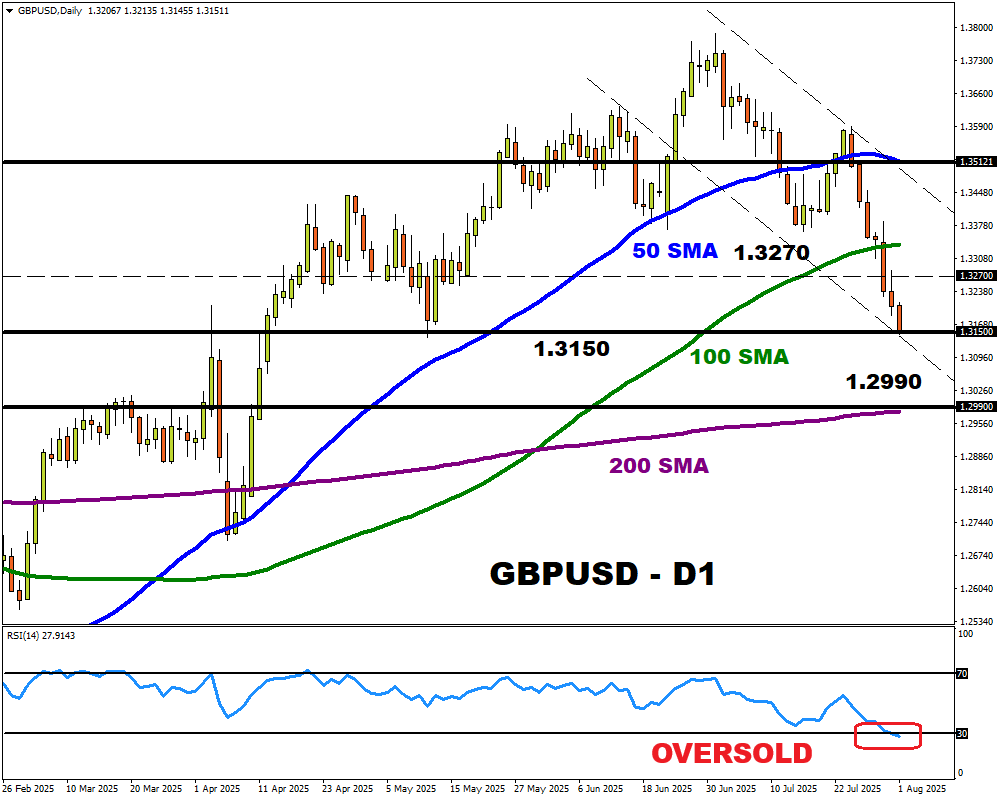
  • Technical levels – 1.3400, 1.3300 & 1.3150

Stability may return to markets as investors adopt a wait-and-see approach toward tariff talks.

There is cautious optimism over the US striking a trade deal with Japan and Europe, while China has expressed interest in talks if Trump shows respect.

Easing trade tensions could lift sentiment in the week ahead, providing fresh opportunities across financial markets.

Beyond trade developments, key economic data and corporate earnings will be in focus:

Monday, 21st April

  • CN50: China loan prime rates

Tuesday, 22nd April  

  • AU200: S&P Global Australia PMI’s
  • NAS100: Tesla earnings

Wednesday, 23rd April   

  • EU50: Euro-Area Flash PMI’s
  • GER40: HCOB Germany PMI’s
  • GBP: S&P Global UK PMI’s, BoE Governor Bailey speech
  • US500: S&P Global US PMI’s, Fed Beige Book
  • US30: Boeing earnings

Thursday, 24th April   

  • GER40: Germany IFO Business Climate
  • GBP: GfK Consumer Confidence
  • NAS100: Initial jobless claims, Alphabet, Intel earnings

Friday, 25th April 

  • JP225: Tokyo CPI
  • GBP: UK Retail Sales
  • RUS2000: University of Michigan Sentiment

Our attention falls on the GBPUSD which has formed a “golden cross” pattern on the daily charts.

Imagen
GBPUSD 3

Note: A golden cross is when an asset’s 50-day simple moving average (SMA) crosses above its 200-day SMA. This event indicates that prices may push higher. 

Over the past two weeks, the GBPUSD has been on a tear thanks to a broadly weaker dollar. Prices have jumped almost 3% this month, pushing year-to-date gains to 6%.

With the major currency pair approaching resistance at 1.3300, a significant breakout could be on the horizon.

Here are 3 reasons why: 


1) UK data + BoE Bailey speech

The incoming UK data could provide insight into how the economy fared during mounting uncertainty over US tariff announcements.

On Wednesday, the latest S&P Global UK PMIs will be published, followed by the GfK consumer Confidence on Thursday and UK retail sales on Friday. Much attention will be paid to BoE Governor Bailey’s speech mid-week which may offer clues on future policy moves.

Note: Over the past 12 months, the UK retail sales report has sparked upside moves of as much as 0.3% or declines of 0.4% in the 6 hours post-release.

  • The GBPUSD could appreciate if overall data prints better than expected and Bailey strikes a hawkish note.
  • If UK economic data disappoints and Bailey expresses concern over the UK economic outlook, the GBPUSD may sink as BoE cut bets jump. 

As of writing traders are currently pricing in 3 BoE cuts in 2025 with the probability of a fourth one by December at 23%.

2) US data + Fed Beige Book

Upcoming US data and the Fed’s Beige Book may illustrate how the world’s largest economy has been impacted by trade uncertainty.

Mid-week, the latest US S&P PMIs and beige book will be published, followed by the initial jobless claims on Thursday and the University of Michigan Sentiment on Friday.

Note: Over the past 12 months, the US S&P PMI reports have triggered upside moves of as much as 0.5% or declines of 0.6% in a 6-hour window post-release.

  • A solid set of economic reports from the United States may boost the dollar, dragging the GBPUSD lower.
  • Should the dollar weaken on soft economic data, the GBPUSD may push higher.


3) Technical forces

The GBPUSD is firmly bullish on the daily charts with prices trading above the 50, 100 and 200-day SMA. As discussed earlier, the “golden cross” pattern is a strong bullish signal with key resistance at 1.3300.

  • A daily close above 1.3300 may trigger an incline toward 1.3400 and 1.3436 – the upper limit of Bloomberg’s FX model.
  • Sustained weakness below 1.3300, may see prices decline toward 1.3150 and 1.3094 – the lower bound of Bloomberg’s FX model.
Imagen
GBPUSD 2

Bloomberg’s FX model forecasts a 76% chance that GBPUSD will trade within the 1.3094 – 1.3436 range, using current levels as a base, over the next one-week period.


Forex-Time-LogoArticle by ForexTime

ForexTime Ltd (FXTM) is an award winning international online forex broker regulated by CySEC 185/12 www.forextime.com