Archive for Forex and Currency News – Page 15

Pound Succumbs to Pressure from Weak Labour Data

By RoboForex Analytical Department

The GBP/USD pair snapped a four-day winning streak, declining for a second day to trade around 1.3135. The sell-off was triggered by UK labour market data revealing a rise in unemployment and a deceleration in annual wage growth. These figures have bolstered market expectations that the Bank of England (BoE) could initiate interest rate cuts as early as December.

The shifting sentiment was reflected in government bonds, with the two-year gilt yield falling 6 basis points to 3.74%, its lowest level since August 2024.

Appetite for risk was mixed across asset classes. European stock indices managed gains, while S&P 500 futures edged down approximately 0.2%.

In currency markets, traders are increasingly pricing in a more dovish path for BoE policy. Current pricing implies roughly 21 basis points of cuts by December, with a total of up to 65 basis points of easing projected by the end of 2026. Economists suggest that, given the softening labour market and anticipated fiscal tightening, the BoE’s base rate could fall to 3.00% from the current 4.00%.

Technical Analysis: GBP/USD

H4 Chart:

On the H4 chart, GBP/USD broke upwards from a consolidation range around 1.3100, completing a corrective wave to 1.3185. We now anticipate a decline back towards the 1.3100 support level. A brief rebound to 1.3150 may follow, establishing a new consolidation range. A subsequent downward breakout from this range would signal a resumption of the broader downtrend, opening the path towards 1.3000, with a further potential decline to at least 1.2915. This bearish scenario is supported by the MACD indicator. Its signal line is above zero but has diverged from its histogram, suggesting the initial upward correction is exhausted and a new decline is beginning.

H1 Chart:

On the H1 chart, the pair completed an upward correction to 1.3188 after breaking from a range at 1.3100. A new downward wave is now developing, initially targeting 1.3108. Following this, a technical retracement to test 1.3150 from below is expected. Once this correction is complete, the downtrend is projected to extend towards 1.3050. The Stochastic oscillator confirms this outlook. Its signal line is at the 20 level, indicating oversold conditions but also supporting the view that downward momentum is currently dominant.

Conclusion

The pound is weakening as soft labour market data fuels expectations of imminent BoE monetary easing. Technically, the pair appears to have completed a corrective bounce and is now poised to resume its primary downtrend. The immediate focus is on the 1.3100 support; a sustained break below this level would confirm a move towards 1.3000 and potentially lower.


Disclaimer:

Any forecasts contained herein are based on the author’s particular opinion. This analysis may not be treated as trading advice. RoboForex bears no responsibility for trading results based on trading recommendations and reviews contained herein.

USD/JPY Climbs to Fresh Nine-Month High

By RoboForex Analytical Department

The USD/JPY pair advanced to 154.36 on Tuesday, edging closer to a new ten-month peak. The rally was driven by growing market optimism that the protracted US government shutdown may soon conclude, dampening demand for traditional safe-haven assets like the Japanese yen.

In Japan, Economic Recovery Minister Minoru Kiuchi highlighted the domestic challenges posed by the currency’s weakness, warning that a soft yen risks amplifying inflationary pressures by increasing the cost of imports. He called for vigilant monitoring of the situation.

Concurrently, a draft of the government’s new economic stimulus plan—scheduled for approval on 21st November—reveals that Prime Minister Sanae Takaichi’s cabinet will urge the Bank of Japan to prioritise economic growth alongside price stability. The programme is also set to feature tax breaks and investment incentives targeting 17 key industries.

This comes as the Bank of Japan’s October report reaffirmed its close watch on wage growth to determine the timing of its next potential rate hike. In a positive economic sign, the country registered a record current account surplus of ¥4.5 trillion in September, bolstered by robust export growth.

Technical Analysis: USD/JPY

H4 Chart:

On the H4 chart, USD/JPY has formed a consolidation range around 153.80. We anticipate an upward expansion of this range towards 154.80. Following this, a pullback to retest the 153.80 level from above is expected. This would likely set the stage for the next leg of the uptrend, targeting 155.70. This bullish scenario is technically confirmed by the MACD indicator, whose signal line is firmly above zero and pointing upwards, indicating sustained positive momentum.

H1 Chart:

On the H1 chart, the pair has completed an initial growth impulse to 154.48. A near-term correction towards 153.65 is now expected. Once this corrective phase concludes, we anticipate the resumption of the broader upward trend, with the next primary target at 155.70. The Stochastic oscillator corroborates this view. Its signal line is below 50 and trending downwards towards 20, suggesting that short-term downward pressure (the expected correction) is building before the next potential upward wave.

Conclusion

USD/JPY continues its ascent, propelled by renewed risk appetite and domestic Japanese policy that implicitly favours a weaker yen. While minor corrective dips are anticipated in the short term, the overall technical and fundamental backdrop remains bullish. The path of least resistance points towards a test of 155.70, provided the pair maintains its footing above key support near 153.80.


Disclaimer:

Any forecasts contained herein are based on the author’s particular opinion. This analysis may not be treated as trading advice. RoboForex bears no responsibility for trading results based on trading recommendations and reviews contained herein.

USD/JPY Declines as Safe-Haven Demand Bolsters the Yen

By RoboForex Analytical Department

The USD/JPY pair retreated to 153.10 on Friday, with the yen retaining a portion of its recent gains amid a flight to safety. A sharp uptick in stock market volatility, driven by concerns over a potential overvaluation of artificial intelligence stocks, prompted investors to seek refuge in traditional safe-haven assets, thereby supporting the Japanese currency.

The pair faced additional pressure from a broadly weaker US dollar. Signs of a cooling US labour market have reinforced market expectations of an imminent interest rate cut from the Federal Reserve.

Domestic data from Japan presented a mixed picture. Consumer spending in September rose by a modest 1.8%, following a 2.3% increase in August and falling short of the 2.5% forecast. While nominal wage growth accelerated to 1.9%, real household incomes continued their decline, falling 1.4% year-on-year. This marks the ninth consecutive month of decline in real incomes, highlighting the persistent squeeze on purchasing power.

In light of this, Bank of Japan Governor Kazuo Ueda stated that the central bank’s wage growth forecast for 2026 will be a critical determinant for resuming rate hikes. For now, the BoJ maintains its accommodative stance, leaving monetary policy unchanged.

Technical Analysis: USD/JPY

H4 Chart:

On the H4 chart, USD/JPY is forming a consolidation range around 153.33. We anticipate a near-term expansion of this range to the downside, targeting 152.20. Following this, the primary scenario involves an upward breakout, initiating a new bullish wave towards 155.70. An alternative downward breakout would signal a deeper correction towards 149.90 before any sustained recovery can begin. The MACD indicator supports this view, with its signal line below zero and pointing downward, confirming the current corrective momentum.

H1 Chart:

On the H1 chart, the pair is completing a corrective rise to test 153.50 from below. A tight consolidation range is forming around this level. We expect this range to break downwards initially, with a first target at 152.52. A rebound to 153.50 may follow. The broader trajectory hinges on the subsequent breakout. An upward breakout opens the path to 155.70, while a downward breakout would likely extend the correction towards 149.90. The Stochastic oscillator on the H1 offers a conflicting short-term signal. Its signal line is above 50 and rising towards 80, suggesting the potential for limited near-term upside before the next directional move.

Conclusion

USD/JPY is caught between a weaker US dollar and mixed domestic signals from Japan. The immediate driver is risk sentiment, which has provided the yen with temporary support. Technically, the pair is in a consolidation phase, with a near-term bias for a dip towards 152.20. The medium-term outlook, however, remains tentatively bullish, targeting 155.70, contingent on a successful upside breakout from the current range.


Disclaimer:

Any forecasts contained herein are based on the author’s particular opinion. This analysis may not be treated as trading advice. RoboForex bears no responsibility for trading results based on trading recommendations and reviews contained herein.

GBP/USD Hovers Near Lows as Bank of England Decision Looms

By RoboForex Analytical Department

The GBP/USD pair is attempting to find support around 1.3062 on Thursday, with investors cautiously positioning themselves ahead of today’s pivotal Bank of England (BoE) monetary policy meeting. The British currency remains under pressure, trading near a seven-month low against the US dollar and at its weakest level in over two years against the euro.

Market pricing currently implies roughly a one-in-three chance of a 25-basis-point rate cut from the BoE. This uncertainty creates significant asymmetric risk, meaning the pound is poised for a sharp move in either direction once the decision and accompanying statement are released.

The pound’s weakness was compounded by the recent release of softer-than-expected UK inflation data, which bolstered expectations for an imminent shift towards policy easing. A simultaneous global sell-off in equity markets, particularly in the tech sector, has further dampened sentiment by reducing appetite for risk-sensitive assets such as sterling.

Adding to the headwinds, investor focus is shifting to the UK budget, due for approval later this month. Chancellor Rachel Reeves has signalled the potential for tax rises, a measure that could stifle economic growth and potentially prompt the BoE to adopt a more dovish stance – another factor weighing on the currency.

Technical Analysis: GBP/USD

H4 Chart:

On the H4 chart, GBP/USD broke downwards from a consolidation range around 1.3140, completing a bearish wave to 1.3010. We now anticipate a technical correction towards 1.3090. Following this pullback, the primary downtrend is expected to resume, with the next key targets at 1.2910 and, ultimately, 1.2811. The MACD indicator supports this bearish outlook. While its signal line is at deeply oversold levels and has diverged from its histogram, suggesting the potential for a short-term corrective rise, the overall structure remains negative.

H1 Chart:

On the H1 chart, the pair similarly broke down from a range around 1.3157, reaching the 1.3010 target. A corrective retracement to test 1.3100 from below is now expected. Once this correction is complete, the downtrend is likely to extend towards at least 1.2950. The Stochastic oscillator aligns with this view. Its signal line is in overbought territory above 80 and appears poised to turn down towards 20, indicating that any near-term strength is likely corrective before selling pressure reasserts itself.

Conclusion

GBP/USD is stabilising at multi-month lows ahead of a high-stakes BoE meeting. The combination of dovish inflation data, a risk-off market mood, and looming fiscal uncertainty has created a profoundly negative backdrop for sterling. Technically, the path of least resistance remains downward. While a short-covering bounce back towards 1.3100 is possible post-decision, the broader trend suggests further losses, with key targets at 1.2910 and 1.2811.

Disclaimer:

Any forecasts contained herein are based on the author’s particular opinion. This analysis may not be treated as trading advice. RoboForex bears no responsibility for trading results based on trading recommendations and reviews contained herein.

EUR/USD Under Sustained Pressure as Markets Await Key Data

By RoboForex Analytical Department

The EUR/USD pair is declining for a fourth consecutive session, edging closer to the 1.1532 level. Investor sentiment remains cautious as markets digest recent trade developments and await a slew of high-impact economic data.

Over the weekend, the White House announced a de-escalation in trade tensions with China. Beijing has agreed to suspend additional export restrictions on rare earth metals and end investigations into US semiconductor companies. In return, the US will freeze certain existing tariffs and cancel a planned 100% tariff hike on Chinese exports. This decision follows last week’s summit between Donald Trump and Xi Jinping, which aimed to stabilise bilateral relations.

Meanwhile, the protracted US government shutdown continues to delay the release of official key statistics, notably employment data. In their absence, market participants will seek guidance from private-sector indicators due in the coming days, including the ADP employment report, the ISM Services PMI, and the University of Michigan Consumer Sentiment Index.

This comes after the Federal Reserve’s expected 25-basis-point rate cut last week. Chair Jerome Powell maintained a cautious stance, emphasising that a follow-up cut in December is not a foregone conclusion – a message that has provided underlying support for the US dollar.

Technical Analysis: EUR/USD

H4 Chart:

On the H4 chart, EUR/USD formed a tight consolidation range around 1.1569. A subsequent downward breakout completed a bearish wave to 1.1521, and the pair is now consolidating above this local low.

A technical rebound to retest 1.1569 from below is a possibility. However, with bearish momentum still intact, we anticipate a further decline towards 1.1500 following any such pullback. The broader target for this move is 1.1488, which is viewed as the first leg of the third and typically strongest wave within the prevailing downtrend. The MACD indicator confirms this outlook, with its signal line positioned below zero and pointing decisively downward, reflecting sustained selling pressure.

H1 Chart:

On the H1 chart, the pair broke downwards from a consolidation range around 1.1566, achieving its initial target at 1.1495. Once this level is reached, a corrective bounce towards 1.1533 is likely before the resumption of the downtrend towards 1.1468.

This scenario is supported by the Stochastic oscillator, whose signal line is below 50 and is falling confidently towards the 20 zone, indicating that short-term downward momentum remains dominant.

Conclusion

EUR/USD remains under clear selling pressure, with a de-escalation in US-China trade tensions and a cautiously hawkish Fed stance providing a supportive backdrop for the US dollar. Technically, the structure is bearish, suggesting that any near-term rebounds are likely to be corrective within a broader downtrend, with key downside targets at 1.1488 and 1.1468.

Disclaimer:

Any forecasts contained herein are based on the author’s particular opinion. This analysis may not be treated as trading advice. RoboForex bears no responsibility for trading results based on trading recommendations and reviews contained herein.
USD/JPY Hits Nine-Month High as Yen Endures Tough October

By RoboForex Analytical Department

The USD/JPY pair climbed to a nine-month high on Friday, approaching the key 154.00 level. The yen concluded October with losses of approximately 4%, marking a highly unsuccessful month. The currency’s decline was exacerbated by domestic political shifts, following the election of Sanae Takaichi as Prime Minister. Takaichi is a known advocate for stimulative fiscal policy and the maintenance of ultra-loose monetary conditions—a combination that typically weighs on a currency.

This dovish political backdrop was complemented by the Bank of Japan’s decision to hold interest rates steady in October. Governor Kazuo Ueda further dampened sentiment by warning that tighter global trade conditions could stifle economic growth and reduce corporate profits.

In a notable shift, the new Finance Minister, Satsuki Katayama, clarified that she no longer views a yen exchange rate of 120-130 per dollar as appropriate. She emphasised that currency stability is now her primary focus, a comment markets interpreted as a step back from direct intervention.

The yen also faced pressure from a broadly strengthening US dollar. Market expectations for further Federal Reserve rate cuts have receded, while data showing higher-than-expected inflation in Tokyo for October complicated the domestic policy outlook.

Technical Analysis: USD/JPY

H4 Chart:

On the H4 chart, USD/JPY has completed a bullish wave structure, reaching 154.40. The pair is now likely to enter a period of consolidation at these highs. A decisive downward breakout from this range would signal the start of a correction, with an initial target at 151.88. Conversely, an upward breakout would open the path for the next leg of the rally towards 155.70.

This technical outlook is supported by the MACD indicator. Its signal line remains above zero and is pointing firmly upwards, confirming the underlying bullish momentum.

H1 Chart:

On the H1 chart, the market completed an initial growth wave to 153.33, formed a tight consolidation range, and then broke upwards to achieve its local target of 154.40. Following this peak, a pullback towards at least 153.33 is anticipated. Upon finding support, the next upward wave is expected to target 154.83, with the potential to extend the broader bullish trend towards 155.15.

The Stochastic oscillator aligns with this view. Its signal line is above 50 and rising sharply towards 80, indicating that short-term bullish momentum remains intact.

Conclusion

The yen’s sharp decline in October was driven by a perfect storm of domestic political and monetary dovishness, coupled with a resurgent US dollar. Technically, USD/JPY’s bullish structure is firmly established. While a short-term correction is possible, the path of least resistance remains skewed to the upside, with key targets at 155.70 on the H4 chart. All eyes will be on whether Japanese authorities will transition from verbal intervention to concrete action if the yen’s weakness persists.


Disclaimer:

Any forecasts contained herein are based on the author’s particular opinion. This analysis may not be treated as trading advice. RoboForex bears no responsibility for trading results based on trading recommendations and reviews contained herein.
GBP/USD Finds a Floor at 1.3200 After Fed-Induced Sell-Off

By RoboForex Analytical Department

The GBP/USD pair is consolidating around the 1.3200 level on Thursday, following significant losses in the previous session. The pair is now trading near its lowest point since April 2025, with selling pressure intensifying after the Federal Reserve cut interest rates by 25 basis points. While delivering the expected cut, Fed Chair Jerome Powell struck a hawkish note by stressing that further easing this year is not guaranteed, bolstering the US dollar.

The pound faces its own set of domestic headwinds. Mounting expectations of a Bank of England rate cut, combined with concerns over the upcoming November budget, are weighing on sentiment. During parliamentary hearings, Prime Minister Keir Starmer refused to rule out potential rises in income tax, national insurance, and VAT.

Further compounding the issue, press reports suggest the Office for Budget Responsibility (OBR) plans to lower its productivity growth forecast by approximately 0.3 percentage points. Such a revision could create a budget deficit of around £20 billion.

Softer-than-expected inflation data and a reported decline in food prices by the BRC have reinforced the market’s view that the Bank of England is moving closer to easing monetary policy.

Technical Analysis: GBP/USD

H4 Chart:

On the H4 chart, GBP/USD is developing a bearish wave structure targeting 1.3111. We anticipate the pair reaching this level before forming a consolidation range around it. Critically, this move is considered the third and typically powerful wave within the broader downtrend, with the 1.3111 target representing only its initial phase. Following consolidation, we expect a downward breakout and a continuation of the sell-off to at least 1.2830. This bearish scenario is confirmed by the MACD indicator, whose signal line is below zero and pointing decisively downward, indicating sustained selling momentum.

H1 Chart:

On the H1 chart, the pair has completed a downward impulse to 1.3193 and formed a consolidation range, which has since expanded down to 1.3139. We now foresee a technical retest of 1.3217 from below, after which a further decline towards 1.3111 is expected. A decisive break below this support level would open the path for a move down to at least 1.3015. The Stochastic oscillator supports this outlook, with its signal line having turned down from below the 80 level and heading towards 20, reflecting building bearish momentum in the short term.

Conclusion

GBP/USD is stabilising after a sharp drop, but the fundamental and technical backdrop remains bearish. Hawkish Fed rhetoric and a dovish shift in BoE expectations, alongside worrying UK fiscal signals, suggest any recovery may be short-lived. The path of least resistance appears lower, with key technical targets at 1.3111 and 1.3015.


Disclaimer:

Any forecasts contained herein are based on the author’s particular opinion. This analysis may not be treated as trading advice. RoboForex bears no responsibility for trading results based on trading recommendations and reviews contained herein.

A Key Day for EUR/USD as the Fed Decision Looms

By RoboForex Analytical Department

The EUR/USD pair declined to 1.1642 on Wednesday, with investor attention firmly fixed on the Federal Reserve’s impending policy decision. The central bank is widely expected to cut interest rates by 25 basis points.

Market participants will scrutinise the subsequent commentary from Chair Jerome Powell for any signals regarding the path for further policy easing. A further rate cut in December is already partially priced into the market.

Additional attention is being drawn to the upcoming meeting between Donald Trump and Xi Jinping, at which the parties may approve a framework trade agreement. The document provides for the suspension of new US tariffs and Chinese restrictions on exports of rare earth metals.

Meanwhile, the US dollar continues to weaken against the Japanese yen. This follows discussions between Japanese Finance Minister Satsuki Katayama and US Treasury Secretary Scott Bessent, in which they addressed recent volatility in the currency markets. Bessent’s call for a “prudent monetary policy” was interpreted by investors as a veiled criticism of the slow pace of interest rate normalisation in Japan.

Technical Analysis: EUR/USD

H4 Chart:

On the H4 chart, the EUR/USD pair formed a tight consolidation range around the 1.1600 level. After an upward breakout, the pair completed a correction to 1.1680. With that correction now over, a new decline has begun. The next target for this bearish wave is 1.1540, which is considered only the first leg of the downtrend. Following a minor correction back towards 1.1600, the decline is expected to extend to at least 1.1488. This scenario is technically confirmed by the MACD indicator. Its signal line is above zero but has diverged from the histogram and is pointing decisively downward, indicating sustained bearish momentum.

H1 Chart:

On the H1 chart, the market is forming a downward wave structure targeting 1.1616. The pair is effectively establishing the boundaries of a new consolidation range around this level. An upward breakout could trigger another correction towards 1.1640. However, the primary expectation is for a resumption of the downtrend to 1.1576, with the potential to extend the wave to 1.1540. This would represent only the first half of the third wave within the broader downward trend. The Stochastic oscillator supports this outlook. Its signal line is below 50 and is falling confidently towards 20, suggesting that short-term downward potential remains.

Conclusion

The fundamental focus is squarely on the Fed, with technicals pointing to a bearish resolution for the EUR/USD. The overall structure suggests any rallies are likely corrective within a broader downtrend, with key targets situated near 1.1540 and potentially 1.1488.


Disclaimer:

Any forecasts contained herein are based on the author’s particular opinion. This analysis may not be treated as trading advice. RoboForex bears no responsibility for trading results based on trading recommendations and reviews contained herein.
USD/JPY Tests Key February Highs

By RoboForex Analytical Department

The USD/JPY pair rallied sharply on Monday, reaching the 153.00 level and testing levels not seen since February 2025. This bullish momentum is being driven by expectations of significant fiscal stimulus from Japan’s new government and ongoing uncertainty surrounding the Bank of Japan’s (BoJ) policy path.

The yen has been under sustained pressure since the election of Prime Minister Sanae Takaichi, whose administration is expected to pursue expansive fiscal spending while endorsing an accommodative monetary stance. Reports suggest a substantial stimulus package, valued at over ¥13.9 trillion, could be unveiled as early as November. The plan aims to support households and mitigate inflationary pressures.

While the BoJ is widely expected to keep interest rates unchanged at its meeting this week, market participants will be watching closely for any communication regarding the conditions for a future rate hike should inflationary pressures ease. Additionally, an upcoming meeting between Prime Minister Takaichi and US President Donald Trump is being monitored for further signals on the direction of Japan’s economic policy.

Technical Analysis: USD/JPY

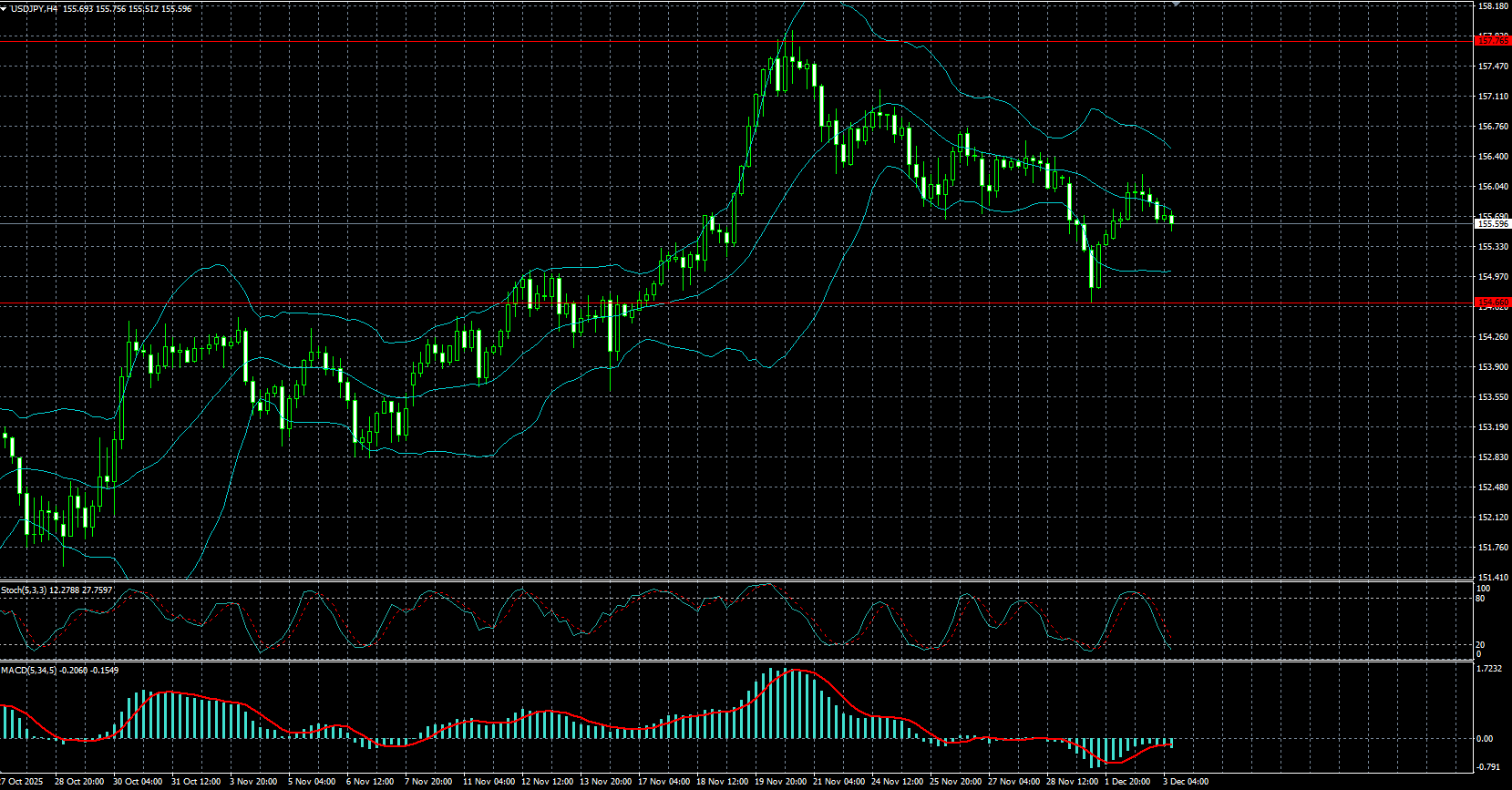
H4 chart:

On the H4 chart, USD/JPY broke out upwards from a consolidation range around 151.80, confirming a renewed uptrend with an initial target at 153.43. The pair has since completed a leg higher to 153.24 and is now undergoing a technical retracement, currently testing the 152.43 level from above. We expect this pullback to be followed by another impulse higher towards the 153.43 target. Following that, a more pronounced correction towards 151.80 is anticipated before the broader uptrend resumes, with the next major objective at 154.33. The MACD indicator supports this outlook, with its signal line firmly above zero and pointing upwards, confirming sustained bullish momentum.

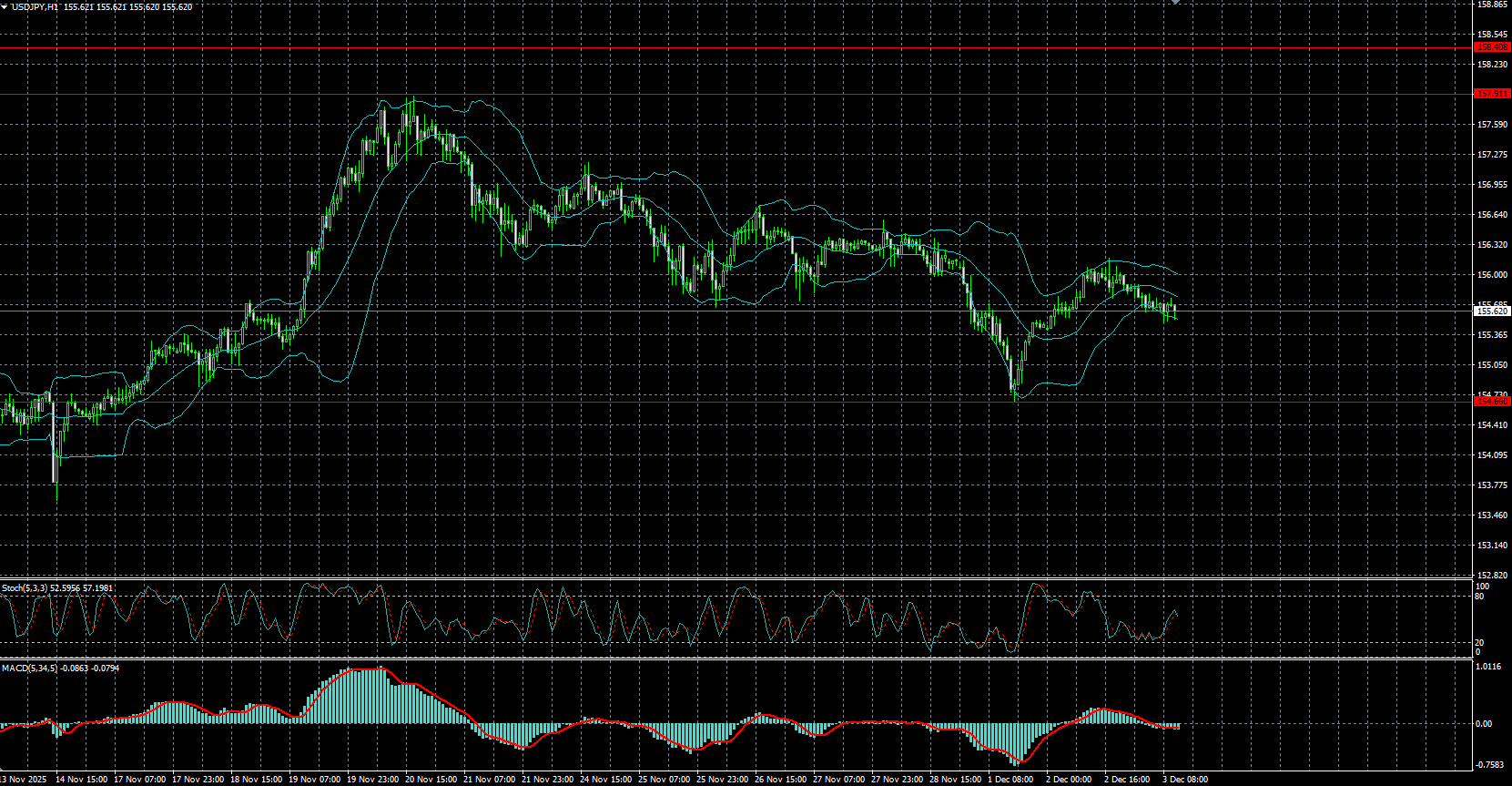
H1 chart:

The H1 chart shows the completion of an initial growth wave to 153.25. The immediate focus is on a further push to 153.33. Upon reaching this local target, a corrective decline to at least 152.43 is likely. Once this correction is complete, the next leg of the uptrend is projected to drive the pair towards 154.33. This scenario is technically confirmed by the Stochastic oscillator, whose signal line is above 50 and trending strongly towards 80, indicating that near-term bullish momentum remains intact.

Conclusion

Fundamentally, the combination of anticipated Japanese fiscal stimulus and a steady BoJ continues to weigh on the yen, while technically, USD/JPY retains a constructive bullish bias. While a short-term correction is expected, the path of least resistance remains to the upside, with key targets at 153.43 and ultimately 154.33.


Disclaimer:

Any forecasts contained herein are based on the author’s particular opinion. This analysis may not be treated as trading advice. RoboForex bears no responsibility for trading results based on trading recommendations and reviews contained herein.
EUR/USD Consolidates Ahead of Potential Further Losses

By RoboForex Analytical Department

Market sentiment remains dominated by escalating geopolitical tensions in Europe, which are dampening the euro’s outlook and fuelling demand for traditional safe-haven assets, notably the US dollar.

The dollar’s strength is further underpinned by the persistently hawkish rhetoric from the Federal Reserve. Officials continue to signal that interest rates will need to remain at their current levels for longer than previously anticipated. This stance is reinforced by resilient US inflation data, solidifying market expectations that the Fed will maintain its current policy course.

In stark contrast, the eurozone is grappling with a marked slowdown in business activity. The latest PMI data confirms a contraction across both manufacturing and services sectors. Against this deteriorating economic backdrop, the European Central Bank (ECB) has adopted a notably cautious tone, hinting at significant downside risks to growth. This growing monetary policy divergence with the US creates a fundamental imbalance, exacerbating the downward pressure on the single currency.

Consequently, the overall fundamental picture continues to favour the US dollar, suggesting further downside potential for the EUR/USD pair.

Technical Analysis: EUR/USD

H4 Chart:

On the H4 chart, EUR/USD is forming a tight consolidation range around the 1.1600 level, following a clear impulsive decline. This price action suggests the development of a third wave down. A decisive break below this consolidation range would signal the resumption of the bearish impulse, with an initial target at 1.1488. This bearish technical outlook is confirmed by the MACD indicator, whose signal line remains below zero and is pointing downward, indicating sustained selling momentum.

H1 Chart:

The H1 chart shows the completion of a downward wave to 1.1576, followed by a corrective move to 1.1620, effectively outlining the current consolidation zone. A break above this range could trigger a short-lived correction towards 1.1655 before the broader downtrend resumes, targeting 1.1500. Conversely, a break below the range would directly activate the bearish wave towards 1.1488, which is projected to complete the first leg of the larger third wave down. The Stochastic oscillator aligns with this view, with its signal line turning down from the 80 level and heading towards 20, reflecting building bearish momentum in the short term.

Conclusion

The combination of a supportive fundamental backdrop for the dollar and a deteriorating outlook for the eurozone maintains a bearish bias for EUR/USD. Technically, the pair appears to be pausing within a broader downtrend, with a breakdown below 1.1600 likely to trigger the next leg lower towards 1.1488.


Disclaimer:

Any forecasts contained herein are based on the author’s particular opinion. This analysis may not be treated as trading advice. RoboForex bears no responsibility for trading results based on trading recommendations and reviews contained herein.