Archive for Forex and Currency News – Page 14

USD/JPY Declines as Market Focus Shifts to Bank of Japan Policy

By RoboForex Analytical Department

The USD/JPY pair fell to 155.67 on Wednesday, recovering part of the previous session’s sharp losses. The decline was driven by renewed pressure on the US dollar, as market expectations for a deeper Federal Reserve easing cycle gained traction.

Domestically, investor attention remains firmly fixed on the likelihood of a Bank of Japan (BoJ) interest rate hike at its December meeting. This possibility has been underscored by recent hawkish signals from certain BoJ officials, creating a contrast with market perceptions that Prime Minister Sanae Takaichi’s government favours more accommodative monetary conditions.

This week, Finance Minister Satsuki Katayama sought to downplay any perceived policy rift, stating there is no discrepancy between the government’s and the central bank’s economic assessments. This remark underscores the continued official emphasis on coordination between fiscal and monetary policy.

Her comments followed a speech by BoJ Governor Kazuo Ueda, who expressed confidence in Japan’s economic outlook and confirmed the central bank will carefully weigh the advantages and disadvantages of a rate increase at its December policy review.

Technical Analysis: USD/JPY

H4 Chart:
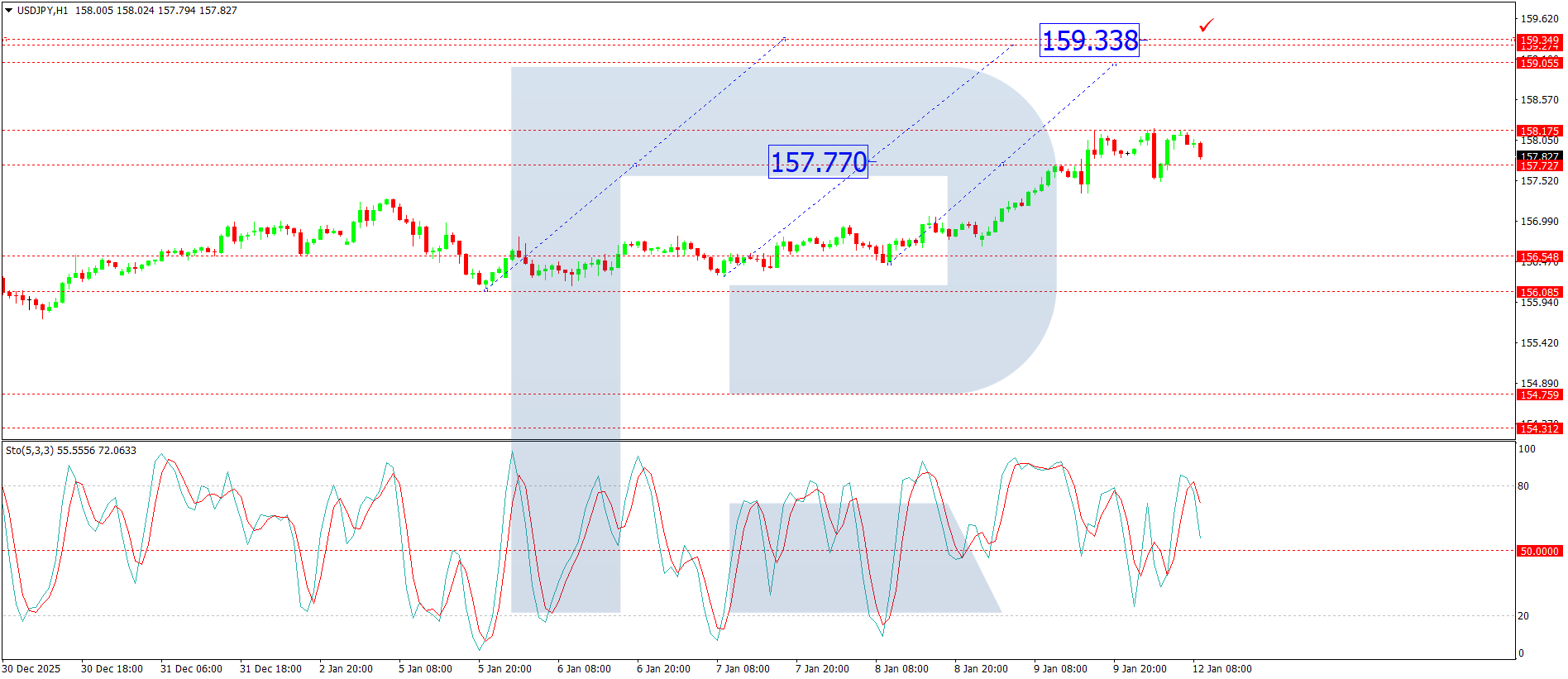
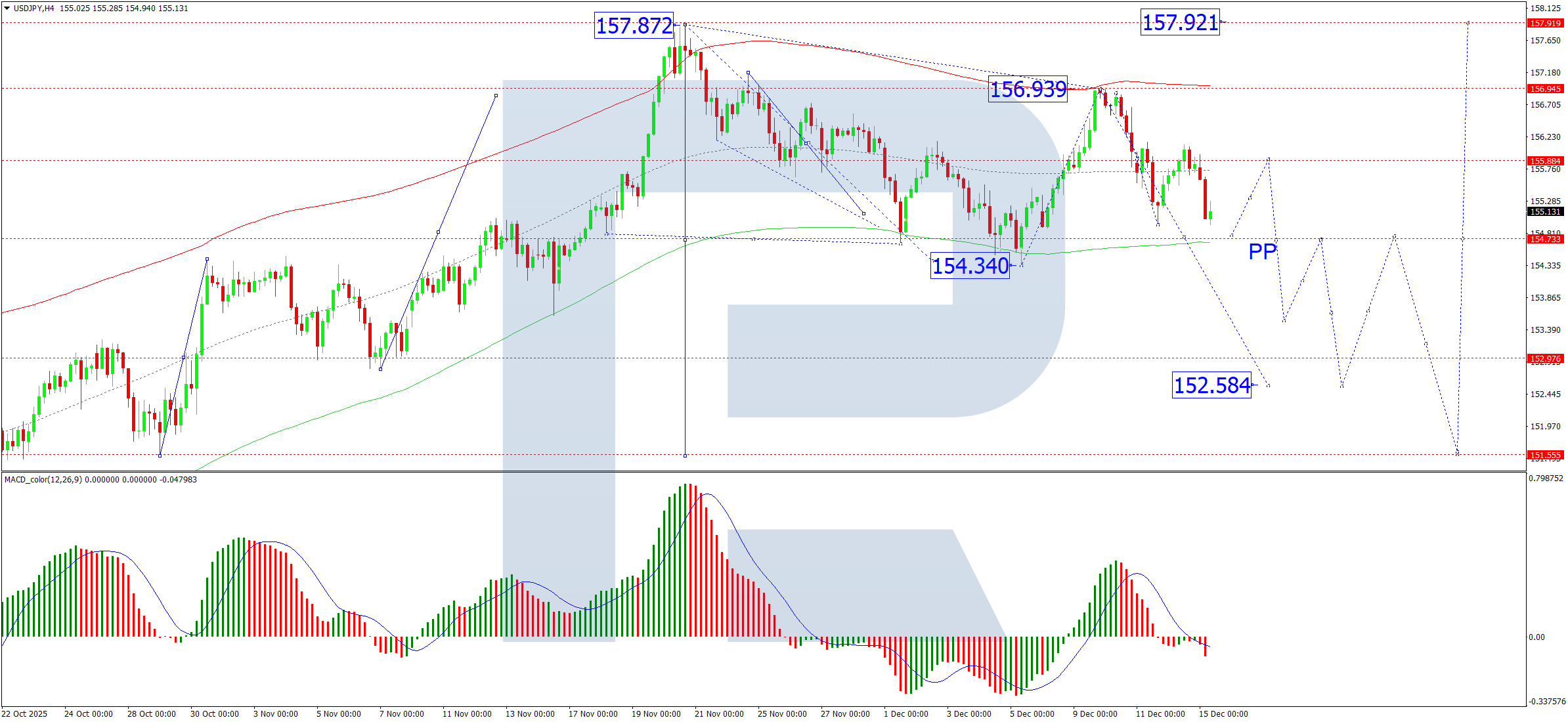
On the H4 chart, USD/JPY remains in a downward correction phase following its accelerated rally in mid-November. The pair is trading below the key resistance level of 156.76, forming a potential reversal structure near the lower Bollinger Band. Selling pressure persists, as evidenced by the market’s failure to sustain a move above the indicator’s middle band.

A decisive break below the 154.66 support level would signal a deeper correction, targeting the area of previous local lows. Conversely, a sustained recovery and close above 156.76 would provide the first technical signal of a potential recovery, opening a path for the pair to retest the 157.90–158.00 resistance zone.

H1 Chart:

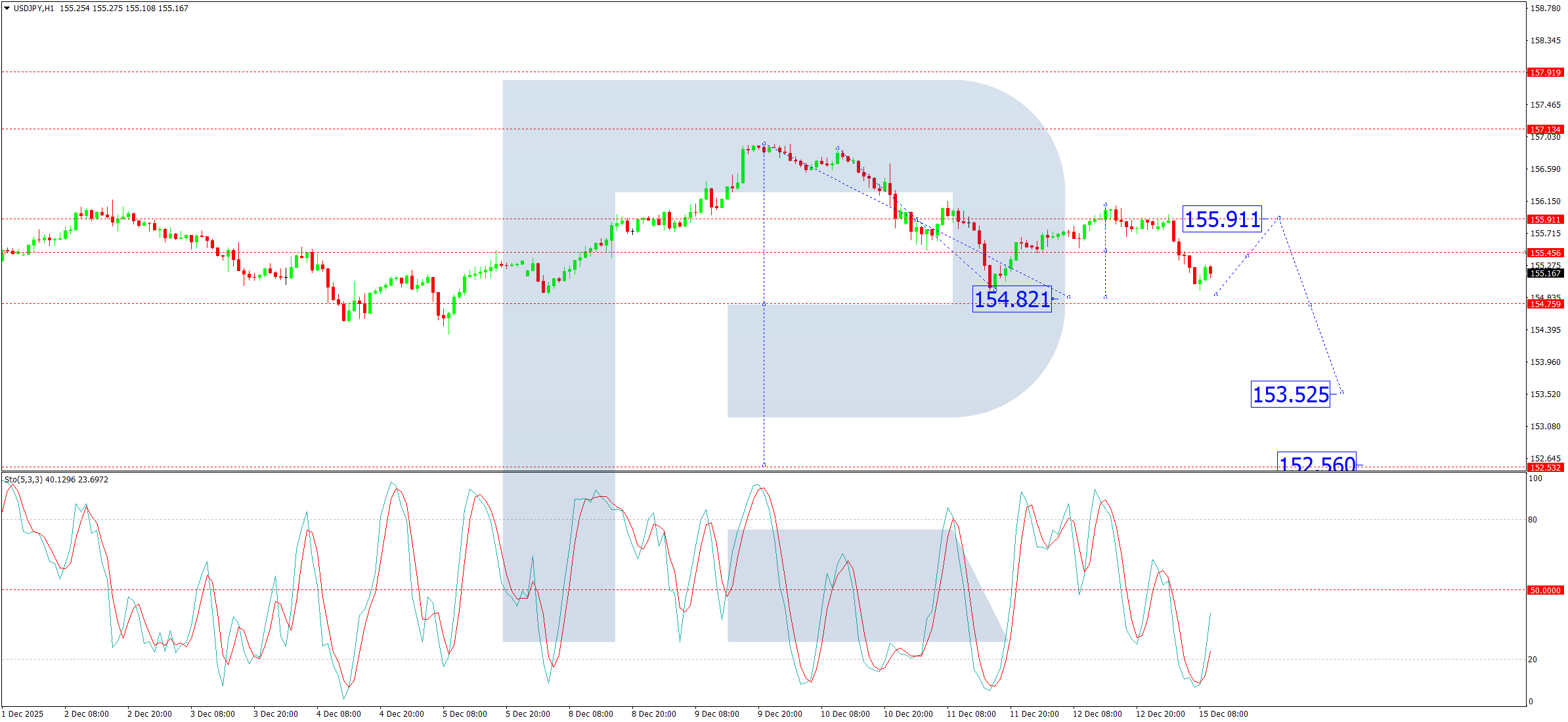
On the H1 chart, USD/JPY is undergoing an upward correction after rebounding from support at 157.91. However, the upside appears constrained by the upper Bollinger Band. While buyers are attempting to push above the intermediate resistance at 158.40, price action remains choppy and lacks clear directional conviction.

The technical picture suggests a phase of sideways consolidation with a downside bias. Maintaining the price below 158.45 increases the likelihood of a retest of 157.91. A break below this level would strengthen the bearish scenario, targeting the lower boundary of the current range. For a confirmed bullish shift, a sustained move above 158.45, followed by a breakout towards 158.80–159.00, would be required.

Conclusion

USD/JPY is consolidating its recent decline amid a tug-of-war between a softer US dollar and evolving expectations for BoJ policy. The technical structure across both timeframes suggests a cautious, range-bound environment with a current tilt towards the downside. The immediate directional catalyst will likely be the BoJ’s December meeting, but in the near term, traders should watch for a break outside the 156.76–154.66 range on the H4 chart for a clearer signal on the pair’s next significant move.


Disclaimer:

Any forecasts contained herein are based on the author’s particular opinion. This analysis may not be treated as trading advice. RoboForex bears no responsibility for trading results based on trading recommendations and reviews contained herein.

EUR/USD Holds Ground Amid Firm Focus on Fed Policy

By RoboForex Analytical Department

The EUR/USD pair retreated to 1.1612 on Tuesday, pulling back from a recent two-week high. The catalyst for the move was a significant repricing of US interest rate expectations following weak manufacturing data. The ISM Manufacturing Index confirmed a ninth consecutive month of contraction, with the pace of decline the fastest in four months.

This data solidified market expectations for a Federal Reserve rate cut. Futures markets now imply an 88% probability of a 25-basis-point reduction at next week’s FOMC meeting.

In related news, President Donald Trump announced he has selected a candidate for the next Fed Chair. Media reports suggest the leading contender is Kevin Hassett, the current head of the White House National Economic Council.

Investor attention is now focused on an upcoming speech by current Chair Jerome Powell later today, which may offer further clues on the Fed’s policy trajectory.

Technical Analysis: EUR/USD

H4 Chart:

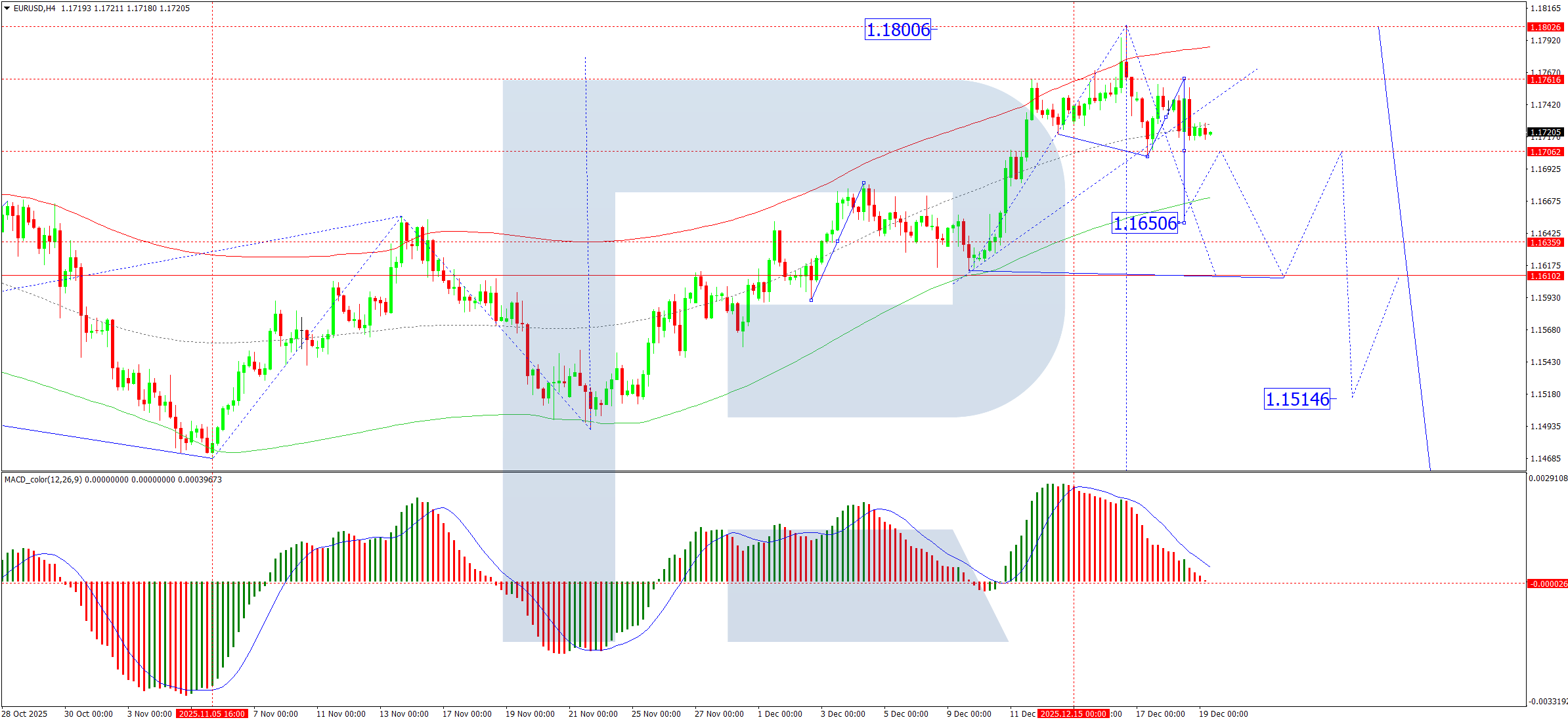
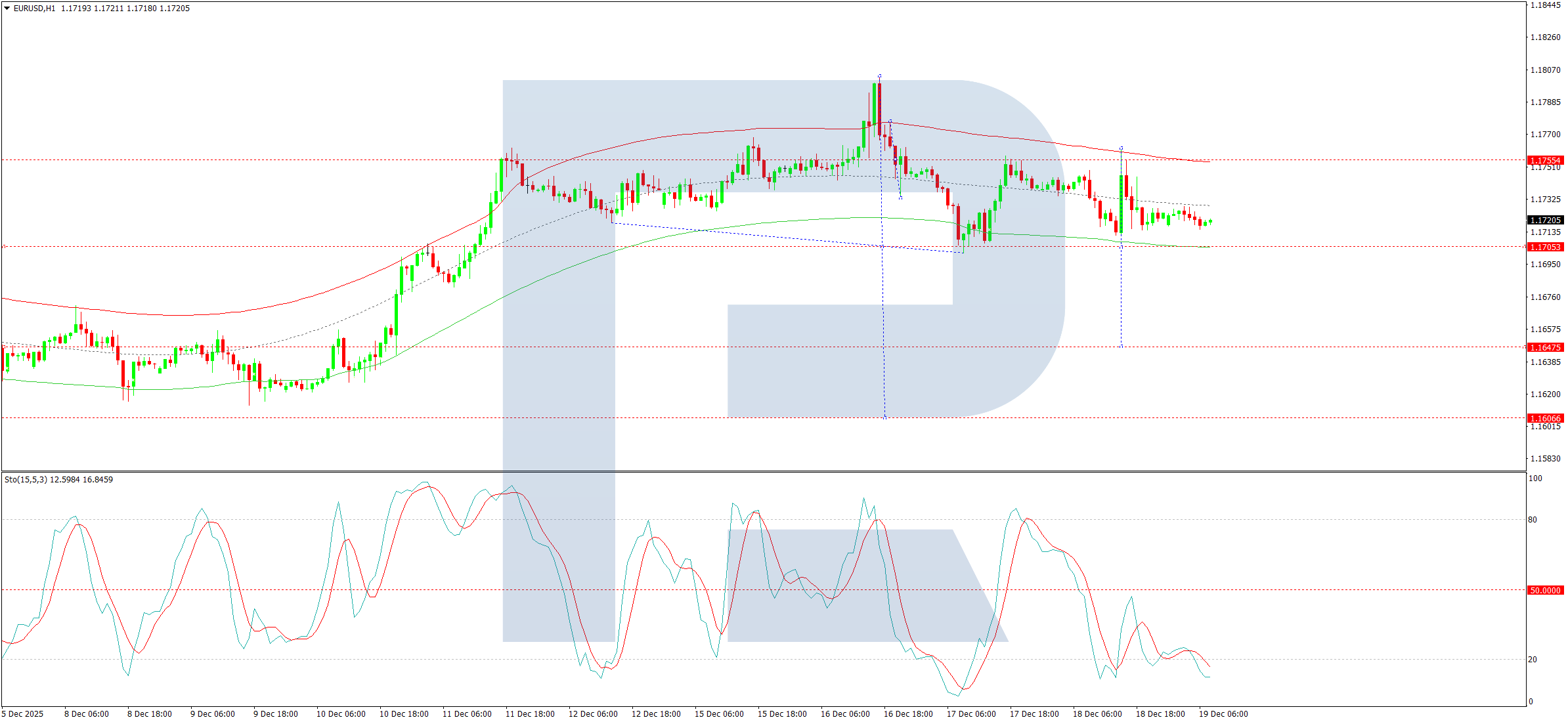
On the H4 chart, EUR/USD continues to trade within an established ascending channel. The pair is currently testing a key resistance zone at 1.1655, where buying momentum has met significant selling pressure. A decisive breakout above this level would open the path towards the next major resistance at 1.1730.

The Stochastic Oscillator is rising from the middle zone, indicating sustained bullish momentum without overbought conditions. The MACD remains above its zero line, maintaining a stable, albeit weak, buy signal. Conversely, a break and close below the key support at 1.1545 would signal a deeper correction, likely targeting the lower boundary of the current range near 1.1468.

H1 Chart:

On the H1 chart, the pair is undergoing a correction after being rejected from local resistance at 1.1652. Buyers are currently defending the price above the middle Bollinger Band, suggesting short-term bullish control remains intact.

The Stochastic Oscillator is in overbought territory (above 80) and is turning down, pointing to a near-term corrective pullback. However, the MACD remains in positive territory, supporting the broader upward bias. This technical picture suggests a brief downward pause is likely, with a potential retest of support in the 1.1600–1.1585 zone. A successful hold above this area would increase the probability of a fresh upward impulse, targeting a renewed test of 1.1652 and an eventual push towards 1.1700.

Conclusion

EUR/USD remains confidently bid, supported by growing expectations of Fed easing. While a short-term technical correction is underway, the broader structure on both the H4 and H1 charts remains constructive. The key for continued upside is a successful defence of the 1.1600–1.1585 support zone. A break above 1.1655 would be a significant bullish confirmation, while a failure to hold support could trigger a deeper pullback towards 1.1545.

Disclaimer:

Any forecasts contained herein are based on the author’s particular opinion. This analysis may not be treated as trading advice. RoboForex bears no responsibility for trading results based on trading recommendations and reviews contained herein.
 

GBP/USD Rises as Markets Await Crucial UK Budget

By RoboForex Analytical Department

The GBP/USD pair extended its gains, reaching 1.3189, as investors await details of the UK budget, to be presented today, 26 November. All attention is on Chancellor Rachel Reeves and her strategy to close the fiscal deficit while adhering to the government’s self-imposed budgetary rules. This challenge requires finding tens of billions of pounds in savings or revenue. Market volatility has been stoked by reports suggesting the government may avoid immediate tax increases.

The fiscal backdrop is deteriorating. According to media reports, the Office for Budget Responsibility (OBR) is preparing to lower its growth forecasts for 2026 and beyond. This revision could widen the budget deficit by £20–30 billion, intensifying the long-term pressure for tax rises.

Recent macroeconomic data underscores the economy’s fragility. Public sector borrowing remains at record highs outside of the pandemic period, business activity is slowing, retail sales have contracted sharply, and consumer confidence is waning.

Amid this weak economic landscape, October’s inflation reading fell to 3.6%, solidifying expectations for monetary policy easing. Markets are now pricing in an 80% probability of a 25-basis-point rate cut from the Bank of England in December.

Technical Analysis: GBP/USD

H4 Chart:

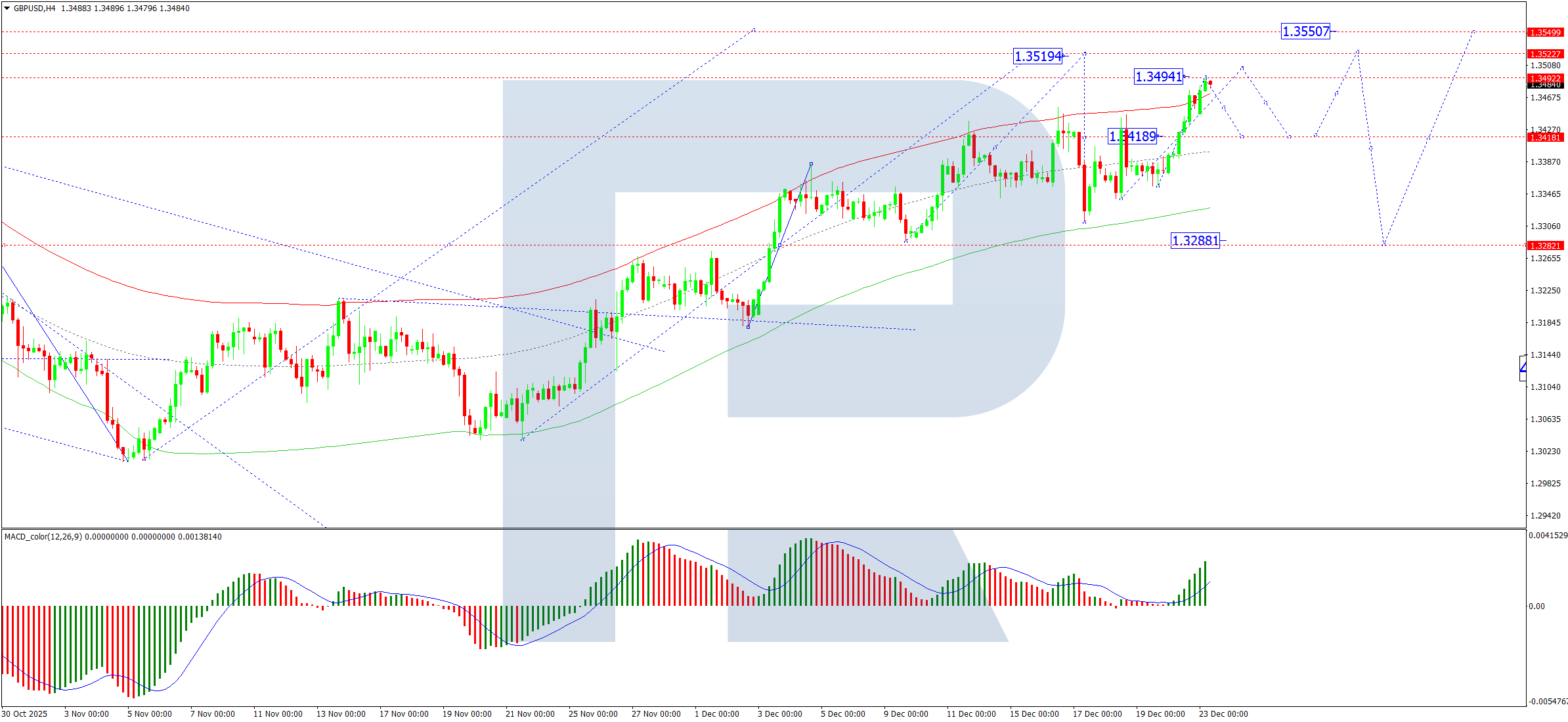
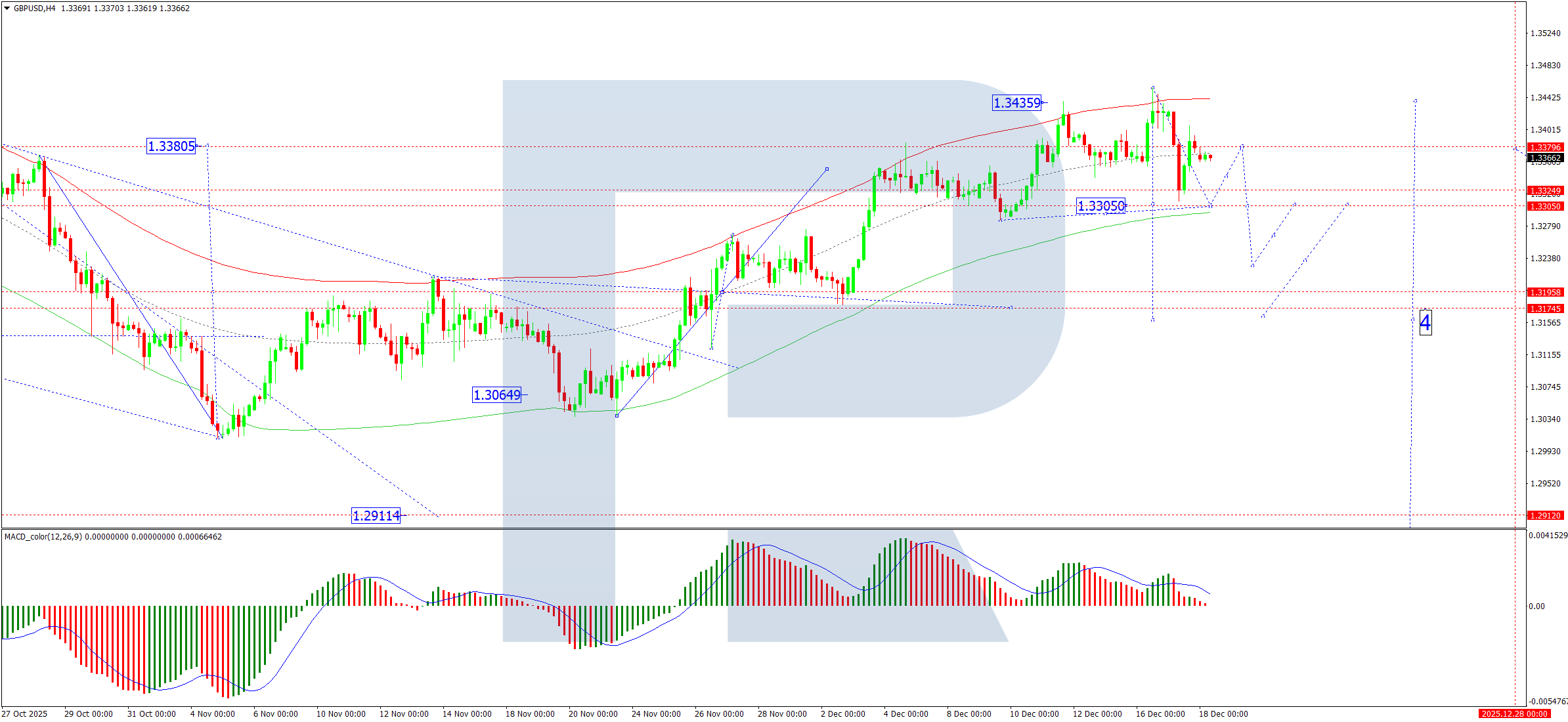
On the H4 chart, GBP/USD broke decisively above 1.3116, completing a corrective wave structure to 1.3210. We now anticipate a pullback to retest the 1.3116 level from above. Following this retest, a final leg of the correction could push the pair towards 1.3215.

Once this corrective phase is complete, the primary downtrend is expected to resume. The next key target for the subsequent wave of selling is at 1.2911. The MACD indicator supports this view; its signal line is above zero and pointing upwards, confirming the current corrective strength is likely a prelude to a new downtrend.

H1 Chart:

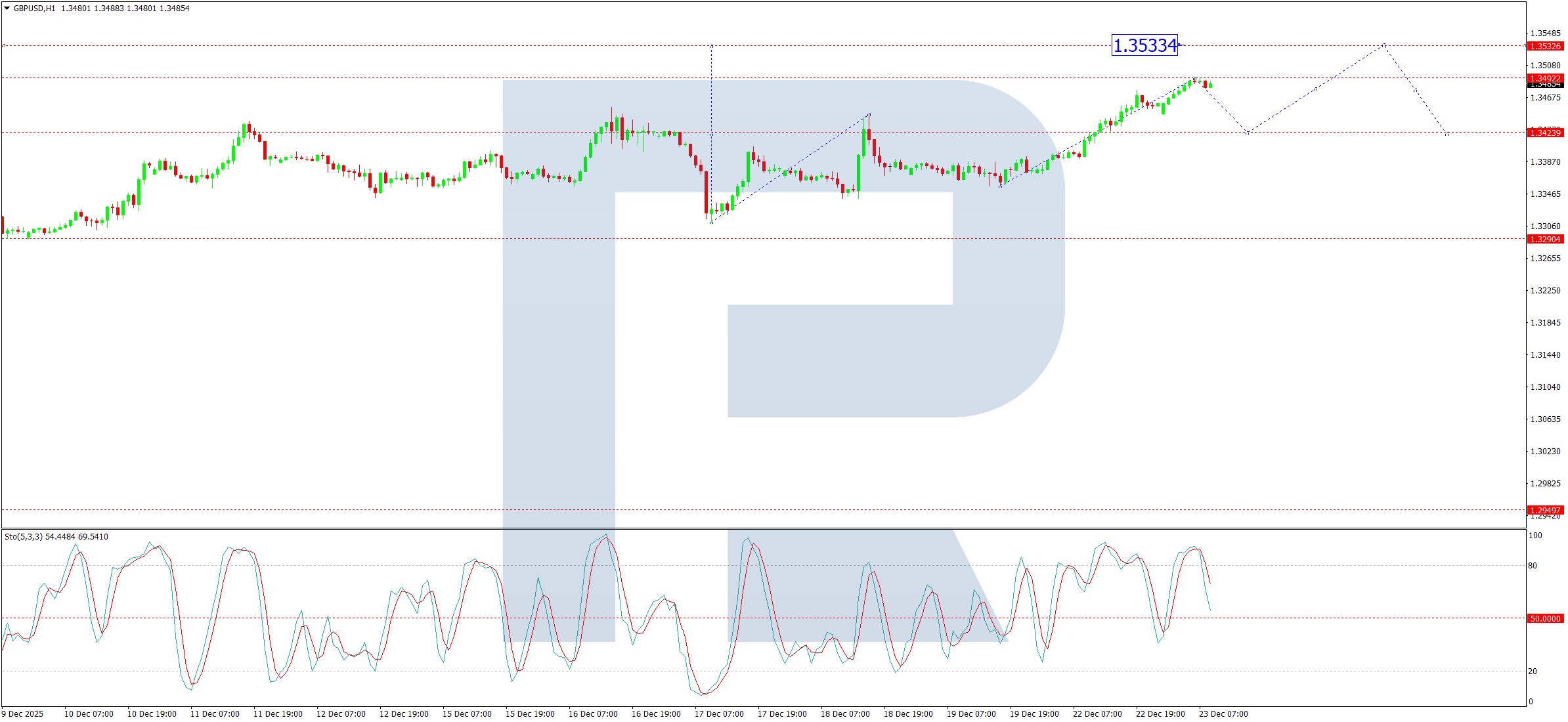
On the H1 chart, the pair broke upwards from a pronounced consolidation range around 1.3123, reaching its initial target at 1.3210. A decline to retest 1.3123 is now expected. This should be followed by a final upward push to 1.3215, at which point the corrective potential is likely to be exhausted.

We then forecast the start of a fifth and typically powerful wave of decline, targeting 1.2911. The Stochastic oscillator confirms this scenario. Its signal line is in overbought territory above 80 and is turning downwards, signalling that the current upward momentum is losing steam.

Conclusion

The pound’s strength is fragile, driven by budget speculation rather than a shift in fundamentals. The pre-budget rally is viewed as a corrective bounce within a broader bearish trend. Technically, the pair is approaching a critical resistance zone near 1.3215. We anticipate this level will cap gains and present a selling opportunity, paving the way for a resumption of the downtrend with an initial target at 1.2911. The budget details and the BoE’s subsequent December meeting will be key determinants of the pound’s medium-term direction.


Disclaimer:

Any forecasts contained herein are based on the author’s particular opinion. This analysis may not be treated as trading advice. RoboForex bears no responsibility for trading results based on trading recommendations and reviews contained herein.

EUR/USD Extends Losses as Dollar Strength Is Questioned

By RoboForex Analytical Department

The EUR/USD pair declined further on Tuesday, edging towards 1.1512. This downward movement persists despite a recent bout of US dollar weakness, which was triggered by a series of dovish comments from Federal Reserve officials that significantly increased the likelihood of an imminent rate cut.

The shift in sentiment was led by Governor Christopher Waller, who expressed support for a December cut, citing mounting risks to the labour market. Other officials, including Mary Daly and John Williams, echoed his stance. Waller also emphasised that policy decisions in 2026 will be contingent upon a large volume of delayed economic data, which agencies are now beginning to publish following the end of the government shutdown.

This coordinated messaging has caused a dramatic repricing in interest rate futures. The market-implied probability of a 25-basis-point cut in December has surged to 81%, a substantial increase from just 42% a week ago.

Despite this dovish tilt, the US dollar has demonstrated resilience. Investor focus is now shifting to a slew of upcoming data releases, including reports on retail sales, PPI, durable goods orders, and weekly jobless claims, which will provide a clearer picture of the US economy’s health.

Technical Analysis: EUR/USD

H4 Chart:

On the H4 chart, EUR/USD is forming a tight consolidation range above the key support at 1.1510. The current structure suggests a high probability of a technical correction towards 1.1588, with the potential to extend this rebound to 1.1616. However, a decisive downward breakout from this range would signal the resumption of the primary downtrend, activating the next bearish impulse with an initial target at 1.1488. The MACD indicator technically supports this scenario. Its signal line is below zero but is pointing upwards, indicating building momentum for a short-term correction within the broader bearish environment.

H1 Chart:

On the H1 chart, the pair completed a growth wave to 1.1549 before declining to 1.1510, forming a consolidation range around 1.1530. An upward breakout could initiate another leg higher towards 1.1568, potentially extending to 1.1616. It is crucial to view any such strength as a corrective rally before the larger downtrend resumes, targeting a move back towards 1.1500. Conversely, a downward breakout would directly activate the bearish potential for a decline to 1.1488, a level that could mark the completion of the first phase of the third wave within the broader downward trend. The Stochastic oscillator aligns with the near-term corrective view, as its signal line has turned up from the 20 level, suggesting room for a bounce towards 80.

Conclusion

While dovish Fed rhetoric has injected volatility and capped the dollar’s gains, the EUR/USD remains in a fragile technical position. The immediate outlook hinges on the pair’s ability to hold the 1.1510 support. A break higher would trigger a corrective rally towards 1.1616, offering a potential selling opportunity. However, a failure to hold this level would open the path for a more pronounced decline towards 1.1488 and possibly lower, reaffirming the underlying bearish trend.


Disclaimer:

Any forecasts contained herein are based on the author’s particular opinion. This analysis may not be treated as trading advice. RoboForex bears no responsibility for trading results based on trading recommendations and reviews contained herein.
Yen Under Sustained Pressure, Igniting Intervention Fears

By RoboForex Analytical Department

The USD/JPY pair is trading firmly around 156.56 on Monday, keeping the Japanese yen in a deeply weak position. Markets remain on high alert as they assess a chorus of verbal interventions from Japanese officials aimed at stemming the decline of the national currency.

The warnings intensified on Sunday when Takuji Aida, an adviser to Prime Minister Sanae Takaichi, stated that Tokyo is prepared to intervene directly in the currency market if the yen’s weakness begins to inflict significant harm on the economy.

This follows similar expressions of concern from Bank of Japan Governor Kazuo Ueda and Finance Minister Satsuki Katayama last week. Their comments have significantly heightened expectations of potential market intervention, with many analysts identifying the 160.00 level as a critical line in the sand, recalling that this zone prompted official action during previous episodes of yen weakness.

The yen’s sell-off, which drove it to a ten-month low last week, was initially triggered by the new cabinet’s substantial stimulus package. The plan raised alarms over Japan’s fiscal health, while the administration’s continued insistence on ultra-loose monetary policy has provided a fundamental backdrop for further currency depreciation.

Technical Analysis: USD/JPY

H4 Chart:

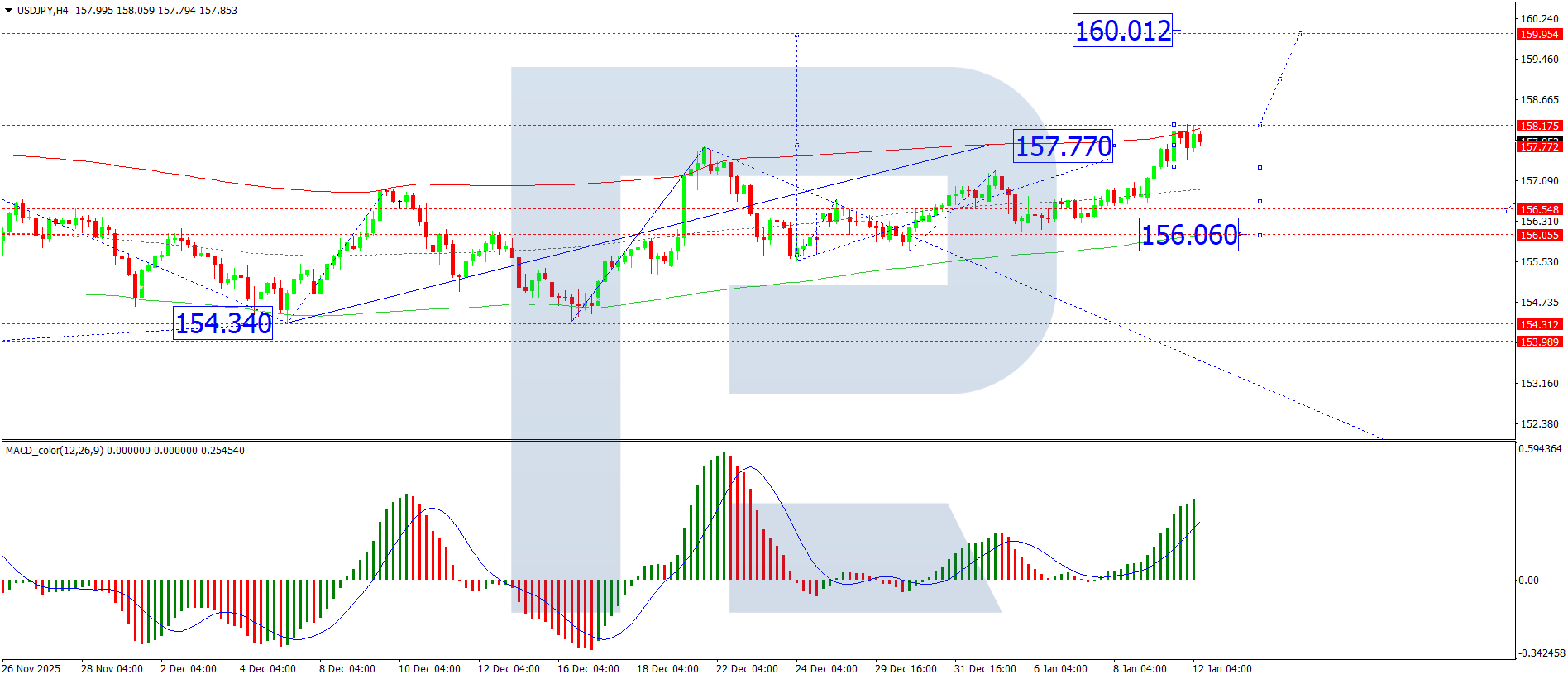
On the H4 chart, USD/JPY completed its first downward impulse to 156.19 and is now forming a consolidation range around 156.55. An upward breakout from this range is expected to trigger a corrective rally towards 157.15. Following this correction, we anticipate the resumption of the bearish move, initiating a new downward impulse with an initial target at 154.00. A break below this level would open the path for a deeper correction towards 153.30. This scenario is technically supported by the MACD indicator. Its signal line is above zero but is pointing decisively downward, suggesting that while the pair is correcting from overbought conditions, the underlying momentum is shifting bearish.

H1 Chart:

On the H1 chart, the pair completed a downward wave to 156.20. We are now observing a corrective phase for this move, with an initial target set at 157.13. Upon completion of this upward correction, we expect the next leg of the downtrend to develop, targeting 154.44. The Stochastic oscillator confirms this near-term view. Its signal line is above 50 and rising towards 80, indicating that short-term buying pressure is driving the correction before the larger bearish trend reasserts itself.

Conclusion

The yen remains caught between fundamental pressures from domestic policy and escalating verbal intervention from authorities. Technically, the USD/JPY pair is completing a corrective bounce within a newly established short-term downtrend. While a rise towards 157.15 is likely in the near term, this should be viewed as a corrective move within a broader bearish structure that targets a decline towards 154.00 and potentially 153.30. All eyes remain on the 160.00 level, widely viewed as the threshold for potential official intervention.

Disclaimer:

Any forecasts contained herein are based on the author’s particular opinion. This analysis may not be treated as trading advice. RoboForex bears no responsibility for trading results based on trading recommendations and reviews contained herein.

GBP/USD Weakens Rapidly Amid Dovish Data and External Pressures

By RoboForex Analytical Department

The GBP/USD pair fell sharply to 1.3048 on Thursday, pressured by a combination of soft domestic inflation data and a broadly stronger US dollar.

The pound’s decline was triggered by the latest UK Consumer Price Index (CPI) report, which showed inflation slowed to 3.6% year-on-year in October, matching forecasts. This bolstered market expectations that the Bank of England (BoE) could initiate interest rate cuts as early as December. The data fits a broader narrative of weakening domestic demand: the labour market is cooling, GDP growth is undershooting the central bank’s projections, and core inflation is tracking slightly below the BoE’s anticipated path. In light of this, institutions, including Deutsche Bank, suggest the Monetary Policy Committee (MPC) will gain the confidence needed to lower the Bank Rate from its current 4.00% level.

Additional headwinds for sterling stemmed from a resurgent US dollar, which found support ahead of key US macroeconomic data and the highly anticipated earnings report from the AI-chip giant, Nvidia.

Globally, investor attention is also captivated by the Japanese yen, which slumped to a 10-month low after the Ministry of Finance issued a statement expressing a “high degree of caution” over the currency’s movements. This phrase stopped short of threatening direct intervention.

Overall, market uncertainty is elevated. US statistical agencies are only just beginning to release the backlog of data delayed by the recent government shutdown, leaving traders to piece together the true state of the world’s largest economy.

Technical Analysis: GBP/USD

H4 Chart:

On the H4 chart, GBP/USD has completed a downward wave to 1.3037. We now anticipate a technical correction towards at least 1.3080. Following this pullback, the primary downtrend is expected to resume, driving the pair towards 1.2990, with a longer-term prospect of extending losses to 1.2915. This bearish scenario is confirmed by the MACD indicator. Its signal line is located below zero and pointing decisively downward, indicating that selling momentum remains firmly intact.

H1 Chart:

On the H1 chart, the pair broke downwards from a consolidation range around 1.3090, confirming the continuation of the bearish impulse. The immediate target for this leg is 1.3030. A corrective bounce to retest the 1.3090 level from below is likely before the next wave of selling takes the pair down to 1.2990 and potentially towards 1.2950. The Stochastic oscillator aligns with this view. Its signal line is above 50, indicating that a short-lived corrective bounce is underway before the dominant downtrend reasserts itself.

Conclusion

The GBP/USD is facing a perfect storm of domestic dovish shifts and external dollar strength. The softer inflation print has significantly increased the odds of a December BoE rate cut, eroding sterling’s yield appeal. Technically, the path of least resistance remains firmly to the downside. While a short-term correction towards 1.3080 is likely, this should be viewed as a potential selling opportunity within the broader bearish trend, which has clear targets at 1.2990 and 1.2915.


Disclaimer:

Any forecasts contained herein are based on the author’s particular opinion. This analysis may not be treated as trading advice. RoboForex bears no responsibility for trading results based on trading recommendations and reviews contained herein.

EUR/USD Declines as Market Awaits Key US Employment Data

By RoboForex Analytical Department

The EUR/USD pair extended its losses for a third consecutive session, falling to 1.1591 on Tuesday. The downward pressure persists as investors await a backlog of delayed US economic data, expected to provide crucial signals on the Federal Reserve’s interest rate path. The market’s primary focus is the delayed September employment report, which traders will scrutinise for signs of a softening labour market.

The rhetoric from Federal Reserve officials remains mixed, contributing to the market’s indecision. Several officials have recently expressed scepticism about the need for a December rate cut, citing persistent inflationary pressures. However, this was counterbalanced by Governor Chris Waller, who confirmed his support for a cut, and Vice Chair Philip Jefferson, who advocated for a gradual approach due to rising labour market risks.

This conflicting guidance has led to a repricing of rate expectations. Futures markets now imply only a 43% probability of a 25-basis-point cut in December, a significant decline from the odds priced at the start of the month. The US dollar has found broad support, strengthening against commodity-linked currencies like the Australian and New Zealand dollars.

Technical Analysis: EUR/USD

H4 Chart:

On the H4 chart, EUR/USD has breached its growth wave channel at 1.1605, opening the path for a downward move. We anticipate an initial decline to 1.1564, followed by a technical pullback to retest the 1.1605 level from below. This retest is likely to present a fresh selling opportunity before the downtrend resumes towards the primary target of 1.1560. The MACD indicator confirms this bearish outlook. Its signal line, while above zero, is pointing decisively downward, indicating that selling momentum is overpowering any residual strength.

H1 Chart:

On the H1 chart, the pair has broken downwards from a consolidation range around 1.1600, confirming the second leg of a bearish impulse. The immediate target for this move is 1.1560. Upon reaching this level, a corrective bounce back towards 1.1600 is a distinct possibility. The Stochastic oscillator supports this corrective view. Its signal line is rising from the 20 level towards the 50 level, suggesting that short-term downward pressure may be exhausted, paving the way for a temporary rebound.

Conclusion

The EUR/USD remains under pressure amid a strengthening US dollar and uncertain Fed policy. While conflicting comments from officials have created volatility, the overall technical structure is bearish. The breach below 1.1605 suggests further losses are likely, with an initial target at 1.1560. Any near-term rebounds towards the 1.1600/05 resistance zone are expected to be temporary, offering potential opportunities to re-enter the prevailing downtrend.


Disclaimer:

Any forecasts contained herein are based on the author’s particular opinion. This analysis may not be treated as trading advice. RoboForex bears no responsibility for trading results based on trading recommendations and reviews contained herein.

USD/JPY Extends Gains as Japanese Government Advocates for Dovish Policy

By RoboForex Analytical Department

The USD/JPY pair advanced to 154.72 on Monday, trading near its highest levels since February, despite the release of Japanese economic data that surpassed forecasts.

Japan’s GDP contracted by 0.4% quarter-on-quarter in Q3 2025, a reversal from the 0.6% growth recorded in Q2. However, this outcome was better than the 0.6% decline anticipated by economists.

The yen’s weakness persists primarily due to Prime Minister Sanae Takaichi’s public call for the Bank of Japan (BoJ) to maintain its ultra-low interest rate policy. The government believes this accommodative stance is essential to underpin economic growth and support a gradual rise in inflation.

This puts the government at odds with the central bank. BoJ Governor Kazuo Ueda struck a more balanced tone, noting that consumption remains stable amid rising household incomes and a tight labour market. He observed that core inflation is steadily approaching the 2% target, a development that would justify an early policy tightening.

This creates a visible and rare public imbalance between the dovish government’s fiscal priorities and the central bank’s potential inclination towards monetary normalisation.

Technical Analysis: USD/JPY

H4 Chart:

On the H4 chart, USD/JPY completed a growth wave to 155.00 and a subsequent correction to 153.63. The pair is now forming a tight consolidation range around this support level. An upward breakout from this range is expected to initiate the next leg of the rally, targeting 155.15 as an initial objective. This bullish scenario is confirmed by the MACD indicator, whose signal line is positioned above zero and pointing firmly upwards, indicating sustained positive momentum.

H1 Chart:

On the H1 chart, the pair reached a local high at 155.00 and completed a corrective structure to 153.63. A fresh growth impulse to 154.66 has since been completed, forming a new compact consolidation range. An upward breakout from this range is anticipated, opening the path for a move towards a minimum target of 155.75. The Stochastic oscillator supports this outlook. Its signal line is above 50 and rising sharply towards 80, reflecting strong short-term bullish momentum.

Conclusion

USD/JPY continues to climb, driven by a fundamental divergence between a dovish Japanese government and the BoJ, which is cautiously laying the groundwork for a future rate hike. Technically, the structure remains firmly bullish. The completion of the recent correction suggests the pair is poised for further gains, with immediate targets at 155.15 and 155.75.


Disclaimer:

Any forecasts contained herein are based on the author’s particular opinion. This analysis may not be treated as trading advice. RoboForex bears no responsibility for trading results based on trading recommendations and reviews contained herein.

GBP/USD Mired at Seven-Month Lows Amid Political and Fiscal Concerns

By RoboForex Analytical Department

The GBP/USD pair declined to 1.3149 on Friday, hovering near a seven-month low. The sell-off was triggered by the government’s abrupt abandonment of plans to raise income tax rates ahead of the Autumn Statement on 26 November.

According to the Financial Times, Prime Minister Keir Starmer and Chancellor Rachel Reeves have scrapped the previously debated increases to basic and higher tax rates. Instead, they will seek more indirect measures to address a budget deficit estimated at £30 billion.

This policy reversal has sparked significant market anxiety over the new cabinet’s fiscal discipline and long-term strategy, leading to a broad sell-off in sterling-denominated assets and exerting upward pressure on government bond yields.

Moreover, recent macroeconomic data have been weak, further compounding the political unease. Third-quarter economic growth was muted, with monthly GDP contracting in September. This follows earlier reports showing unemployment rising to a four-year high and wage growth slowing to its weakest pace since early 2022. Consequently, market expectations for a Bank of England rate cut in December have intensified.

Technical Analysis: GBP/USD

H4 Chart:

On the H4 chart, GBP/USD has completed a corrective wave at 1.3215. A decline towards 1.3062 is anticipated, likely to be followed by a minor rebound to 1.3131. This level is expected to form resistance within a new consolidation range. A subsequent downward breakout from this range would signal a resumption of the primary downtrend, opening the path towards 1.2985, with a further potential decline to at least 1.2915. This bearish scenario is supported by the MACD indicator. Its signal line, while above zero, has diverged bearishly from its histogram, suggesting the recent corrective bounce has ended and a new downward impulse is forming.

H1 Chart:

On the H1 chart, the pair has formed a consolidation range around 1.3153. We expect an initial decline to 1.3090, followed by a technical retracement to retest the 1.3153 level from below. This retest is likely to present a selling opportunity before the downtrend extends towards 1.3013. The Stochastic oscillator aligns with this view. Its signal line is deep in oversold territory at the 20 level, which, rather than suggesting a rebound, typically indicates sustained downward momentum in a strong trend.

Conclusion

The pound remains under heavy pressure, caught between political missteps that undermine fiscal credibility and a deteriorating economic backdrop that points to monetary easing. Technically, the pair maintains a clear bearish structure. Any near-term stability is likely to prove temporary, with the path of least resistance pointing towards a test of support at 1.2985 and potentially 1.2915.

Disclaimer:

Any forecasts contained herein are based on the author’s particular opinion. This analysis may not be treated as trading advice. RoboForex bears no responsibility for trading results based on trading recommendations and reviews contained herein.

EUR/USD Holds Steady as US Government Shutdown Ends

By RoboForex Analytical Department

The EUR/USD pair is trading flat on Thursday, hovering around 1.1587, following the House of Representatives’ approval of a short-term budget bill that ends the longest US government shutdown in history.

The bill now awaits President Donald Trump’s signature – a formality that will allow shuttered government agencies to resume operations within days.

While the resolution clears the way for the publication of a backlog of delayed macroeconomic data, the White House has cautioned that key October reports on employment and inflation may still be withheld from the public.

Market expectations for a December interest rate cut by the Federal Reserve have moderated but persist. The probability of a 25-basis-point cut has eased to 60%, down from 67% the day before.

This cautious sentiment was fuelled earlier in the week by ADP data, which showed that the US private sector shed an average of 11,250 jobs per week throughout October, amplifying concerns over a cooling labour market.

Technical Analysis: EUR/USD

H4 Chart:

On the H4 chart, EUR/USD has completed a corrective wave to 1.1605 and has formed a tight consolidation range below this resistance level. We anticipate a downward breakout from this range, triggering a decline towards an initial target of 1.1505. A breach of this level would open the path for a further extension of the downtrend to 1.1405. This bearish outlook is technically supported by the MACD indicator. Its signal line is above zero but has diverged from its histogram and is pointing decisively downward, suggesting the recent upward correction has run its course and bearish momentum is reasserting itself.

H1 Chart:

On the H1 chart, the pair completed a downward impulse to 1.1563, followed by a corrective bounce to 1.1597. These two levels define the upper and lower boundaries of a new consolidation range. A downward breakout is expected, leading to a resumption of the sell-off towards initial targets at 1.1538 and 1.1530. The Stochastic oscillator corroborates this view. Its signal line has turned down from below the 80 level and is falling steadily towards 20, indicating that short-term downward momentum is building.

Conclusion

While the end of the US government shutdown removes a key market overhang, the EUR/USD pair remains capped by underlying concerns about the US economy and a still-dovish Fed outlook. Technically, the structure points to a bearish resolution. The completion of the correction near 1.1605 suggests the pair is poised for a fresh leg lower, with key downside targets at 1.1505 and 1.1405.


Disclaimer:

Any forecasts contained herein are based on the author’s particular opinion. This analysis may not be treated as trading advice. RoboForex bears no responsibility for trading results based on trading recommendations and reviews contained herein.