In the United States, the PPI, which measures inflation between factories and plants, rose by 0.4% last month. This is a negative sign, indicating that the current rate of inflation may not yet be peaking. A stronger-than-expected consumer confidence report also contributed to a late-session sell-off in stocks. At the close of the stock market on Friday, the Dow Jones Index (US30) decreased by 0.90% (-2.50% for the week) and the S&P 500 Index (US500) lost 0.73% (-2.90% for the week). The Technology Index NASDAQ (US100) was down by 0.70% on Friday (-3.31% for the week). All three indices closed the week lower.
The PPI report confirmed Chairman Powell’s recent speech that while the October inflation data was encouraging, it will take much more effort to bring down inflation. But there is also a positive side. Annual inflation expectations fell to 4.6% from 4.9%, the lowest since September 2021, according to a University of Michigan survey.
The US Federal Reserve will hold its last meeting of the year this week. Experts point to a 78% chance that the Fed will raise rates by 0.5%. The probability of raising the rate by 0.75% is 21%. Meanwhile, US inflation data on Tuesday will shed light on the Fed’s future plans, which will set the tone for US indices and stocks for the rest of the year and the beginning of 2023.
Equity markets in Europe were mostly down last week. German DAX (DE30) gained 0.74% (-0.81% for the week), French CAC 40 (FR40) added 0.46% (-0.76% for the week), Spanish IBEX 35 (ES35) gained 0.78% (-1.20% for the week), British FTSE 100 (UK100) closed on Friday up by 0.06% (-1.05% for the week).
The UK will publish the next GDP and Industrial Production Data today. Analysts believe that if the GDP shows a decline, the UK will move from the stagflation phase to a full-blown recession. The wage and price spiral could lead to hyperinflation and destabilize the economy. According to the latest CBI report, UK business investment continues to decline.
The Swiss National Bank (SNB) will meet on December 15 and is expected to decide on a third rate hike, this time probably by 50 basis points, in the context of stabilizing inflation at 3%. A further rate hike could come in March 2023, after which the SNB will probably pause for the rest of the year.
Gold and silver have been trading higher in recent weeks as the US dollar lost some ground due to an impending rate hike by the US Federal Reserve. But as central banks remain focused on curbing inflation through restrictive tightening of monetary policy, the fundamental component is not yet in favor of the precious metals. On the other hand, the tightening cycle is in its final stages, and investors are beginning to move into gold and silver in advance. But traders should understand that if recession fears weaken, the dollar index might strengthen again, which would have a negative impact on gold quotes.
Last week, black gold prices were falling as the EU and allies put a price cap on Russian oil. But oil prices rose on Friday and continued to rise in Asian morning trading on Monday as Russian President Vladimir Putin threatened to cut production in response to a Western price cap on Russian oil exports. Another factor in the rise in oil prices was the closure of a key oil pipeline between Canada and the United States over the weekend.
Asian markets traded flat last week. Japan’s Nikkei 225 (JP225) gained 0.53% over the week, China’s FTSE China A50 (CHA50) was down by 0.87%, Hong Kong’s Hang Seng (HK50) jumped by 3.53%, India’s NIFTY 50 (IND50) decreases by 0.84%, and Australia’s S&P/ASX 200 (AU200) was down by 1.21%.
Optimism about the cancellation of COVID measures in China was largely neutralized by fears that a large spike in local infections would delay a broader opening.
Wholesale prices in Japan fell from 9.4% to 9.3% year-over-year in November. The drop in producer prices points to a possible peak in inflation amid a decline in global commodity prices. Global commodity prices and the weakness of the yen, which increases the cost of imports, are pushing wholesale and consumer inflation upward. Japanese policymakers fear that such a trend could hurt Japan’s fragile economic recovery, so they are keeping rates at ultra-low levels.
In the commodities market, futures on orange juice (+5.45%), lumber (+3.76%), soybeans (+3.06%), and palladium (+2.86%) showed the biggest gains by the end of the week. Futures on WTI oil (-10.49%), BRENT oil (-10.23%), gasoline (-9.67%), wheat (-3.71%), coffee (-3.01%), and cotton (-2.62%) showed the biggest drop.
S&P 500 (F) (US500) 3,934.38 −29.13 (−0.73%)
Dow Jones (US30) 33,476.46 −305.02 (−0.90%)
DAX (DE40) 14,370.72 +106.16 (+0.74%)
FTSE 100 (UK100) 7,476.63 +4.46 (+0.06%)
USD Index 104.93 +0.16 (+0.15%)
Important events for today:
– UK GDP (m/m) at 09:00 (GMT+2);
– UK Industrial Production (m/m) at 09:00 (GMT+2);
– UK Manufacturing Production (m/m) at 09:00 (GMT+2);
This article reflects a personal opinion and should not be interpreted as an investment advice, and/or offer, and/or a persistent request for carrying out financial transactions, and/or a guarantee, and/or a forecast of future events.
Some of the world’s largest central banks are about to make their final rate decisions of the year, while offering their updated policy outlooks for 2023.
Throw into that mix: the latest inflation data out of major economies such as the US and the UK.
All that could make for some spicy market action, with FX pairs involving the US dollar, euro, and the British Pound perhaps feeling the burn going into 2023.
Here’s a list of the main economic data releases and events that could rock markets next week:
Monday, December 12
JPY: Japan November PPI
GBP: UK October monthly GDP, industrial production, manufacturing production
Tuesday, December 13
AUD: Australia November household spending, December consumer confidence
EUR: Germany November CPI (final print), December ZEW survey expectations
GBP: UK October unemployment rate, November jobless claims
USD: US November CPI – consumer price index
Wednesday, December 14
GBP: UK November CPI
EUR: Eurozone October industrial production
USD: Fed rate decision
Crude: EIA weekly oil inventories
Thursday, December 15
NZD: New Zealand Q3 GDP
AUD: Australia November unemployment, December inflation expectations
CNH: China medium-term lending rate; November industrial production, retail sales, jobless rate
CHF: Swiss National Bank rate decision
NOK: Norway’s Norges Bank rate decision
GBP: Bank of England rate decision
EUR: European Central Bank rate decision
USD: US weekly initial jobless claims, November retail sales, industrial production
Friday, December 16
AUD: Australia December PMIs
GBP: UK November retail sales; December PMIs and consumer confidence
S&P 500: ‘Triple witching day’ for US markets
USD: Deadline for avoiding US government shutdown
Markets are widely expecting a 50-bps hike respectively by the US Federal Reserve, the European Central Bank, and the Bank of England.
Anything other than a 50bps hike would be a surprise for markets, and likely translating into shock moves for USD, EUR, and/or GBP currency pairs.
A 50bps adjustment would also mark a “downshift” for these big 3 central banks, who had each hiked by 75bps at their previous meetings.
Focus on the Fed
As always, the Fed remains front and centre, given that it’s the most influential central bank in the world.
Consider how the rest of the FX world has found some relief from the US dollar’s declines over the past couple of months.
That’s largely due to markets becoming increasingly hopeful the eventual “downshift” (opting for smaller-sized rate hikes) by the Fed.
Such expectations have halved the benchmark US Dollar index’s year-to-date gains, from as much as 20% now down to 9.3% at the time of writing.
Watch what central bankers say and do
Markets are ready to react not just to what these central banks will do to their respective benchmark rates next week, but also to what each of these central banks say about their intentions on rate adjustments in 2023.
These policy outlooks will of course be informed by the latest figures on inflation, which we know is enemy #1 for these central bankers.
Hence, if we do see a higher-than-7.3% US CPI print next week, that should pave the way for the Fed to keep hiking its benchmark rates for longer.
Such a narrative could fuel a rebound for the US dollar, especially if Fed Chair Jerome Powell can convince markets once more of the central bank’s ultra-hawkish intentions.
Yet, we note that such a rebound for the greenback may prove limited and fleeting.
Looking back at the earlier DXY chart, the dollar’s rebound may be capped once more at its 200-day simple moving average (SMA).
From a fundamental perspective, the dollar’s rebound may run out of steam especially if markets persist with hopes on the eventual Fed “pivot”, despite what Powell may say to the contrary.
Brace for potentially imminent volatility
Overall, it remains to be seen which central bank can sound the most hawkish (intend to send its own benchmark rate higher) between the Fed, ECB, or the BOE.
And it’s the currency of that more-hawkish central bank that may outperform next week, and through year-end.
On H4, the quotes of Brent oil are below the 200-day Moving Average, which indicates the prevalence of a downtrend. However, the RSI is already in the oversold area. A test of 0/8 (75.00) should be expected, followed by a bounce off it and growth to the resistance level of 2/8 (81.25). The scenario can be cancelled by a downward breakaway of the support level of 0/8 (75.00). In the case, the quotes may fall to -1/8 (71.88).
On M15, the upper line of VoltyChannel is too far away from the current price, which means growth of the quotes will be initiated by a bounce off 0/8 on H4.
S&P 500
On H4, the S&P 500 quotes have dropped under the 200-day Moving Average again, indicating a downtrend. The RSI is testing the resistance line. In the end, a downward breakaway of the support level of 1/8 (3906.2) should be expected, followed by falling to 0/8 (3750.0). The scenario can be cancelled by rising over the resistance level of 2/8 (4062.5). This might lead to a trend reversal and growth of the quotes to 3/8 (4218.8).
On M15, an additional signal confirming the decline will be a bounce off the lower line of VoltyChannel.
Attention! Forecasts presented in this section only reflect the author’s private opinion and should not be considered as guidance for trading. RoboForex LP bears no responsibility for trading results based on trading recommendations described in these analytical reviews.
Initial jobless claims jumped to the highest level since February, indicating that unemployed people need more time to find work. These are the first signs that the US labor market is beginning to “cool down,” which will affect the Fed’s monetary policy toward slowing the rate hikes. The end of the tightening cycle is close.
Trading recommendations
Support levels: 1.0483, 1.0361, 1.0332, 1.0284, 1.0193
Resistance levels: 1.0584, 1.0610
The trend on the EUR/USD currency pair on the hourly time frame is bullish. The price is trading above the moving average lines, the MACD indicator is positive again, and buyers’ pressure remains. But now that the price has reached the resistance level, a pullback is possible. It is better to consider buy deals from the support level of 1.0483 but with additional confirmation. Sell deals can be considered from the resistance level of 1.0584, but it is better with confirmation in the form of reverse initiative.
Alternative scenario: if the price breaks down through the support level of 1.0332 and fixes below it, the downtrend will likely resume.
News feed for 2022.12.09:
– US Producer Price Index (m/m) at 15:30 (GMT+3);
– US Michigan Consumer Sentiment (m/m) at 17:00 (GMT+3).
The GBP/USD currency pair
Technical indicators of the currency pair:
Prev Open: 1.2199
Prev Close: 1.2236
% chg. over the last day: +0.30 %
The Bank of England will raise the interest rate next week. Analysts are leaning that it will be a 50 bps increase, raising the bank rate to 3.50%. Further, the Bank of England is projected to add another 50 basis points in the first quarter of 2023 and 25 basis points in the second quarter, with medians showing that the bank rate will peak at 4.25%. The UK is almost certainly headed for recession, with economists giving an average 85% chance of a recession within a year. Quarterly forecasts suggest that the economy will contract by 0.4% this year, which fits the technical definition of a recession.
Trading recommendations
Support levels: 1.2177, 1.2016, 1.1964, 1.1684, 1.1476, 1.1418
Resistance levels: 1.2279, 1.2381, 1.2431
From the technical point of view, the trend on the GBP/USD currency pair on the hourly time frame is bullish. The price is trading above the average lines. The MACD indicator returned to the positive zone, and there is a slight buying pressure inside the day. Under such market conditions, buy trades are better to look for from the support level of 1.2177, but with confirmation on intraday time frames. Sell trades are best looked for from the resistance level of 1.2279 but also better with confirmation in the form of a reverse initiative or a false breakout.
Alternative scenario: if the price breaks down from the 1.1965 support level and fixes below it, the downtrend will likely resume.
There is no news feed for today.
The USD/JPY currency pair
Technical indicators of the currency pair:
Prev Open: 136.64
Prev Close: 136.67
% chg. over the last day: +0.02 %
According to the Japan Foreign Trade Council, Japan’s exports and imports hit a record high in fiscal 2022 in value terms after rising energy prices and a weaker yen. The country’s trade balance is expected to be negative for the third consecutive year. Imports and exports will rise only slightly, while in value terms, they will both be markedly higher due to higher prices. This suggests that the Bank of Japan will continue to stimulate the economy.
From the technical point of view, the medium-term trend on the currency pair USD/JPY is bearish. The MACD indicator has become negative, and sellers’ pressure is increasing. Sell deals can be looked for from the resistance level of 137.24, provided that there is a reverse reaction and change in the structure on the intraday time frames. Buy trades are best considered on intraday time frames from the support level of 135.33, but only with confirmation.
Alternative scenario: If the price fixes above 138.00, the uptrend will likely resume.
There is no news feed for today.
The USD/CAD currency pair
Technical indicators of the currency pair:
Prev Open: 1.3654
Prev Close: 1.3591
% chg. over the last day: -0.46 %
The Bank of Canada made it clear this week that the price appreciation cycle is coming to an end as serious signs of slowing economic growth are emerging. The Canadian dollar is a commodity currency, so it faces further pressure as oil prices continue to decline, hitting new lows since the beginning of the year amid demand and recession fears. This has led investors to return to safe-haven assets such as the US dollar and gold.
Trading recommendations
Support levels: 1.3518, 1.3438, 1.3386, 1.3360, 1.3281, 1.3212
From the point of view of technical analysis, the trend on the USD/CAD currency pair has changed to bullish. But the price is trading below the moving averages, and the MACD indicator has become negative. The price is correcting. Buy trades should be considered after a slight pullback from the support level of 1.3518 or 1.3438, but with additional confirmation. For sell deals, it is best to consider the resistance level of 1.3658 but with confirmation in the form of reverse.
Alternative scenario: if the price breaks down and consolidates below the support level of 1.3386, the downtrend will likely resume.
This article reflects a personal opinion and should not be interpreted as an investment advice, and/or offer, and/or a persistent request for carrying out financial transactions, and/or a guarantee, and/or a forecast of future events.
The US indices rose on Thursday amid a technology sector recovery, despite rising Treasury bond yields. By Thursday’s close, the Dow Jones Index (US30) increased by 0.55%, and the S&P 500 Index (US500) added 0.75%. The technology index NASDAQ (US100) gained 1.13% yesterday. All three indices closed on the plus side.
Initial jobless claims jumped to the highest level since February, an indication that unemployed people need more time to find work. These are the first signs that the labor market is beginning to “cool down,” which in turn will influence the Fed’s monetary policy to slow the pace of rate hikes. The end of the tightening cycle is close. The steep inversion of the Treasury yield curve is a harbinger of recession, which also raises the possibility that the US Federal Reserve will soon take a pause.
Equity markets in Europe traded yesterday without a single trend. German DAX (DE30) gained 0.02%, French CAC 40 (FR 40) declined by 0.20%, Spanish IBEX 35 (ES35) declined by 0.79%, and British FTSE 100 (UK100) closed on Thursday down by 0.23%.
According to analysts, after underestimating the structural uptrend in inflation that began in 2017 amid an emerging labor shortage, the ECB now appears to be overestimating inflationary pressures. The slight decline in euro area inflation to 10% in November from 10.6% in October, largely due to lower oil prices, suggests that the worst of the inflation-induced shocks may be coming soon. So a 50 basis point rate hike on December 15 to 2.5% on the main refinancing rate makes sense. But it does not make sense to keep raising rates in 2023 because the winter recession in Europe will be disinflationary. Falling private consumption will play a big role in this downturn. Germany’s 2.8% monthly drop in retail sales in October may be a harbinger of recession.
Crude oil prices hit a near-one-year low on Thursday. Oil prices will continue to fall as President Vladimir Putin’s administration shows no serious signs of responding to the price cap, leading traders to believe that oil prices will eventually trade close to the $ 60-a-barrel limit.
Asian markets were mostly down yesterday. Japan’s Nikkei 225 (JP225) decreased by 0.40%, Hong Kong’s Hang Seng (HK50) ended the day up by 3.38%, and Australia’s S&P/ASX 200 (AU200) ended the day down by 0.75%.
According to the National Bureau of Statistics of China, the Producer Price Index (PPI) remained unchanged compared to the previous month. November’s Consumer Price Index (CPI) fell to 1.6% year-on-year from 2.1%. This data suggests that economic growth continues to weaken. Growth in the world’s second-largest economy has slowed this year, largely under the influence of uncompromising COVID-19 restrictions.
Australia’s economy is likely to slow in the second half of 2023. Analysts project the Australian economy to contract from 2.6% in 2022 to 1.0% in 2023. Household consumption is projected to decline from about 2% in the first half of 2023 to nearly zero in the second half. Inflation will be 3% lower in 2024 than the RBA’s current forecast of 3.25%, allowing the RBA to cut rates by about 100 basis points in late 2023 and early 2024. The sharp slowdown in economic growth in 2023 will be due in part to the RBA continuing to raise interest rates in the first half of 2023 as wage growth and inflation remain high.
S&P 500 (F) (US500) 3,963.51 +29.59 (+0.75%)
Dow Jones (US30) 33,781.48 +183.56 (+0.55%)
DAX (DE40) 14,264.56 +3.37 (+0.024%)
FTSE 100 (UK100) 7,472.17 −17.02 (−0.23%)
USD Index 104.81 -0.29 (-0.28%)
Important events for today:
– China Consumer Price Index (m/m) at 03:30 (GMT+3);
– China Producer Price Index (m/m) at 03:30 (GMT+3);
– US Producer Price Index (m/m) at 15:30 (GMT+3);
– US Michigan Consumer Sentiment (m/m) at 17:00 (GMT+3).
This article reflects a personal opinion and should not be interpreted as an investment advice, and/or offer, and/or a persistent request for carrying out financial transactions, and/or a guarantee, and/or a forecast of future events.
Prometheus Biosciences Inc. shares traded 170% higher to a new 52-week intraday high after the company reported positive results from two separate Phase 2 clinical studies for its PRA023, an anti-TL1A mAb used to treat inflammatory bowel disease. The company is actively planning to advance PRA023 into Phase 3 trials as a prospective treatment for ulcerative colitis and Crohn’s disease in FY/23.
Clinical-stage biotech company Prometheus Biosciences Inc. (RXDX:NASDAQ), which is engaged in the discovery, development, and commercialization of medicines for use in the treatment of immune-mediated diseases such as inflammatory bowel disease (IBD), today announced “results from its ARTEMIS-UC Phase 2 and APOLLO-CD Phase 2a studies of PRA023 demonstrating strong efficacy and favorable safety results in both studies.”
The firm advised that based upon the data collected during both of these independent Phase 2 trials, it plans to initiate discussions with regulators to move forward with two additional Phase 3 studies of PRA023 in FY/23 for the treatment of Crohn’s disease (CD) and ulcerative colitis (UC).
Prometheus advised that in its Phase 2 ARTEMIS-UC trial, “PRA023 met the primary and all ranked secondary endpoints including clinical, endoscopic, histologic, and patient-reported outcome measures in the initial cohort (Cohort 1) of the trial.”
In the double-blind, randomized ARTEMIS-UC trial, 135 patients with moderate-to-severely active UC who did not respond to prior therapies were treated over a period of 12 weeks with either PRA023 or placebo. The topline data showed that 26.5% of patients on PRA023 successfully achieved the predetermined primary endpoint of clinical remission versus just 1.5% in the control group. Additionally, 36.8% of the patients who receive PRA023 met the key secondary endpoint of endoscopic improvement, compared to 6.0% for those who were administered a placebo.
RXDX shares opened almost 200% higher today at US$105.07 (+US$69.01, +191.38%) over yesterday’s US$36.06 closing price and reached a new 52-week high price this morning of US$111.99.
The firm also reported positive findings in its Phase 2a APOLLO-CD trial, which enrolled a total of 55 patients diagnosed with a moderate-to-severely active CD with endoscopically active disease who also had failed other standard treatment regimens.
Results from the APOLLO-CD study demonstrated that 26.0% of patients who received PRA023 achieved endoscopic response versus the historical average placebo rate of 12%. In addition, 49.1% of trial participants’ patients administered PRA023 achieved clinical remission, compared to the historical placebo group rate of 16%.
Prometheus Biosciences’ Chairman and CEO Mark McKenna commented, “We are beyond enthusiastic with these study results and what they could mean for patients suffering from IBD. The performance of PRA023 in both UC and Crohn’s patients has surpassed our expectations . . . We believe PRA023 and our precision medicine approach [have] the potential to change the paradigm of IBD treatment, and we look forward to discussions with regulatory agencies as we prepare to advance into Phase 3 studies in Ulcerative Colitis and Crohn’s Disease.”
The company’s Chief Medical Officer Allison Luo, M.D. remarked, “PRA023 has clearly demonstrated clinical proof-of-concept in CD and remarkable efficacy for the treatment of UC . . . We look forward to further evaluating PRA023 in Phase 3 studies with the goal of bringing this promising candidate to the market.”
The firm explained that “PRA023 is an IgG1 humanized monoclonal antibody that has been shown to block tumor necrosis factor (TNF)-like ligand 1A (TL1A).” The company indicated that PRA023 shows the potential to substantially improve outcomes for patients with moderate-to-severe IBD in those persons predisposed to increased TL1A expression. In addition to prospective uses in the treatment of UC and CD, Prometheus is also investigating and developing PRA023 for use in treating systemic sclerosis-associated interstitial lung disease (SSc-ILD).
Prometheus Biosciences is a clinical-stage biotechnology firm based in San Diego, Calif., that is focused on discovering, developing, and commercializing novel therapeutics to treat immune-mediated diseases. The firm has created a precision medicine platform called Prometheus360™, which utilizes machine learning technology to query gastrointestinal bioinformatics databases to identify potential new therapeutic targets. The firm’s activities were initially focused mostly on gastrointestinal (GI) diseases such as IBD, but it is now expanding its efforts to target other autoimmune diseases.
Prometheus Biosciences started off the day with a market cap of around US$1.51 billion, with approximately 41.94 million shares outstanding and a short interest of about 11.6%. RXDX shares opened almost 200% higher today at US$105.07 (+US$69.01, +191.38%) over yesterday’s US$36.06 closing price and reached a new 52-week high price this morning of US$111.99. The stock has traded today between US$95.50 and US$111.99 per share and is currently trading at US$97.82 (+US$61.76, +171.27%).
Disclosures:
1) Stephen Hytha wrote this article for Streetwise Reports LLC and provides services to Streetwise Reports as an independent contractor. He or members of his household own securities of the following companies mentioned in the article: None. He or members of his household are paid by the following companies mentioned in this article: None.
2) The following companies mentioned in this article are billboard sponsors of Streetwise Reports: None. Click here for important disclosures about sponsor fees.
3) Comments and opinions expressed are those of the specific experts and not of Streetwise Reports or its officers. The information provided above is for informational purposes only and is not a recommendation to buy or sell any security.
4) The article does not constitute investment advice. Each reader is encouraged to consult with his or her individual financial professional and any action a reader takes as a result of information presented here is his or her own responsibility. By opening this page, each reader accepts and agrees to Streetwise Reports’ terms of use and full legal disclaimer. This article is not a solicitation for investment. Streetwise Reports does not render general or specific investment advice and the information on Streetwise Reports should not be considered a recommendation to buy or sell any security. Streetwise Reports does not endorse or recommend the business, products, services or securities of any company mentioned on Streetwise Reports.
5) From time to time, Streetwise Reports LLC and its directors, officers, employees or members of their families, as well as persons interviewed for articles and interviews on the site, may have a long or short position in securities mentioned. Directors, officers, employees or members of their immediate families are prohibited from making purchases and/or sales of those securities in the open market or otherwise from the time of the decision to publish an article until three business days after the publication of the article. The foregoing prohibition does not apply to articles that in substance only restate previously published company releases.
6) This article does not constitute medical advice. Officers, employees and contributors to Streetwise Reports are not licensed medical professionals. Readers should always contact their healthcare professionals for medical advice.
So much for the conventional wisdom of the “balanced portfolio”
By Elliott Wave International
In his February 2022 book, Last Chance to Conquer the Crash, Robert Prechter said:
Countless advisors have counseled “diversification,” a “balanced portfolio” and other end-all solutions to the problem of allocating your investments. These approaches are delusional. … No investment strategy will provide stability forever.
That certainly has applied to the classic 60% stocks / 40% bonds portfolio this year.
On Oct. 14, a Reuters headline said:
’60/40′ Portfolios Are Facing Worst Returns in 100 Years: BofA
Of course, everyone knows that stocks are risky, but many investors expect bonds to provide a cushion in case equities slide into a downtrend. And, indeed, the stock market has been trending lower since January.
But bond prices have taken a hit, too. A BIG one. As you probably know, bonds prices decline when yields rise and that’s what’s taken place.
You may find it hard to believe, but Elliott wave patterns and sentiment readings in the bond markets warned of this. For example, the July 2021 Elliott Wave Theorist, a monthly publication (since 1979) which analyzes financial markets and major cultural trends, showed this chart and said:
U.S. Treasury bill rates have edged closer and closer to zero for over a year. The complacency about the nonexistent T-bill yield in the face of unprecedented inflating by the government and the Fed is truly amazing. … The Fed’s cavalier inflating is borne of optimism. … When optimism and complacency finally melt like popsicles in the sun, the lines in [the chart] will turn up.
During that same month / year (July 2021), The New York Times ran this headline:
Federal Reserve Officials Project Rate Increases in 2023 [emphasis added]
This next chart of the 6-month U.S. Treasury bill yield, which published in the Nov. 18, 2022 Elliott Wave Theorist, shows what we all know: Rates began to turn up more than a year before 2023 and then soared higher.
The question now is: What’s next?
Elliott wave analysis answered this question before, and it can help you answer it now.
You can read more about what Elliott Wave Theorist editor, and EWI Founder, Robert Prechter expects next in the Special Report: Preparing for Difficult Times. The report is free — for a limited time — inside their “12 Days of Elliott” event. You need only join Club EWI to read it, along with 11 other fascinating resources, December 1-12.
You can join Club EWI without any cost or obligation. All the while, you’ll enjoy complimentary access to an abundance of Elliott wave resources on financial markets and investing.
Get started by following the link: 12 Days of Elliott — get free and instant access.
This article was syndicated by Elliott Wave International and was originally published under the headline 60% stocks, 40% bonds? Ha!. EWI is the world’s largest market forecasting firm. Its staff of full-time analysts led by Chartered Market Technician Robert Prechter provides 24-hour-a-day market analysis to institutional and private investors around the world.
Canadian-based Skyharbour Resources has announced it plans to complete a 10,000m drill program at its Russell Lake property. It has also recently received US$895 million from the exercise of share purchase warrants. Read here to learn more about the project and where the company is headed for 2023.
Uranium is an element that is mainly used to provide nuclear energy. Because of its radioactive properties, it can manufacture a tremendous amount of emissions-free energy. It is also considered more reliable than other emissions-free energy sources such as wind and solar. The outlook around the nuclear and uranium mining industries has changed significantly over the past several years and continues to improve.
While uranium has taken a dip in the past, recent news has led to its rise with the worldwide push to green energy, inflated energy costs, and the war in Ukraine. This August, Japan’s prime minister announced they would restart more idled nuclear plants and look at developing next-generation reactors. At this announcement, Forbes reported, “The Global X Uranium ETF surged 11.5%.”
Source: Skyharbour Resources.
The United States also has leaned into green energy. Currently, 20% of the electricity and 50% of the clean energy in the United States is nuclear, and this number seems to be on a path to only getting bigger.
On July 5, 2022, The New York Times reported that “the Biden administration has established a US$6 billion fund to help troubled nuclear plant operators keep their reactors running and make them more economically competitive against cheaper resources like solar and wind power.” The administration also is alluding US$2.5 million to fund two projects intended to showcase new nuclear technology.
Rajeev identified “the ongoing/planned exploration programs by Skyharbour and its partners” as major catalysts toward the company’s impending growth” and said that “as a result, Fundamental Research maintains its Buy recommendations for Skyharbour.”
This October 2022, the Biden administration also announced they would be providing US$150 million to improve nuclear research and development infrastructure at Idaho National Laboratory as a part of President Biden’s Inflation Reduction Act.
U.S. Secretary of Energy Jennifer M. Granholm commented that the Department of Energy “is taking critical steps to strengthen domestic nuclear development and deployment — helping ensure the United States is on track to reach a clean energy future.”
This, of course, leads to more uranium demand, or as Forbes said, “with many major nations rethinking their approach to clean, affordable energy, nuclear power plants are an obvious option. That’s good news for uranium investors, as more nuclear power means more demand for the radioactive metal.”
Skyharbour’s Plethora of Projects
Skyharbour Resources has been active in the Athabasca Basin since 2013 and has a myriad of projects, including Moore, Russell Lake, South Falcon Point, South Falcon East, Preston, East Preston, Hook Lake, Mann Lake, Yurchison, Riou River, Pluto Bay, Wallee, Usam Island, Foster River, West Dufferin, and South Dufferin.
Management noted that “Skyharbour holds an extensive portfolio of uranium exploration projects in Canada’s Athabasca basin and is well positioned to benefit from improving uranium market fundamentals with 15 projects, 10 of which are drill ready, covering over 450,000 hectares of land.”
Skyharbour estimates that over 30,000 meters of exploratory drilling will take place between all of its Athabasca Basin projects — including its two core assets and its multiple partner-funded projects — over the course of the next year. The company plans to dedicate a third of this work toward its flagship projects in Russell Lake and Moore Lake and is fully funded to conduct this work.
Catalyst: Plans to Break Ground at Russell Lake
Rio Tinto Plc. (RIO:NYSE; RIO:ASX; RIO:LSE; RTPPF:OTCPK), whose asset focus lies primarily in iron and copper, temporarily shelved the Russell Lake project. Rio has since optioned the project to Skyharbour, which plans to engage in advanced-stage exploration by drill testing “a number of the prospective targets [that] weren’t fully and systematically drill tested,” according to CEO Jordan Trimble. It wasn’t until a recent “resurgence in uranium and the nuclear industry” Trimble suggested that the industrial metals giant was willing to option the project to Skyharbour.
In resuming operations on the Russell Lake project, Skyharbour assumes the 40-person exploration camp previously used by Rio. Trimble believes that the inheritance and use of this asset for staging purposes “will bring [its] drill costs down quite a bit, not just at Russell Lake, but also at the adjacent Moore Lake Project.”
A summer’s night at Russell Lake’s camp in the Athabasca Basin. Source: Skyharbour Resources.
On November 23, the company announced it will carry out multiple phases of diamond drilling totaling 10,000 meters at Russell Lake. It plans on breaking ground sometime within the next month.
This minimum 10,000-meter exploration program will be carried out concurrently with Skyharbour’s multiple partner-funded uranium-drilling program at some of its other projects in the Athabasca Basin.
Analyst Sid Rajeev of Fundamental Research noted that Russell Lake “is strategically located between Cameco’s Key Lake mill and MacArthur uranium mine,” such that Skyharbour has a direct and rapid processing line between “the world’s largest uranium mill and the largest high-grade uranium mine.”
Catalyst: 2022 Drilling Complete at Mann Lake
At the end of last month, the company announced its partner company Basin Uranium Corp. had completed drilling at Mann Lake for 2022. 6,279 meters were drilled. Core samples have been submitted for analysis to the Saskatchewan Research Council (SRC).
As they hold steady for the assay results, Skyharbour’s partner company Basin Uranium plans to continue its exploration programs at it Mann Lake project in the Athabasca Basin in 2023.
Rajeev identified “the ongoing/planned exploration programs by Skyharbour and its partners” as major catalysts toward the company’s impending growth” and said that “as a result, Fundamental Research maintains its Buy recommendations for Skyharbour.”
Catalyst: Skyharbour Receives US$895 Million
Friday, Skyharbour announced it had received US$895,027.32 from the exercise of share purchase warrants with a strike price of US$0.22 since June 29, 2022. 4,068,306 of the warrants have been exercised, with this batch of warrants expiring on Nov. 29, 2022.
Furthermore, the company noted that “collectively, Skyharbour has now signed option agreements with partners that total over US$34 million in partner-financed exploration expenditures, over US$22 million in stock being issued and just under US$15 million in cash payments coming into Skyharbour, assuming that these partner companies earn in the full amounts at their respective projects.”
Ownership and Share Structure
Skyharbour’s management owns approx. 5% of the company’s 145 million marketable shares. CEO Trimble owns 2.514 million shares of Skyharbour, maintaining a 1.73% stake. Director David Cates’ 1.247 million shares constitute an additional 0.86% management stake. Mr. Cates is the President and CEO of Denison Mines, a larger uranium developer that is a strategic partner and shareholder of Skyharbour Resources.
Aside from the aforementioned Denison and Rio Tinto, notable strategic and institutional investors in the company’s growth include the Global X and Sprott Uranium ETFs, Extract Capital, L2, Sachem Cove, and Sprott Capital Partners.
It is also worth noting that Skyharbour maintains a minority equity stake in several of its other option and joint-venture partner companies. Skyharbour has signed option agreements over the last several years with partners that total approx. CA$22 million worth of shares being issued between Azincourt Energy, Valor Resources, Basin Uranium, Medaro Mining, Yellow Rocks Energy, and Tisdale Clean Energy — the companies behind Skyharbour’s partnerships in East Preston, Hook Lake, Mann Lake, Yurchison, Wallee/Usam, and South Falcon East respectively.
The company’s burn rate is US$110,000. It has over US$6M in the treasury, with another approximately US$2.5 million expected to come in from option partner payments and shares in the next 12 months.
Skyharbour has a market cap of US$39 million and 144.99 million outstanding shares. It has 138.45 million shares in the public float and trades in the 52-week range at between US$0.2223 and US$0.6558 per share.
Disclosures: 1) Katherine DeGilio and Thomas Griffin wrote this article for Streetwise Reports LLC, and Thomas Griffin provides services to Streetwise Reports as an independent contractor. They or members of their household own securities of the following companies mentioned in the article: None. They or members of their household are paid by the following companies mentioned in this article: None.
2) The following companies mentioned in this article are billboard sponsors of Streetwise Reports: Skyharbour Resources Ltd.Click here for important disclosures about sponsor fees. As of the date of this article, an affiliate of Streetwise Reports has a consulting relationship with: None.Please click here for more information.
3) Statements and opinions expressed are the opinions of the author and not of Streetwise Reports or its officers. The author is wholly responsible for the validity of the statements. The author was not paid by Streetwise Reports for this article. Streetwise Reports was not paid by the author to publish or syndicate this article. Streetwise Reports requires contributing authors to disclose any shareholdings in, or economic relationships with, companies that they write about. Streetwise Reports relies upon the authors to accurately provide this information and Streetwise Reports has no means of verifying its accuracy.
4) This article does not constitute investment advice. Each reader is encouraged to consult with his or her individual financial professional and any action a reader takes as a result of information presented here is his or her own responsibility. By opening this page, each reader accepts and agrees to Streetwise Reports’ terms of use and full legal disclaimer. This article is not a solicitation for investment. Streetwise Reports does not render general or specific investment advice and the information on Streetwise Reports should not be considered a recommendation to buy or sell any security. Streetwise Reports does not endorse or recommend the business, products, services or securities of any company mentioned on Streetwise Reports.
5) From time to time, Streetwise Reports LLC and its directors, officers, employees or members of their families, as well as persons interviewed for articles and interviews on the site, may have a long or short position in securities mentioned. Directors, officers, employees or members of their immediate families are prohibited from making purchases and/or sales of those securities in the open market or otherwise from the time of the decision to publish an article until three business days after the publication of the article. The foregoing prohibition does not apply to articles that in substance only restate previously published company releases. As of the date of this article, officers and/or employees of Streetwise Reports LLC (including members of their household) own securities of Skyharbour Resources Ltd., a company mentioned in this article.
Rover Metals Corp. is making the jump from gold to lithium and critical elements. One analyst said the timing is perfect.
The timing of Rover Metals Corp. (ROVR:TSX.V; ROVMF:OTCQB; 4X0:FSE) move from gold to lithium and critical elements is perfect, an analyst said, as other projects near its new Let’s Go Lithium project in Nevada are “ripe for consolidation.”
Let’s Go Lithium is estimated to hold lithium-bearing clay mineralization similar to other advanced-stage deposits held in the state by Cypress Development Corp. (CYP:TSX.V; CYDVF:OTCQB; C1Z1:FSE), American Lithium Corp. (LIACF:US-OTC; LI:TSX.V; 5LA1:FSE), and Noram Lithium Corp. (NRM:TSX.V).
Economic studies on Cypress’ and Noram’s projects have returned “robust economics,” according to Sid Rajeev, head of research for Fundamental Research Corp.
“We believe miners/battery manufacturers are actively monitoring juniors for M&A, as they are constantly seeking long-term stable sources of lithium for EV (electric vehicle) batteries,” Rajeev wrote in a note on December 1, 2022.
Rover Chief Executive Officer and Director Judson Culter said the company was open to such transactions.
“The battery producers want mines being built ASAP,” Culter told Streetwise Reports. “The bigger the resource companies are, the easier it will be for them to capitalize and build refineries.”
The World Needs More Lithium
According to Benchmark Mineral Intelligence, the deficit between lithium demand and production and highly probable and probable lithium projects will be over 3.5 million tonnes (Mt) by 2040. The world needs lithium and other critical elements like copper to help fuel the move to green energy. Lithium — a soft, silvery metal with highly reactive and flammable properties — is a major component of EV batteries. It’s also used to strengthen alloys, as a high-temperature lubricant, and as a drug to treat bipolar disorder.
One out of five vehicles sold worldwide could be an EV in less than two years, and Ford and General Motors have set a goal of achieving 40–50% of their sales from EVs in the U.S. by 2030.
To qualify for tax credits under new U.S. laws, a significant percentage of batteries and minerals in batteries must come from the U.S. or Canada, a regional trade-treaty country.
China only has less than a quarter of the world’s lithium resources but controlled about two-thirds of the world’s lithium processing and refining capacity in 2021, Rystad Energy said.
The Catalyst: Lithium
Rover has signed a definitive agreement to option a 100% ownership interest in the Let’s Go Lithium project. It’s located in Nevada’s southwest lithium jurisdiction near Albemarle Corp.’s (ALB:NYSE) Silver Peak mine, which is the only lithium-producing mine in North America.
The company plans to convert the project into an NI 43-101-compliant resource within two years and plans to conduct a drill program. Rajeev said that “delineating a lithium resource is a faster and cheaper process vs. mainstream metals such as gold [and] copper.”
Unlike other metals, lithium is deposited in “a vast amount close to the surface,” Culter said. “In gold and copper, you typically have to chase shoots or veins of the high-grade (ore), which are narrow (and go) to great depths. These are very tricky to follow below the surface.”
The climate and energy package recently passed in the United States is bringing new urgency to the production of electric vehicle (EV) metals and minerals like lithium. Rover officials said they want to be positioned to take advantage of that.
Rover last summer announced it had also closed on a deal involving the Indian Mountain Lake copper and zinc project in the Northwest Territories. It had verified high-grade lithium surface samples at Let’s Go Lithium of 780 parts per million lithium (ppm Li), 910 ppm Li, and 710 ppm Li.
Further analysis of samples using handheld laser-induced breakdown spectroscopy found results of 1,218 ppm Li, 778 ppm Li, and 724 ppm Li.
Culter said the company is readying a US$200,000 reverse-circulation drill program to follow up on those high-grade samples. That exploration money will also be the company’s required earn-in to a 100% ownership of the project.
Rajeev said Fundamental was maintaining its Buy rating on Rover.
The later-stage greenfields lithium project includes hydro power lines, direct road access, and a nearby town with a readily available workforce, the company said.
There have been four historical water wells drilled on the project that logged the claystone orebody as being close to surface, with an average thickness of over 300 feet across the approximate 6,000 acres of the property. Because of that, the project is district-scale in nature, Culter said.
Cypress is producing a feasibility study looking at the commercial viability of producing lithium carbonate for EV batteries from Nevada claystone like at Let’s Go Lithium.
Albemarle Corp.’s Silver Peak mine in Nevada is the only lithium-producing mine in North America, but it uses a water-intensive process to get at lithium-bearing brine deposits in an area that’s seeing record droughts. The claystone method uses acids to process lithium-bearing clay.
Rajeev said Fundamental was maintaining its Buy rating on Rover but adjusting its fair value estimate for its share price from CA$1.14 down to CA$0.56. It was CA$0.10 per share on Tuesday afternoon.
Ownership and Share Structure
Culter and family members own about 2 million shares of Rover, and directors Keith Minty and Louis Covello own about 360,000 and about 50,000, respectively. There are no institutional shareholders, and the rest are retail.
Rover’s market cap is CA$2.63 million, and it has 26.3 million shares outstanding, 24.9 million of them free-floating. It trades in a 52-week range of CA$0.39 and CA$0.06.
Disclosures:
1) Steve Sobek wrote this article for Streetwise Reports LLC. He or members of his household own securities of the following companies mentioned in the article: None. He or members of his household are paid by the following companies mentioned in this article: None.
2) The following companies mentioned in this article are billboard sponsors of Streetwise Reports: Rover Metals Corp. Click here for important disclosures about sponsor fees. The information provided above is for informational purposes only and is not a recommendation to buy or sell any security.
3) The article does not constitute investment advice. Each reader is encouraged to consult with his or her individual financial professional and any action a reader takes as a result of information presented here is his or her own responsibility. By opening this page, each reader accepts and agrees to Streetwise Reports’ terms of use and full legal disclaimer. This article is not a solicitation for investment. Streetwise Reports does not render general or specific investment advice and the information on Streetwise Reports should not be considered a recommendation to buy or sell any security. Streetwise Reports does not endorse or recommend the business, products, services or securities of any company mentioned on Streetwise Reports.
4) From time to time, Streetwise Reports LLC and its directors, officers, employees or members of their families, as well as persons interviewed for articles and interviews on the site, may have a long or short position in securities mentioned. Directors, officers, employees or members of their immediate families are prohibited from making purchases and/or sales of those securities in the open market or otherwise from the time of the decision to publish an article until three business days after the publication of the article. The foregoing prohibition does not apply to articles that in substance only restate previously published company releases. As of the date of this article, officers and/or employees of Streetwise Reports LLC (including members of their household) own securities of Rover Metals Corp., a company mentioned in this article.
On H4, at the support level, gold has formed a Harami reversal pattern. Currently, the pair is going by the signal in an ascending wave. The goal of the growth may be 1810.00. Upon testing the resistance level, the pair will get the chance for breaking through it and continuing the uptrend. However, the price may pull back to 1775.00 before further growth.
NZDUSD, “New Zealand Dollar vs US Dollar”
On H4, at the support level, the pair has formed a Hammer reversal pattern. The pair is now going by the signal in an ascending wave. The goal of the growth may be 0.6450. Upon breaking through the resistance level, the quotes will get the chance to continue the uptrend. However, the price may pull back to 0.6305 before further growth.
GBPUSD, “Great Britain Pound vs US Dollar”
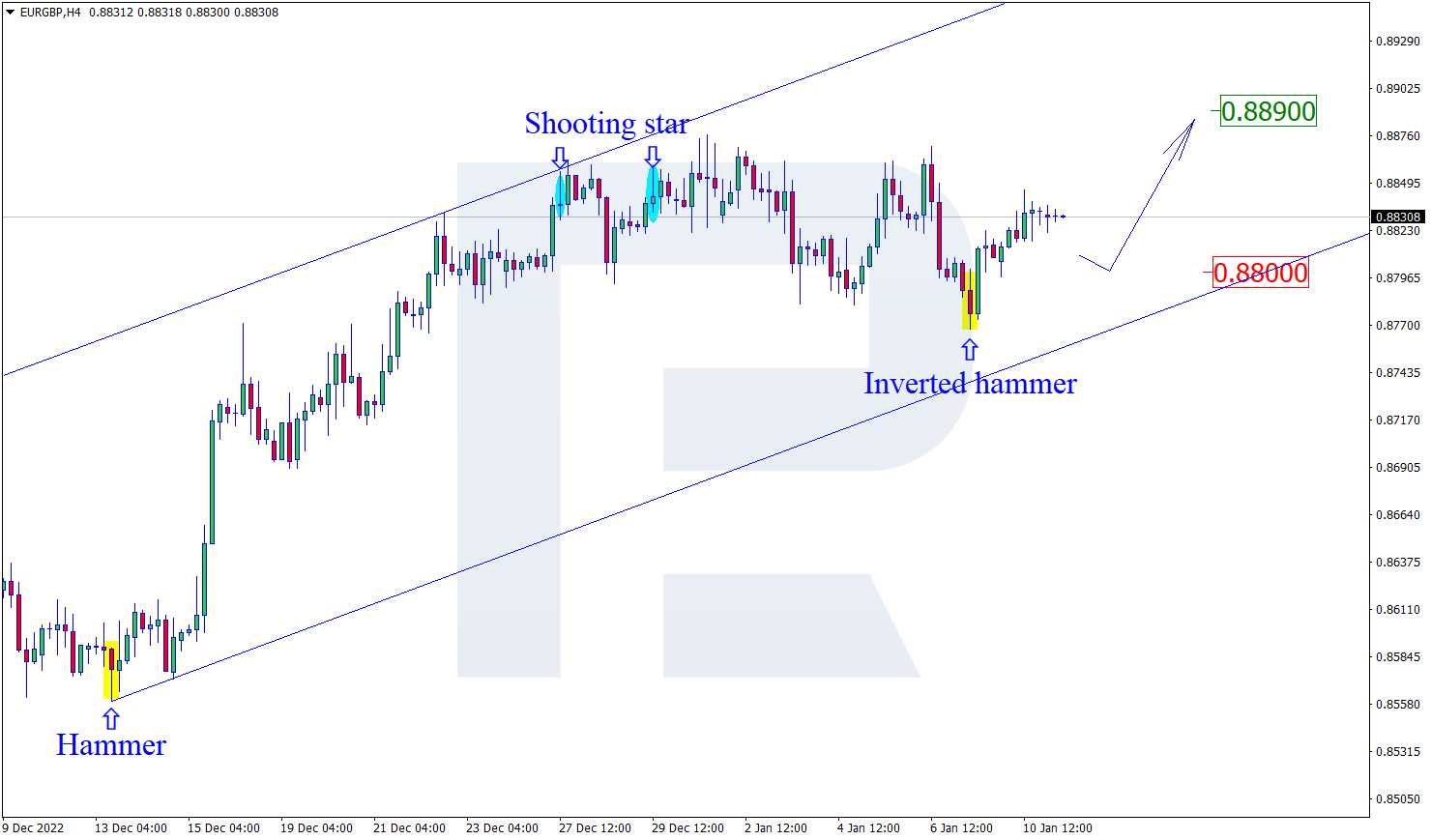
On H4, at the support level, the pair has formed a Doji reversal pattern. The pair may now go by the signal in an ascending wave. The goal of the growth may be the resistance level of 1.2380. However, the price may pull back to 1.2105 before continuing the uptrend.
Attention! Forecasts presented in this section only reflect the author’s private opinion and should not be considered as guidance for trading. RoboForex LP bears no responsibility for trading results based on trading recommendations described in these analytical reviews.