High soybean prices in Zambia and Malawi may make chicken costly too: lack of competition is to blame

By Arthur Khomotso Mahuma, University of Johannesburg and Namhla Landani, University of Johannesburg 

Poultry is one of the cheapest protein sources for the growing population of the east and southern Africa region. That makes soybeans critical to food security in the region, as they are an important input in chicken feed.

Soybean pricing and production dynamics have been challenging for Zambia and Malawi, threatening poultry production in the region.

Poultry feed makes up 60%-70% of the total cost of poultry production. Soybean prices directly affect the affordability of poultry and the ability of producers to be competitive. Small-scale independent poultry producers in particular have a hard time because they buy feed from the open market and are too small to determine prices. Large producers source feed from their own operations and determine soybean prices.

Figure 1: From soybeans to poultry

Source: Authors compilation

Zambia and Malawi are the key soybean producers in east and southern Africa. Both countries were hit hard in 2024 by climate change related weather and by the behaviour of players in the soybean market, including processors and traders.

Zambia’s soybean production fell by 74% because of poor rains and also because of farmers being squeezed. Large buyers had negotiated very low prices in previous years, so farmers planted less.

Malawi’s production also fell (20%), but much less than Zambia’s. Yet the surge in soybean prices in Malawi by 48% between May 2024 and November 2024 was out of proportion with the drop in production, and even surpassed Zambian prices (Figure 2). Malawian prices were the highest in the region, even though it produced enough to export.

We are economists at the African Market Observatory, which monitors prices of staple foods and conducts research on market dynamics. We analyse market concentration and barriers to entry, within and across countries in east and southern Africa, and we do in-depth field work.

Our work shows that competition issues, such as the ability of large buyers to influence prices and high margins, are at the heart of the surge in prices and low production in Malawi and Zambia. The climate-related weather effects are an additional factor.

Figure 2: Soybean prices in Zambia, Malawi and South Africa (benchmark) (3-month moving averages)

Market outcomes

In Zambia, dominant buyers of soybean offered farmers very low prices during the 2023 season – well below US$400/t and the South African benchmark (Figure 2). This meant that farmers planted less than half the 2023 crop in the 2024 season.

Crops were also affected by poor rainfall. Malawi’s 2024 production fell by 20% because of the worst drought in 100 years. The drop in production was lower than expected, demonstrating that farmers can adapt to weather changes. Prices still rose, however, driven by the highly concentrated soybean trading and processing market.

Cheapest source of proteins

Poultry is one of the cheapest sources of protein and has one of the lowest environmental impacts. It is essential that the value chain works well from feed to chicken rearing and becomes more resilient to extreme weather events.

The experience of 2024 shows what can go wrong.

Poultry demand in sub-Saharan Africa is expected to grow more than fourfold by 2050. Producers will need affordable feed.

Among them are many small-scale independent producers who rely on competitive markets for their inputs. Yet we found that with the escalating soybean and feed prices in Malawi from late 2021, and higher prices for day-old chicks, small independent producers had negative margins, meaning they made a loss in the second half of 2021. High feed prices undermine the competitiveness of Malawi’s poultry industry.

Aside from South Africa (which relies on genetically modified soybean), Zambia and Malawi have been the largest producers in the region. These countries have been exporting around half of their production (including soycake) to neighbouring countries with larger populations such as Tanzania and Kenya.

Zambia’s production plummet

Between 2020 and 2023, Zambia’s soybean production grew from 297,000 tonnes to 650,000 tonnes (Figure 3). In 2024, its production collapsed by 74% to 170,000 tonnes. This sharp decline was primarily due to farmers opting to plant less soybean because of the low prices offered from processors in 2023 (Figure 2). Farmers bought 50% less soybean seed for the 2024 season than the 2023 season.

Figure 3: Soybean production in Zambia and Malawi

With limited storage facilities available for farmers in most countries in the region, including Zambia, farmers typically have to sell to traders and processors shortly after harvest.

In Zambia, soybeans are produced by many small farmers, so they compete to sell their crop to a few main processors in a concentrated market. As a result, these processors have greater power to influence the terms of trade, such as price. This was especially evident in 2023 when processors offered farmers lower prices (Figure 2).

Poor rainfall linked to the 2023/24 El Niño phase of the El Niño Southern Oscillation, which is the warming of the central to eastern tropical Pacific Ocean, causing drought in southern Africa while inducing heavy rainfalls and floods in eastern Africa, did have an impact across southern Africa, including Malawi and Zambia. While Kenya, Uganda and Tanzania recorded above average rainfall, their soybean output is low.

Resilience to climate change impacts requires deepening and diversifying agriculture production across countries and regional trade to meet demand.

Soybean prices in Malawi remain high but Zambia’s prices stabilise

Malawi’s prices increased rapidly to over US$700/tonne in June 2024, surpassing Zambia’s, and continued to rise to almost $900/tonne at the end of the year, far above other countries in the region. The reason couldn’t be reduced production from poor rainfall, because production still exceeded local demand. This happened even as the Malawi government put export restrictions on soybeans (but not soymeal). The price surge raises competition concerns in Malawi, where trading and processing is highly concentrated. In theory, highly concentrated markets are characterised by high prices, due to a lack of price competition.

By comparison, Zambia’s prices moderated because of imports. In addition, the low soybean prices offered to farmers in 2023 also meant that processors had crushed surplus soybeans, thereby building up soymeal stock. This reduced the demand for soybeans, as did power cuts in Zambia, which limited crushers’ operations.

Urgent next steps

Soybean developments over 2024 show the need to consider how competition issues within and across borders can undermine the resilience of regional food markets and hinder the ability of small producers to compete. Zambia is currently conducting a commercial poultry market inquiry. But a regional approach in monitoring markets and tackling anti-competitive conduct is necessary to support poultry production.The Conversation

About the Authors:

Arthur Khomotso Mahuma, Economist and Researcher at the Centre for Competition, Regulation and Economic Development, University of Johannesburg and Namhla Landani, Economist at the Centre for Competition, Regulation and Economic Development, University of Johannesburg

This article is republished from The Conversation under a Creative Commons license. Read the original article.


It Looks Like Its a Good Time To Buy This Gold Stock

Source: Clive Maund (3/27/25)

Technical Analyst Clive Maund explains why he thinks Rupert Resources Ltd. (RUP:TSX; RUPRF:OTCQX) is an Immediate Strong Buy for all time horizons.

Rupert Resources Ltd. (RUP:TSX; RUPRF:OTCQX) is an established gold exploration and development company with a substantial defined resource in, of all places, northern Finland. You can check out the fundamentals in the company’s latest investor deck, which certainly looks promising, especially given the stellar outlook for gold.

Here, we are going to concentrate on assessing the outlook for the stock.

On the 10-year chart, we can see that the stock rocketed higher in 2020 on the news of a major discovery, but then, as usual, a top formed, leading to a bear market as interest waned during the long interim period of work to bring the discovery forward. The stock overreacted to the downside, again as usual, and bottomed below CA$3.00 late in 2023 before starting to trend higher again on renewed appreciation of the company’s resource coupled with a rising gold price.

On this chart, we can see that there is considerable resistance arising from prior trading,g mostly between the current price and the CA$6.00 level, which is why the stock has advanced in a measured manner from the late 2023 low through to the present but clearly, once the price succeeds in overcome this resistance, we are likely to see acceleration to the upside.

The 18-month chart shows us the entirety of the uptrend from the November 2023 low to the present. At first, it plodded higher as it waited for the 200-day moving average to completely fall, level off, and turn up, but now the uptrend appears to be starting to accelerate in the steeper channel shown.

The decidedly bullish alignment of the moving averages, the strong Accumulation line, and the improving momentum (MACD) all augur well for continued gains going forward.

The 8-month chart shows a steeper uptrend from where it began in August of last year, and with the price having reacted back in recent weeks to the lower rail of the channel, this clearly looks like a good point to buy with all of the bullish factors mentioned in the paragraph above pointing to an imminent resumption of the advance.

Rupert Resources is accordingly rated an Immediate Strong Buy for all time horizons.

Rupert Resources’ website.

Rupert Resources Ltd. (RUP:TSX; RUPRF:OTCQX) closed for trading at CA$4.25, US$2.99 on March 26, 2025.


Important Disclosures:

  1. Clive Maund: I determined which companies would be included in this article based on my research and understanding of the sector.
  2. Statements and opinions expressed are the opinions of the author and not of Streetwise Reports, Street Smart, or their officers. The author is wholly responsible for the accuracy of the statements. Streetwise Reports was not paid by the author to publish or syndicate this article. Streetwise Reports requires contributing authors to disclose any shareholdings in, or economic relationships with, companies that they write about. Any disclosures from the author can be found  below. Streetwise Reports relies upon the authors to accurately provide this information and Streetwise Reports has no means of verifying its accuracy.
  3.  This article does not constitute investment advice and is not a solicitation for any investment. Streetwise Reports does not render general or specific investment advice and the information on Streetwise Reports should not be considered a recommendation to buy or sell any security. Each reader is encouraged to consult with his or her personal financial adviser and perform their own comprehensive investment research. By opening this page, each reader accepts and agrees to Streetwise Reports’ terms of use and full legal disclaimer. Streetwise Reports does not endorse or recommend the business, products, services or securities of any company.

For additional disclosures, please click here.

Clivemaund.com Disclosures

The above represents the opinion and analysis of Mr. Maund, based on data available to him, at the time of writing. Mr. Maund’s opinions are his own, and are not a recommendation or an offer to buy or sell securities. As trading and investing in any financial markets may involve serious risk of loss, Mr. Maund recommends that you consult with a qualified investment advisor, one licensed by appropriate regulatory agencies in your legal jurisdiction, and do your own due diligence and research when making any kind of a transaction with financial ramifications. Although a qualified and experienced stock market analyst, Clive Maund is not a Registered Securities Advisor. Therefore Mr. Maund’s opinions on the market and stocks cannot be construed as a recommendation or solicitation to buy and sell securities.

Copper Co. Should Be Up Way Higher

Source: Michael Ballanger (3/28/25)

Michael Ballanger shares his view on the current state of the market and comments on the price of one of his favorite copper stocks.

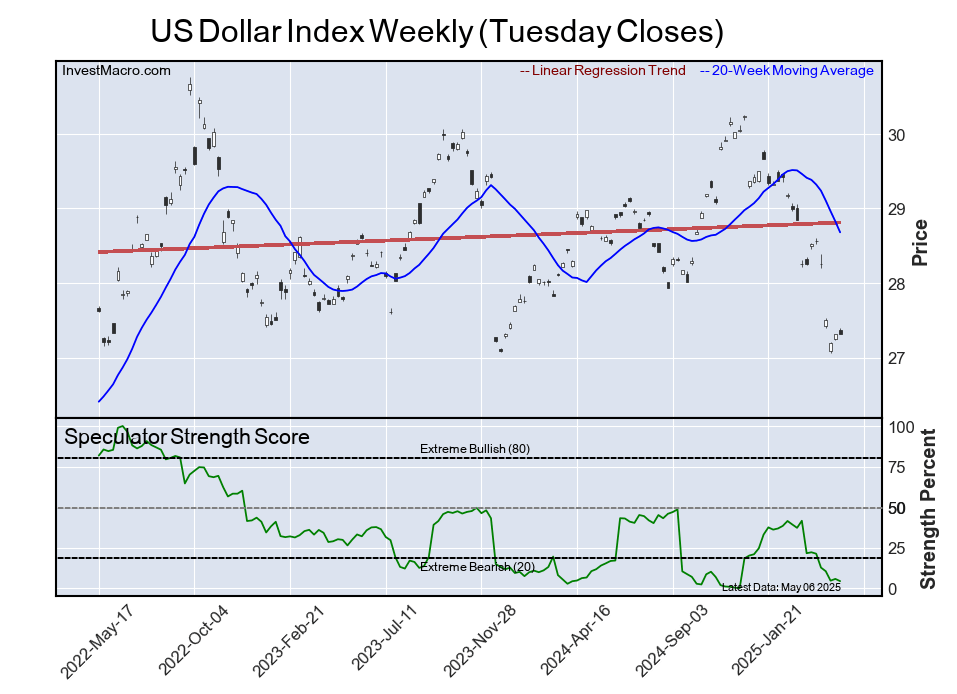
The U.S. dollar index futures (+0.19%) are up to 104.14, with the 10-year yield down 0.96%) to 4.327% and the 30-year yield down 1.06% to 4.679%.

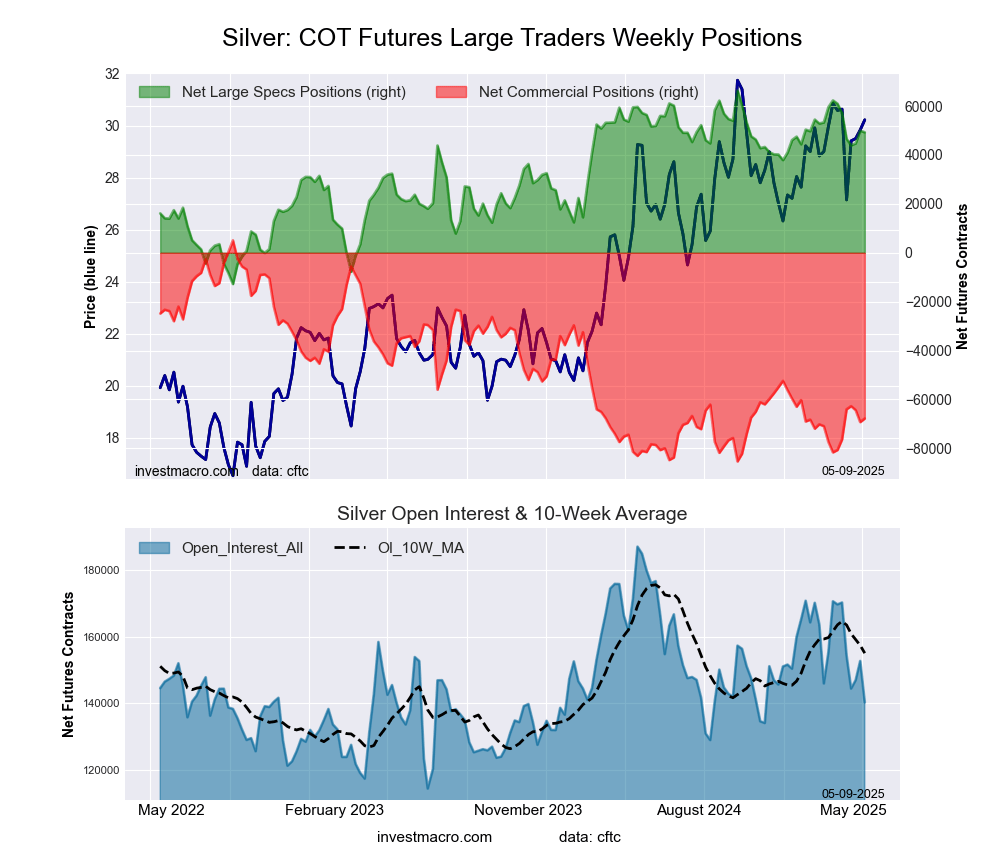
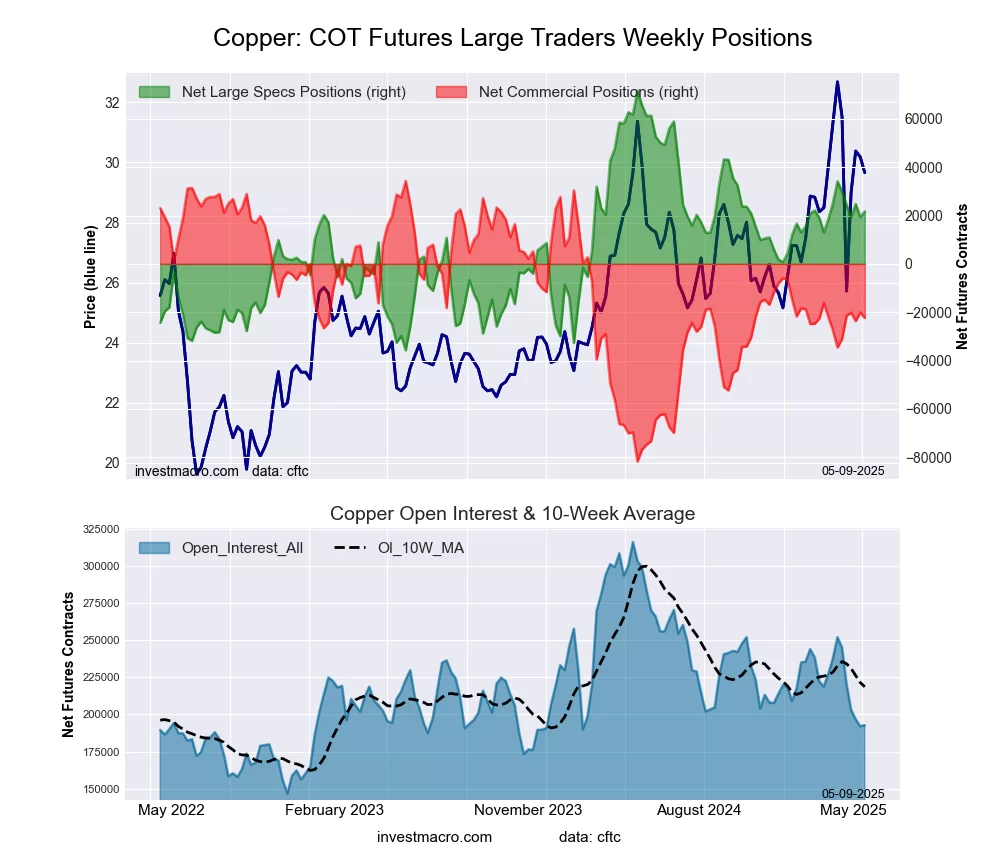
Gold (+0.70%) and silver (-0.82% ) are higher, but copper (-0.21%) and oil (-0.27%) are down.

Risk barometer Bitcoin is down 2.44% to $84,947, returning again to bear market territory, down 22.3% from the top.

Metals

Gold and silver are responding to a big hedge book blow-up by Aussie gold miner Belleview Gold, whose 150k-ounce hedge with Macquarie Bank has forced them to market with an offering priced at an 80% discount to recent market prices. Silver has once again done its best to confuse and confound by vaulting to new highs above that US$35.07/oz breakout level that faked me out a week ago with embarrassing acuity.

If silver holds this level for the weekly close above the BO point, then I will be forced kicking hard and screaming bloody murder to take another run at silver calls. For now, because I am traveling, I will refrain from launching an open position, but subscribers can certainly consider it.

Copper is coming off an overbought condition so as long as it gold $4.95/lb. basis May futures, I will remain bullish. If the monthly close is above $5.00, it is yet another superb technical indication that $6-8 copper is on the immediate horizon.

Stocks

President Trump once again skewered the stock market recovery by imposing 25% tariffs on all foreign auto imports, sending the S&P into another dive yesterday.

These are the kind of absurd gyrations we are forced to accept with this constant barrage of Tweets and Executive Orders that are putting the market in a constant state of uncertainty. Traders are not in the habit of leveraging up in markets like these, so rallies are there “to be sold” with the SPY:US an outright short at the 50-dma around $570.66.

Fitzroy Minerals Inc.

I surfaced from a very long day of travel landing at Heathrow at 8:00 am followed by six hours of missed cutoffs and unbearably narrow “Roman roads” finally arriving in Cornwall about three hours after the markets opened. I was able to follow the trading in

Fitzroy Minerals Inc. (FTZ:TSX.V; FTZFF:OTCQB) after they reported 43m of 2.31% copper with a 1.4m share day but a late-day fade after these moronic traders elected to “sell the news” taking it down from CA$0.39 to CA$0.32 in the last two hours.

I have to shake my head in belief when I told everyone that would listen that those results on their first Caballos drill hole were in every sense of the words “spectacular” and as CEO Merlin Marr-Johnson said “This remarkable intercept from our very first hole at Caballos identifies the potential of a new and significant copper-molybdenum-gold-rhenium system.”

I had calls from literally everyone in my book of mining contacts with accolade after accolade as congratulations piled in through email and text messages. In fact, one former corporate client said that the release was one of the best he had ever read for junior and that he was delighted to be able to ADD TO HIS POSITION into the pullback.

What infuriated me was that I had tweeted out the results from Fitzroy Minerals Inc. (FTZ:TSX.V; FTZFF:OTCQB) from October 2023 where they reported 45m of 1.9% copper, and then watched their stock go from CA$0.15 to CA$1.62 in the next month peaking at a market cap of $416 million.

FTZ/FTZFF reported 42m of 2.31% copper and peaked yesterday at a CA$86m market cap. Even more maddening is that BIG.V is a “one-project wonder” whereas FTZ/FTZFF has three additional projects including Buen Retiro (expected to close next week) giving them three fully-funded projects providing copious news flow for the balance of 2025.

Needless to say, I am a buyer of more stock, and I am looking into any additional weakness. I urge all subscribers to follow me. I will cross my fingers and try to add in the CA$0.28-CA$0.32 range with the undeterrable conviction that FTZ/FTZFF will be gone within twelve months at levels far higher than yesterday’s CA$0.39 high.

Add to FTZ/FTZFF. More news is pending next week, with drilling to recommence at Caballos shortly.


Important Disclosures:

  1. As of the date of this article, officers and/or employees of Streetwise Reports LLC (including members of their household) own securities of Fitzroy Minerals Inc.
  2. Michael Ballanger: I, or members of my immediate household or family, own securities of: Fitzroy Minerals Inc. My company has a financial relationship with Fitzroy Minerals Inc. I determined which companies would be included in this article based on my research and understanding of the sector.
  3. Statements and opinions expressed are the opinions of the author and not of Streetwise Reports, Street Smart, or their officers. The author is wholly responsible for the accuracy of the statements. Streetwise Reports was not paid by the author to publish or syndicate this article. Streetwise Reports requires contributing authors to disclose any shareholdings in, or economic relationships with, companies that they write about. Any disclosures from the author can be found  below. Streetwise Reports relies upon the authors to accurately provide this information and Streetwise Reports has no means of verifying its accuracy.
  4.  This article does not constitute investment advice and is not a solicitation for any investment. Streetwise Reports does not render general or specific investment advice and the information on Streetwise Reports should not be considered a recommendation to buy or sell any security. Each reader is encouraged to consult with his or her personal financial adviser and perform their own comprehensive investment research. By opening this page, each reader accepts and agrees to Streetwise Reports’ terms of use and full legal disclaimer. Streetwise Reports does not endorse or recommend the business, products, services or securities of any company.

For additional disclosures, please click here.

Michael Ballanger Disclosures

This letter makes no guarantee or warranty on the accuracy or completeness of the data provided. Nothing contained herein is intended or shall be deemed to be investment advice, implied or otherwise. This letter represents my views and replicates trades that I am making but nothing more than that. Always consult your registered advisor to assist you with your investments. I accept no liability for any loss arising from the use of the data contained on this letter. Options and junior mining stocks contain a high level of risk that may result in the loss of part or all invested capital and therefore are suitable for experienced and professional investors and traders only. One should be familiar with the risks involved in junior mining and options trading and we recommend consulting a financial adviser if you feel you do not understand the risks involved.

Banxico cut the rate by 0.5%. The global auto market is under pressure from the introduction of tariffs.

By JustMarkets

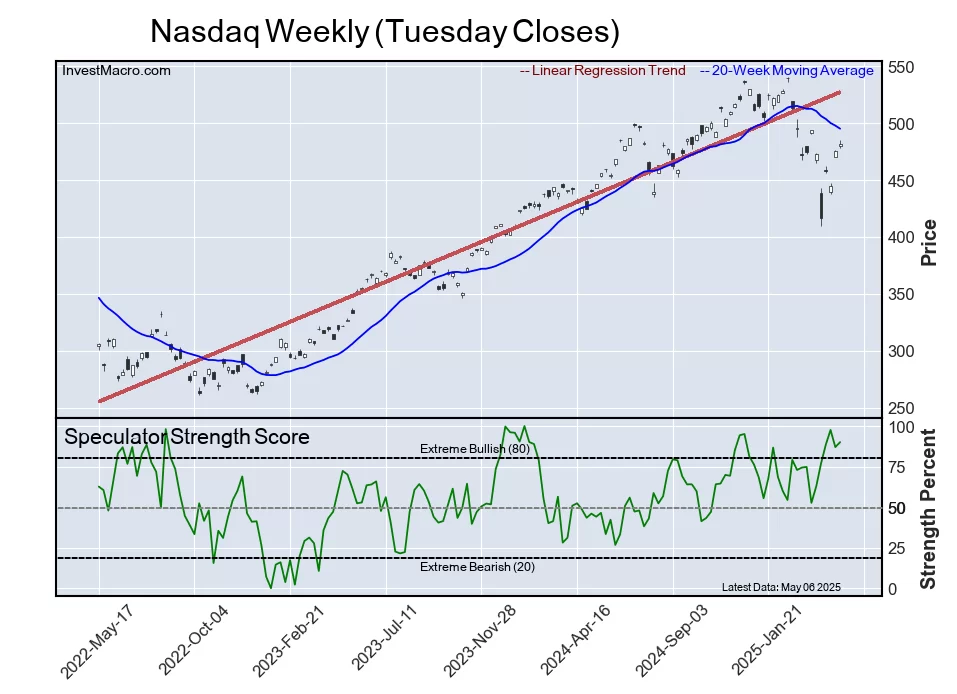
At the end of Thursday, the Dow Jones Industrial Average (US30) was down 0.37%. The S&P500 Index (US500) was down 0.33%. The Nasdaq Technology Index (US100) was down 0.53%. Trump’s decision to impose 25% tariffs on imported cars, effective in April, has heightened fears of escalating trade tensions, especially with key trading partners such as the EU and Canada. Shares of automakers suffered, with General Motors down 7.3% and Ford down 3.9%, while Tesla rose 0.4%, benefiting from domestic production. Investors were also receptive to fresh economic data, with fourth-quarter GDP growth revised up slightly to 2.4% from 2.3%. Initial jobless claims matched expectations, but the trade deficit increased than expected, adding to market uncertainty.

Mexico’s central bank, Banxico, cut its key rate by 0.5% to 9.00% amid further declines in inflation and signs of continued economic weakness earlier this year. The release said several board representatives forecast a similar 50 bps rate cut at the May 9 meeting if disinflation persists, indicating a possible continuation of the easing cycle.

Equity markets in Europe were mostly down on Thursday. Germany’s DAX (DE40) fell by 0.70%, France’s CAC 40 (FR40) closed down 0.51%, Spain’s IBEX 35 (ES35) lost 0.07%, and the UK’s FTSE 100 (UK100) closed 0.27% yesterday. Frankfurt’s DAX index closed Thursday below 22.664, its lowest level since mid-March, and underperformed its peers as traders reacted to President Trump’s announcement to impose 25% tariffs on imports of all cars. Shares of auto companies led the decline, with Mercedes-Benz AG, Porsche AG, and BMW all down 2.6% and Volkswagen down 1.5%. European Commission President Ursula von der Leyen expressed disappointment but emphasized that the EU is committed to finding a diplomatic solution and protecting its economy.

Norway’s central bank, Norges Bank, kept its key rate at 4.5% for the tenth consecutive meeting. Policymakers noted that inflation has risen sharply and remains much higher than expected. They warned that cutting the discount rate too quickly could increase prices. Norway’s annual inflation accelerated to 3.6% in February 2025 from 2.3% in January, the highest since April 2024. Despite this, officials noted that their current forecast suggests a rate cut is likely later in 2025.

WTI crude prices rose to $69.90 a barrel on Thursday, extending gains of about 1% from the previous day, as traders priced in tightening oil supplies amid concerns about the impact of new US tariffs on the global economy. Market participants were focused on the risks associated with escalating trade tensions, especially after US President Donald Trump unveiled plans to impose 25% tariffs on imported cars and light trucks, with tariffs on auto parts set to take effect in May. In addition, the market was further supported by data showing a significant decline in US crude oil inventories by 3.3 million barrels last week.

US natural gas (XNG/USD) prices remain below $3.9 per bbl, near a four-week low, as record production and mild weather weigh on prices. Forecasts point to above-normal temperatures in the lower 48 states through April 9, which will likely reduce heating demand and contribute to higher inventories. Analysts forecast that March could see the first net increase in inventories since 2012.

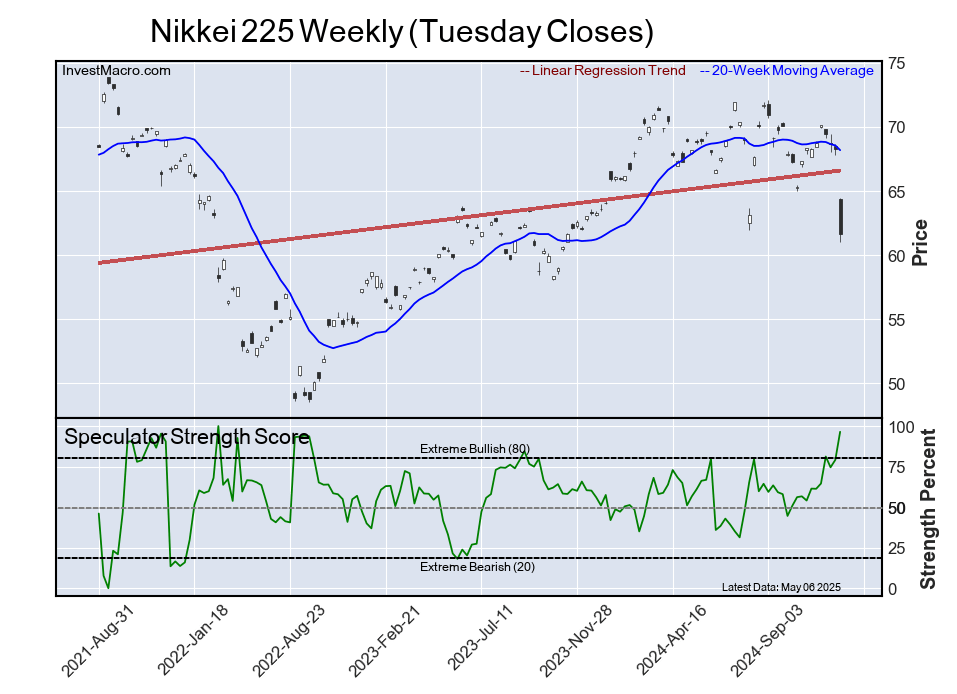
Asian markets traded flat yesterday. Japan’s Nikkei 225 (JP225) fell by 0.60%, China’s FTSE China A50 (CHA50) added 0.58%, Hong Kong’s Hang Seng (HK50) rose by 0.41%, and Australia’s ASX 200 (AU200) was negative 0.38%.

On Friday, the Australian dollar slipped below $0.63, reversing the previous session’s gains as new US tariffs come into effect next week, adding to global trade tensions. Markets also focused on next week’s Reserve Bank of Australia decision, where the central bank is expected to keep interest rates unchanged at 4.1%. Current expectations indicate that rates will not be cut until at least July. Meanwhile, the prime minister announced a national election on May 3, kicking off a five-week campaign centered on tax cuts and reduced living expenses.

S&P 500 (US500) 5,693.31 −18.89 (−0.33%)

Dow Jones (US30) 42,299.70 −155.09 (−0.37%)

DAX (DE40) 22,678.74 −160.29 (−0.70%)

FTSE 100 (UK100) 8,666.12 −23.47 (−0.27%)

USD index 104.28 −0.27 (−0.26%)

News feed for: 2025.03.28

  •  Japan Tokyo Core CPI (m/m) at 01:30 (GMT+2);
  • Germany GfK Consumer Confidence (m/m) at 09:00 (GMT+2);
  • UK Retail Sales (m/m) at 09:00 (GMT+2);
  • UK GDP (q/q) at 09:00 (GMT+2);
  • Switzerland KOF Leading Indicators (m/m) at 10:00 (GMT+2);
  • Germany Unemployment Rate (m/m) at 10:55 (GMT+2);
  • Canada GDP (m/m) at 14:30 (GMT+2);
  • US Core PCE Price Index (m/m) at 14:30 (GMT+2);
  • US Michigan Consumer Sentiment (m/m) at 16:00 (GMT+2).

By JustMarkets


This article reflects a personal opinion and should not be interpreted as an investment advice, and/or offer, and/or a persistent request for carrying out financial transactions, and/or a guarantee, and/or a forecast of future events.

Week Ahead: EURUSD braces for Trump tariffs, EU inflation, US jobs report

By ForexTime 

  • EURUSD up over 4% so far in March 2025; set for biggest monthly gain since Nov. 2022
  • Apr 1: Eurozone’s March CPI could offer mixed readings for EURUSD
  • Apr 2: Trump’s “Liberation Day” tariffs could hurt US economy and USD
  • Apr 4: US NFP report, Chair Powell’s speech may offer clues on next Fed rate cut
  • Bloomberg FX model: 73.7% chance EURUSD trades between 1.0650 – 1.0934 next week


The world’s most-traded FX pair is set for its biggest monthly gain in over 2 years!

At the time of writing, EURUSD is up about 4.08% so far in March 2025.

If it holds around these levels, that would the EURUSD’s biggest 1-month gain since the 5.3% advance in November 2022.

Why did EURUSD rise in March 2025?

Two main reasons:

1) Weaker USD: Markets are worried that President Trump’s tariffs would actually hurt US economic growth. 

Against such a dimmer outlook, the US dollar has weakened against almost all of its G10 peers (except against the Japanese Yen) in March 2025.


2) Historic change to Germany government spending: Earlier this month, Europe’s largest economy amended its constitution to get rid of its so-called “debt brake”. 

This “historic” decision is set to unleash hundreds of billions of euros on defense and infrastructure spending.

With more government spending for Europe’s largest economy, that has sweetened the Eurozone’s economic outlook, hence the strengthening euro.

NOTE: The euro has also strengthened against almost all its G10 peers (except the Swedish Krona and the Norwegian Krone) so far in March 2025.

Imagen
EUR strengthened against most G10 peers in March 2025


With all that in mind …

Can EURUSD extend its month-to-date (March 2025) gains into Q2 2025?

This question will be especially pertinent as we enter a week filled with these major events on the global economic calendar:

Sunday, March 30

  • Europe, UK goes into Daylight Savings Time

Monday, March 31

  • JPY: Japan February industrial production, retail sales
  • AU200 index: March Melbourne institute inflation
  • CNH: China March PMIs
  • THB: Thailand February external trade
  • GER40 index: Germany March CPI; February retail sales

Tuesday, April 1

  • JP225 index: Japan February jobless rate; 1Q Tankan index
  • AUD: RBA rate decision; February retail sales
  • CN50 index: China March manufacturing PMI
  • EUR: Eurozone March CPI; February unemployment
  • US30 index: US March ISM manufacturing

Wednesday, April 2

  • USDInd: Trump’s “Liberation Day” – more US tariffs incoming?

Thursday, April 3

  • AUD: Australia February trade balance
  • CN50 index: China March services PMI
  • EU50 index: Eurozone February PPI; ECB meeting minutes
  • RUS2000 index: US initial weekly jobless claims; ISM services index; speech by Fed Vice Chair Philip Jefferson
  • US500 index: 25% US tariffs on auto imports kick in

Friday, April 4

  • SG20 index: Singapore February retail sales
  • GER40 index: Germany March construction PMI; February factory orders
  • CAD: Canada March unemployment rate
  • US500 index: US March nonfarm payrolls
  • USDInd: Speech by Fed Chair Jerome Powell


From the list above, we highlight 4 specific events that could trigger massive reactions in the world’s most-traded FX pair:

  • Tuesday, April 1st: Eurozone March consumer price index (CPI)

Here’s what economists predict for this important set of inflation data:

  • Headline CPI year-on-year (March 2025 vs. March 2024): 2.3%
    If so, this would match February’s 2.3% year-on-year figure.
  • Headline CPI month-on-month (March 2025 vs. February 2025): 0.6%
    If so, this would be notably higher than February’s 0.4% month-on-month figure.
  • Core CPI (excluding food and energy prices) year-on-year: 2.5%
    If so, this would be a slight easing from February’s 2.6% core year-on-year figure.

Lower-than-expected CPI prints which encourages more rate cuts by the European Central Bank (ECB) could weaken EURUSD.


  • Wednesday, April 2nd: “Liberation Day” – more US tariffs?

April 2nd is the deadline for when US President Donald Trump intends to roll out “reciprocal” tariffs, which suggests an “eye-for-an-eye” approach.

This essentially points to the raising of US tariffs to fix trade imbalances against its major trading partners, including the Eurozone.

Markets initially believed that these “reciprocal tariffs” would actually slow down US economic growth, hence the US dollar’s steep drop in early March.

More recently, markets hope that Trump’s next tariff salvo may not be as damaging as initially feared.  Hence, the euro has weakened against the US dollar in 7 out of the past 8 daily trading sessions.

There is still much uncertainty about what this major tariff announcement will look like, with markets largely adopting a “wait and see mode”.

Ultimately, if the market’s worst-case-scenario is confirmed, that could further dent the US dollar while adding to EURUSD’s gains from March 2025.


  • Friday, April 4th: US March nonfarm payrolls (NFP)

Here’s what economists predict for this closely-watched jobs report:

  • Headline NFP figure: 135,000 (new jobs added to US labour market)

If so, this would be lower than February’s 151,000 headline NFP figure.

  • Unemployment rate: 4.1%

If so, this would match February’s unemployment rate

  • Average hourly earnings month-on-month (March 2025 vs. Feb 2025): 0.3%

If so, this would match February’s figure.

Stronger-than-expected US jobs data, which points to resilience in the world’s largest economy, should bolster the US dollar and drag EURUSD lower.


  • Friday, April 4th: Speech by Fed Chair Jerome Powell

Just 3 hours after the US jobs report’s release, the Chair of the Federal Reserve – the US central bak – is set to share his economic outlook.

Markets will be eager to find out his take not just on the latest NFP numbers, but also what President Trump’s tariff announcements earlier in the week would mean for the resilience of the US economy.

A weakening US jobs market that faces more damage from tariffs could prompt the Fed to cut rates sooner than expected – a weaker USD scenario.

At the time of writing, markets are forecasting a:

  • 54% chance (almost evenly split) that the Fed will cut its benchmark rates by another 75-basis points (3 more rate cuts, 25-bps per FOMC meeting) by end-2025.
  • 70% chance that the next Fed rate cut will happen at the June FOMC meeting.


Looking at the charts …

At the time of writing, EURUSD is trading just below the big, round 1.08000 number, around its 21-day simple moving average (SMA).

Note also that EURUSD earlier this week found crucial support at its 200-day SMA.

Imagen
EURUSD in "wait and see" mode around 1.080 ahead of more US tariffs


Bloomberg’s FX model currently predicts a 74% chance that EURUSD will trade between 1.0650 – 1.0934 over the coming week.


Potential Scenarios:

  • EURUSD could weaken below its 200-day SMA and towards 1.0650 if we see:

    – weaker-than-expected Eurozone CPI which paves way for ECB rate cuts

    – more US trade tariffs on EU, but not as damaging on the US economy

    stronger-than-expected US jobs report and a hawkish Chair Powell that pushes back on the next Fed rate cut


  • EURUSD could revisit its latest cycle high around 1.094 or above if we see:

    stronger-than-expected Eurozone CPI which delays ECB rate cuts

    – reciprocal US trade tariffs that confirm market’s worst-case fears by hurting the US economy and dollar

    weaker-than-expected US jobs report and a dovish Chair Powell that opens the door for a sooner-than-June Fed rate cut


Forex-Time-LogoArticle by ForexTime

ForexTime Ltd (FXTM) is an award winning international online forex broker regulated by CySEC 185/12 www.forextime.com

The Pound Stands Strong Amid Global Trade Tensions

By RoboForex Analytical Department 

The GBP/USD pair is consolidating around 1.2941 this Friday as the British pound continues to outperform its peers. Unlike other major currencies, the pound has remained relatively insulated from escalating global trade tensions, giving it a distinct advantage.

Why the pound is outperforming

The UK’s distance from ongoing trade wars has shielded sterling from the worst volatility triggered by US tariff policies. While other economies brace for the impact of trade restrictions, the UK, at least in theory, faces fewer immediate risks from President Trump’s protectionist measures.

Adding to sterling’s resilience is the fiscal plan of UK Treasury Chief Rachel Reeves, which outlines spending reductions totalling 14 billion GBP. This move could significantly boost the economy’s fiscal potential, creating a 10 billion GBP reserve for future spending needs. As a result, the government may reduce bond issuance, easing pressure on public finances.

Mid-week, the pound dipped slightly following the release of UK inflation figures. The Consumer Price Index (CPI) rose by 0.4% month-on-month in February, rebounding from a -0.1% decline in January. On an annual basis, inflation eased to 2.8% (down from 3.0%), likely due to seasonal energy demand during the colder months. However, the market reaction was short-lived, suggesting sustained confidence in the pound’s strength.

Technical analysis of GBP/USD

H4 Chart: The pair is consolidating near 1.2934, with a potential upward extension towards 1.2998. A subsequent downward wave towards 1.2784 remains possible, supported by the MACD indicator, where the signal line remains below zero but is trending upward.

H1 Chart: After hitting a local high at 1.2970, a pullback towards 1.2934 (testing support from above) is likely. A rebound towards 1.2998 could follow before a potential decline to 1.2888. The Stochastic oscillator supports this outlook, with its signal line below 50 and pointing downward towards 20.


Conclusion

While short-term fluctuations persist, the pound’s resilience, supported by favourable fiscal policies and its detachment from global trade conflicts, positions it as a standout performer. Traders should monitor key technical levels for potential breakouts or reversals in the coming sessions.


Disclaimer

Any forecasts contained herein are based on the author’s particular opinion. This analysis may not be treated as trading advice. RoboForex bears no responsibility for trading results based on trading recommendations and reviews contained herein.

Technical Indicators Signal Major Breakout Potential Despite Recent Price Dip

Source: Clive Maund (3/27/25)

Technical Analyst Clive Maund explains why he thinks it now may be the time to buy or add positions of Armory Mining Corp.’s (ARMY:CSE; RMRYF:OTC; J2S:FRA).

Although the price of Armory Mining Corp.’s (ARMY:CSE; RMRYF:OTC; J2S:FRA) stock has drifted off since we first looked at it early in February, its technical condition has strengthened greatly as we will see when we come to review its latest charts which means that it is more of a buy now.

Armory Mining Corp. changed its name from Spey Resources in November and is a junior company focused on exploring for critical minerals that are vital to the future of security and military applications, such as antimony, gold, silver, lithium, and various other minerals that will be in increasing demand in the future with the prospect of much higher prices for most of them. So it’s not surprising that the company’s stock has been under accumulation for many months, and especially in recent weeks, and is completing a large base pattern from which it is set to break out into a major bull market soon.

Before we look at the stock charts, which make a clear and robust case for buying Armory Mining, we will first overview the fundamentals of the company using slides lifted from the investor deck.

Armory Minerals has four projects situated in proven mining districts that have past-producing mines where the infrastructure is good. The approximate locations of these projects are shown on the following slide. Three of them are in Canada, with the remaining one in Argentina. The Ammo Property in Nova Scotia and the Riley Creek property in British Columbia are chiefly antimony and gold projects, while the Kaslo Silver property in British Columbia is, as its name implies, primarily silver, and Candela II in Argentina is a lithium deposit. . .

With the growing imposition of tariffs and trade barriers, the importance of producing antimony in North America is becoming increasingly clear since China is the dominant source of this semi-metal, and its price looks set to continue higher.

The following pages from the investor deck overview each of the projects in turn.

Since we last looked at Armory in February, there has been news that the company is to retain control of this lithium project because American Salars Lithium Inc. (USLI:CSE; USLIF:OTC; Z3P:FWB; A3E2NY:WKN) has relinquished its option to develop it.

This slide details the importance of different critical minerals to the major world trading blocs.

The company highlights are on the below slide.

On this last slide, we see that the company has a reasonable 38.2 million shares in issue.

Now, we will review the latest charts for Armory Mining.

The situation is paradoxical — although we have taken quite a hit with this since it was recommended early in February, the charts look far more bullish than they did even then for reasons that we will now examine.

Starting with the 3-year chart we see again that Armory Mining is late in a basing process following the severe bear market from September – October of 2022 through early – mid 2024. The difference between now and when we first looked at it in February is that there has been a massive buildup in upside volume even though the price has retreated somewhat that has driven both volume indicators shown strongly higher. This is very bullish and may even be described as creating a “pressure cooker” effect.

On the 18-month chart, we can see much more clearly what has been going on in the recent past. Back in February, we had thought, on the basis of the strong volume pattern and volume indicators, that the Handle part of the pattern was about to complete and that the price should advance, but instead, it broke lower and dropped back some, requiring us to adjust the boundaries of the Pan & Handle pattern.

However, although the price has lost ground, the technical picture has strengthened dramatically. This is because volume became extremely heavy with most of this volume being upside volume, as evidenced by the volume towers and also by both the volume indicators shown rising steeply. A big reason why this is so bullish is because this persistent heavy volume means that there has been a lot of stock rotation with the new buyers “locking up” a lot of stock, because they won’t be inclined to sell until they have turned a significant profit — and we can presume that they bought for a reason. What this means is that any significant influx of demand will find a market short of stock, so if they want to buy they will have to bid the price up. We will now look at the recent dip in more detail on a 6-month chart.

On the 6-month chart, we can easily see the persistent heavy upside volume as the price has drifted somewhat lower in the orderly downtrend shown and how it has driven volume indicators higher — and they have remained buoyant as the price has drifted even lower.

This downtrend has brought the price back to a zone of significant support, and we can see that the stock is already nudging a breakout from this downtrend, which looks likely to occur soon. for the reasons set out above, a breakout from this downtrend could quickly lead to a steep ascent from here.

Holders of Armory Mining should therefore stay long and this is considered to be an excellent point to buy or add to positions. The first target for an advance is the resistance at the top of the Handle approaching and at CA$0.27. The second target is another band of resistance in the CA$0.60 area with higher targets possible.

Armory Mining Corp.’s website.

Armory Mining Corp.’s (ARMY:CSE; RMRYF:OTC; J2S:FRA) closed for trading at CA$0.09, US$0.0589 on March 26, 2025.


Important Disclosures:

  1. American Salars Lithium has a consulting relationship with Street Smart an affiliate of Streetwise Reports. Street Smart Clients pay a monthly consulting fee between US$8,000 and US$20,000.
  2. As of the date of this article, officers and/or employees of Streetwise Reports LLC (including members of their household) own securities of American Salars Lithium.
  3. Clive Maund: I determined which companies would be included in this article based on my research and understanding of the sector.
  4. Statements and opinions expressed are the opinions of the author and not of Streetwise Reports, Street Smart, or their officers. The author is wholly responsible for the accuracy of the statements. Streetwise Reports was not paid by the author to publish or syndicate this article. Streetwise Reports requires contributing authors to disclose any shareholdings in, or economic relationships with, companies that they write about. Any disclosures from the author can be found  below. Streetwise Reports relies upon the authors to accurately provide this information and Streetwise Reports has no means of verifying its accuracy.
  5.  This article does not constitute investment advice and is not a solicitation for any investment. Streetwise Reports does not render general or specific investment advice and the information on Streetwise Reports should not be considered a recommendation to buy or sell any security. Each reader is encouraged to consult with his or her personal financial adviser and perform their own comprehensive investment research. By opening this page, each reader accepts and agrees to Streetwise Reports’ terms of use and full legal disclaimer. Streetwise Reports does not endorse or recommend the business, products, services or securities of any company.

For additional disclosures, please click here.

Clivemaund.com Disclosures

The above represents the opinion and analysis of Mr. Maund, based on data available to him, at the time of writing. Mr. Maund’s opinions are his own, and are not a recommendation or an offer to buy or sell securities. As trading and investing in any financial markets may involve serious risk of loss, Mr. Maund recommends that you consult with a qualified investment advisor, one licensed by appropriate regulatory agencies in your legal jurisdiction, and do your own due diligence and research when making any kind of a transaction with financial ramifications. Although a qualified and experienced stock market analyst, Clive Maund is not a Registered Securities Advisor. Therefore Mr. Maund’s opinions on the market and stocks cannot be construed as a recommendation or solicitation to buy and sell securities.

Uncertainty over the scope and impact of tariffs increased market volatility

By JustMarkets

The Dow Jones index (US30) was down 0.31% at Wednesday’s close. The S&P500 Index (US500) decreased by 1.12%. The Nasdaq Technology Index (US100) was down 2.04%. The US stocks fell sharply on Wednesday as technology shares led a broad sell-off amid growing concerns over looming US tariffs. Shares of Nvidia and Tesla fell more than -5.5%, while major tech companies such as Meta, Amazon, and Alphabet were down more than 2%. Shares of automakers also weakened after reports that President Trump will impose new 25% tariffs on auto imports. Uncertainty over the scope and impact of these tariffs has added to market volatility, raising fears of retaliation and broader economic repercussions.
The Canadian dollar strengthened to 1.43 per US dollar, hitting a one-month high, as investors welcomed reports that not all the trade tariffs scheduled for April 2 will take effect, with some countries likely to receive exemptions. Reports that President Trump may impose a three-tiered tariff system with selective exemptions indicate that Canada could face the lowest level of upcoming tariffs, which would spare its exports and ease external pressure on the loonie. This optimism is supported by favorable oil price developments – rising crude oil prices amid supply concerns boosts the currency, given Canada’s status as a major oil exporter.

Equity markets in Europe were mostly down on Wednesday. Germany’s DAX (DE40) fell by 1.17%, France’s CAC 40 (FR 40) closed down 0.96%, Spain’s IBEX 35 (ES35) dropped 0.39%, and the UK’s FTSE 100 (UK100) closed 0.30% yesterday. The spring statement from the Chancellor of the United Kingdom, Rachel Reeves, did not bring optimism to investors. Many key announcements, such as changes to social security and the NHS, were already well-known and had minimal impact on the market. The biggest disappointment was the OBR’s revised growth forecast for the UK economy, which was cut from 2% to just 1% for 2024. This dampened sentiment, especially in the housing sector, where shares of major housebuilders turned negative

WTI crude oil prices rose to $69.9 a barrel on Wednesday, the highest in nearly four weeks, driven by concerns about tightening global supply. The US has threatened to impose 25% tariffs on countries buying Venezuelan oil, disrupting trade flows, especially to China, Venezuela’s biggest buyer. This follows recent US sanctions aimed at Iranian oil sales, although Saudi Arabia may increase production to offset the loss of Iranian exports. In addition, US crude inventories fell by 3.34 million barrels last week, more than double the expected decline, indicating strong demand.

Asian markets traded mostly up yesterday. Japan’s Nikkei 225 (JP225) rose by 0.65%, China’s FTSE China A50 (CHA50) added 0.44%, Hong Kong’s Hang Seng (HK50) gained 0.60%, and Australia’s ASX 200 (AU200) was positive 0.71%. Hong Kong stocks were up 1.4% in Thursday morning trading, strengthening for a second day amid broad-based gains. Sentiment strengthened after Wall Street banks turned bullish on Chinese equities. Morgan Stanley raised its 2025 target for mainland Chinese equities for the second time this year, while Goldman Sachs forecast further gains thanks to positive earnings revisions.

China significantly increased debt issuance in the first quarter of 2025 to boost growth and stabilize the bond market. The Ministry of Finance raised 1.45 trillion yuan through sovereign bonds, three times more than last year and a record. The surge indicates Beijing seeks to boost fiscal spending amid real estate concerns, deflation, and ongoing trade tensions.

S&P Global Ratings recently predicted that New Zealand and other regional economies will be less affected by US trade measures, which has provided some support for the Kiwi dollar. Domestically, however, expectations of further monetary easing by the Reserve Bank of New Zealand continue to weigh on the currency. Economists believe the RBNZ remains poised for additional rate cuts in April and May despite last week’s unexpectedly positive GDP data.

S&P 500 (US500) 5,712.20 −64.45 (−1.12%)

Dow Jones (US30) 42,454.79 −132.71 (−0.31%)

DAX (DE40) 22,839.03 −270.76 (−1.17%)

FTSE 100 (UK100) 8,689.59 +25.79 (+0.30%)

USD index 104.67 +0.48 (+0.46%)

News feed for: 2025.03.27

  • Australia Retail Sales (m/m) at 02:30 (GMT+2);
  • Norway Norges Bank Interest Rate Decision at 11:00 (GMT+2);
  • US GDP (q/q) at 14:30 (GMT+2);
  • US Initial Jobless Claims (w/w) at 14:30 (GMT+2);
  • US Pending Home Sales (m/m) at 16:00 (GMT+2);
  • US Natural Gas Storage (w/w) at 16:30 (GMT+2);
  • Mexico Interest Rate Decision (m/m) at 21:00 (GMT+2).

By JustMarkets


This article reflects a personal opinion and should not be interpreted as an investment advice, and/or offer, and/or a persistent request for carrying out financial transactions, and/or a guarantee, and/or a forecast of future events.

EUR/USD Faces Further Decline Amid Market Jitters and Trump’s Tariff Threat

By RoboForex Analytical Department 

The EUR/USD pair dropped to 1.0778 on Thursday, staging a modest correction but remaining under pressure amid deteriorating market sentiment.

Key drivers weighing on EUR/USD

The latest sell-off is driven by heightened trade war fears. On Wednesday, US President Donald Trump announced a 25% tariff on all imported cars and light trucks, set to take effect on 2 April. The move, seen as retaliation against foreign tariffs on US goods, escalates trade tensions. Markets view this as a major risk, with potential consequences including slower US economic growth and higher inflation.

Adding to the bearish sentiment, fresh economic data revealed:

  • US consumer confidence plunged to a four-year low
  • Core capital goods orders (excluding defence and aircraft) declined, breaking a three-month growth streak – a worrying sign for business investment

Investors now await Friday’s Core PCE Price Index – the Fed’s preferred inflation gauge – and the revised US Q4 2024 GDP estimate, which could set near-term market direction.

Technical analysis of EUR/USD

On the H4 chart of EUR/USD, the market completed a downward move to 1.0733. A correction towards 1.0855 is likely today. Once this correction ends, a new decline towards 1.0707 may begin. Technically, this scenario is confirmed by the MACD indicator: its signal line is below zero and pointing downward to new lows.

On the H1 EUR/USD chart, the market has formed a consolidation range around the level of 1.0826 before breaking lower to 1.0733. This move has nearly met its local downside target. Today, a corrective pullback towards 1.0826 (testing from below) is possible. Once this correction ends, a renewed decline towards 1.0700 could unfold. This move is viewed as the first wave of a broader downtrend. If this level is reached, another bounce towards 1.0826 cannot be ruled out. Technically, this scenario is confirmed by the Stochastic oscillator: its signal line is above 80 and preparing to drop towards 20.


Conclusion

With trade war risks weighing on sentiment and technical indicators pointing to continued downside, EUR/USD could test 1.0700 in the coming sessions. Traders should monitor US inflation data and GDP revisions for confirmation of the next major move.


Disclaimer

Any forecasts contained herein are based on the author’s particular opinion. This analysis may not be treated as trading advice. RoboForex bears no responsibility for trading results based on trading recommendations and reviews contained herein.

Australia’s inflation rate is at a 3-month low. Oil prices are approaching $70 again

By JustMarkets

At the end of Tuesday, the Dow Jones Index (US30) rose by 0.01%, the S&P500 Index (US500) gained 0.16%, and the Nasdaq Technology Index (US100) was up 0.46%. Stocks extended gains on hopes that the US’s upcoming retaliatory tariffs next week will be narrower than originally planned.

Options traders scaled back expectations for US rate cuts this year. With tariffs expected to weigh on economic growth — and force the Fed to step in to support the economy — any easing of tariffs should ease pressure on the Fed to cut rates over the next year.

Equity markets in Europe were mostly up on Tuesday. Germany’s DAX (DE40) rose by 0.13%, France’s CAC 40 (FR40) closed 1.08% higher, Spain’s IBEX 35 (ES35) added 1.21%, and the UK’s FTSE 100 (UK100) closed 0.30% yesterday. The latest Confederation of British Industry Distributive Trades survey showed that UK retail sales fell in March, marking the sixth consecutive decline. Ukraine and Russia agreed on a ceasefire in the Black Sea after separate talks with US officials in Saudi Arabia.

WTI crude prices rose above $69 a barrel on Wednesday amid supply concerns and a sharper-than-expected decline in the US crude inventories. On Monday, Trump signed an executive order imposing 25% tariffs on imports from countries that buy Venezuelan crude, which could disrupt supplies to key refineries, especially in China, India, and Spain. The Trump administration also extended the deadline for Chevron’s exit from Venezuela to May 27. Analysts estimate that the company’s exit could reduce production by 200,000 bpd. Meanwhile, API data showed that US crude inventories fell by 4.6 million barrels last week, beating market expectations for a 2.5 million barrel decline.

Asian markets traded flat yesterday. Japan’s Nikkei 225 (JP225) rose by 0.46%, China’s FTSE China A50 (CHA50) jumped 0.61%, Hong Kong’s Hang Seng (HK50) fell by 2.35%, and Australia’s ASX 200 (AU200) was positive 0.07%.

Australia’s Consumer Price Index fell to a three-month low of 2.4% in February, defying expectations of no change from January’s 2.5% reading. Meanwhile, the Australian government announced two additional personal income tax cuts, scheduled for 2026 and 2027, totaling A$17.1 billion above forecast. On the monetary policy front, the Reserve Bank of Australia will meet next week, where interest rates are expected to remain unchanged.

Japan’s Index of Economic Indicators, which tracks output, employment, and retail sales, came in at 116.1 in January 2025, slightly below the initial forecast of 116.2 but up from a marginally revised 106.0 in the previous month. The figure was the highest since September 2019, helped by a moderate economic recovery amid improving employment and income and broader growth in private consumption.

S&P 500 (US500) 5,776.65 +9.08 (0.16%)

Dow Jones (US30) 42,587.50 +4.18 (+0.01%)

DAX (DE40) 23,109.79 +257.13 (+1.13%)

FTSE 100 (UK100) 8,663.80 +25.79 (+0.30%)

USD index 104.21 -0.05 (-0.05%)

News feed for: 2025.03.26

  • Australia Consumer Price Index (m/m) at 02:30 (GMT+2);
  • UK Consumer Price Index (m/m) at 09:00 (GMT+2);
  • UK Annual Budget Release at 12:00 (GMT+2);
  • US Durable Goods Orders (m/m) at 14:30 (GMT+2);
  • US Crude Oil Reserves (w/w) at 16:30 (GMT+2).

By JustMarkets


This article reflects a personal opinion and should not be interpreted as an investment advice, and/or offer, and/or a persistent request for carrying out financial transactions, and/or a guarantee, and/or a forecast of future events.