Traders have lowered expectations of further easing from the RBA. Oversupply puts pressure on oil

By JustMarkets 

The US stocks ended Wednesday trading mixed as investors weighed changing trade policies and recent strength in the technology sector. The Dow Jones Index (US30) was down 0.21% at Wednesday’s close. The S&P500 Index (US500) added 0.10%. The Nasdaq Technology Index (US100) closed higher by 0.72%. Nvidia was up 3% after reports of artificial intelligence chip shipments to Saudi Arabia, while AMD jumped 4% after unveiling a $6 billion share repurchase plan. A broader rally in support of artificial intelligence contributed to a 17% rise in Super Micro Computer shares, helping to lift overall market sentiment. Meanwhile, President Trump’s visit to the Middle East led to several new business deals, including an agreement between Boeing and Qatar Airways and artificial intelligence initiatives in the Gulf.

The Canadian dollar weakened to 1.40 per dollar, retreating from a five-month high of 1.378, which reached May 6 amid dovish Bank of Canada (BoC) expectations and ongoing trade uncertainty. A marginal jobs increase of just 7,400 and a rise in the unemployment rate to 6.9% in April reinforced market bets on a possible rate cut by the Bank of Canada as early as June, weakening the loonie’s appeal.

Equity markets in Europe were mostly down yesterday. Germany’s DAX (DE40) was down 0.47%, France’s CAC 40 (FR40) closed down 0.47%, Spain’s IBEX35 (ES35) added 0.52%, and the UK’s FTSE 100 (UK100) closed down 0.21%. Meanwhile, President Trump’s visit to the Middle East led to several new business deals, including an agreement between Boeing and Qatar Airways and artificial intelligence initiatives in the Gulf. The consumer discretionary sector continued its volatile performance, recording record losses, with LVMH and Kering down 2 and 3% and L’Oreal down 3.3%. In turn, the healthcare sector continued to decline as US President Trump was expected to adopt a policy to cap drug prices, with Sanofi and Bayer losing 1% and 2%, respectively.

WTI crude oil prices fell more than 2% to $61 per barrel on Thursday, extending losses from the previous session amid renewed oversupply concerns following an unexpected increase in US crude inventories. EIA data showed a 3.454 million barrel increase in crude inventories last week after industry data reported a significant 4.3 million barrel increase. On the supply side, OPEC lowered its forecast for non-OPEC+ production growth in 2025 to 800,000 bpd from 900,000 bpd, citing softer expectations for producers such as the US.

Asian markets were predominantly up. Japan’s Nikkei 225 (JP225) was down 0.14%, China’s FTSE China A50 (CHA50) added 1.71%, Hong Kong’s Hang Seng (HK50) was up 2.30%, and Australia’s ASX 200 (AU200) was positive 0.13% for yesterday.

China lifted export restrictions on rare earth metals and military technology for 28 US companies just two days after a major agreement between the US and China to reduce tariffs temporarily. In a sign of further improvement in relations, China also announced the temporary lifting of trade and investment bans for 17 US companies, calling the latest developments a potential reset in bilateral relations.

The Australian dollar rose to $0.644 on Thursday, rebounding some of the previous session’s losses after stronger-than-expected employment data underpinned a more hawkish outlook for monetary policy. Official data showed the Australian economy added 89,000 new jobs in April, bringing total employment to a record 14.64 million, well above the forecast of 20,000. The unemployment rate remained unchanged at 4.1%, which aligns with expectations. Although the Reserve Bank of Australia (RBA) is expected to cut the money rate by 25 basis points to 3.85% at next week’s meeting, traders have lowered expectations of further easing. Markets now estimate a total rate cut to end the year at around 76 basis points, down from 100 basis points a few weeks earlier.

S&P 500 (US500) 5,892.58 +6.03 (+0.10%)

Dow Jones (US30) 42,051.06 −89.37 (−0.21%)

DAX (DE40) 23,527.01 −111.55 (−0.47%)

FTSE 100 (UK100) 8,585.01 −17.91 (−0.21%)

USD index 101.02 +0.01 (+0.01%)

News feed for: 2025.05.15

  • Australia Unemployment Rate (m/m) at 04:30 (GMT+3);
  • UK GDP (m/m) at 09:00 (GMT+3);
  • UK Industrial Production (m/m) at 09:00 (GMT+3);
  • Switzerland Producer Price Index (m/m) at 09:30 (GMT+3);
  • Eurozone GDP (q/q) at 12:00 (GMT+3);
  • Eurozone Industrial Production (m/m) at 12:00 (GMT+3);
  • US Retail Sales (m/m) at 15:30 (GMT+3);
  • US Producer Price Index (m/m) at 15:30 (GMT+3);
  • US Initial Jobless Claims (w/w) at 15:30 (GMT+3);
  • US Fed Chair Powell Speaks at 15:40 (GMT+3);
  • US Industrial Production (m/m) at 16:15 (GMT+3);
  • US Natural Gas Storage (w/w) at 17:30 (GMT+3);
  • Mexico Banxico Interest Rate Decision at 22:00 (GMT+3).

By JustMarkets


This article reflects a personal opinion and should not be interpreted as an investment advice, and/or offer, and/or a persistent request for carrying out financial transactions, and/or a guarantee, and/or a forecast of future events.

GBP/USD at a Crossroads: Momentum Needed for New Buying Opportunities

By RoboForex Analytical Department 

The GBP/USD pair has again lost direction, hovering around 1.3283 on Thursday after hitting a seven-day high mid-week.

Key drivers influencing GBP/USD movement

The US dollar weakened on Wednesday, allowing the pound to regain ground. This shift followed ongoing currency negotiations between the US and South Korea, where both parties agreed to continue discussions on exchange rate policies. The reduced demand for the greenback lent support to most major currencies, including sterling.

Domestically, the market focus shifted to the Bank of England (BoE) commentary. Deputy Governor Sarah Breeden emphasised the necessity of long-term reforms in the bond market. At the same time, Monetary Policy Committee (MPC) member Catherine Mann noted that further rate cuts would require more evident signs of easing price pressures – essentially, a sustained drop in inflation.

Meanwhile, the latest UK labour market data revealed an increase in the unemployment rate to 4.5%, the highest since 2021, accompanied by a slowdown in wage growth.

These factors have collectively reinforced expectations of further monetary policy easing by the BoE. Despite internal MPC dissent, last week’s 25bps rate cut caught markets off guard, as many expected a pause in the easing cycle.

Technical analysis: GBP/USD

H4 Chart:

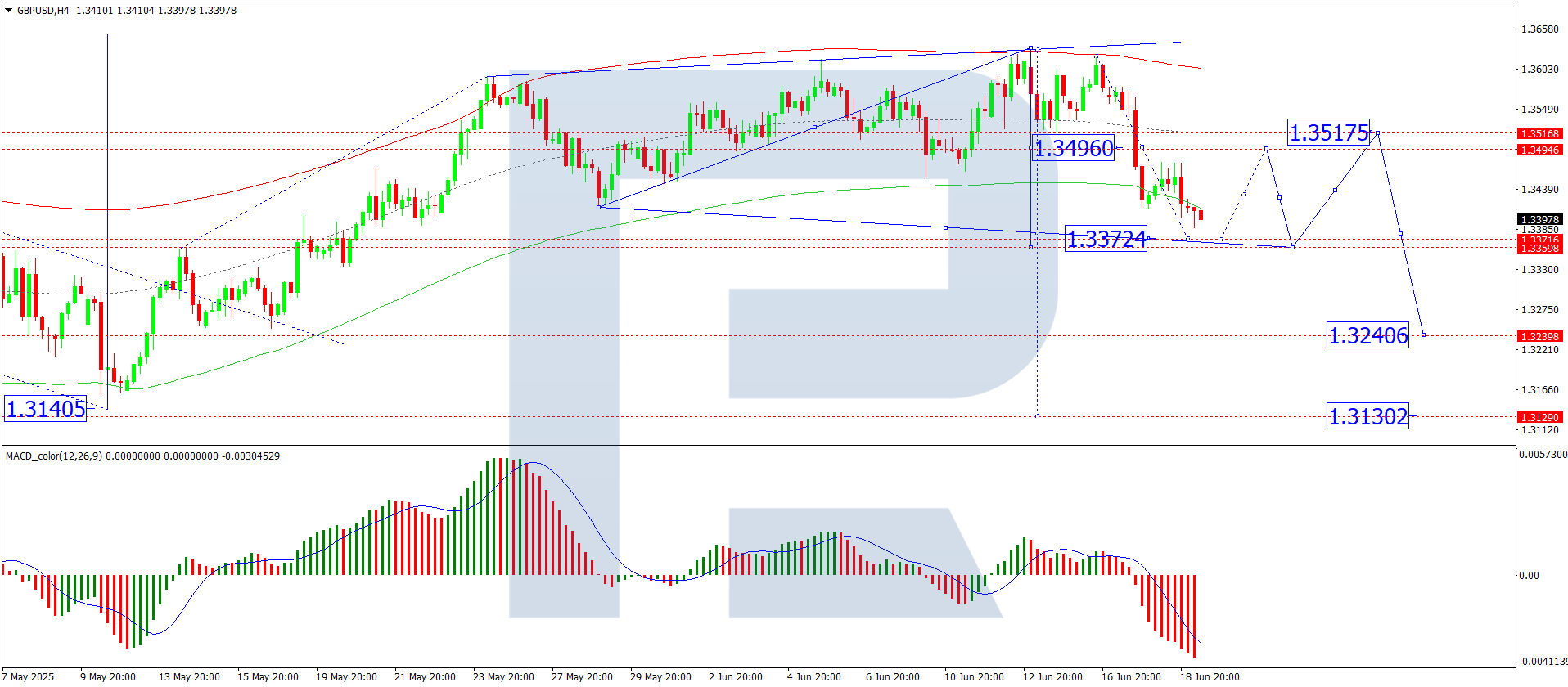
The pair continues to trade within a broad consolidation range around 1.3260

The current range extends to 1.3360, with a technical pullback to 1.3260 (testing from above) now underway

A drop towards 1.3200 is anticipated. A break below this level could extend the downtrend to 1.3100, potentially stretching further to 1.3030

This bearish outlook is supported by the MACD indicator, whose signal line remains above zero but is trending sharply upward

H1 Chart:

The pair broke above 1.3260, reaching the local upside target of 1.3360

Today’s corrective decline is testing 1.3260 again

A renewed upward move towards 1.3380 is possible if support holds

The Stochastic oscillator aligns with this scenario, with its signal line above 50 and rising towards 80


Conclusion

The GBP/USD remains in a holding pattern, awaiting fresh catalysts for a decisive move. While technical indicators suggest near-term volatility, the broader trend hinges on BoE policy signals and global risk sentiment. Traders should watch for a breakout beyond 1.3360 or a drop below 1.3200 for clearer directional bias.


Disclaimer

Any forecasts contained herein are based on the author’s particular opinion. This analysis may not be treated as trading advice. RoboForex bears no responsibility for trading results based on trading recommendations and reviews contained herein.

Utilities choosing coal, solar, nuclear or other power sources have a lot to consider, beyond just cost

By Erin Baker, UMass Amherst and Paola Pimentel Furlanetto, UMass Amherst 

The Trump administration is working to lift regulations on coal-fired power plants in the hopes of making its energy less expensive. But while cost is one important aspect, utilities have a lot more to consider when they choose their power sources.

Different technologies play different roles in the power system. Some sources, like nuclear energy, are reliable but inflexible. Other sources, like oil, are flexible but expensive and polluting.

How utilities choose which power source to invest in depends in large part on two key aspects: price and reliability.

Power prices

One way to compare power sources is by their levelized cost of electricity. This shows how much it costs to produce one unit of electricity on average over the life of the generator.

The asset management firm Lazard has produced levelized cost of electricity calculations for the major U.S. electricity sources annually for years, and it has tracked a sharp decline in solar power costs in particular.

Coal is one of the more expensive technologies for utilities today, making it less competitive compared with solar, wind and natural gas, by Lazard’s calculations. Only nuclear, offshore wind and “peaker” plants, which are used only during periods of high electricity demand, are more expensive.

Land-based wind and solar power have the lowest estimated costs, far below what consumers are paying for electricity today. The National Renewable Energy Lab has found similar levelized costs for renewable energy, though its estimates for nuclear are lower than Lazard’s.

Upfront costs are also important and can make the difference for whether new power projects can be built, as the East Coast has seen lately.

Several offshore wind farms planned along the Northeast were canceled in recent years as costs rose due to inflation and supply chain problems during the pandemic. Construction costs for the two newest nuclear generators built in the U.S. also rose considerably as the projects, both in the Southeast, faced delays.

Reliability and flexibility matter

But cost is not the whole story. Utilities must balance a number of criteria when investing in power sources.

Most important is matching supply and demand at every moment of the day. Due to the technical characteristics of electricity and how it flows, if the supply of electricity is even a little bit lower than the demand, that can trigger a blackout. This means power companies and consumers need generation that can ramp down when demand is low and ramp up when demand is high.

Since wind and solar generation depend on the wind blowing and the sun shining, these sources must be combined with other types of generation or with storage, such as batteries, to ensure the power grid has exactly as much power as it needs at all times.

Nuclear and coal are predictable and run reliably, but they are inflexible – they take time to ramp up and down, and doing so is expensive. Steam turbines are simply not built for flexibility. The multiple days it took to shut down Japan’s Fukushima Daiichi Nuclear Power Plant after an earthquake and tsunami damaged its backup power sources in 2011 illustrated the challenges and safety issues related to ramping down nuclear plants.

That means coal and nuclear aren’t as helpful on those hot summer days when utilities need a quick power increase to keep air conditioners running. These peaks may only happen a few days a year, but keeping the power on is crucial for human health and the economy.

In today’s energy system, the most flexible generation sources are natural gas and hydro. They can quickly adjust to meet changing electricity demand without the safety and cost concerns of coal and nuclear. Hydro can ramp in minutes but can only be built where large dams are feasible. The most cost-effective natural gas technology can ramp up within hours.

The big picture, by power source

Over the past two decades, natural gas use has risen quickly to overtake coal as the most common fuel for generating electricity in the U.S. The boom was largely driven by the growing use of fracking technology, which allowed producers to extract gas from rock and lowered the price.

Natural gas’s low price and high flexibility make it an attractive choice. Its rise is a large part of the reason coal use has plummeted.

But natural gas has its challenges. Natural gas requires pipelines to carry it across the country, leading to disruptive construction. As Texas saw during its February 2021 blackouts, natural gas equipment can also fail in extreme cold. And like coal, natural gas is a fossil fuel that releases greenhouse gases during combustion, so it is also helping to cause climate change and contributes to air pollution that can harm human health.

Nuclear power has been gaining interest recently since it does not contribute to climate change or local air pollution. It also provides a steady baseload of power, which is useful for computing centers as their demand does not fluctuate as much as households.

Of course, nuclear has ongoing challenges around the storage of radioactive waste and security concerns, and construction of large nuclear plants takes many years.

Coal is more flexible than nuclear, but far less so than natural gas or hydropower. Most concerning, coal is extremely dirty, emitting more climate-change-causing gases, and far more air pollution than natural gas.

Solar and wind have grown rapidly in recent years due to their falling costs and environmental benefits. According to Lazard, the cost of solar combined with batteries, which would be as flexible as hydropower, is well below the cost of coal with its limited flexibility.

However, wind and solar tend to take up a lot of space, which has led to challenges in local approvals for new sites and transmission lines. In addition, the sheer number of new projects is overwhelming power system operators’ ability to evaluate them, leading to increasing wait times for new generation to come online.

What’s ahead?

Utilities have another consideration: Federal, state and local governments can also influence and sometimes limit utilities’ choices. Tariffs, for example, can increase the cost of critical components for new construction. Permitting and regulations can slow down development. Subsidies can artificially lower costs.

In our view, policies that are done right can help utilities move toward more reliable and cost-effective choices which are also cleaner. Done wrong, they can be costly to the economy and the environment.The Conversation

About the Author:

Erin Baker, Distinguished Professor of Industrial Engineering and Faculty Director of The Energy Transition Institute, UMass Amherst and Paola Pimentel Furlanetto, Ph.D. candidate in Industrial Engineering and Operations Research, UMass Amherst

This article is republished from The Conversation under a Creative Commons license. Read the original article.


Challenges to high-performance computing threaten US innovation

By Jack Dongarra, University of Tennessee 

High-performance computing, or HPC for short, might sound like something only scientists use in secret labs, but it’s actually one of the most important technologies in the world today. From predicting the weather to finding new medicines and even training artificial intelligence, high-performance computing systems help solve problems that are too hard or too big for regular computers.

This technology has helped make huge discoveries in science and engineering over the past 40 years. But now, high-performance computing is at a turning point, and the choices the government, researchers and the technology industry make today could affect the future of innovation, national security and global leadership.

High-performance computing systems are basically superpowerful computers made up of thousands or even millions of processors working together at the same time. They also use advanced memory and storage systems to move and save huge amounts of data quickly.


Oak Ridge National Laboratory’s Frontier supercomputer is one of the world’s fastest.
Oak Ridge Leadership Computing Facility, CC BY

With all this power, high-performance computing systems can run extremely detailed simulations and calculations. For example, they can simulate how a new drug interacts with the human body, or how a hurricane might move across the ocean. They’re also used in fields such as automotive design, energy production and space exploration.

Lately, high-performance computing has become even more important because of artificial intelligence. AI models, especially the ones used for things such as voice recognition and self-driving cars, require enormous amounts of computing power to train. High-performance computing systems are well suited for this job. As a result, AI and high-performance computing are now working closely together, pushing each other forward.

Lawrence Livermore National Laboratory’s supercomputer El Capitan is currently the world’s fastest.

I’m a computer scientist with a long career working in high-performance computing. I’ve observed that high-performance computing systems are under more pressure than ever, with higher demands on the systems for speed, data and energy. At the same time, I see that high-performance computing faces some serious technical problems.

Technical challenges

One big challenge for high-performance computing is the gap between how fast processors are and how well memory systems can keep up with the processors’ output. Imagine having a superfast car but being stuck in traffic – it doesn’t help to have speed if the road can’t handle it. In the same way, high-performance computing processors often have to wait around because memory systems can’t send data quickly enough. This makes the whole system less efficient.

Another problem is energy use. Today’s supercomputers use a huge amount of electricity, sometimes as much as a small town. That’s expensive and not very good for the environment. In the past, as computer parts got smaller, they also used less power. But that trend, called Dennard scaling, stopped in the mid-2000s. Now, making computers more powerful usually means they use more energy too. To fix this, researchers are looking for new ways to design both the hardware and the software of high-performance computing systems.

There’s also a problem with the kinds of chips being made. The chip industry is mainly focused on AI, which works fine with lower-precision math like 16-bit or 8-bit numbers. But many scientific applications still need 64-bit precision to be accurate. The greater the bit count, the more digits to the right of the decimal point a chip can process, hence the greater precision. If chip companies stop making the parts that scientists need, then it could become harder to do important research.

This report discusses how trends in semiconductor manufacturing and commercial priorities may diverge from the needs of the scientific computing community, and how a lack of tailored hardware could hinder progress in research.

One solution might be to build custom chips for high-performance computing, but that’s expensive and complicated. Still, researchers are exploring new designs, including chiplets – small chips that can be combined like Lego bricks – to make high-precision processors more affordable.

A global race

Globally, many countries are investing heavily in high-performance computing. Europe has the EuroHPC program, which is building supercomputers in places such as Finland and Italy. Their goal is to reduce dependence on foreign technology and take the lead in areas such as climate modeling and personalized medicine. Japan built the Fugaku supercomputer, which supports both academic research and industrial work. China has also made major advances, using homegrown technology to build some of the world’s fastest computers. All of these countries’ governments understand that high-performance computing is key to their national security, economic strength and scientific leadership.

The U.S.-China supercomputer rivalry explained.

The United States, which has been a leader in high-performance computing for decades, recently completed the Department of Energy’s Exascale Computing Project. This project created computers that can perform a billion billion operations per second. That’s an incredible achievement. But even with that success, the U.S. still doesn’t have a clear, long-term plan for what comes next. Other countries are moving quickly, and without a national strategy, the U.S. risks falling behind.

I believe that a U.S. national strategy should include funding new machines and training for people to use them. It would also include partnerships with universities, national labs and private companies. Most importantly, the plan would focus not just on hardware but also on the software and algorithms that make high-performance computing useful.

Hopeful signs

One exciting area for the future is quantum computing. This is a completely new way of doing computation based on the laws of physics at the atomic level. Quantum computers could someday solve problems that are impossible for regular computers. But they are still in the early stages and are likely to complement rather than replace traditional high-performance computing systems. That’s why it’s important to keep investing in both kinds of computing.

The good news is that some steps have already been taken. The CHIPS and Science Act, passed in 2022, provides funding to expand chip manufacturing in the U.S. It also created an office to help turn scientific research into real-world products. The task force Vision for American Science and Technology, launched on Feb. 25, 2025, and led by American Association for the Advancement of Science CEO Sudip Parikh, aims to marshal nonprofits, academia and industry to help guide the government’s decisions. Private companies are also spending billions of dollars on data centers and AI infrastructure.

All of these are positive signs, but they don’t fully solve the problem of how to support high-performance computing in the long run. In addition to short-term funding and infrastructure investments, this means:

  • Long-term federal investment in high-performance computing R&D, including advanced hardware, software and energy-efficient architectures.
  • Procurement and deployment of leadership-class computing systems at national labs and universities.
  • Workforce development, including training in parallel programming, numerical methods and AI-HPC integration.
  • Hardware road map alignment, ensuring commercial chip development remains compatible with the needs of scientific and engineering applications.
  • Sustainable funding models that prevent boom-and-bust cycles tied to one-off milestones or geopolitical urgency.
  • Public-private collaboration to bridge gaps between academic research, industry innovation and national security needs.

High-performance computing is more than just fast computers. It’s the foundation of scientific discovery, economic growth and national security. With other countries pushing forward, the U.S. is under pressure to come up with a clear, coordinated plan. That means investing in new hardware, developing smarter software, training a skilled workforce and building partnerships between government, industry and academia. If the U.S. does that, the country can make sure high-performance computing continues to power innovation for decades to come.The Conversation

About the Author:

Jack Dongarra, Emeritus Professor of Computer Science, University of Tennessee

This article is republished from The Conversation under a Creative Commons license. Read the original article.

The Trump administration has revised semiconductor export rules. German DAX breaks price records again

By JustMarkets 

The Dow Jones Index (US30) was down 0.64% at Tuesday’s close. The S&P 500 Index (US500) was up 0.72%. The Nasdaq Technology Index (US100) closed higher by 1.58%. Weakening inflationary pressures boosted stocks after Tuesday’s smaller-than-expected US consumer price report for April. The US Consumer Price Index for April rose 2.3% y/y, slightly weaker than expectations of 2.4% y/y and the lowest increase in 4 years. The Consumer Price Index excluding food and energy for April rose by 2.8% y/y, unchanged from March and in line with expectations.

Additionally, a rally by chip makers on Tuesday supported the overall market on news that Nvidia and Advanced Micro Devices will supply semiconductors to Saudi Arabian artificial intelligence company Humain for a data center project. On Tuesday, the Commerce Department said it was rescinding President Biden’s artificial intelligence proliferation rule, and the Trump administration plans to overhaul export rules for semiconductors used in artificial intelligence, which could move toward customized deals with countries.

The Mexican peso strengthened to 19.4 per US dollar, hitting a seven-month high, as a sharp pullback in the US dollar drove it higher. Meanwhile, the Bank of Mexico is expected to make its seventh consecutive 50 basis point rate cut on Thursday, bringing the policy differential into line, although much of this has already been factored into the price.

Equity markets in Europe were mostly up yesterday. Germany’s DAX (DE40) rose by 0.31%, France’s CAC 40 (FR40) closed 0.30% higher, Spain’s IBEX35 (ES35) Index gained 0.83%, and the UK’s FTSE 100 (UK100) closed negative 0.02%. Frankfurt’s DAX Index closed at a new record high of 23,620 on Tuesday, marking its fourth session of gains, helped by upbeat German sentiment data and a cooler-than-expected US inflation report. The ZEW Index of German economic sentiment rose to 25.2 in May, well above the expectation of 11.9, thanks to optimism about domestic stability and improved trade dynamics. European stocks rose in the previous session after the US and China eased the trade war for the next 90 days to renegotiate trade terms, which supported the macroeconomic backdrop for all sectors. The auto sector led the gains, with shares of Volkswagen, BMW, and Stellantis adding between 4.5% and 3%. Industrial companies also rose strongly, with Siemens, Airbus, and Schneider gaining 1.5%.

WTI crude prices rose to $63.8 a barrel on Tuesday, hitting their fourth consecutive high in more than a month, amid new sanctions threats against Iran and an improving outlook for global trade flows. Speaking to Saudi Arabian officials, US President Trump reiterated his threat to impose sanctions on Iranian oil unless they agree to a nuclear deal. In turn, fears of widespread economic pain eased after the US and China agreed to reduce tariffs against each other temporarily.

Silver prices rose nearly 2% to above $33 an ounce on Tuesday, recovering from losses in the previous session as initial enthusiasm over the US-China trade agreement began to wane, giving way to broader market caution.

Asian markets were predominantly up yesterday. Japan’s Nikkei 225 (JP225) rose by 1.43%, China’s FTSE China A50 (CHA50) gained 0.31%, Hong Kong’s Hang Seng (HK50) declined 1.87%, and Australia’s ASX 200 (AU200) was positive 0.43%.

The Australian dollar climbed above $0.648 on Wednesday, posting its second consecutive session of gains, amid dollar weakness following softer-than-expected US inflation data. Given the heavy reliance of Australian exports on China, especially commodity exports, the local currency remains highly sensitive to trade dynamics between the US and China. On the domestic front, data showed that Australia’s first-quarter wage growth exceeded expectations. The Reserve Bank of Australia (RBA) is expected to cut interest rates by 25 basis points at its meeting next week, continuing to support economic growth amid global uncertainty.

India’s annual inflation rate for April 2025 fell to 3.16%, the lowest since July 2019, from 3.34% in the previous month and well below market expectations of 3.3%. This brought the inflation rate even lower than the Reserve Bank of India’s average target of 4%, strengthening the case for additional rate cuts by the Central Bank.

S&P 500 (US500) 5,886.55 +42.36 (+0.72%)

Dow Jones (US30) 42,140.43 −269.67 (−0.64%)

DAX (DE40) 23,638.56 +72.02 (+0.31%)

FTSE 100 (UK100) 8,602.92 −2.06 (−0.024%)

USD Index 100.93 −0.86 (−0.85%)

News feed for: 2025.05.14

  • Japan Producer Price Index (m/m) at 02:50 (GMT+3);
  • Australia Wage Price Index (q/q) at 04:30 (GMT+3);
  • US Crude Oil Reserves (w/w) at 17:30 (GMT+3);
  • Canada Annual Budget Release (Tentative).

By JustMarkets


This article reflects a personal opinion and should not be interpreted as an investment advice, and/or offer, and/or a persistent request for carrying out financial transactions, and/or a guarantee, and/or a forecast of future events.

Yen Edges Higher as Market Capitalises on News-Driven Rebound

By RoboForex Analytical Department 

The USD/JPY pair dipped to 147.61 on Wednesday as the yen gained ground following softer-than-expected US inflation data.

Key factors influencing USD/JPY movement

Recent developments in global trade also captured market attention. The US and China had earlier agreed to a temporary 90-day tariff reduction, though uncertainty lingers over future trade policy once the agreement expires.

In bilateral discussions, Japanese Prime Minister Shigeru Ishiba stated that Tokyo would reject any provisional trade deal with the US unless it included safeguards for the auto industry. He urged Washington to reconsider its proposed 25% tariff on Japanese car imports.

Domestic data showed Japan’s producer prices rose at an annualised rate of 4.0% in April, down from 4.2% in March – marking the slowest growth since December last year.

The Bank of Japan remains cautious in its monetary policy approach, citing persistent uncertainties in both economic activity and inflation trends.

Meanwhile, demand for the yen as a safe-haven asset remains muted as global markets focus heavily on progress in US trade negotiations with key partners.

Technical analysis: USD/JPY

H4 Chart:

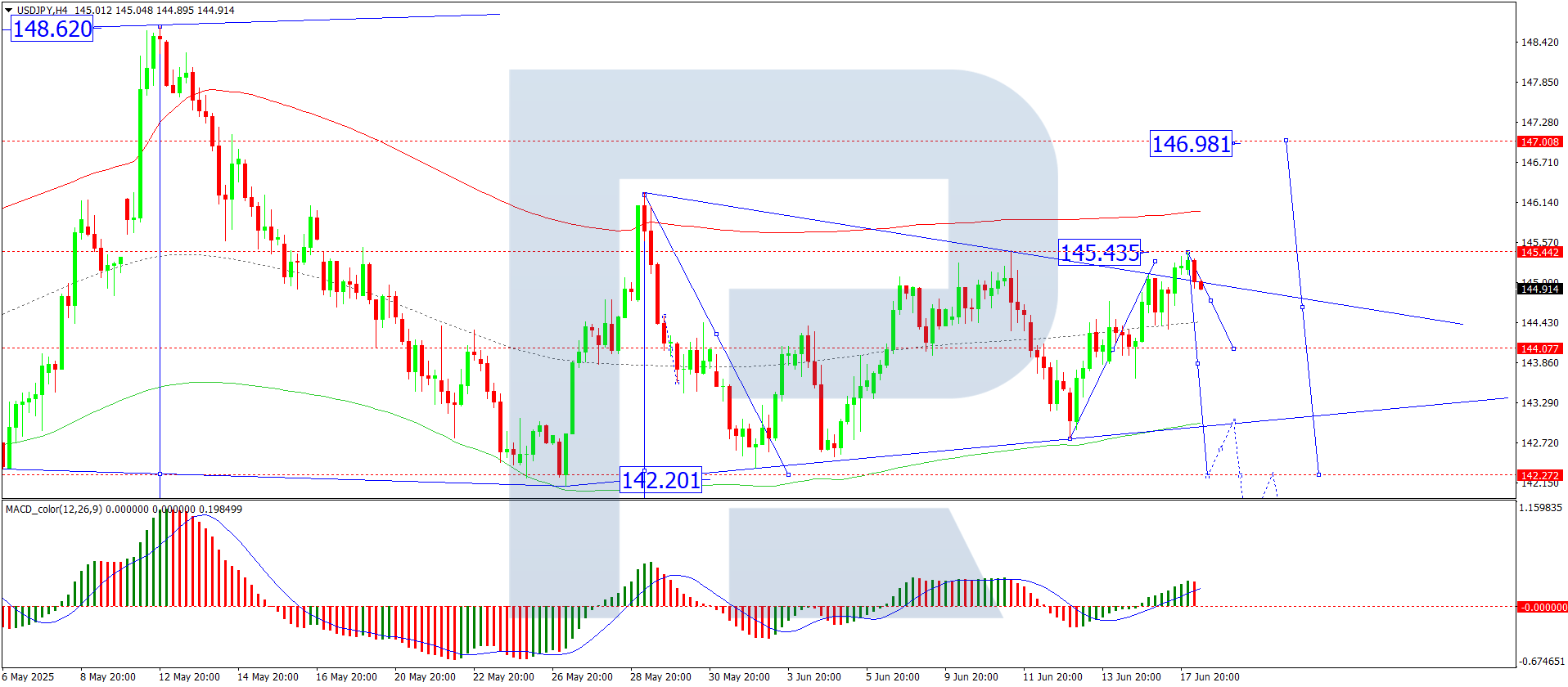
  • The pair completed its third upward wave, peaking at 148.62, before entering a corrective phase
  • The correction target stands at 146.40, with expectations of a new upward wave toward 150.90 once the pullback concludes
  • This outlook is supported by the MACD indicator, where the signal line has exited the histogram zone and points firmly downward


H1 Chart:

  • The market has consolidated around 147.50, with a downward breakout extending the correction
  • A further decline to 146.78 is anticipated, possibly followed by a retest of 147.50 (from below) before another drop toward 146.40
  • A subsequent upward wave targeting 148.62 is expected
  • The Stochastic oscillator confirms this scenario, with its signal line below 20 but rising sharply towards 50


Conclusion

The yen’s modest rebound reflects a combination of dollar weakness and cautious optimism in trade talks. However, with the BoJ maintaining a dovish stance and risk sentiment improving, further yen gains may be limited unless safe-haven demand resurges.


Disclaimer

Any forecasts contained herein are based on the author’s particular opinion. This analysis may not be treated as trading advice. RoboForex bears no responsibility for trading results based on trading recommendations and reviews contained herein.

If you really want to close the US trade deficit, try boosting innovation in rural manufacturing

By Amitrajeet A. Batabyal, Rochester Institute of Technology 

President Donald Trump has long been preoccupied by the trade deficit — the gap between what the U.S. sells to the rest of the world and what it buys from it. He recently declared the issue a national emergency and used trade deficit data to calculate so-called “reciprocal tariffs” targeting nearly 100 countries. Although those specific tariffs are now on pause, Trump’s concern with the trade deficit persists.

As an economist, I know there are two basic ways for a country to reduce a trade deficit: import less or export more. While Trump has focused on the former strategy, a more productive path may lie in the latter – especially by looking at untapped opportunities in rural America.

Economists have long studied the differences between rural and urban regions. But while research shows that urban areas tend to be more technologically advanced, fast-growing and economically dynamic, economists have historically paid less attention to how regional differences affect export performance.

New research is starting to fill that gap. Economists recently found that urban businesses export significantly more than rural ones – a difference with significant implications for national trade.

The urban-rural export gap

Looking at data from the Census Bureau’s Annual Business Survey as well as trade statistics from 2017 to 2020, researchers used econometric techniques to measure the urban-rural export gap. They also examined two categories of potential causes – “explained” and “unexplained.”

The first is due to differences in what economists call “endowments” – for example, a region’s digital infrastructure, its access to renewable energy and its opportunities for high-tech employment. These endowments can be observed and therefore explained.

The second is due to what economists call “structural advantage.” This refers to attributes of a region that matter for export performance but can’t be observed and, as a result, remain unexplained.

They found that most of the urban-rural export gap is due to explained differences. That means rural businesses could close the export gap if they were provided with similar endowments – meaning comparable access to renewable energy, similar digital infrastructure and analogous opportunities for high-tech employment – to their urban counterparts.

Even more strikingly, the unexplained component was negative – which means rural businesses outperform expectations given their characteristics. That suggests rural regions have significant untapped export potential.

Several factors collectively account for the urban export advantage. First, urban regions have a greater concentration of highly educated science and technology workers. Urban businesses also tend to be larger and more tech-savvy, and because they have better access to broadband, they use cloud technology more frequently. Urban areas also have more foreign-born business owners who may leverage their international networks.

However, many of these differences suggest possible policy solutions. For instance, since cloud adoption depends on broadband availability, it follows that investing in digital infrastructure could boost rural exports. Also, rural manufacturers, especially in sectors like metals manufacturing, show comparable or higher export intensity per worker than their urban counterparts. So encouraging rural manufacturing would be one way to reduce the urban-rural export gap.

Rethinking trade and rural development

I think this research has important policy implications.

First, it shifts some of the focus away from other countries as the root cause of the trade deficit. And second, it bolsters the case for what economists call “place-based policies” targeting specific geographic areas – as opposed to “people-based policies,” which provide support directly to individuals.

Even though many economists dislike place-based policies, they are increasingly attracting both academic and governmental attention.

The 2022 CHIPS and Science Act had special significance to rural areas.

During the Biden administration, three major laws – the Inflation Reduction Act, the CHIPS and Science Act and the Infrastructure Investment and Jobs Act – directed significant federal funds to rural areas. About 43% of funds from those laws – or US$440 billion – was designated as either “rural relevant” or as “rural stipulated,” meaning the funds were either geographically targeted or designed to address disproportionately rural challenges.

Such massive investments in rural regions have led researchers and policymakers to question whether rural export underperformance stems from differences in observable endowments – in other words, things like access to broadband – or from inherent disadvantages that are much harder to deal with.

In my view, this research provides compelling evidence that much of the urban-rural export gap is due to unequal distribution of productive assets, rather than inherent rural disadvantages. With appropriate investments in digital infrastructure, human capital and support for export-capable industries, America’s rural regions could play a much larger role in global trade. These findings also suggest the value of continued federal support for rural development efforts.

In other words, if the U.S. wants to shrink its trade deficit, one answer could be more innovation in rural manufacturing.The Conversation

About the Author:

Amitrajeet A. Batabyal, Distinguished Professor, Arthur J. Gosnell Professor of Economics, & Interim Head, Department of Sustainability, Rochester Institute of Technology

This article is republished from The Conversation under a Creative Commons license. Read the original article.

The US and China announced massive tariff cuts. Oil prices jumped to a 2-week high

By JustMarkets 

The US stocks soared yesterday after the US and China announced massive tariff cuts for 90 days following trade talks. The US said it would cut tariffs on Chinese goods from 145% to 30%, while China would cut duties on US imports from 125% to 10%. At Monday’s close, the Dow Jones Industrial Average (US30) was up 3.26%. The S&P 500 Index (US500) added 2.81%. The Nasdaq Technology Index (US100) closed higher by 4.35%. Technology stocks rose strongly, with Apple (+6.3%), Nvidia (+5.4%), Amazon (+8.1%), Meta (+7.9%), Alphabet (+3.4%), and Tesla (+6.7%). On the other hand, pharmaceutical stocks declined after Trump said he would sign an executive order to lower prescription drug prices.

Traders will be watching inflation data closely today, looking for signs of how the new tariff regime could affect prices. If the inflation data matches market expectations, it will likely have a moderately negative impact on the dollar. However, an unexpected jump in inflation could be a driver for the Dollar Index while adding pressure to stock markets. The scenario of accelerating inflation amid stagnant or declining GDP raises the risk of recession.

The Canadian dollar slipped below 1.4 per US dollar, retreating from the strongest level since October at 1.378, recorded on May 6. A rebound in the US dollar, driven by a 90-day tariff truce between the US and China, has attracted fresh capital into dollar assets, boosting the US dollar and pressuring the Loonie into broad-based appreciation. Domestically, Friday’s jobs report, which showed disappointing job growth along with a rise in the unemployment rate, dampened expectations of further policy tightening by the Bank of Canada, and markets cut bets on Fed policy easing, pushing US and Canadian yield spreads higher.

The Mexican peso weakened to 19.6 per dollar as the 90-day tariff truce between the US and China sparked renewed demand for US assets, strengthening the dollar’s appeal, while the Bank of Mexico is widely expected to cut the benchmark rate by another 50 basis points this Thursday. This policy easing continues to narrow the rate differential between Mexico and the Federal Reserve, reducing the attractiveness of the peso.

Equity markets in Europe were mostly up yesterday. Germany’s DAX (DE40) rose by 0.29%, France’s CAC 40 (FR40) closed 1.37% higher, Spain’s IBEX35 (ES35) Index gained 0.75%, and the UK’s FTSE 100 (UK100) closed positive 0.59%.

WTI crude oil prices rose to $63 per barrel on Monday, hitting a two-week high, after the US and China agreed to cut most tariffs on each other’s goods. This major trade breakthrough signaled a reduction in tensions between the world’s two largest oil consumers, reducing risks to oil demand. Meanwhile, exerting a bearish influence on oil, OPEC+ plans to accelerate production increases in May and June.

Asian markets were predominantly rising yesterday. Japan’s Nikkei 225 (JP225) rose by 0.38%, China’s FTSE China A50 (CHA50) gained 0.88%, Hong Kong’s Hang Seng (HK50) added 2.98%, and Australia’s ASX 200 (AU200) posted a positive 0.03%.

Signs of weakening demand from China, New Zealand’s largest trading partner, had a negative impact on the NZD. Chinese data released over the weekend showed a third consecutive monthly decline in consumer prices and the sharpest fall in producer prices in six months. On the domestic front, the currency remains under pressure amid expectations that the Reserve Bank of New Zealand will cut interest rates by 25bps later this month. The current cash rate of 3.5% is expected to fall to 2.8% by the end of the year.

The Bank of Japan (BoJ) is taking a cautious stance amid uncertainty over US tariff policy, according to a summary of its April 30-May 1 meeting. The prolonged persistence of high tariffs could prompt Japanese exporters to restructure operations, including shifting production to the US and rationalizing supply chains, which could hurt small and medium-sized firms, which account for 70% of employment in Japan. On the other hand, if the current economic and price outlook persists, the Bank of Japan plans to continue gradually raising interest rates while remaining flexible to changing conditions.

S&P 500 (US500) 5,844.19 +184.28 (+3.26%)

Dow Jones (US30) 42,410.10 +1,160.72 (+2.81%)

DAX (DE40) 23,566.54 +67.22 (+0.29%)

FTSE 100 (UK100) 8,604.98 +50.18 (+0.59%)

USD Index 101.79 +1.45 (+1.45%)

News feed for: 2025.05.13

  • Australia Westpac Consumer Confidence Index (m/m) at 03:30 (GMT+3);
  • Australia NAB Business Confidence (m/m) at 04:30 (GMT+3);
  • UK Average Earnings Index (m/m) at 09:00 (GMT+3);
  • UK Claimant Count Change (m/m) at 09:00 (GMT+3);
  • UK Unemployment Rate (m/m) at 09:00 (GMT+3);
  • UK Trade Balance (m/m) at 09:00 (GMT+3);
  • German ZEW Economic Sentiment (m/m) at 12:00 (GMT+3);
  • Eurozone ZEW Economic Sentiment (m/m) at 12:00 (GMT+3);
  • US Consumer Price Index (m/m) at 15:30 (GMT+3);
  • UK BOE Gov Bailey Speaks (m/m) at 18:00 (GMT+3).

By JustMarkets


This article reflects a personal opinion and should not be interpreted as an investment advice, and/or offer, and/or a persistent request for carrying out financial transactions, and/or a guarantee, and/or a forecast of future events.

US Dollar Roars Back in a Blaze of Glory as Market Shrugs Off Recession Fears

By RoboForex Analytical Department 

EUR/USD dropped to 1.1110 on Tuesday, with the US dollar surging by over 1% in the previous trading session. The rally was driven by market reactions to news of a provisional agreement between China and the US to reduce tariffs, which helped alleviate global recession fears.

Key factors driving EUR/USD movement

Washington and Beijing have agreed to cut tariffs to 30% and 10%, respectively, for 90 days.

Meanwhile, US Treasury Secretary Scott Bessent confirmed plans to meet with Chinese representatives again in the coming weeks to begin negotiations on a broader trade deal.

The tariff reductions boosted market sentiment towards the dollar, which had previously faced pressure over concerns that President Donald Trump’s trade policies were diminishing the appeal of US assets. However, market nervousness is likely to persist until the White House establishes stable trade terms with all key partners.

Attention now turns to the latest US inflation report, which may show how the new tariff policy affects prices.

Technical analysis: EUR/USD

On the H4 chart, EUR/USD broke below 1.1190, completing the third wave of decline towards 1.1065. Today, we anticipate a corrective wave retesting 1.1190 (from below). Once this correction concludes, a new downward wave towards 1.1040 is expected. This scenario is technically confirmed by the MACD indicator, with its signal line below zero and pointing decisively downward.

On the H1 chart, the market has achieved the local downside target at 1.1065. Today, a potential rebound to 1.1126 is in focus. If this level is breached upwards, a further correction towards 1.1190 may follow. Subsequently, the downward trend could resume, targeting 1.1040. This outlook is supported by the Stochastic oscillator, whose signal line is above 80 but poised to decline towards 20.

Conclusion

The US dollar’s resurgence reflects improved risk sentiment following the US-China tariff truce, though uncertainty lingers over long-term trade relations. Technically, EUR/USD remains under pressure, with further downside likely after a brief correction.


Disclaimer

Any forecasts contained herein are based on the author’s particular opinion. This analysis may not be treated as trading advice. RoboForex bears no responsibility for trading results based on trading recommendations and reviews contained herein.

Decentralized finance is booming – and so are the security risks. My team surveyed nearly 500 crypto investors and uncovered the most common mistakes

By Mingyi Liu, Georgia Institute of Technology 

When the first cryptocurrency, Bitcoin, was proposed in 2008, the goal was simple: to create a digital currency free from banks and governments. Over time, that idea evolved into something much bigger: “decentralized finance,” or “DeFi.”

With decentralized finance, people trade, borrow and earn interest on crypto assets without relying on traditional intermediaries. DeFi services run on blockchains, which are essentially digital ledgers, and use “smart contracts” − self-executing code that automates financial transactions. Tens of billions of dollars have poured into the DeFi market.

But with innovation comes risks. The lack of centralized oversight has made crypto, including decentralized finance, a prime target for hackers and scammers. In 2024 alone, people lost nearly US$1.5 billion due to security exploits and fraud. And unlike traditional finance, there’s usually no way to recover stolen crypto.

As a computer scientist, I wanted to better understand how people perceive and respond to these risks. So my colleagues and I first conducted in-depth interviews with 14 crypto investors, then surveyed nearly 500 others to validate our findings.

Our study found that people often made the same mistakes, driven by recurring misconceptions and gaps in security awareness. Here are some of the most important.

Mistake 1: Thinking the blockchain guarantees security

Many people told us they thought decentralized finance was secure – but their reasoning wasn’t very convincing. Some seemed to confuse decentralized finance with blockchain technology itself, which is designed to ensure transactions are tamper-resistant through so-called “consensus mechanisms.” One told us that DeFi is secure “because a hacker would have to override an entire blockchain” to steal funds.

But services on the blockchain are still vulnerable to implementation and design flaws. These include smart contract breaches, in which bad guys exploit bugs in a service’s code, and front-end attacks, where a user interface is altered to redirect funds into a hacker’s wallet. A front-end attack was reportedly to blame for a recent $1.5 billion crypto heist.

CNBC reports on the record-breaking $1.5 billion crypto theft.

Mistake 2: Thinking safe keys mean safe funds

Another common misconception is that DeFi is secure if private keys are well stored. A private key is a secret code that allows someone to access their crypto assets. It’s true that in DeFi – unlike in centralized crypto finance where an exchange holds private keys – users have full control over their own private keys.

But even with perfect private key management, users can still lose funds by interacting with compromised DeFi platforms. That’s because safeguarding private keys can prevent only direct attacks targeting private key access, such as phishing attempts.

The people we spoke with also failed to follow best practices for securing their private keys. Using a hardware wallet – a physical device that stores private keys offline – is one of the most secure options for protecting keys from online threats. However, our study found that only a handful of participants actually used hardware wallets.

Mistake 3: Thinking 2-factor authentication is a silver bullet

Two-factor authentication, or 2FA, is a standard security mechanism in which two forms of verification are required to access an account. Think being texted a one-time code before you can log into your bank account.

To prevent account breaches, centralized crypto exchanges such as Binance and Coinbase use two-factor authentication for logins, account recovery and withdrawal confirmations. But while 2FA is crucial to security in the traditional and centralized crypto finance system, it plays a much smaller role in decentralized finance.

DeFi wallets give users access based on private key ownership rather than identity verification, which means traditional 2FA can’t be used. Instead, only 2FA-like mechanisms are available in DeFi. For instance, multisignature wallets require approval from multiple private key holders. However, if your private key is compromised, attackers can perform wallet operations on your behalf without any additional verification. In addition, even users who adopt 2FA-like measures can’t prevent the security breaches on the DeFi services’ end.

Unfortunately, our participants were overly confident regarding the effectiveness of 2FA, with one saying, “Two-factor authentication has been one of the best solutions for keeping wallets safe.” In our survey, 57.1% of users relied on 2FA as their only technical countermeasure against rug pulls – scams where project creators suddenly withdraw funds – and 49.3% did so for smart contract exploits. This misplaced trust could lead them to ignore more effective security strategies.

Mistake 4: Not managing token approvals

One such effective strategy is revoking token approvals. In DeFi, tokens are digital assets on a blockchain that represent value or rights, and users often need to approve smart contracts to access or spend them. But if you leave these approvals open, a malicious contract – or one that’s been hacked – can drain your wallet. So it’s crucial to routinely check all token approvals you’ve granted to prevent losses caused by fraudulent or hacked DeFi services. Specifically, you should limit spending allowances instead of using the default “unlimited” option, and revoke approvals for apps you no longer use or trust.

Worryingly, we found that only 10.8% and 16.3% of participants regularly checked and revoked token approvals to protect against rug pulls and smart contract exploits, respectively. In light of this, we recommend that wallet providers introduce a reminder feature to prompt users to review their token approvals periodically.

Mistake 5: Not learning from past incidents

Even after they’re hacked or scammed, people often don’t do anything to improve their security practices, we found. Just 17.6% of those who reported being victims of a DeFi scam regularly checked token approvals afterward. Worse, 26% took no action at all after a scam, and 16.4% doubled down by investing even more in other DeFi services.

Surprisingly, more than half of the victims said their belief in DeFi either stayed the same or grew stronger after the incident. One user who lost $4,700 due to a rug-pull incident said, “My belief in cryptocurrency has grown stronger after that because I made good money from it.” That person added, “An opportunity to make money is something I believe in.” This suggests that DeFi users’ financial motivations can sometimes outweigh their security concerns – and, perhaps, their better judgment.

There’s no one-size-fits-all solution to DeFi security. But awareness is the first step. To stay safe, crypto investors should use hardware wallets, revoke unused token approvals and continually learn new techniques to protect themselves from evolving threats. Most importantly, they should stay rational and not let the allure of profits cloud their security practices.The Conversation

About the Author:

Mingyi Liu, Ph.D. student in Computer Science, Georgia Institute of Technology

This article is republished from The Conversation under a Creative Commons license. Read the original article.