GBP/USD Finds a Floor at 1.3200 After Fed-Induced Sell-Off

By RoboForex Analytical Department

The GBP/USD pair is consolidating around the 1.3200 level on Thursday, following significant losses in the previous session. The pair is now trading near its lowest point since April 2025, with selling pressure intensifying after the Federal Reserve cut interest rates by 25 basis points. While delivering the expected cut, Fed Chair Jerome Powell struck a hawkish note by stressing that further easing this year is not guaranteed, bolstering the US dollar.

The pound faces its own set of domestic headwinds. Mounting expectations of a Bank of England rate cut, combined with concerns over the upcoming November budget, are weighing on sentiment. During parliamentary hearings, Prime Minister Keir Starmer refused to rule out potential rises in income tax, national insurance, and VAT.

Further compounding the issue, press reports suggest the Office for Budget Responsibility (OBR) plans to lower its productivity growth forecast by approximately 0.3 percentage points. Such a revision could create a budget deficit of around £20 billion.

Softer-than-expected inflation data and a reported decline in food prices by the BRC have reinforced the market’s view that the Bank of England is moving closer to easing monetary policy.

Technical Analysis: GBP/USD

H4 Chart:

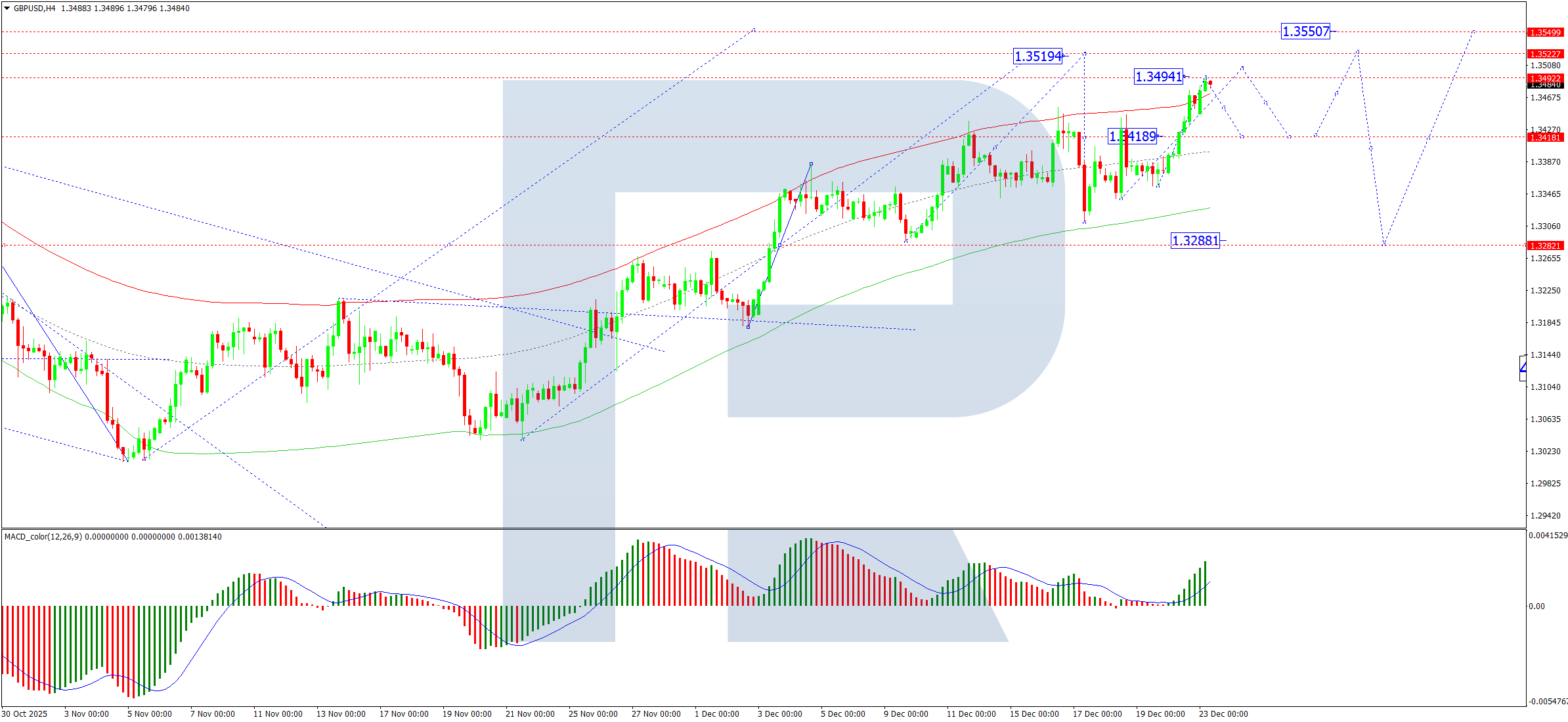
On the H4 chart, GBP/USD is developing a bearish wave structure targeting 1.3111. We anticipate the pair reaching this level before forming a consolidation range around it. Critically, this move is considered the third and typically powerful wave within the broader downtrend, with the 1.3111 target representing only its initial phase. Following consolidation, we expect a downward breakout and a continuation of the sell-off to at least 1.2830. This bearish scenario is confirmed by the MACD indicator, whose signal line is below zero and pointing decisively downward, indicating sustained selling momentum.

H1 Chart:

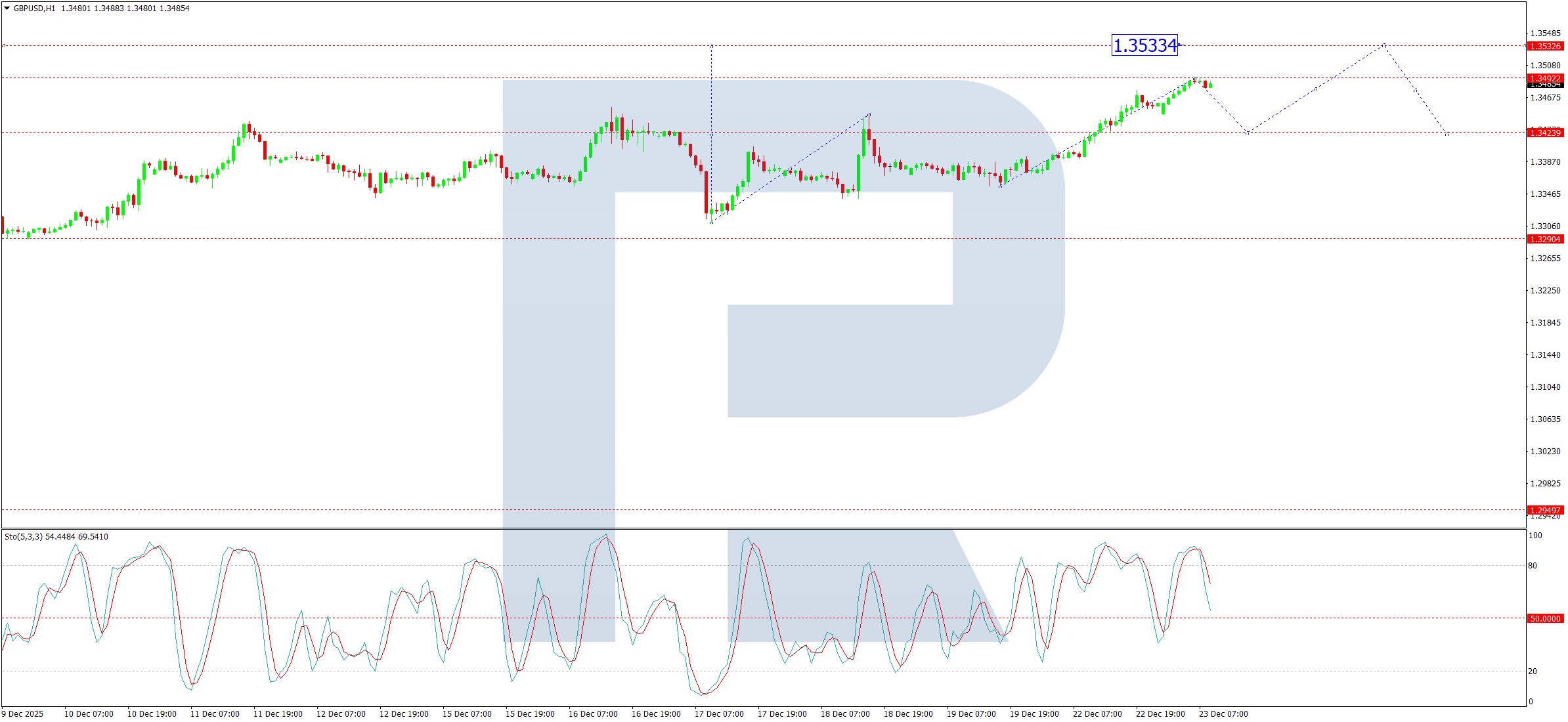
On the H1 chart, the pair has completed a downward impulse to 1.3193 and formed a consolidation range, which has since expanded down to 1.3139. We now foresee a technical retest of 1.3217 from below, after which a further decline towards 1.3111 is expected. A decisive break below this support level would open the path for a move down to at least 1.3015. The Stochastic oscillator supports this outlook, with its signal line having turned down from below the 80 level and heading towards 20, reflecting building bearish momentum in the short term.

Conclusion

GBP/USD is stabilising after a sharp drop, but the fundamental and technical backdrop remains bearish. Hawkish Fed rhetoric and a dovish shift in BoE expectations, alongside worrying UK fiscal signals, suggest any recovery may be short-lived. The path of least resistance appears lower, with key technical targets at 1.3111 and 1.3015.


Disclaimer:

Any forecasts contained herein are based on the author’s particular opinion. This analysis may not be treated as trading advice. RoboForex bears no responsibility for trading results based on trading recommendations and reviews contained herein.

FED and Bank of Canada cut rates. ECB decision due today

By JustMarkets 

On Wednesday, US stock indices showed mixed performance. The Dow Jones (US30) Index fell by 0.16%. The S&P 500 (US500) declined by 0.01%. The technology-heavy Nasdaq (US100) closed higher by 0.55%. The Federal Reserve announced a 25 basis point (bps) cut to the federal funds rate, bringing it to 4.00% at its October 2025 meeting, a move that fully aligned with market expectations. This was the second consecutive cut after the September decision. The regulator noted increasing risks in the labor market in recent months, while inflation has accelerated since the start of the year and remains relatively elevated. During the press conference, Chairman Jerome Powell stressed that a rate cut in December is not guaranteed, although investors still price in a high probability of another 25 bps move, consistent with the Fed’s September forecasts. Additionally, the central bank announced that the reduction of its balance sheet (Quantitative Tightening) will conclude on December 1st.

The Bank of Canada (BoC) cut its rate to 2.25% and signaled a potential pause in the easing cycle. The regulator indicated that the easing cycle is likely nearing its end, provided the baseline economic forecast remains unchanged amidst ongoing uncertainty. The Governing Council noted that trade conflict has caused structural damage to the economy, reducing its potential, which aligns with the 1.6% year-over-year GDP decline in the second quarter.

G7 nations plan to establish a critical minerals alliance to counter China’s dominance in global supply chains. The alliance aims to reduce China’s market influence, including its practice of dumping to push out Western projects and the imposition of export controls. Canada, in particular, expects economic benefits, leveraging its domestic resource base and ready-to-go infrastructure projects.

European stock markets traded with mixed dynamics yesterday. Germany’s DAX (DE40) fell by 0.64%, France’s CAC 40 (FR40) closed down 0.19%, Spain’s IBEX35 (ES35) gained 0.39%, and the UK’s FTSE 100 (UK100) closed 0.61% higher. Contradictory corporate results amplified uncertainty regarding the region’s economic outlook. The banking sector was the leader of the gains: Santander added 4% after publishing a record nine-month profit, and Deutsche Bank rose by 5% on strong investment division results. Mercedes-Benz climbed 4.3% as growth in premium segment sales ensured margin expansion and compensated for a decline in China revenue.

Today, the ECB will hold its monetary policy meeting. There is an almost 99% probability that the interest rate will remain unchanged at 2.15%. This stands in contrast to the situation at the US Federal Reserve (Fed).

WTI crude oil prices rose on Wednesday to around $60.6 per barrel due to a reduction in inventories. According to the EIA, US crude oil stocks fell by 6.9 million barrels, a more significant drop than expected. Gasoline and distillate inventories also decreased, while stocks at the Cushing, Oklahoma, hub increased. Indian refineries temporarily halted new purchases pending official instructions, though the state-owned IOC confirmed it would continue imports under contractual obligations. However, some analysts doubt that the sanctions will lead to a significant supply reduction, given reports that OPEC+ may consider another production increase at its next meeting to stabilize the market.

Asian markets also traded with mixed results yesterday. Japan’s Nikkei 225 (JP225) surged 2.17%, China’s FTSE China A50 (CHA50) gained 0.10%, Hong Kong’s Hang Seng (HK50) fell by 0.33%, and Australia’s ASX 200 (AU200) posted a negative result of 0.96%.

The Bank of Japan (BoJ) kept its key short-term rate at 0.5%, holding borrowing costs at their highest level since 2008 and extending the pause after the January hike. The regulator reiterated its readiness to tighten policy further if the economy evolves within its outlook. In its quarterly projections, the BoJ maintained its core inflation estimate for the 2025 fiscal year at 2.7%, expecting it to slow to 1.8% in 2026. The GDP growth forecast for 2025 was improved from 0.6% to 0.7%, facilitated by a new trade agreement with the US and the policies of Prime Minister Sanae Takaichi’s cabinet.

S&P 500 (US500) 6,890.59 −0.30 (−0.01%)

Dow Jones (US30) 47,632.00 −74.37 (−0.16%)

DAX (DE40) 24,124.21 −154.42 (−0.64%)

FTSE 100 (UK100) 9,756.14 +59.40 (+0.61%)

USD Index 99.13 +0.47% (+0.47%)

News feed for: 2025.10.30

  • Japan BoJ Interest Rate Decision at 05:00 (GMT+2);
  • Japan BoJ Monetary Policy Statement at 05:00 (GMT+2);
  • Japan BOJ Outlook Report at 05:00 (GMT+2);
  • Switzerland KOF Leading Indicators (m/m) at 10:00 (GMT+2);
  • German Unemployment Rate (m/m) at 10:55 (GMT+2);
  • German GDP (m/m) at 11:00 (GMT+2);
  • Eurozone GDP (m/m) at 12:00 (GMT+2);
  • Eurozone Unemployment Rate (m/m) at 12:00 (GMT+2);
  • German Inflation Rate (m/m) at 15:00 (GMT+2);
  • Eurozone ECB Interest Rate Decision at 15:15 (GMT+2);
  • Eurozone ECB Monetary Policy Statement at 15:15 (GMT+2);
  • Eurozone ECB Press Conference at 15:45 (GMT+2);
  • US Natural Gas Storage (w/w) at 16:30 (GMT+2).

By JustMarkets


This article reflects a personal opinion and should not be interpreted as an investment advice, and/or offer, and/or a persistent request for carrying out financial transactions, and/or a guarantee, and/or a forecast of future events.

A Key Day for EUR/USD as the Fed Decision Looms

By RoboForex Analytical Department

The EUR/USD pair declined to 1.1642 on Wednesday, with investor attention firmly fixed on the Federal Reserve’s impending policy decision. The central bank is widely expected to cut interest rates by 25 basis points.

Market participants will scrutinise the subsequent commentary from Chair Jerome Powell for any signals regarding the path for further policy easing. A further rate cut in December is already partially priced into the market.

Additional attention is being drawn to the upcoming meeting between Donald Trump and Xi Jinping, at which the parties may approve a framework trade agreement. The document provides for the suspension of new US tariffs and Chinese restrictions on exports of rare earth metals.

Meanwhile, the US dollar continues to weaken against the Japanese yen. This follows discussions between Japanese Finance Minister Satsuki Katayama and US Treasury Secretary Scott Bessent, in which they addressed recent volatility in the currency markets. Bessent’s call for a “prudent monetary policy” was interpreted by investors as a veiled criticism of the slow pace of interest rate normalisation in Japan.

Technical Analysis: EUR/USD

H4 Chart:

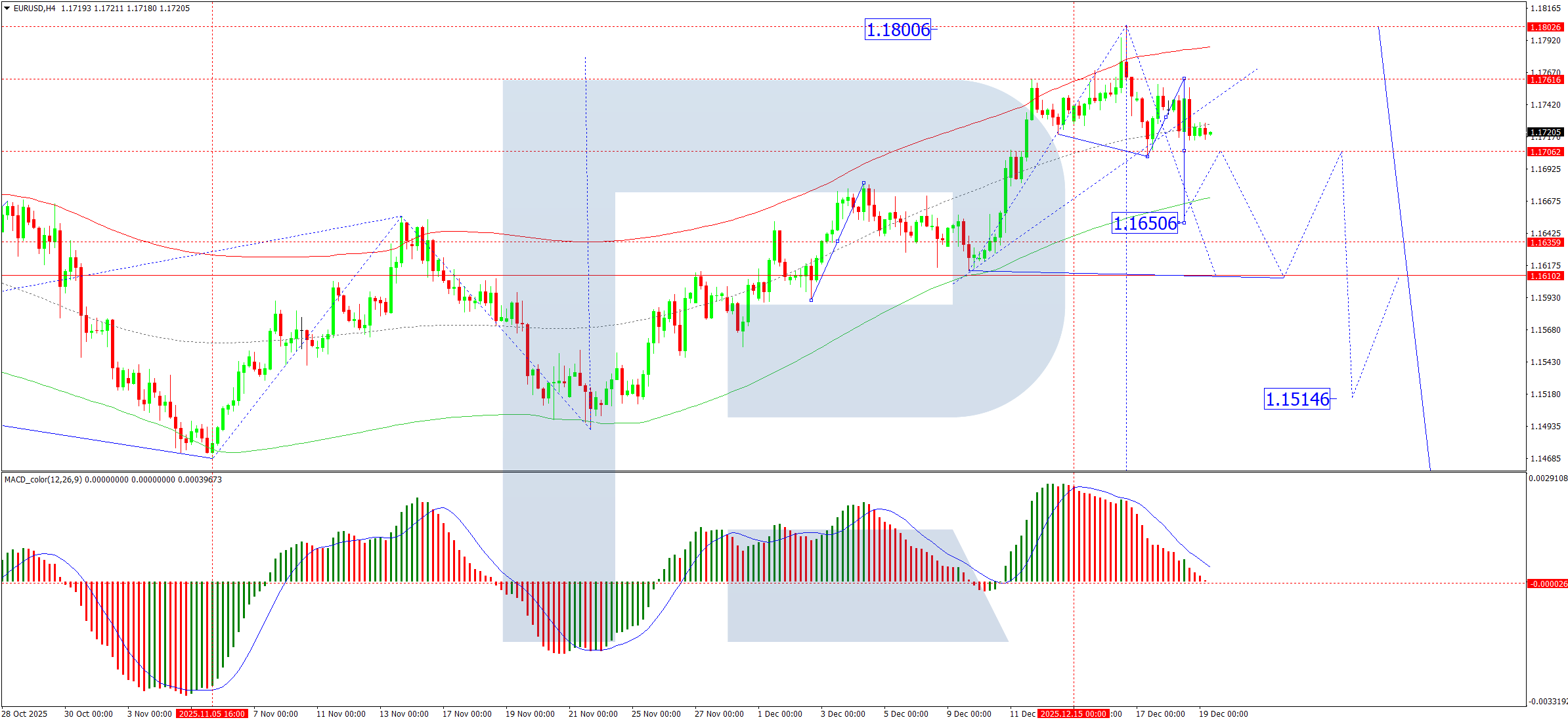
On the H4 chart, the EUR/USD pair formed a tight consolidation range around the 1.1600 level. After an upward breakout, the pair completed a correction to 1.1680. With that correction now over, a new decline has begun. The next target for this bearish wave is 1.1540, which is considered only the first leg of the downtrend. Following a minor correction back towards 1.1600, the decline is expected to extend to at least 1.1488. This scenario is technically confirmed by the MACD indicator. Its signal line is above zero but has diverged from the histogram and is pointing decisively downward, indicating sustained bearish momentum.

H1 Chart:

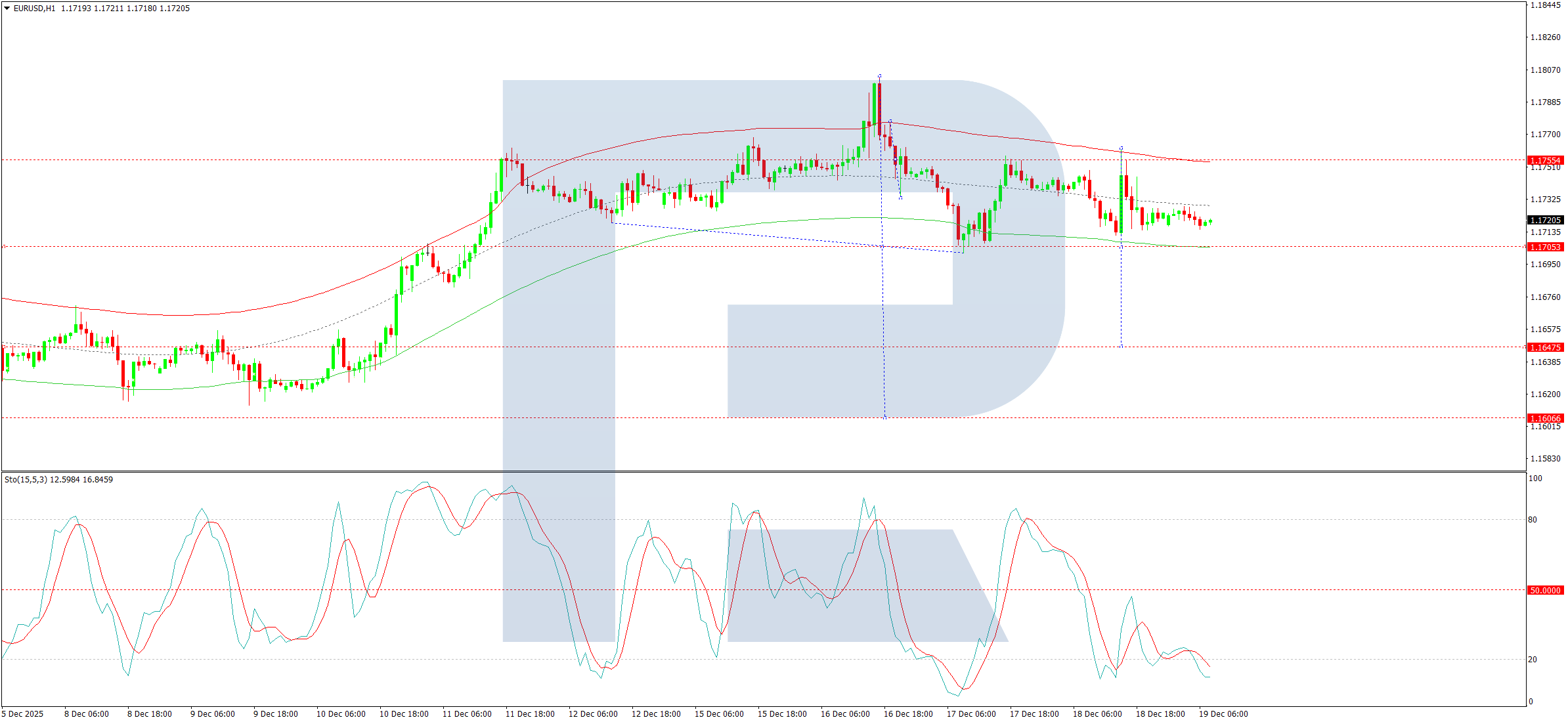
On the H1 chart, the market is forming a downward wave structure targeting 1.1616. The pair is effectively establishing the boundaries of a new consolidation range around this level. An upward breakout could trigger another correction towards 1.1640. However, the primary expectation is for a resumption of the downtrend to 1.1576, with the potential to extend the wave to 1.1540. This would represent only the first half of the third wave within the broader downward trend. The Stochastic oscillator supports this outlook. Its signal line is below 50 and is falling confidently towards 20, suggesting that short-term downward potential remains.

Conclusion

The fundamental focus is squarely on the Fed, with technicals pointing to a bearish resolution for the EUR/USD. The overall structure suggests any rallies are likely corrective within a broader downtrend, with key targets situated near 1.1540 and potentially 1.1488.


Disclaimer:

Any forecasts contained herein are based on the author’s particular opinion. This analysis may not be treated as trading advice. RoboForex bears no responsibility for trading results based on trading recommendations and reviews contained herein.

The British Index UK100 hit a new all-time high. The Australian dollar strengthened, reaching a three-week high

By JustMarkets 

On Tuesday, US stock indices continued their ascent. The Dow Jones (US30) Index rose by 0.34%. The S&P 500 (US500) gained 0.23%. The technology-heavy Nasdaq (US100) closed up by 0.74%. All three indices set new historical highs amid expectations that the Fed would cut its rate by 25 basis points (bps) on Wednesday, a move the markets have almost entirely priced in.

Nvidia climbed 8% after announcing a $1 billion strategic investment in Nokia, which reinforces expectations for continued demand for chips and network infrastructure. UPS rose 8.1% thanks to an earnings report that beat analysts’ expectations. Microsoft jumped 2.3% after securing a landmark agreement with OpenAI, strengthening its commercial position in the AI sector.

Today, the US Federal Reserve (Fed) will hold its monetary policy meeting. The market is almost certainly expecting a 25 bps cut to the key interest rate. However, this decision is already priced in, so the main focus for investors will be on Powell’s press conference and the updates to the dot plot. A downward shift in the median outlook for the year-end rate level would increase the probability of additional cuts.

The Canadian dollar strengthened above 1.40 CAD per USD, remaining near its monthly highs. Markets have already priced in a 25 bps rate cut from both the Fed and the Bank of Canada (BoC) this week. Despite the overall easing, Canada maintains an advantage in real yield. Analysts believe that today’s BoC cut could be the final one in the current cycle, and the regulator’s rhetoric is likely to be neutral or slightly “hawkish” to keep inflationary expectations under control and support confidence amid an unemployment rate of 7.1%.

European stock markets traded with mixed dynamics yesterday. Germany’s DAX (DE40) fell by 0.12%, France’s CAC 40 (FR40) closed down 0.27%, Spain’s IBEX35 (ES35) gained 0.54%, and the UK’s FTSE 100 (UK100) closed 0.44% higher. The FTSE 100 set a new record high on Tuesday, supported by a rally in the banking, commodity, and defence sectors. HSBC led the gains, adding over 4% following strong quarterly results and a raised profitability outlook.

WTI crude oil declined for a third straight day amid sanctions and supply concerns. Last week, Washington imposed sanctions on major Russian oil companies (Rosneft and Lukoil) which led traders to closely monitor for potential supply disruptions. Indian refiners temporarily paused new orders for Russian oil. However, doubts persist in the market that the restrictions will be able to offset the oil surplus, as OPEC+ is considering another production increase at its upcoming meeting.

Asian markets were mostly down yesterday. Japan’s Nikkei 225 (JP225) dropped 0.58%, China’s FTSE China A50 (CHA50) rose by 0.75%, Hong Kong’s Hang Seng (HK50) fell by 0.33%, and Australia’s ASX 200 (AU200) posted a negative result of 0.48%.

The Australian dollar strengthened, reaching a three-week high, after fresh inflation data came in noticeably higher than prognoses and reduced expectations for an imminent policy easing by the Reserve Bank of Australia (RBA). Annual inflation accelerated to 3.5% in September, up from 3% in August and above the consensus projection of 3.1%, marking the highest level since July 2024. Against this backdrop, traders sharply cut bets on interest rate cuts. Markets are now pricing in a 90% probability that the RBA will keep the key interest rate at 3.6% on November 4th.

S&P 500 (US500) 6,890.89 +15.73 (+0.23%)

Dow Jones (US30) 47,706.37 +161.78 (+0.34%)

DAX (DE40) 24,278.63 −30.15 (−0.12%)

FTSE 100 (UK100) 9,696.74 +42.92 (+0.44%)

USD Index 98.72 -0.06% (-0.06%)

News feed for: 2025.10.29

  • Australia Consumer Price Index (m/m) at 02:30 (GMT+2);
  • New Zealand RBNZ Gov Hawkesby Speaks (m/m) at 05:30 (GMT+2);
  • Japan Consumer Confidence (m/m) at 07:00 (GMT+2);
  • Canada BoC Interest Rate Decision at 15:45 (GMT+2);
  • Canada BoC Monetary Policy Statement at 15:45 (GMT+2);
  • US Pending Home Sales (m/m) at 16:00 (GMT+2);
  • Canada BOC Press Conference at 16:30 (GMT+2);
  • US Crude Oil Reserves (w/w) at 16:30 (GMT+2);
  • US Federal Funds Rate at 20:00 (GMT+2);
  • US FOMC Statement at 20:00 (GMT+2);
  • US FOMC Press Conference at 20:30 (GMT+2).

By JustMarkets


This article reflects a personal opinion and should not be interpreted as an investment advice, and/or offer, and/or a persistent request for carrying out financial transactions, and/or a guarantee, and/or a forecast of future events.

The US and China representatives reached a preliminary trade agreement. Saudi Arabia is once again leaning towards increasing oil production

By JustMarkets 

The Dow Jones Index (US30) rose by 0.71% by the end of Monday. The S&P 500 Index (US500) gained 1.23%. The Technology Index Nasdaq (US100) closed higher by 1.86%. Major Wall Street indices finished Monday with sharp gains after US and Chinese officials reported reaching a preliminary trade agreement during talks held over the weekend in Malaysia. The final details of the deal are expected to be agreed upon on Thursday at a summit between Presidents Donald Trump and Xi Jinping during the ASEAN conference. The US Treasury Secretary stated that the agreement means removing the threat of introducing 100% tariffs on Chinese imports, which were supposed to take effect on November 1, from the agenda. In turn, China agreed to refrain from restricting the export of rare earth metals for at least one year.

European stock markets were mostly up yesterday. Germany’s DAX (DE40) rose by 0.28%, France’s CAC 40 (FR40) closed with a gain of 0.16%, Spain’s IBEX35 (ES35) climbed by 0.87%, and the UK’s FTSE 100 (UK100) closed up 0.09%. Negotiations between the European Union and a Chinese delegation regarding Beijing’s new restrictions on rare earth metal exports will take place in Brussels this week, as Europe seeks to protect its industrial base and reduce dependence on Chinese raw materials. European Commission President Ursula von der Leyen stated that the EU will accelerate efforts to diversify supplies and conclude new critical mineral supply agreements with partners, including Ukraine, to reduce dependence on China and protect strategic industries.

WTI crude oil prices fell on Tuesday, marking the third consecutive session of decline, as concerns about market oversupply intensified following signals that OPEC+ might consider increasing production as early as December. Saudi Arabia is leaning towards a moderate production increase, aiming to regain market share, while the group of oil producers is set to meet on Sunday.

Platinum prices pulled back slightly from the three-week high reached in mid-October. Pressure on the metal came from a decrease in demand for safe-haven assets, as signs of progress in US-China trade negotiations boosted investors’ risk appetite. Despite the correction, platinum has appreciated by nearly 50% since the start of the year, outperforming gold and silver, thanks to constrained supply, robust industrial demand, and growing interest from investors seeking diversification amid geopolitical uncertainty.

Asian markets traded with mixed dynamics yesterday. Japan’s Nikkei 225 (JP225) rose by 2.46%, China’s FTSE China A50 (CHA50) gained 1.10%, Hong Kong’s Hang Seng (HK50) was up 1.05%, while Australia’s ASX 200 (AU200) showed a negative result of 0.19%.

US President Donald Trump and Japanese Prime Minister Sanae Takaichi signed a framework agreement on securing the supply of critical minerals and rare earth elements, aimed at reducing dependence on China and strengthening strategic supply chains. The agreement is part of a broader Washington initiative to reduce reliance on China, which controls over 90% of global rare earth element processing. On Thursday, Donald Trump will meet with Chinese President Xi Jinping to discuss trade relations and strategic stability issues.

The Australian dollar reached its highest level in nearly three weeks on Tuesday, thanks to a weaker US dollar. The American currency declined as markets had almost fully priced in an expected 25 basis point rate cut by the Fed, while optimism surrounding a potential US-China trade deal reduced demand for safe-haven assets. Domestically, investors’ attention is focused on the upcoming release of third-quarter inflation data and the monthly Consumer Price Index for September, due out on Wednesday, which may provide new signals regarding future moves by the Reserve Bank of Australia (RBA). RBA Governor Michele Bullock warned that a sudden reversal of optimism in global financial markets could trigger financial instability and accelerate the process of cutting interest rates.

S&P 500 (US500) 6,875.16 +83.47 (+1.23%)

Dow Jones (US30) 47,544.59 +337.47 (+0.71%)

DAX (DE40) 24,308.78 +68.89 (+0.28%)

FTSE 100 (UK100) 9,653.82 +8.20 (+0.09%)

USD Index 98.80 -0.15% (-0.15%)

News feed for: 2025.10.28

  • German GfK German Consumer Climate (m/m) at 09:00 (GMT+2);
  • US CB Consumer Confidence (m/m) (tentative).

By JustMarkets


This article reflects a personal opinion and should not be interpreted as an investment advice, and/or offer, and/or a persistent request for carrying out financial transactions, and/or a guarantee, and/or a forecast of future events.

Gold Rebounds to 4,000 USD Mark

By RoboForex Analytical Department

Gold prices returned to the 4,000 USD per troy ounce mark on Tuesday, partially recovering from the previous day’s 3.2% decline. The initial sell-off was triggered by encouraging developments in US-China trade negotiations.

According to officials, the two sides reached a framework agreement on tariffs and several key issues during talks in Malaysia. This paves the way for a final approval by the US and Chinese leaders at their upcoming meeting in South Korea later this week.

The metal found renewed support as investor attention shifted to the impending US Federal Reserve meeting. Markets are now pricing in a 25 basis point rate cut following the release of softer-than-anticipated inflation data, making this one of the most significant events in a week packed with risk.

Technical Analysis: XAU/USD

H4 Chart:

On the H4 chart, XAU/USD formed a consolidation range around 4,085 USD before breaking decisively to the downside. The market appears to be developing the second leg of this downward wave, with a subsequent target projected at 3,785 USD. This bearish near-term outlook is supported by the MACD indicator. Its signal line is pointing downward, and the histogram has moved into negative territory, suggesting the corrective phase is not yet complete.

H1 Chart:

On the H1 chart, the pair is developing a downward structure toward 3,785 USD. A consolidation range has formed around 3,971 USD; a break below this level would signal a continuation of the decline toward the stated target. The Stochastic oscillator confirms this momentum, with its signal line positioned below 50 and trending downward toward 20, reflecting strengthening selling pressure.

Conclusion

While gold has rebounded on shifting expectations for Fed policy, the technical structure points to further potential downside. The primary focus for traders will be the Fed’s decision, which will determine whether this current correction extends toward 3,785 USD or if the longer-term bullish trend can reassert itself.


Disclaimer:

Any forecasts contained herein are based on the author’s particular opinion. This analysis may not be treated as trading advice. RoboForex bears no responsibility for trading results based on trading recommendations and reviews contained herein.

USD/JPY Tests Key February Highs

By RoboForex Analytical Department

The USD/JPY pair rallied sharply on Monday, reaching the 153.00 level and testing levels not seen since February 2025. This bullish momentum is being driven by expectations of significant fiscal stimulus from Japan’s new government and ongoing uncertainty surrounding the Bank of Japan’s (BoJ) policy path.

The yen has been under sustained pressure since the election of Prime Minister Sanae Takaichi, whose administration is expected to pursue expansive fiscal spending while endorsing an accommodative monetary stance. Reports suggest a substantial stimulus package, valued at over ¥13.9 trillion, could be unveiled as early as November. The plan aims to support households and mitigate inflationary pressures.

While the BoJ is widely expected to keep interest rates unchanged at its meeting this week, market participants will be watching closely for any communication regarding the conditions for a future rate hike should inflationary pressures ease. Additionally, an upcoming meeting between Prime Minister Takaichi and US President Donald Trump is being monitored for further signals on the direction of Japan’s economic policy.

Technical Analysis: USD/JPY

H4 chart:

On the H4 chart, USD/JPY broke out upwards from a consolidation range around 151.80, confirming a renewed uptrend with an initial target at 153.43. The pair has since completed a leg higher to 153.24 and is now undergoing a technical retracement, currently testing the 152.43 level from above. We expect this pullback to be followed by another impulse higher towards the 153.43 target. Following that, a more pronounced correction towards 151.80 is anticipated before the broader uptrend resumes, with the next major objective at 154.33. The MACD indicator supports this outlook, with its signal line firmly above zero and pointing upwards, confirming sustained bullish momentum.

H1 chart:

The H1 chart shows the completion of an initial growth wave to 153.25. The immediate focus is on a further push to 153.33. Upon reaching this local target, a corrective decline to at least 152.43 is likely. Once this correction is complete, the next leg of the uptrend is projected to drive the pair towards 154.33. This scenario is technically confirmed by the Stochastic oscillator, whose signal line is above 50 and trending strongly towards 80, indicating that near-term bullish momentum remains intact.

Conclusion

Fundamentally, the combination of anticipated Japanese fiscal stimulus and a steady BoJ continues to weigh on the yen, while technically, USD/JPY retains a constructive bullish bias. While a short-term correction is expected, the path of least resistance remains to the upside, with key targets at 153.43 and ultimately 154.33.


Disclaimer:

Any forecasts contained herein are based on the author’s particular opinion. This analysis may not be treated as trading advice. RoboForex bears no responsibility for trading results based on trading recommendations and reviews contained herein.

US stock indices set price records amid soft inflation data

By JustMarkets 

On Friday, the Dow Jones Index (US30) rose by 1.01% (for the week, +1.93%). The S&P 500 Index (US500) gained 0.79% (for the week, +1.52%). The Technology Index Nasdaq (US100) closed higher by 1.04% (for the week, +1.47%). All three stock indices closed at new record highs on Monday, after soft US inflation data fueled expectations for Federal Reserve interest rate cuts later in the year and injected optimism into investor sentiment. The US Consumer Price Index (CPI) report for September (+0.3% m/m and +3.0% y/y) was slightly weaker than market expectations (+0.4% m/m and +3.1% y/y). Furthermore, the core CPI report for September (+0.2% m/m and +3.0% y/y) was also weaker than market expectations (+0.3% m/m and +3.1% y/y). A decline in inflation “without sacrificing growth” is perceived as the ideal scenario for a bull market.

On the corporate front, shares of AMD and IBM jumped by 7.5% and 8.8% respectively, following the announcement of the successful launch of IBM’s quantum error correction algorithm on AMD chips, a major step for the development of quantum computing that sparked a positive reaction across the sector. Intel rose by 1.6% after returning to profitability and publishing an optimistic prognosis. The banking sector also strengthened amid expectations that monetary policy easing would stimulate lending activity.

US President Donald Trump stated on Saturday that he is raising tariffs on goods from Canada by another 10%, over and above what they currently pay. The US Department of Commerce, the White House, and the Canadian Prime Minister’s Office have not yet commented on the situation. Experts note that this move could complicate bilateral trade relations, especially amidst existing disputes.

European equity markets were mostly up on Friday. Germany’s DAX (DE40) rose by 0.13% (for the week, +0.85%), France’s CAC 40 (FR40) closed down by 0.01% (for the week, +0.15%), Spain’s IBEX35 Index (ES35) gained 0.44% (for the week, +0.79%), and the UK’s FTSE 100 (UK100) closed 0.70% higher (for the week, +3.11%).

WTI crude oil prices reached their highest level in over two weeks on Monday, as an improved outlook for a US-China trade deal raised expectations for an increase in global energy demand. US Treasury Secretary Scott Bessent stated that negotiations with Chinese Vice Premier He Lifeng had led to “substantial progress,” which would be solidified at a meeting between Presidents Trump and Xi Jinping at the end of the week. Beijing confirmed that a preliminary consensus was reached on a number of key topics. Oil prices received additional support from supply concerns regarding Russia, following the sanctions imposed last week against Rosneft and Lukoil, which together account for about 50% of oil production in Russia and around 25% of its exports.

Asian markets traded with mixed dynamics last week. Japan’s Nikkei 225 (JP225) rose by 2.00%, China’s FTSE China A50 (CHA50) gained 3.23%, Hong Kong’s Hang Seng (HK50) was up by 1.07%, while Australia’s ASX 200 (AU200) showed a negative result of 0.07% for the past week. Asian stocks opened with solid gains on Monday. Negotiators from the US and China stated that they had reached a consensus on key issues, including export controls. Further support for the market came from data published on Monday showing that China’s industrial profits grew by 21.6% y/y in September, the fastest growth since November 2023, strengthening investor confidence in a sustained recovery of the industrial sector.

In Australia, investors focused on the anticipated Q3 inflation data and the monthly CPI for September, which could be pivotal for the Reserve Bank of Australia’s (RBA) next steps. Analysts estimate that the RBA is close to achieving its inflation and employment targets, but new data might reveal persistent price pressures. If the figures confirm sustained growth in consumer prices, it could lead the central bank to refrain from further policy easing at its meeting next week.

S&P 500 (US500) 6,791.69 +53.25 (+0.79%)

Dow Jones (US30) 47,207.12 +472.51 (+1.01%)

DAX (DE40) 24,239.89 +32.10 (+0.13%)

FTSE 100 (UK100) 9,645.62 +67.05 (+0.70%)

USD Index 98.94 +0.27% (+0.27%)

News feed for: 2025.10.27

  • Australia RBA Gov Bullock Speaks at 10:15 (GMT+2);
  • German ifo Business Climate (m/m) at 11:00 (GMT+2);
  • US Durable Goods Orders (m/m) (tentative).

By JustMarkets


This article reflects a personal opinion and should not be interpreted as an investment advice, and/or offer, and/or a persistent request for carrying out financial transactions, and/or a guarantee, and/or a forecast of future events.

US government shutdown enters fourth week. Oil jumps amid new sanctions against Russia

By JustMarkets 

The Dow Jones Index (US30) rose by 0.31% by the end of Thursday. The S&P 500 Index (US500) gained 0.58%. The tech-heavy Nasdaq Index (US100) closed higher by 0.89%. US stock indices advanced on Thursday, bolstered by a rally in energy stocks after WTI crude oil prices jumped more than 5%. The sharp rise in oil quotes followed the US decision to blacklist Russia’s largest oil producers, raising fears about a reduction in global crude supply.

The US government shutdown continues into its fourth week. Due to the shutdown, the release of official reports is frozen, including weekly data on initial jobless claims for the past four weeks and the September employment report. The September consumer price report, which was scheduled for release last Wednesday, will only be published this Friday if the government resumes operations. Economists note that the prolonged shutdown could severely impact consumer spending and economic growth in Q4, increasing pressure on the Fed and the White House to quickly resolve the budget crisis.

According to preliminary data, Canadian retail sales in September 2025 fell by 0.7% compared to the previous month, marking the third-largest drop this year. This followed a 1% growth in August.

European stock markets rose on Thursday. The German DAX (DE40) advanced by 0.23%, the French CAC 40 (FR40) closed higher by 0.23%, the Spanish IBEX35 Index (ES35) gained 0.07%, and the British FTSE 100 (UK100) closed up by 0.67%.

Silver (XAG/USD) fell to $48.6 per ounce on Friday, losing more than 6% over the week. Investors were booking profits after the rapid rise in recent weeks. Earlier, silver prices had reached multi-year highs amid strong demand for safe-haven assets and optimism about long-term industrial use.

WTI crude oil prices hit a two-week high on Thursday. The increase was driven by the US and the European Union intensifying sanctions against Russian energy and infrastructure, which caused severe disruptions to Russia’s oil production and exports and fueled concerns about a potential reduction in global supply. The new restrictions limited Russia’s access to offshore drilling technology and equipment, which could lead to a long-term decline in production.

US natural gas prices (XNG/USD) fell below $3.4 per MMBtu on Thursday amid EIA data pointing to excess supply. For the week ending October 17, the storage injection volume was 87 billion cubic feet (bcf), significantly exceeding market expectations (83 bcf). As a result, total inventories are now substantially above normal (4.5% above the five-year average), creating a bearish sentiment in the market.

Asian markets were mostly higher yesterday. Japan’s Nikkei 225 (JP225) fell by 1.35%, China’s FTSE China A50 (CHA50) rose by 0.24%, Hong Kong’s Hang Seng (HK50) gained 0.72%, and Australia’s ASX 200 (AU200) showed a positive result of 0.03%. Investor sentiment improved after the White House confirmed that US President Donald Trump would meet with Chinese leader Xi Jinping on October 30. On the mainland market, stocks rose for a second consecutive session after the Chinese Communist Party pledged to step up measures to stimulate domestic demand, improve living standards, and support the country’s technological independence. In Hong Kong, data showed that annual inflation remained at 1.1% in September, with authorities noting stable prices and a moderate inflation outlook.

The International Monetary Fund (IMF) on Friday urged Asian countries to reduce non-tariff barriers and strengthen regional trade integration to boost the region’s resilience to US tariffs. The report stated that trade remains a key driver of the region’s economic growth, and China plays a central role in global manufacturing supply chains, which, however, makes Asia vulnerable to geopolitical and trade risks.

S&P 500 (US500) 6,738.44 +39.04 (+0.58%)

Dow Jones (US30) 46,734.61 +144.20 (+0.31%)

DAX (DE40) 24,207.79 +56.66 (+0.23%)

FTSE 100 (UK100) 9,578.57 +63.57 (+0.67%)

USD Index 98.94 +0.04 (+0.04%)

News feed for: 2025.10.24

  • Australia Manufacturing PMI (m/m) at 01:00 (GMT+3);
  • Australia Services PMI (m/m) at 01:00 (GMT+3);
  • Japan National Core CPI (m/m) at 02:30 (GMT+3);
  • Japan Manufacturing PMI (m/m) at 03:30 (GMT+3);
  • Japan Services PMI (m/m) at 03:30 (GMT+3);
  • UK Retail Sales (m/m) at 09:00 (GMT+3);
  • German Manufacturing PMI (m/m) at 10:30 (GMT+3);
  • German Services PMI (m/m) at 10:30 (GMT+3);
  • Eurozone Manufacturing PMI (m/m) at 11:00 (GMT+3);
  • Eurozone Services PMI (m/m) at 11:00 (GMT+3);
  • UK Manufacturing PMI (m/m) at 11:30 (GMT+3);
  • UK Services PMI (m/m) at 11:30 (GMT+3);
  • US Consumer Price Index (m/m) at 15:30 (GMT+3), (Tentative);
  • US Manufacturing PMI (m/m) at 16:45 (GMT+3), (Tentative);
  • US Services PMI (m/m) at 16:45 (GMT+3), (Tentative);
  • US New Home Sales (m/m) at 17:00 (GMT+3), (Tentative);
  • US Michigan Inflation Expectations (m/m) at 17:00 (GMT+3).

By JustMarkets


This article reflects a personal opinion and should not be interpreted as an investment advice, and/or offer, and/or a persistent request for carrying out financial transactions, and/or a guarantee, and/or a forecast of future events.

EUR/USD Consolidates Ahead of Potential Further Losses

By RoboForex Analytical Department

Market sentiment remains dominated by escalating geopolitical tensions in Europe, which are dampening the euro’s outlook and fuelling demand for traditional safe-haven assets, notably the US dollar.

The dollar’s strength is further underpinned by the persistently hawkish rhetoric from the Federal Reserve. Officials continue to signal that interest rates will need to remain at their current levels for longer than previously anticipated. This stance is reinforced by resilient US inflation data, solidifying market expectations that the Fed will maintain its current policy course.

In stark contrast, the eurozone is grappling with a marked slowdown in business activity. The latest PMI data confirms a contraction across both manufacturing and services sectors. Against this deteriorating economic backdrop, the European Central Bank (ECB) has adopted a notably cautious tone, hinting at significant downside risks to growth. This growing monetary policy divergence with the US creates a fundamental imbalance, exacerbating the downward pressure on the single currency.

Consequently, the overall fundamental picture continues to favour the US dollar, suggesting further downside potential for the EUR/USD pair.

Technical Analysis: EUR/USD

H4 Chart:

On the H4 chart, EUR/USD is forming a tight consolidation range around the 1.1600 level, following a clear impulsive decline. This price action suggests the development of a third wave down. A decisive break below this consolidation range would signal the resumption of the bearish impulse, with an initial target at 1.1488. This bearish technical outlook is confirmed by the MACD indicator, whose signal line remains below zero and is pointing downward, indicating sustained selling momentum.

H1 Chart:

The H1 chart shows the completion of a downward wave to 1.1576, followed by a corrective move to 1.1620, effectively outlining the current consolidation zone. A break above this range could trigger a short-lived correction towards 1.1655 before the broader downtrend resumes, targeting 1.1500. Conversely, a break below the range would directly activate the bearish wave towards 1.1488, which is projected to complete the first leg of the larger third wave down. The Stochastic oscillator aligns with this view, with its signal line turning down from the 80 level and heading towards 20, reflecting building bearish momentum in the short term.

Conclusion

The combination of a supportive fundamental backdrop for the dollar and a deteriorating outlook for the eurozone maintains a bearish bias for EUR/USD. Technically, the pair appears to be pausing within a broader downtrend, with a breakdown below 1.1600 likely to trigger the next leg lower towards 1.1488.


Disclaimer:

Any forecasts contained herein are based on the author’s particular opinion. This analysis may not be treated as trading advice. RoboForex bears no responsibility for trading results based on trading recommendations and reviews contained herein.