Week Ahead: NAS100 braced for Nvidia showdown

By ForexTime 

  • NAS100 ↑ 19 % year-to-date
  • Nvidia accounts for almost 15% of NAS100 weight
  • Most valuable company in the world with $4.5 trillion valuation
  • China exposure, data center and Q4 guidance in focus
  • Shares could move 6.2% ↑ or ↓ post earnings

Some normality may return to markets after Trump signed a bill to end the longest government shutdown in US history.

However, storm clouds could be on the horizon due to the resumption of federal economic data.

Any nasty surprises could inject more volatility into a week already packed with key data and earnings from Nvidia – the world’s most valuable company.

Monday, 17th November

  • CAD: Canada CPI, housing starts
  • JPY: Japan industrial production, GDP
  • NZD: New Zealand food prices
  • NAS100: US Empire State manufacturing, Fed speeches


Tuesday, 18th November

  • AUD: RBA meeting minutes
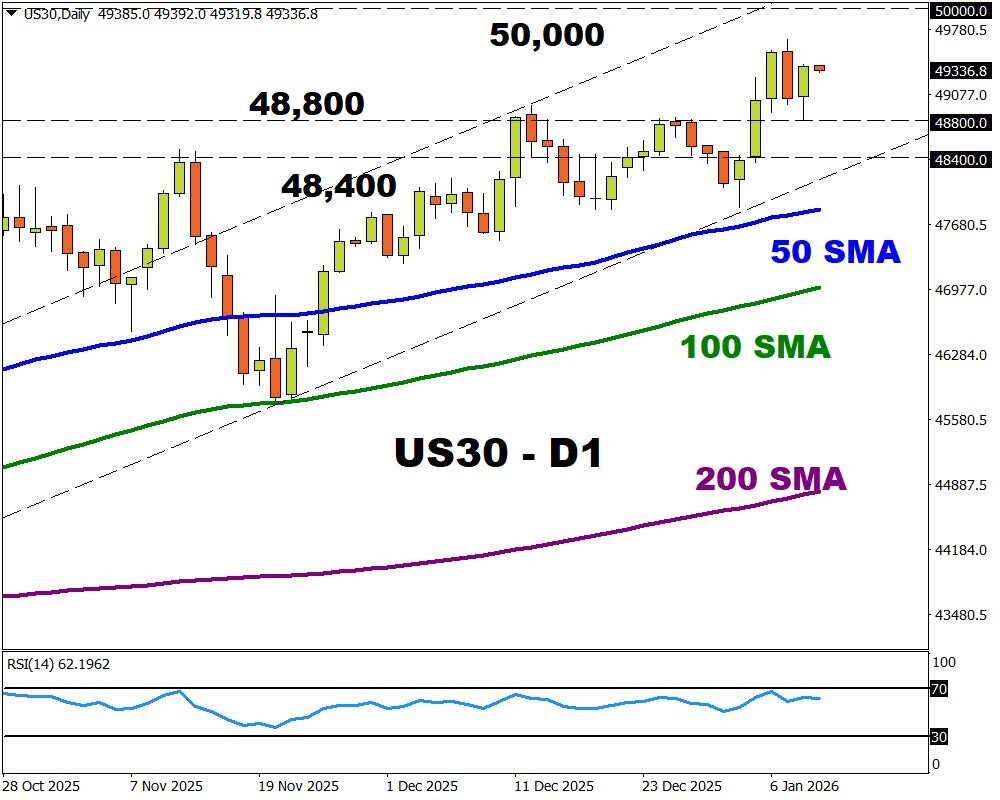
  • US30: Home Depot earnings, Fed speeches


Wednesday, 19th November

  • EUR: Eurozone CPI
  • JP225: Japan machinery orders, trade
  • ZAR: South Africa CPI, retail sales
  • GBP: UK CPI
  • NAS100: FOMC minutes, Nvidia earnings


Thursday, 20th November

  • CN50: China loan prime rates
  • EU50: Eurozone consumer confidence
  • ZAR: South Africa rate decision
  • US30: Fed speeches, Walmart earnings.


Friday, 21st November

  • CAD: Canada retail sales
  • EUR: Eurozone HCOB manufacturing PMI, ECB President Christine Lagarde speech
  • JPY: Japan CPI, S&P Global manufacturing PMI
  • GBP: UK S&P Global manufacturing PMI, retail sales
  • NAS100: US University of Michigan consumer sentiment, S&P Global manufacturing PMI, Fed speeches


FXTM’s NAS100 which tracks the benchmark Nasdaq100 index is almost 20% year-to-date.

But growing chatter around an AI bubble amid massive investments and circular business deals has sparked multiple selloffs.

Nvidia is slated to report quarterly results next Wednesday which could be a make-or-break moment for the AI rally.


Watch out for these 3 key factors:

1) Nvidia earnings

All eyes will be on Nvidia’s latest quarterly earnings after US markets close on Wednesday, November 19th.

For a company that remains at the heart of the A.I. hype, investors will be looking for another round of solid earnings that would justify its nearly 120% rebound from 2025 lows. Any fresh updates on Blackwell deliveries, exposure to China and guidance for Q4 will be in sharp focus.

Essentially, the bar remains very high for Nvidia with very little room for disappointment.

The AI chip giant expected to post earnings of $1.25 a share, and a rise in quarterly revenue to $55 billion – marking a 57% increase from a year ago.


 What does this mean for the NAS100?

Nvidia is the biggest constituent in the Nasdaq 100, accounting for roughly 14%.

  • Should Nvidia’s earnings satisfy investors’ lofty expectations and portray an encouraging business outlook, this could push the NAS100 higher.
  • If Nvidia’s earnings disappoint in the slightest, this could trigger a selloff in the NAS100.


2) Government reopening data dump

After a 43-day shutdown that began on October 1st, investors have been kept in the dark regarding the US economy.

It’s worth noting that the shutdown is expected to have cost the economy $15 billion a week with the Congressional Budget Office projecting it to lower real GDP growth in the current quarter by 1.5%.

Markets may be injected with heightened levels of volatility as the government resumes releasing economic figures as soon as next week.

Note: These reports include the September and October jobs report, among others. 

  • Should data flag weakness in the US economy, this could hit US equities before prices potentially rebound on Fed cut bets.
  • Stronger than expected data could boost US equities before they slip on cooling Fed cut expectations.


3) Technical forces

The NAS100 remains in a bullish channel on the daily charts but concerns around an AI bubble and easing Fed cut bets continue to fuel downside pressures.

  • Should the 50-day SMA prove reliable support, prices may rebound back toward 25700 and 26300.
  • Weakness below 24700 may trigger a selloff toward the 100-day SMA around 24000.


Forex-Time-LogoArticle by ForexTime


ForexTime Ltd (FXTM) is an award winning international online forex broker regulated by CySEC 185/12 www.forextime.com

USD/JPY Extends Gains as Japanese Government Advocates for Dovish Policy

By RoboForex Analytical Department

The USD/JPY pair advanced to 154.72 on Monday, trading near its highest levels since February, despite the release of Japanese economic data that surpassed forecasts.

Japan’s GDP contracted by 0.4% quarter-on-quarter in Q3 2025, a reversal from the 0.6% growth recorded in Q2. However, this outcome was better than the 0.6% decline anticipated by economists.

The yen’s weakness persists primarily due to Prime Minister Sanae Takaichi’s public call for the Bank of Japan (BoJ) to maintain its ultra-low interest rate policy. The government believes this accommodative stance is essential to underpin economic growth and support a gradual rise in inflation.

This puts the government at odds with the central bank. BoJ Governor Kazuo Ueda struck a more balanced tone, noting that consumption remains stable amid rising household incomes and a tight labour market. He observed that core inflation is steadily approaching the 2% target, a development that would justify an early policy tightening.

This creates a visible and rare public imbalance between the dovish government’s fiscal priorities and the central bank’s potential inclination towards monetary normalisation.

Technical Analysis: USD/JPY

H4 Chart:

On the H4 chart, USD/JPY completed a growth wave to 155.00 and a subsequent correction to 153.63. The pair is now forming a tight consolidation range around this support level. An upward breakout from this range is expected to initiate the next leg of the rally, targeting 155.15 as an initial objective. This bullish scenario is confirmed by the MACD indicator, whose signal line is positioned above zero and pointing firmly upwards, indicating sustained positive momentum.

H1 Chart:

On the H1 chart, the pair reached a local high at 155.00 and completed a corrective structure to 153.63. A fresh growth impulse to 154.66 has since been completed, forming a new compact consolidation range. An upward breakout from this range is anticipated, opening the path for a move towards a minimum target of 155.75. The Stochastic oscillator supports this outlook. Its signal line is above 50 and rising sharply towards 80, reflecting strong short-term bullish momentum.

Conclusion

USD/JPY continues to climb, driven by a fundamental divergence between a dovish Japanese government and the BoJ, which is cautiously laying the groundwork for a future rate hike. Technically, the structure remains firmly bullish. The completion of the recent correction suggests the pair is poised for further gains, with immediate targets at 155.15 and 155.75.


Disclaimer:

Any forecasts contained herein are based on the author’s particular opinion. This analysis may not be treated as trading advice. RoboForex bears no responsibility for trading results based on trading recommendations and reviews contained herein.

Investors moved to profit-taking, assessing the consequences of the official end of the US shutdown

By JustMarkets 

By Thursday’s close, the Dow Jones Index (US30) fell by 1.65%. The S&P 500 Index (US500) dropped 1.66%. The Nasdaq (US100) closed lower at 2.29%. The US stocks plunged as Fed rate expectations were reassessed and AI-sector stocks sold off. The probability of a Fed rate cut in December by 25 basis points, which just a month ago was estimated at around 95%, has now fallen to about 50%. Market participants reacted to a series of cautious comments from Fed officials, who highlighted persistent inflation risks and the limited availability of macro data due to the recent government shutdown. The reassessment of rate expectations reduced demand for growth stocks with high valuations, turning local profit-taking into a broad market decline affecting most sectors.

The Mexican peso (MXN) strengthened above 18.3 per dollar, trading near July 2024 highs. Support for the currency came from slowing inflation, gradual policy easing by the Bank of Mexico, and reduced demand for the dollar amid improved US news flow. Inflation in Mexico continued to decline: headline CPI in October was 3.57%, while core inflation fell just above 4%. Since the rate cut in Mexico was fully priced in, its direct impact on yields was limited. The main drivers were the repricing of risk premiums and renewed carry-trade flows.

European stock markets fell yesterday. Germany’s DAX (DE40) dropped 1.39%, France’s CAC 40 (FR40) closed down 0.11%, Spain’s IBEX 35 (ES35) fell by 0.23%, and the UK’s FTSE 100 (UK100) closed negative 1.05%. After a two-day rally, investors shifted to profit-taking while assessing the consequences of the official end of the US shutdown, which extended government funding only until the end of January. This supported a cautious overall mood, given upcoming releases of key macroeconomic data. Corporate reports also contributed to the decline. Siemens led losses, falling more than 9% after reporting lower Q4 profits despite raising its medium-term sales growth expectations.

WTI crude oil prices rose more than 2% on Friday, climbing to around $60 per barrel and breaking a two-week losing streak. Prices were supported by growing supply risks linked to upcoming US sanctions against Russia’s oil industry. Lukoil began large-scale staff cuts across its global oil trading divisions just days before sanctions took effect – one of the first visible consequences of measures set to begin November 21. Analysts note that nearly one-third of Russia’s seaborne oil exports could be stuck in tankers due to logistical restructuring and slower unloading. The situation is further complicated by India and China temporarily reducing purchases of Russian oil, increasing risks for supply chains.

The US natural gas prices (XNG/USD) rose more than 1%, reaching about $4.6 per MMBtu – the highest since December 2022. The increase was driven by strong export demand and prognosis of colder weather in early December. European buyers continue active imports of US gas in efforts to replace Russian supplies.

Asian markets mostly rose yesterday. Japan’s Nikkei 225 (JP225) gained 0.43%, China’s FTSE China A50 (CHA50) rose 1.04%, Hong Kong’s Hang Seng (HK50) climbed 0.56%, while Australia’s ASX 200 (AU200) closed down 0.52%.

Chinese data point to a slowing industry and weak investment despite stable overall activity. Industrial production slowed to a 14-month low, explained by extended holiday effects and pressure from trade disputes with the US. Retail sales grew 2.9% year-on-year – also a 14-month low, but above expectations of 2.7% thanks to consumption stimulus measures and holiday spending. The unemployment rate fell to a four-month low of 5.1%.
On Friday, the New Zealand dollar rose to $0.569, posting weekly gains on encouraging manufacturing data. In October, manufacturing expanded for the fourth consecutive month, supported by rising new orders and stronger domestic demand. However, further upside potential for the NZD remains limited. Markets expect the Reserve Bank of New Zealand to ease monetary policy at its end-of-month meeting, given weak employment data and moderate inflation prospects. A 25 bps rate cut is already priced in.

S&P 500 (US500) 6,737.49 −113.43 (−1.66%)

Dow Jones (US30) 47,457.22 −797.60 (−1.65%)

DAX (DE40) 24,041.62 −339.84 (−1.39%)

FTSE 100 (UK100) 9,807.68 −103.74 (−1.05%)

USD Index 99.16 −0.33% (−0.34%)

News feed for: 2025.11.14

  • China Industrial Production (m/m) at 04:00 (GMT+2);
  • China Retail Sales (m/m) at 04:00 (GMT+2);
  • China Unemployment Rate (m/m) at 04:00 (GMT+2);
  • Eurozone GDP (q/q) at 12:00 (GMT+2);
  • Eurozone Trade Balance (m/m) at 12:00 (GMT+2);
  • US Natural Gas Storage (w/w) at 17:30 (GMT+2).

By JustMarkets


This article reflects a personal opinion and should not be interpreted as an investment advice, and/or offer, and/or a persistent request for carrying out financial transactions, and/or a guarantee, and/or a forecast of future events.
GBP/USD Mired at Seven-Month Lows Amid Political and Fiscal Concerns

By RoboForex Analytical Department

The GBP/USD pair declined to 1.3149 on Friday, hovering near a seven-month low. The sell-off was triggered by the government’s abrupt abandonment of plans to raise income tax rates ahead of the Autumn Statement on 26 November.

According to the Financial Times, Prime Minister Keir Starmer and Chancellor Rachel Reeves have scrapped the previously debated increases to basic and higher tax rates. Instead, they will seek more indirect measures to address a budget deficit estimated at £30 billion.

This policy reversal has sparked significant market anxiety over the new cabinet’s fiscal discipline and long-term strategy, leading to a broad sell-off in sterling-denominated assets and exerting upward pressure on government bond yields.

Moreover, recent macroeconomic data have been weak, further compounding the political unease. Third-quarter economic growth was muted, with monthly GDP contracting in September. This follows earlier reports showing unemployment rising to a four-year high and wage growth slowing to its weakest pace since early 2022. Consequently, market expectations for a Bank of England rate cut in December have intensified.

Technical Analysis: GBP/USD

H4 Chart:

On the H4 chart, GBP/USD has completed a corrective wave at 1.3215. A decline towards 1.3062 is anticipated, likely to be followed by a minor rebound to 1.3131. This level is expected to form resistance within a new consolidation range. A subsequent downward breakout from this range would signal a resumption of the primary downtrend, opening the path towards 1.2985, with a further potential decline to at least 1.2915. This bearish scenario is supported by the MACD indicator. Its signal line, while above zero, has diverged bearishly from its histogram, suggesting the recent corrective bounce has ended and a new downward impulse is forming.

H1 Chart:

On the H1 chart, the pair has formed a consolidation range around 1.3153. We expect an initial decline to 1.3090, followed by a technical retracement to retest the 1.3153 level from below. This retest is likely to present a selling opportunity before the downtrend extends towards 1.3013. The Stochastic oscillator aligns with this view. Its signal line is deep in oversold territory at the 20 level, which, rather than suggesting a rebound, typically indicates sustained downward momentum in a strong trend.

Conclusion

The pound remains under heavy pressure, caught between political missteps that undermine fiscal credibility and a deteriorating economic backdrop that points to monetary easing. Technically, the pair maintains a clear bearish structure. Any near-term stability is likely to prove temporary, with the path of least resistance pointing towards a test of support at 1.2985 and potentially 1.2915.

Disclaimer:

Any forecasts contained herein are based on the author’s particular opinion. This analysis may not be treated as trading advice. RoboForex bears no responsibility for trading results based on trading recommendations and reviews contained herein.

EUR/USD Holds Steady as US Government Shutdown Ends

By RoboForex Analytical Department

The EUR/USD pair is trading flat on Thursday, hovering around 1.1587, following the House of Representatives’ approval of a short-term budget bill that ends the longest US government shutdown in history.

The bill now awaits President Donald Trump’s signature – a formality that will allow shuttered government agencies to resume operations within days.

While the resolution clears the way for the publication of a backlog of delayed macroeconomic data, the White House has cautioned that key October reports on employment and inflation may still be withheld from the public.

Market expectations for a December interest rate cut by the Federal Reserve have moderated but persist. The probability of a 25-basis-point cut has eased to 60%, down from 67% the day before.

This cautious sentiment was fuelled earlier in the week by ADP data, which showed that the US private sector shed an average of 11,250 jobs per week throughout October, amplifying concerns over a cooling labour market.

Technical Analysis: EUR/USD

H4 Chart:

On the H4 chart, EUR/USD has completed a corrective wave to 1.1605 and has formed a tight consolidation range below this resistance level. We anticipate a downward breakout from this range, triggering a decline towards an initial target of 1.1505. A breach of this level would open the path for a further extension of the downtrend to 1.1405. This bearish outlook is technically supported by the MACD indicator. Its signal line is above zero but has diverged from its histogram and is pointing decisively downward, suggesting the recent upward correction has run its course and bearish momentum is reasserting itself.

H1 Chart:

On the H1 chart, the pair completed a downward impulse to 1.1563, followed by a corrective bounce to 1.1597. These two levels define the upper and lower boundaries of a new consolidation range. A downward breakout is expected, leading to a resumption of the sell-off towards initial targets at 1.1538 and 1.1530. The Stochastic oscillator corroborates this view. Its signal line has turned down from below the 80 level and is falling steadily towards 20, indicating that short-term downward momentum is building.

Conclusion

While the end of the US government shutdown removes a key market overhang, the EUR/USD pair remains capped by underlying concerns about the US economy and a still-dovish Fed outlook. Technically, the structure points to a bearish resolution. The completion of the correction near 1.1605 suggests the pair is poised for a fresh leg lower, with key downside targets at 1.1505 and 1.1405.


Disclaimer:

Any forecasts contained herein are based on the author’s particular opinion. This analysis may not be treated as trading advice. RoboForex bears no responsibility for trading results based on trading recommendations and reviews contained herein.

Oil prices fell sharply following OPEC’s revised expectations. The US government shutdown has ended

By JustMarkets 

By Wednesday’s close, the Dow Jones Index (US30) rose 0.68% and reached a historic high. The S&P 500 Index (US500) gained 0.03%. The Nasdaq (US100) closed lower at 0.26%. Market optimism strengthened thanks to expectations of a swift end to the prolonged government shutdown. Late yesterday, President Donald Trump signed the funding bill, officially ending the longest federal government shutdown in US history and allowing agencies to resume operations.
In the tech sector, AMD was the growth driver, with prognoses exceeding analysts’ expectations. The company’s shares jumped 9%, supporting other industry players – Broadcom (+0.9%) and Qualcomm (+1.6%). However, overall growth was limited by weakness among large-cap companies, where investors continued to take profits, restraining Nasdaq’s performance.

European stock markets rose yesterday. Germany’s DAX (DE40) gained 1.22%, France’s CAC 40 (FR40) closed up 1.04%, Spain’s IBEX 35 (ES35) rose by 1.39%, and the UK’s FTSE 100 (UK100) closed positive 0.12%. The FTSE 100 ended trading with a slight gain, hitting a record high, but its performance lagged most other European markets due to declines in oil and gas stocks. Political uncertainty also weighed on sentiment after reports that Health Secretary Wes Streeting allegedly seeks to oust Prime Minister Keir Starmer.

On Wednesday, WTI crude oil prices fell more than 4%, hitting a three-week low of $58 per barrel. Pressure came from OPEC’s revised projections, which now see a supply surplus of about 500,000 barrels per day in Q3, compared with the previously expected deficit. Investors now await the US Energy Information Administration’s monthly report and the updated expectations from the International Energy Agency, due today.

On Thursday, silver rose above $54 per ounce, approaching the record high reached last month. The price increase was driven by stronger expectations that the Federal Reserve will continue its rate-cutting cycle this year. Additional support came from optimism around the imminent end of the US government shutdown, which will allow the release of delayed economic data and clarify monetary policy prospects.

Asian markets mostly rose yesterday. Japan’s Nikkei 225 (JP225) gained 0.43%, China’s FTSE China A50 (CHA50) rose by 0.60%, Hong Kong’s Hang Seng (HK50) climbed 0.85%, while Australia’s ASX 200 (AU200) closed down 0.22%.

On Thursday, the offshore yuan rose above 7.10 per dollar, reaching a two-week high amid expectations of key macroeconomic data due Friday. Investors remain cautious, assessing China’s economic outlook amid signs of slowing domestic demand and uneven recovery.

On Thursday, the Australian dollar strengthened to around $0.655, reaching a two-week high after strong employment data reduced the likelihood of imminent monetary easing. According to the Australian Bureau of Statistics, employment rose by 42,200 in October, more than double analysts’ prognoses. The unemployment rate fell to 4.3%, below expectations of 4.5%. These figures reinforced the view that the labor market remains resilient and that the Reserve Bank of Australia (RBA) has no immediate reason for further rate cuts after three reductions earlier this year. Expectations of a rate cut in May 2026 fell to 32%, compared with about 70% before the data release.

S&P 500 (US500) 6,848.38 +1.77 (+0.03%)

Dow Jones (US30) 48,255.00 +327.04 (+0.68%)

DAX (DE40) 24,381.46 +293.40 (+1.22%)

FTSE 100 (UK100) 9,911.42 +11.82 (+0.12%)

USD Index 99.50 +0.06% (+0.06%)

News feed for: 2025.11.13

  • Japan Producer Price Index (m/m) at 01:50 (GMT+2);
  • Australia Unemployment Rate (m/m) at 02:30 (GMT+2);
  • UK GDP (m/m) at 09:00 (GMT+2);
  • UK Industrial Production (m/m) at 09:00 (GMT+2);
  • Eurozone Industrial Production (m/m) at 12:00 (GMT+2);
  • US Crude Oil Reserves (w/w) at 19:00 (GMT+2).

By JustMarkets


This article reflects a personal opinion and should not be interpreted as an investment advice, and/or offer, and/or a persistent request for carrying out financial transactions, and/or a guarantee, and/or a forecast of future events.
Investors began actively buying “blue chips.” WTI crude oil prices rose to $61 per barrel

By JustMarkets

By Tuesday’s close, the Dow Jones Index (US30) gained 1.18%. The S&P 500 Index (US500) rose by 0.21%. The Nasdaq (US100) closed lower at 0.25%. Investors shifted away from technology stocks into “blue chips” and cyclical sectors amid expectations that the House of Representatives will approve the funding agreement and the government will reopen as early as Wednesday. Progress on the bill in the Senate improved sentiment in economy-sensitive industries. Investors hope that reopening the government will allow delayed macroeconomic data to be released and support short-term growth prospects.

European stock markets rose yesterday. Germany’s DAX (DE40) gained 0.53%, France’s CAC 40 (FR40) closed up 1.25%, Spain’s IBEX 35 (ES35) rose by 1.27%, and the UK’s FTSE 100 (UK100) closed positive 1.15%. The ZEW Economic Sentiment Index for the Eurozone in November 2025 climbed to 25 points, above market expectations (23.5 points), indicating cautious optimism among analysts. The assessment of the current economic situation also improved, rising by 4.5 points, but remained negative at 27.3. This means analysts still view the Eurozone economy as weak, though less bleak than a month ago.

WTI crude oil prices rose to $61 per barrel, extending gains for the third consecutive session. Support came from expectations of a swift end to the record-long 42-day US government shutdown: the Senate approved temporary funding, and the House will review the bill on Wednesday. Optimism boosted interest in risk assets and commodities overall. On the supply side, limiting factors emerged. The US sanctions against major Russian oil companies have begun to affect logistics: seaborne shipments of Russian oil have declined for the third week in a row. This creates a risk of reduced supply in the global market.

The US natural gas prices (XNG/USD) rose by 5% to $4.54 per MMBtu – the highest since December 2022. The increase was driven by bets on a colder December and higher electricity demand, despite temporarily mild weather expected next week. In November, deliveries to the eight largest US LNG plants averaged 17.8 billion cubic feet per day, above October’s record of 16.7 billion. Meanwhile, Europe is increasing imports from the U.S. to reduce dependence on Russian gas.

Asian markets mostly declined yesterday. Japan’s Nikkei 225 (JP225) fell by 0.14%, China’s FTSE China A50 (CHA50) dropped 0.56%, Hong Kong’s Hang Seng (HK50) added 0.18%, and Australia’s ASX 200 (AU200) closed down 0.19%. At the end of the week, final Q3 GDP data for Hong Kong will be released, with preliminary estimates signaling moderate improvement in economic dynamics.
Indonesia’s central bank expects the economy to grow about 5.33% in 2026. According to the Bank Indonesia Governor, growth could reach the government’s target of 5.4% if budget spending accelerates and fiscal stimulus is more actively deployed. The inflation prognosis for 2026 remains moderate at around 2.62%. The rupiah is expected to average near 16,430 per dollar.

S&P 500 (US500) 6,846.61 +14.18 (+0.21%)

Dow Jones (US30) 47,927.96 +559.33 (+1.18%)

DAX (DE40) 24,088.06 +128.07 (+0.53%)

FTSE 100 (UK100) 9,899.60 +112.45 (+1.15%)

USD Index 99.48 -0.11% (-0.11%)


By JustMarkets


This article reflects a personal opinion and should not be interpreted as an investment advice, and/or offer, and/or a persistent request for carrying out financial transactions, and/or a guarantee, and/or a forecast of future events.
Pound Succumbs to Pressure from Weak Labour Data

By RoboForex Analytical Department

The GBP/USD pair snapped a four-day winning streak, declining for a second day to trade around 1.3135. The sell-off was triggered by UK labour market data revealing a rise in unemployment and a deceleration in annual wage growth. These figures have bolstered market expectations that the Bank of England (BoE) could initiate interest rate cuts as early as December.

The shifting sentiment was reflected in government bonds, with the two-year gilt yield falling 6 basis points to 3.74%, its lowest level since August 2024.

Appetite for risk was mixed across asset classes. European stock indices managed gains, while S&P 500 futures edged down approximately 0.2%.

In currency markets, traders are increasingly pricing in a more dovish path for BoE policy. Current pricing implies roughly 21 basis points of cuts by December, with a total of up to 65 basis points of easing projected by the end of 2026. Economists suggest that, given the softening labour market and anticipated fiscal tightening, the BoE’s base rate could fall to 3.00% from the current 4.00%.

Technical Analysis: GBP/USD

H4 Chart:

On the H4 chart, GBP/USD broke upwards from a consolidation range around 1.3100, completing a corrective wave to 1.3185. We now anticipate a decline back towards the 1.3100 support level. A brief rebound to 1.3150 may follow, establishing a new consolidation range. A subsequent downward breakout from this range would signal a resumption of the broader downtrend, opening the path towards 1.3000, with a further potential decline to at least 1.2915. This bearish scenario is supported by the MACD indicator. Its signal line is above zero but has diverged from its histogram, suggesting the initial upward correction is exhausted and a new decline is beginning.

H1 Chart:

On the H1 chart, the pair completed an upward correction to 1.3188 after breaking from a range at 1.3100. A new downward wave is now developing, initially targeting 1.3108. Following this, a technical retracement to test 1.3150 from below is expected. Once this correction is complete, the downtrend is projected to extend towards 1.3050. The Stochastic oscillator confirms this outlook. Its signal line is at the 20 level, indicating oversold conditions but also supporting the view that downward momentum is currently dominant.

Conclusion

The pound is weakening as soft labour market data fuels expectations of imminent BoE monetary easing. Technically, the pair appears to have completed a corrective bounce and is now poised to resume its primary downtrend. The immediate focus is on the 1.3100 support; a sustained break below this level would confirm a move towards 1.3000 and potentially lower.


Disclaimer:

Any forecasts contained herein are based on the author’s particular opinion. This analysis may not be treated as trading advice. RoboForex bears no responsibility for trading results based on trading recommendations and reviews contained herein.

USD/JPY Climbs to Fresh Nine-Month High

By RoboForex Analytical Department

The USD/JPY pair advanced to 154.36 on Tuesday, edging closer to a new ten-month peak. The rally was driven by growing market optimism that the protracted US government shutdown may soon conclude, dampening demand for traditional safe-haven assets like the Japanese yen.

In Japan, Economic Recovery Minister Minoru Kiuchi highlighted the domestic challenges posed by the currency’s weakness, warning that a soft yen risks amplifying inflationary pressures by increasing the cost of imports. He called for vigilant monitoring of the situation.

Concurrently, a draft of the government’s new economic stimulus plan—scheduled for approval on 21st November—reveals that Prime Minister Sanae Takaichi’s cabinet will urge the Bank of Japan to prioritise economic growth alongside price stability. The programme is also set to feature tax breaks and investment incentives targeting 17 key industries.

This comes as the Bank of Japan’s October report reaffirmed its close watch on wage growth to determine the timing of its next potential rate hike. In a positive economic sign, the country registered a record current account surplus of ¥4.5 trillion in September, bolstered by robust export growth.

Technical Analysis: USD/JPY

H4 Chart:

On the H4 chart, USD/JPY has formed a consolidation range around 153.80. We anticipate an upward expansion of this range towards 154.80. Following this, a pullback to retest the 153.80 level from above is expected. This would likely set the stage for the next leg of the uptrend, targeting 155.70. This bullish scenario is technically confirmed by the MACD indicator, whose signal line is firmly above zero and pointing upwards, indicating sustained positive momentum.

H1 Chart:

On the H1 chart, the pair has completed an initial growth impulse to 154.48. A near-term correction towards 153.65 is now expected. Once this corrective phase concludes, we anticipate the resumption of the broader upward trend, with the next primary target at 155.70. The Stochastic oscillator corroborates this view. Its signal line is below 50 and trending downwards towards 20, suggesting that short-term downward pressure (the expected correction) is building before the next potential upward wave.

Conclusion

USD/JPY continues its ascent, propelled by renewed risk appetite and domestic Japanese policy that implicitly favours a weaker yen. While minor corrective dips are anticipated in the short term, the overall technical and fundamental backdrop remains bullish. The path of least resistance points towards a test of 155.70, provided the pair maintains its footing above key support near 153.80.


Disclaimer:

Any forecasts contained herein are based on the author’s particular opinion. This analysis may not be treated as trading advice. RoboForex bears no responsibility for trading results based on trading recommendations and reviews contained herein.

The US politicians are close to a funding agreement, increasing the chances of ending the government shutdown this week

By JustMarkets 

By Friday’s close, the Dow Jones Index (US30) rose by 0.16% (weekly -1.49%). The S&P 500 Index (US500) gained 0.13% (weekly -2.23%). The tech-heavy Nasdaq (US100) closed lower at 0.28% (-4.04%). Sentiment was supported by hopes of progress in resolving the government shutdown. The latest inflation expectations data came out mixed: one-year inflation expectations rose from 4.6% to 4.7%, while long-term expectations fell from 3.9% to 3.6%. Friday’s top gainers included Exxon Mobil, T-Mobile, and Coca-Cola (+2% and above), while the tech sector, including Tesla (-4%), Meta, and Oracle (-2%), continued to face pressure from concerns over inflated valuations of AI companies.

The Canadian dollar strengthened to 1.4 USD, rebounding from a seven-month low of 1.41 after strong labor market data. Unemployment fell to 6.9%, employment increased, and wage growth accelerated to 4% – the highest in eight months and above current inflation. This reinforced expectations that the Bank of Canada has ended its rate-cutting cycle, as the economy remains resilient and core inflation stays above target.

In October, inflation in Mexico slowed as expected. Annual inflation eased to 3.57% in October (from 3.76% in September), the first decline in three months and in line with the prognosis of 3.56%. Core inflation stood at 4.28% – the highest since April 2024 and close to market expectations (4.27%).
European stock markets fell on Friday. Germany’s DAX (DE40) dropped 0.69% (weekly -1.75%), France’s CAC 40 (FR40) closed down 0.18% (weekly -2.08%), Spain’s IBEX 35 (ES35) fell by 1.34% (weekly -0.82%), and the UK’s FTSE 100 (UK100) closed negative 0.55% (weekly -0.36%). European equities opened in the “green zone” on Monday amid improved risk appetite. Optimism grew after the US Senate approved an initial funding bill, raising hopes for a swift end to the record-long government shutdown.

On Monday, silver rose above $49 per ounce, hitting a three-week high amid dollar weakness and growing concerns about the US economy. The University of Michigan Consumer Sentiment Index fell to 50.3 – the second-worst reading in history, against the backdrop of the prolonged government shutdown. The market remains divided ahead of the Fed’s December decision, with the probability of a 25 bps rate cut estimated at around 67%.

Asian markets traded mixed last week. Japan’s Nikkei 225 (JP225) fell by 2.62%, China’s FTSE China A50 (CHA50) rose by 1.18%, Hong Kong’s Hang Seng (HK50) gained 0.93%, while Australia’s ASX 200 (AU200) posted a five-day decline of 1.00%.

In October 2025, consumer prices in China rose 0.2% year-over-year. This was the first increase in consumer inflation since June and the fastest pace since January. Core inflation, excluding food and energy, rose 1.2% year-over-year, the highest in 20 months. The offshore yuan remained around 7.12 per dollar, trading sideways.

The Australian dollar climbed above $0.65 after comments from RBA Deputy Governor Andrew Hauser on the need to maintain tight policy to curb inflation. He noted that GDP growth was the strongest since the early 1980s and demand remains slightly above potential, limiting room for easing. The RBA previously kept rates at 3.6%, and markets still expect a possible cut next year, though some believe the easing cycle may be over. Additional support for the AUD came from improved global sentiment and easing trade tensions between the US and China.

The Japanese government plans to finalize its first major economic package on November 21. The measures focus on supporting weak recovery, tax incentives for 17 industries, and maintaining low interest rates: the cabinet will urge the Bank of Japan to target strong economic growth with stable prices. The package includes steps to ease the burden of high living costs, stimulate investment, crisis management, and strengthen defense. Authorities pledged close coordination with the Bank of Japan to prevent a return to deflation.

S&P 500 (US500) 6,728.80 +8.48 (+0.13%)

Dow Jones (US30) 46,987.10 +74.80 (+0.16%)

DAX (DE40) 23,569.96 −164.06 (−0.69%)

FTSE 100 (UK100) 9,682.57 −53.21 (−0.55%)

USD Index 99.56 −0.18% (−0.18%)

By JustMarkets


This article reflects a personal opinion and should not be interpreted as an investment advice, and/or offer, and/or a persistent request for carrying out financial transactions, and/or a guarantee, and/or a forecast of future events.