A brief history of the mortgage, from its roots in ancient Rome to the English ‘dead pledge’ and its rebirth in America

By Michael J. Highfield, Mississippi State University 

The average interest rate for a new U.S. 30-year fixed-rate mortgage topped 7% in late October 2022 for the first time in more than two decades. It’s a sharp increase from one year earlier, when lenders were charging homebuyers only 3.09% for the same kind of loan.

Several factors, including inflation rates and the general economic outlook, influence mortgage rates. A primary driver of the ongoing upward spiral is the Federal Reserve’s series of interest rate hikes intended to tame inflation. Its decision to increase the benchmark rate by 0.75 percentage points on Nov. 2, 2022, to as much as 4% will propel the cost of mortgage borrowing even higher.

Even if you have had mortgage debt for years, you might be unfamiliar with the history of these loans – a subject I cover in my mortgage financing course for undergraduate business students at Mississippi State University.

The term dates back to medieval England. But the roots of these legal contracts, in which land is pledged for a debt and will become the property of the lender if the loan is not repaid, go back thousands of years.

Ancient roots

Historians trace the origins of mortgage contracts to the reign of King Artaxerxes of Persia, who ruled modern-day Iran in the fifth century B.C. The Roman Empire formalized and documented the legal process of pledging collateral for a loan.

Often using the forum and temples as their base of operations, mensarii, which is derived from the word mensa or “bank” in Latin, would set up loans and charge borrowers interest. These government-appointed public bankers required the borrower to put up collateral, whether real estate or personal property, and their agreement regarding the use of the collateral would be handled in one of three ways.

First, the Fiducia, Latin for “trust” or “confidence,” required the transfer of both ownership and possession to lenders until the debt was repaid in full. Ironically, this arrangement involved no trust at all.

Second, the Pignus, Latin for “pawn,” allowed borrowers to retain ownership while sacrificing possession and use until they repaid their debts.

Finally, the Hypotheca, Latin for “pledge,” let borrowers retain both ownership and possession while repaying debts.

The living-versus-dead pledge

Emperor Claudius brought Roman law and customs to Britain in A.D. 43. Over the next four centuries of Roman rule and the subsequent 600 years known as the Dark Ages, the British adopted another Latin term for a pledge of security or collateral for loans: Vadium.

If given as collateral for a loan, real estate could be offered as “Vivum Vadium.” The literal translation of this term is “living pledge.” Land would be temporarily pledged to the lender who used it to generate income to pay off the debt. Once the lender had collected enough income to cover the debt and some interest, the land would revert back to the borrower.

With the alternative, the “Mortuum Vadium” or “dead pledge,” land was pledged to the lender until the borrower could fully repay the debt. It was, essentially, an interest-only loan with full principal payment from the borrower required at a future date. When the lender demanded repayment, the borrower had to pay off the loan or lose the land.

Lenders would keep proceeds from the land, be it income from farming, selling timber or renting the property for housing. In effect, the land was dead to the debtor during the term of the loan because it provided no benefit to the borrower.

Following William the Conqueror’s victory at the Battle of Hastings in 1066, the English language was heavily influenced by Norman French – William’s language.

That is how the Latin term “Mortuum Vadium” morphed into “Mort Gage,” Norman French for “dead” and “pledge.” “Mortgage,” a mashup of the two words, then entered the English vocabulary.

Establishing rights of borrowers

Unlike today’s mortgages, which are usually due within 15 or 30 years, English loans in the 11th-16th centuries were unpredictable. Lenders could demand repayment at any time. If borrowers couldn’t comply, lenders could seek a court order, and the land would be forfeited by the borrower to the lender.

Unhappy borrowers could petition the king regarding their predicament. He could refer the case to the lord chancellor, who could rule as he saw fit.

Sir Francis Bacon, England’s lord chancellor from 1618 to 1621, established the Equitable Right of Redemption.

This new right allowed borrowers to pay off debts, even after default.

The official end of the period to redeem the property was called foreclosure, which is derived from an Old French word that means “to shut out.” Today, foreclosure is a legal process in which lenders to take possession of property used as collateral for a loan.

Early US housing history

The English colonization of what’s now the United States didn’t immediately transplant mortgages across the pond.

But eventually, U.S. financial institutions were offering mortgages.

Before 1930, they were small – generally amounting to at most half of a home’s market value.

These loans were generally short-term, maturing in under 10 years, with payments due only twice a year. Borrowers either paid nothing toward the principal at all or made a few such payments before maturity.

Borrowers would have to refinance loans if they couldn’t pay them off.

Rescuing the housing market

Once America fell into the Great Depression, the banking system collapsed.

With most homeowners unable to pay off or refinance their mortgages, the housing market crumbled. The number of foreclosures grew to over 1,000 per day by 1933, and housing prices fell precipitously.

The federal government responded by establishing new agencies to stabilize the housing market.

They included the Federal Housing Administration. It provides mortgage insurance – borrowers pay a small fee to protect lenders in the case of default.

Another new agency, the Home Owners’ Loan Corp., established in 1933, bought defaulted short-term, semiannual, interest-only mortgages and transformed them into new long-term loans lasting 15 years.

Payments were monthly and self-amortizing – covering both principal and interest. They were also fixed-rate, remaining steady for the life of the mortgage. Initially they skewed more heavily toward interest and later defrayed more principal. The corporation made new loans for three years, tending to them until it closed in 1951. It pioneered long-term mortgages in the U.S.

In 1938 Congress established the Federal National Mortgage Association, better known as Fannie Mae. This government-sponsored enterprise made fixed-rate long-term mortgage loans viable through a process called securitization – selling debt to investors and using the proceeds to purchase these long-term mortgage loans from banks. This process reduced risks for banks and encouraged long-term mortgage lending.

Fixed- versus adjustable-rate mortgages

After World War II, Congress authorized the Federal Housing Administration to insure 30-year loans on new construction and, a few years later, purchases of existing homes. But then, the credit crunch of 1966 and the years of high inflation that followed made adjustable-rate mortgages more popular.

Known as ARMs, these mortgages have stable rates for only a few years. Typically, the initial rate is significantly lower than it would be for 15- or 30-year fixed-rate mortgages. Once that initial period ends, interest rates on ARMs get adjusted up or down annually – along with monthly payments to lenders.

Unlike the rest of the world, where ARMs prevail, Americans still prefer the 30-year fixed-rate mortgage.

About 61% of American homeowners have mortgages today – with fixed rates the dominant type.

But as interest rates rise, demand for ARMs is growing again. If the Federal Reserve fails to slow inflation and interest rates continue to climb, unfortunately for some ARM borrowers, the term “dead pledge” may live up to its name.The Conversation

About the Author:

Michael J. Highfield, Professor of Finance and Warren Chair of Real Estate Finance, Mississippi State University

This article is republished from The Conversation under a Creative Commons license. Read the original article.

Murrey Math Lines 07.11.2022 (EURUSD, GBPUSD)

Article By RoboForex.com

EURUSD, “Euro vs US Dollar”

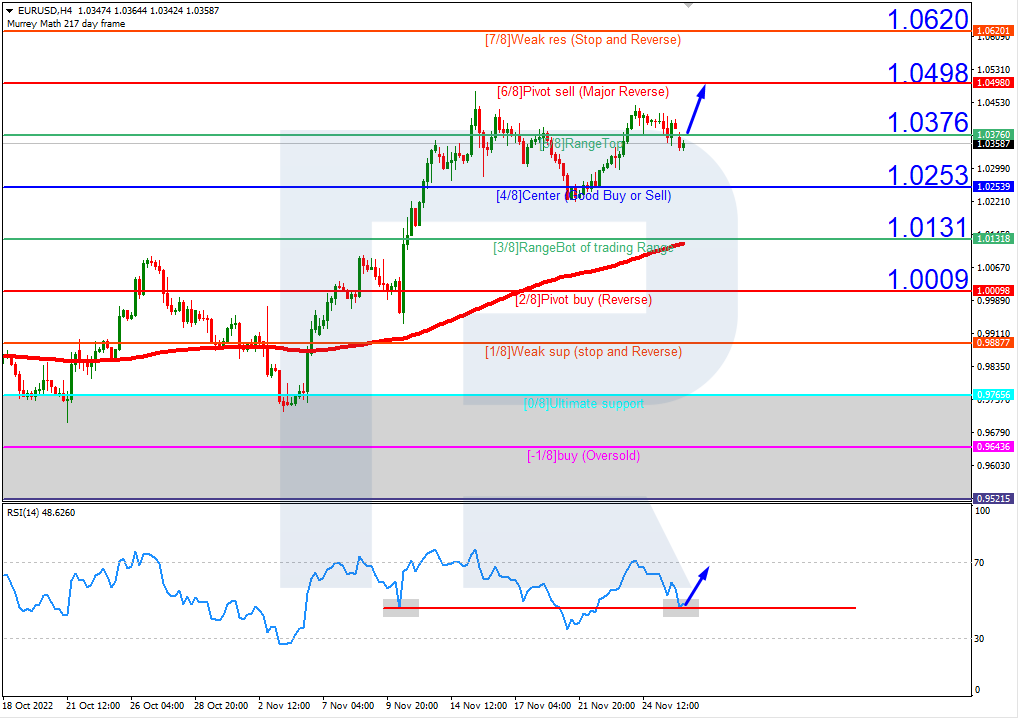
On H4, the quotes have broken through the 200-day Moving Average and are going above it, which signifies possible development of an uptrend. However, the RSI is nearing the overbought area. As a result, we should expect a test of 2/8 (1.0009), a bounce off it, and falling to the support level of 0/8 (0.9765). The scenario can be cancelled by an upward breakaway of the resistance level of 2/8 (1.0009). This may lead to further growth of the pair to 3/8 (1.0131).

EURUSDH4
Risk Warning: the result of previous trading operations do not guarantee the same results in the future

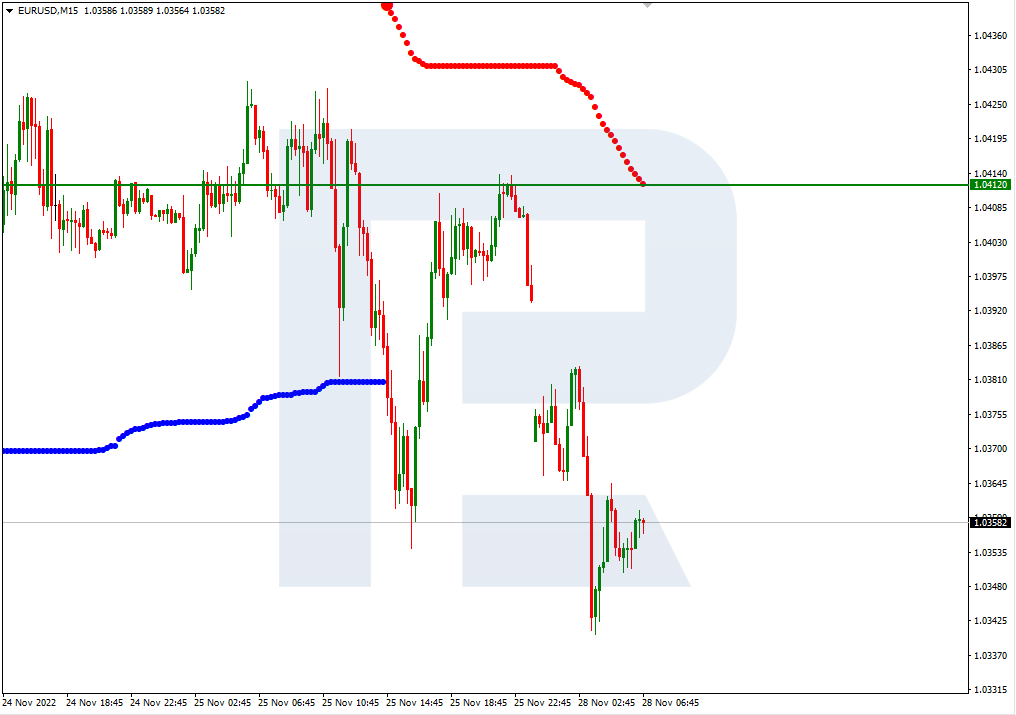
On M15, an additional signal confirming the decline will be a breakaway of the lower border of VoltyChannel.

EURUSD_M15
Risk Warning: the result of previous trading operations do not guarantee the same results in the future

GBPUSD, “Great Britain Pound vs US Dollar”

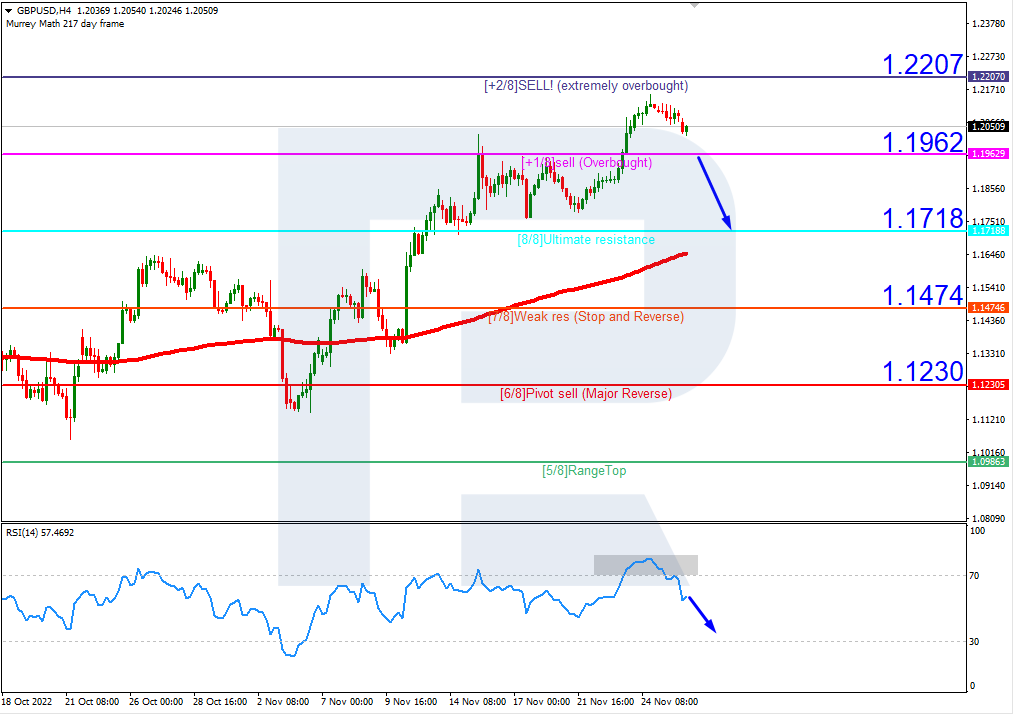
On H4, the quotes have broken through the 200-day Moving Average and are going below it, which signifies possible development of a downtrend. The RSI is testing the resistance line. Currently, we should expect a downward breakaway of the support level of 6/8 (1.1230) and falling to 5/8 (0.0986). The scenario can be cancelled by an upward breakaway of the resistance level of 7/8 (1.1474). In this case, the pair may reach 8/8 (1.1718).

GBPUSD_H4
Risk Warning: the result of previous trading operations do not guarantee the same results in the future

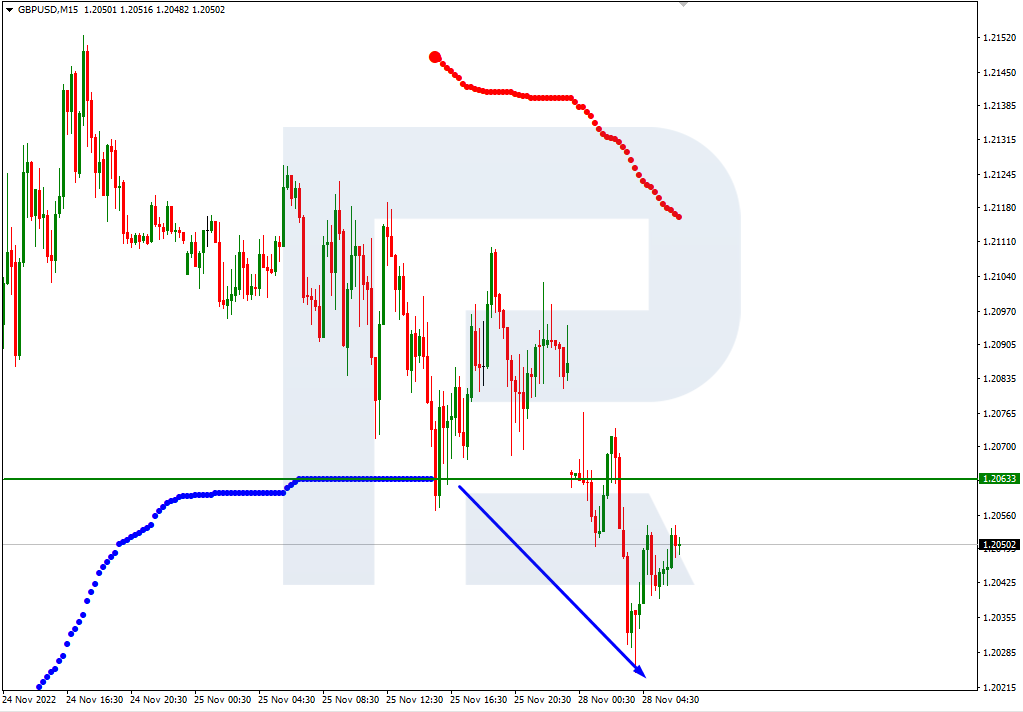
On M15, a breakaway of the lower line of VoltyChannel will increase the probability of price falling to 5/8 (0.0986) on H4.

GBPUSD_M15
Risk Warning: the result of previous trading operations do not guarantee the same results in the future

Article By RoboForex.com

Attention!
Forecasts presented in this section only reflect the author’s private opinion and should not be considered as guidance for trading. RoboForex LP bears no responsibility for trading results based on trading recommendations described in these analytical reviews.

The cryptocurrency market digest (BTC, EUROC, KLAY). Overview for 07.11.2022

Article By RoboForex.com

The BTC is correcting after preceding growth, on Monday balancing near 20,723 USD.

Earlier the BTC rose to 21,258 USD. The rally – and for the crypto that had long been lingering to a narrow range this was a real rally – was based on rather good labour market statistics from the US.

On Friday, the US presented fresh reports on this sector; investors reacted positively, the market started rising and dragged the crypto behind.

What is next? The BTC is now likely to consolidate between 20,000-21,000 USD waiting for the Congress elections and the US inflation statistics (due on 10 November).

On Monday, the capitalisation of the crypto market is 1.028 trillion USD. The BTC takes up 38.9%, the ETH – 18.7%.

NFTs are in demand again

According to DappRadar, the popularity of the NFT market is increasing again, regardless of the BTC stagnation. Over a month, the number of unique investors in NFTs grew by 18%, reaching 1.11 million investors in October.

Circle launches EUR-bound stablecoin

Circle is launching the EUROC stablecoin, based on Solana and bound to the EUR. Several internetwork bridges are expected to be launched by 2023 in order to increase the popularity of the token.

KLAY quotes dropped by 18.3%

The Klayth (KLAY) coin became the most losing last week. It lost more than 18.3% of the price, and the capitalisation of the project dropped to 702.2 million USD. Sales brought the token to the 62th line of the rating of the most liquid cryptocurrencies. Most probably, this was a technical correction upon sky-rocketing earlier.

Article By RoboForex.com

Attention!
Forecasts presented in this section only reflect the author’s private opinion and should not be considered as guidance for trading. RoboForex LP bears no responsibility for trading results based on trading recommendations described in these analytical reviews.

The Analytical Overview of the Main Currency Pairs on 2022.11.07

By JustMarkets

The EUR/USD currency pair

Technical indicators of the currency pair:
  • Prev Open: 0.9748
  • Prev Close: 0.9957
  • % chg. over the last day: +2.14 %

The US labor market data on Friday showed that Nonfarm payrolls added 261,000 jobs last month against expectations of 197,000, but the overall unemployment rate jumped from 3.5% to 3.7%. The US dollar fell sharply on this statistic as rising unemployment is the last piece of the puzzle for the Fed to put the brakes on aggressive rate hikes. A slowdown in the rate hikes is a negative for the dollar index and a positive for the European currency.

Trading recommendations
  • Support levels: 0.9850, 0.9794, 0.9755, 0.9702, 0.9601
  • Resistance levels: 0.9966, 1.0055, 1.0111, 1.0162, 1.0230

From the technical point of view, the trend on the EUR/USD currency pair on the hourly time frame is still bullish. The price failed to break down through the priority change level on Friday. The MACD indicator became positive, and the buying pressure returned. Under such market conditions, buy trades should be considered from the support level of 0.9850 or 0.97994, but with additional confirmation. Sell deals can be considered from the resistance level of 0.9966, but also with confirmation, as the level has already been tested.

Alternative scenario: if the price breaks down through the support level of 0.9755 and fixes below it, the downtrend will likely resume.

EUR/USD
News feed for 2022.11.07:
  • – Eurozone Services PMI (m/m) at 11:00 (GMT+2);
  • – Eurozone ECB President Lagarde Speaks at 11:30 (GMT+2);
  • – US Nonfarm Payrolls (m/m) at 14:30 (GMT+2);
  • – US Unemployment Rate (m/m) at 14:30 (GMT+2).

The GBP/USD currency pair

Technical indicators of the currency pair:
  • Prev Open: 1.1159
  • Prev Close: 1.1372
  • % chg. over the last day: +1.91 %

The Bank of England hiked its interest rate sharply by 0.75% last Thursday as it struggles with risks associated with the inflation of more than 10% and also warned of a prolonged recession. The Bank of England predicts that inflation will hit a 40-year high of about 11% in the current quarter and pointed out that Britain has already entered a recession that could potentially last two years – longer than during the 2008-09 financial crisis.

Trading recommendations
  • Support levels: 1.1230, 1.1172, 1.1093, 1.0915, 1.0817
  • Resistance levels: 1.1450, 1.1578, 1.1698, 1.1816, 1.1901

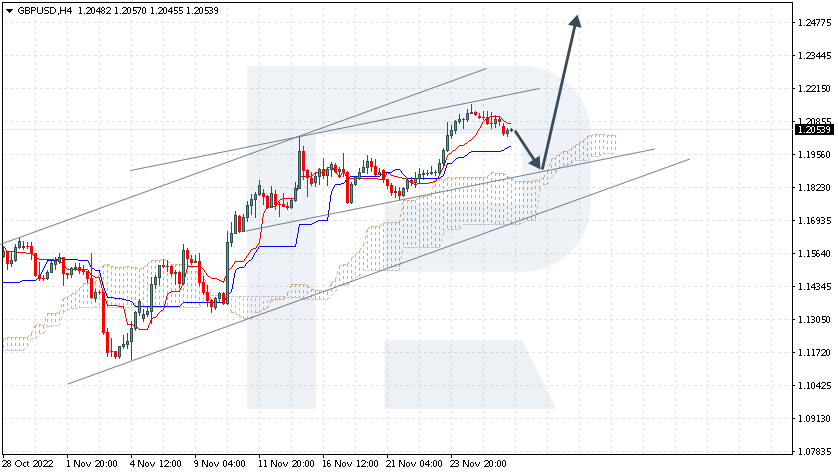
From the technical point of view, the trend on the GBP/USD currency pair on the hourly time frame is bullish. The price is trading above the moving averages and above the priority change level. The MACD indicator has become positive, and buying pressure has returned to the market. Under such market conditions, buy trades can be considered from the support level of 1.1230, but better after confirmation. Sell trades are best to look for on intraday time frames. The nearest resistance level is 1.1450, but also better with confirmation in the form of a reverse initiative.

Alternative scenario: if the price breaks down of the 1.1172 support level and fixes below it, the downtrend will likely resume.

GBP/USD
There is no news feed for today.

The USD/JPY currency pair

Technical indicators of the currency pair:
  • Prev Open: 148.21
  • Prev Close: 146.65
  • % chg. over the last day: -1.06 %

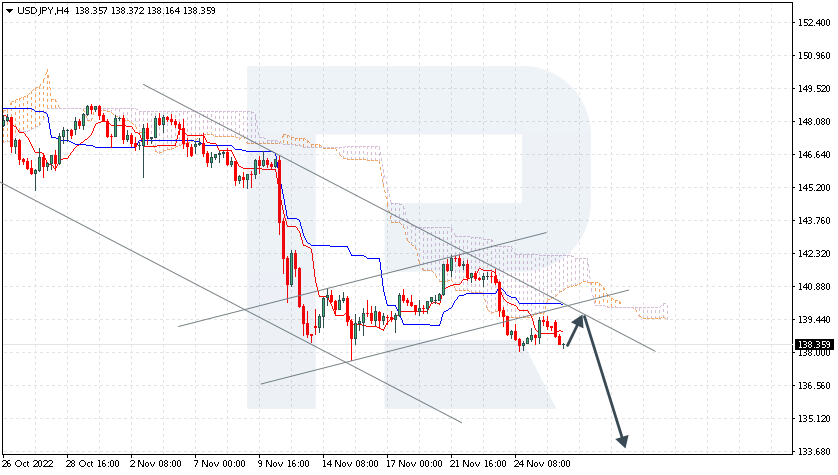
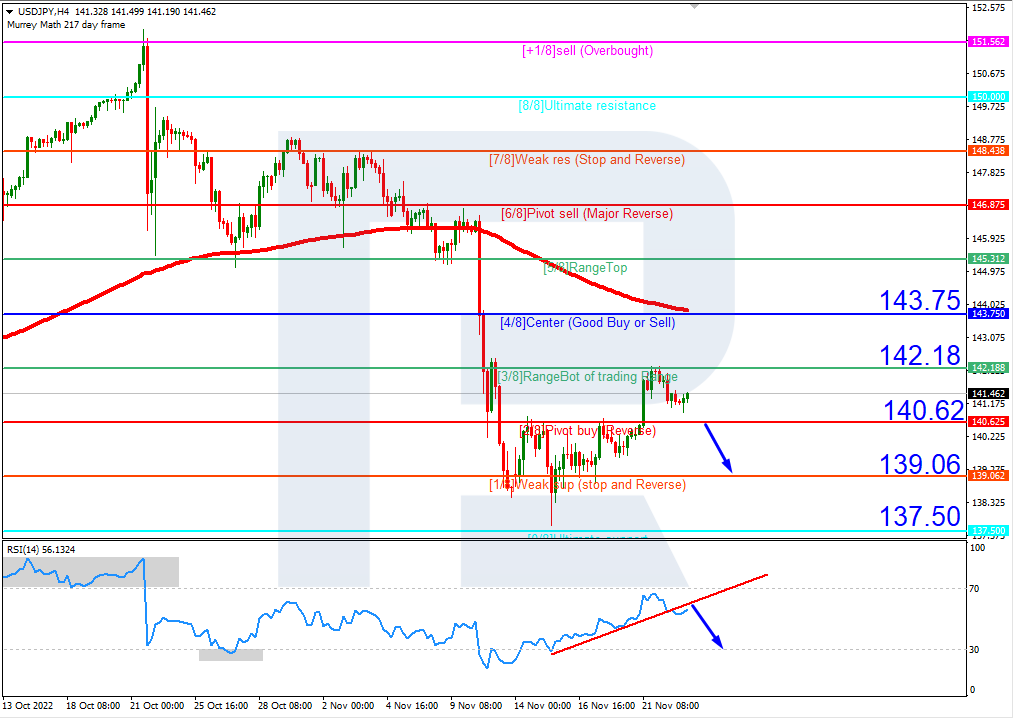
The situation on the currency pair USD/JPY remains the same. The Bank of Japan keeps an ultra-soft monetary policy and does not plan to change it until spring 2023. The US Federal Reserve, in turn, is on an interest rate hike cycle. This divergent policy strengthens the dollar and weakens the Japanese yen, pushing the USD/JPY up. Even if the US Fed cuts the pace of its rate hikes, the interest rate differential will still rise, resulting in further gains, but maybe slower than before.

Trading recommendations
  • Support levels: 146.37, 145.50, 144.91, 144.19, 143.00
  • Resistance levels: 147.59, 148.82, 150.00, 151.05

From the technical point of view, the medium-term trend on the currency pair USD/JPY is bearish. The price is trading at the level of the moving averages, and a wide balance is forming. The MACD indicator has become negative again, but sellers’ pressure is weak. Under such market conditions, buy trades can be looked for on intraday time frames from the support level of 146.37. Sell deals can be looked for from the resistance level of 147.59 or 148.82, but only with additional confirmation since the level has already been tested.

Alternative scenario: If the price fixes above 150.00, the uptrend will likely resume.

USD/JPY
There is no news feed for today.

The USD/CAD currency pair

Technical indicators of the currency pair:
  • Prev Open: 1.3745
  • Prev Close: 1.3479
  • % chg. over the last day: -1.97 %

Canadian labor market data on Friday pointed to job growth, raising the possibility that the Bank of Canada will need to make another excessive interest rate hike at its meeting next month. The money markets are now leaning towards the Bank of Canada raising its policy rate by 0.5% on December 7. The Bank of Canada’s discount rate is expected to peak at 4.5% in early 2023.

Trading recommendations
  • Support levels: 1.3486, 1.3400
  • Resistance levels: 1.3608, 1.3682, 1.3776, 1.3855, 1.3968

From the point of view of technical analysis, the trend on the USD/CAD currency pair has changed to bearish again. The price confidently broke through and consolidated below the moving averages and the priority change level. The MACD indicator is negative now, and there is the seller’s pressure on the lower time frames. The best way to sell is to consider the resistance level of 1.3608, but only after the additional confirmation. Buy trades should be considered on the lower time frames from the support level 1.3486, but with additional confirmation.

Alternative scenario: if the price breaks out and consolidates above the resistance level of 1.3682, the uptrend will likely resume.

USD/CAD
There is no news feed for today.

By JustMarkets


This article reflects a personal opinion and should not be interpreted as an investment advice, and/or offer, and/or a persistent request for carrying out financial transactions, and/or a guarantee, and/or a forecast of future events.

The US is preparing for the primaries. Investors are returning interest in gold

By JustMarkets

By the closing of the stock market on Friday, Dow Jones (US30) gained 1.26% (-1.07% for the week), and S&P 500 (US500) added 1.36% (-2.87% for the week). The Technology Index NASDAQ (US100) jumped by 1.28% on Friday (-5.02% for the week). Despite Friday’s gains, all indices closed the week with losses.

The US unemployment rate was 3.7% (forecast 3.6%, previous value 3.5%). The only unfulfilled marker of recession in the US at the moment is an overheated labor market. The Fed has repeatedly noted an imbalance in supply and demand for jobs. So rising unemployment is the last piece of the puzzle for the Fed to put the brakes on aggressive rate hikes.

The US is gearing up for Tuesday’s midterm elections, where control of Congress and President Joe Biden’s agenda for the remaining two years of his term are at stake. Republicans are leading in the polls, and many analysts believe the likely outcome will be a split government, with the Republican Party controlling the House and possibly the Senate in the second half of Biden’s term. Biden’s public approval rating has remained below 50% for more than a year, at 40% in a recent Reuters/Ipsos poll. Analysts say a surprise Democratic victory could heighten fears about increased budget spending and the prospect of inflation.

Canada’s plan to spend an additional C$6.1 billion ($4.5 billion) over the next five months could undermine the central bank’s efforts to curb inflation, despite Finance Minister Chrystia Freeland’s pledge not to complicate monetary policy.

Equity markets in Europe traded higher throughout last week. German DAX (DE30) gained 2.51% (+1.55% for the week), French CAC 40 (FR40) increased by 2.77% (+2.18% for the week), Spanish IBEX 35 (ES35) added 0.97% (+0.33% for the week), British FTSE 100 (UK100) closed Friday in plus 2.03% (+4.07% for the week).

Last week’s fundamental catalysts boosted the indices. On the energy side, the warming in the Eurozone has helped lower energy prices, and this situation is expected to continue in November. Lower prices should provide further support to the euro against the US dollar. On the other hand, manufacturing orders are declining across European countries, which limits the growth prospects of the European currency.

Friday’s 5% rally in oil was fueled by talk that China is planning to soften its so-called zero COVID policy. It also became known that the G7 countries, along with Australia, finally agreed to set a fixed price for Russian oil. Expectations that the Fed could still resort to a rate hike were another factor in the rise in oil prices on Friday.

The Kremlin plans to retaliate against the G7 plan to cap the sale price of Russian oil to limit Moscow’s ability to finance its invasion of Ukraine without restricting global supplies. Russian President Vladimir Putin has in the past threatened not to do business with countries participating in the G7 plan or to suspend crude oil exports altogether in response to the scheme.

On Friday, gold showed its best percentage gain in 2.5 years. On a weekly basis, gold added 1.9%, its best week in four years. Hedge fund analysts believe that if gold manages to close the month above $1,735 an ounce, the short- and medium-term outlook will change to bullish.

Asian markets mostly rose last week. Japan’s Nikkei 225 (JP225) gained 0.38% over the week, Hong Kong’s Hang Seng (HK50) jumped by 8.97%, and Australia’s S&P/ASX 200 (AU200) gained 1.57%

Chinese and Hong Kong stocks rose sharply Friday amid rumors that China may soon ease its strict restrictions on COVID-19, but officials said Saturday that the country is sticking to its policy for now. China’s huge trade surplus rose less than expected in October, while exports and imports declined during the month. The data does not bode well for Asian markets, given that China is a major trading partner for much of the region.

In the commodities market, futures on cotton (+20.72%), natural gas (+13.36%), silver (+9.23%), copper (+7.93%), gasoline (+6.94%), sugar (+6.26%), orange juice (+5.89%), cocoa (+5.47%), WTI oil (+5.35%), soybeans (+4.45%), coffee (+3.47%), Brent (+3.11%) and gol (+2.49%) showed the biggest gain. Futures on lumber (-4.82%) showed the biggest drop.

S&P 500 (F) (US500) 3,770.55 +50.66 (+1.36%)

Dow Jones (US30) 32,403.22  +401.97 (+1.26%)

DAX (DE40) 13,459.85 +329.66 (+2.51%)

FTSE 100 (UK100) 7,334.84 +146.21 (+2.03%)

USD Index 110.79 -2.148 (-1.90%)

Important events for today:
  • – China Exports (m/m) at 05:00 (GMT+2);
  • – China Imports (m/m) at 05:00 (GMT+2);
  • – Switzerland Unemployment Rate (m/m) at 08:45 (GMT+2);
  • – German Industrial Production (m/m) at 09:00 (GMT+2);
  • – Eurozone ECB President Lagarde Speaks at 10:40 (GMT+2);
  • – US FOMC Member Mester Speaks at 22:40 (GMT+2).

By JustMarkets


This article reflects a personal opinion and should not be interpreted as an investment advice, and/or offer, and/or a persistent request for carrying out financial transactions, and/or a guarantee, and/or a forecast of future events.

Gold: when the price goes up, more of it gets stolen in break-ins – new research

By Arnaud Chevalier, Royal Holloway University of London; Nils Braakmann, Newcastle University, and Tanya Wilson, University of Glasgow 

Are criminals rational? In his groundbreaking work of 1968, Gary Becker argued that they are. The American economist, who would go on to win the Nobel prize in economics in 1992, theorised that individuals engage in crime only if the returns are greater than the returns from engaging in legal activities, after you factor in the risk of being caught.

This has been largely supported by empirical evidence. But one aspect of Becker’s model which has proven difficult to confirm is whether criminal activity is sensitive to changes in the financial returns from crime. This is mostly because those returns are themselves affected by criminal activity.

For example, when more phones are stolen, the supply of stolen phones increases and their retail value drops, which makes them less attractive to steal. Since the price affects the burglaries as well as the burglaries affecting the price, it can be difficult for researchers to empirically assess the extent to which each is affecting the other.

One way around this problem is to look at a commodity whose price won’t be affected by how much is stolen by criminals. We chose gold. The question our research asked was: how does the gold price affect the rate of burglary in England and Wales?

The burglary business

Jewellery is only stolen in 7% of burglaries. This is according to the Crime Survey for England and Wales (CSEW), which also says that these types of burglaries are perceived as more serious by the victims than other types. No doubt this is partially because of the sentimental value associated with some of the jewellery, but also because of its financial value.

Anecdotal evidence, supported by the CSEW, suggests that south Asian households are more likely to store gold jewellery, in some cases as a way of saving, though also for cultural reasons. This means that when the price of gold goes up, the returns from burgling a south Asian household will go up too. You might therefore expect the rational burglar to disproportionately target these households when the gold price is higher.

It might not be easy for these burglars to recognise a house as belonging to a south Asian family, but they will know which neighbourhoods tend to be popular with this ethnic group. So we should expect that when the price of gold goes up, burglars may become more active in neighbourhoods with a greater share of south Asian families.

Using detailed crime data at the neighbourhood level for the period 2011-19, we tested this hypothesis by comparing burglary rates in neighbourhoods with a relatively high share of south Asian households and neighbourhoods with a lower share. To make the comparison more pertinent, we only compared neighbourhoods within the same local authority, contrasting periods in which the gold price was low to when it was high.

What we consistently found was that burglaries increase when the price of gold surges. A 10% increase in the price of gold increases the burglary rate by an average of 1.5%. In south Asian neighbourhoods, however, burglaries increase by 3.4%.

The wider economy

You might be thinking that burglars aren’t responding to the gold price but to economic conditions more generally, but this is an unlikely explanation. There certainly is a link between burglary rates and economic conditions. For example, when unemployment rises, there are more burglaries everywhere.

But by comparing neighbourhoods within the same local authority, we found it was only neighbourhoods with a higher share of Asian households that saw a larger increase in the rate of burglaries when the price of gold increased. We also found that the location of other crimes was unaffected by variations in the gold price.

In any case, gold and the economy are not especially well correlated. The price of gold is determined by global supply and demand rather than economic conditions in the UK.

Finally, we showed that variations in the price of gold drive up the burglary rate in general. So it’s not just a case of burglars relocating their activities to neighbourhoods with a higher share of south Asian households. When gold is more valuable there are more burglaries, and disproportionately more in south Asian neighbourhoods.

Our results seem to confirm that burglars act rationally and redirect their efforts towards neighbourhoods with higher returns when the reward is greater. If police forces allocate more resources to visible police patrols in areas rich in potential targets when the price of gold or some other valuable commodity is high, it may prove a successful deterrent. Additionally, it might be helpful to introduce policies making it more difficult to resell jewellery.

To end on a positive, the gold price is around 20% down from the highs of the past couple of years. So long as that continues, the temptation to burglars should at least be slightly less than it was before.The Conversation

About the Author:

Arnaud Chevalier, Professor of Economics, Royal Holloway University of London; Nils Braakmann, Professor of Economics, Newcastle University, and Tanya Wilson, Lecturer in Economics, University of Glasgow

This article is republished from The Conversation under a Creative Commons license. Read the original article.

Mexican Peso & Euro Currency Speculators sharply boost their bullish bets

By InvestMacro

Here are the latest charts and statistics for the Commitment of Traders (COT) data published by the Commodities Futures Trading Commission (CFTC).

The latest COT data is updated through Tuesday November 1st and shows a quick view of how large market participants (for-profit speculators and commercial traders) were positioned in the futures markets. All currency positions are in direct relation to the US dollar where, for example, a bet for the euro is a bet that the euro will rise versus the dollar while a bet against the euro will be a bet that the euro will decline versus the dollar.

Weekly Speculator Changes led by Peso & Euro bets

The COT currency market speculator bets were overall higher this week as seven out of the eleven currency markets we cover had higher positioning while the other four markets had lower speculator contracts.

Leading the gains for the currency markets were the Mexican peso (31,471 contracts), the Euro (30,881 contracts) and the Japanese yen (24,998 contracts) with the New Zealand dollar (9,037 contracts), the British pound sterling (2,969 contracts), the Australian dollar (914 contracts) and the Canadian dollar (506 contracts) also showing positive weeks.

The currencies leading the declines in speculator bets this week was the Swiss franc (-3,484 contracts) with Bitcoin (-475 contracts), the US Dollar Index (-310 contracts) and the Brazilian real (-22 contracts) also registering lower bets on the week.

Highlighting the COT currency data this week is the strong gains in the Mexican peso positioning since the start of October. Peso speculative positions jumped by over +30,000 contracts for a second straight week this week and have now been higher by at least +10,000 contracts in each of the past three weeks. Overall, the peso position has gained for five consecutive weeks and by a total of +85,367 contracts over that five-week period.

The renewed speculator optimism has brought the peso positioning from out of the bearish level it was in for nineteen straight weeks (from June 14th to October 18th) into a new bullish standing and to most bullish level since March 8th. The peso’s futures price has also been on the rise with a gain by over 1.50 percent this week. Peso prices have now risen in five out of the past six weeks and have reached their best level since early June.

Another highlight of this week’s COT data is the Euro’s continued gains in speculator positions. The large speculator contracts rose strongly yet again this week as the Euro position has now climbed for a third straight week and for the eighth time in the past nine weeks. The nine-week speculator’s total increase now stands at a whopping +153,466 contracts. The Euro position was in bearish territory as recently as September 13th (total of -11,837 contracts) and now the total speculator position is at +105,790 contracts (a 72-week high). However, despite this strong speculator sentiment, the Euro exchange rate versus the US dollar continues to only trade around parity or the 1.000 level. The speculators are usually reliable trend-followers (buying when prices rises and selling when prices fall) and this divergence between the price and speculator contracts is growing quite large and could foretell a possible strong future movement in the Euro one way or the other.


Data Snapshot of Forex Market Traders | Columns Legend
Nov-01-2022OIOI-IndexSpec-NetSpec-IndexCom-NetCOM-IndexSmalls-NetSmalls-Index
USD Index55,9428029,78875-33,331233,54355
EUR671,72965105,79067-128,8193923,02916
GBP243,54963-44,8363165,37778-20,54118
JPY258,90686-77,6202195,77482-18,15417
CHF50,10741-14,7841927,73188-12,94714
CAD147,17028-17,6492119,27585-1,62627
AUD165,41156-50,5323862,72666-12,19423
NZD47,21938-3,847616,88145-3,03417
MXN282,8648844,04546-50,512526,46770
RUB20,93047,54331-7,15069-39324
BRL58,2895129,15779-29,13923-1865
Bitcoin12,18367-45269-16046824


Brazilian Real & US Dollar Index lead Strength Scores

Strength Scores (a normalized measure of Speculator positions over a 3-Year range, from 0 to 100 where above 80 is extreme bullish and below 20 is extreme bearish) showed that the Brazilian Real (79.0 percent) and the US Dollar Index (74.6 percent) lead the currency markets currently. Bitcoin (69.1 percent) and the EuroFX (67.5 percent) come in as the next highest in the currency markets in strength scores.

On the downside, the Swiss Franc (19.0 percent) comes in at the lowest strength level currently and is in a bearish extreme position under 20 percent. The Canadian Dollar (20.8 percent), the Japanese Yen (21.1 percent) and the British Pound Sterling (30.5 percent) come in as the next lowest scores.

Strength Statistics:
US Dollar Index (74.6 percent) vs US Dollar Index previous week (75.1 percent)
EuroFX (67.5 percent) vs EuroFX previous week (58.0 percent)
British Pound Sterling (30.5 percent) vs British Pound Sterling previous week (28.0 percent)
Japanese Yen (21.1 percent) vs Japanese Yen previous week (5.7 percent)
Swiss Franc (19.0 percent) vs Swiss Franc previous week (27.8 percent)
Canadian Dollar (20.8 percent) vs Canadian Dollar previous week (20.2 percent)
Australian Dollar (38.0 percent) vs Australian Dollar previous week (37.1 percent)
New Zealand Dollar (60.7 percent) vs New Zealand Dollar previous week (43.8 percent)
Mexican Peso (46.1 percent) vs Mexican Peso previous week (32.7 percent)
Brazilian Real (79.0 percent) vs Brazilian Real previous week (79.1 percent)
Bitcoin (69.1 percent) vs Bitcoin previous week (77.3 percent)

Peso & Euro top the Strength Trends

Strength Score Trends (or move index, calculates the 6-week changes in strength scores) showed that the Mexican Peso (30.7 percent) and the EuroFX (22.2 percent) lead the past six weeks trends for the currency markets this week. The New Zealand Dollar (16.4 percent) and the British Pound Sterling (8.6 percent) fill out the next top movers in the latest trends data.

The Canadian Dollar (-23.5 percent) leads the downside trend scores currently while the next markets with lower trend scores were the Swiss Franc (-20.4 percent) followed by Bitcoin (-17.9 percent).

Strength Trend Statistics:
US Dollar Index (3.1 percent) vs US Dollar Index previous week (-9.3 percent)
EuroFX (22.2 percent) vs EuroFX previous week (26.6 percent)
British Pound Sterling (8.6 percent) vs British Pound Sterling previous week (17.4 percent)
Japanese Yen (2.3 percent) vs Japanese Yen previous week (-13.5 percent)
Swiss Franc (-20.4 percent) vs Swiss Franc previous week (-10.1 percent)
Canadian Dollar (-23.5 percent) vs Canadian Dollar previous week (-36.5 percent)
Australian Dollar (-9.3 percent) vs Australian Dollar previous week (5.9 percent)
New Zealand Dollar (16.4 percent) vs New Zealand Dollar previous week (-14.2 percent)
Mexican Peso (30.7 percent) vs Mexican Peso previous week (16.2 percent)
Brazilian Real (-3.2 percent) vs Brazilian Real previous week (-3.7 percent)
Bitcoin (-17.9 percent) vs Bitcoin previous week (-1.8 percent)


Individual COT Forex Markets:

US Dollar Index Futures:

US Dollar Index Forex Futures COT ChartThe US Dollar Index large speculator standing this week came in at a net position of 29,788 contracts in the data reported through Tuesday. This was a weekly reduction of -310 contracts from the previous week which had a total of 30,098 net contracts.

This week’s current strength score (the trader positioning range over the past three years, measured from 0 to 100) shows the speculators are currently Bullish with a score of 74.6 percent. The commercials are Bearish with a score of 22.9 percent and the small traders (not shown in chart) are Bullish with a score of 55.3 percent.

US DOLLAR INDEX StatisticsSPECULATORSCOMMERCIALSSMALL TRADERS
– Percent of Open Interest Longs:75.610.311.5
– Percent of Open Interest Shorts:22.469.95.2
– Net Position:29,788-33,3313,543
– Gross Longs:42,3045,7616,460
– Gross Shorts:12,51639,0922,917
– Long to Short Ratio:3.4 to 10.1 to 12.2 to 1
NET POSITION TREND:
– Strength Index Score (3 Year Range Pct):74.622.955.3
– Strength Index Reading (3 Year Range):BullishBearishBullish
NET POSITION MOVEMENT INDEX:
– 6-Week Change in Strength Index:3.1-4.17.6


Euro Currency Futures:

Euro Currency Futures COT ChartThe Euro Currency large speculator standing this week came in at a net position of 105,790 contracts in the data reported through Tuesday. This was a weekly advance of 30,881 contracts from the previous week which had a total of 74,909 net contracts.

This week’s current strength score (the trader positioning range over the past three years, measured from 0 to 100) shows the speculators are currently Bullish with a score of 67.5 percent. The commercials are Bearish with a score of 39.5 percent and the small traders (not shown in chart) are Bearish-Extreme with a score of 15.7 percent.

EURO Currency StatisticsSPECULATORSCOMMERCIALSSMALL TRADERS
– Percent of Open Interest Longs:35.750.511.5
– Percent of Open Interest Shorts:19.969.78.0
– Net Position:105,790-128,81923,029
– Gross Longs:239,770339,36477,062
– Gross Shorts:133,980468,18354,033
– Long to Short Ratio:1.8 to 10.7 to 11.4 to 1
NET POSITION TREND:
– Strength Index Score (3 Year Range Pct):67.539.515.7
– Strength Index Reading (3 Year Range):BullishBearishBearish-Extreme
NET POSITION MOVEMENT INDEX:
– 6-Week Change in Strength Index:22.2-21.76.6


British Pound Sterling Futures:

British Pound Sterling Futures COT ChartThe British Pound Sterling large speculator standing this week came in at a net position of -44,836 contracts in the data reported through Tuesday. This was a weekly rise of 2,969 contracts from the previous week which had a total of -47,805 net contracts.

This week’s current strength score (the trader positioning range over the past three years, measured from 0 to 100) shows the speculators are currently Bearish with a score of 30.5 percent. The commercials are Bullish with a score of 78.5 percent and the small traders (not shown in chart) are Bearish-Extreme with a score of 17.7 percent.

BRITISH POUND StatisticsSPECULATORSCOMMERCIALSSMALL TRADERS
– Percent of Open Interest Longs:14.475.28.0
– Percent of Open Interest Shorts:32.848.416.4
– Net Position:-44,83665,377-20,541
– Gross Longs:34,979183,21019,464
– Gross Shorts:79,815117,83340,005
– Long to Short Ratio:0.4 to 11.6 to 10.5 to 1
NET POSITION TREND:
– Strength Index Score (3 Year Range Pct):30.578.517.7
– Strength Index Reading (3 Year Range):BearishBullishBearish-Extreme
NET POSITION MOVEMENT INDEX:
– 6-Week Change in Strength Index:8.6-5.5-3.7


Japanese Yen Futures:

Japanese Yen Forex Futures COT ChartThe Japanese Yen large speculator standing this week came in at a net position of -77,620 contracts in the data reported through Tuesday. This was a weekly advance of 24,998 contracts from the previous week which had a total of -102,618 net contracts.

This week’s current strength score (the trader positioning range over the past three years, measured from 0 to 100) shows the speculators are currently Bearish with a score of 21.1 percent. The commercials are Bullish-Extreme with a score of 82.4 percent and the small traders (not shown in chart) are Bearish-Extreme with a score of 16.6 percent.

JAPANESE YEN StatisticsSPECULATORSCOMMERCIALSSMALL TRADERS
– Percent of Open Interest Longs:15.673.98.9
– Percent of Open Interest Shorts:45.636.915.9
– Net Position:-77,62095,774-18,154
– Gross Longs:40,460191,22123,021
– Gross Shorts:118,08095,44741,175
– Long to Short Ratio:0.3 to 12.0 to 10.6 to 1
NET POSITION TREND:
– Strength Index Score (3 Year Range Pct):21.182.416.6
– Strength Index Reading (3 Year Range):BearishBullish-ExtremeBearish-Extreme
NET POSITION MOVEMENT INDEX:
– 6-Week Change in Strength Index:2.3-0.8-3.9


Swiss Franc Futures:

Swiss Franc Forex Futures COT ChartThe Swiss Franc large speculator standing this week came in at a net position of -14,784 contracts in the data reported through Tuesday. This was a weekly decrease of -3,484 contracts from the previous week which had a total of -11,300 net contracts.

This week’s current strength score (the trader positioning range over the past three years, measured from 0 to 100) shows the speculators are currently Bearish-Extreme with a score of 19.0 percent. The commercials are Bullish-Extreme with a score of 87.7 percent and the small traders (not shown in chart) are Bearish-Extreme with a score of 13.7 percent.

SWISS FRANC StatisticsSPECULATORSCOMMERCIALSSMALL TRADERS
– Percent of Open Interest Longs:13.271.515.1
– Percent of Open Interest Shorts:42.716.140.9
– Net Position:-14,78427,731-12,947
– Gross Longs:6,61235,8227,559
– Gross Shorts:21,3968,09120,506
– Long to Short Ratio:0.3 to 14.4 to 10.4 to 1
NET POSITION TREND:
– Strength Index Score (3 Year Range Pct):19.087.713.7
– Strength Index Reading (3 Year Range):Bearish-ExtremeBullish-ExtremeBearish-Extreme
NET POSITION MOVEMENT INDEX:
– 6-Week Change in Strength Index:-20.423.5-22.7


Canadian Dollar Futures:

Canadian Dollar Forex Futures COT ChartThe Canadian Dollar large speculator standing this week came in at a net position of -17,649 contracts in the data reported through Tuesday. This was a weekly boost of 506 contracts from the previous week which had a total of -18,155 net contracts.

This week’s current strength score (the trader positioning range over the past three years, measured from 0 to 100) shows the speculators are currently Bearish with a score of 20.8 percent. The commercials are Bullish-Extreme with a score of 84.8 percent and the small traders (not shown in chart) are Bearish with a score of 26.8 percent.

CANADIAN DOLLAR StatisticsSPECULATORSCOMMERCIALSSMALL TRADERS
– Percent of Open Interest Longs:26.250.521.2
– Percent of Open Interest Shorts:38.237.422.3
– Net Position:-17,64919,275-1,626
– Gross Longs:38,52274,35231,212
– Gross Shorts:56,17155,07732,838
– Long to Short Ratio:0.7 to 11.3 to 11.0 to 1
NET POSITION TREND:
– Strength Index Score (3 Year Range Pct):20.884.826.8
– Strength Index Reading (3 Year Range):BearishBullish-ExtremeBearish
NET POSITION MOVEMENT INDEX:
– 6-Week Change in Strength Index:-23.515.32.7


Australian Dollar Futures:

Australian Dollar Forex Futures COT ChartThe Australian Dollar large speculator standing this week came in at a net position of -50,532 contracts in the data reported through Tuesday. This was a weekly lift of 914 contracts from the previous week which had a total of -51,446 net contracts.

This week’s current strength score (the trader positioning range over the past three years, measured from 0 to 100) shows the speculators are currently Bearish with a score of 38.0 percent. The commercials are Bullish with a score of 65.7 percent and the small traders (not shown in chart) are Bearish with a score of 22.7 percent.

AUSTRALIAN DOLLAR StatisticsSPECULATORSCOMMERCIALSSMALL TRADERS
– Percent of Open Interest Longs:20.667.59.3
– Percent of Open Interest Shorts:51.229.616.6
– Net Position:-50,53262,726-12,194
– Gross Longs:34,148111,63815,301
– Gross Shorts:84,68048,91227,495
– Long to Short Ratio:0.4 to 12.3 to 10.6 to 1
NET POSITION TREND:
– Strength Index Score (3 Year Range Pct):38.065.722.7
– Strength Index Reading (3 Year Range):BearishBullishBearish
NET POSITION MOVEMENT INDEX:
– 6-Week Change in Strength Index:-9.37.9-1.5


New Zealand Dollar Futures:

New Zealand Dollar Forex Futures COT ChartThe New Zealand Dollar large speculator standing this week came in at a net position of -3,847 contracts in the data reported through Tuesday. This was a weekly increase of 9,037 contracts from the previous week which had a total of -12,884 net contracts.

This week’s current strength score (the trader positioning range over the past three years, measured from 0 to 100) shows the speculators are currently Bullish with a score of 60.7 percent. The commercials are Bearish with a score of 45.4 percent and the small traders (not shown in chart) are Bearish-Extreme with a score of 16.8 percent.

NEW ZEALAND DOLLAR StatisticsSPECULATORSCOMMERCIALSSMALL TRADERS
– Percent of Open Interest Longs:44.748.95.7
– Percent of Open Interest Shorts:52.934.412.2
– Net Position:-3,8476,881-3,034
– Gross Longs:21,11523,1032,707
– Gross Shorts:24,96216,2225,741
– Long to Short Ratio:0.8 to 11.4 to 10.5 to 1
NET POSITION TREND:
– Strength Index Score (3 Year Range Pct):60.745.416.8
– Strength Index Reading (3 Year Range):BullishBearishBearish-Extreme
NET POSITION MOVEMENT INDEX:
– 6-Week Change in Strength Index:16.4-16.913.4


Mexican Peso Futures:

Mexican Peso Futures COT ChartThe Mexican Peso large speculator standing this week came in at a net position of 44,045 contracts in the data reported through Tuesday. This was a weekly boost of 31,471 contracts from the previous week which had a total of 12,574 net contracts.

This week’s current strength score (the trader positioning range over the past three years, measured from 0 to 100) shows the speculators are currently Bearish with a score of 46.1 percent. The commercials are Bullish with a score of 51.7 percent and the small traders (not shown in chart) are Bullish with a score of 70.4 percent.

MEXICAN PESO StatisticsSPECULATORSCOMMERCIALSSMALL TRADERS
– Percent of Open Interest Longs:64.532.13.0
– Percent of Open Interest Shorts:48.950.00.7
– Net Position:44,045-50,5126,467
– Gross Longs:182,31690,8118,464
– Gross Shorts:138,271141,3231,997
– Long to Short Ratio:1.3 to 10.6 to 14.2 to 1
NET POSITION TREND:
– Strength Index Score (3 Year Range Pct):46.151.770.4
– Strength Index Reading (3 Year Range):BearishBullishBullish
NET POSITION MOVEMENT INDEX:
– 6-Week Change in Strength Index:30.7-31.09.2


Brazilian Real Futures:

Brazil Real Futures COT ChartThe Brazilian Real large speculator standing this week came in at a net position of 29,157 contracts in the data reported through Tuesday. This was a weekly fall of -22 contracts from the previous week which had a total of 29,179 net contracts.

This week’s current strength score (the trader positioning range over the past three years, measured from 0 to 100) shows the speculators are currently Bullish with a score of 79.0 percent. The commercials are Bearish with a score of 22.9 percent and the small traders (not shown in chart) are Bullish with a score of 64.6 percent.

BRAZIL REAL StatisticsSPECULATORSCOMMERCIALSSMALL TRADERS
– Percent of Open Interest Longs:65.722.910.7
– Percent of Open Interest Shorts:15.772.910.7
– Net Position:29,157-29,139-18
– Gross Longs:38,32513,3286,246
– Gross Shorts:9,16842,4676,264
– Long to Short Ratio:4.2 to 10.3 to 11.0 to 1
NET POSITION TREND:
– Strength Index Score (3 Year Range Pct):79.022.964.6
– Strength Index Reading (3 Year Range):BullishBearishBullish
NET POSITION MOVEMENT INDEX:
– 6-Week Change in Strength Index:-3.24.8-20.2


Bitcoin Futures:

Bitcoin Crypto Futures COT ChartThe Bitcoin large speculator standing this week came in at a net position of -452 contracts in the data reported through Tuesday. This was a weekly lowering of -475 contracts from the previous week which had a total of 23 net contracts.

This week’s current strength score (the trader positioning range over the past three years, measured from 0 to 100) shows the speculators are currently Bullish with a score of 69.1 percent. The commercials are Bullish with a score of 63.8 percent and the small traders (not shown in chart) are Bearish with a score of 23.6 percent.

BITCOIN StatisticsSPECULATORSCOMMERCIALSSMALL TRADERS
– Percent of Open Interest Longs:73.63.310.0
– Percent of Open Interest Shorts:77.33.56.2
– Net Position:-452-16468
– Gross Longs:8,9674061,218
– Gross Shorts:9,419422750
– Long to Short Ratio:1.0 to 11.0 to 11.6 to 1
NET POSITION TREND:
– Strength Index Score (3 Year Range Pct):69.163.823.6
– Strength Index Reading (3 Year Range):BullishBullishBearish
NET POSITION MOVEMENT INDEX:
– 6-Week Change in Strength Index:-17.938.75.3


Article By InvestMacroReceive our weekly COT Newsletter

*COT Report: The COT data, released weekly to the public each Friday, is updated through the most recent Tuesday (data is 3 days old) and shows a quick view of how large speculators or non-commercials (for-profit traders) were positioned in the futures markets.

The CFTC categorizes trader positions according to commercial hedgers (traders who use futures contracts for hedging as part of the business), non-commercials (large traders who speculate to realize trading profits) and nonreportable traders (usually small traders/speculators) as well as their open interest (contracts open in the market at time of reporting). See CFTC criteria here.

Speculator Extremes: Soybean Meal, Wheat lead weekly COT Bullish & Bearish Positions

By InvestMacro

The latest update for the weekly Commitment of Traders (COT) report was released by the Commodity Futures Trading Commission (CFTC) on Friday for data ending on November 1st.

This weekly Extreme Positions report highlights the Top Most Bullish and Top Most Bearish Positions for the speculator category. Extreme positioning in these markets can foreshadow strong moves in the underlying market.

To signify an extreme position, we use the Strength Index (also known as the COT Index) of each instrument, a common method of measuring COT data. The Strength Index is simply a comparison of current trader positions against the range of positions over the previous 3 years. We use over 80 percent as extremely bullish and under 20 percent as extremely bearish.

Compare Strength Index scores across all markets in the COT data table or COT leaders table.


Here Are This Week’s Most Bullish Speculator Positions:

Soybean Meal

The Soybean Meal speculator position comes in as the most bullish extreme standing this week. The Soybean Meal speculator level is currently at a 94.0 percent score of its 3-year range.

The overall net speculator position totaled 119,508 net contracts this week and has been over the +100,000 net contract level in fifteen out of the past seventeen weeks.


Bloomberg Commodity Index

The Bloomberg Commodity Index speculator position comes in as the only other market above 80 percent in the extreme standings this week. The Bloomberg Commodity Index speculator level is now at a 84.3 percent score of its 3-year range.

The speculator position was a total of -6,047 net contracts this week. This market usually has an overall bearish positioning for speculators and this week’s position is near the lowest levels of the past three years.


This Week’s Most Bearish Speculator Positions:

Wheat

The Wheat speculator position comes in as the most bearish extreme standing this week. The Wheat speculator level is at 0.0 percent score or at the absolute bottom of its 3-year range.

The speculator position was -15,766 net contracts this week and the overall position is in bearish territory for the twelfth time out of the past fourteen weeks. Wheat prices continue to be in an uptrend but the speculator sentiment has fallen sharply from earlier in the year.


2-Year Bond

The 2-Year Bond speculator position comes in as the most bearish extreme standing this week as well. The 2-Year Bond speculator level is at the 0.0 percent score of its 3-year range.

The speculator position was a total of -437,785 net contracts this week and hit the most bearish level on record this week as the US Federal Reserve continued to raise its benchmark interest rate.


Gold

The Gold speculator position comes in next for the most bearish extreme standing on the week. The Gold speculator level is at a 4.2 percent score of its 3-year range.

The speculator position was 64,623 net contracts this week and has now been under +100,000 net contracts for eight straight weeks which has not happened since 2018.


5-Year Bond

The 5-Year Bond speculator position comes in as the most bearish extreme standing this week. The 5-Year Bond speculator level is at 4.3 percent score of its 3-year range.

The speculator position was -536,987 net contracts this week and joins all the other bond markets we cover that have negative or bearish net positioning at the moment.


Ultra 10-Year U.S. T-Note

The Ultra 10-Year U.S. T-Note speculator position comes in as the next market in the most bearish extreme standing. The Ultra 10-Year U.S. T-Note speculator level is at a 7.1 percent score of its 3-year range.

The speculator position was -83,431 net contracts this week.


Article By InvestMacroReceive our weekly COT Newsletter

*COT Report: The COT data, released weekly to the public each Friday, is updated through the most recent Tuesday (data is 3 days old) and shows a quick view of how large speculators or non-commercials (for-profit traders) were positioned in the futures markets.

The CFTC categorizes trader positions according to commercial hedgers (traders who use futures contracts for hedging as part of the business), non-commercials (large traders who speculate to realize trading profits) and nonreportable traders (usually small traders/speculators) as well as their open interest (contracts open in the market at time of reporting). See CFTC criteria here.

Copper Speculators trim their Bearish bets to 21-week low

By InvestMacro

Here are the latest charts and statistics for the Commitment of Traders (COT) data published by the Commodities Futures Trading Commission (CFTC).

The latest COT data is updated through Tuesday November 1st and shows a quick view of how large traders (for-profit speculators and commercial entities) were positioned in the futures markets.

Copper & Platinum lead Weekly Speculator Changes

The COT precious metals speculator bets were slightly higher this week as three out of the five metals markets we cover had higher positioning this week while two markets had lower contracts.

Leading the gains for the precious metals markets was Copper (9,435 contracts) with Platinum (4,606 contracts) and Silver (1,625 contracts) also showing a positive week.

The metals markets leading the declines in speculator bets this week was Gold (-3,409 contracts) with Palladium (-122 contracts) also registering lower bets on the week.

Highlighting the COT metals data this week is the improvement in the Copper speculators positioning over the past few months. The large speculators raised their Copper bets for the second straight week this week and for the fourth time out of the past five weeks. Copper spec positions have been in an overall bearish standing since April (currently in a 28-week streak of bearish contracts) with the lowest level of -31,796 contracts coming in July. However, the bearish bets have been lightening up of late and this week’s total of -7,484 contracts marks the least bearish level of the past twenty-one weeks, dating back to June 7th.

Copper prices were sharply on the rise this week as well with gains for the week climbing by over 7.50 percent. Helping Copper prices go higher this week were the rumors that China will potentially ease their COVID-related restrictions as well as some supply issues out of South America.


Data Snapshot of Commodity Market Traders | Columns Legend
Nov-01-2022OIOI-IndexSpec-NetSpec-IndexCom-NetCOM-IndexSmalls-NetSmalls-Index
WTI Crude1,459,0522254,80912-275,7619020,95235
Gold467,2761064,6234-74,7829610,1595
Silver138,875121,52416-10,363858,83913
Copper179,80118-7,484307,99873-51422
Palladium8,37212-1,867132,22187-35420
Platinum56,5341615,98731-19,690713,70318
Natural Gas986,1167-148,65334127,5017121,15230
Brent134,0100-21,9087417,423224,48570
Heating Oil268,0252321,38074-41,2952719,91567
Soybeans584,073286,52240-57,88669-28,63623
Corn1,472,51729340,78874-286,79031-53,99812
Coffee217,400252,18312-4,162931,97927
Sugar737,846969,09346-90,5765621,48334
Wheat333,06120-15,766022,49392-6,72775


Strength Scores led by Copper & Platinum

Strength scores (a measure of the 3-Year range of Speculator positions, from 0 to 100 where above 80 is extreme bullish and below 20 is extreme bearish) showed that Platinum (30.6 percent) and Copper (30.4 percent) lead the metals category.

On the downside, Gold (4.2 percent) continues to be at the lowest strength level currently and is followed by Palladium (12.8 percent) and Silver (15.8 percent). All three of these markets remain in a bearish extreme position with scores below 20 percent.

Strength Statistics:
Gold (4.2 percent) vs Gold previous week (5.3 percent)
Silver (15.8 percent) vs Silver previous week (14.0 percent)
Copper (30.4 percent) vs Copper previous week (22.9 percent)
Platinum (30.6 percent) vs Platinum previous week (24.4 percent)
Palladium (12.8 percent) vs Palladium previous week (13.6 percent)

Strength Trends topped by Platinum

Strength Score Trends (or move index, calculates the 6-week changes in strength scores) show that Platinum (18.3 percent) leads the past six weeks trends for metals this week. Copper (10.2 percent) and Silver (3.5 percent) fill out the other positive movers in the latest trends data.

Palladium (-4.6 percent) leads the downside trend scores currently while the next market with lower trend scores was Gold (-0.4 percent).

Move Statistics:
Gold (-0.4 percent) vs Gold previous week (-9.7 percent)
Silver (3.5 percent) vs Silver previous week (5.0 percent)
Copper (10.2 percent) vs Copper previous week (1.6 percent)
Platinum (18.3 percent) vs Platinum previous week (17.8 percent)
Palladium (-4.6 percent) vs Palladium previous week (-2.8 percent)


Individual Markets:

Gold Comex Futures:

Gold Futures COT ChartThe Gold Comex Futures large speculator standing this week equaled a net position of 64,623 contracts in the data reported through Tuesday. This was a weekly reduction of -3,409 contracts from the previous week which had a total of 68,032 net contracts.

This week’s current strength score (the trader positioning range over the past three years, measured from 0 to 100) shows the speculators are currently Bearish-Extreme with a score of 4.2 percent. The commercials are Bullish-Extreme with a score of 96.1 percent and the small traders (not shown in chart) are Bearish-Extreme with a score of 5.0 percent.

Gold Futures StatisticsSPECULATORSCOMMERCIALSSMALL TRADERS
– Percent of Open Interest Longs:46.326.98.3
– Percent of Open Interest Shorts:32.542.96.1
– Net Position:64,623-74,78210,159
– Gross Longs:216,341125,68938,559
– Gross Shorts:151,718200,47128,400
– Long to Short Ratio:1.4 to 10.6 to 11.4 to 1
NET POSITION TREND:
– Strength Index Score (3 Year Range Pct):4.296.15.0
– Strength Index Reading (3 Year Range):Bearish-ExtremeBullish-ExtremeBearish-Extreme
NET POSITION MOVEMENT INDEX:
– 6-Week Change in Strength Index:-0.40.21.1


Silver Comex Futures:

Silver Futures COT ChartThe Silver Comex Futures large speculator standing this week equaled a net position of 1,524 contracts in the data reported through Tuesday. This was a weekly boost of 1,625 contracts from the previous week which had a total of -101 net contracts.

This week’s current strength score (the trader positioning range over the past three years, measured from 0 to 100) shows the speculators are currently Bearish-Extreme with a score of 15.8 percent. The commercials are Bullish-Extreme with a score of 85.4 percent and the small traders (not shown in chart) are Bearish-Extreme with a score of 13.1 percent.

Silver Futures StatisticsSPECULATORSCOMMERCIALSSMALL TRADERS
– Percent of Open Interest Longs:36.937.315.9
– Percent of Open Interest Shorts:35.844.89.5
– Net Position:1,524-10,3638,839
– Gross Longs:51,28651,80222,076
– Gross Shorts:49,76262,16513,237
– Long to Short Ratio:1.0 to 10.8 to 11.7 to 1
NET POSITION TREND:
– Strength Index Score (3 Year Range Pct):15.885.413.1
– Strength Index Reading (3 Year Range):Bearish-ExtremeBullish-ExtremeBearish-Extreme
NET POSITION MOVEMENT INDEX:
– 6-Week Change in Strength Index:3.5-4.57.5


Copper Grade #1 Futures:

Copper Futures COT ChartThe Copper Grade #1 Futures large speculator standing this week equaled a net position of -7,484 contracts in the data reported through Tuesday. This was a weekly lift of 9,435 contracts from the previous week which had a total of -16,919 net contracts.

This week’s current strength score (the trader positioning range over the past three years, measured from 0 to 100) shows the speculators are currently Bearish with a score of 30.4 percent. The commercials are Bullish with a score of 73.2 percent and the small traders (not shown in chart) are Bearish with a score of 22.3 percent.

Copper Futures StatisticsSPECULATORSCOMMERCIALSSMALL TRADERS
– Percent of Open Interest Longs:28.242.57.8
– Percent of Open Interest Shorts:32.438.08.1
– Net Position:-7,4847,998-514
– Gross Longs:50,73876,39414,103
– Gross Shorts:58,22268,39614,617
– Long to Short Ratio:0.9 to 11.1 to 11.0 to 1
NET POSITION TREND:
– Strength Index Score (3 Year Range Pct):30.473.222.3
– Strength Index Reading (3 Year Range):BearishBullishBearish
NET POSITION MOVEMENT INDEX:
– 6-Week Change in Strength Index:10.2-11.814.0


Platinum Futures:

Platinum Futures COT ChartThe Platinum Futures large speculator standing this week equaled a net position of 15,987 contracts in the data reported through Tuesday. This was a weekly gain of 4,606 contracts from the previous week which had a total of 11,381 net contracts.

This week’s current strength score (the trader positioning range over the past three years, measured from 0 to 100) shows the speculators are currently Bearish with a score of 30.6 percent. The commercials are Bullish with a score of 71.2 percent and the small traders (not shown in chart) are Bearish-Extreme with a score of 17.8 percent.

Platinum Futures StatisticsSPECULATORSCOMMERCIALSSMALL TRADERS
– Percent of Open Interest Longs:50.631.912.7
– Percent of Open Interest Shorts:22.366.76.1
– Net Position:15,987-19,6903,703
– Gross Longs:28,61118,0417,159
– Gross Shorts:12,62437,7313,456
– Long to Short Ratio:2.3 to 10.5 to 12.1 to 1
NET POSITION TREND:
– Strength Index Score (3 Year Range Pct):30.671.217.8
– Strength Index Reading (3 Year Range):BearishBullishBearish-Extreme
NET POSITION MOVEMENT INDEX:
– 6-Week Change in Strength Index:18.3-17.97.9


Palladium Futures:

Palladium Futures COT ChartThe Palladium Futures large speculator standing this week equaled a net position of -1,867 contracts in the data reported through Tuesday. This was a weekly decline of -122 contracts from the previous week which had a total of -1,745 net contracts.

This week’s current strength score (the trader positioning range over the past three years, measured from 0 to 100) shows the speculators are currently Bearish-Extreme with a score of 12.8 percent. The commercials are Bullish-Extreme with a score of 86.8 percent and the small traders (not shown in chart) are Bearish with a score of 20.4 percent.

Palladium Futures StatisticsSPECULATORSCOMMERCIALSSMALL TRADERS
– Percent of Open Interest Longs:22.854.113.6
– Percent of Open Interest Shorts:45.127.617.9
– Net Position:-1,8672,221-354
– Gross Longs:1,9064,5321,141
– Gross Shorts:3,7732,3111,495
– Long to Short Ratio:0.5 to 12.0 to 10.8 to 1
NET POSITION TREND:
– Strength Index Score (3 Year Range Pct):12.886.820.4
– Strength Index Reading (3 Year Range):Bearish-ExtremeBullish-ExtremeBearish
NET POSITION MOVEMENT INDEX:
– 6-Week Change in Strength Index:-4.65.5-10.5


Article By InvestMacroReceive our weekly COT Newsletter

*COT Report: The COT data, released weekly to the public each Friday, is updated through the most recent Tuesday (data is 3 days old) and shows a quick view of how large speculators or non-commercials (for-profit traders) were positioned in the futures markets.

The CFTC categorizes trader positions according to commercial hedgers (traders who use futures contracts for hedging as part of the business), non-commercials (large traders who speculate to realize trading profits) and nonreportable traders (usually small traders/speculators) as well as their open interest (contracts open in the market at time of reporting). See CFTC criteria here.

COT Bonds Speculators drop their 2-Year Bond bets to record low level

By InvestMacro

Here are the latest charts and statistics for the Commitment of Traders (COT) reports data published by the Commodities Futures Trading Commission (CFTC).

The latest COT data is updated through Tuesday November 1st and shows a quick view of how large traders (for-profit speculators and commercial hedgers) were positioned in the futures markets.

Weekly Speculator Changes led lower by Fed Funds, 2-Year & 5-Year

The COT bond market speculator bets were lower across the board this week as all eight of the bond markets we cover had lower positioning this week.

The bond markets leading the weekly declines in speculator bets this week were the Fed Funds (-89,356 contracts), the 2-Year Bond (-88,189 contracts) and the 5-Year Bond (-75,242 contracts) with the Eurodollar (-54,038 contracts), the 10-Year Bond (-50,568 contracts), the Ultra US Bond (-37,144 contracts), the Long US Bond (-18,746 contracts) and the Ultra 10-Year (-4,085 contracts) also registering lower bets on the week.

Highlighting the COT bonds data this week is the historic weakness of the 2-Year Bond speculators positioning. Large speculators dropped their bets this week for a second straight week and by the largest weekly amount since May with this week’s decline numbering -88,189 contracts. The sentiment drop has now brought the overall 2-Year Bond speculator standing to its lowest level on record at a total of -437,785 contracts, eclipsing the previous record low of -417,237 contracts registered on December 11th of 2018.

The bond markets overall were on the defensive this week as the US Federal Reserve raised their benchmark interest rate by 75 basis points for the fourth straight meeting. The 2-Year Bond, being near the short end of the yield curve, is especially sensitive to the rate change. The 2-Year front month futures price decreased to the lowest level since 2007 this week while the yield for the 2-Year hit above 5 percent (yields rise as prices fall), the highest threshold since 2007 as well.


Data Snapshot of Bond Market Traders | Columns Legend
Nov-01-2022OIOI-IndexSpec-NetSpec-IndexCom-NetCOM-IndexSmalls-NetSmalls-Index
Eurodollar7,921,8650-1,950,696172,217,45781-266,76146
FedFunds1,364,70332-17,0053830,79664-13,79125
2-Year2,234,14820-437,7850464,387100-26,60240
Long T-Bond1,193,68742-95,3055464,9063430,39977
10-Year3,952,20561-298,31627343,55463-45,23869
5-Year4,140,76059-536,9874629,89790-92,91056


Strength Scores led by US Treasury Bond

Strength Scores (a normalized measure of Speculator positions over a 3-Year range, from 0 to 100 where above 80 is extreme bullish and below 20 is extreme bearish) show that the US Treasury Bond (53.6 percent) leads the bonds category this week. The Fed Funds (37.5 percent) comes in as the next highest bonds market in strength scores but is down from 48.6 percent from last week.

On the downside, the 2-Year Bond (0.0 percent) comes in at the lowest strength level currently and is followed by the 5-Year Bond (4.3 percent), the Ultra 10-Year Bond (7.1 percent) and the Eurodollar (17.2 percent). All four of these markets currently are in bearish extreme positioning compared to the past three years of speculator positions with scores below 20 percent.

Strength Statistics:
Fed Funds (37.5 percent) vs Fed Funds previous week (48.6 percent)
2-Year Bond (0.0 percent) vs 2-Year Bond previous week (16.8 percent)
5-Year Bond (4.3 percent) vs 5-Year Bond previous week (15.7 percent)
10-Year Bond (27.1 percent) vs 10-Year Bond previous week (34.8 percent)
Ultra 10-Year Bond (7.1 percent) vs Ultra 10-Year Bond previous week (8.2 percent)
US Treasury Bond (53.6 percent) vs US Treasury Bond previous week (59.7 percent)
Ultra US Treasury Bond (26.9 percent) vs Ultra US Treasury Bond previous week (42.0 percent)
Eurodollar (17.2 percent) vs Eurodollar previous week (18.2 percent)

Eurodollar & US Treasury Bond show positive Strength Trends

Strength Score Trends (or move index, calculates the 6-week changes in strength scores) show that the Eurodollar (5.0 percent) leads the past six weeks trends for bonds this week. The US Treasury Bond (1.4 percent) is the only other positive mover in the latest trends data.

The 2-Year Bond (-18.1 percent) leads the downside trend scores currently followed by the Ultra 10-Year Bond (-14.2 percent), 10-Year Bond (-10.4 percent), the Ultra US Treasury Bond (-9.1 percent) and the 5-Year Bond (-6.5 percent).

Strength Trend Statistics:
Fed Funds (-5.1 percent) vs Fed Funds previous week (3.0 percent)
2-Year Bond (-18.1 percent) vs 2-Year Bond previous week (1.6 percent)
5-Year Bond (-6.5 percent) vs 5-Year Bond previous week (9.0 percent)
10-Year Bond (-10.4 percent) vs 10-Year Bond previous week (16.0 percent)
Ultra 10-Year Bond (-14.2 percent) vs Ultra 10-Year Bond previous week (-18.9 percent)
US Treasury Bond (1.4 percent) vs US Treasury Bond previous week (6.0 percent)
Ultra US Treasury Bond (-9.1 percent) vs Ultra US Treasury Bond previous week (-1.8 percent)
Eurodollar (5.0 percent) vs Eurodollar previous week (18.1 percent)


Individual Bond Markets:

3-Month Eurodollars Futures:

Eurodollar Bonds Futures COT ChartThe 3-Month Eurodollars large speculator standing this week reached a net position of -1,950,696 contracts in the data reported through Tuesday. This was a weekly reduction of -54,038 contracts from the previous week which had a total of -1,896,658 net contracts.

This week’s current strength score (the trader positioning range over the past three years, measured from 0 to 100) shows the speculators are currently Bearish-Extreme with a score of 17.2 percent. The commercials are Bullish-Extreme with a score of 80.7 percent and the small traders (not shown in chart) are Bearish with a score of 45.7 percent.

3-Month Eurodollars StatisticsSPECULATORSCOMMERCIALSSMALL TRADERS
– Percent of Open Interest Longs:7.467.74.7
– Percent of Open Interest Shorts:32.139.78.1
– Net Position:-1,950,6962,217,457-266,761
– Gross Longs:589,4715,361,762371,189
– Gross Shorts:2,540,1673,144,305637,950
– Long to Short Ratio:0.2 to 11.7 to 10.6 to 1
NET POSITION TREND:
– Strength Index Score (3 Year Range Pct):17.280.745.7
– Strength Index Reading (3 Year Range):Bearish-ExtremeBullish-ExtremeBearish
NET POSITION MOVEMENT INDEX:
– 6-Week Change in Strength Index:5.0-5.24.3


30-Day Federal Funds Futures:

Federal Funds 30-Day Bonds Futures COT ChartThe 30-Day Federal Funds large speculator standing this week reached a net position of -17,005 contracts in the data reported through Tuesday. This was a weekly decline of -89,356 contracts from the previous week which had a total of 72,351 net contracts.

This week’s current strength score (the trader positioning range over the past three years, measured from 0 to 100) shows the speculators are currently Bearish with a score of 37.5 percent. The commercials are Bullish with a score of 63.6 percent and the small traders (not shown in chart) are Bearish with a score of 24.5 percent.

30-Day Federal Funds StatisticsSPECULATORSCOMMERCIALSSMALL TRADERS
– Percent of Open Interest Longs:10.373.51.8
– Percent of Open Interest Shorts:11.671.22.8
– Net Position:-17,00530,796-13,791
– Gross Longs:140,9201,002,68925,091
– Gross Shorts:157,925971,89338,882
– Long to Short Ratio:0.9 to 11.0 to 10.6 to 1
NET POSITION TREND:
– Strength Index Score (3 Year Range Pct):37.563.624.5
– Strength Index Reading (3 Year Range):BearishBullishBearish
NET POSITION MOVEMENT INDEX:
– 6-Week Change in Strength Index:-5.15.8-17.6


2-Year Treasury Note Futures:

2-Year Treasury Bonds Futures COT ChartThe 2-Year Treasury Note large speculator standing this week reached a net position of -437,785 contracts in the data reported through Tuesday. This was a weekly decline of -88,189 contracts from the previous week which had a total of -349,596 net contracts.

This week’s current strength score (the trader positioning range over the past three years, measured from 0 to 100) shows the speculators are currently Bearish-Extreme with a score of 0.0 percent. The commercials are Bullish-Extreme with a score of 100.0 percent and the small traders (not shown in chart) are Bearish with a score of 40.2 percent.

2-Year Treasury Note StatisticsSPECULATORSCOMMERCIALSSMALL TRADERS
– Percent of Open Interest Longs:7.482.07.6
– Percent of Open Interest Shorts:27.061.28.8
– Net Position:-437,785464,387-26,602
– Gross Longs:164,9821,831,669169,031
– Gross Shorts:602,7671,367,282195,633
– Long to Short Ratio:0.3 to 11.3 to 10.9 to 1
NET POSITION TREND:
– Strength Index Score (3 Year Range Pct):0.0100.040.2
– Strength Index Reading (3 Year Range):Bearish-ExtremeBullish-ExtremeBearish
NET POSITION MOVEMENT INDEX:
– 6-Week Change in Strength Index:-18.14.930.9


5-Year Treasury Note Futures:

5-Year Treasury Bonds Futures COT ChartThe 5-Year Treasury Note large speculator standing this week reached a net position of -536,987 contracts in the data reported through Tuesday. This was a weekly decrease of -75,242 contracts from the previous week which had a total of -461,745 net contracts.

This week’s current strength score (the trader positioning range over the past three years, measured from 0 to 100) shows the speculators are currently Bearish-Extreme with a score of 4.3 percent. The commercials are Bullish-Extreme with a score of 90.1 percent and the small traders (not shown in chart) are Bullish with a score of 55.5 percent.

5-Year Treasury Note StatisticsSPECULATORSCOMMERCIALSSMALL TRADERS
– Percent of Open Interest Longs:5.186.07.6
– Percent of Open Interest Shorts:18.170.89.8
– Net Position:-536,987629,897-92,910
– Gross Longs:213,1793,559,701313,942
– Gross Shorts:750,1662,929,804406,852
– Long to Short Ratio:0.3 to 11.2 to 10.8 to 1
NET POSITION TREND:
– Strength Index Score (3 Year Range Pct):4.390.155.5
– Strength Index Reading (3 Year Range):Bearish-ExtremeBullish-ExtremeBullish
NET POSITION MOVEMENT INDEX:
– 6-Week Change in Strength Index:-6.5-1.214.5


10-Year Treasury Note Futures:

10-Year Treasury Notes Bonds Futures COT ChartThe 10-Year Treasury Note large speculator standing this week reached a net position of -298,316 contracts in the data reported through Tuesday. This was a weekly fall of -50,568 contracts from the previous week which had a total of -247,748 net contracts.

This week’s current strength score (the trader positioning range over the past three years, measured from 0 to 100) shows the speculators are currently Bearish with a score of 27.1 percent. The commercials are Bullish with a score of 62.7 percent and the small traders (not shown in chart) are Bullish with a score of 69.3 percent.

10-Year Treasury Note StatisticsSPECULATORSCOMMERCIALSSMALL TRADERS
– Percent of Open Interest Longs:11.976.59.1
– Percent of Open Interest Shorts:19.567.810.2
– Net Position:-298,316343,554-45,238
– Gross Longs:471,1663,021,952357,967
– Gross Shorts:769,4822,678,398403,205
– Long to Short Ratio:0.6 to 11.1 to 10.9 to 1
NET POSITION TREND:
– Strength Index Score (3 Year Range Pct):27.162.769.3
– Strength Index Reading (3 Year Range):BearishBullishBullish
NET POSITION MOVEMENT INDEX:
– 6-Week Change in Strength Index:-10.40.116.0


Ultra 10-Year Notes Futures:

Ultra 10-Year Treasury Notes Bonds Futures COT ChartThe Ultra 10-Year Notes large speculator standing this week reached a net position of -83,431 contracts in the data reported through Tuesday. This was a weekly decline of -4,085 contracts from the previous week which had a total of -79,346 net contracts.

This week’s current strength score (the trader positioning range over the past three years, measured from 0 to 100) shows the speculators are currently Bearish-Extreme with a score of 7.1 percent. The commercials are Bullish-Extreme with a score of 81.6 percent and the small traders (not shown in chart) are Bullish with a score of 75.4 percent.

Ultra 10-Year Notes StatisticsSPECULATORSCOMMERCIALSSMALL TRADERS
– Percent of Open Interest Longs:7.980.411.0
– Percent of Open Interest Shorts:13.968.816.6
– Net Position:-83,431161,124-77,693
– Gross Longs:109,5131,118,917153,574
– Gross Shorts:192,944957,793231,267
– Long to Short Ratio:0.6 to 11.2 to 10.7 to 1
NET POSITION TREND:
– Strength Index Score (3 Year Range Pct):7.181.675.4
– Strength Index Reading (3 Year Range):Bearish-ExtremeBullish-ExtremeBullish
NET POSITION MOVEMENT INDEX:
– 6-Week Change in Strength Index:-14.22.330.2


US Treasury Bonds Futures:

US Year Treasury Notes Long Bonds Futures COT ChartThe US Treasury Bonds large speculator standing this week reached a net position of -95,305 contracts in the data reported through Tuesday. This was a weekly lowering of -18,746 contracts from the previous week which had a total of -76,559 net contracts.

This week’s current strength score (the trader positioning range over the past three years, measured from 0 to 100) shows the speculators are currently Bullish with a score of 53.6 percent. The commercials are Bearish with a score of 33.8 percent and the small traders (not shown in chart) are Bullish with a score of 76.7 percent.

US Treasury Bonds StatisticsSPECULATORSCOMMERCIALSSMALL TRADERS
– Percent of Open Interest Longs:5.679.214.3
– Percent of Open Interest Shorts:13.673.711.7
– Net Position:-95,30564,90630,399
– Gross Longs:67,408945,230170,536
– Gross Shorts:162,713880,324140,137
– Long to Short Ratio:0.4 to 11.1 to 11.2 to 1
NET POSITION TREND:
– Strength Index Score (3 Year Range Pct):53.633.876.7
– Strength Index Reading (3 Year Range):BullishBearishBullish
NET POSITION MOVEMENT INDEX:
– 6-Week Change in Strength Index:1.4-5.07.8


Ultra US Treasury Bonds Futures:

Ultra US Year Treasury Notes Long Bonds Futures COT ChartThe Ultra US Treasury Bonds large speculator standing this week reached a net position of -388,166 contracts in the data reported through Tuesday. This was a weekly lowering of -37,144 contracts from the previous week which had a total of -351,022 net contracts.

This week’s current strength score (the trader positioning range over the past three years, measured from 0 to 100) shows the speculators are currently Bearish with a score of 26.9 percent. The commercials are Bullish with a score of 77.8 percent and the small traders (not shown in chart) are Bullish with a score of 74.7 percent.

Ultra US Treasury Bonds StatisticsSPECULATORSCOMMERCIALSSMALL TRADERS
– Percent of Open Interest Longs:5.982.611.4
– Percent of Open Interest Shorts:32.759.47.8
– Net Position:-388,166335,89252,274
– Gross Longs:85,6811,198,023165,861
– Gross Shorts:473,847862,131113,587
– Long to Short Ratio:0.2 to 11.4 to 11.5 to 1
NET POSITION TREND:
– Strength Index Score (3 Year Range Pct):26.977.874.7
– Strength Index Reading (3 Year Range):BearishBullishBullish
NET POSITION MOVEMENT INDEX:
– 6-Week Change in Strength Index:-9.13.013.5


Article By InvestMacroReceive our weekly COT Newsletter

*COT Report: The COT data, released weekly to the public each Friday, is updated through the most recent Tuesday (data is 3 days old) and shows a quick view of how large speculators or non-commercials (for-profit traders) were positioned in the futures markets.

The CFTC categorizes trader positions according to commercial hedgers (traders who use futures contracts for hedging as part of the business), non-commercials (large traders who speculate to realize trading profits) and nonreportable traders (usually small traders/speculators) as well as their open interest (contracts open in the market at time of reporting). See CFTC criteria here.