The Analytical Overview of the Main Currency Pairs on 2022.11.28

By JustMarkets

The EUR/USD currency pair

Technical indicators of the currency pair:
  • Prev Open: 1.0409
  • Prev Close: 1.0391
  • % chg. over the last day: -0.17 %

Many European countries will update their inflation data this week. This data, along with the labor market report, will give more clarity to ECB officials on which rate hike step to choose at the December meeting. Some ECB officials are leaning towards a 50 basis point hike, while others are leaning towards a 75 bps hike. If this week’s data shows that inflationary pressures are at least not increasing, no doubt the ECB will favor the 0.5% step. Economists expect all economies except Spain to show a slowdown in inflation.

Trading recommendations
  • Support levels: 1.0340, 1.0284, 1.0193, 1.0092, 1.0043, 0.9968
  • Resistance levels: 1.0408, 1.0504

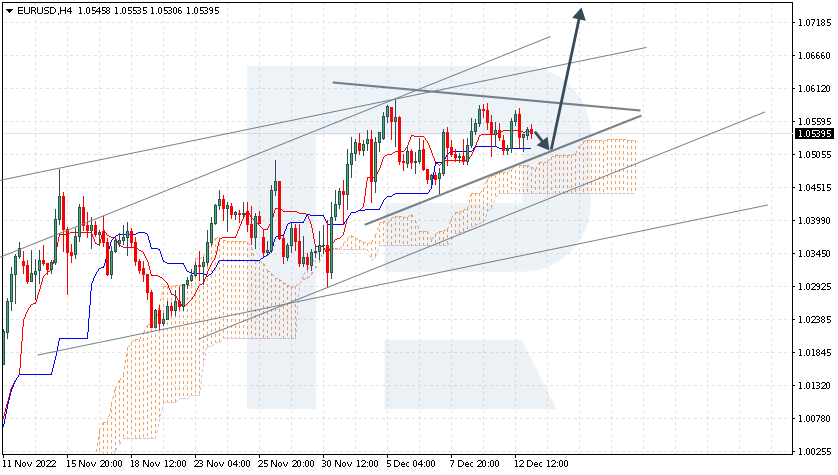
The trend on the EUR/USD currency pair on the hourly time frame is bullish. But the price is trading below the moving averages, and the MACD indicator is negative again. The price is adjusting. Buy trades are best considered from the support level of 1.0340 but with additional confirmation. Sell deals can be considered from the resistance level of 1.0408, but better with confirmation in the form of a reverse initiative.

Alternative scenario: if the price breaks down through the support level of 1.0194 and fixes below it, the downtrend will likely resume.

EUR/USD
News feed for 2022.11.28:
  • – Eurozone ECB President Lagarde Speaks at 16:00 (GMT+3);
  • – US FOMC Member Bullard Speaks at 19:00 (GMT+3);
  • – US FOMC Member Williams Speaks at 19:00 (GMT+3).

The GBP/USD currency pair

Technical indicators of the currency pair:
  • Prev Open: 1.2109
  • Prev Close: 1.2092
  • % chg. over the last day: -0.14 %

The Bank of England will release several financial reports this week, including consumer credit, secured lending, and mortgage approvals. Several business reports will also be released, including the CBI distribution trade survey. Sales data showed that Britons spent less money on Black Friday than last year, even though the number of transactions was up 3.2%. Energy-saving products led purchases as Britons look to save money on their energy bills.

Trading recommendations
  • Support levels: 1.2043, 1.1945, 1.1684, 1.1476, 1.1418, 1.1172, 1.1093, 1.0915, 1.0817
  • Resistance levels: 1.2147, 1.2167

From the technical point of view, the trend on the GBP/USD currency pair on the hourly time frame is bullish. The price is trading higher at the level of the moving averages. The MACD indicator has turned negative, and there is slight sellers’ pressure during the day. Under such market conditions, it is better to look for buy deals from the support level of 1.2043, but with confirmation. Sell trades are best sought on intraday time frames from resistance levels of 1.2147 or 1.2167, but they are also better with confirmation.

Alternative scenario: if the price breaks down of the 1.1800 support level and fixes below it, the downtrend will likely resume.

GBP/USD
There is no news feed for today.

The USD/JPY currency pair

Technical indicators of the currency pair:
  • Prev Open: 138.57
  • Prev Close: 139.13
  • % chg. over the last day: +0.40 %

The situation on the currency pair USD/JPY remains the same. The Bank of Japan intends to keep its monetary policy soft till spring 2023, while the US Federal Reserve is on the path of tightening and plans at least two more interest rate hikes. The difference between the rates will put negative pressure on the Japanese Yen, so fundamentally, it is too early to expect a reversal in the USD/JPY.

Trading recommendations
  • Support levels: 138.50, 137.65, 136.80
  • Resistance levels: 140.75, 143.17, 145.16, 146.06, 147.34, 148.82, 150.00

From the technical point of view, the medium-term trend on the currency pair USD/JPY is bearish. The MACD indicator is in the negative zone, but the sellers’ strength is insignificant. Under such market conditions, buy trades can be searched for on intraday time frames from the support level of 138.50, but only with confirmation. Sell deals can be searched from the resistance level of 140.75 under the condition of a reverse reaction or a false breakdown.

Alternative scenario: If the price fixes above 145.84, the uptrend will likely resume.

USD/JPY
There is no news feed for today.

The USD/CAD currency pair

Technical indicators of the currency pair:
  • Prev Open: 1.3337
  • Prev Close: 1.3377
  • % chg. over the last day: +0.30 %

The Bank of Canada and the US Federal Reserve have taken an aggressive stance on interest rate increases this year in an attempt to stem rampant inflation. On the one hand, the result of this policy has been a slowdown in inflation indicators. On the other hand, economic indicators have fallen. The Bank of Canada’s upcoming interest rate decision in December will depend on key data such as the latest employment data and wage trends to be released this week. For now, analysts are predicting that the Bank of Canada will raise interest rates by 0.25% in December before taking a pause.

Trading recommendations
  • Support levels: 1.3386, 1.3281, 1.3212
  • Resistance levels: 1.3458, 1.3508, 1.3608, 1.3682, 1.3776, 1.3855

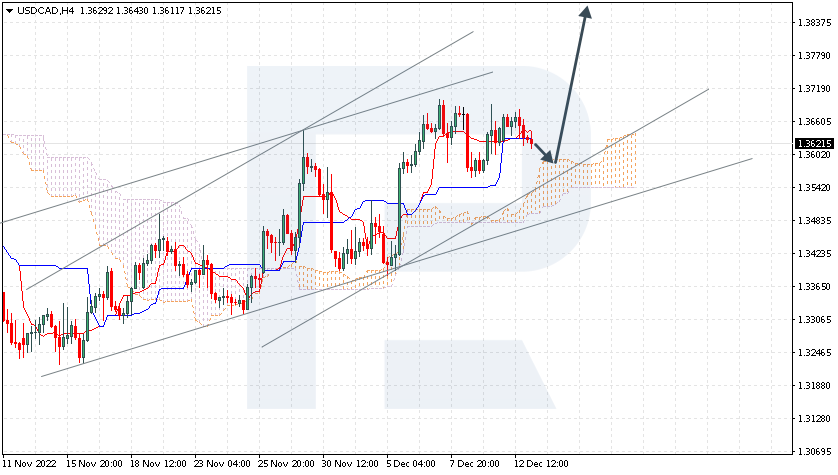
From the point of view of technical analysis, the trend on the USD/CAD currency pair is bearish. The price has corrected to the support levels. But the MACD indicator is in the positive zone. On the lower time frames inside the day, purchases are observed. The best way to sell is to consider the resistance level of 1.3458, but with confirmation. Buy trades should be considered on the lower time frames from the support level of 1.3386, but also with additional confirmation.

Alternative scenario: if the price breaks out and consolidates above the resistance level of 1.3508, the uptrend will likely resume.

USD/CAD
There is no news feed for today.

By JustMarkets


This article reflects a personal opinion and should not be interpreted as an investment advice, and/or offer, and/or a persistent request for carrying out financial transactions, and/or a guarantee, and/or a forecast of future events.

Sales in the United States on Black Friday reached a record high, despite high inflation

By JustMarkets

At the stock market close, the Dow Jones Index (US30) increased by 0.45% (+2.20% for the week), while the S&P 500 Index (US500) decreased by 0.03% (+1.51% for the week). The NASDAQ Technology Index (US100) lost 0.52% on Friday (-0.27% for the week).

According to Adobe Analytics, online sales in the US reached a record $9 billion on Black Friday, despite high inflation. Adobe Analytics measures e-commerce by analyzing transactions on Websites and has access to data on purchases at 85% of the top 100 online stores in the United States. Adobe expects Cyber Monday to also be the biggest online shopping day of the season. Record spending by Americans will undoubtedly be reflected in earnings in companies’ Q4 reports.

The US regulators banned Huawei Technologies Co. and ZTE Corp. from selling electronics in the United States, saying they pose security risks. The Federal Communications Commission (FCC) also banned suppliers such as Hangzhou Hikvision Digital Technology Co., Dahua Technology Co., and two-way radio manufacturer Hytera Communications Corp.

Finance Canada has modeled various fiscal projections in light of recent developments, such as persistent inflationary pressures and ongoing monetary policy changes that could affect the country’s short-term growth outlook. This scenario indicates that inflation-which is currently at 6.9%-will become more deeply entrenched, forcing central banks to raise interest rates more than initially expected. Financial officials predict that if there is a “hard landing” of the economy, inflation will remain persistently high through 2023 and remain above 3% through the first quarter of 2024, reaching the Bank of Canada’s 2% target by the end of 2024. This would push the Bank of Canada to raise interest rates to 4.5% in the first half of next year (currently at 3.75%) and push Canada into a mild recession in the first quarter of next year.

Equity markets in Europe were mostly up last week. German DAX (DE30) gained 0.01% (+1.01% for the week), French CAC 40 (FR40) added +0.08% (+1.32% for the week), Spanish IBEX 35 (ES35) increased by 0.34% (+3.89% for the week), British FTSE 100 (UK100) closed on Friday up by 0.27% (+1.37% for the week).

German GDP data for the third quarter was revised upward. Growth was 0.4% q/q. However, the latest surveys show that despite an increase in business activity, the economy is slowing down and might contract this quarter.

The price of Russian offshore oil should be capped at $30 to $40 a barrel, below the level proposed by the G7 countries, Ukrainian President Vladimir Zelenskyy said Saturday. European Union governments, seeking to limit Moscow’s ability to finance the war in Ukraine without causing an oil supply shock, disagree on setting an upper limit. At the moment, the range of $65-70 per barrel is being considered. Restrictions are due to take effect on December 5, although there is still no decision. Last week, Saudi Arabia’s Energy Minister reiterated his support for the OPEC+ cuts, which are set to continue until the end of 2023, and noted that the bloc remains ready to step in when necessary to balance supply and demand. With the group’s OPEC meeting coming up next week, tensions in the oil market will be prohibitive this week.

Asian markets traded flat last week. Japan’s Nikkei 225 (JP225) increased by 0.98% for the week, Hong Kong’s Hang Seng (HK50) lost 0.46%, and Australia’s S&P/ASX 200 (AU200) was up by 0.24%.

Bank of Japan (BOJ) Deputy Governor Masayoshi Amamiya said Sunday that the Central Bank would conduct an annual survey of financial institutions and companies looking for ways to support the country’s growing climate finance market. The initial survey showed “high demand” in Japan for green bonds and other debt instruments related to environmental protection, social protection, and governance (ESG).

China’s overall industrial profits declined between January and October as the COVID-19 outbreak restrained economic activity. Profits fell in 22 of China’s 41 major industries.

Protests have broken out in China. Chinese protesters clashed with police in several major cities over the weekend amid growing public discontent with the government’s strict measures to combat COVID. A deadly fire in Urumqi linked to quarantine measures sparked a wave of protests across the country. The unrest now has the potential to stall further China’s economic growth, which is already suffering from the country’s strict measures against COVID this year. China is also struggling with a record-high daily increase in COVID-19 cases.

In the commodities market, futures on natural gas (+14.55%), coffee (+6.06%), orange juice (+4.57%), and silver (+2.3%) showed the biggest gains over the week. Futures on palladium (-4.65%), WTI oil (-4.44%), cotton (-4.31%), Brent oil (-4.23%), sugar (-3.84%), and wheat (-3.56%) showed the biggest drop.

S&P 500 (F) (US500) 4,026.12 −1.14 (−0.028%)

Dow Jones (US30) 34,347.03 +152.97 (+0.45%)

DAX (DE40) 14,541.38 +1.82 (+0.013%)

FTSE 100 (UK100) 7,486.67 +20.07 (+0.27%)

USD Index 106.06 -0.01 (-0.01%)

Important events for today:
  • – Australia RBA Gov Lowe Speaks at 01:00 (GMT+3);
  • – Australia Retail Sales (m/m) at 02:30 (GMT+3);
  • – Eurozone ECB President Lagarde Speaks at 16:00 (GMT+3);
  • – US FOMC Member Bullard Speaks at 19:00 (GMT+3);
  • – US FOMC Member Williams Speaks at 19:00 (GMT+3).

By JustMarkets


This article reflects a personal opinion and should not be interpreted as an investment advice, and/or offer, and/or a persistent request for carrying out financial transactions, and/or a guarantee, and/or a forecast of future events.

Trade of the week: Gold Waits For Fresh Fundamental Spark

By ForexTime

Gold kicked off the week on a positive note as unrest in China over Covid restrictions strained global sentiment. A growing sense of anticipation ahead of the US jobs report along with other top-tier data this week added to the overall caution, leaving investors on edge. With a softer dollar adding to the mix, bulls were injected with enough confidence to challenge levels not seen since November 18.

Nevertheless, the precious metal remains in a wide range on the daily charts with support at $1735 and resistance at $1785. Over the past few weeks, gold has bounced within this range as bulls and bears engaged in a fierce tug of war.

However, with the fundamentals slowly tilting in favour of gold bulls – a solid breakout could be around the corner. Gold needs a fresh fundamental spark to get its gears moving and this could come in the form of speeches from Fed officials, geopolitical risks, or high-quality US economic data.

Before we thoroughly discuss what to expect from gold over the next few days, it is worth keeping in mind that gold is up roughly 8% this month. November will be the first positive month for the precious metal since March 2022! Looking at the technicals, bulls are certainly in the vicinity on the daily and weekly timeframe but things still look choppy on the monthly charts. If the developments and data over the next few days support gold bulls, this could set the tone for December.

The low down…

It has been a volatile year for gold.

After surging and peaking in March following Russia’s invasion of Ukraine, the precious metal found itself on a slippery decline as the Fed aggressively raised rates to tame inflation. Although gold is down roughly 4% year-to-date, this inflates to almost 15% when measured from the March 2022 high.

Could the precious metal be experiencing a change of fortune after being beaten black and blue for most of this year? Given how the Fed is expected to slow its pace of interest rate increases in the face of cooling inflation, this may lead to a weaker dollar and falling Treasury yields. This combination is nothing but good news for zero-yielding gold which will most likely shine in a low-interest rate environment.

The week ahead…

This could be a big week for gold due to the protests in China, speeches from Fed officials including Jerome Powell, and key US economic reports.

Bulls have already made a move on Monday thanks to geopolitical tensions and this momentum could roll over into the next trading session. It may be worth keeping an eye on speeches by New York Fed President John Williams, and St. Louis Fed President James Bullard. There is a lot going on mid-week with Fed Chair Jerome Powell under the spotlight. He is expected to reinforce expectations over the central bank slowing its pace of interest rate increases from December. Such a development may lead to a weaker dollar and falling Treasury yields – resulting in a boost for gold prices. Investors will also be presented with the Fed Beige Book report and US 3Q GDP second estimate which could result in some additional dollar volatility, spilling over to gold.

Thursday sees the release of the US weekly initial jobless claims and most importantly PCE deflator. Much attention will be directed toward the PCE Core Deflator which is the Fed’s preferred measure of inflation. Any signs of cooling inflation will most likely fortify expectations around the Fed adopting a less aggressive approach toward rates.

It’s all about the US jobs report on Friday which could be the real market shaker. Markets expect the US economy to have created roughly 200,000 jobs in October while the jobless rate is expected to remain unchanged. A report that meets or prints below expectations may justify a change in the pace of the Fed’s policy tightening – ultimately supporting gold.

Time for gold to re-test $1800 and beyond?

On the daily timeframe, gold prices are trading above the 50 and 100 SMA but below the 200 SMA. As identified earlier, support can be found at around $1735 and resistance at $1780. A solid breakout above $1780 could open the doors towards $1800, $1840, and $1858. Alternatively, a move back below $1735 could signal a selloff towards $1700, $1680, and $1665.


Forex-Time-LogoArticle by ForexTime

ForexTime Ltd (FXTM) is an award winning international online forex broker regulated by CySEC 185/12 www.forextime.com

Murrey Math Lines 23.11.2022 (USDJPY, USDCAD)

By RoboForex.com

USDJPY, “US Dollar vs Japanese Yen”

On H4, the quotes are under the 200-day Moving Average, which indicates the prevalence of a downtrend. The RSI has broken through the ascending trendline downwards. As a result, we should expect a test of 2/8 (140.62), a breakaway, and falling to the support level of 1/8 (139.06). The scenario can be cancelled by rising over the resistance level of 3/8 (142.18). In this case, the pair may rise to 4/8 (143.75).

USDJPYH4
Risk Warning: the result of previous trading operations do not guarantee the same results in the future

On M15, a breakaway of the lower line of VoltyChannel will increase the probability of a decline.

USDJPY_M15
Risk Warning: the result of previous trading operations do not guarantee the same results in the future

USDCAD, “US Dollar vs Canadian Dollar”

The situation with the USDCAD pair is similar. On H4, the quotes are under the 200-day Moving Average, and the RSI has broken through the ascending trendline. A breakaway of 1/8 (1.3305) is expected, followed by falling to 0/8 (1.3183). The scenario can be cancelled by rising over the resistance level of 2/8 (1.3427). In this case, the pair may reach 3/8 (1.3549).

USDCAD_H4
Risk Warning: the result of previous trading operations do not guarantee the same results in the future

On M15, the lower line of VoltyChannel is broken away. This indicates a downtrend and a high probability of further falling.

USDCAD_M15

Article By RoboForex.com

Attention!
Forecasts presented in this section only reflect the author’s private opinion and should not be considered as guidance for trading. RoboForex LP bears no responsibility for trading results based on trading recommendations described in these analytical reviews.

The cryptocurrency market digest (BTC). Overview for 23.11.2022

By RoboForex.com

The BTC is recovering and looking good: the leading cryptocurrency has returned to 16,582 USD upon falling below it. However, the whole situation is troublesome.

We may suppose that the current pullback is purely technical because fundamentally speaking, the market is stressed.

Genesis keeps fighting for its life. The company has hired counselors to work out all the ways of remaining afloat. Bankruptcy is also being discussed. Moreover, experts are looking for creditors that could help deposit the company’s balance for 500 million and up to 1 billion USD.

Market players are clearly seeing the risks that have impacted other players of the sector as well. Asset withdrawal from any platform may be rough and merciless. And no one seems insured from this.

On Wednesday, capitalisation of the crypto market is 823.61 billion USD: it has restored from the bottom hit yesterday. The BTC takes up 38.7%, the ETH – 17.3%.

Salvador: times of regulations

Salvador authorities have started working on regulating digital asset services and crypto emission. They plan to create a special commission that will be registering crypto companies and control their business. Moreover, the draft bill mentions creation of a department that will be managing, storing, and invest funds.

New York State authorities have banned PoW-based mining

Governor of the New York state Kathy Hochul has signed a law that puts a two-year ban on Proof-of-Work (PoW) crypto mining. Earlier a ban was imposed on opening new companies that use environmentally dirty mining.

CRV sky-rocketed

The quotes of the CRV (Curve DAO Token) have grown by 43% overnight. Now the coin is number 82 in the Top 100 rating of crypto. The LTC have also demonstrated sufficient dynamics, growing by 29% overnight.

Article By RoboForex.com

Attention!
Forecasts presented in this section only reflect the author’s private opinion and should not be considered as guidance for trading. RoboForex LP bears no responsibility for trading results based on trading recommendations described in these analytical reviews.

The Analytical Overview of the Main Currency Pairs on 2022.11.23

By JustMarkets

The EUR/USD currency pair

Technical indicators of the currency pair:
  • Prev Open: 1.0041
  • Prev Close: 1.0301
  • % chg. over the last day: +0.58 %

ECB officials are still trying to decide which interest rate hike should be chosen at the December meeting. The main discussions are between the steps of 50 and 75 bps. Analysts think that considering the first signs of an inflation slowdown in the Eurozone, ECB will not raise the rate aggressively and, therefore, will stop at the step of 0.5%.

Trading recommendations
  • Support levels: 1.0193, 1.0092, 1.0043, 0.9968
  • Resistance levels: 1.0341, 1.0504

From the technical point of view, the trend on the EUR/USD currency pair on the hourly time frame is bullish. The price is trading at the level of the moving averages, and the MACD indicator is positive again. For buy deals, it is best to wait for the completion of the corrective movement to the support levels of 1.0193, but with additional confirmation. Sell deals can be considered from the resistance level of 1.0341 inside the day, but it is also better with confirmation.

Alternative scenario: if the price breaks down through the support level of 0.9993 and fixes below it, the downtrend will likely resume.

EUR/USD
News feed for 2022.11.23:
  • – Eurozone France Manufacturing PMI (m/m) at 10:15 (GMT+3);
  • – Eurozone France Services PMI (m/m) at 10:15 (GMT+3);
  • – Eurozone German Manufacturing PMI (m/m) at 10:30 (GMT+3);
  • – Eurozone German Services PMI (m/m) at 10:30 (GMT+3);
  • – Eurozone Manufacturing PMI (m/m) at 11:00 (GMT+3);
  • – Eurozone Services PMI (m/m) at 11:00 (GMT+3);
  • – US Durable Goods Orders (m/m) at 15:30 (GMT+3);
  • – US Initial Jobless Claims (w/w) at 15:30 (GMT+3);
  • – US Manufacturing PMI (m/m) at 16:45 (GMT+3);
  • – US Services PMI (m/m) at 16:45 (GMT+3);
  • – US New Home Sales (m/m) at 17:00 (GMT+3);
  • – US Michigan Consumer Sentiment (m/m) at 17:00 (GMT+3);
  • – US Natural Gas Storage (w/w) at 19:00 (GMT+3);
  • – US FOMC Meeting Minutes at 21:00 (GMT+3).

The GBP/USD currency pair

Technical indicators of the currency pair:
  • Prev Open: 1.1821
  • Prev Close: 1.1884
  • % chg. over the last day: +0.53 %

According to a new report from the influential Paris-based OECD group, economic growth in the UK lags behind the world’s largest economies after the Covid-19 pandemic and is well below average. The G-7 countries, which include Canada, France, Germany, Italy, Japan, the US, and the UK, have collectively grown GDP by 2.5%, with only the UK registering a decline. That is the reason why the UK government first needs to regain investor confidence.

Trading recommendations
  • Support levels: 1.1684, 1.1476, 1.1418, 1.1172, 1.1093, 1.0915, 1.0817
  • Resistance levels: 1.1921

From the technical point of view, the trend on the GBP/USD currency pair on the hourly time frame is bullish. The price is trading at the level of the moving averages. The MACD indicator is inactive, and a flat structure is formed in the form of a narrowing triangle pattern. Under such market conditions, it is better to look for buy deals from the support level of 1.1684, but with confirmation. It is best to look for sell trades on intraday time frames from the resistance level of 1.1921, but it is also better with confirmation because the level has already been tested.

Alternative scenario: if the price breaks down from the 1.1418 support level and fixes below it, the downtrend will likely resume.

GBP/USD
News feed for 2022.11.23:
  • – UK Manufacturing PMI (m/m) at 11:30 (GMT+3);
  • – UK Services PMI (m/m) at 11:30 (GMT+3).

The USD/JPY currency pair

Technical indicators of the currency pair:
  • Prev Open: 142.07
  • Prev Close: 141.21
  • % chg. over the last day: -0.61 %

Japan’s weighted average inflation rate, tracked as an indicator of whether price growth is expanding, reached a record 1.1% in October, indicating that inflationary pressures due to rising commodity and labor costs are intensifying. Unlike the Consumer Price Index (CPI), which is affected by fuel and energy costs, the weighted median inflation rate is useful for tracking how broadly prices are rising. According to analysts, the Bank of Japan (BOJ) may change its ultra-low interest rates if wages rise in tandem with inflation next year.

Trading recommendations
  • Support levels: 140.75, 139.44, 137.65, 136.80
  • Resistance levels: 143.17, 145.16, 146.06, 147.34, 148.82, 150.00

From the technical point of view, the medium-term trend on the currency pair USD/JPY is bearish. But the price is approaching the priority change level. The MACD indicator has become inactive again, and the flat structure is being formed again. Under such market conditions, traders can look to buy trades on the intraday time frames from the support level of 140.75 or 139.44, but only with confirmation. Sell positions can be looked for from the resistance level of 143.17, provided that there is a reversal or a false breakdown.

Alternative scenario: If the price fixes above 145.84, the uptrend will likely resume.

USD/JPY
There is no news feed for today. It’s a bank holiday.

The USD/CAD currency pair

Technical indicators of the currency pair:
  • Prev Open: 1.3449
  • Prev Close: 1.3372
  • % chg. over the last day: -0.58 %

Statistics Canada said retail sales in September fell by 0.5%, in line with market estimates. This is below the 0.4% gain in August. On an annualized basis, retail sales rose to 6.9%. However, retail sales fell by 1% in the third quarter, which is the first quarterly decline since 2020. Against the backdrop of weakening retail sales, USD/CAD quotes declined due to heightened recession fears.

Trading recommendations
  • Support levels: 1.3351, 1.3281, 1.3212
  • Resistance levels: 1.3508, 1.3608, 1.3682, 1.3776, 1.3855, 1.3968

From the point of view of technical analysis, the trend on the USD/CAD currency pair is bearish. The price has corrected to the support levels. The MACD indicator became negative, and within the day, there was slight sellers’ pressure. The best way to sell is to consider the resistance level of 1.3508, but with confirmation. Buy trades should be considered on the lower time frames from the support level of 1.3351 or 1.3281, but with additional confirmation in the form of a reverse initiative.

Alternative scenario: if the price breaks out and consolidates above the resistance level of 1.3508, the uptrend will likely resume.

USD/CAD
News feed for 2022.11.23:
  • – US Crude Oil Reserves (w/w) at 17:30 (GMT+3).

By JustMarkets


This article reflects a personal opinion and should not be interpreted as an investment advice, and/or offer, and/or a persistent request for carrying out financial transactions, and/or a guarantee, and/or a forecast of future events.

The RBNZ raised the interest rate by 0.75% and is not going to stop.

By JustMarkets

The US indices returned to growth on Tuesday, helped by a series of positive quarterly results from retailers. As the stock market closed, the Dow Jones Index (US30) increased by 1.18%, and the S&P 500 Index (US500) added 1.36%. The NASDAQ Technology Index (US100) gained 1.36% yesterday.

To summarize the comments from Fed officials over the past two weeks, the Central Bank is hinting at a slowdown in the pace of rate hikes at its December meeting, but the peak of rate hikes will likely be higher than previously expected. The prospect of a longer rate hike has investors worried that the Fed will not avoid a soft landing and that the economy will face a recession.

According to Statistics Canada, retail sales fell by 0.5% in September. Retail sales fell by 1% in the third quarter, the first quarterly decline since 2020. Lower-income Canadians will be hit the hardest as debt-service costs rise and purchasing power declines. According to analysts, the pain of the coming recession will not be shared equally between Canadian businesses and households. The manufacturing sector is likely to be among the first to suffer.

The OECD’s Global Economic Outlook report was also released Tuesday. According to the report, the global economy will slow down in the coming year due to the energy market shock caused by the Russian invasion of Ukraine and on the back of excessive inflation, low consumer confidence, and global risks. Nevertheless, the OECD believes the world will avoid a recession and predicts global economic growth of 3.1% in 2022, 2.2% in 2023, and 2.7% in 2024.

Stock markets in Europe were mostly up Tuesday. Germany’s DAX (DE30) gained 0.29%, France’s CAC 40 (FR40) added 0.35%, Spain’s IBEX 35 (ES35) increased by 1.67%, and the British FTSE 100 (UK100) closed up by 1.03% yesterday.

The European Union softened its latest sanctions proposal on price caps on oil exports from Russia, postponing its full implementation. According to the document, the bloc proposed adding a 45-day transition period to the imposition of the cap. Allies had previously discussed setting an upper limit between $40 and $60 a barrel – a range from prewar production costs in Russia – but analysts said the price range would probably be a bit higher. The EU is also proposing a 90-day transition period in case of any future changes in the price cap level. Most G-7 countries and the EU plan to stop importing Russian oil this year. Petroleum product regulations, including the oil price cap, will take effect in February.

Asian markets traded flat yesterday. Japan’s Nikkei 225 (JP225) gained 0.61% on Tuesday, Hong Kong’s Hang Seng (HK50) decreased by 1.31%, while Australia’s S&P/ASX 200 (AU200) ended the day up by 0.59%.

The Central Bank of New Zealand raised interest rates by a record 75 basis points and hinted at the further tightening of policy. The RBNZ forecasts show that OCR will peak at 5.5% in the third quarter of 2023, up from the previous peak of 4.1%. The bank forecasts that the economy will contract for four consecutive quarters starting in the second quarter of next year, with inflation starting to decline in the first quarter of 2023.

Concerns are growing in Japan that supply and demand for electricity will be strained this winter. The Japanese government is asking households and companies across the country to start saving electricity from December 1 through March 31. Although no quantitative figures have been set, this is the first time in seven years that people are being asked to save electricity during winter.

S&P 500 (F) (US500) 4,003.58 +53.64 (+1.36%)

Dow Jones (US30) 34,098.10 +397.82 (+1.18%)

DAX (DE40) 14,422.35 +42.42 (+0.29%)

FTSE 100 (UK100) 7,452.84 +75.99  (+1.03%)

USD Index 107.17 0.67 (-0.62%)

Important events for today:
  • – Australia Manufacturing PMI (m/m) at 00:00 (GMT+3);
  • – Australia Services PMI (m/m) at 00:00 (GMT+3);
  • – New Zealand RBNZ Interest Rate Decision at 03:00 (GMT+3);
  • – New Zealand RBNZ Monetary Policy Statement at 03:00 (GMT+3);
  • – New Zealand RBNZ Press Conference at 04:00 (GMT+3);
  • – Singapore Consumer Price Index (m/m) at 07:00 (GMT+3);
  • – Eurozone France Manufacturing PMI (m/m) at 10:15 (GMT+3);
  • – Eurozone France Services PMI (m/m) at 10:15 (GMT+3);
  • – Eurozone German Manufacturing PMI (m/m) at 10:30 (GMT+3);
  • – Eurozone German Services PMI (m/m) at 10:30 (GMT+3);
  • – Eurozone Manufacturing PMI (m/m) at 11:00 (GMT+3);
  • – Eurozone Services PMI (m/m) at 11:00 (GMT+3);
  • – UK Manufacturing PMI (m/m) at 11:30 (GMT+3);
  • – UK Services PMI (m/m) at 11:30 (GMT+3);
  • – US Durable Goods Orders (m/m) at 15:30 (GMT+3);
  • – US Initial Jobless Claims (w/w) at 15:30 (GMT+3);
  • – US Manufacturing PMI (m/m) at 16:45 (GMT+3);
  • – US Services PMI (m/m) at 16:45 (GMT+3);
  • – US New Home Sales (m/m) at 17:00 (GMT+3);
  • – US Michigan Consumer Sentiment (m/m) at 17:00 (GMT+3);
  • – US Crude Oil Reserves (w/w) at 17:30 (GMT+3);
  • – US Natural Gas Storage (w/w) at 19:00 (GMT+3);
  • – US FOMC Meeting Minutes at 21:00 (GMT+3).

By JustMarkets


This article reflects a personal opinion and should not be interpreted as an investment advice, and/or offer, and/or a persistent request for carrying out financial transactions, and/or a guarantee, and/or a forecast of future events.

Why fixing methane leaks from the oil and gas industry can be a climate game-changer – one that pays for itself

By Jim Krane, Jones Graduate School of Business at Rice University 

What’s the cheapest, quickest way to reduce climate change without roiling the economy? In the United States, it may be by reducing methane emissions from the oil and gas industry.

Methane is the main component of natural gas, and it can leak anywhere along the supply chain, from the wellhead and processing plant, through pipelines and distribution lines, all the way to the burner of your home’s stove or furnace.

Once it reaches the atmosphere, methane’s super heat-trapping properties render it a major agent of warming. Over 20 years, methane causes 85 times more warming than the same amount of carbon dioxide. But methane doesn’t stay in the atmosphere for long, so stopping methane leaks today can have a fast impact on lowering global temperatures.

That’s one reason governments at the 2022 United Nations climate change conference in Egypt focused on methane as an easy win in the climate battle.

So far, 150 countries, including the United States and most of the big oil producers other than Russia, have pledged to reduce methane emissions from oil and gas by at least 30%. China has not signed but has agreed to reduce emissions. If those pledges are met, the result would be equivalent to eliminating the greenhouse gas emissions from all of the world’s cars, trucks, buses and all two- and three-wheeled vehicles, according to the International Energy Agency.

There’s also another reason for the methane focus, and it makes this strategy more likely to succeed: Stopping methane leaks from the oil and gas industry can largely pay for itself and boost the amount of fuel available.

Capturing methane can pay off

Methane is produced by decaying organic material. Natural sources, such as wetlands, account for roughly 40% of today’s global methane emissions. But the majority comes from human activities, such as farms, landfills and wastewater treatment plants – and fuel production. Oil, gas and coal together make up about a third of global methane emissions.

In all, methane is responsible for almost a third of the 1.2 degrees Celsius (2.2 degrees Fahrenheit) that global temperatures have risen since the industrial era.

Unfortunately, methane emissions are still rising. In 2021, atmospheric levels increased to 1,908 parts per billion, the highest levels in at least 800,000 years. Last year’s increase of 18 parts per billion was the biggest on record.

Among the sources, the oil and gas sector is best equipped to stop emitting because it is already configured to sell any methane it can prevent from leaking.

Methane leaks and “venting” in the oil and gas sector have numerous causes. Unintentional leaks can flow from pneumatic devices, valves, compressors and storage tanks, which often are designed to vent methane when pressures build.

Unlit or inefficient flares are another big source. Some companies routinely burn off excess gas that they can’t easily capture or don’t have the pipeline capacity to transport, but that still releases methane and carbon dioxide into the atmosphere.

Nearly all of these emissions can be stopped with new components or regulations that prohibit routine flaring.

Making those repairs can pay off. Global oil and gas operations emitted more methane in 2021 than Canada consumed that entire year, according to IEA estimates. If that gas were captured, at current U.S. prices – $4 per million British thermal unit – that wasted methane would fetch around $17 billion. The IEA determined that a one-time investment of $11 billion would eliminate roughly 75% of methane leaks worldwide, along with an even larger amount of gas that is wasted by “flaring” or burning it off at the wellhead.

The repairs and infrastructure investments would not only reduce warming, but they would also generate profits for producers and provide direly needed natural gas to markets undergoing drastic shortages due to Russia’s invasion of Ukraine.

Getting companies to cut methane emissions

Motivating U.S. producers to act has been the big hurdle.

The Biden administration is aiming for an 87% reduction in methane emissions below 2005 levels by the end of the decade. To get there, it has reimposed and strengthened U.S. methane rules that were dropped by the Trump administration. These include requiring drillers to find and repair leaks at more than 1 million U.S. well sites.

The U.S. Inflation Reduction Act of 2022 further incentivizes methane mitigation, including by levying an emissions tax on large oil and gas producers starting at $900 per ton in 2024, increasing to $1,500 in 2026. That fee, which can be waived by the Environmental Protection Agency and doesn’t affect small producers or leaks below 0.2% of gas produced, is based on the social cost to society from methane’s contribution to climate damage.

Customers are also putting pressure on the industry. Regulatory indifference by the Trump administration to U.S. methane flaring and venting led to cancellation of some European plans to import U.S. liquefied natural gas.

Reducing methane isn’t always straightforward, though, particularly in the U.S., where thousands of oil companies operate with minimal oversight.

A company’s methane emissions aren’t necessarily proportional to its oil and gas production, either. For example, a 2021 study using data from the EPA found Texas-based Hilcorp Energy reporting nearly 50% more methane emissions than ExxonMobil, despite producing less oil and gas. Hilcorp, which specializes in acquiring “late life” assets, says it is working to reduce emissions. Other little-known producers have also reported large emissions.

Investor pressure has pushed several publicly traded companies to reduce their methane emissions, but in practice this sometimes leads them to sell off “dirty” assets to smaller operators with less oversight.

In such a situation, the easiest way to encourage companies to clean up is via a tax. Done right, companies would act before they had to pay.

Using technology to keep emissions in check

Unlike carbon dioxide, which lingers in the atmosphere for a century or more, methane only sticks around for about a dozen years. So, if humans stop replenishing methane stocks in the atmosphere, those levels will decline.

A review of methane leaks in the Permian Basin shows the big impact that some regions can have.

Researchers found that gas and oil operations in the Permian, in west Texas and New Mexico, had a leakage rate estimated at 3.7% in 2018 and 2019, before the pandemic. A 2012 study found that leakage rates above 3.2% make climate damage from using natural gas worse than that from burning coal, which is normally considered the biggest climate threat.

Map showing largest emissions in Russia, the Middle East and the US
Map of methane emissions from oil, gas and coal globally, 2016.
Joshua Stevens/NASA Earth Observatory

Methane leaks used to escape detection because the gas is invisible. Now, the proliferation of satellite-based sensors and infrared cameras makes detection easy.

Companies such as GTI Energy’s Veritas, Project Canary and MiQ have also launched to assist natural gas producers in reducing emissions and then verifying the reductions. At that point, if leaks are less than 0.2%, producers can avoid the federal fee and also market their output as “responsibly sourced” gas.The Conversation

About the Author:

Jim Krane, Fellow for Energy Studies, Baker Institute for Public Policy; Lecturer, Jones Graduate School of Business at Rice University

This article is republished from The Conversation under a Creative Commons license. Read the original article.


Ichimoku Cloud Analysis 22.11.2022 (EURUSD, AUDUSD, GBPUSD)

By RoboForex.com

EURUSD, “Euro vs US Dollar”

The pair is correcting inside a bullish channel. The instrument is going inside the Ichimoku Cloud, which suggests a flat. A test of the lower border of the Cloud at 1.0125 is expected, followed by growth to 1.0575. An additional signal confirming the growth will be a bounce off the lower border of the bullish channel. The scenario can be cancelled by a breakaway of the lower border of the Cloud and securing under 1.0015, which will mean further falling to 1.0025. The growth will be confirmed by a breakaway of the upper border of the correctional channel and securing above 1.0335.

EURUSD
Risk Warning: the result of previous trading operations do not guarantee the same results in the future

AUDUSD, “Australian Dollar vs US Dollar”

The pair is testing the lower border of a bullish Wolfe Waves pattern. The instrument is going above the Ichimoku Cloud, which suggests an uptrend. A test of the lower border of the Cloud at 0.6545 is expected, followed by growth to 0.6785. An additional signal confirming the growth will be a bounce off the lower border of the bullish channel. The scenario can be cancelled by a breakaway of the lower border of the Cloud and securing under 0.6475, which will mean further falling to 0.6385. The growth will be confirmed by a breakaway of the upper border of the correctional channel and securing above 0.6655.

AUDUSD
Risk Warning: the result of previous trading operations do not guarantee the same results in the future

GBPUSD, “Great Britain Pound vs US Dollar”

The pair is squeezed in a Triangle pattern. The instrument is going above the Ichimoku Cloud, which suggests an uptrend. A test of the upper border of the Cloud at 1.1805 is expected, followed by growth to 1.2255. An additional signal confirming the growth will be a bounce off the lower border of the Triangle pattern. The scenario can be cancelled by a breakaway of the lower border of the Cloud and securing under 1.1475, which will mean further falling to 1.1485. The growth will be confirmed by a breakaway of the upper border of the Triangle and securing above 1.1925

GBPUSD

Article By RoboForex.com

Attention!
Forecasts presented in this section only reflect the author’s private opinion and should not be considered as guidance for trading. RoboForex LP bears no responsibility for trading results based on trading recommendations described in these analytical reviews.

EURUSD: a pause at the market. Overview for 22.11.2022

By RoboForex.com

On Tuesday, the market major hardly moves; the current quote is 1.0250.

Yesterday the news background for currencies was still, because main expectations were concentrated on commodities. The macroeconomic calendar is also empty, and the quotes have accounted for any expectations of the actions of the US Fed. Today important statistics will also be scarce.

On Tuesday afternoon, the Euro zone will publish the CCI for November, and the US – the PMI in Richmond production. Both reports are unlikely to impress investors.

And while market players are saving power, contemplating the background, the European gas market is worth taking a look at. Warm weather allowed for saving fuel, which eases inflation stress at least temporarily. Moreover, Europe has started to take care of making reserves of energy carriers for the future and is negotiating with alternative suppliers. If things go smooth, the EUR might get some support.

Article By RoboForex.com

Attention!
Forecasts presented in this section only reflect the author’s private opinion and should not be considered as guidance for trading. RoboForex LP bears no responsibility for trading results based on trading recommendations described in these analytical reviews.