The Analytical Overview of the Main Currency Pairs on 2022.12.29

By JustMarkets

The EUR/USD currency pair

Technical indicators of the currency pair:
  • Prev Open: 1.0638
  • Prev Close: 1.0611
  • % chg. over the last day: -0.25 %

Inflation in the Eurozone lags Lithuanian inflation by half a year, which means that its peak is still to come. This is the opinion of the representative of the European Central Bank (ECB) Governing Council, Gediminas Simkus. The main risk comes from the energy crisis amid falling temperatures in winter. If Europe manages to pass this winter without considerable problems in the energy system, it is possible to say with certainty that the inflation peak has already passed this spring.

Trading recommendations
  • Support levels: 1.0586, 1.0483, 1.0361, 1.0332, 1.0284, 1.0193
  • Resistance levels: 1.0654, 1.0667, 1.0695

The trend on the EUR/USD currency pair on the hourly time frame is bullish. The price is forming a price corridor. The price is forming a wide price corridor, and the volatility is reducing in anticipation of the holidays. The MACD indicator has become inactive, but there is a slight selling pressure. Under such market conditions, buy trades are best considered from support levels on intraday time frames, but with additional confirmation. Sell deals can be considered from the resistance level of 1.0654 or 1.0667, but better with a confirmation in the form of a reverse initiative or a false breakout because the level has already been tested.

Alternative scenario: if the price breaks down through the support level of 1.0549 and fixes below it, the downtrend will likely resume.

EUR/USD
News feed for 2022.12.29:
  • – US Initial Jobless Claims (w/w) at 15:30 (GMT+2).

The GBP/USD currency pair

Technical indicators of the currency pair:
  • Prev Open: 1.2024
  • Prev Close: 1.2018
  • % chg. over the last day: -0.05 %

The situation on the GBP/USD currency pair has not changed compared to the previous day. Volatility remains below average in the run-up to the New Year holidays. Fundamental factors for the British pound are extremely weak now, so there are no prerequisites for growth. Traders should not expect significant changes in the price till the end of the year.

Trading recommendations
  • Support levels: 1.1999, 1.1979, 1.1684, 1.1476, 1.1418
  • Resistance levels: 1.2062, 1.2218, 1.2308, 1.2431, 1.2519

From the technical point of view, the trend on the GBP/USD currency pair on the hourly time frame is bearish. The MACD indicator became inactive, and the price formed a narrow price corridor. Under such market conditions, it is better to look for buy deals from the support level of 1.1999 or 1.1979, but with confirmation on intraday time frames. Sell trades are best sought from the resistance level of 1.2062 but also better with confirmation.

Alternative scenario: if the price breaks out through the 1.2308 resistance level and fixes above it, the uptrend will likely resume.

GBP/USD
There is no news feed for today.

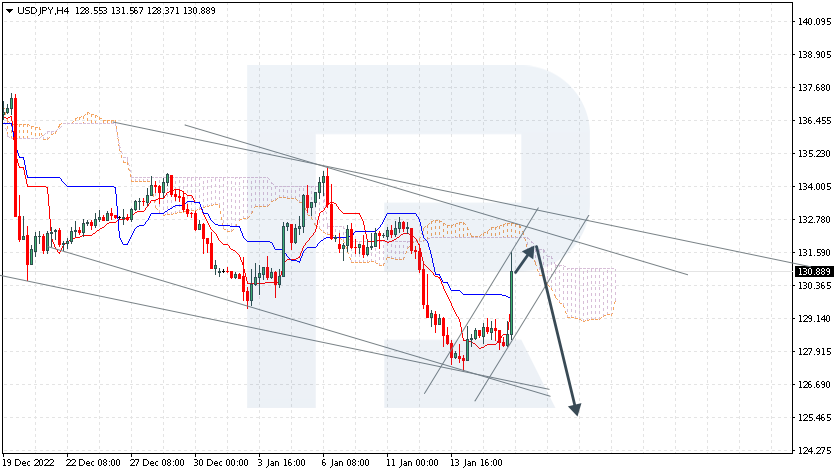
The USD/JPY currency pair

Technical indicators of the currency pair:
  • Prev Open: 133.35
  • Prev Close: 134.47
  • % chg. over the last day: +0.83 %

Japan’s industrial production index declined for the third consecutive month. Recent economic data, including exports, retail sales, and industrial production, signal that Japan’s economy is still very fragile and thus supports the Bank of Japan’s view that monetary policy easing should continue. At the moment, JPY does not have any fundamental support, so weak economic data and interest rate differentials between BoJ and FOMC will have a negative impact on JPY.

Trading recommendations
  • Support levels: 133.75, 132.68, 132.27, 131.22
  • Resistance levels: 134.45, 135.88, 137.03, 138.00, 139.09

From the technical point of view, the medium-term trend on the currency pair USD/JPY is bearish. The price is now trading above the moving averages, while the MACD indicator has become inactive. There is some buying pressure inside the day. Buy trades are best considered on intraday time frames from a support level of 133.75 or 132.68, but only with confirmation. Sell deals can be looked for from the resistance level of 134.45, provided there is a reverse reaction.

Alternative scenario: If the price fixes above 137.00, the uptrend will likely resume.

USD/JPY
There is no news feed for today.

The USD/CAD currency pair

Technical indicators of the currency pair:
  • Prev Open: 1.3514
  • Prev Close: 1.3604
  • % chg. over the last day: +0.67 %

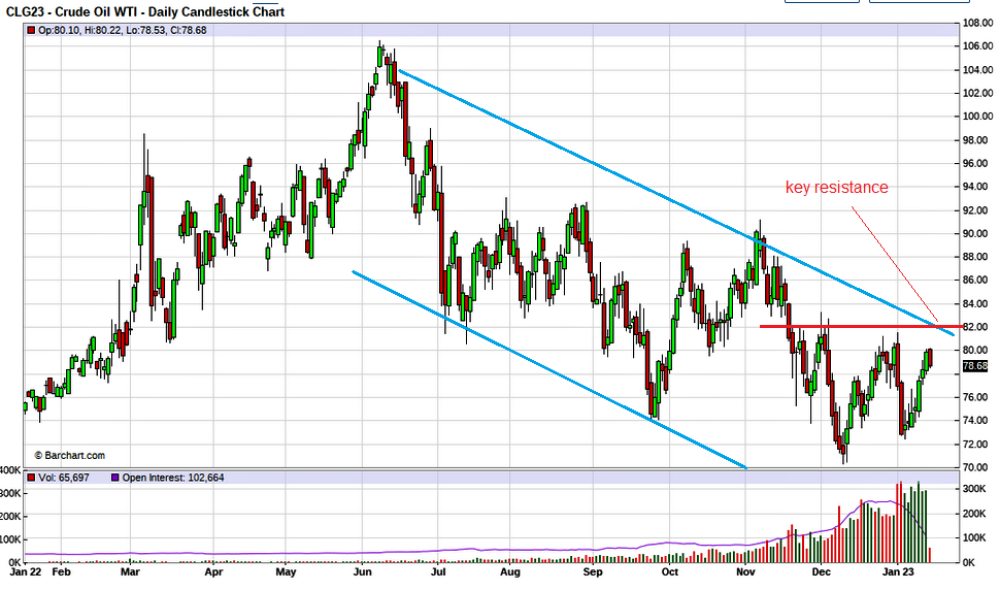
No economic events and data about Canada are expected before the end of the year, so the Canadian dollar these days will be completely dependent on the dynamics of the dollar index and oil prices, as Canadian is a commodity currency. Oil prices fell on Wednesday, as well as the likelihood that the easing of pandemic restrictions in China will increase demand for fuel. With the dollar rising, USD/CAD quotes jumped yesterday. The US crude oil inventories will be released today, which will add volatility to the currency pair.

Trading recommendations
  • Support levels: 1.3529, 1.3438, 1.3386, 1.3360, 1.3281, 1.3212
  • Resistance levels: 1.3614, 1.3656, 1.3700, 1.3776, 1.3855

From the point of view of technical analysis, the uptrend trend on the USD/CAD currency pair is still bullish. The price failed to consolidate below the priority level and is trading above the moving averages. The MACD indicator is in the positive zone, and buyers prevail inside the day. Buy trades should be considered from the support level 1.3529, but with confirmation. Sell deals are best to look for on intraday time frames from the resistance level of 1.3614, but with confirmation in the form of reverse initiative on the lower time frames.

Alternative scenario: if the price breaks down and consolidates below the support level of 1.3529, the downtrend will likely resume.

USD/CAD
News feed for 2022.12.29:
  • – US Crude Oil Inventories (w/w) at 18:00 (GMT+2).

By JustMarkets


This article reflects a personal opinion and should not be interpreted as an investment advice, and/or offer, and/or a persistent request for carrying out financial transactions, and/or a guarantee, and/or a forecast of future events.

How Putin’s war and small islands are accelerating the global shift to clean energy, and what to watch for in 2023

By Rachel Kyte, Tufts University 

The year 2022 was a tough one for the growing number of people living in food insecurity and energy poverty around the world, and the beginning of 2023 is looking bleak.

Russia’s war on Ukraine, one of the world’s largest grain and fertilizer feedstock suppliers, tightened global food and energy supplies, which in turn helped spur inflation.

Drought, exacerbated in some places by warring groups blocking food aid, pushed parts of the Horn of Africa toward famine. Extreme weather disasters have left trails of destruction with mounting costs on nearly every continent. More countries found themselves in debt distress.

But below the surface of almost weekly bad news, significant changes are underway that have the potential to create a more sustainable world – one in which humanity can tackle climate change, species extinction and food and energy insecurity.

I’ve been involved in international sustainable development for most of my career and now teach climate diplomacy. Here’s how two key systems that drive the world’s economy – energy and finance – are starting to shift toward sustainability and what to watch for in 2023.

Ramping up renewable energy growth

Russian President Vladimir Putin’s war on Ukraine has reverberated through Europe and spread to other countries that have long been dependent on the region for natural gas. But while oil-producing countries and gas lobbyists are arguing for more drilling, global energy investments reflect a quickening transition to cleaner energy.

Call it the Putin effect – Russia’s war is speeding up the global shift away from fossil fuels.

In December, the International Energy Agency published two important reports that point to the future of renewable energy.

First, the IEA revised its projection of renewable energy growth upward by 30%. It now expects the world to install as much solar and wind power in the next five years as it installed in the past 50 years.

The second report showed that energy use is becoming more efficient globally, with efficiency increasing by about 2% per year. As energy analyst Kingsmill Bond at the energy research group RMI noted, the two reports together suggest that fossil fuel demand may have peaked. While some low-income countries have been eager for deals to tap their fossil fuel resources, the IEA warns that new fossil fuel production risks becoming stranded, or uneconomic, in the next 20 years.

The main obstacles to the exponential growth in renewable energy, IEA points out, are antiquated energy policy frameworks, regulations and subsidies written at a time when energy systems, pricing and utilities were all geared toward fossil fuels.

Look in 2023 for reforms, including countries wrestling with how to permit smart grids and new transmission lines and finding ways to reward consumers for efficiency and clean energy generation.

The year 2023 will also see more focus on developing talent for the clean energy infrastructure build-out. In the U.S., the recently passed Inflation Reduction Act and the Bipartisan Infrastructure Law will pour hundreds of billions of dollars into clean energy and technology. Europe’s REPowerEU commitments will also boost investment. However, concerns about “buy American” rules within the new U.S. climate laws and an EU plan to launch a carbon border adjustment tax are raising fears that nationalism in trade policy could harm the speed of green growth.

Fixing international climate finance

The second system to watch for reform in 2023 is international finance. It’s also crucial to how low-income countries develop their energy systems, build resilience and recover from climate disasters.

Wealthy nations haven’t moved the energy transition forward quickly enough or provided enough support for emerging markets and developing countries to leapfrog inefficient fossil-fueled energy systems. Debt is ballooning in low-income countries, and climate change and disasters like the devastating flooding in Pakistan wipe out growth and add costs.

Barbados Prime Minister Mia Mottley has brought together international financial institutions with think tanks and philanthropists to push for changes.

Countries like Mottley’s have been frustrated that the current international financial system – primarily the International Monetary Fund and the multilateral development banks, including the World Bank – haven’t adapted to the growing climate challenges.

Mottley’s Bridgetown Initiative proposes a new approach. It calls for countries’ vulnerability to be measured by climate impact, and for funds to be made available on that basis, rather than income. It also urges more risk-taking by the development banks to leverage private investment in vulnerable countries, including climate debt swaps.

The Bridgetown Initiative also calls for countries to reflow their IMF Special Drawing Rights – a reserve available to IMF members – into a proposed fund that vulnerable countries could then use to build resilience to climate change. A working group established by the G-20 points out that the “easiest” trillion dollars to access for urgent climate response is that already in the system.

In early 2023, Mottley and French President Emmanuel Macron, with others, will drive a process to examine the possible measures to improve the current system before the annual meetings of the World Bank and the IMF in April, and then at a June summit called by France.

Watch in 2023 to see if this is the year the G-7 and the G-20 rekindle their global economic leadership roles. Their members are the largest owners of the international financial institutions, and also the largest emitters of carbon dioxide on the planet. India will lead the G-20 in 2023, followed by Brazil in 2024. Their leadership will be critical.

Watch small nations’ leadership in 2023

In 2023, expect to see small nations increasingly push for global transformation, led by the V-20 – the finance ministers of the countries most vulnerable to climate change.

In addition to the Bridgetown Initiative, Barbados has suggested a way to pool new funds working off the model of an oil spill damage fund at the International Maritime Organization. In the IMO fund, big oil importers pay in, and the fund pays out in the event of a spill. Barbados supports creating a similar fund to help countries when a climate event costs more than 5% of a country’s GDP.

This model is potentially a way to pool funds from a levy on the windfall profits of energy companies that saw their profits soar in 2022 while billions of people around the world suffered from energy price inflation.

Finally, the breakthrough agreement on biodiversity reached in December 2022 provides more promise for 2023. Countries agreed to conserve 30% of the world’s biodiversity and restore 30% of the world’s degraded lands. The funding – a $30 billion fund by 2030 – remains to be found, but the plan clarifies the task ahead and nature’s place in it. And we can hope 2023 is a year when signs of peace in our war against nature break out.The Conversation

About the Author:

Rachel Kyte, Dean of the Fletcher School, Tufts University

This article is republished from The Conversation under a Creative Commons license. Read the original article.

Volatility declines, investors shift to safe-haven assets ahead of New Year holidays

By JustMarkets

Investors continue to get rid of stocks before the end of the trading year. As the stock market closed Wednesday, the Dow Jones Index (US30) decreased by 1.10%, and the S&P 500 Index (US500) was down by 1.20%. The NASDAQ Technology Index (US100) fell by 1.35%. The Nasdaq (US100) fell to a two-month low as the technology downturn continues, and the S&P 500 (US500) is poised for its biggest annual loss since the 2008 financial crisis. Recession fears are highly likely to continue in the market in early 2023, but analysts believe equity markets will begin to recover in the second half of 2023.

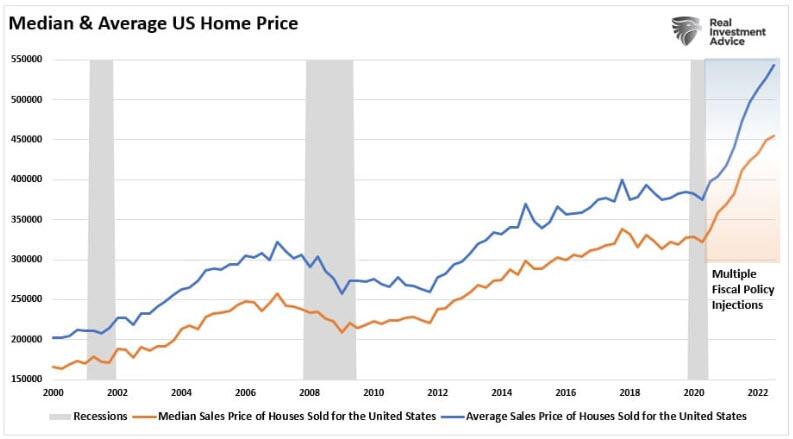
The US Real Estate Market continues to show signs of weakness. Pending home sales fell in all regions this month. On a year-over-year basis, unfinished home sales fell by 38.60%, the largest year-over-year drop on record. Pending home sales are often seen as a leading indicator of purchases of existing homes, given that real estate contracts are usually entered into a month or two before they are sold.

Shares of Southwest Airlines (LUV) decreased by 3% after a warning that airlines continue to cancel flights due to bad weather. Shares of AAL (AAL) and DAL (DAL) were down more than 1% yesterday.

Tesla (TSLA) plans to cut production at its Shanghai plant due to an increase in the incidence of coronavirus.

Equity markets in Europe traded flat yesterday. German DAX (DE30) gained 0.32%, French CAC 40 (FR40) was 0.61% lower, Spanish IBEX 35 (ES35) decreased by 0.12%, and British FTSE 100 (UK100) gained 0.32%.

Analysts believe that the energy crisis will lead to a significant slowdown of the European economy in 2023. At the same time, real estate prices will collapse, and unemployment will rise substantially. The main risk comes from the energy crisis amid falling temperatures in winter. And suppose Europe manages to get through this winter without significant problems in the energy system. In that case, it will be possible to say with certainty that the peak of inflation is over.

The EU replaced Russian and Ukrainian steel with supplies from Taiwan and South Korea.

Oil prices fell Wednesday because of the likelihood that China’s easing of pandemic restrictions will boost demand for fuel. China said it would stop requiring quarantine for arriving travelers starting January 8, an important step toward easing strict restrictions. But falling oil inventories could bring back bullish sentiment in the oil market. A preliminary Reuters poll showed that US crude inventories fell by 1.6 million barrels last week.

Gold and silver are inversely correlated to the dollar index and US government bond yields. As monetary policy tightens, the dollar index and government bond yields go up, and gold and silver prices go down, which they have been doing for 2022. But the first signs of a slowdown in rate hikes have returned investor interest in precious metals. The US Federal Reserve will peak rates in 2023, potentially setting the stage for a new medium-term or even long-term uptrend in gold.

Asian indices traded flat yesterday. Japan’s Nikkei 225 (JP225) decreased by 0.41%, China’s FTSE China A50 (CHA50) was down by 0.08%, India’s NIFTY 50 (IND50) lost 0.05%, Hong Kong’s Hang Seng (HK50) jumped by 1.56%, and S&P/ASX 200 (AU200) closed down by 0.3%.

Chinese energy companies began constructing a power plant with a capacity of 16 million kW in northern China. The solar and wind power project will be the largest power plant of its kind built in the desert.

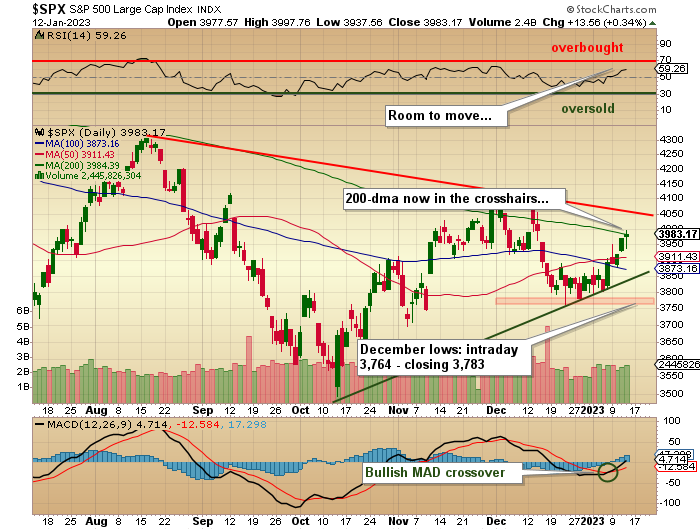
S&P 500 (F) (US500) 3,783.22 −46.03 (−1.20%)

Dow Jones (US30) 32,875.71 −365.85 (−1.10%)

DAX (DE40) 13,925.60 −69.50 (−0.50%)

FTSE 100 (UK100) 7,497.19 +24.18 (+0.32%)

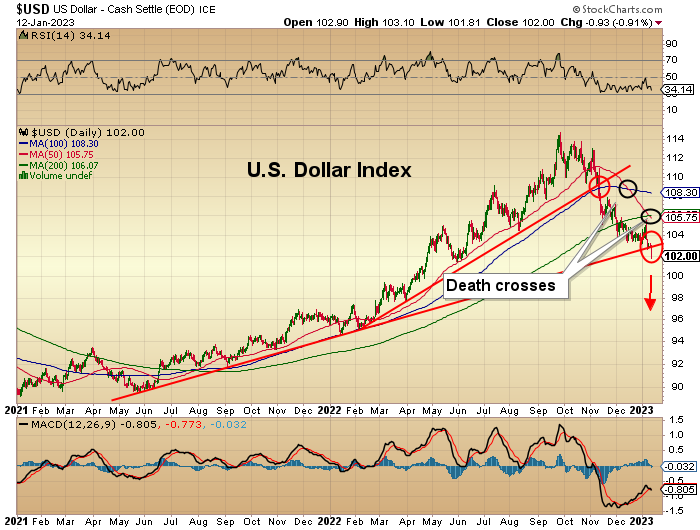
USD Index 104.55 +0.37 (+0.35%)

Important events for today:
  • – US Initial Jobless Claims (w/w) at 15:30 (GMT+2);
  • – US Natural Gas Storage (w/w) at 17:30 (GMT+2);
  • – US Crude Oil Inventories (w/w) at 18:00 (GMT+2).

By JustMarkets


This article reflects a personal opinion and should not be interpreted as an investment advice, and/or offer, and/or a persistent request for carrying out financial transactions, and/or a guarantee, and/or a forecast of future events.

Three ‘F’ words to sum up 2022

By ForexTime 

This year has been fraught with market volatility, to say the least.

As we bid goodbye to 2022, let’s recap 3 major themes, each being an F-word, that rocked major assets over the past 12 months:


  1. Fed

The primary driver of global markets in 2022 has been the most aggressive Federal Reserve – the US central bank – that we’ve seen since the 1980s.

Recall that a central bank’s primary weapon in cooling down inflation is to move interest rates higher. After all, the US was experiencing its fastest inflation in 40 years!

To be more specific, markets were caught off guard particularly by the speed at which the Fed raised interest rates this year (to be fair, many Fed officials themselves didn’t think they’d have to hike rates so much so soon either).

  • This time last year, markets only forecasted that US interest rates would be hiked by a maximum of 75 basis points for all of 2022.
  • Fast forward 12 months later, we have seen US interest rates skyrocket by 425 basis points, bringing the benchmark rate from near-zero now up to 4.5% – its highest level since 2007!


Gold’s enemy #1 for 2022 proved to be US interest rates climbing at that speed, and the US dollar soaring in tandem.


The market’s fixation on soaring US interest rates, coupled with the fact that gold is a zero-yielding asset (does not pay interest/generate income for investors who hold on to this asset) to drag down prices, despite the precious metal’s traditional roles as:

  • Inflation hedge: a way to protect investors’ wealth against the corrosive effects of skyrocketing inflation
  • Safe haven: a way to protect investors’ wealth in times of great uncertainty.

Hence, bullion was dragged down by as much as 22% from its post-Russian invasion peak to its lowest levels since 2020.

Though to be fair, spot gold has embarked on a remarkable recovery since early November on hopes that the “worst” of the Fed rate hikes are over.

READ MORE:


Now, here’s the second F-word …

  1. Fear

From the Russia-Ukraine war that’s still raging on, to the UK’s worst cost-of-living crisis in a generation, and even crypto’s collapse – there were many notable events that frightened investors and traders worldwide.

Such events hastened those in the markets to scrambling for ways to protect their money.

Amid all the FUD (fear, uncertainty, doubt), one particular asset reigned supreme = King Dollar.

Note how the benchmark Dollar index, DXY (used to measure the US dollar’s overall performance, though specifically the US dollar’s performance against 6 other major currencies) soared by as much as 20% this year.

READ MORE:


Though since late-September, the DXY has halved its year-to-date gains, on the hopes that the Fed is closer to being done with its interest rate hikes.

Still, to prove the US dollar’s dominance as the safe haven of choice for 2022, here’s a comparison of how the DXY fared against other traditional safe haven assets, as measured by their respective year-to-date performances on this penultimate day of the year:

  • DXY = +9%
  • Gold = -1%
  • Swiss Franc = -1.4%
  • US bonds = -13% (as measured by the Bloomberg USAgg Index)
  • Japanese Yen = -14%


And now, for the final F-word of this year-in-review article …


  1. Fundamentals

Remember the days when central banks were printing money out of thin air and just dishing it out?

Well, a lot of that money also made it into stock markets, which sent prices to record highs.

Recall how the S&P 500 set a record high on January 3rd, 2022?

Well, those days are now long gone.

Central banks sought to suck some of that money back out of the financial markets, either by hiking interest rates or by halting the purchase of bonds (quantitative tightening).

This year, companies had to wave bye-bye to easy money, with interest rates no longer at record lows.

Hence, investors demanded that these companies return to the fundamentals: show that it can continue churning out profits in the future.

Companies with weak fundamentals, whose future profitability or growth were in severe doubt, were roundly punished by the stock market:

  • Coinbase (crypto platform) = -87%
  • Snap (social media) = -82%
  • Tesla (EV maker) = -68%

(NOTE: It was a particularly brutal year for EV makers, with the likes of Lucid Group, Rivian and Nio each suffering even bigger annual losses than Tesla’s)


Even Big Tech giants such as, from Amazon to Meta, had to let go tens of thousands of employees this year.

Such layoffs were carried out in the name of making sure these companies remain financially sound amid these turbulent times.


Furthermore, with the Fed rate hikes threatening to send the US economy into a recession, such a contraction in the world’s largest economy is expected to negatively impact the earnings of these publicly-listed companies.

Amid all these woes, and the end of the easy-money era, no surprise that the S&P 500 may well end the year in a ‘bear market’ (a 20% drop from its recent high).


READ MORE:


So, there you have it.

3 ‘F’ words that encapsulated a year to remember.


But before we wrap up, here’s a “bonus” F-word for you to consider … “Future”.

After all, investors and traders are forward-looking creatures, with today’s prices reflecting what markets think/believe/hope will happen down the line.

With that in mind, do look out for our 2023 Preview that’ll be posted here on this “Market Analysis” section soon.

Thank you for reading our Daily Market Analysis throughout 2022.

We hope to continue keeping you up-to-date on all the major happenings happening across FX, commodities, precious metals, and stocks in the year ahead.


Have a happy new year, and may 2023 be a rewarding time in the markets for us all.


Forex-Time-LogoArticle by ForexTime

ForexTime Ltd (FXTM) is an award winning international online forex broker regulated by CySEC 185/12 www.forextime.com

The cryptocurrency market digest (BTC, SOL, TON). Overview for 28.12.2022

By RoboForex.com

The BTC is stuck in place again, generally fluctuating near 16,654 USD.

The situation at the exchange is vague. Investors are afraid to buy due to trouble with mining and trust issues after the crash of the FTX crypto exchange. All these problems cannot be resolved at once, so no one rushes at solving them.

In fact, investors are tired of waiting, and on such a background, the price may fluctuate a lot. During winter holidays, care should he taken at the crypto market.

Technically, the BTC remains in a flat between 16,500 and 17,200 USD. Few investors believe that conditions will form at all for an attack on 17,200 USD, from where a pathway to 18,500 USD may open. However, all the highlights should be kept before one’s eyes. An important support level is 15,500 USD.

Capitalisation of the crypto market has dropped to 799.679 billion USD. The BTC takes up 40.1%, the ETH — 18.3%.

SOL and TON dropped noticeably

The SOL and TON tokens lost more than 10% yesterday, having no fundamental reasons for such a decline. The XCN and APT coins also got under some pressure.

Kraken leaves Japan

The Kraken crypto exchange leaves the Japanese market. The company has announced that starting 31 January 2023, it renounces its FSA registration as a crypto asset operator. The company made this decision to give priority to other more promising investment options.

FTX borrowed 511 million USD from Alameda

The bankrupt crypto exchange FTX loaned 511 million USD from its subsidiary Alameda Research in order to buy stocks of the Robinhood trading platform. This is clear from the documents retrieved by the court. The purchase of the block of shares was carried out by a shell company. The problem is that Alameda also borrowed the same sum from BlockFi (the company has already gone bankrupt) on the interest of those very Robinhood shares. The block of shares will now be the subject of most acute disputes.

Article By RoboForex.com

Attention!
Forecasts presented in this section only reflect the author’s private opinion and should not be considered as guidance for trading. RoboForex LP bears no responsibility for trading results based on trading recommendations described in these analytical reviews.

Hydrogen Fueled Boiler Drives Company’s Pivot Toward Green Energy

Source: Streetwise Reports  (12/22/22)

Jericho Energy Ventures Inc. reports gains with strong financial performance in gas, oil, and fuel of the future, hydrogen. Read more to learn the details of this report as well as see what experts are saying about the company. 

Jericho Energy Ventures Inc. (JEV:TSX.V; JROOF:OTC PINK: JLM:FRA) has been awarded the Solar Impulse Foundations’ ‘Solar Impulse Efficient Solution’ Label, for its zero-emission Dynamic Combustion Chamber™ (DCC™) hydrogen fueled boiler. The Label seeks to identify solutions that hit high standards in profitability and sustainability and displays them to leading decision-makers hoping to expedite their development.

JEV is an energy company focused on the transition to low-carbon energy solutions, with investments in zero-emission hydrogen technologies. Founded in 2010, the company initially focused its efforts on oil and gas before beginning the transition to green energy in 2020 and continues to use profits from those sectors to fund its research into hydrogen.

Why Hydrogen?

Hydrogen continues to claim its spot on the list of sustainable fuels of the future. As reported by the National Inflation Association, on Dec. 9, the leaders of France, Portugal, and Spain, as well as European Commission President Ursula von der Leyen, met in the Spanish city of Alicante for a discussion on the construction and financing of a new pipeline to carry green hydrogen between Barcelona and Marseille.

The NIA also reported on an announcement from Airbus detailing the development of a hydrogen-powered jet engine for the A380 superjumbo, with test flights due to begin in 2026.

Technical analyst Clive Maund described JEV as an “energy company that is moving with the times,” and it continues to prove it with the development of its hydrogen-fueled product.

The Biden-Harris Administration, through the U.S. Department of Energy (DOE), has also announced US$750 million in funding in a bid to reduce the cost of clean hydrogen technology.

It is hoped the injection of funds will accelerate the expansion of hydrogen use and is an essential part of President Biden’s plan to have a 100% clean electrical grid by 2035 and net-zero carbon emissions by 2050.

Texas Governor Greg Abbott also announced on Dec. 8 that a US$4 billion hydrogen factory will be built in North Texas and will produce more than 73,000 metric tons of green hydrogen per year. This will make it the largest green hydrogen facility in the U.S.

Source: iea.org

The Chairman of the Solar Impulse Foundation, Bertrand Piccard, highlighted that, while heads of state and government officials may say that protecting the environment is too expensive, “solutions exist and represent the biggest market opportunity of our century,” calling it an “opportunity which cannot be missed.”

And Jericho Energy Ventures is not a company that likes to miss opportunities. Back in November, technical analyst Clive Maund described JEV as an “energy company that is moving with the times,” and it continues to prove it with the development of its hydrogen-fueled product.

Catalyst: Expert Says Jericho To Be 2023’s Largest Gainer

While the award was great for Jericho Energy Ventures, it is not the only good news to come from the company.  It follows the news that JEV, whose registered office is in Vancouver, BC, reported record oil and gas joint venture results in Q3, a direct result of growing crude oil and natural gas prices in the first three quarters of 2022.

Having begun as an energy company focused on oil and gas, it acquired Hydrogen Technologies in January 2021 as part of its transition to researching and developing green energy solutions. It continues to invest in companies aligned with a low-carbon future, including H2U Technologies Inc., which is developing a new electrolyzer that will facilitate low-cost hydrogen production.

The National Inflation Association predicts that JEV will be one of the market’s largest percentage gainers in 2023.

Jericho Energy Ventures CEO Brian Williamson said that the company continues to “demonstrate that our strategy of providing molecules required for today and tomorrow can yield results for our shareholders. Our steady oil and gas production base provides strong cash flows that feed both strategic initiatives of hydrocarbons today and lower carbon forms of energy tomorrow.”

The National Inflation Association predicts that JEV will be one of the market’s largest percentage gainers in 2023. Investment from billionaire Chris Sacca’s Lowercarbon Capital in January 2022, along with investment from JEV into Supercritical Solutions, will go toward the development of the world’s first green hydrogen electrolyzer. The fact that Chris Sacca is one of the top three most successful technology investors of all time is sure to bring a level of prestige to the work going into development.

The NIA expects  JEV’s market cap to “reach levels that are many times higher than today.”

The boiler was developed by JEV’s wholly-owned subsidiary, Hydrogen Technologies, which provides its award-winning clean energy solution for the Commercial and Industrial Boiler Market. The DCC™ produces zero CO2 or Greenhouse Gas emissions and seeks to replace boilers that burn coal, natural gas, fuel oil, or diesel, which will hopefully lead to a significant reduction in global greenhouse gasses emitted each year. It aims to decarbonize the global commercial and industrial heating industry, valued at almost US$30 billion.

Williamson stated, “we are, of course, honored to receive this prestigious recognition from the Solar Impulse Foundation. I applaud the fortitude and determination shown by the Hydrogen Technologies Team, which made this achievement possible, and we look forward to our DCC™ playing a major role in the reduction of greenhouse gas emissions from the commercial and industrial heat and steam market globally.”

Ownership and Share Structure

Retail: 70%
Management/Insiders: 30%
Institutions: 0%
70%
30%
Share Structure as of 12/22/2022


According to Reuters, around 30% of Jericho’s shares are held by management and insiders. CEO Brian Williamson owns 1.26% of the shares, around 2.85 million. Founder Allen William Wilson is at 0.87%, with 1.97 million shares. and board member Nicholas Baxter owns 0.5%, with just over 1.1 million. Founder Allen William Wilson is at 0.87%, with 1.97 million shares.

Around 0.1% of shares are held by institutions. The largest of these is Michael L. Graves Inter Vivos Trust which is at 16.43%, with 37.13 million shares. McKenna & Associates LLC is next at 10.78%, with 24.36 million shares, and Andrew James Mckenna himself is at 0.15%, with 0.35 million shares.

70% of Jericho’s shares are in retail.

JEV’s market cap is CA$81.71 million, and it trades in a 52-week range of CA$0.31 and CA$0.84. It has 226.05 million shares outstanding.

Disclosures:
1) Lauren Rickard wrote this article for Streetwise Reports LLC and provides services to Streetwise Reports as an independent contractor. They members of their household own securities of the following companies mentioned in the article: None. They or members of their household are paid by the following companies mentioned in this article: None.

2) The following companies mentioned in this article are billboard sponsors of Streetwise Reports: Jericho Energy Ventures Inc. Click here for important disclosures about sponsor fees. As of the date of this article, an affiliate of Streetwise Reports has a consulting relationship with: None. Please click here for more information.

3) Comments and opinions expressed are those of the specific experts and not of Streetwise Reports or its officers. The information provided above is for informational purposes only and is not a recommendation to buy or sell any security.

4) The article does not constitute investment advice. Each reader is encouraged to consult with his or her individual financial professional and any action a reader takes as a result of information presented here is his or her own responsibility. By opening this page, each reader accepts and agrees to Streetwise Reports’ terms of use and full legal disclaimer. This article is not a solicitation for investment. Streetwise Reports does not render general or specific investment advice and the information on Streetwise Reports should not be considered a recommendation to buy or sell any security. Streetwise Reports does not endorse or recommend the business, products, services or securities of any company mentioned on Streetwise Reports.

5) From time to time, Streetwise Reports LLC and its directors, officers, employees or members of their families, as well as persons interviewed for articles and interviews on the site, may have a long or short position in securities mentioned. Directors, officers, employees or members of their immediate families are prohibited from making purchases and/or sales of those securities in the open market or otherwise from the time of the decision to publish an article until three business days after the publication of the article. The foregoing prohibition does not apply to articles that in substance only restate previously published company releases. As of the date of this article, officers and/or employees of Streetwise Reports LLC (including members of their household) own securities of Jericho Energy Ventures Inc., a company mentioned in this article.

Japanese Candlesticks Analysis 28.12.2022 (XAUUSD, NZDUSD, GBPUSD)

By RoboForex.com

XAUUSD, “Gold vs US Dollar”

At the support level, gold has formed a Harami reversal pattern. Currently, the pair can go by the pattern in an ascending wave. The goal of the growth might be the resistance level of 1830.50. After the test of the resistance level, the pair can break through it and continue the uptrend. However, the quotes may pull back to 1800.00 before further growth.

XAUUSD
Risk Warning: the result of previous trading operations do not guarantee the same results in the future

NZDUSD, “New Zealand Dollar vs US Dollar”

On H4, at the support level, the pair has formed a Hammer reversal pattern. The pair may now go by the signal in an ascending wave. The goal of the growth might be 0.6365. After a breakaway of the resistance, the quotes may get a chance for continuing the uptrend. However, the price may pull back to 0.6235 before further growth.

NZDUSD
Risk Warning: the result of previous trading operations do not guarantee the same results in the future

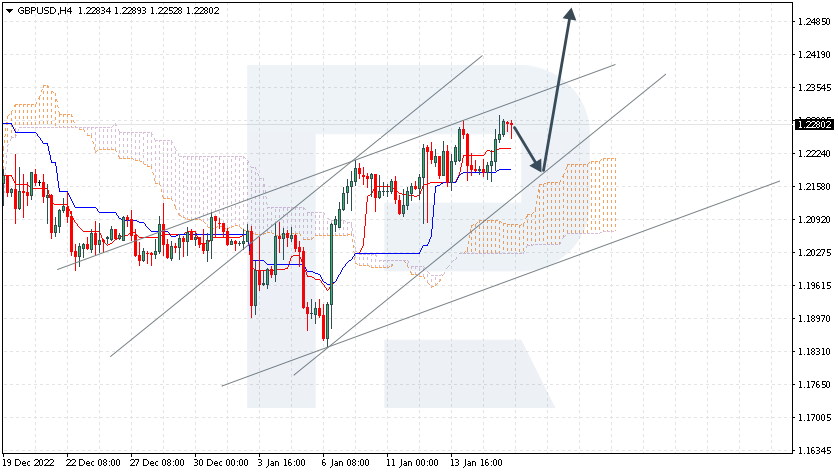
GBPUSD, “Great Britain Pound vs US Dollar”

On H4, at the support level, the pair has formed a Hammer reversal pattern. Currently, the pair may go by the signal in an ascending wave. The goal of the growth is still the resistance level of 1.2190. However, the price may pull back to 1.1960 before continuing the uptrend.

GBPUSD

Article By RoboForex.com

Attention!
Forecasts presented in this section only reflect the author’s private opinion and should not be considered as guidance for trading. RoboForex LP bears no responsibility for trading results based on trading recommendations described in these analytical reviews.

Analysts expect growth in the technology sector next year

By JustMarkets

The US indices traded yesterday without a single trend. By Tuesday’s stock market close, the Dow Jones Index (US30) increased by 0.11%, while the S&P 500 Index (US500) decreased by  0.40%. The NASDAQ Technology Index (US100) fell by 1.38%.

A Wedbush Securities research report indicated that the decline in tech stocks, including Apple, Amazon, and Microsoft, should turn into a sharp rebound next year as companies think about protecting their profitability and the US Federal Reserve will sooner or later begin to wind down its rate hike campaign. The undeniable fact remains that US inflation is too high. And if the US economy does enter a recession with a Consumer Price Index over 5%, the Fed would be in a quandary because they have little room to stimulate the economy. This would be a scenario that the Federal Reserve would try to avoid, which also helps explain why the Fed is moving forward so aggressively.

Joseph Trevisani, the senior analyst at FXStreet.com, said historical patterns suggest that investors next month are likely to benefit from the recent gains in the euro and yen, which could support the dollar in the short term.

Equity markets in Europe were mostly up yesterday. Germany’s DAX (DE30) gained 0.39% yesterday, France’s CAC 40 (FR40) added 0.70%, Spain’s IBEX 35 index (ES35) closed around opening levels, and Britain’s FTSE 100 (UK100) not trading due to the bank holiday.

European Central Bank President Luis de Guindos believes that the Eurozone is in a very difficult economic situation. Inflation remains high and economic growth in Europe remains low, so the ECB finds itself in a difficult position when it has to raise rates amid the recession, as is happening in the UK at the moment. The main question analysts are asking is whether the ECB can stay hawkish, with inflation above 10%, without hurting the European economy too much. The same can be said for the Bank of England, and that makes the prospect of a weaker euro and sterling an attractive scenario for next year.

Oil hit a 3-week-high amid loosening COVID-19 restrictions in China, with US production levels down due to the winter storm. About 450,000-500,000 barrels a day of oil were cut over the Christmas weekend in the United States. The weather in the US is predicted to improve this week, which could lead to a slight decline in oil prices.

Russian President Vladimir Putin on Tuesday signed a decree banning the supply of oil and petroleum products to countries participating in the price cap for five months from February 1.

Part of the Asian market did not trade yesterday. Japan’s Nikkei 225 (JP225) gained 0.16%, China’s FTSE China A50 (CHA50) added 0.76%, India’s NIFTY 50 (IND50) increased by 0.65%, Hong Kong’s Hang Seng (HK50) and S&P/ASX 200 (AU200) were not trading due to the bank holiday.

China said it would abolish the COVID-19 quarantine rule for incoming travelers, an important step toward opening its borders even as the number of COVID-19 cases has surged. China will stop requiring incoming travelers to undergo quarantine as of January 8.

Bank of Japan (BOJ) policymakers discussed the growing prospect that higher wages could finally eliminate the risk of a return to deflation. While markets are growing expectations that Japan’s Central Bank is likely to change its policies, investors’ attention is likely to focus on who will lead the BOJ when Governor Haruhiko Kuroda steps down in April. Analysts are confident that a policy review will follow the appointment of a new governor in the second quarter of 2023.

S&P 500 (F) (US500) 3,829.25 −15.57 (−0.40%)

Dow Jones (US30) 33,241.56  +37.63 (+0.11%)

DAX (DE40) 13,995.10 +54.17 (+0.39%)

FTSE 100 (UK100) 7,473.01 0 (0%)

USD Index 104.19 -0.13 (-0.12%)

Important events for today:
  • – Japan Industrial Production (m/m) at 01:50 (GMT+2);
  • – US Pending Home Sales (m/m) at 17:00 (GMT+2).

By JustMarkets


This article reflects a personal opinion and should not be interpreted as an investment advice, and/or offer, and/or a persistent request for carrying out financial transactions, and/or a guarantee, and/or a forecast of future events.

Tech stocks hit as questions abound heading into 2023

By ForexTime

Markets are very much in holiday mode with very thin volumes and light liquidity.

This means we see choppy price action with swings between gains and losses in very quick time. Big trading desks at banks and funds are manned with skeletal staff so position sizing is minimal and new bets are not being taken until the new year.

The well-known Santa Rally in US stocks may struggle this year with the broader S&P 500 index closing lower by 0.4% after clawing back some early losses.


What does the “Santa Rally” typically look like?

  • The fabled festive move higher in stocks implies gains over the last five trading days of the year and the first two of the new year.
  • Returns over that period average 1.3% compared with 0.2% for any rolling seven-day trading period.

READ MORE: (December 22nd) Santa Rally coming to town?


Tech’s tumble

Growth stocks were hurt yesterday by various factors including higher Treasury yields.

The tech-laden Nasdaq finished 1.4% lower with some individual megacap growth stocks especially hit by selling.

  • Apple finished 1.4% lower as worries still linger about covid-19 and its China production facilities. Earlier in the session, the tech giant hit their lowest point since June 2021. The June low from this year at $129.04 is strong support for the bulls.
  • Meanwhile, Tesla tanked again, plunging 11.4% and bringing the total of this month’s losses to nearly 44%. The worst month in at least 10 years has been brought about by the distraction for CEO Elon Musk running his new company, Twitter. A potential sales slowdown at the EV-maker has also not helped, with Reuters reporting that a reduced production schedule in China would be extended into January.
  • Some of the former darlings of the market have suffered hugely with Facebook parent Meta slumping 65% and once-all-conquering Amazon falling around 50%.

Investors are keen to see the 2022 exit door with the Nasdaq Composite tumbling close to 34% so far this year.


Key for the new year will be inflation and the Fed’s policy tightening path with questions around a recession or soft landing.

Research shows that a bear market has never bottomed before the start of a recession.


Forex-Time-LogoArticle by ForexTime

ForexTime Ltd (FXTM) is an award winning international online forex broker regulated by CySEC 185/12 www.forextime.com

RE Investment Co. Buys Two Housing Properties

Source: David Chrystal  (12/22/22)

The accretive acquisition adds scale to the company’s asset portfolio, from which it benefits, noted an Echelon Capital Markets report.

NexLiving Communities Inc. (NXLV:TSX.V) acquired two properties in Saint John, New Brunswick, Canada, for US$34.3 million (US$34.3M), reported Echelon Capital Markets analyst David Chrystal in a Dec. 16 research note.

“The acquisition is immediately accretive,” Chrystal wrote, in that it uses the company’s excess cash, the related mortgage has a below-market interest rate, and the increased scale lowers NexLiving’s general and administrative expense:net operating income ratio.

Expanding Its Asset Portfolio

Chrystal described the new properties comprising 142 suites. One, at 50 Calabria St., encompasses a newly built, 82-suite luxury building with lots of amenities, including pickleball and basketball courts and fitness and community centers, and the adjacent land is approved for 85 suites. The second property, at 5 Woodhollow Park, features 67 suites built about 12 years ago. The blended cap rate, including the land, is 4.75%.

“The purchase was financed in part with US$25.7M of mortgage debt at an average interest rate of 3.06%, with a weighted average remaining term of 3.5 years,” Chrystal relayed.

The company used most of its US$9.8M in cash and cash equivalents to cover the $8.6M cash portion of the total consideration for the two New Brunswick properties, NexLiving. It will generate incremental cash from nearly US$25M of mortgage debt maturing in early January and April 2023, but “any significant further acquisition will require incremental equity,” wrote Chrystal.

Looking forward, he added, “We believe NexLiving’s existing portfolio will continue to deliver solid operational results. Though excess cash is a drag on our near-term financial forecast, once liquidity is deployed, we see significant per-share cash flow growth.”

Continued Scaling Up

The analyst pointed out that the scale realized from the most recent purchase, taking year-to-date acquisitions to about US$69M, is benefitting the multifamily property owner. Now, general and administrative (G&A) expense represents about 20–25% of run-rate net operating income, noted the analyst. The Mountain Road acquisition would further expand the Canadian company’s asset portfolio to about 1,200 units valued at more than US$240M and decrease G&A to about 15–20%.

“Should NexLiving continue to execute on its considerable pipeline of acquisition opportunities, we expect that the G&A ratio will dip further,” noted Chrystal.

Echelon has a Buy rating and a CA$0.22 per share target price on NexLiving Communities, currently trading at about CA$0.14 per share.


Disclosures:
1) Doresa Banning wrote this article for Streetwise Reports LLC and provides services to Streetwise Reports as an independent contractor. She or members of her household own securities of the following companies mentioned in the article: None. She or members of her household are paid by the following companies mentioned in this article: None.

2) The following companies mentioned in this article are billboard sponsors of Streetwise Reports: None. Click here for important disclosures about sponsor fees. As of the date of this article, an affiliate of Streetwise Reports has a consulting relationship with: None. click here for more information.

3) Comments and opinions expressed are those of the specific experts and not of Streetwise Reports or its officers. The information provided above is for informational purposes only and is not a recommendation to buy or sell any security.

4) The article does not constitute investment advice. Each reader is encouraged to consult with his or her individual financial professional and any action a reader takes as a result of information presented here is his or her own responsibility. By opening this page, each reader accepts and agrees to Streetwise Reports’ terms of use and full legal disclaimer. This article is not a solicitation for investment. Streetwise Reports does not render general or specific investment advice and the information on Streetwise Reports should not be considered a recommendation to buy or sell any security. Streetwise Reports does not endorse or recommend the business, products, services or securities of any company mentioned on Streetwise Reports.

5) From time to time, Streetwise Reports LLC and its directors, officers, employees or members of their families, as well as persons interviewed for articles and interviews on the site, may have a long or short position in securities mentioned. Directors, officers, employees or members of their immediate families are prohibited from making purchases and/or sales of those securities in the open market or otherwise from the time of the decision to publish an article until three business days after the publication of the article. The foregoing prohibition does not apply to articles that in substance only restate previously published company releases.

Important Disclaimers for Echelon Wealth Partners Inc., NexLiving Communities Inc., December 16, 2022

Echelon Wealth Partners Inc. is a member of IIROC and CIPF. The documents on this website have been prepared for the viewer only as an example of strategy consistent with our recommendations; it is not an offer to buy or sell or a solicitation of an offer to buy or sell any security or instrument or to participate in any particular investing strategy. Any opinions or recommendations expressed herein do not necessarily reflect those of Echelon Wealth Partners Inc. Echelon Wealth Partners Inc. cannot accept any trading instructions via e-mail as the timely receipt of e-mail messages, or their integrity over the Internet, cannot be guaranteed. Dividend yields change as stock prices change, and companies may change or cancel dividend payments in the future. All securities involve varying amounts of risk, and their values will fluctuate, and the fluctuation of foreign currency exchange rates will also impact your investment returns if measured in Canadian Dollars. Past performance does not guarantee future returns, investments may increase or decrease in value and you may lose money. Data from various sources were used in the preparation of these documents; the information is believed but in no way warranted to be reliable, accurate and appropriate. Echelon Wealth Partners Inc. employees may buy and sell shares of the companies that are recommended for their own accounts and for the accounts of other clients.

Echelon Wealth Partners compensates its Research Analysts from a variety of sources. The Research Department is a cost centre and is funded by the business activities of Echelon Wealth Partners including, Institutional Equity Sales and Trading, Retail Sales and Corporate and Investment Banking.

U.S. Disclosures: This research report was prepared by Echelon Wealth Partners Inc., a member of the Investment Industry Regulatory Organization of Canada and the Canadian Investor Protection Fund. This report does not constitute an offer to sell or the solicitation of an offer to buy any of the securities discussed herein. Echelon Wealth Partners Inc. is not registered as a broker-dealer in the United States and is not be subject to U.S. rules.

ANALYST CERTIFICATION

I, David Chrystal, hereby certify that the views expressed in this report accurately reflect my personal views about the subject securities or issuers. I also certify that I have not, am not, and will not receive, directly or indirectly, compensation in exchange for expressing the specific recommendations or views in this report.

During the last 12 months, Echelon Wealth Partners Inc. provided financial advice to and/or, either on its own or as a syndicate member, participated in a public offering, or private placement of securities of this issuer.

During the last 12 months, Echelon Wealth Partners Inc. received compensation for having provided investment banking or related services to this Issuer.