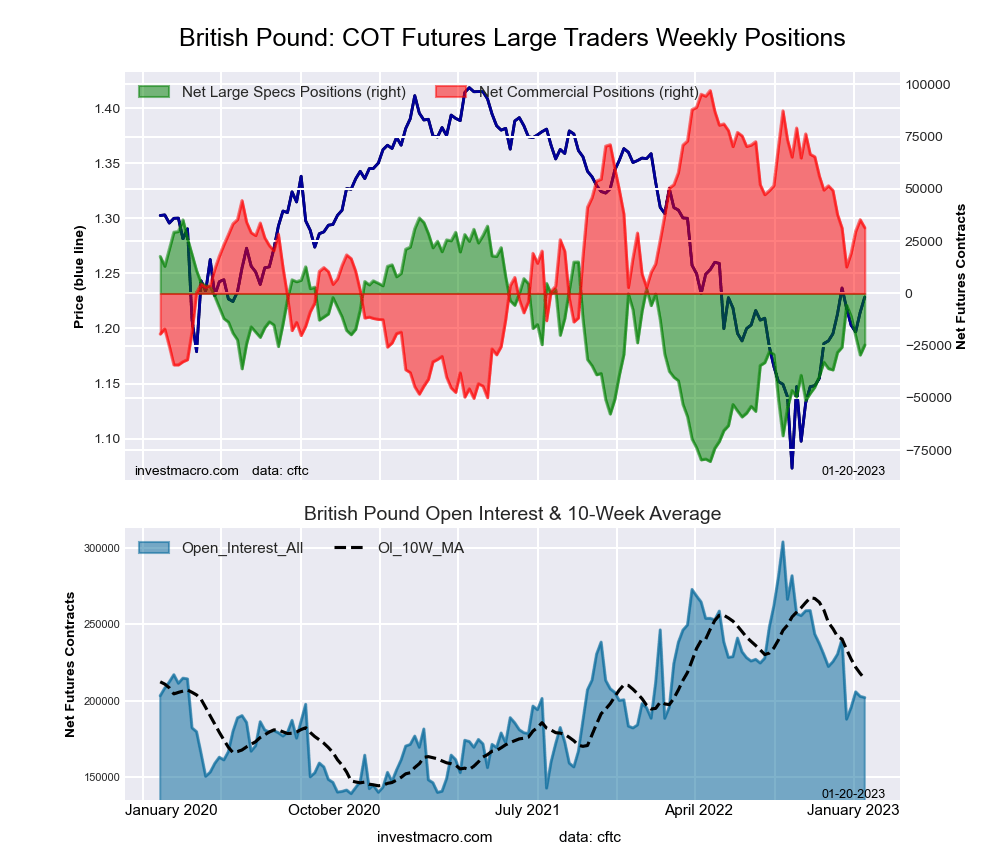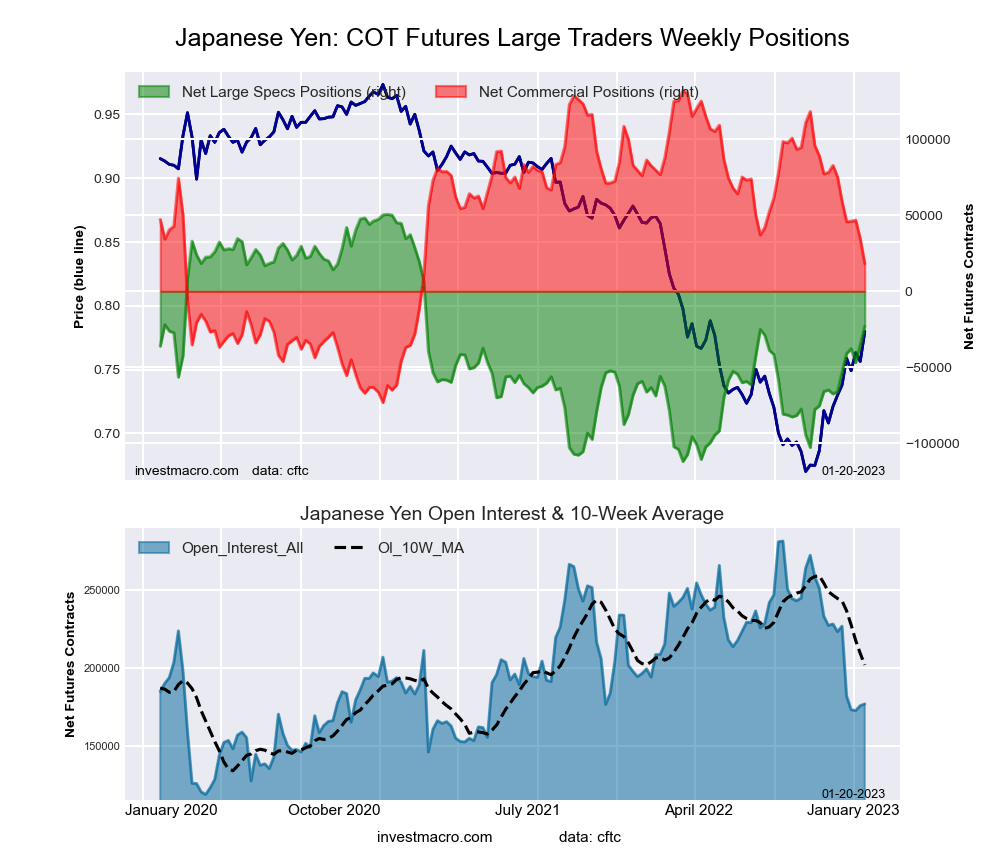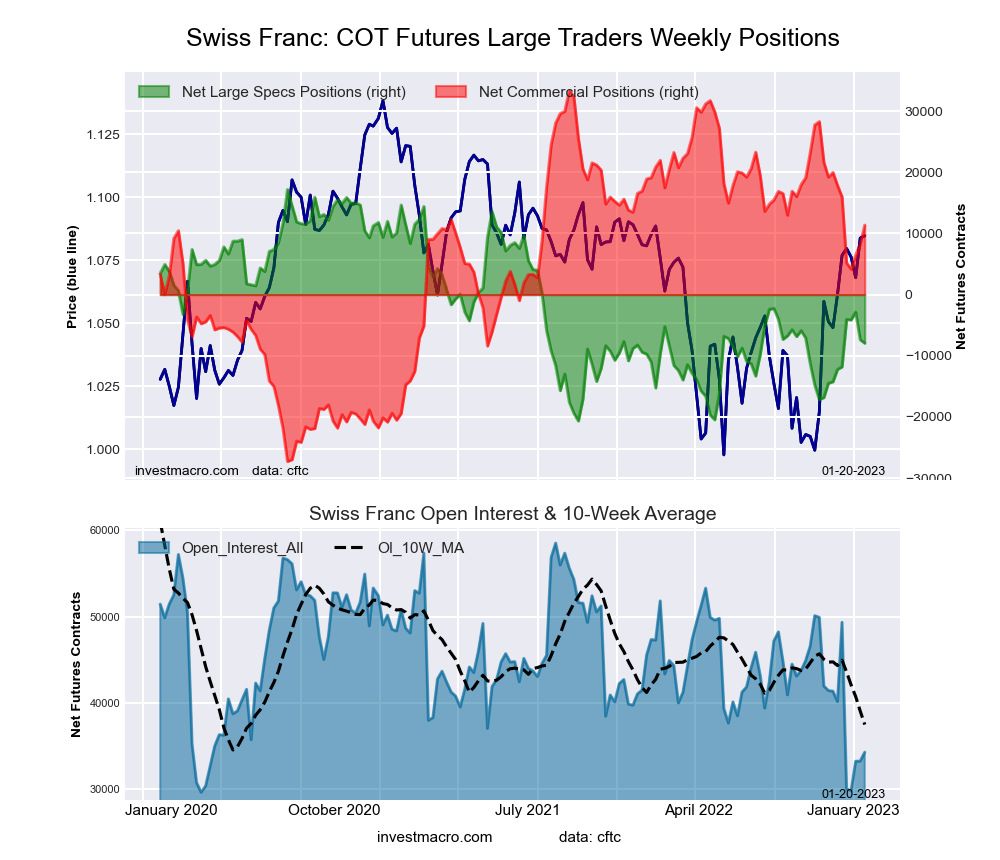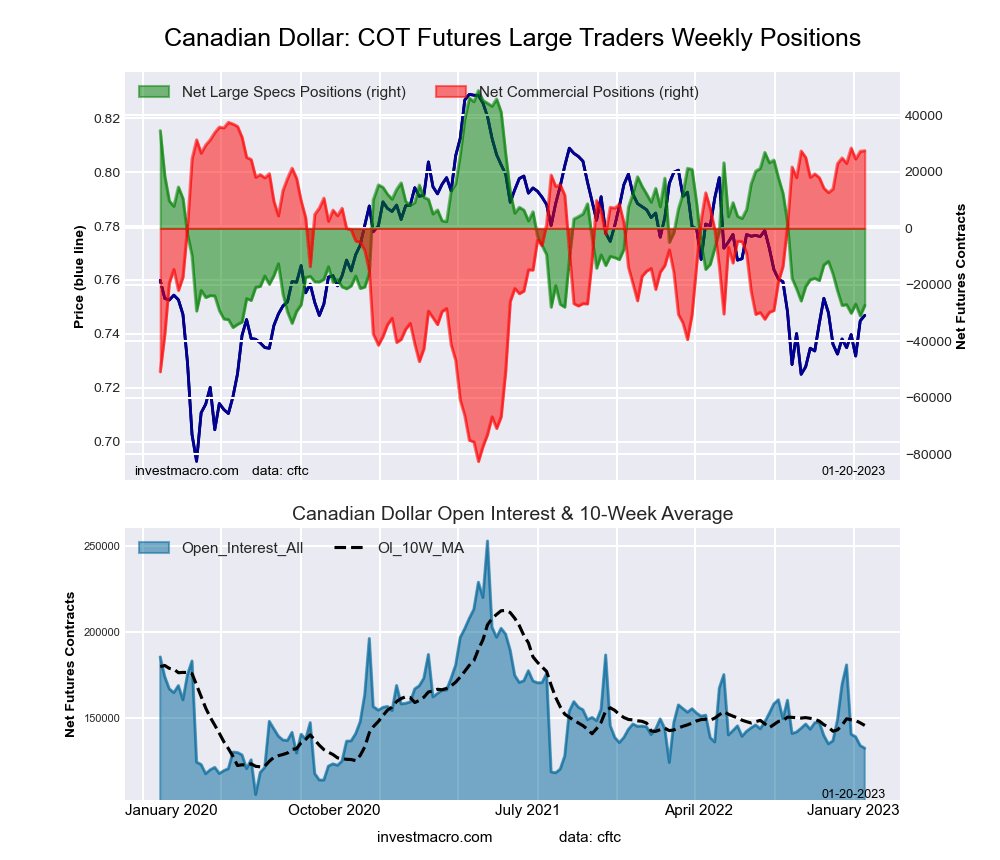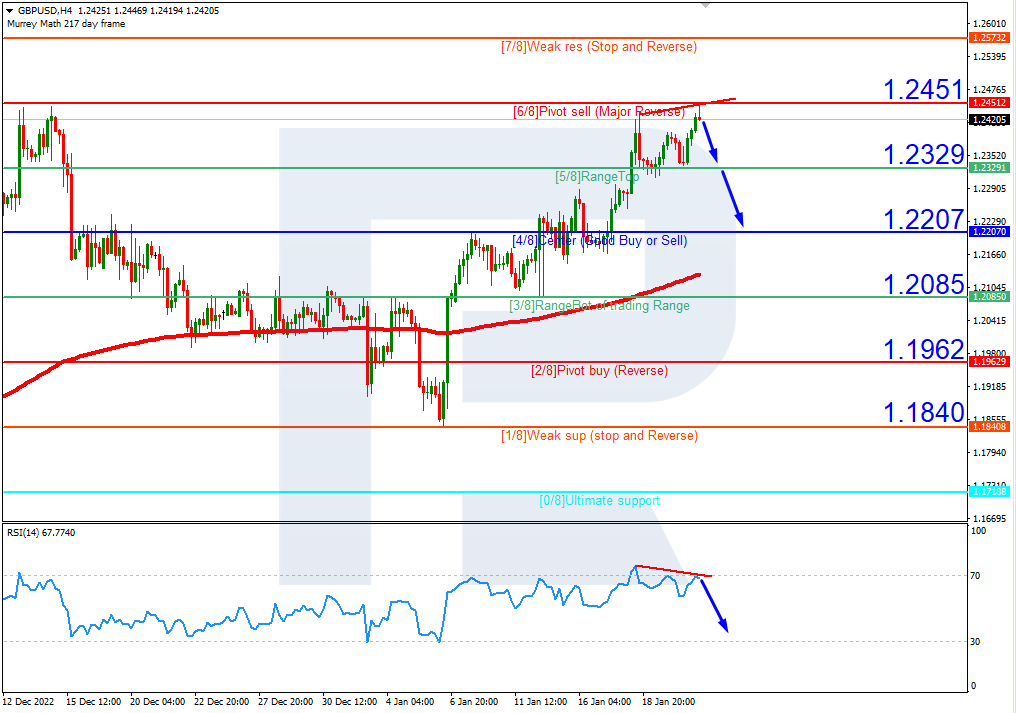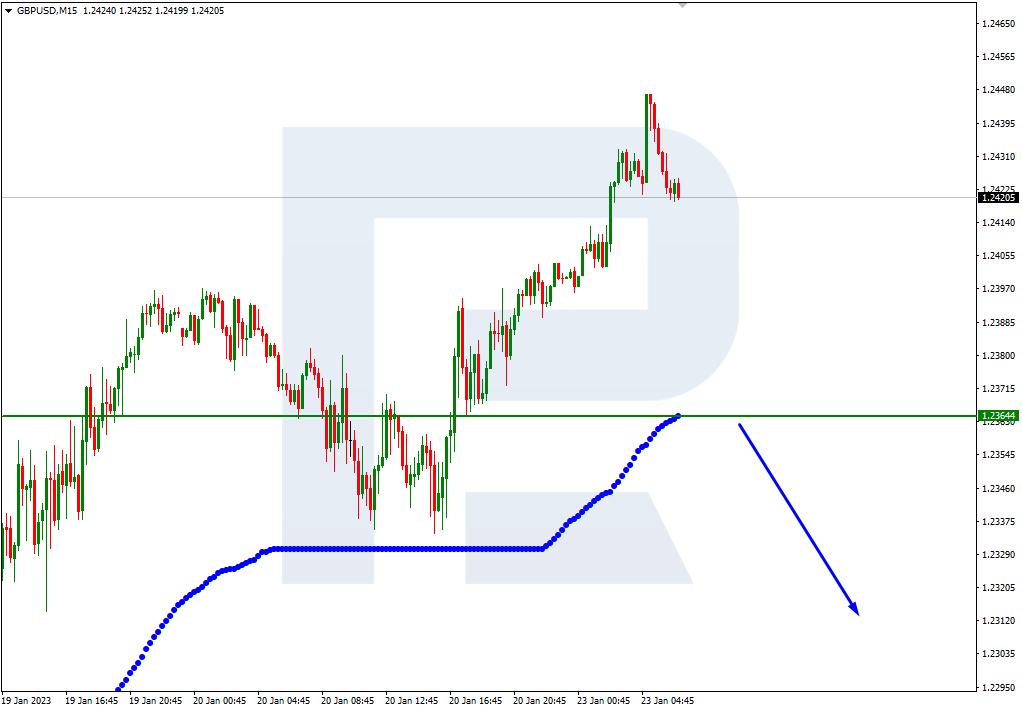
The GBPUSD on the D1 time frame was in a prolonged uptrend until 14 December when a last higher top was recorded at 1.24454.
A closer look at the Momentum Oscillator reveals a negative divergence between points “a” and “b” when comparing the tops at 1.23435 and 1.24454. This could have warned technical traders that the bullish trend was losing momentum.
After the higher top at 1.24454, the price dropped through the 15 and 34 Simple Moving Averages and the Momentum Oscillator followed suit by moving into bearish terrain. This confirmed that the bears are making their presence felt.
A possible critical support level formed when a lower bottom was recorded on 3 January at 1.18998. The bulls are currently trying to press the price higher but a resistance level that formed on 28 December at 1.21254 might exert its influence on the market.
If the price of GBPUSD breaks through the critical support level at 1.18998, then three possible price targets may be projected from there. Attaching the Fibonacci tool to the lower bottom at 1.18998, and dragging it to the resistance level at 1.21254, the following targets may be anticipated. The first target can be estimated at 1.17604 (161.8%). The second price target may be calculated at 1.15348 (261.8%) and the third and final target can be expected at 1.11698 (423.6%).
If the resistance level at 1.21254 is broken, the above scenario is no longer valid and must be reassessed.
As long as sellers maintain their negative sentiment and supply continues overcoming demand, the outlook for the GBPUSD currency pair will remain bearish.
The latest Federal Reserve meeting minutes suggest that the U.S. economy is headed for recession as the central bank will remain aggressive in raising rates to cool inflation, warns the CEO of one of the world’s largest independent financial advisory, asset management and fintech organizations.
The warning comes from deVere Group’s Nigel Green as the meeting minutes released Wednesday signal that the U.S. central bank remains cautious on inflation, with officials agreeing that “rate cuts shouldn’t happen in 2023.”
He says: “Investors have been waiting with bated breath as the Federal Open Market Committee (FOMC) minutes from the December meeting released on Wednesday give us more insight into what factors the Committee has been using for future policy decisions.
“It appears that officials remain hawkish and are especially concerned about the tight labor market.
“We expect that the latest minutes will give the central bank further support to maintain interest rates higher for longer than had been previously priced-in by the markets.
“With the labor market not cooling as fast, there seems to be a considerable turnaround in tone from the more dovish minutes in November.”
He continues: “These minutes dash yet more hopes for an economic soft landing.
“Investors are increasingly concerned that the Federal Reserve could now overtighten and will steer the U.S. economy into a major recession.
“Of course, the central bank will argue it needs to continue with rate rises to bring inflation back to target.
“But it must also ensure that the tight labor market doesn’t overshadow the broader picture and continue to overdo the hikes, which would make a U.S. recession deeper and longer.
“As the world’s largest economy, this would clearly have a serious, negative impact on the global economy.”
Nigel Green concludes: “The tone of the minutes indicate the Fed is not yet ready to pivot as the central bank believes risks for inflation remain to the upside and they will keep tightening until more substantial progress is made on bringing it back closer to target.
“Inflation remains their primary concern, not risks to economic growth.”
About:
deVere Group is one of the world’s largest independent advisors of specialist global financial solutions to international, local mass affluent, and high-net-worth clients. It has a network of more than 70 offices across the world, over 80,000 clients and $12bn under advisement.
“The Federal Reserve is forging ahead with its balance sheet reduction”
By Elliott Wave International
I know — inflation has been grabbing all the headlines for a good while now — so you may wonder why the subject of deflation is relevant.
First, the definitions of inflation and deflation go beyond commonly accepted meanings.
As Robert Prechter’s Last Chance to Conquer the Crash says:
Inflation is an increase in the total amount of money and credit, and deflation is a decrease in the total amount of money and credit. …
The most common misunderstanding about inflation and deflation … is the idea that inflation is rising prices and deflation is falling prices. General price changes, though, are simply effects.
That said, let’s start off with an occurrence which is quite rare. Here’s a chart and commentary from the December Elliott Wave Theorist, a monthly publication which covers major financial and cultural trends:
The chart, published by the Fed, shows that absolute M2 has been declining on a month-by-month basis for the first time in many decades, probably since the 1930s or 1940s. This trend is deflationary.
Keep in mind that M2 is a measure of the U.S. money stock that includes M1 (currency and coins held by the non-bank public, checkable deposits, and travelers’ checks) plus savings deposits (including money market deposit accounts), small time deposits under $100,000, and shares in retail money market mutual funds.
Another factor regarding deflation has to do with the Fed.
The November Global Forecast Service, an Elliott Wave International publication which analyzes 50-plus worldwide financial markets, showed this chart and noted:
The Federal Reserve is forging ahead with its balance sheet reduction, as the chart shows. This reduction in the central bank’s assets which were paid for by money created out of thin air constitutes disinflation, and deflation (when the balance sheet is contracting on an annualized basis) will likely come by the end of the year.
So, now you see why deflation is very much on the radar screen of Elliott Wave International’s Global Forecast Service, which can help you to prepare for what may be next.
Understanding the Elliott wave price patterns of global stock market indexes can also be of help in anticipating what’s next for major economies around the globe.
You see, the economy tends to follow the stock market, in each country.
Getting back to the Wave Principle, here are some insights from Frost & Prechter’s book, Elliott Wave Principle: Key to Market Behavior:
The Wave Principle is governed by man’s social nature, and since he has such a nature, its expression generates forms. As the forms are repetitive, they have predictive value.

Sometimes the market appears to reflect outside conditions and events, but at other times it is entirely detached from what most people assume are causal conditions. The reason is that the market has a law of its own. It is not propelled by the external causality to which one becomes accustomed in the everyday experiences of life. The path of prices is not a product of news. Nor is the market the cyclically rhythmic machine that some declare it to be. Its movement reflects a repetition of forms that is independent both of presumed causal events and of periodicity.
The market’s progression unfolds in waves. Waves are patterns of directional movement.
Would you like to read the entire online version of this Wall Street classic — for free?
You may do so once you become a member of Club EWI, the world’s largest Elliott wave educational community.
A Club EWI membership is also free (no obligations whatsoever) and allows for complimentary access to a wealth of Elliott wave resources on investing and trading.
This article was syndicated by Elliott Wave International and was originally published under the headline Why the Threat of Deflation is Real. EWI is the world’s largest market forecasting firm. Its staff of full-time analysts led by Chartered Market Technician Robert Prechter provides 24-hour-a-day market analysis to institutional and private investors around the world.
Meta Materials Inc. wins an innovation award at the Consumer Electronics Show and shows off its tech giving a clearer view of the contents of your microwave.
Another new year means another chance for the tech industry to show off at the Consumer Electronics Show.
META was named a CES 2023 Innovation Awards Honoree for the NANOWEB® transparent EMI shielding film, which promises to make it easier to tell when your leftovers are ready in the microwave by clearing up the radiation shielding used on the window.
The technology is also used to de-ice auto sensors and manufacture antennas and electrochromic lenses for augmented reality and 5G reflector films.
The company will also demonstrate its electric vehicle (EV)-related products, like its NPORE® nanocomposite ceramic battery separator and current collectors, to reduce copper usage and improve safety at the show.
It promises to be a busy year for the company, analyst Graham Mattison of Water Tower Research wrote.
It promises to be a busy year for the company, analyst Graham Mattison of Water Tower Research wrote in a Dec. 19 research note.
“We expect that META will announce at least one production contract this year, delivering a major milestone in the company’s growth of commercial revenues,” Mattison wrote. “While META has yet to announce anything, we see NANOWEB® as the likely technology to be commercially incorporated into a product.”
The Catalyst: NANOWEB®
Source: META Materials Inc.
But it’s the microwave application of the technology that may attract crowds for META in Las Vegas. Mattison said an estimated 70 million microwaves are sold every year.
“All microwave ovens produce radiation, which is why windows within their doors have significant shielding,” wrote ROTH Capital Partners analyst Gerry Sweeney in a research note.
“But this also obscures visibility into the oven. MMAT EMI shielding uses nanostructures to divert radiation waves back into the oven, allowing for a clear window. Furthermore, initial testing indicates lower amounts of radiation escape. Initial testing, results, and NANOWEB® line production likely open the door to increasing conversations with OEMs in coming quarters.”
ROTH has a Buy rating on META with a target of US$2.
“META is at the early stage of what we expect will be a significant growth curve as its technologies are incorporated into many of today’s products in a range of industries,” Mattison wrote.
“The company’s growing portfolio of technologies, along with its production capabilities, partnerships, and deep patent portfolio, give META a competitive advantage as it works to penetrate addressable markets that are collectively well in excess of US$50 billion.”
META’s total revenue grew year-over-year (YOY) in the third quarter by 329% to US$2.5 million and 388% to US$8.8 million over the first nine months versus the same period in 2021.
But operating expenses also doubled YOY to US$23.9 million following several important acquisitions, analyst MacMurray Whale of Cormark Securities pointed out.
The company’s Q3 net loss increased to US$24.5 million, or US$0.07 per share, on 362.2 million weighted average shares, compared to US$11.4 million, or US$0.04 per share, on 280 million weighted average shares in Q3 2021.
But operating expenses also doubled YOY to US$23.9 million following several important acquisitions, analyst MacMurray Whale of Cormark Securities pointed out.
“MMAT has many early-stage projects across a number of different verticals, most of which have not entered into commercial-scale production,” he wrote.
Hundreds of Patents
Metamaterials were first developed in the 1960s but only came into their own in the 2000s, when design and manufacturing capabilities caught up to the technology. The company is using them to develop nanotechnology products like self-deicing and defogging car and truck headlights and windows, see-through antennas, augmented reality glasses that look like regular glasses, and special eyewear that protects pilots’ eyes from laser strikes.
META is applying its futuristic technology to the communications, health and wellness, aerospace, automotive, and clean energy sectors.
ROTH has a Buy rating on META with a target of US$2.
The company has 472 active patent documents, of which 292 patents have been granted across all its technologies.
“META has been innovating over the last ten years,” President, Chief Executive Officer, and founder George Palikaras said in a video on META’s website. “We start with the design using computer algorithms that design the functions of the designed material . . . We can use a single computer with a single engineer and reduce the time to designing and innovating in the material space from six months down to a few hours.”
He said that reduces costs and makes META “a preferred partner and a preferred developer that enables a wide range of applications in the industry.”
Its NANOWEB® product is the “most transparent and conductive film available today on the market,” Palikaras said.
The global market for lithium-ion battery separators was estimated at US$5.1 billion in 2021 and is projected to reach US$9 billion by 2025, Yano Research Institute Ltd. said.
META also was granted U.S. patents for its second-generation NPORE® nanoporous ceramic separator and its third-generation NPORE® ECS (electrode-coated separator) for lithium-ion batteries.
The global market for lithium-ion battery separators was estimated at US$5.1 billion in 2021 and is projected to reach US$9 billion by 2025, Yano Research Institute Ltd. said.
META also has entered a memo of understanding with DuPont Teijin Films and Mitsubishi Electric Europe to use Meta’s PLASMAfusion to scale a high-volume manufacturing system for film-based, coated copper current collectors. The process reduces the amount of the red metal needed for EV batteries.
Ownership and Share Structure
Major shareholders include Thomas Gordon Welch, with 6.64% or 24 million shares; Anne Barber Lambert, with 6.39% or 23.14 million shares; Lamda Guard Technologies Ltd., with 6.35% or 22.98 million shares; Nova Scotia Innovation Corp., with 3.45% or 12.5 million shares; and Georgios Palikaras, with 1.92% or 6.96 million shares. About 14% of META is held institutionally held.
The stock is covered by numerous analysts, including SingularResearch’s Christopher J. Sakai, ROTH Capital Partners’ Gerry Sweeney, as well as Cormark Securities’ MacMurray Whale, and newsletter writer Clive Maund of Clivemaund.com. Click “See More Live Data” in the data box above to review more.
The company has a market cap of $419.84 million with 361.9 million shares outstanding, 267 million of them free-floating. It trades in a 52-week range of US$2.95 and US$0.63.
Disclosures: 1) Steve Sobek wrote this article for Streetwise Reports LLC. He or members of his household own securities of the following companies mentioned in the article: None. He or members of his household are paid by the following companies mentioned in this article: None. His/her company has a financial relationship with the following companies referred to in this article: None.
2) The following companies mentioned in this article are billboard sponsors of Streetwise Reports: Meta Materials Inc. Click here for important disclosures about sponsor fees. The information provided above is for informational purposes only and is not a recommendation to buy or sell any security.
3) The article does not constitute investment advice. Each reader is encouraged to consult with his or her individual financial professional and any action a reader takes as a result of information presented here is his or her own responsibility. By opening this page, each reader accepts and agrees to Streetwise Reports’ terms of use and full legal disclaimer. This article is not a solicitation for investment. Streetwise Reports does not render general or specific investment advice and the information on Streetwise Reports should not be considered a recommendation to buy or sell any security. Streetwise Reports does not endorse or recommend the business, products, services or securities of any company mentioned on Streetwise Reports.
4) From time to time, Streetwise Reports LLC and its directors, officers, employees or members of their families, as well as persons interviewed for articles and interviews on the site, may have a long or short position in securities mentioned. Directors, officers, employees or members of their immediate families are prohibited from making purchases and/or sales of those securities in the open market or otherwise from the time of the decision to publish an article until three business days after the publication of the article. The foregoing prohibition does not apply to articles that in substance only restate previously published company releases. As of the date of this article, officers and/or employees of Streetwise Reports LLC (including members of their household) own securities of Meta Materials Inc., a company mentioned in this article.
Preliminary data showed that inflation in Germany slowed to an annualized rate of 8.6% in December from 10% as one-time government payments came into effect to help consumers pay their heating and gas bills. In recent months, many German unions have successfully advocated above-average wage increases to offset the impact of inflation. Meanwhile, unemployment rates in Europe’s largest economy rose slightly in December to 2.45 million, or 5.5%.
Trading recommendations
Support levels: 1.0528, 1.0483, 1.0361, 1.0332, 1.0284, 1.0193
Resistance levels: 1.0612, 1.0664, 1.0695
The EUR/USD currency pair trend on the hourly time frame is still bullish. The price is still trading in a wide price corridor. The MACD indicator has become negative. Volatility remains low. Under such market conditions, buy trades are best considered from the support level of 1.0638 on intraday time frames. Sell deals can be considered from the resistance level of 1.0689, but better with confirmation in the form of a reverse initiative or a false breakout since the level has already been tested.
Alternative scenario: if the price breaks down through the support level of 1.0549 and fixes below it, the downtrend will likely resume.
News feed for 2023.01.04:
– French Consumer Price index (m/m) at 09:45 (GMT+2);
– Spanish Services PMI (m/m) at 10:00 (GMT+2);
– Italian Services PMI (m/m) at 10:45 (GMT+2);
– French Services PMI (m/m) at 10:50 (GMT+2);
– Germany Services PMI (m/m) at 10:55 (GMT+2);
– Eurozone Services PMI (m/m) at 11:00 (GMT+2);
– US ISM Manufacturing PMI (m/m) at 17:00 (GMT+2);
– US JOLTs Job Openings (m/m) at 17:00 (GMT+2);
– US FOMC minutes at 21:00 (GMT+2).
The GBP/USD currency pair
Technical indicators of the currency pair:
Prev Open: 1.2042
Prev Close: 1.1966
% chg. over the last day: -0.64 %
The UK manufacturing sector ended 2022 on a weak footing, with output, new orders, and employment declining faster. Domestic and foreign demand remained lackluster as customers faced rising costs, increased market volatility, and Brexit-related complications. The seasonally adjusted Purchasing Managers’ Index for the UK manufacturing sector fell to a 31-month low of 45.3 in December, down from 46.5 in November. The PMI has remained below the neutral 50.0 mark for five months in a row. All five PMI sub-indices point to a weakening operating environment for the UK manufacturing economy.
From the technical point of view, the trend on the GBP/USD currency pair on the hourly time frame is bearish. The MACD indicator is in the negative zone, but there is a divergence on several timeframes, indicating a limited further decline. Under such market conditions, buy trades are better to look for on intraday time frames from the support level of 1.1893, but with confirmation. Sell trades are best sought from the resistance level of 1.2056 but also better with confirmation.
Alternative scenario: if the price breaks out through the 1.2100 resistance level and fixes above it, the uptrend will likely resume.
There is no news feed for today.
The USD/JPY currency pair
Technical indicators of the currency pair:
Prev Open: 130.77
Prev Close: 130.97
% chg. over the last day: +0.16 %
The Japanese yen rose to a seven-month high against the US dollar on Tuesday, crossing the 130 mark. The strengthening of the yen was triggered by the Bank of Japan’s (BOJ) decision to loosen control over the yield curve and allow holders of certain government bonds to move within a wider range. The US Federal Reserve and other central banks are seeking to slow the pace of interest rate hikes, while the BOJ will only begin to move toward policy normalization this year. Analysts believe the first half of 2023 may pass under the strengthening of the Japanese yen.
From the technical point of view, the medium-term trend on the currency pair USD/JPY is bearish. The price is now trading at the level of the moving averages, while the MACD indicator has become inactive, but the divergence on several time frames indicates that further decline is limited. Buy trades are best considered on intraday time frames from the support level of 129.65, but only with confirmation. Sell deals be looked at from the resistance level of 132.92, provided there is a reversal.
Alternative scenario: If the price fixes above 133.58, the uptrend will likely resume.
News feed for 2023.01.04:
– Japan Manufacturing PMI (m/m) at 02:30 (GMT+2).
The USD/CAD currency pair
Technical indicators of the currency pair:
Prev Open: 1.3569
Prev Close: 1.3668
% chg. over the last day: +0.72 %
Canada’s manufacturing economy remains in a moderate contraction zone, characterized by further declines in production, new orders, and buying activity. The seasonally adjusted Manufacturing PMI registered 49.2 in December, down from 49.6 in November and below the 50.0 mark for the fifth consecutive month. This is the longest decline since August 2015. The main reason for the decline is a drop in new orders due to continuing high inflation and uncertainty in sales.
Trading recommendations
Support levels: 1.3627, 1.3570, 1.3530, 1.3437, 1.3386, 1.3360, 1.3281, 1.3212
Resistance levels: 1.3700, 1.3776, 1.3855
From the point of view of technical analysis, the trend on the USD/CAD currency pair is bullish. The price is trading above the moving averages and forming provocation zones along the move, which do not allow the price to go down. The MACD indicator is in the positive zone. Within the day, buying prevails. Buy trades should be considered from the support at 1.3570, but with confirmation. Sell deals are better to look for on the intraday time frames from the resistance level of 1.3700, but with a confirmation in the form of a reverse initiative on the lower time frames or a false breakout, since the level has already been tested.
Alternative scenario: if the price breaks down and consolidates below the support level of 1.3529, the downtrend will likely resume.
This article reflects a personal opinion and should not be interpreted as an investment advice, and/or offer, and/or a persistent request for carrying out financial transactions, and/or a guarantee, and/or a forecast of future events.
As the stock market closed yesterday, the Dow Jones Index (US30) decreased by 0.04%, and the S&P 500 Index (US500) fell by 0.41%. The Technology Index NASDAQ (US100) lost 0.76% on Tuesday. At the end of the day, all three indices closed with losses.
Apple (AAPL) lost more than 4%, approaching a $2 trillion market value for the first time since 2021. Shares of electric carmaker Tesla Inc (TSLA) fell more than 13% Tuesday after the company reported lower-than-expected deliveries for the quarter and year.
The US stocks ended 2022 with their worst performance since 2008, as interest rates rose throughout the year, putting pressure on once-high growth rates and shares of large tech companies.
In the United States, this week’s focus will be on Friday’s US Nonfarm Payrolls report for December. The jobs report is crucial as the Federal Reserve faces the dilemma of whether to continue tightening monetary policy to bring inflation to desired levels or to abandon aggressive rate hikes to protect the economy from slowing. Higher inflation and rising interest rates have hit the housing sector and could next hit the labor market.
The FOMC minutes will also be released today. Given Powell’s hawkish tone after the last meeting and the general market expectation that the Fed will now level rates, there is speculation that the minutes may be more dovish this time. The market is currently pricing in a final rate below 5.0%, while the Fed is pushing for a final rate above 5.0%.
Equity markets in Europe were mostly up yesterday. Germany’s DAX (DE30) gained 0.80%, France’s CAC 40 (FR40) added 0.44%, Spain’s IBEX 35 (ES35) jumped by 0.42%, Britain’s FTSE 100 (UK100) closed Tuesday in plus 1.37%.
European Central Bank Governing Council spokesman Martins Kazaks expects interest rates to rise significantly in February and March 2023. We are talking about a 0.5% ECB rate hike at each of the meetings. Kazaks, who heads Latvia’s Central Bank, is considered one of the hawkish officials.
Oil starts in 2023 with declining 4%. The US West Texas Intermediate (WTI) crude for February delivery fell by 4.1% to $76.93 a barrel. Brent Crude oil of British origin for delivery in February dropped by 4.4% to $82.10 per barrel. Decreasing activity at factories in China (the biggest oil importer) and IMF warnings about global recession put pressure on oil quotes. The outlook for crude oil remains very uncertain, so high volatility will persist.
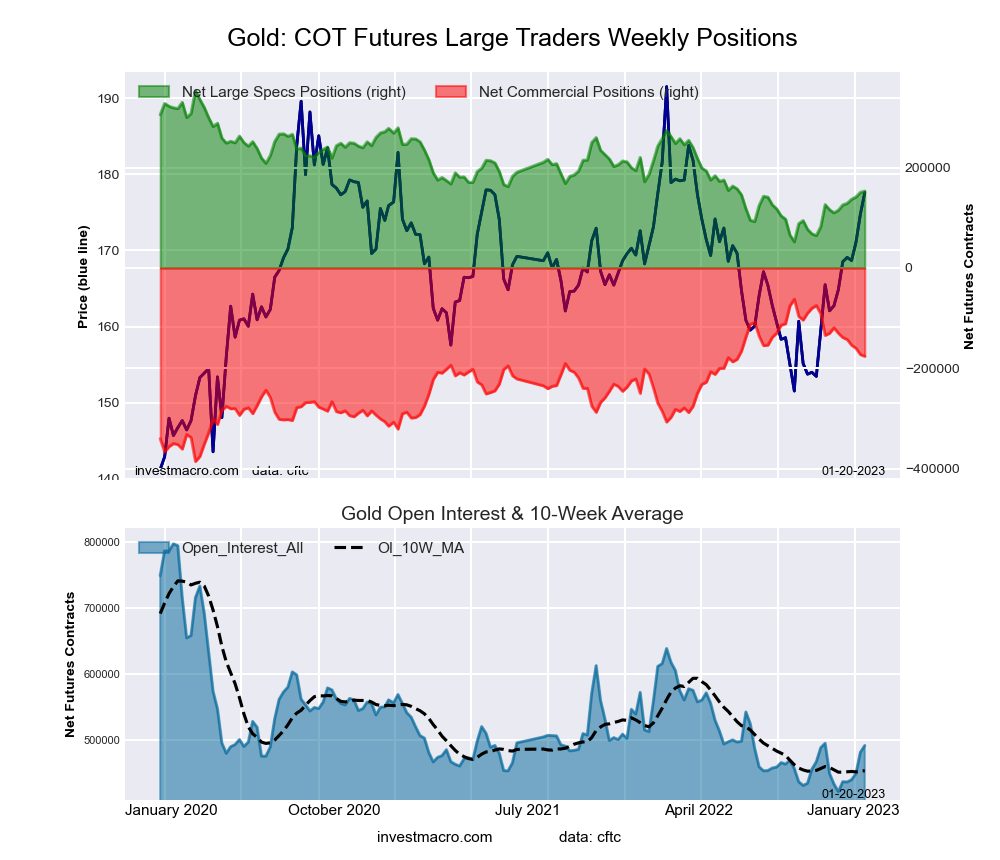
Gold showed a strong start in the new year as concerns about an impending recession and a potential slowdown in US interest rates led to increased demand for safe-haven assets other than the dollar.
Asian indices traded flat yesterday. Japan’s Nikkei 225 (JP225) did not trade yesterday, China’s FTSE China A50 (CHA50) fell by 0.69%, Hong Kong’s Hang Seng (HK50) ended the day up by 1.84%, India’s NIFTY 50 (IND50) added 0.19%, and Australia’s S&P/ASX 200 (AU200) ended Tuesday with a minus 1.31%.
China’s repeal of strict antivirus controls last month caused COVID-19 to spread to 1.4 billion people. Funeral companies are reporting a surge in demand for their services, and international health experts are predicting that at least a million people in China will die from COVID-19 this year. But officially, China reports few COVID-19 deaths and downplays concerns about the disease.
S&P 500 (F) (US500) 3,823.95 −15.55 (−0.41%)
Dow Jones (US30) 33,134.79 −12.46 (−0.038%)
DAX (DE40) 14,181.67 +112.41 (+0.80%)
FTSE 100 (UK100) 7,554.09 +102.35 (+1.37%)
USD Index 104.61 +1.09 (+1.05%)
Important events for today:
– Japan Manufacturing PMI (m/m) at 02:30 (GMT+2);
– Switzerland Consumer Price index (m/m) at 09:30 (GMT+2);
– French Consumer Price index (m/m) at 09:45 (GMT+2);
– Spanish Services PMI (m/m) at 10:00 (GMT+2);
– Italian Services PMI (m/m) at 10:45 (GMT+2);
– French Services PMI (m/m) at 10:50 (GMT+2);
– Germany Services PMI (m/m) at 10:55 (GMT+2);
– Eurozone Services PMI (m/m) at 11:00 (GMT+2);
– US ISM Manufacturing PMI (m/m) at 17:00 (GMT+2);
This article reflects a personal opinion and should not be interpreted as an investment advice, and/or offer, and/or a persistent request for carrying out financial transactions, and/or a guarantee, and/or a forecast of future events.
The outlook for the new year is dominated by this one fear: recession.
Major economies such as the UK and Eurozone are believed to be already going through an economic contraction. The US – the world’s largest economy – expected to experience a downturn later this year.
Yet amidst all these recession fears at the onset of 2023, the financial markets still do present opportunities for investors and traders.
Here are 3 assets that may see a stellar year:
1) Gold to hit $2000?
Gold has long been seen as a safe haven asset: a way for investors to protect their money in times of heightened fear and uncertainty.
As proof, here’s a list of how gold performed during the US recessions (as listed by the NBER) that have occurred since 1990:
Gulf War Recession (July 1990 – March 1991) = gold soared by as much as17.5% at its peak on 21 August 1990.
Dot Com Recession (March 2001 – Nov 2001) = gold up by as much as 10.4% at its peak on 26 Septembe 2001.
The Great Recession (Dec 2007 – June 2009) = gold rose by as much as 28% by March 2008 when it traded over $1000 per ounce for the first time ever in the US futures market.
Covid-19 Recession (Feb 2020 – April 2020) = gold hit a record high at $2075.47 in August 2020
Using such past performances as a guide, the prospects of gold’s prospects of climbing by another 9% from today’s prices ($1848 at the time of writing) to reach $2000 doesn’t seem too farfetched.
Fundamental perspective: What needs to happen?
Besides a US recession, the key component for gold’s ability to climb higher rests on this key factor:
The US dollar has to weaken further as markets brace for the Fed eventually cutting interest rates to help support the US economy.
As bullion’s “enemy” becomes less potent in the face of a looming recession, that could encourage gold bulls to push the precious metal even higher in 2023.
At the time of writing, markets are predicting a 71% chance that we could see $2000 gold once more in 2023.
What could go wrong?
If gold’s enemy #1 from 2022 makes a return: US inflation remains stubbornly higher, forcing the Fed to continue hiking interest rates aggressively, which in turn restores demand for the US dollar.
That may force a major rethink among gold bulls, perhaps accompanied by the unwinding of some of bullion’s gains of late.
2) Japanese Yen: USDJPY back down to 125?
Last year, the Yen fell by 12.2% against the US dollar, making JPY the second-worst performing G10 currency against the greenback in 2022.
That’s all about to change, with the Yen ready to catch up.
Fundamental perspective: What needs to happen?
It all depends on what the central banks in the US and Japan do in relation to one another.
Fed pivot: If the Federal Reserve “pivots” and is forced to lower US interest rates later in 2023 in order to offset a US recession, that should spell more weakness for the dollar.
BoJ pivot: If the Bank of Japan also does its own “pivot” but instead of cutting, it actually raises its own interest rates, that should spell more gains for JPY.
Such expectations will come into sharper focus once the new central bank governor takes over when current BoJ Governor Haruhiko Kuroda’s term expires in April.
Keep in mind that the BoJ’s policy balance rate now still rests at negative 0.10%, making it a clear laggard across major central bankers that had been busy hiking their own rates throughout 2022.
In short, if the BoJ hikes rates at a time when the Fed is cutting its own rates (or perhaps even just thinking about making such a move), that should help pave the way for the Yen’s speedy recovery.
For now, markets predict a 53% that USDJPY would eventually trade below 125 sometime over the next 12 months.
What could go wrong?
Still-dovish BoJ: the incoming BoJ Governor keeps Japan’s benchmark rate mired in negative territory on signs that inflation is not as sticky as hoped.
This scenario would be made worse if the Fed stays hawkish and keeps sending US interest rates much higher than the currently forecasted peak of around 5%.
A still-dovish BoJ + a still-hawkish Fed = USDJPY’s downside severely capped.
3) FTSE China A50 Index back above 14,000?
There is much hope surrounding the reopening of the Chinese economy this year, with the government essentially having abandoned its Covid Zero campaign.
And such optimism has already been playing out in Chinese stocks in recent months.
Here’s a comparison between the FTSE China A50 Index against its global peers since end-October through the present day:
FTSE China A50 Index: +15.9%
Europe’s STOXX 50: +7.3%
MSCI ACWI Index (stocks across developed and emerging markets): +3.26%
S&P 500: -1.24%
Fundamental perspective: What needs to happen?
The world’s second largest economy needs to finally break off the Covid shackles that have hampered it over the past 3 years.
Once the economy can overcome the recent snags of skyrocketing Covid cases and hospitalizations, consumers need to eventually feel confident once more about going out their economic activities, be it returning to the office, spending money at physical stores, and even going on vacations.
Assuming that China can find a steady footing and follow in the rest-of-the-world’s footsteps in terms of the post-pandemic recovery, that promises to help restore the earnings of China’s public-listed companies, which in turn should entice more investors into pushing these stock prices higher.
Additionally, policymakers on both the fiscal (government) and monetary (central bank) sides must continue adopting a supportive stance to shore up China’s economic momentum.
All of the above should position China as an attractive investment destination for foreign investors, especially within the context of a looming global recession.
What could go wrong?
If China continues to struggle with the Covid menace, that would only worsen the expected global recession and deal a massive blow to hopes for a sustained recovery in Chinese stock markets.
Also, if China’s inflation starts to run too hota la the rest of the world, that may force policymakers into a restrictive stance to curb inflation at the expense of economic growth.
If 2023 also sees a return of heightened geopolitical tensions between the West and China, that could also sour sentiment surrounding Chinese assets.
Two economists discussed that and more in a recent wide-ranging and exclusive interview for The Conversation. Brian Blank is a finance professor at Mississippi State University who specializes in the study of corporations and how they respond to economic downturns. Rodney Ramcharan is an economist at the University of Southern California who previously held posts with the Federal Reserve and the International Monetary Fund.
Both were interviewed by Bryan Keogh, deputy managing editor and senior editor of economy and business for The Conversation.
Below are some highlights from the discussion. Answers have been edited for brevity and clarity.
Brian Blank and Rodney Ramcharan talk about the economic outlook for 2023.
Are we headed for a recession in 2023?
Brian Blank: The consensus view among most forecasters is that there is a recession coming at some point, maybe in the middle of next year. I’m a little bit more optimistic than that consensus.
People have been calling for a recession for months now, and this seems to be the most anticipated recession on record. I think that it could still be a ways off. Consumer balance sheets are still relatively strong, stronger than we’ve seen them for most periods.
I think that the labor market is going to remain hotter than people have expected. Right now, over the last eight months, the labor market has added more jobs than anticipated, which is one of the strongest streaks on record. And I think that until consumer balance sheets weaken considerably, we can expect consumer spending, which is the largest part of the economy, to continue to grow quickly.
[But this] doesn’t mean that a recession is not coming. There’s always a recession somewhere down the road.
Rodney Ramcharan: Indeed, yes, there’s a likelihood that the economy is going to contract in the next nine months. The president of the New York Fed expects the unemployment rate to go up from 3.5% currently to somewhere between 4% to 5% in the next year. And I think that will be consistent with a recession.
In terms of how much worse it can be beyond that, it’s going to depend on a number of things. It could depend on whether the Fed is going to accept a higher inflation rate over the medium term or whether it’s really committed to getting the inflation rate down to the 2% rate. So I think that’s the trade-off.
Will unemployment go up?
Blank: [Unemployment] hasn’t risen much, and maybe it’ll pick up to somewhere close to 4%. Many are expecting something like four and a half percent. And I think that’s certainly possible. And I think that we can see small upticks in the coming months.
But I don’t think it’s going to rise as quickly as some people are expecting, in part because what we’ve seen so far is a lack of labor force participation. Until more people enter the labor market, I think there are going to be plenty of jobs to go around.
What is your outlook on interest rates?
Ramcharan: As people find it more and more difficult to find jobs, or to get jobs as they begin to lose jobs, I think that’s going to dampen spending. And we’re seeing that now as the cost of borrowing has gone up sharply, and the Fed is expecting that.
The expectation is the federal funds rate will go up to 5% by next year. If you tack on another couple of points, because of the risk involved, then the cost to borrow to buy a home could potentially get up to 8% for some people. And that could be very expensive.
And the flip side of this for businesses is there’s potentially going to be a slowdown in cash flow. If consumers are not spending, then the revenues that businesses depend on to make investments might not be there.
The additional piece in this puzzle is what the banks will then do. I think banks are going to begin to curtail the extension of credit. So not only will interest rates go up for the typical consumer and the typical business, it’s also likely that they are more likely to experience denial of credit, and so that should together begin to slow spending quite a bit.
After massive increases in housing prices, what caused them to suddenly drop?
Ramcharan: As the Fed lowered interest rates, there was a massive shift among the population for various reasons. They decided that housing was the right investment or the right thing. And so when 50 million people all collectively decide to buy homes, the supply of homes is reasonably constrained in the short run. And so that led to this massive increase in house prices and in rents.
In the last three months, the housing market has cooled sharply. We’re now seeing house prices beginning to fall. I would imagine, going forward, the housing market cooling is going to be a major driver behind the slowdown in the inflation rate and in real estate investment trusts. So that’s positive.
Our recent election just changed the composition of Congress. How will that affect the economy?
Blank: Certainly, when we have a divided Congress, we’re less likely to see decisions made that involve passing legislation that might support the economy. And I think it’s likely the Republican House is going to become a little bit more conservative with spending.
And so if we do start to see a downturn, I think you’re less likely to see legislation that might help support an economy that could be in need of it. That is going to make the job of the Federal Reserve more important.
How certain are these predictions?
Ramcharan: I just want to be careful here and let your viewers know that we’re making these statements based on theory, because the inflation that we’re experiencing now comes about from a pandemic, and there really is no evidence, there’s no data available, that people can look to to say, “What happens to an economy after a pandemic?” That data does not exist.
So we’re trying to piece together the data we do have with the theories we do have, but there’s a huge band of uncertainty about what’s going to happen.
The ECB is expected to go against the trend of most other major central banks early this year and continue its aggressive pace of rate hikes, even though inflationary pressures across Europe are forecast to ease this week. The ECB was the last of the big central banks to start raising rates, which means Europe’s Central Bank has more “room” to continue tightening. Moreover, the index of business activity in the manufacturing sector indicates that the European industry has already adapted to high prices, the recession in manufacturing activity in the euro area is probably over, and supply chains are recovering.
Trading recommendations
Support levels: 1.0638, 1.0589, 1.0483, 1.0361, 1.0332, 1.0284, 1.0193
Resistance levels: 1.0689
The EUR/USD currency pair trend on the hourly time frame is still bullish. The price is still trading in a wide price corridor. The MACD indicator has become negative. Volatility remains low. Under such market conditions, buy trades are best considered from the support level of 1.0638 on intraday time frames. Sell deals can be considered from the resistance level of 1.0689, but better with confirmation in the form of a reverse initiative or a false breakout since the level has already been tested.
Alternative scenario: if the price breaks down through the support level of 1.0549 and fixes below it, the downtrend will likely resume.
News feed for 2023.01.02:
– German Unemployment Rate (m/m) at 10:55 (GMT+2);
– German Consumer Price index (m/m) at 15:00 (GMT+2);
– US Manufacturing PMI (m/m) at 16:45 (GMT+2).
The GBP/USD currency pair
Technical indicators of the currency pair:
Prev Open: 1.2061
Prev Close: 1.2044
% chg. over the last day: -0.14 %
The Bank of England is expected to start slowing the pace of rate hikes as inflation declines, as UK economic indicators point to a recessionary scenario. The Resolution Foundation has warned that the cost-of-living crisis, which has led to a sharp drop in living standards, will continue into the new year. Income is expected to fall another 3.8%, and households will continue to struggle with soaring energy prices and tax increases.
Trading recommendations
Support levels: 1.2057, 1.1999, 1.1979, 1.1684, 1.1476, 1.1418
From the technical point of view, the trend on the GBP/USD currency pair on the hourly time frame is bearish. The MACD indicator has become inactive, and the price is trading in a narrow price corridor, but there are signs of buying strength inside the day. Under such market conditions, it is better to look for buy trades on intraday time frames from the support level of 1.2057, but with confirmation. Sell trades are best sought from the resistance level of 1.2167 but also better with confirmation.
Alternative scenario: if the price breaks out through the 1.2308 resistance level and fixes above it, the uptrend will likely resume.
News feed for 2023.01.03:
– UK Manufacturing PMI (m/m) at 11:30 (GMT+2).
The USD/JPY currency pair
Technical indicators of the currency pair:
Prev Open: 130.91
Prev Close: 130.61
% chg. over the last day: -0.23 %
The Japanese yen has strengthened by about 16% from its October low amid Bank of Japan intervention, as well as hopes of a slowdown in US interest rate hikes and speculation about possible Bank of Japan policy changes this year. The Bank of Japan’s unexpected December decision to change the parameters for managing the yield curve is still seen by many as a sign that ultra-easy monetary policy may soon come to an end. But traders should not expect any changes before the spring of 2023.
From the technical point of view, the medium-term trend on the currency pair USD/JPY is bearish. The price is now trading below the moving averages, while the MACD indicator is in the negative zone, but there is a divergence. There is selling pressure inside the day. Buy trades are best considered on intraday time frames from support at 129.65, but only with confirmation. Sell deals can be sought from the resistance level of 131.22, provided there is a reversal.
Alternative scenario: If the price fixes above 133.58, the uptrend will likely resume.
There is no news feed for today.
The USD/CAD currency pair
Technical indicators of the currency pair:
Prev Open: 1.3550
Prev Close: 1.3570
% chg. over the last day: +0.14 %
The USD/CAD currency pair gained 7% over 2022 primarily due to the US Federal Reserve’s tightening of monetary policy, which led to a 7.61% rise in the dollar index. WTI crude oil price rose by 4.57% over the year, which helped keep the Canadian dollar from plummeting. It should also be noted that the Bank of Canada was one of the first to begin tightening monetary policy but did it less aggressively than the US Fed, so now the US Fed rate (4.5%) is slightly higher than the Bank of Canada rate (4.25%). The Bank of Canada is projected to schedule another 0.25% rate hike in January and then keep rates at 4.5% through the end of 2023. With the US Fed starting to slow the rate hikes and Canada’s economic outlook now more optimistic, this could play for the Canadian currency’s strength in the first half of 2023.
Trading recommendations
Support levels: 1.3437, 1.3386, 1.3360, 1.3281, 1.3212
From the point of view of technical analysis, the trend on the USD/CAD currency pair is still bullish. The price forms a wide price corridor. The MACD indicator is in the positive zone, but sales prevail during the day. Buy trades should be considered from the support level of 1.3537, but with confirmation. Sell deals are best to look for on intraday time frames from the resistance level of 1.3583, but with confirmation in the form of reverse initiative on the lower time frames.
Alternative scenario: if the price breaks down and consolidates below the support level of 1.3529, the downtrend will likely resume.
News feed for 2023.01.03:
– OPEC+ Meeting (m/m) at 12:00 (GMT+2);
– Canada Manufacturing PMI (m/m) at 16:30 (GMT+2).
This article reflects a personal opinion and should not be interpreted as an investment advice, and/or offer, and/or a persistent request for carrying out financial transactions, and/or a guarantee, and/or a forecast of future events.
As we emerge out of a rough year dominated by soaring inflation, slowing global growth, heightened geopolitical risks and Covid-19, the early part of 2023 looks like it could be more of the same story.
Financial markets were hit by negative market themes in 2022, with the S&P 500 shedding almost 20%. We also witnessed the dollar experience a sharp change of fortune during the fourth quarter after dominating the FX space for most of the year. Even cryptocurrencies were treated without mercy, including Bitcoin which depreciated by 64%!
The harsh reality is that markets and investors across the world have accepted the idea of a global recession in 2023. Financial heavyweights like the IMF and World Bank have all lowered their world growth forecasts amid the uncertain outlook. The United States is expected to sink into a recession while things remain gloomy for China due to surging Covid-19 cases. On top of this, Britain may already be in a recession along with the Eurozone as they pay the expensive price of taming inflation.
Beware of China Covid threat…
2023 may kick of on a cautious note as countries across the globe express unease over China’s growing Covid-19 threat. The Covid menace has torn through the world’s second largest economy after the government’s decision to relax its zero covid policy back in early December. With cases exploding in China, countries such as the United States, Italy and Japan among others have announced mandatory tests for Chinese travellers. Regardless, the threat of infections spreading across the world and resulting in disruptions may weigh heavily on sentiment as painful memories of 2020 & 2021 resurface.
Inflation beast tamed?
Has inflation truly peaked? This is the 20 trillion-dollar question and a central theme that will influence global financial markets in the new year. It is worth keeping in mind that US inflation slowed for a fifth straight month to 7.1% in November, the lowest level since December 2021. We saw a similar pattern in the United Kingdom, Europe, and China among other countries across the globe. Should consumer prices continue to cool well into 2023, this may set the stage for a series of major developments that impact currency, commodity, and equity markets.
Will Central Banks be forced to pivot?
Persistent signs of cooling inflation could encourage central banks to slow down their pace of hikes, pause, and then eventually start cutting interest rates by the end of 2023 to promote growth. Despite concluding the year on a hawkish note, the Federal Reserve has already shifted into lower gear on rates, hiking by only 50bps in December. We saw the same development with the Bank of England who concluded their last policy meeting of 2022 by slowing the pace of rate hikes. It may be wise to keep a close eye on the Bank of Japan (BoJ) which sent shockwaves across markets in December by tweaking its monetary policy. This fuelled speculation around a hawkish policy pivot down the road – ultimately boosting the Yen. Should the BoJ pivot from ultra-dovish in 2023, Yen bulls could dominate the scene.
USD: Even the mighty fall
King dollar could be in store for further pain in the New Year as fundamental forces work against the world’s reserve currency. During the final quarter of 2022, the dollar weakened against every single G10 currency as cooling inflation reduced the pressure for the Fed to remain aggressive on rates. Concerns over the US economy along with falling Treasury yields left the currency unloved and depressed. Dollar weakness has the potential to become a key theme in 2023 as rate hikes slow and eventually become rate cuts in the face of cooling inflation.
A vulnerable dollar should provide an opportunity for G10 and emerging market currencies to fight back after many months of oppression. Although each currency will have its domestic trials to overcome, a depreciating dollar could provide a breath of fresh air, creating potential reversals across currency and commodity markets.
The Euro’s great rebound
Since we are talking FX, how can we leave out the most popular and liquid currency pair? After dipping below parity in 2022, EURUSD has staged an impressive rebound. Upside momentum remains powered by a weaker dollar which has taken prices back above 1.0600 after sinking as low as 0.9535 in late September. However, with both the ECB and Fed shifting into different gears on rate hikes, things could get choppy in the medium term. Should geopolitical risk and the energy crisis in Europe remain a major theme, this could cap EURUSD’s bullish momentum. However, further dollar weakness could propel the pair to levels not seen since 2021.
S&P 500 to experience major reversal?
Things could become even more interesting for global equity markets as shifting fundamental themes influence sentiment. In 2022, stock markets were a battleground with the S&P 500 concluding almost 20% lower thanks to rising interest rates and growth concerns. Equity bulls could fight back with a vengeance in the second half of 2023 as slowing inflation encourages central banks to pivot. Any signs of rates being cut down the road could sweeten appetite for stocks, with the S&P500 and Nasdaq among others experiencing bullish reversals. Falling interest rates would offer consumers some relief, by encouraging spending and investment, and ultimately stimulating economic activity. Looking at the technicals, the S&P 500 remains in a bearish channel on the monthly charts. A solid breakout above 4,300 could open a path back to towards the all-time high at 4,819.5.
Watch out for 2024 presidential buzz
We expect some buzz around the 2024 US presidential elections, especially after Donald Trump announced his presidential bid, “In order to make America great and glorious again”. The news flow around the US elections may intensify with every passing quarter, translating into bursts of volatility across global financial markets. With Elon Musk reinstating Trump’s account on Twitter in November, the former President’s tweets have the potential to influence markets. In the past, price action has displayed high sensitivity to Trump’s tweets and history could repeat itself as the focus slowly turns to the 2024 elections.
Oil markets battleground for bulls & bears
Looking at commodities, it could be a volatile year for oil if the supply and demand dynamics clash. OPEC expect to see robust global oil demand growth in 2023 with potential economic upside coming from a relaxation of China’s zero Covid policies. Indeed, back in December, the world’s largest energy consumer issued new guidelines lifting its most severe Covid policies. To global investors, these guidelines represented a fresh of breath air and offered hope for strong future China demand. On the supply side, the European Union has capped Russian crude oil in an attempt to limit its earnings, ultimately impacting Moscow’s budget. Given how this could have uncertain effects on the price of oil as concerns over lost supply through the price cap clash with lingering fears over gloomy demand outlook, volatility may become a major theme. Interestingly, both brent and crude concluded 2022 higher, will the story be different in the New Year?
Watch out for gold!
Gold could be one of the biggest winners in 2023 as cooling rate hike bets hit the dollar along with Treasury yields. Possible geopolitical flare-ups and concerns over world growth could stimulate appetite for the zero-yielding metal. If Chinese economic growth improves, this could also boost consumer demand, adding to the growing list of positive themes supporting gold bugs. After ending 2022 practically flat, gold has the potential to shine with the fundamentals potential elevating prices towards the psychological $2000 level.
In a nutshell…
The overall outlook for 2023 may heavily depend on the interaction between inflation and central bank intervention. While other fundamental forces and themes are expected to influence global sentiment, if central banks successfully tame the inflation beast, the worst could be behind us.