Mid-Week Technical Outlook: Major Currencies

By ForexTime 

A sense of anticipation gripped financial markets today as investors prepared for the US inflation data on Thursday.

Market players remain hopeful that inflation may have cooled further in December and this seems to be supporting global equity markets. In the currency space, the dollar remains firm while gold has struggled to conquer the $1880 resistance level. With less than 24 hours until the key US inflation report is published, markets may remain on standby waiting for a fundamental spark. Despite the expected lack of action over the next few hours, this period of calm could help identify some potential opportunities before the CPI storm!

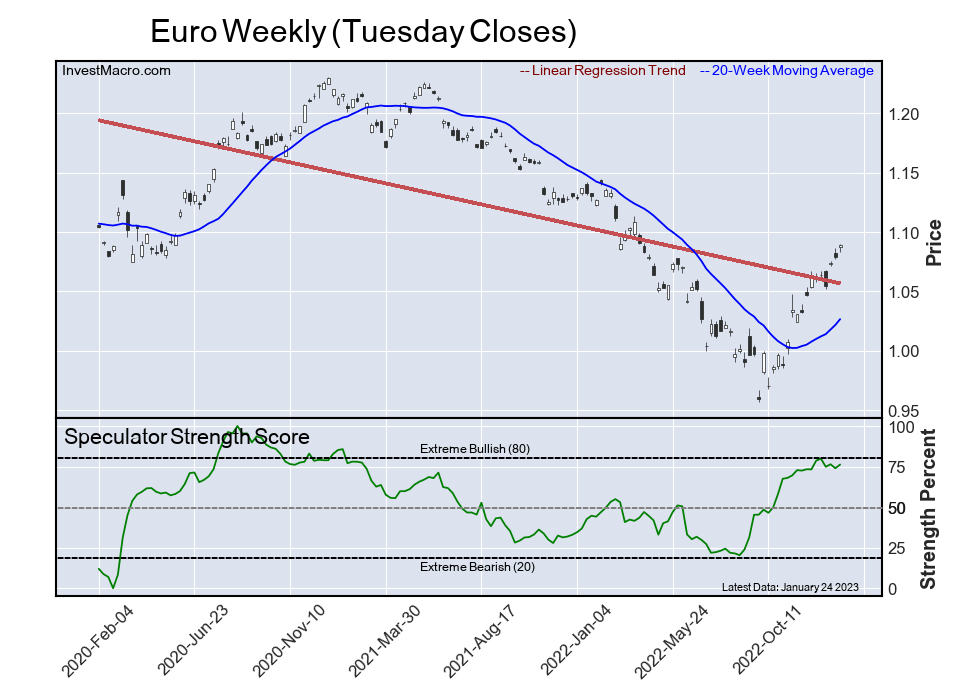
EURUSD waiting for softer USD?

This currency pair remains firmly bullish on the daily timeframe as there have been consistently higher highs and higher lows. Prices are trading above the 50, 100, and 200-day SMA while the MACD trades above zero. The recent breakout above 1.0700 could signal further upside with 1.0770 with 1.0900 acting as key levels of interest. Should prices slip back under 1.0700, the currency pair could experience a selloff towards 1.0505.

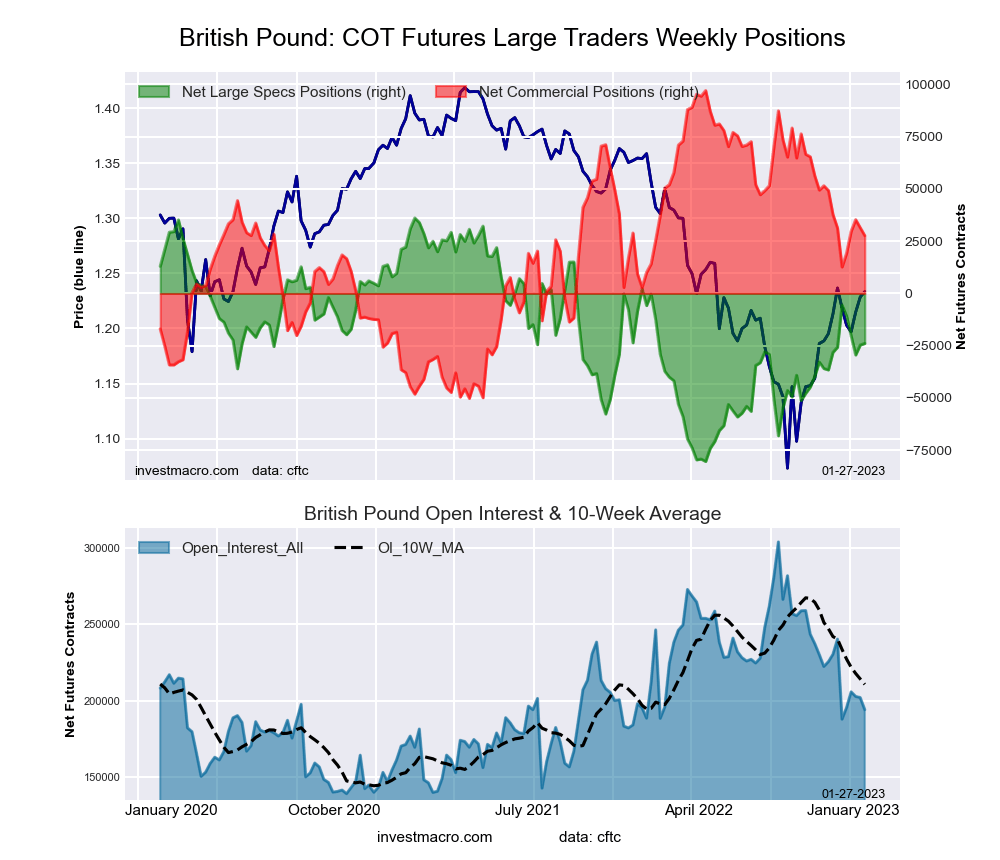
GBPUSD trapped within a range 

It seems like the GBPUSD remains trapped within a very wide range on the daily charts. Support can be found at 1.1900 and resistance at 1.2210. A potent fundamental spark may be needed for the currency pair to resume the uptrend or experience a reversal lower. The pending US inflation report could inject fresh life into the GBPUSD, with a softer inflation report favour GBPUSD bulls. Looking at the technical picture, a strong breakout above 1.2210 may signal an incline toward 1.2300 and 1.2460, respectively.

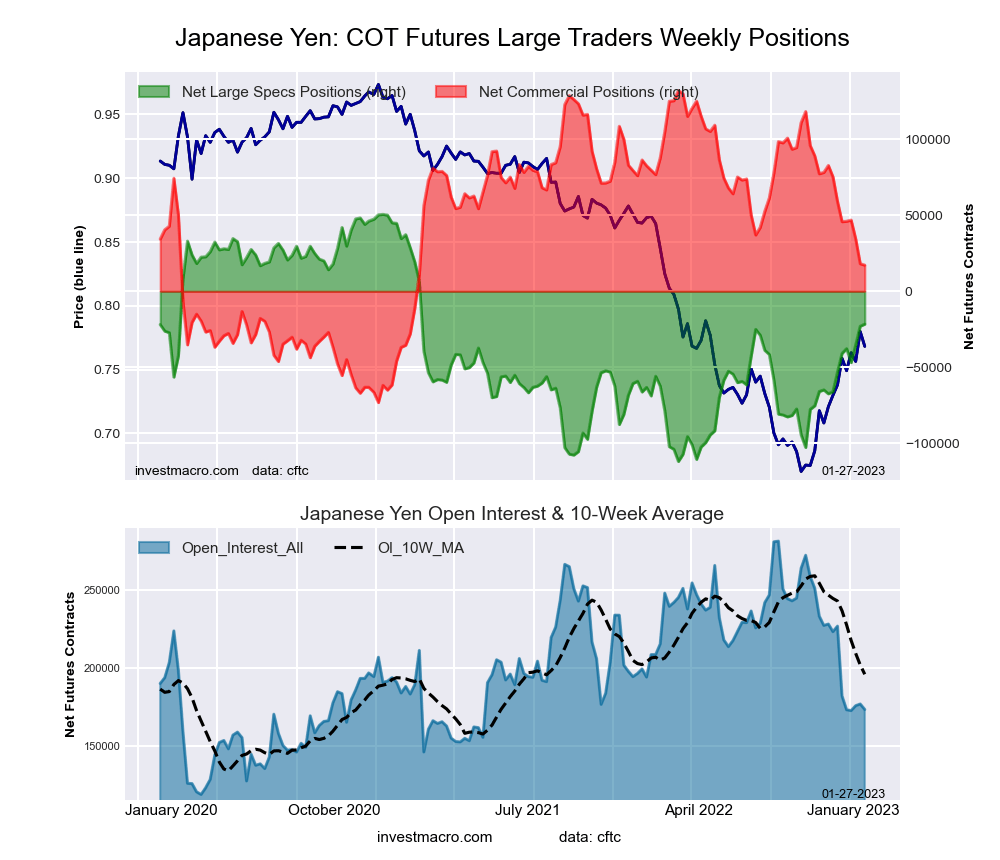
USDJPY breakout on horizon

As the subtitle says, the USDJPY could be gearing up for a breakout. Prices remain trapped within a 450 range with bulls and bears waiting for a direction catalyst. This may come in the form of the pending US inflation data which may determine the USDJPY’s short-term outlook. A solid breakout and daily close below 130.00 could signal a selloff towards 127.00. Should prices push back above 134.50, the next key level of interest can be found at 138.00.


Forex-Time-LogoArticle by ForexTime

ForexTime Ltd (FXTM) is an award winning international online forex broker regulated by CySEC 185/12 www.forextime.com

AI and the future of work: 5 experts on what ChatGPT, DALL-E and other AI tools mean for artists and knowledge workers

By Lynne Parker, University of Tennessee; Casey Greene, University of Colorado Anschutz Medical Campus; Daniel Acuña, University of Colorado Boulder; Kentaro Toyama, University of Michigan, and Mark Finlayson, Florida International University 

From steam power and electricity to computers and the internet, technological advancements have always disrupted labor markets, pushing out some jobs while creating others. Artificial intelligence remains something of a misnomer – the smartest computer systems still don’t actually know anything – but the technology has reached an inflection point where it’s poised to affect new classes of jobs: artists and knowledge workers.

Specifically, the emergence of large language models – AI systems that are trained on vast amounts of text – means computers can now produce human-sounding written language and convert descriptive phrases into realistic images. The Conversation asked five artificial intelligence researchers to discuss how large language models are likely to affect artists and knowledge workers. And, as our experts noted, the technology is far from perfect, which raises a host of issues – from misinformation to plagiarism – that affect human workers.

To jump ahead to each response, here’s a list of each:


Creativity for all – but loss of skills?
Potential inaccuracies, biases and plagiarism
With humans surpassed, niche and ‘handmade’ jobs will remain
Old jobs will go, new jobs will emerge
Leaps in technology lead to new skills


Creativity for all – but loss of skills?

Lynne Parker, Associate Vice Chancellor, University of Tennessee

Large language models are making creativity and knowledge work accessible to all. Everyone with an internet connection can now use tools like ChatGPT or DALL-E 2 to express themselves and make sense of huge stores of information by, for example, producing text summaries.

Especially notable is the depth of humanlike expertise large language models display. In just minutes, novices can create illustrations for their business presentations, generate marketing pitches, get ideas to overcome writer’s block, or generate new computer code to perform specified functions, all at a level of quality typically attributed to human experts.

These new AI tools can’t read minds, of course. A new, yet simpler, kind of human creativity is needed in the form of text prompts to get the results the human user is seeking. Through iterative prompting – an example of human-AI collaboration – the AI system generates successive rounds of outputs until the human writing the prompts is satisfied with the results. For example, the (human) winner of the recent Colorado State Fair competition in the digital artist category, who used an AI-powered tool, demonstrated creativity, but not of the sort that requires brushes and an eye for color and texture.
While there are significant benefits to opening the world of creativity and knowledge work to everyone, these new AI tools also have downsides. First, they could accelerate the loss of important human skills that will remain important in the coming years, especially writing skills. Educational institutes need to craft and enforce policies on allowable uses of large language models to ensure fair play and desirable learning outcomes.

Educators are preparing for a world where students have ready access to AI-powered text generators.

Second, these AI tools raise questions around intellectual property protections. While human creators are regularly inspired by existing artifacts in the world, including architecture and the writings, music and paintings of others, there are unanswered questions on the proper and fair use by large language models of copyrighted or open-source training examples. Ongoing lawsuits are now debating this issue, which may have implications for the future design and use of large language models.

As society navigates the implications of these new AI tools, the public seems ready to embrace them. The chatbot ChatGPT went viral quickly, as did image generator Dall-E mini and others. This suggests a huge untapped potential for creativity, and the importance of making creative and knowledge work accessible to all.


Potential inaccuracies, biases and plagiarism

Daniel Acuña, Associate Professor of Computer Science, University of Colorado Boulder

I am a regular user of GitHub Copilot, a tool for helping people write computer code, and I’ve spent countless hours playing with ChatGPT and similar tools for AI-generated text. In my experience, these tools are good at exploring ideas that I haven’t thought about before.
I’ve been impressed by the models’ capacity to translate my instructions into coherent text or code. They are useful for discovering new ways to improve the flow of my ideas, or creating solutions with software packages that I didn’t know existed. Once I see what these tools generate, I can evaluate their quality and edit heavily. Overall, I think they raise the bar on what is considered creative.
But I have several reservations.

One set of problems is their inaccuracies – small and big. With Copilot and ChatGPT, I am constantly looking for whether ideas are too shallow – for example, text without much substance or inefficient code, or output that is just plain wrong, such as wrong analogies or conclusions, or code that doesn’t run. If users are not critical of what these tools produce, the tools are potentially harmful.

Recently, Meta shut down its Galactica large language model for scientific text because it made up “facts” but sounded very confident. The concern was that it could pollute the internet with confident-sounding falsehoods.

Another problem is biases. Language models can learn from the data’s biases and replicate them. These biases are hard to see in text generation but very clear in image generation models. Researchers at OpenAI, creators of ChatGPT, have been relatively careful about what the model will respond to, but users routinely find ways around these guardrails.

Another problem is plagiarism. Recent research has shown that image generation tools often plagiarize the work of others. Does the same happen with ChatGPT? I believe that we don’t know. The tool might be paraphrasing its training data – an advanced form of plagiarism. Work in my lab shows that text plagiarism detection tools are far behind when it comes to detecting paraphrasing.

two rows of six images, each top and bottom pair very similar to each other
Plagiarism is easier to see in images than in text. Is ChatGPT paraphrasing as well?
Somepalli, G., et al., CC BY

These tools are in their infancy, given their potential. For now, I believe there are solutions to their current limitations. For example, tools could fact-check generated text against knowledge bases, use updated methods to detect and remove biases from large language models, and run results through more sophisticated plagiarism detection tools.


With humans surpassed, niche and ‘handmade’ jobs will remain

Kentaro Toyama, Professor of Community Information, University of Michigan

We human beings love to believe in our specialness, but science and technology have repeatedly proved this conviction wrong. People once thought that humans were the only animals to use tools, to form teams or to propagate culture, but science has shown that other animals do each of these things.

Meanwhile, technology has quashed, one by one, claims that cognitive tasks require a human brain. The first adding machine was invented in 1623. This past year, a computer-generated work won an art contest. I believe that the singularity – the moment when computers meet and exceed human intelligence – is on the horizon.

How will human intelligence and creativity be valued when machines become smarter and more creative than the brightest people? There will likely be a continuum. In some domains, people still value humans doing things, even if a computer can do it better. It’s been a quarter of a century since IBM’s Deep Blue beat world champion Garry Kasparov, but human chess – with all its drama – hasn’t gone away.

In other domains, human skill will seem costly and extraneous. Take illustration, for example. For the most part, readers don’t care whether the graphic accompanying a magazine article was drawn by a person or a computer – they just want it to be relevant, new and perhaps entertaining. If a computer can draw well, do readers care whether the credit line says Mary Chen or System X? Illustrators would, but readers might not even notice.

And, of course, this question isn’t black or white. Many fields will be a hybrid, where some Homo sapiens find a lucky niche, but most of the work is done by computers. Think manufacturing – much of it today is accomplished by robots, but some people oversee the machines, and there remains a market for handmade products.

If history is any guide, it’s almost certain that advances in AI will cause more jobs to vanish, that creative-class people with human-only skills will become richer but fewer in number, and that those who own creative technology will become the new mega-rich. If there’s a silver lining, it might be that when even more people are without a decent livelihood, people might muster the political will to contain runaway inequality.


Old jobs will go, new jobs will emerge

Mark Finlayson, Associate Professor of Computer Science, Florida International University

Large language models are sophisticated sequence completion machines: Give one a sequence of words (“I would like to eat an …”) and it will return likely completions (“… apple.”). Large language models like ChatGPT that have been trained on record-breaking numbers of words (trillions) have surprised many, including many AI researchers, with how realistic, extensive, flexible and context-sensitive their completions are.

Like any powerful new technology that automates a skill – in this case, the generation of coherent, albeit somewhat generic, text – it will affect those who offer that skill in the marketplace. To conceive of what might happen, it is useful to recall the impact of the introduction of word processing programs in the early 1980s. Certain jobs like typist almost completely disappeared. But, on the upside, anyone with a personal computer was able to generate well-typeset documents with ease, broadly increasing productivity.

Further, new jobs and skills appeared that were previously unimagined, like the oft-included resume item MS Office. And the market for high-end document production remained, becoming much more capable, sophisticated and specialized.

I think this same pattern will almost certainly hold for large language models: There will no longer be a need for you to ask other people to draft coherent, generic text. On the other hand, large language models will enable new ways of working, and also lead to new and as yet unimagined jobs.

To see this, consider just three aspects where large language models fall short. First, it can take quite a bit of (human) cleverness to craft a prompt that gets the desired output. Minor changes in the prompt can result in a major change in the output.

Second, large language models can generate inappropriate or nonsensical output without warning.

Third, as far as AI researchers can tell, large language models have no abstract, general understanding of what is true or false, if something is right or wrong, and what is just common sense. Notably, they cannot do relatively simple math. This means that their output can unexpectedly be misleading, biased, logically faulty or just plain false.

These failings are opportunities for creative and knowledge workers. For much content creation, even for general audiences, people will still need the judgment of human creative and knowledge workers to prompt, guide, collate, curate, edit and especially augment machines’ output. Many types of specialized and highly technical language will remain out of reach of machines for the foreseeable future. And there will be new types of work – for example, those who will make a business out of fine-tuning in-house large language models to generate certain specialized types of text to serve particular markets.

In sum, although large language models certainly portend disruption for creative and knowledge workers, there are still many valuable opportunities in the offing for those willing to adapt to and integrate these powerful new tools.


Leaps in technology lead to new skills

Casey Greene, Professor of Biomedical Informatics, University of Colorado Anschutz Medical Campus

Technology changes the nature of work, and knowledge work is no different. The past two decades have seen biology and medicine undergoing transformation by rapidly advancing molecular characterization, such as fast, inexpensive DNA sequencing, and the digitization of medicine in the form of apps, telemedicine and data analysis.

Some steps in technology feel larger than others. Yahoo deployed human curators to index emerging content during the dawn of the World Wide Web. The advent of algorithms that used information embedded in the linking patterns of the web to prioritize results radically altered the landscape of search, transforming how people gather information today.

The release of OpenAI’s ChatGPT indicates another leap. ChatGPT wraps a state-of-the-art large language model tuned for chat into a highly usable interface. It puts a decade of rapid progress in artificial intelligence at people’s fingertips. This tool can write passable cover letters and instruct users on addressing common problems in user-selected language styles.

Just as the skills for finding information on the internet changed with the advent of Google, the skills necessary to draw the best output from language models will center on creating prompts and prompt templates that produce desired outputs.

For the cover letter example, multiple prompts are possible. “Write a cover letter for a job” would produce a more generic output than “Write a cover letter for a position as a data entry specialist.” The user could craft even more specific prompts by pasting portions of the job description, resume and specific instructions – for example, “highlight attention to detail.”

As with many technological advances, how people interact with the world will change in the era of widely accessible AI models. The question is whether society will use this moment to advance equity or exacerbate disparities.The Conversation

About the Author:

Lynne Parker, Associate Vice Chancellor, University of Tennessee; Casey Greene, Professor of Biomedical Informatics, University of Colorado Anschutz Medical Campus; Daniel Acuña, Associate Professor of Computer Science, Affiliate Professor of Information Science, University of Colorado Boulder; Kentaro Toyama, Professor of Community Information, University of Michigan, and Mark Finlayson, Associate Professor of Computer Science, Florida International University

This article is republished from The Conversation under a Creative Commons license. Read the original article.


Japanese Candlesticks Analysis 11.01.2023 (EURUSD, USDJPY, EURGBP)

By RoboForex.com

EURUSD, “Euro vs US Dollar”

On H4, at the resistance level, the pair has formed a Harami reversal pattern. Currently, the pair may go by the signal in the form of a correctional wave. The goal of the pullback might be 1.0700. However, the price may grow to 1.0820, break through it, and continue the uptrend without any correction.

EURUSD
Risk Warning: the result of previous trading operations do not guarantee the same results in the future

USDJPY, “US Dollar vs Japanese Yen”

On H4, the currency pair has formed a Hammer reversal pattern. Currently, the pair may go by the pattern in an ascending wave. The goal of the growth might be 133.10. However, the price may drop to 131.00 and continue the downtrend without correcting to the resistance level.

USDJPY
Risk Warning: the result of previous trading operations do not guarantee the same results in the future

EURGBP, “Euro vs Great Britain Pound”

On H4, the pair has formed a new Inverted Hammer pattern. Currently, the pair is going by the signal in the form of an ascending wave. The goal of the growth might be the resistance level of 0.8890. Upon testing it and breaking through it, the price will get the chance to continue the uptrend. However, the quotes may pull back to 0.8800 before growth.

EURGBP

Article By RoboForex.com

Attention!
Forecasts presented in this section only reflect the author’s private opinion and should not be considered as guidance for trading. RoboForex LP bears no responsibility for trading results based on trading recommendations described in these analytical reviews.

The Analytical Overview of the Main Currency Pairs on 2023.01.11

By JustMarkets

The EUR/USD currency pair

Technical indicators of the currency pair:
  • Prev Open: 1.0727
  • Prev Close: 1.0733
  • % chg. over the last day: +0.06 %

In his speech at the banking symposium in Sweden, Federal Reserve Chairman Jerome Powell did not provide any new information on monetary policy but pointed to the central bank’s resolve, saying unpopular decisions may be needed to reduce inflation. At the same time, ECB spokeswoman Ms. Schnabel indicated yesterday that the ECB’s restrictive monetary policy stance would benefit society in the medium to long term by restoring price stability. As a result, economists expect the US Federal Reserve to reduce the pace of rate hikes to 0.25%, while the ECB will raise the rate by 0.5% at its next meeting amid declining inflationary pressures in the United States.

Trading recommendations
  • Support levels: .0650, 1.0597, 1.0535, 1.0497, 1.0480, 1.0361, 1.0332, 1.0284
  • Resistance levels: 1.0799, 1.0844

The trend on the EUR/USD currency pair on the hourly time frame is still bullish. The price is trading above the moving averages and forming a narrow price balance. The MACD indicator is in the positive zone, but there are signs of overbought, so it is worth waiting for a correction to find good entry points. Under such market conditions, buy trades are best considered from the support level of 1.0650 or 1.0597 with confirmation on intraday time frames. Sell deals can be considered from the daily resistance level of 1.0799, but better with a confirmation in the form of a reverse initiative or a false breakout.

Alternative scenario: if the price breaks down through the support level of 1.0535 and fixes below it, the downtrend will likely resume.

EUR/USD
There is no news feed for today.

The GBP/USD currency pair

Technical indicators of the currency pair:
  • Prev Open: 1.2176
  • Prev Close: 1.2149
  • % chg. over the last day: -0.22 %

Economists are betting on a fall in GBP/USD quotes ahead of important US inflation data and UK GDP data on Friday. The economic outlook for the United Kingdom remains bleak. The Bank of England will raise the rate in minimal steps so as not to put even more pressure on the economy.

Trading recommendations
  • Support levels: 1.2080, 1.2000, 1.1928, 1.1875, 1.1684, 1.1476, 1.1418
  • Resistance levels: 1.2193, 1.2308, 1.2431, 1.2519

From the technical point of view, the trend on the GBP/USD currency pair on the hourly time frame is bullish. The price is trading in a narrow range above the moving averages. The MACD indicator has become inactive, and volatility on the eve of the US inflation data has decreased. Under such market conditions, it is better to look for buy trades on intraday time frames from the support level of 1.2080, but with confirmation. Sell trades are best looked for from the resistance level of 1.2193 or the stronger level of 1.2238, but also better with confirmation in the form of a false breakout or a change of structure on the lower timeframes.

Alternative scenario: if the price breaks down through the 1.1875 support level and fixes above it, the downtrend will likely resume.

GBP/USD
There is no news feed for today.

The USD/JPY currency pair

Technical indicators of the currency pair:
  • Prev Open: 131.82
  • Prev Close: 132.23
  • % chg. over the last day: +0.31 %

The Japanese yen has changed little against the US dollar this week. Investors are trying to predict the next moves of the Bank of Japan and the US Federal Reserve. The US Fed plans to raise the rate to a final point of 5% to 5.25%. But when the Bank of Japan starts to change its monetary policy is an open question. At the moment, experts are inclined to believe that the Bank of Japan will “reverse” when the governor is re-elected in April 2023. However, it should be noted that the difference in interest rates between the central banks of the US and Japan is still huge. Until this difference starts decreasing, traders should not expect anything “abnormal” from the Japanese Yen.

Trading recommendations
  • Support levels: 131.12, 130.58, 129.65
  • Resistance levels: 133.23, 134.45, 135.88, 137.03, 138.00, 139.09

From the technical point of view, the medium-term trend on the currency pair USD/JPY is bullish. The price is now trading at the level of the moving averages, while the MACD indicator has become inactive. The correctional wave is approaching its end. Buy trades are best viewed from the support levels of 131.12 or 130.58, but only with intraday confirmation. Sell deals can be searched for from the resistance level of 133.23 on the condition of a reverse reaction or false breakout.

Alternative scenario: If the price fixes below the support level of 130.58, the downtrend will likely resume.

USD/JPY
There is no news feed for today.

The USD/CAD currency pair

Technical indicators of the currency pair:
  • Prev Open: 1.3380
  • Prev Close: 1.3426
  • % chg. over the last day: -0.34 %

Data from the American Petroleum Institute showed that US crude oil inventories more than quadrupled in the first week of 2023 compared to the previous week. Rising inventories tend to put downward pressure on oil prices, which in turn weakens the Canadian dollar, which is a commodity currency. Another, more important, report on crude oil inventories will be released today, where a decline in inventories is expected.

Trading recommendations
  • Support levels: 1.3362, 1.3212
  • Resistance levels: 1.3492, 1.3513, 1.3561, 1.3594, 1.3632, 1.3700

From the point of view of technical analysis, the trend on the USD/CAD currency pair is bearish. The price is trading at the level of moving averages. The MACD indicator has become inactive, but buyer pressure is very weak. Buy trades should be considered from the support level of 1.3362, but only with short targets and confirmation in the form of a false breakdown since the level has been tested before. Sells deals are better to look for on the intraday time frames from the resistance level of 1.3492 or 1.3513, but with a confirmation in the form of a reverse initiative on the lower time frames.

Alternative scenario: if the price breaks out and consolidates above the resistance level of 1.3632, the uptrend will likely resume.

USD/CAD
News feed for 2023.01.11:
  • – US Crude Oil Reserves (w/w) at 17:30 (GMT+2).

By JustMarkets


This article reflects a personal opinion and should not be interpreted as an investment advice, and/or offer, and/or a persistent request for carrying out financial transactions, and/or a guarantee, and/or a forecast of future events.

The cryptocurrency market digest (BTC, USDC). Overview for 11.01.2023

By RoboForex.com

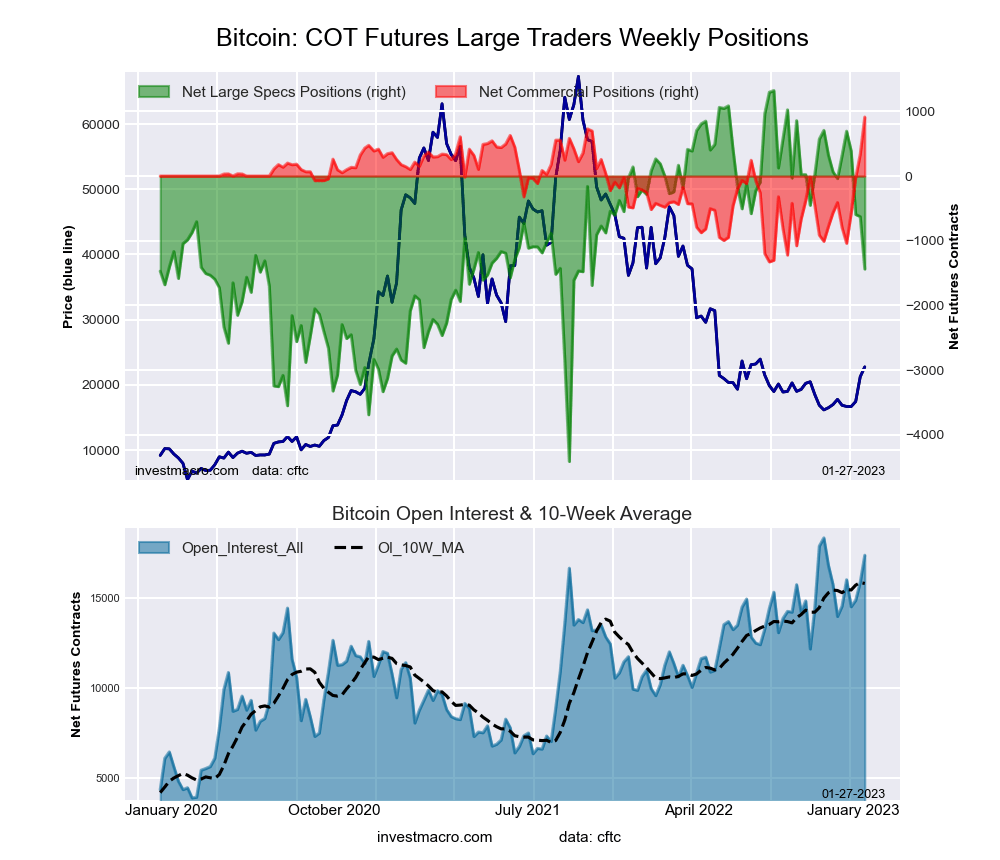
The BTC is trying to grow and for now it is doing a good job. On Wednesday, the crypto is chiefly moving around 17,431 USD. This is very close to a new intermediate resistance level of 17,500 USD that can open a pathway to 18,500 USD.

The market enjoys good dynamics of American stock indices, and correlation between the BTC and the S&P 500 and Nasdaq benchmarks recovered. Jerome Powell, the head of the Federal Reserve System who delivered a speech yesterday, never touched upon financial policy, so the markets remained balanced.

Now we wait for the US December inflation report as it will be the most interesting event of the week.

In the middle of the week, capitalisation of the crypto market is 857.617 billion USD. The BTC takes up 39.2% and the ETH – 19.0%.

USDC transaction volume increased noticeably

After the crash of the FTX exchange, the USDC stablecoin became much more popular than earlier. Daily transaction volume is 4-5 times larger than that of the USDT. The imbalance becomes even more pronounced when we recall that the USDT has a 23 billion USD larger capitalisation.

Shiba Inu and Bugatti launch NFT collection

A crypto project Shiba Inu alongside its affiliate Bugatti announced launch of a collection of Bugatti X Shiboshi NFTs. To present a limited series of physical objects, the affiliates will organize a special event. The digital collection will hold 299 unique tokens at a price of 0.14 ETH minimum.

Article By RoboForex.com

Attention!
Forecasts presented in this section only reflect the author’s private opinion and should not be considered as guidance for trading. RoboForex LP bears no responsibility for trading results based on trading recommendations described in these analytical reviews.

Inflation in Australia has reached a 30-year-high. World Bank cuts growth forecast for most countries

By JustMarkets

The US indices were trading up yesterday. By the close of trading yesterday, the Dow Jones (US30) increased by 0.56%, and the S&P500 (US500) added 0.70%. The NASDAQ Technology Index (US100) jumped by 1.01% on Tuesday.

In his speech at a banking symposium in Sweden, Federal Reserve Chairman Jerome Powell provided no new information on monetary policy but pointed to the Central Bank’s resolve, saying that unpopular decisions may be needed to lower inflation. This is in line with comments from other US Federal Reserve officials: San Francisco Fed President Mary Daley and Atlanta Fed President Rafael Bostic are insisting that the US Fed will hold rates higher for a longer period of time. Investors are trying to predict the next steps of the major central banks. The main factor will be the US inflation data, which will be released on Thursday. The decline in consumer prices will likely force the US Federal Reserve to lower the pace of rate hikes to 0.25%.

The World Bank lowered its growth forecasts for most countries and regions and warned that more adverse shocks could lead to a global recession. Global gross domestic product will likely increase by 1.7% this year. This would be the third-worst result in three decades. The bank also cut its growth estimates for 2024. Among the main reasons are persistent inflation, high-interest rates, Russia’s invasion of Ukraine, and lower investment.

Stock markets in Europe were mostly down yesterday. Germany’s DAX (DE30) decreased by 0.12%, France’s CAC 40 (FR40) lost 0.55%, Spain’s IBEX 35 (ES35) added 0.29%, Britain’s FTSE 100 (UK100) closed down 0.39% on Tuesday.

ECB board spokeswoman Isabelle Schnabel said yesterday at the International Symposium on Central Bank Independence that the ECB will continue its rate hike cycle and that rates should rise significantly. With the Fed’s rate hike cycle coming to an end and the ECB still operating at full power, the rate differential is likely to strengthen the euro.

Crude oil prices rose slightly on Tuesday. Oil traders are waiting for the key data on US oil inventories, which are expected to decline. Against the background of the opening of China (the largest oil importer), it may be a trigger for oil to rise.

Asian markets traded without a single dynamic yesterday. Japan’s Nikkei 225 (JP225) gained 0.78%, China’s FTSE China A50 (CHA50) added 0.11%, Hong Kong’s Hang Sengv(HK50) ended the day down 0.27%, India’s NIFTY 50 (IND50) decreased by 1.03%, and Australia’s S&P/ASX 200 (AU200) ended the day down 0.28%

China is considering allowing local governments to borrow more debt for infrastructure projects. Base metals, especially copper, rose on the prospect that China will resume higher levels of industrial production after the economy opens. A revival in consumer demand is likely to lead China to improve international relations as well. The focus this week will also be on China’s inflation data for December. The country’s slowing economic growth is expected to lead to deflationary trends.

The consumer price level in Australia rose to a 30-year high. On an annualized basis, consumer prices rose from 6.9% to 7.3% (7.2% expected). Rising inflation will likely lead to further tightening of policy by the Central Bank, which will provide additional support to the Australian currency.

S&P 500 (F) (US500) 3,919.25 −2.99 (+0.70%)

Dow Jones (US30) 33,704.10 +186.45 (+0.56%)

DAX (DE40) 14,774.60 −18.23 (−0.12%)

FTSE 100 (UK100) 7,694.49 −30.45 (−0.39%)

USD Index 103.27 +0.27 (+0.26%)

Important events for today:
  • – Australia Consumer Price Index (m/m) at 02:30 (GMT+2);
  • – Australia Retail Sales (m/m) at 02:30 (GMT+2);
  • – US Crude Oil Reserves (w/w) at 17:30 (GMT+2).

By JustMarkets


This article reflects a personal opinion and should not be interpreted as an investment advice, and/or offer, and/or a persistent request for carrying out financial transactions, and/or a guarantee, and/or a forecast of future events.

Green Tech Co. Resists Plant’s ‘Mine’ Designation

Source: Streetwise Reports  (1/6/23)

‘We don’t mine anything,’ says tech company that uses bioleaching to recover precious metals from recovered mine waste.

BacTech Environmental Corp. (BAC:CSE;BCCEF:OTCQB;OBT1:FRA) is hoping to start construction soon on its bioleaching plant in Tenguel, Ecuador.

It has received its construction permit and approval from the government for its environmental impact study on the site but is working through the community consultation phase before the government issues the final environmental permit for the mine.

The problem is, it’s not a mine. Using naturally occurring bacteria, bioleaching makes it possible to get precious metals from already recovered lower-grade ore.

President and Chief Executive Officer Ross Orr said BacTech had asked the government to drop the mine designation, which could let construction start even earlier than expected.

“We don’t mine anything,” Orr said. “In fact, we fill in holes as opposed to digging them.”

Longtime investor in the company Chris Temple, editor of The National Investor, said BacTech “should be on your radar.”

Longtime investor in the company Chris Temple, editor of The National Investor, said BacTech “should be on your radar.”

“2023 appears to be a breakout year potentially for BacTech,” Temple wrote in December. “Discussions/negotiations are ongoing with several potential project financing partners. If something comes to fruition sooner rather than later, we could see construction commence within not many months’ time. And then it should be off to the races.”

The Catalyst: Green Mining Sector Growing

BacTech is building the plant to take advantage of the growing green mining space, a sector research company Markets and Markets said is expected to grow from an estimated US$9 billion in 2019 to US$12.9 billion by 2024.

Pressures from government and environmental groups are forcing companies to raise their capital and operating expenditures.

“As the countries tighten the environmental regulations and the public concern about the mining industry grows, this increases the pressure on these mining companies to minimize their environmental impacts and pay a higher amount to the occurring local issues,” Markets and Markets wrote.

As part of the community consultation phase, BacTech is taking part in presentations and town halls and replying to questions from locals.

Temple and Orr both said they believe the project will be popular with residents and the government.

“An Ecuadorian government wanting (a) solid, long-term business that both employs its citizens (and at some of the highest wages in the country in this case) . . .  and cleans up the environment sees this as a no-brainer,” Temple wrote.

Rock-Eating Bugs

Bacteria drive the process by chewing and oxidizing the sulfides in the rock like mortar in a brick wall. Once that mortar is gone, the wall crashes down. “Our bugs eat rocks,” as BacTech’s website says.

Bioleaching was attempted commercially in South Africa in 1986. There have been more than 20 plants built globally since then.

The site’s construction permit was approved in March, and BacTech signed an Investment Protection Agreement (IPA) with the government in May, giving it a 12-year income tax holiday and international arbitration for disputes.

As of the end of October, about 62% of the equipment for the plant had been procured, the company said.

The plant will have a small footprint, as much of the 100 acres of land bought for it will continue to be used by local farmers. BacTech has agreed to let them keep harvesting 80% of the farm’s thousands of cocoa trees.

For the feed going into the plant, there are 90 small mines in the area that produce significant amounts of arsenic with gold in the area. The plant would process about 30,900 ounces gold (Au) per year. There is potential for expansion; the total availability of materials in the area is an estimated 250 tonnes per day.

The plant would have pre-tax earnings of about US$10.9 million and a two-year payback period, according to data from EPCM Consultores.

Ownership and Share Structure

Retail: 51%
Insiders, management, strategic shareholders: 49%
51%
49%
Share Structure as of 1/5/2023

BacTech recently started trading on the OTCQB Venture Market in the United States under the ticker symbol BCCEF. It continues to be traded on the Canadian Stock Exchange under BAC.

Nearly half of the company, 49%, is held by insiders, management, and strategic shareholders, the biggest of which is Option Three Advisory Services Ltd., which owns 8.98%, or 15.57 million shares, according to Reuters. That also includes CEO Orr, who owns 3.78% or 6.54 million shares, and Board Director Timothy Lewin, who owns 0.57% or 0.98 million shares.

Currently, BacTech is covered by newsletter writers Clive Maund of clivemaund.com, Bob Moriarty of 321gold.com, and Chris Temple of The National Investor. Click “See More Live Data” in the data box below to see what they are saying.

The company has 173.4 million shares outstanding, including 149 million free floating. Its market cap is CA$11.32 million, and it trades in a 52-week range of CA$0.16 and CA$0.055.

Disclosures:

1) Steve Sobek wrote this article for Streetwise Reports LLC. He or members of his household own securities of the following companies mentioned in the article: None. He or members of his household are paid by the following companies mentioned in this article: None.

2) The following companies mentioned in this article are billboard sponsors of Streetwise Reports: BacTech Environmental Corp. Click here for important disclosures about sponsor fees. The information provided above is for informational purposes only and is not a recommendation to buy or sell any security. As of the date of this article, an affiliate of Streetwise Reports has a consulting relationship with BacTech Environmental Corp. Please click here for more information.

3) The article does not constitute investment advice. Each reader is encouraged to consult with his or her individual financial professional and any action a reader takes as a result of information presented here is his or her own responsibility. By opening this page, each reader accepts and agrees to Streetwise Reports’ terms of use and full legal disclaimer. This article is not a solicitation for investment. Streetwise Reports does not render general or specific investment advice and the information on Streetwise Reports should not be considered a recommendation to buy or sell any security. Streetwise Reports does not endorse or recommend the business, products, services or securities of any company mentioned on Streetwise Reports.

4) From time to time, Streetwise Reports LLC and its directors, officers, employees or members of their families, as well as persons interviewed for articles and interviews on the site, may have a long or short position in securities mentioned. Directors, officers, employees or members of their immediate families are prohibited from making purchases and/or sales of those securities in the open market or otherwise from the time of the decision to publish an article until three business days after the publication of the article. The foregoing prohibition does not apply to articles that in substance only restate previously published company releases. As of the date of this article, officers and/or employees of Streetwise Reports LLC (including members of their household) own securities of BacTech Environmental Corp., a company mentioned in this article.

Ichimoku Cloud Analysis 10.01.2023 (GBPUSD, GOLD, USDCHF)

By RoboForex.com

GBPUSD, “Great Britain Pound vs US Dollar”

The currency pair has left the borders of the descending channel. The instrument is going above the Ichimoku Cloud, which suggests an uptrend. A test of the upper border of the Cloud at 1.2010 is expected, followed by growth to 1.2425. An additional signal confirming the growth will be a bounce off the upper border of the descending channel. The scenario can be cancelled by a breakaway of the lower border of the Cloud and securing under 1.1905, which will mean further falling to 1.1810.

GBPUSD
Risk Warning: the result of previous trading operations do not guarantee the same results in the future

XAUUSD, “Gold vs US Dollar”

The instrument is pushing off the Tenkan-Sen line. Gold is going above the Ichimoku Cloud, which suggests an uptrend. A test of the upper border of the Cloud at 1840 is expected, followed by growth to 1945. An additional signal confirming the growth will be a bounce off the lower border of the bullish channel. The scenario can be cancelled by a breakaway of the lower border of the Cloud and securing under 1810, which will mean further falling to 1765.

XAUUSD
Risk Warning: the result of previous trading operations do not guarantee the same results in the future

USDCHF, “US Dollar vs Swiss Franc”

The currency pair has secured under the support level. The instrument is going below the Ichimoku Cloud, which suggests a downtrend. A test of the Tenkan-Sen line at 0.9225 is expected, followed by falling to 0.9045. An additional signal confirming the decline will be a bounce off the lower border of the bullish channel. The scenario can be cancelled by a breakaway of the upper border of the Cloud and securing above 0.9350, which will mean further growth to 0.9445.

USDCHF

Article By RoboForex.com

Attention!
Forecasts presented in this section only reflect the author’s private opinion and should not be considered as guidance for trading. RoboForex LP bears no responsibility for trading results based on trading recommendations described in these analytical reviews.

The focus today is on the banking symposium. Inflation in Tokyo set another record

By JustMarkets

The US indices traded yesterday without a single trend. Dips in healthcare and energy stocks offset gains in the high-tech sector. At the close of trading yesterday, the Dow Jones index (US30) decreased by 0.34%, while the S&P500 index (US500) lost 0.08%. The NASDAQ Technology Index (US100) gained 0.63% on Monday.

Goldman Sachs analysts believe the US economy will be more resilient to monetary tightening than other G10 economies, as not only a strong labor market but also a housing finance structure and energy self-sufficiency will help. Unlike Europe, most US households have fixed-rate mortgages that are locked in at historically low levels and are not subject to Fed rate hikes.

Neuberger’s experts believe that now is a great opportunity to buy Tesla (TSLA) stock. According to analysts, the electric carmaker’s business model remains strong, and current price levels are attractive.

The heads of the central banks of the United States, Canada, and Japan will speak at a banking symposium in Sweden today. Markets will be watching for any changes to the Fed chairman’s hawkish rhetoric, especially amid growing signs of declining inflation in the US.

At the end of this week, the US earning season begins. As usual, the season will start with the banking sector. US banking giants are forecast to report lower profits and lower next quarter forecasts.

Equity markets in Europe were mostly up yesterday. German DAX (DE30) gained 1.25%, French CAC 40 (FR40) added 0.68%, Spanish IBEX 35 (ES35) lost 0.07%, and British FTSE 100 (UK100) closed on Monday with a 0.33% gain.

Geopolitics in Europe and energy prices are likely to continue to be the focus of investors’ attention. In early 2023, Europe’s energy outlook seems more hopeful. Gas reserves in Germany are back above 90%, and Europe as a whole is at 83%. The milder weather has led to a drop in demand.

After surging prices for most of 2022 due to weather-related disruptions and supply reductions caused by political and other disruptions in Russian gas production following the invasion of Ukraine, natural gas futures suddenly collapsed in December 2022. The market reversal was caused by unusually high winter temperatures last month. But on Monday, natural gas prices rose more than 5% as the forecast for the coming week points to lower temperatures that will increase consumption. Long-term forecasts from the European (ECMWF) weather forecast model version 2 (CFSv2) hint at another potentially cold period of weather that will occur from late January into February. If this forecast materializes, it could result in the withdrawal of more than 200 BСF or more in the coming weeks.

Oil traders are betting China’s economic recovery from tough COVID policies will boost oil consumption. With current production, increased demand will drive oil prices higher. Oil fell more than 8% last week, the most significant weekly decline in months. Oil rebounded on Monday after China fully reopened its borders to international trade. Oil demand in China usually rises every year after the Lunar New Year, which this year falls at the end of January.

Asian markets rose steadily yesterday. Japan’s Nikkei 225 (JP225) gained 0.59%, China’s FTSE China A50 (CHA50) added 0.97%, Hong Kong’s Hang Seng (HK50) jumped by 1.89%, India’s NIFTY 50 (IND50) increased by 1.35%, and Australia’s S&P/ASX 200 (AU200) ended the day up 0.59%.

According to bank analysts, Japan’s GDP growth will slow in 2023 from 1.2% to 1.0% but remain above its potential level, helped by a favorable macroeconomic environment. A stronger yen and softer border controls will likely improve trade conditions, and a fiscal stimulus program will support the recovery. Nationwide inflation in Japan has not yet peaked and is likely to reach 4.0% in early 2023, but will soon slow to 2% in the second quarter. Inflation in Tokyo has reached 4%, indicating a stronger-than-expected trend in consumer prices. This is the highest value since 1982. The largest contributors to the price increase were food and energy. Inflation in Tokyo is a leading indicator of the national CPI, and its higher rate suggests that national price growth is also likely to accelerate in December. This factor could further fuel rumors that the Bank of Japan will begin to adjust its monetary policy.

S&P 500 (F) (US500) 3,892.09 −2.99 (−0.077%)

Dow Jones (US30) 33,517.65 −112.96 (−0.34%)

DAX (DE40) 14,792.83 +182.81 (+1.25%)

FTSE 100 (UK100) 7,724.94 +25.45 (+0.33%)

USD Index 103.17 -0.71 (-0.68%)

Important events for today:
  • – Japan Tokyo Core CPI (m/m) at 01:30 (GMT+2);
  • – Canada BoC Gov Macklem Speaks at 12:10 (GMT+2);
  • – Japan BOJ Gov Kuroda Speaks at 12:10 (GMT+2);
  • – US Fed Chair Powell Speaks at 16:00 (GMT+2).

By JustMarkets


This article reflects a personal opinion and should not be interpreted as an investment advice, and/or offer, and/or a persistent request for carrying out financial transactions, and/or a guarantee, and/or a forecast of future events.

Markets Slip On Hawkish Fed Remarks

By ForexTime 

It’s a new year but the same old story with markets sensitive to Fed rate hike bets and hawkish chatter by policymakers.

Asian shares were knocked lower during early trading as investors evaluated comments from two Federal Reserve officials overnight. A sense of caution ahead of the key US inflation report on Thursday dampened the overall mood, encouraging investors to adopt a guarded approach towards riskier assets.

European futures are pointing to a lower open this morning amid the shaky risk sentiment. In the currency markets, the dollar was little changed but remains pressured by market expectations of a less hawkish Fed, despite the recent comments from Raphael Bostic and Mary Daly. Gold continues to shine, kissing levels not seen since May 2022 above $1880 while oil remains a fierce battleground for bulls and bears.

In other news, the World Bank is expected to unveil its global economic prospects report today. The international financial institution has already expressed concerns about the global economic outlook, warning of recession risk in 2023. Should the forecasts point to a global economic slowdown, another wave of risk aversion could sweep across markets as investors rush to safety.

More pain ahead for the Dollar?

Over the past few weeks, it has been the same old story for the tired dollar.

Expectations around a less hawkish Fed and subdued Treasury yields have clipped the greenback’s wings. Things are looking rough for the buck which has depreciated against almost every single G10 currency since the start of 2023. Bears remain in the vicinity despite the recent hawkish comments from Fed officials overnight with further downside on the cards if Thursday’s US inflation cools again.

According to Bloomberg, annual headline inflation for December is expected to cool to 6.5% from the prior print of 7.1%. Should expectations become reality, this will mark the sixth straight monthly decline and the lowest since October 2021. More signs of falling inflation may fuel talk around the Federal Reserve steering to a smaller rate hike at the start of next month. Alternatively, a hotter-than-expected CPI report could revive aggressive rate hike bets as investors question how slowly inflation will fall. Such a development could see the dollar rebound.

Before the key US inflation data later in the week, all eyes will be on Fed Chair Jerome Powell as he speaks during an international symposium at the Riksbank in Stockholm later today. Should the Fed Chair provide any guidance on rate hikes, this could influence the dollar.

Looking at the technicals, the DXY could be in store for more pain as the death cross technical pattern strikes. With the 50-period simple moving average (SMA) crossing down below the 200-day SMA, this signals a major trend reversal to the downside.  Sustained weakness below 103.00 could encourage a decline towards 101.30.

Currency spotlight – GBPUSD

It has been a choppy affair for GBPUSD recently as prices have traded within a 200-pip range with support at 1.1900 and resistance at 1.2100. However, the recent breakout has shifted the scales of power in favour of the bulls, with further upside on the cards. Bank of England Governor Andrew Bailey will be under the spotlight this morning as he speaks at the event at the Riksbank. This could translate to pound volatility depending on his remarks. Nevertheless, pound bulls remain in some control above 1.2100 with the next key levels of interest found at 1.2230 and 1.2300.

Commodity spotlight – Gold

Gold has kicked off 2023 on a solid note, gaining 2.7% since the start of the New Year.

The precious metal continues to draw strength from a softer dollar, falling Treasury yields, and growing expectations of a less hawkish Federal Reserve. Given how last Friday’s mixed jobs report has fanned speculation around the Fed slowing its rate hikes, further upside could be on the cards. In the meantime, gold’s outlook is likely to be influenced by the upcoming US inflation report. A further cooling in prices in December and lower bond yields would be a welcome development for zero-yielding gold. Looking at the technical picture, bulls remain in a position of power with the next key level of interest found at $1900.


Forex-Time-LogoArticle by ForexTime

ForexTime Ltd (FXTM) is an award winning international online forex broker regulated by CySEC 185/12 www.forextime.com