Vanadium Co. Has Two-Pillar Strategy and Multiple Catalysts

Source: Streetwise Reports  (1/13/23)

In conjunction with the release of its third-quarter report, Largo Inc. reported record high-purity vanadium production. Read more to hear what analysts are saying about this stock and the multiple catalysts the company has set for the future.

This November, Largo Inc. (TSX:LGO;NASDAQ:LGO) announced that it produced record high-purity vanadium production and completed battery stack manufacturing for its 6.1 MWh VCHARGE VRFB Deployment in Spain. However, despite impacts incurred during the quarter, the company continues to make moves with exciting growth plans throughout 2025.

Largo Inc. is a dual-listed vanadium producer and supplier that produces 7% of the world’s vanadium supply.

The company does everything to further its mission to provide the world with low-carbon solutions and create value through its unique vertical integration. This is done through the company’s two-pillar strategy based on 1.) vanadium production from one of the highest grade and lowest cost vanadium production facilities in Brazil and 2.) its energy storage business in the U.S. with one of the world’s most advanced VRFB technologies.

 H.C. Wainwright analyst Heiko F. Ihle gave the company a Buy rating and a CA$19 target price and said, “In our view, some of this value is likely to surface in the near-term since market interest for clean energy investments remains quite high.”

Vanadium is a rare metal discovered in Mexico in 1801. It is a key transition metal suitable for use in energy storage and high-quality alloy applications. Approximately 90% of vanadium is currently used as a steel additive. It is used in the hardening of space vehicles, nuclear reactors, and airplanes.

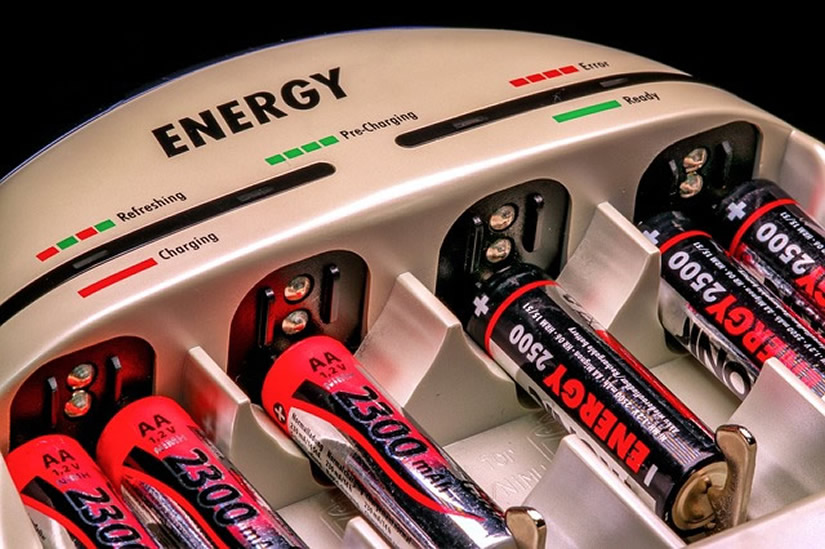
However, more excitingly, it is also used in producing vanadium electrolyte, which is used in Vanadium redox batteries. These batteries store significant amounts of renewable energy from solar and wind power. According to an article in the Journal of Vacuum Science & Technology B, Vanadium redox batteries are “the most successful Redox flow batteries (RFB) for large-scale applications,” which may explain their recent increase in demand, particularly in China.

On December 13, Pangang Group Vanadium & Titanium Resources Co., Ltd. announced that the company’s wholly-owned subsidiary, Pangang Group Chengdu Vanadium & Titanium Resources Development Co., Ltd. and Dalian Rongke Power Group Co., Ltd. recently signed the “2023 Annual Framework Agreement on Vanadium Battery Energy Storage Material Cooperation” in Chengdu, Sichuan.

According to the agreement, both parties shall adopt the cooperative mode of purchasing and selling ammonium polyvanadate raw materials, with an estimated total quantity (converting to vanadium pentoxide) of 8,000 tons in 2023. If the agreements signed are all successfully executed, the total transaction amount is expected to be about RMB$1 billion (US$144 million) based on the current market prices of vanadium products.

This represents approximately 4% of 2022’s annualized global vanadium supply. Dalian Rongke Power operates the world’s largest vanadium battery with a capacity of 100 MW/400 MWh and plans to further increase its capacity to 200 MW/800 MWh following a second phase of expansion.

Vanadium Demand Rising

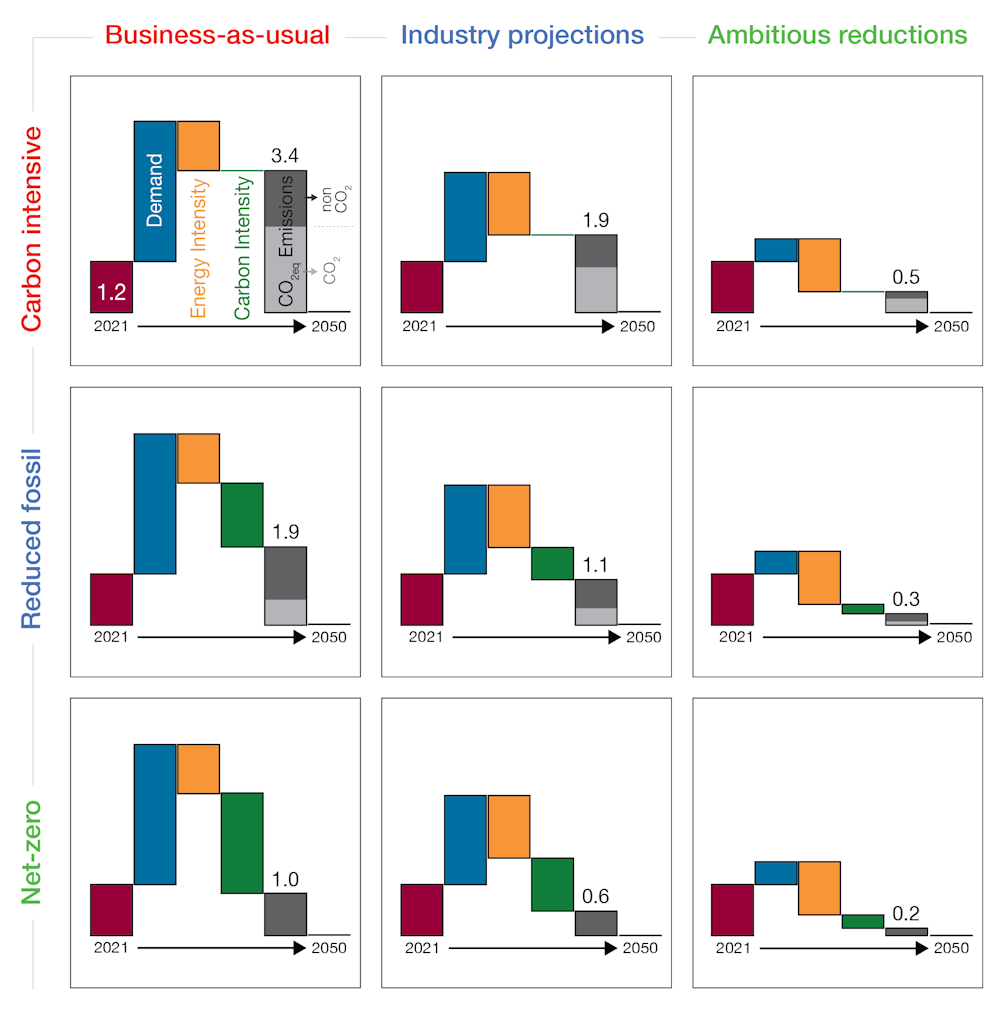
Demand for low-carbon technology has been growing worldwide. The World Bank Group report, “The Mineral Intensity of the Clean Energy Transition,” projected that demand for vanadium will rise by 189% by 2050. And it has caught the attention of experts throughout the past year.

In an April post, Shovel Stocks said, ” Investors, therefore, should look for vanadium projects with deposits which are either huge, non-TVM, or both.”

The metal is also desirable from an ESG standpoint as it includes non-degrading, fully recyclable electrolyte and carbon-reducing steel alloying applications. Yet, there is a deficit between current supply and demand.

Vanadium price spiked in 2018 to US$30 per pound, caused by a deficit of 8-10 tonnes. Last year, Roskill said it expects “structural deficit and elevated prices to remain for some time, which should incentive a handful of new projects into production over the next decade. ” This isn’t just because of unexpected demand, but projects can take up to five years to start production.

This strain is exacerbated by the war in Ukraine, as 70% of the world’s vanadium supply is currently with Russia and China.

Source: USGS Mineral Commodity Statistics and UN Comtrade via OECD.

As Simon Hilton of AG Chemi Group pointed out, “unless the war ends soon, manufacturers, raw material suppliers, and consumers everywhere will have to restrict production, manage a shortfall in supply, or simply do without.”

This is where Largo Inc. steps in as a producer outside the typical China-Russia sphere.

Largo is the Largest, Highest-Grade Primary Producer

While Largo only produces 7% of the world’s vanadium, it is the largest, highest-grade primary producer globally and is one of only two producers that supply HP to the aerospace industry.

According to the company, it generates a healthy operating margin with cash operating costs of US$4.30 per pound (US$4.30/lb) in 2022 guidance and rising vanadium prices. In late December, the price of vanadium was US$8.95/lb. This has now risen almost 10%, with the price at US$9.83/lb.

High-purity sales can also add US$1-2 more per pound for Largo’s HP vanadium.

The company runs on two strategic pillars.

  • Vanadium pillar: future vanadium operation expansions, ilmenite plant, titanium plant
  • Clean energy pillar: delivery of inaugural VRFB for Enel, exploring government subsidies, non-binding MOU to potentially form a JV with Ansaldo Energia

CIBC Equity Research noted that they “view successful execution of Largo’scapital construction projects, as well as [the] advancement of the clean energy business through further customer updates to be potential catalysts in the year ahead.”

Largo also plans to produce ilmenite and titanium pigment from the same mining stream it does vanadium, which is expected to aid in lowering the vanadium cash costs as a co-product.

The company has also signed a non-binding MOU to negotiate the formation of a joint venture with Ansaldo Green Tech to manufacture and deploy VRFBs in the European, African, and Middle East power generation markets.

In a November 11, 2022 note, H.C. Wainwright analyst Heiko F. Ihle gave the company a Buy rating and a CA$19 target price and said, “In our view, some of this value is likely to surface in the near-term since market interest for clean energy investments remains quite high.”

Gordon Lawson et al. at Paradigm Capital also echoed this with its own Buy rating on Largo and a CA$20 target.

Q3/22 Highlights 

While important for its unique placement as one of the world’s largest primary vanadium producers, Largo has been making moves these past few months. In September of last year, Largo’s new venture Largo Physical Vanadium began trading on the TSX Venture Exchange under the ticker “VAND.” This venture provides investors with the opportunity to own physical vanadium themselves, which could increase demand within the vanadium market and aid in Largo’s clean energy strategy. You can learn more about how vanadium will aid in a greener future here.

At the time of the listing, Largo President and CEO Paulo Misk said, “With this enhanced visibility on the TSXV, LPV will do its part to raise the profile of vanadium — a key green transition metal central to clean energy storage and greener steel.”

Then in October, the company released reports for its third quarter of 2022. Highlights of the third quarter included:

  • V2O5 production of 2,906 tonnes (6.4 million lbs) versus 3,260 tonnes produced in Q3 2021; Lower quarterly production due to a planned kiln and cooler refractory refurbishment and a change of mining contractor, but was in line with the company’s revised production guidance.
  • Record high purity V2O5 equivalent production of 962 tonnes, representing 33% of the company’s Q3 2022 production.
  • V2O5 equivalent sales of 2,796 tonnes (inclusive of 351 tonnes of purchased material) versus 2,685 tonnes sold in Q3 2021; Largo completed the first high-purity V2O3 sale in Europe in Q3 2022.
  • Average benchmark price per pound of V2O5 in Europe of US$8.23, a 12% decrease from the average of US$9.40 in Q3 2021; High purity vanadium demand has increased following ongoing recovery from 2020 COVID-19 impacts, which was partially offset by a softening of steel demand in Q3 2022.
  • The company advanced construction of its ilmenite concentration plant, including receiving all required metallic flotation structures and building of desliming, flotation, filtration, warehouse, and pipe rack structures; It expects commissioning to be completed in Q2 2023.
  • Largo Clean Energy (“LCE”) progressed with the delivery of its Enel Green Power España (“EGPE”) VCHARGE vanadium redox flow battery (“VRFB”), including the manufacturing of all high-power battery stacks required for the system; The company has begun shipping battery stacks and electrolyte to the deployment site in Mallorca, Spain.
  • Largo Physical Vanadium Corp. (“LPV”) commenced trading on the TSX Venture Exchange on September 27, 2022, under the symbol “VAND” and launched a new website www.lpvanadium.com.
  • Published inaugural Climate Report aligned with the Taskforce on Climate-Related Financial Disclosures (TCFD), providing additional transparency on the company’s approach to climate change.

Multiple Catalysts

Experts expect vanadium to have a bullish market in 2023, and Largo plans to take full advantage of this as the company is highly leveraged to increase vanadium prices. It also has an ilmenite plant that is expected to come online in Q3 2023, and the company expects this new revenue stream to arrive in 2024.

In a November 10, 2022, report, CIBC Equity Research noted that they “view successful execution of Largo’s capital construction projects, as well as [the] advancement of the clean energy business through further customer updates to be potential catalysts in the year ahead.”

The company also plans to iron out its titanium production strategy in three phases over the next six years. The official commencement of this plan is expected in 2025. Largo believes this will give them a US$2.0 billion After-Tax NPV7% and US$4.2 billion After-Tax Life of Mine Cash Flow (using US$8/lb vanadium price).

Last but not least, Largo’s inaugural VRFB installation for Enel Green Power in Spain is anticipated for quarter two of 2023.

Ownership and Share Structure

VC/PE Firms: 28,039,020 shares
Retail: 19,400,253 shares
Institutions: 16,137,220 shares
Management: 428,507 shares
44%
30%
25%
Share Structure as of 1/16/2023

According to Reuters, around 70% of the shares are tightly held. 25.21% of the shares are held with institutions. VC/PE Firms hold the most, with 43.81%. Arias Resources Capital Management LP has the most shares at 43.81%, with 28 million shares. West Family Investments is at 8.71%, with a little over 5 million shares, and Grantham Mayo Van Otterloo & Co. LLC is at 7.66%, with 4.9 million. BNY Asset Management has 1.84%, with a little over a million shares, and Baker Steel Capital Managers LLP has 1.27%, with 800,000 shares.

Other notable institutions and firms include Dolefin SA, Legal & General Investment Management Ltd., Konwave AG, Go ETF Solutions LLP, Rezco Investment Council, Blackrock Inc. ETFS Management, Russell Investment Management LLC, Mid-Continent Capital LLC, and BTG Pactual Asset Management SA.

0.67% of stocks are with management and insiders, and 30.31% are in retail. Of Management, President, CEO, and Director, Paulo Misk has the most shares at 0.19%, with 122,510.

As of September 30, 2022, the company has US$62.7 million in the bank.

Largo has a market cap of CA$478.75 million with 64 million shares outstanding. It trades in the 52-week range between CA$6.34 and CA$18.20.


Disclosures:
1) Katherine DeGilio wrote this article for Streetwise Reports LLC. She or members of her household own securities of the following companies mentioned in the article: None. She or members of her household are paid by the following companies mentioned in this article: None.

2) The following companies mentioned in this article are billboard sponsors of Streetwise Reports: Largo Inc. Click here for important disclosures about sponsor fees. As of the date of this article, an affiliate of Streetwise Reports has a consulting relationship with: None. Please click here for more information.

3) Statements and opinions expressed are the opinions of the author and not of Streetwise Reports or its officers. The author is wholly responsible for the validity of the statements. The author was not paid by Streetwise Reports for this article. Streetwise Reports was not paid by the author to publish or syndicate this article. Streetwise Reports requires contributing authors to disclose any shareholdings in, or economic relationships with, companies that they write about. Streetwise Reports relies upon the authors to accurately provide this information and Streetwise Reports has no means of verifying its accuracy.

4) This article does not constitute investment advice. Each reader is encouraged to consult with his or her individual financial professional and any action a reader takes as a result of information presented here is his or her own responsibility. By opening this page, each reader accepts and agrees to Streetwise Reports’ terms of use and full legal disclaimer. This article is not a solicitation for investment. Streetwise Reports does not render general or specific investment advice and the information on Streetwise Reports should not be considered a recommendation to buy or sell any security. Streetwise Reports does not endorse or recommend the business, products, services or securities of any company mentioned on Streetwise Reports.

5) From time to time, Streetwise Reports LLC and its directors, officers, employees or members of their families, as well as persons interviewed for articles and interviews on the site, may have a long or short position in securities mentioned. Directors, officers, employees or members of their immediate families are prohibited from making purchases and/or sales of those securities in the open market or otherwise from the time of the decision to publish an article until three business days after the publication of the article. The foregoing prohibition does not apply to articles that in substance only restate previously publishLargo Inc, a company mentioned in this article.
Ichimoku Cloud Analysis 18.01.2023 (GBPUSD, USDJPY, AUDUSD)

By RoboForex.com

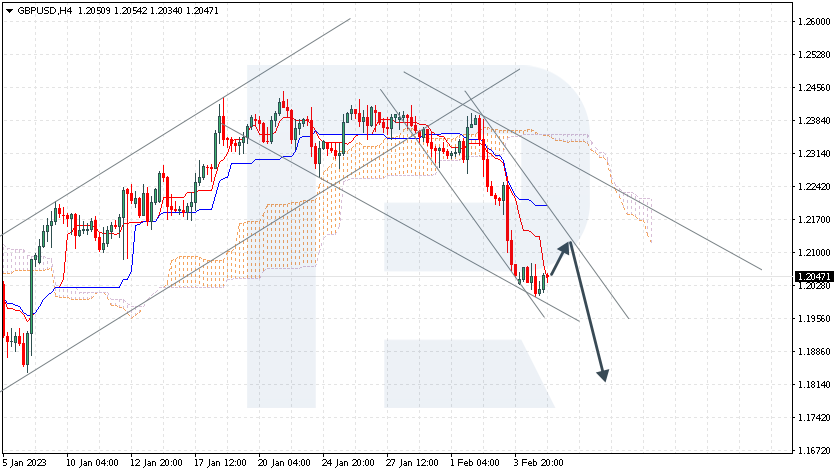
GBPUSD, “Great Britain Pound vs US Dollar”

The pair is testing the resistance level. The instrument is going above the Ichimoku Cloud, which implies an uptrend. A test of the Kijun-Sen line is expected at 1.2170, followed by growth to 1.2485. An additional signal confirming the growth will be a bounce off the lower border of the ascending channel. The scenario can be cancelled by a breakaway of the lower border of the Cloud and securing under 1.2005, which will entail further falling to 1.1910.

EURUSD
Risk Warning: the result of previous trading operations do not guarantee the same results in the future

USDJPY, “US Dollar vs Japanese Yen”

The currency pair is correcting in a descending channel. The instrument is going below the Cloud, which implies a downtrend. A test of the upper border of the Cloud is expected at 131.60, followed by falling to 125.45. An additional signal confirming the decline will be a bounce off the upper border of the descending channel. The scenario can be cancelled by a breakaway of the upper border of the Cloud and securing above 132.75, which will entail further growth to 133.65. The decline can be confirmed by a breakaway of the lower border of the bullish channel and securing under 129.05.

BRENT
Risk Warning: the result of previous trading operations do not guarantee the same results in the future

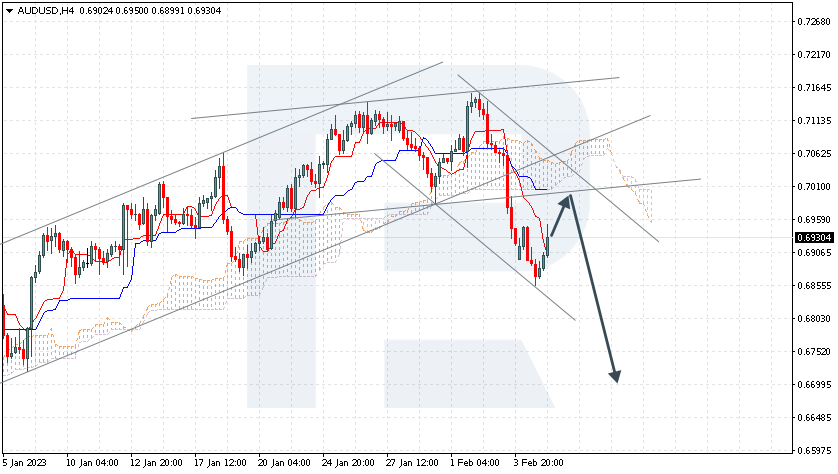
AUDUSD, “Australian Dollar vs US Dollar”

The currency pair is pushing off the signal lines of the indicator. The instrument is going above the Cloud, which implies an uptrend. A test of the upper border of the our is expected at 0.6840, followed by growth to 0.7125. An additional signal confirming the growth will be a breakaway of the lower border of the Cloud and securing under 0.6775, which will indicate further falling to 0.6685.

USDCAD

Article By RoboForex.com

Attention!
Forecasts presented in this section only reflect the author’s private opinion and should not be considered as guidance for trading. RoboForex LP bears no responsibility for trading results based on trading recommendations described in these analytical reviews.

Bringing manufacturing back to the US requires political will, but success hinges on training American workers

By Amitrajeet A. Batabyal, Rochester Institute of Technology 

Supply chain disruptions during COVID-19 brought to light how interdependent nations are when it comes to manufacturing. The inability of the U.S. to produce such needed goods as test kits and personal protective equipment during the pandemic revealed our vulnerabilities as a nation.
China’s rise as a global production superpower has further underscored the weaknesses of American manufacturing.

In addition to fixing supply chain disruptions, bringing manufacturing back to the U.S. will benefit national security. Advanced computer chips, for example, are disproportionately made by a single firm, the Taiwan Semiconductor Manufacturing Co. These microchips are critical to smartphones, medical devices and self-driving cars, as well as military technology. TSMC, from a U.S. national security perspective, is located too close to China. Taiwan’s proximity to China makes it vulnerable because the Chinese government threatens to use force to unify Taiwan with the mainland.

Workers wearing blue clean suits in a manufacturing plant.
Chip technology makes production more efficient, reducing the need for people and jobs.
Glsun Mall for Unsplash, CC BY-SA

My research and that of others examines how the lack of manufacturing competitiveness in the U.S. leaves the U.S. vulnerable to shortages of critical goods during times of geopolitical disruption and global competition. The strategies the U.S. employs in bringing back manufacturing, along with innovative practices, will be key to ensure national security.

Strengthening national security

President Joe Biden has signed two bills that propose to rebuild American manufacturing. The CHIPS and Science Act of 2022 will provide US$52.7 billion for American semiconductor research, development, manufacturing and workforce development.

The Inflation Reduction Act of 2022 will invest $369 billion to promote a clean energy economy, in part by offering generous incentives for U.S.-made electric cars.

A computer chip with a black square surrounded by metal dots and lines on a green board.
Taiwan leads the world in computer chip manufacturing.
alerkiv for Unsplash, CC BY-SA

Training workers for new advanced manufacturing is another key factor in strengthening a sector that has become increasingly reliant on technology. In fact, while the number of jobs in American manufacturing fell by 25% after 2000, manufacturing output did not decline. Still, American manufacturing is facing a massive shortage of labor, especially among those workers with skills needed to power a new generation of manufacturing.

This need to train a new group of skilled workers explains why federal funds in the CHIPS Act are set aside for workforce development. Complementing federal legislation are programs such as America’s Cutting Edge, a national initiative that provides free online and in-person training designed to meet the growing need in the U.S. machining and machine tool industry for skilled operators, engineers and designers.

The power of innovation

It is impractical to bring all manufacturing back to the U.S. Offshoring is often less expensive. But research shows that certain types of in-country manufacturing can not only help secure national security but also spark innovation.

When research and development are conducted close to where the goods are physically made, this proximity can increase the likelihood of collaboration between these two activities. Collaboration can lead to greater efficiencies.

Product development can benefit as well. New research demonstrates that U.S. firms that located their manufacturing and R&D physically close to each other generated more patents than firms that did not.

Even so, the contribution of U.S. manufacturing firms to innovation declined greatly between 1977 and 2016. That’s because the benefits of locating manufacturing and R&D close to each other depends on the nature of the manufacturing itself, researchers have found.

For instance, the design of new drugs often requires manufacturing facilities to be located nearby. In that respect, co-locating manufacturing and research and development makes sense. This can be true for semiconductors as well. World-class chip manufacturers in Taiwan, such as TSMC, are located alongside a growing chip design industry, which permits designers to prototype and test new ideas quickly.

The U.S. and other countries are betting on the same potential benefits from co-location. For instance, to minimize the dependence on TSMC and, more generally, on foreign sources for chips, the European Union is spending 43 billion euros, while Japan is encouraging chip manufacturing at home with a $6.8 billion investment.

People are the bottom line

In a 2011 op-ed, I argued that while federal legislation to promote U.S. manufacturing could succeed in bringing more manufacturing back to the U.S., there was no guarantee that large numbers of jobs would be created – a key point made by those seeking to promote manufacturing.

Governments are generally poor at picking winning technologies and industries. Governmental mistakes in picking supposedly winning industries or sectors have, generally, led to a great deal of waste of taxpayer dollars.

Tiny figures stand on the open pages of a stamped passport.
Immigration policies designed to encourage highly skilled workers to come to the U.S. may be key to a stronger American manufacturing base.
mana5280 for Unsplash, CC BY-SA

In fact, market forces and informed company decisions should, I believe, play a larger role picking winners than federal investment. Where that investment comes from, what it supports and how much money is needed are critical questions.

If firms choose to relocate their companies to benefit from the synergy of R&D, then they must be able to attract the best human resource talent available. This is where U.S. investment can help build a more skilled workforce.

As pointed out by the economist Gary Pisano, many policymakers in the U.S. have long believed that manufacturing is an attractive sector for people with less education and training. Therefore, as a nation, we have not devoted many resources to train people with specialized skills in manufacturing.

This approach stands in stark contrast to the approach followed in Germany. There, practical work is valued by employers and employees and hence apprenticeship programs are routinely used to train workers who are well qualified to work in the manufacturing sector. While the U.S. approach is changing with recently announced investment by the White House through the CHIPS and the Inflation Reduction acts, more is needed.

Geopolitics is a significant consideration in the manufacture of computer chips.
Michael Dziedzic for Unsplash, CC BY-ND

It is my belief that if the U.S. is to remain an economic powerhouse, then corporations should not separate their workforce, sending cost-saving manufacturing offshore while retaining the innovators. Corporations like Apple have sent nearly all of their production offshore, retaining only the most skilled parts of the supply chain involving activities like R&D.

Instead, the U.S. needs to financially support firms wishing to bring manufacturing back by making it easier for such firms to find qualified manufacturing workers at home – and close to innovators when practical. This effort will bolster the U.S.‘s ability to be self-sufficient, innovative and secure in times of geopolitical conflicts.The Conversation

About the Authors:

Amitrajeet A. Batabyal, Distinguished Professor, Arthur J. Gosnell Professor of Economics, & Interim Head, Department of Sustainability, Rochester Institute of Technology

This article is republished from The Conversation under a Creative Commons license. Read the original article.


Murrey Math Lines 18.01.2023 (USDJPY, USDCAD)

By RoboForex.com

USDJPY, “US Dollar vs Japanese Yen”

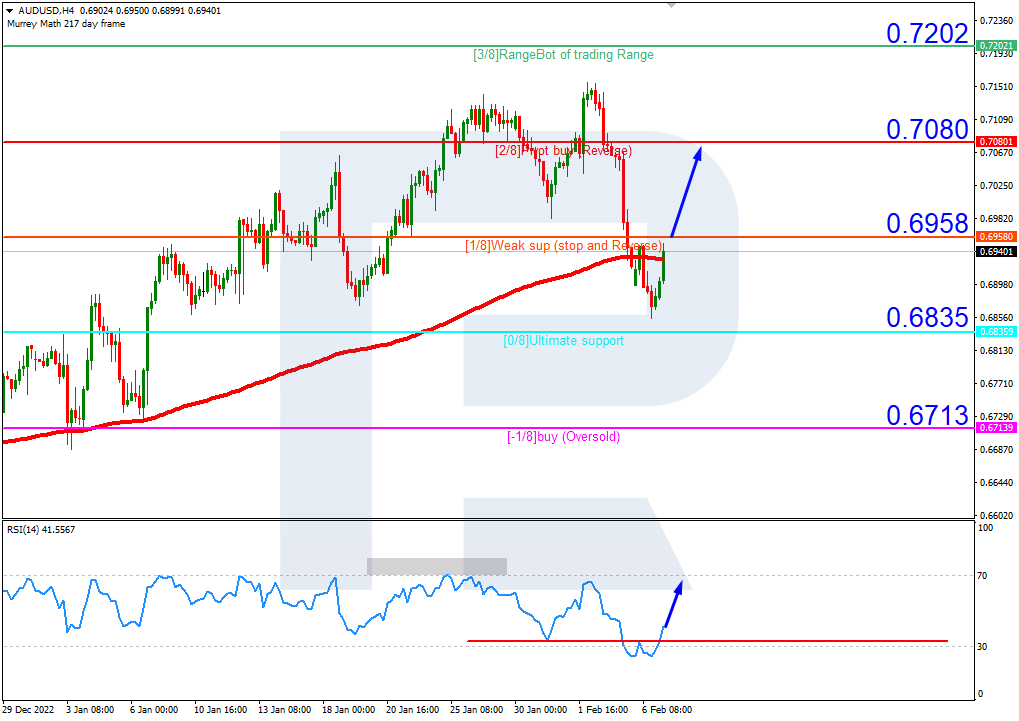
On H4, the quotes are under the 200-day Moving Average which indicates a downtrend. The RSI is nearing the overbought area. As a result, a bounce off 4/8 (131.25) is expected, followed by falling to the support level of 2/8 (128.12). The scenario can be cancelled by rising over the resistance level of 4/8 (131.25). In this case, the pair will continue correcting and might reach 5/8 (132.81).

AUDUSDH4
Risk Warning: the result of previous trading operations do not guarantee the same results in the future

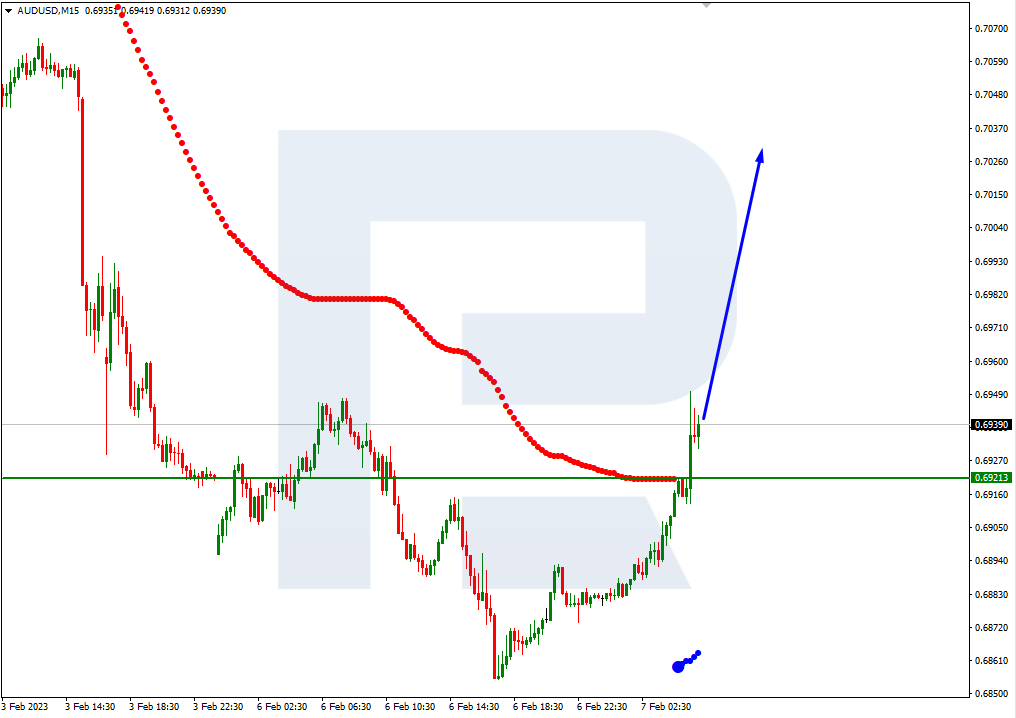
On M15, the lower line of VoltyChannel is too far away from the current price, so falling can only be initiated by a bounce off 4/8 (131.25) on H4.

AUDUSD_M15
Risk Warning: the result of previous trading operations do not guarantee the same results in the future

USDCAD, “US Dollar vs Canadian Dollar”

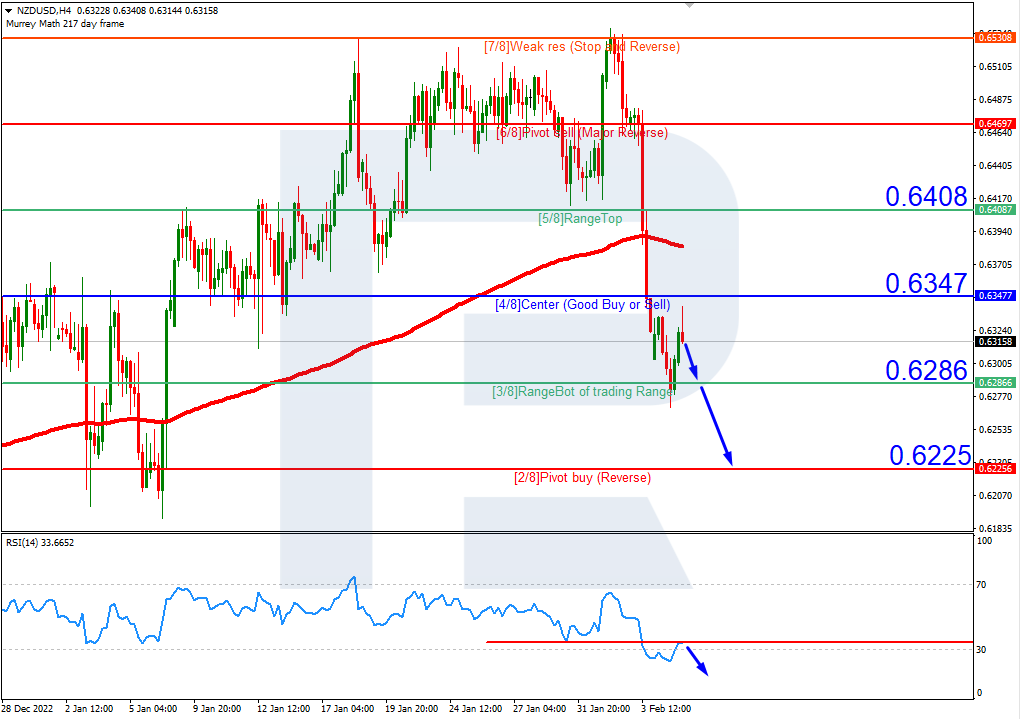
On H4, the quotes are also under the 200-day Moving Average, which indicates prevalence of a downtrend. The RSI has broken through the support level. As a result, we expect a downward breakaway of 3/8 (1.3366) and falling to the support level of 2/8 (1.3305). The scenario can be cancelled by rising over the resistance level of 5/8 (1.3488), which might lead to a trend reversal and growth to 6/8 (1.3549).

NZDUSD_H4
Risk Warning: the result of previous trading operations do not guarantee the same results in the future

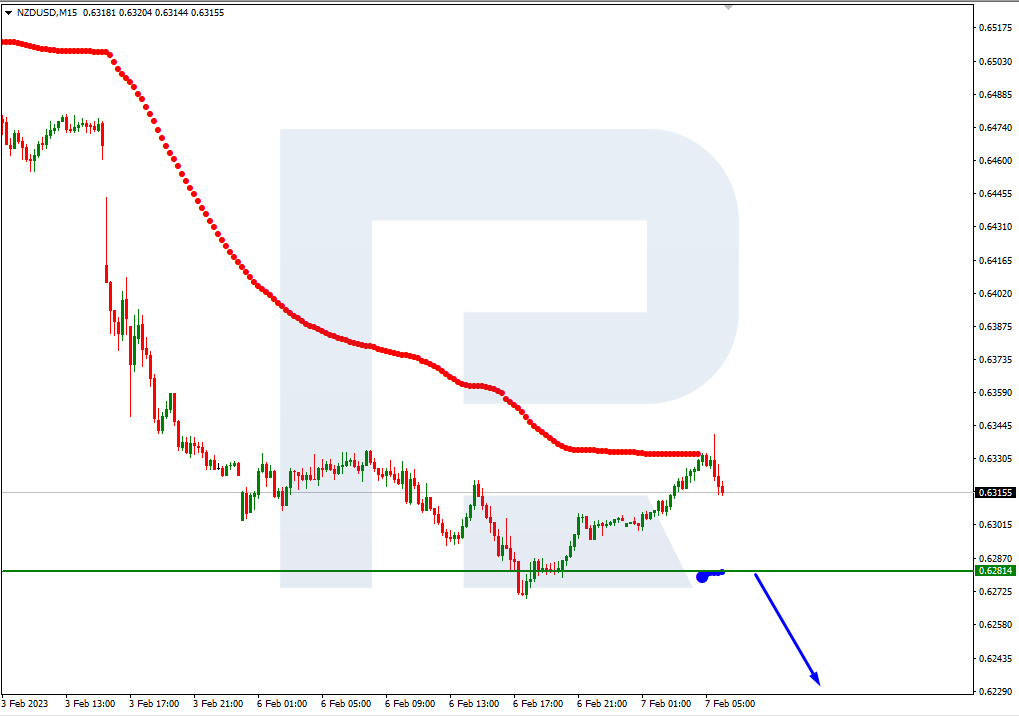
On M15, a breakaway of the lower line of VoltyChannel will increase the probability of further price falling.

NZDUSD_M15

Article By RoboForex.com

Attention!
Forecasts presented in this section only reflect the author’s private opinion and should not be considered as guidance for trading. RoboForex LP bears no responsibility for trading results based on trading recommendations described in these analytical reviews.

The Analytical Overview of the Main Currency Pairs on 2023.01.18

By JustMarkets

The EUR/USD currency pair

Technical indicators of the currency pair:
  • Prev Open: 1.0820
  • Prev Close: 1.0787
  • % chg. over the last day: -0.30 %

The ZEW German Economic Sentiment Index, jumped in January, outperforming the previous month’s reading. The ZEW Business Sentiment Index is considered a leading indicator of economic activity. The positive reading, the first since February 2022, indicates a marked improvement in economic conditions over the next six months, while the prospect of further declining inflation has improved expectations for consumer sectors. The ZEW index for the Eurozone also jumped. The increase in the indicators had little impact on the EUR/USD exchange rate, but there are more and more factors for a stronger euro.

Trading recommendations
  • Support levels: 1.0780, 1.0710, 1.0650, 1.0597, 1.0535, 1.0497, 1.0480
  • Resistance levels: 1.0833, 1.0875

The trend on the EUR/USD currency pair on the hourly time frame is still bullish. But the price is trading below the moving averages, rebounding from the daily resistance level. The MACD indicator has become negative, with signs of divergence persisting. Inside the day, sales begin to prevail. Under such market conditions, buy trades are best considered from the support level of 1.0780, with confirmation on intraday time frames as a false breakdown of the level. Sell deals can be considered from the resistance level of 1.0833, but better with confirmation in the form of a reverse initiative.

Alternative scenario: if the price breaks down through the support level of 1.0700 and fixes below it, the downtrend will likely resume.

EUR/USD
News feed for 2023.01.18:
  • – Eurozone Consumer Price Index (m/m) at 12:00 (GMT+2);
  • – US Retail Sales (m/m) at 15:30 (GMT+2);
  • – US Producer Price Index (m/m) at 15:30 (GMT+2);
  • – US Industrial Production (m/m) at 16:15 (GMT+2);
  • – US FOMC Member Harker Speaks at 21:00 (GMT+2).

The GBP/USD currency pair

Technical indicators of the currency pair:
  • Prev Open: 1.2194
  • Prev Close: 1.2287
  • % chg. over the last day: +0.76 %

The UK unemployment rate remained at 3.7%, but average earnings rose to 6.4% from 6.1% the previous month, the highest rate of growth. In real terms (adjusted for inflation), wages fell by 2.6%, one of the biggest declines of all time. In other words, people’s wages went up, but purchasing power went down because of record inflation. The combination of high inflation, rising wages, and a strong labor market may well incline the Bank of England to raise rates more than expected at next month’s meeting.

Trading recommendations
  • Support levels: 1.2220, 1.2145, 1.2080, 1.2000, 1.1928, 1.1875, 1.1684
  • Resistance levels: 1.2288, 1.2308, 1.2431, 1.2519

From the technical point of view, the trend on the GBP/USD currency pair on the hourly time frame is bullish. The price is slowly rising, forming narrow price corridors. As a rule, such narrowing of liquidity led to sharp impulse movements. The MACD indicator became positive, but the presence of divergence and the presence of the daily resistance level limits the further growth of quotes. Under such market conditions, it is better to look for buy deals on intraday time frames from the support level of 1.2220, but with confirmation. It is better to look for sell deals from the resistance level of 1.2288 or 1.2308, but it is also better with a confirmation in the form of a false breakout or a change in the structure on the lower time frames.

Alternative scenario: if the price breaks down through the 1.2080 support level and fixes above it, the downtrend will likely resume.

GBP/USD
News feed for 2023.01.18:
  • – UK Consumer Price Index (m/m) at 09:00 (GMT+2).

The USD/JPY currency pair

Technical indicators of the currency pair:
  • Prev Open: 128.48
  • Prev Close: 128.15
  • % chg. over the last day: -0.26 %

The Japanese yen dropped more than 2% after the Bank of Japan’s monetary policy meeting. The Bank of Japan left all policy settings unchanged. This includes the discount rate (maintained at -0.1%) and the 10-year bond yield target of around 0%. Policymakers also mentioned that they would continue to buy bonds with a degree of flexibility. This underscores the Central Bank’s intention to continue to control the yield curve as planned. This disappointed investors who had hoped for the first steps of monetary policy normalization.

Trading recommendations
  • Support levels: 129.65, 129.12, 128.09, 127.08, 126.19
  • Resistance levels: 131.34, 132.37, 132.95, 133.23, 134.45, 135.88

From the technical point of view, the medium-term trend on the currency pair USD/JPY is close to changing to bullish. The price is trading above the levels of the moving averages but below the change in priority. The MACD indicator has become positive and indicates overbought. Buy trades are best considered after a slight correction from support levels of 129.65 or 129.12, but only with intraday confirmation. Sell deals can be looked for from the resistance level of 131.34 or 132.73 on the condition of a reverse reaction or false breakout.

Alternative scenario: If the price fixes above the resistance level of 132.73, the uptrend will be renewed with a high probability.

USD/JPY
News feed for 2023.01.18:
  • – Japan BoJ Interest Rate Decision at 05:00 (GMT+2);
  • – Japan BoJ Monetary Policy Statement at 05:00 (GMT+2);
  • – Japan BoJ Outlook Report at 05:00 (GMT+2);
  • – Japan Industrial Production (m/m) at 06:30 (GMT+2);
  • – Japan BoJ Press Conference (Tentative).

The USD/CAD currency pair

Technical indicators of the currency pair:
  • Prev Open: 1.3400
  • Prev Close: 1.3388
  • % chg. over the last day: -0.09 %

In Canada, the consumer price level fell from 6.8% to 6.3% year-over-year. Core inflation (which excludes food and energy prices) also declined from 5.8% to 5.4% y/y. The decline in the cost of living was mainly due to a 13% drop in fuel prices. But food prices rose another 0.3% in the last month. While the official inflation rate is still more than double the Bank of Canada’s target, it is now at its lowest level in almost a year. Economists believe the central bank is likely to raise the benchmark interest rate by at least another 0.25%.

Trading recommendations
  • Support levels: 1.3352, 1.3212
  • Resistance levels: 1.3459, 1.3513, 1.3561, 1.3594, 1.3632, 1.3700

From the point of view of technical analysis, the trend on the USD/CAD currency pair is bearish. The price is traded in the price corridor. As a rule, such accumulation of liquidity leads to sharp impulse movements. The MACD indicator has become inactive. Under such market conditions, it is best to wait for the impulse exit and only then act. Buy trades should be considered from the support level of 1.3352, but only with short targets and confirmation. Sell deals are better to consider in the intraday time frames from the resistance level of 1.3459, but with a confirmation in the form of a reverse initiative or a false breakout.

Alternative scenario: if the price breaks out and consolidates above the resistance level of 1.3500, the uptrend will likely resume.

USD/CAD
There is no news feed for today.

By JustMarkets


This article reflects a personal opinion and should not be interpreted as an investment advice, and/or offer, and/or a persistent request for carrying out financial transactions, and/or a guarantee, and/or a forecast of future events.

Walmart Announces Equity Investment in Sustainable Beef LLC To Provide More High-Quality, Affordable Beef to Shoppers

Source: Streetwise Reports  (1/17/23)

Walmart and Sustainable Beef LLC will work collaboratively to increase visibility in the beef supply chain and help ranchers grow their business

BENTONVILLE, Ark., and NORTH PLATTE, Neb., Aug 31, 2022Walmart Inc. (WMT:NYSE) and Sustainable Beef LLC announced today that Walmart signed an agreement to acquire a minority stake in Sustainable Beef LLC, a rancher-owned company based in North Platte, Nebraska. Walmart’s equity investment is part of a broader strategic partnership to source top-quality angus beef from Sustainable Beef LLC’s new beef processing facility. This partnership helps supplement the current beef industry and provides additional opportunities for ranchers to increase their business. As part of the investment, Walmart will also have representation on Sustainable Beef’s board.

Walmart’s investment will help Sustainable Beef LLC open its beef processing facility in North Platte, Neb. The facility is expected to break ground next month and open by late 2024, creating more than 800 new jobs. Walmart’s work with Sustainable Beef LLC will create more capacity for the beef industry.

“At Walmart, we are dedicated to providing high-quality, affordable beef to our customers, and an investment in Sustainable Beef LLC will give us even more access to these products,” said Tyler Lehr, senior vice president of merchandising for deli services, meat, and seafood, Walmart U.S. “We know Sustainable Beef LLC has a responsible approach to beef processing, one that includes creating long-term growth for cattle ranchers and family farmers. This investment provides greater visibility into the beef supply chain and complements Walmart’s regeneration commitment to improve grazing management.”

Sustainable Beef LLC will work with cattle feeders and ranchers to understand critical elements of the supply chain cycle, such as grain sourcing and grazing management. Animal care will follow the Five Freedoms, and there will be a consistent approach to antibiotic use and reporting across herds in line with Walmart’s Position on Antibiotics in Animals, which asks suppliers to adopt and implement American Veterinary Medical Association Judicious Use Principles of Antimicrobials. All of these components will help Sustainable Beef LLC to improve and refine the beef supply chain to provide quality beef for our customers.

“We set out on a journey two years ago to create a new beef processing plant to add some capacity to the industry and provide an opportunity for producers to integrate their business of raising quality cattle with the beef processing portion of the industry and do it in a sustainable manner, said David Briggs, CEO of Sustainable Beef LLC. “During this journey, we found that Sustainable Beef and Walmart aligned on continuing to improve how we care for our animals and crops and provide consumers the positive experience of enjoying quality beef.”

Walmart’s investment in Sustainable Beef LLC is the latest step in the retailer’s commitment to increasing access to high-quality beef at an affordable price for its customers while boosting capacity for the beef industry and ensuring long-term economic viability for cattle ranchers.

Disclosures:

1) The following companies mentioned in this article are billboard sponsors of Streetwise Reports: None. Click here for important disclosures about sponsor fees. The information provided above is for informational purposes only and is not a recommendation to buy or sell any security.

2) Statements and opinions expressed are the opinions of the author (Walmart) and not of Streetwise Reports or its officers. The author is wholly responsible for the validity of the statements. The author was not paid by Streetwise Reports for this article. Streetwise Reports was not paid by the author to publish or syndicate this article. Streetwise Reports requires contributing authors to disclose any shareholdings in, or economic relationships with, companies that they write about. Streetwise Reports relies upon the authors to accurately provide this information and Streetwise Reports has no means of verifying its accuracy.

3) This article does not constitute investment advice. Each reader is encouraged to consult with his or her individual financial professional and any action a reader takes as a result of information presented here is his or her own responsibility. By opening this page, each reader accepts and agrees to Streetwise Reports’ terms of use and full legal disclaimer. This article is not a solicitation for investment. Streetwise Reports does not render general or specific investment advice and the information on Streetwise Reports should not be considered a recommendation to buy or sell any security. Streetwise Reports does not endorse or recommend the business, products, services or securities of any company mentioned on Streetwise Reports.

4) From time to time, Streetwise Reports LLC and its directors, officers, employees or members of their families, as well as persons interviewed for articles and interviews on the site, may have a long or short position in securities mentioned. Directors, officers, employees or members of their immediate families are prohibited from making purchases and/or sales of those securities in the open market or otherwise from the time of the decision to publish an article until three business days after the publication of the article. The foregoing prohibition does not apply to articles that in substance only restate previously published company releases.

About Walmart
Walmart Inc. (NYSE: WMT) helps people around the world save money and live better – anytime and anywhere – in retail stores, online, and through their mobile devices. Each week, approximately 230 million customers and members visit more than 10,500 stores and numerous eCommerce websites under 46 banners in 24 countries. With fiscal year 2022 revenue of $573 billion, Walmart employs approximately 2.3 million associates worldwide. Walmart continues to be a leader in sustainability, corporate philanthropy and employment opportunity. Additional information about Walmart can be found by visiting corporate.walmart.com, on Facebook at facebook.com/walmart and on Twitter at twitter.com/walmart.

Implications for the Demise of US Dollar Hegemony

Source: Michael Ballanger  (1/17/23) 

Michael Ballanger of GGM Advisory Inc. reviews the current state of the U.S. dollar to tell you where he believes it is heading.

It was only a few months ago that the world witnessed an event in the Middle East that can only be classified as a “watershed event.” For the first time since Chevron first discovered oil in the Dhahran, Saudi Arabia, a world leader not belonging to the U.S.-dominated NATO alliance, was greeted with all of the pomp and circumstance usually reserved for the United States.

When Chinese President Xi Jinping stepped off the aircraft back in December, he was greeted with such respect by Saudi leader Mohammed bin Salman that the international media made great fanfare out of it while the U.S. MSM downplayed it as if it were an inconsequential state visit.

As we move into the New Year, one of the forecasts about which I am constantly reading is the imminent arrival of the “New World Order” in which the World Economic Forum (“WEF”) led by Klaus Schwab rearranges global priorities by way of seismic changes in politics, economics, and medicine.

The spin doctors conger up images of Dr. Evil-type characters holed up in a luxurious retreat in the Swiss Alps, hovering over a map of the world as they divide up the regions like Monopoly pieces. Unfortunately, there actually is a shift occurring in the way the world works, but it lacks the theatrics of an Ian Fleming novel or a movie by James Cameron. The shift that is occurring at Hemingway-esque speed (first slowly, then suddenly in reference to his bankruptcy) is the demise of the not-so-mighty U.S. dollar.

From a technical perspective, the dollar index is comprised of a basket of currencies (more appropriately referred to as a “basket-case of currencies” like the energy-starved Yen and Euro), but it generally represents the major influence on the commodity prices or as the CPI-watchers like to say “input prices.” I am focused on this because the greenback’s raging ascent, which began in the summer of 2021, put in a major top in late September of last year on the exact day that I marked the turn, which was when the Bank of England did a ferocious one-eighty and instead of selling 10-year gilts to reduce the balance sheet, they were forced to buy gilts in order to rescue their insolvent pension funds.

Since then, two uptrend lines have been vanquished at around 109 and 103, with the first of the greatly-revered “death crosses” occurring last December at around 108 and the second this week around 106. The “death cross” occurs when the one moving average crosses below the second. In this case, the 50-DMA crossed below the 100-DMA in December, with the 50-DMA crossing below the 200-DMA this week.

Historically, these are very powerful signals that speak to the longer-term trend of markets, and the reason I am focused on the dollar is that its behavior can be a predictive tool for monetary and foreign policies.

2022 was a year in which the U.S. financial press was preoccupied with inflation, and it was the CPI bogeyman that hit 9% in the third quarter that was on the minds and lips of all of the Fed governors led by numero uno inflationista Jerome Powell. In order to eliminate the embedding of the dreaded “inflationary psychology,” Powell allowed the Fed Funds rate to advance more in nine months than had ever been experienced in all the years of Federal Reserve Board’s “management” of monetary policy.

What troubles me greatly as we head into 2023 is that the inflation rate in the United States (and Canada) skyrocketed during a period in which the American currency experienced the biggest rise since 1980 and 1994. The past sixteen years have seen the USD move from the low 70’s to the recent 114-plus level allowing the strength of the dollar to negate the effect of rising input prices.

From the summer of 2021 and all through 2022, as CPI began to soar, the strong dollar should have had a moderating impact on input prices, but due to supply chain shocks and fiscal handouts in the form of “stimmy cheques,” input prices were not dulled by the strong dollar.

When I see the chart of the dollar index and ponder the ramifications of its effect upon input prices within an extended period of weakness, I have to wonder how on earth the Fed is going to launch into “pivot” mode during a period of dollar weakness. One also has to wonder how the dollar can be retreating given the typically bullish effect of rising yields on the domestic currency.

The answer lies in the ability of markets to discount future events and what I think the dollar weakness is telling us is that the American economy may no longer be the aphrodisiac for global investment flows. It may just be that the debt monster plaguing the world’s largest deadbeat nation may be the proverbial chickens coming home to roost. Foreign investors typically favor the U.S. dollar during periods when they get a preferential return on their principal; what if the new focus has morphed into a concern of the return OF their principal? Solvency is never a concern until it is one, and with the US$32 trillion debt load, there is going to be a need to refinance that debt at rates far higher than a year ago.

I turned positive on stocks in late September with the Bank of England now forever in my servitude as their move to save their pension funds set the theme for the balance of 2022. I wrote back in December that I was not going to call the October 13th low for the S&P at 3,491.58 as “THE” low until I watched the late December-early January tape action. Now that the Santa Claus Rally and the First Five Days indicators registered positive outcomes, I am confident that the October low was indeed the low for the bear market and that we could see an extended rally into at least the second quarter.

However, there is an indicator called the “December low indicator” that says that if the market takes out its prior December low in the first quarter of the year, then all “BUY” signals are negated, and new lows are on the horizon. The levels that I will use as a stop-loss range is between 3,783 and 3,764 (closing low and intraday low for December).

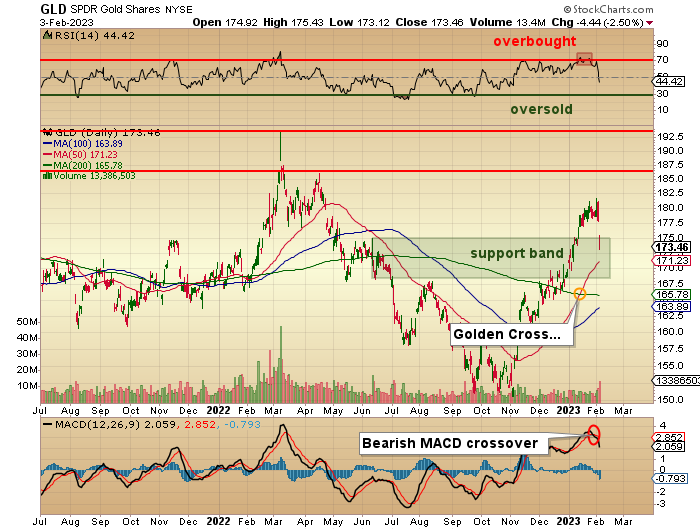
The first week of trading allowed gold to break out of an oppressive band of resistance between US$1,825 and US$1,875 after which it touched US$1,912 before succumbing to profit-taking.

Also, the relative strength indicator just poked its head above 70 and now resides in overbought territory. That does not mean gold should be sold because it can stay overbought for weeks before reversing. It does mean that one should defer new purchases until the overbought conditions get worked off.

Now, despite the elevated RSI reading, the 50-DMA is about to surpass the 200-DMA, constituting a “Golden Cross” (the opposite of the “Death Cross”), and that could serve as an offset to the RSI reading. If gold can get comfortably above the US$1,900 level and stay there, we will get the cross next week, which is a powerful longer-term signal for the gold market. The next major resistance for the spot is around US$2,000, and then the all-time highs of around US$2,087.

The only problem I have right now with the entire precious metals complex is that this week, unlike the period of September 27th until New Year’s, silver is underperforming gold, which is a big non-confirmation and a near-term negative. Silver usually acts as an early warning device, and when it starts to lag gold, a near-term top usually arrives for the entire complex.

There was a bearish MACD crossover (“sell signal”) just before Christmas, and since then, silver has been in a range between US$23.25 and US$24.75, with resistance sitting in the US$26.00-26.50 range. I think it resolves to the upside in Q1/2023, but it may need a retest back to the 50-DMA around US$22.70 first.

Top-rated Getchell Gold Corp. (GTCH:CSE; GGLDF:OTCQB) reported more positive drill results from Fondaway Canyon, where they have recently upgraded their resource estimate to 2,059,900 ounces of in-ground gold with all zones open along strike and to depth. I get bombarded with emails asking why the stock price continues to languish, and while it is terribly frustrating, it is perfectly understandable.

The answer lies in the recently-reported sentiment numbers for the American Association of Individual Investors (“AAII”), which came in at 20.5% bulls, one of three record-low readings for the month of December, which represented the first time it has occurred since the survey began in 1987!

The AAII is a broad representation of the average retail investor which is typically the type of investor that buys junior resource stocks. With the brutal performance of the small-cap stocks last year, the average investor is licking his/her wounds with portfolio values down savagely in many sectors.

Those investors holding or buying the senior and intermediate miners (GDX/GDXJ) are ahead 49.7% and 53.49%, respectively, in those two ETF’s while the poor TSX Venture Exchange, which houses the junior developers and explorers is up a paltry 8.11% despite raging precious metals prices and copper at $4.15/pound. The microcap juniors are simply lagging behind their bigger brethren, and in time, the inevitable rotation will occur as fund flows begin to favor the little guys.

When sentiment amongst the resource investors (and the AAII) begins to heal, investment flows will move initially to those developers with a resource (such as Getchell) and then ultimately to the explorers. If one is looking for leverage, buying in-ground ounces at US$15.65 per ounce in the State of Nevada is a no-brainer which means Getchell Gold is just that.

Next week I will take the reading of the S&P on the sixteenth (Monday) which is the third of the December-January early warning numbers that I monitor. It will show a decent advance for the month (Approx. 2%) which leaves month-end as the last reading. If I get an up January, then all components of the January Barometer will have passed the test, and from at least a statistically-historical perspective, 2023 should be a bull market year. I think that 2023 will actually turn out to be a stock-picker’s market where fundamentals and valuation will be far more important than momentum or “the story.” I would welcome that with open arms.

I get frequently asked how I can be a bull when earnings are decelerating so rapidly amidst an inflationary backdrop and a hostile Fed. The only answer I have lies in a phrase that I have used for years and that is “Never underestimate the replacement power of equities (stocks) within an inflationary spiral.” From what I read and hear, there is an absolute mountain of cash on the sidelines from either real estate sales of stock market profits taken in 2021, but it is definitely out there, and I suspect that at the first sign of monetary policy relief, there will be a tsunami of buy-side volume piling into the quality names.

Michael Ballanger Disclaimer:

This letter makes no guarantee or warranty on the accuracy or completeness of the data provided. Nothing contained herein is intended or shall be deemed to be investment advice, implied or otherwise. This letter represents my views and replicates trades that I am making but nothing more than that. Always consult your registered advisor to assist you with your investments. I accept no liability for any loss arising from the use of the data contained on this letter. Options and junior mining stocks contain a high level of risk that may result in the loss of part or all invested capital and therefore are suitable for experienced and professional investors and traders only. One should be familiar with the risks involved in junior mining and options trading and we recommend consulting a financial adviser if you feel you do not understand the risks involved.

Disclosures:

1) Michael J. Ballanger: I, or members of my immediate household or family, own securities of the following companies mentioned in this article: All. I personally am, or members of my immediate household or family are, paid by the following companies mentioned in this article: My company, Bonaventure Explorations Ltd., has a consulting relationship with: None.

2) The following companies mentioned in this article are billboard sponsors of Streetwise Reports: None. Click here for important disclosures about sponsor fees. As of the date of this article, an affiliate of Streetwise Reports has a consulting relationship with: None. Please click here for more information.

3) Statements and opinions expressed are the opinions of the author and not of Streetwise Reports or its officers. The author is wholly responsible for the validity of the statements. The author was not paid by Streetwise Reports for this article. Streetwise Reports was not paid by the author to publish or syndicate this article. Streetwise Reports requires contributing authors to disclose any shareholdings in, or economic relationships with, companies that they write about. Streetwise Reports relies upon the authors to accurately provide this information and Streetwise Reports has no means of verifying its accuracy.

4) This article does not constitute investment advice. Each reader is encouraged to consult with his or her individual financial professional and any action a reader takes as a result of information presented here is his or her own responsibility. By opening this page, each reader accepts and agrees to Streetwise Reports’ terms of use and full legal disclaimer. This article is not a solicitation for investment. Streetwise Reports does not render general or specific investment advice and the information on Streetwise Reports should not be considered a recommendation to buy or sell any security. Streetwise Reports does not endorse or recommend the business, products, services or securities of any company mentioned on Streetwise Reports.

5) From time to time, Streetwise Reports LLC and its directors, officers, employees or members of their families, as well as persons interviewed for articles and interviews on the site, may have a long or short position in securities mentioned. Directors, officers, employees or members of their immediate families are prohibited from making purchases and/or sales of those securities in the open market or otherwise from the time of the decision to publish an article until three business days after the publication of the article. The foregoing prohibition does not apply to articles that in substance only restate previously published company releases.

As of the date of this article, officers and/or employees of Streetwise Reports LLC (including members of their household) own securities of Getchell Gold Corp., a company mentioned in this article.


The Bank of Japan has disappointed investors. Switzerland hosts an annual economic forum

By JustMarkets

The US indices traded yesterday without a single trend. At yesterday’s stock market close, Dow Jones (US30) decreased by 1.14%, and S&P 500 (US500) lost 0.20%. The NASDAQ Technology Index (US100) gained 0.14% on Tuesday.

The Empire State Manufacturing Index, which measures activity in New York State, fell to 32.9 in January, the worst reading since the pandemic.

Goldman Sachs (GS) financial performance fell short of expectations. The company’s price fell more than 6% on the report. The report showed weakness in consumer banking and a 48% drop in investment banking revenue. On the other hand, Morgan Stanley’s (MS) stock was up more than 6% on the report. Record revenues in the asset management business offset weakness in investment banking.

Investors are waiting for Netflix’s quarterly results to be released Thursday. Analysts at UBS said they expect the streaming giant’s subscriber count to rise in the fourth quarter amid “strong content and seasonality.” Netflix is expected to add about 4.5 million subscribers in the fourth quarter, up from 2.4 million in the previous quarter.

Tesla (TSLA) shares jumped by 6% after Deutsche Bank issued its recommendation to buy the company on expectations that recent price declines are likely to support sales growth.

According to Harvard University professor Kenneth Rogoff, sustained inflation above the 2% target will force Federal Reserve policymakers to keep interest rates higher for longer. Eventually, inflation will fall, but interest rates will not fall to the level they were before.

The Ukrainian government has hired BlackRock Inc. to help set up the country’s reconstruction fund.

According to a survey released at the annual World Economic Forum in Davos, two-thirds of private and public sector economists surveyed expect a global recession this year. Meanwhile, German Chancellor Olaf Scholz said Europe’s largest economy would avoid a recession this year thanks to efforts to limit the impact of the region’s energy crisis on the economy. Bob Prince, chief investment officer at Bridgewater Associates, said the economic cycle has returned and that more people will have to lose their jobs before inflation is brought under control. According to the chief economist of the European Bank for Reconstruction and Development, it will take years for sanctions against Russia to force Vladimir Putin to back down because oil and gas revenues outweigh sanctions losses many times over. Hopes that US and European sanctions will change the balance of power in the near future are an unrealistic scenario.

Equity markets in Europe mostly rose yesterday. German DAX (DE30) gained 0.35%, French CAC 40 (FR40) jumped by 0.48%, Spanish IBEX 35 (ES35) added +0.15%, and British FTSE 100 (UK100) closed yesterday down by 0.12%.

Germany’s inflation rate fell sharply from 10% to 8.6% year-on-year. The inflation rate slowed in December 2022, mainly due to lower energy prices. But despite the decline in inflation rates across Europe, according to Philip Lane, chief economist at the ECB, the central bank should continue to aggressively raise rates to levels that will begin to limit growth.

The British FTSE 100 index is close to an all-time high. Yesterday’s labor market data showed that the UK unemployment rate remained at 3.7%, but average earnings rose to 6.4% from 6.1% the previous month, the highest rate of growth. Wage growth is a major concern for the Bank of England, as there is a risk of a wage-price spiral that will eventually lead to higher inflationary expectations. UK inflation data will be released today, where consumer prices are expected to fall for the first time in 12 months.

Reuters predicts that gold prices will return to their all-time highs above the psychologically critical $2,000 level this year unless, of course, there is a major change in the US inflation picture. The highest gold price ever in US dollars is $2077.88. This peak was reached on August 7, 2020.

Oil prices continue to rise amid hopes for a rebound in Chinese demand, even despite weak economic data. The Organization of the Petroleum Exporting Countries (OPEC) reported in its monthly report that oil demand in China will increase by 510,000 BPD this year. The rise in oil was also supported by a weaker US dollar, which fell against most major currencies on Tuesday. A weaker dollar makes oil less expensive for other currency holders.

Asian markets traded flat yesterday. Japan’s Nikkei 225 (JP225) added 1.23% on Tuesday, China’s FTSE China A50 (CHA50) decreased by 0.47%, Hong Kong’s Hang Seng (HK50) ended the day down by 0.78%, India’s NIFTY 50 (IND50) added 0.89%, and Australia’s S&P/ASX 200 (AU200) ended the day up by 0.03%.

The Bank of Japan left all policy settings unchanged at its meeting. This includes the discount rate (maintained at -0.1%) and the 10-year bond yield target of about 0%. Policymakers also mentioned that they would continue to buy bonds with a degree of flexibility. This underscores the central bank’s intention to continue to control the yield curve as planned. This disappointed investors who had hoped for the first steps of monetary policy normalization.

S&P 500 (F) (US500) 3,990.97 −8.12  (−0.20%)

Dow Jones (US30) 33,910.85  −391.76 (−1.14%)

DAX (DE40) 15,187.07 +53.03 (+0.35%)

FTSE 100 (UK100) 7,851.03 −9.04 (−0.12%)

USD Index 102.40 +0.20 (+0.19%)

Important events for today:
  • – Japan BoJ Interest Rate Decision at 05:00 (GMT+2);
  • – Japan BoJ Monetary Policy Statement at 05:00 (GMT+2);
  • – Japan BoJ Outlook Report at 05:00 (GMT+2);
  • – Japan Industrial Production (m/m) at 06:30 (GMT+2);
  • – Japan BoJ Press Conference (Tentative);
  • – UK Consumer Price Index (m/m) at 09:00 (GMT+2);
  • – World Economic Forum Annual Meetings at 10:00 (GMT+2);
  • – Eurozone Consumer Price Index (m/m) at 12:00 (GMT+2);
  • – US Retail Sales (m/m) at 15:30 (GMT+2);
  • – US Producer Price Index (m/m) at 15:30 (GMT+2);
  • – US Industrial Production (m/m) at 16:15 (GMT+2);
  • – US FOMC Member Harker Speaks at 21:00 (GMT+2).

By JustMarkets


This article reflects a personal opinion and should not be interpreted as an investment advice, and/or offer, and/or a persistent request for carrying out financial transactions, and/or a guarantee, and/or a forecast of future events.

EURUSD H4: Bears ready to pounce if Bulls fail to breach key resistance

By ForexTime

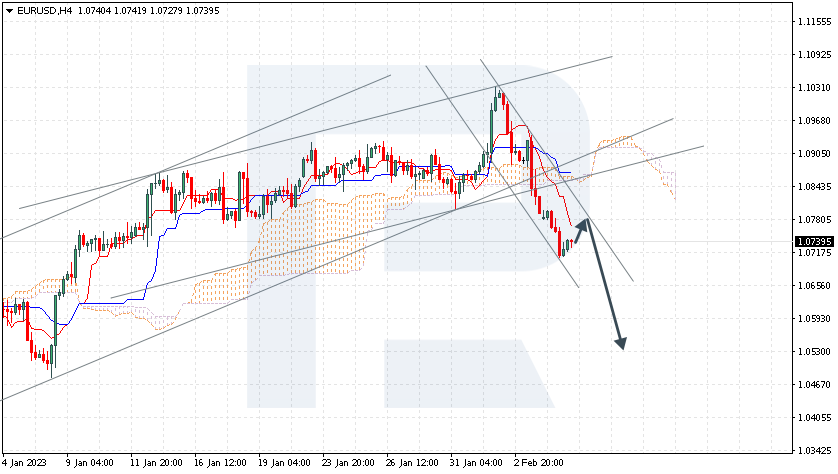
The EURUSD on the H4 time frame was in an uptrend until 16 January when a last higher top was recorded at 1.08735.

A closer look at the Momentum Oscillator reveals negative divergence between point “a” and “b” when comparing the tops at 1.08671 and 1.08735. This could have alerted technically inclined traders that the bullish trend might lose power.

After the higher top at 1.08735, the price dropped through the 15 and 34 Simple Moving Averages and the Momentum Oscillator followed by moving into bearish territory.

A possible critical support level formed when a lower bottom was recorded on 18 January at 1.07654. The bulls are currently trying to drive the price higher.

If the price of EURUSD breaks through the critical support level at 1.07654, then three possible price targets may be projected from there.

Attaching the Fibonacci tool to the lower bottom at 1.07654 and dragging it to near a resistance level that was created on 17 January at 1.08734, the following targets may be anticipated:

  • The first target can be estimated at 1.06987 (161.8%).
  • The second price target may be calculated at 1.05907 (261.8%).
  • The third and final target can be expected at 1.04160 (423.6%).

If the resistance level at 1.08734 is broken, the above scenario must be re-examined.

After all, this could be a case of Euro bulls consolidating around 1.087, before mustering enough mass to punch past the immediate resistance levels that had thwarted EURUSD’s upside since last week.


As long as the bears continue their negative mindset and supply continues overcoming demand, the outlook for the EURUSD currency pair will remain bearish.


Forex-Time-LogoArticle by ForexTime

ForexTime Ltd (FXTM) is an award winning international online forex broker regulated by CySEC 185/12 www.forextime.com

What does ESG mean? Two business scholars explain what environmental, social and governance standards and principles are

By Luciana Echazú, University of New Hampshire and Diego C. Nocetti, Clarkson University 

Environmental, social and governance business standards and principles, often referred to as ESG, are becoming both more commonplace and controversial.

But what does “ESG” really mean?

It’s shorthand for the way that many corporations operate in accordance with the belief that their long-term survival and their ability to generate profits require accounting for the impact their decisions and actions have on the environment, society as a whole and their own workforce.

These practices grew out of long-standing efforts to make businesses more socially and environmentally responsible.

ESG investing, sometimes called sustainable investment, also takes these considerations into account.

Zeroing in on the E, S and G

ESG priorities vary widely, but there are some common themes.

These priorities usually emphasize environmental sustainability – the E in ESG – with a focus on contributing to efforts to slow the pace of climate change.

There’s also an effort to uphold high ethical standards through corporate operations. These social concerns – the S – can include, for example, ensuring that a company doesn’t buy goods and services from exploitative suppliers, or treats its employees well. Or it might entail taking care to hire and retain a diverse workforce and taking steps to reduce social injustices in the communities where a corporation operates.

Companies embracing ESG principles should also have high-quality governance – the G. Governance includes oversight, handled by a competent and qualified board of directors, regarding the hiring and firing of top corporate leaders, executive compensation and any dividends paid to shareholders.

Governance also pertains to whether a company’s leadership operates fairly and responsibly, with transparency and accountability.

Why ESG matters

By 2026, the total amount invested globally according to these principles will nearly double to US$34 trillion from $18.4 trillion in 2021, the accounting firm PwC estimates. However, increasing scrutiny of which investments really qualify as ESG could mean it takes longer to reach that volume.

This corporate concept is becoming a political touchstone in the U.S. because some states, like Florida and Kentucky, arguing that these practices divert from the focus on maximizing profits and can be detrimental to investors by making other considerations a priority, have barred their pension funds from using ESG principles as part of their investment considerations. Some very large asset managers, including BlackRock, aren’t allowed to work with those pension funds anymore.

Many of the arguments against embracing these principles hold that they reduce profits by taking other factors into account. But how do ESG practices affect financial performance?

A team of New York University scholars looked at the results of 1,000 different studies that had sought to answer this question. It found mixed results: Some of the studies found that ESG principles increased returns, others found that they weakened performance, and a third group determined that these principles made no difference at all.

It’s possible that the disparities among results could be due largely to the lack of clarity regarding what counts and does not count as ESG, which has been a long-standing discussion and makes it hard to assess how ESG investments perform.

The NYU scholars also found two consistent results regarding ESG strategies. First, they help protect investors against risks such as losses resulting from the failure of a supply chain due to environmental or geopolitical issues, and they can protect companies from volatility during periods of economic instability and downturns. Second, investors and companies benefit more from ESG strategies in the long term than in the short term.The Conversation

About the Authors:

Luciana Echazú, Associate Dean of Undergraduate Education; Associate Professor of Economics, University of New Hampshire and Diego C. Nocetti, Dean, School of Business; Professor of Economics and Financial Studies, Clarkson University

This article is republished from The Conversation under a Creative Commons license. Read the original article.