The dollar is strengthening on the back of a strong US labor market. Oil continues to fall

By JustMarkets

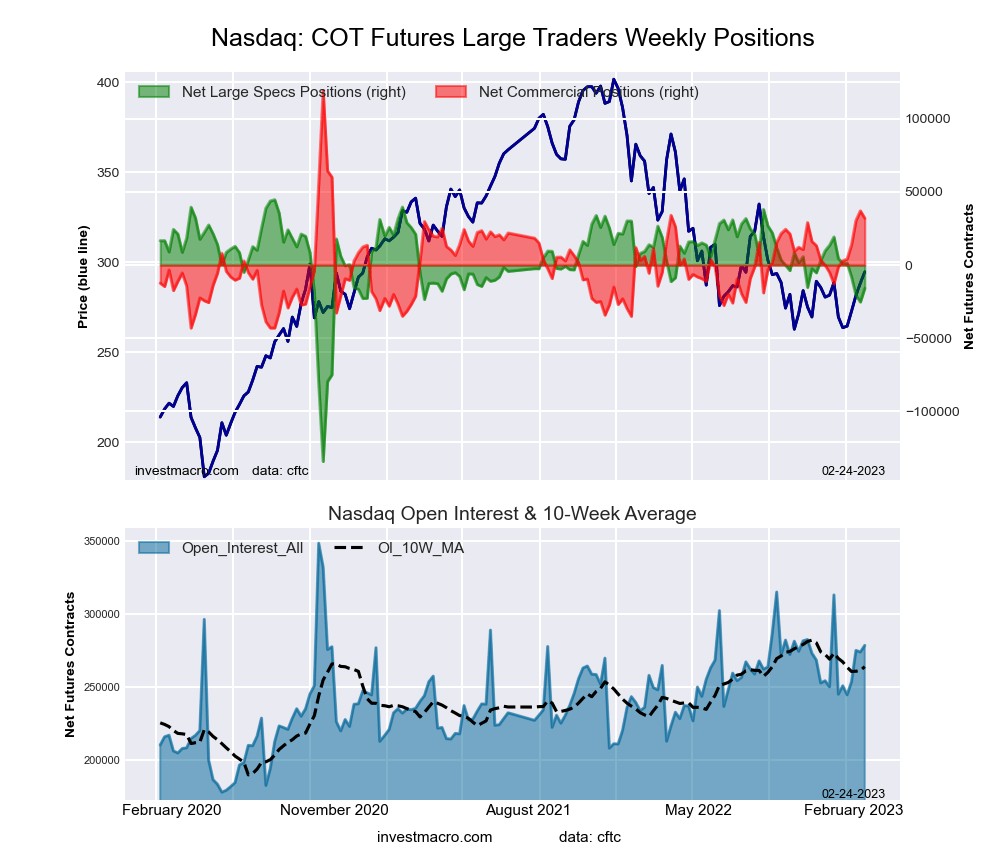
Friday’s US jobs report caused investors to revise their expectations of how hawkish the Fed might be in its efforts to rein in inflation. Nonfarm payrolls showed 517K (forecast 190K, previous 223K). The unemployment rate fell to 3.4% (forecast 3.6%, previous 3.5%). Very strong labor market data leaves the US Fed with more leeway to keep raising rates. Investors are concerned that excessive Fed rate hikes will cause a recession in the economy. That’s why such labor market data caused a sell-off in the stock market. At the close of the stock market on Friday, the Dow Jones Index (US30) decreased by 0.38% (+0.05% for the week), while the S&P 500 (US500) lost 1.04% (+2.15% for the week). The NASDAQ Technology Index (US100) fell by 1.59% (+4.30% for the week).

The earning season continues this week, and mainly consumer and industrial companies will report. The calendar includes such companies as Walt Disney (DIS), News Corp (NWSA), New York Times (NYT), Fox Corp A (FOXA), PepsiCo (PEP), Kellogg (K), Activision Blizzard (ATVI), Pinterest (PINS), BP (BP), TotalEnergies SE ADR (TTE), Uber Tech (UBER), Toyota Motor ADR (TM), AbbVie (ABBV), AstraZeneca ADR (AZN), Philip Morris (PM), PayPal Holdings Inc (PYPL), BNP Paribas ADR (BNPQY), L’Oreal ADR (LRLCY) and others. Refinitiv expects S&P 500 earnings to fall by 2.4% in the fourth quarter from a year ago, a sharper drop than the 1.6% forecast on January 1, after 190 companies reported.

Equity markets in Europe traded flat on Friday but closed the week on the plus side. German DAX (DE30) decreased by 0.21% (+2.69% for the week), French CAC 40 (FR40) gained 0.94% (+2.55% for the week), Spanish IBEX 35 (ES35) lost 0.04% (+1.94% for the week), British FTSE 100 (UK100) added 1.04% (+1.76% for the week).

The Bank of England raised its November GDP forecast for the fourth quarter from a slight decline of 0.1% (q/q) to a minimum growth of 0.1% (q/q). On the one hand, this is positive, indicating that this year’s recession is likely to be “much shallower” than previously forecast. But in the event of a negative GDP report this week, the UK economy will fall into a technical recession, which is defined as two consecutive quarters of negative economic growth.

Gold fell nearly 3% Friday after a strong US jobs report in January triggered profit-taking on the precious metal’s long rally. Gold has an inverse correlation to the dollar index and government bond yields, so a rise in the dollar is almost always negative for the precious metal.

Crude oil prices decreased by 7% for the week. The benchmark Brent oil fell below $80 a barrel, and WTI (West Texas Intermediate) fell to $70 a barrel. This was caused by the growth of the dollar index, as well as by the excessive fuel in strategic reserves. The market was also pressured by the OPEC+ decision last week to leave production levels unchanged and uncertainty over how good demand from China will be in February. The US and European Union sanctions on Russian fuel products, which took effect on Sunday, should significantly hit Moscow’s oil revenues. However, analysts believe that, on the contrary, it may lead to an increase in oil prices because, considering the current level of demand to the level of oil production, the ban on Russian oil may lead to a shortage of “black gold” in the market.

Natural gas futures fell by 21% over the week despite the onset of frost in the key northeastern US region. An unusually warm start to the winter of 2022/23 resulted in a significant reduction in heating demand in the United States compared to the norm, leaving more gas in storage than originally anticipated. In Europe, the situation is similar. By all indicators, natural gas prices are extremely oversold, so analysts expect at least a short-term rebound.

Asian markets traded without a single dynamic last week. Japan’s Nikkei 225 (JP225) gained 0.46% over the week, China’s FTSE China A50 (CHA50) declined by 4.92%, Hong Kong’s Hang Seng (HK50) dropped 4.07%, India’s NIFTY 50 (IND50) gained 1.01%, and Australia’s S&P/ASX 200 (AU200) was positive by 0.86%.

Japan’s economy is likely to return to growth in the final quarter of 2022 as the country reopens to tourists, offsetting weakening corporate activity and exports amid worsening global conditions. Analysts expect GDP growth of 2% in the last quarter.

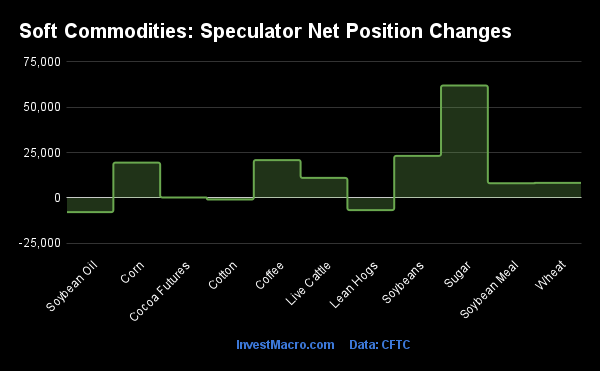
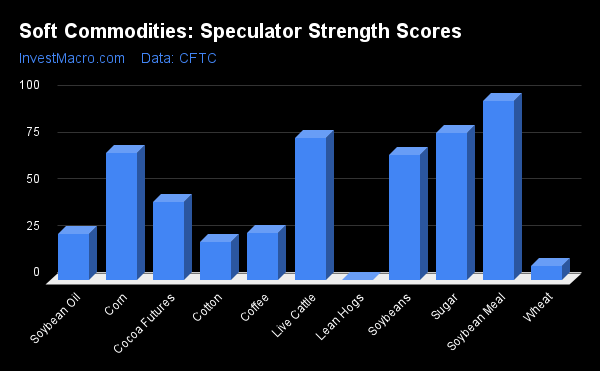
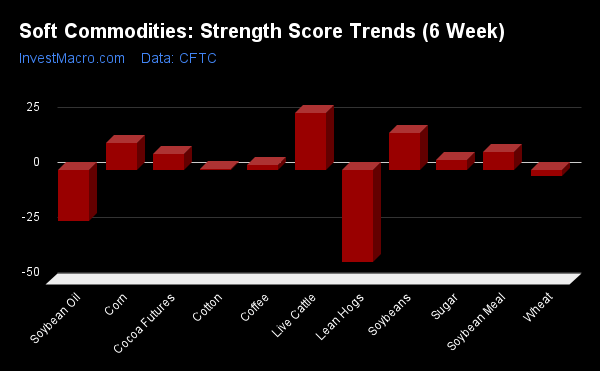
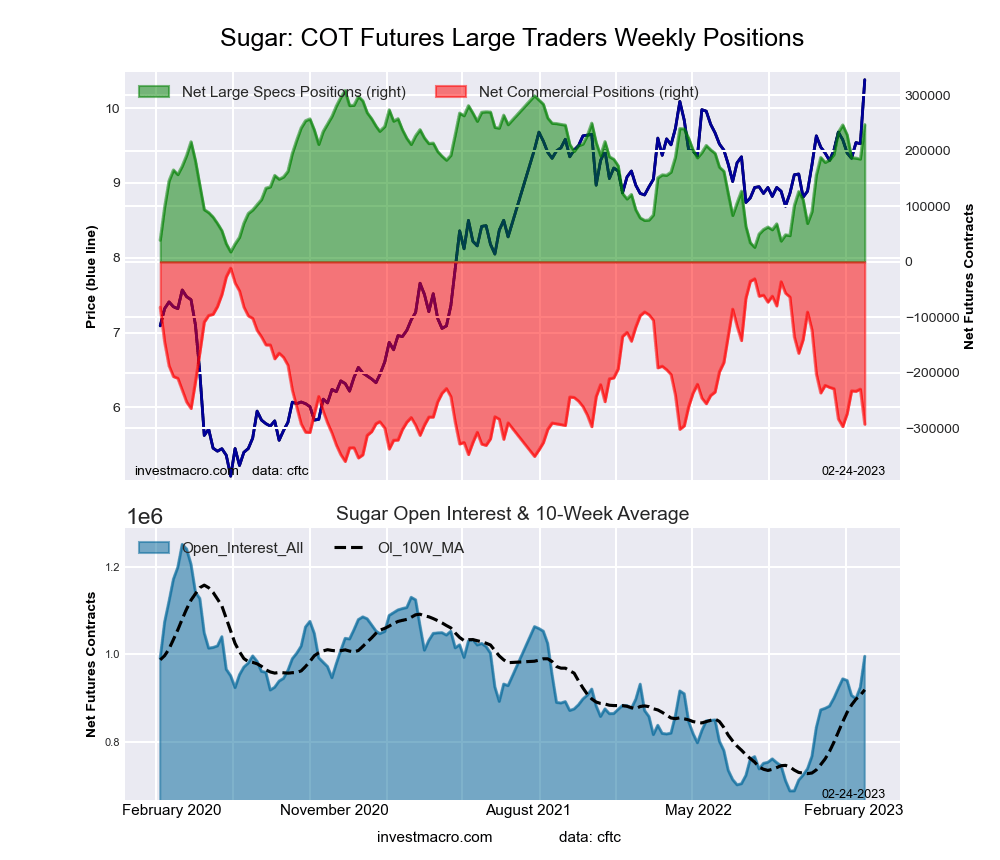
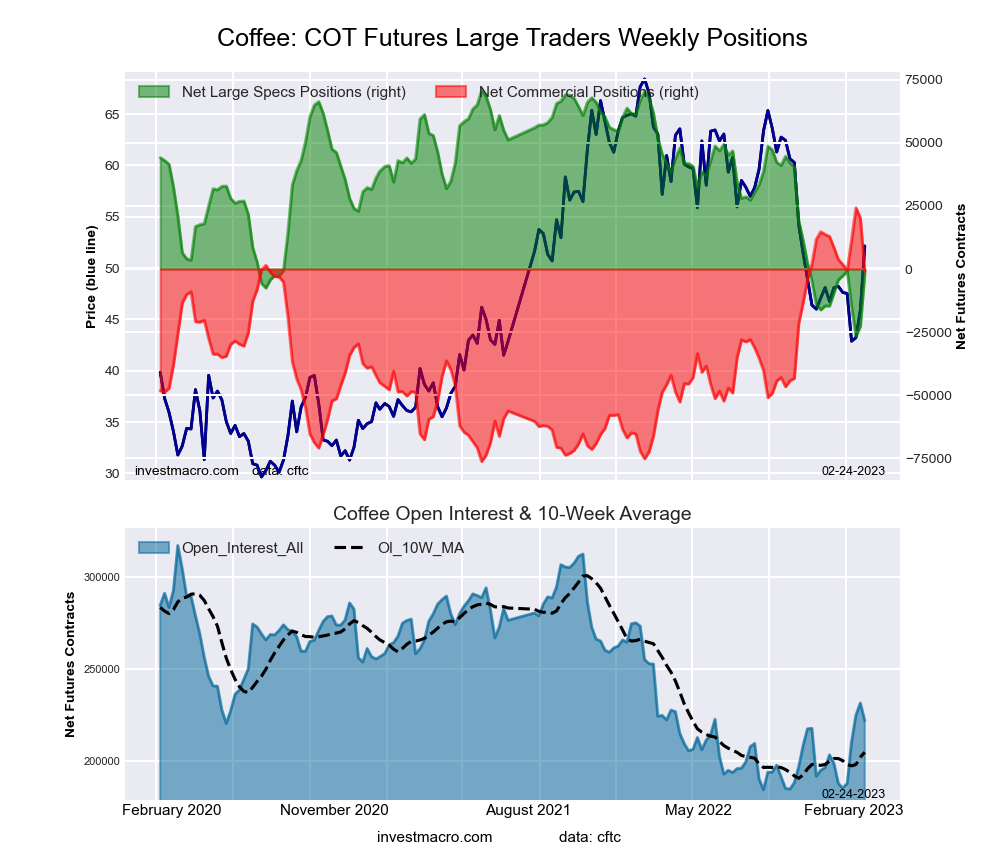
In the commodities market, futures on orange juice (+16.45%), coffee (+2.24%), and sugar (+1.57%) showed the biggest gains last week. Futures on natural gas (-16.29%), gasoline (-10.44%), WTI oil (-8.09%), Brent oil (-7.79%), silver (-5.19%), copper (-4.55%), platinum (-3.62%) and gold (-2.68%) showed the biggest drop.

S&P 500 (F) (US500)  4,136.48 −43.28 (−1.04%)

Dow Jones (US30) 33,926.01 −127.93 (−0.38%)

DAX (DE40) 15,476.43 −32.76 (−0.21%)

FTSE 100 (UK100) 7,901.80 +81.64  (+1.04%)

USD Index 102.99 +1.24 (+1.22%)

Important events for today:
  • – Australia Retail Sales (m/m) at 02:30 (GMT+2);
  • – UK Construction PMI (m/m) at 11:30 (GMT+2);
  • – Eurozone Retail Sales (m/m) at 12:00 (GMT+2);
  • – Canada Ivey PMI (m/m) at 17:00 (GMT+2);
  • – ECB President Lagarde’s Speech at 20:00 (GMT+2).

By JustMarkets


This article reflects a personal opinion and should not be interpreted as an investment advice, and/or offer, and/or a persistent request for carrying out financial transactions, and/or a guarantee, and/or a forecast of future events.

Trade Of The Week: Gold Down, But Not Out As February Kicks Off

By ForexTime 

After tumbling 2.5% last Friday due to an unexpectedly strong US jobs report, gold prices have kicked off the new week on a steadier note.

The precious metal is attempting to nurse deep wounds inflicted by January’s blockbuster NFP report which aggressively fuelled expectations around more US rate hikes from the Federal Reserve. Last month, the US economy created a whooping 517k jobs – the most since July and easily bearing market forecasts of 185k. Meanwhile, unemployment fell to its lowest level since 1969 at 3.4%. Given how the stunningly good report is likely to energize dollar bulls and empower Fed hawks, the path of least resistance for gold may point south in the short to medium term.

In our 2023, we highlighted how gold could be one of the biggest gainers this year thanks to expectations around the Fed switching to rate cuts later in 2023. The latest developments may have poured some cold water on these expectations. However, more key economic data may be needed to come to any meaningful conclusions. In the meantime, there is a possibility that the robust jobs data may set the tone for February

Taking a brief look at the technicals, gold may be down but certainly not out yet as bulls remain in some control on the monthly timeframe. There seems to be strong resistance around $1950 – $2000 while support can be found at $1700 – $1680. Gold could find itself rangebound until a fresh directional catalyst is brought into the picture.

Calm week before another storm?

Compared to last week’s mighty few days of market thrills, key central bank meetings, and high-risk events, the economic calendar for this week is relatively lighter.

Naturally, much attention will be directed toward speeches from Fed officials including Jerome Powell and US President Joe Bidens State of the Union Address. Even the weekly initial jobless claims on Thursday and US February consumer sentiment published on Friday may influence gold prices. Overall, the direction of gold should mostly be dictated by renewed Fed hike bets, a stronger dollar, and rising Treasury yields.

Looking beyond this week, it’s all about the US inflation report. Back in December 2022, the annual inflation rate in the United States slowed for a sixth straight month to 6.5%. This was a welcome development for financial markets and raised hopes over the Fed shifting into lower gear on rates. However, the robust strength of the US labour could feed fears over inflation remaining stubbornly high despite the latest recent slowdown. Ultimately, further signs of cooling inflationary pressures in January could provide gold bulls some sort of lifeline as the battle for dominance rages on.

Other themes to watch out for…

It will be wise to keep a close eye on the developments revolving around Sino-U.S. relations. Market sentiment remains gripped by fears over worsening US-China relations after the US shot down a suspected Chinese spy balloon over the weekend. Should tensions escalate, this may promote risk aversion boosting appetite for safe-haven assets. Appetite towards gold could receive a boost, however, this may be capped by an appreciating dollar.

Gold to remain below $1900?

Despite edging higher on Monday, gold prices remain under pressure on the daily charts. After cutting through the $1900 psychological level like a hot knife through butter, bears are clearly in a position of power. Sustained weakness below $1880 may open the doors towards $1825 and $1800, respectively. If prices can push back above $1900, gold could challenge $1950 and $2000, respectively.

Looking at the monthly charts, the recent rejection from the $1950 could guide prices back toward $1700 before bulls re-enter the scene. A breakdown below $1700 has the potential to trigger a selloff towards $1625.


Forex-Time-LogoArticle by ForexTime

ForexTime Ltd (FXTM) is an award winning international online forex broker regulated by CySEC 185/12 www.forextime.com

Murrey Math Lines 03.02.2023 (Brent, S&P 500)

By RoboForex.com

Brent

On H4, the quotes have broken through the 200-day Moving Average and are now below it, which indicates possible development of a downtrend. However, the RSI has reached the oversold area, which is a signal for a correction. So, a test of 4/8 (81.25) is expected, followed by a bounce off it and growth to the resistance level of 6/8 (84.38). The scenario can be cancelled by a downward breakaway of the support level of 4/8 (81.25). In this case, the quotes might drop to 2/8 (78.12).

Brent_H4
Risk Warning: the result of previous trading operations do not guarantee the same results in the future

On M15, the upper line of VoltyChannel is too far away from the current price, so growth of the quotes will be indicated by a bounce off 4/8 (81.25) on H4.

Brent_M15
Risk Warning: the result of previous trading operations do not guarantee the same results in the future

S&P 500

On H4, the quotes are above the 200-day Moving Average, which indicates prevalence of an uptrend. However, the RSI has reached the overbought area. In this case, a downward breakaway of 5/8 (4140.6) is expected, followed by falling to the support level of 4/8 (4062.5). The scenario can be cancelled by an upward breakaway of the resistance level of 6/8 (4218.8). In this case, the quotes should go on moving upwards and might reach 7/8 (4296.9).

S&P500_H4
Risk Warning: the result of previous trading operations do not guarantee the same results in the future

On M15, an additional signal of a decline can be given by a breakaway of the lower border of VoltyChannel.

S&P500_M15

Article By RoboForex.com

Attention!
Forecasts presented in this section only reflect the author’s private opinion and should not be considered as guidance for trading. RoboForex LP bears no responsibility for trading results based on trading recommendations described in these analytical reviews.

Week Ahead: AUD to pare 2023’s surge?

By ForexTime

The Australian Dollar has been the best-performing G10 currency against the US dollar so far in 2023.

AUDUSD currently also boasts a year-to-date advance of more than 3.7% at the time of writing.


And the Aussie’s performance could be impacted by the Reserve Bank of Australia’s first policy meeting of the year, to be held amidst these other potential market-moving events over the coming week:

Monday, February 6

  • AUD: Australia January inflation, 4Q retail sales
  • EUR: Germany January inflation, December factory orders; Eurozone December retail sales

Tuesday, February 7

  • AUD: Reserve Bank of Australia rate decision
  • EUR: Germany December industrial production
  • USD: Fed Chair Jerome Powell interview
  • US President Joe Biden delivers State of the Union address

Wednesday, February 8

  • USD: New York Fed President John Williams speech
  • Earnings by Disney, Uber

Thursday, February 9

  • SEK: Sweden rate decision
  • GBP: BOE Governor Andrew Bailey speech
  • USD: US weekly initial jobless claims
  • Pepsico quarterly earnings

Friday, February 10

  • JPY: Japan January PPI
  • CNH: China January CPI and PPI
  • AUD: RBA releases updated quarterly economic forecasts and policy outlook
  • GBP: UK December/4Q GDP, industrial production; BOE Chief Economist Huw Pill speech
  • USD: US February consumer sentiment
  • CAD: Canada January unemployment


The RBA is set to trigger a hike of 25 basis points (bps) next week.

If so:

  • that would be the RBA’s fourth consecutive 25bps hike, and would be half the size of the 50bps hikes delivered on four separate occasions between June and September 2022.
  • the RBA would’ve raised its benchmark cash rate by a cumulative 325bps over the past 12 months (assuming next week’s hike is indeed 25bps), bringing its Cash Rate Target up to 3.35% from the record low of 0.10% just 10 months ago.

In other words, next week’s hike may be the RBA’s last in a policy tightening campaign that began back in May 2022.


Why is the RBA easing up on its rate hikes?

The RBA even contemplated pausing its rate hikes even at its December policy meeting, for fear of doing too much damage to the Australian economy.

Recall that central banks hike interest rates in order to “destroy demand” and subdue inflation.

And there have been enough signs that the RBA hikes are taking their toll:

  • December’s mortgage approvals slumped 4.2%, while retail sales contracted 3.9% (vs. Nov)
  • Unemployment edged higher to 3.5% in December, while 14,600 jobs were lost that month
  • Inflation is expected to have peaked at 8.4% in December, and should moderate over the course of 2023 (look out for the RBA’s updated forecasts on Friday, Feb 10th).


How might the RBA’s decision impact AUDUSD?

  1. If the RBA grows more concerned about incurring too much damage on its economy and opts for a:
    • smaller-than-25bps hike next week (perhaps just 15bps?)
    • leaves it cash rate unchanged, or …
    • strongly suggests that the end of its rate-hiking campaign is truly close at hand

… any of the above “dovish” outcomes may prompt the unwinding of some of AUD’s stellar year-to-date gains.

Look out for initial support at AUDUSD’s 21-day simple moving average (SMA) which currently sits just around the psychologically-important 0.7000 level.


  1. However, if the RBA suggests it can’t yet pause its rate hikes, given that December’s consumer price index (CPI) exceeded expectations at 8.4% to mark a 32-year high, that should translate into more AUD strength.Recall that, generally, the economy that can better withstand interest rates moving higher tends to see its currency strengthen.

    Aussie bulls could then take such “hawkish” cues by the RBA to launch AUDUSD closer towards the early-June peak at 0.72830.


At the time of writing, Bloomberg’s FX model points to a 71% chance that AUDUSD trades within the 0.6925 to 0.7199 range over the next one-week period.


Why has AUD been soaring?

One word = China.

Australia is very much exposed to China, with the latter accounting for about 40% of Australia’s exports ranging from wine, lobsters, and of course, coal.

As China-Australia trade tensions thaw, the land Down Under stands to reap the benefits as the world’s second largest economy continues with its reopening.

Furthermore, the Australian economy is expected to fare much better in 2023 and be the exception to the forecasted global recession this year, as recently predicted by the IMF.

Hence, such optimism has seen AUD advance against all of its G10 peers since the start of the year, with AUDUSD yesterday punching its way to its highest levels since June, before easing slightly.

However, prices have been consolidating around the 50% Fibonacci retracement level for AUDUSD’s peak-to-trough performance over the past two years.


But before next week’s RBA decision, markets must first digest today’s US jobs report!

Note that the support/resistance levels above are derived from AUDUSD’s price action at the time this Week Ahead article is published, hours before the release of the US nonfarm payrolls due later today (Friday, February 3rd).

Signs that the US jobs market is weakening:

  • lower-than-forecasted 189,000 jobs created in January
  • higher-than-expected 3.6% unemployment rate

… would burnish hopes that the Fed has to pause its rate hikes sooner rather than later.

Such expectations might potentially drag the US dollar lower while offering a boost to AUDUSD.

In other words, today’s NFP report could have major sway on AUDUSD’s performance, even before the RBA would have its potential say on the Aussie.


Forex-Time-LogoArticle by ForexTime

ForexTime Ltd (FXTM) is an award winning international online forex broker regulated by CySEC 185/12 www.forextime.com

ChatGPT is great – you’re just using it wrong

By Jonathan May, University of Southern California 

It doesn’t take much to get ChatGPT to make a factual mistake. My son is doing a report on U.S. presidents, so I figured I’d help him out by looking up a few biographies. I tried asking for a list of books about Abraham Lincoln and it did a pretty good job:

screen capture of text
A reasonable list of books about Lincoln.
Screen capture by Jonathan May., CC BY-ND

Number 4 isn’t right. Garry Wills famously wrote “Lincoln at Gettysburg,” and Lincoln himself wrote the Emancipation Proclamation, of course, but it’s not a bad start. Then I tried something harder, asking instead about the much more obscure William Henry Harrison, and it gamely provided a list, nearly all of which was wrong.

screen capture of text
Books about Harrison, fewer than half of which are correct.
Screen capture by Jonathan May., CC BY-ND

Numbers 4 and 5 are correct; the rest don’t exist or are not authored by those people. I repeated the exact same exercise and got slightly different results:

screen capture of text
More books about Harrison, still mostly nonexistent.
Screen capture by Jonathan May., CC BY-ND

This time numbers 2 and 3 are correct and the other three are not actual books or not written by those authors. Number 4, “William Henry Harrison: His Life and Times” is a real book, but it’s by James A. Green, not by Robert Remini, a well-known historian of the Jacksonian age.

I called out the error and ChatGPT eagerly corrected itself and then confidently told me the book was in fact written by Gail Collins (who wrote a different Harrison biography), and then went on to say more about the book and about her. I finally revealed the truth and the machine was happy to run with my correction. Then I lied absurdly, saying during their first hundred days presidents have to write a biography of some former president, and ChatGPT called me out on it. I then lied subtly, incorrectly attributing authorship of the Harrison biography to historian and writer Paul C. Nagel, and it bought my lie.

When I asked ChatGPT if it was sure I was not lying, it claimed that it’s just an “AI language model” and doesn’t have the ability to verify accuracy. However it modified that claim by saying “I can only provide information based on the training data I have been provided, and it appears that the book ‘William Henry Harrison: His Life and Times’ was written by Paul C. Nagel and published in 1977.”

This is not true.

Words, not facts

It may seem from this interaction that ChatGPT was given a library of facts, including incorrect claims about authors and books. After all, ChatGPT’s maker, OpenAI, claims it trained the chatbot on “vast amounts of data from the internet written by humans.”

However, it was almost certainly not given the names of a bunch of made-up books about one of the most mediocre presidents. In a way, though, this false information is indeed based on its training data.

As a computer scientist, I often field complaints that reveal a common misconception about large language models like ChatGPT and its older brethren GPT3 and GPT2: that they are some kind of “super Googles,” or digital versions of a reference librarian, looking up answers to questions from some infinitely large library of facts, or smooshing together pastiches of stories and characters. They don’t do any of that – at least, they were not explicitly designed to.

Sounds good

A language model like ChatGPT, which is more formally known as a “generative pretrained transformer” (that’s what the G, P and T stand for), takes in the current conversation, forms a probability for all of the words in its vocabulary given that conversation, and then chooses one of them as the likely next word. Then it does that again, and again, and again, until it stops.

So it doesn’t have facts, per se. It just knows what word should come next. Put another way, ChatGPT doesn’t try to write sentences that are true. But it does try to write sentences that are plausible.

When talking privately to colleagues about ChatGPT, they often point out how many factually untrue statements it produces and dismiss it. To me, the idea that ChatGPT is a flawed data retrieval system is beside the point. People have been using Google for the past two and a half decades, after all. There’s a pretty good fact-finding service out there already.

In fact, the only way I was able to verify whether all those presidential book titles were accurate was by Googling and then verifying the results. My life would not be that much better if I got those facts in conversation, instead of the way I have been getting them for almost half of my life, by retrieving documents and then doing a critical analysis to see if I can trust the contents.

Improv partner

On the other hand, if I can talk to a bot that will give me plausible responses to things I say, it would be useful in situations where factual accuracy isn’t all that important. A few years ago a student and I tried to create an “improv bot,” one that would respond to whatever you said with a “yes, and” to keep the conversation going. We showed, in a paper, that our bot was better at “yes, and-ing” than other bots at the time, but in AI, two years is ancient history.

I tried out a dialogue with ChatGPT – a science fiction space explorer scenario – that is not unlike what you’d find in a typical improv class. ChatGPT is way better at “yes, and-ing” than what we did, but it didn’t really heighten the drama at all. I felt as if I was doing all the heavy lifting.

After a few tweaks I got it to be a little more involved, and at the end of the day I felt that it was a pretty good exercise for me, who hasn’t done much improv since I graduated from college over 20 years ago.

screen capture of text
A space exploration improv scene the author generated with ChatGPT.
Screen capture by Jonathan May., CC BY-ND

Sure, I wouldn’t want ChatGPT to appear on “Whose Line Is It Anyway?” and this is not a great “Star Trek” plot (though it’s still less problematic than “Code of Honor”), but how many times have you sat down to write something from scratch and found yourself terrified by the empty page in front of you? Starting with a bad first draft can break through writer’s block and get the creative juices flowing, and ChatGPT and large language models like it seem like the right tools to aid in these exercises.

And for a machine that is designed to produce strings of words that sound as good as possible in response to the words you give it – and not to provide you with information – that seems like the right use for the tool.The Conversation

About the Author:

Jonathan May, Research Associate Professor of Computer Science, University of Southern California

This article is republished from The Conversation under a Creative Commons license. Read the original article.

Reports from major tech companies disappointed, but investors are positive

By JustMarkets

The US stock markets continued their rally yesterday. By Thursday’s close, the Dow Jones Index (US30) decreased by 0.11%, while the S&P 500 (US500) gained 1.48%. The NASDAQ Technology Index (US100) jumped by 3.25%.

Investors are investing in tech stocks after the Meta rally. The artificial intelligence technology boom in recent months has forced investors to pour money into technology. The market has also been helped by renewed confidence that the Federal Reserve will stop raising rates sooner than originally planned.

Tesla (TSLA) added another 3% to its recent rally after it was announced that the company would increase production at its Shanghai plant to nearly 20,000 vehicles per week. Apple’s (AAPL) results for the quarter fell short of estimates due to a drop in iPhone revenue. iPhone’s revenue fell about 8% to $65.78 billion amid a difficult macroeconomic environment and significant supply constraints. Apple stock fell by 3% after the report was released. Alphabet (GOOGL) reported lower-than-expected fourth-quarter earnings and revenue as lower spending on online advertising affected results. The company also said its first-quarter results would reflect lower spending related to job cuts. Shares of Alphabet Inc. fell more than 1% on the report. Amazon (AMZN) was also unhappy with the results.

Operating profits continued to fall in the current quarter. Faced with high inflation and a volatile economy, the company has set its sights on cutting costs across various businesses. Shares fell 5% after the market closed. Ford Motor Co (F) said Thursday that fourth-quarter profit fell from a year earlier. The automaker blamed supply chain problems and production “instability, ” leading to higher costs and lower volumes. Ford shares fell more than 6% on the report after the close of the main session.

Stock markets in Europe were mostly up yesterday. Germany’s DAX (DE30) gained 2.16%, France’s CAC 40 (FR40) added 1.26%, Spain’s IBEX 35 index (ES35) jumped by 1.45%, and Britain’s FTSE 100 (UK100) closed Thursday up by 0.76%.

The ECB, as expected, raised its interest rate by 0.5% yesterday. The US Fed is ending its rate hike cycle and will soon talk about ending quantitative easing (QT), with the ECB about halfway through and planning to start QT in March. This situation is good for the euro as the spread between the euro, and the dollar will continue to narrow.

The Bank of England announced another “sharp” interest rate hike on Thursday, saying it was too early to declare victory over inflation. The bank raised its key rate from 3.5% to 4%. Nevertheless, the bank tempered expectations of further rate hikes, dismissing suggestions that it would respond “strongly” to price pressures and implying that future changes would be smaller.

Oil prices fell Thursday as US factory orders fell and the dollar strengthened, making oil more expensive for non-US buyers. This indicates a further slowdown in the economy, especially in manufacturing, which is negatively affecting oil. Investors have become less confident about the strength of the oil outlook. But analysts are still confident in a bullish scenario for the “black gold” due to the rebounding economy of China (the largest oil importer). It is also worth remembering that the ban on Russian oil will come into effect on February 5, which may strike a blow to global supplies.

The unusually warm start to the winter of 2022/23 resulted in a significant reduction in heating demand in the United States and Europe compared to the norm, leaving more gas in storage than originally anticipated. This has led to a drop in natural gas prices over the past two months. But the situation may change dramatically with the onset of cold weather, which weather forecasters predict for the second half of February.

Asian markets traded flat yesterday. Japan’s Nikkei 225 (JP225) gained 0.20%, China’s FTSE China A50 (CHA50) decreased by 0.34%, Hong Kong’s Hang Sengv(HK50) lost 0.52%, India’s NIFTY 50 (IND50) fell by 0.03%, and Australia’s S&P/ASX 200 (AU200) was up by 0.13% on the day.

The mixed economic data released reinforced concerns about China’s rapid recovery after the repeal of the zero COVID-19 policy. While the country’s services sector recovered sharply in January after a four-month slump, a private survey showed that small-scale manufacturing firms still struggle with rising COVID-19 cases and lingering supply chain problems.

Severe flooding in New Zealand’s largest city, Auckland, has increased inflationary pressures and is creating a new cost-of-living headache for Prime Minister Chris Hipkins, who is trying to win back support for his party before the election.

S&P 500 (F) (US500) 4,179.76 +60.55 (+1.47%)

Dow Jones (US30) 34,053.94 −39.02 (−0.11%)

DAX (DE40) 15,509.19 +328.45 (+2.16%)

FTSE 100 (UK100) 7,820.16 +59.05 (+0.76%)

USD Index 101.74 +0.53 (+0.53%)

Important events for today:
  • – Eurozone Services PMI (m/m) at 11:00 (GMT+2);
  • – UK Services PMI (m/m) at 11:30 (GMT+2);
  • – Eurozone Retail Sales (m/m) at 12:00 (GMT+2);
  • – Eurozone Producer Price Index (m/m) at 12:00 (GMT+2);
  • – US Nonfarm Payrolls (m/m) at 15:30 (GMT+2);
  • – US Unemployment Rate (m/m) at 15:30 (GMT+2);
  • – US ISM Services PMI (m/m) at 17:00 (GMT+2).

By JustMarkets


This article reflects a personal opinion and should not be interpreted as an investment advice, and/or offer, and/or a persistent request for carrying out financial transactions, and/or a guarantee, and/or a forecast of future events.

Limits to computing: A computer scientist explains why even in the age of AI, some problems are just too difficult

By Jie Wang, UMass Lowell 

Empowered by artificial intelligence technologies, computers today can engage in convincing conversations with people, compose songs, paint paintings, play chess and go, and diagnose diseases, to name just a few examples of their technological prowess.

These successes could be taken to indicate that computation has no limits. To see if that’s the case, it’s important to understand what makes a computer powerful.

There are two aspects to a computer’s power: the number of operations its hardware can execute per second and the efficiency of the algorithms it runs. The hardware speed is limited by the laws of physics. Algorithms – basically sets of instructions – are written by humans and translated into a sequence of operations that computer hardware can execute. Even if a computer’s speed could reach the physical limit, computational hurdles remain due to the limits of algorithms.

These hurdles include problems that are impossible for computers to solve and problems that are theoretically solvable but in practice are beyond the capabilities of even the most powerful versions of today’s computers imaginable. Mathematicians and computer scientists attempt to determine whether a problem is solvable by trying them out on an imaginary machine.

An imaginary computing machine

The modern notion of an algorithm, known as a Turing machine, was formulated in 1936 by British mathematician Alan Turing. It’s an imaginary device that imitates how arithmetic calculations are carried out with a pencil on paper. The Turing machine is the template all computers today are based on.

To accommodate computations that would need more paper if done manually, the supply of imaginary paper in a Turing machine is assumed to be unlimited. This is equivalent to an imaginary limitless ribbon, or “tape,” of squares, each of which is either blank or contains one symbol.

The machine is controlled by a finite set of rules and starts on an initial sequence of symbols on the tape. The operations the machine can carry out are moving to a neighboring square, erasing a symbol and writing a symbol on a blank square. The machine computes by carrying out a sequence of these operations. When the machine finishes, or “halts,” the symbols remaining on the tape are the output or result.

What is a Turing machine?

Computing is often about decisions with yes or no answers. By analogy, a medical test (type of problem) checks if a patient’s specimen (an instance of the problem) has a certain disease indicator (yes or no answer). The instance, represented in a Turing machine in digital form, is the initial sequence of symbols.

A problem is considered “solvable” if a Turing machine can be designed that halts for every instance whether positive or negative and correctly determines which answer the instance yields.

Not every problem can be solved

Many problems are solvable using a Turing machine and therefore can be solved on a computer, while many others are not. For example, the domino problem, a variation of the tiling problem formulated by Chinese American mathematician Hao Wang in 1961, is not solvable.

The task is to use a set of dominoes to cover an entire grid and, following the rules of most dominoes games, matching the number of pips on the ends of abutting dominoes. It turns out that there is no algorithm that can start with a set of dominoes and determine whether or not the set will completely cover the grid.

Keeping it reasonable

A number of solvable problems can be solved by algorithms that halt in a reasonable amount of time. These “polynomial-time algorithms” are efficient algorithms, meaning it’s practical to use computers to solve instances of them.

Thousands of other solvable problems are not known to have polynomial-time algorithms, despite ongoing intensive efforts to find such algorithms. These include the Traveling Salesman Problem.

The Traveling Salesman Problem asks whether a set of points with some points directly connected, called a graph, has a path that starts from any point and goes through every other point exactly once, and comes back to the original point. Imagine that a salesman wants to find a route that passes all households in a neighborhood exactly once and returns to the starting point.

The Traveling Salesman Problem quickly gets out of hand when you get beyond a few destinations.

These problems, called NP-complete, were independently formulated and shown to exist in the early 1970s by two computer scientists, American Canadian Stephen Cook and Ukrainian American Leonid Levin. Cook, whose work came first, was awarded the 1982 Turing Award, the highest in computer science, for this work.

The cost of knowing exactly

The best-known algorithms for NP-complete problems are essentially searching for a solution from all possible answers. The Traveling Salesman Problem on a graph of a few hundred points would take years to run on a supercomputer. Such algorithms are inefficient, meaning there are no mathematical shortcuts.

Practical algorithms that address these problems in the real world can only offer approximations, though the approximations are improving. Whether there are efficient polynomial-time algorithms that can solve NP-complete problems is among the seven millennium open problems posted by the Clay Mathematics Institute at the turn of the 21st century, each carrying a prize of US$1 million.

Beyond Turing

Could there be a new form of computation beyond Turing’s framework? In 1982, American physicist Richard Feynman, a Nobel laureate, put forward the idea of computation based on quantum mechanics.

What is a quantum computer?

In 1995, Peter Shor, an American applied mathematician, presented a quantum algorithm to factor integers in polynomial time. Mathematicians believe that this is unsolvable by polynomial-time algorithms in Turing’s framework. Factoring an integer means finding a smaller integer greater than 1 that can divide the integer. For example, the integer 688,826,081 is divisible by a smaller integer 25,253, because 688,826,081 = 25,253 x 27,277.

A major algorithm called the RSA algorithm, widely used in securing network communications, is based on the computational difficulty of factoring large integers. Shor’s result suggests that quantum computing, should it become a reality, will change the landscape of cybersecurity.

Can a full-fledged quantum computer be built to factor integers and solve other problems? Some scientists believe it can be. Several groups of scientists around the world are working to build one, and some have already built small-scale quantum computers.

Nevertheless, like all novel technologies invented before, issues with quantum computation are almost certain to arise that would impose new limits.The Conversation

About the Author:

Jie Wang, Professor of Computer Science, UMass Lowell

This article is republished from The Conversation under a Creative Commons license. Read the original article.

Why the Fed raised interest rates by the smallest amount since it began its epic inflation fight

By William Chittenden, Texas State University 

The Federal Reserve’s policy-setting committee lifted interest rates on Feb. 1, 2023, by a quarter of a percentage point to a range of 4.5% to 4.75%. The increase, the smallest since the Fed began an aggressive campaign of rate hikes in March 2022, came amid signs the fastest pace of inflation in decades is cooling. But the Fed also indicated more rate hikes are coming.

So why is the Fed slowing the size of rate increases now, and what does it mean for consumers? We asked finance scholar William Chittenden from Texas State University to explain what’s going on and what comes next.

Why did the Fed raise rates by only a quarter point?

The Fed is trying to figure out whether last year’s rate hikes have slowed the economy enough to get inflation near its target of about 2%.

By raising what’s known as the Fed funds rate, the U.S. central bank makes borrowing more expensive, which means buying large-ticket items, like cars and homes, is more costly. This should lead to fewer people buying cars, which will likely result in lower car prices.

In 2022, the Fed lifted rates eight times by a total of 4.25 percentage points, which helped prompt inflation to drop to an annual pace of 6.5% in December from 9.1% at its peak in June.

To understand why it’s so hard for the Fed to figure out if its rate hikes worked, think of the economy as a fully loaded oil tanker out in the ocean. Naturally, it’s chugging along as fast it can to reach a specific destination, but it takes a long time from the captain “stepping on the brakes” to when the ship actually stops moving forward.

Similarly, the Fed is raising rates to slow the economy – sort of like stepping on the brakes – and bring inflation down to 2%, but there’s often a long delay between the hikes and their impact on the economy.

But if the Fed eases off the brakes too early, inflation could remain high. If it presses on them too hard, unemployment will likely shoot up and the economy will slide into a recession. By increasing interest rates only a quarter-point, the Fed is signaling that it believes the economy has begun to slow down and is on a path to 2% inflation.

Does this mean borrowing costs will start coming down?

The Fed funds rate acts as a base rate for shorter-term interest rates, such as for car loans and credit cards. As it goes up, short-term borrowing rates increase by about the same amount.

The financial markets are predicting about an 80% chance the Fed’s benchmark lending rate will top out around 5% this summer – which means they’re expecting rates to go just a little bit higher.

Rates on shorter-term borrowing are unlikely to come down, but if markets are right, they probably won’t increase much more.

However, for long-term borrowing costs, as on a 30-year mortgage, rates are already coming down and are likely to fall some more – good news for homebuyers.

How about inflation – can consumers expect prices to start falling?

Overall, yes, inflation is already starting to come down – and prices on some items are even falling.

For example, used-car prices, which soared earlier in the COVID-19 pandemic, have dropped in recent months, while prices of dozens of other items, such as flour, clothes and gasoline, have eased.

However, some costs continue to increase. Egg prices soared after the supply was disrupted because of avian flu, which killed off nearly 53 million egg-laying hens. Unfortunately, increasing interest rates will not bring back those birds or help decrease the cost of eggs.

In addition, nothing the Fed does will affect the war in Ukraine, which has led to higher world wheat and energy prices.

The point being, the Fed can’t really address certain types of inflation.

Does all this mean the U.S. will avoid recession?

That’s the trillion-dollar question.

Fed officials have at times sounded hopeful that they can bring down inflation without crashing the economy – a so-called soft landing. During his press conference after the latest announcement Feb. 1, 2023, Fed Chair Jerome Powell was more cautious, saying it’s too soon to declare victory. But he noted: “We can now say for the first time that the disinflationary process has started.”

Economic forecasters have been less confident that the U.S. will avoid a recession. On average, economists surveyed this past month by The Wall Street Journal forecast a 61% probability of a recession in 2023. In addition, key economic indicators point to a recession, while the yield curve – a bond market metric that has been successful at predicting recessions – currently puts the odds at about 47%.

In my view, this all adds up to: Nobody really knows. My best advice to consumers out there is to prepare financially for a recession, but let’s not give up hope that the Fed can slow the economy without crashing it.The Conversation

About the Author:

William Chittenden, Associate Professor of Finance, Texas State University

This article is republished from The Conversation under a Creative Commons license. Read the original article.


RoboMarkets Is Supporting the European Karate Championships 2023 and the Cyprus National Karate Team

February 2, 2023
Limassol, Cyprus

European licensed broker RoboMarkets is an official sponsor of the Cyprus National Karate Team and the European Karate Championships 2023 that will be held in Larnaca, Cyprus from 3 to 5 February.

RoboMarkets is an official sponsor of the European Karate Championships 2023. This is the third time that the event is hosted in Cyprus, where it was previously held in 2001 and 2016. Last year, 1,000 athletes participated in the championship from 47 countries. This year, even more participants are expected to join from 52 countries in the three age groups (Cadet, Junior & U21).

RoboMarkets also sponsors the National Karate Team of Cyprus, which will also be fighting for the status of the best of the best at the European Karate Championships 2023. The Company supports sports players who continuously go forward by improving their skills, and reaching their goals. During these days hundreds of young athletes from all over Europe will be coming to Cyprus to participate in one of the most important events for youngsters.

Earlier in 2022, RoboMarkets announced the beginning of its cooperation with the Cyprus Karate Federation.

About RoboMarkets

RoboMarkets is an investment company with the CySEC license No. 191/13. RoboMarkets offers investment services in many European countries by providing traders, who work on financial market, with access to its proprietary trading platforms. More detailed information about the Company’s products and activities can be found on the official website at www.robomarkets.com.

“Risk Warning: CFDs are complex instruments and come with a high risk of losing money rapidly due to leverage. 69.88% of retail investor accounts lose money when trading CFDs with this provider. You should consider whether you understand how CFDs work and whether you can afford to take the high risk of losing your money.”


Tech stocks are back: rotation to growth to provide strong returns

By George Prior

The tech titans Meta (Facebook), Apple, Alphabet (Google) and Amazon are all reporting their quarterly earnings this week, after a brutal 2022 for the tech sector.

Investors around the world are scrutinising these market-moving big tech earnings reports for not only profit and revenue information, but also guidance as to the companies’ trajectories.

Despite the likely mixed set of reports, the CEO and founder of one of the world’s largest independent financial advisory, asset management and fintech organizations, is predicting that they will “herald the start of The Great Rotation back into growth stocks.”

Nigel Green of deVere Group says: “Facebook’s parent company Meta has exceeded estimates for revenue in its fourth-quarter earnings report, with the stock soaring in extended trading on the results.

“For Apple, a considerable number of factors suggest the company’s first year-on-year revenue may have declined since early 2019.

“Alphabet, the parent company of Google is expected to report a third consecutive quarter of declining earnings.

“While Amazon’s earnings are expected at $0.15 per share, which would be an 89% decrease from the same quarter in 2021.”

But the deVere CEO says tech stocks are becoming more appealing again for investors.

“As market conditions shifted in 2022, investors dumped growth stocks, like tech, in favour of value stocks which were deemed more suitable to the challenging environment,” he observes.

“But what is happening now, we believe, is the beginning of a rebound.

“These big tech reports herald the start of The Great Rotation back to growth stocks for two key reasons.

“First, valuations of tech and other growth stocks are currently low, having been hit by the previous rotation into value stocks. Investors are now eyeing these super attractive entry points to top-up their portfolios as the trend is reversing.

“And second, inflation has seemingly peaked and interest rates are set to stabilize, which takes away a major obstacle for tech stocks.”

As The Great Rotation gets underway, Nigel Green says that investors must act judiciously.

“Investors should avoid the ‘buy everything’ approach, as there will be big winners and losers. They must concentrate on high quality, profitable companies which can consistently maintain or steadily grow margin.”

Ahead of earnings season, the deVere chief executive told the media that investors shouldn’t bet against big tech in the longer term.

He noted the tech heavyweights – which got carried away during the pandemic era amid soaring revenues and profits and which are now being forced to regroup – still have piles of cash and remain enormously profitable.

In addition, these companies maintain considerable user bases, world-class research and development, plus some of the smartest talent on the planet.

Nigel Green concludes: “Tech stocks are back. Rotation into the right growth stocks will provide strong returns.”

About:

deVere Group is one of the world’s largest independent advisors of specialist global financial solutions to international, local mass affluent, and high-net-worth clients.  It has a network of more than 70 offices across the world, over 80,000 clients and $12bn under advisement