Silicon Valley Bank, Silvergate and “The Everything Bust”

“The pressure on banks will rise”

By Elliott Wave International

The phrase “Everything Bust” means a bust in just about every financial risk-asset of which you can think, as well as the economy and, I dare say, the financial system itself.

Indeed, in a section titled “The Everything Bust Is on The Way,” the December Global Market Perspective, a monthly Elliott Wave International publication which covers 50-plus financial markets, noted:

The pressure on banks will rise as the economy heads south.

And, now, we have these headlines:

  • Silicon Valley Bank Fails After Run on Deposits (The New York Times, March 10)
  • Crypto-focused bank Silvergate is shutting operations and liquidating after market meltdown (CNBC, March 8)

Silicon Valley’s collapse was the biggest bank failure since Washington Mutual in 2008 and the second largest bank failure in U.S. history.

Many of those on Wall Street blamed the bank failures for triple-digit declines in the Dow Industrials on the day the news came out. However, the real “bust” in the Dow Industrials and S&P 500 began a year earlier, in January 2022. It reflected a downturn in a social mood; today’s bank failures have the same roots that stretch back months and months. And since social mood is showing no signs of improvement, it’s likely not over.

The “Everything Bust” is on — in stocks, real estate, bonds, the world of crypto, SPACs (a.k.a. special purpose acquisition companies) and elsewhere in the world of finance, including the subprime auto market.

This chart and commentary are from the March Global Market Perspective:

The percentage of subprime auto borrowers who are at least 60 days late on payments surged to 6.05% in December, more than double the seven-year low of 2.58% recorded in April 2021, and eclipsing the peak reading of 5.7% during the Great Recession of December 2007 to June 2009.

As a March 10 New York Post headline said:

Silicon Valley Bank meltdown sparks contagion fears: ‘We found our Enron’

Whether you want to call it “contagion fears” or the manifestation of an increasingly fearful mood, don’t be surprised if more bank failures appear on the horizon sooner rather than later.

Also, don’t be surprised if more triple-digit declines occur with the Dow Industrials.

The Elliott wave pattern of this senior U.S. index is revealing what very well may be next for U.S. stocks.

If you’re unfamiliar with Elliott wave analysis, or simply need a refresher, read Frost and Prechter’s Elliott Wave Principle: Key to Market Behavior. Here’s a quote from the book:

Although it is the best forecasting tool in existence, the Wave Principle is not primarily a forecasting tool; it is a detailed description of how markets behave. Nevertheless, that description does impart an immense amount of knowledge about the market’s position within the behavioral continuum and therefore about its probable ensuing path. The primary value of the Wave Principle is that it provides a context for market analysis. This context provides both a basis for disciplined thinking and a perspective on the market’s general position and outlook. At times, its accuracy in identifying, and even anticipating, changes in direction is almost unbelievable. Many areas of mass human activity display the Wave Principle, but it is most popularly used in the stock market.

If you’d like to read the entire online version of this Wall Street classic, you may do so for free once you become a member of Club EWI, the world’s largest Elliott wave educational community (around 500,000 worldwide members).

A Club EWI membership is also free and members enjoy complimentary access to a range of Elliott wave resources on investing and trading.

Join Club EWI now by following this link: Elliott Wave Principle: Key to Market Behaviorget free and instant access.

This article was syndicated by Elliott Wave International and was originally published under the headline Silicon Valley Bank, Silvergate and “The Everything Bust”. EWI is the world’s largest market forecasting firm. Its staff of full-time analysts led by Chartered Market Technician Robert Prechter provides 24-hour-a-day market analysis to institutional and private investors around the world.

Data Communications Co. An ‘Immediate Strong Speculative Buy’

Source: Clive Maund  (3/22/23)

In light of the high-volume advance that went from February to earlier this month, technical analyst Clive Maund takes a look at Data Communications Management Corp.’s 3-month chart to tell you why he believes it is a Buy.

Following a powerful high-volume advance from late February into early this month, Data Communications Management Corp. (DCM:TSX; DCMDF:OTCQX) has been trading sideways in a relatively narrow range for about two weeks now.

Superficially, after such a big advance, it might be thought that a top is forming, but this pattern has all the attributes of a bull Flag — the persistent heavy volume on the steep advance has been followed by a marked dieback as it has traded sideways, the Accumulation line has held up well, and the trading range can be seen to be tracking within a slightly downsloping parallel trend channel, in other words, a bull Flag.

This implies that the pattern will soon resolve into another powerful upleg that could very well be as big as the first upleg. Note the large bullish “dragonfly doji” that occurred about five days into the Flag, whose intraday low so far marks the low for the pattern.

Data Communications Management is therefore rated an immediate strong speculative Buy, and a stop may be placed beneath the lower boundary of the Flag just in case this interpretation is proven incorrect.

Data Communications Management’s website.

Data Communications Management Corp. closed for trading at CA$2.02, $1.48 at 3.30 pm EDT on March 21, 2022.

This article was originally published on March 21, 2023, at 3.40 pm EDT at clivemaund.com


CliveMaund.com Disclosures

The above represents the opinion and analysis of Mr. Maund, based on data available to him, at the time of writing. Mr. Maund’s opinions are his own, and are not a recommendation or an offer to buy or sell securities. Mr. Maund is an independent analyst who receives no compensation of any kind from any groups, individuals or corporations mentioned in his reports. As trading and investing in any financial markets may involve serious risk of loss, Mr. Maund recommends that you consult with a qualified investment advisor, one licensed by appropriate regulatory agencies in your legal jurisdiction and do your own due diligence and research when making any kind of a transaction with financial ramifications. Although a qualified and experienced stock market analyst, Clive Maund is not a Registered Securities Advisor. Therefore Mr. Maund’s opinions on the market and stocks can only be construed as a solicitation to buy and sell securities when they are subject to the prior approval and endorsement of a Registered Securities Advisor operating in accordance with the appropriate regulations in your area of jurisdiction.

Disclosures:
1) Clive Maund: I, or members of my immediate household or family, own securities of the following companies mentioned in this article: None. I personally am, or members of my immediate household or family are, paid by the following companies mentioned in this article: None.

2) The following companies mentioned in this article are billboard sponsors of Streetwise Reports: Data Communications Management Corp. Click here for important disclosures about sponsor fees. As of the date of this article, an affiliate of Streetwise Reports has a consulting relationship with: None. Please click here for more information.

3) Statements and opinions expressed are the opinions of the author and not of Streetwise Reports or its officers. The author is wholly responsible for the validity of the statements. The author was not paid by Streetwise Reports for this article. Streetwise Reports was not paid by the author to publish or syndicate this article. Streetwise Reports requires contributing authors to disclose any shareholdings in, or economic relationships with, companies that they write about. Streetwise Reports relies upon the authors to accurately provide this information and Streetwise Reports has no means of verifying its accuracy.

4) This article does not constitute investment advice. Each reader is encouraged to consult with his or her individual financial professional and any action a reader takes as a result of information presented here is his or her own responsibility. By opening this page, each reader accepts and agrees to Streetwise Reports’ terms of use and full legal disclaimer. This article is not a solicitation for investment. Streetwise Reports does not render general or specific investment advice and the information on Streetwise Reports should not be considered a recommendation to buy or sell any security. Streetwise Reports does not endorse or recommend the business, products, services or securities of any company mentioned on Streetwise Reports.

5) From time to time, Streetwise Reports LLC and its directors, officers, employees or members of their families, as well as persons interviewed for articles and interviews on the site, may have a long or short position in securities mentioned. Directors, officers, employees or members of their immediate families are prohibited from making purchases and/or sales of those securities in the open market or otherwise from the time of the decision to publish an article until three business days after the publication of the article. The foregoing prohibition does not apply to articles that in substance only restate previously published company releases.

Federal Reserve bows to bank-crisis fears with quarter-point rate hike, letting up a little in its fight against inflation

By Jeffery S. Bredthauer, University of Nebraska Omaha; Arabinda Basistha, West Virginia University; Joerg Bibow, Skidmore College, and Marketa Wolfe, Skidmore College 

The Federal Reserve raised interest rates by a quarter-point on March 22, 2023, bowing to market expectations that it would temper its aggressive program of rate hikes amid a still-brewing banking crisis.

The U.S. central bank lifted rates to a range of 4.75% to 5%, its ninth-straight increase since March 2022. As late as early March 2023, it appeared that the Fed was planning to resume last year’s full-throttle rate-hiking campaign after slowing down in February. But the collapse of Silicon Valley Bank on March 10 forced the central bank to take a step back.

So what does the Fed’s announcement tell us about where monetary policymakers think the economy – and inflation – are heading? A team of economists and finance scholars have weighed in to help make sense of it all.

Rate hike shows Fed confident in banking sector

Jeffery S. Bredthauer, University of Nebraska Omaha

This muted rate hike signals that the Fed is being cautious in order to steady the financial sector, which has been struggling since the collapse of Silicon Valley Bank on March 10, 2023. But the fact that the Fed raised rates at all acknowledges that the fight against inflation will need to continue.

While still an increase, it’s more of a pause, in my view, because until the recent banking turmoil, the central bank was expected to lift rates by a half-point. Inflation has remained stubbornly elevated even though the Fed had jacked up rates 4.5 percentage points before the latest hike, and Chair Jerome Powell made it clear in congressional testimony that he was intent on subduing the rise in prices.

But the aggressive rate rises left some regional banks like Silicon Valley Bank vulnerable because they drove down the value of tens of billions in assets they held. Silicon Valley failed because it didn’t have enough assets to meet withdrawals.

While the Fed and other regulators have acted to shore up the system by backstopping depositors and smaller financial institutions, the concern now is that there may be more banks in a similar predicament. The smaller rate hike should help ease some of these concerns.

Yet, the inflation battle must go on, and the Fed recognizes that strong demand continues to prop up consumer prices, particularly in the service sector. As such, I believe the Fed news shows that it has confidence in the banking system by continuing its interest rate hikes, albeit at a slower pace than had previously been expected.

And this is important. The greatest fear would be that spooked customers might irrationally start withdrawing money from banks because they fear a financial collapse – the classic bank run. That will not happen as long as there is faith in the banking system.

Drop in inflation gave Fed breathing room to ‘pause’

Joerg Bibow and Marketa Wolfe, Skidmore College

The Fed had two courses of action available when it came to setting rates. The first would have seen it continue aggressively raising rates, ignoring financial stability concerns – perhaps even seeing the hiking campaign as a sort of bloodletting that would squeeze inflation out of the economy. The second way forward would be to take a beat and see how the ongoing fragility in the banking sector plays out first.

Fortunately – in our view – the Fed did not choose the former.

While falling short of a total pause in raising interest rates – an option some market watchers had been calling for – the latest hike represents a substantial slowdown from the Fed’s previous plans, and therefore demonstrates the Fed’s caution in the face of a nascent banking situation.

It was able to do this in large part because there are clear signs inflation has come down.

As measured by the Personal Consumption Expenditure Price Index – the Fed’s preferred measure – inflation has declined from a 40-year high of 7% in June 2022 to 5.4% in January 2023.

And the main cause of the recent surge in inflation – COVID-19 supply chain disruptions – has eased. In addition, an upward wage-price spiral has not developed.

Furthermore, the banking turmoil might have already delivered an equivalent of another interest rate hike in terms of its impact on the economy.

Although inflation remains high by historical standards, the risk it will reaccelerate seems low. Altogether, this allowed the Fed to take a breath and deal with what’s going on in the banking sector.

Put another way, the Fed decided, with so much uncertainty about the impact the recent turmoil will have on the economy, the risk of causing more damage was greater than the risk of inflation.

Interest rates may peak soon

Arabinda Basistha, West Virginia University

A big question on Fed watchers’ minds has been when will the central bank stop raising rates or when will it settle on a “terminal” rate – that is, the level that monetary policymakers believe will ensure prices are stable.

That point may be just around the corner.

In September 2022, Powell said the Fed was trying to get to “a place where real rates are positive across the yield curve.”

Real interest rates are a measure of the real, inflation-adjusted cost of borrowing, which is calculated by subtracting expected inflation rates from nominal interest rates. A yield curve shows yields for bonds of different maturities.

Back in September, part of the yield curve was negative, meaning annual inflation was higher than the interest rates. Today, more of the curve has turned positive, which means the Fed is closer to Powell’s goal.

Moreover, Powell switched from declaring that “ongoing” rate rate hikes “will” be needed to the softer “some additional” increases “may be appropriate,” which suggests it sees the light at the end of the interest rate tunnel. Powell also acknowledged that the banking sector stress can work in a way similar to an interest rate hike by reducing inflationary pressures via lower business activity.

Overall, it seems that the Fed is much closer to its policy destination with one or two moderate interest rates increases left in this year, if inflation risks evolve according to expectations. I see a pause in interest rates as early as fall when they settle at a terminal rate of around 5.5%.The Conversation

About the Author:

Jeffery S. Bredthauer, Associate Professor Of Finance, Banking and Real Estate, University of Nebraska Omaha; Arabinda Basistha, Associate Professor of Economics, West Virginia University; Joerg Bibow, Professor of Economics, Skidmore College, and Marketa Wolfe, Associate Professor of Economics, Skidmore College

This article is republished from The Conversation under a Creative Commons license. Read the original article.

Gold rises again as financial markets don’t believe Powell’s words

By JustMarkets

On Wednesday, the US Federal Reserve raised interest rates by 0.25% to 5% and maintained its outlook for another increase this year. Treasury yields rebounded from session lows, and interest-rate-sensitive sectors of the market, including technology, lost momentum. As the stock market closed yesterday, the Dow Jones Index (US30) decreased by 1.63%, and the S&P 500 Index (US500) lost 1.65%. The NASDAQ Technology Index (US100) was down by 1.60%.

The main theses of the speech of Fed Chairman Jerome Powell:

  • Another 25bp rate hike at the next meeting is possible, but it will all depend on incoming macro data;
  • FOMC is committed to getting inflation back to 2.00% to ensure price stability;
  • Inflation in commodity prices is declining, but progress in services is still insufficient;
  • The US banking system remains strong and resilient;
  • A Fed rate cut this year is not a baseline scenario;
  • Asset reductions in Treasury securities will continue (quantitative tightening – QT).

The benchmark Personal Consumption Expenditures (PCE) Price Index, the Fed’s preferred measure of inflation, is projected to be 3.6% in 2023, up from the previous forecast of 3.5%. Inflation is expected to slow to 2.6% in 2024, but this is higher than the previous forecast of 2.5%. The 2024 rate forecast was raised from 4.1% to 4.3%. GDP growth forecast slightly lowered from 0.5% to 0.4% and from 1.6% to 1.2% in 2024. Labor market strength, which has played a role in sustaining basic services, is also expected to remain unchanged in the near term. The unemployment rate is expected to be 4.5% in 2023 from the previous estimate of 4.6% but will rise to 4.6% next year.

Meanwhile, the Fed’s balance sheet has also been in the spotlight after it began to expand again due to problems in the banking system. The Fed’s balance sheet now stands at $8.6 trillion, up from $8.34 trillion last month. The sharp change in the Fed’s balance sheet from contraction to expansion followed the rising cost of funding and the central bank’s new line of credit to support the banking system.

Bank of America, citing tightening lending standards, said it now expects just one more 25 basis point rate hike to raise rates to a ceiling range of 5.0% to 5.25%.

Europe’s stock indices were mostly rising on Wednesday. German DAX (DE30) gained 0.14%, French CAC 40 (FR40) jumped by 0.26%, Spanish IBEX 35 (ES35) declined by 0.44%, and British FTSE 100 (UK100) closed yesterday up by 0.41%.

Overall, UK inflation rose in February, rising to 10.4% y/y, up from 10.1% y/y in January and market expectations of 9.9%. Core inflation also rose sharply to 6.2% from 5.8%, half a point above market expectations. Such data will undoubtedly require the Bank of England to be more hawkish. Therefore, analysts are expecting a 0.25% rate hike today, with a possible another hike at the next meeting.

UK inflation is expected to fall sharply at the end of the second quarter due to lower energy costs. The Office of Budget Responsibility (OBR) forecasts that inflation will fall to 2.9% by the end of the year.

Falling US government bond yields on the back of the FOMC meeting caused gold prices to spike. Though earlier, when the words tightening and rate hike were used, gold declined. This suggests that investors have overestimated the current US Federal Reserve policy and do not trust the US central bank to tighten further. Although the Fed continues to reiterate that “the banking system is resilient and sound,” US Treasury Secretary Jennet Yellen said that “universal deposit insurance” is not an option – bank stocks immediately plummeted again. In fact, the market is showing that it does not believe the Fed’s words/forecasts. Gold prices may continue to rise, analysts suggested. In their opinion, the chance of new growth in gold prices is indicated by the banks’ difficulties and a possible turning point in the Fed’s policy.

Asian markets were mostly rising on Tuesday. Japan Nikkei 225 (JP225) grew by 1.93%, China FTSE China A50 (CHA50) gained 0.47%, Hong Kong Hang Seng (HK50) jumped by 1.73%, India NIFTY 50 (IND50) added 0.26%, and Australia S&P/ASX 200 (AU200) was up by 0.87% on the day.

Singapore’s core consumer price index remained at 5.5% y/y in February. The decline in service prices was generally offset by higher prices for retail sales as well as other goods and utilities, the Monetary Authority of Singapore (MAS) said in a statement. Analysts believe that core inflation in the country has peaked. At the same time, MAS said it forecasted a core inflation rate in the range of 3.5% to 4.5% in 2023.

On Thursday, the Hong Kong Monetary Authority (HKMA) raised its benchmark rate by 25 basis points to 5.25%. Hong Kong’s monetary policy is in step with that of the US Federal Reserve, as the HKD currency is pegged to the US dollar in a narrow range of 7.75-7.85 per dollar.

S&P 500 (F) (US500) 3,936.97 −65.90 (−1.65%)

Dow Jones (US30)32,030.11 −530.49 (−1.63%)

DAX (DE40) 15,216.19 +20.85 (+0.14%)

FTSE 100 (UK100) 7,566.84 +30.62 (+0.41%)

USD Index 102.54 −0.71 (−0.63%)

Important events for today:
  • – Hong Kong Interest Rate Decision at 04:30 (GMT+2);
  • – Singapore Consumer Price Index (m/m) at 07:00 (GMT+2);
  • – Hong Kong Consumer Price Index at 10:30 (GMT+2);
  • – Switzerland SNB Interest Rate Decision at 10:30 (GMT+2);
  • – Switzerland SNB Monetary Policy Assessment at 10:30 (GMT+2);
  • – Switzerland SNB Press Conference at 11:00 (GMT+2);
  • – UK BoE Interest Rate Decision at 14:00 (GMT+2);
  • – UK BoE MPC Meeting Minutes at 14:00 (GMT+2);
  • – US Initial Jobless Claims (w/w) at 14:30 (GMT+2);
  • – US New Home Sales (m/m) at 16:00 (GMT+2);
  • – US Natural Gas Storage (w/w) at 16:30 (GMT+2).

By JustMarkets


This article reflects a personal opinion and should not be interpreted as an investment advice, and/or offer, and/or a persistent request for carrying out financial transactions, and/or a guarantee, and/or a forecast of future events.

Recap: FX market reactions to BOE, SNB, Fed decisions

By ForexTime

This week’s highly-awaited major central bank decisions have come and gone.

And all 3 major central banks largely adhered to market expectations for the respective rate hikes.

After all, policymakers were certainly aware that market nerves are still raw after enduring the financial turmoil on both sides of the Atlantic, engulfing names like Silicon Valley Bank and Credit Suisse.

It wouldn’t have been in their best interests to spook markets further.

Hence, the following rate decisions resulted in relatively subdued volatility in FX markets.


Before we recap the various central bank decisions, first a reminder:

  • FX markets tend to “reward” and strengthen the currency of the central bank that can push its own interest rates higher (relative to other economies)
  • However, as we’ve seen of late, a currency’s movements also can be driven by market sentiment surrounding its economic performance. When confidence is weak, that tends to translate into currency weakness.
    Hence, no surprise that the US dollar and the Swiss Franc were roiled amid the sudden chaos engulfing Silicon Valley Bank and Credit Suisse over the past two weeks.


Now time for the recap, starting with the most recent:

  • The Bank of England (BOE) hiked by 25 basis points (bps).

Just an hour ago, the BOE was also able to sound a hawkish note and signal more UK rate hikes ahead, while forecasting that the UK economy will dodge a recession this year.

After all, the UK January consumer price index (used to measure headline inflation) that was released yesterday (Wednesday, March 22nd) showed that inflation remains stubbornly in double-digit territory. The CPI climbed by 10.4% in January 2023, compared to January 2022 (year-on-year).

Such an outlook by the central bank helped GBPUSD sustain recent gains.


  • The Swiss National Bank (SNB) hiked by 50 bps.

Also today (Thursday, March 23rd), the SNB prioritised its fight against inflation and suggested that more rate hikes are incoming.

The SNB issued such hawkish signals despite the recent financial turmoil surrounding Credit Suisse.

Still, today’s rate hike was unable to prevent the Swiss Franc from weakening against its G10 peers.

Despite the CHF strength as the immediate reaction to the lager 50bps hike by the SNB (relative to the Fed and BOE), the Swiss Franc was unable to hold on to those gains against the US dollar.


  • The US Federal Reserve (Fed) hiked by 25 bps.

On Wednesday, Fed Chair Jerome Powell insisted that policymakers remain focused on conquering inflation with more rate hikes.

However, markets were willing to challenge Powell’s narrative!

Markets now pricing in a 70% chance that the Fed would actually CUT interest rates in July 2023!

Such dovish repricing pushed the US dollar index down to its lowest levels since early February, and the greenback is still evidently struggling today.


What’s next for FX markets?

Investors and traders will still be busy deciphering the next moves by these major central bankers.

And such outlooks will be informed via the regular menu of tier-1 economic data out (think inflation and jobs data)of these major economies.

Of course, markets will also be keeping a close eye on signs of further instability in the US and European banking sectors.

If the contagion spreads and sends the global financial system into yet another crisis, that would roil global financial markets.

Ultimately, as mentioned earlier, markets are likely to weaken the currency that’s closest to ground zero of the financial turmoil, as the US Dollar and the Swiss Franc experienced in recent weeks.

On the flip side, should investors and traders make a run for the hills, safe havens such as gold and the Japanese Yen should ultimately benefit.


Forex-Time-LogoArticle by ForexTime

ForexTime Ltd (FXTM) is an award winning international online forex broker regulated by CySEC 185/12 www.forextime.com

U.S. Money Supply Deflates 2% Annually (What That Means)

The debt bomb implodes: Expect recession and deflation;

By Elliott Wave International

Many pundits have expressed worry about the ramifications of global debt — and rightly so. As the Wall Street Journal noted toward the end of 2022:

The world has amassed $290 trillion of debt and it’s getting more expensive to pay for it.

In the U.S. alone, the cost of servicing the national debt is expected to skyrocket over the next decade (Fox News, Feb. 27):

Interest payments on the national debt to reach $1.4 trillion annually in 2033: CBO

There’s also the issue of household debt in the U.S. That debt bomb is already in the process of imploding. Here’s a chart and commentary from our March Global Market Perspective, a monthly Elliott Wave International publication which covers 50-plus financial markets:

DebtBomb

A rare shift in the mindset of consumers started in March 2020, when Real Total Consumer Credit began to decline. Since August 1982 … the growth in U.S. consumer debt has been almost straight up. But there were two prior episodes in which American consumers’ otherwise insatiable appetite for debt dissipated: from December 1989 to October 1992 and from December 2008 to November 2011. Both periods encompassed economic recessions. It happened again starting in March 2020, but this time, real consumer debt failed to recover to new highs with the economy.

Another important point to make is that the balance sheets of the European Central Bank, the Bank of England and the Federal Reserve have been deflating — and so has another key measure.

This chart and commentary are also from our March Global Market Perspective:

USM2

More deflation evidence comes in the form of overall money supply in the U.S. … The chart shows the annualized percentage change in M2 since 1981. Apart from a very brief (one week!) foray into negative territory in 1995, money supply in the U.S. has been inflating for at least 40 years. Now, though, money supply is deflating at a current annualized clip of over 2%. This historic and now twelve-week-long contraction in money on this basis looks like it is becoming embedded.

It’s also a good idea to keep an eye on major worldwide stock indexes. History shows that global economies tend to follow global stock indexes. In other words, when stock markets tank, economies generally follow and vice versa.

You can get a handle on the main trends of global stock indexes by using the Elliott wave method.

If you’re unfamiliar with Elliott wave analysis, read Frost & Prechter’s Wall Street classic, Elliott Wave Principle: Key to Market Behavior. Here’s a quote from the book:

In markets, progress ultimately takes the form of five waves of a specific structure. Three of these waves, which are labeled 1, 3 and 5, actually effect the directional movement. They are separated by two countertrend interruptions, which are labeled 2 and 4. The two interruptions are apparently a requisite for overall directional movement to occur.

[R.N.] Elliott noted three consistent aspects of the five-wave form. They are: Wave 2 never moves beyond the start of wave 1; wave 3 is never the shortest wave; wave 4 never enters the price territory of wave 1.

[Elliott] did not specifically say that there is only one overriding form, the “five-wave” pattern, but that is undeniably the case. At any time, the market may be identified as being somewhere in the basic five-wave pattern at the largest degree of trend. Because the five-wave pattern is the overriding form of market progress, all other patterns are subsumed by it.

If you’d like to read the entire online version of the book for free, you may do so by joining Club EWI, the world’s largest Elliott wave educational community.

A Club EWI membership is also free and members enjoy free access to a wealth of Elliott wave resources on investing and trading.

Join Club EWI now by following this link: Elliott Wave Principle: Key to Market Behaviorget free and instant access.

This article was syndicated by Elliott Wave International and was originally published under the headline U.S. Money Supply Deflates 2% Annually (What That Means). EWI is the world’s largest market forecasting firm. Its staff of full-time analysts led by Chartered Market Technician Robert Prechter provides 24-hour-a-day market analysis to institutional and private investors around the world.

Was the Federal Reserve’s Big Decision on rate hikes really a decision at all?

By George Prior

The US Federal Reserve’s ‘big decision’ on interest rates was not really a decision at all, says the CEO of one of the world’s largest independent financial advisory organizations, after the US central bank announced a quarter point hike on Wednesday.

Nigel Green of deVere Group’s comments follow Fed Chair Jerome Powell confirming a widely expected 25-basis point hike at the conclusion of a two-day monetary policy meeting.

The deVere CEO says: “Expectations on what would be the outcome of the meeting have been shifting throughout the month.

“After Powell told a Senate committee earlier in March that inflation was still too high, expectations went from 25 basis points to 50 basis points.

“But then, days later, with the collapse of Silicon Valley Bank and Signature Banks, sparking fears about a banking crisis and a potentially global negative impact, some commentators expected no rate increase in March based on the news.

“The Fed’s dilemma of taming stubbornly high inflation without setting light to the banking system and causing financial instability has been dubbed as ‘The Big Decision.’

“However, we are of the opinion there was not rally a Big Decision here. If they did more than 25bps, it could trigger more instability and to do nothing could be seen as negligent.”

He added that the Fed must proceed with caution, stating that mistakes of the past are coming back to haunt the US central bank.

“The Fed didn’t act quickly enough to tame inflation from the beginning. They resisted raising interest rates from near-zero levels for most of 2021, even as prices began shooting up due to pandemic-related supply chain snarls, Covid outbreaks and a persistent labour shortage, amongst other issues,” he notes. “This all leads to sky-high inflation – and especially wage inflation.”

It would seem that the Fed hasn’t learned the lessons from the 1980s.

“During much of the 1970s, the US central bank refused to roll out rate hikes, probably due to political pressure from leaders unwilling to allow higher unemployment on their watch.

“Of course, this made workers keep asking for ever higher salaries, which forced businesses to keep increasing prices to compensate, and which led to the infamous 1980’s wage-price spiral and the recession.”

In a media statement on Monday, Nigel Green said that investors are now ready to build their investment portfolios with new money amid a growing consensus that looser monetary policies from the Fed and other major central banks are coming which will boost financial markets.

It came after the Federal Reserve, the Bank of England, Bank of Japan, Bank of Canada, the European Central Bank and Swiss National Bank all vowed to keep credit flowing in the serious issues affecting the banking sector, showing that they are willing to do whatever it takes to avert a crash.

“Investors are taking this as a sign that central banks will now ease off interest rate hikes. Looser monetary policies will trigger a surge in financial markets.

“Not wanting to miss out on the next rally, clients are now telling our consultants around the world that they want to build-up their investment portfolios with new money,” he said.

About:

deVere Group is one of the world’s largest independent advisors of specialist global financial solutions to international, local mass affluent, and high-net-worth clients.  It has a network of offices across the world, over 80,000 clients and $12bn under advisement.

The cryptocurrency market digest (BTC). Overview for 22.03.2023

By RoboForex.com

The BTC stopped at 28,147 USD. Prices for digital assets are growing slowly because the market is saving power for the end of the March meeting of the Fed. The intrigue is whether the Fed will lift the interest rate or not.

Investors are ready to attack 29,000 USD, which will open a pathway to 35,000 USD. However, further events will directly depend on what and how the Fed will say.

The capitalisation of the crypto market on Wednesday is estimated as 1.179 trillion USD. The share of the BTC has dropped to 46.2%, while the ETH occupies 18.6% of the market.

Oasis Origin launches metaverse

The issue of metaverses remains topical: the Oasis Origin platform announced integrating GPT4-based AI in it to create an absolutely new metaverse. In it, users will be able to create avatars with the help of AI or interact with it directly.

Polygon network will get in game

Nexon, a game giant from South Korea, will use the features of the Polygon network for its new digital universe. At the moment, it is necessary for supporting NFT inside the MapleStory Universe game.

Article By RoboForex.com

Attention!
Forecasts presented in this section only reflect the author’s private opinion and should not be considered as guidance for trading. RoboForex LP bears no responsibility for trading results based on trading recommendations described in these analytical reviews.

Problems in the banking sector are easing. The US Federal Reserve may raise rates another 0.25% today

By JustMarkets

Concerns about problems in the banking sector are easing. The US First Republic Bank (FRC) shares jumped about 30% yesterday after US Treasury Secretary Yellen said the US government would be willing to step in and support smaller banks. Other regional banks also rose sharply on the news. At the close of the stock market yesterday, the Dow Jones Index (US30) Increased by 0.98%, and the S&P 500 (US500) added 1.30%. The NASDAQ Technology Index (US100) gained 2.06%.

The Federal Reserve is expected to raise interest rates by 0.25% today, despite concerns about stress in the banking system. Investors are also waiting for the Fed to reassure them that regional bank problems will be solved. Analysts believe Fed Chairman Jerome Powell will indicate at the press conference that the Fed is fighting inflation by raising rates and then assure markets that the central bank can use other tools to preserve financial stability. If Powell’s press conference speech is dovish and hints at an end to the cycle soon, it will cause the dollar index to fall and stock indices to rise. But if Powell hints that the Fed will continue to tighten policy at future meetings, it could cause another panic rush, which would cause investors to buy dollars again.

ExxonMobil Corp (XOM) shares rose more than 4% after Morgan Stanley expressed optimism about the oil company, citing its “competitive positioning.” Tesla’s (TSLA) stock rose sharply yesterday. The company was supported by retail sales data from China Merchants Bank International, suggesting the automaker will report strong sales in the first quarter.

Cathie Wood, founder, and CEO of ARK Investment Management told Bloomberg TV on Tuesday that her company has more than $2 billion in losses from stock sales during the market crash. Cathie Wood explained that her fund reduced its holdings from more than 50 to just 28 shares. Selling stocks at a loss to offset portfolio gains is a popular strategy investors use during market downturns to cushion the impact.

European stock indices rose on Tuesday. Germany’s DAX (DE30) gained 1.75%, France’s CAC 40 (FR40) jumped by 1.42%, Spain’s IBEX 35 (ES35) added 2.45%, and the British FTSE 100 (UK100) closed yesterday up by 1.79%.

Years of massive expansion have accumulated a staggering €4 trillion of idle liquidity in the pockets of eurozone banks. Until this stockpile of cash disappears, the ECB can only raise rates by subsidizing the deposits it receives from banks. According to analysts, this is a dangerous course. The assets the central bank holds against these deposits generate returns far below the cost of funding. Calculations by Daniel Gros, a senior fellow at the Center for European Policy Research, show that this is enough to wreck the accounts of the ECB and its constituent national central banks in the coming years. The ECB has begun reducing its investments in securities at a rate of 15 billion euros a month, but this is not enough. All other things being equal, it would take about 27 years to reabsorb all liquidity. The ECB, therefore, urgently needs to launch new tools to get rid of liquidity.

Despite encouraging signs that inflationary pressures are easing, analysts believe the Bank of England is likely to go for a final 25bp hike on Thursday, although this will certainly depend on what happens in financial markets and what the latest inflation data are today. A calmer financial market backdrop would support at 25 basis point hike. Further volatility could easily lead to a “no change” decision, with an evasive indication that further hikes could be taken if things change.

A survey of economists on Tuesday indicates that the Swiss National Bank (SNB) is expected to raise its discount rate by 50 basis points to 1.5%, even though the SNB agreed last week to lend a whopping 50 billion Swiss francs ($54 billion) to troubled local lender Credit Suisse, which UBS then bought out on Monday in a deal struck by local regulators. The US crude inventories rose for a second straight week despite expectations of a decline. The American Petroleum Institute reported that inventories rose by 3.2 million barrels. The US government’s Energy Information Administration will release its oil stockpile data today. Falling inventories will push oil prices higher and vice versa.

Asian markets were mostly up on Tuesday. Japan’s Nikkei 225 (JP225) was not trading because of the holiday, China’s FTSE China A50 (CHA50) gained 1.36%, Hong Kong’s Hang Seng (HK50) gained 1.36% on the day, India’s NIFTY 50 (IND50) added 0.70%, and Australia’s S&P/ASX 200 (AU200) was up by 0.82%.

S&P 500 (F) (US500) 4,002.87 +51.30 (+1.30%)

Dow Jones (US30)32,560.60 +316.02 (+0.98%)

DAX (DE40) 15,195.34 +261.96 (+1.75%)

FTSE 100 (UK100) 7,536.22 +132.37 (+1.79%)

USD Index 103.30 −0.40 (−0.39%)

Important events for today:
  • – UK Consumer Price Index (m/m) at 09:00 (GMT+2);
  • – UK Producer Price Index (m/m) at 09:00 (GMT+2);
  • – Eurozone ECB President Lagarde Speaks at 10:45 (GMT+2);
  • – US Crude Oil Reserves (w/w) at 16:30 (GMT+2);
  • – US FOMC Economic Projections at 20:00 (GMT+2);
  • – US Fed Interest Rate Decision at 20:00 (GMT+2);
  • – US FOMC Statement at 20:00 (GMT+2);
  • – US FOMC Press Conference at 20:30 (GMT+2).

By JustMarkets


This article reflects a personal opinion and should not be interpreted as an investment advice, and/or offer, and/or a persistent request for carrying out financial transactions, and/or a guarantee, and/or a forecast of future events.

Mid-Week Technical Outlook: USD Shaky Ahead Of Fed Meeting

By ForexTime 

A sense of calm returned to financial markets on Wednesday as investors prepared for the highly anticipated Federal Reserve interest rate decision this evening.

Investors remain hopeful that the Fed could adopt a more cautious approach toward interest rates following the market chaos sparked by a collapse in Credit Suisse and two large U.S. regional banks. Although the recent market turmoil concerning Silicon Valley Bank and contagion fears have left investors on edge, U.S. inflation still remains at uncomfortable levels. Markets expect the Fed to raise interest rates by 25 basis points in March, but there is still widespread uncertainty over what to expect in Q2 and beyond.

As discussed earlier in the week, if the Federal Reserve decides to leave interest rates unchanged – this could signal the end of the rat hike cycle. Such a move could deal a heavy blow to the dollar which has already weakened against almost every G10 currency this week. Although markets widely expect the Fed to move ahead with a 25bp hike, the dollar could end up weakening if this decision is served in a dovish fashion.

Taking a look at the technical picture, the Dollar Index (DXY) remains under pressure. The recent closer below 103.00 could signal further downside with 102.30 and 102.00 key levels of interest. If prices can push back above 103.00, then bulls may target 104.00.

EURUSD kisses 1.0800

The EURUSD remains firmly bullish on the daily charts with prices touching the 1.0800 resistance. Bulls continue to draw strength from a weaker dollar with a breakout on the horizon. A solid daily close above the 1.0800 level could open the doors towards 1.0900. Should bears jump back into the scene, prices could sink back towards 1.0750.

GBPUSD breakout on the horizon?

Pound bulls were injected with fresh inspiration after hot UK inflation figures fuelled expectations around the Bank of England hiking rates. Prices rose unexpectedly in the UK last month, rising 10.4% from January’s 10.1% thanks to the rising cost of food, clothing, restaurants, and hotels. The GBPUSD surged towards 1.2300 and could push higher if the dollar remains shaky ahead of the Fed meeting. A solid move above 1.2300 could signal an incline towards 1.2420.

USDJPY rises ahead of FOMC

The improving market mood has rekindled risk sentiment, dulling the appetite for safe-haven assets like the Yen. Prices have edged higher today, extending the rebound from yesterday with bulls eyeing resistance around 133.30. However, this move higher could come to an abrupt end if a cautious Fed hits demand for the dollar. Looking at the technical picture, sustained weakness below 133.30 may encourage a decline back toward 132.50 and 131.20, respectively. Should 133.30 prove to be unreliable resistance, this could trigger an incline towards 134.30.

AUDUSD waits for catalyst

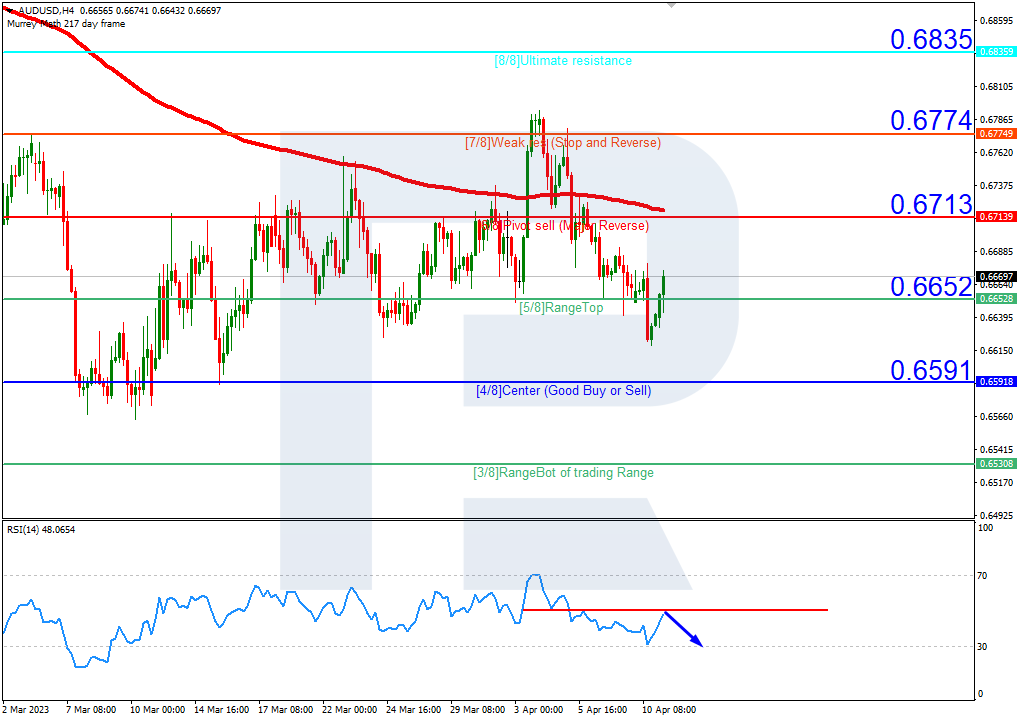
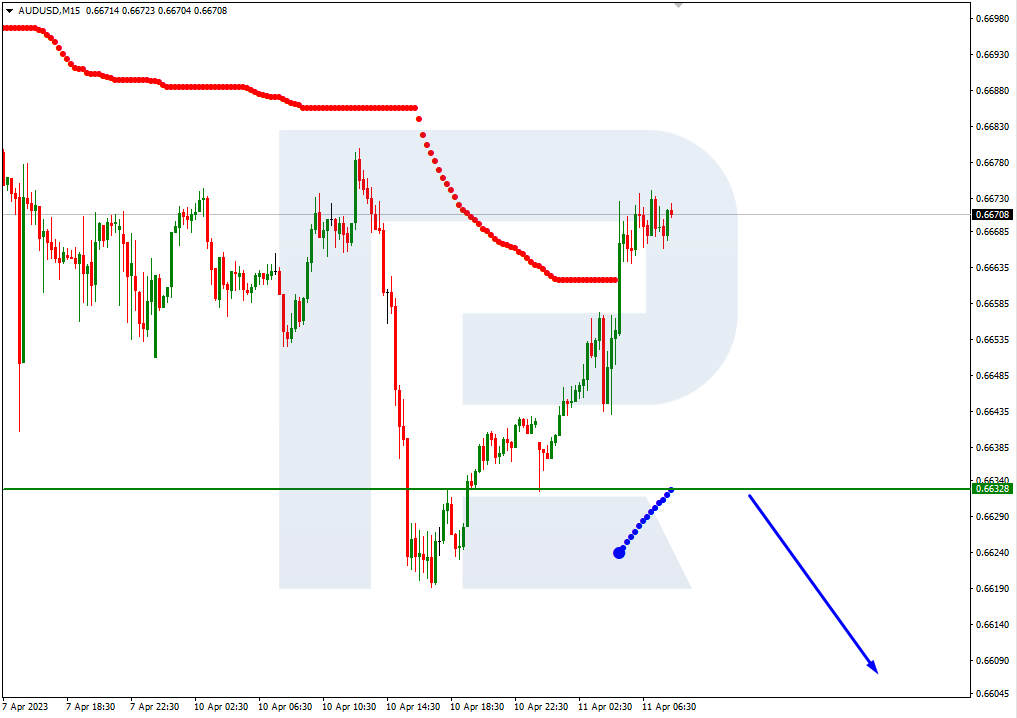
It’s all about the 0.6720 level on the AUDUSD. This pivotal level could determine whether the currency pair pushes higher or trades lower. Although a strong daily close above this point may open the doors toward 0.6800, more resistance can be found around the 100 and 200-day Simple Moving Averages. Alternatively, sustained weakness under this level could inspire a selloff back towards 0.6650 and 0.6560.


Forex-Time-LogoArticle by ForexTime

ForexTime Ltd (FXTM) is an award winning international online forex broker regulated by CySEC 185/12 www.forextime.com