What is a virtual power plant? An energy expert explains

By Daniel Cohan, Rice University 

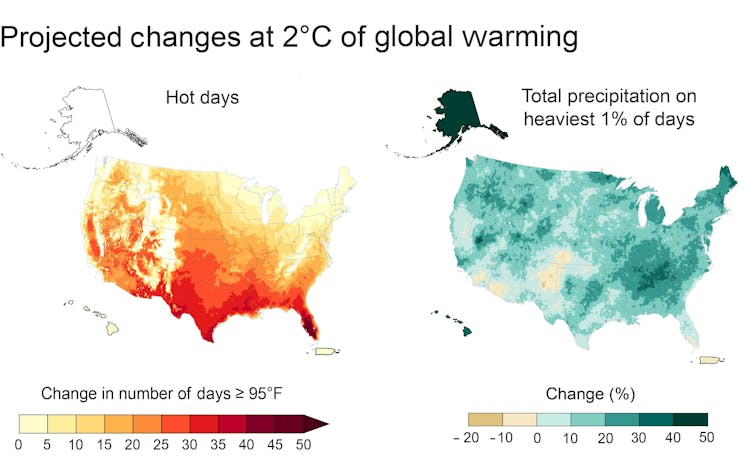
After nearly two decades of stagnation, U.S. electricity demand is surging, driven by growing numbers of electric cars, data centers and air conditioners in a warming climate. But traditional power plants that generate electricity from coal, natural gas or nuclear energy are retiring faster than new ones are being built in this country. Most new supply is coming from wind and solar farms, whose output varies with the weather.

That’s left power companies seeking new ways to balance supply and demand. One option they’re turning to is virtual power plants.

These aren’t massive facilities generating electricity at a single site. Rather, they are aggregations of electricity producers, consumers and storers – collectively known as distributed energy resources – that grid managers can call on as needed.

Some of these sources, such as batteries, may deliver stored electric power. Others may be big electricity consumers, such as factories, whose owners have agreed to cut back their power use when demand is high, freeing up energy for other customers. Virtual power sources typically are quicker to site and build, and can be cleaner and cheaper to operate, than new power plants.

Virtual power plants are more resilient against service outages than large, centralized generating stations because they distribute energy resources across large areas.

A growing resource

Virtual power plants aren’t new. The U.S. Department of Energy estimates that there are already 30 to 60 gigawatts of them in operation today. A gigawatt is 1 billion watts – roughly the output of 2.5 million solar photovoltaic panels or one large nuclear reactor.

Most of these virtual power plants are industrial customers that have agreed to reduce demand when conditions are tight. But as growing numbers of homes and small businesses add rooftop solar panels, batteries and electric cars, these energy customers can become not only consumers but also suppliers of power to the grid.

For example, homeowners can charge up their batteries with rooftop solar when it’s sunny, and discharge power back to the grid in the evening when demand is high and prices sometimes spike.

As smart thermostats and water heaters, rooftop solar panels and batteries enable more customers to participate in them, DOE estimates that virtual power plants could triple in scale by 2030. That could cover roughly half of the new capacity that the U.S. will need to cover growing demand and replace retiring older power plants. This growth would help to limit the cost of building new wind and solar farms and gas plants.

And because virtual power plants are located where electricity is consumed, they’ll ease the burden on aging transmission systems that have struggled to add new lines.

New roles for power customers

Virtual power plants scramble the roles of electricity producers and consumers. Traditional power plants generate electricity at central locations and transmit it along power lines to consumers. For the grid to function, supply and demand must be precisely balanced at all times.

Customer demand is typically assumed to be a given that fluctuates with the weather but follows a fairly predictable pattern over the course of a day. To satisfy it, grid operators dispatch a mix of baseload sources that operate continuously, such as coal and nuclear plants, and more flexible sources such as gas and hydropower that can modulate their output quickly as needed.

Output from wind and solar farms rises and falls during the day, so other sources must operate more flexibly to keep supply and demand balanced. Still, the basic idea is that massive facilities produce power for millions of passive consumers.

Virtual power plants upend this model by embracing the fact that consumers can control their electricity demand. Industrial consumers have long found ways to flex their operations, limiting demand when power supplies are tight in return for incentives or discounted rates.

Now, thermostats and water heaters that communicate with the grid can let households modulate their demand too. For example, smart electric water heaters can heat water mostly when power is abundant and cheap, and limit demand when power is scarce.

In Vermont, Green Mountain Power is offering its customers incentives to install batteries that will provide power back to the grid when it’s needed most. In Texas, where I live, deadly blackouts in 2021 highlighted the importance of bolstering our isolated power grid. Now, utilities here are using Tesla Powerwalls to help turn homes into virtual power sources. South Australia aims to connect 50,000 homes with solar and batteries to build that country’s largest virtual power plant.

Virtual power, real challenges

Virtual power plants aren’t a panacea. Many customers are reluctant to give up even temporary control of their thermostats, or have a delay when charging their electric car. Some consumers are also concerned about the security and privacy of smart meters. It remains to be seen how many customers will sign up for these emerging programs and how effectively their operators will modulate supply and demand.

There also are challenges at the business end. It’s a lot harder to manage millions of consumers than dozens of power plants. Virtual power plant operators can overcome that challenge by rewarding customers for allowing them to flex their supply and demand in a coordinated fashion.

As electricity demand rises to meet the needs of growing economies and replace fossil fuel-burning cars and furnaces, and reliance on renewable resources increases, grid managers will need all the flexibility they can get to balance the variable output of wind and solar generation. Virtual power plants could help reshape electric power into an industry that’s more nimble, efficient and responsive to changing conditions and customers’ needs.The Conversation

About the Author:

Daniel Cohan, Associate Professor of Civil and Environmental Engineering, Rice University

This article is republished from The Conversation under a Creative Commons license. Read the original article.

One US Graphite Stock Should Benefit From China’s Exports Controls

Source: Clive Maund  (11/1/23)

With Western companies attempting to compete with Chinese graphite, Technical Analyst Clive Maund takes a look at one graphite stock he believes is an Immediate Buy.

There was a big flurry of activity in graphite stocks on Friday, and the reason for this was that China has imposed export controls on graphite, which means that countries like Canada and the U.S. will have to look elsewhere to secure supplies — the U.S., in particular, will be impacted because it is by far the biggest importer of Chinese graphite so this news is a big deal as China produces two-thirds of the world’s graphite so clearly China — after being provoked — is adopting a “hit ’em where it hurts” approach.

Demand for graphite is rapidly growing due to its use in electric vehicle batteries and other energy storage applications so its price is likely to ramp up significantly, which will be good news for non-Chinese producers. Current production of graphite in the U.S. is non-existent, but Graphite One has a sizeable deposit that it is working on bringing to production.

As it says on the company’s website . . . “The Graphite Creek Property, located on the Seward Peninsula in western Alaska about 60 kilometers north of Nome, has been discovered to hold America’s highest grade large flake graphite deposit, with 10.95 million tonnes of measured and indicated resources at a grade of 7.8% that could yield as much as 850,000 tonnes of contained graphite material.

Overall, an assumed 44 million tonnes of graphite mineralization at 7% contained graphite (Cg) available to be mined from the company’s Graphite Creek Property could support a project life of 40 years, producing 60,000 tonnes per year of graphite concentrate at 95% Cg with an 80% yield. In response to the news about China, a number of graphite stocks posted big gains on Friday, notably South Star Battery Metals Corp. (STS:TSX.V; STSBF:OTCBB), which surged 24% on huge volume and NextSource Materials Inc. (NEXT:TSX;NSRCF:OTCQB), which shot up by 28% again on huge volume.

NEXT closed well off its highs, but the chart looks very bullish, so the only reason that it closed well off its highs was due to trapped earlier buyers who weren’t aware of the news dumping onto the higher price. So, it is expected to forge ahead and is also rated an Immediate Buy.

The gain in Graphite One Inc. (GPH:TSX.V) was more modest at 7.7%, but it was on the strongest volume since July, and so it is expected to “join the party,” which is why we are looking at it here. Now, let’s look at its charts.

Starting with the 20-year chart, we see that the company has been around for a long time and started trading back in 2007. Its performance — up to now — has been unimpressive as although there have been some tradable wild swings, it is still well down on its price in 2007.

In mid-2020, it broke out of a huge bullish Falling Wedge pattern that had formed over many years and proceeded to advance until late 2021 before rolling over again and dropping. This advance included a couple of big spikes, which are characteristic of this stock that could work to our advantage if it does another of them soon.

Zooming in via the 5-year chart, we see that the retreat from late 2021 high brought it back to a zone of strong support in the CA$0.90 – CA$1.00 area, which generated another short-lived spike early this year before it came rattling back down to the support again which it has just arrived at, and given the price / volume action on Friday and the important news that triggered it, it is very well placed to do another spike and this time, given that the news is “game-changing,” the spike could be bigger than previous ones and more of the gains resulting from it could stick.

Lastly, looking at the 1-year chart, we see that the decline from the highs last February – March has taken the form of a fairly orderly downtrend channel, and the interesting thing is that, in addition to bringing the price down closer to the strong support mentioned in the last paragraph, it has also brought it down close to the lower boundary of the broad downtrend channel so that it is currently substantially oversold relative to its now flat 200-day moving average, which increases snapback potential.

This month’s new low was not confirmed by momentum (MACD), which has shown a positive divergence, and Friday’s gain on the biggest upside volume since July was clearly a bullish development, especially given the strong performance of other stocks across the sector.

Graphite One is therefore considered to be most attractive here and rated a Strong Buy. While there is overhead resistance on the way up, its effect should be mitigated by the abrupt change of sentiment resulting from the news out of China, meaning that it could do a big spike anyway, resistance or not.

Graphite One’s website.

Graphite One closed at CA$1.12, $0.83 on October 20, 2023.

Originally posted at Clivemaund.com at 5:00 pm EDT on October 22, 2023.


Important Disclosures:

  1. As of the date of this article, officers and/or employees of Streetwise Reports LLC (including members of their household) own securities of Graphite One Inc.
  2. The article does not constitute investment advice. Each reader is encouraged to consult with his or her individual financial professional and any action a reader takes as a result of information presented here is his or her own responsibility. By opening this page, each reader accepts and agrees to Streetwise Reports’ terms of use and full legal disclaimer. This article is not a solicitation for investment. Streetwise Reports does not render general or specific investment advice and the information on Streetwise Reports should not be considered a recommendation to buy or sell any security. Streetwise Reports does not endorse or recommend the business, products, services or securities of any company mentioned on Streetwise Reports.

For additional disclosures, please click here.

Clivemaund.com Disclosures

The above represents the opinion and analysis of Mr. Maund, based on data available to him, at the time of writing. Mr. Maund’s opinions are his own, and are not a recommendation or an offer to buy or sell securities. Mr. Maund is an independent analyst who receives no compensation of any kind from any groups, individuals or corporations mentioned in his reports. As trading and investing in any financial markets may involve serious risk of loss, Mr. Maund recommends that you consult with a qualified investment advisor, one licensed by appropriate regulatory agencies in your legal jurisdiction and do your own due diligence and research when making any kind of a transaction with financial ramifications. Although a qualified and experienced stock market analyst, Clive Maund is not a Registered Securities Advisor. Therefore Mr. Maund’s opinions on the market and stocks can only be construed as a solicitation to buy and sell securities when they are subject to the prior approval and endorsement of a Registered Securities Advisor operating in accordance with the appropriate regulations in your area of jurisdiction.

Today, the focus of traders’ attention is on the Bank of England’s monetary policy meeting.

By JustMarkets

At the close of the stock exchange on Wednesday, the Dow Jones (US30) index rose by 0.67%, and the S&P 500 (US500) index rose by 1.05%. The NASDAQ Technology Index (US100) closed positive at 1.64% yesterday. The S&P 500 (US500) and Nasdaq 100 (US100) indices hit one-week highs, and the Dow Jones Industrials index hit a 10-day-high. Weaker-than-expected ADP employment and ISM manufacturing reports in the US lowered bond yields and boosted stocks. Meanwhile, stock indices continued to rise in the afternoon after the FOMC committee left the rate unchanged at 5.5%, and Fed Chair Powell said that the Fed may suspend the interest rate hike campaign indefinitely: “Given how far we have come, along with the uncertainties and risks we face, the FOMC is proceeding carefully.”

Currently, markets are pricing a 19% chance of a 25 bps rate hike at the next FOMC meeting on December 12-13 and a 27% chance of a 25 bps rate hike at the January 30-31, 2024 FOMC meeting.

The latest economic data showed that the change in US employment numbers for October from ADP was positive 113,000, which was weaker than expectations of 150,000. The US Manufacturing Activity Index for October unexpectedly declined by 2.3 to 46.7, which was weaker than expected. JOLTS job openings in the US for September unexpectedly rose by 53,000 to a 4-month high of 9.553 million, stronger than expectations of a decline to 9.400 million.

Equity markets in Europe were mainly up yesterday. Germany’s DAX (DE40) rose by 0.76%, France’s CAC 40 (FR 40) gained 0.68% yesterday, Spain’s IBEX 35 (ES35) added 0.51%, and the UK’s FTSE 100 (UK100) closed positive 0.28%.

The Bank of England will hold a monetary policy meeting today. Investors expect the Bank of England to keep rates at a 15-year high of 5.25%, with policymakers predicted to reiterate that rates should remain at current levels for an extended period of time despite growing signs of weakness in the economy. But it should not be forgotten that while inflation in the UK has fallen, it remains the highest among major economies and is difficult to contain. So, any hawkish remarks from the Governor of the Bank of England may give temporary support to the British currency.

Silver prices came under pressure yesterday amid weaker-than-expected news from China and the US on weaker demand for industrial metals following unexpected declines in China’s Caixin manufacturing PMI and US ISM manufacturing PMI for October.

Oil prices retreated from their best levels after the dollar index rose to a 4-week-high yesterday and on signs of weakness in manufacturing activity in China and the US. Crude oil inventories rose by 773,000 barrels, according to the EIA, less than expectations of 1.8 million barrels. Also, keep in mind that geopolitical risks are supporting oil prices due to fears that an escalation of the conflict between Israel and Hamas could jeopardize oil supplies from the Middle East.

Asian markets were predominantly rising yesterday. Japan’s Nikkei 225 (JP225) gained 2.41% yesterday, China’s FTSE China A50 (CHA50) added 0.84%, Hong Kong’s Hang Seng (HK50) ended the day down by 0.06%, and Australia’s ASX 200 (AU200) ended Wednesday positive 0.85%.

Japan’s Nikkei 225 Index added 1.2% on Thursday, extending gains for the third consecutive session after the Bank of Japan took a less hawkish stance earlier in the week than many expected. A rise in technology stocks helped Australia’s ASX 200 index (AU200) climb 1.3% despite the country’s September trade surplus data falling to a 2.5-year low.

New Zealand’s unemployment rate has been on the rise. Unemployment rose to 3.9% from 3.6% in the last quarter. The employment report showed growing spare capacity in the labor market as higher interest rates cool the economy. Aggressive rate tightening by the Reserve Bank of New Zealand (RBNZ) has led to lower inflation, which fell to 5.6% in the third quarter. Inflation expectations are also falling, an encouraging sign that the RBNZ will seek to avoid a rate hike at its November meeting.

S&P 500 (F)(US500) 4,237.86 +44.06 (+1.05%)

Dow Jones (US30) 33,274.58 +221.71 (+0.67%)

DAX (DE40)  14,923.27 +112.93 (+0.76%)

FTSE 100 (UK100) 7,342.43 +20.71 (+0.28%)

USD Index  106.63 −0.03 (−0.03%)

News feed for 2023.11.02:
  • – Australia Trade Balance (m/m) at 02:30 (GMT+2);
  • – Hong Kong Interest Rate Decision (m/m) at 04:30 (GMT+2);
  • – Switzerland Consumer Price Index (m/m) at 09:30 (GMT+2);
  • – German Manufacturing PMI (m/m) at 10:55 (GMT+2);
  • – German Unemployment Rate (m/m) at 10:55 (GMT+2);
  • – Eurozone Manufacturing PMI (m/m) at 11:00 (GMT+2);
  • – Norwegian Interest Rate Decision (m/m) at 11:00 (GMT+2);
  • – UK BoE Interest Rate Decision (m/m) at 14:00 (GMT+2);
  • – UK BoE Monetary Policy Statement (m/m) at 14:00 (GMT+2);
  • – UK BoE Gov Bailey Speaks at 14:30 (GMT+2);
  • – US Initial Jobless Claims (w/w) at 14:30 (GMT+2);
  • – US Natural Gas Storage (w/w) at 16:30 (GMT+2);
  • – Switzerland SNB Chairman Thomas Jordan speaks at 19:00 (GMT+2).

By JustMarkets


This article reflects a personal opinion and should not be interpreted as an investment advice, and/or offer, and/or a persistent request for carrying out financial transactions, and/or a guarantee, and/or a forecast of future events.

Quantum dots − a new Nobel laureate describes the development of these nanoparticles from basic research to industry application

By Louis Brus, Columbia University 

The Nobel Prize in chemistry for 2023 goes to three scientists “for the discovery and synthesis of quantum dots.” The Conversation Weekly podcast caught up with one of this trio, physical chemist Louis Brus, who did foundational work figuring out that the properties of these nanoparticles depend on their size. Brus’ phone was off when the Nobel reps called to inform him of the good news, but now plenty of people have gotten through with congratulations and advice. Below are edited excerpts from the podcast.

When you were working at Bell Labs in the 1980s and discovered quantum dots, it was something of an accident. You were studying solutions of semiconductor particles. And when you aimed lasers at these solutions, called colloids, you noticed that the colors they emitted were not constant.

On the first day we made the colloid, sometimes the spectrum was different. Second and third day, it was normal. There certainly was a surprise when I first saw this change in the spectrum. And so, I began to try to figure out what the heck was going on with that.

I noticed that the property of the particle itself began to change at a very small size.

What you’d found was a quantum dot: a type of nanoparticle that absorbs light and emits it at another wavelength. Crucially, the color of these particles changes depending on the actual size of the particle. How do you even see a quantum dot crystal, since one is just a few hundred thousandths the width of a human hair?

Well, you can’t see them with an optical microscope because they’re smaller than the wavelength of light. There are ways to see them too, using other types of specialist microscopes, such as an electron microscope. And a common way of demonstrating them is to line up a row of brightly colored glass flasks each with a solution of different sized quantum dots inside it.

diagram of a molecule next to a soccer ball next to a planet
A quantum dot is a crystal that often consists of just a few thousand atoms. In terms of size, it has the same relationship to a soccer ball as a soccer ball has to the size of the Earth.
Johan Jarnestad/The Royal Swedish Academy of Sciences, CC BY-ND

One of your fellow laureates, Alexei Ekimov, was a Russian scientist, and he’d actually observed quantum dots in colored glass, but you weren’t aware of his findings at the time?

Yes, that’s right. The Cold War was going on at that time, and he published in the Russian literature, in Russian. And he wasn’t allowed to travel to the West to talk about his work.

I asked around among all the physicists, was there any work on small particles? I was trying to make a model of the quantum size effects. And they told me no, nobody’s really working on this. Nobody had seen his articles, basically.

I was part of the U.S. chemistry community, doing synthetic chemistry in the laboratory. He was in the glass industry in the Soviet Union, working on industrial technology.

When I eventually found his articles in the technological literature, I wrote a letter to the Soviet Union, with my papers, just to say hello to Ekimov and his colleagues. When the letter came, the KGB came to talk to the Russian scientists, trying to figure out why they had any contact with anybody in the West. But in fact they had never talked to me or anyone in the West when my letter arrived in the mail.

Have you met him since?

Yes, they were able to come out of the Soviet Union during Glasnost, this would be the late 1980s. There’s Ekimov, and then there is his theoretical collaborator Sasha Efros, who now works at the U.S. Naval Research Lab. I met them as soon as they came to the U.S.


Listen to the interview with Louis Brus on The Conversation Weekly podcast. Each week, academic experts tell us about the fascinating discoveries they’re making to understand the world and the big questions they’re still trying to answer.


One of the issues with quantum dots, when you first observed them, was how to actually produce them and keep them stable. Then, in the 1990s, your fellow laureate, Moungi Bawendi, figured this out. What do you think is the most striking thing that you’ve seen quantum dots used in so far?

Usually when a new material is invented, it takes a long time to figure out what it’s really good for. Research scientists, they have ideas, you might use it for this, you might use it for that. But then, if you talk to people in the actual industry, who deal every day with manufacturing problems, these ideas are often not very good.

But the knowledge that we gained, the scientific principles, could be used to help to design new devices.

As far as first applications, people began to try to use them in biological imaging. Biochemists attach quantum dots to other molecules to help map cells and organs. They’ve even been used to detect tumors, and to help guide surgeons during operations.

And as scientists kept working to synthesize quantum dots, the quality of the particles kept improving. They were emitting pure colors, rather than distributions of light – like maybe red with a little bit of green, or maybe red with some pink. When you got a better particle, it would be just pure red, for instance.

So then people made the connection to the display industry – computer displays and television displays. In this application, you want to convert electricity into three colors: red, green and blue. You can make up any kind of image, starting with just those three colors in different proportions.

It takes a lot of courage. You have to invest a lot of money to develop the technology, and maybe at the end of it, it’s not good enough, and it will not replace what you already have. And there’s a lot of credit due to the Samsung Corporation in Japan. Hundreds of billions of dollars were invested in the technology of these particles to get them to the point where they could begin to manufacture displays and flat-panel TVs using quantum dots.

Your work is an example of the importance of basic research, of being curious, trying to solve mysteries without a particular endpoint or industrial application in sight. What message would you have for a young chemist starting out today working on such basic research?

The world is a huge place, and you could do basic research in a huge number of different areas. You want to pick a problem where, if you are spectacularly successful and you actually discover something really interesting, it might have some application in the world.

For better or for worse, you have to make a choice in the beginning, and it takes some intuition.

A good way to do it is you pick a subject that you know is important to technology, but there’s no understanding of the science at the present time. It’s a complete black box. Nobody understands the basic principles. That kind of problem, you can begin to take it apart and look to see what the basic steps are.

What changes for you now that you’ve won the Nobel Prize?

Well, this Nobel Prize, for better or for worse, has a special meaning in people’s minds all over the world. Yesterday when the mailman came I happened to be at the front door and he recognized me because my face was in the local newspaper. And he said, “I’ve never shaken the hand of a Nobel laureate before.”

For better or for worse, this is where I am right now, in a special category whether I like it or not. I still have my office in the university, but I don’t have a research group. I’m trying to leave that to the younger people. So this recognition probably means less for my research than it would if I was 40 years old.

I have received congratulations by email from a number of people who won the prize in past years. Their main recommendation is you must learn to say no. People will ask you to do all kinds of crazy things, and your time will be entirely taken up with these honorific university visits and giving little speeches. In order to have a real life and to be productive, you have to say no to all of these extraneous invitations.

And they also told me to have fun in Sweden! It’s an extremely elaborate schedule of events for that week in December when this award ceremony is. Extremely fancy. American culture, physics culture is different – if you win a prize from the American Physical Society, it’s a very low-key event. You just show up in an auditorium. It’s not even necessary to wear a suit.

So I will take my family, my grandchildren to Sweden and we’ll try to enjoy this as a great vacation.The Conversation

About the Author:

Louis Brus, Professor Emeritus of Chemistry, Columbia University

This article is republished from The Conversation under a Creative Commons license. Read the original article.

Will BOE help Sterling break out of downtrend?

By ForexTime 

  • Bank of England unlikely to change benchmark rate today
  • “Hawkish hold” could keep Sterling supported, though still stuck in downtrend
  • GBPUSD bulls must first conquer 21-day SMA resistance
  • 1.2130 region offering support since late-September
  • GBPUSD likeliest to trade within 1.2025 – 1.2304 range over one week

The Bank of England is expected to keep rates at 5.25% today.

This is in tune with current market pricing, with only a 29% chance of another hike by February.

Further hikes may be needed if the bank gets more evidence of persistent inflation.

Other data since the last BOE meeting has been broadly soft with weak GDP and PMIs in September and October stuck in contractionary territory so signalling a gloomy growth outlook.

This implies the bar is relatively high now for another rate hike, especially due to the slightly surprising unchanged decision at the September meeting.

Updated economic projections and the press conference may allow policymakers to show their hand.

Higher inflation forecasts, with the 2% target being hit halfway through 2025, might imply rates need to stay higher for longer.

However, BOE Governor Bailey may stress the lagged effects of this tightening cycle, with higher mortgage rates still to hit many households.

Market rate expectations are noticeably lower after the summer’s repricing with the first rate cut fully priced in by September 2024.

How much caution there is towards the poor outlook compared to the potential re-emergence of upside risks to inflation will be key.

A “hawkish hold” should see GBP relatively well supported as it battles to break out of its long-term downtrend.


From a technical perspective …

A bear channel, with a series of lower highs and lower lows, has been in place since the mid-July top above 1.31.

For immediate consideration, GBPUSD bulls (those hoping prices will move higher) must first secure a daily close above its 21-day simple moving average (SMA).


Further resistance northwards may arrive at:

  • 1.220: upper boundary of its bear channel
  • 1.22889: intraday high on October 24th
  • 1.2300: psychologically-important level, close to 50 Fibonacci level from GBPUSD’s June 2021 – September 2022 peak-to-trough action


Looking the other way, the 1.2130 region should offer strong support, as has largely been the case over the past five weeks.

Ultimate immediate-term support may arrive around the recent cycle low in early October which sits at 1.20372.


The support and resistance levels listed above fits nicely with the forecasted trading range, as per Bloomberg’s FX model, which cites a …

74% chance that GBPUSD will trade within the 1.2025 – 1.2304 range over the next one-week period.


Forex-Time-LogoArticle by ForexTime

ForexTime Ltd (FXTM) is an award winning international online forex broker regulated by CySEC 185/12 www.forextime.com

The cryptocurrency market digest (BTC). Overview for 01.11.2023

By RoboForex.com

The price of BTC rose to 34,430 USD on Wednesday.

Following the figures from the past week, the daily gain of 0.5% and a weekly increase of 0.8% may appear unimpressive. However, it is vital to keep in mind that a crucial moment is currently unfolding: the market is on standby, refraining from engaging in sales.

The stakes are high for a rise in the price of the flagship cryptocurrency. Therefore, all news related to the launch of spot Bitcoin ETFs holds significant importance.

The scenario involving a corrective decline of BTC to 29,500 USD is currently on hold. The short-term target for an increase is set at 34,800 USD, with the next level being 35,800 USD.

The total cryptocurrency market capitalisation has reached 1.28 trillion USD. BTC’s market share has decreased to 53.0%, while ETH’s share has increased to 17.1%.

Startup Bastion receives licences in the US

Obtaining licenses in both New Hampshire and Arkansas enables the young company to provide services to retail clients in the digital asset sphere. Bastion expects to secure more licences. The company began operations in mid-September, coinciding with the launch of its initial funding round of 25 million USD.

Profitable Bitcoin addresses reach 40 million

As of 30 October, the number of Bitcoin wallets showing a profit has reached 39.1 million. This figure is the highest in the history of cryptocurrency. The last time similar levels were witnessed in the market was in the autumn of 2021, but at that time, the BTC price was 50% higher than it is now.

Article By RoboForex.com

Attention!
Forecasts presented in this section only reflect the author s private opinion and should not be considered as guidance for trading. RoboForex LP bears no responsibility for trading results based on trading recommendations described in these analytical reviews.

Fed expected to hold rates steady – what investors should do now

By George Prior 

The Federal Reserve will almost certainly hold interest rates steady for the second meeting in a row today at the highest level in some 22 years.

This would support expectations from deVere Group, one of the world’s largest independent financial advisory, asset management and fintech organizations, of a year-end rally in 2023.

It also means that most investors will need to revise their investment portfolios.

The analysis from Nigel Green, deVere Group CEO and Founder, comes ahead of the US central bank’s Big Decision on interest rates at 2pm ET (7pm GMT).

He comments: “The markets will be buoyed by the Fed not raising rates as it means we’re nearer to the end of the most aggressive rate-hiking programme in generations.

“But the markets have already fully priced-in this Fed decision, so we don’t expect it to send stocks skyrocketing on this news alone.

“However, the Fed holding rates steady again does add fuel to our expectation of a 2023 year-end rally.”

On Tuesday, the deVere CEO told the media: “History shows that November is the second-best month of the year for markets, behind April.

“This November could be even more positive as some markets are currently in correction territory – falling by more than 10% – and so a swing to the upside will be more pronounced.

“Over 72 years there have been 34 market declines. Only 12 of these have turned into bear markets. When does a recovery typically happen? 96 days after the start of the correction. We’re now around day 90.

“If all this data holds up, we’re about to see a year-end rally, which investors would not want to miss out on.”

While the Fed may be done hiking, there is a wider expectation that they’re going to keep rates higher for longer.

As interest rates are anticipated to remain elevated for an extended period and a year-end market rally is expected, investors must adopt a prudent approach to navigate these evolving financial landscapes.

To thrive in such conditions, Nigel Green suggests five important strategies that investors should consider.

“First, maintain a well-diversified portfolio that spreads risk across various asset classes. Diversification can help mitigate the impact of rising interest rates and market volatility.

“Second, evaluate your risk tolerance and investment goals. Ensure that your portfolio aligns with your financial objectives, and consider adjusting your asset allocation accordingly.

“Third, given the potential for higher market volatility, active management can be valuable. Reassess and rebalance your portfolio as needed to capitalise on opportunities and manage risks effectively.

“Four, explore fixed-income investments that are less sensitive to interest rate changes, such as short-term bonds, structured notes or inflation-protected securities.

“Five, keep a long-term perspective and avoid making impulsive decisions based on short-term market movements. Stick to your investment strategy and avoid trying to time the market.”

About:

deVere Group is one of the world’s largest independent advisors of specialist global financial solutions to international, local mass affluent, and high-net-worth clients.  It has a network of offices across the world, over 80,000 clients and $12bn under advisement.


Inflation continues to decline in the Eurozone. Investors are in no hurry to invest in Chinese stocks

By JustMarkets

At Tuesday’s stock market close, the Dow Jones Index (US30) increased by 0.38%, while the S&P 500 Index (US500) added 0.65%. The NASDAQ Technology Index (US100) closed positive 0.48% yesterday. Stocks closed moderately higher on Tuesday amid mostly better-than-expected corporate earnings results.

The US economic news released Tuesday was mixed for the dollar and stock indices. On the positive side, the third quarter labor cost index rose by 1.1%, stronger than expectations of an additional 1.0%. In addition, the S&P CoreLogic composite-20 home price index for August rose by 2.16% year-over-year, which was stronger than expectations of 1.75% and was the most significant increase in 7 months. On the bearish side, the Conference Board US Consumer Confidence Index for October fell by 1.7 to a 5-month low of 102.6. In addition, the October Chicago PMI unexpectedly declined by 0.1 to 44.0, weaker than expectations of a rise to 45.0.

In the Middle East, Iran’s foreign minister on Tuesday called for utilizing the “last political opportunities” to end the war between Israel and Hamas. It was also reported that Yemen fired a ballistic missile at Israel, which was successfully shot down.

Equity markets in Europe traded yesterday without a single dynamic. German DAX (DE40) rose by 0.64%, French CAC 40 (FR40) yesterday rose by 0.89%, Spanish IBEX 35 (ES35) fell by 0.02%, and British FTSE 100 (UK100) closed negative 0.08%.

October Eurozone CPI declined to 2.9% y/y from 4.3%, weaker than expectations of 3.1% y/y and the lowest increase in 2 years. Core CPI slipped to 4.2% y/y in October from 4.5% y/y in September, which matched expectations and was the lowest reading in 15 months. Eurozone GDP declined 0.1% q/q in Q3 but grew 0.1% y/y, weaker than expected. German retail sales for September unexpectedly fell by 0.8% m/m, weaker than expectations of 0.5% m/m. Stournaras of the ECB Governing Council said that he believes interest rates in the Eurozone have peaked. He would consider cutting interest rates if inflation falls consistently and steadily below the 3% threshold in mid-2024.

Oil prices initially went up on Tuesday on fears that the conflict between Israel and Hamas could escalate on reports that Israel is shelling militant targets in Lebanon, which has the potential to widen the conflict. However, Tuesday’s global economic news was weaker than expected and negatively impacted energy demand and crude oil prices.

Asian markets traded without any unified dynamics. Japan’s Nikkei 225 (JP225) gained 0.53% yesterday, China’s FTSE China A50 (CHA50) declined by 0.07%, Hong Kong’s Hang Seng (HK50) fell by 1.69% on the day, while Australia’s ASX 200 (AU200) was positive 0.12% on Tuesday.

Recent Chinese manufacturing activity data indicates that Beijing’s stimulus measures have had a limited economic impact. Additional government spending will likely be required to lift the Chinese economy from a three-year slump. Due to this, investors are largely wary of investing in Chinese markets.

Japanese economic news released on Tuesday was mixed for the yen. On the bearish side, industrial production for September rose by 0.2% m/m, which was weaker than expectations of 2.5% m/m. Retail Sales for September unexpectedly declined by 0.1% m/m, which was weaker than expectations of 0.2% m/m. In contrast, Consumer Confidence for October unexpectedly rose by 0.5 to 35.7, stronger than expectations of a decline to 35.0.

S&P 500 (F)(US500) 4,193.80 +26.98 (+0.65%)

Dow Jones (US30) 33,052.87 +123.91 (+0.38%)

DAX (DE40)  14,810.34 +93.80 (+0.64%)

FTSE 100 (UK100) 7,321.72 −5.67 (−0.08%)

USD Index  106.74 +0.62 (+0.58%)

News feed for 2023.11.01:
  • – New Zealand RBNZ Gov Orr Speaks at 00:00 (GMT+2);
  • – Japan Manufacturing PMI (m/m) at 02:30 (GMT+2);
  • – Switzerland Manufacturing PMI (m/m) at 10:30 (GMT+2);
  • – UK Manufacturing PMI (m/m) at 11:30 (GMT+2);
  • – US ADP Nonfarm Employment Change (m/m) at 14:15 (GMT+2);
  • – Switzerland SNB Chairman Thomas Jordan speaks at 14:40 (GMT+2);
  • – Canada Manufacturing PMI (m/m) at 15:30 (GMT+2);
  • – US ISM Manufacturing PMI (m/m) at 16:00 (GMT+2);
  • – US JOLTs Job Openings (m/m) at 16:00 (GMT+2);
  • – US Crude Oil Reserves (w/w) at 16:30 (GMT+2);
  • – US FOMC Statement at 20:00 (GMT+2);
  • – US Fed Interest Rate Decision at 20:00 (GMT+2);
  • – US FOMC Press Conference at 20:30 (GMT+2).

By JustMarkets


This article reflects a personal opinion and should not be interpreted as an investment advice, and/or offer, and/or a persistent request for carrying out financial transactions, and/or a guarantee, and/or a forecast of future events.

Fed/Treasury announcements may trigger USDInd breakout

By ForexTime 

  • Fed/Treasury announcements today may spike FX volatility
  • USInd has climbed 3 months in a row
  • Bullish momentum stalling as traders await new catalyst for breakout
  • Dollar bulls will look to extend uptrend by 265 points
  • Dollar bears hoping for potential 120 point move south


The USDInd may see a volatility-triggering event today (Wednesday, November 1st).

Wild price swings for the USDInd would likely owe to two pivotal decisions out of the U.S:

  • US Treasury refunding announcement at 12:30 GMT
  • Fed rate decision @ 18:00 GMT

The market’s general expectation is for a pause in US interest rate hikes, owing partially to rising bond yields which most analysts see as tantamount to a rate hike.

READ MORE: Trade of the Week – Can SPX500_m recover from technical correction?


Yields on 10-year US Treasuries are hovering just below the psychological 5% level, though remains at their highest levels since 2007. And we know that the US dollar tends to have a positive correlation with Treasury yields (both are likelier to move in the same direction).

So, we look to the USDInd, which tracks how the US dollar performs against a basket of its G10 peers including EUR, GBP, JPY and others.


USDInd uptrend stalls, breakout imminent?

Note that the USDInd has closed stronger/bullish for the last 3 months.

However, October also saw the shortest trading range (the difference between the highest price and the lowest price within that month):

  • August: 283 points
  • September: 333 points
  • October: 189 points

Such “thinning” monthly trading ranges suggest that the bullish momentum for USDInd is waning, though still intact.

On the weekly and daily time frames, bullish flags are seen, lasting for 5 weeks and 27 days respectively.

Flag patterns are continuation patterns expected to break out in the direction of the trend (flagpole) preceding the range/sideways movement (flag).

Hence, the “flags” on both the weekly and daily timeframes imply that traders are waiting for a new catalyst that would determine the next big move for USDInd.


How might USDInd react?

If the announcement out of either the Treasury or the Fed today results in US yields resuming its uptrend, then US dollar bulls may go charging on.

From a technical perspective, more gains may arrive if we see a strong breakout above the flag’s resistance around 106.87, the flag’s resistance which is being tested currently).

A stronger bullish signal may be derived especially if USDInd posts highs above 107.37, its highest price year-to-date.


With the flagpole used as an estimate for a flag’s measured move objective …

Dollar bulls will be looking for moves to the upside around 265  points. 

However, dollar-longs (those hoping that prices will move higher) may experience confrontation at key resistance levels ahead, notably:

  • 107.89: intraday high on November 21, 2022, and a key battleground for bears and bulls in the past
  •  110.21: the 261.8 Fibonacci level when drawn from September 30th’s intraday low to the  October 3rd intraday high.


USDInd bears (those hoping prices will move lower) on the other hand will be looking for dovish comments and action from the US Federal Reserve, or a less-than-expected amount of securities to be auctioned by the Treasury (currently expected to total US $114 billion).

This may result in the US index ultimately declining back towards:

  • 106.124: the 161.8 Fibonacci level
  • 105.602: the flags support zone


Forex-Time-LogoArticle by ForexTime

ForexTime Ltd (FXTM) is an award winning international online forex broker regulated by CySEC 185/12 www.forextime.com

Inflationary pressures continue to ease in Germany. The Bank of Japan maintained its soft monetary policy

By JustMarkets

At Monday’s stock market close, the Dow Jones Index (US30) increased by 1.58%, while the S&P 500 Index (US500) added 1.58%. The NASDAQ Technology Index (US100) closed positive by 1.16% yesterday. Stock indices rose moderately on Monday on the back of a falling dollar, as well as positive corporate news and mergers and acquisitions (M&A) deals. Pressure on the US dollar is also being exerted by the likelihood that the Federal Reserve will leave its monetary policy unchanged at Wednesday’s FOMC meeting. Markets are betting a zero probability that the FOMC will raise rates at its next meeting and an 18% probability of a 25 bps rate hike at its next meeting on December 12-13.

Western Digital shares are up more than 7% after the company reported better-than-expected first-quarter earnings and announced its intention to split into two public companies. Additionally, shares of Amazon.com (AMZN) closed higher by more than 3%, adding to last Friday’s 7% gain after Guotai Junan Securities raised the company’s price target to $162.80 per share.

The Dallas Fed’s US manufacturing activity index for October unexpectedly fell by 1.1 to minus 19.2, weaker than expectations for a rise to minus 16.0.

Bank of Canada (BoC) Governor Tiff Macklem urged elected officials to consider the inflationary implications of their spending plans as the Central Bank tries to cool price pressures. Macklem cited slower economic growth and higher interest rates as factors affecting future government budgets. Canadian Finance Minister Chrystia Freeland will deliver a financial report in the coming weeks.

Equity markets in Europe were mostly up on Monday. Germany’s DAX (DE40) rose by 0.20%, France’s CAC 40 (FR40) gained 0.44% yesterday, Spain’s IBEX 35 (ES35) added 1.07%, and the UK’s FTSE 100 (UK100) closed positive by 0.50%.

The Eurozone Economic Confidence Index for October fell by 0.1 to 93.3, which was better than expectations of 93.0. German Q3 GDP declined by 0.1% QoQ, stronger than expectations of 0.2% QoQ. The German Consumer Price Index (EU harmonized) for October declined from 4.3% to 3.0% y/y, better than expectations of 3.3% y/y and the lowest inflation rate in 2 years.

ECB Governing Council representative Kazimir said yesterday that forecasts for ECB interest rate cuts in the first half of next year are completely misplaced, and the ECB will have to stay on the cusp over the next few quarters. In contrast, his counterpart, Simkus, believes that the ECB will not raise interest rates at its December meeting, saying that current restrictive levels are sufficient.

WTI crude oil prices fell more than 3% yesterday as Israeli military action in the Gaza Strip proceeded at a more cautious pace than expected, easing fears of a widening conflict in the Middle East. In addition, Iran’s foreign ministry said on Monday that Hamas has pledged to release non-Israeli hostages as soon as possible.

Asian markets traded flat yesterday. Japan’s Nikkei 225 (JP225) decreased by 0.95%, China’s FTSE China A50 (CHA50) added 0.35%, Hong Kong’s Hang Seng (HK50) was up by 0.04% on the day, and Australia’s ASX 200 (AU200) was negative 0.79% on Monday. On Tuesday, Asian stocks fell to near one-year lows amid disappointing Chinese manufacturing activity data, while the yen fell to 150 per dollar after the Bank of Japan changed its policy to control bond yields.

At its meeting, the BoJ left the short-term interest rate at minus 0.1% and said it would use the top end of the YCC’s 1% range as the reference limit for its market operations. The move reflects a slight shift to tight YCC policy and may signal some greater flexibility. The BoJ also said it will continue asset purchases and quantitative easing to stimulate the economy, citing continued uncertainty over rising inflation and deteriorating global economic conditions. The statement indicated that the Bank is trying to maintain a balance between supporting the Japanese economy, curbing further weakening of the yen, and simultaneously combating rising inflation. The BoJ also said it expects core consumer inflation to remain above the 2% target through fiscal 2024 and that risks to prices are skewed upward in fiscal 2023.

S&P 500 (F)(US500) 4,166.82 +49.45 (+1.20%)

Dow Jones (US30) 32,928.96 +511.37 (+1.58%)

DAX (DE40)  14,716.54 +29.13 (+0.20%)

FTSE 100 (UK100) 7,291.28 +36.11 (+0.50%)

USD Index  106.14 −0.42 (−0.40%)

News feed for 2023.10.31:
  • – Japan Unemployment Rate (m/m) at 01:30 (GMT+2);
  • – Japan Industrial Production (m/m) at 01:50 (GMT+2);
  • – Japan Retail Sales (m/m) at 01:50 (GMT+2);
  • – China Manufacturing PMI (m/m) at 03:30 (GMT+2);
  • – China Non-Manufacturing PMI (m/m) at 03:30 (GMT+2);
  • – Japan BoJ Interest Rate Decision at 04:30 (GMT+2);
  • – Japan BoJ Monetary Policy Statement at 04:30 (GMT+2);
  • – Japan BoJ Press Conference at 08:30 (GMT+2);
  • – German Retail Sales (m/m) at 09:00 (GMT+2);
  • – Eurozone Consumer Price Index (m/m) at 12:00 (GMT+2);
  • – Eurozone GDP (q/q) at 12:00 (GMT+2);
  • – Canada GDP (m/m) at 14:30 (GMT+2);
  • – US Chicago PMI (m/m) at 15:45 (GMT+2);
  • – US CB Consumer Confidence (m/m) at 16:00 (GMT+2);
  • – New Zealand Unemployment Rate at 23:45 (GMT+2).

By JustMarkets


This article reflects a personal opinion and should not be interpreted as an investment advice, and/or offer, and/or a persistent request for carrying out financial transactions, and/or a guarantee, and/or a forecast of future events.