Solana pulling back after stunning 2023 rally!

By ForexTime 

  • Solana skyrocketed by as much as 1155% this year
  • Technical pullback warranted after such eye-watering gains
  • This crypto still holds year-to-date gains of about 950% despite recent drop
  • Solana likely surged as crypto sector recovers from FTX/SBF saga, amid Bitcoin ETF hype
  • Further declines may hark back to key support levels from Q1 2022, before potentially pushing back higher

Of the 11 cryptocurrency CFDs offered within the FXTM universe, this year’s standout performer is clearly Solana!

Solana is a blockchain, featuring its SOL payment token, that’s touted for its high speeds (can process a lot more transactions per second) and low fees, which enables the creation of decentralized applications.

At the time of writing, and with only a handful of trading days left in 2023 …

Solana has a year-to-date climb of 952%!

Its year-to-date advance had reached as high as 1,155% earlier this week, before undergoing a technical pullback in recent sessions.

Solana’s 14-day relative strength index (RSI) is now on course to dip back below the 70 threshold which marks “overbought” conditions.

Why has Solana surged this year?

There are a few major reasons being bandied about for Solana’s stunning rise in 2023:

1) Solana moving on post-SBF/FTX

The disgraced founder of the FTX exchange, Sam Bankman-Fried a.k.a. SBF, had previously publicly advocated the merits of the Solana blockchain.

Hence, markets had associated Solana with SBF.

When SBF and FTX fell hard in 2022, so too did Solana, with the crypto losing almost all (94.1%) of its value last year.

But as the crypto world took strides in moving beyond the FTX carnage, so too has Solana’s fortunes recovered.

2) Alt-coins resurgence

Besides Solana, other alt-coins have also have a year of recovery.

The likes of Avalanche, Chainlink, and Cardano also respectively posted triple-digit year-to-date gains!

Cryptocurrencies, overall, are enjoying a resurgence, thanks to the rising anticipation surrounding a first-ever Bitcoin exchange-traded fund (ETF) that could be approved by the US Securities and Exchange Commission (SEC) as soon as January 10th, 2024.

Such excitement surrounding that first-ever Bitcoin ETF has spilled over into the broader crypto universe, and helped push prices higher.

3) Fed pivot in 2024 encouraging risk appetite

Looking at the Solana chart above, its steepest ascent appear to have commenced after the Federal Reserve’s (US central bank) latest policy meeting in mid-December.

Fed officials forecasted several rate cuts in 2024!

Riskier assets, including stocks and even cryptos, have rejoiced at the prospects of the US central bank lowering its benchmark rates, with the first rate cut expected to occur in March.

After all, lower interest rates have the potential to boost liquidity across global financial markets.

And as we know …

Market liquidity is a core pillar for crypto prices to move higher.

Hence, in light of the market’s forward-looking nature (today’s prices reflect tomorrow’s expectations), existing market participants have pushed crypto prices higher recently, in tandem with other riskier assets including the SPX500_m and the NQ100_m indices, on hopes for improved market conditions in 2024.

Though to be clear, liquidity within crypto markets are still yet to recover to levels prior to the crypto winter of 2022.


Where to next for Solana prices?

At the time of writing, Solana appears to be currently testing support around the $105 region.

Just this past Tuesday, Solana had already bounced off the psychologically-important $100 mark in a rather violent Boxing Day session.

Should the $100 fail at the second time of asking, traders may have to hark back to price action from Q1 2022 to draw further lines of support.

If the ongoing pullback is extended further …

Solana may eventually see stronger support around the psychologically-important $80 region.


However, once the ongoing technical pullback has run its course and the froth has been cleared from its eye-watering surge this year, the eventual equilibrium price may form a stronger base from which Solana can move higher.

Further gains for Solana however may require that the appetite for cryptos can make a sustainable comeback, especially if the positive inflows into that Bitcoin ETF does materialise.


Forex-Time-LogoArticle by ForexTime

ForexTime Ltd (FXTM) is an award winning international online forex broker regulated by CySEC 185/12 www.forextime.com

The decline in global bond yields supports stock indices

By JustMarkets

At yesterday’s stock market close, the Dow Jones Index (US30) added 0.30%, while the S&P 500 Index (US500) was up by 0.14%. The NASDAQ Technology Index (US100) closed positive by 0.16% on Wednesday. A decline in global bond yields is lending support to stocks on optimism that global central banks will start cutting interest rates next year.

According to data compiled by Bloomberg, trading volume in US exchange-traded funds on Tuesday was 35% below the 30-day average. That suggests investor activity is waning ahead of the New Year.

Apple (AAPL) fell by 0.78%, added to Tuesday’s 0.28% loss, and topped the Dow Jones (US30) losers list after the US Trade Representative decided not to overturn the International Trade Commission’s ruling that Apple infringed two patents owned by Masimo and Cercacor Laboratories. AstraZeneca (AZN) rose more than 1% yesterday after its $1.2 billion acquisition of Gracell Biotechnologies, which allows it to expand its line of cancer drugs.

Equity markets in Europe were mostly up yesterday. Germany’s DAX (DE40) rose by 0.21%, France’s CAC 40 (FR40) gained 0.04%, Spain’s IBEX 35 (ES35) added 0.10% and the UK’s FTSE 100 (UK100) closed positive by 0.36%. Speculation that the Fed will cut interest rates before the ECB puts pressure on the dollar and favors the euro. Markets estimate the chances of a 25 bps rate cut by the US Fed at 14% at the next FOMC meeting on January 30-31 and 98% at the March 19-20 meeting. Meanwhile, swaps rate the odds of a 25 bps ECB rate cut at 4% at the next meeting on January 25 and 64% at the March 7 meeting.

German 10-year bond yields fell to a one-year low. German bonds have been rising since late October as weak Eurozone economic data and slowing inflation suggest the European Central Bank won’t keep rates high for long.

Crude oil prices were under technical selling pressure on Wednesday as funds closed their crude oil positions ahead of the year-end.

Asian markets rallied yesterday. Japan’s Nikkei 225 (JP225) gained 1.13% over yesterday, China’s FTSE China A50 (CHA50) added 0.14%, Hong Kong’s Hang Seng (HK50) increased by 1.74%, and Australia’s ASX 200 (AU200) was positive by 0.79%.

Some BOJ officials called for a more in-depth discussion on the future exit from ultra-loose monetary policy as the economy moves towards the Bank’s price target. While the board agreed to maintain the massive stimulus for the time being, the views of the nine representatives were split between those who are cautious about raising interest rates and those who believe it is necessary to start preparing for a future exit.

Factory output in Japan fell in November, dragged down by a drop in auto production and clouding the outlook for the export-dependent economy. Automobile production, the mainstay of industrial output, fell by 2.5% in November. Output of electrical, information and communication electronics equipment also fell by 3.5% due to weak semiconductor demand.

S&P 500 (US500) 4,781.62 +6.87 (+0.14%)

Dow Jones (US30) 37,657.04 +111.71 (+0.30%)

DAX (DE40) 16,742.07 +35.89 (+0.21%)

FTSE 100 (UK100) 7,724.95 +27.44 (+0.36%)

USD Index 100.95 −0.52 (−0.51%)

News feed for 2023.12.28:
  • – Japan Industrial Production (m/m) at 01:50 (GMT+2);
  • – Japan Retail Sales (m/m) at 01:50 (GMT+2);
  • – US Initial Jobless Claims (w/w) at 15:30 (GMT+2);
  • – US Pending Home Sales (m/m) at 17:00 (GMT+2);
  • – US Natural Gas Storage (w/w) at 17:30 (GMT+2);
  • – US Crude Oil Inventories (w/w) at 18:00 (GMT+2).

By JustMarkets


This article reflects a personal opinion and should not be interpreted as an investment advice, and/or offer, and/or a persistent request for carrying out financial transactions, and/or a guarantee, and/or a forecast of future events.

How Red Sea attacks on cargo ships could disrupt deliveries and push up prices – a logistics expert explains

By Gokcay Balci, University of Bradford 

Attacks on international cargo ships in the Red Sea from Houthi-controlled Yemen have seen several cargo vessels hit by missiles and drones in recent days.

In response, global shipping companies and cargo owners – including some of the world’s largest container lines such as Maersk, as well as energy giant BP – have diverted ships from the Red Sea. So far, more than 40 container ships have been diverted, with many rerouted to less direct channels than the Suez Canal – an artificial waterway in Egypt that connects the Mediterranean Sea to the Red Sea.

Opened in 1869, the Suez Canal is one of the busiest canals in the world, carrying around 12% of global trade. In 2022, 23,583 ships used this route. Any disruptions can have severe knock-on effects as these ships deliver goods from one country to another. Ultimately, this can even feed into the prices you pay for certain goods, as well as the time it takes to get things delivered from overseas.

Remember when the container vessel Ever Given got stuck in the Suez Canal for six days in 2021? It affected the shipping lane for weeks, playing havoc with global supply chains and disrupting global trade flow to the tune of billions. Previously, when the Suez Canal closed between 1967 and 1975 due to the six-day war between Israel and a group of Arab states, global trade was also negatively affected. Ships had to sale around South Africa’s Cape of Good Hope instead – a much longer route.

While there is also a Northern Sea route that ships can take, it is not navigable in winter season and not yet commercially viable for many shipping companies. And so, the Suez Canal is the shortest and most suitable sea route between Asia and Europe.

Longer journeys will impact global supply chains

The sailing time between eastern Asia and western Europe can increase by about 25-35% when ships use the Cape route. For instance, a vessel travelling at 13.8 knots per hour (the current average speed of global container ships) between Shanghai, China and the Port of Felixstowe in the UK will see its sailing time increase from an average of 31 days to 41 days when sailing around the Cape.

It’s even worse for exporters shipping goods from say Italy to Dubai – the Cape route could take them 160% more time than the Suez route (12 days versus 32 days). These sailing times could be more for container vessels as they stop at other ports along their routes.

When it comes to comparing costs for the two routes though, the figures are not straight forward. Vessels passing through Suez Canal need to pay a toll. This can be as much as US$700,000 (£550,000) for a vessel carrying 20,000 containers (a typical large container vessel commonly used for east to west trades). But the Cape route could still cost 10% more, even with the canal transit fee, according to research published in 2022. The exact cost difference also depends on current fuel prices, as well as size and the type of vessel.

But it will be the reduced shipping capacity due to longer transit times, not the increased operating costs of shipowners, that will really weigh on global supply chains. This is because freight rates (the price companies pay to transport goods) depend on supply and demand.

It was a supply and demand imbalance that caused shipping costs to skyrocket during the COVID pandemic. Shipping supply was reduced because of disruptions, but demand increased because people were spending more on goods than services during lockdown. This time, the magnitude of freight rate increases is unlikely to be as large because there is no indication of a surge in demand for shipping services.

How shipping disruption affects you

If you live in the UK and have ordered new sofa from a manufacturer in China, you could expect a delay of at least ten days. The prices of certain products could also rise if freight levels increase significantly. An International Monetary Fund forecast shows a doubling of shipping costs could increase consumer price inflation by 0.7% percent.

However, sea freight activity generally has a marginal impact on most consumer prices – it only makes up 0.35% of prices for some types of clothing, for example. On the other hand, oil prices could spike if more energy companies follow BP and stop using Suez Canal, especially if this disruption persists over time. The price of Brent Crude – a global benchmark for oil – has already risen from US$73 on December 12 to about US$78 on December 18 2023.

Although you might not have to pay more for the products you buy, there is another cost of this situation, for people and the planet: increased carbon emissions. More than 3,000 extra nautical miles will be taken by vessels using Cape route, which could generate around 30-35% more carbon emissions than if these ships were sailing the Suez route. The shipping industry already creates 3% of global emissions.

Shipowners will be forced to keep diverting ships from the Red Sea if attacks on vessels continue. Of course, it remains to be seen when and how this problem will be solved. Until it is, uncertainty and change could continue to affect your pocket – and the planet.The Conversation

About the Author:

Gokcay Balci, Assistant Professor in Logistics and Supply Chain, University of Bradford

This article is republished from The Conversation under a Creative Commons license. Read the original article.


Brent oil eases lower on “death cross”

By ForexTime

  • Fed pivot, geopolitical fears have fuelled oil’s recent rebound
  • Brent’s 50-day SMA now crossing below 200-day counterpart
  • Such a “death cross” could signals declines ahead for oil prices
  • After the last “death cross” in Sept 2022, Brent fell by a further 21% through March 2023
  • Still, fundamental forces may offset potentially bearish technical signal

In recent weeks, Brent oil has enjoyed a rare bounce after making multi-month lows in mid-December.

Recall on December 13th, the global benchmark for oil prices touched $72.33, a price last seen in July.

Since then, Brent has rebounded strongly and is now trading back above $80.

The rebound over the past couple of weeks appear to have been sparked by the Fed’s policy pivot.

With policymakers at the US central bank now forecasting several rate cuts in 2024, oil bulls are drawing comfort from the idea that those demand-destroying rate hikes triggered since March 2022 are now relegated to the past.


Middle East conflict further fuelling oil’s rebound

More recently, geopolitical tensions in the Middle East have picked up once more as Yemen-based Houthi attacks on ships in the Red Sea disrupted global trade.

A multinational maritime task force, including the US, has been set up to protect commercial ships in the region.

On the back of this, Denmark’s Maersk said on Sunday it was preparing to resume operations on the Red Sea and the Gulf of Aden.

But US military strikes on an insurgent group in Iraq ratcheted up escalation concerns that could spark flashpoints in the region.

Warnings from Israel that the Gaza war could go on for many months also stoked fears.

The uncertainty of the general conflict and Iran’s possible responses mean markets may keep some sort of risk premium in crude prices.


Demand side bolsters outlook

Brent made gains of over 3% last week though trading volumes are thin amid ongoing holidays in some markets.

Further signs of easing US inflation in data released just before the holiday period reinforced expectations that the Fed will begin cutting interest rates early next year.

Policy easing by the Fed could potentially support global growth and the energy demand outlook.

A weaker dollar would also provide possible tailwinds to the commodity complex.


Technical Analysis: “Death cross” in play

The December dip in Brent crude didn’t quite reach major support from earlier in the year around $72.

Since then, prices have moved up around 10% in total and are approaching the 50-day and 200-day simple moving averages (SMA).

In fact, those two widely watched technical indicators are now crossing over with the 50-day moving below the 200-day simple average.

That means a “death cross” is forming and indicates a potential resumption of the multi-month downward trend.

The last time that Brent formed a “death cross” on the daily timeframe was back in September 2022.

After that last “death cross”, Brent went on to drop by over 20% when it reached an intraday low of $70.07 in March 2023.

To be clear, the dreaded gauge does not always predict lower markets, even if it is a red flag and caution prevails.

On the flip side, some market watchers believe a death cross can signal a bearish market has run its course and it could be a good time to buy.


“Bearish” technical signals may be offset by fundamental factors

Beyond the potential cues from a looming “death cross”, oil prices may continue finding more near-term support from the supply-demand dynamics in global oil markets.

Over the short-term, Brent prices could be prevented from falling too far below $80/bbl by:

  • a still-moderating US dollar on hopes for Fed rate cuts in 2024
  • persistent fears of supply disruptions out of the Middle East conflict.

Forex-Time-LogoArticle by ForexTime

ForexTime Ltd (FXTM) is an award winning international online forex broker regulated by CySEC 185/12 www.forextime.com

Santa Rally: Why the S&P 500 tends to climb this time of year?

By ForexTime 

  • SPX500_m pushing higher today to kick off “Santa Rally” period
  • “Santa Rally” period typically refers to last trading week of December and first 2 trading days of new year
  • S&P 500 has climbed in 4 out of the past 5 “Santa Rally” periods
  • US stocks soared this year due to AI-mania and hopes for Fed rate cuts in 2024
  • SPX500_m should have enough reasons to reach new record high next year


The SPX500_m is edging higher on this first trading day after Christmas.

NOTE: The SPX500_m tracks the underlying S&P 500 index, which is the benchmark used to measure the overall performance of US stock markets.

Gains today (Tuesday, December 26th) and in the days ahead, would prove true the seasonal occurrence of a “Santa Rally”.


What is a “Santa Rally”?

The classic Santa Rally sees US stock markets rising around Christmastime, and going into the new year.

According to research going back to 1950, this “Santa Rally” period specifically refers to the last week of December and the first two trading days of the new year.

This year-end period has produced a positive return for the S&P 500 nearly 79% of the time.

Furthermore, December has historically been a favourable month for US stocks.

According to Dow Jones, the S&P 500 has ended higher in December more often than any other month.

No other similar duration of trading sessions is more likely to be higher.

The statistics also indicate that this seven-day span has averaged a 1.3% gain which is the third-best seven-day run of the year.


Still, market commentators tend to use the ‘Santa Rally’ term quite broadly to refer to either the entire month of December or a relatively longer time period.

After all, the SPX500_m has been soaring since early November, and really for much of this year (more on that in a bit).


“Santa Rally” happened in 4 out of the past five year-end seasons

Hence, if we take further liberties with the supposed timeframe, extending it from the first post-Christmas trading day until the first weekend of the new year, here’s how the S&P 500 has fared during this festive period:

  • 2022 – 2023 = +1.3%
  • 2021 – 2022 = -1%
  • 2020 – 2021 = +3.3%
  • 2019 – 2020 = +1.4%
  • 2018 – 2019 = +4.8%

Of course in some years, stock markets have performed poorly, as was the case at the tail-end of 2021 as stocks continued to struggle with the prospects of incoming Fed rate hikes.

So, seasonality and calendar theories are not a guaranteed way to make profits as it is tough to predict what will impact markets in any given year.


5 potential causes for a “Santa Rally”

There are numerous reasons why the last few days of December and the first couple in the new year are good ones for stock markets.

  1. The January effect is often cited as institutional investors ready themselves ahead of and into the new year, to set up positions for the coming weeks and months.
  2. We also see a rebalancing of portfolios by major institutions for tax-loss selling in December to close out losses, followed by repurchasing in January.
  3. Certainly, the holiday period is a time of lower volumes when liquidity is thin. This can make it easier for bullish investors to move markets during the season of goodwill.
  4. Increased holiday shopping and optimism over the Christmas season may also include investing holiday bonuses.
  5. The impact may simply be a self-fulfilling one as investors know about the trend for a Santa rally so will buy stocks accordingly, leading to further gains.


Santa Rally would cap off a “magnificent” year for US stocks

Of course, 2023 has seen the “Magnificent Seven” take all the plaudits as they have propelled the major indices to (near)record highs.

Here’s a recap of the year so far for these 7 Big Tech stocks:

  • Apple and Nvidia secured new all-time peaks this calendar year.
  • Tesla and Meta more than doubled (climbed over 100% each) over the course of 2023.
  • Amazon, Alphabet (Google’s parent company), and Microsoft have each recorded year-to-date gains of 82.6%, 60.8%, and 56.2% respectively.

All that far surpasses the S&P 500’s year-to-date ascent of 23.8%.


That said, encouragingly the market breadth has broadened in recent months.

In general, the greater the number of stocks that are helping push the overall market higher, the more support the market has.


2023 Recap: What drove US stocks higher this year?

Simply put, US stocks have climbed higher this year due to the AI-mania as well as hopes for Fed rate cuts in 2024.

This once again shows that markets are forward-looking in nature: today’s prices reflects tomorrow’s expectations.

For the first half of the year, much of the gains for US stocks had been due to the optimism surrounding artificial intelligence (AI).

Hence, the stunning double- and triple-digit returns seen for the “Magnificent 7” (Apple, Microsoft, Amazon, Nvidia, Alphabet, Tesla, and Meta).


Then, US stocks pulled back between August through October, as doubts started to creep in about whether the AI-mania had gone too far.

Also, this Aug-Oct period was when markets heeded the Federal Reserve’s (Fed) messaging that interest rates could stay higher for longer as US inflation appeared stubbornly elevated.


However, after the Fed’s final two policy meetings of 2023 (early-November and mid-December), markets ramped up hopes that US interest rates will move lower in the new year.

Such hopes were solidified when FOMC members (Fed officials who vote on interest rates) themselves projected 75-basis points in rate cuts for 2024.

NOTE: US stocks, especially growth/tech stocks, tend to rejoice at the prospects of US interest rates moving lower.
This is because lower interest rates make it cheaper for such companies to borrow money and expand their respective businesses.


Can the SPX500_m keep climbing next year?

US stock markets are expected to enjoy another year of gains ahead, based on 2 key reasons:

1) The aforementioned Fed rate cuts

2) US Presidential Elections seasonality

Since 1980, the S&P 500 has posted an annual gain in every single year featuring a US Presidential Election, except during the 2000 dot com bubble and the 2008 Global Financial Crisis.


The two factors listed above have even prompted Wall Street to forecast a further 7.6% in gains for the S&P 500 over the next 12 months.

If those forecasts prove true, by this time next year …

We could see the S&P 500 index above the 5,100 mark for the first time in its history!


As things stand, the SPX500_m’s highest-ever intraday price now stands at 4820.0, posted on January 4th, 2022.

That said, barring a “black swan” event that blindsides investors and traders in the coming year …

The SPX500_m should have enough reasons to set a new record high in 2024!


Forex-Time-LogoArticle by ForexTime

ForexTime Ltd (FXTM) is an award winning international online forex broker regulated by CySEC 185/12 www.forextime.com

Oil rises in price amid rising geopolitical risks in the Middle East. Santa Claus rally supports broad market

By JustMarkets

At yesterday’s stock market close, the Dow Jones Index (US30) was up by 0.43%, while the S&P 500 Index (US500) added 0.42%. The NASDAQ Technology Index (US100) closed positive by 0.54% on Tuesday. Stocks rose on Tuesday in leisurely holiday trading as markets in Europe and parts of Asia were closed for the Christmas holiday. Meanwhile, the S&P 500 Index (US500) hit a nearly two-year high, and the NASDAQ index (US100) hit a record high. Stocks are supported by the seasonal Santa Claus rally (prices typically rise between Christmas and the first days of the New Year). Strengthening chip stocks boosted the overall market and pushed the Nasdaq 100 Index to a record high, while a more than 2% rise in WTI crude oil prices drove energy stocks higher.

Rising holiday spending indicates consumer confidence in the economic outlook, which is supporting stocks. According to Mastercard (MA), retail sales data, from November 1 through December 24, in-store and online sales (excluding automotive) were up by 3.1% year-over-year, while spending at restaurants was up by 7.8%.

Equity markets in Europe did not trade yesterday due to the holidays.

According to economists, the Bank of England is set to cut interest rates by at least 125 basis points next year, with the first quarter-point cut coming at the MPC meeting on May 9. This dovish reassessment is partly due to recent reports on UK inflation and GDP. As a result, some banks see UK inflation at 3% at the end of H1 2024, while others see it falling to the Bank of England’s 2% target. According to the latest GDP statistics, the final Q3 GDP contracted by 0.1%, missing expectations, while Q2 GDP data was revised downwards. Lower inflation will be needed next year to give a boost to the weak UK economy, which is close to recession.

WTI crude oil prices jumped more than 2% to a 3-week high amid geopolitical risks after the US military struck three sites in Iraq, targeting an Iranian-backed terrorist group blamed for a series of drone attacks on US troops. In addition, Britain’s navy reported an attack on two commercial ships traveling in the Red Sea near Yemen.

Asian markets were predominantly up last week. Japan’s Nikkei 225 (JP225) gained 0.16% over yesterday, China’s FTSE China A50 (CHA50) closed at its opening price on Tuesday, Hong Kong’s Hang Seng (HK50) and Australia’s ASX 200 (AU200) were not trading due to holidays.

Japanese and Indian stock markets were Asia’s best performers through 2023. Key supportive factors were the Bank of Japan’s soft stance and optimism about the Indian economy. On the other hand, Chinese blue-chip stocks performed the worst in the region as lingering concerns over the country’s economic recovery led investors to pull out of local markets.

S&P 500 (US500) 4,774.75  +20.12 (+0.42%)

Dow Jones (US30) 37,545.33 +159.36 (+0.43%)

DAX (DE40)  16,706.18 0 (0%)

FTSE 100 (UK100) 7,697.51 0 (0%)

USD Index  101.41 −0.30 (−0.29%)

News feed for 2023.12.27:
  • – US Richmond Manufacturing Index (m/m) at 17:00 (GMT+2).

By JustMarkets


This article reflects a personal opinion and should not be interpreted as an investment advice, and/or offer, and/or a persistent request for carrying out financial transactions, and/or a guarantee, and/or a forecast of future events.

COT Speculator Extremes: Steel, DowJones, Soybeans & Bonds lead Bullish & Bearish Positions

By InvestMacro

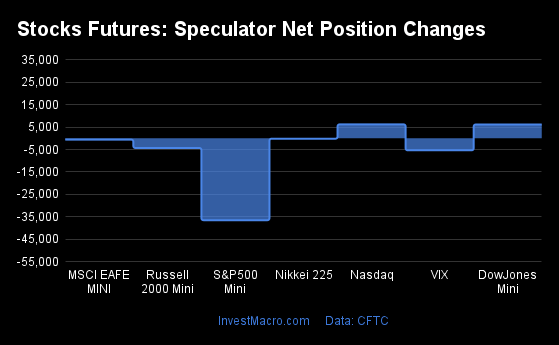
The latest update for the weekly Commitment of Traders (COT) report was released by the Commodity Futures Trading Commission (CFTC) on Friday for data ending on December 19th.

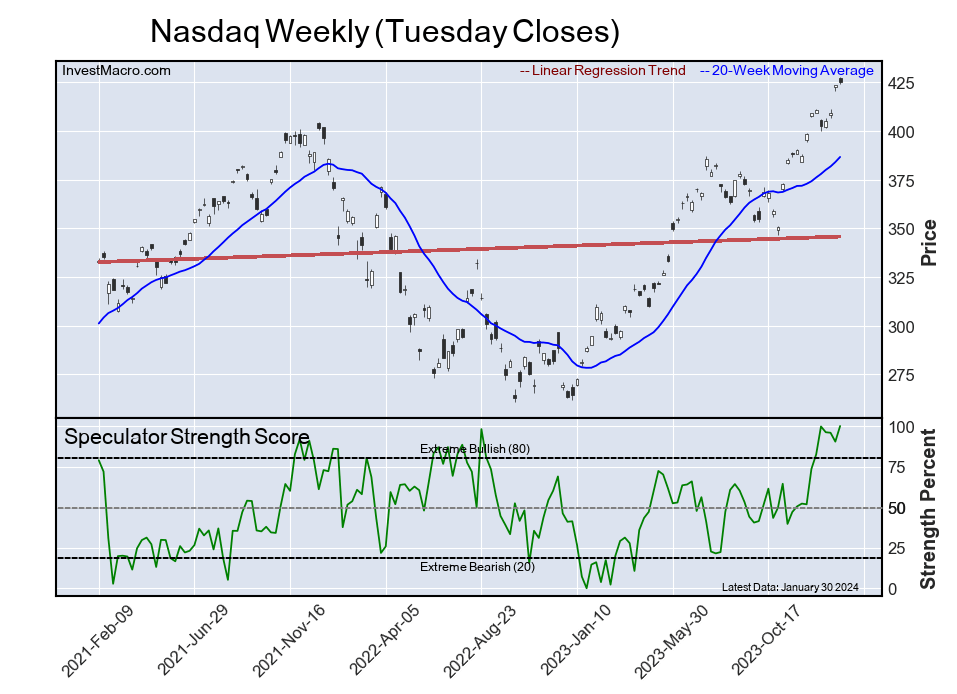
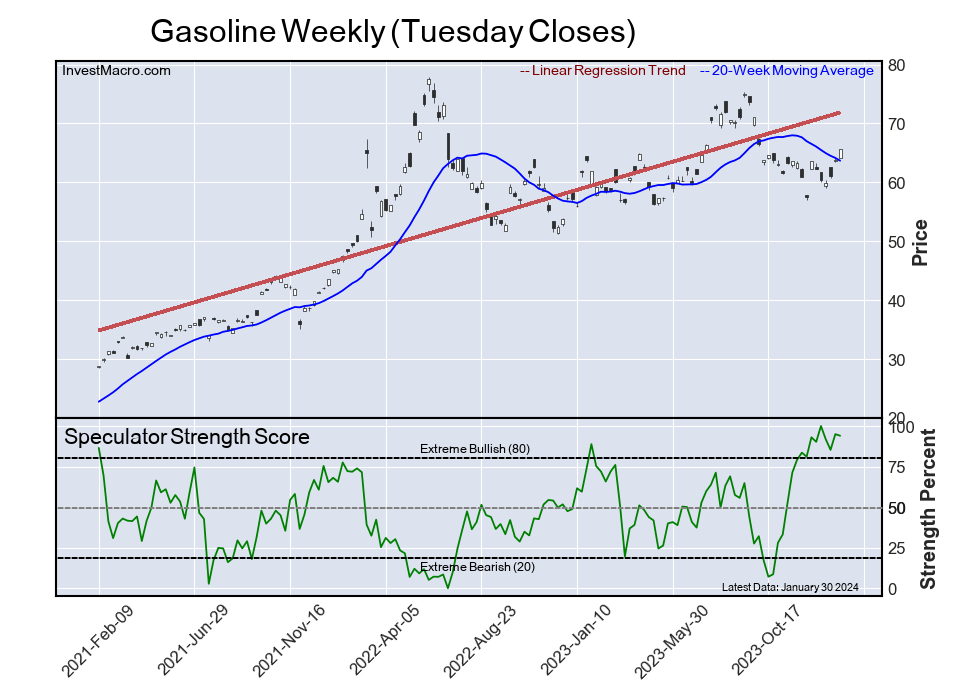
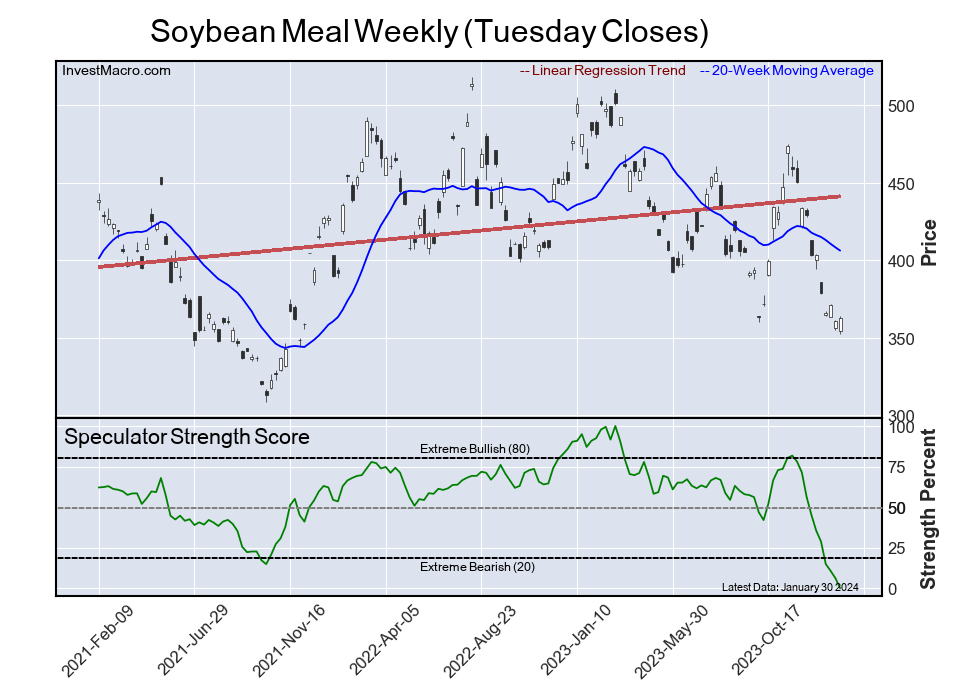
This weekly Extreme Positions report highlights the Most Bullish and Most Bearish Positions for the speculator category. Extreme positioning in these markets can foreshadow strong moves in the underlying market.

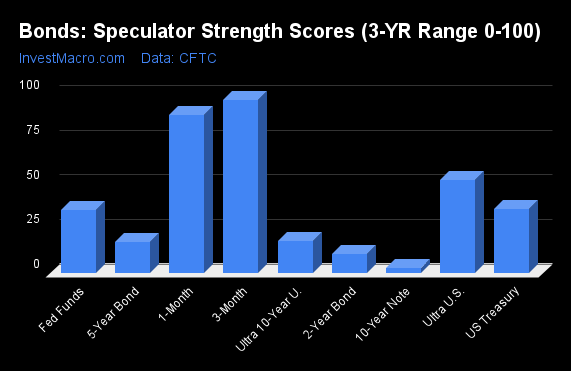
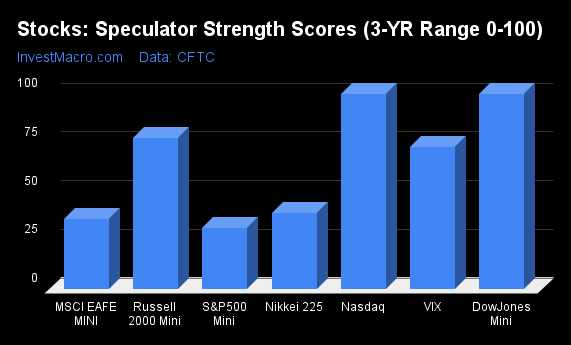
To signify an extreme position, we use the Strength Index (also known as the COT Index) of each instrument, a common method of measuring COT data. The Strength Index is simply a comparison of current trader positions against the range of positions over the previous 3 years. We use over 80 percent as extremely bullish and under 20 percent as extremely bearish. (Compare Strength Index scores across all markets in the data table or cot leaders table)


Here Are This Week’s Most Bullish Speculator Positions:

Steel


The Steel speculator position comes in as the most bullish extreme standing this week. The Steel speculator level is currently at a 100.0 percent score of its 3-year range.

The six-week trend for the percent strength score totaled 5.6 this week. The overall net speculator position was a total of 130 net contracts this week with a rise by 615 contract in the weekly speculator bets.


Speculators or Non-Commercials Notes:

Speculators, classified as non-commercial traders by the CFTC, are made up of large commodity funds, hedge funds and other significant for-profit participants. The Specs are generally regarded as trend-followers in their behavior towards price action – net speculator bets and prices tend to go in the same directions. These traders often look to buy when prices are rising and sell when prices are falling. To illustrate this point, many times speculator contracts can be found at their most extremes (bullish or bearish) when prices are also close to their highest or lowest levels.

These extreme levels can be dangerous for the large speculators as the trade is most crowded, there is less trading ammunition still sitting on the sidelines to push the trend further and prices have moved a significant distance. When the trend becomes exhausted, some speculators take profits while others look to also exit positions when prices fail to continue in the same direction. This process usually plays out over many months to years and can ultimately create a reverse effect where prices start to fall and speculators start a process of selling when prices are falling.


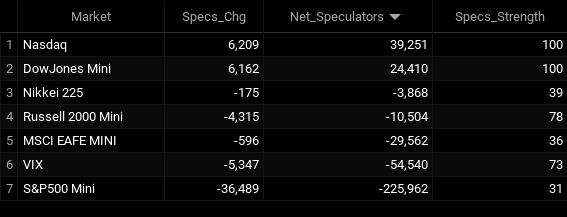
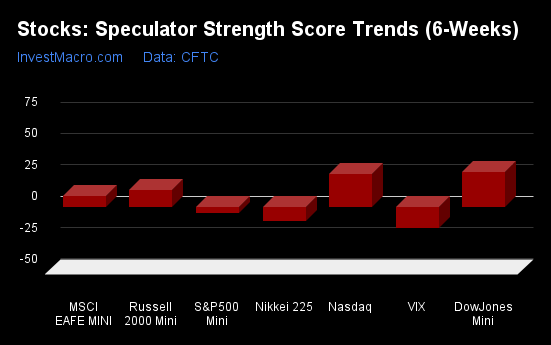
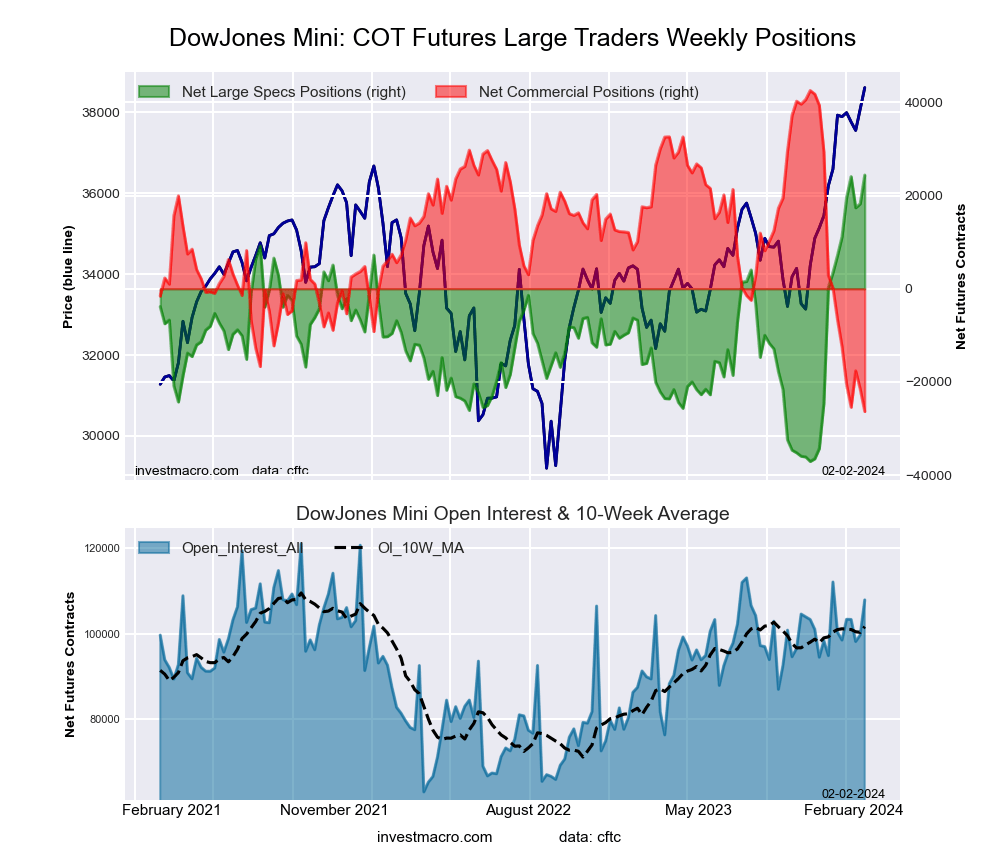
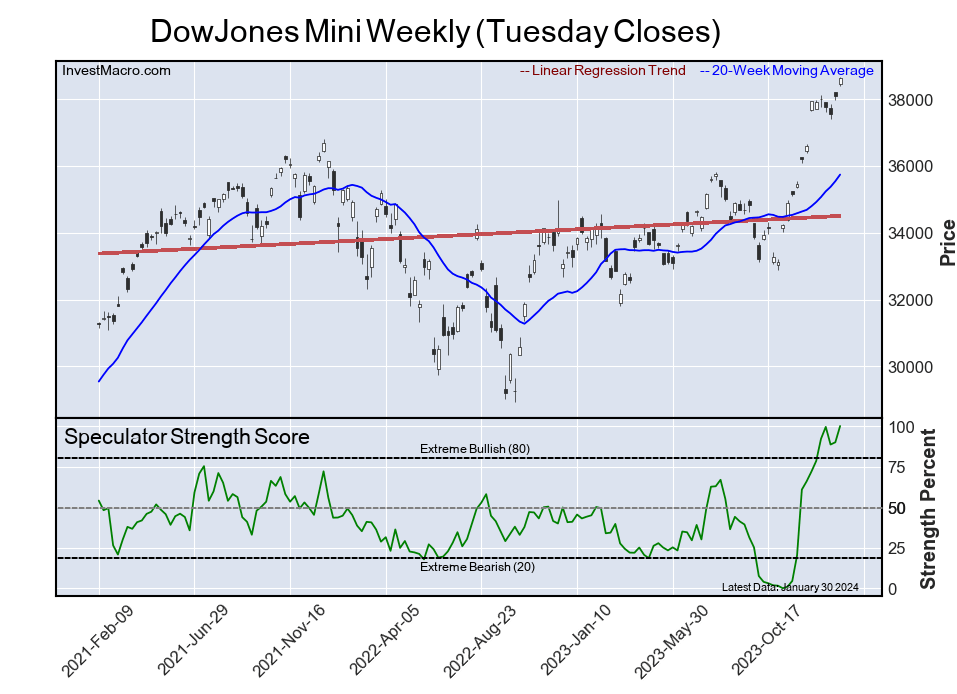
DowJones Mini


The DowJones Mini speculator position comes next in the extreme standings this week. The DowJones Mini speculator level is now at a 95.5 percent score of its 3-year range.

The six-week trend for the percent strength score was 95.5 this week. The speculator position registered 7,123 net contracts this week with a weekly gain of 3,672 contracts in speculator bets.


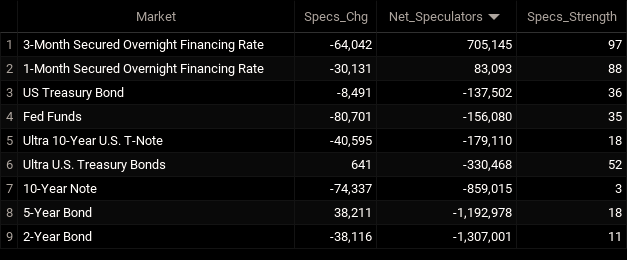
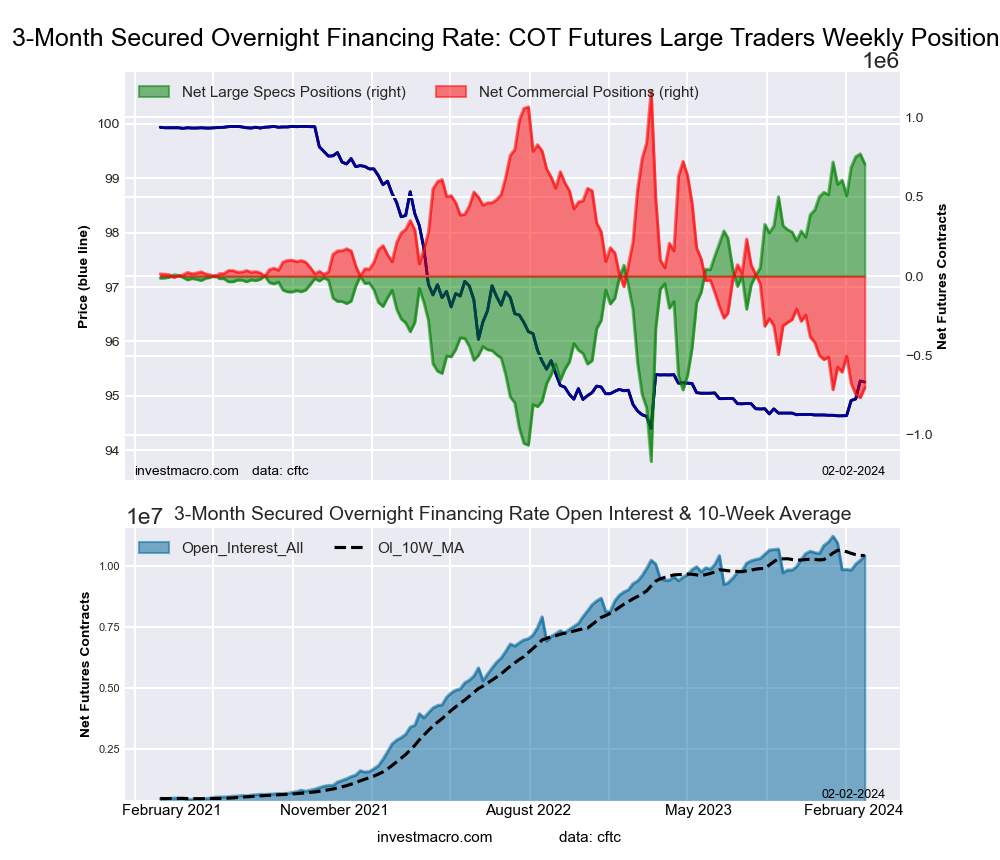
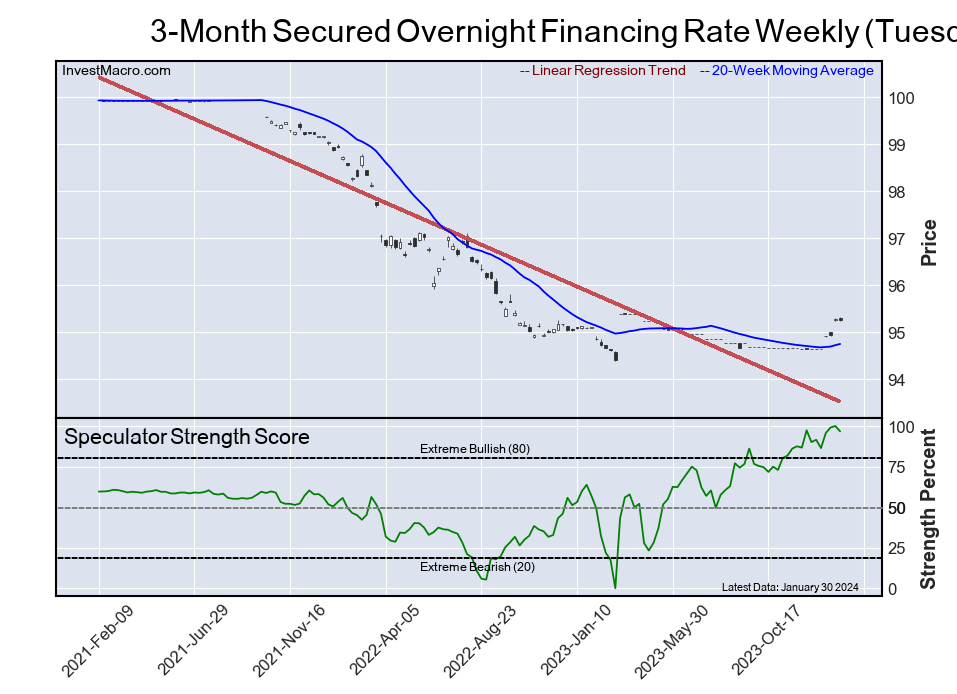
3-Month Secured Overnight Financing Rate


The 3-Month Secured Overnight Financing Rate speculator position comes in third this week in the extreme standings. The 3-Month Secured Overnight Financing Rate speculator level resides at a 92.5 percent score of its 3-year range.

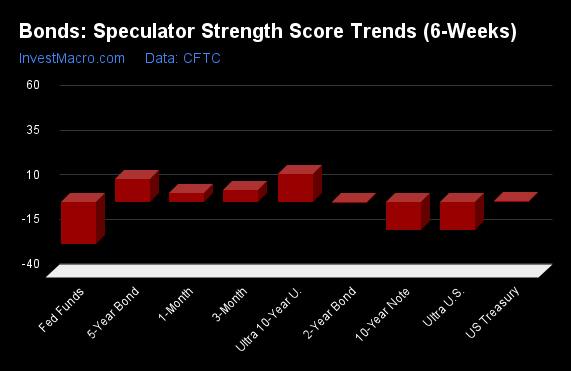
The six-week trend for the speculator strength score came in at 10.1 this week. The overall speculator position was 577,707 net contracts this week with a drop of -140,519 contracts in the weekly speculator bets.


Brazil Real


The Brazil Real speculator position comes up number four in the extreme standings this week. The Brazil Real speculator level is at a 91.4 percent score of its 3-year range.

The six-week trend for the speculator strength score totaled a change of 22.4 this week. The overall speculator position was 43,832 net contracts this week with a decline of -2,832 contracts in the speculator bets.


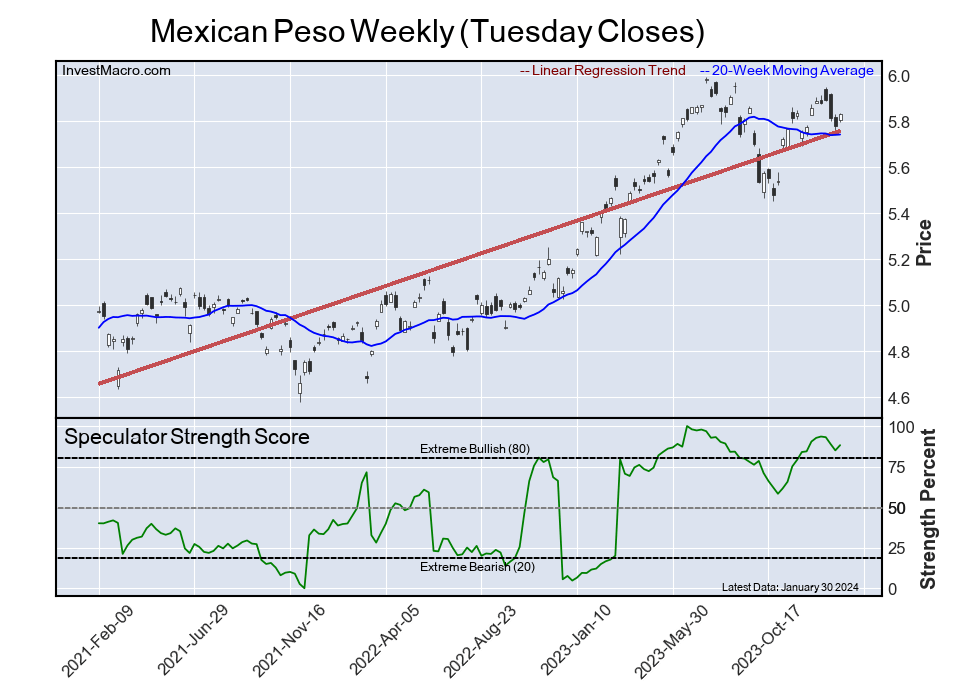
Mexican Peso


The Mexican Peso speculator position rounds out the top five in this week’s bullish extreme standings. The Mexican Peso speculator level sits at a 90.4 percent score of its 3-year range. The six-week trend for the speculator strength score was 28.8 this week.

The speculator position was 84,001 net contracts this week with a boost by 9,876 contracts in the weekly speculator bets.


This Week’s Most Bearish Speculator Positions:

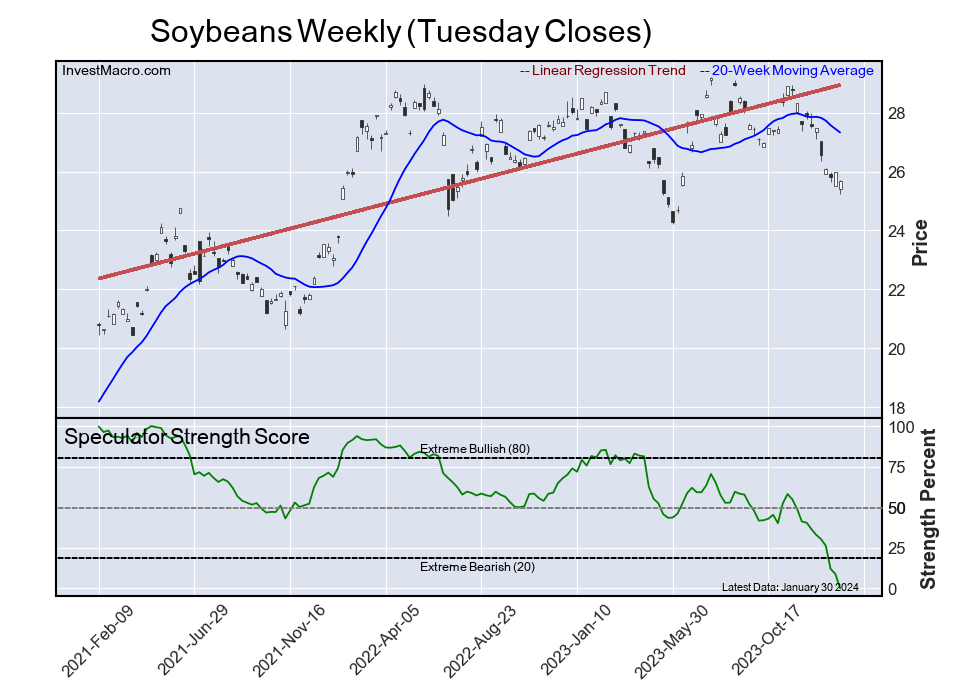
Soybeans


The Soybeans speculator position comes in as the most bearish extreme standing this week. The Soybeans speculator level is at a 0.0 percent score of its 3-year range.

The six-week trend for the speculator strength score was -23.8 this week. The overall speculator position was 1,998 net contracts this week with a drop of -15,541 contracts in the speculator bets.


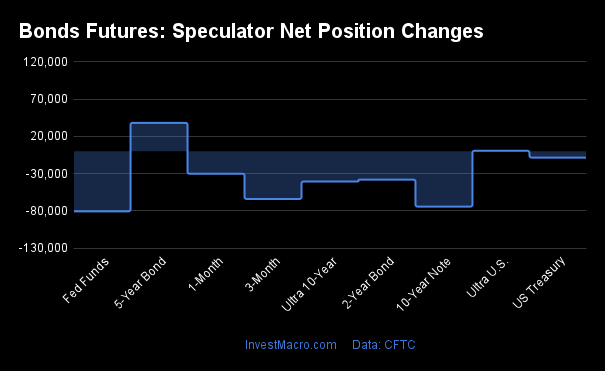
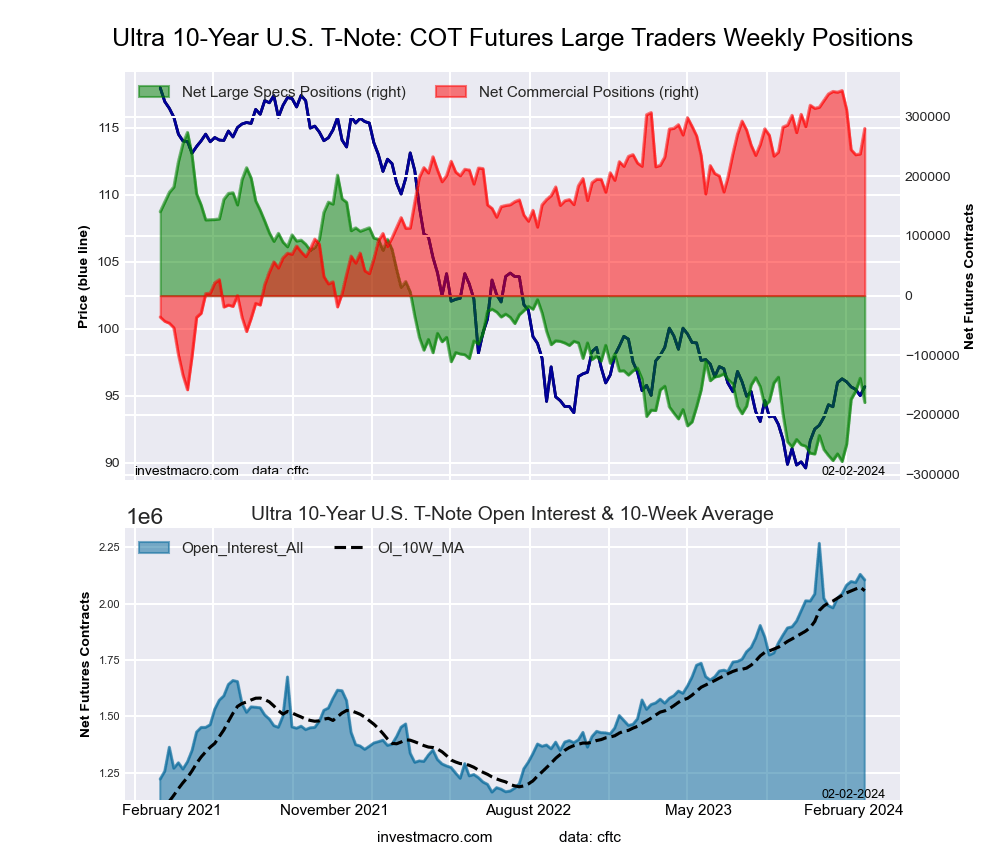
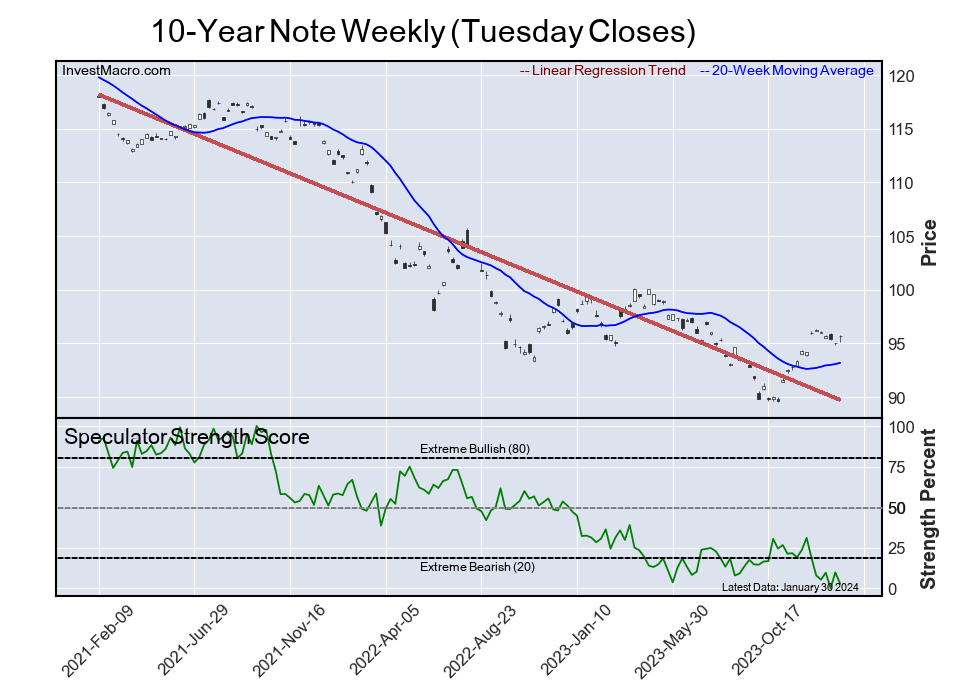
Ultra 10-Year U.S. T-Note


The Ultra 10-Year U.S. T-Note speculator position comes in next for the most bearish extreme standing on the week. The Ultra 10-Year U.S. T-Note speculator level is at a 2.0 percent score of its 3-year range.

The six-week trend for the speculator strength score was -0.2 this week. The speculator position was -265,218 net contracts this week with an increase by 11,258 contracts in the weekly speculator bets.


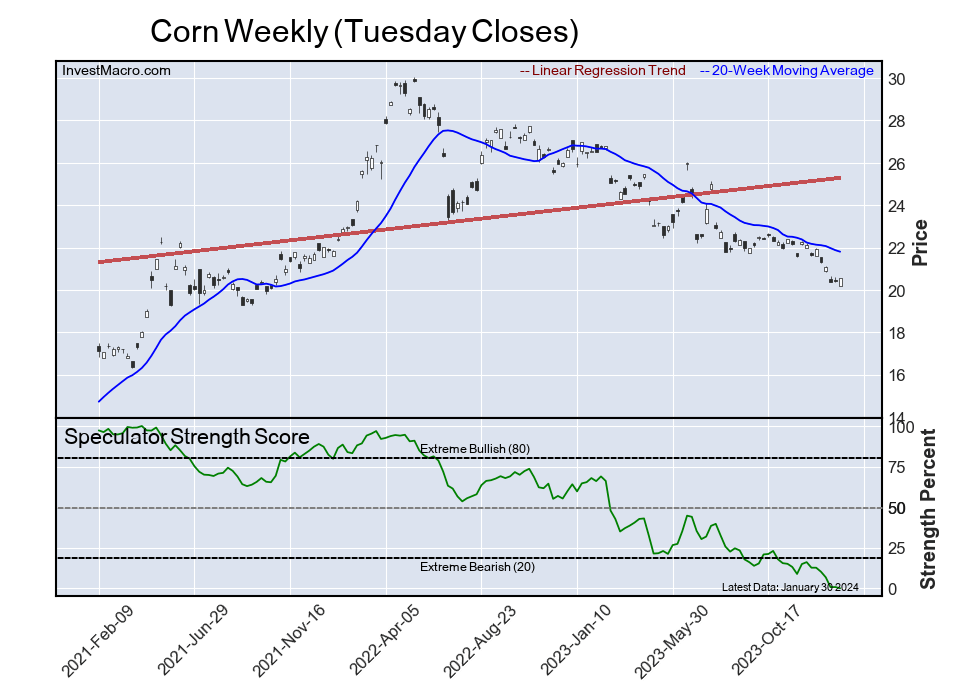
Corn


The Corn speculator position comes in as third most bearish extreme standing of the week. The Corn speculator level resides at a 4.2 percent score of its 3-year range.

The six-week trend for the speculator strength score was -3.1 this week. The overall speculator position was -127,570 net contracts this week with a decrease of -26,355 contracts in the speculator bets.


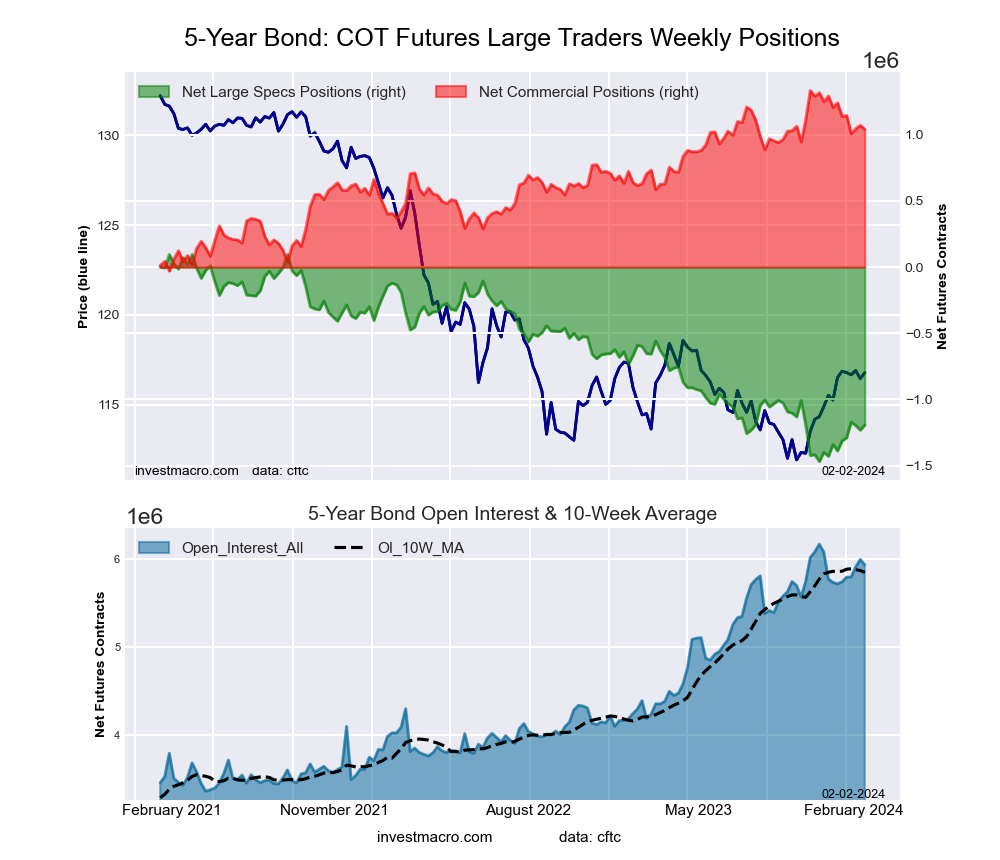
5-Year Bond


The 5-Year Bond speculator position comes in as this week’s fourth most bearish extreme standing. The 5-Year Bond speculator level is at a 5.1 percent score of its 3-year range.

The six-week trend for the speculator strength score was 2.2 this week. The speculator position was -1,388,222 net contracts this week with a decline of -48,102 contracts in the weekly speculator bets.


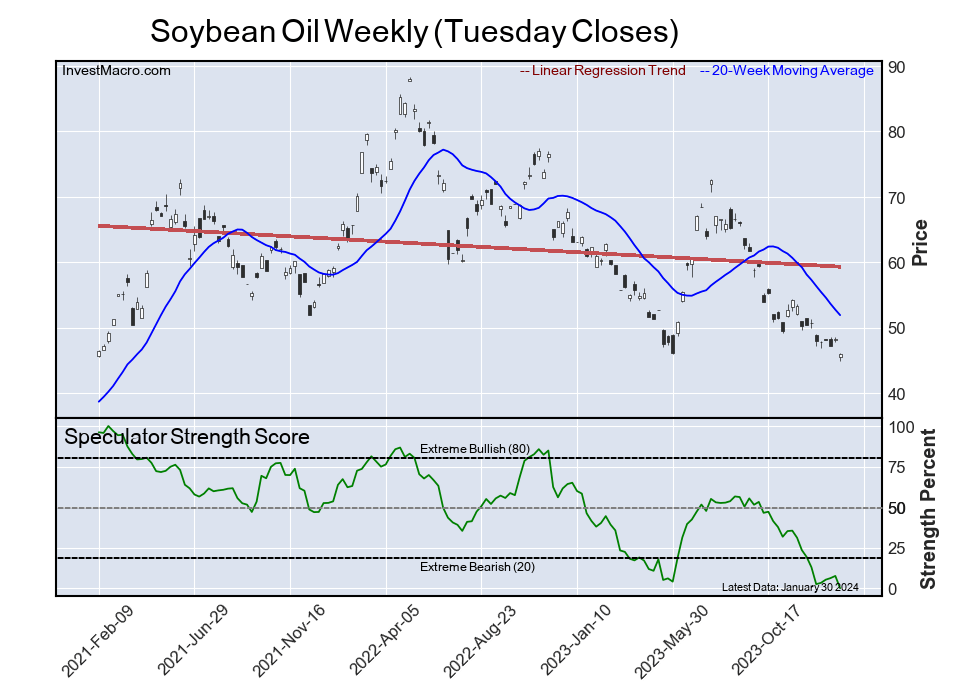
Soybean Oil


Finally, the Soybean Oil speculator position comes in as the fifth most bearish extreme standing for this week. The Soybean Oil speculator level is at a 8.6 percent score of its 3-year range.

The six-week trend for the speculator strength score was -18.2 this week. The speculator position was -16,356 net contracts this week with a decrease of -10,552 contracts in the weekly speculator bets.


Article By InvestMacroReceive our weekly COT Newsletter

*COT Report: The COT data, released weekly to the public each Friday, is updated through the most recent Tuesday (data is 3 days old) and shows a quick view of how large speculators or non-commercials (for-profit traders) were positioned in the futures markets.

The CFTC categorizes trader positions according to commercial hedgers (traders who use futures contracts for hedging as part of the business), non-commercials (large traders who speculate to realize trading profits) and nonreportable traders (usually small traders/speculators) as well as their open interest (contracts open in the market at time of reporting). See CFTC criteria here.

How government payments to the vulnerable can multiply to create economic growth for everyone

By Conrad Nunnenmacher, United Nations University; Franziska Gassmann, Maastricht University, and Julieta Morais, United Nations University 

The economic fallout of COVID-19 left people around the world facing a significant threat to their livelihood. As governments scrambled to mitigate the pandemic’s impact on their populations, many decided to use direct payments to support vulnerable citizens.

More than a sixth of the world’s population received some sort of cash transfer in 2020. These programmes were a key source of support for many people during the COVID-19 pandemic, with governments across the globe scaling up or introducing such payments.

Brazil, for example, introduced the Auxílio Emergencial programme, while the US implemented Economic Impact Payments. Both cash transfer programmes aimed to shield vulnerable populations. This was also not exclusive to middle- and high-income countries. Togo, for instance, implemented the Novissi cash transfer programme during the pandemic.

Using cash payments to protect people’s livelihoods and lift the poor out of poverty is not a novel strategy. It can be a simple way to provide basic social protection to people in need, helping citizens to withstand sudden shocks and also facilitating their recovery after a crisis.

Cash assistance as financial burden?

But cash transfers still attract a lot of debate. Besides typical concerns like creating dependency and reducing labour supply, these programmes are costly. This can cause concern about their sustainability and hinder the initial implementation and scale-up.

For example, the Social Assistance Grants for Empowerment programme in Uganda in 2010 became so politicised that it was challenged every step of the way to its implementation and later expansion. Even before its pilot programme, concerns regarding its financial sustainability and the potential creation of welfare dependencies were raised by politicians.

During periods of economic crisis, austerity policies can also directly influence social assistance initiatives. After the 2010 economic crisis, for example, Greece initially suspended and subsequently terminated its housing benefit programme, attributing this decision to budget constraints.

But cash transfer programmes aren’t “handouts”. The positive impacts on the people that receive them are well documented. They are powerful instruments for strengthening household resilience and fostering opportunities that can extend beyond the immediate recipients.

The multiplier effect

There is another vital element of social cash transfers that most people aren’t aware of: the economic multiplier effect. In a recent study with Ugo Gentilini, Giorgia Valleriani and Yuko Okamura of the World Bank, and Giulio Bordon of the UN’s International Labour Organization, we found the multiplier effect can greatly enhance the financial sustainability of social cash transfer programmes.

The core concept is that every dollar transferred that is spent rather than saved can increase the total income in the economy beyond its original value.

Consider a smallholder farmer who uses some of her grant to buy fertiliser at the local market. The local merchant profits from it and then spends this additional income, increasing profits for someone else and setting off a ripple effect through the economy. These taxable gains go beyond the people that get the payment, effectively “multiplying” the original grant’s worth for the economy.

Investing in the entire economy

We reviewed 23 studies of 19 cash assistance programmes across 13 countries and found substantial evidence of this multiplier effect from social cash transfers.

In Brazil, for example, Bolsa Família, the current national social welfare programme of Brazil and one of the largest cash transfer programmes in the world, was found to increase real GDP per R$1 (£0.16) spent by R$1.04. This is a small but positive spillover into the Brazilian economy.

Another noteworthy example is the GiveDirectly initiative in rural western Kenya, a pilot programme that offered a US$1,000 (£791) one-off transfer to 10,500 poor households. This programme led to a strong positive economic shock with a multiplier of 2.5 per US$1. So, every US$1 transferred generated a value of US$2.50 locally – a strong positive spillover to the local economy.

Social cash transfers have the potential to not only support the poor and vulnerable, but also to stimulate the wider economy. Rather than simply accepting the general perception of social transfers as an expense, we should start recognising their true value as an investment in a country’s entire economy.The Conversation

About the Authors:

Conrad Nunnenmacher, PhD Research Fellow in Innovation, Economics, Governance and Sustainable Development, United Nations University; Franziska Gassmann, Professor of Social Protection and Development, Maastricht University, and Julieta Morais, Researcher in Social Protection, United Nations University

This article is republished from The Conversation under a Creative Commons license. Read the original article.

4 business lessons from the Boston Tea Party

By Jay L. Zagorsky, Boston University 

December 2023 marks the 250th anniversary of the Boston Tea Party, one of the most famous events leading up to the Revolutionary War. On the night of Dec. 16, 1773, Colonists marched aboard three ships and threw more than 90,000 pounds of tea into Boston Harbor. No one died, and the only things injured were the tea leaves, but this event helped precipitate a major war.

I am a business school professor who often drives by the Tea Party site while taking his wife to work. Each time, I ponder the lessons this “party” has for people in business. Many aren’t obvious. Here are four that come to mind.

1) Publicity is important

There were actually 10 “tea party” protests across the 13 Colonies in the late 1770s. However, only one ended up in the history books. The others, including a second one in Boston just four months afterward, were largely forgotten. Getting the word out fast, which in those days was done by newspaper, is key. Otherwise, you can do a lot of work that will be ignored.

2) Dramatic changes in the market can cause problems

The volume of tea imports into the Colonies rose at a very fast rate in the four years leading up to the Boston Tea Party. They went from 55 tons in 1770, which was close to the amount dumped in the harbor, to 370 tons the year the tea was dumped. This was an increase of almost seven times. The population of the Colonies was about 2 million people in 1770 and didn’t expand much in that four-year period. Basic economics tells us this dramatic increase in supply without more customers meant the price of tea had to fall a lot.

We don’t know for sure the identities of the ringleaders who convinced people to dump the tea. As a business school professor, I believe it’s clear that some protesters were protecting their commercial interests. Shopkeepers, merchants and smugglers who had stocks of tea on hand didn’t want to see 90,000 more pounds of tea flooding the market. It would make them lose money. Dumping the tea in the harbor was a way of protecting their investment.

3) Even relatively small dollar amounts make big impressions

For all the fuss about the tea that was dumped, the damages weren’t huge. The British East India Company reported 9,659 English pounds in damages. That would be about 1.2 million pounds in today’s money, according to the Bank of England’s inflation calculator. Using the current exchange rate of $1.26 to a British pound means the tea dumped cost about US$1.5 million.

To give you a rough idea of how small this is, last year the U.S. imported half a billion dollars’ worth of tea. In terms of my favorite British import, the destroyed tea was worth about the same price as three Rolls-Royce Phantoms.

4) Timing matters … but it isn’t everything

The Tea Party happened on a night when the tide was especially low, with only 2 feet of water under the ships. Because the tide was so low, much of the tea didn’t get wet. Instead, it ended up in a giant pile, mostly dry, beside the boats. This meant the partygoers had to climb out of the boats and spend hours sloshing in the mud moving the tea into the water.

Given that the tea arrived at the end of November, they could have picked a time that would have made the job less difficult. Nonetheless, the revolutionaries weren’t deterred, since hard work can often overcome the worst timing.

The Tea Act of 1773 helped set the stage for the Revolutionary War.

When it comes down to it, history is more than just stories we tell children. The past contains many lessons for adults, including businesspeople. This incident, which played a key role in inciting the Revolutionary War that freed the American Colonies from British rule, is so much more than a cartoon image of men dumping chests of tea into Boston Harbor.The Conversation

About the Author:

Jay L. Zagorsky, Clinical Associate Professor of Markets, Public Policy and Law, Boston University

This article is republished from The Conversation under a Creative Commons license. Read the original article.

Japan sees inflationary pressures easing. Angola leaves OPEC+

By JustMarkets

As of Thursday’s stock market close, the Dow Jones Index (US30) was up by 0.87%, while the S&P 500 Index (US500) added 1.03%. The NASDAQ Technology Index (US100) closed positive by 1.26% on Thursday. Thursday’s US Q3 GDP reports and the Philadelphia Fed’s December business outlook survey came in weaker than expected, raising expectations of a Fed rate cut and supporting the indices.

The Philadelphia Fed’s December business outlook survey unexpectedly fell by 4.6 to minus 10.5, which was weaker than expectations for a rise to minus 3.0. Also, the US Q3 GDP report was revised down by 0.3 to 4.9% (q/q), which was weaker than expectations of no change at 5.2%. In addition, leading indicators for November declined by 0.5% m/m, marking the twentieth consecutive month of declining readings. In contrast, weekly initial jobless claims rose by 2,000 to 205,000, indicating a stronger labor market than expectations of a rise to 215,000.

The US will release the PCE inflation report today, which is favored by the US Fed over CPI because the PCE measure covers a wider range of goods and services than CPI and a broader range of buyers. Economists expect the PCE price index to be unchanged for a second month in November, while the core index, which excludes volatile food and energy costs, is expected to rise 0.2%. A rise in the PCE index would temporarily restore confidence in the US dollar and be a headwind for indices and gold.

Equity markets in Europe traded yesterday without a single dynamic. German DAX (DE40) declined by 0.27%, French CAC 40 (FR40) fell by 0.16%, Spanish IBEX 35 (ES35) added 0.03%, and British FTSE 100 (UK100) closed negative by 0.27%.

Oil prices came under pressure on Thursday after Angola announced its withdrawal from OPEC+ amid a dispute over oil production quotas. Angola is Africa’s second-largest oil producer, and the split between Angola and other OPEC+ members is bearish, signaling more strife between members of the organization. Others in OPEC+ may also resist Saudi Arabia’s attempt to force all members of the organization to cut production.

Natural gas prices rose sharply on Thursday amid a larger-than-expected decline in weekly US gas inventories. The EIA reported that US natural gas inventories fell by 87 billion cubic feet, more than forecasts of 82 billion cubic feet. As of December 15, natural gas inventories were up by 7.6% from a year earlier and were 8.5% above the 5-year seasonal average, indicating ample natural gas supplies. In Europe, natural gas storage facilities were 89% full as of December 17, above the 5-year seasonal average of 77% for this time of year.

Asian markets were mostly up on Thursday. Japan’s Nikkei 225 (JP225) gained 0.28% yesterday, China’s FTSE China A50 (CHA50) rose by 2.03%, Hong Kong’s Hang Seng (HK50) ended the day up by 1.95%, and Australia’s ASX 200 (AU200) ended Thursday positive 0.53%.

In Japan, consumer prices excluding fresh food showed 2.5% y/y, down from the previous reading of 2.9%. The fall in energy costs intensified while the rise in processed food prices weakened. The latest data is consistent with previous Tokyo data and the BOJ’s view that price pressures will gradually ease as import-driven inflation falls, with the focus on whether the broader trend supported by wage growth takes root. The consensus among economists is that the Bank of Japan will bring the rate to zero in April 2024 after checking the outcome of annual wage negotiations due in March.

Apart from Japan, Australia is the only developed economy where traders are unsure if policymakers will start cutting the key rate in the next six months. Once the Reserve Bank’s rate easing cycle begins, the market sees it as the least likely to cut rates. The RBA’s rate is 1% lower than the Fed’s, emphasizing the subdued pace of tightening even though inflation in Australia remains higher than in the US and UK. These differences help explain why RBA chief Michelle Bullock is taking a hawkish tone and why money markets expect the RBA to tread cautiously on the easing path. This will lead to a stronger Australian dollar next year against major currencies.

S&P 500 (US500) 4,746.75 +48.40 (+1.03%)

Dow Jones (US30) 37,404.35 +322.35 (+0.87%)

DAX (DE40) 16,687.42 −45.63 (−0.27%)

FTSE 100 (UK100) 7,694.73 −20.95 (−0.27%)

USD Index 101.87 +0.03 (+0.03%)

News feed for 2023.12.22:
  • – Japan National Core CPI (m/m) at 01:30 (GMT+2);
  • – Japan Monetary Policy Meeting Minutes at 01:50 (GMT+2);
  • – UK GDP (m/m) at 09:00 (GMT+2);
  • – UK Retail Sales (m/m) at 09:00 (GMT+2);
  • – US Core Durable Goods Orders (m/m) at 15:30 (GMT+2);
  • – US PCE Price index (m/m) at 15:30 (GMT+2);
  • – Canada GDP (m/m) at 15:30 (GMT+2);
  • – US Michigan Consumer Sentiment (m/m) at 17:00 (GMT+2);
  • – US New Home Sales (m/m) at 17:00 (GMT+2).

By JustMarkets


This article reflects a personal opinion and should not be interpreted as an investment advice, and/or offer, and/or a persistent request for carrying out financial transactions, and/or a guarantee, and/or a forecast of future events.