RBA may hike rates as early as May. Natural gas prices plunge to a 4-month low

By JustMarkets 

The US stock market demonstrated growth on Tuesday. By the close of trading, the Dow Jones (US30) rose by 0.76%, the S&P 500 (US500) gained 0.77%, and the technology-heavy Nasdaq (US100) closed higher by 1.09%. The main driver of optimism was a shift in the perception of risks associated with artificial intelligence: investors moved from fears regarding the displacement of traditional software to a realization of AI’s potential as a powerful supplement to existing business processes. The true victor of the day was AMD, whose shares soared by 8.8% (peaking at a 14% gain) following the announcement of a massive contract with Meta. This deal, bolstered by warrants for Meta to purchase AMD shares, confirms AMD’s status as a serious competitor to Nvidia.

Equity markets in Europe mostly declined on Tuesday. The German DAX (DE40) edged down by 0.02%, the French CAC 40 (FR40) closed up 0.26%, the Spanish IBEX 35 (ES35) dropped 0.54%, and the British FTSE 100 (UK100) closed at negative 0.04%. After a sharp fall the day before, the market entered a phase of cautious anticipation. Traders attempted to ignore the negative backdrop surrounding the AI sector, drawing optimism from the strong news out of Meta and awaiting tomorrow’s Nvidia report, which will be a defining moment for European tech stocks.

WTI oil prices recovered to $66.20 per barrel on Wednesday, breaking a two-day decline. The market has paused in anticipation of the third round of nuclear negotiations in Geneva: positive signals from Tehran regarding a readiness for a deal are clashing with Donald Trump’s harsh rhetoric. The primary factor of uncertainty remains security in the Strait of Hormuz, as any diplomatic failure threatens the transit of 20% of the world’s oil supply. Additional pressure on quotes is exerted by the implementation of the US 10% tariff. Traders fear that an escalation of trade wars and a possible hike in duties to 15% will slow global economic growth, inevitably leading to a drop in energy demand.

Silver prices (XAG) declined by nearly 1%, reaching $87.50 per ounce. Mass liquidation of assets on Chinese exchanges outweighed the global demand for safe-haven assets that arose amid the introduction of US 15% tariffs and expectations regarding the nuclear talks with Iran. The silver market remains in a correction phase following the shock collapse of 38% at the beginning of the month.

The US natural gas prices (XNG) fell below the $3 per MMBtu mark on Tuesday, reaching their lowest level since October. The primary factor for the decline was updated weather prognoses from NOAA, indicating abnormally high temperatures in the Western and Central states through the end of February. Weakening heating demand at the end of the winter season forced traders to reassess the likelihood of a fuel deficit, resulting in a sharp sell-off.

Asian markets traded with mixed dynamics yesterday. The Japanese Nikkei 225 (JP225) rose by 0.87%, the Chinese FTSE China A50 (CHA50) showed a modest gain of 0.14%, the Hong Kong Hang Seng (HK50) fell by 1.82%, and the Australian ASX 200 (AU200) showed a negative result of 0.04%.
The economy of Hong Kong demonstrated robust growth of 3.8% in the fourth quarter of 2025, marking its best performance in two years. Strengthening business confidence amid real estate market stabilization and the active implementation of AI technologies allowed the year to close with total GDP growth of 3.5%, significantly exceeding the 2024 result (2.6%). For 2026, growth rates are projected to remain in the range of 3.3-3.6%, provided that external trade frictions do not exert a critical impact on the logistics hub.

The Australian dollar (AUD) strengthened to 0.70 USD on Wednesday, reacting to unexpectedly high inflation data. The January figure of 3.8% (against projections of 3.7%) and an increase in core inflation to 3.4% confirmed market fears: price pressure in Australia remains persistent. Amid historically low unemployment and strong wage growth, these figures make the RBA the most “hawkish” among major central banks. Markets now see a 70% probability of a rate hike to 4.1% as early as May, with the prospect of another move in November.

S&P 500 (US500) 6,890.07 +52.32 (+0.77%)

Dow Jones (US30) 49,174.50 +370.44 (+0.76%)

DAX (DE40) 24,986.25 −5.72 (−0.02%)

FTSE 100 (UK100) 10,680.59 −4.15 (−0.04%)

USD Index 97.87 +0.16% (+0.16%)

News feed for: 2026.02.25

  • Australia Consumer Price Index (m/m) at 02:30 (GMT+2); – AUD (HIGH)
  • German GDP (q/q) at 09:00 (GMT+2); – EUR (MED)
  • German GfK Consumer Confidence (m/m) at 09:00 (GMT+2); – EUR (LOW)
  • Hong Kong Inflation Rate (m/m) at 10:30 (GMT+2); – HKD (MED)
  • Australia RBA Gov Bullock Speaks at 10:40 (GMT+2); – AUD (LOW)
  • Eurozone Consumer Price Index (m/m) at 12:00 (GMT+2); – EUR (MED)
  • US Crude Oil Reserves (w/w) at 17:30 (GMT+2). – WTI (HIGH)

By JustMarkets


This article reflects a personal opinion and should not be interpreted as an investment advice, and/or offer, and/or a persistent request for carrying out financial transactions, and/or a guarantee, and/or a forecast of future events.

GBP/USD Extends Gains for Fourth Consecutive Day as Investors Watch BoE Rate Outlook

By RoboForex Analytical Department

GBP/USD continues to rise on Wednesday, reaching 1.3516.

Following recent comments from Bank of England Governor Andrew Bailey, investors are seeking additional clarification on his decision to keep the rate unchanged at the last meeting. The Monetary Policy Committee left the rate unchanged, with a narrow margin.

The market expects two rate cuts in 2026, taking the rate down to 3.25%. However, the timing of the easing remains uncertain. If Bailey signals the possibility of a cut as early as March, the market could begin pricing in more than 50bps of easing this year.

An additional source of pressure stems from US President Donald Trump’s trade policy. The baseline tariff of 10% has already entered into force. However, it remains unclear when an increase to 15% might be introduced.

The focus is also on the by-election in the Gorton and Denton constituency in Manchester, which is seen as an important test for Prime Minister Keir Starmer and the Labour Party. Political uncertainty is adding to sterling volatility.

Technical Analysis

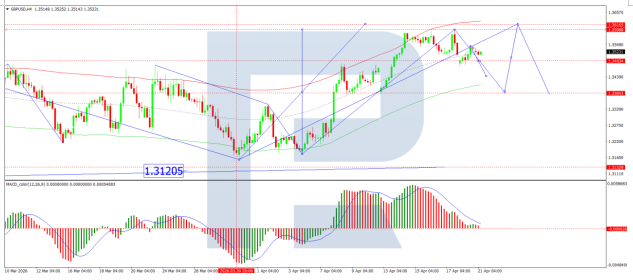
On the H4 GBP/USD chart, the market is forming a broad consolidation range around the 1.3500 level. Today, an expansion towards 1.3560 is possible. Subsequently, a correction towards 1.3494 may follow. After completing this correction, a new consolidation range is likely to form. If it breaks to the upside, the next target would be 1.3622. If it breaks to the downside, the next target may be 1.3383. Technically, this scenario is confirmed by the MACD indicator. Its signal line is below the zero level and pointing upward.

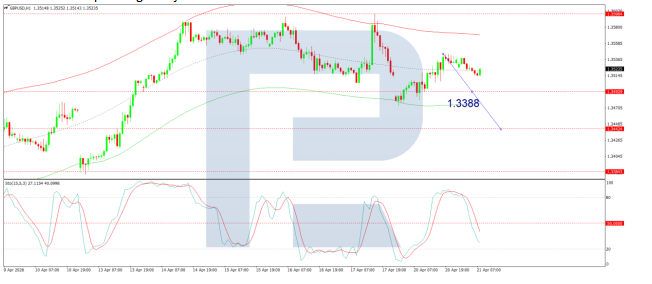
On the H1 GBP/USD chart, the market formed a compact consolidation range around 1.3500 and, following an upside breakout, is developing a wave structure towards 1.3560. Subsequently, a downward move towards 1.3500 cannot be ruled out. Technically, this scenario is confirmed by the Stochastic oscillator. Its signal line is above the 50 level and pointing upward.

Conclusion

In summary, GBP/USD extends its recovery for a fourth consecutive session as markets await clearer signals from BoE Governor Bailey on the timing of potential rate cuts. While the baseline scenario anticipates two reductions this year, any dovish surprise could trigger further repricing. Technically, the pair is building momentum within a broad consolidation range, with near-term resistance at 1.3560 and support at 1.3494. A sustained break above 1.3560 would open the door to 1.3622, while a failure could result in a retest of lower-range levels. Political uncertainty from the upcoming by-election and ongoing US trade policy risks add further volatility. The near-term bias remains cautiously bullish, but direction will depend on Bailey’s tone and market interpretation.


Disclaimer

Any forecasts contained herein are based on the author’s particular opinion. This analysis may not be treated as trading advice. RoboForex bears no responsibility for trading results based on trading recommendations and reviews contained herein.

Uranium Is Now a Critical Mineral, and This Co. Is On a Fast Track to US Production

Source: Streetwise Reports (2/9/26)

The U.S. introduces new initiatives aimed at forming a preferential trade bloc for critical minerals like uranium. This company is on a literal fast-track for its projects in the Southwest.

Last week, the U.S. introduced new initiatives aimed at forming a preferential trade bloc for critical minerals like uranium, including coordinated price floors, as part of efforts to counter China’s dominance in this essential market for technology and defense, according to a CNBC report on February 5 by Dylan Butts.

These plans were discussed at a “Critical Minerals Ministerial” in Washington, which included representatives from 54 countries, the European Union, and senior Trump administration officials. Following the event, Washington announced that it had signed bilateral critical minerals agreements with 11 countries, building on 10 similar agreements made over the past five months. Negotiations were also completed with an additional 17 nations.

The Trump administration’s new minerals stockpile initiative, known as “Project Vault,” can encompass any materials identified as “critical” by the U.S. Geological Survey, a White House official told CNBC, according to another February 3 report by Pippa Stevens and Spencer Kimball for the website. The agency, which is part of the Interior Department, lists over 50 minerals as critical, including rare earths, lithium, uranium, and copper. These minerals are considered essential for national security, economic stability, and supply chain resilience. According to the USGS, these minerals are crucial because they “underpin key industries, drive technological innovation, and support critical infrastructure vital for a modern American economy.”

The objectives of these agreements are to tackle pricing challenges, encourage development, create fairer markets, and expand access to financing in the critical minerals sector. Secretary of State Marco Rubio, who hosted the Ministerial, also announced the creation of the “Forum on Resource Geostrategic Engagement (FORGE)” on Wednesday. This partnership aims to coordinate critical mineral policy and projects.

“We have a number of countries that have signed on to that, and many more that we hope will do so… the purpose of FORGE is to foster collaboration and to build a network of partners across the world,” Rubio said.

FORGE will complement an earlier initiative between the U.S. and nine partners, known as “Pax Silica.” While Pax Silica focuses on safeguarding AI-related supply chains, FORGE is designed as a broader platform to coordinate critical mineral policy, pricing, and project development. Rubio highlighted the risks associated with the concentration of critical minerals in “one country,” implicitly referring to China, including geopolitical leverage and potential disruptions from pandemics or instability.

AI, Data Centers Begin Impacting Power Grids

Uranium is becoming one of the most important of these minerals. Predictions of increased electricity consumption from data centers are beginning to materialize, raising concerns about the impact on the power grid and the environment, according to a report by Benjamin Storrow for E&E News/Politico on December 24, 2025.

Commercial electricity demand, which serves as a proxy for data center power usage, rose by 2% in the first nine months of 2025 compared to the same period last year, following a 3% increase in 2024. This marks a significant shift for the U.S. power sector, which had experienced flat electricity demand for much of the past two decades.

Demand is expected to climb even higher as the Trump administration and tech companies aim to outpace China in artificial intelligence development. The consulting firm Grid Strategies forecasts that peak electricity demand nationwide could rise by 166 gigawatts by 2030, equivalent to adding 15 New York Cities over the next five years.

“We’re now seeing in the data what we’ve all been talking about the last couple years,” said Rob Gramlich, CEO of Grid Strategies. He estimated that data centers would contribute to 55% of the growth in U.S. electricity demand over the next five years. The increasing power needs of data centers have become a political issue as electricity costs rise for consumers.

AI data centers and the electrification of various industries are driving a surge in power demand that exceeds global supply, prompting companies, policymakers, and investors to reconsider nuclear power, according to a research report by Morgan Stanley on August 28, 2025. Morgan Stanley Research projects 586 gigawatts (GW) of new global nuclear capacity by 2050, which is 53% higher than their previous forecast last year when analysts noted a “renaissance” in the industry. They now estimate that potential investments in the nuclear value chain could reach US$2.2 trillion by 2050, up from the initial US$1.5 trillion forecast. This increased momentum is expected to benefit several sectors, including uranium mining, nuclear power generation, and the construction of equipment and plants. “The nuclear renaissance has been building for some time already—with 22 nations pledging to triple nuclear capacity by 2050 at the COP28 summit in December 2023, plant life extensions in Europe, a strong pipeline in China, and Japan continuing to restart capacity,” says Tim Chan, Morgan Stanley’s Head of Asia Sustainability Research. “The dual imperatives of decarbonization and energy security are making the nuclear renaissance a truly global investment theme.”

While natural gas is currently the primary alternative to meet AI’s energy needs, technology companies are willing to pay a premium to transition to nuclear energy. “We believe natural gas will be the primary near-term solution for powering AI data centers due to its speed to market, reliability, and flexibility, while nuclear power represents a longer-term clean energy alternative that is likely to gradually increase in importance,” said Stephen Byrd, Morgan Stanley’s Global Head of Sustainability Research. “Gas and nuclear are likely to play complementary roles.”

Uranium Is Now a Critical Mineral

Last fall, the USGS released the final 2025 list of critical minerals deemed essential to mitigate potential risks from disrupted supply chains, reported Nick Mordowanec for Military.com on December 1, 2025. Ten new minerals were added, including uranium, bringing the total to 60.

“This is the most comprehensive, science-based assessment yet of the minerals our nation relies on,” said USGS Director Ned Mamula. “Critical minerals underpin industries worth trillions of dollars, and import dependence puts key sectors at risk. This work helps secure the materials needed for U.S. economic growth and technological leadership.”

Trump has called for a quadrupling of nuclear power by 2050, the article reported.

Christo Liebenberg, co-founder and president of the U.S.-based uranium enrichment company LIS Technologies, told Military.com that there is “huge market demand” for uranium to bolster a domestic electricity grid facing challenges from expanding AI data centers across the country.

He noted the significance of the critical list now including 60 minerals — more than half of the 118 elements on the periodic table.

“Being on that list, it’s clear that it triggers a whole set of advantages,” Liebenberg said. “That makes mining uranium in the U.S. a lot easier, faster, and more attractive to investors. It’s like flipping a switch that says, ‘OK, everybody, uranium is now important. Let’s make mining in the US easier, cheaper, faster, and more predictable.’ Of course, this is exactly what would stimulate production. But the thing is, it doesn’t stop just with mining. Being on that list actually has a ripple effect through the entire nuclear fuel supply chain.”

Key actions and impacts for uranium under the U.S. critical minerals framework include fast-tracked permitting, reduced foreign reliance, strategic stockpiling, improved support for the mining industry, and energy security.

Companies With Tangible Operational Progress in the Spotlight

The uranium sector enters 2026 at a pivotal moment where operational execution increasingly distinguishes credible investment opportunities from speculative ventures, according to Henry Mann writing for Crux Investor on January 27. Spot uranium prices reached US$100 per pound in January 2026, marking 17-month highs. However, equity valuations across the sector reflect ongoing institutional caution about timing mismatches between nuclear buildouts and the upstream uranium supply response.

In this context of structural demand growth and supply fragility, companies demonstrating tangible operational progress — such as permitting momentum — are positioning themselves to attract capital as the gap between operational reality and equity pricing narrows, Mann wrote.

Chris Frostad, CEO of Purepoint Uranium, explains the demand fundamentals, according to Mann: “When a reactor begins operation, it creates a customer relationship lasting 40 years or more. Reactors operate under strict refueling schedules, and utilities know precisely how much fuel they will require annually for years into the future.” The growth in artificial intelligence infrastructure and data centers adds incremental demand considerations, though existing reactor fleets provide the foundation of predictable consumption.

In 2025, utilities contracted for approximately 82-85 million pounds of uranium, while replacement requirements approached 150-180 million pounds. However, utility contracting does not follow smooth patterns, as buyers may contract for 250 million pounds in a single year when conditions align with their strategies.

Laramide Resources Ltd.

One company uniquely positioned to take advantage of these events is Laramide Resources Ltd. (LAM:TSX; LMRXF:OTCQX: LAM:ASX), a uranium developer with both in-situ and hard-rock deposits located in the southwestern United States and Australia.

In June 2025, Laramide announced that its advanced-stage uranium projects, Crownpoint-Churchrock and La Jara Mesa in New Mexico, were designated as FAST-41 covered projects by the Federal Permitting Improvement Steering Council. This designation is part of the federal infrastructure permitting program established under Title 41 of the Fixing America’s Surface Transportation Act. It underscores the strategic importance of Laramide’s projects and streamlines the evaluation process.

The FAST-41 designation places these uranium projects among a select group of federally prioritized energy initiatives, receiving enhanced permitting coordination and transparency to support the Department of Energy’s domestic uranium reserve and the U.S. government’s broader energy-security goals.

“The project comprises two geographically distinct deposits: one at Crownpoint and the other at Churchrock,” the company said in a recent recap sent to Streetwise Reports. “They are unified under a single U.S. Nuclear Regulatory Commission (NRC) Source Material License. This regulatory status differentiates the project from many U.S. peers that remain at earlier permitting stages.”

Churchrock’s current NI 43-101 Inferred Mineral Resource is 50.8 million pounds U₃O₈ based on historic drilling consolidated into a modern database. Crownpoint adds an NI 43-101 Inferred Mineral Resource of 5.1 million pounds U₃O₈, also derived from historic datasets and interpreted for ISR-style mineralization geometry, the company said.

Laramide’s U.S. portfolio is “increasingly relevant against the backdrop of declining domestic uranium production and growing demand tied to nuclear energy, including life-extensions of existing reactors and new investments linked to data centers and advanced nuclear technologies,” Laramide said in the document. “With the majority of U.S. uranium supply currently imported, projects that are licensed, permitted, or moving visibly through federal processes have taken on heightened strategic importance.”

Analyst: Co. ‘Scans Very Well on Value’

Laramide is a uranium exploration and development company with projects in the western United States and Australia, according to Beacon Securities Analyst Michael Curran in an updated research note on November 3, 2025.

Crownpoint-Churchrock’s designation as a FAST-41 project is expected to streamline the permitting process as part of the U.S. government’s initiative to advance domestic critical mineral and metal projects toward production. This followed a similar designation for LAM’s La Jara Mesa project in early May, also in New Mexico.

“In mid-July, LAM’s Westmoreland project in Queensland, Australia, received a Mineral Development License (MDL), which allows Laramide to proceed with studies to advance the project towards a Mining Lease (ML) application,” the analyst wrote. “This work is likely to include metallurgical testing, environmental, engineering and design studies, as well as feasibility-related work.”

In July, Laramide raised gross proceeds of CA$12 million by issuing 20 million common shares at CA$0.60 each.

Beacon’s 12-month fair value increased from CA$1.45 to CA$1.50 per LAM share. As this still represents significant upside from current price levels, the firm maintained its BUY rating for Laramide Resources.

“In our view, Laramide represents an attractive investment for exposure to uranium developments in the top-tier mining jurisdictions,” Curran wrote. “Laramide’s assets are in areas of historical uranium mining, thus should have lower barriers to development than other jurisdictions.”

Curran said the firm’s preferred valuation for mining equities uses cash flow-based metrics such as P/CF and P/NAV, utilizing life-of-mine production forecasts and commodity price assumptions.

“However, for earlier-staged explorers where it is arguably too early to create a DCF model with much accuracy, we employ a more basic valuation metric of Adjusted Market Capitalization per total resource (AMC/lb) or Enterprise Value per resource pound (EV/lb),” the analyst wrote. For Laramide, he employed a hybrid model using DCF-based valuation for Churchrock and EV/lb valuation methods for the company’s other U.S. and Australian assets. Curran noted that Beacon currently did not attribute any value to the Kazakhstan assets.

Streetwise Ownership Overview*

Laramide Resources Ltd. (LAM:TSX; LMRXF:OTCQX: LAM:ASX)

Retail: 70%
Strategic Investors: 19%
Insiders and Management: 11%

*Share Structure as of 2/9/2026

Churchrock is recognized as a development-ready asset, as noted by SCP Equity Research analysts J. Chan, E. Magdzinski, and K. Kormpis in a June 3 research note. The company’s January 2024 PEA forecasts a 31-year operational lifespan, producing 31.2 million pounds at an all-in sustaining cost of US$34.83 per pound using ISR extraction methods.

With uranium valued at US$75 per pound, this results in a US$239 million after-tax NPV, strongly supporting Laramide’s evaluation. The plan involves accelerating wellfield development to increase output to 2-3 million pounds, thereby shortening the operational timeline while improving financial outcomes.

“We think Laramide scans very well on value, with two projects of reasonable size/scale in the U.S. and Australia (arguably two of the top three jurisdictions in today’s geopolitically bifurcating market),” the analysts remarked, giving the stock a Buy rating with a CA$1.35 per share target price.

Ownership and Share Structure1

Laramide reports that insiders and management hold about 11% of the company, with strategic corporate entity Boss Energy Ltd. owning 19%. The remainder is held by retail investors.

Other major shareholders include Alps Advisors with 9.4%, Henderson with 6.82%, Mirae Asset Global Investments LLC with 4.78%, and Vident Investment Advisory LLC with 1.1%. As of February 9, its market capitalization is CA$215.06 million, with 283.62 million shares outstanding. It trades within a 52-week range of CA$0.46 to CA$0.91.


Important Disclosures:

  1. Laramide Resources Ltd. is a billboard sponsor of Streetwise Reports and pays SWR a monthly sponsorship fee between US$3,000 and US$6,000.
  2. Steve Sobek wrote this article for Streetwise Reports LLC and provides services to Streetwise Reports as an employee.
  3. This article does not constitute investment advice and is not a solicitation for any investment. Streetwise Reports does not render general or specific investment advice and the information on Streetwise Reports should not be considered a recommendation to buy or sell any security. Each reader is encouraged to consult with his or her personal financial adviser and perform their own comprehensive investment research. By opening this page, each reader accepts and agrees to Streetwise Reports’ terms of use and full legal disclaimer. Streetwise Reports does not endorse or recommend the business, products, services or securities of any company.

For additional disclosures, please click here.

1. Ownership and Share Structure Information

The information listed above was updated on the date this article was published and was compiled from information from the company and various other data providers.

Coffee crops are dying from a fungus with species-jumping genes – researchers are ‘resurrecting’ their genomes to understand how and why

By Lily Peck, University of California, Los Angeles 

For anyone who relies on coffee to start their day, coffee wilt disease may be the most important disease you’ve never heard of. This fungal disease has repeatedly reshaped the global coffee supply over the past century, with consequences that reach from African farms to cafe counters worldwide.

Infection with the fungus Fusarium xylarioides results in a characteristic “wilt” in coffee plants by blocking and reducing the plant’s ability to transport water. This blockage eventually kills the plant.

Some of the most destructive plant pathogens in the world infect their hosts in this way. Since the 1990s, outbreaks of coffee wilt have cost over US$1 billion, forced countless farms to close and caused dramatic drops in national coffee production. In Uganda, one of Africa’s largest producers, coffee production did not recover to pre-outbreak levels until 2020, decades after coffee wilt was first detected there. And in 2023, researchers found evidence that coffee wilt disease had resurfaced across all coffee-producing regions of Ivory Coast.

Studying the genetics of plant pathogens is crucial to understanding why this disease continues to return and how to prevent another major outbreak.

Rise and fall of coffee wilt disease in Africa

While early outbreaks of coffee wilt disease affected a wide range of coffee types, later epidemics primarily affected the two coffee species dominating global markets today: arabica and robusta.

First identified in 1927, coffee wilt disease decimated several varieties of coffee grown in western and central Africa. Although farmers combated the fungus with a shift to supposedly resistant robusta crops in the 1950s, the reprieve was short-lived.

The disease reemerged in the 1970s on robusta coffee, spreading through eastern and central Africa. By the mid-1990s, yields had collapsed and coffee production could not recover in countries like the Democratic Republic of Congo.

Separately, researchers identified the disease on arabica coffee in Ethiopia in the 1950s and watched it become widespread by the 1970s

Two side-by-side maps of Africa with several regions highlighted to indicate coffee wilt disease outbreaks
Coffee wilt disease has spread widely in Africa. The first outbreak before the 1950s affected mainly central and western Africa (left map) while the second outbreak originated in central Africa and spread east (right map). Affected countries are colored by the decade the disease was first detected.
Peck et al 2023/Plant Pathology, CC BY-SA

Although coffee wilt disease is currently endemic at low and manageable levels across eastern and central Africa, any future resurgence of the disease could be catastrophic for African coffee production. Coffee wilt also poses a threat to producers in Asia and the Americas.

New types of disease emerge

Coffee wilt disease evolved alongside coffee itself. Over the past century, it has repeatedly reemerged, attacking different types of coffee each time. But did these shifts reflect the rapid evolution of new types of disease, or something else entirely?

Fungal disease has devastated plants for millennia, with the earliest records of outbreaks dating from the biblical plagues. Like humans, plants have an immune system that protects them against attacks from pathogens like fungi.

While most fungal attempts at infection fail, a small number do succeed thanks to the constant evolutionary pressure on pathogens to overcome host plant defenses. In this evolutionary arms race, pathogens and hosts continuously adapt to each other by genetically changing their DNA. Boom and bust cycles of disease occur as one gains advantage over the other.

The rise of modern agriculture has led to widespread monocultures of genetically uniform crops. While monocultures have significantly boosted food production, they have also contributed to environmental degradation and increased plant vulnerability to disease.

Crop breeders have attempted to protect monocultures by introducing disease resistance genes, with farms widely applying fungicides and other environmentally damaging products. But these relatively weak protections for hundreds of acres of identical plants have resulted in outbreaks decimating crops that people depend on.

It’s likely that modern agriculture’s reliance on monocultures has enabled and accelerated the evolution of new types of pathogen capable of overcoming resistance in plants. As a result, crops become more susceptible to disease outbreaks.

Resurrecting fungal strains

Understanding the lessons of the past is essential to avoiding future plant pandemics. But this can be challenging, because the specific pathogen strains that caused previous disease outbreaks may no longer exist in nature or may have changed substantially.

In my research on the evolutionary arms race between host and pathogen in coffee wilt disease, I sought to address these problems by “resurrecting” historical strains of the fungus that causes the disease, Fusarium xylarioides. Researchers know little about why the earlier and later outbreaks targeted different types of coffee, so I explored the genetic changes in F. xylarioides that underlie this narrowing of its hosts.

I reconstructed historical genetic changes in the major coffee wilt disease outbreaks over the past seven decades by using strains from a fungus library – culture collections that preserve living fungi. These libraries store long-term living data and reflect the fungal genetic diversity present at the time of collection.

Microscopy image of blue fuzzy sphere with long extensions
Gibberella (Fusarium) xylarioides, with arrow pointing to its spore-containing sac.
Julie Flood

Whether a pathogen takes the upper hand in the evolutionary arms race depends on its ability to generate new types of genes. It can do so either by changing and rearranging its DNA sequence or by moving DNA sequences between organisms in a process called horizontal gene transfer. These mechanisms can create new effector genes that enable pathogens to infect and colonize a host plant.

Initially, I sequenced six whole genomes of strains involved in outbreaks before the 1970s as well as later outbreaks that specifically targeted arabica or robusta coffee plants. I found that strains of F. xylarioides specific to arabica or robusta genetically differed from each other, with most of these differences inherited from parent to offspring. This process is called vertical inheritance.

Genes that jump between species

However, I also found that several regions of the F. xylarioides genome were potentially acquired horizontally from F. oxysporum, a global plant pathogen that infects over 120 crops, including bananas and tomatoes. These included different regions of the genome across strains specific to arabica and robusta coffee.

But did these changes introduce new effector genes in the F. xylarioides strains that infect arabica and robusta coffee plants specifically? To answer this question, I first sequenced and assembled the first F. xylarioides reference genome, stitching together long stretches of DNA. I then sequenced and compared this reference genome to the whole genomes of three more pre-1970s F. xylarioides strains and 10 additional historical Fusarium strains found on or around diseased coffee bushes, as well as F. xylarioides strains from infected arabica coffee seedlings.

I found substantial evidence for horizontal transfer of disease-causing genes between species of Fusarium. This includes the presence of giant genetic components called Starships in Fusarium. These so-called jumping genes carry their own molecular machinery, allowing them to move around or between genomes. Genes involved in adaptation, such as those linked to virulence, metabolism or host interaction, also move with them. Scientists think Starships may potentially enable fungi to adapt to changing environmental conditions.

I found that large and highly similar genetic regions, including Starships and active effector genes involved in disease, had moved from F. oxysporum to F. xylarioides. Importantly, different genetic regions were present across strains of F. xylarioides specific to arabica and robusta, but they were absent from other related Fusarium species. This suggests that these genes were gained from F. oxysporum.

Arming farmers with knowledge

Today, a third of all global crop yields are lost to pest and disease. Reconciling the tension between agricultural productivity and environmental protection is important to balance humanity’s needs for the future. Central to this challenge is reducing the spread of disease and new outbreaks.

On the flip side to monocultures, many plant species surrounding and within small and family-run coffee farms in sub-Saharan Africa may act as disease reservoirs, where fungi pathogens can lurk. These include banana trees and Solanum weeds in the tomato family that are susceptible to fungal infection.

Human farming practices may have inadvertently created an artificial niche for these fungi, with coffee bushes brought into widespread contact with banana plants and Solanum weeds. If fungi in the same genus can frequently exchange genetic material, it could accelerate the ability of plant pathogens to adapt to new hosts.

Testing noncoffee plants for F. xylarioides infection could reveal alternative plant species where different Fusarium fungi come into contact and exchange genetic material. This matters because across sub-Saharan Africa, coffee plants often share fields with banana trees and weeds. If these neighboring plants can harbor fungi that act as new sources of genetic variation, they may help fuel new disease strains.

Identifying the plants that can act as hosts to fungi could give farmers practical options to reduce coffee plants’ risk of disease, from targeted weed management to avoiding the planting of vulnerable crops side by side.The Conversation

About the Author:

Lily Peck, Postdoctoral Scholar in Evolutionary Biology, University of California, Los Angeles

This article is republished from The Conversation under a Creative Commons license. Read the original article.

Supreme Court rules against Trump’s emergency tariffs – but leaves key questions unanswered

By Kent Jones, Babson College 

President Donald Trump’s economic agenda took a major hit when the Supreme Court struck down many of his most sweeping tariffs. While Trump has options to restore some of the tariffs, he’s losing his most powerful tool to impose them almost at will as a bargaining chip with other countries.

In a 6-3 decision on Feb. 20, 2026, the court ruled that Trump’s use of the International Emergency Economic Powers Act of 1977 to unilaterally impose tariffs on other countries was unconstitutional. Since January 2025, Trump has used the act to impose tariffs on nearly every other country.

As a trade economist, I wasn’t particularly surprised by the ruling. In the oral arguments, several justices were openly skeptical about the president’s ability to claim virtually unlimited powers to set tariffs without specific congressional language to authorize them. While the ruling answers some questions about the legality of Trump’s tariffs, it leaves many others unanswered.

What are the tariffs the court ruled against?

The tariffs that the court ruled are illegal include the “reciprocal” tariffs Trump imposed to match the value of trade barriers set by other countries. They ranged from 34% on China to a baseline of 10% for the rest of the world.

They also include a 25% tariff on some goods from Canada, China and Mexico over those countries’ supposed failure to curb the flow of fentanyl into the U.S.

By striking down these tariffs, the Supreme Court will presumably force U.S. tariff schedules to revert to the status quo before they were imposed on April 2, 2025, or “liberation day,” as Trump called it.

Why did the Supreme Court rule against the tariffs?

Most of the tariffs Trump has imposed used the International Emergency Economic Powers Act to provide legal justification. While the law allows the president to respond to economic emergencies with measures such as embargoes and asset seizures, it does not specifically authorize the use of tariffs imposed unilaterally.

This was a major point made in the Supreme Court decision. In every other statute available to the president to use tariffs, there is specific language stating the way in which tariffs can be imposed, language that is absent in the International Emergency Economic Powers Act statute.

The majority decision, in which the court’s liberal justices were joined by three of its conservatives, determined that the president overreached his powers to set tariffs, based on Article 1, Section 8, of the U.S Constitution. Any delegation of tariff-making powers in an emergency to the president must be consistent with this provision.

It is also noteworthy that Trump openly declared that one of the benefits of the tariffs was how much revenue they bring in. But the majority decision noted that this represented an unauthorized presidential power to tax, which is also governed by the Article 1, Section 8, provision that assigns this power exclusively to Congress.

What does this mean for Trump’s trade policy?

Trump used the International Emergency Economic Powers Act tariffs as leverage to negotiate numerous bilateral deals with U.S. trading partners. Now that the tariffs have been declared unconstitutional, many countries may demand that the deals be renegotiated.

The decision does not cover all of the administration’s tariffs, including national security tariffs imposed under Section 232 for specific industries such as autos, steel and aluminum, and Section 301, a statute that allows the president to impose tariffs against individual countries if they have imposed unfair or discriminatory trade actions against the U.S. This covers some of the tariffs on imports from China.

What other options does Trump have to achieve similar results?

Trump has often used or threatened to use International Emergency Economic Powers Act tariffs for political reasons, including against Brazil over its prosecution of a former president, Mexico over immigration and Canada over its plans to sign a trade deal with China, and other reasons.

The Supreme Court decision will make it more difficult for Trump to use tariffs and tariff threats in that way. One outcome is that constitutional limits the justices set on presidential tariff-making powers should constrain the justification of tariffs for political reasons.

The main avenues for new tariffs in response to the Supreme Court decision are sections 232 and 301. The president could potentially try to get Congress to pass new legislation expanding his tariff powers, but that seems unlikely in an election year.

However, it is important to understand that he chose to use the International Emergency Economic Powers Act as the mainspring of his trade policy because he interpreted it as providing him with full discretion in the unlimited power to impose tariffs without further congressional constraints.

In order to impose similar tariffs under Section 232, for example, each tariff order must be focused on a single industry, and the Commerce Department must issue a report documenting the emergency as it applies to that industry. Presumably, Trump will be preparing to use Section 232 for a large numbers of industries in addition to those currently covered by that statute.

For at least some of the countries with which Trump has already negotiated bilateral trade deals, many of their exports would not be covered by Section 232 tariffs, hence the likelihood that those countries will demand a renegotiation.

Will US companies get refunds for the tariffs they’ve already paid?

The Supreme Court decision appears not to address the question of tariff rebates, but many companies have already indicated that they will demand them.

In principle, any U.S. company in possession of tariff receipts documenting their payment of tariffs would be eligible for a refund if the Supreme Court approves this remedy.

What are the political consequences of this decision?

Since public opinion about Trump’s tariffs is already negative, the president will have to deal with a likely backlash against any attempts to replace the rejected tariffs with new ones.

It will be interesting to see how Republicans in Congress react to Trump’s tariff strategy in view of the upcoming midterm elections. For example, Republicans from states that border Canada may push back against further efforts to curb trade with their northern neighbor.

This may impose a further constraint on Trump’s tariff policy.The Conversation

About the Author:

Kent Jones, Professor Emeritus, Economics, Babson College

This article is republished from The Conversation under a Creative Commons license. Read the original article.
Final Approval Clears the Way for Full-Scale Uranium Push in Paraguay

Source: Streetwise Reports (2/23/26) 

Vanguard Mining Corp. (UUU:CSE; UUUFF:OTC; SL51:FWB) received its final environmental licences for the Yuty PrometeoSan Jose Uranium Project in southeastern Paraguay. Read how the approvals complete the permitting process and coincide with Vanguards application for a Prospection Permit to advance uranium exploration.

Fraser Institute Jurisdiction Rating
Vanguard Mining Corp.

British Columbia
(last modified 11/26/25)
Friendly Policies 67.42%
Best Practices Mineral Potential Index 85.45%
Socioeconomic Agreements/Community Development Conditions, aka Safety 40%
Political Stability 50%

Data from the
Fraser Institute’s Mining Survey

Vanguard Mining Corp. (UUU:CSE; UUUFF:OTC; SL51:FWB) announced that it has secured its final set of Environmental Licences from Paraguay’s Ministerio del Ambiente y Desarrollo Sostenible (MADES), completing the licensing process for its 90,000-hectare Yuty Prometeo–San Jose Uranium Project in southeastern Paraguay.

The company reported that the Environmental Licences now cover the entire land position at Yuty Prometeo–San Jose, with no additional environmental approvals required. Concurrently, Vanguard has submitted an application for a Prospection Permit with Paraguay’s Vice Ministry of Mining and Energy (VMME), which is described as a critical step toward full-scale uranium exploration authorization.

This development coincides with Paraguay’s growing profile in the global critical minerals sector, highlighted by its participation alongside the United States in a high-level ministerial summit in Washington, D.C., hosted by the U.S. Department of State. The meeting on February 4 addressed cooperation on uranium, lithium, and rare earth element supply chains. Paraguay’s Deputy Minister of Mines and Energy, Mauricio Bejarano, cited rising global demand as a factor drawing international attention to the country.

David Greenway, Chief Executive Officer of Vanguard Mining, stated in a company news release, “The receipt of our final MADES Environmental Licences marks a significant permitting milestone and further advances the Yuty Prometeo–San Jose Uranium Project toward prospection authorization.”

According to the company, the project area spans four concessions — three San Jose and one Prometeo — within the Paraná Basin. The Prometeo Concession covers approximately 27,666 hectares and is adjacent to Uranium Energy Corp.’s (UEC) Yuty Project. Historical data referenced in the news release described uranium-bearing mineralization identified in seven of 27 drill holes completed on the Prometeo property, including one hole reporting values between 0.05% and 0.10% U₃O₈ across 107 meters. The San Jose concessions cover an additional 62,210 hectares. A radiometric car survey conducted over this area identified significant uranium anomalies.

Vanguard noted that all drill results are historical in nature and have not been independently verified. The company intends to complete confirmatory drilling to validate this information in accordance with NI 43-101.

Uranium Market Sees Rising Production and Tightening Supply

According to a February 2 report from Mining.com, uranium production forecasts increased as Kazatomprom projected 71.5 to 75.4 million pounds of U₃O₈ output, marking a 9% rise over the previous year. The company attributed the increase to ramp-up activities at its Budenovskoye joint venture in southern Kazakhstan. Analyst Alexander Pearce of BMO Capital Markets noted the projection was 6% higher than BMO’s internal estimates and commented that “the update could see some modest pressure on uranium prices via a slightly reduced supply deficit near-term.”

In a February 4 article published by Mining.com, Blair McBride reported that the Sprott Physical Uranium Trust purchased 250,000 pounds of uranium oxide, bringing its first-quarter total to 3.65 million pounds. That purchase contributed to a total inventory of 78.4 million pounds and marked Sprott’s second-highest quarterly acquisition in four years. The report noted that the uranium spot price fell from US$101.55 per pound to US$91.80 per pound during the same week.

Materials from Sprott.com released in February outlined broader sector dynamics. The firm stated there were 436 operational nuclear reactors globally, with 190 additional units either planned or under construction, based on data from the World Nuclear Association as of January 13. Sprott wrote that “global uranium production in 2024 covered less than 80% of reactor demand,” with the shortfall offset by inventory drawdowns and spot market activity. It also noted that uranium inventories at nuclear power plants had reached “strategic lows,” creating what the firm described as significant pent-up demand from utilities.

Sprott further explained that even if all existing and planned uranium mines operated at peak levels, they were not expected to meet projected reactor demand through 2045. The firm stated that this shortfall could reach 1.4 billion pounds under current scenarios and up to 3 billion pounds if global nuclear capacity were to triple. The report also highlighted that uranium and uranium miners had outperformed other major asset classes over the prior five-year period, based on internal performance tracking.

“Key Property of Interest”: Analyst Flags Vanguard’s Uranium Project as Standout Asset

1In a December 23 technical commentary, John Newell of John Newell & Associates referred to Vanguard Mining Corp. as a situation where “the fundamentals, the asset base, and the technical picture are beginning to align.” He noted that the company held a diversified portfolio of uranium, copper, and gold assets across the Americas, with core uranium concessions in Paraguay’s Paraná Basin and base metals projects in British Columbia. He described the Yuty Prometeo Uranium Project as the company’s “key property of interest” and stated it had “the greatest potential to move Vanguard’s shares.”

Newell highlighted that the Prometeo Uno concession had returned uranium grades ranging from 0.05% to 0.10% U₃O₈ from 28 historical drill holes. He added that geophysical surveys and sampling suggested the property “aligns with the same regional trend” as known mineralization in the area. He called the setting “compelling” and pointed to upcoming confirmatory drilling as a “clear near-term catalyst that could materially de-risk the project.”

Regarding the company’s British Columbia assets, Newell stated that the Redonda Copper-Molybdenum Project and Brussels Creek Gold-Copper-Palladium Project were “prospective for porphyry-style systems.” He also noted that Vanguard held “an early-stage lithium brine project in Argentina” for exposure to the battery metals sector.

Newell acknowledged the company’s oversubscribed August 2025 financing and stated that Vanguard appeared “funded for upcoming exploration programs and reducing near-term financing risk.” He described the capital structure as “reasonable for a company at this stage and offers leverage to exploration success.”

From a technical perspective, he wrote that the stock’s chart showed “a long base forming after the sharp decline seen through late 2023 and early 2024,” along with a “progressive series of higher lows, accompanied by improving volume, suggesting accumulation rather than distribution.” He identified several upside targets, including CA$0.32 (met), CA$0.50, CA$0.90, and a broader long-term target of CA$1.50.

Newell concluded, “With a tight share structure, experienced management, exposure to uranium and copper in proven jurisdictions, and a constructive technical setup, Vanguard Mining checks several boxes for speculative investors.” He assigned the company a “Speculative Buy rating.”

Upcoming Work and Regulatory Milestones

Vanguard Mining outlined several near-term programs and policy developments related to its uranium and copper-gold exploration assets in its investor presentation. In Paraguay, the company plans to conduct a confirmatory drill program. The objective of this program is to validate historical results and potentially align the concession with the adjacent uranium trend associated with UEC’s Yuty project. Vanguard noted that successful assays would support a maiden resource estimate pathway.

In British Columbia, the company has scheduled trenching and drilling at its Brussels Creek Project. These efforts are aimed at testing priority gold-copper targets identified through historical exploration. The company highlighted that the project’s proximity to infrastructure such as highways, power, and services may reduce exploration and development risk.

Additionally, the company’s August 2025 financing, which raised CA$2.32 million, was described in the investor presentation as providing funding for uranium exploration in Paraguay and gold-copper work in British Columbia.

Streetwise Ownership Overview*

Vanguard Mining Corp. (UUU:CSE; UUUFF:OTC; SL51:FWB)

Retail: 96.05%
Management & Insiders: 3.95%
Share Structure as of 2/18/2026

Market and policy catalysts identified in the company’s investor materials included increasing uranium spot prices, an expanding global fleet of nuclear reactors, and support from U.S. initiatives such as Section 232 tariffs on critical minerals. The company also pointed to rising electricity demand from artificial intelligence and data centers as a relevant factor supporting interest in nuclear energy.

Ownership and Share Structure2

3.95% of Vanguard Mining is owned by management and insiders.

The rest is retail.

Vanguard Mining Corp. has 76,306,621 shares outstanding and an estimated market capitalization of approximately US$12.36 million, based on recent trading prices. Shares trade in a 52-week range between US$0.06 and US$0.49.


Important Disclosures:

  1. Vanguard Mining is a billboard sponsor of Streetwise Reports and pays SWR a monthly sponsorship fee between US$3,000 and US$6,000. In addition, Vanguard Mining has a consulting relationship with Street Smart an affiliate of Streetwise Reports. Street Smart Clients pay a monthly consulting fee between US$8,000 and US$20,000.
  2. As of the date of this article, officers, contractors, shareholders, and/or employees of Streetwise Reports LLC (including members of their household) own securities of Vanguard Mining.
  3. James Guttman wrote this article for Streetwise Reports LLC and provides services to Streetwise Reports as an employee.
  4.  This article does not constitute investment advice and is not a solicitation for any investment. Streetwise Reports does not render general or specific investment advice and the information on Streetwise Reports should not be considered a recommendation to buy or sell any security. Each reader is encouraged to consult with his or her personal financial adviser and perform their own comprehensive investment research. By opening this page, each reader accepts and agrees to Streetwise Reports’ terms of use and full legal disclaimer. Streetwise Reports does not endorse or recommend the business, products, services or securities of any company.

For additional disclosures, please click here.

1. Disclosure for the quote from the John Newell article published on December 23, 2025

  1. For the quoted article (published on December 23, 2025), the Company has paid Street Smart, an affiliate of Streetwise Reports, US$3,000.
  2. Author Certification and Compensation: [John Newell of John Newell and Associates] was retained and compensated as an independent contractor by Street Smart for writing this article. Mr. Newell holds a Chartered Investment Management (CIM) designation (2015) and a  U.S. Portfolio Manager designation (2015). The recommendations and opinions expressed in this content reflect the personal, independent, and objective views of the author regarding any and all of the companies discussed. No part of the compensation received by the author was, is, or will be directly or indirectly tied to the specific recommendations or views expressed.

John Newell Disclaimer

As always it is important to note that investing in precious metals like silver carries risks, and market conditions can change violently with shock and awe tactics, that we have seen over the past 20 years. Before making any investment decisions, it’s advisable consult with a financial advisor if needed. Also the practice of conducting thorough research and to consider your investment goals and risk tolerance.

2. Ownership and Share Structure Information

The information listed above was updated on the date this article was published and was compiled from information from the company and various other data providers.

Supreme Court delivers Trump a heavy tariff blow

By ForexTime 

  • Supreme Court strikes down Trump’s tariffs 6-3
  • Trump announces new global tariffs of up to 15%
  • USD set for big week due to high-risk events
  • Precious metals rally on risk-off mode

After the Supreme Court ruled against Trump’s tariffs on Friday, he fought back, announcing new global tariffs of 10% – which were hiked to 15% over the weekend.

This development has certainly opened a can of worms:

  • The $175 billion problem – The US government may have to refund ~$175 billion in duties already collected. *Note: Polymarket are forecasting a 20% chance*
  • Fiscal woes – Tariffs were projected to bring in trillions of dollars over the course of Trump’s term and beyond. With this gone, the fiscal outlook deteriorated further.
  •  Existing trade deals – Senior US officials have also urged that Trump’s defeat won’t unravel deals negotiated with trade partners…

Renewed global trade uncertainty could spell trouble for US equities while supporting safe-haven assets.

Markets kicked off Sunday evening with price gaps from Friday’s close as investors reacted to the weekend turmoil.

  • USDInd: -0.3%
  •  XAUUSD: +1%
  • XAGUSD: +3%


USDInd set for rollercoaster week?

DID YOU KNOW:

FXTM’s USDInd has gained roughly 1% month-to-date with prices lingering below 98.00.

WHAT COULD MOVE USDInd THIS WEEK:

It could be a pivotal week for the greenback thanks to a triple risk cocktail revolving around Trump.

  • Trump’s tariff chaos: A renewed sense of uncertainty over global trade following the Supreme Court’s decision and the ramifications it may have on the US economy could hit the dollar.
  • Trump’s State of the Union address: On Tuesday, President Trump will deliver the first State of the Union address of his second term. Any comments on the economy, immigration, and foreign policy may shake the greenback.
  • Trump’s threat to strike Iran: The United States and Iran are to hold the next round of nuclear talks in Geneva on Thursday after tensions escalated in recent days. Whatever the outcome of the talks may impact the US dollar.

Beyond these high-impact events, top US data and speeches by various Fed officials could add to the overall volatility.

POTENTIAL SCENARIOS:

  • BULLISH: A strong daily close above 98.00 may open a path toward the 200-day SMA, 100-day SMA and 99.00.
  • BEARISH: Weakness below 98.00 could signal a decline toward 97.00 and 96.50.


Forex-Time-LogoArticle by ForexTime


ForexTime Ltd (FXTM) is an award winning international online forex broker regulated by CySEC 185/12 www.forextime.com

EU and India begin freezing trade dialogues with the US over Trump’s new tariff initiative

By JustMarkets 

On Monday, February 23, the US stock market was hit by a wave of sell-offs, resulting in a deep decline across major indices. By the end of trading, the Dow Jones (US30) fell by 1.66%, the S&P 500 (US500) dropped 1.04%, and the Nasdaq (US100) closed 1.13% lower. The primary pressure on the market came from a sharp shift in White House trade policy: after the Supreme Court blocked previous duties, Donald Trump utilized the rare mechanism of Section 122 of the Trade Act of 1974, setting a global tariff at 15%. Investors fear that this measure, which remains in effect for 150 days without Congressional approval, will trigger full-scale trade wars, a concern already confirmed by the European Parliament’s decision to suspend work on a trade agreement with the US.

In parallel with political risks, the technology sector was struck by fears regarding the disruptive impact of artificial intelligence on established business models. IBM shares plummeted 13.1% as a reaction to Anthropic’s launch of new Claude Code tools capable of automating the modernization of legacy code (COBOL), threatening a significant portion of IBM’s consulting and mainframe business. Similar dynamics were observed in the financial sector: American Express shares fell 7.2% after the publication of a sensational report by Citrini Research, which predicts massive white-collar job cuts due to AI implementation, inevitably leading to a decline in consumer spending and transaction volumes.

On Monday, the Canadian dollar (CAD) declined to the 1.37 mark against the US dollar, holding near monthly lows. The currency’s dynamics reflect the market’s attempt to balance the sharp tightening of US trade policy against weakening domestic inflation expectations. Short-term optimism sparked by the US Supreme Court’s decision to overturn previous duties was entirely neutralized by Donald Trump’s retaliatory move. On the commodities front, even a moderate strengthening of oil prices failed to support the “loonie.” Renewed protectionist risks and the threat of a large-scale trade confrontation with its largest partner outweigh any positive signals from the energy market.

The Mexican peso (MXN) weakened to 17.27 per US dollar, retreating from its mid-2024 peaks under the pressure of a new wave of American protectionism. The main factor for the decline was Donald Trump’s decision to invoke Section 122 of the Trade Act to introduce a 15% global tariff. This step, taken by bypassing the Supreme Court’s decision, creates serious risks for Mexico’s export model, as the 150-day tariff period could become a tool for heavy pressure on Mexico City regarding migration and security issues. Despite positive macroeconomic data from Mexico itself, where Q4 2025 GDP grew by 0.9% thanks to service sector resilience and industrial recovery, investors prefer to exit the peso.

Equity markets in Europe mostly declined on Monday. The German DAX (DE40) fell by 1.06%, the French CAC 40 (FR40) closed down 0.22%, the Spanish IBEX 35 (ES35) rose by 0.56%, and the British FTSE 100 (UK100) closed at negative 0.02%. The German market demonstrated weaker dynamics compared to other European platforms as investors reacted painfully to Donald Trump’s new tariff initiative. The situation is exacerbated by legal confusion. The European Parliament’s decision to freeze the ratification of the trade agreement with Washington until March triggered mass sell-offs in the Eurozone’s export-oriented industries. Investors are redistributing capital toward less volatile assets while awaiting official clarifications from Washington regarding the fate of existing transatlantic agreements.

WTI oil prices traded around $66.50 per barrel on Monday, holding near six-month highs. The market is in a state of tense anticipation, balancing signals of a possible diplomatic detente against threats of new trade barriers. Traders’ primary focus is on the meeting in Geneva at the end of the week, where the Iranian Foreign Minister and US Ambassador Steve Witkoff will attempt to find a way out of the nuclear impasse. Optimistic statements from Tehran regarding a reachable compromise have somewhat calmed investors; however, the risk of failed negotiations is still priced into current quotes.

Asian markets traded with mixed dynamics last week. The Japanese Nikkei 225 (JP225) and the Chinese FTSE China A50 (CHA50) did not trade yesterday, the Hong Kong Hang Seng (HK50) rose by 2.53%, and the Australian ASX 200 (AU200) showed a negative result of 0.61%. Market sentiment is largely defined by uncertainty surrounding Washington’s tariff policy. Donald Trump’s decision to introduce a 15% global tariff in response to the Supreme Court verdict and his threats against countries “playing games” with trade agreements are forcing investors to seek refuge in Chinese and Hong Kong protective government assets. Trump’s new flat rate may actually reduce the overall tariff burden on Chinese exports compared to previous “emergency” duties, which is preventing the market from entering a state of panic selling.

The yield on China’s 10-year government bonds decreased to 1.79% on Tuesday, February 24, returning to three-month lows. The return of investors after the Lunar New Year celebrations took place in an atmosphere of caution, caused by both external trade shocks and Beijing’s restrained stance. The People’s Bank of China (PBoC) maintained its Loan Prime Rates (LPR) for the ninth consecutive time at 3.0% for one-year and 3.5% for five-year loans, confirming that authorities do not plan aggressive policy easing in the near term, preferring targeted support measures for specific sectors.

Also in the spotlight were sensational reports from Japanese media regarding hidden mechanisms for supporting the yen. It was revealed that in January, the US authorities, on their own initiative, conducted “rate checks”, a procedure that usually precedes actual currency interventions. This operation was led by US Treasury Secretary Scott Bessent. Washington took this step without an official request from Tokyo, fearing that the political vacuum and volatility ahead of the recent general elections in Japan (held on February 8) could destabilize not only the Yen but also the global bond market.

S&P 500 (US500) 6,837.75 −71.76 (−1.04%)

Dow Jones (US30) 48,804.06 −821.91 (−1.66%)

DAX (DE40) 24,991.97 −268.72 (−1.06%)

FTSE 100 (UK100) 10,684.74 −2.15 (−0.02%)

USD Index 97.72 −0.08% (−0.08%)

News feed for: 2026.02.24

  • China PBoC Loan Prime Rate at 03:00 (GMT+2); – CHA50, HK50 (HIGH)
  • UK Monetary Policy Report Hearings at 16:15 (GMT+2); – GBP (LOW)
  • US CB Consumer Confidence (m/m) at 17:00 (GMT+2). – USD (MED)

By JustMarkets


This article reflects a personal opinion and should not be interpreted as an investment advice, and/or offer, and/or a persistent request for carrying out financial transactions, and/or a guarantee, and/or a forecast of future events.

USD/JPY in the Black as Investors Eye Geopolitical Flare-Up

By RoboForex Analytical Department

USD/JPY rose to 154.91 on Tuesday. The yen surrendered the previous session’s gains, while the dollar found support despite uncertainty over US trade policy.

Over the weekend, President Donald Trump announced his intention to raise global tariffs from 10% to 15%, following a Supreme Court decision that overturned his “reciprocal” duties. He also warned of tougher measures against countries that “play games” with existing trade agreements.

Tokyo urged Washington to ensure that the court’s decision does not harm Japanese companies and reaffirmed its commitment to the existing trade agreement with the US.

At the same time, Japanese media reported that US authorities held consultations last month on exchange rate policy to support the yen and are prepared to coordinate possible intervention at Japan’s request. The initiative was overseen by US Treasury Secretary Scott Bessent amid concerns that political uncertainty ahead of Japan’s general election could heighten market volatility.

Technical Analysis

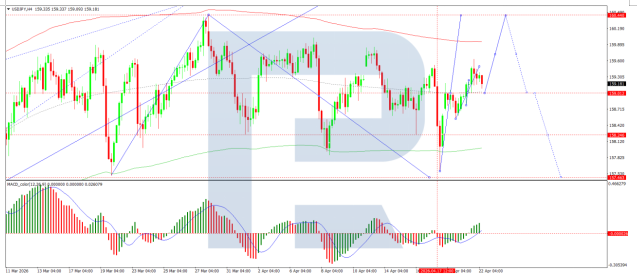
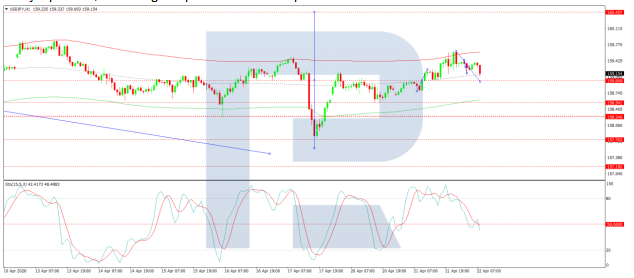
On the H4 USD/JPY chart, the pair has formed a consolidation range around 154.00. It has now broken out to the upside, opening the way for a move towards 155.75. After reaching this level, a decline towards 151.80 is likely. Technically, this scenario is confirmed by the MACD indicator, with its signal line holding above the zero level while turning clearly downward.

On the H1 USD/JPY chart, the pair has broken above 154.80 and is forming an upward wave structure targeting 155.75. Thereafter, a pullback to 154.70 cannot be ruled out. This scenario is confirmed by the Stochastic oscillator, with its signal line positioned above the 80 level and continuing to point firmly upward.

Conclusion

In summary, USD/JPY has resumed its upward momentum, breaking above recent consolidation as the dollar finds support despite escalating trade policy uncertainty. The market is weighing Trump’s aggressive tariff stance against signals that US authorities stand ready to support the yen if necessary.

Technically, the pair has cleared near-term resistance and is targeting 155.75, with indicators suggesting further short-term upside potential. However, the broader outlook remains clouded by geopolitical risks and the possibility of coordinated intervention should the yen weaken excessively. A sustained move above 155.75 would open the way towards 157.00, while a reversal below 154.70 could signal a return to range-bound trading.


Disclaimer

Any forecasts contained herein are based on the author’s particular opinion. This analysis may not be treated as trading advice. RoboForex bears no responsibility for trading results based on trading recommendations and reviews contained herein.

OpenAI has deleted the word ‘safely’ from its mission – and its new structure is a test for whether AI serves society or shareholders

By Alnoor Ebrahim, Tufts University 

OpenAI, the maker of the most popular AI chatbot, used to say it aimed to build artificial intelligence that “safely benefits humanity, unconstrained by a need to generate financial return,” mission statement. But the ChatGPT maker seems to no longer have the same emphasis on doing so “safely.”

While reviewing its latest IRS disclosure form, which was released in November 2025 and covers 2024, I noticed OpenAI had removed “safely” from its mission statement, among other changes. That change in wording coincided with its transformation from a nonprofit organization into a business increasingly focused on profits.

OpenAI currently faces several lawsuits related to its products’ safety, making this change newsworthy. Many of the plaintiffs suing the AI company allege psychological manipulation, wrongful death and assisted suicide, while others have filed negligence claims.

As a scholar of nonprofit accountability and the governance of social enterprises, I see the deletion of the word “safely” from its mission statement as a significant shift that has largely gone unreported – outside highly specialized outlets.

And I believe OpenAI’s makeover is a test case for how we, as a society, oversee the work of organizations that have the potential to both provide enormous benefits and do catastrophic harm.

Tracing OpenAI’s origins

OpenAI, which also makes the Sora video artificial intelligence app, was founded as a nonprofit scientific research lab in 2015. Its original purpose was to benefit society by making its findings public and royalty-free rather than to make money.

To raise the money that developing its AI models would require, OpenAI, under the leadership of CEO Sam Altman, created a for-profit subsidiary in 2019. Microsoft initially invested US$1 billion in this venture; by 2024 that sum had topped $13 billion.

In exchange, Microsoft was promised a portion of future profits, capped at 100 times its initial investment. But the software giant didn’t get a seat on OpenAI’s nonprofit board – meaning it lacked the power to help steer the AI venture it was funding.

A subsequent round of funding in late 2024, which raised $6.6 billion from multiple investors, came with a catch: that the funding would become debt unless OpenAI converted to a more traditional for-profit business in which investors could own shares, without any caps on profits, and possibly occupy board seats.

Establishing a new structure

In October 2025, OpenAI reached an agreement with the attorneys general of California and Delaware to become a more traditional for-profit company.

Under the new arrangement, OpenAI was split into two entities: a nonprofit foundation and a for-profit business.

The restructured nonprofit, the OpenAI Foundation, owns about one-fourth of the stock in a new for-profit public benefit corporation, the OpenAI Group. Both are headquartered in California but incorporated in Delaware.

A public benefit corporation is a business that must consider interests beyond shareholders, such as those of society and the environment, and it must issue an annual benefit report to its shareholders and the public. However, it is up to the board to decide how to weigh those interests and what to report in terms of the benefits and harms caused by the company.

The new structure is described in a signed in October 2025 by OpenAI and the California attorney general, and endorsed by the Delaware attorney general.

Many business media outlets heralded the move, predicting that it would usher in more investment. Two months later, SoftBank, a Japanese conglomerate, finalized a $41 billion investment in OpenAI.

Changing its mission statement

Most charities must file forms annually with the Internal Revenue Service with details about their missions, activities and financial status to show that they qualify for tax-exempt status. Because the IRS makes the forms public, they have become a way for nonprofits to signal their missions to the world.

In its forms for 2022, , OpenAI said its mission was “to build general-purpose artificial intelligence (AI) that safely benefits humanity, unconstrained by a need to generate financial return.”

This is the top of the front page of the 2023 990 form for OpenAI, with its mission stated at the bottom of the screenshot.
OpenAI’s mission statement as of 2023 included the word ‘safely.’
IRS via Candid

That mission statement has changed, as of – which the company filed with the IRS in late 2025. It became “to ensure that artificial general intelligence benefits all of humanity.”

This is the top of the front page of the 2024 990 form for OpenAI, with its mission stated at the bottom of the screenshot.
OpenAI’s mission statement as of 2024 no longer included the word ‘safely.’
IRS via Candid

OpenAI had dropped its commitment to safety from its mission statement – along with a commitment to being “unconstrained” by a need to make money for investors. According to Platformer, a tech media outlet, it has also disbanded its “mission alignment” team.

In my view, these changes explicitly signal that OpenAI is making its profits a higher priority than the safety of its products.

To be sure, OpenAI continues to mention safety when it discusses its mission. “We view this mission as the most important challenge of our time,” it states on its website. “It requires simultaneously advancing AI’s capability, safety, and positive impact in the world.”

Revising its legal governance structure

Nonprofit boards are responsible for key decisions and upholding their organization’s mission.

Unlike private companies, board members of tax-exempt charitable nonprofits cannot personally enrich themselves by taking a share of earnings. In cases where a nonprofit owns a for-profit business, as OpenAI did with its previous structure, investors can take a cut of profits – but they typically do not get a seat on the board or have an opportunity to elect board members, because that would be seen as a conflict of interest.

The OpenAI Foundation now has a 26% stake in OpenAI Group. In effect, that means that the nonprofit board has given up nearly three-quarters of its control over the company. Software giant Microsoft owns a slightly larger stake – 27% of OpenAI’s stock – due to its $13.8 billion investment in the AI company to date. OpenAI’s employees and its other investors own the rest of the shares.

Seeking more investment

The main goal of OpenAI’s restructuring, which it called a “recapitalization,” was to attract more private investment in the race for AI dominance.

It has already succeeded on that front.

As of early February 2026, the company was in talks with SoftBank for an additional $30 billion and stands to get up to a total of $60 billion from Amazon, Nvidia and Microsoft combined.

OpenAI is now valued at over $500 billion, up from $300 billion in March 2025. The new structure also paves the way for an eventual initial public offering, which, if it happens, would not only help the company raise more capital through stock markets but would also increase the pressure to make money for its shareholders.

OpenAI says the foundation’s endowment is worth about $130 billion.

Those numbers are only estimates because OpenAI is a privately held company without publicly traded shares. That means these figures are based on market value estimates rather than any objective evidence, such as market capitalization.

When he announced the new structure, California Attorney General Rob Bonta said, “We secured concessions that ensure charitable assets are used for their intended purpose.” He also predicted that “safety will be prioritized” and said the “top priority is, and always will be, protecting our kids.”

Steps that might help keep people safe

At the same time, several conditions in the OpenAI restructuring memo are designed to promote safety, including:

  1. A safety and security committee on the OpenAI Foundation board has the authority to that could potentially include the halting of a release of new OpenAI products based on assessments of their risks.
  2. The for-profit OpenAI Group has its own board, which must consider only OpenAI’s mission – rather than financial issues – regarding safety and security issues.
  3. The OpenAI Foundation’s nonprofit board gets to appoint all members of the OpenAI Group’s for-profit board.

But given that neither the mission of the foundation nor of the OpenAI group explicitly alludes to safety, it will be hard to hold their boards accountable for it.

Furthermore, since all but one board member currently serve on both boards, it is hard to see how they might oversee themselves. And doesn’t indicate whether he was aware of the removal of any reference to safety from the mission statement.

Identifying other paths OpenAI could have taken

There are alternative models that I believe would serve the public interest better than this one.

When Health Net, a California nonprofit health maintenance organization, converted to a for-profit insurance company in 1992, regulators required that 80% of its equity be transferred to another nonprofit health foundation. Unlike with OpenAI, the foundation had majority control after the transformation.

A coalition of California nonprofits has argued that the attorney general should require OpenAI to transfer all of its assets to an independent nonprofit.

Another example is The Philadelphia Inquirer. The Pennsylvania newspaper became a for-profit public benefit corporation in 2016. It belongs to the Lenfest Institute, a nonprofit.

This structure allows Philadelphia’s biggest newspaper to attract investment without compromising its purpose – journalism serving the needs of its local communities. It’s become a model for potentially transforming the local news industry.

At this point, I believe that the public bears the burden of two governance failures. One is that OpenAI’s board has apparently abandoned its mission of safety. And the other is that the attorneys general of California and Delaware have let that happen.The Conversation

About the Author:

Alnoor Ebrahim, Professor of International Business, The Fletcher School & Tisch College of Civic Life, Tufts University

This article is republished from The Conversation under a Creative Commons license. Read the original article.