The Bank of Canada and the FOMC kept interest rates unchanged

By JustMarkets

On Wednesday, the US stock indices closed in the red. By the end of the day, the Dow Jones Index (US30) fell by 1.63%. The S&P 500 Index (US500) declined by 1.36%. The Technology Index NASDAQ (US100) closed lower by 1.46%. The FOMC’s decision to keep interest rates in the 3.5-3.75% range was accompanied by a “hawkish” comment about serious pro‑inflationary risks caused by the war in Iran and the threat of new tariffs. The regulator’s concerns were confirmed by the aggressively high industrial inflation (PPI) figure published earlier the same day, which led most committee members to rule out the possibility of rate cuts this year. Investors reacted by pushing Treasury yields higher, which put pressure on all market sectors. The worst performance came from the financial sector and consumer staples: payment system giants Visa and Mastercard plunged 3.1% and 3.7%, respectively, while retailers Walmart and B&G lost more than 2.5% amid fears of declining consumer purchasing power due to high energy costs.

The Canadian dollar (CAD) fell to 1.37 per US dollar, reaching its lowest level in the past two months. In March, the BoC predictably kept its key rate unchanged, synchronizing its actions with the US Fed’s “hawkish pause.” The regulator emphasized that the war with Iran creates two‑sided risks: on one hand, it triggers an inflationary shock through fuel prices; on the other, it threatens to slow global economic growth. With the Strait of Hormuz paralyzed, the Canadian dollar remains in a unique “safe haven” position among commodity currencies, but its further recovery toward 1.35 will depend directly on whether the commodity factor outweighs Washington’s tight monetary policy in the coming weeks.

European markets showed a decline. Germany’s DAX (DE40) fell by 0.96%, France’s CAC 40 (FR40) closed slightly higher at 0.06%, Spain’s IBEX 35 (ES35) rose by 0.29%, and the UK’s FTSE 100 (UK100) closed down 0.94%. The main pressure factor was another spike in natural gas prices caused by the escalation in the Persian Gulf. Given that the Fed has already confirmed its “hawkish” stance, tomorrow’s meetings of European regulators will be a moment of truth: will they acknowledge the inevitability of a prolonged period of high rates due to the energy crisis, or will they attempt to soften their rhetoric to support fading economic growth?

Silver prices (XAG) fell to $76.9 per ounce, pressured by the Fed’s updated expectations. The FOMC’s decision to keep rates unchanged and project only one rate cut this year sharply increased the alternative cost of holding the metal. Investors were particularly alarmed by the upward revision of the core PCE inflation prediction: the regulator made it clear that it is prepared to stick to a “higher for longer” policy to contain the consequences of the structural energy shock caused by the blockade of the Strait of Hormuz and strikes on Iranian oil fields.

WTI crude oil showed a sharp intraday reversal, rising above $97.3 per barrel amid a critical escalation in the Persian Gulf. Reports of strikes on Iran’s gas giant South Pars and the death of Iran’s intelligence minister Esmail Khatib outweighed all attempts by Washington to stabilize the market, including the temporary suspension of the Jones Act and a 6.2‑million‑barrel increase in US commercial crude inventories. Even the Fed’s “hawkish” decision to keep rates in the 3.5-3.75% range only briefly cooled the bulls, as the effective blockade of the Strait of Hormuz created a structural deficit that cannot be quickly offset by strategic reserves or increased domestic refining.

Asian markets mostly rose yesterday. Japan’s Nikkei 225 (JP225) gained 2.87%, China’s FTSE China A50 (CHA50) jumped 0.14%, Hong Kong’s Hang Seng (HK50) rose by 0.61%, and Australia’s ASX 200 (AU200) posted a positive result of 0.31%.

On Thursday, the Australian dollar (AUD) showed a corrective rise to 0.704 per US dollar, recovering part of its losses after yesterday’s decline. The fresh labor market report presented investors with a mixed but generally constructive picture: an explosive increase in employment by 48,900 (vs. the prognosis of 20,000) confirmed the economy’s strong resilience, but an unexpected rise in the unemployment rate to 4.3% slightly cooled the hawks’ enthusiasm. Nevertheless, the RBA still considers the labor market historically strong, leaving the door open for further policy tightening.

The New Zealand dollar (NZD) exhibited volatility. Investors faced conflicting signals: extremely weak GDP data for the December quarter (growth of only 0.2% vs. the expected 0.4%) point to economic fragility, while inflationary risks due to the war in Iran are forcing the market to revise rate anticipation. Although annual GDP growth reached 1.3%, it fell short of the target 1.7%, confirming that domestic consumption in New Zealand remains subdued.

S&P 500 (US500) 6,624.70 −91.39 (−1.36%)

Dow Jones (US30) 46,225.15 −768.11 (−1.63%)

DAX (DE40) 23,502.25 −228.67 (−0.96%)

FTSE 100 (UK100) 10,305.29 −98.31 (−0.94%)

USD Index 100.26 +0.68% (+0.68%)

News feed for: 2026.03.19

  • Australia Unemployment Rate (m/m) at 02:30 (GMT+2); – AUD (MED)
  • Japan BoJ Policy Rate at 05:00 (GMT+2); – JPY (HIGH)
  • Japan BoJ Press Conference at 06:30 (GMT+2); – JPY (HIGH)
  • Switzerland Trade Balance (m/m) at 09:00 (GMT+2); – CHF (LOW)
  • UK Claimant Count Change (m/m) at 09:00 (GMT+2); – GBP (MED)
  • UK Average Earnings Index (m/m) at 09:00 (GMT+2); – GBP (MED)
  • UK Unemployment Rate (m/m) at 09:00 (GMT+2); – GBP (MED)
  • Sweden Riksbank Rate Decision at 10:30 (GMT+2); – SEK (HIGH)
  • Switzerland SNB Policy Rate at 10:30 (GMT+2); – CHF (HIGH)
  • Switzerland SNB Press Conference at 11:00 (GMT+2); – CHF (HIGH)
  • UK BoE Official Bank Rate at 14:00 (GMT+2); – GBP (HIGH)
  • UK BoE Press Conference at 14:30 (GMT+2); – GBP (HIGH)
  • US Initial Jobless Claims (w/w) at 14:30 (GMT+2); – USD (MED)
  • Eurozone ECB Interest Rate Decision at 15:15 (GMT+2); – EUR (HIGH)
  • Eurozone ECB Press Conference at 15:45 (GMT+2); – EUR (HIGH)
  • US New Home Sales (m/m) at 16:00 (GMT+2); – USD (MED)
  • US Natural Gas Reserves (w/w) at 16:30 (GMT+2); – XNG (HIGH)
  • New Zealand Trade Balance (q/q) at 23:45 (GMT+2). – NZD (MED)

By JustMarkets


This article reflects a personal opinion and should not be interpreted as an investment advice, and/or offer, and/or a persistent request for carrying out financial transactions, and/or a guarantee, and/or a forecast of future events.


Oil prices are holding around 95 dollars per barrel. Bank Indonesia kept its key rate unchanged

By JustMarkets 

On Tuesday, the US stock indices closed in the green zone, continuing to recover after falling to four‑month lows. By the end of the day, the Dow Jones Index (US30) rose by 0.10%. The S&P 500 Index (US500) gained 0.25%. The Technology Index Nasdaq (US100) closed higher by 0.47%. Investors remain optimistic, believing that the energy shock in the Persian Gulf will not turn into prolonged stagflation, despite ongoing strikes on Iranian infrastructure. The main driver of the day was the asset‑management sector: shares of KKR, Blackstone, and BlackRock jumped by 3-5% amid a reassessment of default risks in the technology sector, which restored confidence in major private lenders.

The upcoming FOMC meeting promises to become a true turning point for the market, as it takes place against the backdrop of an important leadership change at the Federal Reserve and escalating geopolitical tensions in the Middle East. Leading investment banks expect the benchmark rate to remain unchanged in the current range of 3.50-3.75%. However, all attention will be focused on the updated “dot plot” prognosis. Given that core inflation remains around 3% and uncertainty persists regarding the end of Jerome Powell’s term, the Fed will likely take a “hawkish pause,” signaling its readiness to keep rates high for longer than markets expected at the beginning of the year.

On Monday, European markets showed a confident rebound. Germany’s DAX (DE40) rose by 0.71%, France’s CAC 40 (FR40) closed up 0.49%, Spain’s IBEX 35 (ES35) gained 0.93%, and the UK’s FTSE 100 (UK100) closed positive 0.83%.
On Tuesday, WTI oil prices rose by more than 2%, climbing to 96 dollars per barrel and partially recovering the previous day’s decline. The market reacted instantly to a new wave of escalation: reports of Israel eliminating high‑ranking Iranian security officials were accompanied by massive Tehran attacks on the energy infrastructure of US allies. The shutdown of the “Shah” gas giant in the UAE, strikes on Iraqi fields, and renewed blockades of terminals in Fujairah intensified fears that supply shortages will become chronic as the war enters its third and most destructive phase. Despite the start of commodity interventions from US strategic reserves, the overall supply picture remains critical: the Strait of Hormuz is effectively paralyzed, and oil prices have surged more than 40% since the beginning of the conflict.

Asian markets also rose mostly yesterday. Japan’s Nikkei 225 (JP225) fell by 0.09%, China’s FTSE China A50 (CHA50) jumped by 0.04%, Hong Kong’s Hang Seng (HK50) gained 0.13%, and Australia’s ASX 200 (AU200) posted a positive result of 0.36%. The internal driver was strong macroeconomic data from China for the first two months of the year: industrial production grew by 6.3%, and retail sales by 2.8%, exceeding analysts’ prognoses and supporting the real estate and financial sectors.

On Wednesday, the Australian dollar (AUD) consolidated above 0.701 per US dollar, holding near multi‑year highs. A direct warning from Michele Bullock that current policy may still be insufficiently tight to suppress inflation forced markets to price in another rate hike in May and a high probability of an additional move in August. Against the backdrop of domestic monetary tightening, the Australian dollar also benefits from its role as a “commodity currency” during an energy crisis. Intensifying Iranian attacks on regional oil infrastructure and the refusal of US allies to support Donald Trump’s call for military convoy protection of ships are keeping commodity prices high, which traditionally benefits Australia’s economy.

At its March 2026 meeting, Bank Indonesia (BI) kept the key interest rate at 4.75%, fully in line with analysts’ expectations. The regulator found itself in a difficult position: on one hand, the economy is showing impressive growth (GDP in Q4 2025 accelerated to 5.39%), while on the other, inflation in February made a sharp jump to 4.76%, exceeding the upper boundary of the target range (2.5% ±1%). Despite current volatility and the global energy shock, the central bank maintains optimistic GDP growth projections for 2026 in the range of 4.9-5.7%. In the coming months, market attention will focus on whether Bank Indonesia will take additional steps to intervene in support of the rupiah if the psychological level of 17,000 per dollar is breached.

S&P 500 (US500) 6,716.09 +16.71 (+0.25%)

Dow Jones (US30) 46,993.26 +46.85 (+0.10%)

DAX (DE40) 23,730.92 +166.91 (+0.71%)

FTSE 100 (UK100) 23,730.92 +166.91 (+0.71%)

USD Index 99.57 -0.15% (-0.15%)

News feed for: 2026.03.18

  • Japan Trade Balance (m/m) at 01:50 (GMT+2); – JPY (LOW)
  • Eurozone Consumer Price Index (m/m) at 12:00 (GMT+2); – EUR (MED)
  • US Producer Price Index (m/m) at 14:30 (GMT+2); – USD (MED)
  • Canada BoC Interest Rate Decision at 15:45 (GMT+2); – CAD (HIGH)
  • Canada BoC Press Conference at 16:30 (GMT+2); – CAD (HIGH)
  • US Crude Oil Reserves (w/w) at 16:30 (GMT+2); – WTI (HIGH)
  • US FOMC Federal Funds Rate at 20:00 (GMT+2); – USD, XAU (HIGH)
  • US FOMC Statement at 20:00 (GMT+2); – USD, XAU (HIGH)
  • US FOMC Economic Projections at 20:00 (GMT+2); – USD, XAU (HIGH)
  • US FOMC Press Conference at 20:30 (GMT+2); – USD, XAU (HIGH)
  • New Zealand GDP (m/m) at 23:45 (GMT+2). – NZD (MED)

By JustMarkets


This article reflects a personal opinion and should not be interpreted as an investment advice, and/or offer, and/or a persistent request for carrying out financial transactions, and/or a guarantee, and/or a forecast of future events.
EUR/USD Awaits Fed Decision

By Analytical Department RoboForex

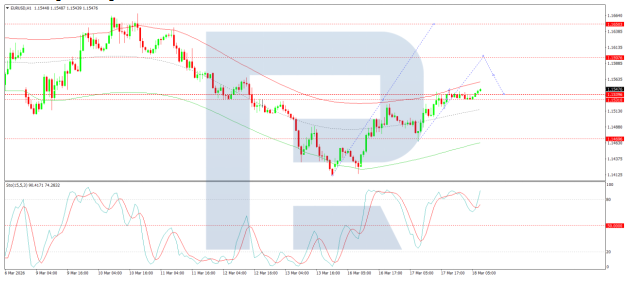
EUR/USD is consolidating near 1.1532 on Wednesday, with markets adopting a wait-and-see stance ahead of the Federal Reserve’s decision.

The Fed is widely expected to keep rates unchanged. Investor attention will focus on Jerome Powell’s comments, particularly on how oil market volatility may influence the policy outlook.

Rising energy prices are increasing inflation risks, while labour market signals remain mixed and offer little guidance on rates. Markets do not expect policy easing before September or October and are currently pricing in just one rate cut before year-end.

Geopolitical tensions continue to weigh on sentiment. Iran is intensifying attacks on the region’s energy infrastructure, while US allies have not supported Donald Trump’s call to ensure shipping security through the Strait of Hormuz.

Technical Analysis

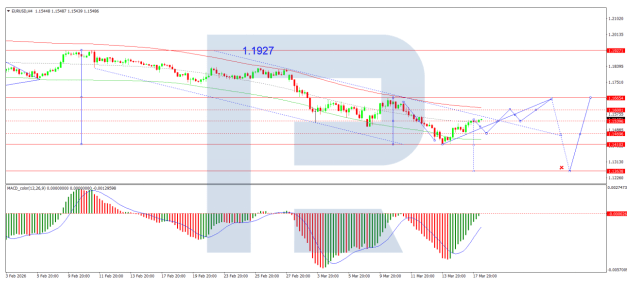
On the H4 chart, EUR/USD is forming a consolidation range around 1.1536. A move higher towards 1.1600 is expected as a near-term target, followed by a potential pullback to 1.1539. Technically, the MACD supports this scenario: its signal line remains below zero but is pointing firmly upwards, indicating building bullish momentum.

On the H1 chart, the pair is developing the next upward leg towards 1.1596. After reaching this level, a decline to 1.1530 is expected, followed by a renewed advance towards 1.1650. The Stochastic oscillator confirms this structure, with its signal line above 50 and rising towards 80.

Conclusion

EUR/USD remains in a holding pattern ahead of the Federal Reserve’s decision, with markets awaiting Powell’s assessment of how oil market volatility may shape the policy path. With only one rate cut now priced in before year-end and Middle East tensions showing no signs of easing, the dollar’s near-term direction will depend on whether the Fed signals patience or heightened concern over inflation. Technical indicators point to scope for a short-term rebound, though the broader trend will be determined by the tone of Wednesday’s announcement.


Disclaimer

Any forecasts contained herein are based on the author’s particular opinion. This analysis may not be treated as trading advice. RoboForex bears no responsibility for trading results based on trading recommendations and reviews contained herein.

GBP/USD Pauses Ahead of Bank of England Rate Decision

By Analytical Department RoboForex

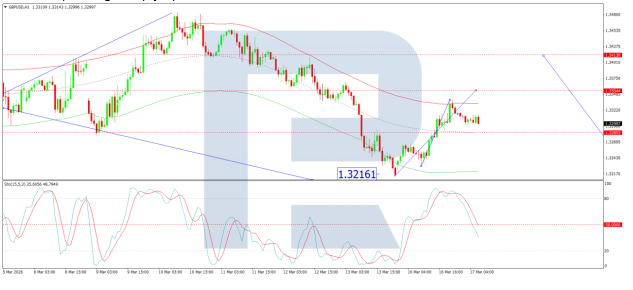
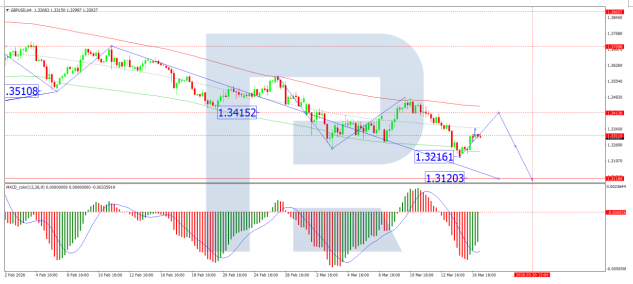
GBP/USD is holding near 1.3315 on Tuesday. The pound posted a modest gain the previous day but remains close to three-month lows amid ongoing uncertainty over the impact of the Middle East conflict on the global economy and inflation. Investors continue to favour the US dollar as a key safe-haven asset.

Since the onset of the conflict involving Iran, the dollar has been the primary beneficiary of safe-haven demand, outperforming gold, government bonds, and currencies such as the Swiss franc. Meanwhile, the pound has shown relative resilience compared with several other currencies: over the past three weeks, it has declined by approximately 1.7%, while the yen and euro have lost around 2.0% and 3.0%, respectively. This relative strength is partly due to the UK’s lower dependence on energy imports and its higher interest rate environment.

The key event of the week is the Bank of England’s meeting on Thursday, where the rate is expected to remain unchanged at 3.75%. Markets are currently pricing in just one rate cut before year-end, marking a notable shift from the two cuts anticipated prior to the conflict’s escalation.

Attention will also turn to UK labour market data, which points to a gradual cooling in employment and a slowdown in wage growth. Against this backdrop, with persistent inflationary pressure and rising energy prices, the pound may face further headwinds if macroeconomic conditions continue to deteriorate.

Technical Analysis

On the H4 GBP/USD chart, the market is forming a broad consolidation range around 1.3283, currently extending to 1.3333. A decline to 1.3260 is expected in the near term, after which a new consolidation range is likely to form. An upside breakout would pave the way for a continuation wave towards 1.3360, while a downside breakout would suggest further movement towards 1.3133. Technically, this scenario is confirmed by the MACD indicator, whose signal line is below the zero level and pointing sharply upwards.

On the H1 chart, the market has formed a compact consolidation range around 1.3315. A downside breakout has initiated a wave structure extending to 1.3260. Should this level be breached, further downside towards 1.3125 is likely. Conversely, an upside breakout from the range could trigger a growth wave towards 1.3350. Technically, this scenario is confirmed by the Stochastic oscillator, with its signal line above the 80 level and pointing sharply downwards.

Conclusion

GBP/USD remains in a holding pattern ahead of Thursday’s Bank of England decision, with the pound showing relative resilience compared with other major currencies despite lingering near three-month lows. The dollar continues to dominate as the preferred safe-haven asset amid ongoing Middle East tensions, while shifting rate expectations – from two cuts to just one – reflect the complex inflation dynamics facing policymakers. With UK labour data showing signs of cooling and energy prices remaining elevated, the BoE’s tone on Thursday will be crucial in determining whether sterling can break out of its current consolidation range or extend its recent losses.


Disclaimer

Any forecasts contained herein are based on the author’s particular opinion. This analysis may not be treated as trading advice. RoboForex bears no responsibility for trading results based on trading recommendations and reviews contained herein.

Oil price volatility intensifies as conflict deepens

By ForexTime 

  • Risk aversion grips global stock markets
  • Brent crude hovers around triple digits amid supply shocks
  • Gold pressured by stronger dollar and inflation fears
  • RBA raises rates for second consecutive time
  • Fed seen leaving rates unchanged on Wednesday

Risk aversion returned to global markets on Tuesday as tensions in the Middle East sapped risk appetite.

The brief tech rally in the previous session merely served as a small distraction with equities on the back foot amid the overall caution.

All eyes remain on the ship traffic through the Strait of Hormuz as Trump calls for other nations to secure the critical waterway.

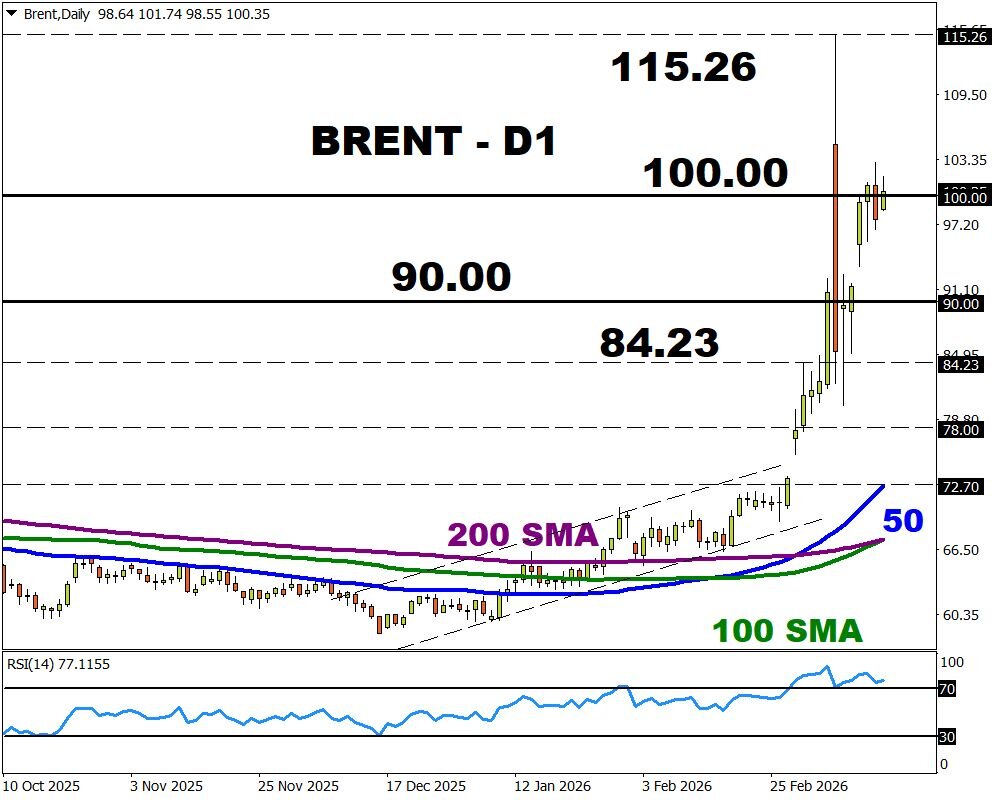
Ultimately, this has injected oil prices with monstrous levels of volatility with Brent rallying above $103 a barrel on Tuesday. Iran’s attacks on energy infrastructure around the Middle East have intensified fears around supply shocks, injecting oil bulls with renewed vigour.

To counter such shocks, the IEA launched its largest ever oil release amounting to 400million barrels of oil from their emergency stocks. In addition, the US issued its second temporary waiver for the purchase of Russian oil. Despite all of this, Brent is finding comfort at triple digits and could extend gains on geopolitical risk.

Gold remains on the back foot despite the growing risk aversion.

A broadly stronger dollar and dwindling bets around lower US interest rates have dealt gold a double blow. Traders are only pricing in just one Fed cut in 2026, thanks to concerns around conflict-induced inflation.

Gold’s near-term outlook may be influenced by the Fed decision on Wednesday. No changes are expected, but the Fed may be forced to reassess its policy strategy for 2026. Looking at the charts, gold is wobbling above $5000 as of writing. Weakness below this point may open a path toward $4900 while a rebound could see prices retest resistance at $5100.

Speaking of central banks, the RBA raised interest rates on Tuesday for a second consecutive meeting.

Growing concerns around conflict-induced inflation shocks may prompt central banks to reassess their policy strategies for 2026.

The Federal Reserve (Fed), European Central Bank (ECB) and Bank of England (BoE), among many others will be under the spotlight this week.

Market expectations have rapidly evaporated over the Fed cutting rates anytime while the BoE/ECB are seen potentially hiking rates by the end of the year if inflation persists. These sharp shifts in policy expectations may translate to heightened levels of volatility.


Forex-Time-LogoArticle by ForexTime


ForexTime Ltd (FXTM) is an award winning international online forex broker regulated by CySEC 185/12 www.forextime.com

The RBA raised the rate to 4.1% amid a surge in fuel prices. The Canadian dollar strengthened following the inflation data release

By JustMarkets 

On Monday, the US equity markets closed higher. By the end of the session, the Dow Jones Index (US30) gained 0.83%. The S&P 500 Index (US500) rose by 1.01%. The tech‑heavy NASDAQ (US100) finished up 1.13%. The main catalyst for optimism was a sharp decline in WTI crude prices to 93.5 dollars per barrel after the successful passage of the first tankers through the Strait of Hormuz, easing fears of long‑term stagflation. Lower energy pressure allowed 10‑year Treasury yields to fall to 4.22%, restoring investor interest in the technology and banking sectors. Despite the positive sentiment, trading volumes remained moderate as the market stayed cautious ahead of the upcoming Fed meeting and further news on the formation of an international maritime coalition in the Persian Gulf.

The Canadian dollar (CAD) is showing a confident recovery, rising above 1.37 per US dollar following encouraging inflation data. In February 2026, Canada’s Consumer Price Index (CPI) slowed to 1.8% year‑over‑year, below expectations (1.9%) and returning the indicator to the Bank of Canada’s target range. The transportation and housing sectors contributed most to the disinflationary trend, while core inflation metrics fell to four‑year lows, giving the regulator more room for maneuver amid a recent sharp drop in employment by 84,000 and a rise in unemployment to 6.7%. Ahead of the March 18 rate decision, markets are pricing in nearly a 100% probability that the BoC will keep its policy rate unchanged at 2.25%, though the sharp slowdown in inflation is prompting investors to reassess the timing of potential future easing.

The Mexican peso strengthened to 17.7 per US dollar, becoming one of the beneficiaries of the localized de‑escalation in the Middle East. The decline in geopolitical risk premium followed statements from key US allies, including Japan and Australia, expressing reluctance to enter the active phase of the maritime coalition. This reduced demand for the US dollar as a safe‑haven asset, allowing emerging‑market currencies to recover part of their losses amid a general decline in Treasury yields. With inflation accelerating, the market has fully priced out the possibility of a rate cut at the Bank of Mexico’s March 26 meeting. Keeping the rate at 7.00%, while the Fed is expected to ease or pause, supports the attractiveness of carry‑trade strategies.

European markets posted a solid rebound, breaking a three‑day losing streak. Germany’s DAX (DE40) rose by 0.50%, France’s CAC 40 (FR40) closed up 0.31%, Spain’s IBEX 35 (ES35) gained 0.18%, and the UK’s FTSE 100 (UK100) ended up 0.55%. Investors welcomed news that Indian LNG tankers successfully passed through the Strait of Hormuz. The event was interpreted as a sign of Tehran’s willingness to allow selective diplomatic exemptions from the blockade, slightly reducing the risk premium in oil prices and easing inflation concerns in Europe.

In the financial sector, the main story was UniCredit’s aggressive 35‑billion‑euro bid to acquire Germany’s Commerzbank. Despite immediate resistance from the German government, which holds a stake in the bank, Commerzbank shares surged 8.5%, while UniCredit added 0.5%, raising its stake in the German asset to 26%. Other heavyweights also supported the positive momentum: insurance giant Allianz and Deutsche Bank gained 1.5% amid bond‑market stabilization.
WTI crude prices fell more than 3%, settling at 95.3 dollars per barrel. The decline interrupted a powerful three‑day rally during which prices had surged 17.4%. The correction was triggered by early signs of partial restoration of shipping activity in the Strait of Hormuz: over the weekend, the Pakistani tanker and two LNG carriers successfully passed through the high‑risk zone. Reports that the US allowed transit for Iranian tankers and that India is negotiating passage for six more vessels gave the market hope that a full blockade may be avoided. Nevertheless, the situation remains critical, marked by the largest supply disruption in history: exports through the strait have fallen from a pre‑war 20 million barrels per day to just a few million. A new drone attack on the port of Fujairah in the UAE again halted Murban crude shipments, while ongoing Iranian strikes on Gulf infrastructure forced airlines to suspend flights to Dubai.

Silver prices stabilized around 80 dollars per ounce, reacting to the local easing in the energy market. The decline in WTI crude to 95 dollars per barrel and the successful passage of several tankers through the Strait of Hormuz reduced inflation fears, prompting speculative capital to exit precious metals. Additional pressure comes from expectations of a hawkish Fed decision this week: maintaining high interest rates increases the opportunity cost of holding metals, pushing investors toward the dollar and bonds amid falling yields.

Asian markets also traded without a unified direction. Japan’s Nikkei 225 (JP225) fell by 0.13%, China’s FTSE China A50 (CHA50) jumped with 0.76%, Hong Kong’s Hang Seng (HK50) rose by 1.45%, while Australia’s ASX 200 (AU200) closed down 0.39%.

The Australian dollar (AUD) strengthened to 0.71 per US dollar following the RBA hawkish decision. The regulator raised the cash rate by 25 basis points to 4.1%, marking a second consecutive hike and underscoring Michelle Bullock’s determination to combat inflationary pressures driven by the Middle East conflict and the spike in fuel prices. The move fully offset a significant portion of last year’s easing cycle, returning borrowing costs to levels last seen more than a year ago. The “aussie” is also supported by persistent labor‑market tightness and the RBA leadership’s hawkish stance, which leaves the door open for further tightening in May.

S&P 500 (US500) 6,699.38 +67.19 (+1.01%)

Dow Jones (US30) 46,946.41 +387.94 (+0.83%)

DAX (DE40) 23,564.01 +116.72 (+0.50%)

FTSE 100 (UK100) 10,317.69 +56.54 (+0.55%)

USD Index 99.80 -0.56% (-0.56%)

News feed for: 2026.03.17

  • Australia RBA Interest Rate Decision at 05:30 (GMT+2); – AUD (HIGH)
  • Australia RBA Press Conference at 06:30 (GMT+2); – AUD (HIGH)
  • German ZEW Economic Sentiment (m/m) at 12:00 (GMT+2); – EUR (MED)
  • Eurozone ZEW Economic Sentiment (m/m) at 12:00 (GMT+2); – EUR (LOW)
  • US Pending Home Sales (m/m) at 16:00 (GMT+2). – USD (MED)

By JustMarkets


This article reflects a personal opinion and should not be interpreted as an investment advice, and/or offer, and/or a persistent request for carrying out financial transactions, and/or a guarantee, and/or a forecast of future events.
RoboForex Launches Swap-Free Trading for All Clients

Belize City, Belize (16 March 2026) – RoboForex, a financial broker, has announced the launch of swap-free trading for all its clients. The new feature represents a distinctive innovation in the forex industry and introduces a fundamentally different approach to overnight trading costs.

RoboForex offers a comprehensive swap-free model, completely removing overnight fees (swaps). Crucially, this is achieved without introducing hidden costs, such as increased commissions or wider spreads, which are common among other market providers. By opening a swap-free account, RoboForex clients can run their strategies without incurring additional charges for holding positions overnight.

Enhancing the trader experience

The introduction of this feature is designed to lower entry barriers and create a more predictable cost structure for traders. By removing overnight swaps, RoboForex simplifies trading conditions and reduces cost-related uncertainty, particularly for those holding positions over longer periods.

In volatile market environments, where traders already navigate price fluctuations and risk exposure, eliminating overnight charges helps minimise additional cost pressure and supports a more focused trading experience. This can be particularly relevant when traders hold positions for extended periods during prolonged market trends, waiting for more favourable exit conditions.

“Following a successful test launch last year in several Latin American countries and strong positive feedback from clients, we decided to scale swap-free trading across all our markets,” said Douglas Abreu, LATAM Operations Director at RoboForex. “This step reflects our broader focus on simplifying trading conditions and making costs more transparent and predictable, giving traders more flexibility in managing longer-term positions.”

Key highlights of the swap-free accounts:

  • Total transparency: no additional commissions or mark-ups are added to the spread in exchange for swap-free status
  • Available to all RoboForex clients:swap-free trading is accessible on newly created accounts
  • Broad instrument coverage: zero swaps apply for the most popular instruments, including metals and currencies

Building a low-barrier trading environment

The launch of swap-free trading aligns with RoboForex’s broader strategy of reducing cost-related barriers for clients. In addition to swap-free accounts, the company offers free withdrawals, allowing clients to withdraw funds without a commission up to three times per month. RoboForex also offers 0% commission on deposits, ensuring clients are not charged for funding their accounts.

By combining swap-free trading with transparent and cost-efficient funding and withdrawal conditions, RoboForex continues to develop a trading environment focused on market accessibility, clarity, and reduced structural costs for traders.


About RoboForex

RoboForex is a company that provides brokerage services, offering traders in financial markets access to its proprietary trading terminals and industry-leading third-party platforms. RoboForex Ltd operates under brokerage license number FSC 9759600.

View more detailed information about the Company’s products and activities on the website roboforex.com.

Gold Continues to Decline Amid Fed Expectations

By Analytical Department RoboForex

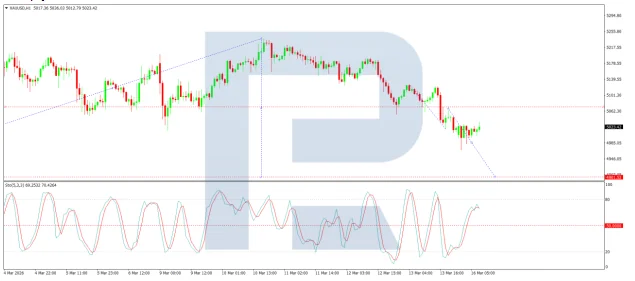
Gold prices fell to 5,023 USD per ounce on Monday, extending losses after two consecutive weeks of decline. Pressure on the market persists amid rising oil prices, with the situation becoming more problematic following a US strike on Iran’s Kharg Island oil terminal – one of the country’s key export hubs.

The attack prompted retaliation from Tehran, with Iran striking Israel and energy infrastructure in several Arab nations. These developments have intensified concerns about global supply stability.

The military confrontation between the US, Israel, and Iran has entered its third week with no signs of resolution. Volatility across financial markets remains elevated.

Rising energy prices are increasing inflation risks and reducing the likelihood of imminent monetary policy easing. Against this backdrop, gold faces pressure, as higher interest rates diminish the appeal of non-yielding assets.

The Federal Reserve is expected to maintain its interest rate this week. Monetary policy decisions are also anticipated from numerous other central banks, including those in the Eurozone, the UK, Japan, Switzerland, Australia, Canada, China, Brazil, and Russia.

Technical Analysis

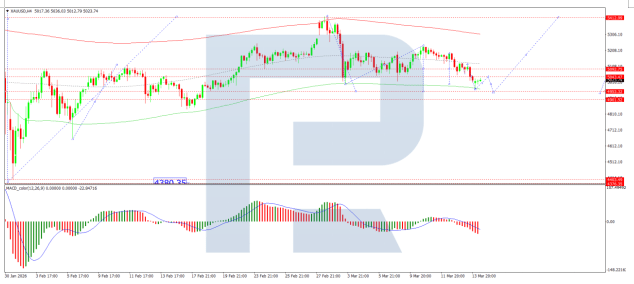
On the H4 XAU/USD chart, the market formed a consolidation range around the 5,092 USD level. It has now broken downwards, likely continuing the correction towards 4,953 USD. The MACD indicator confirms the current momentum, with its signal line below the centre line and pointing sharply downwards.

On the H1 chart, the market has broken below the 5,035 USD level and is forming a wave towards 4,953 USD. Looking ahead, a corrective growth wave towards 5,200 USD is possible, with potential for the trend to extend to 5,412 USD. The Stochastic oscillator supports the short-term bearish scenario, with its signal line remaining above the 50 level and under pressure to decline towards level 20.

Conclusion

Gold continues to face headwinds as escalating geopolitical tensions in the Middle East drive oil prices higher, reinforcing inflation concerns and delaying expectations for Fed rate cuts. The third week of military confrontation shows no signs of abating, keeping markets on edge. With the Federal Reserve widely expected to hold rates steady this week, and technical indicators pointing to further downside, gold’s immediate trajectory appears vulnerable. A break below key support could accelerate losses towards 4,953 USD, though dovish surprises from central bank meetings this week might offer temporary relief.


Disclaimer

Any forecasts contained herein are based on the author’s particular opinion. This analysis may not be treated as trading advice. RoboForex bears no responsibility for trading results based on trading recommendations and reviews contained herein.

Investors begin pricing in prolonged stagflation due to the blockade of the Strait of Hormuz

By JustMarkets

On Friday, trading on the US stock market ended with a decline. The Dow Jones (US30) fell by 0.26% (-0.75% for the week). The S&P 500 (US500) dropped 0.61% (-0.30% for the week). The tech-heavy NASDAQ (US100) closed lower by 0.93% (-0.15% for the week). The US stock market ended the second week of March 2026 in the red, recording its third consecutive week of losses due to a sharp escalation of the military conflict with Iran. Secretary of Defense Pete Hegseth’s decision to launch massive strikes on Iranian facilities in response to attacks in the Persian Gulf effectively confirmed the war’s transition into a protracted phase, triggering a flight of capital toward the dollar and safe-haven assets. The situation is exacerbated by the unresolved blockade of the Strait of Hormuz, which forces investors to price in a global stagflation scenario in which high energy prices coincide with slowing economic growth. The most painful blow fell on the technology sector and companies with high debt loads, sensitive to rising bond yields. Adobe shares plummeted 7.6% following a disappointing prognosis and the sudden resignation of its CEO, which served as a catalyst for a sell-off in the software industry, affecting even market favorites like Palantir and Meta.

The Canadian dollar (CAD) is showing notable weakness, consolidating at the 1.381 level against the US dollar. This decline is driven by a combination of deeply disappointing domestic data and the global dominance of the US currency. The fresh February labor market report for Canada shocked investors: the economy lost 84,000 jobs, and the unemployment rate jumped to 6.7%. The situation was aggravated by a slump in the manufacturing sector, where January sales crashed by 3% (to C$68.7 billion) – the worst result in nine months, confirming a serious cooling of the economy. While the Bank of Canada is expected to maintain its rate at 2.25% at its March 18 meeting to contain inflation, the widening yield gap with US treasuries continues to pull the Canadian currency down.

On Friday, European stock markets closed in the red, recording bond yield growth to their highest levels in 15 years amid the prolonged energy crisis. The German DAX (DE40) fell by 0.60% (+2.00% for the week), the French CAC 40 (FR40) closed up 1.04% (+1.16% for the week), the Spanish IBEX 35 (ES35) dropped 0.47% (+2.95% for the week), and the British FTSE 100 (UK100) closed down 1.24% (-5.33% for the week). Investors have begun pricing in a scenario of prolonged stagflation: the blockade of the Strait of Hormuz and the war with Iran continue to drive up energy prices, forcing the ECB to consider the possibility of further rate hikes. The European banking sector also found itself at the center of the sell-off, losing a significant portion of its capitalization due to private credit risks and deteriorating divination for net interest margins. The week’s laggards included Deutsche Bank, which collapsed to a nine-month low, and UniCredit, whose quotes reached levels last seen in late 2024.

On Monday, Platinum quotes (XPT) strengthened at the $2,100 per ounce level, showing resilience amid volatility in the precious metals sector. This positive trend is supported by a chronic supply deficit, which the WPIC predicts will persist for the fourth consecutive year. Although the deficit is expected to narrow slightly to 240,000 ounces in 2026, total above-ground stocks continue to deplete and could fall to critical levels by the end of the year.

WTI crude oil prices consolidated above $99 per barrel, briefly peaking at $102.40. The market is reeling as the conflict enters its third week: after US forces launched massive strikes on military targets on Kharg Island during Operation “Epic Fury,” traders are seriously concerned about the safety of the region’s energy infrastructure. Although the recent strikes targeted only mine and missile warehouses, President Donald Trump explicitly warned that the island’s oil terminals, through which 90% of Iranian exports pass, will be the next target if Tehran does not end the blockade of the Strait of Hormuz.

By mid-March 2026, a turning point emerged in the US gas market: Henry Hub natural gas prices fell below $3.15 per MMBtu, losing about 3% of their value. Despite the ongoing blockade of the Strait of Hormuz and disruptions in Qatari LNG supplies, domestic factors took precedence – expectations of warm spring weather sharply reduced heating demand, and the weekly EIA report showed a storage withdrawal of only 38 billion cubic feet, significantly lower than expected. Fundamental pressure on prices is also exerted by record domestic production, which reached a historic high of 118.5 billion cubic feet per day, allowing the US to compensate for the global market deficit without compromising its own reserves.

Asian markets also partially recovered last week. The Japanese Nikkei 225 (JP225) rose by 3.04% over the trading week, the FTSE China A50 (CHA50) jumped at 2.64%, the Hong Kong Hang Seng (HK50) climbed up 1.82%, and the Australian ASX 200 (AU200) showed a positive result of 0.20% over 5 days.
On Monday, the offshore yuan (CNY) showed a weak attempt at stabilization, rising to the 6.901 mark against the US dollar. This slight increase broke last week’s prolonged decline and was the market’s reaction to an unexpectedly strong block of macroeconomic data from the PRC for January-February. Faster-than-prediction growth in industrial production and retail sales, along with a 1.8% rise in fixed-asset investment, created a short-term foundation for the national currency, confirming the resilience of China’s manufacturing sector against external shocks.

S&P 500 (US500) 6,632.19 −40.43 (−0.61%)

Dow Jones (US30) 46,558.47 −119.38 (−0.26%)

DAX (DE40) 23,447.29 −142.36 (−0.60%)

FTSE 100 (UK100) 10,261.15 −44.00 (−0.43%)

USD Index 100.50 +0.76% (+0.76%)

News feed for: 2026.03.16

  • China Industrial Production (m/m) at 04:00 (GMT+2); – CHA50, HK50 (MED)
  • China Retail Sales (m/m) at 04:00 (GMT+2); – CHA50, HK50 (MED)
  • China Unemployment Rate (m/m) at 04:00 (GMT+2); – CHA50, HK50 (MED)
  • Canada Consumer Price Index (m/m) at 14:30 (GMT+2); – CAD (HIGH)
  • US Industrial Production (m/m) at 15:15 (GMT+2). – USD (MED)

By JustMarkets


This article reflects a personal opinion and should not be interpreted as an investment advice, and/or offer, and/or a persistent request for carrying out financial transactions, and/or a guarantee, and/or a forecast of future events.
Iran wants to maintain the blockade of the Strait of Hormuz until the United States closes all its bases in the Middle East

By JustMarkets

On Thursday, the American market was gripped by panic amid a sharp spike in Brent crude above $100 per barrel. By the end of the trading session, the Dow Jones Index (US30) declined by 1.56%. The S&P500 Index (US500) fell by 1.52%. The Nasdaq Technology Index (US100) dropped by 1.78%. The trigger was the harsh statements made by Iran’s new leader, Mojtaba Khamenei, regarding an indefinite blockade of the Strait of Hormuz, which completely negated the effect of record commodity interventions by the IEA and forced investors to prepare for a prolonged energy crisis. An additional blow to sentiment was dealt by the financial sector following a 4.1% collapse in Morgan Stanley shares due to a freeze on payments in private credit funds, which intensified fears of a systemic liquidity crisis.

The Canadian dollar (CAD) weakened to the level of 1.365 per US dollar, as the global flight of investors into safe-haven assets outweighed the benefit from the jump in WTI oil prices above $100 per barrel. Domestic pressure on the currency intensified after data showed an increase in Canadian unemployment to 6.8% in February, indicating the labor market’s inability to absorb the influx of new labor. Nevertheless, the Bank of Canada (BoC) is likely to maintain the rate at 2.25% at the meeting on March 18.

The Mexican peso (MXN) weakened to 17.83 per dollar, finding itself under double pressure: the flight of investors into safe-haven assets due to Iran’s threats to block the Strait of Hormuz and an unexpected jump in domestic inflation. In February, Mexico’s annual consumer price figure reached 4.02%, which, for the first time in a long period, took inflation outside the central bank’s target range (3% ±1%) and practically nullified the chances for an interest rate cut at the upcoming March meeting. Despite the fact that rising oil prices traditionally support Mexico’s budget revenues, the peso remains extremely vulnerable to geopolitical risk and potential trade tariffs, forcing the Bank of Mexico to maintain a “hawkish” pause and keep the rate at 7.00% to stabilize the currency.

European stock markets continued their decline amid the harsh statements of Iran’s new leader, Mojtaba Khamenei, who in his first official message called for the closure of US military bases in the region and confirmed the indefinite blockade of the Strait of Hormuz. The German DAX (DE40) decreased by 0.21%, the French CAC 40 (FR 40) closed down by 0.71%, the Spanish IBEX 35 index (ES35) fell by 1.22%, and the British FTSE 100 (UK100) closed at a negative 0.47%. Geopolitical tension triggered a sell-off in the banking sector: Deutsche Bank collapsed by 5.4% due to concerns about risks in the 26 billion euro private credit segment and possible legal costs, while Commerzbank shares lost 3.9%. UniCredit and BNP Paribas fell by nearly 4%.

WTI oil futures came close to the $97 per barrel mark, while the North Sea Brent blend settled above $101. The market switched to “war panic” mode after the first official address by Iran’s new supreme leader, Mojtaba Khamenei: he confirmed that the blockade of the Strait of Hormuz is Tehran’s strategic priority and will be maintained until the full withdrawal of American bases from the region. The situation was exacerbated by nighttime attacks by Iranian speedboats (IRGC) on the Marshall Islands-flagged tanker “Safe Sia,” which completely paralyzed maritime logistics in the Persian Gulf. The IEA officially recognized the current crisis as the largest supply disruption in history, estimating the drop in global supply in March at 8-10 million barrels per day. Due to the physical impossibility of exporting oil and the overflowing of storage facilities, Persian Gulf countries began a large-scale shutdown of wells, effectively removing 20% of global trade from the market.

Henry Hub natural gas prices (XNG) broke the $3.2 per million BTU mark, reaching a monthly high amid critical disruptions in global supplies. The shutdown of QatarEnergy plants, which provide 20% of the world’s LNG market, and the blockade of the Strait of Hormuz forced Asian and European consumers to urgently switch to American fuel, leading to a sharp increase in export demand. Despite the global rally, the US domestic market demonstrates restraint: according to the EIA, during the first week of March, inventories decreased by only 28 billion cubic feet, which was less than expectations due to warm weather and record production levels (about 110 billion cubic feet per day). Nevertheless, the close link of the American hub to world prices under the conditions of the Middle East war keeps quotes at a high level, creating the prerequisites for further growth.

Asian markets also followed the general downward trend. The Japanese Nikkei 225 (JP225) fell by 1.04% during the trading session, the Chinese FTSE China A50 (CHA50) decreased by 0.35%, the Hong Kong Hang Seng (HK50) fell by 0.70%, and the Australian ASX 200 (AU200) showed a negative result of 1.31%.

On Friday, the offshore yuan (CNY) rate fell to 6.88 per dollar, reacting to a new wave of trade pressure from the US. The Trump administration initiated Section 301(b) investigations against China and a number of other countries, accusing them of using forced labor and creating excess production capacity. These measures are seen by the market as an attempt by Washington to restore tariff pressure leverage after the US Supreme Court previously limited the president’s powers to introduce duties through the IEEPA law. The situation is heating up amid preparations for the critically important summit between Xi Jinping and Donald Trump in Beijing, scheduled for the end of March. Despite strong export data from China (growth of 21.8% for January-February), the currency remains extremely sensitive to threats of new 15% tariffs, which could be introduced based on the results of current investigations as early as summer.

S&P 500 (US500) 6,672.62 −103.18 (−1.52%)

Dow Jones (US30) 46,677.85 −739.42 (−1.56%)

DAX (DE40) 23,589.65 −50.38 (−0.21%)

FTSE 100 (UK100) 10,305.15 −48.62 (−0.47%)

USD Index 99.75 +0.51% (+0.52%)

News feed for: 2026.03.13

  • UK GDP (q/q) at 09:00 (GMT+2); – GBP (MED)
  • UK Industrial Production (m/m) at 09:00 (GMT+2); – GBP (MED)
  • UK Manufacturing Production (m/m) at 09:00 (GMT+2); – GBP (LOW)
  • UK Trade Balance (m/m) at 09:00 (GMT+2); – GBP (LOW)
  • Eurozone Industrial Production (m/m) at 12:00 (GMT+2); – EUR (LOW)
  • Canada Unemployment Rate (m/m) at 14:30 (GMT+2); – CAD (HIGH)
  • US Core PCE Price Index (m/m) at 14:30 (GMT+2); – USD (HIGH)
  • US Durable Goods Orders (m/m) at 14:30 (GMT+2); – USD (MED)
  • US Prelim GDP (q/q) at 14:30 (GMT+2); – USD (MED)
  • US JOLTS Job Openings (m/m) at 16:00 (GMT+2); – USD (HIGH)
  • US Michigan Consumer Sentiment (m/m) at 16:00 (GMT+2). – USD (MED)

By JustMarkets


This article reflects a personal opinion and should not be interpreted as an investment advice, and/or offer, and/or a persistent request for carrying out financial transactions, and/or a guarantee, and/or a forecast of future events.