Archive for Stock Market News – Page 26

Two Must-Own Companies With a Shared Asset

Source: Adrian Day  (9/6/23)

Global Analyst Adrian Day looks at two of his favorite companies, both of which have royalties on the same asset. 

Altius: Rock Solid With Some World-Class Assets

Altius Minerals Corp. (ALS:TSX.V) reported second-quarter earnings lower than analyst expectations, largely due to higher depreciation and stock compensation, as well as lower earnings from the renewables unit. Royalty revenues, which had been pre-announced (see Bulletin #873), were lower largely due to the closure of the 777 Mine as well as the lower commodities prices, including potash, which spiked at the onset of the Russia-Ukraine war.

These factors will also weigh on full-year revenues compared with last. Altius has a good financial position, ending the quarter with almost $25 million in cash (excluding $54 million held at majority-held Altius Renewables) and $117 million in debt. It has about $94 million still available on its revolver. The company holds equity interests of almost $400, including $173 million in Altius Renewable and $116 million in Labrador Iron Ore Royalty Corp., neither of which is, however, viewed as a short-term source of cash.

Its portfolio of prospect generators is valued at $42 million. Together with other shares, the total share portfolio stands at a total of C$387 million. In addition to scheduled debt repayments of $2 million during the quarter, the company also spent another $2.1 million buying back 98 million shares. It has recently renewed its share repurchase program, allowing it to buy up to 4.21% of shares outstanding over the next 12 months. Altius said that the value of Altius is “from time to time” greater than the market price of the shares. The company has had an active buy-back program since 2010.

Some Projects Pushed Back

On the project front, there were some setbacks, but for the most part, postponements of expansions and nothing that will affect near-term revenues. The major exception is the long-anticipated closure of the Genesee coal operations in Alberta (but see below). Altius has no other current source of revenue that is running down or nearing its end of life.

Other than that, there have been some delays in future projects. Nutrien announced the suspension of plans to expand its potash output, on which Altius has a royalty, though this is likely to be temporary, and will not affect near-term revenues. In addition, a planned expansion at the Chapada copper mine has been delayed, though several expansion opportunities are being evaluated by miner Lundin, following positive results at the Sauva discovery there, and the Chapada mine continues to generate royalty revenue for Altius.

In many ways, these delays are for positive reasons. On the other hand, there are projects that are growing and can reasonably be expected to generate significant long-term revenues for Altius. What it calls its “option value realization progress” is well underway, and several projects that Altius discovered are approaching production.

Exposure To World-Class Gold Camp

Most notably, AngloGold Ashanti Ltd. (AU:NYSE; ANG:JSE; AGG:ASX; AGD:LSE) provided resource estimates for its Merlin deposit, adjacent to Silicon, in southern Nevada, over which Altius holds a 1.5% royalty. Anglo has an “exploration target,” similar to a resource estimate, of 6-8 million ounces at Merlin, in addition to 4.2 million at Silicon, making this an emerging world-class asset, with the advantages of being in a strong jurisdiction with a major operator. (See Bulletin #875 for report on Orogen, which also holds a royalty on these deposits.)

The deposits remain open, Merlin in three directions and at depth, so the potential for the resource to grow further is very strong. Altius also believes its royalty extends to the whole area of adjacent claims, though this is disputed by Anglo and is the subject of arbitration set for April. Add the entire area together, and 20 million ounces is within sight, with several areas not yet properly drilled.

Potentially, this could be a 500,000-a-year producer for 30 years. If Altius’ claim is upheld, not only would it have a royalty over many more ounces, but those ounces would start generating revenue sooner.

How Much Is It Worth?

A reasonable valuation on just the royalty that is not disputed could be north of $150 million, representing about 15% of Altius’ NAV. (Other analysts value the royalty variously at $64 million, another at $75 million, but I believe these lowest are grossly undervaluing the asset, while others are meaningfully higher. Given the top location as well as the major operator, a premium is justified.) Although part of the project (North Bullfrog) is expected to start production in 2025, Silicon and Merlin — which may yet be one large pit — are not expected to commence operations until 2028 or 2029, though no firm mine plan has been announced.

Altius has not yet decided how to maximize the value of this asset. It has looked at swapping the royalty for non-gold royalties — since gold royalties are generally valued higher, Altius could exchange for great future cash flow in non-gold royalties — but finding royalties of comparable quality and value has proved challenging especially as the project has grown. It has also considered putting its royalty together with Orogen’s royalty on Silicon and Merlin in some fashion, in the belief that a combined royalty would be more valuable to an acquirer.

Altius is the largest shareholder in Orogen, with 15% of the shares plus warrants. It is known that general discussions have taken place, but nothing definitive has come out of them. In all likelihood, nothing will happen on any front until Anglo releases what it calls a “concept study,” similar to a PEA, scheduled for year-end, and Altius’ arbitration has been decided.

It is now possible that the company may simply decide to hold on to the royalty for the tremendous, long-life cash flow it will provide.

An Iron Ore Deposit Advances

Altius also has another very significant project moving towards production, the Kami iron ore deposit, over which Altius holds a 3% royalty, now owned by Champion. The miner is planning to announce an updated feasibility study by year-end. Kami is very high-quality iron ore, making it potentially attractive to major companies with lower-quality ore for blending to meet European standards.

Although Champion is unlikely to want to sell the project, it could seek project financing from a major in return for offtake agreements. Kami might be four years away from production, but that could be up to $50 million a year fully ramped up (likely to be $25 million/year in the first stage but double that after a couple of years.) On the forced closure of the Genesee coal royalty, Altius has a lawsuit against the government of Alberta.

Although it lost the lower court case, a subsequent Supreme Court ruling in an unrelated but similar case gives ground for some optimism when Altius’ appeal is heard, expected in the fall. Altius also sees a path from existing projects to increase revenues at 57% owned Altius Renewable Royalties to as much as $17 million in attributable revenues within three years. There are many other assets within the Altius portfolio, both cash-generating and nonproducing, that we have not touched on here. Some others, such as Voisey’s Bay nickel mine, have the potential to surprise with their upside beyond existing mine lifes.

People’s Most Important Asset

Altius is a core holding, offering exposure, mostly through royalties, to a broad range of commodities, from copper and nickel to phosphate and renewables. Although it does buy royalties, it has also generated many royalties through its own exploration efforts. The Altius model involves finding partners to carry forward projects it finds, but it does this usually by creating a new company retaining both shares and royalties.

When the company eventually goes public, Altius sells down its share positions, keeping the royalties. There is a broad range of royalties on long-life assets, with several offering meaningful upside in coming years, a solid balance sheet, and above all, a group of some of the smartest people in the industry. Led by co-founder and CEO Brian Dalton, they include chief geologist Lawrence Winter, VP of project generation Chad Wells, and chairman and co-founder John Baker.

The first three were at university together. Dalton not only understands the cyclical nature of the sector, but he also has the patience and discipline to act in a counter-cyclical manner. He has the imagination to think outside of the box and see opportunities that others miss. I could similarly sing high the praises of other members of the team — Lawrence is as keen a geologist as I have met, while Chad’s returns managing the prospect generator portfolio put most money managers to shame.

The very high-quality board includes, inter alia, our old friend from Virginia Gold, Andre Gaumond, who possesses a range of experience and independent thinking. I like to get to know the top management of companies in which we invest, and in the case of Altius, the more one knows them, the more one comes to respect them. No wonder Altius is a core holding for us and one that has several opportunities to meaningfully increase and, in combination, well more than double revenues in the coming years.

If you do not already own, you should buy and use any pullbacks to add to positions.

Orogen Has Solid Cash Flow and Upside From Silicon

Orogen Royalties Inc. (OGN:TSX.V) announced another profitable quarter, underpinned by increased revenue from its royalty at Ermitaño. New milling equipment at First Majestic’s Santa Elena mine has increased recovery rates to record levels; most of the ore going to the mill is now coming from Ermitaño.

Overall royalty income of $1.2 million was up 25% from the same quarter a year ago, though down 10% sequentially. Production at Ermitaño is expected to increase in the second half by 27%. Significantly, too, recent drilling has shown the potential for reserve replacement, with strong results from central Ermitaño but also good results to the east.

Orogen also holds royalties on the adjacent Ermitaño East and Cumobabi deposits. The company has reduced its G&A expenses by 36% compared with the previous quarter. The company, debt-free, has working capital of CA$16.8 million, up $4.7 million from the previous quarter. On the current mine plan, Orogen will receive royalty revenue through 2027, but we expect the mine to last beyond 2027 as Ermitaño East and Cumobabi are more fully explored. At any rate, this revenue should continue until the Silicon royalty kicks in. In total, over 100,000 meters of drilling is estimated on Orogen’s royalty ground in 2023. Most of the 24 projects on which it holds royalties were generated through the prospect generator business.

One Asset Worth More Than Current Value

Orogen holds a 1% royalty on the Silicon and most of the Merlin deposit. Altius holds a 1.5% royalty on these two deposits (though with slightly different boundaries) as well as the disputed claim over the larger district. We would value Orogen’s royalty at US$100 million, and one that will likely grow. Again, though some analysts put the value considerably less, one respected analyst puts the value at $150 million to $180 million. We don’t calculate that it’s there quite yet, but we could easily get there with more drilling.

If we take $100 million to be conservative, plus $40 million for Ermitano, another $18 million for the project generation business (a competitor’s estimate of the value), and $12 million in cash and shares, you get on a sum-of-the-parts basis to US$170 million on a very reasonable basis. The current market cap is less than US$90 million, providing an enormous gap between share price and value. Again, as discussed previously (see Bulletin #875), Orogen has current cash flow, a world-class royalty, an active prospect generator portfolio, well executed, plenty of cash, and solid management.

Although it is a small-cap company — currently CA$120 million — it is a stock that belongs in all portfolios; size does not determine quality!

Orogen is a Strong Buy at this level.

TOP BUYS this week, in addition to above, include Osisko Gold Royalties Ltd. (OR:TSX; OR:NYSE), Barrick Gold Corp. (ABX:TSX; GOLD:NYSE), Agnico Eagle Mines Ltd. (AEM:TSX; AEM:NYSE), Fortuna Silver Mines Inc. (FSM:NYSE; FVI:TSX; FVI:BVL; F4S:FSE), Midland Exploration Inc. (MD:TSX.V), Lara Exploration Ltd. (LRA:TSX.V), and Hutchison Port Holdings Trust (HPHT:Singapore).

QUESTIONS FROM READERS

After reading your report on Pan American Silver, it’s hard to believe that it is losing money again. MS

Pan American Silver Corp.’s (PAAS:TSX; PAAS:NASDAQ) recent quarterly loss was the result largely of expenses related to its acquisition earlier this year of Yamana, including a one-time accounting loss on the sale of the Morococha mine. Excluding these special expenses, Pan American had a profitable quarter. Perhaps I was not clear enough.

I like Pan American here.

UPCOMING APPEARANCES Next Saturday, the 9th, I’ll be speaking at the always-stimulating Capitalism & Morality Conference in Vancouver. If you are in town, it’s well worth attending. See the program and registration details here.

November, 1st to 4th, is the annual New Orleans Investment Conference. Always educational, challenging, and fun, it is a must-event on my annual calendar. Speakers, too many to list, include Peter Boockvar, a walking almanac of all things economic; Robert Prechter, George Gammon, and the always-controversial Prof. Dave Collum. Details can be found here.


Important Disclosures:

  1. As of the date of this article, officers and/or employees of Streetwise Reports LLC (including members of their household) own securities of Altius Minerals Corp., Orogen Royalties Inc., Osisko Gold Royalties Ltd., Barrick Gold Corp., Agnico Eagle Mines Ltd., Fortuna Silver Mines Inc., Midland Exploration Inc., Lara Exploration Ltd., and Pan American Silver Corp.
  2. Adrian Day: I, or members of my immediate household or family, own securities of: All. My company has a financial relationship with: All. I determined which companies would be included in this article based on my research and understanding of the sector.
  3. Statements and opinions expressed are the opinions of the author and not of Streetwise Reports or its officers. The author is wholly responsible for the validity of the statements. The author was not paid by Streetwise Reports for this article. Streetwise Reports was not paid by the author to publish or syndicate this article. Streetwise Reports requires contributing authors to disclose any shareholdings in, or economic relationships with, companies that they write about. Streetwise Reports relies upon the authors to accurately provide this information and Streetwise Reports has no means of verifying its accuracy.
  4.  This article does not constitute investment advice. Each reader is encouraged to consult with his or her individual financial professional. By opening this page, each reader accepts and agrees to Streetwise Reports’ terms of use and full legal disclaimer. This article is not a solicitation for investment. Streetwise Reports does not render general or specific investment advice and the information on Streetwise Reports should not be considered a recommendation to buy or sell any security. Streetwise Reports does not endorse or recommend the business, products, services or securities of any company.

For additional disclosures, please click here.

Adrian Day Disclosures

Adrian Day’s Global Analyst is distributed for $990 per year by Investment Consultants International, Ltd., P.O. Box 6644, Annapolis, MD 21401. (410) 224-8885. www.AdrianDayGlobalAnalyst.com. Publisher: Adrian Day. Owner: Investment Consultants International, Ltd. Staff may have positions in securities discussed herein. Adrian Day is also President of Global Strategic Management (GSM), a registered investment advisor, and a separate company from this service. In his capacity as GSM president, Adrian Day may be buying or selling for clients securities recommended herein concurrently, before or after recommendations herein, and may be acting for clients in a manner contrary to recommendations herein. This is not a solicitation for GSM. Views herein are the editor’s opinion and not fact. All information is believed to be correct, but its accuracy cannot be guaranteed. The owner and editor are not responsible for errors and omissions. © 2023. Adrian Day’s Global Analyst. Information and advice herein are intended purely for the subscriber’s own account. Under no circumstances may any part of a Global Analyst e-mail be copied or distributed without prior written permission of the editor. Given the nature of this service, we will pursue any violations aggressively.

Stock Market’s Character Has Changed — Here’s How

We’re watching the VIX or “fear index” to see what’s next

By Elliott Wave International

Stock market investors naturally want to know the closing numbers for the main stock indexes at the end of each trading day.

Yet, it’s also good to dig deeper.

Let me show you some examples of how the U.S. Short Term Update, a thrice weekly Elliott Wave International publication which covers near-term trends of key U.S. financial markets, does just that.

Let’s start off with a quote from the Aug. 21 issue:

NYSE down volume outpaced up volume 52.7% to 47.3%. Internally, today’s rally in the S&P and NASDAQ was meek.

Here’s a review of a revealing indicator from the Aug. 16 U.S. Short Term Update:

The NYSE a/d ratio has closed negative or flat for seven straight days. It’s the longest streak in nearly a year, since August 26, 2022 to September 6, 2022. The 10-day NYSE a/d ratio closed yesterday (Aug. 15) at .80, which is the most negative also since September 2022.

Another observation of the market’s internal dynamics was mentioned by the Aug. 9 U.S. Short Term Update:

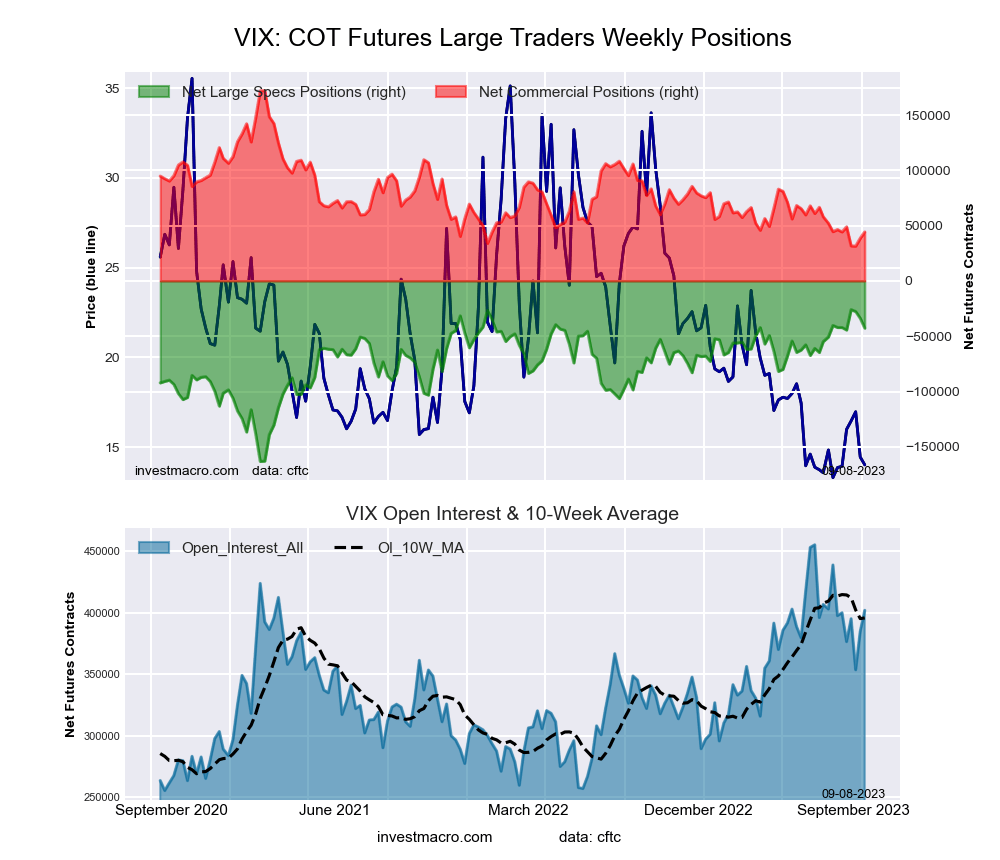
The VIX made a closing low on June 22 and failed to confirm the S&P’s higher price extremes. That was an initial warning sign that market participants were becoming a bit more fearful and expecting a pickup in market volatility.

So, it appears the character of the stock market has changed.

These negative indicators are in stark contrast to measures of stock market sentiment during the past several weeks, some of which reached bullish extremes.

For example, consider the Advisor and Investor Model (AIM) from SentimenTrader.com. That’s a blend of over 50 sentiment readings from five different sources, including Market Vane and Consensus Inc., two of the oldest services.

The August Elliott Wave Financial Forecast, a monthly publication which analyzes major U.S. financial markets, provides some insights:

This comprehensive model hit a new 3½-year extreme of 0.99 on July 25. The extreme during the topping process was a reading of 0.96 on April 16, 2021, which occurred as the most speculative issues completed their tops.

Indeed, as recently as Aug. 14, none other than Nasdaq.com had this headline:

Reasons to Still Believe In This New Bull Market

In Elliott Wave International’s view, the S&P 500 index never entered a “new bull market” since the January 2022 top and the subsequent downturn. Yes, there’s been a rally since that first leg down, but the January 2022 peak has not been breached.

The stock market’s Elliott wave structure puts that rally into context.

If you’d like to delve into the details of Elliott wave analysis, read Frost & Prechter’s book, Elliott Wave Principle: Key to Market Behavior. Here’s a quote from this Wall Street classic:

Although it is the best forecasting tool in existence, the Wave Principle is not primarily a forecasting tool; it is a detailed description of how markets behave. Nevertheless, that description does impart an immense amount of knowledge about the market’s position within the behavioral continuum and therefore about its probable ensuing path. The primary value of the Wave Principle is that it provides a context for market analysis. This context provides both a basis for disciplined thinking and a perspective on the market’s general position and outlook. At times, its accuracy in identifying, and even anticipating, changes in direction is almost unbelievable.

If you’d like to read the entire online version of the book, you may do so for free once you become a member of Club EWI, the world’s largest Elliott wave educational community.

It doesn’t cost anything to join Club EWI. Even so, members enjoy free access to Elliott wave resources on financial markets, investing and trading. New resources are regularly added and some videos and articles are from Elliott Wave International’s analysts. All the while, Club EWI members are under no obligations whatsoever. So, you have nothing to lose and a world of Elliott wave education to gain!

Elliott Wave International stands ready to welcome you as a new Club EWI member. Just follow this link and you’re on your way: Elliott Wave Principle: Key to Market Behaviorget free and instant access.

This article was syndicated by Elliott Wave International and was originally published under the headline Stock Market’s Character Has Changed — Here’s How. EWI is the world’s largest market forecasting firm. Its staff of full-time analysts led by Chartered Market Technician Robert Prechter provides 24-hour-a-day market analysis to institutional and private investors around the world.

Stock indices were supported amid weak US economic data. Australia is experiencing a drop in inflation

By JustMarkets

At yesterday’s stock market close, the Dow Jones Index (US30) increased by 0.85%, while the S&P 500 Index (US500) added 1.45%. The NASDAQ Technology Index (US100) closed positive by 1.74% on Tuesday. The S&P 500 Index (US500) hit a 2.5-week high, the Dow Jones Industrials (US30) hit a 1.5-week high, and the Nasdaq 100 Index hit a 3-week high. The stock indexes rose after weaker-than-expected economic news from the US on Tuesday regarding JOLTS job openings for July and consumer confidence for August, pushing bond yields lower and raising the possibility that the Federal Reserve will pause its rate hike campaign.

US JOLTS job openings for July fell by 338,000 to a 2-year low of 8.827 million, weaker than expectations of 9.500 million. The Conference Board’s US consumer confidence index for August fell by 7.9 to 106.1, weaker than expectations of 116.0. Today, the US will release GDP data for August as well as labor market data from ADP. GDP growth on the back of solid labor market data may give confidence to the dollar and correct stock indices.

Equity markets in Europe were mostly up yesterday. Germany’s DAX (DE40) climbed 0.88%, France’s CAC 40 (FR40) gained 0.67%, Spain’s IBEX 35 (ES35) jumped by 1.05%, and the UK’s FTSE 100 (UK100) closed positive by 1.72%.

As the ECB’s September meeting approaches, hawks have begun to actively advocate for policy tightening. Market pricing for the September meeting is likely what ECB policymakers are concerned about. Markets are very reluctant to price in the possibility of another rate hike from the ECB, and the implied probability of a September rate hike is below 50%. But a lot will depend on Eurozone inflation data to be released today and tomorrow.

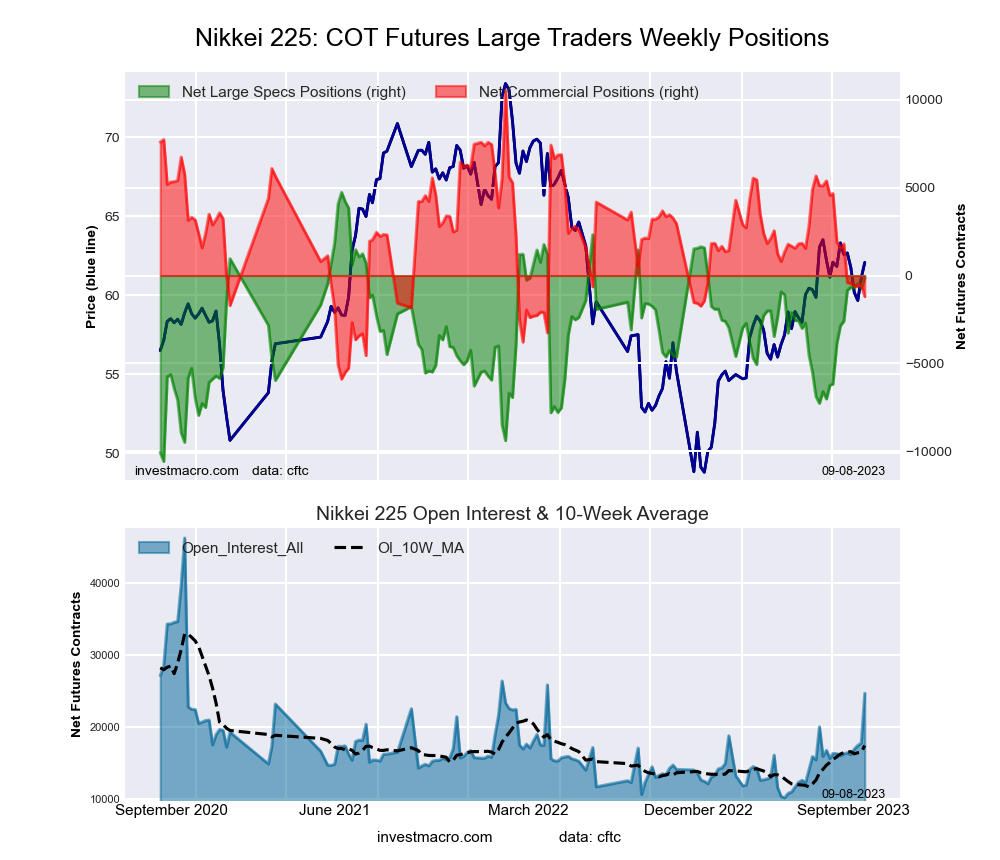
Asian markets were also mostly up yesterday. Japan’s Nikkei 225 (JP225) increased by 0.18%, China’s FTSE China A50 (CHA50) gained 0.52%, Hong Kong’s Hang Seng (HK50) added 1.95% on Tuesday, and Australia’s S&P/ASX 200 (AU200) was positive by 0.71% yesterday.

China’s actions over the weekend to stimulate its markets have sparked optimism about a possible resumption of economic growth, which is having a positive impact on energy demand and crude oil prices. In addition, gains in US stock markets on Monday boosted confidence in the economic outlook, supporting energy demand. But investors are refraining from taking large oil positions ahead of the release of key economic indicators from the US and China later this week.

Australia’s ASX 200 Index (AU200) was the best performer among its peers on Wednesday, rising more than 1% after data showed that the Consumer Price Index (CPI) declined more than expected in July (from 5.4% to 4.9% y/y, expectation 5.2% y/y). The data suggests that the Reserve Bank of Australia’s aggressive rate hikes are taking their toll, which in turn gives the central bank less incentive to raise interest rates further. However, separate data showed that Australia’s new construction fell in July, and current construction also rose less than expected in the second quarter, suggesting that high-interest rates are putting pressure on the country’s real estate market. Australia’s economic growth is expected to slow this year.

Japan’s unemployment rate rose in July for the first time in four months, while a measure of labor demand fell slightly. The number of employed people fell by 100,000 from the previous month, while the number of unemployed rose by 110,000. The weakening labor market risks triggering a negative spiral that would lead to lower wage growth, which is contrary to the BoJ’s plans as the BoJ wants demand to fuel inflation rather than cost increases.

China is set to cut mortgage interest rates by trillions of yuan for the first time since the global financial crisis. In addition, China’s state-owned banks plan to cut deposit rates for the third time in a year.

S&P 500 (F)(US500) 4,497.63 +64.32 (+1.45%)

Dow Jones (US30) 34,852.67 +292.69 (+0.85%)

DAX (DE40)  15,930.88 +138.27 (+0.88%)

FTSE 100 (UK100) 7,464.99 +126.41 (+1.72%)

USD Index  103.44 -0.62 (-0.60%)

Important events for today:
  • – Australia Consumer Price Index (m/m) at 04:30 (GMT+3);
  • – German Consumer Price Index (m/m) at 15:00 (GMT+3);
  • – US ADP Non-Farm Employment Change (m/m) at 15:15 (GMT+3);
  • – US GDP (m/m) at 15:30 (GMT+3);
  • – US Pending Home Sales (m/m) at 16:45 (GMT+3);
  • – US Crude Oil Reserves (w/w) at 17:30 (GMT+3).

By JustMarkets


This article reflects a personal opinion and should not be interpreted as an investment advice, and/or offer, and/or a persistent request for carrying out financial transactions, and/or a guarantee, and/or a forecast of future events.

Mid-Week Technical Outlook: Indices & Commodities

By ForexTime 

Global equities rose on Wednesday as weak US economic data overnight boosted hopes for a less hawkish Federal Reserve.

US job openings fell to their lowest level in more than two years while consumer confidence printed weaker than expected – fuelling bets around the Fed having less headroom to keep raising rates. This development weakened the dollar while supporting gold and US equities. Given how several more key U.S. economic indicators are scheduled this week, including the personal consumption expenditures and nonfarm payrolls – volatility could be the name of the game.

The increased volatility may present fresh opportunities across the board. However, our attention today falls on indices and commodities with the weapon of choice, none other than technical analysis.

SPX500_m bulls back in town?

The S&P 500 experienced a solid breakout above the 50-day SMA in the previous trading session with bulls slamming into the 4500-resistance level. A solid breakout above this point could encourage an incline towards 4580. Should 4500 prove to be reliable resistance, a decline back towards 4463 and 4390 could be on the cards.

NQ100_m gearing for fresh upside?

After breaking above the 15300 level, the Nasdaq 100 has the potential to push higher with the next key level of interest found at 15700. Should bulls run out of steam, prices may sink back below 15300 which could encourage a decline back towards 14965 and 14670, respectively.

UK100_m heads towards key resistance

UK100 bulls seem to be back in town after rebounding from the 7250 support level. Prices remain within a wide range with key layers of resistance at 7605 and 7710, respectively. Should bulls conquer these key levels, the UK100 may start a fresh bullish trend. If prices are unable to push beyond 7605, a decline back towards 7370 could be on the cards.

Brent approaches weekly resistance

It felt like the same old story for oil prices over the past few weeks as the supply and demand dynamics influencing the commodity clashed. Prices seem to be pushing higher thanks to a weaker dollar with the next key level of interest found at 89.00 – where the weekly 100 SMA resides.

Gold to extend rebound?

In our trade of the week, we discussed whether gold was primed for another breakout. We received our answer yesterday after the precious metal blasted through the $1920 resistance level following soft US economic data. Gold bulls are back in the building and could send prices higher amid a weaker dollar and growing hopes for a less hawkish Fed. The recent breakout above $1935 may inspire a move higher towards $1957 – where the 100-day SMA can be found. Although bulls are currently in power, this can be easily flipped by key US economic data – including Friday’s highly anticipated NFP report.


Forex-Time-LogoArticle by ForexTime

ForexTime Ltd (FXTM) is an award winning international online forex broker regulated by CySEC 185/12 www.forextime.com

Tech Solutions Firm Has YOY Growth for 7th Quarter in a Row

Source: Chris Thompson  (8/24/23)

In Q2/23 the company began to realize synergies from its recent acquisition, which boosted revenue and cash flow, noted an eResearch report.

Data Communications Management Corp.’s (DCM:TSX; DCMDF:OTCQX) Q2/23 financial results were notable for a 75% year-over-year (YOY) increase in revenue, attributed to its acquisition of Moore Canada Corp. (MCC), reported Chris Thompson, eResearch’s director of equity research, in an August 17 update note.

“The combined businesses achieved growth through expanded revenue with existing clients, successful acquisition of new clients, and ongoing efforts to mitigate the impact of raw material cost increases by passing them on to the customers,” Thompson wrote.

Attractive 114% Return

The Canadian marketing and business communication solutions provider offers investors a significant potential return of 114%, noted Thompson. It is trading now at about CA$3.22 per share, whereas eResearch’s target price on it is CA$6.90 per share.

Data Communications Management is a Buy.

Growth Record Maintained

Thompson reviewed Data Communications Management’s financial results from Q2/23, the company’s seventh consecutive quarter of year-over-year growth.

Revenue was a beat, coming in CA$119 million (CA$119M) versus eResearch’s CA$113.2M forecast. Also, Q2/23 revenue was 74.7% higher than Q2/22’s of CA$68.1M.

“Data Communications Management reported that it believes it can still achieve its targeted organic annual revenue growth rate of 5%,” wrote Thompson.

Gross profit in Q2/23 was CA$32M, up 56.7% YOY. Gross margin in Q2/23, however, was 26.9%, down 3.1% YOY but consistent with eResearch’s 27% estimate.

The tech solutions firm aims to achieve gross margins of greater than 30% in the upcoming quarters. Following the closing of the MCC acquisition in late April, Data Communications Management began initiatives to reach this target through synergies and greater efficiencies in organization, operations, procurement, and revenue, Thompson noted.

Adjusted EBITDA in Q2/23 was CA$13.8M, up 45.8% YOY from CA$9.5M and partly due to the MCC acquisition.

As far as costs, Q2/23 sales, general and administrative expenses were CA$23M, up from CA$18.8M in Q1/23 and up from CA$13.8M in Q2/22. Data Communications Management aims to achieve savings from synergies in the CA$25−30M range over the next 18−24 months and has already realized CA$4.2M in this regard.

Overall, for Q2/23, Data Communications Management reported a CA$2.9M net loss, whereas last year, at this time, it had achieved a net profit of CA$3.8M. Similarly, Q2/23 earnings per share was (CA$0.06) compared to a CA$0.09 gain in Q2/22.

Review of Balance Sheet

In May of Q2/23, the company generated CA$26.1M of gross proceeds from a private placement of common shares offering, reported Thompson.

The following month, it yielded CA$24.1M of gross proceeds from the sale and leaseback of its warehouse in Oshawa, Ontario.

At Q2/23’s end, Data Communications Management had CA$21M in cash and CA$112.7M in debt after having paid it down by CA$60.4M.


Important Disclosures:

  1. Data Communications Management Corp. is a billboard sponsor of Streetwise Reports and pays SWR a monthly sponsorship fee between US$4,000 and US$5,000.
  2. Doresa Banning wrote this article for Streetwise Reports LLC and provides services to Streetwise Reports as an independent contractor.
  3. The article does not constitute investment advice. Each reader is encouraged to consult with his or her individual financial professional and any action a reader takes as a result of information presented here is his or her own responsibility. By opening this page, each reader accepts and agrees to Streetwise Reports’ terms of use and full legal disclaimer. This article is not a solicitation for investment. Streetwise Reports does not render general or specific investment advice and the information on Streetwise Reports should not be considered a recommendation to buy or sell any security. Streetwise Reports does not endorse or recommend the business, products, services or securities of any company mentioned on Streetwise Reports.

For additional disclosures, please click here.

Disclosures for eResearch, Data Communications Management Corp., August 17, 2023

eResearch Intellectual Property: No representations, express or implied, are made by eResearch as to the accuracy, completeness, or correctness of the comments made in this report. This report is not an offer to sell or a solicitation to buy any security of the Company. Neither eResearch nor any person employed by eResearch accepts any liability whatsoever for any direct or indirect loss resulting from any use of this report or the information it contains. This report may not be reproduced, distributed, or published without the express permission of eResearch.

ANALYST ACCREDITATION eResearch Analyst on this Report: Chris Thompson CFA, MBA, P.Eng. Analyst Affirmation: I, Chris Thompson, hereby state that, at the time of issuance of this research report, I do not own common shares, share options, or share warrants of DATA Communications Management Corp. (TSX: DCM).

eRESEARCH DISCLOSURE STATEMENT eResearch is engaged solely in the provision of equity research to the investment community. eResearch provides published research and analysis to its Subscribers on its website (www.eresearch.com), and to the general investing public through its extensive electronic distribution network and newswire agencies. eResearch makes all reasonable efforts to distribute research material simultaneously to all of its Subscribers. eResearch does not manage money or trade with the general public, provides full disclosure of all fee arrangements, and adheres to the strict application of its Best Practices Guidelines. eResearch accepts fees from the companies it researches (the “Covered Companies”) and from financial institutions or other third parties. The purpose of this policy is to defray the cost of researching small and medium-capitalization stocks which otherwise receive little or no research coverage. DATA Communications Management Corp. paid eResearch a fee to have it conduct research and publish reports on the Company for one year.

To ensure complete independence and editorial control over its research, eResearch follows certain business practices and compliance procedures. For instance, fees from Covered Companies are due and payable before the research starts. Management of the Covered Companies is sent copies, in draft form without a Recommendation or a Target Price, of the Initiating Report and the Update Report before publication to ensure our facts are correct, that we have not misrepresented anything, and have not included any non-public, confidential information. At no time is management entitled to comment on issues of judgment, including Analyst opinions, viewpoints, or recommendations. All research reports must be approved, before publication, by eResearch’s Director of Research, who is a Chartered Financial Analyst (CFA). All Analysts are required to sign a contract with eResearch before engagement and agree to adhere at all times to the CFA Institute Code of Ethics and Standards of Professional Conduct. eResearch Analysts are compensated on a per-report, per-company basis and not based on his/her recommendations. Analysts are not allowed to accept any fees or other considerations from the companies they cover for eResearch. Officers, analysts, and directors of eResearch are allowed to trade in shares, warrants, convertible securities, or options of any of the Covered Companies only under strict, specified conditions, which restrict trading 30 days before and after a Research Report is published.

AI Security Firm With ‘Almost Unlimited Upside’ Per Technical Analyst

Source: Streetwise Reports  (8/24/23)

VSBLTY Groupe Technologies Corp. is a major player in the growing “Store as a Medium” advertising market. However, its latest deployment in Mexico showcases how the company’s core tech is equally applicable for top-tier intelligent zero-contact access control.

Recently, Canada-based retail technology and marketing company VSBLTY Groupe Technologies Corp. (VSBY:CSE; VSBGF:OTC; 5VS:FSE) announced it had signed a non-binding letter of intent to acquire Shelf Nine, a leader in retail media networks, providing brands and retailers specifically targeted digital media advertising and other customer communications content delivered at the point of purchase.

The definitive agreement is expected to be finalized over the next 30 days. 

In light of this news, CEO and Co-founder Jay Hutton said, “This acquisition is synergistic with VSBLTY’s vision of the retail advertising segment . . . Shelf Nine’s integration with our computer vision analytics technology is a win-win for both companies. Operating as a wholly owned subsidiary of VSBLTY, Shelf Nine and VSBLTY have the opportunity to further leverage each company’s core competencies and further penetrate the retail media market, estimated to be worth US$160 billion by 2027. In addition to both companies benefiting from recurring SaaS fees, they also generate added revenue from content development and media sales”

VSBLTY  is generally known for the variety of smart applications it offers to drive brand engagement and put marketing insights in motion.

At its core, the company, which is headquartered in Philadelphia, is engaged in Proactive Digital Display, which transforms retail and public spaces as well as place-based media networks using software-as-a-service (SaaS)-based audience measurement and machine learning.

This work allows retailers and brand builders to identify customer habits and even individual customers, thereby providing uniquely tailored multimedia experiences from end-to-end along the buying journey in brick-and-mortar locations with greater fidelity than one would experience online.

By utilizing facial recognition, age, and gender, VSBLTY’s proprietary technology can effectively enhance retail brand engagement and measurement through customized ads on in-store digital displays at the point of purchase in real-time. This technology has proven to increase brand sales by over 25%.

VSBLTY’s main products include DataCaptor, VisionCaptor, VSBLTY Vector and VSBLTY Metrics. DataCaptor leverages camera and sensor technology through AI tools, enabling real-time analytics and anonymous audience data. VisionCaptor Content Management System provides a variety of capabilities for bringing proximity-aware, interactive brand messaging to life on any digital screen.

These two key technologies are deployed together to create custom brand experiences for users who follow them throughout connected retail experiences.

However, fewer people are aware of VSBLTY Vector, the company’s security-focused software, which provides facial recognition and weapon detection.

The Catalyst: Access Control Rollout for Major Mexican Customer

On April 8, VSBLTY announced that a major Mexican customer had successfully deployed the firm’s VSBLTY Vector solution across a network of 40 CCTV cameras to automate access control at the customer’s two-story headquarters facility, replacing security cards and allowing the free flow of employees while rapidly detecting and alerting security forces of any unauthorized or potentially bad actors.

According to Insider Intlegence’s Retail Media Ad Spending Forecast H1 2023, “We expect advertisers to pour more than US$45 billion into retail media ad spending in 2023.” The report projects that spending to expand to some US$ 106 billion by 2027.

As the announcement explains, “Previously, traditional access control systems have been key cards, key fobs, or digital passwords, but each has its own security limitations.”

“Employees now enter their workplace without physical checkpoints while CCTV cameras and AI-backed software verify their status. If the system identifies an unauthorized person, building security is notified immediately.”

“To ensure a safe workplace, this program provides a continuous search for unknown persons based upon an enrollment database of employees and other authorized personnel. Each day, approved visitors to the building are automatically logged and entered into the firm’s system.”

“The software is also not only capable of identifying a stranger (whose image is not in the records) attempting to enter an authorized area but can identify a terminated or previously problematic employee whose image is in the system. This advanced program can also offer additional security, including weapons detection and suspicious behavior to trigger alerts.”

As for other catalysts, Hutton told Streetwise there are a couple of catalysts to look out for next quarter.

  1. VSBLTY will be entering into a new market as an extension of the current relationship with ABInBev.
  2. There is traction in Saudi with VSBLTY’s joint venture in the region to launch the first large-scale retail media network.
  3. VSBLTY will continue tractions with partners in religious institutions and schools with the VSBLTY security AI solutions.

Why This Sector? Expanding the Value of AI

Using AI to recognize, quantify, and collate unknown users, such as the random collection of shoppers who visit a brick-and-mortar retailer in a given day, is already a valuable market segment.

According to Insider Intlegence’s Retail Media Ad Spending Forecast H1 2023, “We expect advertisers to pour more than US$45 billion into retail media ad spending in 2023.” The report projects that spending will expand to some US$ 106 billion by 2027.

With automated advertising solutions designed to target specific demographics in active retail spaces, VSBLTY is positioning itself to capture a significant share of that rapidly expanding market. However, by repurposing its core AI tech for security work, it is also gaining access to a huge secondary market no other retail advertising networks are addressing.

According to a report from Future Market Insights, “The global building access control security market is expected to secure a market value worth US$ 11.89 billion in 2023. During the forecast period from 2023 to 2033, the market is likely to display a CAGR of 14% while garnering a value worth US$ 44.2 billion. The increasing demand for smart buildings and infrastructure will be driving the demand for the building access control security market in the future.”

The report goes on to specify that zero-touch access control solutions, such as those offered by VSBLTY, are in particular demand in a post-pandemic market. By deploying its core technology across these disparate fields, VSBLTY has positioned itself to grow in a multi-faceted manner as these markets for novel AI technology mature.

Why This Company? Multiple Markets for AI Automation

As the company is situated at this valuable intersection between retail advertising and access control, it’s easy enough to market as making customers’ existing video cameras “smarter” by providing real-time monitoring and alerting. This ability to install using legacy technology is a powerful selling point for clients who have existing and expensive relationships with traditional security hardware vendors.

“Employees forgetting passwords, losing keycards and fobs can be both an administrative nightmare and a financial burden for corporations,” explains VSBLTY Co-founder & CEO Jay Hutton. “This deployment of our AI-based Vector product for access control and building security alleviates many issues inherent in traditional access control systems.”

“We anticipate the success of our advanced security system in Mexico will lead to many other installations worldwide,” he concludes.

Why Now? ‘Almost Unlimited Upside’

On August 1, Technical Analyst Clive Maund published a detailed analysis of VSBLTY quite optimistically titled “This Tech Co. Has Almost Unlimited Upside.”

In it, he explained that “Whilst it is generally unwise to go against the prevailing trend when it is still in force, there are exceptions when the volume pattern strongly indicates that reversal is imminent, which is the case with VSBLTY, and the case for buying Visibility is stronger still because the price of the stock is so close to zero that there is almost no downside — as with an option you can only lose your stake, whereas the upside is relatively unlimited.”

On August 1, Technical Analyst Clive Maund published a detailed analysis of VSBLTY quite optimistically titled “This Tech Co. Has Almost Unlimited Upside.”

“On the 26-month chart, we can see the horrendous bear market in Visibility that has taken it from a peak at almost CA$2.00 in November 2021 to bottom at a miserly 5 cents a couple of weeks ago.

The reason that we are interested in it here, apart from the fact that it can’t drop much more because it is almost worthless, is the appearance of persistent strong upside volume last month and especially this month that has driven the Accumulation line steeply higher,” Maund explained.

“This is viewed as evidence of determined Accumulation by a person or persons or an entity who consider(s) the company to be grossly undervalued here and might be the prelude to a takeover.”

“VSBLTY is obviously a speculative play here that is only suited to more experienced investors and traders who understand the risk inherent in this setup. Could the flurry of buying interest last month and this be simply a ‘flash in the pan’ that leads to nothing and the downtrend continue? Well, it could, but that is considered unlikely.”

Retail: 93.24%
Strategic Investors: 3.3%
Management & Insiders: 3.21%
Institutions: 0.25%
93.2%
3.3%
3.2%
*Share Structure as of 8/16/2023


“Instead, we recognize that you could lose your stake buying here if it continues even lower and maybe the company goes bust, but at the same time, if it does recover, you could make many times your investment, and since the technicals indicate that the chance of this happening is better than 50:50 it is considered to be a worthwhile calculated risk.”

Ownership and Share Structure

According to Reuters, 3.21% of VSBLTY’s stock is held by management and insiders. Director Thomas Hayes has 1.10%, with 3.67 million shares. Co-founder, CEO, President, and Founder Jay Hutton has 0.52%, with 1.74 million, and CTO Gary Gibson has 0.40%, with 1.34 million.

3.30% is with strategic investor Actus Interactive Holdings Inc., with 10.97 million shares.

0.25% is with institutional investors. Palos Management Inc. is the largest institutional shareholder at 0.21%, with 0.70 million shares.

The rest is with retail investors.

As of June 28, 2022, VSBLTY had a market cap of CA$82 million, with 209,753,999 basic shares outstanding, 47,256,115 warrants, and 14,440,834 options, for a fully diluted base of 271,450,948.


Important Disclosures:

  1. As of the date of this article, officers and/or employees of Streetwise Reports LLC (including members of their household) own securities of VSBLTY Groupe Technologies Corp.
  2. Owen Ferguson wrote this article for Streetwise Reports LLC and provides services to Streetwise Reports as an independent contractor.
  3. The article does not constitute investment advice. Each reader is encouraged to consult with his or her individual financial professional and any action a reader takes as a result of information presented here is his or her own responsibility. By opening this page, each reader accepts and agrees to Streetwise Reports’ terms of use and full legal disclaimer. This article is not a solicitation for investment. Streetwise Reports does not render general or specific investment advice and the information on Streetwise Reports should not be considered a recommendation to buy or sell any security. Streetwise Reports does not endorse or recommend the business, products, services or securities of any company mentioned on Streetwise Reports.

For additional disclosures, please click here.

Stocks: Keep This in Mind About Seasonal Tendencies

“In 1987 and 2000, the month of August presented a great chance to sell stocks”

By Elliott Wave International

Many investors know that some time periods of the year tend to be more bullish for stocks, like the holiday season. Other times tend to be more bearish, like September and October.

However, seasonal tendencies are just that and don’t mean the stock market will follow the expected script every year.

That said, an investor doesn’t want to dismiss seasonal tendencies, especially when technical factors, such as Elliott wave analysis, align with those tendencies.

Presently, we are entering a seasonally bearish time period, especially when you consider milestone years. Here’s a quote from our Aug. 14 U.S. Short Term Update, a thrice weekly Elliott Wave International publication which offers near-term analysis of key U.S. financial markets:

In 1987 and 2000, the month of August presented a great chance to sell stocks. In 1929, the final high came just a few days into the next month, on September 3. At the 2007 stock market peak, several stock indexes topped a few weeks before August, in mid-July, such as the Dow Jones Composite, the Value Line Composite and the small-cap sector.

Looping back to the statement that one should combine one’s knowledge of seasonal tendencies with Elliott wave analysis, let’s pick out one of those milestone years — 2000 — and see what the Elliott wave pattern for the Dow Industrials looked like at the start of September in that year.

This chart and commentary are from the September 2000 issue of the Elliott Wave Financial Forecast, which published July 28, 2000 (The Elliott Wave Financial Forecast provides big-picture analysis and forecasts for major U.S. financial markets):

DowJonesIndustrials

Our confidence in the short-term picture is very high, which indicates a down September-October for the blue-chip averages.

The Dow rallied less than 1% into the middle of the next week, then plunged 15% into mid-October.]

Of course, not every milestone stock market year is an exact replica of the previous one.

But, as implied, it’s important to keep an eye on the stock market’s Elliott wave pattern in conjunction with any other indicator.

Frost & Prechter’s book, Elliott Wave Principle: Key to Market Behavior, discusses the value of the Elliott wave model:

The primary value of the Wave Principle is that it provides a context for market analysis. This context provides both a basis for disciplined thinking and a perspective on the market’s general position and outlook. At times, its accuracy in identifying, and even anticipating, changes in direction is almost unbelievable.

You can have free access to the online version of Elliott Wave Principle: Key to Market Behavior by becoming a member of Club EWI, the world’s largest Elliott wave educational community. Club EWI is free to join and allows you complimentary access to a wealth of Elliott wave resources on investing and trading.

Just follow this link to get started: Elliott Wave Principle: Key to Market Behavior – get free and unlimited access..

This article was syndicated by Elliott Wave International and was originally published under the headline Stocks: Keep This in Mind About Seasonal Tendencies. EWI is the world’s largest market forecasting firm. Its staff of full-time analysts led by Chartered Market Technician Robert Prechter provides 24-hour-a-day market analysis to institutional and private investors around the world.

Nvidia knockout earnings – two takeaways from deVere CEO

By George Prior

As Nvidia’s knockout earnings and guidance reports showed on Wednesday, AI is not just the future, it’s the present, and all investors need some exposure to it – but there’s much more than just this one California-based mega tech company.

This is the bullish assessment from Nigel Green, the CEO and founder of deVere Group, one of the world’s largest independent financial advisory, asset management and fintech organizations, as the chipmaker beat estimates and says that sales will jump a further 170% this quarter due to soaring demand for AI chips.

Shares in Nvidia jumped 6% on the earnings and guidance, which came after the closing bell.

“Nvidia is the darling of the AI boom – of this there is no doubt – and with robust guidance we expect this to continue for most of the rest of the year,” says Nigel Green.

“For me there are two key takeaways from the Nvidia news.

“First, clearly, AI is not just the future, it’s the present.

“Investors who are serious about building their long-term wealth need exposure to this pivotal driver of innovation, competitiveness, and profitability across almost all industries.

“We’re still at the beginning of the AI age and investors should not miss out on having an early advantage. Almost everyone should have investment exposure to AI as part of the mix.”

He continues: “Second, whilst we expect Nvidia to continue to dominate the AI boom for at least the rest of the year, probably more, savvy investors will now likely be thinking that perhaps a lot of the good news is already priced-in for this company.

“They will be asking: can Nvidia shares really jump another 210% over the next six months? Or are there other similar and/or better opportunities in the same arena?

“They will already be looking for The Next Big Thing – and so they should.

“Despite the fact that Nvidia is way out in front, and probably still has not peaked, history teaches us that challengers can offer potentially blowout returns for investors.”

Diversification as ever is investors’ best tool for long-term financial success. As a strategy, it has been proven to reduce risk, smooth-out volatility, exploit differing market conditions, maximise long-term returns and protect against unforeseen external events.

“Given the rapid evolution of AI and its investment landscape, seeking advice can minimize pitfalls, optimize opportunities, and enhance the likelihood of achieving favorable returns,” concludes Nigel Green.

About:

deVere Group is one of the world’s largest independent advisors of specialist global financial solutions to international, local mass affluent, and high-net-worth clients.  It has a network of offices across the world, over 80,000 clients and $12bn under advisement.

Nvidia hype is dangerous, but AI should be in your investment mix

By George Prior

The hype surrounding chipmaker Nvidia’s earnings is dangerous, but all investors should consider Artificial Intelligence (AI) exposure, affirms the CEO of one of the world’s largest independent financial advisory, asset management and fintech organizations.

The analysis from deVere Group’s Nigel Green comes as investors worldwide await the California-based semiconductor designer Nvidia’s results on Wednesday – which come after the closing bell – to see how it performs against sky high Wall Street expectations after an impressive first quarter.

He comments: “Nvidia’s shares have jumped almost 210% this year on the frenzy around its uses within AI.

“Clearly, this is huge and, as such, all eyes will be on the earnings and also the future guidance from the company after the bell on Wednesday.

“If earnings are again stellar and guidance robust, it will help reignite the tech rally which has stalled in recent weeks. If they don’t, we expect short-term market volatility.”

The deVere CEO warns, however, that as the volume is getting louder, and the frenzy is reaching fever pitch regarding Nvidia and other so-called ‘Magnificent Seven’ tech stocks (Apple, Microsoft, Amazon, Meta, Tesla and Alphabet), the heat needs to be taken down a gear.

“This level of hype is dangerous as it could lead investors to assume that these stocks are a silver bullet to build long-term wealth – and they are not, at least not on their own,” he warns.

“While I believe that exposure to these mega-cap tech stocks should be part of almost every investor’s portfolio, as they have robust fundamentals and are future-focused, especially in AI, they should not be exclusive.”

“These stocks are incredibly important, of course, but they’re not a panacea. I fear some investors will get burned unless some of the frenzy is turned down.”

“Diversification is, as ever, investors’ best tool for long-term financial success. As a strategy, it has been proven to reduce risk, smooth-out volatility, exploit differing market conditions, maximise long-term returns and protect against unforeseen external events.”

That said, the deVere CEO remains bullish on AI-orientated investments as part of the mix.

“The buzz surrounding AI companies is grounded in tangible technological advancements and their potential to reshape industries across the board.

“The transformative capabilities of AI, coupled with its cross-industry disruption, data-driven nature, and rapid innovation, make it a compelling investment opportunity.

“As the AI market continues to expand and evolve, investors who recognise its potential are well poised to reap the rewards of this exciting technological revolution.

“Including AI exposure in investment portfolios isn’t just a trend – it’s a strategic move that aligns with the future of innovation and economic growth. Just do it judiciously.”

About:

deVere Group is one of the world’s largest independent advisors of specialist global financial solutions to international, local mass affluent, and high-net-worth clients.  It has a network of offices across the world, over 80,000 clients and $12bn under advisement.

Trade of the Week: SPX500_m demands proof out of Nvidia, Jackson Hole

By ForexTime

  • S&P 500 on course to end 5-month winning streak
  • Nvidia’s forecasted 10% post-earnings move may jolt SPX500_m
  • Friday speech by Chair Powell to shape Fed rate hike bets
  • Last Friday’s (August 18th) “doji” points to market indecision ahead of such a pivotal week
  • Listed below: potential scenarios, support and resistance levels

It’s been an angsty August so far for the S&P 500.

This benchmark index, which is widely used to measure the overall performance of the US stock market, has fallen by about 4.8% so far this month.

The S&P 500 also appears headed for its worst monthly performance since December 2022 (down 5.9%), while its previous monthly drop was back in February 2023 (down 2.6%).


This week, the SPX500_m (which tracks the underlying S&P 500) is at the mercy of two of the largest market themes of 2023 coming head-to-head:


1) AI-mania: just hype? or real earnings booster?

Investors hope that artificial intelligence would supercharge corporate earnings for decades to come, even as the technology promises to change our everyday lives.

And few have benefited from such expectations more than Nvidia.

This chipmaker’s stocks still boast of a 196.3% year-to-date climb, being the best-performing stock on the S&P 500 so far this year, despite having dropped 8.8% from its all-time high set on July 18th.

This chipmaker still has a market cap of over US$ 1 trillion (that’s $1,000,000,000,000), making it the 4th largest stock on the benchmark S&P 500 index.

Nvidia is due to release its latest quarterly results after US markets close on Wednesday, August 23rd.

Markets are currently predicting that this stock could move by 10.2%, either up or down, on Thursday – the day after Nvidia’s earnings release.

Of course, whether this stock climb higher or drops lower depends on the reaction to Nvidia’s financial results last quarter, as well as its forward guidance for future earnings.

Broadly speaking, if Nvidia can convince markets that the AI-hype is truly translating into a meaningful earnings boost, that could help the SPX500_m pare recent losses.


2) US interest rates – higher for longer?

The annual Jackson Hole Economic Symposium, organized by the Kansas City Fed, is set to happen between August 24th – 26th, bringing together the world’s top central bankers, policymakers, and economists.

The highlight is, of course, the speech by Fed Chair Jerome Powell, on Friday, August 25th.

After all, Chair Powell leads the world’s most influential central bank – the US Federal Reserve.


Since 2022, markets have been obsessing over how high the Fed would send US interest rates.

My article this time last year (dated 22 August 2022), in previewing last year’s Jackson Hole symposium, carried these words:

And here’s the biggest question on everyone’s minds: how much higher will the Fed hike US interest rates?

12 months later, yet the same question remains in play.

There’s also an added layer to that question posed in August 2023:

How long will the Fed maintain its benchmark rates at its peak, before considering a rate cut?”


Here are the market’s current expectations surrounding US interest rates:

  • merely an 11% chance that the Fed would trigger another 25-basis point HIKE at its September FOMC meeting
  • one-in-three chance (38% odds) that there would be one more 25-bps HIKE by the Fed between now and end-2023
  • one-in-three chance (35% odds) that there would be a 25-bps CUT by March 2024
  • 87% chance of a Fed rate CUT by May 2024


How did markets react to Powell’s speech at 2022’s Jackson Hole event?

As a reminder, Chair Powell’s speech back on 26 August 2022 triggered a 3.4% drop in the S&P 500 on the day.

The benchmark stock index went on to fall by a further 11.85% after the previous symposium concluded, reaching its trough in October, before going on to stage an AI-fuelled rally since (albeit with a pullback so far in August 2023).

It was clear then that traders and investors willingly took to heart Powell’s tough messaging back then about “unusually large” Fed rate hikes.

Although the days of 75-bps Fed rate hikes are now relegated to the past, markets remain primed to react to Powell’s policy signals this week.


As for Chair Powell’s speech ahead of this coming weekend, here are some potential scenarios that may affect the SPX500_m:

  1. If Chair Powell delivers a higher-for-longer message, i.e. US interest rates could go even higher and stay at that peak for longer than what markets currently expect, that could drag the SPX500_m even lower.After all, tech stocks generally do not like the thought of higher US interest rates.

    And the biggest components of the S&P 500 are Big Tech names such as Apple, Microsoft, Amazon, Alphabet, and of course, Nvidia.

  2. On the other hand, if Chair Powell surprises markets and suggests that the Fed has raised its benchmark rates high enough to finally subdue multi-decade high inflation in the US, that could be cause for rejoicing among SPX500_m bulls.


From a technical perspective …

The doji candlestick formed last Friday, August 18th, points to indecision among traders, especially leading into such a week that promises stern test for the US stock market.

This doji could herald a period of price consolidation, or perhaps even the formation of a new trend.


Keeping in mind the looming fundamental catalysts as well was technical setups …

Here are some key levels to look out for on the SPX500_m daily chart:

POTENTIAL SUPPORT

  • 4335:  intraday low on August 18th/late-June lows
  • 100-day SMA and key Fibonacci level
  • 4301 – 4260: early-June range


POTENTIAL RESISTANCE

  • 4400: psychologically-important mark/Fib retracement
  • 4452 – 4463: June cycle highs
  • 50-day simple moving average (SMA)


Forex-Time-LogoArticle by ForexTime

ForexTime Ltd (FXTM) is an award winning international online forex broker regulated by CySEC 185/12 www.forextime.com