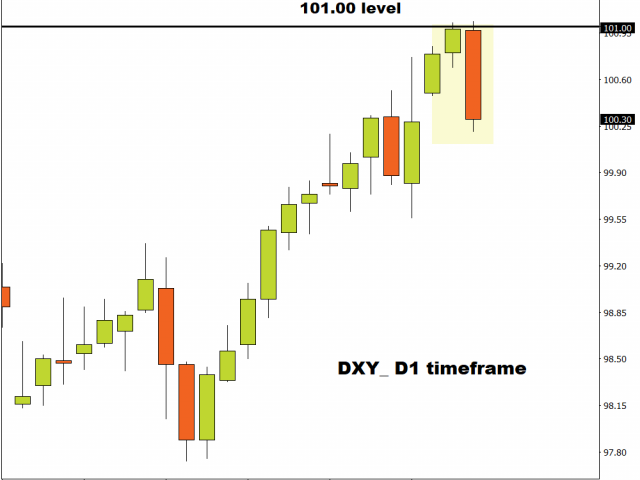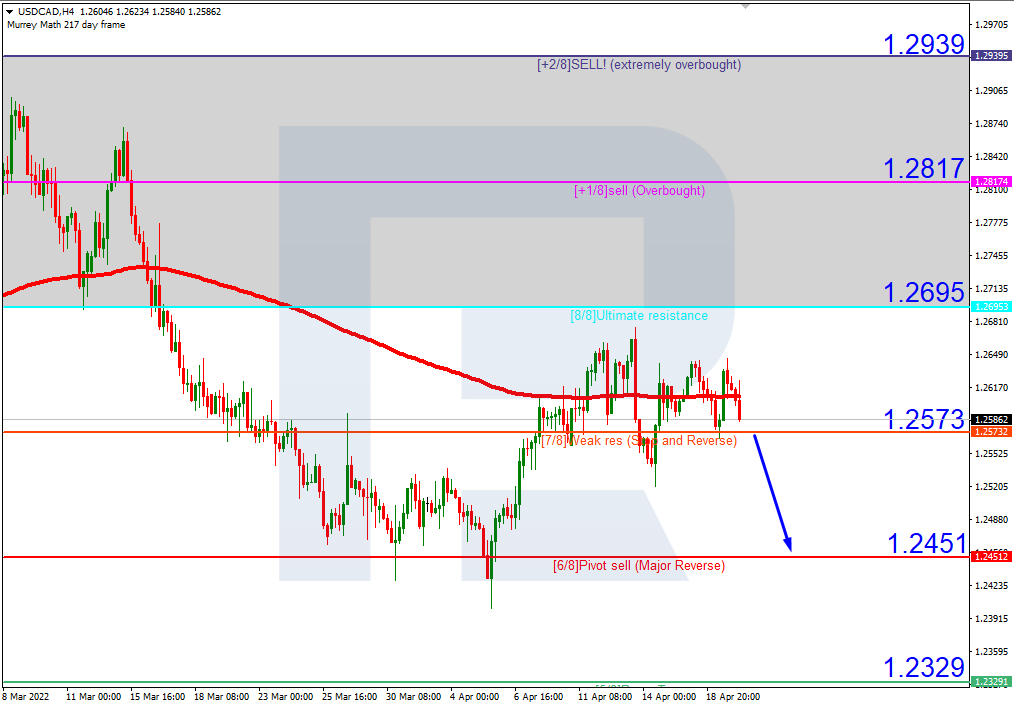
The US dollar rallied after FOMC minutes showed the central bank’s plan to reduce its balance sheet. The pair found support at 1.2400 after the RSI went deeply into the oversold territory.
A break above 1.2500 prompted sellers to cover their latest bets, easing the downward pressure in the process. The bulls need to clear offers near 1.2590 before they could push for a sustainable bounce.
Failing that, further weakness could drive price action to October’s lows around 1.2300.
NZDUSD breaks support
The New Zealand dollar softened against its US counterpart after hawkish Fed minutes. The rally came to a halt in the supply zone around 0.7050 from last November’s sell-off.
0.6900 was important support and its breach forced short-term buyers to bail out. As the kiwi grinds 0.6875 over the 30-day moving average, an oversold RSI may cause a rebound.
A deeper correction may send the pair to 0.6800 and cause a bearish reversal. The bulls need to reclaim 0.6940 to regain the upper hand.
XAGUSD tests major support
Silver struggles as the greenback recovers across the board. A bearish MA cross on the daily chart suggests a deterioration in the market mood.
Buyers’ struggle to lift offers at the psychological level of 25.00 indicates prevailing strong selling pressure. Sentiment has become cautious as the precious metal revisits 24.00.
Price action could be vulnerable to another round of sell-off if the bears succeed in pushing below this critical floor. Following that, 23.30 would be the next target.
Orbex is a fully licensed broker that was established in 2011. Founded with a mission to serve its traders responsibly and provides traders with access to the world’s largest and most liquid financial markets. www.orbex.com
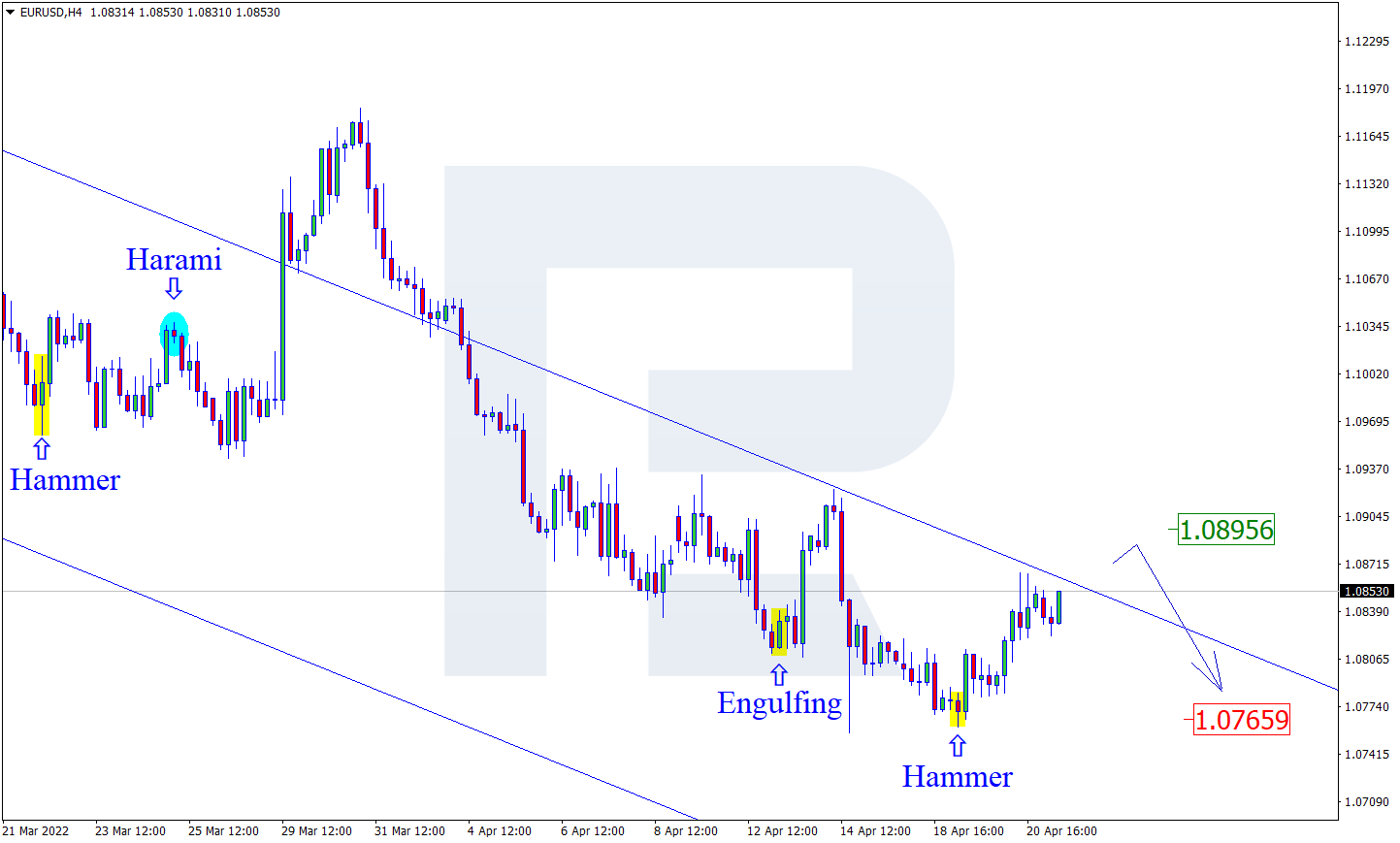
The EURUSD remains under pressure on the daily charts. Bears remain in control below 1.1000 with the next key level of interest found at 1.0850. A solid break under this point could trigger a decline towards 1.078. If bulls manage to propel prices back above 1.1000, a move towards 1.1120 could be on the cards.
If you are looking for a strong trend, then check out the GBPUSD on the weekly timeframe.
There have been consistently lower lows and lower highs while the MACD trades below zero. A major breakdown could be on the horizon but this will depend on whether bears can conquer the 1.3000 support level. A weekly close under this point may open the doors towards 1.2750. Should 1.3000 prove to be a tough nut to crack, a rebound back towards 1.3300 is likely to happen.
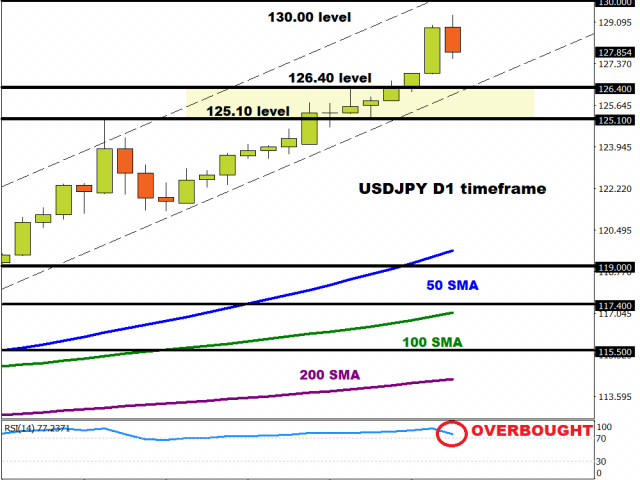
Things are looking good for USDJPY bulls as prices steadily approach the 2022 high at 125.10.
A strong breakout and daily close above 123.90 could aid the upside and provide a fresh foundation for bulls to retest 125.10. Beyond this point is 125.85 – a level not seen since mid-2015. Should 123.90 act as resistance, prices could decline back towards 122.50.
Things are starting to get interesting for the AUDUSD.
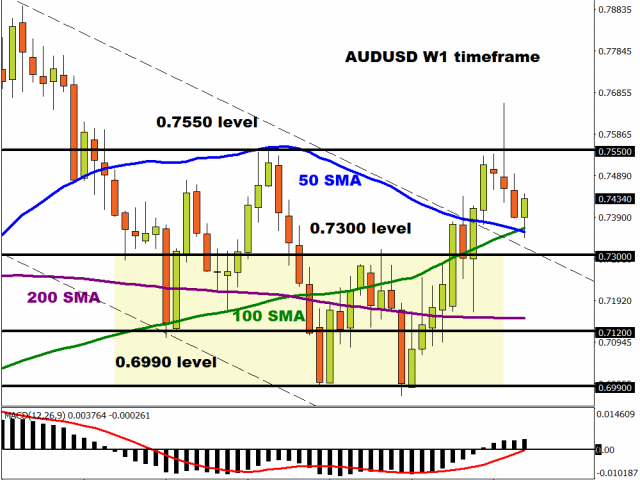
Over the past few months, the currency was stuck within a very wide range with support at 0.6990 and resistance at 0.7550. Earlier this week, prices punched well above 0.7550 for the first time since July 2021. This is certainly a bullish move but a weekly close above this point needs to be achieved for further upside. If this resistance proves too tough for bulls to handle, this could signal a possible selloff next week with 0.7300 acting as a key level of interest.
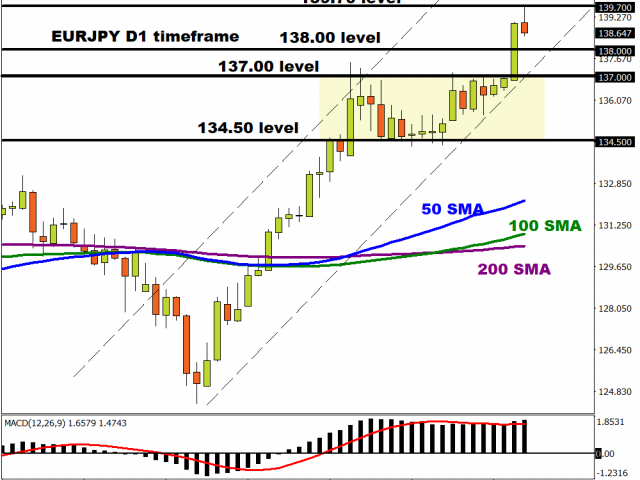
The EURJPY remains in a bullish trend on the daily charts as there have been consistently higher highs and higher lows. Prices are trading above the 50, 100, and 200 Simple Day Moving Average while the MACD trades above zero. The EURJPY has the potential to rebound towards 136.50 if 134.50 proves to be a reliable support. A decline below this level may open a path back towards 133.30.
EURGBP drops back below 50 SMA
There is a lot going on with the EURGBP. Prices remain as choppy as ever on the daily timeframe, trading around 0.8340 as of writing. The currency pair is trading below the 50, 100, and 200 Simple Moving Average but the MACD trades above zero. If prices break below 0.8300, then a decline towards 0.8250 could be a possibility. A rebound that sees prices back above 0.8380 could encourage an incline towards 0.8420.
Disclaimer: The content in this article comprises personal opinions and should not be construed as containing personal and/or other investment advice and/or an offer of and/or solicitation for any transactions in financial instruments and/or a guarantee and/or prediction of future performance. ForexTime (FXTM), its affiliates, agents, directors, officers or employees do not guarantee the accuracy, validity, timeliness or completeness, of any information or data made available and assume no liability as to any loss arising from any investment based on the same.
In early March, the FTSE 100 reached a post-pandemic high, practically recovering all of the losses from the prior two years.
This was something of a milestone for the index, which had been underperforming since the start of Brexit. But, it didn’t last long, as the BOE started an unprecedented rate hiking program.
One of the big issues facing the stock index is that a lot of Russian firms had listed in London to access international markets. That includes Rosneft, Evraz, and Polymetal among others. With the war in Ukraine, those shares crashed as much as 90%, dragging the index with it. Further sanctions on Russia naturally had an impact on British financial markets.
Where things are going
However, over the last couple of weeks, the index was able to recover almost all of its losses since the start of the war.
The UK was initially exposed to Russia in terms of direct Russian investment in the UK. Nonetheless, the island nation does considerably less trade with Russia than its continental peers. Although the UK is still vulnerable to gas prices, it does produce a substantial amount of its own gas, for example.
Analysts expect monetary tightening to impact indices as well. In fact, during the last couple of weeks, UK shares have moved higher, while EU indices have fallen. This is despite the BOE raising rates and the ECB keeping rates negative.
The currency issue
Unsurprisingly, the GBPEUR cross has been strengthening. Higher yields in the UK would naturally attract investors. Better performance in British equities would also likely attract investors, leading to more demand for the sterling.
The UK was largely expected to recover first from the pandemic, leading to a stronger pound that would fade as the EU caught up. However, the war in Ukraine, the sanctions, and subsequent increase in prices across Europe could mean that the EU doesn’t “catch up”.
The BOE expects the UK economy to grow by 3.6% and the ECB expects growth of 3.7% this year, which is is fairly even. Presumably, the pound would have strengthened at first, as the BOE raised rates, and then fall back as the ECB followed suit.
Where the differences lie
Typically (at least in the short term), there is an inverse correlation between the stock market and the currency. As the stock market goes up, the currency is impacted. That is because investors are selling bonds to finance their stocks.
But, in a longer-term scenario, if investors are expecting an economy to perform better, then the stock market could rise in tandem with the currency. This is particularly true if we see the stock market increasing despite the tightening of monetary policy. In turn, that implies that there are new investors coming into the stock market, particularly from overseas.
The increased yields in the eurozone could be an indication that European investors are selling their bonds in order to invest. But if EU shares aren’t rising, and UK ones are, it could mean that the UK could be getting capital flows from the continent. And this could continue to support the pound.
Orbex is a fully licensed broker that was established in 2011. Founded with a mission to serve its traders responsibly and provides traders with access to the world’s largest and most liquid financial markets. www.orbex.com
The Australian dollar soared after the RBA signaled higher interest rates later this year. The pop above the daily resistance at 0.7550 has put the Aussie on a bullish reversal course for the weeks to come.
Solid green candles indicate a combination of short-covering and momentum buying. Last June’s high at 0.7770 is the next target.
In the meantime, the RSI’s overbought situation led to a brief pause. Trend followers could be looking to join the rally at pullbacks. 0.7470 is fresh support in this case.
GBPUSD awaits breakout
The US dollar rallies as traders hoard the safe haven currency. The price is in a narrowing consolidation range as a sign of short-term hesitation.
Overall sentiment remained downbeat after the latest rebound hit resistance at 1.3300. The bulls need to lift offers around 1.3220 before they could turn the tables.
Otherwise, the path of least resistance would be down. 1.3050 is the closest support and the psychological level of 1.3000 is a critical floor. A bearish breakout could make the sterling vulnerable to a new round of sell-off.
SPX 500 seeks support
The S&P 500 falls back as yield curve inversion raises concerns of an economic contraction.
On the daily chart, a break above the February high at 4590 and a bullish MA cross suggest a steady market mood. A drop below 4580 prompted leverage buyers to bail out but found support at 4510.
4455 on the 20-day moving average would be the second line of defense in case of a deeper correction. Buyers may see short-term retracements as opportunities to stake in. A bounce above 4600 could be a continuation signal.
Orbex is a fully licensed broker that was established in 2011. Founded with a mission to serve its traders responsibly and provides traders with access to the world’s largest and most liquid financial markets. www.orbex.com
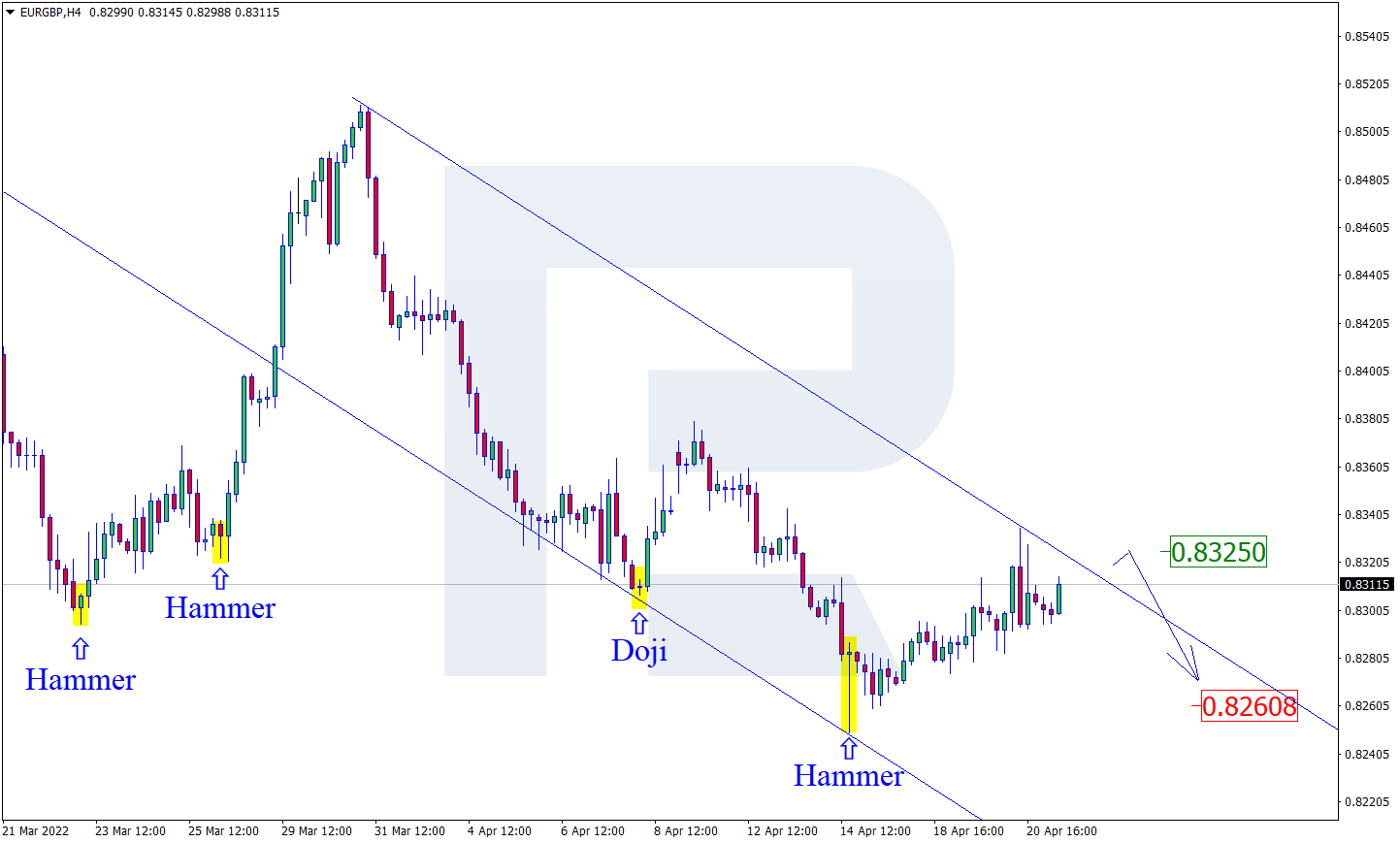
EURGBP is rebounding from the support area at 0.8334; the instrument is moving below Ichimoku Cloud, thus indicating a descending tendency. The markets could indicate that the price may test the cloud’s upside border at 0.8415 and then resume moving downwards to reach 0.8205. Another signal in favour of a further downtrend will be a rebound from the right “shoulder” of a Head & Shoulders reversal pattern. However, the bearish scenario may no longer be valid if the price breaks the cloud’s upside border and fixes above 0.8490. In this case, the pair may continue growing towards 0.8585. To confirm further decline, the asset must break the pattern’s “neckline” and fix below 0.8305.
AUDUSD, “Australian Dollar vs US Dollar”
AUDUSD is rebounding from Tenkan-Sen and Kijun-Sen at 0.7582; the instrument is moving above Ichimoku Cloud, thus indicating an ascending tendency. The markets could indicate that the price may test the rising channel’s downside border at 0.7555 and then resume moving upwards to reach 0.7785. Another signal in favour of a further uptrend will be a rebound from the support area. However, the bullish scenario may no longer be valid if the price breaks the cloud’s downside border and fixes below 0.7430. In this case, the pair may continue falling towards 0.7350.
GBPUSD, “Great Britain Pound vs US Dollar”
GBPUSD is testing the support level at 1.3050; the instrument is moving below Ichimoku Cloud, thus indicating a descending tendency. The markets could indicate that the price may test the cloud’s downside border at 1.3105 and then resume moving downwards to reach 1.2925. Another signal in favour of a further downtrend will be a rebound from the descending channel’s upside border. However, the bearish scenario may no longer be valid if the price breaks the cloud’s upside border and fixes above 1.3205. In this case, the pair may continue growing towards 1.3305.
Attention! Forecasts presented in this section only reflect the author’s private opinion and should not be considered as guidance for trading. RoboForex LP bears no responsibility for trading results based on trading recommendations described in these analytical reviews.

Belgian central bank governor Pierre Wunsch said the European Central Bank might raise interest rates to zero as early as this year to fight high inflation. But so far, it’s all just talk, so verbal comments from the US Federal Reserve officials about tightening monetary policy have a greater impact on the dollar index and, accordingly, on the European currency. Currently, the mid-term forecast for the EUR/USD currency pair is negative.
From the technical point of view, the trend on the EUR/USD currency pair in the hourly time frame is bearish. The price is confidently declining. The MACD indicator is in the negative zone. The price has reached the support level, so it is too late for sell deals. Under such market conditions, traders can look for buy trades on the intraday timeframes from the support level of 1.0887, but only with short targets and confirmation. Sell trades should be considered from the resistance level of 1.0946 or 1.0963, but only after the additional confirmation.
Alternative scenario: if the price breaks out through the 1.1135 resistance level and fixes above, the uptrend will likely resume.
News feed for 2022.04.06:
– Eurozone Producer Price Index (m/m) at 12:00 (GMT+3);
– US FOMC Meeting Minutes at 21:00 (GMT+3).
The GBP/USD currency pair
Technical indicators of the currency pair:
Prev Open: 1.3111
Prev Close: 1.3071
% chg. over the last day: -0.30%
The PMI index in the UK services sector showed strong growth yesterday. Economic indicators of the UK continuos to show growth, unlike other European countries. The strengthening of the dollar index negatively affects the British currency, but the pound looks more stable than the euro.
Trading recommendations
Support levels: 1.3067, 1.3015, 1.2989, 1.2863
Resistance levels: 1.3144, 1.3161, 1.3244, 1.3274
On the hourly time frame, the GBP/USD currency pair trend is still bullish. But sellers’ pressure intensifies, and the price tests the priority change level for the second time. The MACD indicator has become negative. Under such market conditions, buy trades should be considered from the support level of 1.3067, but only after confirmation in the form of a buyers’ initiative. Sell deals should also be considered from the resistance level of 1.3144 if the price shows a bearish initiative.
Alternative scenario: if the price breaks down through the 1.3067 support level and fixes below, the mid-term uptrend will likely be broken.
News feed for 2022.04.06:
– UK Construction PMI (m/m) at 11:30 (GMT+3).
The USD/JPY currency pair
Technical indicators of the currency pair:
Prev Open: 122.77
Prev Close: 123.59
% chg. over the last day: +0.66%
The fundamental picture for the Japanese yen remains unchanged. The monetary policy of the Bank of Japan is now “ultra-soft” and aims to decrease the national currency rate (USD/JPY growth). In the debt market, US bonds reached almost a three-year high amid hawkish statements from Fed officials, while Japanese bond yields are at the same level. The dollar index increased to its highest level in almost two years. The mid-term outlook remains unchanged – analysts see a continuation of the uptrend, as the monetary policy of the US and Japanese central banks are now opposed.
Trading recommendations
Support levels: 122.97, 122.63, 121.83, 120.88, 119.52, 117.72
Resistance levels: 125.22
The medium-term trend on the USD/JPY currency pair is bullish. The buyer’s pressure is increasing again. The MACD indicator has become positive. Under such market conditions, it is best to look for buy deals, expecting the continuation of the uptrend. First of all, it is worth considering the support level of 122.97 or 122.63, but with additional confirmation. A resistance level of 125.22 may be considered for sell deals, but only after the sellers’ initiative.
Alternative scenario: If the price fixes below 119.52, the uptrend will likely be broken.
There is no news feed for today.
The USD/CAD currency pair
Technical indicators of the currency pair:
Prev Open: 1.2478
Prev Close: 1.2486
% chg. over the last day: +0.06%
The Canadian dollar is a commodity currency and is highly dependent on the movement of oil prices and the dollar index. Oil prices fell yesterday. Tighter US monetary policy will put downward pressure on oil prices, but it is positive for the dollar index. On the other hand, the Bank of Canada plans to tighten its monetary policy. The USD/CAD currency pair will show wide volatility without any dynamics in the medium term.
In terms of technical analysis, the USD/CAD currency pair trend is bearish, but the price is getting a wide flat structure. The MACD indicator has become positive. Trade only with short targets, since fundamentally on the USD/CAD currency pair, there are no prerequisites for the medium-term trend. Under such market conditions, it is better to look for buy trades on the lower timeframes from the support level of 1.2430, but it is better with additional confirmation. For sell deals, it is better to consider the resistance level of 1.2520.
Alternative scenario: if the price breaks through and consolidates above 1.2592, the downtrend will likely be broken.
This article reflects a personal opinion and should not be interpreted as an investment advice, and/or offer, and/or a persistent request for carrying out financial transactions, and/or a guarantee, and/or a forecast of future events.
The Bank of Russia, the country’s central bank, has surprisingly announced a fixed price for buying gold with roubles. With a price of RUB5,000 (£45.12) for a gram of gold, to my knowledge it’s the first time that a nation’s currency has been expressed in “gold parity” since Switzerland decided to stop doing so in 1999.
Enacting gold parity was common practice by the world’s major powers for facilitating international trade payments in the era of the gold standard in the 19th and early 20th centuries. The same was true in a slightly different way during the Bretton Woods era from 1944 until 1971, which was when US President Nixon decided to end the system by removing the link between gold and the US dollar.
Putin’s new arrangement is envisaged, initially, to hold from March 28 to June 30. It is the latest in a series of rouble-related moves by the Russians, starting with the announcement on March 23 that they would only accept roubles for European gas instead of euros and US dollars. I predicted that Russia would at least extend this policy to oil, but it has gone further and signalled an intention to make it apply to all the commodities it exports (others include wheat, nickel, aluminium, enriched uranium and neon).
The main goal of these moves is to try to ensure the credibility of the rouble by making it more desirable in the forex market, though it also fits into longstanding attempts by Russia and China to weaken the US dollar’s dominance as global reserve currency (meaning it’s the currency in which most international goods are priced and which most central banks hold in their foreign reserves).
As one can see in the chart below, the rouble collapsed by more than 70% in late February and early March when western sanctions were imposed in response to Russia’s invasion of Ukraine (the collapse looks like a rise in the chart because it’s showing the number of roubles to the US dollar rather than the other way around).
Rouble/USD chart
Trading View
After the big drop, the rouble recovered somewhat, which is typical in such situations (known in the literature as “exchange-rate overshooting”). However, the currency strengthened further after the roubles-for-gas announcement (no matter how serious or implementable the plan actually is – so far, there has been resistance to Putin’s new rules).
On the back of the gold announcement, the currency has continued to strengthen to about RUB83 to the dollar. As precious metals analyst Ronan Manly has said, this makes sense if you reflect that the market price of a gram of gold is currently about US$62 (£47.20). That’s fairly close to Putin’s announcement that 1 gram of gold equals RUB5,000, which effectively creates a gold-based exchange rate of RUB81 to US$1.
Previous gold-based systems
To give a sense of the similarities with the gold standard and the Bretton Woods system, let me draw a historical parallel. The UK’s Coinage Act of 1816 fixed the value of the pound sterling to 113 grains of pure gold, while the US Gold Standard Act of 1900 determined that the dollar should maintain a value of 23.22 grains of pure gold. Taken together, the two acts implied an official gold parity exchange rate of £1 = US$4.87.
It was similar during the post-war Bretton Woods era: 1 ounce of gold was said to be worth US$35, and all other currencies were fixed to and convertible into the US dollar. Gold was at the centre of the system as a way of making money credible.
Of course, attaching the rouble to a gold standard comes with certain “rules of the game” that Russia will have to abide by. It should be willing to exchange gold for roubles with anyone who wants to do so.
This was what the US did during the Bretton Woods era, and it led to the system’s demise: with US expenditure rising to wage the Vietnam war, dollar holders became increasingly nervous about the dollar’s value and sought to exchange it for gold.
Nixon’s unilateral decision to end convertibility was for fear that the US would run out of gold, which would have destroyed the credibility of the dollar. Since that decision, the world has moved to a system of floating exchange rates and the price of gold has steadily risen as world currencies have become weaker in relation to it. The system has effectively been supported by a deal that the Americans struck in the early 1970s to buy oil from the Saudis and give them military support in exchange for the Saudis using the dollars to buy US government bonds.
Gold price (US$/ounce)
Gold Hub
The problem for Russia is that if it is willing to exchange roubles for gold, it could soon end up in a similar situation to the US circa 1971. Wars are an abnormal state of affairs which come with huge uncertainty: no reliable forecasts are possible, and markets are liable to overreact to new developments – particularly in the short term. If confidence in the rouble falls again, many investors might decide to withdraw gold from the central bank, which could be extremely destabilising for Moscow.
The viability of Russia maintaining a fixed rate of roubles for gold is closely related to what happens to demand for Russian energy. If the west can only slowly substitute away from its dependence on Russia’s oil and gas, then demand for roubles will help to keep the currency propped up (especially if the west does end up paying in roubles).
But if politicians listen to economists and immediately stop importing Russian gas, oil and other commodities, the rouble could fall dramatically – along with the whole Russian economy. As much as this would cause a further spike in prices and pain all round, it may be the most efficient and perhaps even safest way to induce Russia to stop the war.
Calling all beginner Forex traders! We’ve put together a comprehensive webinar dedicated to teaching you how to trade the financial markets!
Next Monday, April 11th at 5 PM GMT, our seasoned market expert David Kindley will be going live on Zoom to cover all the basic forex calculations you need to begin your online trading journey.
Sign up now for a chance to learn:
How to calculate margins when trading
How to include leverages into your trades
How to calculate pips and points
How to set pending orders
The webinar is free to attend, but seats are limited.
Book your spot today to start trading responsibly!
Orbex is a fully licensed broker that was established in 2011. Founded with a mission to serve its traders responsibly and provides traders with access to the world’s largest and most liquid financial markets. www.orbex.com
EURUSD is rebounding from the rising channel’s downside border at 1.0971; the instrument is moving below Ichimoku Cloud, thus indicating a descending tendency. The markets could indicate that the price may test the cloud’s downside border at 1.1055 and then resume moving downwards to reach 1.0780. Another signal in favour of a further downtrend will be a rebound from the descending channel’s upside border. However, the bearish scenario may no longer be valid if the price breaks the cloud’s upside border and fixes above 1.1120. In this case, the pair may continue growing towards 1.1205. To confirm further decline, the asset must break the rising channel’s downside border and fix below 1.0930.
NZDUSD, “New Zealand Dollar vs US Dollar”
NZDUSD is testing the resistance level at 0.6939 for the third time; the instrument is moving above Ichimoku Cloud, thus indicating an ascending tendency. The markets could indicate that the price may test the cloud’s upside border at 0.6955 and then resume moving upwards to reach 0.7095. Another signal in favour of a further uptrend will be a rebound from the rising channel’s downside border. However, the bullish scenario may no longer be valid if the price breaks the cloud’s downside border and fixes below 0.6865. In this case, the pair may continue falling towards 0.6775. To confirm further growth, the asset must break the upside border of the Triangle pattern and fix above 0.6995.
USDCHF, “US Dollar vs Swiss Franc”
USDCHF is testing Tenkan-Sen and Kijun-Sen at 0.9258; the instrument is moving below Ichimoku Cloud, thus indicating a descending tendency. The markets could indicate that the price may test the cloud’s downside border at 0.9275 and then resume moving downwards to reach 0.9140. Another signal in favour of a further downtrend will be a rebound from the descending channel’s upside border. However, the bearish scenario may no longer be valid if the price breaks the cloud’s upside border and fixes above 0.9335. In this case, the pair may continue growing towards 0.9425. To confirm further growth, the asset must break the downside border of the Wedge pattern and fix below 0.9230.
Attention! Forecasts presented in this section only reflect the author’s private opinion and should not be considered as guidance for trading. RoboForex LP bears no responsibility for trading results based on trading recommendations described in these analytical reviews.
In the H4 chart, AUDUSD is trading inside the “overbought area”. In this case, the price is expected to break 8/8 and then continue falling to reach the support at 6/8. However, this scenario may no longer be valid if the price breaks the resistance at +1/8 to the upside. After that, the instrument may grow towards +2/8.
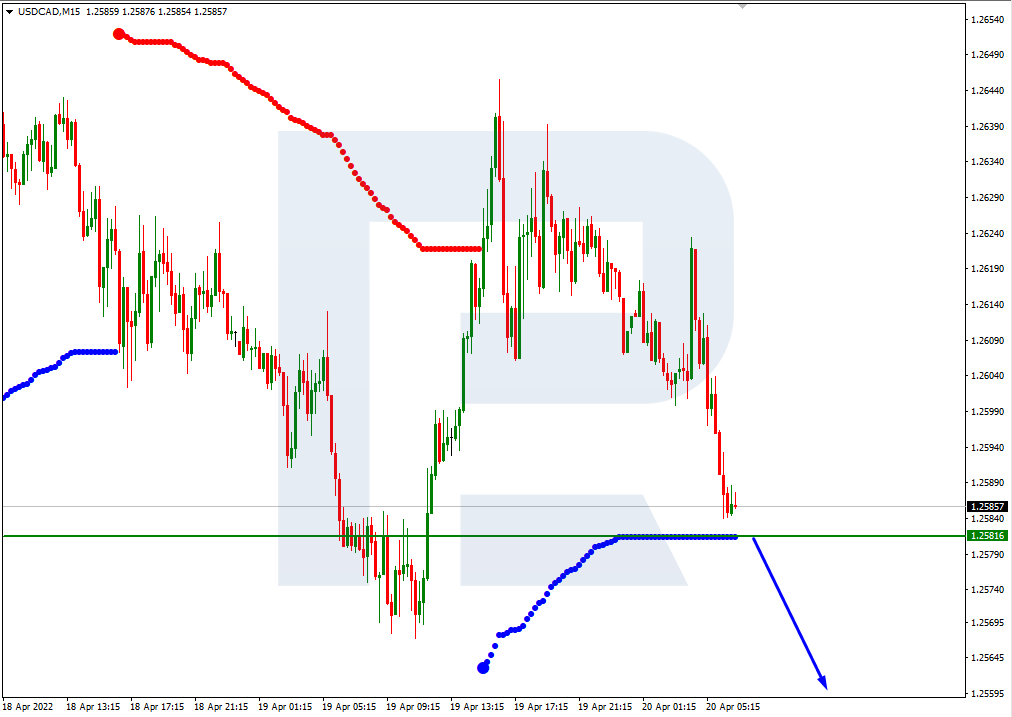
As we can see in the M15 chart, the downside line of the VoltyChannel indicator is pretty far away from the price, that’s why the pair may resume trading downwards only after rebounding from 8/8 in the H4 chart.
NZDUSD, “New Zealand Dollar vs US Dollar”
In the H4 chart, NZDUSD is trading above the 200-day Moving Average to indicate an ascending tendency. In this case, the price is expected to test 7/8, break it, and then continue growing to reach the resistance at 8/8. However, this scenario may no longer be valid if the price breaks 5/8 to the downside. After that, the instrument may reverse and fall towards the support at 4/8.
As we can see in the M15 chart, the pair has broken the upside line of the VoltyChannel indicator and, as a result, may continue its growth.
Attention! Forecasts presented in this section only reflect the author’s private opinion and should not be considered as guidance for trading. RoboForex LP bears no responsibility for trading results based on trading recommendations described in these analytical reviews.