Archive for Financial News – Page 47

Week Ahead: GBPUSD under pressure with fresh losses ahead?

By ForexTime

(Note: This report was published before the US NFP report on Friday afternoon.)

  • GBPUSD ↓ 3.8% in July – worst month in 2025 
  • BoE expected to cut rates by 25bp on Thursday 
  • BoE meeting forecast to move GBPUSD ↑ 0.5% & ↓ 0.4%
  • US economic data could trigger additional volatility
  • Bloomberg FX model: GBPUSD has 74% of trading within 1.2990 – 1.3308 over 1-week period

Even as the clock ticks down to the key US jobs report this afternoon (Friday 1st August), investors are bracing for more action in the week ahead.

Trump has injected a fresh dose of uncertainty into markets after signing an executive order reimposing reciprocal tariffs of 10% to 41% on dozens of countries. 

Considering how these come into effect from August 7th, this could mean more volatility for a week already packed with key data and corporate earnings:

Sunday, 3rd August 

  • OIL: OPEC+ meeting on production levels

Monday, 4th August 

  • US500: US factory orders, durable goods

Tuesday, 5th August 

  • CN50: China S&P Global services PMI
  • EU50: Eurozone PPI, HCOB services PMI
  • JP225: Japan BOJ meeting minutes
  • US500: US trade, ISM services, S&P Global services PMI
  • UK00: BP earnings

Wednesday, 6th August 

  • EUR: Eurozone retail sales
  • GER40: Germany factory orders
  • TWN: Taiwan CPI
  • US30: Disney earnings

Thursday, 7th August 

  • AUD: Australia trade
  • CN50: China trade, foreign reserves
  • GER40: Germany industrial production
  • GBP: BoE rate decision
  • USDInd: US initial jobless claims, Atlanta Fed President Raphael Bostic speech
  • Trump’s updated tariffs come into effect  

Friday, 8th  August 

  • CAD: Canada unemployment
  • JP225: Japan household spending, trade, current account
  • TWN: Taiwan trade

Our focus lands on the GBPUSD which ended July almost 4% lower – its worst trading month in 2025.

A strengthening dollar has hammered the major currency pair, with prices approaching levels not seen since mid-May. 

Imagen
GBPUSD

(Note: This chart was published before the US NFP report on Friday afternoon.)

With bears in a position of power, further downside could be expected with the right fundamental catalyst.


Here are 3 factors to watch out for:


1) BoE rate decision

The Bank of England (BoE) is expected to cut interest rates again at its August meeting to 4% from 4.25%. 

However, the central bank may adopt a cautious stance on future rate cuts given how inflation surprised to the upside in June. Still, concerns over the labour market may encourage policymakers to lower rates deeper into the year.

Note: The latest UK CPI report increased to 3.6% in June, up from 3.4% in May. 

Traders are currently pricing in a 95% probability that the BoE cuts rates in August with the odds of another rate cut by November at 63%.

  • The GBPUSD may extend losses if the BoE cuts interest rates and signals lower rates in the second half of 2025.


  • Should BoE governor Bailey express caution over future cuts, this may support the GBPUSD.

GBPUSD is forecasted to move 0.5% up or down 0.4% in a 6-hour window after the BoE rate decision. 


2) US data

More economic data from the world’s largest economy may impact bets on a Fed cut and the US dollar. Recently, confidence toward the US economy was boosted by the stronger-than-expected Q2 GDP figures.  More encouraging data could lift sentiment, cool Fed cut bets, and support the USD.

On Tuesday, the latest US ISM services and PMI’s will be published, followed by the initial jobless claims on Thursday.

  • A strong set of figures may boost the dollar, dragging the GBPUSD lower as a result.


  • Weaker-than-expected data may hit the dollar, pushing the GBPUSD higher as a result.


3) Technical forces

GBPUSD is under intense pressure on the daily charts with prices trading below the 50 and 100-day SMA’s. However, the Relative Strength Index (RSI) shows that prices are heavily oversold. 

  • A solid weekly close under 1.3200 may encourage a decline toward 1.3070 and the 200-day SMA at 1.2990, which is also the lower bound of the Bloomberg FX model.


  • Should prices push back above 1.3200, this could trigger a move toward 1.3285 and 1.3308 – the upper bound of the Bloomberg FX model.
Imagen
GBPUSD QD2

Bloomberg’s FX model forecasts a 74% chance that GBPUSD will trade within the 1.2990 – 1.3308 range, using current levels as a base, over the next one-week period.


Forex-Time-LogoArticle by ForexTime

ForexTime Ltd (FXTM) is an award winning international online forex broker regulated by CySEC 185/12 www.forextime.com

Little Oil and Gas Junior at an Excellent Price

Source: Michael Ballanger (7/30/25) 

Michael Ballanger of GGM Advisory Inc. explains why he thinks Ring Energy Inc. (REI:NYSE) is a Buy.

Ring Energy Inc. (REI:NYSE) is an independent oil and gas exploration and production company focused on the Permian Basin in West Texas.

They engage in the acquisition, exploration, development, and production of oil and natural gas properties.  The company’s operations are primarily located in the Northwest Shelf and Central Basin Platform in West Texas.

Here’s a more detailed breakdown:

Core Business:

Ring Energy’s main activities include acquiring, exploring, developing, and producing oil and natural gas.

Geographic Focus:

The company’s operations are concentrated in the Permian Basin, specifically the Northwest Shelf and Central Basin Platform in West Texas.

Production Method:

Ring Energy primarily utilizes vertical drilling to produce oil and natural gas, according to TMX Money and Simply Wall Street.

Company Size:

With 108 employees, Ring Energy is considered a mid-sized company within the energy sector.

 Headquarters:

The company’s headquarters are located in The Woodlands, Texas.

Recent Performance:

In 2023, Ring Energy saw record fourth quarter and full year oil and gas sales volumes, according to their press release.

Recent Price:

The shares are trading at the US$0.8223 level with a 52-week range of US$.72 to US$1.99.

Valuation: 

The shares trade at a 30 P/E and have a book value of US$4.24.

Conclusion

The shares of this little junior oil and gas producer are an excellent place to hide in the event of a painful correction overtaking the U.S. equity markets.

The stock is cheap trading at a fraction of book value versus the industry average shown below:

If we call REI an “explorer-producer,” then it should trade at 1.74 times book value which was established at $4.24 so $4.24 times 1.74 = $7.37 per share. From what I am hearing through my dear friend Freddie (of Freddie’s Corner fame), there has been talk of a buyer surfacing.

Well, we hear those narratives all the time but being the super sleuth that he is Freddie drew my attention to the REI September $1.00 calls where the volume today exceeds 30,722 contracts with a daily range of $0.01-$0.08 per contract.

Since the stock hasn’t been over $1.00 since April 7, someone is making a big bet that it will before September 19. What option volume like this tells us is that someone might be getting ready to make a bid for Ring so with a P/E of only 2.30 while trading at 19.58% of book versus industry average at 1.74, valuation is cheap enough to represent minimal downside risk versus substantial capital appreciation potential.

This is a great proxy for one’s allocation to the energy sector.

In the GGMA 2025 Portfolio Account:

  • BUY 50,000 REI at $0.83
  • Target $2.00


Important Disclosures:

  1. Michael Ballanger: I, or members of my immediate household or family, own securities of: Ring Energy. My company has a financial relationship with: None. My company has purchased stocks mentioned in this article for my management clients: None. I determined which companies would be included in this article based on my research and understanding of the sector.
  2. Statements and opinions expressed are the opinions of the author and not of Streetwise Reports, Street Smart, or their officers. The author is wholly responsible for the accuracy of the statements. Streetwise Reports was not paid by the author to publish or syndicate this article. Streetwise Reports requires contributing authors to disclose any shareholdings in, or economic relationships with, companies that they write about. Any disclosures from the author can be found  below. Streetwise Reports relies upon the authors to accurately provide this information and Streetwise Reports has no means of verifying its accuracy.
  3.  This article does not constitute investment advice and is not a solicitation for any investment. Streetwise Reports does not render general or specific investment advice and the information on Streetwise Reports should not be considered a recommendation to buy or sell any security. Each reader is encouraged to consult with his or her personal financial adviser and perform their own comprehensive investment research. By opening this page, each reader accepts and agrees to Streetwise Reports’ terms of use and full legal disclaimer. Streetwise Reports does not endorse or recommend the business, products, services or securities of any company.

For additional disclosures, please click here.

Michael Ballanger Disclosures

This letter makes no guarantee or warranty on the accuracy or completeness of the data provided. Nothing contained herein is intended or shall be deemed to be investment advice, implied or otherwise. This letter represents my views and replicates trades that I am making but nothing more than that. Always consult your registered advisor to assist you with your investments. I accept no liability for any loss arising from the use of the data contained on this letter. Options and junior mining stocks contain a high level of risk that may result in the loss of part or all invested capital and therefore are suitable for experienced and professional investors and traders only. One should be familiar with the risks involved in junior mining and options trading and we recommend consulting a financial adviser if you feel you do not understand the risks involved.

FOMC, BoC, and BoJ expectedly kept interest rates unchanged

By JustMarkets

By the end of Wednesday, the Dow Jones Index (US30) declined by 0.38%. The S&P 500 Index (US500) fell by 0.12%, while the tech-heavy Nasdaq Index (US100) closed higher by 0.15%. The US stocks ended mostly lower on Wednesday after the Federal Reserve kept interest rates unchanged at its July meeting, as investors digested a wave of earnings reports. Fed Chair Jerome Powell noted that the Fed is still assessing the impact of Trump-era tariffs on inflation, which tempered expectations for near-term rate cuts. The decision was not unanimous: Fed governors Michelle Bowman and Christopher Waller supported a 25-basis-point rate cut.

Investors also evaluated corporate earnings: Humana, Kraft Heinz, and Visa gained on strong results, while Starbucks dropped over 1% despite higher revenue. Meanwhile, trade tensions escalated as President Trump announced 25% tariffs on Indian goods and 50% tariffs on Brazilian imports.

The Canadian dollar fell to 1.38 per US dollar, its weakest level in two months, pressured by a stronger US dollar, while Canada’s monetary and economic environment had little impact on the Loonie. The Bank of Canada’s decision to keep its key rate at 2.75%, the third pause after seven cuts. This highlighted policymakers’ caution amid ongoing tariff uncertainty, an expected GDP slowdown in Q2 (after exporters front-loaded shipments in Q1), and projections that CPI inflation will remain close to the 2% target in the medium term.

European stock markets were mostly up yesterday. Germany’s DAX (DE40) gained 0.19%, France’s CAC 40 (FR40) closed up by 0.06%, Spain’s IBEX35 (ES35) added 0.23%, and the UK’s FTSE 100 (UK100) ended slightly higher by 0.01%. Investors evaluated a range of regional economic data and fresh corporate earnings while keeping an eye on trade talks. Germany’s economy contracted by 0.1% in Q2, reversing a 0.4% growth in Q1. Meanwhile, the German cabinet approved a draft 2026 budget featuring a record €126.7 billion in investments and €174 billion in planned borrowing.

On the corporate front, Siemens Healthineers rose around 2% on strong Q3 results and updated expectations, and Porsche AG gained 1.7% as investors welcomed its strategic restructuring despite a projection cut due to €400 million in tariff-related losses. Among decliners, Adidas plunged over 11% after missing revenue targets, and Mercedes-Benz dropped 3.4% after H1 profit halved and its full-year revenue outlook was lowered.

WTI crude oil prices climbed above $70 per barrel on Wednesday, holding at a five-week high, driven by concerns over supply after President Donald Trump pressured Russia to shorten the timeline for ending the war in Ukraine. Trump gave Moscow a 10-day ultimatum to propose a satisfactory resolution or face consequences, including 100% secondary tariffs on countries continuing trade with Russia. These measures could significantly disrupt oil markets, as key US trading partners, major buyers of Russian oil, might reduce or halt purchases.

Asian markets traded mixed yesterday. Japan’s Nikkei 225 (JP225) declined by 0.05%, China’s FTSE China A50 (CHA50) rose by 0.17%, Hong Kong’s Hang Seng (HK50) dropped by 1.36%, and Australia’s ASX 200 (AU200) ended the day with a gain of 0.60%.

Official PMI data from China indicated a slowdown in July, with the composite PMI falling to a three-month low of 50.2 from June’s 50.7. Manufacturing activity remained in contraction, slipping to 49.3 from 49.7, while the services PMI declined to 50.1 — the weakest in eight months — from 50.5. Despite weak data, sentiment found some support from Wednesday’s Politburo meeting.

At its July meeting, the Bank of Japan left its short-term policy rate unchanged at 0.5%, maintaining borrowing costs at their highest level since 2008, in line with market expectations. The decision was unanimous, reflecting the Central Bank’s cautious stance on policy normalization. In its quarterly outlook, the BoJ raised its core inflation expectations for fiscal year 2025 to 2.7%, up from April’s 2.2%, while expecting it to drop to 1.8% in FY2026 and rise again to 2.0% in FY2027. The GDP growth estimate for FY2025 was slightly raised to 0.6% from 0.5%, while the FY2026 growth projection remained unchanged at 0.7%.

S&P 500 (US500) 6,362.90 −7.96 (−0.12%)

Dow Jones (US30) 44,461.28 −171.71 (−0.38%)

DAX (DE40) 24,262.22 +44.85 (+0.19%)

FTSE 100 (UK100) 9,136.94 +0.62 (+0.01%)

USD Index 99.95 +1.07 (+1.08%)

News feed for: 2025.07.31

  • Japan Industrial Production (m/m) at 02:50 (GMT+3);
  • Japan Retail Sales (m/m) at 02:50 (GMT+3);
  • Australia Retail Sales (m/m) at 04:30 (GMT+3);
  • China Manufacturing PMI (m/m) at 04:30 (GMT+3);
  • China Non-Manufacturing PMI (m/m) at 04:30 (GMT+3);
  • Japan BoJ Monetary Policy Statement at 06:00 (GMT+3);
  • Japan BoJ Interest Rate Decision at 06:00 (GMT+3);
  • Japan BoJ Outlook Report at 06:00 (GMT+3);
  • Switzerland Retail Sales (m/m) at 09:30 (GMT+3);
  • German Unemployment Rate (m/m) at 10:55 (GMT+3);
  • Eurozone Unemployment Rate (m/m) at 12:00 (GMT+3);
  • German Inflation Rate (m/m) at 15:00 (GMT+3);
  • US Initial Jobless Claims (w/w) at 15:30 (GMT+3);
  • US Core PCE Price Index (m/m) at 15:30 (GMT+3);
  • Canada GDP (m/m) at 15:30 (GMT+3);
  • US Chicago PMI (m/m) at 17:00 (GMT+3);
  • US Natural Gas Storage (w/w) at 17:30 (GMT+3).

By JustMarkets


This article reflects a personal opinion and should not be interpreted as an investment advice, and/or offer, and/or a persistent request for carrying out financial transactions, and/or a guarantee, and/or a forecast of future events.

GBP/USD Hits Lows: Weak UK Data and a Strong Dollar Weigh on the Pound

By RoboForex Analytical Department

The GBP/USD pair dropped to 1.3252, its lowest level since 11 May 2025, as a resurgent US dollar and disappointing UK economic data weighed on the pound.

Market sentiment has shifted from concerns about inflation to fears of an economic slowdown, while optimism surrounding new trade agreements has bolstered the dollar.

Although warmer weather boosted food sales, the broader economic outlook remains fragile after worse-than-expected PMI figures. This has reinforced expectations that the Bank of England (BoE) could cut interest rates by 25 basis points as early as August, with another potential reduction before year-end to stimulate growth.

Meanwhile, the dollar gained strength following the announcement of a US-EU trade deal, which imposes 15% tariffs on most European exports, including cars. The agreement has averted a further escalation in trade tensions, providing additional support for the greenback.

However, not all European leaders view the deal as favourable. Many argue that the terms disproportionately disadvantage the EU. While the UK maintains its separate agreements, the broader economic ripple effects are still being felt, given the interconnected nature of global markets.

Technical Analysis: GBP/USD

H4 Chart:

On the 4-hour chart, GBP/USD continues its downward trajectory towards 1.3152, with a consolidation range currently forming around 1.3268. A downside breakout from this range could see the pair extend losses towards 1.3152, followed by a potential corrective rebound to 1.3370. This scenario is supported by the MACD indicator, where the signal line remains below zero and points sharply downward.

H1 Chart:

On the hourly chart, the pair declined to 1.3225 before correcting to 1.3270. Further downside movement towards 1.3152 is anticipated today, with the Stochastic oscillator confirming this outlook: its signal line has crossed below 80 and is trending downward towards 20.

Conclusion

The pound remains under pressure amid a stronger dollar and a lacklustre UK economic performance. With rate cut expectations mounting and global trade dynamics shifting, further volatility in GBP/USD is likely. Traders will be watching key technical levels for confirmation of the next directional move.


Disclaimer

Any forecasts contained herein are based on the author’s particular opinion. This analysis may not be treated as trading advice. RoboForex bears no responsibility for trading results based on trading recommendations and reviews contained herein.

USD/JPY in Correction as Markets Await Signals from Fed and BoJ

By RoboForex Analytical Department

The USD/JPY pair fell to 147.92 on Wednesday, with the Japanese yen recovering some of its early-week losses as the US dollar softened ahead of the Federal Reserve’s policy meeting.

While the Fed is widely expected to keep rates on hold, market focus remains squarely on whether policymakers will signal a potential rate cut in September.

Simultaneously, investors are assessing the outcome of this week’s US–China trade talks in Stockholm, which concluded on Tuesday without an extension of the current trade truce.

Domestically, attention turns to the upcoming Bank of Japan (BoJ) policy decision. The central bank is forecast to maintain its current interest rate as it evaluates the economic impact of US tariffs. The BoJ’s quarterly outlook report may also see an upward revision to its inflation forecasts.

Political uncertainty adds another layer of complexity, with growing pressure on Prime Minister Shigeru Ishiba to resign. However, the Prime Minister has firmly denied any intention to step down.

Notably, despite broader US dollar strength across markets, the USD/JPY pair has not fully reflected this trend due to counterbalancing factors.

Technical Analysis: USD/JPY

H4 Chart:

On the H4 chart, USD/JPY continues to consolidate around 147.90, having extended its range upwards to 148.77. Following a retest of 147.90 from above, the next likely move is a push higher towards 149.11, with a potential continuation towards 150.30 if bullish momentum holds. This scenario is supported by the MACD indicator, where the signal line remains above zero and points firmly upwards.

H1 Chart:

Switching to the H1 chart, the pair is forming a consolidation range around 147.90. A breakout to the upside could see a move towards 149.11, followed by a retracement to 148.44. Conversely, a downside break may trigger a decline towards 145.90. The Stochastic oscillator aligns with this outlook, as its signal line sits above 20 and is trending upwards.

Conclusion

The USD/JPY pair remains in a corrective phase, with near-term direction hinging on policy signals from the Fed and BoJ. While technical indicators currently support a bullish bias, traders should remain alert to the possibility of breakout moves as confirmation.


Disclaimer

Any forecasts contained herein are based on the author’s particular opinion. This analysis may not be treated as trading advice. RoboForex bears no responsibility for trading results based on trading recommendations and reviews contained herein.

Today, investors focus on the Bank of Canada meeting and the FOMC decision

By JustMarkets

As of Tuesday, the Dow Jones Index (US30) fell by 0.46%. The S&P 500 Index (US500) declined by 0.30%, and the tech-heavy Nasdaq Index (US100) closed lower by 0.21%. The three major US indexes ended Tuesday in the red as mixed corporate earnings reports and caution ahead of the Federal Reserve’s monetary policy decision weighed on investor sentiment. Weak results from UnitedHealth (-7.5%), Boeing (-4.4%), and Merck (-1.7%) dragged the market down, while United Parcel Service and Whirlpool also slumped more than 10% following disappointing earnings and expectations. Investors also reacted to a decline in job openings and hiring in June, although consumer confidence in July came in higher than expected. Meanwhile, trade talks between the US and China ended without a final agreement, leaving hopes alive for an extension of the current tariff truce.

The Fed is expected to leave interest rates unchanged today, but markets are closely watching for signals on the future direction of policy amid signs of slowing inflation.

The Bank of Canada will also hold its policy meeting today. It is expected to keep interest rates unchanged at 2.75%, but the tone of the statement and the follow-up press conference will be key for markets. Recent data points to economic weakness: GDP is expected to contract for the third consecutive month, increasing the likelihood of a rate cut by year-end. With slowing inflation and weakening domestic demand, the Bank of Canada may lean toward a more dovish outlook.

The IMF expects global economic growth at 3.0% in 2025 and 3.1% in 2026, slightly above its April 2025 projections. The upgrade — by 0.2 percentage points for 2025 and 0.1 percentage points for 2026 — reflects stronger-than-expected economic activity, lower-than-expected US tariff rates, improved financial conditions (partly due to a weaker US dollar), and expanded fiscal policies in several major economies. Despite the slightly improved outlook, the IMF warns that risks remain tilted to the downside. Growth projections for key economies include the US at 1.9% in 2025 and 2.0% in 2026, the Eurozone at 1.0% and 1.2%, and the UK at 1.2% and 1.4%. China’s growth was revised upward to 4.8% and 4.2%, while Japan is expected to grow at a more modest pace of 0.7% and 0.5%.

European stock markets mostly rose yesterday. Germany’s DAX (DE40) gained 1.03%, France’s CAC 40 (FR40) closed up 0.72%, Spain’s IBEX35 (ES35) rose by 0.90%, and the UK’s FTSE 100 (UK100) ended up 0.60%. The FTSE 100 climbed over 0.5% to a new record high, supported by strong corporate earnings and improved sentiment around the UK economy. Shares of AstraZeneca jumped 3.5% following strong Q2 results, driven by high cancer drug sales and reaffirmed guidance. Barclays also rose by 2.5% despite a mixed earnings report, as its investment banking division posted solid results, benefiting from market volatility. Optimism was further boosted by the IMF’s projection that the UK’s economic growth this year and next will outpace other major European economies.

WTI crude oil prices rose by 3.7% to close at $69.20 per barrel on Tuesday, reaching a five-week high and extending Monday’s 2.4% gain, as easing trade tensions and rising geopolitical risks fueled supply concerns. Additional support came from former President Trump, who increased pressure on Russia by setting a shorter deadline for progress in ending the war in Ukraine and threatening new sanctions.

Asian markets traded mixed yesterday. Japan’s Nikkei 225 (JP225) fell by 0.79%, China’s FTSE China A50 (CHA50) rose by 0.01%, Hong Kong’s Hang Seng Index (HK50) declined by 0.15%, while Australia’s ASX 200 (AU200) posted a modest gain of 0.08%.

The Australian dollar rose above the $0.651 level on Wednesday, snapping a four-day losing streak, as a weaker US dollar outweighed weak domestic inflation data. In Australia, consumer prices rose at the slowest pace in over four years in Q2: the headline CPI was 0.7% quarter-over-quarter and 2.1% year-over-year, while core inflation fell to a three-year low of 2.7% year-over-year. Both figures came in below expectations and within the Reserve Bank of Australia’s 2–3% target range. The soft inflation data strengthened expectations for policy easing, with markets now fully pricing in a 25-basis-point rate cut at the RBA’s August meeting.

S&P 500 (US500) 6,370.86 −18.91 (−0.30%)

Dow Jones (US30) 44,632.99 −204.57 (−0.46%)

DAX (DE40) 24,217.37 +247.01 (+1.03%)

FTSE 100 (UK100) 9,136.32 +54.88 (+0.60%)

USD Index 98.92 +0.28 (+0.29%)

News feed for: 2025.07.30

  • Australia Consumer Price Index (m/m) at 04:30 (GMT+3);
  • German Retail Sales (m/m) at 09:00 (GMT+3);
  • Switzerland KOF Leading Indicators (m/m) at 10:00 (GMT+3);
  • German GDP (m/m) at 11:00 (GMT+3);
  • Eurozone GDP (m/m) at 12:00 (GMT+3);
  • US ADP Non-Farm Employment Change (m/m) at 15:30 (GMT+3);
  • US GDP (m/m) at 15:30 (GMT+3);
  • Canada BoC Monetary Policy Statement at 16:45 (GMT+3);
  • Canada Interest Rate Decision at 16:45 (GMT+3);
  • US Pending Home Sales (m/m) at 17:00 (GMT+3);
  • Canada BOC Press Conference at 17:30 (GMT+3);
  • US Crude Oil Reserves (w/w) at 17:30 (GMT+3);
  • US FOMC Statement (m/m) at 21:00 (GMT+3);
  • US Fed Interest Rate Decision (m/m) at 21:00 (GMT+3);
  • US Fed Press Conference (m/m) at 21:30 (GMT+3).

By JustMarkets


This article reflects a personal opinion and should not be interpreted as an investment advice, and/or offer, and/or a persistent request for carrying out financial transactions, and/or a guarantee, and/or a forecast of future events.
Precious metal prices are falling amid declining demand for safe-haven assets. The US and Thailand are close to signing a trade agreement

By JustMarkets 

On Monday, the Dow Jones Index (US30) fell by 0.14%. The S&P 500 Index (US500) edged up by 0.02%. The tech-heavy Nasdaq (US100) closed higher by 0.36%. The US stocks were mostly flat as investors digested the new trade agreement between the US and the EU and prepared for a busy week filled with earnings reports and key economic data.

President Trump announced a tariff agreement with the EU, setting a baseline rate of 15% (lower than the previously threatened 30%) amid growing hopes for an extension of the US-China trade truce. Despite easing trade tensions, market sentiment remained cautious due to ongoing uncertainty about the broader economic impact of tariffs. Attention is now shifting to earnings reports from Meta, Microsoft, Apple, and Amazon, as well as the Federal Reserve meeting on Wednesday, where investors will closely watch for any hints of a potential rate cut in September.

European stock markets mostly declined yesterday. Germany’s DAX (DE40) dropped by 1.02%, France’s CAC 40 (FR40) closed down 0.43%, Spain’s IBEX 35 (ES35) fell by 0.12%, and the UK’s FTSE 100 (UK100) closed negative 0.43%. Major European equity markets fell after an early rally driven by the US-EU trade deal. The framework agreement includes a 15% import tariff on most EU goods, as well as an EU commitment to purchase $750 billion worth of energy and additional military equipment from the US. The deal also provides selective access to key segments of the European market. While considered a better outcome than the previously threatened 30–50% tariffs proposed by Trump, lingering uncertainty over the final terms sparked concern among European leaders.

WTI crude oil prices jumped more than 2% to $66.70 per barrel on Monday amid renewed geopolitical fears after US President Donald Trump accelerated the deadline for Russia to agree to a ceasefire in Ukraine. Trump warned that Russia has 10–12 days to comply or face 100% “secondary tariffs,” raising concerns over potential disruptions in oil supplies. This follows new EU sanctions, including a lower price cap on Russian oil and a ban on importing petroleum products from third countries, set to take effect in January. If fully implemented, such measures could reduce global oil supply, especially given OPEC’s limited spare capacity.

The US natural gas prices dropped to $3.07 per million British thermal units (MMBtu), the lowest level since April 22, as weaker-than-expected summer heat and high production levels kept downward pressure on prices throughout July. Meanwhile, production remained high, averaging 107.2 billion cubic feet per day across the lower 48 US states in July, exceeding June’s record of 106.4 billion cubic feet per day. Inventories were about 6% above seasonal norms, reinforcing the view of an oversupplied market.

On Monday, silver prices remained under pressure, staying below $38.50 per ounce after falling more than 2% in the previous session, as recent trade deals between the US and key partners reduced demand for safe-haven assets. Meanwhile, markets are watching for further developments in US-China trade talks, which begin today in Stockholm, with expectations that discussions will go beyond tariffs and include broader geopolitical and economic issues.

Asian markets were mostly up yesterday. Japan’s Nikkei 225 (JP225) dropped by 1.10%, China’s FTSE China A50 (CHA50) rose by 0.19%, Hong Kong’s Hang Seng (HK50) climbed by 0.68%, and Australia’s ASX 200 (AU200) posted a positive result of 0.36%.

Thailand aims to finalize trade negotiations with the US by the August 1 deadline, and US tariffs are unlikely to reach 36%, Finance Minister Pichai Chunhavajira said on Tuesday. Bangkok expects a “very favorable” trade deal from the Trump administration following a peace initiative that resolved the border conflict with Cambodia. In 2024, the US was Thailand’s largest export market, accounting for 18.3% of total exports, or $54.96 billion, while the US trade deficit with Thailand stood at $45.6 billion.

Hong Kong’s trade deficit widened to $58.9 billion in June 2025 from $55.7 billion in the same month last year. Exports rose by 11.9% year-over-year to $417.8 billion. Meanwhile, imports increased by 11.1% to $476.7 billion. Imports from most major suppliers showed strong growth, particularly from Vietnam (+50.6%), the United Kingdom (+44.7%), and the US (+3.9%).

S&P 500 (US500) 6,389.77 +1.13 (+0.02%)

Dow Jones (US30) 44,837.56 −64.36 (−0.14%)

DAX (DE40) 23,970.36 −247.14 (−1.02%)

FTSE 100 (UK100) 9,081.44 −38.87 (−0.43%)

USD Index 98.65 +1.00 (+1.03%)

News feed for: 2025.07.29

  • US CB Consumer Confidence (m/m) at 17:00 (GMT+3);
  • US JOLTs Job Openings (m/m) at 17:00 (GMT+3).

By JustMarkets


This article reflects a personal opinion and should not be interpreted as an investment advice, and/or offer, and/or a persistent request for carrying out financial transactions, and/or a guarantee, and/or a forecast of future events.

EUR/USD Under Seller Control: The Deal’s Consequences Could Be Severe

By RoboForex Analytical Department

The EUR/USD pair tumbled to 1.1579 by Tuesday, marking its sharpest intraday decline since 6 November last year.

The euro’s plunge followed the announcement of a new trade agreement between the US and the European Union, which imposes a 15% tariff on most European goods – a move set to significantly benefit the American economy.

European leaders reacted fiercely. France condemned the deal as one-sided, while German Chancellor Merz warned of serious risks to domestic industry. In response, Donald Trump reiterated that countries unwilling to negotiate bilateral agreements could face tariffs of 15–20%, up from the 10% rate in April.

Attention now turns to the US Federal Reserve’s July meeting, which concludes on Wednesday evening. While no rate change is expected, traders will scrutinise signals of a potential September cut, especially amid mounting White House pressure and trade-related uncertainties.

Key US economic data due this week – including the Core PCE Price Index and Nonfarm Payrolls report – will offer further clues on inflation and the Fed’s policy trajectory.

Technical Analysis: EUR/USD

H4 Chart:

The EUR/USD pair has been consolidating within a symmetrical triangle pattern, typically a reversal formation. The price has now broken below the 1.1590 support, approaching the pattern’s lower boundary. A confirmed breakdown could lead to a decline towards 1.1490, with 1.1200 as a potential medium-term target.

The MACD indicator reinforces this bearish outlook, with its signal line below zero and pointing sharply downward, suggesting sustained selling pressure.

H1 Chart:

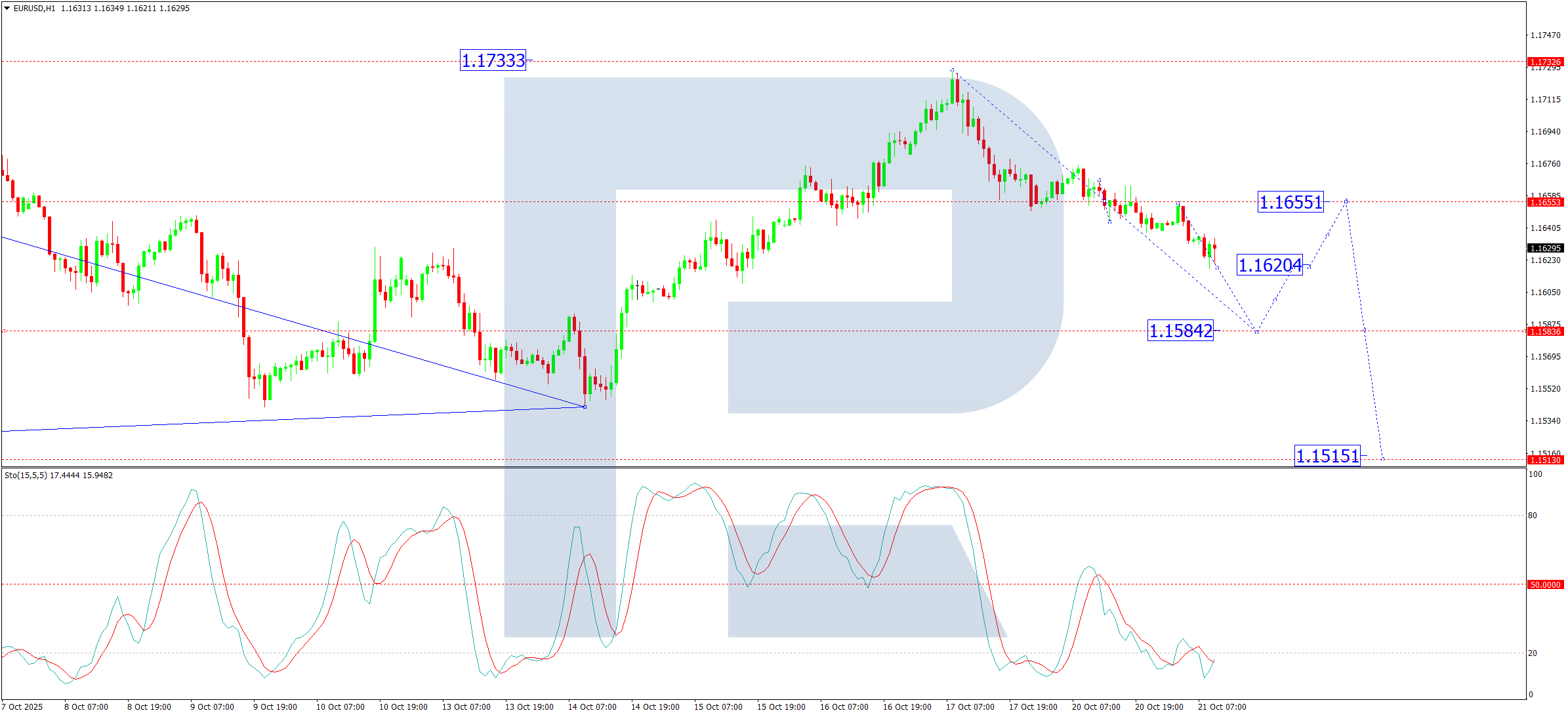
On the hourly chart, the pair had been range-bound near 1.1645 before breaking lower, extending its downward move towards 1.1523. A pullback to retest 1.1645 (now as resistance) remains possible before any further downside.

Beyond that, the bearish trend is likely to resume, with 1.1490 acting as the next key support. The Stochastic oscillator aligns with this scenario, as its signal line is below 50 and is trending downward towards 20, indicating strengthening bearish momentum.

Conclusion

Sellers remain firmly in control, with fundamental and technical factors both favouring further downside. A break below 1.1590 could accelerate losses, while key US data and Fed rhetoric this week may dictate near-term volatility.


Disclaimer

Any forecasts contained herein are based on the author’s particular opinion. This analysis may not be treated as trading advice. RoboForex bears no responsibility for trading results based on trading recommendations and reviews contained herein

S&P 500 hits an all-time high for five consecutive days. RBNZ plans rate cut at August meeting

By JustMarkets

As of Friday, the Dow Jones Index (US30) rose by 0.47% (up +1.20% for the week). The S&P 500 Index (US500) gained 0.40% (weekly +1.33%), and the tech-heavy Nasdaq Index (US100) closed up 0.23% (weekly +0.64%). On Friday, the S&P 500 reached its fifth consecutive record close, the longest streak in over a year. Trade negotiations fueled market optimism, as President Trump planned to meet with European Commission President Ursula von der Leyen on Sunday amid hopes of a US-EU trade deal. Agreements were also reached with Japan, Indonesia, and the Philippines ahead of the August 1 tariff deadline, though talks with Canada have stalled. Strong financial results from Alphabet and Verizon boosted sentiment, while Intel weighed on the tech sector after issuing a profit warning and announcing layoffs.

European stock markets mostly declined on Friday. Germany’s DAX (DE40) fell 0.32% (weekly -0.38%), France’s CAC 40 (FR40) edged up 0.21% (weekly +0.11%), Spain’s IBEX 35 (ES35) dropped 0.13% (weekly +1.75%), and the UK’s FTSE 100 (UK100) ended down 0.20% (weekly +1.43%). European stocks closed mostly lower as markets continued to assess recent corporate earnings reports. Schneider Electric and Airbus both fell more than 1% ahead of next week’s earnings releases, setting a negative tone for industrials. ASML and Nokia each dropped around 1.5%, with the latter continuing to slide after a pessimistic earnings report earlier in the week. On the positive side, LVMH jumped 4% after releasing its results, while Volkswagen also rose by 4% despite a negative outlook in its report, lifting the luxury goods and automotive sectors overall.

Over the weekend, the US, and EU reached a trade agreement. The deal introduces a 15% tariff on most European goods, significantly lower than the initially threatened 30% from Washington, easing concerns about a broader trade conflict. The announcement was made jointly by President Trump and European Commission President Ursula von der Leyen. However, key details, such as the specific industries covered and the scope of possible exemptions. remain unclear.

WTI crude oil prices fell by 1.3% on Friday, closing at $65.2 per barrel (the lowest since June 30) as concerns over weakening economic signals from the US and China pressured prices. For the week, WTI declined by about 3%, driven by signs of rising global supply and slowing business investment. The US is preparing to allow Chevron and other companies to resume limited operations in Venezuela, potentially boosting oil exports by over 200,000 barrels per day and easing shortages of heavier crude grades. Meanwhile, OPEC+ is expected to raise production at its Monday meeting, aiming to regain market share as summer demand absorbs the additional barrels.

Asian markets mostly rose last week. Japan’s Nikkei 225 (JP225) surged 3.45%, China’s FTSE China A50 (CHA50) rose 0.49%, Hong Kong’s Hang Seng (HK50) gained 1.59%, while Australia’s ASX 200 (AU200) posted a decline of 1.03%.

On Friday, the New Zealand dollar fell to $0.602 but remained on track for a weekly gain, supported by improved investor sentiment amid prospects of new US trade deals. Domestically, markets are pricing in a roughly 75% chance that the Reserve Bank of New Zealand will cut its benchmark rate from 3.25% by 25 basis points at its August meeting, though investors suspect this may be near the end of the easing cycle. Meanwhile, RBNZ Chief Economist Paul Conway said Thursday the Central Bank is prepared to cut rates further if price pressures continue to ease, as expected.

S&P 500 (US500) 6,388.64 +25.29 (+0.40%)

Dow Jones (US30) 44,901.92 +208.01 (+0.47%)

DAX (DE40) 24,217.50 −78.43 (−0.32%)

FTSE 100 (UK100) 9,120.31 −18.06 (−0.20%)

USD Index 97.67 +0.30 (+0.31%)

By JustMarkets


This article reflects a personal opinion and should not be interpreted as an investment advice, and/or offer, and/or a persistent request for carrying out financial transactions, and/or a guarantee, and/or a forecast of future events.

Gold Declines as EU Strikes Trade Deal

By RoboForex Analytical Department

Gold held steady at $3,330 per troy ounce on Monday following three consecutive days of declines. The metal faced downward pressure after news emerged of a trade agreement between the US and the EU, dampening investor interest in safe-haven assets.

On Sunday, the US and EU reached a broad trade deal, which includes a 15% tariff on most European goods, alongside commitments to invest hundreds of billions of dollars in American industry. This agreement mirrors last week’s US–Japan trade pact in structure.

Traders are now bracing for a busy week of economic events, with the Federal Reserve meeting at the centre of attention. While interest rates are expected to remain unchanged, markets will scrutinise any signals about a potential rate cut in September.

Key US labour market data will also be in focus, including JOLTS reports, ADP employment figures, and the crucial nonfarm payrolls release. Equally significant will be the PCE price index – the Fed’s preferred inflation gauge – which will indicate whether price pressures are intensifying amid new tariffs.

Technical Analysis: XAU/USD

H4 Chart:

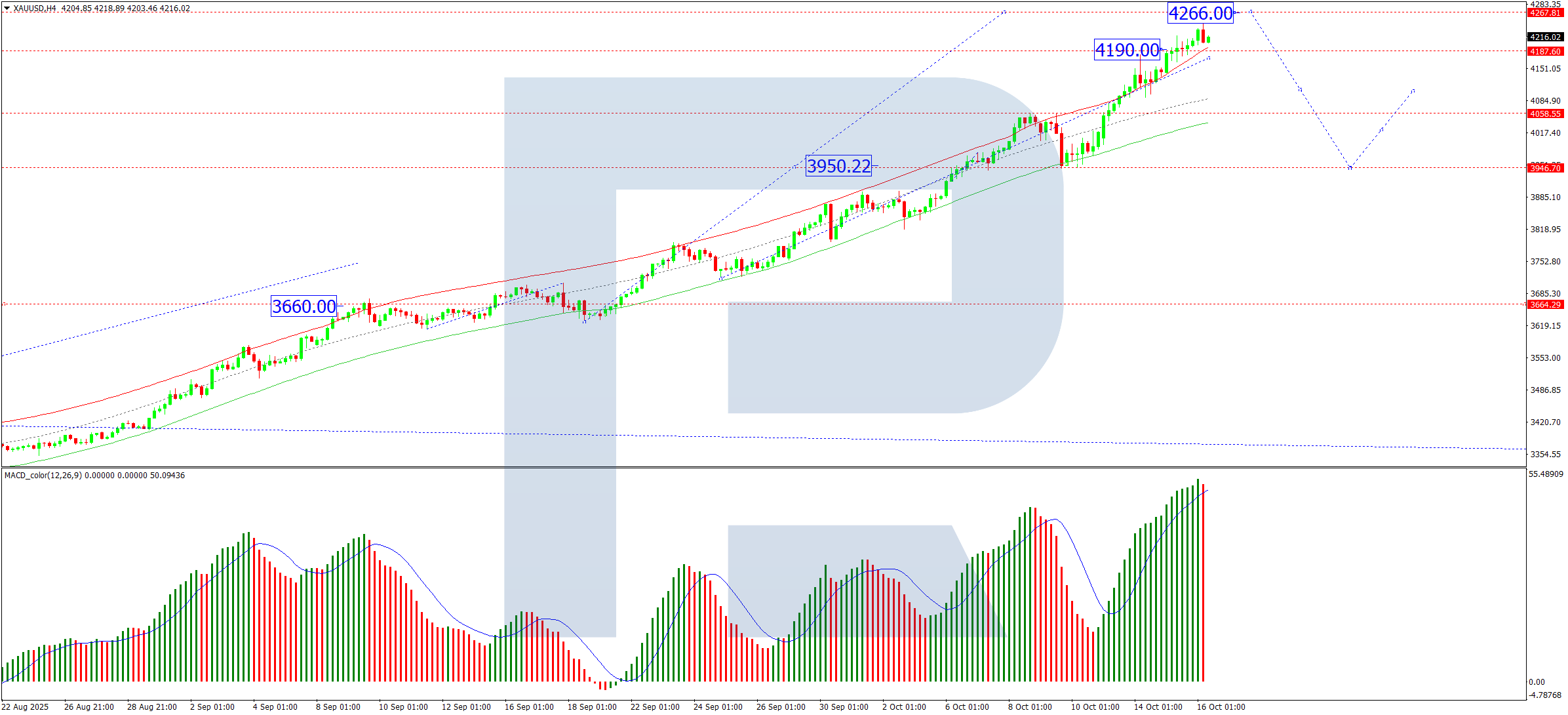
The H4 chart shows XAU/USD forming a broad consolidation range around 3,375. After breaking downward today, the market reached its local downside target at 3,318. Following this, we anticipate a possible upward correction towards 3,375 (testing from below), before a renewed decline towards 3,312. This scenario is supported by the MACD indicator, with its signal line below zero and pointing sharply downward.

H1 Chart:

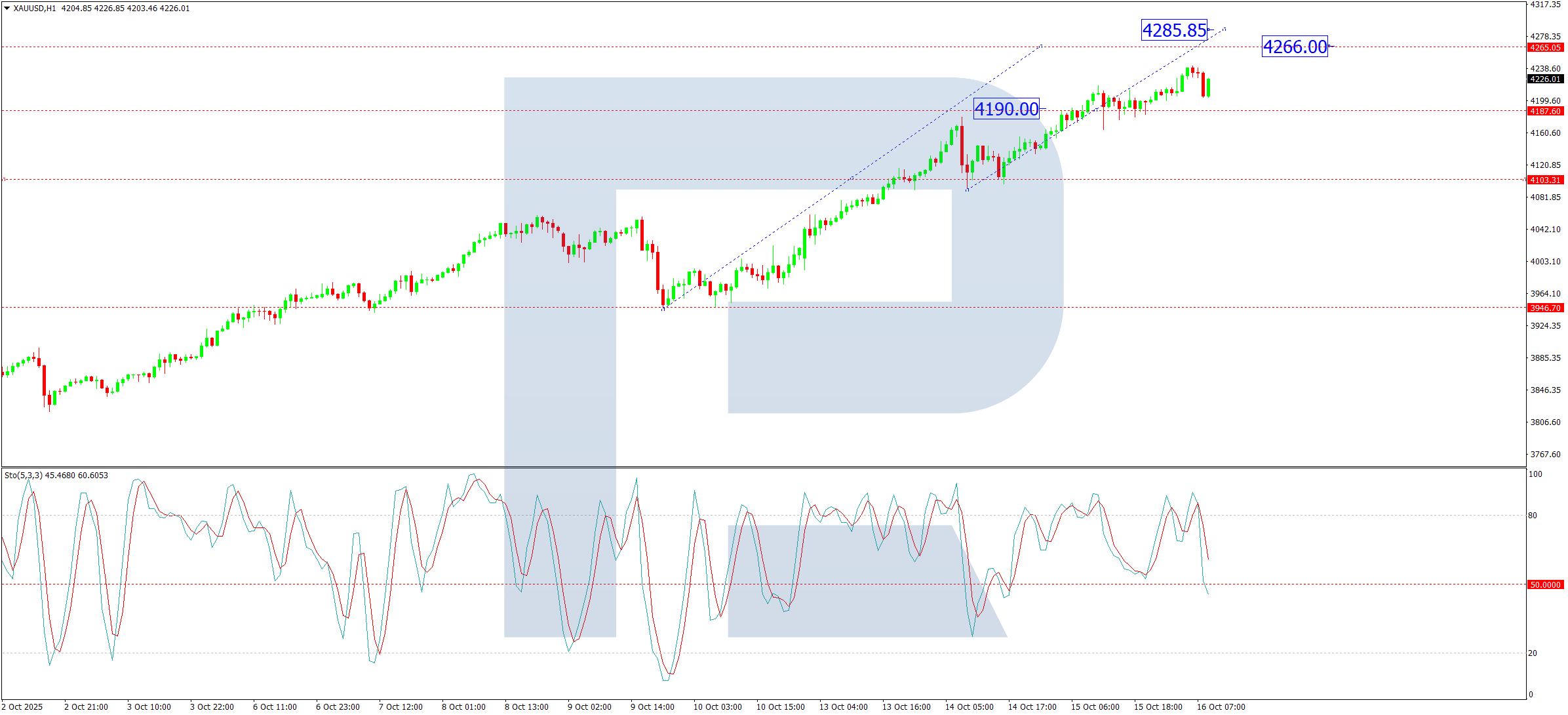
On the H1 chart, the market has achieved its local decline target at 3,318. Currently, an upward impulse is forming towards 3,349. A consolidation range near 3,346 may develop, with an upside breakout potentially extending gains to 3,375. Thereafter, a new downward wave towards 3,312 could emerge. The Stochastic oscillator aligns with this outlook, as its signal line is above 50 and rising sharply towards 80.

Conclusion

Gold remains under pressure amid shifting global trade dynamics, with technical indicators suggesting further volatility ahead. Traders should monitor key US data releases and signals from the Fed for directional cues.


Disclaimer

Any forecasts contained herein are based on the author’s particular opinion. This analysis may not be treated as trading advice. RoboForex bears no responsibility for trading results based on trading recommendations and reviews contained herein.