Archive for Financial News – Page 224

The Bank of Japan kept its monetary policy unchanged. The US banking sector is under pressure

By JustMarkets

Yesterday, the US stock indices fell sharply, mainly due to falling banking sector shares. Shares of SVB Financial Group (SIVB) fell more than 55% after the bank disclosed a net loss of $1.8 billion and gave a negative outlook for the year on the impact of higher interest rates. SVB Financial Group said it was taking aggressive measures to shore up its balance sheet, including selling shares and liquidating its securities portfolio. The SIVB’s fall has dampened sentiment toward bank stocks, which have been pressured by a deeper inversion of the yield curve, a harbinger of recession. As the stock market closed Thursday, the Dow Jones Index (US30) decreased by 1.66%, and the S&P 500 Index (US500) lost 1.85%. The NASDAQ Technology Index (US100) fell by 2.05%.

Investors remain tense ahead of Friday’s jobs report. The US economy is expected to grow by 200,000 jobs last month, well below January’s 517,000. The unemployment rate is forecast at 3.4%. Yesterday’s weekly labor market data showed that US employers announced 77,770 job cuts in February, down 24% from the 102,943 cuts announced in January. This indicates a resilient labor market. Many fear that a strong Nonfarm Payrolls report could solidify the return of aggressive rate hikes by the Federal Reserve.

On Thursday, President Joe Biden unveiled a $6.9 trillion budget proposal. The proposal, which the Republican-controlled House of Representatives will undoubtedly reject, showed little inclination to compromise. The president’s proposal would increase funding for a number of government programs, increase Medicare solvency, lower prescription drug prices, and reduce the deficit by $3 trillion over the next decade. Biden also proposes adding $77 billion for defense spending.

Stock markets in Europe were mostly down yesterday. Germany’s DAX (DE30) gained 0.01%, France’s CAC 40 (FR40) fell by 0.12%, Spain’s IBEX 35 (ES35) decreased by 0.45%, and Britain’s FTSE 100 (UK100) closed down 0.63%.

The ECB will raise rates by 50 basis points at its March meeting, and analysts expect the central bank to signal the next such move, probably in May. Executive Board spokeswoman Isabel Schnabel recently said that in order to slow the pace of rate hikes, she needs to see the ECB’s monetary policy become restrictive, which should show up in credit markets, labor markets, and various components of aggregate demand. But there is disagreement within the ECB. On the hawkish side, Holzmann argued that the ECB should raise the rate by 50 basis points at all the next four meetings. On the other hand, Visco did not appreciate such comments from his colleagues and said that decisions should be made meeting by meeting in an environment of high uncertainty. But in any scenario, the ECB will remain hawkish until the summer.

On Wednesday, crude oil prices fell for a second straight day, even as oil inventories fell. Inventories fell by 1.694 million barrels last week, the first weekly drop in inventories since December. The rise in the dollar index on the back of the US Federal Reserve’s aggressiveness outweighs the factors of falling inventories and rising demand from China.

Oil prices continued to fall Friday due to fears of more aggressive interest rate hikes by the US Federal Reserve and disappointing data from China. Markets are worried that a potential US recession triggered by tighter monetary conditions could hit oil demand this year. China’s weak economic signals also upset oil markets, as the world’s largest oil importer recorded a drop in oil imports between January and February. Expectations of higher interest rates are strengthening the dollar, putting pressure on commodities priced in the currency, mainly oil. A stronger dollar makes oil more expensive for international buyers, which reduces demand.

Asian markets traded flat yesterday. Japan’s Nikkei 225 (JP225) jumped 0.63%, China’s FTSE China A50 (CHA50) fell by 0.61%, Hong Kong’s Hang Seng (HK50) ended the day down by 0.63%, India’s NIFTY 50 (IND50) fell by 0.93%, and Australia’s S&P/ASX 200 (AU200) ended the day up by 0.05%.

The Bank of Japan kept interest rates at record lows on Friday and said it would continue the current rate of Yield Curve Control (YCC). The BOJ said in a statement that inflation is likely to slow by mid-2023, thanks to government subsidies on energy prices and easing pressure from high commodity rates. But the Bank of Japan also said that prices would rise again by the end of the year and that growing uncertainty about the economy underscored the need to maintain the adaptive monetary policy. This was the last meeting in the office for Haruhiko Kuroda.

S&P 500 (F) (US500) 3,918.32 −73.69 (−1.85%)

Dow Jones (US30)32,254.86 −543.54 (−1.66%)

DAX (DE40) 15,653.58 +75.19 (+0.01%)

FTSE 100 (UK100) 7,879.98 −49.94 (−0.63%)

USD Index 105.28 −0.38 (−0.36%)

Important events for today:
  • – Japan BoJ Interest Rate Decision at 05:00 (GMT+2);
  • – Japan BoJ Rate Statement at 05:00 (GMT+2);
  • – Japan BoJ Press Conference at 07:00 (GMT+2);
  • – UK GDP (m/m) at 09:00 (GMT+2);
  • – UK Industrial Production (m/m) at 09:00 (GMT+2);
  • – UK Manufacturing Production (m/m) at 09:00 (GMT+2);
  • – US Nonfarm Payrolls (m/m) at 15:30 (GMT+2);
  • – US Unemployment Rate (m/m) at 15:30 (GMT+2);
  • – Canada Unemployment Rate (m/m) at 15:30 (GMT+2).

By JustMarkets


This article reflects a personal opinion and should not be interpreted as an investment advice, and/or offer, and/or a persistent request for carrying out financial transactions, and/or a guarantee, and/or a forecast of future events.

Fed hawks won’t be satisfied with cooler February jobs report: deVere CEO

By George Prior

Even a cooler jobs report on Friday is unlikely to stop the Federal Reserve hiking interest rates further on March 22, warns the CEO and founder of one of the world’s largest independent financial advisory, asset management and fintech organizations.

The warning from Nigel Green of deVere Group comes as domestic and global financial markets hold their breath for the monthly US jobs report published on Friday 8:30 a.m. ET by the US Bureau of Labor Statistics.

He says: “This jobs report is being closely watched by investors around the world, after January’s gave analysts a massive surprise. It revealed the US economy had added more than half a million jobs and unemployment had fallen to a level not seen in more than five decades.

“All eyes are now on the February jobs data. We expect the US to have added around 225,000 in new jobs last month and the unemployment rate to remain at a 54-year low of 3.4%.

As this represents a cooling of the labor market, will the Fed impose only a quarter-point rate hike on March 22, rather than a half-point one?

“I doubt it,” says the deVere CEO. “Even a cooler jobs report on Friday is unlikely to stop the Federal Reserve hiking interest rates further later this month.

“Fed Chair Jerome Powell has been clear that officials are looking at ‘totality’ of the data. A couple of milder jobs reports won’t cut it for the central bank – especially following January’s bumper gains.  A drop of even 100,000 new jobs would not be enough to satisfy the Fed.

“We would need to have several months of weakening employment in order for the Fed to respond by taking its foot off the gas on rates.

“As such, we expect a half-point rate hike on March 22. Markets are set to tumble as a result.”

Whilst inflation remains a major headwind, Nigel Green says that investors should “remain alive to other metrics” in investment decision-making.

When costs are going up, investors should increasingly be looking at a company’s ability to maintain margin, he notes.

“Investors should be paying close attention to margin because it can indicate how well a company is managing costs and competing in its industry.

“It can also impact a corporation’s ability to invest in growth opportunities or pay dividends to shareholders.”

In a recent media note, the deVere chief said that sectors that can maintain margin, despite inflation and interest rate hikes are likely to include healthcare, luxury goods, energy and agriculture.

“A cooler February jobs report is not going to satisfy the Fed hawks, so investors must expect higher for longer rates and may need to rebalance their portfolios as a result.”

About:

deVere Group is one of the world’s largest independent advisors of specialist global financial solutions to international, local mass affluent, and high-net-worth clients.  It has a network of offices across the world, over 80,000 clients and $12bn under advisement.

Japanese Candlesticks Analysis 09.03.2023 (USDCAD, AUDUSD, USDCHF)

By RoboForex.com

USDCAD, “US Dollar vs Canadian Dollar”

On H4, USDCAD has formed a Shooting Star reversal pattern. Currently, the pair may go by the reversal signal in a descending wave. The target of the correction might be 1.3730; later the price might push off this level and continue the uptrend. However, the price may grow to 1.3875 without pulling back to the support.

USDCAD
Risk Warning: the result of previous trading operations do not guarantee the same results in the future

AUDUSD, “Australian Dollar vs US Dollar”

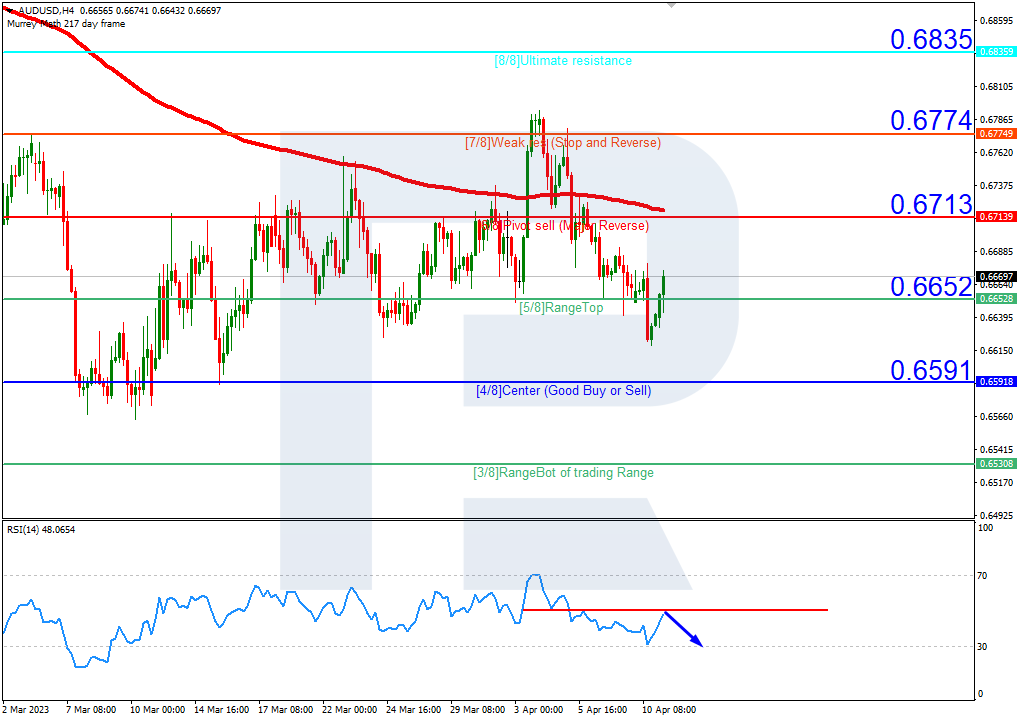
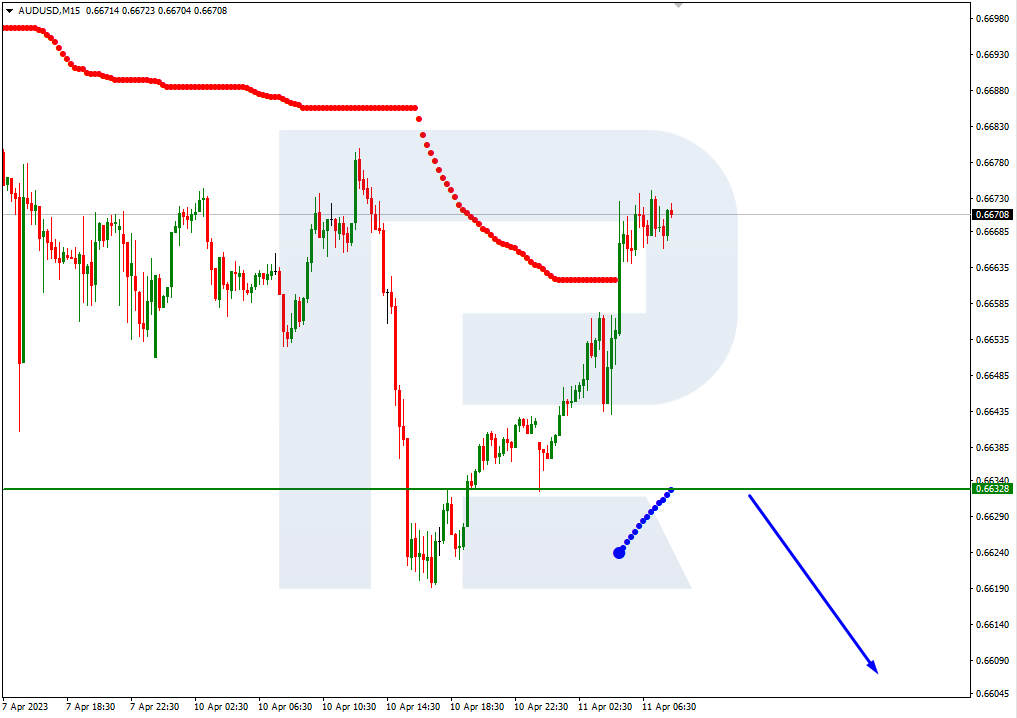
On H4, AUDUSD has formed a Hammer reversal pattern. Currently, the pair is going by the reversal signal in an ascending wave. The target of the growth is 0.6655. Upon testing the resistance, the quotes might push off it and continue the decline. However, the price may drop to 0.6560 and continue the downtrend without any correction to the resistance.

AUDUSD
Risk Warning: the result of previous trading operations do not guarantee the same results in the future

USDCHF, “US Dollar vs Swiss Franc”

On H4, near the resistance level, USDCHF has formed a Hanging Man reversal pattern. The instrument is now going by the reversal signal in a descending wave. The target of the pullback might be 0.9370. After the test of the support, the price might push off it and continue with the uptrend. However, it may grow directly to 0.9450 without any correction to the support.

USDCHF

Article By RoboForex.com

Attention!
Forecasts presented in this section only reflect the author’s private opinion and should not be considered as guidance for trading. RoboForex LP bears no responsibility for trading results based on trading recommendations described in these analytical reviews.

The Bank of Canada has officially taken a pause. China’s inflation numbers are down sharply

By JustMarkets

Analysts and investors struggled to find a reason to be optimistic about stocks yesterday. Still, stock indices remained under pressure Wednesday amid lingering fears of renewed aggressive rate hikes by the Federal Reserve. The latest labor market data showed that private-sector job gains in February exceeded economists’ estimates, increasing the likelihood that the Fed will be forced to accelerate the rate hikes at its March meeting. The probability of a return to raising rates by 50 basis points at the Fed meeting on March 21-22 rose to 80% compared to 71% the day before. As the stock market closed Wednesday, the Dow Jones Index (US30) decreased by 0.18%, while the S&P 500 Index (US500) added 0.14%. The NASDAQ Technology Index (US100) gained 0.40%.

The Bank of Canada left the interest rate unchanged at 4.5%. This was the first pause among major central banks. But the Bank of Canada reiterated its statement that it is willing to keep raising the interest rate if necessary to get back to its 2% target. But analysts believe this is just a formality, and officials have already hit the pause button for the rest of the year.

Stock markets in Europe were mostly up Wednesday. German DAX (DE30) gained 0.46%, French CAC 40 (FR40) shed by 0.20%, Spanish IBEX 35 (ES35) added 0.67%, and British FTSE 100 (UK100) closed yesterday on the plus side by 0.13%.

The increase in short-term rates in the US influenced the prospects of the European Central Bank. The swap market is showing more confidence (85%) in a 50 basis point rate hike in May, which would raise the deposit rate to 3.50%. Nomura raised its forecast for the ECB, predicting that the final rate will reach 4.25% — with changes of 50 basis points in March, May, and June, followed by a final quarter-point increase in July.

On Wednesday, crude oil prices fell for a second straight day, even as oil inventories fell. Inventories fell by 1.694 million barrels last week, the first weekly drop in inventories since December. The rise in the dollar index on the back of the US Federal Reserve’s aggressiveness outweighs the factors of falling inventories and rising demand from China.

Asian markets traded flat yesterday. Japan’s Nikkei 225 (JP225) jumped by 0.48%, China’s FTSE China A50 (CHA50) fell by 0.80%, Hong Kong’s Hang Seng (HK50) ended the day down by 2.35%, India’s NIFTY 50 (IND50) gained 0.24%, and Australia’s S&P/ASX 200 (AU200) ended the day negative by 0.77%.

Japan’s economy is suffering from slowing demand overseas due to worsening global growth, leading to a record trade deficit and the largest output contraction in eight months in January. Japan reported a record trade deficit for January (~3.2 trillion yen, or ~$23.7 billion). Japan’s gross domestic product (GDP) increased by 0.1% year-over-year in the last quarter against a preliminary estimate of 0.6% growth and well below economists’ average forecast of 0.8% growth. In an effort to boost household purchasing power, the government and the Bank of Japan (BOJ) are urging firms to raise workers’ wages at the annual spring wage talks, which conclude this month.

China’s annualized consumer price index fell from 2.1% to 1%, well below the 1.9% forecast. The factory inflation fell to 1.4% on an annualized basis. The data show that despite a rebound in business activity, China’s economic recovery is still in its infancy as the country struggles to recover from three years of strict COVID-19 restrictions.

S&P 500 (F) (US500) 3,992.01 +5.64 (+0.14%)

Dow Jones (US30)32,798.40 −58.06 (−0.18%)

DAX (DE40) 15,631.87 +72.34 (+0.46%)

FTSE 100 (UK100) 7,929.92 +10.44 (+0.13%)

USD Index 105.69 +0.08 (+0.07%)

Important events for today:
  • – Japan GDP (q/q) at 01:50 (GMT+2);
  • – China Consumer Price Index (m/m) at 03:30 (GMT+2);
  • – China Producer Price Index (m/m) at 03:30 (GMT+2);
  • – US Initial Jobless Claims (w/w) at 15:30 (GMT+2);
  • – US Natural Gas Storage (w/w) at 17:30 (GMT+2).

By JustMarkets


This article reflects a personal opinion and should not be interpreted as an investment advice, and/or offer, and/or a persistent request for carrying out financial transactions, and/or a guarantee, and/or a forecast of future events.

S&P 500 Bears To Continue Their Reign?

By ForexTime

The past few days have been rough for the S&P 500.

It has weakened roughly 1.3% since the start of the week thanks to renewed expectations around the Federal Reserve keeping interest rates higher for longer. The main culprit behind this development was none other than Federal Reserve Chair Jerome Powell who struck a hawkish tone in congressional testimony on Tuesday. According to Powell, interest rates will likely peak at a higher level than previously expected thanks to stronger-than-expected economic data. His aggressive message rate hikes boosted the dollar and rattled equity markets as a 50-bp hike in March was back on the table.

According to Bloomberg, traders are currently pricing in a 68% probability of a 50-basis point rate hike this month.

As the week slowly comes to an end, the S&P 500 is still struggling to nurse the deep wounds inflicted from Tuesday’s selloff with prices trading below the 4000 level. The index is likely to remain shaky as investors remain on the sidelines ahead of the US jobs report on Friday.

In the meantime, bears seem to be gaining momentum on the daily charts with prices trading below the 50-day Simple Moving Average.

However, some support can be found around 3950 – a level entangled between the 100 and 200-day SMA.

On the data front, it may be wise to keep an eye on the US weekly jobless claims published later today. If the official results exceed the forecasted 195,000 figure, that could provide some breathing room for the S&P 500 to fight back ahead of the NFP main course tomorrow. On the political front, US President Biden’s budget request to Congress could trigger some volatility depending on how events play out.

The main risk event and market shaker will be the NFP report on Friday which could determine whether S&P 500 bears continue their reign.

After the blockbuster 517,000 figures back in January, around 225, 000 is projected in February. A number below market expectations could excite equity bulls and cool expectations around the Federal Reserve hiking interest rates by 50-bp this month. Alternatively, a strong report is likely to reinforce rate hike bets – ultimately weighing on the equity space. 

Shifting the fundamentals aside, the technicals remain in favour of bears as prices remain in a descending channel.

The SPX500m on the D1 time frame was in an uptrend until a last higher top formed at 4197.1 on 2 February. The bears saw an opportunity and started gathering in numbers.

After the higher top at 4197.1, the price broke through a weekly support then turned resistance level. The momentum change was confirmed by a break of the 15 & 34 Simple Moving Averages as well as the Momentum Oscillator that crashed through the 100 baselines into bearish territory.

A possible critical support level formed when the price reached a weekly support level and a lower bottom was recorded on 2 March at 3921.0. The bulls drove the price higher but their momentum waivered and a lower top formed on 6 March at 4079.6.

If the SPX500 breaks through the critical support level at 3921.0, then three possible price targets can be reached from there. Attaching the Fibonacci tool to the lower bottom near the weekly support level at 3921.0 and dragging it to the resistance level at 4079.6, the following targets can be calculated. The first target may be estimated at 3823.0 (161.8%). The second price target might be expected at 3664.4 (261.8%) if the bears manage to break through another weekly support level. The third and final target might be estimated at 3407.8 (423.6%), which is beyond yet another weekly support level.

If the resistance level at 4079.6 is broken, the current situation must be re-examined.

As long as the bears maintain their overall momentum, the outlook for the SP 500 should remain bearish.


Forex-Time-LogoArticle by ForexTime

ForexTime Ltd (FXTM) is an award winning international online forex broker regulated by CySEC 185/12 www.forextime.com

The Analytical Overview of the Main Currency Pairs on 2023.03.08

By JustMarkets

The EUR/USD currency pair

Technical indicators of the currency pair:
  • Prev Open: 1.0675
  • Prev Close: 1.0548
  • % chg. over the last day: -1.20 %

Federal Reserve Chairman Jerome Powell’s testimony has certainly taken on a more hawkish tone compared to his last comments in February. Powell’s words now: “Because recent economic data have been stronger than expected, it suggests that the ultimate level of interest rates is likely to be higher than previously thought”. The probability of a 50 basis point interest rate hike at the March 21-22 Fed meeting jumped to nearly 70% from 24% the day before. In December, the average forecast of Fed officials assumed a target federal funds rate of 5.1%. Still, yesterday’s message from Powell indicates that markets estimate the federal funds rate at 5.4% by the end of the year. That means rates will rise another 100 bps. This hawkish stance has led to a sharp increase in government bond yields and a rise in the dollar index against major currencies.

Trading recommendations
  • Support levels: 1.0519, 1.0482
  • Resistance levels: 1.0564, 1.0576, 1.0621, 1.0656, 1.0704, 1.0804, 1.0906

The trend on the EUR/USD currency pair on the hourly time frame is bearish. The price is trading below the moving averages. The MACD indicator is deeply negative, but there are the first signs of sellers’ weakness. Under such market conditions, traders should expect a slight pullback to the moving averages, as the price is oversold. Buy trades are best considered from the support level of 1.0519 but with intraday confirmation. Sell deals can be considered from the resistance level of 1.0564 or 1.0576, subject to a reversal impulse.

Alternative scenario: if the price breaks down through the resistance level of 1.0656 and fixes above it, the uptrend will likely resume.

EUR/USD
News feed for 2023.03.08:
  • – German Industrial Production (m/m) at 09:00 (GMT+2);
  • – German Retail Sales (m/m) at 09:00 (GMT+2);
  • – Eurozone ECB President Lagarde Speaks at 12:00 (GMT+2);
  • – Eurozone GDP (q/q) at 12:00 (GMT+2);
  • – US ADP Nonfarm Employment Change (m/m) at 15:15 (GMT+2);
  • – US Trade Balance (m/m) at 15:30 (GMT+2);
  • – US Fed Chair Jerome Powell Testifies at 17:00 (GMT+2);
  • – US JOLTs Job Openings (m/m) at 17:00 (GMT+2).

The GBP/USD currency pair

Technical indicators of the currency pair:
  • Prev Open: 1.2017
  • Prev Close: 1.1825
  • % chg. over the last day: -1.62 %

Despite a sense of stability returning to the UK real estate market, despite the conclusion of an important Brexit deal with Northern Ireland, despite an unexpected rise in business activity, the British pound was unable to maintain its upward momentum. After Fed Chairman Jerome Powell reopened the door for a faster interest rate hike yesterday, investors began to return to the dollar, leading to sell-offs in other currencies, such as the euro and the pound sterling.

Trading recommendations
  • Support levels: 1.1799, 1.1603
  • Resistance levels: 1.1929, 1.1956, 1.1993, 1.2086, 1.2147

From the technical point of view, the trend on the GBP/USD currency pair on the hourly time frame is bearish. The price has deviated strongly from the moving averages. The MACD indicator is deeply negative, with signs of divergence. Under such market conditions, sell trades are best sought from the resistance level of 1.1928 but with confirmation in the form of a false breakout or reverse reaction. Buy trades are best sought from the support level of 1799, but better with confirmation on intraday time frames.

Alternative scenario: if the price breaks out through the 1.2050 resistance level and fixes above it, the uptrend will likely resume.

GBP/USD
There is no news feed for today.

The USD/JPY currency pair

Technical indicators of the currency pair:
  • Prev Open: 135.90
  • Prev Close: 137.14
  • % chg. over the last day: +0.91 %

The Bank of Japan faces problems that no other central bank faces. As demand in the country has been declining for decades, the central bank has used stimulative monetary policy for years to restore it. The country’s domestic inflation is now at a 40-year high at 4%, but it’s not much compared to other major economies. Among the world’s leading central banks, the Bank of Japan has not raised interest rates since 2016 while adhering to its “Yield Curve Control” (YCC) policy to keep long-term interest rates low. This involves buying virtually unlimited amounts of Japanese government bonds. The new BoC Governor, Ueda, who is likely to take Kuroda’s place after April 8, will also be constrained by the same circumstances.

Trading recommendations
  • Support levels: 137.09, 136.42,135.25, 134.04, 133.47,
  • Resistance levels: 138.15, 138.88

From the technical point of view, the medium-term trend on the currency pair USD/JPY is bullish. The uptrend trend continues, and the price is steadily growing, breaking through the resistance levels one after another. The MACD indicator is positive, and there are signs of overbought. To buy at such heights is not the best idea, so it is better to wait for a small correction. Under such market conditions, it is better to look for buy deals from the support level of 137.09, but only with intraday confirmation. Sell deals can be searched from the 138.15 level, but with additional confirmation in the form of a reverse initiative on the lower time frames.

Alternative scenario: if the price fixes below the 135.25 support level, the downtrend will be resumed with a high probability.

USD/JPY
There is no news feed for today.

The USD/CAD currency pair

Technical indicators of the currency pair:
  • Prev Open: 1.3612
  • Prev Close: 1.3753
  • % chg. over the last day: +1.04 %

The OECD’s latest Canadian Economic Survey says that faster growth in living standards will require a stronger business environment to bring Canada’s weak productivity and investment growth in line with the leading economies. The Survey presents updated GDP growth forecasts of 1.3% for 2023 and 1.5% for 2024. The tight monetary policy last year will help reduce inflation to 2% by the end of 2024. Public finances are also expected to strengthen in 2023, helped in part by rising commodity price revenues. The Bank of Canada will also meet today on monetary policy. Economists believe the BoC will not raise rates, but the key question will be whether the BoC will leave the door open for further hikes.

Trading recommendations
  • Support levels: 1.3711, 1.3664, 1.3645, 1.3515
  • Resistance levels: 1.3775, 1.3853

From the point of view of technical analysis, the trend on the USD/CAD currency pair is bullish. The triangle pattern is classically triggered in the continuation of the trend. The price impulsively broke through all the levels and rushed upwards. At the moment, the price is trading above the moving averages. The MACD indicator is overbought. Under such market conditions, it is worth looking for buy deals from the support level of 1.3711 or 1.3664, but only with confirmation in the form of reaction on the lower time frames. Sell positions can be searched from the resistance level of 1.3775, but only with a confirmation in the form of a false breakout and short targets.

Alternative scenario: if the price breaks down and consolidates below the support level of 1.3600, the downtrend will likely resume.

USD/CAD
News feed for 2023.03.08:
  • – Canada Trade Balance (m/m) at 15:30 (GMT+2);
  • – Canada BoC Interest Rate Decision at 17:00 (GMT+2);
  • – Canada BoC Rate Statement at 17:00 (GMT+2);
  • – US Crude Oil Reserves (w/w) at 17:30 (GMT+2).

By JustMarkets


This article reflects a personal opinion and should not be interpreted as an investment advice, and/or offer, and/or a persistent request for carrying out financial transactions, and/or a guarantee, and/or a forecast of future events.

The US Federal Reserve is back on an aggressive rate hike course. RBA plans to take a pause

By JustMarkets

The stock market fell on Tuesday as hawkish remarks from Federal Reserve Chairman Jerome Powell increased the odds that the Fed will return to an aggressive rate hike course. The main talking points from Powell’s speech yesterday were:

  • The Fed is poised to accelerate rate hikes if economic data comes in strong;
  • The rate hike is likely to be higher than many expect;
  • Further rate hikes are appropriate;
  • Premature easing is undesirable at this point;
  • It is appropriate to hold the rate at an elevated level for some time.

The likelihood of a 50 basis point interest rate hike at the March 21-22 Fed meeting jumped to nearly 70% from 24% the day before. The hawkish statements pushed Treasury yields higher, with 2-year bond yields exceeding 5% for the first time since 2007. The rise in yields led to a sharp rise in the dollar index and a decline in the major indices. At the close of the stock market on Tuesday, the Dow Jones index (US30) decreased by 0.72%, and the S&P 500 index (US500) lost 1.53%. NASDAQ Technology Index (US100) fell by 1.25%.

The prospect of a US rate hike to 6% is becoming quite real. According to BlackRock Inc. and Schroders Plc, given a robust labor market and sustained inflation, there is a real possibility that the Fed will have to bring the federal funds rate to 6% and then hold it at that level for an extended period of time to slow the economy and bring inflation down to nearly 2%. Swap traders now estimate a full percentage point increase in Fed rates over the next four meetings. The Fed’s rhetoric also risks dampening the outlook for emerging market assets.

The OECD’s latest “Canadian Economic Outlook” says that faster growth in living standards will require a stronger business environment to bring Canada’s weak productivity and investment growth in line with the leading economies. As an open economy, Canada will be vulnerable to any sudden slowdown in global demand and to volatility in commodity and financial markets due to the war in Ukraine in the future. The review presents updated GDP growth forecasts of 1.3% for 2023 and 1.5% for 2024. The tight monetary policy last year will help bring inflation down to 2% by the end of 2024.

Stock markets in Europe were mostly down on Tuesday. Germany’s DAX (DE30) decreased by 0.60%, France’s CAC 40 (FR40) fell by 0.46%, Spain’s IBEX 35 (ES35) decreased by 1.07%, and the British FTSE 100 (UK100) closed yesterday down by 0.13%.

The European Central Bank (ECB) is increasingly concerned about the current level of inflation in the single bloc. There is now talk of an additional ECB interest rate hike of 200 basis points in the coming months to combat persistently high price pressures in the eurozone, raising the central bank rate to 4.5%.

Precious metal prices just collapsed yesterday on the back of Powell’s speech to Congress. Gold and silver are inversely correlated to government bond yields. As monetary policy tightens and interest rates rise, government bond yields go up, which puts downward pressure on gold and silver quotes. For the resumption of the uptrend in gold, it is very important that the US Federal Reserve stops tightening monetary policy.

Asian markets traded yesterday without a single trend. Japan’s Nikkei 225 (JP225) gained 0.25%, China’s FTSE China A50 (CHA50) shed by 1.17%, Hong Kong’s Hang Seng (HK50) ended the day down by 0.33%, India’s NIFTY 50 (IND50) did not trade yesterday, while Australian S&P/ASX 200 (AU200) ended the day up by 0.49% gain.

Major Japanese companies are expected to hold the biggest wage hike in 26 years during next week’s wage negotiations, giving policymakers hope that the country will finally emerge from its deflationary stagnation. This will be crucial for the Bank of Japan (BOJ) as to how soon the bank can end its bond yield control policy under new Governor Kazuo Ueda. It will also be a test of Prime Minister Fumio Kishida’s flagship “new capitalism” policy, which aims to distribute wealth more widely to households by inducing firms to raise wages.

The Reserve Bank of Australia is close to pausing the process of tightening monetary policy. The main takeaway from yesterday’s speech by RBA Governor Lowe was:

  • We’ve done a lot in a short period of time;
  • At some point, it will be appropriate to sit still;
  • If the data before the next board suggests a pause, we will do that;
  • We will have a completely open mind at board meetings.

S&P 500 (F) (US500) 3,986.37 −62.05 (−1.53%)

Dow Jones (US30)32,856.46 −574.98 (−1.72%)

DAX (DE40) 15,559.53 −94.05 (−0.60%)

FTSE 100 (UK100) 7,919.48 −10.31 (−0.13%)

USD Index 105.61 +1.26 (+1.20%)

Important events for today:
  • – German Industrial Production (m/m) at 09:00 (GMT+2);
  • – German Retail Sales (m/m) at 09:00 (GMT+2);
  • – Eurozone ECB President Lagarde Speaks at 12:00 (GMT+2);
  • – Eurozone GDP (q/q) at 12:00 (GMT+2);
  • – US ADP Nonfarm Employment Change (m/m) at 15:15 (GMT+2);
  • – US Trade Balance (m/m) at 15:30 (GMT+2);
  • – Canada Trade Balance (m/m) at 15:30 (GMT+2);
  • – US Fed Chair Jerome Powell Testifies at 17:00 (GMT+2);
  • – US JOLTs Job Openings (m/m) at 17:00 (GMT+2);
  • – Canada BoC Interest Rate Decision at 17:00 (GMT+2);
  • – Canada BoC Rate Statement at 17:00 (GMT+2);
  • – US Crude Oil Reserves (w/w) at 17:30 (GMT+2).

By JustMarkets


This article reflects a personal opinion and should not be interpreted as an investment advice, and/or offer, and/or a persistent request for carrying out financial transactions, and/or a guarantee, and/or a forecast of future events.

NQ100m close to forming “golden cross”. What’s next?

By ForexTime

But such a bullish technical signal may be well and truly lost amid the onslaught of macro events that are set to dictate how global financial markets fare the rest of this month.


What is a “golden cross”?

A golden cross is when the asset’s 50-day simple moving average (SMA) crosses above its 200-day SMA.

Such an event indicates that this asset’s prices have been climbing of late, enough to be higher than its longer-term average.

At the time of writing, the gap between those two widely-followed technical indicators now stand at less than 10 points on the NQ100m.

When it happens, the “golden cross” typically sends a “bullish” signal to traders, suggesting there could be more gains in store.

NOTE: The NQ100m is based on the benchmark Nasdaq 100 index, which tracks the overall performance of US tech stocks such as Apple, Amazon, and Alphabet.


How has NQ100m performed after forming a “golden cross” on the daily charts?

Here’s a look back at the previous two episodes:

  • 22 May 2020: NQ100m went on to climb by 76.2% (after “golden cross”) to post its highest-ever close on December 27, 2021 – the current record high.
  • 2 April 2019: NQ100m rose by 29.6% on its way to a pre-pandemic high in February 2020, before lockdowns worldwide and the fear factor that coursed through global financial markets then sent the NQ100m plummeting below its 200-day SMA.

In both instances, after a “golden cross” on the daily charts, the NQ100m then duly surged to fresh record highs!

What’s next after a “golden cross”?

If such a bullish technical event does happen for the NQ100m, equity bulls (those hoping stocks will move higher) will be looking to eventually revisit this past Monday’s (March 6th, 2023) intraday high of 12471.4.


However, it’s different this time (or so goes the market cliché)!

From a macro fundamental perspective, the Nasdaq 100 finds itself in a completely market environment compared to the situation surrounding prior “golden crosses” back in 2019 and 2020.

And here’s the biggest difference:

The US Federal Reserve (central bank) has been aggressively raising interest rates since 2022 in order to try and cool down inflation that’s raging at its highest levels in decades!

The ongoing Fed rate hikes are in stark contrast to the:

  • April 2019 episode: prior Fed rate hikes coming into 2019 had resulted in US rates peaking at 2.5% (only about half of today’s rates of 4.75%) and the Fed would eventually start cutting interest rates later that year.
  • May 2020: US interest rates were at a record low of near 0%, to help cushion the economic impact from Covid-19.


Recall that, tech stocks generally do not like the prospects of interest rates moving higher.

This is because:

  1. Higher interest rates translate into higher repayments on loans.
  2. And many tech companies rely on borrowed money to grow. And they’ve enjoyed plenty of cheap (near-zero interest rates) money over the past decade.
  3. Hence, with more money now needed to repay borrowings, that’s less money that the company can use to grow its business, or to be kept as profits.
  4. Shareholders and investors would rather see those profits sooner rather than later. Hence, they are less willing to buy stocks in tech companies while US interest rates move higher.

    Result = the Nasdaq 100 is still about 26% lower from its all-time high posted back in November 2021.

Hence, as stated at the top of this article, be mindful that any bullish technical signals emanating from any immediate “golden cross” may be lost amidst the incoming macro events.


What could move the NQ100m this month?

  • March 10th: US nonfarm payrolls (NFP) report a.k.a. jobs data
  • March 14th: US consumer price index (CPI) a.k.a. inflation data
  • March 22nd: Fed rate decision


If markets are shown higher-than-expected readings for the US jobs/inflation data in the days ahead, and/or if the Fed triggers a larger-than-25 basis point hike later this month …

such events should drag the Nasdaq 100 lower as market fears are revived that US interest rates will have to move even higher beyond current forecasts of 5.6%.


In the above scenario, expect NQ100m bears (those hoping prices will fall) to test support around the 11,923 mark.

This is a significant support region, because:

  • That’s where we find the 23.6% Fibonacci level from its November 2021-October 2022 drop
  • This is also around where the 200-day and 50-day SMAs are converging.

This confluence of technical indicators could form a strong support region for the NQ100m, barring an utter capitulation in risk sentiment.


Ultimately, global financial markets (including the NQ100m) are set to remain primarily driven by the shifting expectations surrounding how high the Fed will have to eventually send US interest rates.

Markets can only have greater confidence about the next bull run for the NQ100m once traders and investors can get used to the eventual peak for US interest rates, with hopes that the Fed can also start thinking about lowering rates once more.

Until then, the fear of even-higher US interest rates is likely to limit gains for the NQ100m.


READ MORE: (26 January 2023) SP500m close to forming “golden cross”. What’s next?

(After forming a “golden cross” the SP500m went on to hit all upside levels cited in the article.)

Forex-Time-LogoArticle by ForexTime

ForexTime Ltd (FXTM) is an award winning international online forex broker regulated by CySEC 185/12 www.forextime.com

Aussie gravitates deeper down. Overview for 07.03.2023

By RoboForex.com

The Australian dollar in pair with the US dollar lost balance and dropped. The current quote is 0.6707.

At the meeting that closed today, the Reserve Bank of Australia lifted the interest rate by just 25 base points to 3.6% per annum. This decision went in line with the forecasts.

This is the tenth increase in the interest rate in a row. By market expectations, the RBA will lift the rate once again in Q2 and then will make a pause in tightening the monetary policy.

The regulator supposes that inflation in Australia has reached its peak. According to the RBA, the monetary policy should remain tight to bring the CPI back to its target values, which is the range between 2 and 3%.

The Australian economy is slowing down, and the RBA has mentioned it several times. Moreover, a drop in consumption of households is noticeable because the monetary conditions are becoming tighter. The employment sector also proves deficient. At the same time, the growth of wages is speeding up, answering the lack of workforce.

The CB is watching the wage-price spiral and still states certain risks in this area.

AUD dropped, reacting to the view of the RBA.

Article By RoboForex.com

Attention!
Forecasts presented in this section only reflect the author’s private opinion and should not be considered as guidance for trading. RoboForex LP bears no responsibility for trading results based on trading recommendations described in these analytical reviews.

The RBA raised the interest rate by 0.25%. The ECB is set for a rate hike above the 4% level

By JustMarkets

The US Treasury yields rose yesterday ahead of Powell’s speech to Congress, which could give clues as to the US Federal Reserve’s future monetary policy. Investors and funds are starting to hedge and close their trades after the good rally in the last days of last week. At the close of the stock market on Monday, the Dow Jones (US30) increased by 0.12%, and the S&P 500 (US500) added 0.07%. The NASDAQ Technology Index (US100) decreased by 0.11%.

The US Federal Reserve Chairman Jerome Powell will address Congress today to present the central bank’s semiannual monetary policy report. He will address the Senate on Tuesday and the House of Representatives on Wednesday. His comments will be scrutinized for hints about whether a broader rate hike is being considered this month after recent data pointing to solid inflation. Powell’s hawkish bias could trigger a sell-off in the stock market in favor of the dollar index as a defensive asset. Conversely, any hint from Powell that the US Fed is abandoning its hawkish stance could cause Treasury yields to fall further, pushing the dollar index down and the stock indices up.

Shares of Apple (AAPL) jumped about 2% after Goldman Sachs issued a “buy” recommendation on the stock, citing the tech giant’s strong position in services. Meanwhile, shares of Tesla (TSLA) fell more than 2% after the electric-car maker cut prices in the US for the second time this year to boost demand. Tesla also suffered from Morgan Stanley ruling out the electric carmaker as a “better choice” in favor of Ferrari. Morgan Stanley raised its target Ferrari NV (RACE) price to $310 a share.

Stock markets in Europe were mostly up Monday. Germany’s DAX (DE30) added 0.48%, France’s CAC 40 (FR40) gained 0.34%, Spain’s IBEX 35 (ES35) jumped by 0.49%, Britain’s FTSE 100 (UK100) closed yesterday down by 0.22%.

The European Central Bank should raise interest rates by 50 basis points at each of the next four meetings as inflation remains resilient, said Robert Holzmann, head of the Austrian central bank. Holzmann is considered the ECB’s most hawkish spokesman. The four steps advocated by Holzmann would raise the deposit rate to 4.5%, well above the current projected rate of 4%. Holzmann also urged the ECB to accelerate the reduction of the bank’s balance sheet by stopping full reinvestment in its Pandemic Emergency Purchase Program (PEPP). All debt maturing in the PEPP scheme must now be fully reinvested in the market until 2024.

Asian markets were also mostly up yesterday. Japan’s Nikkei 225 (JP225) jumped by 1.11%, China’s FTSE China A50 (CHA50) fell by 0.80%, Hong Kong’s Hang Seng (HK50) ended the day up 0.17%, India’s NIFTY 50 (IND50) added 0.67%, and Australia’s S&P/ASX 200 (AU200) ended the positive by 0.62%.

China set its GDP growth target for this year at about 5%, lower than last year’s target of about 5.5%. Last week’s stronger-than-expected data on activity in China’s manufacturing and service sectors point to an economic recovery. Given that China is Australia’s largest export market, any improvement in China’s growth outlook could improve Australia’s growth prospects.

The Reserve Bank of Australia raised its benchmark interest rate by 25 basis points. The rate rose from 3.35% to 3.6%. The monetary policy statement indicates that the RBA is leaving the door open for further increases. The move was expected as inflation rose to its highest level in three decades last quarter, and there are still no signs of inflationary pressures easing.

The Bank of Japan has set the discount rate at 0.10% and remains in control of the yield curve (YCC), targeting a range of 0.50% near zero for Japanese government bonds (JGBs) for up to 10 years. The 10-year JGB trades steadily near the upper bound of 0.50%, forcing the BoJ to intervene frequently. Incoming Bank of Japan (BoJ) Governor Kazuo Ueda clarified last week that he would take the same stance as outgoing Governor Haruhiko Kuroda. The BoJ will meet this week, where current governor Haruhiko Kuroda will speak for the last time in office.

S&P 500 (F) (US500) 4,048.42 +2.78 (+0.069%)

Dow Jones (US30)33,431.44 +40.47 (+0.12%)

DAX (DE40) 15,653.58 +75.19 (+0.48%)

FTSE 100 (UK100) 7,929.79 −17.32 (−0.22%)

USD Index 104.53 −0.50 (−0.48%)

Important events for today:
  • – Australia Retail Sales (m/m) at 02:30 (GMT+2);
  • – China Trade Balance (m/m) at 05:00 (GMT+2);
  • – Australia RBA Interest Rate Decision (m/m) at 05:30 (GMT+2);
  • – Australia RBA Rate Statement (m/m) at 05:30 (GMT+2);
  • – Switzerland Unemployment Rate (m/m) at 08:45 (GMT+2);
  • – US Fed Chair Jerome Powell Testifies at 17:00 (GMT+2);
  • – Switzerland SNB Chairman Jordan speaks at 20:30 (GMT+2);
  • – Australia RBA Gov Lowe speaks at 23:55 (GMT+2).

By JustMarkets


This article reflects a personal opinion and should not be interpreted as an investment advice, and/or offer, and/or a persistent request for carrying out financial transactions, and/or a guarantee, and/or a forecast of future events.