Archive for Financial News – Page 176

Union and execs need to shift gears fast once UAW strike is over – transition to EV manufacturing requires their teamwork

By Peter Berg, Michigan State University

The United Auto Workers union is ramping up its strike against General Motors and Stellantis – the global company that makes Chrysler, Jeep and Dodge vehicles – and getting closer to a deal with Ford.

About 5,600 UAW members at 38 General Motors and Stellantis distribution centers for auto parts in 20 states walked off the job on Sept. 22, 2023, after an announcement by UAW President Shawn Fain.

Workers at the only Ford plant affected by the strike since it began on Sept. 15 will remain off the job. The total number of UAW members involved in the strike stands at about 18,300.

Under Fain’s leadership, the union is taking an adversarial approach: It’s railing against what it describes as the “poverty wages” UAW members earn while denouncing the automakers’ CEOs as “greedy” and vowing to “wreck their economy.”

As a scholar of employment relations, I think this strike is too narrowly focused on making up for the wages and benefits autoworkers have lost in recent years. But another big objective is ensuring that autoworkers will have good jobs once most U.S.-made vehicles are electric-powered.

This dispute alone will not resolve this larger objective. Rather, I believe management and labor will need to swiftly move on following the strike and work together constructively to meet that goal.

UAW’s demands

The union is demanding an end to the concessions it made to the three companies during the financial crisis that began in 2007. Its members employed by Ford, GM and Stellantis have experienced a 19% decline in their wages, after accounting for inflation, since 2008.

The union also wants the automakers – sometimes called the Detroit Three – to abolish the tiered wage system, which pays new employees far less than more experienced workers, even for the same work. The UAW initially said it was seeking a wage increase of 40% over four years and the restoration of a cost-of-living allowance that would link wages to inflation.

In addition to these demands, the UAW wants defined-benefit pensions for all workers restored, company-paid health benefits for retirees reestablished and the right to strike over plant closures guaranteed. Other demands include more paid time off and seeing all temporary workers made permanent. It has also called for a 32-hour work week without a pay cut.

Precedents for working together

Although the strike has emphasized the goal of boosting future autoworker pay and benefits, I believe that workers and management can look to the past for ideas that might help them move forward.

GM’s Saturn partnership offers one potential model.

The company’s approach to its Saturn brand of compact vehicles, launched in 1985, was unique in many respects. Its governance structure was characterized by shared decision-making at different levels throughout the plant. The local union was a full partner in virtually all business decisions.

GM invested billions of dollars in this venture, through which it tried to compete with Japanese imports and transplants that were quickly eroding GM’s market share. Saturns were designed differently than other U.S. vehicles, but what made those vehicles special was the extent to which labor shared the responsibility for running Saturn’s main factory.

The Saturn partnership was hard to maintain, especially following the departure of Roger B. Smith, the General Motors CEO who had pushed hard for it. The company stopped making Saturns in 2009, but the former subsidiary’s overall approach of involving workers in decisions about their jobs and the manufacturing process remains as critical today as it was in its heyday.

I would encourage the auto industry to again invoke the spirit of the Saturn venture, which emphasized the collaboration and partnership of labor and management in the production of high-quality, world-class vehicles. Only this time, the vehicles will be EVs.

GM offers another model for positive union-management relations.

About 20 years ago, its Lansing-Grand River assembly plant in Michigan began to engage in a similar example of what I call joint responsibility unionism. Management and the local UAW union established a contractual commitment to work together to continually improve production by systematically solving problems and increasing productivity.

Management and the local UAW union established a contractual commitment to work together to continually improve production by systematically solving problems and increasing productivity.

The local union and management hold each other accountable for keeping costs down and quality high. The plant, which assembles Cadillacs and Chevy Camaros, continues this approach successfully today.

Shift the focus to the future

The UAW is pointing to the billions of dollars in profits auto companies are currently getting when it demands a bigger piece of the pie. The companies counter that rapidly increasing EV production is costly.

GM, Ford and Stellantis already plan to invest more than US$100 billion in electric vehicle manufacturing. As production shifts away from vehicles with internal combustion engines that burn gasoline or diesel fuel, the number of autoworkers needed to build them will decline. EVs have fewer parts.

Ford and Volkswagen, for example, have estimated that they’ll eventually need 30% less labor due to the EV transition.

Undergoing this transformation with labor and management at loggerheads can’t possibly benefit the UAW or the auto companies.

Instead, they’ll need to focus on finding solutions together that increase productivity, build a skilled workforce and efficiently convert plants that make conventional vehicles today to EV factories tomorrow. In so doing, the UAW is more likely to meet its goal of seeing those EV factories employ its members.The Conversation

About the Author:

Peter Berg, Professor of Employment Relations; Director of Human Resources and Labor Relations, Michigan State University

This article is republished from The Conversation under a Creative Commons license. Read the original article.

Clean Tech Co. Partners With European Hydrogen Producer

Source: Streetwise Reports  (9/25/23)

This company’s European partner has signed a memorandum of understanding with a leading producer and supplier of renewable hydrogen to offer decarbonization solutions on the continent.

Jericho Energy Ventures Inc. (JEV:TSX.V; JROOF:OTC; JLM:FSE) announced that its European partner, Exogen Hydrogen Solutions, has signed a memorandum of understanding with a leading European producer and supplier of renewable hydrogen to offer decarbonization solutions for industrial steam, district heating, and mobility applications on the continent.

Lhyfe inaugurated its first green hydrogen production site in 2021 and has five more under construction. It said it plans to achieve 3 gigawatts (GW) of installed capacity of hydrogen production by 2030.

“Green hydrogen has become highly relevant for decarbonizing industrial steam, district heating, and logistics,” Lhyfe Vice President of Sales and Business Development Philippe Desorme said.

Atrium Research analyst NicholasCortelluci has a Buy rating on the stock with a target price of CA$0.50 per share.

“By partnering with Exogen, we expect a significant expansion of our green hydrogen production output over time while also opening a completely new market segment for us.”

Jericho subsidiary Hydgrogen Technologies’ Dynamic Combustion Chamber™ boiler burns hydrogen and oxygen in a vacuum chamber to create high-temperature water and steam with no greenhouse gases or other pollutants. The only by-product is water, which is recycled. It’s meant to replace existing boilers that burn coal, natural gas, diesel, or fuel oil.

The Catalyst: A New Type of Ecosystem

Jericho recently announced a partnership with two other companies, Exogen and the Sofinter Group, to build, implement, and service a new complete hydrogen steam plant that can permanently eliminate the CO2 equivalent of about 5,000 cars: the HSP3000.

The partnership between Exogen, which is offering the final integrated product that comes pre-assembled in container-sized units, and Lhyfe “paves the way for a new type of ecosystem and vast markets for green and renewable hydrogen,” Lhyfe said in a release.

The product and partnership should also have a positive effect on Hydrogen Technologies’ sales in the second half of the year, as the company recently announced its first sale of a DCC™ boiler system to a prominent anonymous university, Atrium Research analyst Nicholas Cortellucci wrote in a research note.

“This (sale) . . . positions JEV as a key industry leader and a first mover in its category,” Cortelluci wrote. Cortellucci has a Buy rating on the stock with a target price of CA$0.50 per share.

Another recent Jericho and Hydrogen Technologies announcement also bodes well for the company, Cortellucci wrote. The company is collaborating with a “leading global alcoholic beverage company” to study using the boilers at production facilities in four countries.

“The HSP3000 can also eliminate all NOx, CO2, and other GHG emissions from industrial steam and district heating applications, potentially allowing clients to harvest carbon credits,” Cortellucci wrote. “We expect the product launch to expedite sales commitments across various industries, including Pulp & Paper, Food & Beverages, Pharmaceuticals, Industrial Chemicals, and O&G (oil and gas).”

DCC™ boilers are being considered for deployment at major facilities around the world, with feasibility studies being conducted or considered at dozens of locations, the company has said.

Decarbonizing Heat a Big Challenge

Lhyfe’s role will be to operate green hydrogen production facilities so the combined products can open new markets for growth in Europe in industrial steam and district heating.

Steam production is a core component of many processes in industries including pulp and paper, food and beverages, pharmaceuticals, industrial chemicals, and oil and gas.

“There is growing demand by multinationals and industrial clusters targeting operating synergies from combining thermal and mobility solutions powered by green hydrogen,” Lhyfe said in a release. “The mobility applications are aimed at hydrogen refilling stations for forklifts, vans, delivery trucks, and cars. Thermal solutions include industrial steam, large buildings, and district heating applications.”

Decarbonizing heat is the biggest challenge energy markets face, Exogen Chief Revenue Officer Saverio Costanzo said.

“In our mission to decarbonize energy applications, Lhyfe is an ideal partner,” Costanzo said. “The future of energy applications is green, and we are right in the middle of it.”

On September 12, Jericho reported approval from the U.S. Patent and Trademark Office for the protection of the DCC™ boiler.

Hydrogen Technologies has two further patents pending to protect and enhance the device’s novel intellectual property, and the company has begun receiving initial commercial orders.

The company is “excited about the new patent allowance from the USPTO and looks forward to the opportunity to continue to expand its portfolio of IP related to its emission-free industrial hydrogen boiler system,” Jericho Chief Executive Officer Brian Willamson said.

A ‘Uniquely Versatile Energy Carrier’

According to the International Energy Agency, the world needs more hydrogen technology and projects to meet a net-zero emissions scenario by 2050.

“Faster action is required on creating demand for low-emission hydrogen and unlocking investment that can accelerate production scale-up and deployment of infrastructure,” the agency wrote.

The hydrogen market has the “potential for near-zero greenhouse gas emissions,” the U.S. Department of Energy said.

“Hydrogen generates electrical power in a fuel cell, emitting only water vapor and warm air,” the agency wrote. “It holds promise for growth in both the stationary and transportation energy sectors.”

Hydrogen doesn’t occur on its own naturally on Earth, despite being the most abundant element in the universe. It needs to be separated from water or hydrocarbon carbons using electrolyzers.

Retail: 55%
Management/Insiders: 35%
Non-Insider Institutions: 10%
55%
35%
10%
*Share Structure as of 7/27/2023


It’s also a “uniquely versatile energy carrier,” according to a report by the Hydrogen Council. “It can be produced using different energy inputs and different production technologies. It can also be converted to different forms and distributed through different routes — from compressed gas hydrogen in pipelines through liquid hydrogen on ships, trains or trucks, to synthesized fuel routes.”

Ownership and Share Structure

Around 35% of Jericho’s shares are held by management, insiders, and insider institutional investors, the company said. They include CEO Brian Williamson, who owns 1.25% or about 3.1 million shares; founder Allen William Wilson, who owns 0.79% or about 1.97 million shares; and board member Nicholas Baxter, who owns 0.46%, or about 1.14 million shares, according to Reuters.

Around 10% of shares are held by non-insider institutions, and 65% are in retail, the company said.

JEV’s market cap is CA$67 million, and it trades in a 52-week range of CA$0.44 and CA$0.21. It has 248.14 million shares outstanding and 178.38 million floating.


Important Disclosures:

  1. Jericho Energy Ventures Inc. is a billboard sponsor of Streetwise Reports and pays SWR a monthly sponsorship fee between US$4,000 and US$5,000.
  2. As of the date of this article, officers and/or employees of Streetwise Reports LLC (including members of their household) own securities of Jericho Energy Ventures Inc.
  3. Steve Sobek wrote this article for Streetwise Reports LLC and provides services to Streetwise Reports as an employee.
  4. The article does not constitute investment advice. Each reader is encouraged to consult with his or her individual financial professional. By opening this page, each reader accepts and agrees to Streetwise Reports’ terms of use and full legal disclaimer. This article is not a solicitation for investment. Streetwise Reports does not render general or specific investment advice and the information on Streetwise Reports should not be considered a recommendation to buy or sell any security. Streetwise Reports does not endorse or recommend the business, products, services or securities of any company mentioned on Streetwise Reports.

For additional disclosures, please click here.


Hawkish comments from Fed officials support the dollar. The Japanese yen is approaching last year’s intervention levels

By JustMarkets

At yesterday’s stock market close, the Dow Jones Index (US30) decreased by 1.14%, while the S&P 500 Index (US500) lost 1.47%. The NASDAQ Technology Index (US100) closed negative 1.57% on Tuesday.

The S&P 500 (US500) and Dow Jones Industrials (US30) fell to 3-month lows, while the NASDAQ (US100) index fell to a 5-week low. Concerns about the health of the US economy pressured stocks yesterday. US new home sales in August fell by 8.7% m/m to a 5-month low of 675,000, weaker than expectations of 698,000. The Conference Board Consumer Confidence Index for September fell by 5.7 to a 4-month low of 103.0, which was weaker than expectations of 105.5.

In addition, falling tech stocks are weighing on the overall market on fears that global central banks will be forced to raise interest rates longer to fight inflation. Also weighing negatively are hawkish comments from the Federal Reserve after Minneapolis FRB President Kashkari said he believes the Fed will have to raise interest rates one more time this year due to a strengthening US economy.

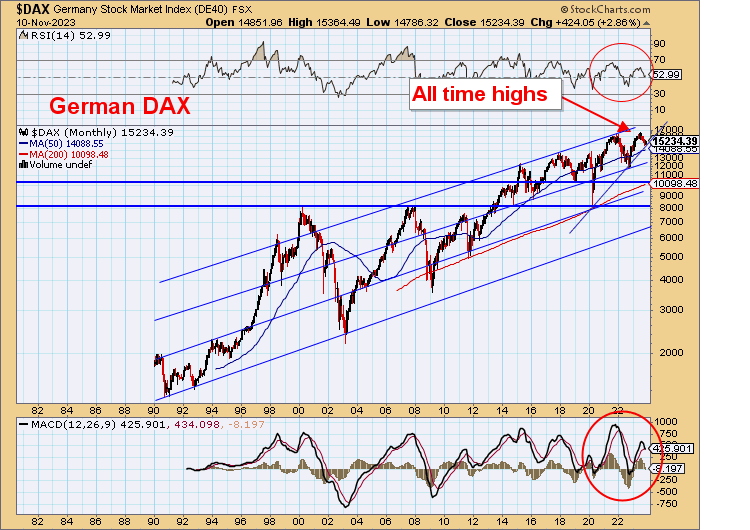
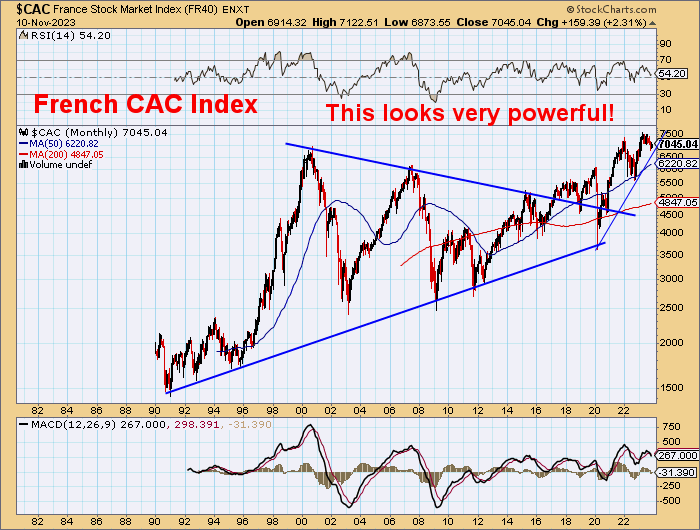
Equity markets in Europe were mostly down on Tuesday. Germany’s DAX (DE40) decreased by 0.97%, France’s CAC 40 (FR40) fell by 0.70% yesterday, Spain’s IBEX 35 (ES35) was down by 0.14%, and the UK’s FTSE 100 (UK100) closed up by 0.02%.

ECB spokesman Holtzman said yesterday that it is still unclear whether the ECB has peaked as upside risks to inflation remain. But his ECB counterpart Müller does not currently expect further interest rate hikes by Europe’s Central Bank. This suggests that a rift is maturing within the ECB over the future conduct of monetary policy.

WTI crude oil prices rose moderately amid concerns that global oil supplies will remain tight for the foreseeable future. Oil prices also rose on expectations that the EIA’s weekly oil inventories report will be released on Wednesday, which will show a decline of 900,000 barrels. Tensions in the oil market are expected to continue as OPEC+ production cuts are extended. Saudi Arabia recently said it would maintain its unilateral oil production cut of 1.0 million BPD through December. The move will keep Saudi oil production at around 9 million BPD, the lowest in three years. Russia also recently announced that it will maintain its 300,000 BPD oil production cut through December. The oil rally continues, and there are no factors for a reversal at the moment.

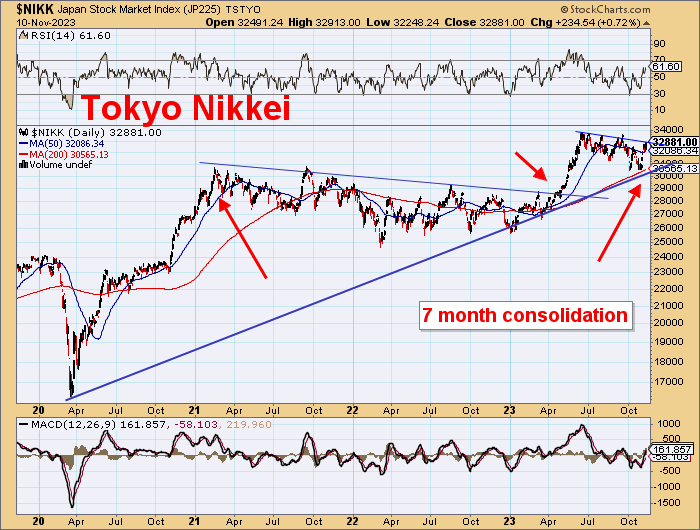
Asian markets traded lower on Tuesday. Japan’s Nikkei 225 (JP225) declined by 1.11% for the day, China’s FTSE China A50 (CHA50) fell by 0.77%, Hong Kong’s Hang Seng (HK50) declined by 1.48%, and Australia’s ASX 200 (AU200) was negative by 0.54% on Tuesday. On Wednesday, most Asian stocks continued to fall amid lingering concerns over a US interest rate hike, while Chinese stocks rose on positive industrial earnings data and PBoC promises to expand stimulus to the economy.

But China’s worsening real estate debt crisis remains a concern for global stock markets due to fears it will derail the country’s growth prospects and drag down the global economy. China Evergrande Group said its subsidiary Hengda Real Estate Group defaulted on a 4 billion yuan ($547 million) debt payment due on Monday, and Chinese authorities have detained former executives of the company.

Minutes from Japan’s latest monetary policy meeting showed that the board’s view was that the current monetary easing should be maintained to achieve the price target in a stable and sustainable manner. Against this backdrop, the Japanese yen continues to depreciate. Yesterday, Japan’s Finance Minister Suzuki said he was closely monitoring market trends, hinting that the government could intervene at any time to support the currency. In 2022, the Japanese government conducted record dollar sales to support the yen, which by then had passed the 150 mark. Now, the currency is on the verge of testing those same levels.

S&P 500 (F)(US500) 4,273.53 −63.91  (−1.47%)

Dow Jones (US30) 33,618.88 −388.00 (−1.14%)

DAX (DE40)  15,255.87 −149.62 (−0.97%)

FTSE 100 (UK100) 7,625.72 +1.73 (+0.023%)

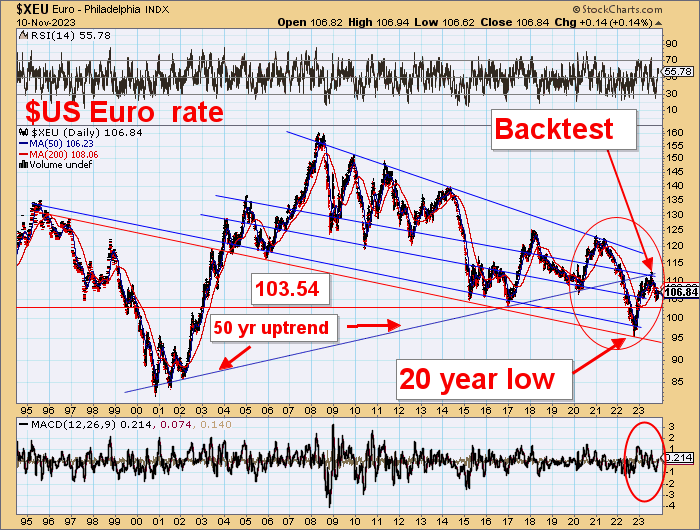
USD Index  106.17 +0.18 (+0.17%)

News feed for 2023.09.25:
  • – Japan Monetary Policy Meeting Minutes (m/m) at 02:50 (GMT+3);
  • – Australia Consumer Price Index (m/m) at 04:30 (GMT+3);
  • – German GfK Consumer Confidence (m/m) at 09:00 (GMT+3);
  • – US Core Durable Goods Orders (m/m) at 15:30 (GMT+3);
  • – US Crude Oil Reserves (w/w) at 17:30 (GMT+3);
  • – Switzerland Chairman Thomas Jordan speaks at 19:45 (GMT+3).

By JustMarkets


This article reflects a personal opinion and should not be interpreted as an investment advice, and/or offer, and/or a persistent request for carrying out financial transactions, and/or a guarantee, and/or a forecast of future events.

What Will Happen to That $30 Trillion in U.S. Home Equity?

“It’s like someone turned off the faucet”

By Elliott Wave International

You probably remember the last big housing bust which began more than 15 years ago.

Elliott Wave International has observed that falling housing prices are generally preceded by a decline in home sales. The lag time may be some months, which was the case in the 2005-2006 timeframe.

Here’s what I mean: The December 2005 Elliott Wave Financial Forecast, a monthly publication which covers major U.S. financial markets, noted:

In October, home sales fell a larger-than-expected 2.7%. “It’s like someone turned off the faucet,”said a real estate agent.

The January 2006, Elliott Wave Financial Forecast provided an update:

Home sales are falling across the board now.

By mid-2006, U.S. home prices peaked, and a major housing bust followed.

Since the trough of that bust, U.S. home prices not only rebounded, but reached an all-time high in June 2022.

Yet, here in the late summer of 2023, homeowners may have a reason to worry. Here’s an Aug. 22 news item from bankrate.com:

Existing-home sales fall but prices still near record highs
Existing-home sales in July fell 2.2 percent, according to the National Association of Realtors. It’s a 16.6 percent decline from one year ago.

Given that prices are still near record highs, homeowners in the aggregate (at least for now) have a huge amount of equity.

As a Sept. 7 CNBC headline notes:

‘House-rich’ Americans are sitting on nearly $30 trillion in home equity. …

But, as we learned from the prior housing bust, change can sometimes be dramatic.

As a reminder, here’s a June 2011 news item (Cleveland.com):

Americans’ equity in their homes near a record low
The average homeowner now has 38 percent equity, down from 61 percent a decade ago.

Is another major housing bust just ahead?

Well, as Elliott Wave International has noted, the stock market and the housing market tend to be correlated.

So, if you’re wondering what’s ahead for housing, keep an eye on the main stock indexes.

An ideal way to do that is by performing Elliott wave analysis.

If you’re unfamiliar with Elliott wave analysis or simply need a refresher, read Frost & Prechter’s Elliott Wave Principle: Key to Market Behavior. Here’s a quote from this Wall Street classic:

If indeed markets are patterned, and if those patterns have a recognizable geometry, then regardless of the variations allowed, certain price and time relationships are likely to recur. In fact, experience shows that they do.

It is our practice to try to determine in advance where the next move will likely take the market. One advantage of setting a target is that it gives a sort of backdrop against which to monitor the market’s actual path. This way, you are alerted quickly when something is wrong and can shift your interpretation to a more appropriate one if the market does not do what you expect. The second advantage of choosing a target well in advance is that it prepares you psychologically for buying when others are selling out in despair, and selling when others are buying confidently in a euphoric environment.

If you’d like to read the entire online version of Elliott Wave Principle: Key to Market Behavior, you may do so for free once you become a member of Club EWI, the world’s largest Elliott wave educational community. A Club EWI membership is also free.

Join now by following this link: Elliott Wave Principle: Key to Market Behaviorget free and instant access.

This article was syndicated by Elliott Wave International and was originally published under the headline What Will Happen to That $30 Trillion in U.S. Home Equity?. EWI is the world’s largest market forecasting firm. Its staff of full-time analysts led by Chartered Market Technician Robert Prechter provides 24-hour-a-day market analysis to institutional and private investors around the world.

Fears of a real estate market crisis are growing again in China. ECB, following the Fed, plans to keep rates as long as possible

By JustMarkets

At yesterday’s close of the stock market, the Dow Jones Index (US30) increased by 0.13%, while the S&P 500 Index (US500) added 0.40%. The NASDAQ Technology Index (US100) closed positive by 0.45% on Monday. The 10-year bond yield rose to 4.523%, the highest since 2007. The hawkish attitude of the Fed representatives is also yielding results. In the current environment, risk assets (euro, British pound, stock indices) are likely to remain under pressure while the US dollar will continue to rise.

Fears of a US government shutdown continue to grow as Congress has yet to pass any spending bills needed to fund the government beyond October 1. Rating agency Moody’s said that while a US government shutdown would negatively impact the country’s creditworthiness, the economic impact would be short-term.

Amazon.com Inc (AMZN) said it will invest up to $4 billion in Anthropic, a company that develops generative artificial intelligence technologies, including chatbots based on large language models, such as ChatGPT, for Amazon Web Services customers. Alphabet Inc Class A (GOOGL) also owns about 10% of Anthropic after investing $300 million earlier this year.

Equity markets in Europe were mostly down on Monday. Germany’s DAX (DE40) decreased by 0.98%, France’s CAC 40 (FR40) fell by 0.85% yesterday, Spain’s IBEX 35 (ES35) lost 1.22%, and the UK’s FTSE 100 (UK100) closed down by 0.78%.

Germany’s IFO business climate index for September fell by 0.1 to 85.7, the lowest level in five months. According to analysts, Europe’s leading economy is at risk of a second recession in a year.

ECB spokesman Villeroy made several statements yesterday:

  • The ECB has growing confidence in achieving the 2% target by 2025;
  • The ECB should focus on persistence rather than raising rates;
  • There is also a risk of easing monetary policy too early.

So, the ECB is following in the steps of the US Fed and plans to keep rates high as long as possible. But if economic data starts to deteriorate sharply, policymakers are prepared to consider cutting rates if necessary.

The rally in the dollar index, which reached a 6-month high on Monday, depressed energy prices. And gasoline prices fell to a 3-week low. Crude oil prices were also falling due to concerns that the worsening debt crisis in China will worsen the Chinese economy and energy demand. However, oil price losses were limited by expectations that global oil supplies would remain tight.

Asian markets traded flat on Monday. Japan’s Nikkei 225 (JP225) added 0.85% for the day, China’s FTSE China A50 (CHA50) decreased by 0.67%, Hong Kong’s Hang Seng (HK50) lost 1.82%, and Australia’s ASX 200 (AU200) was positive 0.11% on Monday.

Economists have growing fears that a worsening real estate crisis in China will undermine the country’s economy. On Sunday, China Evergrande Group canceled a meeting with creditors and said it should review its restructuring plan. In addition, China Oceanwide Holdings Ltd. said it faces liquidation after a Bermuda court ordered the company into liquidation for defaulting on a $175 million loan principal payment. There are also growing fears that China Country Garden Holdings may default after breaching initial interest payment deadlines on dollar bonds.

The Japanese government the other day promised to issue a new economic package to “ease the pain of inflation,” which, paradoxically, is still “below target levels,” according to the Bank of Japan. The package will include measures to protect the Japanese from cost inflation (energy and product subsidies), support for wage and income growth (wages and salaries are also costs and demand inflation), support for investment to stimulate growth, measures to counter population decline, and encourage infrastructure investment.

S&P 500 (F)(US500) 4,337.51 +17.45 (+0.40%)

Dow Jones (US30) 34,007.21 +43.37 (+0.13%)

DAX (DE40)  15,405.49 −151.80 (−0.98%)

FTSE 100 (UK100) 7,623.99 −59.92 (−0.78%)

USD Index  105.96 +0.37 (+0.35%)

News feed for 2023.09.25:
  • – US FOMC Member Kashkari Speaks at 01:00 (GMT+3);
  • – US CB Consumer Confidence (m/m) at 17:00 (GMT+3);
  • – US New Home Sales (m/m) at 17:00 (GMT+3);
  • – US FOMC Member Bowman Speaks at 20:30 (GMT+3).

By JustMarkets


This article reflects a personal opinion and should not be interpreted as an investment advice, and/or offer, and/or a persistent request for carrying out financial transactions, and/or a guarantee, and/or a forecast of future events.

Oil bulls: Not done yet?

By ForexTime

  • Crude oil now pulling back from year-to-date high
  • $90 psychological region tested for support now
  • Daily close below 21-day EMA may invite more declines
  • Elliot Wave theory suggests more eventual room for gains


Oil bulls (those hoping prices will move higher) may just be taking a breather for the moment.

Prices of US crude have pulled back since reaching the year-to-date high at $93.59 on September 19th, but this may be short-lived.

The decline from this swing high was likely due to a couple of factors:

  •  a bounce off the upward rising channel’s resistance which has been tested three times since the rally starting from June 7th, 2023.
  • a technical pullback, after its 14-day relative strength has been in “overbought” territory (above the 70 threshold) for the two weeks prior

Notably, Crude is now testing the psychologically-important $90/bbl level for immediate support.

The 23.6 Fibonacci retracement level also sits close by, at $89.92, to potentially lend stronger support.


Potential support ahead

Crude oil prices are currently still above, albeit declining, towards it’s 21-day EMA.

A continued decline could see bears take advantage of this reversion to its mean to potentially test the following key support levels:

  • $88.31: 21-Day EMA
  • $87.65:38.2 Fib ratio
  • $85.81: bottom upward ascending channel trendline, also the 50 Fib ratio line

The Fibonacci retracement tool is applied to the daily time frame from 24th August’ low at $78.04 to the year- to- dates high.

More upside for Crude? Elliot Wave theory says “yes”

Taking Elliot wave count into consideration, crude oil has yet to complete the 3rd impulse move from wave 2’s termination at the $78.04 lows.

This suggests that Crude prices must reach at least $95.81, or potentially even break above the psychologically-important $100/bbl line, before the 3rd impulse move is deemed “complete.

In short, adhering to the Elliot Wave theory, this suggests there should be more near-term gains ahead for Crude oil.


Forex-Time-LogoArticle by ForexTime
ForexTime Ltd (FXTM) is an award winning international online forex broker regulated by CySEC 185/12 www.forextime.com

RoboMarkets Integrates with TradingView to Enhance Trading Opportunities

RoboMarkets, a European broker company, announces its integration with TradingView, a leading platform for charts and analysis. RoboMarkets clients can now implement their trading strategies on TradingView and analyse their performance with a wide range of charting and analysis tools.

Through this integration, RoboMarkets products are made available to a broader audience, including investors who rely on cutting-edge analytics tools to identify opportunities when opening new positions. The goal of this partnership is to provide a seamless and superior trading experience. RoboMarkets clients can now simply connect their accounts to TradingView and trade direclty on the platform, eliminating the need to switch between terminals. Users who do not have an active trading account can open one and instantly link it to TradingView through a user-friendly interface.

TradingView is a platform for charting and trading, enabling users to conduct technical and fundamental analysis with user-friendly tools, while also communicating with each other through the largest social network for investors. Thanks to the integration with TradingView, RoboMarkets clients can now access various advanced analysis tools, including charting tools, market data and technical indicators. Furthermore, they can explore new strategies tested by millions of active traders in TradingView’s fast-growing global community.

About RoboMarkets

RoboMarkets is a financial broker company operating under CySEC license № 191/13. RoboMarkets offers investment services in many European countries and provides traders working in financial markets with access to its proprietary platforms. Visit www.robomarkets.com to learn more about the company’s products and business.

About Tradingview

TradingView is the world’s leading charting platform and a vibrant community used by over 50 million traders around the globe. TradingView empowers its users with best-in-class charting tools, live market data, a comprehensive analytical suite, and trading integrations with selected partners.

It is a unique space where market enthusiasts can chart, chat and trade in one place. Whether you are a crypto advocate interested in btc usd, a forex trader following the dxy index, or a value investor looking for hidden gems with a stock screener — TradingView stores perks and benefits for everyone.

Beyond premier user experience, TradingView provides solutions for businesses, including advertising, news partnerships, market widgets, charting libraries, and broker integrations.

“Risk Warning: CFDs are complex instruments and come with a high risk of losing money rapidly due to leverage. 69.88% of retail investor accounts lose money when trading CFDs with this provider. You should consider whether you understand how CFDs work and whether you can afford to take the high risk of losing your money.”

Yen’s Downward Trajectory Continues as Market Anticipates BOJ’s Move

By RoboForex Analytical Department

The USD/JPY pair is drawing nearer to the closely watched 150.00 level, currently experiencing most of its activity around 148.40, as of Monday. The market remains in anticipation of potential financial interventions from the Bank of Japan (BOJ). The BOJ has maintained its ultra-accommodative monetary policy, leaving the yen lingering near ten-month lows.

Last Friday, the BOJ opted to sustain the negative interest rate at -0.10% per annum. The Governor of the central bank highlighted the necessity for additional time to scrutinize the economy and assess the data. For currency market participants and those observing the yen exchange rate, the key concern is not the rate decision per se, but the absence of indications regarding any alterations in the monetary policy framework.

USD/JPY currency pair technical analysis

The H4 chart illustrates that USD/JPY has reached the projected target of a growth wave at 148.44 and underwent a correction to 147.33. The market has finalized a growth structure to 148.47 and is currently forming a consolidation range beneath this level. An upward breakout is anticipated, with the price potentially advancing to 149.42. Upon reaching this level, a correction to 148.44 may occur, followed by a rise to 150.50. The MACD oscillator substantiates this scenario, with its signal line positioned above zero and pointing strictly upwards.

On the H1 chart, a consolidation range has emerged around 148.33. The market is currently on an upward trajectory, aiming for 148.70, with the potential to extend to 149.90. The Stochastic oscillator confirms this scenario, as its signal line, having rebounded from 50, is directed strictly upwards.

The yen continues its descent, with market participants keenly observing any signs of change in the BOJ’s monetary policy framework. Technical analysis suggests potential further growth for USD/JPY, but traders will closely watch for developments and adjust their positions accordingly.

Disclaimer

Any forecasts contained herein are based on the author’s particular opinion. This analysis may not be treated as trading advice. RoboForex bears no responsibility for trading results based on trading recommendations and reviews contained herein.

FOMC representatives maintain “hawkish” positions. Inflationary pressures are easing in Singapore

By JustMarkets

At the close of the stock market on Friday, the Dow Jones Index (US30) decreased by 0.31% (-1.87% for the week), and the S&P 500 Index (US500) was down by 0.23% (-2.81% for the week). The NASDAQ Technology Index (US100) closed negative by 0.09% (-3.35% for the week). On Friday, hawkish comments from several FOMC policymakers supported the dollar, which was a negative factor for stock indices. In addition, a bullish factor for the dollar was the US manufacturing PMI data released on Friday. The US manufacturing PMI for September rose by 1.0 to 48.9, exceeding expectations of 48.2.
San Francisco Fed Chairwoman Daley said Friday she was not ready to declare victory in the fight against inflation and said inflation is unlikely to reach the Fed’s 2% target in 2024. Kansas Fed Chair Michelle Bowman said the same thing, only in different words, “I continue to expect that further rate increases are likely to be needed to return inflation to 2% in a timely manner.” FRB Boston President Collins said, “I expect that rates may need to be raised longer than previously thought, and further tightening is certainly not out of the question.”

According to EPFR Global, outflows from global equity funds totaled $16.9 billion for the week ended September 20, the highest in 9 months. Bank of America said investors are fleeing equities due to the prospect of higher interest rates for an extended period of time.

Equity markets in Europe were mostly down on Friday. Germany’s DAX (DE40) was down by 0.09% (week-to-date -1.90%), France’s CAC 40 (FR 40) fell by 0.40% (week-to-date -2.29%) on Friday, Spain’s IBEX 35 (ES35) was down by 0.49% (week-to-date -0.30%), and the UK’s FTSE 100 (UK100) closed up by 0.07% (week-to-date -0.36%).
The EUR/USD pair has continued its steady decline since mid-July. This trend was primarily due to the contrasting economic performance of the US and Eurozone, as well as differences in the monetary policies pursued by the central banks of these countries. In recent days, these differences have pushed US Treasury yields to multi-year highs across all maturities. The Fed’s benchmark rate currently stands at 5.50%, well ahead of the European Central Bank’s 4.5% rate. This gap could widen further in the coming months as US borrowing costs could rise another 25 basis points in 2023, while the ECB has signaled that its policy tightening campaign is over.

UK private companies are cutting the number of workers at the fastest pace since the pandemic and deep financial crisis, confirming the Bank of England’s decision to pause interest rate hikes for the first time in nearly two years. S&P Global’s composite purchasing managers’ index fell to 46.8 in September from 48.6 a month earlier, the sharpest decline in output since January 2021, when the UK was in lockdown. The reading was worse than economists had expected and sent the private sector deeper into contraction.

Precious metals prices closed moderately higher on Friday, with silver posting a two-week-high. A decline in T-note yields on Friday provided support for precious metals. Silver was also supported by a stronger-than-expected US manufacturing PMI report from S&P, which was positive for industrial metals demand.

Asian markets were mostly down last week. Japan’s Nikkei 225 (JP225) fell by 3.07% for the week, China’s FTSE China A50 (CHA50) gained 0.54%, Hong Kong’s Hang Seng (HK50) ended the week down by 0.06%, and Australia’s ASX 200 (AU200) ended the week negative 2.89%.

Singapore’s Consumer Price Index fell to 3.4% from 3.8%, better than the expected 3.5%. Core inflation (excluding food and energy prices) fell from 4.1% to 4.0%, which was in line with forecasts. With inflation slowing and GDP growth having a weak outlook, economists generally expect the Central Bank of Singapore (MAS) to leave monetary policy settings unchanged during its scheduled meeting next month.

S&P 500 (F)(US500) 4,320.06 −9.94 (−0.23%)

Dow Jones (US30) 33,963.84 −106.58 (−0.31%)

DAX (DE40)  15,557.29 −14.57 (−0.094%)

FTSE 100 (UK100) 7,683.91 +5.29 (+0.07%)

USD Index  105.58 +0.22 (+0.21%)

News feed for 2023.09.25:
  • – Singapore Consumer Price Index (m/m) at 08:00 (GMT+3);
  • – Eurozone German IFO Business Climate (m/m) at 11:00 (GMT+3);
  • – Eurozone ECB President Lagarde Speaks at 16:00 (GMT+3).

By JustMarkets


This article reflects a personal opinion and should not be interpreted as an investment advice, and/or offer, and/or a persistent request for carrying out financial transactions, and/or a guarantee, and/or a forecast of future events.

Copper Is About To Soar

Source: Michael Ballanger  (9/21/23)

Michael Ballanger of GGM Advisory Inc. explains why he believes copper is about to soar, as well as lithium and uranium, and shares some stocks he believes should be on your radar.

To repeat a theme that I will maintain for most of the next seven years (the decade), three components of the electrification movement will need to grow exponentially in order to meet the demand associated with this transition: More clean energy (nuclear); more transmission infrastructure (copper), and increased electrical storage capacity (lithium).

The lithium sector has been the savior of resource brokers and fund managers for most of the past three years. Using the chart of hard rock miner Patriot Battery Metals Inc. (PMET:CA), it appears as though the summer correction that hammered the bulk of the lithium miners has ended. I cannot tell whether it is going to last for very long, but short term, the runway looks clear.

The lithium “briners,” which have been a completely different story this summer, had a much-needed correction last week as the lead “briner,” E3 Lithium Ltd. (ETL:TSXV;EEMMF:US) lost a third of its value in three trading sessions after peaking at a CA$400m market cap at $5.72.

That dragged my top pick for 2023, Volt Lithium Corp. (VLT:TSV;VLTLF:US), down as well from a recovery high at CA$.395 to close out the week at $0.315.

Despite the setback, the “briners” will achieve free cash flow objectives a lot sooner than will the “miners,” but with all of the automotive money flooding into “miner projects,” I cannot see any of the lithium space players being left out of the demand-led rally that should last until at least 2030. I am inclined to invest heavily in the ones with the lowest current market cap, where management has demonstrated the ability to execute. The market caps of the three mentioned here are:

  • Patriot Battery Metals: CA$1.3 billion
  • E3 Lithium Ltd. CA$274 million
  • Volt Lithium Corp. CA$31 million

Uranium prices tapped US$62/pound this week, which sent most of the companies friendly to nuclear power on a tear. The Sprott Uranium Miners ETF (URNM::NYSE ARCA) is now up over 40% YTD, versus the NASDAQ up 30% and the S&P up 16%.

Cameco Corp. (CCO:TSX; CCJ:NYSE), the world’s biggest uranium miner, is up 77% YTD, while my personal holding Western Uranium & Vanadium Corp. (WUC:CSE; WSTRF:OTCQX) closed at $1.62, ahead 37% YTD and still well below the peaks in 2018 (CAD $3.40) and 2021 ($4.25).

With lithium and uranium now solidly ahead for the year, one has to wonder when the last component of the “electrification trilogy” — copper — will catch the attention of the big multinational trading houses.

With most of the large copper deposits around the globe now on descending production slopes and with few new discoveries coming onstream, even finite copper demand over the balance of the decade will be enough to affect price in a huge way. However, copper demand is not going to be “finite.” it is going through the roof, and that is with or without China.

The copper bears cite “weak China growth” as a reason for anemic copper prices, but one thing is certain: if you fire up fifty-seven new nuclear reactors around the world, creating several hundred million new megawatts of electricity, you are going to need a much larger transmission infrastructure which means wires and unless they find a way to transmit current more efficiently using a substance other than copper wiring, then copper is going to move into “shortage” at some point and when that point arrives, prices will explode.

The Copper Miners ETF (COPX:US) has come a long way off the COVID-19 CRASH lows, but tops in the US$42-43 range have not been revisited because of the waffling copper price. If I own uranium and lithium stocks, which I do because I am a fervent believer in the electrification movement, then I cannot construct a portfolio without copper.

Now, copper is seen by many as a boring, unexciting sector with very few junior copper deals commanding much (if any) attention. It may be that copper mining is seen as environmentally hostile to the spirit and soul of the electrification movement and thus shunned by the “woke” community of newbie investors.

I would answer that by pointing to the Energy ETF (XLE:US), up over 27% YTD with many of the components carrying P/E’s of around 8. As socially and politically “uncool” as oil and gas extraction is, money has found the sector, and investors are being rewarded. I think the same result holds true for copper, so outside of owning a few call options on the COPX:US, I am actively seeking out a cheap junior with an advanced exploration or development project that I can get behind before the rest of the world wakes up.

Lithium has soared; uranium is now soaring; the last of the electrification trilogy is about to soar.

BUY COPPER.


Important Disclosures:

  1. Volt Lithium Corp. has a consulting relationship with an affiliate of Streetwise Reports, and pays a monthly consulting fee between US$8,000 and US$20,000.
  2. As of the date of this article, officers and/or employees of Streetwise Reports LLC (including members of their household) own securities of Volt Lithium Corp. and Western Uranium & Vanadium Corp.
  3. Michael Ballanger: I, or members of my immediate household or family, own securities of: All. My company has a financial relationship with: Volt Lithium Corp. I determined which companies would be included in this article based on my research and understanding of the sector.
  4. Statements and opinions expressed are the opinions of the author and not of Streetwise Reports or its officers. The author is wholly responsible for the validity of the statements. The author was not paid by Streetwise Reports for this article. Streetwise Reports was not paid by the author to publish or syndicate this article. Streetwise Reports requires contributing authors to disclose any shareholdings in, or economic relationships with, companies that they write about. Streetwise Reports relies upon the authors to accurately provide this information and Streetwise Reports has no means of verifying its accuracy.
  5.  This article does not constitute investment advice. Each reader is encouraged to consult with his or her individual financial professional. By opening this page, each reader accepts and agrees to Streetwise Reports’ terms of use and full legal disclaimer. This article is not a solicitation for investment. Streetwise Reports does not render general or specific investment advice and the information on Streetwise Reports should not be considered a recommendation to buy or sell any security. Streetwise Reports does not endorse or recommend the business, products, services or securities of any company.

For additional disclosures, please click here.

Michael Ballanger Disclosures

This letter makes no guarantee or warranty on the accuracy or completeness of the data provided. Nothing contained herein is intended or shall be deemed to be investment advice, implied or otherwise. This letter represents my views and replicates trades that I am making but nothing more than that. Always consult your registered advisor to assist you with your investments. I accept no liability for any loss arising from the use of the data contained on this letter. Options and junior mining stocks contain a high level of risk that may result in the loss of part or all invested capital and therefore are suitable for experienced and professional investors and traders only. One should be familiar with the risks involved in junior mining and options trading and we recommend consulting a financial adviser if you feel you do not understand the risks involved.