Archive for Energy – Page 6

Oil prices jumped to $75 per barrel. Israel attacked Iran’s nuclear infrastructure

By JustMarkets 

At the end of the trading day, the Dow Jones Index (US30) rose by 0.24%. The S&P500 (US500) Index rose by 0.38%. The Nasdaq (US100) technology index closed higher by 0.24%, helped by a 13% rise in Oracle shares after strong quarterly results and an encouraging forecast for cloud technology growth driven by demand for AI. However, Boeing shares fell 4.7% after the fatal crash of Air India’s Dreamliner aircraft, which put pressure on the Dow Jones index.

Economic data showed further signs of weakening inflation: the producer price index rose by only 0.1% in May, raising hopes for a Federal Reserve rate cut this year. President Trump reiterated that he insists on a significant rate cut and confirmed plans to send letters regarding tariffs to US trading partners, expressing confidence that trade relations with China will be normalized. Initial jobless claims in the US for the first week of June remained at 248,000, unchanged from the previous week’s revised figure and defying market expectations of a decline to 240,000. The figure remained at its highest level since early October 2024, signaling the first signs of easing in the labor market amid ongoing economic uncertainty.

In June, the Canadian dollar rose to around 1.36 per US dollar, its strongest level in eight months, primarily due to the weakening of the US dollar resulting from lower-than-expected inflation in the US and a reassessment of Fed policy. Domestically, the Bank of Canada’s decision in June to hold rates steady, abandoning its tightening bias, underscored a shift toward neutrality, narrowing the policy gap with the Fed and boosting the loonie.

Bitcoin fell to around US$103,700, continuing the losses of recent sessions and reaching a two-week low, as escalating geopolitical tensions and economic uncertainty triggered risk aversion. Israel’s preemptive strike on Iran and its declaration of a state of emergency increased the risk of imminent Iranian retaliation. In addition to broader market risks, President Donald Trump threatened new tariffs as the deadline for trade deals approached in early July.

European stock markets were mostly lower yesterday. The German DAX (DE40) fell by 0.74%, the French CAC 40 (FR40) closed down 0.14%, the Spanish IBEX35 (ES35) lost 0.32%, and the British FTSE 100 (UK100) closed 0.23%. President Donald Trump announced plans to send letters to major trading partners within a week or two, specifying unilateral tariffs that would be imposed. This move added uncertainty to global trade dynamics. However, Treasury Secretary Scott Bessent said that the 90-day pause on reciprocal tariffs could be extended for countries showing “goodwill” in negotiations.

On Friday, WTI crude oil futures jumped to around $75 per barrel, reaching their highest level since January, driven by fears of supply disruptions after Israel launched a preemptive strike on Iran. The prospect of a wider Middle East conflict threatens to disrupt the Strait of Hormuz, a key route through which about 20% of the world’s oil flows.

Asian markets declined yesterday. Japan’s Nikkei 225 (JP225) fell by 0.65%, China’s FTSE China A50 (CHA50) lost 0.25%, Hong Kong’s Hang Seng (HK50) fell by 1.36%, and Australia’s ASX 200 (AU200) showed a negative result of 0.31% on Thursday.

The Australian dollar fell to $0.649 on Friday, reversing the previous session’s gains amid weakening risk sentiment amid escalating tensions in the Middle East. The sharp escalation followed Israel’s preemptive strike on Iran, targeting Tehran’s nuclear program and vowing to continue operations until the threat is neutralized. This move fueled fears of retaliation by Iran and a broader regional conflict, putting pressure on risk-sensitive currencies such as the Australian dollar.

S&P 500 (US500) 6,045.23 +22.99 (+0.38%)

Dow Jones (US30) 42,967.62 +101.85 (+0.24%)

DAX (DE40) 23,771.45 −177.45 (−0.74%)

FTSE 100 (UK100) 8,884.92 +20.57 (+0.23%)

USD index 97.93 −0.70 (−0.70%)

News feed for: 2025.06.13

  • Japan Industrial Production (m/m) at 07:30 (GMT+3);
  • German Consumer Price Index (m/m) at 09:00 (GMT+3);
  • Eurozone Trade Balance (m/m) at 12:00 (GMT+3);
  • US Michigan Consumer Sentiment (m/m) at 17:00 (GMT+3).

By JustMarkets


This article reflects a personal opinion and should not be interpreted as an investment advice, and/or offer, and/or a persistent request for carrying out financial transactions, and/or a guarantee, and/or a forecast of future events.

How your electric bill may be paying for big data centers’ energy use

By Ari Peskoe, Harvard University and Eliza Martin, Harvard University 

In the race to develop artificial intelligence, large technology companies such as Google and Meta are trying to secure massive amounts of electricity to power new data centers. Electric utilities see the prospect of earning large profits by providing electricity to these power-hungry facilities and are competing for their business by offering discounts not available to average consumers.

In our paper Extracting Profits from the Public, we explain how utilities are forcing regular ratepayers to pay for the discounts enjoyed by some of the nation’s largest companies and identify ways policymakers can limit the costs to the public.

Shifting costs

In much of the U.S., utilities are monopolists. Within their service territories, they are the only companies allowed to deliver electricity to consumers. To fund their operations, utilities split the costs of maintaining and expanding their systems among all ratepayers – homeowners, businesses, warehouses, factories and anyone else who uses electricity.

Historically, a utility expanded its system to meet growing demand for electricity from new factories, businesses and homes. To pay for its expansion − new power plants, new transmission lines and other equipment − the utility would propose to raise electricity rates by different amounts for various types of consumers.

Public utility commissions are state agencies charged with ensuring that the public gets a fair deal. These commissions monitor how much money the utility spends to provide electric service and how its costs are shared among various types of ratepayers, including residential, commercial and industrial consumers. Ultimately, the public utility commission is supposed to approve any rate increases based on its assessment of what’s fair to consumers.

Splitting the utility’s costs among all consumers made perfect sense when population growth and economic development across the economy stimulated the need for new infrastructure. But today, in many utility service territories, most of the projected growth in electricity demand is due to new data centers.

Here’s the problem for consumers: To meet data center demand, utilities are building new power plants and power lines that are needed only because of data center growth. If state regulators allow utilities to follow the standard approach of splitting the costs of new infrastructure among all consumers, the public will end up paying to supply data centers with all that power.

A big price tag

One particularly acute example is in Louisiana. A Meta data center under development in the northeastern corner of the state is projected to use, by our calculations, twice as much energy as the city of New Orleans.

Entergy, the regional monopoly utility, is proposing to build more than US$3 billion worth of new gas-fired power plants and delivery infrastructure to meet the data center’s energy demand. Rather than billing Meta directly for these costs, Entergy is proposing to include the costs in rates paid by all customers.

Entergy claims its contract with Meta will cover some portion of the $3 billion price tag and that will mitigate any increases in consumers’ bills. But Entergy has asked state regulators to keep key terms of the contract secret, and only a redacted version of its application is available online.

The public has no idea how much it might pay if the commission approves the contract. And if the Meta data center ends up using much less power than the company anticipates, the public does not know whether it would be on the hook to pay higher electricity rates for longer periods to guarantee Entergy a profit.

Secret agreements

Our research, reviewing nearly 50 public utility commission proceedings about data centers’ power needs across 10 states, uncovered dozens of secretive contracts between utilities and data centers. Unlike Louisiana, most states require utilities to submit to the public utility commission their one-off deals with data centers, but they allow utilities to conceal the pricing terms from the public.

In normal rate-review cases, numerous parties advocate for their interests in a public proceeding, including members of the public, industry groups and the utility itself. But as our paper finds, utility commission reviews of data center contracts are based on confidential utility filings that are inaccessible to the general public. Few, if any, outsiders participate, and as a result the commission often hears only the utility’s version of the deal.

Because the pricing terms are secret, it is impossible to know whether the deal that a utility is offering to a data center is too low to cover the utility’s costs of providing power to the data center, which would mean that the public is subsidizing the deal. History shows, however, that utilities have a long history of exploiting their monopolies to shift costs to the public, including through secret contracts.

Other public costs

Our paper also explores other ways that the public pays for data center energy costs. For instance, many high-voltage interstate transmission projects, which connect large power plants to local delivery systems, are developed through regional planning processes run by numerous utilities. These alliances have complex rules for splitting the costs of new transmission lines and equipment among their utility members.

Once a utility is charged its share, it spreads the costs of new transmission projects among its local ratepayers. Because some regions are building new transmission capacity to accommodate data centers, our analysis finds that the public has been forced to pay billions of dollars for data center growth.

Data center energy costs can also be shifted when data centers connect directly to existing power plants. Under what are called “co-location” deals, the power plant stops selling energy to the wider public and just sells to the data center. With less supply in the overall market, prices go up and the public faces higher bills as a result.

Many state legislatures are noticing these problems and working to figure out how to address them. Several recent bills would set new terms and conditions for future data center deals that could help protect the public from data center energy costs.The Conversation

About the Author:

Ari Peskoe, Lecturer on Law, Harvard University and Eliza Martin, Legal Fellow, Environmental and Energy Law Program, Harvard University

This article is republished from The Conversation under a Creative Commons license. Read the original article.


OPEC+ announced an increase in oil production. The US and China will hold new trade talks

By JustMarkets 

At the end of Friday, the Dow Jones Index (US30) rose by 0.13% (+1.79% for the week). The S&P500 (US500) Index fell by 0.01% (+2.24% for the week). The Nasdaq (US100) technology Index closed down 0.11% (+2.57% for the week). The US stocks recouped most of their earlier losses in late trading on Friday after Donald Trump said he expected talks with Xi Jinping following accusations that China had violated trade agreements. President Trump said that China had “completely violated” its trade agreement with the US, heightening fears of a protracted dispute. Chipmakers led the decline in the technology sector: Nvidia, AMD, Micron, and Intel fell more than 1.5%. Meanwhile, the Fed’s preferred inflation gauge showed easing price pressures, providing some relief.

The Canadian dollar strengthened above 1.38 per dollar, approaching the seven-month high of 1.37 reached on May 26, as strong data prompted markets to reevaluate the extent of rate cuts by the Bank of Canada. In the first quarter, Canada’s GDP grew by 2.2% year-on-year, significantly exceeding growth expectations of 1.7%. Although much of the support came from strong exports and inventories due to stockpiling ahead of US tariffs, the result was still supported by other data pointing to the resilience of the Canadian economy. Retail sales rose sharply for the second month in a row.

European stock markets were mostly up on Friday. The German DAX (DE40) rose by 0.27% (-0.05% for the week), while the French CAC 40 (FR40) closed down 0.36% (-1.04% for the week), the Spanish IBEX35 (ES35) added 0.25% (-0.75% for the week), and the British FTSE 100 (UK100) closed up 0.64% (+0.38% for the week). Investors welcomed economic data, including favorable inflation data from Germany, Italy, and Spain, which reinforced expectations of an ECB rate cut this week. However, market sentiment was weakened by ongoing trade uncertainty. The Federal Appeals Court overturned a lower court ruling and temporarily reinstated President Donald Trump’s tariffs, a day after they were overturned for exceeding presidential authority.

On Saturday, OPEC+ announced an increase in oil production of 411,000 barrels per day (bpd) in July. The decision was made during a virtual meeting in which member countries, including Saudi Arabia, Russia, Iraq, the UAE, Kuwait, Kazakhstan, Algeria, and Oman, assessed the state of the global market. The group had initially planned a more modest increase of 134,000 barrels per day, but adjusted its strategy, citing “the sustained outlook for the global economy and the current healthy fundamentals of the market, reflected in low oil inventories.” Goldman Sachs expects OPEC+ to complete a 0.41 million barrel per day increase in production in August, which will be the last planned adjustment to the current production strategy.

Asian markets traded without a single trend last week. Japan’s Nikkei 225 (JP225) rose by 2.03%, China’s FTSE China A50 (CHA50) fell by 2.03%, Hong Kong’s Hang Seng (HK50) decreased by 0.92%, and Australia’s ASX 200 (AU200) showed a positive result of 0.89%.

The official PMI Index for China’s manufacturing sector from NBS rose to 49.5 in May 2025 from April’s 16-month low of 49.0, matching market expectations and marking the second consecutive month of decline in business activity. Production volumes recovered (50.7 vs. 49.8 in April), helped by the truce in the trade war and Beijing’s efforts to stimulate domestic demand and strengthen the sluggish economy. The official PMI Index for China’s non-manufacturing sector from the NBS fell to 50.3 in May 2025 from 50.4 in the previous month, falling short of market expectations of 50.6 and marking the lowest level since January.

The Australian dollar rose to around 0.646 on Monday, supported by a weaker US dollar amid investor concerns over US President Donald Trump’s tariff measures. On Friday, Trump announced plans to double tariffs on steel and aluminum imports from 25% to 50% starting June 4. This announcement, along with escalating trade tensions between the US and China, heightened investor concerns about slowing growth and rising inflationary pressures. In Australia, data showed that the manufacturing sector weakened for the second consecutive month in May, falling to its lowest level since February, indicating a slowdown in industrial activity.

Annual inflation in Indonesia fell to 1.60% in May 2025 from an eight-month high of 1.95% in April, as price pressures eased after the Eid al-Fitr celebrations. Inflation remained within the central bank’s target range of 1.5% to 3.5%. Core inflation, which excludes administered and volatile food prices, fell to a four-month low of 2.4% from a 22-month peak of 2.50% in April.

S&P 500 (US500) 5,911.69 −0.48 (−0.01%)

Dow Jones (US30) 42,270.07 +54.34 (+0.13%)

DAX (DE40) 23,997.48 +64.25 (+0.27%)

FTSE 100 (UK100) 8,772.38 +55.93 (+0.64%)

USD Index 99.44 +0.16 (+0.16%)

News feed for: 2025.06.02

  • Australia Manufacturing PMI (m/m) at 02:00 (GMT+3);
  • Japan Manufacturing PMI (m/m) at 03:30 (GMT+3);
  • Switzerland Retail Sales (m/m) at 09:30 (GMT+3);
  • Switzerland GDP (q/q) at 10:00 (GMT+3);
  • Switzerland Manufacturing PMI (m/m) at 10:30 (GMT+3);
  • German Manufacturing PMI (m/m) at 10:55 (GMT+3);
  • Eurozone Manufacturing PMI (m/m) at 11:00 (GMT+3);
  • UK Manufacturing PMI (m/m) at 11:30 (GMT+3);
  • US ISM Manufacturing PMI (m/m) at 17:00 (GMT+3);
  • Eurozone ECB President Lagarde Speaks at 19:30 (GMT+3);
  • US Fed Chair Powell Speaks at 20:00 (GMT+3).

By JustMarkets


This article reflects a personal opinion and should not be interpreted as an investment advice, and/or offer, and/or a persistent request for carrying out financial transactions, and/or a guarantee, and/or a forecast of future events.

Critical minerals don’t belong in landfills – microwave tech offers a cleaner way to reclaim them from e-waste

By Terence Musho, West Virginia University 

When the computer or phone you’re using right now blinks its last blink and you drop it off for recycling, do you know what happens?

At the recycling center, powerful magnets will pull out steel. Spinning drums will toss aluminum into bins. Copper wires will get neatly bundled up for resale. But as the conveyor belt keeps rolling, tiny specks of valuable, lesser-known materials such as gallium, indium and tantalum will be left behind.

Those tiny specks are critical materials. They’re essential for building new technology, and they’re in short supply in the U.S. They could be reused, but there’s a problem: Current recycling methods make recovering critical minerals from e-waste too costly or hazardous, so many recyclers simply skip them.

Sadly, most of these hard-to-recycle materials end up buried in landfills or get mixed into products like cement. But it doesn’t have to be this way. New technology is starting to make a difference.

Multiple printed circuit boards laid on top of one another.
A treasure trove of critical materials is often overlooked in e-waste, including gallium in LEDs, indium in LCDs, and tantalum in surface mount capacitors.
Ansan Pokharel/West Virginia University, CC BY

As demand for these critical materials keeps growing, discarded electronics can become valuable resources. My colleagues and I at West Virginia University are developing a new technology to change how we recycle. Instead of using toxic chemicals, our approach uses electricity, making it safer, cleaner and more affordable to recover critical materials from electronics.

How much e-waste are we talking about?

Americans generated about 2.7 million tons of electronic waste in 2018, according to the latest federal data. Including uncounted electronics, a survey by the United Nations suggests that the U.S. recycles only about 15% of its total e-waste.

Even worse, nearly half the electronics that people in Northern America sent to recycling centers end up shipped overseas. They often land in scrapyards, where workers may use dangerous methods like burning or leaching using harsh chemicals to pull out valuable metals. These practices can harm both the environment and workers’ health. That’s why the Environmental Protection Agency restricts these methods in the U.S.

The tiny specks matter

Critical minerals are in most of the technology around you. Every phone screen has a super-thin layer of a material called indium tin oxide. LEDs glow because of a metal called gallium. Tantalum stores energy in tiny electronic parts called capacitors.

All of these materials are flagged as “high risk” on the U.S. Department of Energy’s critical materials list. That means the U.S. relies heavily on these materials for important technologies, but their supply could be easily disrupted by conflicts, trade disputes or shortages.

Right now, just a few countries, including China, control most of the mining, processing and recovery of these materials, making the U.S. vulnerable if those countries decide to limit exports or raise prices.

These materials aren’t cheap, either. For example, the U.S. Geological Survey reports that gallium was priced between US$220 to $500 per kilogram in 2024. That’s 50 times more expensive than common metals like copper, at $9.48 per kilogram in 2024.

Revolutionizing recycling with microwaves

At West Virginia University’s Department of Mechanical, Materials and Aerospace Engineering, I and materials scientist Edward Sabolsky asked a simple question: Could we find a way to heat only specific parts of electronic waste to recover these valuable materials?

If we could focus the heat on just the tiny specks of critical minerals, we might be able to recycle them easily and efficiently.

The solution we found: microwaves.

This equipment isn’t very different from the microwave ovens you use to heat food at home, just bigger and more powerful. The basic science is the same – electromagnetic waves cause electrons to oscillate, creating heat.

In our approach, though, we’re not heating water molecules like you do when cooking. Instead, we heat carbon, the black residue that collects around a candle flame or car tailpipe. Carbon heats up much faster in a microwave than water does. But don’t try this at home; your kitchen microwave wasn’t designed for such high temperatures.

Photo of a chemistry lab space with colorful gas bottles. At the center of the image is a microwave reactor connected by a waveguide to a microwave source.
West Virginia University researchers are using this experimental microwave reactor to recycle critical materials from end-of-life electronics.
Ansan Pokharel/West Virginia University, CC BY

In our recycling method, we first shred the electronic waste, mix it with materials called fluxes that trap impurities, and then heat the mixture with microwaves. The microwaves rapidly heat the carbon that comes from the plastics and adhesives in the e-waste. This causes the carbon to react with the tiny specks of critical materials. The result: a tiny piece of pure, sponge-like metal about the size of a grain of rice.

This metal can then be easily separated from leftover waste using filters.

So far, in our laboratory tests, we have successfully recovered about 80% of the gallium, indium and tantalum from e-waste, at purities between 95% and 97%. We have also demonstrated how it can be integrated with existing recycling processes.

Why the Department of Defense is interested

Our recycling technology got its start with help from a program funded by the Defense Department’s Advanced Research Projects Agency, or DARPA.

Many important technologies, from radar systems to nuclear reactors, depend on these special materials. While the Department of Defense uses less of them than the commercial market, they are a national security concern.

We’re planning to launch larger pilot projects next to test the method on smartphone circuit boards, LED lighting parts and server cards from data centers. These tests will help us fine-tune the design for a bigger system that can recycle tons of e-waste per hour instead of just a few pounds. That could mean producing up to 50 pounds of these critical minerals per hour from every ton of e-waste processed.

If the technology works as expected, we believe this approach could help meet the nation’s demand for critical materials.

How to make e-waste recycling common

One way e-waste recycling could become more common is if Congress held electronics companies responsible for recycling their products and recovering the critical materials inside. Closing loopholes that allow companies to ship e-waste overseas, instead of processing it safely in the U.S., could also help build a reserve of recovered critical minerals.

But the biggest change may come from simple economics. Once technology becomes available to recover these tiny but valuable specks of critical materials quickly and affordably, the U.S. can transform domestic recycling and take a big step toward solving its shortage of critical materials.The Conversation

About the Author:

Terence Musho, Associate Professor of Engineering, West Virginia University

This article is republished from The Conversation under a Creative Commons license. Read the original article.


US solar manufacturers lag skyrocketing market demand

By Mojtaba Akhavan-Tafti, University of Michigan 

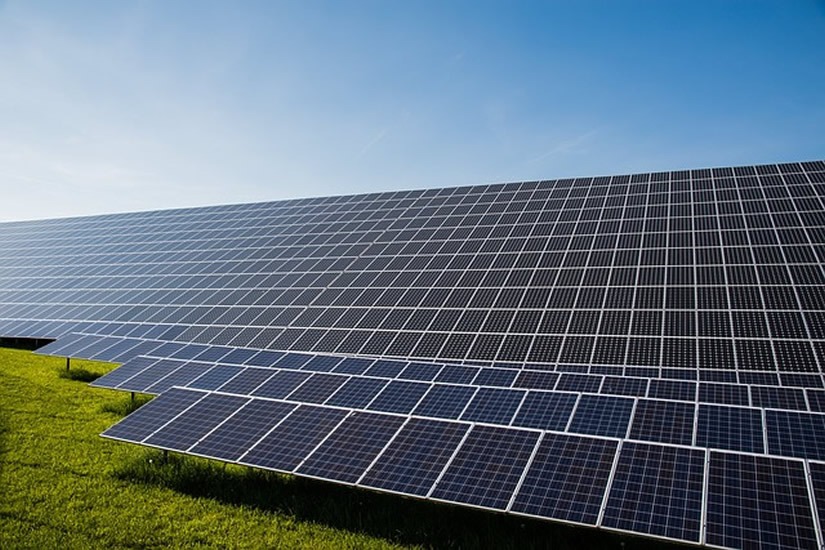
U.S. consumer demand for renewable energy continues to grow, with more solar panel capacity installed in 2024 than in 2023, which saw more than in 2022. But U.S. trade policy is in flux, and high tariffs have been imposed on imported solar panels, which may cause shortages.

I am a scholar who studies the Sun, as well as an entrepreneur who is working to harness its power here on Earth by creating new designs for generating solar electricity. As part of that effort, I’ve studied market trends and manufacturing capabilities in the U.S. and abroad. Right now, U.S. manufacturers do not produce enough solar panels to meet the nation’s demand, but industry investments and federal tax incentives have been making progress, though recent federal moves have created uncertainty.

In 2024, U.S. installers put up enough solar panels to generate 50 gigawatts of electricity – enough to power New York City for a year.

U.S. manufacturers made only a small fraction of that – 4.2 GW of solar modules in the first half of 2024. That was a big boost, though – a 75% increase compared with the same period in 2023. And the prices were roughly three times the cost of imports.

A look at recent imports

In 2024, the U.S. imported far more panels than the country needed, suggesting developers may be stockpiling panels for future projects.

Most of those imported panels were made in Asia, particularly Malaysia, Vietnam and Thailand. In fact, nearly all of the U.S.-made panels used at least some components from overseas. China currently makes about 97% of the world’s supply of photovoltaic wafers, which are building blocks of solar panels.

The effects of proposed U.S. trade policies on the solar industry remain unclear. Through 2024, manufacturing continued a yearslong ramp-up to take advantage of government policies favoring domestic manufacturing. And imported panels seem slated to suffer from ever-increasing tariffs, which drive up costs.

Domestic production rises

Since 2010, U.S. solar panel production has increased about eightfold. But U.S.-made panels are more expensive than imported alternatives. In 2024, U.S.-made panels typically cost 31 cents per watt, but imported panels, even including tariffs that existed before President Donald Trump’s second term, cost about one-third of that: 11 cents per watt.

But domestic manufacturers are bringing costs down by ramping up production while relying on the government to maintain or increase tariffs on imports, which may make U.S. panels more competitive domestically in the future.

Reliance on overseas sources

Despite that increase in domestic production, U.S. demand for solar panels has grown even faster. To meet demand, the U.S. imports a substantial portion of its solar photovoltaic modules.

Tariffs, including a 30% tariff on solar cells and solar panels starting in 2018, aimed to boost domestic manufacturing.

But those tariffs and falling global prices made solar installations more costly in the U.S. than in the rest of the world. The average global cost of installed solar systems dropped from $1.15 per watt in 2012 to $0.72 per watt in 2016, nearly half that of U.S. installations.

The 2018 tariffs, as well as earlier rounds in 2012 and 2014, have shifted the source of U.S. imports of solar panels – from China and Taiwan to Malaysia and South Korea. Manufacturers are also building solar panels in Singapore and Germany to maintain access to the U.S. market. And Chinese companies are even investing in U.S. solar manufacturers to take advantage of federal incentives and avoid tariffs.

New tariffs emerge

Trump’s proposal for new tariffs on foreign-made solar goods, including panels and components, particularly target Chinese-owned companies in Southeast Asia.

They could include a potential 375% tariff on Thai products – nearly quadrupling prices – and a 3,500% tariff on products from Cambodia.

In contrast, U.S.-made solar panels will be cheaper. But a reduced supply of solar panels will raise prices even of domestic-made panels, at least until U.S. manufacturing can catch up with the demand. Some developers have begun to delay or cancel solar installations to address rising costs.

Domestic investment

Due in large part to the Biden administration’s Inflation Reduction Act, enacted in 2022, the U.S. solar panel industry has seen significant investments.

Since the law’s enactment, more than 95 GW of manufacturing capability have been added across the solar supply chain in the U.S., including new facilities that in a year can construct enough solar panels to produce nearly 42 GW, beyond existing manufacturing levels. This growth in manufacturing capabilities is largely located in Texas and Georgia.

Still, the new administration’s shifting priorities and trade policies make the landscape uncertain. Before Trump began discussing various solar-related trade policies, the industry projected it would install an average of 45 GW of solar panels every year for the next decade.The Conversation

About the Author:

Mojtaba Akhavan-Tafti, Associate Research Scientist, University of Michigan

This article is republished from The Conversation under a Creative Commons license. Read the original article.


Speculator Extremes: Brent, Wheat lead weekly Bullish & Bearish Positions

By InvestMacro

The latest update for the weekly Commitment of Traders (COT) report was released by the Commodity Futures Trading Commission (CFTC) on Friday for data ending on May 13th.

This weekly Extreme Positions report highlights the Most Bullish and Most Bearish Positions for the speculator category. Extreme positioning in these markets can foreshadow strong moves in the underlying market.

To signify an extreme position, we use the Strength Index (also known as the COT Index) of each instrument, a common method of measuring COT data. The Strength Index is simply a comparison of current trader positions against the range of positions over the previous 3 years. We use over 80 percent as extremely bullish and under 20 percent as extremely bearish. (Compare Strength Index scores across all markets in the data table or cot leaders table)


Extreme Bullish Speculator Table


Here Are This Week’s Most Bullish Speculator Positions:

Brent Oil

Extreme Bullish Leader
The Brent Oil speculator position comes in as the most bullish extreme standing this week as the Brent speculator level is currently at a 100 percent score (or maximum) of its 3-year range.

The six-week trend for the percent strength score totaled a rise of 14 points this week. The overall net speculator position was a total of 5,637 net contracts this week with a gain of 3,142 contract in the weekly speculator bets.


Speculators or Non-Commercials Notes:

Speculators, classified as non-commercial traders by the CFTC, are made up of large commodity funds, hedge funds and other significant for-profit participants. The Specs are generally regarded as trend-followers in their behavior towards price action – net speculator bets and prices tend to go in the same directions. These traders often look to buy when prices are rising and sell when prices are falling. To illustrate this point, many times speculator contracts can be found at their most extremes (bullish or bearish) when prices are also close to their highest or lowest levels.

These extreme levels can be dangerous for the large speculators as the trade is most crowded, there is less trading ammunition still sitting on the sidelines to push the trend further and prices have moved a significant distance. When the trend becomes exhausted, some speculators take profits while others look to also exit positions when prices fail to continue in the same direction. This process usually plays out over many months to years and can ultimately create a reverse effect where prices start to fall and speculators start a process of selling when prices are falling.


Japanese Yen

Extreme Bullish Leader
The Japanese Yen speculator position comes next in the extreme standings this week. The JPY speculator level is now at a 98 percent score of its 3-year range.

The six-week trend for the percent strength score was a gain by 14 points this week. The speculator position registered 172,268 net contracts this week with a weekly decline of -4,591 contracts in speculator bets.


VIX

Extreme Bullish Leader
The VIX speculator position comes in third this week in the extreme standings. The VIX speculator level resides at a 96 percent score of its 3-year range.

The six-week trend for the speculator strength score came in at 14 this week. The overall speculator position was 6,099 net contracts this week with a drop of -4,844 contracts in the weekly speculator bets.


Nikkei 225

Extreme Bullish Leader
The Nikkei 225 speculator position comes up number four in the extreme standings this week. The Nikkei 225 speculator level is at a 96 percent score of its 3-year range.

The six-week trend for the speculator strength score totaled a boost by 35 points this week. The overall speculator position was 1,904 net contracts this week with a rise by 2,025 contracts in the speculator bets.


Brazil Real

Extreme Bullish Leader
The Brazil Real speculator position rounds out the top five in this week’s bullish extreme standings. The BRL speculator level sits at a 80 percent score of its 3-year range. The six-week trend for the speculator strength score was 5 this week.

The speculator position was 43,515 net contracts this week with a jump by 18,554 contracts in the weekly speculator bets.


Extreme Bearish Speculator Table


This Week’s Most Bearish Speculator Positions:

Wheat

Extreme Bearish Leader
The Wheat speculator position comes in as the most bearish extreme standing this week. The Wheat speculator level is at a 0 percent score of its 3-year range.

The six-week trend for the speculator strength score was -11 points this week. The overall speculator position was -118,100 net contracts this week with a decrease by -10,563 contracts in the speculator bets.


5-Year Bond

Extreme Bearish Leader
The 5-Year Bond speculator position comes in next for the most bearish extreme standing on the week. The 5-Year speculator level is at a 5 percent score of its 3-year range.

The six-week trend for the speculator strength score was -7 points this week. The speculator position was -2,180,043 net contracts this week with a rise of 116,453 contracts in the weekly speculator bets.


Heating Oil

Extreme Bearish Leader
The Heating Oil speculator position comes in as third most bearish extreme standing of the week. The Heating Oil speculator level resides at a 5 percent score of its 3-year range.

The six-week trend for the speculator strength score was -25 points this week. The overall speculator position was -29,396 net contracts this week with an increase of 2,214 contracts in the speculator bets.


US Dollar Index

Extreme Bearish Leader
The US Dollar Index speculator position comes in as this week’s fourth most bearish extreme standing. The USD Index speculator level is at a 5 percent score of its 3-year range.

The six-week trend for the speculator strength score was -16 points this week. The speculator position was -615 net contracts this week with an advance by 493 contracts in the weekly speculator bets.


2-Year Bond

Extreme Bearish Leader
Finally, the 2-Year Bond speculator position comes in as the fifth most bearish extreme standing for this week. The 2-Year speculator level is at a 18 percent score of its 3-year range.

The six-week trend for the speculator strength score was 0 this week. The speculator position was -1,222,232 net contracts this week with a dip by -1,439 contracts in the weekly speculator bets.


Article By InvestMacroReceive our weekly COT Newsletter

*COT Report: The COT data, released weekly to the public each Friday, is updated through the most recent Tuesday (data is 3 days old) and shows a quick view of how large speculators or non-commercials (for-profit traders) were positioned in the futures markets.

The CFTC categorizes trader positions according to commercial hedgers (traders who use futures contracts for hedging as part of the business), non-commercials (large traders who speculate to realize trading profits) and nonreportable traders (usually small traders/speculators) as well as their open interest (contracts open in the market at time of reporting). See CFTC criteria here.

Utilities choosing coal, solar, nuclear or other power sources have a lot to consider, beyond just cost

By Erin Baker, UMass Amherst and Paola Pimentel Furlanetto, UMass Amherst 

The Trump administration is working to lift regulations on coal-fired power plants in the hopes of making its energy less expensive. But while cost is one important aspect, utilities have a lot more to consider when they choose their power sources.

Different technologies play different roles in the power system. Some sources, like nuclear energy, are reliable but inflexible. Other sources, like oil, are flexible but expensive and polluting.

How utilities choose which power source to invest in depends in large part on two key aspects: price and reliability.

Power prices

One way to compare power sources is by their levelized cost of electricity. This shows how much it costs to produce one unit of electricity on average over the life of the generator.

The asset management firm Lazard has produced levelized cost of electricity calculations for the major U.S. electricity sources annually for years, and it has tracked a sharp decline in solar power costs in particular.

Coal is one of the more expensive technologies for utilities today, making it less competitive compared with solar, wind and natural gas, by Lazard’s calculations. Only nuclear, offshore wind and “peaker” plants, which are used only during periods of high electricity demand, are more expensive.

Land-based wind and solar power have the lowest estimated costs, far below what consumers are paying for electricity today. The National Renewable Energy Lab has found similar levelized costs for renewable energy, though its estimates for nuclear are lower than Lazard’s.

Upfront costs are also important and can make the difference for whether new power projects can be built, as the East Coast has seen lately.

Several offshore wind farms planned along the Northeast were canceled in recent years as costs rose due to inflation and supply chain problems during the pandemic. Construction costs for the two newest nuclear generators built in the U.S. also rose considerably as the projects, both in the Southeast, faced delays.

Reliability and flexibility matter

But cost is not the whole story. Utilities must balance a number of criteria when investing in power sources.

Most important is matching supply and demand at every moment of the day. Due to the technical characteristics of electricity and how it flows, if the supply of electricity is even a little bit lower than the demand, that can trigger a blackout. This means power companies and consumers need generation that can ramp down when demand is low and ramp up when demand is high.

Since wind and solar generation depend on the wind blowing and the sun shining, these sources must be combined with other types of generation or with storage, such as batteries, to ensure the power grid has exactly as much power as it needs at all times.

Nuclear and coal are predictable and run reliably, but they are inflexible – they take time to ramp up and down, and doing so is expensive. Steam turbines are simply not built for flexibility. The multiple days it took to shut down Japan’s Fukushima Daiichi Nuclear Power Plant after an earthquake and tsunami damaged its backup power sources in 2011 illustrated the challenges and safety issues related to ramping down nuclear plants.

That means coal and nuclear aren’t as helpful on those hot summer days when utilities need a quick power increase to keep air conditioners running. These peaks may only happen a few days a year, but keeping the power on is crucial for human health and the economy.

In today’s energy system, the most flexible generation sources are natural gas and hydro. They can quickly adjust to meet changing electricity demand without the safety and cost concerns of coal and nuclear. Hydro can ramp in minutes but can only be built where large dams are feasible. The most cost-effective natural gas technology can ramp up within hours.

The big picture, by power source

Over the past two decades, natural gas use has risen quickly to overtake coal as the most common fuel for generating electricity in the U.S. The boom was largely driven by the growing use of fracking technology, which allowed producers to extract gas from rock and lowered the price.

Natural gas’s low price and high flexibility make it an attractive choice. Its rise is a large part of the reason coal use has plummeted.

But natural gas has its challenges. Natural gas requires pipelines to carry it across the country, leading to disruptive construction. As Texas saw during its February 2021 blackouts, natural gas equipment can also fail in extreme cold. And like coal, natural gas is a fossil fuel that releases greenhouse gases during combustion, so it is also helping to cause climate change and contributes to air pollution that can harm human health.

Nuclear power has been gaining interest recently since it does not contribute to climate change or local air pollution. It also provides a steady baseload of power, which is useful for computing centers as their demand does not fluctuate as much as households.

Of course, nuclear has ongoing challenges around the storage of radioactive waste and security concerns, and construction of large nuclear plants takes many years.

Coal is more flexible than nuclear, but far less so than natural gas or hydropower. Most concerning, coal is extremely dirty, emitting more climate-change-causing gases, and far more air pollution than natural gas.

Solar and wind have grown rapidly in recent years due to their falling costs and environmental benefits. According to Lazard, the cost of solar combined with batteries, which would be as flexible as hydropower, is well below the cost of coal with its limited flexibility.

However, wind and solar tend to take up a lot of space, which has led to challenges in local approvals for new sites and transmission lines. In addition, the sheer number of new projects is overwhelming power system operators’ ability to evaluate them, leading to increasing wait times for new generation to come online.

What’s ahead?

Utilities have another consideration: Federal, state and local governments can also influence and sometimes limit utilities’ choices. Tariffs, for example, can increase the cost of critical components for new construction. Permitting and regulations can slow down development. Subsidies can artificially lower costs.

In our view, policies that are done right can help utilities move toward more reliable and cost-effective choices which are also cleaner. Done wrong, they can be costly to the economy and the environment.The Conversation

About the Author:

Erin Baker, Distinguished Professor of Industrial Engineering and Faculty Director of The Energy Transition Institute, UMass Amherst and Paola Pimentel Furlanetto, Ph.D. candidate in Industrial Engineering and Operations Research, UMass Amherst

This article is republished from The Conversation under a Creative Commons license. Read the original article.


Week Ahead: Crude caught in crosswinds ahead of OPEC+ showdown

By ForexTime 

  • Crude ends April ↓ 18.6%
  • OPEC+ expected to sign off another supply hike
  • Positive US-China trade may support oil bulls
  • Fed decision sparked moves of ↑ 0.4% & ↓ 0.9% over past year
  • Technical levels: $65, $60 & $55

As the countdown draws closer to the key US jobs report this afternoon (Friday, 2nd May), markets are bracing for more volatility in the week ahead.

An influx of high-impact data, risk events and key central bank decisions could present fresh trading opportunities:

Saturday, 3rd May 

  • AUD: Australia general election

Sunday, 4th May 

  • Asian Development Bank annual meeting

Monday, 5th May 

  • UK markets closed for Bank holiday
  • OIL: OPEC+ meeting on production levels
  • USDInd: US ISM services

Tuesday, 6th May 

  • AUD: Australia building approvals
  • CN50: China Caixin services PMI
  • EUR: Eurozone HCOB services PMI, PPI
  • US500: US Treasury Secretary Scott Bessent testimony

Wednesday, 7th May

  • CNY: China forex reserves
  • EUR: Eurozone retail sales
  • GER40: Germany factory orders
  • TWN: Taiwan CPI
  • US500: US Fed rate decision

Thursday, 8th May

  • GER40: Germany industrial production
  • ZAR: South Africa manufacturing production
  • UK100: BOE rate decision
  • SEK: Sweden rate decision
  • RUS200: US jobless claims

Friday, 9th May

  • CN50: China trade
  • JP225: Japan household spending, cash earnings
  • CAD: Canada employment
  • USDInd: Fed governors Lisa Cook, Christopher Waller, St. Louis Fed President Alberto Musalem, Cleveland Fed President Beth Hammack, Chicago Fed President Austan Goolsbee speech

Our focus lands on oil benchmarks which have shed over 17% year-to-date amid global recession fears and oversupply worries.

Imagen
Crude oil

Crude prices have recently rebounded on easing trade tensions and new sanctions on Iran. However, the global commodity is still headed for a weekly loss of more than 6%.

And things could spice up further in the week ahead. Here are 4 reasons why:


1) OPEC+ meeting on production levels

On Monday 5th May, OPEC+ will meet to decide the supply policy for June. 

Earlier in April, Saudi Arabia shocked markets by pushing OPEC+ for faster output increases in May after Kazakhstan and Iraq produced well above quotas.

Markets expect the cartel to sign off on another supply surge to punish over-producing members.

But most importantly, infighting within the cartel and overproduction could be a recipe for disaster for oil, especially if it leads to a “free-for-all” where members pump at will.

  • Oil prices may tumble if OPEC+ pushes for faster production hikes with any signs of internal instability fuelling downside pressures.
  • Should OPEC+ surprise by slowing down or pausing output hikes, this could boost oil prices as oversupply fears cool.


2) US-China trade talks

Market sentiment has received a boost after China said it’s evaluating trade talks with the United States. This comes after weeks of conflicting reports and uncertainty around US-China trade talks.

If this soothes tensions and opens the doors to concrete negotiations, this could cool concerns about a global recession. 

  • More positive progress with US-China trade talks may support oil prices as investors become more hopeful about the demand outlook.
  • Should the talks lead to more uncertainty or result in renewed tensions, oil prices may take a hit.


3) Fed rate decision

The Fed is widely expected to leave interest rates unchanged at its May meeting, but all eyes will be on Fed Chair Jerome Powell’s press conference.

Friday’s incoming US jobs report along with developments on the trade front, may influence what tone Powell strikes on Wednesday 7th May. 

Traders are currently pricing in 3 rate cuts in 2025 with the probability of a 4th one by December at 67%. Any major shifts to these expectations may influence oil prices. 

  1. Lower interest rates could stimulate economic growth, which fuels oil demand.
  2. Lower interest rates may also lead to a weaker dollar, boosting oil which is priced in dollars.

The same can be said vice versa.

  • If Powell strikes a hawkish note and the dollar appreciates, oil prices may slip. 
  • If Powell sounds more dovish and signals faster rate cuts, oil prices may jump. 


Over the past 12 months, the Fed rate decision has triggered upside moves on CRUDE of as much as 0.4% or declines of 0.9% in a 6-hour window post-release.


4) Technical forces

Crude is under pressure on the daily charts with prices trading below the 50, 100 and 200-day SMA. However, the Relative Strength Index (RSI) is close to 30, signalling that prices are oversold.

  • A solid breakout and daily close above $60 may pave a path toward the 50-day SMA near $65.00 and potentially the 100-day SMA $68.80 in the medium to longer term.
  •  Should $60 prove to be a tough resistance, prices may slip back towards $55 and levels not seen since January 2021 at $51.50. 


Imagen
crude d3

Note: This chart was created before the release of the US NFP report on Friday 2nd May. 


Forex-Time-LogoArticle by ForexTime

ForexTime Ltd (FXTM) is an award winning international online forex broker regulated by CySEC 185/12 www.forextime.com

Drilling down: Key factors that could impact oil prices this week

By ForexTime 

  • Oil prices ↑ almost 2% this week
  • Russian/Iran supply concerns overshadow Trump’s tariff
  • EIA, OPEC and IEA monthly oil market reports in focus
  • Brent: US CPI sparked moves of ↑ 1.9% & ↓ 1.2% over past year
  • Technical levels: 200-day SMA, $76.00 and $74.00

Oil benchmarks are up almost 2% this week as tighter Russian crude supply overshadowed fears around Trump’s expanding tariffs.

Data from Russia revealed that production in January slipped below the nation’s OPEC+ quota. This adds to the rising concerns over supply following US sanctions on Iran’s oil exports.

Mounting geopolitical tensions in the Middle East amid Trump’s involvement could compound supply fears, fuelling oil’s upside gains.

Brent has climbed above $76.00, while WTI crude is trading at $73 as of writing.

Despite the recent rebound, Trump’s tariff drama could create obstacles down the road.

Trump recently imposed 25% tariffs on US steel and aluminium imports, scheduled to take effect on March 12.

He also plans to slap reciprocal tariffs sometime this week that will affect ‘everyone’.

Higher tariffs could threaten global growth, hitting demand for oil and resulting in lower prices. This uncertainty may force OPEC+ to delay increasing production beyond April 2025.

Regarding the week ahead, oil could be rocked by a cocktail of high-risk events.

Three of the most influential oil forecasters – EIA, OPEC and EIA will publish their latest monthly market outlooks. Fed Chair Jerome Powell’s 2-day testimony and the latest US CPI could inject oil prices with additional volatility.

Here is what you need to know:


    1) Oil monthly market outlooks

The Energy Information Administration (EIA) is scheduled to publish its monthly oil market on Tuesday afternoon.

On Wednesday, OPEC will publish its latest oil market report and on Thursday the International Energy Agency (IEA) releases its own.

Any fresh insight into the outlook for oil markets and demand forecasts among other themes may move Brent/Crude prices.


    2) Powell’s 2-day testimony & US CPI

As highlighted in our week ahead report, Powell’s testimony and the US CPI data may influence Fed cut bets.

Lower US interest rates could stimulate economic growth, fueling oil demand. Lower rates may also weaken the dollar, boosting oil which is priced in dollars. The same is true vice versa.

Over the past 12 months, the US CPI has triggered upside moves on Brent of as much as 1.9% or declines of 1.2% in a 6-hour window post-release.


    3) Technical forces

Brent has staged a solid rebound from $74 with prices trading above the 50 and 100-day SMA.

  • A solid daily close above $76 could encourage a move toward the 200-day SMA at $77.50 and $78.40.
  • Should prices slip back below $76, bears may target the 50-day and 100-day SMA before retesting $74.

Brent


Forex-Time-LogoArticle by ForexTime

ForexTime Ltd (FXTM) is an award winning international online forex broker regulated by CySEC 185/12 www.forextime.com

Oil down 4 consecutive sessions since Trump’s inauguration. Natural gas prices rise again due to cold weather

By JustMarkets

The Dow Jones Index (US30) was up 0.30% at Wednesday’s close. The S&P 500 Index (US500) was up 0.61%. The Nasdaq Technology Index (US100) added 1.33%. US stocks closed solidly higher yesterday, helped by strong earnings and promising corporate developments while markets assessed the implications of President Trump’s policy changes. Netflix rose by 9.7% after reporting a record increase in new subscribers. Additionally, Procter & Gamble shares added 1.9% on strong quarterly results. Oracle increased by 6.7%, delivering a nearly 20% weekly gain after announcing a joint venture with SoftBank and OpenAI related to a $500 billion artificial intelligence investment initiative. Nvidia rose by 4.4% and Microsoft added 4.1%, joining the broader technology rally.

Equity markets in Europe were mostly up on Wednesday. Germany’s DAX (DE40) rose by 1.01%, France’s CAC 40 (FR40) closed higher by 0.86%, Spain’s IBEX 35 (ES35) fell by 0.37%, and the UK’s FTSE 100 (UK100) closed negative 0.04%. On Wednesday, the DAX Index closed above a new record high of 21,259, posting its eighth consecutive session of gains and outperforming its European peers. The index was boosted by strong earnings from Adidas and optimism about large-scale investments in artificial intelligence. In Davos, ECB President Christine Lagarde warned Europe to anticipate possible changes in US trade policy, including selective tariffs under President Trump. She advocated economic reforms, supported the ECB’s cautious approach to lowering interest rates and cited energy prices as the main inflationary problem.

WTI crude prices fell to as low as $75 a barrel on Thursday, retreating for a fifth straight session after an industry report showed a new rise in US crude inventories. API data showed a 1 million barrel increase in crude inventories last week, the first rise after five weeks of declines. Traders also continued to assess the potential impact on energy markets of President Trump’s proposed tariffs on China, the European Union, Canada and Mexico, as well as warnings of sanctions on Russia if President Putin does not work to end the war in Ukraine.

The US natural gas (XNG/USD) prices rose to $3.9/MMBtu as cold temperatures led to record demand. On January  21, the coldest day in five years, heating demand surged, pushing spot gas and electricity prices to multi-year highs. Analysts expect energy companies to draw more than 200 billion cubic feet of gas from storage for two consecutive weeks, reversing a small inventory surplus compared with the five-year average.

South African inflation rose slightly to 3% in December 2024, up from 2.9% in November, but below the 3.2% projection. This rate remains well below the Reserve Bank of South Africa’s preferred average target of 4.5%. Core inflation, which excludes volatile categories such as food, soft drinks, fuel and energy, fell to 3.6% in December 2024, the lowest since February 2022, down from 3.7% in November.

Asian markets traded without a single dynamic yesterday. Japan’s Nikkei 225 (JP225) added 1.58%, China’s FTSE China A50 (CHA50) was down 1.48%, Hong Kong’s Hang Seng (HK50) was down 1.63%, and Australia’s ASX 200 (AU200) was positive 0.33%.

Singapore’s annualized inflation rate for December 2024 was 1.6%, unchanged from the previous month and above market expectations of 1.5%. Meanwhile, the annual core inflation rate fell to 1.8%, the lowest in three years, down from a 1.9% rise in November but above market estimates of a 1.7% rise.

S&P 500 (US500) 6,086.37 +37.13 (+0.61%)

Dow Jones (US30) 44,156.73 +130.92 (+0.30%)

DAX (DE40) 21,254.27 +212.27 (+1.01%)

FTSE 100 (UK100) 8,545.13 +3.16 (+0.04%)

USD Index 108.25 (+0.17%)

News feed for: 2025.01.23

  • Japan Trade Balance (m/m) at 01:50 (GMT+2);
  • Singapore Inflation Rate at 07:00 (GMT+2);
  • Norway Norges Bank Interest Rate Decision at 11:00 (GMT+2);
  • Canada Retail Sales (m/m) at 15:30 (GMT+2);
  • US Natural Gas Storage (w/w) at 17:30 (GMT+2);
  • US Crude Oil Reserves (w/w) at 18:00 (GMT+2);
  • World Economic Forum Annual Meeting (Day 4).

By JustMarkets


This article reflects a personal opinion and should not be interpreted as an investment advice, and/or offer, and/or a persistent request for carrying out financial transactions, and/or a guarantee, and/or a forecast of future events.