Oil is rising as inventories decline. The Bank of Indonesia unexpectedly cut its key interest rate

By JustMarkets 

The Dow Jones Industrial Average (US30) rose by 0.04% on Wednesday. The S&P 500 (US500) fell by 0.24%. The Nasdaq (US100) closed down 0.67%. In the July FOMC meeting minutes, almost all officials supported keeping the rate at the current 4.25–4.50%, with only Michelle Bowman and Christopher Waller speaking in favor of a quarter-point rate cut to protect the weakening labor market. Their concerns were heightened after data from the Department of Labor showed lower-than-expected July employment figures, a higher unemployment rate, and a sharp downward revision of previous job gain numbers, which prompted Trump to fire the head of the Bureau of Labor Statistics. Markets believe there is an 85% probability of a September rate cut, with a speech from Powell at Jackson Hole on Friday expected to clarify his position.

European stock markets were mostly down yesterday. Germany’s DAX (DE40) fell by 0.60%, France’s CAC 40 (FR40) closed down 0.08%, Spain’s IBEX35 (ES35) fell by 0.08%, and the UK’s FTSE 100 (UK100) closed up 1.08%. The Eurozone’s annual inflation rate in July 2025 remained unchanged from the previous month at 2%, matching the flash estimate and staying slightly above the market’s initial expectation of 1.9%. This is the second consecutive month that inflation has matched the European Central Bank’s official target. The rise in service prices slowed (3.2% vs 3.3% in June), hitting a three-year low since May and offsetting acceleration in most other areas of the bloc’s consumer basket. Meanwhile, core inflation, which excludes energy, food, alcohol, and tobacco, remained unchanged at 2.3%, the lowest level since January 2022.

In August 2025, the Swedish Riksbank kept its policy rate at 2% as expected, as inflation rose more than anticipated. The growth of real wages, previous rate cuts, and an increase in business confidence are creating some conditions for economic recovery, albeit at a slow pace. Given these conditions, the Central Bank decided to leave rates unchanged, maintaining its June assessment that the outlook is broadly unchanged and leaving the door open for further rate cuts this year if inflation subsides and economic weakness persists.

WTI crude oil prices rose by 1.4% to $63.2 per barrel on Wednesday after a weekly report from the Energy Information Administration showed a 6 million-barrel decrease in US crude inventories, providing moderate support for prices. Despite the overall decline, inventories in Cushing, Oklahoma, rose for the seventh consecutive week to 23.5 million barrels, reflecting a sharp increase in supplies from the Permian Basin. Analysts noted that while the inventory decline is a “bullish” factor in the short term, the long-term outlook remains “bearish” due to an anticipated increase in OPEC+ supply and demand concerns. Futures have fallen more than 10% this year, reflecting ongoing market uncertainty.

Asian markets were mostly up yesterday. Japan’s Nikkei 225 (JP225) fell by 1.51%, China’s FTSE China A50 (CHA50) rose by 1.03%, Hong Kong’s Hang Seng (HK50) rose by 0.17%, and Australia’s ASX 200 (AU200) showed a positive result of 0.25%.

On Thursday, the Australian dollar fell to $0.642, marking its fourth consecutive session of decline and remaining at its lowest level in three weeks following the release of the latest economic data. Australia’s private sector grew at its fastest pace since April 2022, with the composite PMI rising to 54.9 in August, driven by strong expansion in services (55.1 vs 54.1 in July) and manufacturing (52.9 vs 51.3), fueled by a significant increase in new orders and an expanding client base. Meanwhile, consumer inflation expectations fell for the second consecutive month, decreasing to 3.9% in August 2025 from 4.7% in July, the lowest level since March.

The Bank of Indonesia unexpectedly cut its key interest rate by 25 bps to 5.0% at its August 2025 policy meeting, following a 25 bps cut in the previous month and contrary to market expectations of leaving rates unchanged. This was the fifth rate cut since last September, bringing the key rate to its lowest level since October 2022. The decision reflects projections that inflation in 2025–2026 will remain within the Central Bank’s target range of 2.5 plus-minus 1%, a stable rupiah exchange rate, and ongoing efforts to support economic growth. The latest data showed that Q2 GDP grew by 5.12% y/y, the highest figure in the last two years. Meanwhile, annual inflation rose to 2.37% in July from 1.87% in June, a yearly high, but still within the Central Bank’s target range.

S&P 500 (US500) 6,395.78 −15.59 (−0.24%)

Dow Jones (US30) 44,938.31 +16.04 (+0.04%)

DAX (DE40) 24,276.97 −146.10 (−0.60%)

FTSE 100 (UK100) 9,288.14 +98.92 (+1.08%)

USD Index 98.25 −0.01 (−0.01%)

News feed for: 2025.08.21

  • New Zealand Trade Balance (q/q) at 01:45 (GMT+3);
  • Australia Manufacturing PMI (m/m) at 02:00 (GMT+3);
  • Australia Services PMI (m/m) at 02:00 (GMT+3);
  • Japan Manufacturing PMI (m/m) at 03:30 (GMT+3);
  • Japan Services PMI (m/m) at 03:30 (GMT+3);
  • German Manufacturing PMI (m/m) at 10:30 (GMT+3);
  • German Services PMI (m/m) at 10:30 (GMT+3);
  • Eurozone Manufacturing PMI (m/m) at 11:00 (GMT+3);
  • Eurozone Services PMI (m/m) at 11:00 (GMT+3);
  • UK Manufacturing PMI (m/m) at 11:30 (GMT+3);
  • UK Services PMI (m/m) at 11:30 (GMT+3);
  • US Initial Jobless Claims (w/w) at 15:30 (GMT+3);
  • US Manufacturing PMI (m/m) at 16:45 (GMT+3);
  • US Services PMI (m/m) at 16:45 (GMT+3);
  • US Existing Home Sales (m/m) at 17:00 (GMT+3);
  • US Natural Gas Storage (w/w) at 17:30 (GMT+3);
  • Jackson Hole Symposium (Day 1).

By JustMarkets


This article reflects a personal opinion and should not be interpreted as an investment advice, and/or offer, and/or a persistent request for carrying out financial transactions, and/or a guarantee, and/or a forecast of future events.

EUR/USD Volatility Rises, But Fails to Drive Direction

By RoboForex Analytical Department

On Thursday, the EUR/USD pair is trading around 1.1646, consolidating after the previous session’s volatility. The market is stabilising following the recent US dollar rally, driven by expectations ahead of the Federal Reserve’s annual symposium in Jackson Hole. Investors remain cautious before Fed Chair Jerome Powell’s speech, seeking clarity on interest rate prospects and any potential adjustments to expectations of rapid monetary easing.

Futures currently assign an 82% probability of a 25-basis-point rate cut in September, down from last week’s 94%. The minutes of the July Fed meeting revealed that policymakers remain more concerned with inflation risks than labour market conditions. Tariffs, however, continue to divide opinion among officials.

In Washington, US President Donald Trump urged Fed Board Member Lisa Cook to resign amid allegations of mortgage fraud and reiterated his demand for lower interest rates. With Powell’s term expiring in May, Trump is actively considering potential successors. As expected, Treasury Secretary Scott Bessent once again advocated for a more aggressive 50-basis-point cut in September.

Technical analysis of EUR/USD

On the H4 chart, the market is consolidating around 1.1656. A downward breakout is anticipated, targeting 1.1597, with the potential for further decline to 1.1582. The first target in the next downward wave is set at 1.1455. This scenario is technically supported by the MACD indicator, whose signal line lies below zero and is pointing sharply downwards, indicating strong bearish pressure.

On the H1 chart, the pair completed a downward wave to 1.1622, followed by a correction to 1.1670, effectively defining the consolidation range. A downward breakout towards 1.1597 is possible today, followed by a rebound to 1.1645. Beyond this, the pair may resume a decline to 1.1455, with the wave potentially extending to 1.1430. The Stochastic oscillator confirms this bearish scenario: its signal line is below the 50 level and is trending sharply towards 20, signalling continued downside momentum.

Summary

The EUR/USD pair remains directionless despite heightened volatility as traders await Powell’s speech at Jackson Hole. Technical signals point to a continuation of the bearish trend, with key downside levels at 1.1597 and 1.1455, while any rebounds are likely to remain short-lived corrections.


Disclaimer

Any forecasts contained herein are based on the author’s particular opinion. This analysis may not be treated as trading advice. RoboForex bears no responsibility for trading results based on trading recommendations and reviews contained herein.

Cleantech Co. Advances Innovative Systems for Data Centers

Source: Streetwise Reports (8/19/25)

Environmental and cleantech company BioLargo Inc. (BLGO:OTCQX) announces its financial results, including a huge increase in revenue in its engineering segment due to contracts to provide control compliance services.

Environmental and cleantech company BioLargo Inc. (BLGO:OTCQX) announced that new engineering contracts to provide air quality control compliance services has increased its engineering segment revenue by 517%.

However, due to decreased volume of sales of its pet odor product Poop, overall revenues fell to US$ 2.78 million in the second quarter of this year and US$6.046 million in the first half, the company said in a release on August 13.

The company had reported in its annual report that it had achieved record revenues in 2024, marking a 45% increase compared to the previous year, largely driven by the success of Pooph. For the year ending December 31, 2024, revenues reached US$17,779,000, reflecting a 45% increase over 2023 and marking the 10th consecutive year of revenue growth, according to the company.

“There are many important technologies and products in our portfolio that will have a major role in industry,” President and Chief Executive Officer Dennis P. Calvert said.

He continued, “Over the past few months and quarters, our team has done a tremendous job in progressing the overall value of the BioLargo portfolio … the unseen value is many multiples of our current US$50 million market cap, driven by our unmatched technologies, capital-conserving strategy, highly qualified people and high impact.”

“We are very optimistic with our emerging solutions surrounding surgical products, water treatment for the global PFAS contamination crisis and battery energy storage technology,” Calvert said. “Our team is focused on creating optimal partnerships to drive commercialization of these solutions across varying industries.”

Calvert noted that BioLargo’s investments in these technologies have yielded a suite of validated technical claims and product features that “we believe are unmatched in the marketplace.” This diversification strategy has proved “especially wise” as BioLargo advances its commercial efforts into high-growth opportunities like its Clyra and Cellinity technologies, Calvert has said.

According to the company, here are some of the other key highlights of the report:

  • Clyra Medical Technologies secured a series of sales and distribution agreements to make its products available to 6,100 hospitals, 6,300 ambulatory surgery centers, and 2,200 specialty wound care clinics in the U.S. alone.
  • An independent evaluation by U.S. BESS Corporation, a leading provider of advanced energy storage solutions, confirmed the breakthrough performance of BioLargo’s Cellinity battery technology for grid-scale energy storage.
  • Cellinity, our innovative battery technology, signed four memoranda of understanding (MOUs) with prospective joint venture partners interested in building and operating Cellinity battery factories.
  • Garratt Callahan, one of the company’s co-development technology partners, continued efforts in selling and business development, focusing on the reuse of cooling tower water, such as at data centers.
  • Engineering & Environmental Services is actively working with clients to develop scopes of work and budgets for several significant projects.
  • As of June 30, 2025, stockholders’ equity was $6,060,000, assets totaled $12,499,000, liabilities were $6,439,000, and the company held $3,471,000 in cash and cash equivalents.

Independent Evaluation Confirms Advantages of Cellinity

In June, BioLargo announced that an independent evaluation had confirmed the significant advantages of its Cellinity battery technology for grid-scale energy storage systems. The assessment was carried out by U.S. BESS Corp. is a leading provider of advanced energy storage solutions for critical infrastructure in utilities, defense, microgrids, and heavy industry, according to BioLargo.

“Based on our inspection and the evidence provided, U.S. BESS finds that the Cellinity Cell demonstrates a sufficient performance profile, with strong indications of high thermal stability, efficiency, energy and power density, and material sustainability, to suggest further investment in testing and commercialization,” the report stated. “These attributes position this technology as a potential solution for critical gaps in grid-scale energy storage markets.”

The senior technical team at U.S. BESS conducted a thorough review of Cellinity’s design and assembly processes, inspected the testing infrastructure, analyzed test data, and evaluated the methodologies used for performance characterization.

U.S. BESS Corp. further determined that it is reasonable to assert that: a) the cell would not undergo thermal runaway, b) the materials used in its construction are commonly available and can be sourced domestically, c) the cell does not incorporate rare earth elements, and d) the components of the cell are fully recyclable.

Analyst Maintains Rating, Price Target

In a July 23 research note, Oak Ridge Financial Analyst Richard Ryan noted, “BioLargo’s business model approach is to invent or acquire novel technologies, develop them into product offerings, and extend their commercial reach through licensing and channel partnerships to maximize their impact.”

This cleantech and life sciences innovator, according to the analyst, has several core products that address PFAS (also known as “forever chemicals” because of the time they take to break down) contamination, advanced water and wastewater treatment, odor and volatile organic compound control, air quality improvement, energy efficiency and safe onsite energy storage, and infection control. BioLargo remains a Buy, according to Ryan.

Ryan noted that in a letter to shareholders in July, Calvert noted that he believes Pooph will ultimately be successful. He added that it is difficult to forecast future Pooph results given the lack of visibility into the business and the short time (three years) its products have been on the market.

The Catalyst: More Energy for AI, Data Centers, and Grid Resilience

The global need for grid-scale energy storage is rapidly growing to support increasing demands. In 2024, the U.S. Energy Information Administration (EIA) noted a 66% rise in battery energy storage capacity in the U.S. While lithium-ion batteries currently lead this sector, they present several challenges, such as fire risks due to thermal runaway, efficiency loss over time, and sourcing difficulties related to rare and critical minerals.

BioLargo said its Cellinity battery technology tackles these issues by using innovative materials and designs to deliver exceptional thermal performance and operational efficiency without relying on rare earth elements.

According to a February report by the International Energy Agency (IEA), global electricity consumption is expected to grow at its fastest rate in recent years, increasing by nearly 4% annually through 2027 as power use rises across various sectors.

“The growth in global demand will be the equivalent of adding an amount greater than Japan’s annual electricity consumption every year between now and 2027,” the agency noted. This surge is largely driven by the robust use of electricity for industrial production, increased demand for air conditioning, accelerating electrification led by the transport sector, and the rapid expansion of data centers.

Streetwise Ownership Overview*

BioLargo Inc. (BLGO:OTCQX)

Retail: 85.36%
Insiders & Management: 14.6%
Institutions: 0.04%
85.4%
14.6%
*Share Structure as of 6/19/2025


In the United States, the total capacity for large-scale battery storage exceeded 26 gigawatts (GW) in 2024, as detailed in the EIA’s January 2025 Preliminary Monthly Electric Generator Inventory. That year, generators added 10.4 GW of battery storage capacity, marking the second-largest increase in generating capability after solar energy. Despite the rapid growth of battery storage, it accounted for just 2% of the total 1,230 GW of utility-scale electricity generation capacity in the country in 2024.

Looking forward to 2025, battery storage growth could potentially reach new heights, with operators planning to add 19.6 GW of large-scale battery storage to the electrical grid, as indicated in the January 2025 preliminary electric generator inventory data, the agency reported.

Ownership and Share Structure

About 14.6% of BioLargo is owned by insiders and management, according to Yahoo! Finance. They include Chief Science Officer Kenneth Code with 8.3%, CEO Calvert with 3.29%, and Director Jack Strommen with 1.6%, Refinitiv reported.

About 0.04% is held by the institution First American Trust, Refinitiv said.

The rest, about 85%, is retail.

Its market cap is US$56.12 million, with about 304.85 million shares outstanding and about 262.22 million free-floating. It trades in a 52-week range of US$0.32 and US$0.16.


Important Disclosures:

  1. BioLargo Inc. is a billboard sponsor of Streetwise Reports and pays SWR a monthly sponsorship fee between US$4,000 and US$5,000.
  2. As of the date of this article, officers and/or employees of Streetwise Reports LLC (including members of their household) own securities of BioLargo Inc.
  3. Steve Sobek wrote this article for Streetwise Reports LLC and provides services to Streetwise Reports as an employee.
  4. This article does not constitute investment advice and is not a solicitation for any investment. Streetwise Reports does not render general or specific investment advice and the information on Streetwise Reports should not be considered a recommendation to buy or sell any security. Each reader is encouraged to consult with his or her personal financial adviser and perform their own comprehensive investment research. By opening this page, each reader accepts and agrees to Streetwise Reports’ terms of use and full legal disclaimer. Streetwise Reports does not endorse or recommend the business, products, services or securities of any company.
  5. This article does not constitute medical advice. Officers, employees and contributors to Streetwise Reports are not licensed medical professionals. Readers should always contact their healthcare professionals for medical advice.

For additional disclosures, please click here.

RBNZ predictably cut rates. Investors are selling off risky assets ahead of the Jackson Hole Symposium

By JustMarkets

The Dow Jones Industrial Average (US30) finished Tuesday up 0.02%. The S&P 500 (US500) fell 0.59%, and the tech-heavy Nasdaq (US100) closed down 1.39%, hitting its lowest level in over two weeks amid a sharp drop in chipmakers. US stocks largely closed lower as losses in major tech companies weighed on the market. Nvidia fell by 3.5%, AMD was down 5.4%, Broadcom dropped 3.6%, and Palantir was the weakest performer in the S&P 500, plunging 9.3%. Intel bucked the trend, rising 7% after SoftBank announced a $2 billion investment, which fueled optimism about its turnaround. Investors are now focused on the Federal Reserve’s Jackson Hole Symposium, where Chair Jerome Powell’s speech on Friday could provide insight into the September policy meeting and the possibility of rate cuts.

The Canadian dollar weakened to 1.38 per US dollar, nearing its two-month low of 1.386 from July 31, as investors digested the latest inflation data. Headline inflation slowed to 1.7% in July, largely driven by lower gasoline prices, but the Bank of Canada’s core measures remained near the top of its target range. The trimmed mean measure, in particular, was stuck at 3.0% in July against expectations of 3.1%, which pushed the market toward a more dovish stance from the Central Bank. This was compounded by an unexpected loss of 41,000 jobs in July, far worse than the 13,500 analysts had projected, and an unchanged unemployment rate of 6.9%.

Bitcoin (BTC/USD) is trading around $113,000, holding most of its losses after a sharp sell-off that sent it to a six-week low. The decline reflects the correlation between digital assets and tech stocks, as investors moved away from growth-oriented assets ahead of the Fed’s Jackson Hole Symposium. The sell-off was further intensified by reports that the Securities and Exchange Commission is investigating potential stock fraud and manipulation at Alt5 Sigma, which fueled broader risk-off sentiment in speculative markets.

European stock markets gained yesterday. Germany’s DAX (DE40) rose by 0.45%, France’s CAC 40 (FR40) closed up 1.21%, Spain’s IBEX35 (ES35) gained 0.34%, and the UK’s FTSE 100 (UK100) closed positive 0.34%. On Tuesday, European equities closed sharply higher, reaching their highest level since March, on optimism about steps taken to end the war between Russia and Ukraine. On Monday, European leaders met with US and Ukrainian Presidents Trump and Zelenskyy in Washington and announced they would provide security guarantees to Ukraine if it began to end the war.

The US natural gas prices (XNG/USD) fell below $2.80 per MBtu, their lowest level since November 2024, pressured by near-record production and high storage levels. The average production in the Lower 48 states was 108.1 billion cubic feet per day in August, up from the record 107.9 billion cubic feet per day in July. The latest EIA data showed that storage inventories grew by 56 billion cubic feet for the week ending August 8, well above seasonal norms.

Asian markets were mostly lower yesterday. Japan’s Nikkei 225 (JP225) fell by 0.38%, China’s FTSE China A50 (CHA50) declined 0.28%, Hong Kong’s Hang Seng (HK50) dropped 0.21%, and Australia’s ASX 200 (AU200) ended the day down 0.70%.

The New Zealand dollar fell by more than 1% to $0.582 on Wednesday, reaching its lowest level since mid-April, after the Reserve Bank, as expected, cut interest rates and signaled that further easing was possible. The Central Bank lowered the Official Cash Rate by 25 basis points to a three-year low of 3%, bringing its easing cycle to 250 basis points, as policymakers sought to revive a struggling economy and protect it from risks related to US tariff policy. Following the announcement, markets quickly priced in two more rate cuts by the end of the year, setting a 50% probability for such a move in October and more than a 100% chance in November.

S&P 500 (US500) 6,411.37 −37.78 (−0.59%)

Dow Jones (US30) 44,922.27 +10.45 (+0.02%)

DAX (DE40) 24,423.07 +108.30 (+0.45%)

FTSE 100 (UK100) 9,189.22 +31.48 (+0.34%)

USD Index 98.26 +0.09 (+0.09%)

News feed for: 2025.08.20

  • Japan Trade Balance (m/m) at 02:50 (GMT+3);
  • China PBoC Loan Prime Rate at 04:15 (GMT+3);
  • New Zealand RBNZ Official Cash Rate at 05:00 (GMT+3);
  • New Zealand RBNZ Monetary Policy Statement at 05:00 (GMT+3);
  • UK Consumer Price Index (m/m) at 09:00 (GMT+3);
  • Sweden Riksbank Rate Decision at 10:30 (GMT+3);
  • Eurozone Consumer Price Index (m/m) at 12:00 (GMT+3);
  • US Crude Oil Reserves (w/w) at 17:30 (GMT+3);
  • US FOMC Meeting Minutes at 21:00 (GMT+3).

By JustMarkets


This article reflects a personal opinion and should not be interpreted as an investment advice, and/or offer, and/or a persistent request for carrying out financial transactions, and/or a guarantee, and/or a forecast of future events.

USDJPY declines: market unfazed by weak Japanese statistics

By RoboForex Analytical Department

On Wednesday, the USDJPY pair consolidated near 147.50, extending the previous session’s decline, despite weak Japanese foreign trade figures.

Exports dropped by 2.6% y/y in July, marking the steepest decline in over four years, largely due to pressure from US tariffs. Imports fell by 7.5%, the fourth drop since the beginning of the year. However, the data still came in better than expectations, which pointed to a 10.4% decline.

In contrast, equipment orders — a proxy for capital investment — rose unexpectedly in June, following two months of contraction, signalling some resilience in corporate spending.

Meanwhile, investors remain uncertain about the Bank of Japan’s future steps. Governor Kazuo Ueda maintains a cautious stance, highlighting that core inflation is still below the 2.0% target.

The yen has also seen temporary demand as a safe-haven asset, supporting its appreciation.

Technical analysis of USDJPY

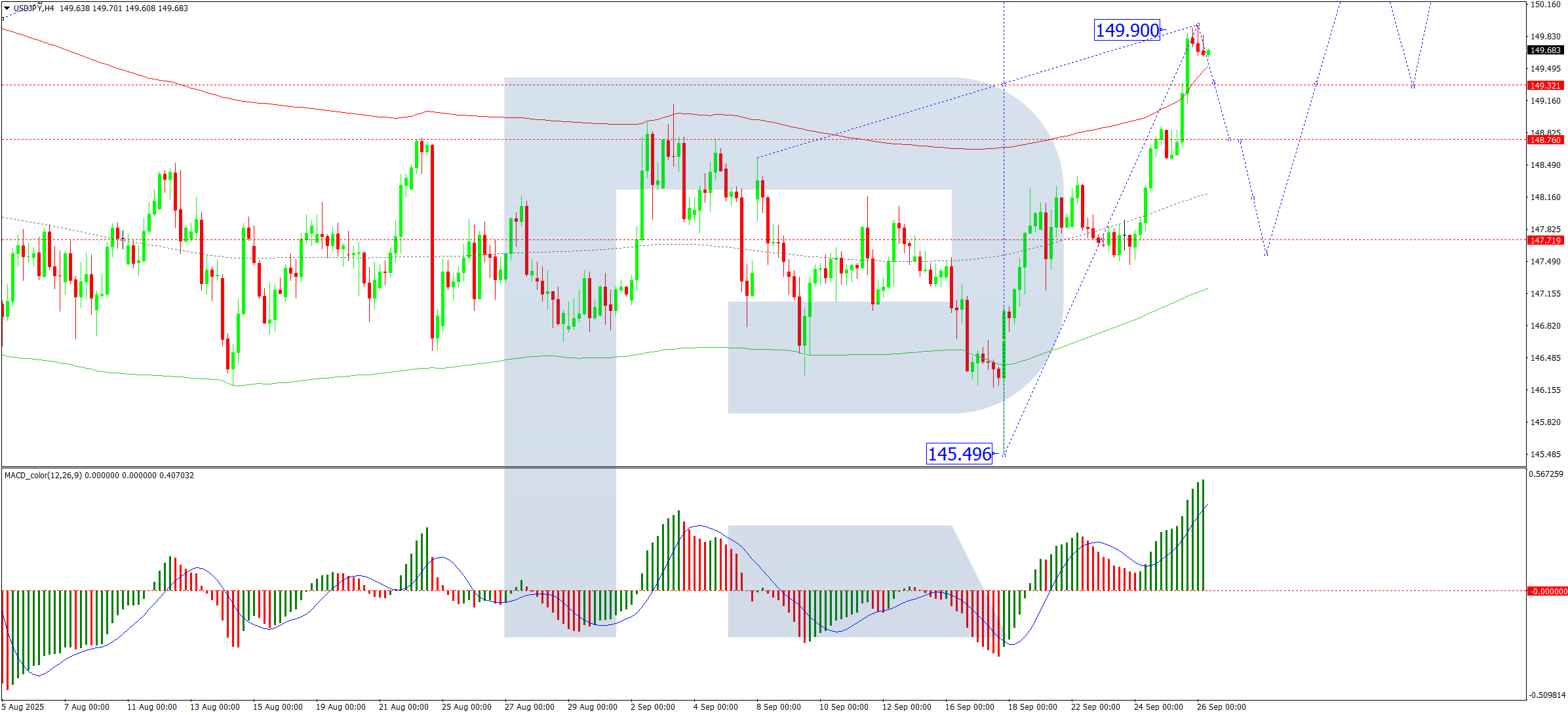
On the H4 USDJPY chart, the market continues to develop a downward wave towards 146.14. This level is expected to be reached today. A temporary rebound to 147.30 cannot be ruled out. Following that, we anticipate a further decline to 145.45, with the potential for the trend to extend to 144.30. The target remains local. This bearish scenario is technically supported by the MACD indicator, whose signal line is below zero and pointing strictly downwards, indicating ongoing downside momentum.

On the H1 chart, the market is shaping a downward wave structure towards 146.12. Today, we are considering a short-term move to 147.12, followed by a potential growth link to 147.60. After that, the market is likely to decline again to 146.60, and further to 146.12, continuing the bearish trend. The Stochastic oscillator confirms this view, with its signal line below the 50 level, directed sharply towards 20, reflecting a strong bearish bias.

Summary

Despite weak trade statistics, USDJPY is falling amid resilient investment data and growing demand for the yen as a safe-haven. Technical indicators point towards a continued downward trend, with key targets at 146.14, 145.45, and 144.30, while any rebounds are likely to remain temporary.


Disclaimer

Any forecasts contained herein are based on the author’s particular opinion. This analysis may not be treated as trading advice. RoboForex bears no responsibility for trading results based on trading recommendations and reviews contained herein.

We tracked illegal fishing in marine protected areas – satellites and AI show most bans are respected, and could help enforce future ones

By Jennifer Raynor, University of Wisconsin-Madison Marine protected areas cover more than 8% of the world’s oceans today, but they can get a bad rap as being protected on paper only.

While the name invokes safe havens for fish, whales and other sea life, these areas can be hard to monitor. High-profile violations, such as recent fishing fleet incursions near the Galapagos Islands and ships that “go dark” by turning off their tracking devices, have fueled concerns about just how much poaching is going undetected.

But some protected areas are successfully keeping illegal fishing out.

In a new global study using satellite technology that can track large ships even if they turn off their tracking systems, my colleagues and I found that marine protected areas where industrial fishing is fully banned are largely succeeding at preventing poaching.

What marine protected areas aim to save

Picture a sea turtle gliding by as striped butterfly fish weave through coral branches. Or the deep blue of the open ocean, where tuna flash like silver and seabirds wheel overhead.

These habitats, where fish and other marine life breed and feed, are the treasures that marine protected areas aim to protect.

The value of marine protected areas for people and nature.

A major threat to these ecosystems is industrial fishing.

These vessels can operate worldwide and stay at sea for years at a time with visits from refrigerated cargo ships that ferry their catch to port. China has an extensive global fleet of ships that operate as far away as the coast of South America and other regions.

The global industrial fishing fleet – nearly half a million vessels – hauls in about 100 million metric tons of seafood each year. That’s about a fivefold increase since 1950, though it has been close to flat for the past 30 years. Today, more than one-third of commercial fish species are overfished, exceeding what population growth can replenish.

When well designed and enforced, marine protected areas can help to restore fish populations and marine habitats. My previous work shows they can even benefit nearby fisheries because the fish spill over into surrounding areas.

That’s why expanding marine protected areas is a cornerstone of international conservation policy. Nearly every country has pledged to protect 30% of the ocean by 2030.

Big promises – and big doubts

But what “protection” means can vary.

Some marine protected areas ban industrial fishing. These are the gold standard for conservation, and research shows they can be effective ways to increase the amount of sea life and diversity of species.

However, most marine protected areas don’t meet that standard. While governments report that more than 8% of the global ocean is protected, only about 3% is actually covered by industrial fishing bans. Many “protected” areas even allow bottom trawling, one of the most destructive fishing practices, although regulations are slowly changing.

The plentiful fish in better-protected areas can also attract poachers. In one high-profile case, a Chinese vessel was caught inside the Galápagos Marine Reserve with 300 tons of marine life, including 6,000 dead sharks, in 2017. This crew faced heavy fines and prison time. But how many others go unseen?

Shining a light on the ‘dark fleet’

Much of what the world knows about global industrial fishing comes from the automatic identification system, or AIS, which many ships are required to use. This system broadcasts their location every few seconds, primarily to reduce the risk of collisions at sea. Using artificial intelligence, researchers can analyze movement patterns in these messages to estimate when and where fishing is happening.

But AIS has blind spots. Captains can turn it off, tamper with data or avoid using it entirely. Coverage is also spotty in busy areas, such as Southeast Asia.

New satellite technologies are helping to see into those blind spots. Synthetic aperture radar can detect vessels even when they’re not transmitting AIS. It works by sending radar pulses to the ocean surface and measuring what bounces back. Paired with artificial intelligence, it reveals previously invisible activity.

Synthetic aperture radar still has limits – primarily difficulty detecting small boats and less frequent coverage than AIS – but it’s still a leap forward. In one study of coastal areas using both technologies, we found in about 75% of instances fishing vessels detected by synthetic aperture radar were not being tracked by AIS.

New global analysis shows what really happens

Two studies published in the journal Science on July 24, 2025, use these satellite datasets to track industrial fishing activity in marine protected areas.

Our study looked just at those marine protected areas where all industrial fishing is explicitly banned by law.

We combined AIS vessel tracking, synthetic aperture radar satellite imagery, official marine protected area rules, and implementation dates showing exactly when those bans took effect. The analysis covers nearly 1,400 marine protected areas spanning about 3 million square miles (7.9 million square kilometers) where industrial fishing is explicitly prohibited.

Two images show lots of fishing activity around the edges of the protected area, but little activity inside it.
AIS transponder signals over 2017-2021 (top) and synthetic aperture radar data (bottom) both show industrial fishing activity (yellow) mostly avoiding Carrington Point State Marine Reserve, a protected area off California’s Santa Rosa Island.
Jennifer Raynor, Sara Orofino and Gavin McDonald

The results were striking:

  • Most of these protected areas showed little to no signs of industrial fishing.
  • We detected about five fishing vessels per 100,000 square kilometers on average in these areas, compared to 42 on average in unprotected coastal areas.
  • 96% had less than one day per year of alleged illegal fishing effort.

The second study uses the same AIS and synthetic aperture radar data to examine a broader set of marine protected areas – including many that explicitly allow fishing. They document substantial fishing activity in these areas, with about eight times more detections than in the protected areas that ban industrial fishing.

Combined, these two studies lead to a clear conclusion: Marine protected areas with weak regulations see substantial industrial fishing, but where bans are in place, they’re largely respected.

We can’t tell whether these fishing bans are effective because they’re well enforced or simply because they were placed where little fishing happened anyway. Still, when violations do occur, this system offers a way for enforcement agencies to detect them.

A reason for optimism

These technological advances in vessel tracking have the potential to reshape marine law enforcement by significantly reducing the costs of monitoring.

Agencies such as national navies and coast guards no longer need to rely solely on costly physical patrols over huge areas. With tools such as the Global Fishing Watch map, which makes vessel tracking data freely available to the public, they can monitor activity remotely and focus patrol efforts where they’re needed most.

That can also have a deterrent effect. In Costa Rica’s Cocos Island National Park, evidence of illegal fishing activity decreased substantially after the rollout of satellite and radar-based vessel tracking. Similar efforts are strengthening enforcement in the Galapagos Islands and Mexico’s Revillagigedo National Park.

Beyond marine protected areas, these technologies also have the potential to support tracking a broad range of human activities, such as oil slicks and deep-sea mining, making companies more accountable in how they use the ocean.The Conversation

About the Author:

Jennifer Raynor, Assistant Professor of Natural Resource Economics, University of Wisconsin-Madison

This article is republished from The Conversation under a Creative Commons license. Read the original article.


Some pro athletes keep getting better as they age − neuroscience can explain how they stay sharp

By Fiddy Davis Jaihind Jothikaran, Hope College 

In a world where sports are dominated by youth and speed, some athletes in their late 30s and even 40s are not just keeping up – they are thriving.

Novak Djokovic is still outlasting opponents nearly half his age on tennis’s biggest stages. LeBron James continues to dictate the pace of NBA games, defending centers and orchestrating plays like a point guard. Allyson Felix won her 11th Olympic medal in track and field at age 35. And Tom Brady won a Super Bowl at 43, long after most NFL quarterbacks retire.

The sustained excellence of these athletes is not just due to talent or grit – it’s biology in action. Staying at the top of their game reflects a trainable convergence of brain, body and mindset. I’m a performance scientist and a physical therapist who has spent over two decades studying how athletes train, taper, recover and stay sharp. These insights aren’t just for high-level athletes – they hold true for anyone navigating big life changes or working to stay healthy.

Increasingly, research shows that the systems that support high performance – from motor control to stress regulation, to recovery – are not fixed traits but trainable capacities. In a world of accelerating change and disruption, the ability to adapt to new changes may be the most important skill of all. So, what makes this adaptability possible – biologically, cognitively and emotionally?

The amygdala and prefrontal cortex

Neuroscience research shows that with repeated exposure to high-stakes situations, the brain begins to adapt. The prefrontal cortex – the region most responsible for planning, focus and decision-making – becomes more efficient in managing attention and making decisions, even under pressure.

During stressful situations, such as facing match point in a Grand Slam final, this area of the brain can help an athlete stay composed and make smart choices – but only if it’s well trained.

In contrast, the amygdala, our brain’s threat detector, can hijack performance by triggering panic, freezing motor responses or fueling reckless decisions. With repeated exposure to high-stakes moments, elite athletes gradually reshape this brain circuit.

They learn to tune down amygdala reactivity and keep the prefrontal cortex online, even when the pressure spikes. This refined brain circuitry enables experienced performers to maintain their emotional control.

Creating a brain-body loop

Brain-derived neurotrophic factor, or BDNF, is a molecule that supports adapting to changes quickly. Think of it as fertilizer for the brain. It enhances neuroplasticity: the brain’s ability to rewire itself through experience and repetition. This rewiring helps athletes build and reinforce the patterns of connections between brain cells to control their emotion, manage their attention and move with precision.

BDNF levels increase with intense physical activity, mental focus and deliberate practice, especially when combined with recovery strategies such as sleep and deep breathing.

Elevated BDNF levels are linked to better resilience against stress and may support faster motor learning, which is the process of developing or refining movement patterns.

For example, after losing a set, Djokovic often resets by taking deep, slow breaths – not just to calm his nerves, but to pause and regain control. This conscious breathing helps him restore focus and likely quiets the stress signals in his brain.

In moments like these, higher BDNF availability likely allows him to regulate his emotions and recalibrate his motor response, helping him to return to peak performance faster than his opponent.

Rewiring your brain

In essence, athletes who repeatedly train and compete in pressure-filled environments are rewiring their brain to respond more effectively to those demands. This rewiring, from repeated exposures, helps boost BDNF levels and in turn keeps the prefrontal cortex sharp and dials down the amygdala’s tendency to overreact.

This kind of biological tuning is what scientists call cognitive reserve and allostasis – the process the body uses to make changes in response to stress or environmental demands to remain stable. It helps the brain and body be flexible, not fragile.

Importantly, this adaptation isn’t exclusive to elite athletes. Studies on adults of all ages show that regular physical activity – particularly exercises that challenge both body and mind – can raise BDNF levels, improve the brain’s ability to adapt and respond to new challenges, and reduce stress reactivity.

Programs that combine aerobic movement with coordination tasks, such as dancing, complex drills or even fast-paced walking while problem-solving have been shown to preserve skills such as focus, planning, impulse control and emotional regulation over time.

After an intense training session or a match, you will often see athletes hopping on a bike or spending some time in the pool. These low-impact, gentle movements, known as active recovery, help tone down the nervous system gradually.

Outside of active recovery, sleep is where the real reset and repair happen. Sleep aids in learning and strengthens the neural connections challenged during training and competition.

Over time, this convergence creates a trainable loop between the brain and body that is better equipped to adapt, recover and perform.

Lessons beyond sport

While the spotlight may shine on sporting arenas, you don’t need to be a pro athlete to train these same skills.

The ability to perform under pressure is a result of continuing adaptation. Whether you’re navigating a career pivot, caring for family members, or simply striving to stay mentally sharp as the world changes, the principles are the same: Expose yourself to challenges, regulate stress and recover deliberately.

While speed, agility and power may decline with age, some sport-specific skills such as anticipation, decision-making and strategic awareness actually improve. Athletes with years of experience develop faster mental models of how a play will unfold, which allows them to make better and faster choices with minimal effort. This efficiency is a result of years of reinforcing neural circuits that doesn’t immediately vanish with age. This is one reason experienced athletes often excel even if they are well past their physical prime.

Physical activity, especially dynamic and coordinated movement, boosts the brain’s capacity to adapt. So does learning new skills, practicing mindfulness and even rehearsing performance under pressure. In daily life, this might be a surgeon practicing a critical procedure in simulation, a teacher preparing for a tricky parent meeting, or a speaker practicing a high-stakes presentation to stay calm and composed when it counts. These aren’t elite rituals – they’re accessible strategies for building resilience, motor efficiency and emotional control.

Humans are built to adapt – with the right strategies, you can sustain excellence at any stage of life.The Conversation

About the Author:

Fiddy Davis Jaihind Jothikaran, Associate Professor of Kinesiology, Hope College

This article is republished from The Conversation under a Creative Commons license. Read the original article.

Data centers consume massive amounts of water – companies rarely tell the public exactly how much

By Peyton McCauley, University of Wisconsin-Milwaukee and Melissa Scanlan, University of Wisconsin-Milwaukee As demand for artificial intelligence technology boosts construction and proposed construction of data centers around the world, those computers require not just electricity and land, but also a significant amount of water. Data centers use water directly, with cooling water pumped through pipes in and around the computer equipment. They also use water indirectly, through the water required to produce the electricity to power the facility. The amount of water used to produce electricity increases dramatically when the source is fossil fuels compared with solar or wind.

A 2024 report from the Lawrence Berkeley National Laboratory estimated that in 2023, U.S. data centers consumed 17 billion gallons (64 billion liters) of water, and projects that by 2028, those figures could double – or even quadruple. The same report estimated that in 2023, U.S. data centers consumed an additional 211 billion gallons (800 billion liters) of water indirectly through the electricity that powers them. But that is just an estimate in a fast-changing industry.

We are researchers in water law and policy based on the shores of Lake Michigan. Technology companies are eyeing the Great Lakes region to host data centers, including one proposed for Port Washington, Wisconsin, which could be one of the largest in the country. The Great Lakes region offers a relatively cool climate and an abundance of water, making the region an attractive location for hot and thirsty data centers.

The Great Lakes are an important, binational resource that more than 40 million people depend on for their drinking water and supports a US$6 trillion regional economy. Data centers compete with these existing uses and may deplete local groundwater aquifers.

Our analysis of public records, government documents and sustainability reports compiled by top data center companies has found that technology companies don’t always reveal how much water their data centers use. In a forthcoming Rutgers Computer and Technology Law Journal article, we walk through our methods and findings using these resources to uncover the water demands of data centers.

In general, corporate sustainability reports offered the most access and detail – including that in 2024, one data center in Iowa consumed 1 billion (3.8 billion liters) gallons of water – enough to supply all of Iowa’s residential water for five days.

The computer processors in data centers generate lots of heat while doing their work.

How do data centers use water?

The servers and routers in data centers work hard and generate a lot of heat. To cool them down, data centers use large amounts of water – in some cases over 25% of local community water supplies. In 2023, Google reported consuming over 6 billion gallons of water (nearly 23 billion liters) to cool all its data centers.

In some data centers, the water is used up in the cooling process. In an evaporative cooling system, pumps push cold water through pipes in the data center. The cold water absorbs the heat produced by the data center servers, turning into steam that is vented out of the facility. This system requires a constant supply of cold water.

In closed-loop cooling systems, the cooling process is similar, but rather than venting steam to the air, air-cooled chillers cool down the hot water. The cooled water is then recirculated to cool the facility again. This does not require constant addition of large volumes of water, but it uses a lot more energy to run the chillers. The actual numbers showing those differences, which likely vary by the facility, are not publicly available.

One key way to evaluate water use is the amount of water that is considered “consumed,” meaning it is withdrawn from the local water supply and used up – for instance, evaporated as steam – and not returned to the ecosystem.

For information, we first looked to government data, such as that kept by municipal water systems, but the process of getting all the necessary data can be onerous and time-consuming, with some denying data access due to confidentiality concerns. So we turned to other sources to uncover data center water use.

Sustainability reports provide insight

Many companies, especially those that prioritize sustainability, release publicly available reports about their environmental and sustainability practices, including water use. We focused on six top tech companies with data centers: Amazon, Google, Microsoft, Meta, Digital Realty and Equinix. Our findings revealed significant variability in both how much water the companies’ data centers used, and how much specific information the companies’ reports actually provided.

Sustainability reports offer a valuable glimpse into data center water use. But because the reports are voluntary, different companies report different statistics in ways that make them hard to combine or compare. Importantly, these disclosures do not consistently include the indirect water consumption from their electricity use, which the Lawrence Berkeley Lab estimated was 12 times greater than the direct use for cooling in 2023. Our estimates highlighting specific water consumption reports are all related to cooling.

Amazon releases annual sustainability reports, but those documents do not disclose how much water the company uses. Microsoft provides data on its water demands for its overall operations, but does not break down water use for its data centers. Meta does that breakdown, but only in a companywide aggregate figure. Google provides individual figures for each data center.

In general, the five companies we analyzed that do disclose water usage show a general trend of increasing direct water use each year. Researchers attribute this trend to data centers.

A closer look at Google and Meta

To take a deeper look, we focused on Google and Meta, as they provide some of the most detailed reports of data center water use.

Data centers make up significant proportions of both companies’ water use. In 2023, Meta consumed 813 million gallons of water globally (3.1 billion liters) – 95% of which, 776 million gallons (2.9 billion liters), was used by data centers.

For Google, the picture is similar, but with higher numbers. In 2023, Google operations worldwide consumed 6.4 billion gallons of water (24.2 billion liters), with 95%, 6.1 billion gallons (23.1 billion liters), used by data centers.

Google reports that in 2024, the company’s data center in Council Bluffs, Iowa, consumed 1 billion gallons of water (3.8 billion liters), the most of any of its data centers.

The Google data center using the least that year was in Pflugerville, Texas, which consumed 10,000 gallons (38,000 liters) – about as much as one Texas home would use in two months. That data center is air-cooled, not water-cooled, and consumes significantly less water than the 1.5 million gallons (5.7 million liters) at an air-cooled Google data center in Storey County, Nevada. Because Google’s disclosures do not pair water consumption data with the size of centers, technology used or indirect water consumption from power, these are simply partial views, with the big picture obscured.

Given society’s growing interest in AI, the data center industry will likely continue its rapid expansion. But without a consistent and transparent way to track water consumption over time, the public and government officials will be making decisions about locations, regulations and sustainability without complete information on how these massive companies’ hot and thirsty buildings will affect their communities and their environments.The Conversation

About the Authors:

Peyton McCauley, Water Policy Specialist, Sea Grant UW Water Science-Policy Fellow, University of Wisconsin-Milwaukee and Melissa Scanlan, Professor and Director of the Center for Water Policy, School of Freshwater Sciences, University of Wisconsin-Milwaukee

This article is republished from The Conversation under a Creative Commons license. Read the original article.

Markets remain cautious due to geopolitics and ahead of the annual Jackson Hole symposium

By JustMarkets 

On Monday, the Dow Jones (US30) fell by 0.08%, and the S&P 500 (US500) dropped by 0.01%. The technology-focused Nasdaq (US100) closed slightly higher, up 0.01%. US equities showed mixed performance amid growing geopolitical concerns. European leaders and the President of Ukraine met with US President Trump in Washington to discuss potential terms for ending the Russian-Ukrainian war. The outcome could have significant macroeconomic consequences for tariffs and oil prices, and it could also profoundly affect European security.

European stock markets saw mixed movement on Monday. Germany’s DAX (DE40) declined by 0.18%, France’s CAC 40 (FR 40) was down by 0.50%, Spain’s IBEX35 (ES35) fell by 0.17%, and the UK’s FTSE 100 (UK100) closed up 0.21%.

European equities closed slightly lower overall as markets avoided risky assets in anticipation of a week of events that could shift the geopolitical landscape and the global rate outlook. Federal Reserve Chair Jerome Powell may offer guidance on the interest rate outlook at the Jackson Hole symposium, as softer labor market data has strengthened the position of dissenting voices within the FOMC. Meanwhile, Ukrainian President Zelenskyy and European leaders were scheduled to meet with US President Trump in Washington to discuss a potential peace agreement.

WTI crude oil prices rose by 1% to reach $63.4 a barrel on Monday following the Washington talks between US President Donald Trump and Ukrainian President Volodymyr Zelenskyy, which took place after an inconclusive US-Russia summit in Alaska last Friday. Investors are closely monitoring the potential impact of the talks on global oil supply, including possible changes in sanctions or moves toward reconciliation. Concerns over energy flows were reignited after White House advisor Peter Navarro criticized India’s purchases of Russian oil.

Asian markets were mostly higher yesterday. Japan’s Nikkei 225 (JP225) rose by 0.77%, China’s FTSE China A50 (CHA50) climbed 0.50%, Hong Kong’s Hang Seng (HK50) fell by 0.37%, and Australia’s ASX 200 (AU200) closed with a positive result of 0.23%.

On Tuesday, the New Zealand dollar fluctuated around the $0.593 mark, staying in a narrow range as traders awaited the RBNZ’s rate decision. Markets have already priced in a potential 25 basis point rate cut to 3%, which would extend the current easing cycle to 250 basis points. Supporting a further easing is a 0.6% quarter-over-quarter rise in producer prices in Q2, which fell short of the 1% growth expected and was down from a 2.1% increase in Q1. Analysts, however, note that policy settings are close to neutral, and the effects of previous cuts are still working their way through the economy.

The offshore yuan held near 7.19 per dollar on Tuesday, trading within a tight range as the market’s focus shifted to the US Federal Reserve’s Jackson Hole symposium later this week for clues on policy direction and potential impacts on global currencies. Markets were watching the dollar amid expectations of a Fed pivot, with the probability of a 25 basis point rate cut in September now at 84%, down from 98% last week following stronger US wholesale and retail trade data, which tempered hopes for a more significant move. In China, markets are now awaiting this week’s loan prime rate decision, with expectations leaning toward the rate remaining unchanged.

The Westpac-Melbourne Institute Australian Consumer Sentiment Index rose by 5.7% in August 2025 to 98.5, its highest level since February 2022. Sentiment was boosted by the Reserve Bank’s 75 basis point rate cut since January and a more optimistic policy tone. The head of Australian macro expectations said that a long period of consumer pessimism may be ending, though additional easing might be needed to maintain momentum. However, he noted that policymakers are not in urgent need of further cuts.

S&P 500 (US500) 6,449.16 −0.64 (−0.01%)

Dow Jones (US30) 44,912.19 −33.93 (−0.08%)

DAX (DE40) 24,314.77 −44.53 (−0.18%)

FTSE 100 (UK100) 9,157.74 +18.84 (+0.21%)

USD Index 98.17 +0.32 (+0.33%)

News feed for: 2025.08.19

  • Canada Consumer Price Index (m/m) at 15:30 (GMT+3);
  • US Building Permits (m/m) at 17:00 (GMT+3).

By JustMarkets


This article reflects a personal opinion and should not be interpreted as an investment advice, and/or offer, and/or a persistent request for carrying out financial transactions, and/or a guarantee, and/or a forecast of future events.

US, European, and Asian markets show mixed results amid geopolitical and economic uncertainty

By JustMarkets

On Friday, the US stocks closed with mixed results as investors analyzed economic data, corporate news, and geopolitical developments. The Dow Jones (US30) rose by 0.08% on Friday, bringing its weekly gain to 1.72%. The S&P 500 (US500) declined by 0.29% (+0.94% for the week), and the technology-heavy Nasdaq (US100) fell by 0.51% (+0.35% for the week). Retail sales for July grew by 0.5%, meeting expectations, but the University of Michigan Consumer Sentiment Index dropped to 58.6 from 61.7, as inflation concerns rose. Markets also remained cautious ahead of President Trump’s meeting with President Putin, with his plan to impose new tariffs on steel and semiconductors adding to trade uncertainty.

Bitcoin fell to around $115,000 as profit-taking and waning expectations for US rate cuts weighed on sentiment. Higher-than-expected US producer inflation and retail sales data reduced the likelihood of aggressive Federal Reserve policy easing, pressuring risk assets. Further headwinds included statements from the US Treasury on strategic reserves, which heightened concerns about liquidity tightening, and a change in leadership at key financial market bodies, which increased policy uncertainty and risk aversion.

European stock markets traded without a clear direction on Friday. The German DAX (DE40) fell by 0.08% (+0.63% for the week), the French CAC 40 (FR40) closed higher by 0.67% (+2.05% for the week), the Spanish IBEX35 (ES35) rose by 0.47% (+4.72% for the week), and the British FTSE 100 (UK100) fell by 0.42% (+0.47% for the week). In Europe, investors focused on a key meeting in Washington between US President Donald Trump and Ukrainian President Volodymyr Zelenskyy, aimed at advancing a peace agreement with Russia. European Commission President Ursula von der Leyen, French President Emmanuel Macron, and NATO Secretary-General Mark Rutte were also expected to attend. Trump stated that following Friday’s talks with Russian President Vladimir Putin, he would press Zelenskyy for a swift resolution. While these discussions did not lead to a ceasefire breakthrough, Putin agreed to the US and Europe providing reliable security guarantees to Ukraine as part of a potential deal.

On Monday, WTI crude oil prices rose to $63 per barrel after an early-session drop, as markets focused on the Washington meeting between President Trump and Ukrainian President Zelenskyy aimed at advancing a peace agreement with Russia. Trump stated he would pressure Zelenskyy to accept a fast resolution after his Friday talks with President Putin, which centered on Moscow’s demand for Ukraine to cede territory. Trump also said he would not urgently impose sanctions on Russia and countries buying its oil, softening his stance from their earlier summit in Alaska. Oil prices have fallen more than 10% this month, also pressured by concerns about the economic impact of Trump’s tariffs and rising OPEC+ supply.

Asian markets were mostly up last week. Japan’s Nikkei 225 (JP225) rose by 5.07%, the Chinese FTSE China A50 (CHA50) climbed 1.94%, Hong Kong’s Hang Seng (HK50) gained 1.30%, and Australia’s ASX 200 (AU200) posted a positive return of 1.38%.

In its quarterly report, the People’s Bank of China confirmed its commitment to “carefully” implement a “moderately loose” monetary policy, with an emphasis on targeted support for the economy. This pledge came amid signs of slowing momentum in July, as domestic efforts to curb overcapacity and higher US tariffs weighed on growth.

The Australian dollar rose to $0.651 on Monday, as domestic economic data saw a relatively quiet week. Investor focus now shifts to this week’s scheduled releases of the Westpac Consumer Confidence Index, Consumer Inflation Expectations, flash PMI, and speeches from RBA officials. In terms of monetary policy, investors are increasingly anticipating further RBA easing before the year’s end. While no immediate policy changes are expected, traders are currently pricing in the possibility of an additional 50 basis point rate cut by November.

S&P 500 (US500) 6,449.80 −18.74 (−0.29%)

Dow Jones (US30) 44,946.12 +34.86 (+0.08%)

DAX (DE40) 24,359.30 −18.20 (−0.08%)

FTSE 100 (UK100) 9,138.90 −38.34 (−0.42%)

USD Index 97.78 −0.07 (−0.07%)

By JustMarkets


This article reflects a personal opinion and should not be interpreted as an investment advice, and/or offer, and/or a persistent request for carrying out financial transactions, and/or a guarantee, and/or a forecast of future events.