“The tidal wave of risk assumption … may be turning”
By Elliott Wave International
On June 14, the yield on the 10-year U.S. Treasury note surpassed 3.45% — its highest level in more than 11 years.
Keep in mind that the lowest intraday reading for the yield on the 10-year note was 0.31% — and that was as recently as 2020. So the rise has been remarkable.
The Elliott Wave Financial Forecast, a monthly publication which provides analysis of major U.S. financial markets, was ahead of this trend reversal. Back in March 2020, the publication showed this graph of yields on global bonds, 10-year U.S. Treasury notes and general obligation municipal bonds. Here’s the commentary:
According to 150 years’ worth of data … this is the first time that 10-year Treasury note yields have dropped below 1%. Grand Supercycle-degree tops set Grand Supercycle records. Investor ebullience is the only thing that allows for an embrace of no-yield debt. The tidal wave of risk assumption, however, may be turning.
In other words: Expect the downward trend in yields to turn upward.
Shortly after that March 2020 analysis in the Elliott Wave Financial Forecast published, yields began to climb.
As you might imagine, bond portfolios have taken a substantial hit (bond prices sink as yields climb).
Shifting to corporate bond portfolios, Bloomberg had this headline on March 14 of this year:
Corporate Bond Rout Is So Severe History Books Need a Revision
The article goes on to say:
[U.S. corporate bond] losses have piled so high that they now belong in history books. A Bloomberg index of investment-grade returns is down 10.5% so far this year … There is little precedent for drops of that magnitude.
Mind you, this was back in March and yields have risen since.
As a May 12 headline from the Associated Press said:
Bonds, haven for elderly and cautious, are getting torched
The question is: What does the Wave Principle say about this rising trend in bond yields?
If you need to brush up on your knowledge of the Wave Principle, an ideal book to read is Frost & Prechter’s Elliott Wave Principle: Key to Market. Here’s a quote from this Wall Street classic:
All waves may be categorized by relative size, or degree. The degree of a wave is determined by its size and position relative to component, adjacent and encompassing waves. Elliott named nine degrees of waves, from the smallest discernible on an hourly chart to the largest wave he could assume existed from the data then available. He chose the following terms for these degrees, from largest to smallest: Grand Supercycle, Supercycle, Cycle, Primary, Intermediate, Minor, Minute, Minuette, Subminuette. Cycle waves subdivide into Primary waves that subdivide into Intermediate waves that in turn subdivide into Minor waves, and so on. The specific terminology is not critical to the identification of degrees, although out of habit, today’s practitioners have become comfortable with Elliott’s nomenclature.
When labeling waves on a graph, some scheme is necessary to differentiate the degrees of waves in the market’s progression. We have standardized a sequence of labels involving numbers and letters … .
If you’re interested in reading the entire book, know that you can gain free access to the online version once you become a member of Club EWI, the world’s largest Elliott wave educational community.
Club EWI is free to join, and members enjoy free access to a wealth of Elliott wave resources on investing and trading.
This article was syndicated by Elliott Wave International and was originally published under the headline 10-Year U.S. Treasury Yield: Anticipating the Rising Trend. EWI is the world’s largest market forecasting firm. Its staff of full-time analysts led by Chartered Market Technician Robert Prechter provides 24-hour-a-day market analysis to institutional and private investors around the world.
We are in a double bind right now. Prices are going through the roof but all the signs suggest that the economy is weakening. The answer to higher prices is normally to raise interest rates, but this also induces people and firms to spend less money. The challenge for central banks is to try and deal with both problems at the same time.
We asked three economists whether they saw a way of bringing down inflation without causing a severe recession. Here’s what they said:
Jonathan Perraton, Senior Lecturer in Economics, University of Sheffield
The Bank of England’s decision to raise interest rates by a relatively modest 0.25 percentage points to 1.25% contrasts with the US Federal Reserve’s 0.75 points hike the day before to a range of 1.5% to 1.75%. This reflects concerns in the UK that economic growth will be weaker than previously forecast.
It follows the unexpected news that the UK economy shrank by 0.3% in April, plus sobering forecasts from the Organisation for Economic Co-operation and Development (OECD) that the UK will be the worst performing major economy in 2023 apart from Russia. GDP is now only fractionally above its pre-COVID level and all major sectors are shrinking.
The Bank of England’s caution is despite inflation currently being at 9% and now expected to reach 11% in the coming months. These are levels not seen since the 1980s. Forecasts have the UK experiencing one of the highest inflation rates of the leading economies.
Inflation rates in the G20
Various sources
Inflation is a worldwide problem thanks to pressures on supply chains after COVID and higher energy and other commodity prices following Russia’s invasion of Ukraine. However, US economist Adam Posen has pointed to Brexit as a key factor in explaining Britain’s relatively high inflation. This has meant higher trading costs, weak sterling and labour shortages.
Unemployment has fallen to only 3.8%, although employment rates are still below pre-COVID levels, pointing to more people being inactive – particularly older workers. Staff shortages have become a key feature of the British economy.
You might expect this combination of low unemployment and unfilled vacancies to drive up wages. Instead regular pay, excluding bonuses, fell by 2.2% in real terms in June, the largest fall for over 20 years. So at least this does not yet appear to be a classic wage-price inflationary spiral, where firms give way to demands from workers for higher pay, pass on the costs to consumers in the form of higher prices, and workers demand even higher wages to cope. Having said that, bargaining rounds are yet to be completed and we are seeing more wage disputes in some sectors.
Until now, consumer demand has helped to stimulate economic activity in the UK, but this has partly been sustained by household savings. Some of this reflects households now spending more as COVID restrictions have been lifted but there are clear limits to how far households can dip into their savings as living standards are squeezed. Not surprisingly, consumer confidence is falling.
Longer term problems also remain. UK productivity has been very weak since the 2008 global financial crisis. There are many possible explanations, including weaknesses in capital investment and training – the latter reflected in current difficulties in filling vacancies.
In sum, the Bank of England is facing unprecedented challenges. Interest rate rises are a blunt tool to deal with supply-side problems in a British economy where growth is grinding to a halt. As long as inflation outstrips wages and the economy stagnates, it is likely to fall on the government rather than the Bank of England to provide people with support.
Brigitte Granville, Professor of International Economics and Economic Policy, Queen Mary University of London
Stagflation is upon us, so a natural focus for any “where next?” discussion must be whether we are on course for an episode as bad as the 1970s or even worse. My answer would be that recession is likely, but the 1970s experience of high inflation persisting despite repeated recessions should be avoidable. That said, even a relatively milder dose of stagflation will be painful for living standards.
The mildest way out of the present situation would be inflation promptly curing itself: by making people poorer in real terms so they can’t afford to buy so much. In this scenario, inflation would ease and central banks could help with the downturn in the economy by reversing their present interest-rate hikes.
There are several obstacles to such a fast turnaround, however: the context of the post-COVID recovery and the labour market.
The main inflationary impulse has come from two factors on the global supply side. First, supply chains have struggled to cope with demand collapsing and resurging during and after COVID, made worse by China’s zero-COVID policy. Second, energy and other natural resource supplies have been constrained by Russia’s war in Ukraine and the west’s sanctions.
The inflationary effects of these issues are being prolonged by pent-up demand from western firms and consumers due to COVID stimulus packages in the UK and especially the US, as well as unspent income accumulated during lockdowns. In the UK, for example, household deposit balances were still well above pre-COVID levels as recently as April.
It doesn’t help that the financial markets have been driven to such heights by loose monetary policy. Although the bubbles have been popping recently, valuations will have to fall some way further before people feel poorer and less willing to go out and buy things.
The wealth effect from the long bull market in stocks and other assets won’t peter out overnight.
Turning to the second obstacle to a rapid reversal of the inflation surge, namely the labour market, the main problem again comes from the supply side. Labour demand from firms has normalised post-COVID, but there are too few workers. This is partly to do with more people over 50 choosing not to go back to work, but the UK has the additional problem of Brexit interrupting the flow of good quality labour from central and eastern Europe.
With too few workers, companies are being forced to pay people more – UK wages are rising at about 4% a year – and to pass on the cost to customers in the prices of goods and services. Alert to the threat of a 1970s-style wage-price spiral, the Bank of England has been raising interest rates.
But leading indicators suggest that the wage-price spiral threat is not that serious. The closely watched Purchasing Managers’ Index, which gauges UK companies’ optimism about the economy, shows that those in services are becoming gloomier about the coming months. You don’t keep increasing prices if you think people are going to stop buying. And while we may have seen faint echoes of 1970s-style labour militancy in transport, for instance, pessimistic companies are generally more likely to cut hiring plans and output rather than give way to hefty wage demands – if not shut up shop altogether.
It seems to me that this will be more decisive in determining the course of inflation since it is a long-term structural issue, whereas the post-COVID issues should eventually straighten out. So overall, I expect that the UK economy’s present stagnation, quite likely dipping into mild recession, will bring inflation back down towards the 2% target. In the US, where underlying demand and credit is stronger, sharper interest hikes may be needed to achieve the same goal.
The main danger in my view is central banks becoming too dogmatic about their 2% inflation targets. In my book Remembering Inflation, I reviewed convincing research findings that inflation levels up to 5% cause little or no long-term damage to growth – especially if the inflation rate is steady rather than volatile. So once inflation eases a little, central banks should stop hiking interest rates to avoid doing more harm than good.
Chris Martin, Professor of Economics, University of Bath
The UK labour market is going to be key to how the UK economy performs in the coming months, and its prospects are finely balanced. On one hand, it proved resilient during the pandemic. The furlough schemes were a success, protecting the labour market from the worst effects of the crisis. The fall in employment was around three times lower than in the 1970s, even though the economic contraction was much greater.
Employment also recovered more quickly than in previous recessions. Vacancies are over 50% higher than before the pandemic. Average wages excluding bonuses are rising by about 4% a year, with even higher growth for drivers and workers in construction, software development and warehousing.
On the other hand, employment is still lower than before the pandemic by close to 250,000 workers. Real wages are still no higher than in 2008. And the macroeconomic context is gloomy: it is hard to see how the labour market will thrive if growth is weak or non-existent.
Several factors make the next few months hard to assess. First, unemployment is no longer a useful labour market indicator. Workers are nowadays categorised as employed, unemployed or inactive. Unemployed workers are actively seeking work but the inactive are not. Of the circa 250,000 drop in employed workers since 2019, 80% are inactive; only 20% are now unemployed.
Economists have a much weaker understanding of the inactive than the unemployed. This matters because most people getting hired are from the inactive rather than the unemployed category.
Second, perhaps surprisingly, Brexit has not reduced migration, but it has changed it. There are fewer EU citizens employed in the UK, but more workers from Nigeria, India and similar countries. They tend to be more highly skilled and to work in health and social care, rather than in hospitality.
More skilled workers should be good for productivity and fill vital roles in health and social care, but hospitality is struggling at the same time. However, it is not yet clear if these changes are permanent, and this too makes the labour market more difficult to forecast.
In addition, the behaviour of vacancies and their relationship to hiring seems to have changed. The most recent data shows 1.3 million vacancies, around 40% higher than pre-pandemic. But this has not resulted in record numbers of workers being hired. Whatever the cause, we can no longer rely on high vacancy posting to generate rising employment.
Finally, a striking divide is opening between the public and private sectors. Private sector employment is back to pre-COVID levels, but public sector employment lags behind. Private sector wages are currently increasing by 8%, compared to just 1.5% for the public sector. Forecasting public sector employment is difficult, since it is immune to some of the market forces that drive the private sector, although there seems little prospect of noticeable growth over the next few months.
These negative forces will be offset by the large number of vacancies currently being offered by firms and by relatively large wage rises in some parts of the private sector. This may induce some of those workers back into the labour market who have withdrawn following the pandemic.
On balance, I would expect a fall in employment of up to 100,000 workers in the coming few months. That’s less than 0.1%, so it’s not going to greatly exacerbate all the other problems in the economy.
That’s one of the stories used to explain why, in modern times, Wall Street types call someone who sells a stock expecting its price to drop a “bear.” It follows that a market in which securities or commodities are persistently declining in value is known as a “bear market,” like the one U.S. stocks are experiencing now.
The opposite, when assets are steadily rising over a period of time, is a “bull market.”
In my money and banking classes, I teach students about the efficient market hypothesis, which states that stock prices are rational, in that they are always fairly priced based on available information. But when there are big swings in the stock market, it’s hard for my students and others to resist using more emotive terms like “bulls” and “bears,” which call to mind the “animal spirits” of investing.
So how do you know when you’re in a bear market?
The Securities and Exchange Control Commission defines a bear market as a period of at least two months when a broad market – measured by an index such as the S&P 500 – falls by 20% or more. When it rises by 20% or more over two months or more, it is a bull market.
The Standard & Poor’s 500 index, which includes most of the most well-known U.S. companies, has declined about 24% since its its peak on Jan. 3, 2022.
Not everyone strictly follows this two-month rule. For example, in March 2020, when the S&P 500 plunged 34% in a matter of weeks due to the onset of the COVID-19 pandemic, many analysts still called it a “bear market.”
A milder form of a bear market is “correction.” During a correction, prices drop by 10% to 20% from the previous peak.
Some analysts estimate there have been 26 bear markets in the S&P 500 since 1928, excluding the one that began in 2022. The average length was 289 days, with a decline of about 36%. The longest was in 1973-74 and lasted 630 days.
There have been fewer distinct bull markets, with 24 in that period. They tend to last a lot longer, though, often for multiple years.
Why a bear market matters
A bear market may signal a recession is coming, though it’s not a perfect correlation. Since World War II, there have been three bear markets – out of a total of 12 – that didn’t precede a recession.
A bear market is bad news for anyone with a stock investment, whether it’s a direct stake in Apple or Walmart or a 401(k). The impact is particularly hard on recent retirees, who are seeing their nest eggs shrink just as they need to start withdrawing income from them.
In addition, entering a bear market can have a psychological impact on investors, creating a self-fulfilling cycle. Perceiving a bear market tends to prompt investors to sell even more, thus pushing prices down further and prolonging the pain.
Read other short, accessible explanations of newsworthy subjects written by academics in their areas of expertise for The Conversation U.S. here.
There wasn’t much dramatic tension as markets waited for the Bank of England’s latest decision on interest rates. The fifth monthly quarter-point hike in a row was largely expected, taking the base rate to 1.25% in June 2022. All the announcement really revealed, in fact, was what a mess UK economic policy is in.
Neither the Bank of England, nor the government, is now helping to deal with Britain’s economic problems. A more rational approach to monetary and fiscal policy is needed.
The Bank’s aim is to curb inflation. But the interest rate rise is unlikely to affect inflation at all. There may be a small impact on import prices, if higher rates prevent a further deterioration in the value of the pound. But raising the rate at which citizens and businesses in the UK can borrow money will not ease the global rise in oil, gas and food prices that is the main source of inflation now.
The Bank of England’s members know this, of course. Their justification for raising rates is that they want to keep inflationary expectations under control, to prevent an uncontrollable “wage-price spiral”. This can happen when expectations of future inflation lead workers to bargain for higher earnings to compensate, which only adds to inflation. The Bank of England’s fear is a return to the 1970s. Such a wage-price spiral pushed inflation to 22.6% in 1975.
But the problem with this argument is that inflation has been more than 4% since October 2021 and real earnings are not rising. Strip out bonuses being paid in a small number of sectors, and wages rose only 4.2% between February and April 2022, which in real terms (once inflation is included) is a fall of 2.2%. And the trend is downwards, not upwards.
In the 1970s, more than half the workforce were members of trade unions, giving them the muscle to bargain for higher wages. Average earnings in 1975 hit almost 30%. Today, fewer than a quarter of employees are union members, and most of these are in the public sector, where wages are currently rising by just 1.5% on average.
So there is little chance of a 1970s-style inflationary wage-price spiral. But these cuts in real wages are already starting to cause a contraction of the UK economy. Consumers have no choice but to spend more on the necessities of energy and food, much of which leaves the UK economy. So they are cutting back on discretionary spending on items such as entertainment and home goods, where more money tends to stay within the UK.
And in this situation, the Bank of England’s rate rise will actually make things worse. As interest rates rise, consumers and businesses will find it more costly to borrow to invest and spend, and aggregate demand will fall further.
Government policy
The government isn’t helping either. The emergency package of support to consumers announced by Chancellor Rishi Sunak in May represents a significant stimulus. But the government’s overall fiscal stance is still contractionary, with significant tax rises acting to withdraw demand from the economy. Sunak is still more intent on limiting public borrowing, in accordance with his self-imposed fiscal rules, than he is on keeping either taxes down or spending up.
So, on the one hand we have the Bank of England raising rates in a way that will not affect inflation, but will curb consumer spending. On the other, the government is simultaneously withdrawing demand from the economy via tax rises. And all while the UK economy is contracting.
It is hard not to see this as anything but an economic policy mess. What the UK needs is much stronger coordination between fiscal and monetary policy. If interest rates are to rise, this should only occur while the government stimulates the economy to ensure output and incomes are sustained.
And underneath all this are much deeper weaknesses in the UK economy, which date from well before COVID-19. The UK has close to the lowest rate of investment, and among the lowest productivity and weakest wage growth of any leading economy. Over the last year, business investment has been falling, deeply affected by Brexit and the overall weak outlook for growth. Productivity fell by 0.7% in the last six months. And the Office for Budget Responsibility forecasts that real wages will still be lower in 2026 than they were in 2008.
The government likes to boast about the UK’s very low unemployment rate, now just 3.8%. The labour market is currently as tight as it has ever been, with more vacancies than there are people officially unemployed. But this disguises the fact that employment has also fallen: half a million people have left the labour market since before the pandemic. Some of these have been EU citizens leaving the country; others have taken early retirement, declared themselves sick, or are unwilling to work on the wages they are being offered.
To return to growth, the UK needs to attract more people into the labour market. This requires higher wages, not lower. It also demands an improvement in labour conditions, particularly in the insecure gig economy of zero hours contracts and precarious self-employment. Making work more attractive would require firms to invest in better equipment and skills training, in turn raising productivity.
In a rational economic policy world, the government would now be brokering sectoral productivity deals with businesses and unions, promising government support in return for higher investment and higher earnings. This could indeed be at the heart of the government’s “levelling up” strategy. But unfortunately, we are not in such a world.
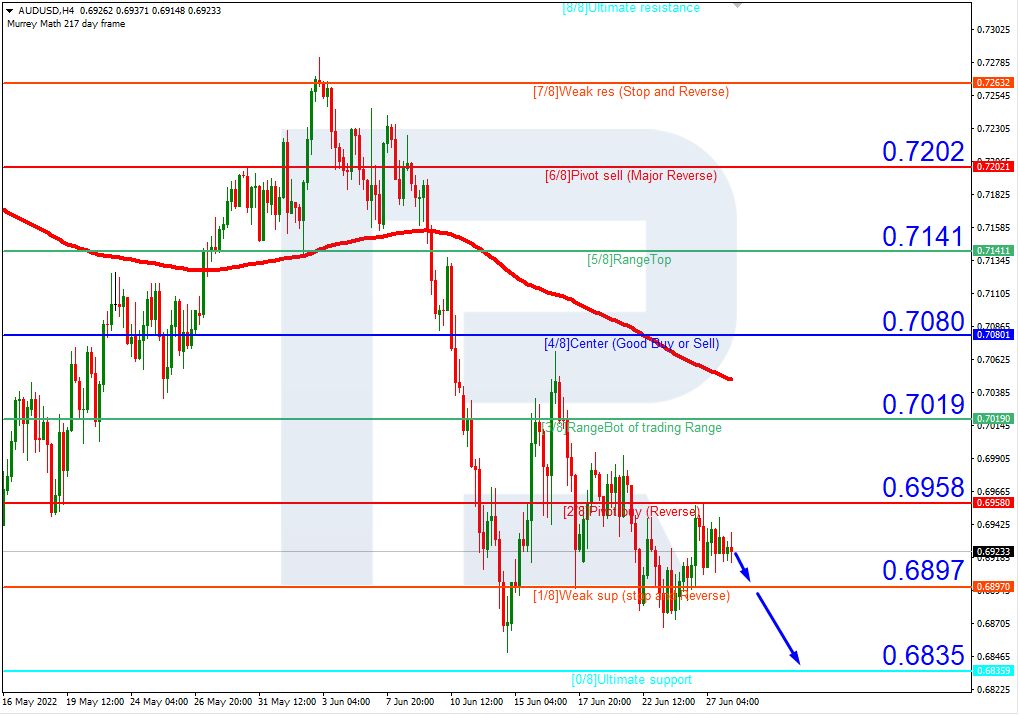
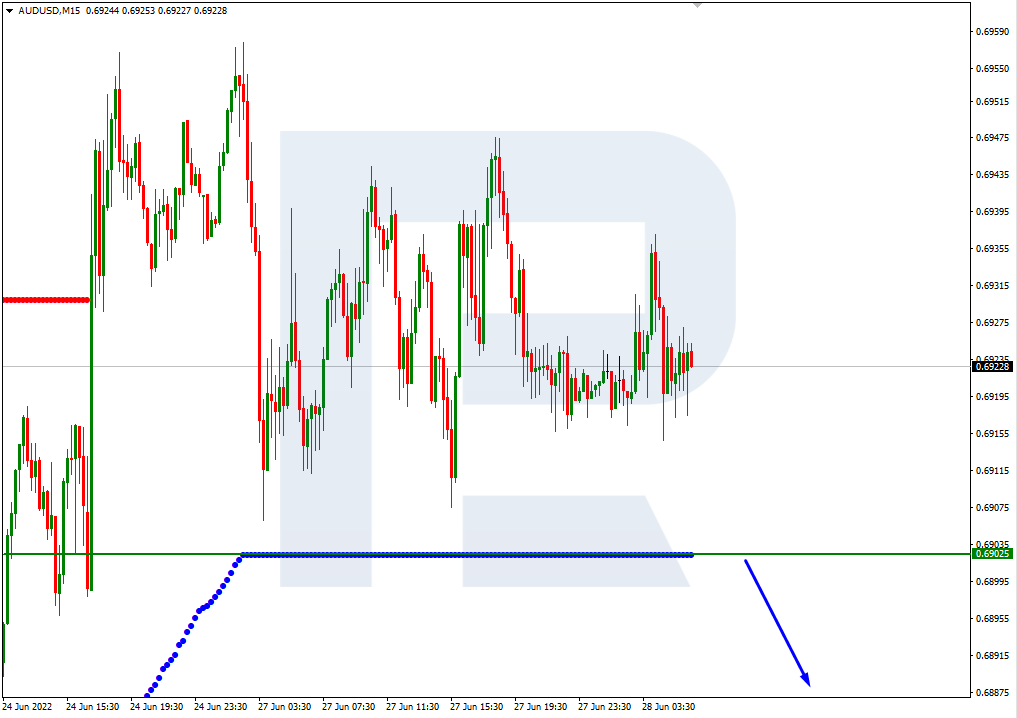
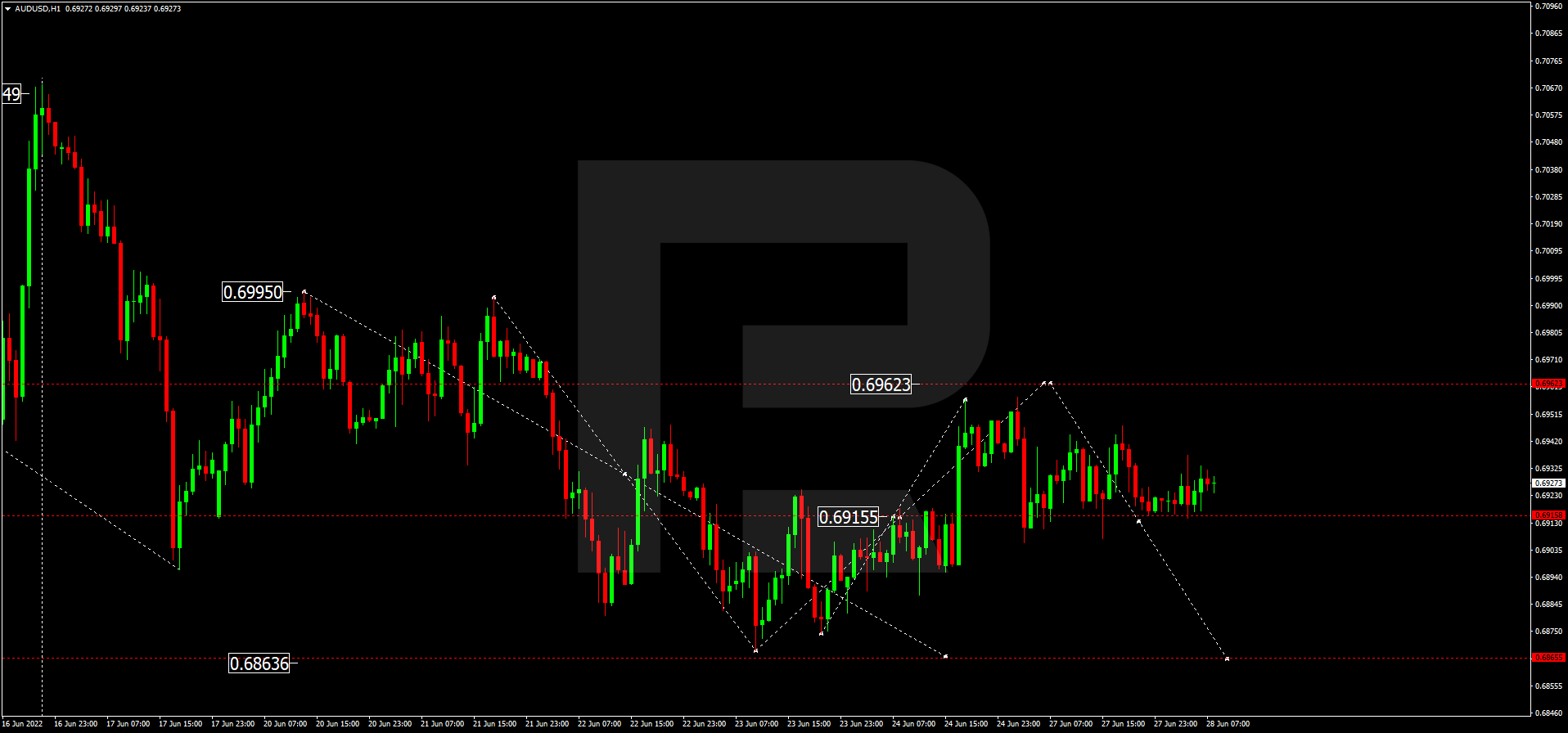
As we can see in the H4 chart, AUDUSD is trading below the 200-day Moving Average to indicate a descending tendency. In this case, the price is expected to test 2/8, break it, and then continue falling to reach the support at 0/8. However, this scenario may no longer be valid if the price breaks the resistance at 3/8 to the upside. After that, the instrument may reverse and resume growing towards 4/8.
In the M15 chart, the pair may break the downside line of the VoltyChannel indicator and, as a result, continue moving downwards to reach 0/8 from the H4 chart.
NZDUSD, “New Zealand Dollar vs US Dollar”
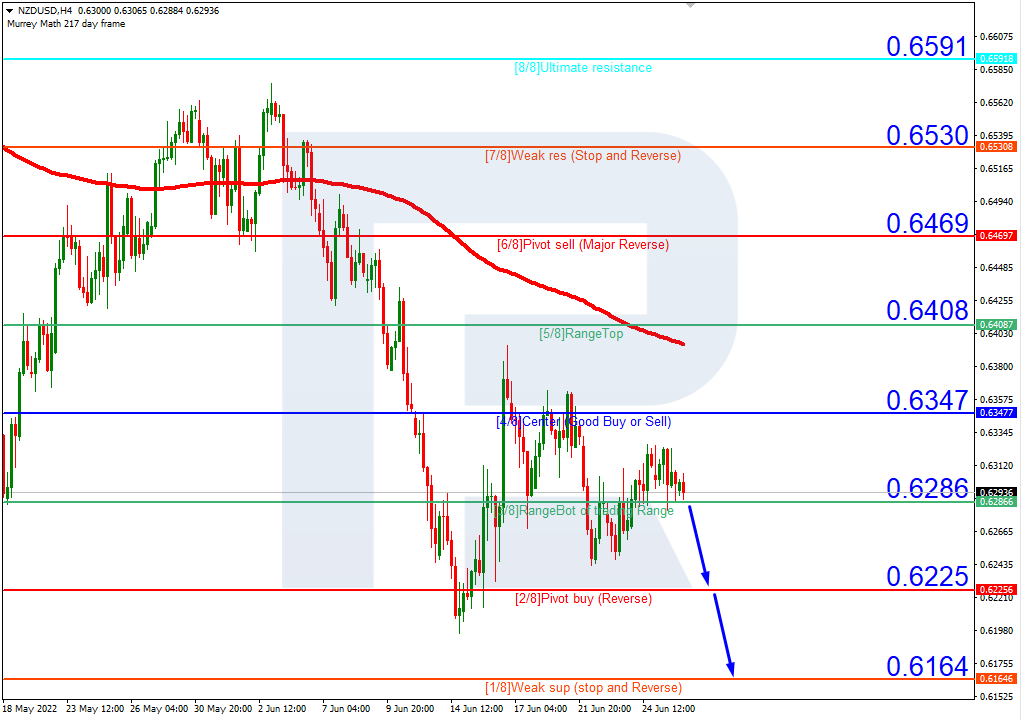
As we can see in the H4 chart, NZDUSD is also trading below the 200-day Moving Average, thus indicating a possible descending tendency. In this case, the price is expected to rebound from 3/8 and then resume moving downwards to reach the support at 2/8. However, this scenario may no longer be valid if the price breaks the resistance at 4/8 to the upside. After that, the instrument may reverse and grow towards 5/8.
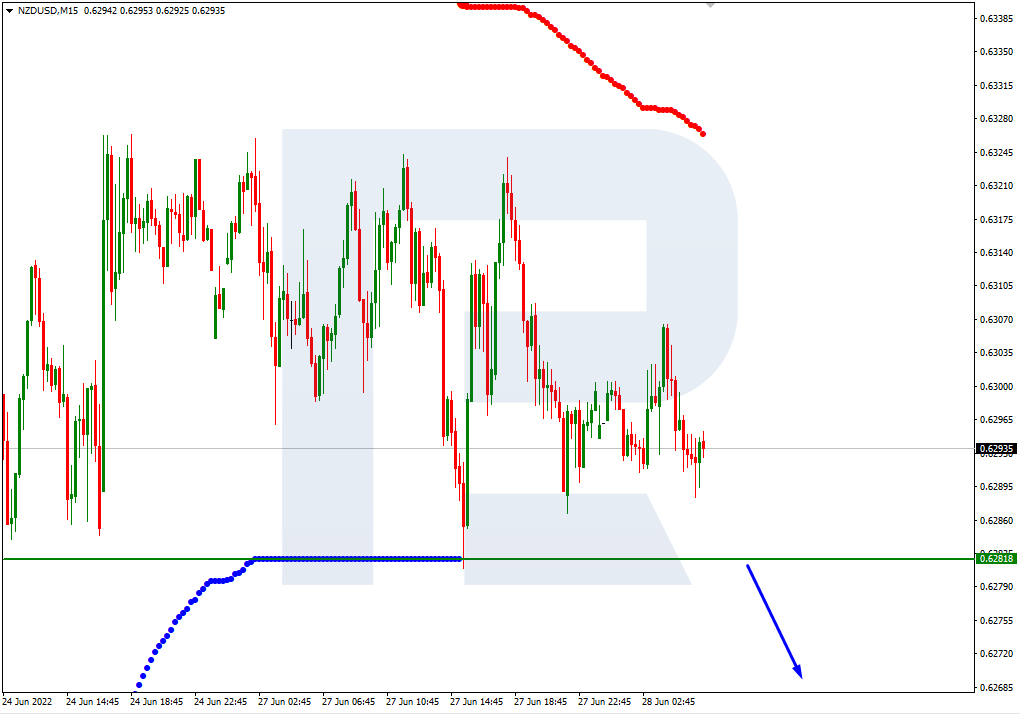
In the M15 chart, the pair may break the downside line of the VoltyChannel indicator and, as a result, continue its decline.
Attention! Forecasts presented in this section only reflect the author’s private opinion and should not be considered as guidance for trading. RoboForex LP bears no responsibility for trading results based on trading recommendations described in these analytical reviews.
– Some major crypto firms need to stop making obvious, avoidable mistakes that destabilize the industry, cause financial chaos for investors and job losses for workers, says the CEO of one of the world’s largest advisory, asset management and fintech organizations.
The comments from deVere Group’s Nigel Green, a game-changing digital asset advocate who launched pioneering cryptocurrency exchange deVere Crypto in early 2018, come as some of the biggest players in the market continue to struggle in a volatile environment.
Bitcoin, the world’s largest cryptocurrency, which has shed 57% so far this year, fell below $20,000 over the weekend for the first time since December 2020.
He says: “I’m not in the habit of throwing shade at other companies, but in recent times we’ve seen many of the biggest players make huge, unnecessary mistakes.
“They went for enormously expensive TV ads, jumped on highest-tier sponsorships, rolled-out lending models offering astronomical interest rates on crypto deposits, and launched unprecedented hiring sprees.
“Now, what do we have? Firms laying-off swathes of staff, freezing client withdrawals and cutting back on investment.”
He continues: “Unfortunately, these brands have made some classic, obvious and avoidable dot-com era errors.
“These mistakes destabilize the industry due to the contagion effect, exacerbate financial chaos for investors and the pain of job losses for so many who were hoping to have a rewarding career in the future of finance.
“Such crypto firms would be better off – for the sake of their clients and the wider industry – growing through investing in top talent, innovation and development, and lobbying for sensible regulation with financial watchdogs.”
Despite the crypto price drops, like many long-term crypto investors the deVere CEO is still accumulating Bitcoin.
“I’m using the volatility as a buying opportunity; I’m topping up my investment portfolio at a lower price point.
“The reason why I’m still buying Bitcoin is that I’m confident that digital, global, borderless, decentralized, tamper-proof, unconfiscatable money is, inevitably, the future.”
He adds: “I’m still accumulating Bitcoin as its unique fundamentals haven’t changed.
“Bitcoin continues to produce block by block, the ecosystem and infrastructure continue to develop, major corporations and institutions continue to adopt it, and miners continue to increase their operations.”
Nigel Green says that he believes the crypto sector will bounce back stronger. “I’m sure lessons will be learned and the industry – the future of finance – will become more robust as a result.”
About:
deVere Group is one of the world’s largest independent advisors of specialist global financial solutions to international, local mass affluent, and high-net-worth clients. It has a network of more than 70 offices across the world, over 80,000 clients and $12bn under advisement.
As we can see in the H4 chart, after forming a Shooting Star reversal pattern close to the resistance level, USDCAD may reverse in the form of another descending impulse. In this case, the downside target may be the support area at 1.2870. Later, the market may rebound from this level and resume growing. However, an alternative scenario implies that the asset may continue trading upwards and reach 1.3040 without testing the support area.
AUDUSD, “Australian Dollar vs US Dollar”
As we can see in the H4 chart, AUDUSD has formed a Harami reversal pattern near the support level. At the moment, the asset is reversing and starting a new rising impulse. In this case, the upside target may be the resistance level at 0.7015. After testing the level, the price may rebound from it and resume the descending tendency. At the same time, the opposite scenario implies that the price may continue falling to reach 0.6880 without any corrections.
USDCHF, “US Dollar vs Swiss Franc”
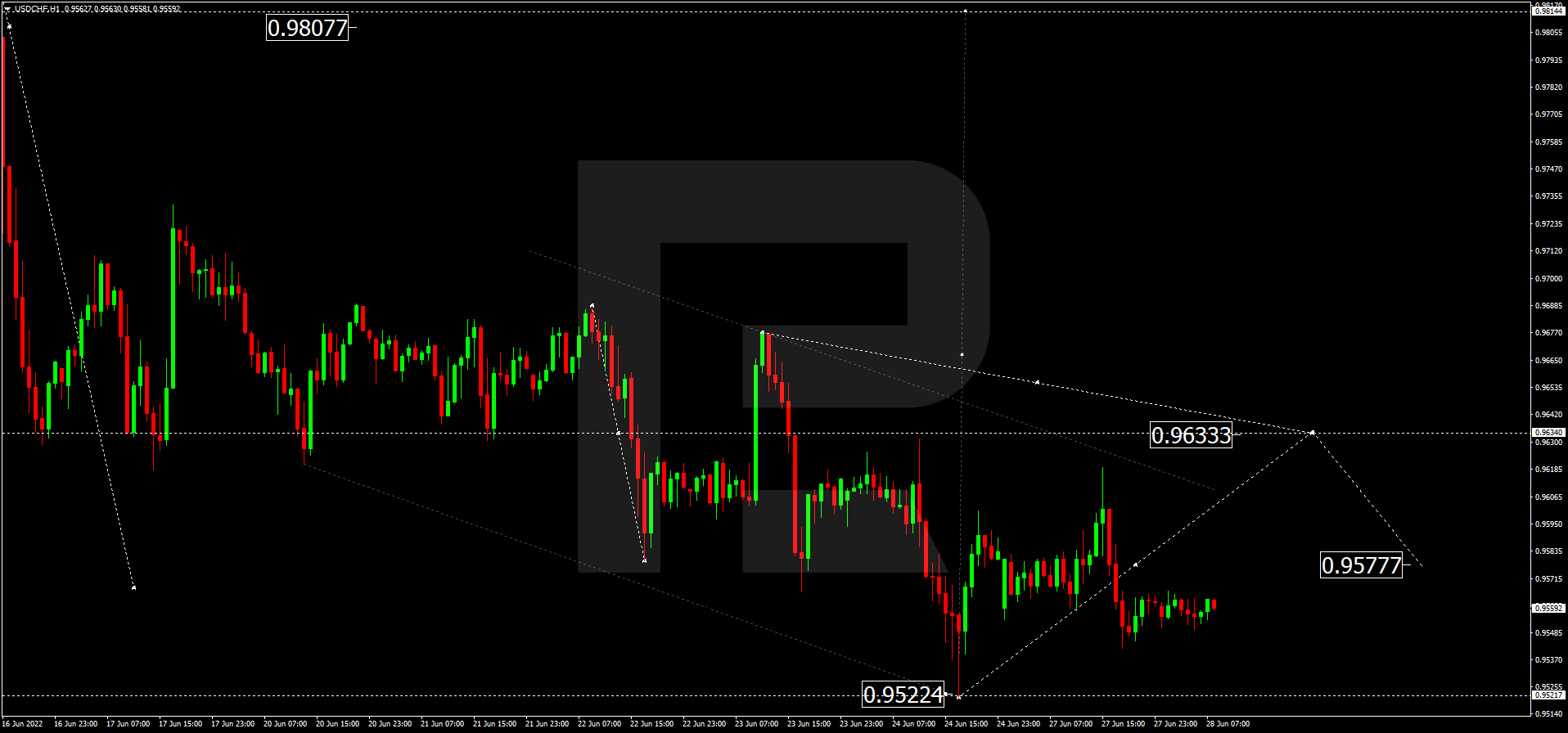
As we can see in the H4 chart, after testing the support area, the pair has formed a Hammer reversal pattern. At the moment, USDCHF may reverse in the form of a new ascending impulse. In this case, the upside target may be at 0.9770. After testing the resistance level, the price may break it and continue trading upwards. Still, there might be an alternative scenario, according to which the asset may fall to reach 0.9590 and continue the descending tendency without any pullbacks.
Attention! Forecasts presented in this section only reflect the author’s private opinion and should not be considered as guidance for trading. RoboForex LP bears no responsibility for trading results based on trading recommendations described in these analytical reviews.
In her speech yesterday, ECB head Christine Lagarde indicated that the underlying inflation forecasts had been revised upward significantly. The ECB forecasts annual inflation at 6.8% in 2022, followed by projections of a decline to 3.5% in 2023 and 2.1% in 2024. The next steps for the ECB to normalize monetary policy are: stop net asset purchases under the program (APP) as of July 1, 2022; raise ECB key interest rates by 25 basis points at the July monetary policy meeting; raise interest rates again in September, the amount of which will depend on the updated medium-term inflation forecast; after September, the ECB will follow a path of gradual interest rate increases.
Trading recommendations
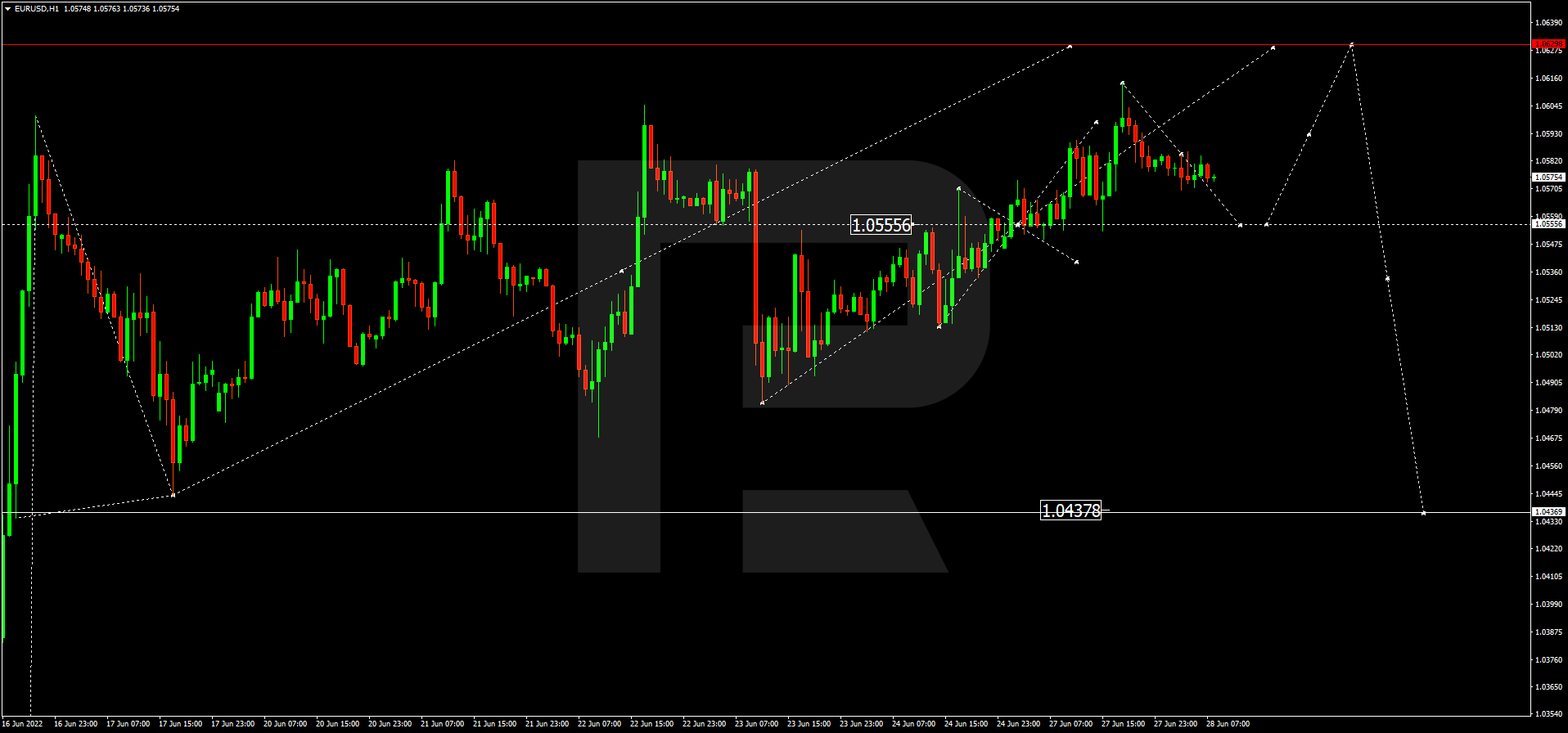
Support levels: 1.0499, 1.0408, 1.0379
Resistance levels: 1.0611, 1.0680, 1.0723
From the technical point of view, the trend on the EUR/USD currency pair on the hourly time frame is bearish. But it looks like a trend will change soon, as sellers have stopped showing any activity. The price has corrected to the average values, the MACD indicator has become inactive, and the buyers’ pressure persists. Under such market conditions, sell deals can be considered from the resistance level of 1.0611, but only after the additional confirmation. A price move above 1.0611 will change the priority. Buy trades are best to look for on intraday time frames from the support level of 1.0499, but only with confirmation and short targets.
Alternative scenario: if the price breaks out through the 1.0611 resistance level and fixes above, the uptrend will likely resume.
News feed for 2022.06.21:
– US Existing Home Sales (m/m) at 17:00 (GMT+3);
– US FOMC Mester Speaks at 19:00 (GMT+3).
The GBP/USD currency pair
Technical indicators of the currency pair:
Prev Open: 1.2218
Prev Close: 1.2247
% chg. over the last day: +0.24%
UK Monetary Policy Committee spokeswoman Mann pointed out yesterday that in the current environment, with historic inflation levels already evident and the US Fed tightening, UK exposure and sensitivity to global financial secondary effects could exacerbate the inflation-activity trade-off that the Bank of England is currently facing. British policymakers will have to roughly accept a tightening by the US to stabilize prices and mitigate inflationary pressures exerted by the exchange rate. In other words, the Bank of England does not know exactly how to proceed, as it refers to the fact that inflation in Britain and the US are rising for different reasons, but will act roughly the same.
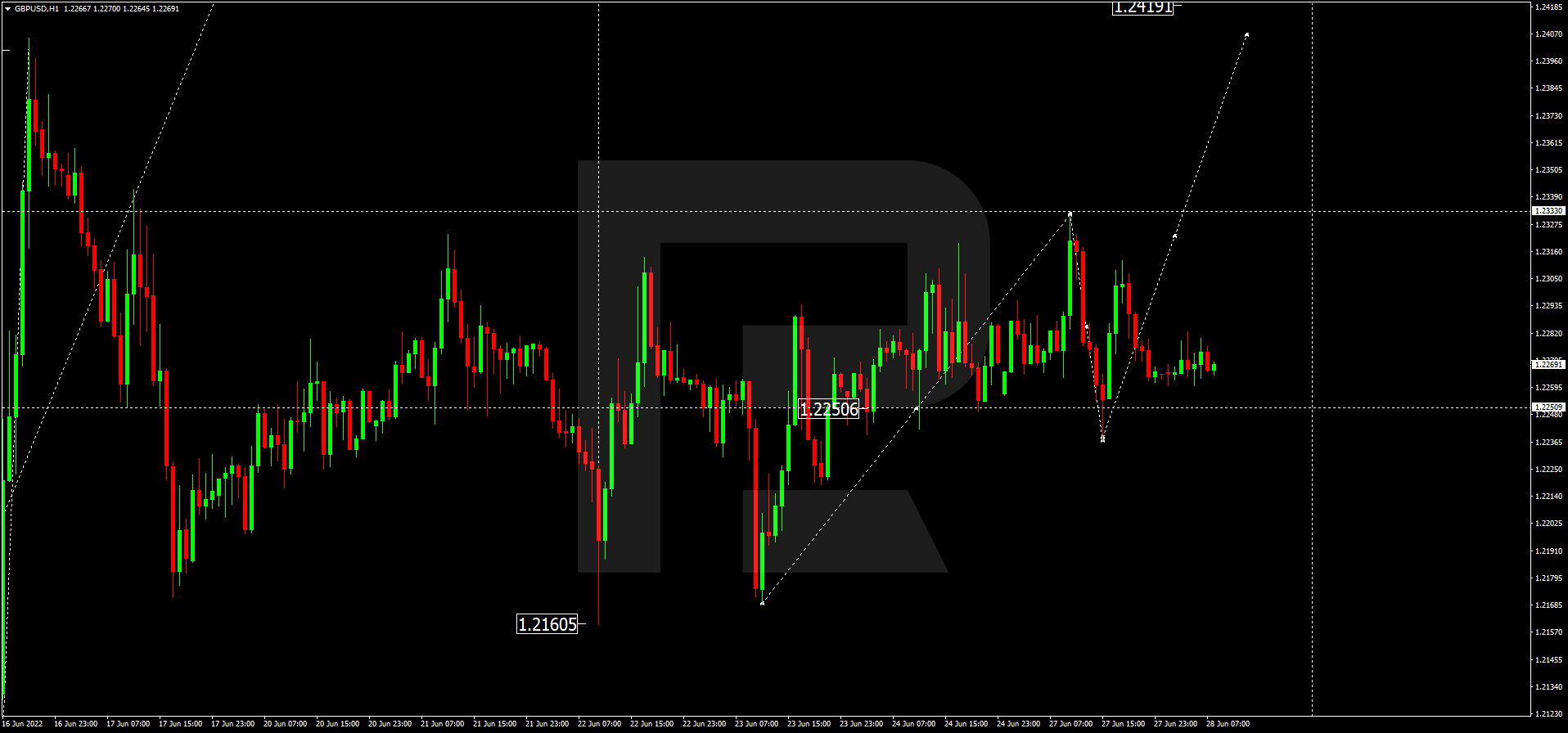
From the technical point of view, the trend on the GBP/USD currency pair on the hourly time frame is bearish. The price is trading between the two accumulative balances, but the buyers’ initiative remains in recent days. The MACD indicator has become inactive. Under such market conditions, sell deals can be considered from the resistance level of 1.2422, but only after the additional confirmation. Buy trades are best to look for on intraday time frames from the support level of 1.2265, but only with confirmation and short targets.
Alternative scenario: if the price breaks out through the 1.2422 resistance level and fixes above, the uptrend will likely resume.
There is no news feed for today.
The USD/JPY currency pair
Technical indicators of the currency pair:
Prev Open: 134.93
Prev Close: 135.04
% chg. over the last day: +0.08%
Prime Minister Fumio Kishida said yesterday that Bank of Japan Governor Haruhiko Kuroda expressed concerns about currency movements during their meeting, which briefly strengthened the yen. For his part, Kuroda said that the government and the central bank would continue to monitor currencies closely and cooperate to act appropriately. The Bank of Japan’s insistence on continued easing to support the economy and keep inflation stable contrasts with the wave of interest-rate hikes that has swept global central banks trying to cope with rising prices. The Bank of Japan’s dovish stance continues to contribute to the yen’s decline.
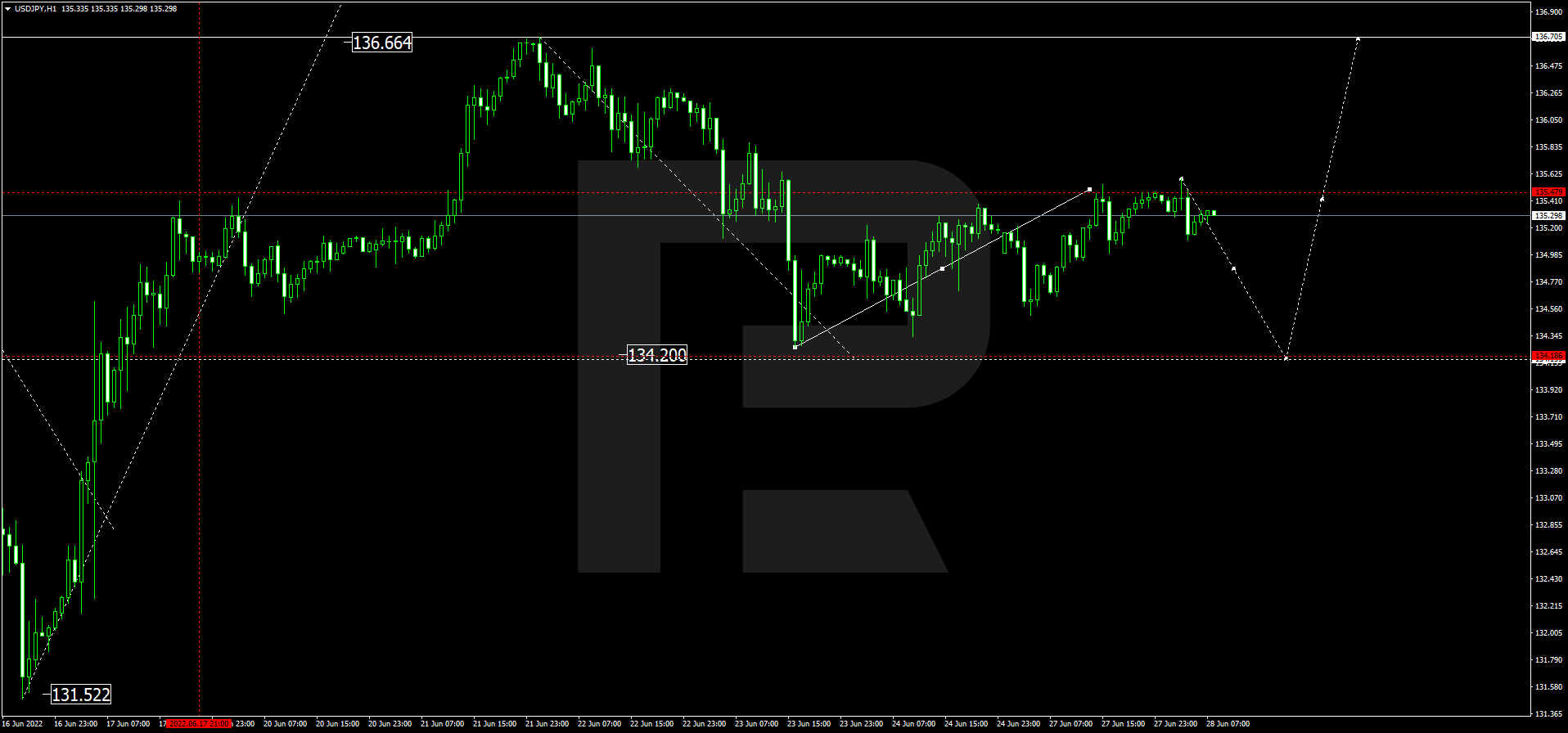
The medium-term trend on the USD/JPY currency pair is bullish. The price formed a narrow balance, and buyers’ pressure prevailed. Under such market conditions, buy trades can be considered from the support level of 134.74 or 133.38, but with confirmation. A resistance level of 135.16 is good for sell deals, but only with additional confirmation in the form of a reverse initiative and short targets.
Alternative scenario: If the price fixes below 131.67, the downtrend will likely resume.
There is no news feed for today.
The USD/CAD currency pair
Technical indicators of the currency pair:
Prev Open: 1.3024
Prev Close: 1.2980
% chg. over the last day: -0.34%
The Canadian currency is a commodities currency and depends not only on the dollar index but also on the oil price movements. Oil prices increased yesterday as investors’ attention returned to oil and oil product shortages amid fears that a recession will hit demand. Rising oil prices are strengthening the Canadian dollar (USD/CAD decline).
Trading recommendations
Support levels: 1.2903, 1.2815, 1.2709, 1.2618, 1.2578, 1.2510
Resistance levels: 1.2974, 1.3068
In terms of technical analysis, the trend on the USD/CAD currency pair is bullish. The MACD indicator has become negative, and the pricehas corrected to the average values. Under such market conditions, it is better to look for buy deals in the lower time frames from the support level of 1.2903. For sell deals, it is better to consider the resistance level of 1.2974, but it is also better with confirmation and short targets.
Alternative scenario: if the price breaks through and consolidates below the 1.2815 support level, the downtrend will likely resume.
This article reflects a personal opinion and should not be interpreted as an investment advice, and/or offer, and/or a persistent request for carrying out financial transactions, and/or a guarantee, and/or a forecast of future events.

The US stock market did not trade yesterday due to the banking holiday.
Stock markets in Europe traded higher yesterday. German DAX (DE30) gained 1.06%, French CAC 40 (FR40) added 0.64%, Spanish IBEX 35 (ES35) jumped by 1.72%, British FTSE 100 (UK100) was up 1.50% on Monday.
The euro increased on Monday as markets focused on the European Central Bank’s anti-fragmentation tools, ignoring the risk of political gridlock in France after President Emmanuel Macron lost an outright majority in parliamentary elections.
On Monday, ECB President Christine Lagarde confirmed plans to raise ECB interest rates twice this summer, fighting widening spreads in the cost of borrowing by various Eurozone countries.
Germany will restart its coal-fired power plants and introduce an auction scheme to cut gas consumption after Gazprom cut supplies by 60% last week. On Monday the Dutch government said it would lift restrictions on production at coal-fired power plants and activate the first phase of its energy crisis plan.
The situation in the oil market remains the same. Oil markets are keeping oil prices above $105 a barrel. Oil prices rose yesterday as traders focused on limited supplies due to a slowdown in global economic growth. Analysts expect limited production from OPEC+ countries this summer, so market shortages will remain with demand growth.
Asian markets have been trading in positive territory since the opening. Japan’s Nikkei 225 (JP225) increased by 2.26%, Hong Kong’s Hang Seng (HK50) added 1.43%, and Australia’s S&P/ASX 200 (AU200) is up by 1.41% from the opening bell.
The People’s Bank of China left key interest rates unchanged on 1-year and 5-year loans. As the economy continues to face immense challenges, recovery is likely to be slow, with unemployment a key economic problem.
Imports from China’s Xinjiang region will be banned in the US starting today after the new rules take effect. Under the laws, firms will have to prove that imports from the region are not made using forced labor. China has repeatedly denied accusations of holding Uighurs in internment camps in Xinjiang.
Reserve Bank of Australia Governor Lowe has warned that the central bank’s board will do whatever is necessary to bring inflation under control, which he now expects to reach 7% by year’s end, doubling the bank’s 2-3% target. That’s why the RBA was forced to raise the interest rate more than expected by 50 basis points at this month’s board meeting. Economists forecast another 50-basis-point hike in July and possibly another in August, raising the rate to 1.85% by year’s end.
Main market quotes:
S&P 500 (F) (US500) 0 0 (0%)
Dow Jones (US30) 0 0 (0%)
DAX (DE40) 13,265.60 +139.34 (+1.06%)
FTSE 100 (UK100) 7,121.81 +105.56 (+1.50%)
USD Index 104.47 -0.23 (-0.22%)
Important events for today:
– Australia RBA Governor Lowe Speaks at 03:00 (GMT+3);
– Australia RBA Meeting Minutes (m/m) at 04:30 (GMT+3);
This article reflects a personal opinion and should not be interpreted as an investment advice, and/or offer, and/or a persistent request for carrying out financial transactions, and/or a guarantee, and/or a forecast of future events.

A sense of normality seems to be returning to financial markets after the brutal selloff in global shares last week. Asian stocks rebounded on Tuesday following the positive cues from European markets overnight while U.S futures moved higher after their markets were closed for a holiday. While the improving sentiment could support equity bulls in the near term, caution lingers in the air with investors likely to adopt a guarded approach towards risky assets.
In the currency arena, the dollar kicked off the week in a shaky fashion while gold waited for another fresh directional catalyst to break out of its current range. Oil prices rose 1% this morning, clawing back more of last week’s steep losses as market players focused on the tight supply dynamics in the commodity.
The week ahead promises to be eventful and potentially volatile thanks to key economic reports from major economies and Fed Chair Jerome Powell’s semi-annual testimony before Congress. Major themes ranging from inflation fears, rate hike expectations, ongoing geopolitical risks, and recession concerns will influence the market mood.
All eyes on Powell’s testimony
Fed Chair Jerome Powell will be under the spotlight this week as he testifies before Congress over two days.
Last week, the Federal Reserve raised interest rates by 75 basis points – its biggest increase since 1994. However, the central bank reassured markets that such jumbo-sized rate hikes would be rare. Powell’s testimony will be closely scrutinised for hints about incoming rate hikes and the outlook for the US economy. Should Powell strike a hawkish note and offer fresh insight into rates, this may boost expectations that the central bank will maintain an aggressive approach towards rates. Traders are pricing in an 89% chance of a 75-basis point rate hike at the next FOMC meeting in July.
Taking a look at the dollar, it has weakened against most G10 currencies this morning. The Dollar Index (DXY) could extend declines if a breakdown below 104.0 is achieved. Alternatively, a move above 104.50 may signal an advance towards 105.00.
Oil prices buoyed by supply worries
Oil prices pushed higher on Tuesday as investors focused on the persistent supply constraints and tightening market conditions. Given how the global commodity remains pulled and tugged by conflicting forces, this could result in more volatility down the road.
On one side of the equation, ongoing geopolitical risks and sanctions on Russian supplies continue to support prices. However, the Fed’s aggressive hawkish stance has fanned concerns of an economic slowdown which will hit the demand outlook. Despite the conflicting forces, oil benchmarks are up almost 50% since the start of the year.
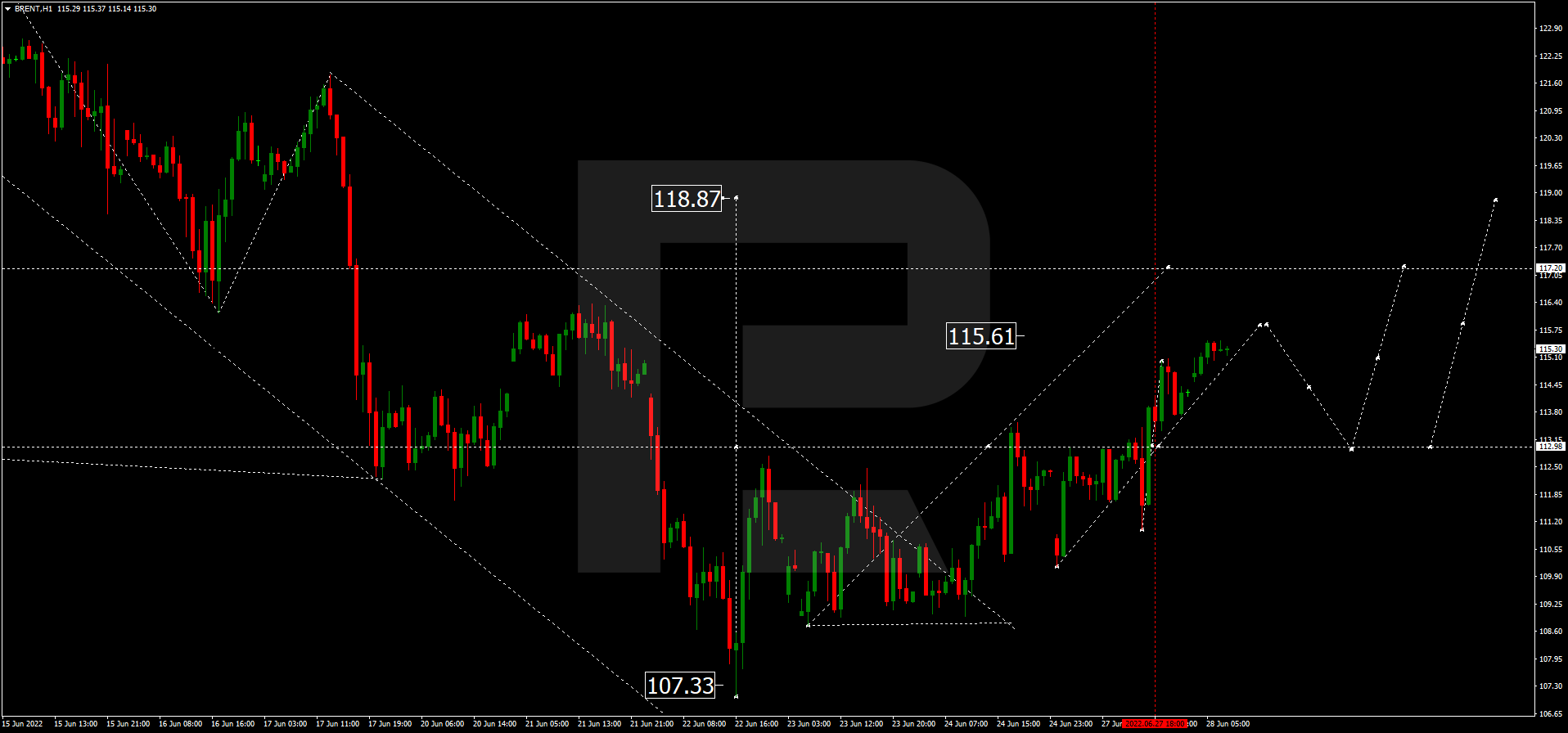
In regard to the technical picture, Brent crude prices remain under pressure after the steep selloff last Friday. A breakdown below $112.00 could encourage a decline towards $104 and $100. A move above $116.00 could inspire a move back towards $120.
Commodity spotlight – Gold
After the explosive volatility last week, gold has kicked off the new week on a calmer note. The lack of momentum suggests that a fresh fundamental spark needs to be brought into the picture to trigger the next major move in gold. Such a catalyst could come in the form of Fed Chair Jerome Powell’s testimony before Congress this week.
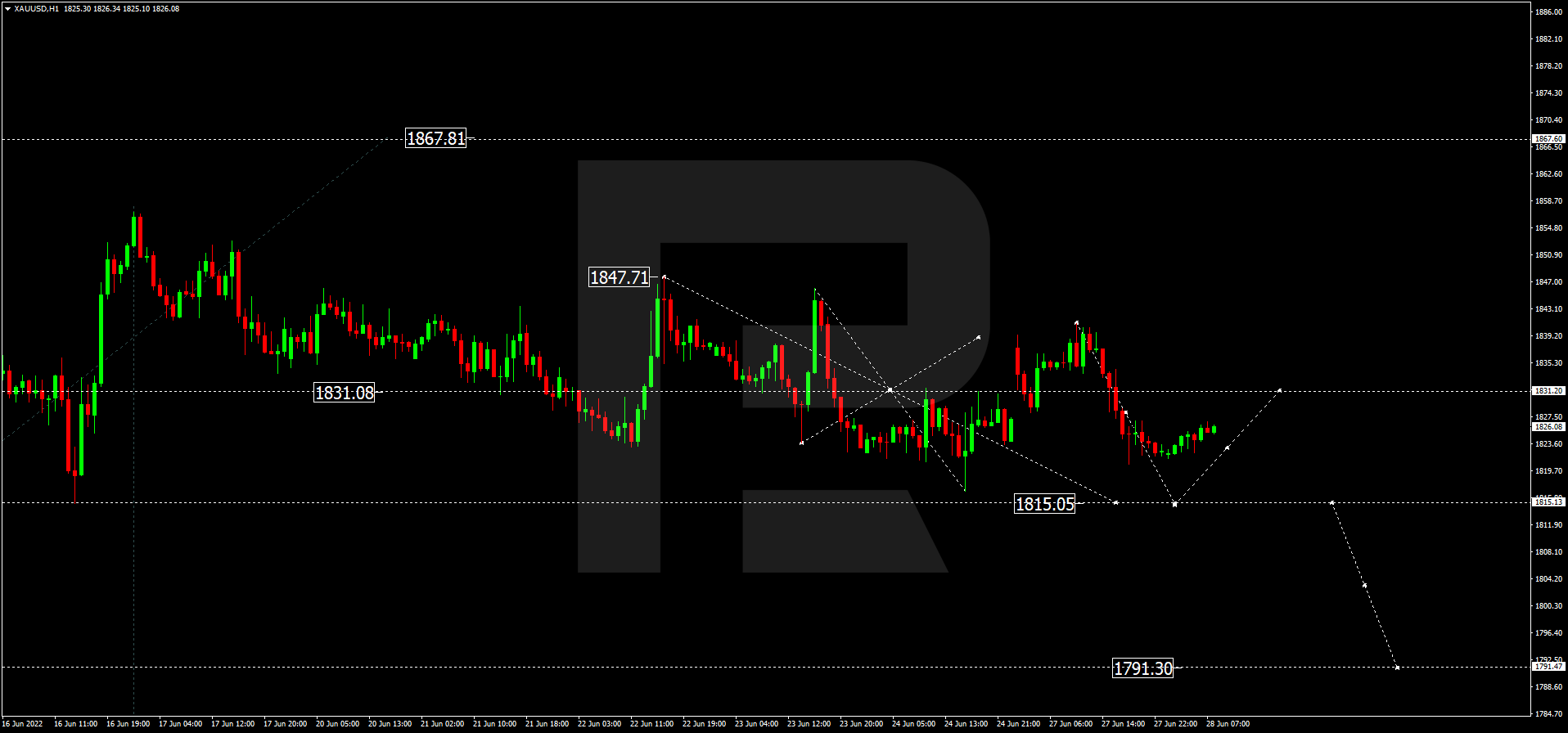
Looking at the technical picture, gold prices are trading below the 50, 100, and 200 SMA on the daily charts. Strong support can be found at $1800 and strong resistance at $1900. There seems to be minor support around $1830. A solid breakdown below this level could encourage a decline towards $1800 and $1764. A breakout above $1858 could trigger a move higher towards $1870 and $1900, respectively. Beyond $1900, the first checkpoint can be found at $1920.