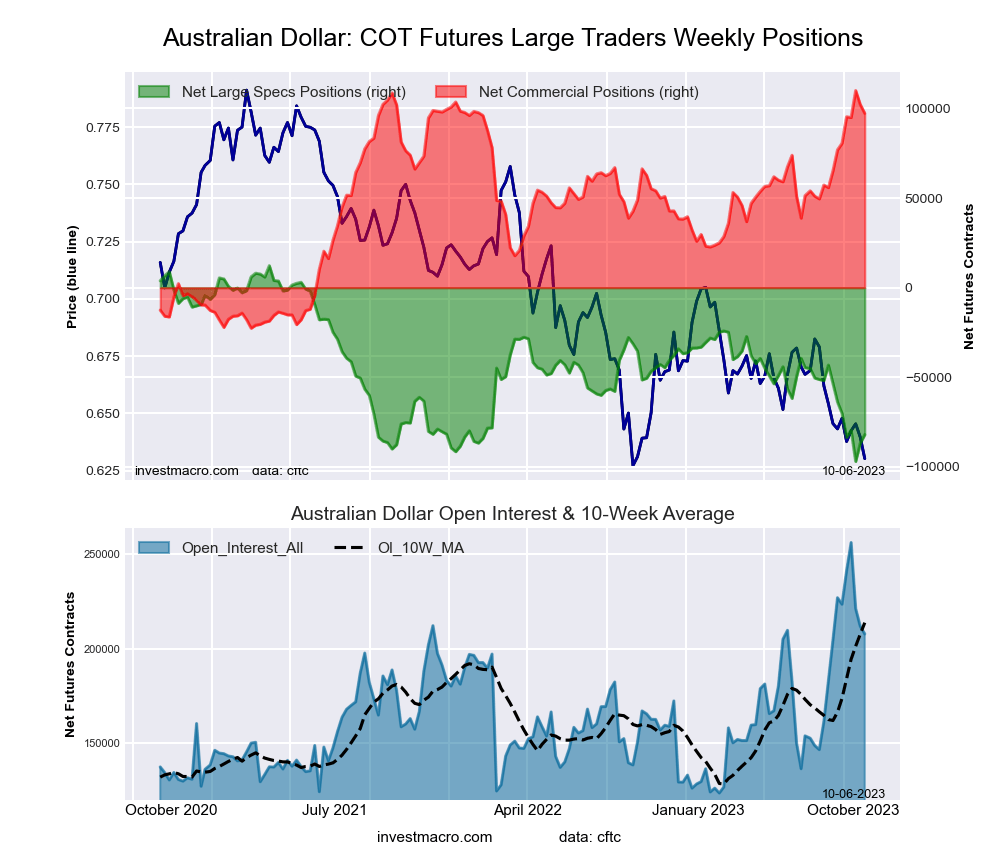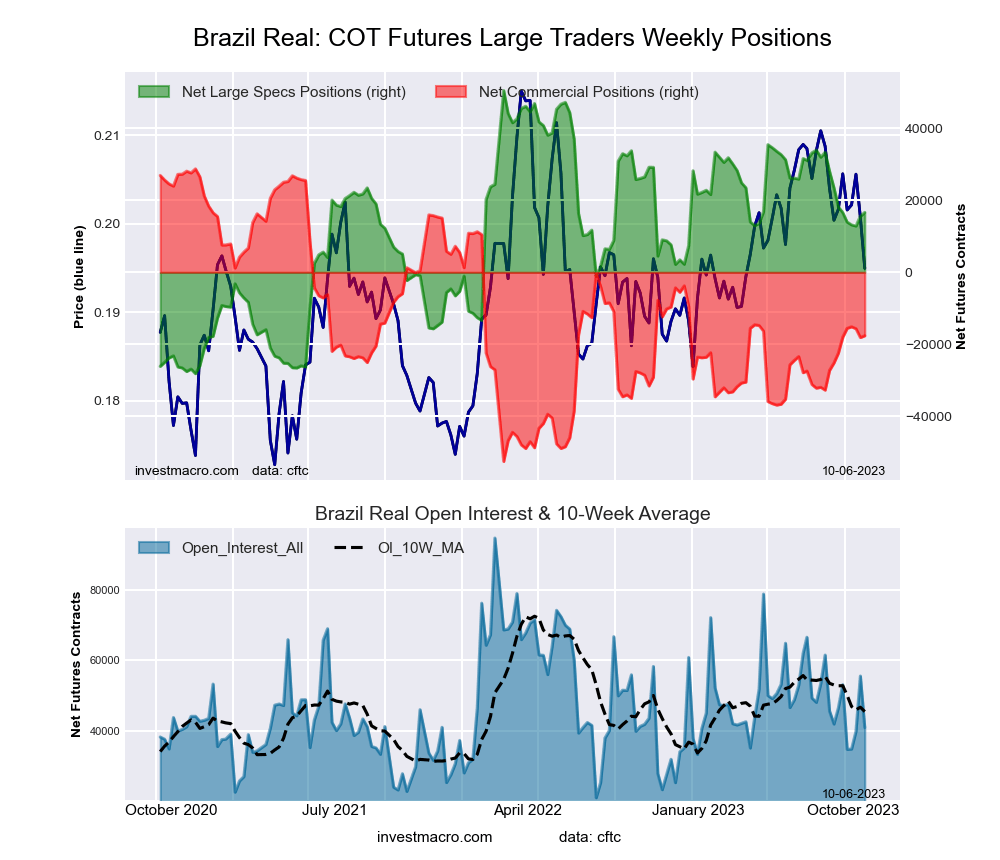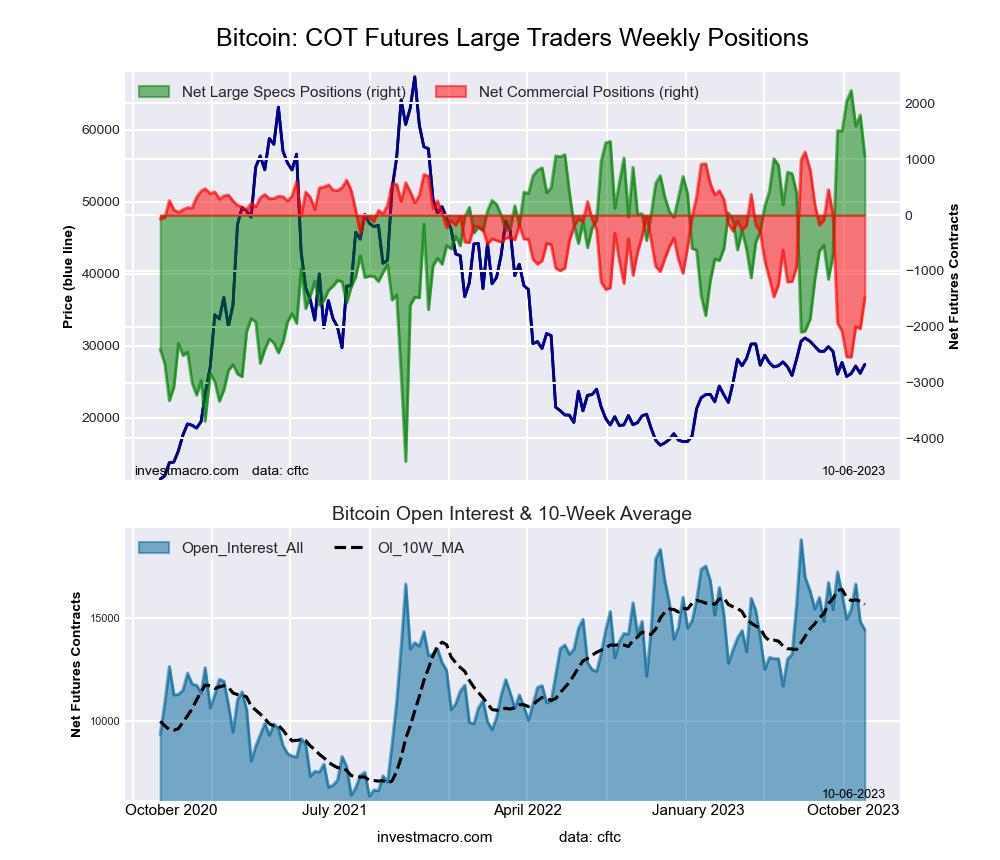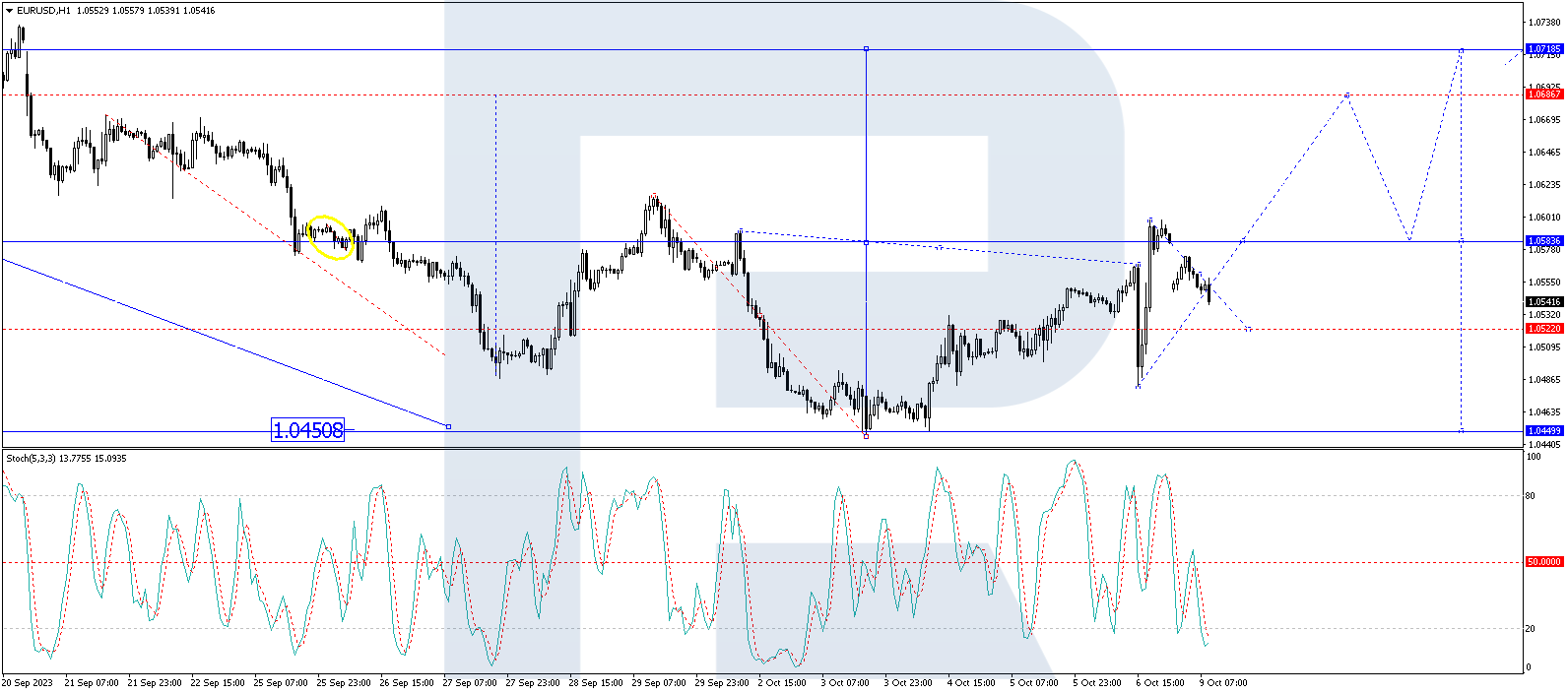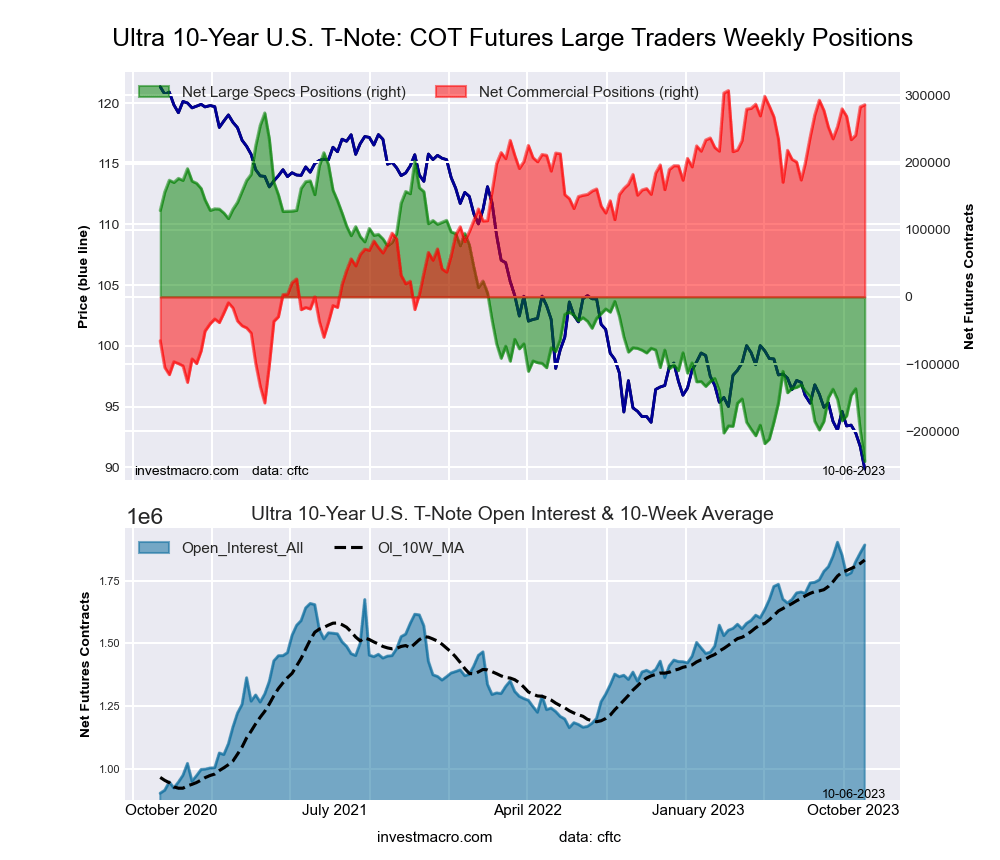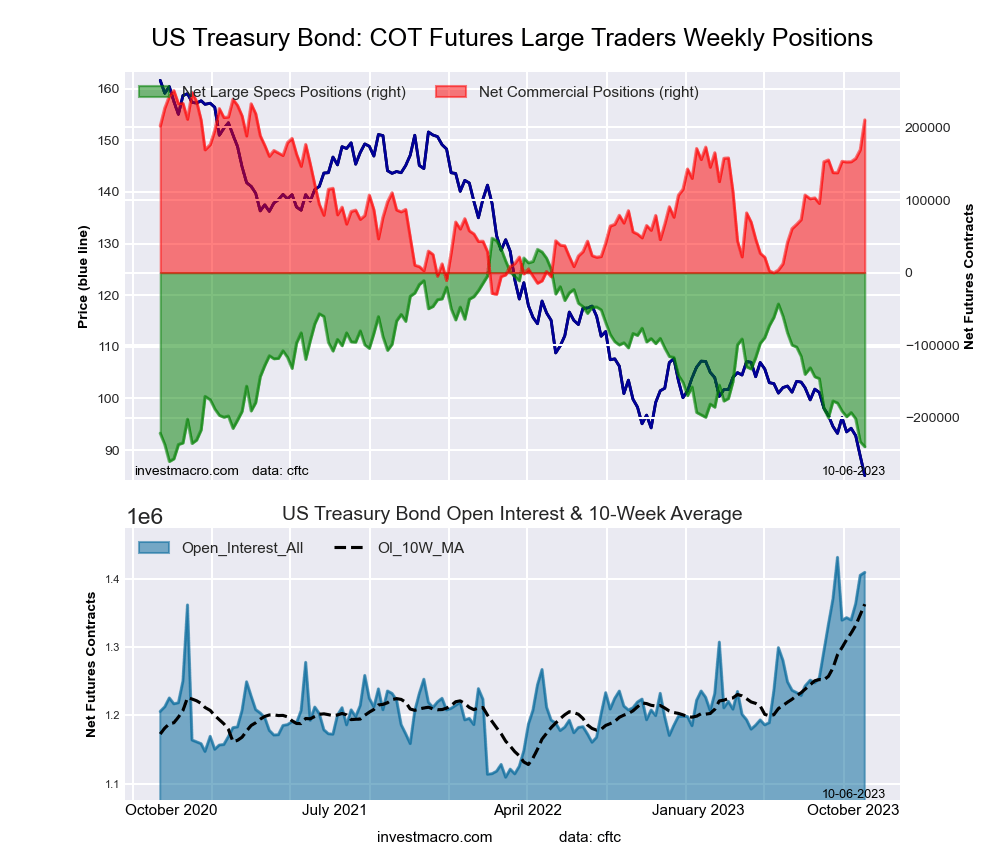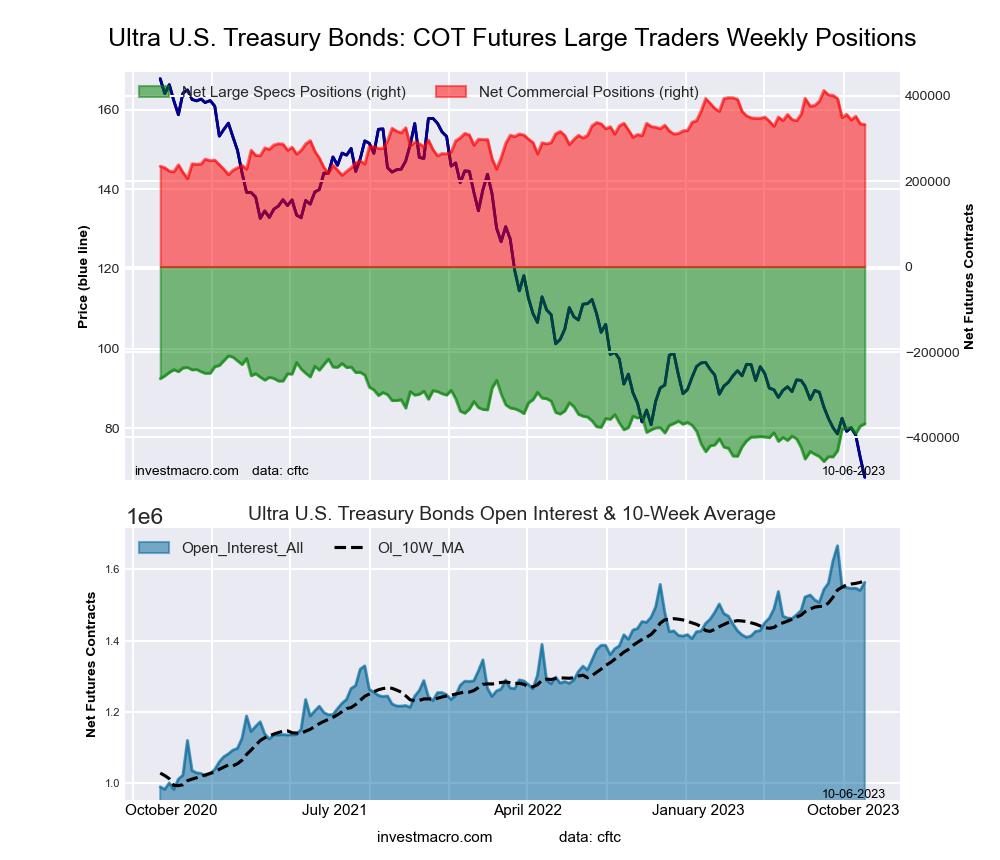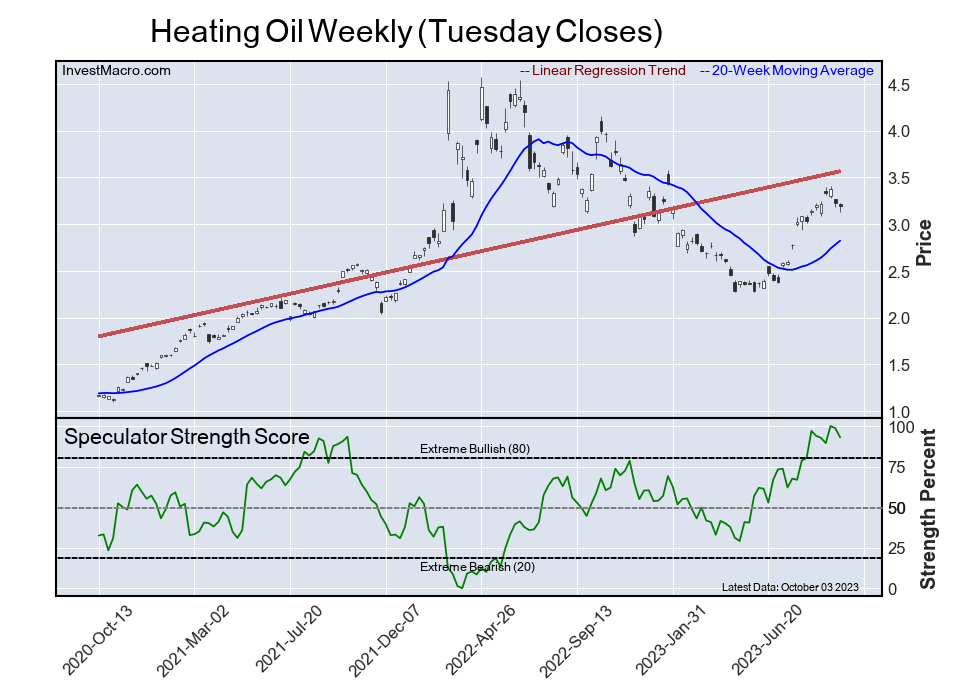
Oil is hitting new highs again. The ECB has reached its peak interest rate

By JustMarkets

On Thursday’s stock market close, the Dow Jones Index (US30) increased by 1.00%, while the S&P 500 Index (US500) added 0.85%. The NASDAQ Technology Index (US100) closed positive by 0.81% on Thursday.

Weekly US Initial Jobless Claims rose by 3,000 to 220,000 from expectations of 5,000, indicating a stronger than expected labor market. The data boosted equities and reinforced the assumption that the Fed will be able to achieve a soft landing for the US economy. The US goods and services price index for August accelerated to 1.6% y/y from 0.8% y/y in July, the highest reading in 4 months and slightly stronger than expectations of 1.3% y/y. US retail sales for August rose by 0.6% m/m, which was stronger than expectations of 0.1% m/m. The probability of a rate hike by the US Fed has decreased further. Markets estimate the odds of a 25 bps rate hike at the September 20 FOMC meeting at 2% and a 25 bps hike at the November 1 FOMC meeting at 35%.

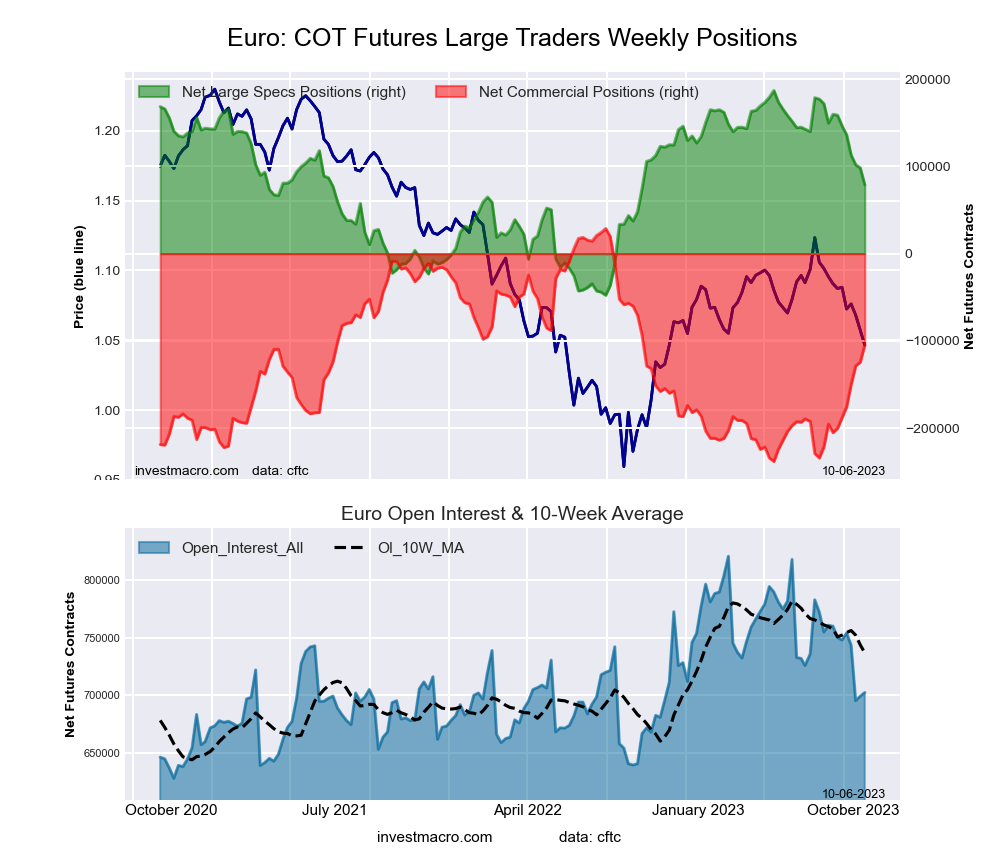
Equity markets in Europe were mostly up yesterday. Germany’s DAX (DE40) rose by 0.97%, France’s CAC 40 (FR40) gained 1.19% on Thursday, Spain’s IBEX 35 (ES35) added 1.44%, and the UK’s FTSE 100 (UK100) closed positive by 1.95%. The ECB decision contributed to the growth of European indices. Yesterday, the ECB raised the main refinancing rate by 25 bps to 4.50% from 4.25% and said the new level would make a “significant contribution” to controlling inflation. The ECB signaled its intention to maintain this rate, stating the following: “Based on the current assessment, the Governing Council considers that the ECB’s key interest rates have reached levels that, if maintained for a sufficiently long time, will make a substantial contribution to the timely return of inflation to target.” In other words, the ECB hinted at the end of the tightening cycle. The ECB also lowered its 2023 eurozone GDP forecast to 0.7% from the previous forecast of 0.9% and raised its 2023 inflation forecast to 5.6% from the previous forecast of 5.4%.

Oil prices are creeping higher, raising concerns about the impact on the downward trajectory of inflation. Prices for West Texas Intermediate crude, the US benchmark, are up 15% year-to-date and are above $90 a barrel. Prices for Brent crude, the international benchmark, are up 5% for the year and have also crossed the $90 mark. Saudi Arabia and Russia recently agreed to extend voluntary oil production cuts until the end of this year, reducing the global market by 1.3 million barrels of oil and boosting energy prices. Yesterday, oil prices were supported by news from China. The Bank of China (PBoC) lowered the reserve requirement ratio by 25 bps to 10.50% from 10.75%, which could stimulate economic growth and boost energy demand in China, the world’s second-largest oil consumer.

The EIA natural gas inventory report published on Thursday showed an increase of 57 bcf over the last week. This reflected negatively on prices as inventories came in above expectations at 50 bcf, although below the 5-year average for this time of year of 76 bcf. As of September 8, natural gas inventories were up 15.7% YoY and 6.8% above the 5-year seasonal average, indicating a sufficient natural gas supply.

Asian markets were mostly up on Thursday. Japan’s Nikkei 225 (JP225) rose by 1.41% yesterday, China’s FTSE China A50 (CHA50) gained 0.08%, Hong Kong’s Hang Seng (HK50) ended the day up by 0.21%, and Australia’s S&P/ASX 200 (AU200) ended Thursday positive 0.46%.

The People’s Bank of China (PBoC) lowered the reserve requirement ratio for most banks by 25 bps to 10.50% from 10.75%. Lowering the norm frees up cash for banks, allowing them to lend more to businesses and consumers. It will also lead to more liquidity in the Chinese economy, which could boost growth.

Data released on Friday also showed that China’s industrial production and retail sales rose more than expected in August. However, fixed asset investment declined, and new home sales fell, indicating that much of Asia’s largest economy remains under pressure. Chinese stocks have suffered significant losses for the year amid growing concerns that the country’s economic recovery is much slower than initially expected.

S&P 500 (F)(US500) 4,505.56 +38.12 (+0.85%)

Dow Jones (US30) 34,921.53 +346.00 (+1.00%)

DAX (DE40)  15,805.29 +151.26 (+0.97%)

FTSE 100 (UK100) 7,673.08 +147.09 (+1.95%)

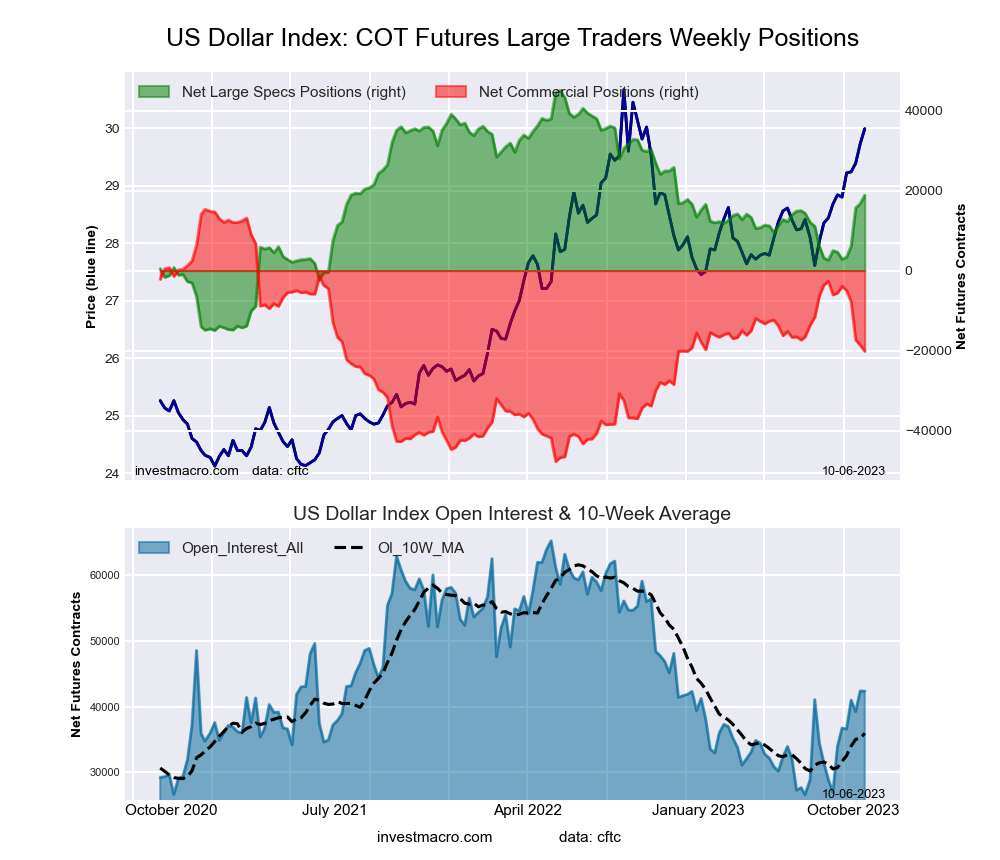
USD Index  105.36 +0.60 (+0.57%)

Important events for today:
  • – China Industrial Production (m/m) at 05:00 (GMT+3);
  • – China Retail Sales (m/m) at 05:00 (GMT+3);
  • – China Unemployment Rate (m/m) at 05:00 (GMT+3);
  • – Eurozone Trade Balance (m/m) at 12:00 (GMT+3);
  • – US NY Empire State Manufacturing Index (m/m) at 15:30 (GMT+3);
  • – US Industrial Production (m/m) at 16:15 (GMT+3);
  • – US Michigan Consumer Sentiment (m/m) at 17:00 (GMT+3).

By JustMarkets


This article reflects a personal opinion and should not be interpreted as an investment advice, and/or offer, and/or a persistent request for carrying out financial transactions, and/or a guarantee, and/or a forecast of future events.

Investors Flock To Disruptive Mortgage Tech Stocks

Streetwise Reports  (9/13/23)

As the newer generation becomes homebuyers, lenders are seeing a major push for non-traditional lending options. Read to see how Rocket Companies Inc., Loan Depot, and Beeline Loans are disrupting the industry with online applications and artificial intelligence and why they should be on investors’ radars.

Owning a home is a huge part of the American Dream and the first step for some to solidify their place in adulthood. In fact, a survey by Bankrate found that “owning a home is still very much a part of the “American Dream,” as cited by 74% of U.S. adults. This is more than those who point to being able to retire (66%), having a successful career (60%), owning a car, truck, or other automobile (50%), having children (40%), and getting a college degree (35%).”

Still, most Americans are unable to buy a house outright, making mortgages a key part of achieving this height of American success.

Rising Interest Rates 

In an August 5 article, Market Watch personal finance reporter Aarthi Swaminathan pointed out that The United States is at a ‘critical stage’ regarding mortgages.

The report noted that “if the economy continues to show signs of strength, and the U.S. Federal Reserve hikes its benchmark interest rate once again, rates could go up to 8%.”

Legendary investor Barbara Corcoran told Yahoo Finance that “Now is a great time to buy a home” despite rising interest rates.

However, the article also stressed that the economy is currently hinting at a possible cool-down and that the “rate of inflation is easing.” Swaminathan wrote, “That could lead to a slowdown — or even drop — in mortgage rates.” This is not promised, but something homebuyers and investor should keep their eye on.

Still, while some people may be waiting for interest rates to go down before they start their home search, some experts believe now is actually the time to buy.

Legendary investor Barbara Corcoran spoke with Fox Business about the current state of the market. She said, “The minute those interest rates come down, all hell’s going to break loose, and the prices are going to go through the roof,” she said, commenting that we could see a Covid-like market once again.

With this in mind, Corcoran told Yahoo Finance that “Now is a great time to buy a home” despite rising interest rates.

Homebuyers Looking for a Change

As with most things, mortgages come in two categories: The old and the new. There are the long, held mortgages that have been around for generations, yet they are running into some competition as the new guys usher in a new way to play the game of life.

Some of the long-standing mortgage companies include:

  • Wells Fargo & Co. (WFC:NYSE), which announced at the beginning of this year that it intended to scale back mortgages, but last year saw 143,000 loans at a value of US$79 billion.
  • Bank of America Corp. (BAC:NYSE), which saw 121,000 loans at a value of US$54 billion.
  • JPMorgan Chase & Co (JPM:NYSE), which saw 115,000 loans at a value of US$73 billion, with an average loan amount of US$631,000.

While non-traditional lenders did make gains in 2021, traditional financial institutions won back some ground in 2022, yet some non-bank lenders did manage to hold on to their advantages.

Rocket Companies Inc. was the top mortgage lender in 2022, with 464,000 loans that generated a value of US$127.6 billion.

Loan Depot Inc. had 156,000 loans with a value of US$53 billion.

It seems clear from these results that homebuyers are looking for change in the market. This may be partly due to the younger crowd gaining interest in home buying. 51.5% of millennials are homeowners as of this year.

This generation increased by 7 million homeowners over the last five years, but they are still behind Gen Z, who are becoming homeowners at higher rates than millennials were at the same ages.

Gen Z and Millennial homebuyers are more likely to gravitate toward mobile and online over traditional lenders. According to Chase’s Digital Banking Attitudes Study, over 86% of Gen Z and 89% of millennials conduct their banking through apps. 61% of Gen Z and 71% of millennials use apps to transfer money. Managing money through online means is overwhelmingly popular with younger generations due to its convenience. This is where nontraditional lenders come in.

Top Mortgage Lender Rocket Mortgage 

Recently, Rocket Companies Inc. (RKT:NYSE) announced financial results for Q223. In Q223, Rocket reported net revenue of US$1.236 billion and adjusted revenue of US$1.002 billion. This exceeded the high end of the company’s guidance range.

In light of this news, Rocket’s Interim CEO, Bill Emerson, said, “Rocket‘s performance in the second quarter demonstrates the strength of our business and our commitment to delivering superior client service through innovation.”

Digital Platform Makes Rocket #1

In July, Rocket ranked number one in the U.S. for Client Satisfaction in Mortgage Servicing by J.D. Power for the ninth time. According to the release, this accolade was given based entirely on client feedback from an independent research firm.

With this, Executive Vice President of Servicing at Rocket Mortgage LaQuanda Sain said, “Many homebuyers don’t think twice about who will service their mortgage when they apply for a home loan but, with a mortgage lasting as many as 30 years, their servicer can make a huge difference.”

Rocket also ranked in the following categories:

  • Digital Channels
  • Easy to do Business With
  • Keeps Clients Informed and Educated
  • Resolving Problems or Questions

A big part of this ranking was Rocket’s 24/7 online self-serve resources, which aided over 100,000 homeowners in the aftermath of Hurricane Ian.

In July, Rocket ranked number one in the U.S. for Client Satisfaction in Mortgage Servicing by J.D. Power for the ninth time. According to the release, this accolade was given based entirely on client feedback from an independent research firm.

Rocket currently has a 4.5 out of 5 on Nerd Wallet, which noted a pro of the company being a “streamlined online process with document and asset retrieval capabilities, as well as the ability to edit your preapproval letter.”

On July 18, Morningstar Equity Analyst Michael Miller gave Rocket a US$13 Fair Value Estimate, noting, “In our view, Rocket Companies has established a clear competitive advantage in its core mortgage lending operations that should allow it to continue to increase its market share while still maintaining its strong margins and returns on invested capital.”

Then, in an August 4 report, James Faucette of Morgan Stanley rated Rocket as Attractive, saying, “As elevated mortgage rates and low housing inventories continued to weigh on industry-wide Purchase and Refi activity during the quarter, RKT sharpened its focus on expense efficiencies across the company.”

Technical Analyst Clive Maund told Streetwise Reports, “Rocket Companies’ business model accords with the times, which is why its stock is starting to advance out of a large base pattern. The consolidation pattern since early mid-July, which has brought the price back to its rising 50-day moving average, has allowed the earlier overbought condition to unwind, setting it up for renewed advance. It is believed to be forming a small base here just above its 50-day moving average from which it should soon advance, but even if the support at US$10.00 fails, it shouldn’t fall far before reversing back smartly to the upside.”

13 other analysts also cover the company.

Streetwise Ownership Overview*

Rocket Companies Inc. (RKT:NYSE)

Institutions: 73.5%
Retail: 21.06%
Management & Insiders: 5.44%
73.5%
21.1%
5.4%
*Share Structure as of 8/10/2023


Rocket: Ownership and Share Structure

According to Thomson Reuters, 73.50% of the company is held by institutional investors. Fidelity Management & Research Co. has 8.84%, with 11.22 million shares. The Vangaurd Group Inc. has 8.56%, with 10.88 million. Fidelity Investments Canada ULC has 5.77%, with 7.32 million. Caledonia (Private) Investments Pty Ltd. has 4.18%, with 5.30 million. Invesco Advisors Inc. has 3.93%, with 4.99 million, and BlackRock Institutional Trust Companies 3.88%, 4.93 million.

5.44% is with management and insiders. CEO Jay Farner has 4.20%, with 5.33 million shares. Director Matthew Rizik has 0.36%, with 0.45 million. President and COO Robert Walters has 0.26%, with 0.33 million, and CFO Julie Booth has 0.17%, with 0.22 million.

The rest is with retail investors.

Market Watch notes that Rocket has a market cap of US$22.88 billion and 127 million shares outstanding. It trades in the 52-week range between US$5.97 and US$11.68.

Loan Depot

On August 6, Loan Depot Inc. (LDI:NYSE) released financial results for Q223. Revenue was up by 31% from the first quarter of this year, which the company attributes to higher pull-through weighted lock volume and gain on sale margins for the company. Loan Depot noted it “continues to maintain a strong liquidity profile, exiting the quarter with a cash balance of US$719.1 million.”

In this release, CEO Frank Martell noted, ““As we move forward in the second half of 2023, we plan to continue maintaining a strong liquidity position and aggressively reduce our costs. Importantly, we are also investing in critical operating platforms, which we expect will deliver higher levels of automation and operating leverage and position us for additional growth and margin expansion in 2024.”

Analyst John Lafferty of PriceTarget Research gave Loan Depot an A rating (the highest given by the research company). Lafferty wrote that the stock was selling well beyond its value at US$2.21, gave the company a target price of US$7, and commented, “Reflecting future returns on capital that are forecasted to be in line with the cost of capital, LDI is expected to be Value Creation neutral. loanDepot has a current Value Trend Rating of A.”

According to Reuters, 21.93% of Loan Depot shares are held by management and insiders. CIO and Head Economist Jeff DerGuarahian has 7.73%, with 6.10 million shares. President Jeff Walsh has 5.30%, with 4.24 million, and Managing Director of Operations and Servicing Dan Binowitz has 1.01%, with 0.80 million.

29.63% is with institutional investors. Cannell Capital LLC has 5.73%, with 4.52 million shares. The Vangaurd Group Inc. has 5.47%, with 4.31 million. Parthenon Capital Partners has 5.11%, with 4.03 million. Brandywine Global Investment Management has 4.49%, with 3.54 million, and Knightsbridge Wealth Management has 3.33%, with 2.63 million.

The rest is in retail.

Market Watch notes that Loan Depot has a market cap of US$639.89 million and 78.89 shares outstanding. It trades in the 52-week range between US$1.2500 and US$3.0200.

New Kid on the Block: Beeline Loans

While public non-traditional lenders have been making waves, there is a private company rising in the industry, Beeline Loans Inc.

Beeline Loans, Inc. launched a proprietary front-end mortgage platform in June 2020 and closed approximately 2,000 loans by the end of 2021.  For 2024, the company expects to close about 3,000 loans. Despite the timing of their launch, which included Covid-19, the highest percentage increase in rates in 25 years, war in Ukraine, and housing inventories and consumer confidence being near all-time lows, the company has gained market share against larger legacy lenders.

“While other mortgage lenders have been slumping, Beeline is gaining traction,” wrote Guy Bennett in an article for Yahoo Finance.

Beeline is also not stuck with just one type of loan offering. The company provides FHA and VA, while also providing popular Non-QM loans such as  Debt Service Coverage Ratio (DSCR), bank statements, bridge, and fix-n-flip loans.

Bennett noted that “Beeline’s mix of home investors is about 300% higher than the national average.” However, this is not the only thing that sets Beeline apart from other online mortgage companies.

Chris Connelly, a Managing Director at Ellington Financial Group (a shareholder in the company), said,” Because of their very diverse set of product offerings, younger home buyers have more options at Beeline vs. traditional mortgage lenders and a better chance to get financing for a new home.”

On April 13, 2013, Robinhood revolutionized the stock-buying industry by fractionalizing stocks. This allowed people who previously were excluded from the stock market into the industry and paved the way for younger generations to get involved. Beeline is now doing for mortgages what Robinhood did for the stock market.

Beeline stands out from the crowd because it has incorporated artificial intelligence into its services with its chatbot, Bob. This addresses the needs of a rapidly emerging demographic who demand a digital process and real-time certainty.

On June 1, the company rolled out improvements to the AI system so that it is able to answer complex queries and give detailed quotes at all hours.

“Bob never sleeps,” the company noted, “he’s busy answering surprisingly complicated questions about Beeline’s wide range of conventional and non-QM products with great speed and accuracy, even at 2 a.m. He then poses highly personalized product-specific questions to generate a quote in real-time.

Chris Connelly, a Managing Director at Ellington Financial Group (a shareholder in the company), said,” Because of their very diverse set of product offerings, younger home buyers have more options at Beeline vs. traditional mortgage lenders and a better chance to get financing for a new home.”

Beeline is a private company with over US$40 million currently invested. The largest shareholder is founder Nick Liuzza, who has over US$10 million invested in Beeline. Cavalry Investment Fund, Ellington, and Atalaya are all significant investors.


Important Disclosures:

  1. Beeline has a consulting relationship with an affiliate of Streetwise Reports, and pays a monthly consulting fee between US$8,000 and US$20,000.
  2. As of the date of this article, officers and/or employees of Streetwise Reports LLC (including members of their household) own securities of Beeline.
  3. Amanda Duvall and Katherine DeGilio wrote this article for Streetwise Reports LLC and provides services to Streetwise Reports as an employee.
  4. The article does not constitute investment advice. Each reader is encouraged to consult with his or her individual financial professional. By opening this page, each reader accepts and agrees to Streetwise Reports’ terms of use and full legal disclaimer. This article is not a solicitation for investment. Streetwise Reports does not render general or specific investment advice and the information on Streetwise Reports should not be considered a recommendation to buy or sell any security. Streetwise Reports does not endorse or recommend the business, products, services or securities of any company mentioned on Streetwise Reports.

For additional disclosures, please click here.

US inflation data came out mixed. The labor market in Australia remains resilient

By JustMarkets

The Dow Jones Index (US30) decreased by 0.20% at Wednesday’s close, while the S&P 500 Index (US500) added 0.12%. The NASDAQ Technology Index (US100) closed positive by 0.29%. US consumer prices rose to 3.7% y/y in August vs. 3.2% y/y in July, which was stronger than expectations of 3.6% y/y. However, the market was supported by core inflation data. Core CPI declined to 4.3% y/y in August from 4.7% y/y in July, which matched expectations and was the smallest increase in nearly two years.

Moderna (MRNA) rose more than 6% yesterday, leading gains in the S&P 500 and Nasdaq 100 stocks after it reported that a modified version of its flu shot met key targets in a late-stage trial, paving the way for FDA approval of the vaccine. Ford Motor (F) shares are up more than 2% after UBS upgraded them to a “buy” rating with a $15 price target. General Motors (GM) shares added nearly 1% after UBS upgraded their rating to “buy” from “neutral” with a $44 price target.

Equity markets in Europe were mostly down yesterday. Germany’s DAX (DE40) was down by 0.39%, France’s CAC 40 (FR 40) fell by 0.42% on Wednesday, Spain’s IBEX 35 (ES35) added 0.12%, and the UK’s FTSE 100 (UK100) closed negative 0.02%.

Eurozone industrial production fell by 1.1% m/m in July, weaker than expectations of 0.9% m/m and the largest decline in 4 months. The ECB will hold its monetary policy meeting today. The probability of a 25bp ECB rate hike on Thursday rose to 64% from 46% after Reuters reported that the ECB’s inflation forecasts to be released today will remain above 3% in 2024, reinforcing support for a more hawkish ECB policy.

The weekly EIA report released on Wednesday was mostly bearish for crude oil and refined products. According to the EIA, crude oil inventories unexpectedly rose by 3.96 million barrels versus expectations for a decline of 2.475 million barrels. In addition, gasoline inventories unexpectedly rose by 5.56 million barrels vs. expectations for a decline of 850k barrels as US gasoline demand fell by 10.9% week-on-week to 8.307 million BPD, the lowest in 7 months. It also should be noted that September and October are typically seasonally weak months for oil.

Asian markets were mostly down on Wednesday. Japan’s Nikkei 225 (JP225) fell by 0.21% yesterday, China’s FTSE China A50 (CHA50) lost 0.23%, Hong Kong’s Hang Seng (HK50) ended the day down by 0.09%, and Australia’s S&P/ASX 200 (AU200) ended Wednesday negative 0.74%.

After an unexpected drop in the number of jobs in Australia in July, there was an increase in August, and the unemployment rate remained unchanged, indicating that the labor market remains resilient. Immediately following the data release, the Australian dollar hit a nine-day-high, bolstering the case for the RBA to raise the rate again as inflation remains high and the labor market remains resilient. Incoming RBA chief Michelle Bullock warned that policy decisions would be made month by month, depending on economic data.

S&P 500 (F)(US500) 4,467.44 +5.54 (+0.12%)

Dow Jones (US30) 34,575.53 −70.46 (−0.20%)

DAX (DE40)  15,654.03 −61.50 (−0.39%)

FTSE 100 (UK100) 7,525.99 −1.54 (−0.02%)

USD Index  104.76 +0.05 (+0.05%)

Important events for today:
  • – Australia Unemployment Rate (m/m) at 04:30 (GMT+3);
  • – Japan Industrial Production (m/m) at 07:30 (GMT+3);
  • – Switzerland Producer Price Index (m/m) at 09:30 (GMT+3);
  • – Eurozone ECB Monetary Policy Statement at 15:15 (GMT+3);
  • – Eurozone ECB Interest Rate Decision at 15:15 (GMT+3);
  • – US Producer Price Index (m/m) at 15:30 (GMT+3);
  • – US Retail Sales (m/m) at 15:30 (GMT+3);
  • – US Initial Jobless Claims (w/w) at 15:30 (GMT+3);
  • – Eurozone ECB Press Conference at 15:45 (GMT+3);
  • – US Natural Gas Storage (w/w) at 17:30 (GMT+3).

By JustMarkets


This article reflects a personal opinion and should not be interpreted as an investment advice, and/or offer, and/or a persistent request for carrying out financial transactions, and/or a guarantee, and/or a forecast of future events.

Will ECB decision inspire STOX50 bears?

By ForexTime 

ECB

  • STOX50 bears are testing a weekly support level
  • Momentum and MACD oscillators confirm bearish bias
  • Four potential targets identified.
  • Bearish scenario invalidated if 4281.7 level is broken
  • Will ECB decision trigger a breakout?

European shares crawled higher on Thursday, while the euro entered standby mode as investors braced for the European Central Bank (ECB) rate decision.

Our focus this morning falls on the STOX50 Index which could be influenced by this major risk event!

As discussed in our week ahead report last Friday, the ECB rate decision is expected to be a close call thanks to stubborn inflation and weakening growth. While markets seem to be betting against a hike this afternoon, ECB policymakers have warned that the decision was still up in the air.

  • The STOX50 may find itself under renewed selling pressure if the ECB raises interest by 25 basis points as growth fears weigh heavily on European shares.
  • Should the ECB pause on rate hikes in September, this could offer some relief to European stocks – lending some support to the STOX50.

Regarding the technical picture…

The STOX50 index entered a weekly resistance and support level arena on 2 August, that would prove to keep the bulls and the bears in tight hand combat as the market bounced between those levels.

Bears have been testing the weekly support level more intensely during the last week or two and might be getting ready for a breakthrough. If they can break through the weekly support level and cause the price to go lower than the last bottom, an early stage of a new trend will be in process.

For a more exact picture of the possibilities with a defined trigger, stop loss, and target scenario, the FXTM D1 signals chart shows the way.

Both the Momentum as well as the MACD oscillators confirm that the momentum in the STOX50 market has changed to the bearish side and so all that is needed for the bears is to break through the 4180.4 price level to trigger a short opportunity. The stop loss will be behind the last swing at 4281.7 with four very conservative targets that become possible.

Attaching a modified Fibonacci tool to the trigger level at 4180.4 and dragging it to the lower top at 4281.7, the following targets can be established:

•           The first target is possible at 4139.9 (Target 1)

•           The second price target is likely at 4119.6 (Target 2)

•           The third price target is probable at 4079.1 (Target 3)

•           The fourth price target might reach 4028.4 (Target 4)

If the price at 4281.7 is broken, this scenario is no longer applicable.


Forex-Time-LogoArticle by ForexTime
ForexTime Ltd (FXTM) is an award winning international online forex broker regulated by CySEC 185/12 www.forextime.com

US CPI: Fed likely to prepare for another interest rate hike

By George Prior 

The Federal Reserve will hold interest rates steady in September, before hiking them again next time, predicts the CEO and founder of one of the world’s largest independent financial advisory, asset management and fintech organizations.

The prediction from Nigel Green of deVere Group comes as the Consumer Price Index (CPI) in the US jumped 3.7% year on year in August, up from the 3.2% increase recorded in July.

The Core CPI figure was 4.3% in the same period, down from a 4.7% growth in July.

He says: “Inflation heated up again last month in the world’s largest economy, driven mainly by rising oil costs. The core measure, which strips away volatile food and energy prices, cooled on an annual basis.

“This latest US CPI data is unlikely to move the needle on the Fed’s highly anticipated move to hold rates steady at their meeting next week – which has already been priced-in by financial markets.

“But the uptick in inflation gives the US central bank extra reason to be hawkish moving forward. As such, we also expect the Fed will start to prepare the market for a rate increase at its November meeting.”

The deVere CEO goes on to add that he believes this is the time for the Fed to stop, not pause, rate hikes.

“The time lag for monetary policies is incredibly lengthy. It takes around 18 months for the full effect of rate hikes to make their way into the economy.

“We’re now starting to see the drag effects on the US economy with households and businesses becoming considerably more prudent. In addition, investors are becoming more and more concerned that additional hikes could steer the US economy into a recession.”

He concludes: “The battle against inflation is being won – but battles like this are never won in a totally straight line – they go up and down incrementally, but the trajectory is clearly favorable, and the case for stopping rate hikes is compelling.

“The effects of previous Fed actions haven’t come through fully, but they will, and an increase could cause years of damage.”

About:

deVere Group is one of the world’s largest independent advisors of specialist global financial solutions to international, local mass affluent, and high-net-worth clients.  It has a network of offices across the world, over 80,000 clients and $12bn under advisement.

Oil prices rose to a 10-month-high. The presentation of the new iPhone 15 lineup did not impress investors

By JustMarkets

At Tuesday’s stock market close, the Dow Jones Index (US30) decreased by 0.05%, while the S&P 500 Index (US500) lost 0.57%. The NASDAQ Technology Index (US100) closed negative by 1.04%. Weakness in technology stocks had a negative impact on the overall market. For example, Oracle closed down more than 13% after reporting lower-than-expected first-quarter earnings due to a slowdown in cloud sales. According to Morgan Stanley, Oracle’s results raise questions about the timing of artificial intelligence (AI) demand turning into revenue for the company. In addition, Apple shares were down more than 1% after introducing the iPhone 15 lineup.

On the positive side, energy stocks rallied after the price of WTI crude oil rose to a near 10-month high. In addition, shares of several regional banks rose after an upbeat outlook at the Barclays Global Financial Services Conference.

The US financial markets are awaiting the release of consumer price data on Wednesday. Economists’ median estimate is that the pace of growth in the consumer price index will accelerate to 3.6% y/y in August, although the core reading, which excludes food and energy costs, will fall to 4.3% y/y. On a month-on-month basis, however, overall CPI is forecast to rise 0.6%, which would be the biggest jump since inflation peaked in June 2022. If the data matches expectations, it will increase the likelihood of a US Fed rate hike at the November meeting and support the USD index. Currently, markets are pricing in a 7% chance of a 25 bps rate hike at the September 20 FOMC meeting and a 42% chance of a 25 bps hike at the November 1 FOMC meeting.

Equity markets in Europe were mostly down yesterday. Germany’s DAX (DE40) decreased by 0.54%, France’s CAC 40 (FR40) fell by 0.11% on Tuesday, Spain’s IBEX 35 (ES35) added 0.27%, and the UK’s FTSE 100 (UK100) closed up by 0.41%

The ECB meeting will take place as early as Thursday, amid much uncertainty, as price pressures in the Eurozone remain elevated and data suggests a sharp slowdown in economic activity. The latest Spanish inflation data showed that consumer prices rose to 2.6% y/y in August, influenced by higher fuel costs, up from a 2.3% y/y reading last month. The probability of the ECB raising interest rates by 25 bps at Thursday’s meeting rose to 52% from 38% a day earlier.

Oil rose to a near 10-month high, and gasoline rose to a 2-week high. Limited global oil supplies helped boost prices on Tuesday after OPEC’s monthly report forecast global crude inventories to fall to a 10-year low. A decline in oil in floating storage is also a bullish factor for prices. On Monday, Vortexa released weekly data showing that the volume of crude oil stored in tankers afloat for at least a week fell by 5.8% from the previous month to 81.02 million barrels as of September 8, the lowest in 9 months.

Asian markets traded flat on Tuesday. Japan’s Nikkei 225 (JP225) jumped by 0.95% yesterday, China’s FTSE China A50 (CHA50) lost 0.32%, Hong Kong’s Hang Seng (HK50) decreased by 0.39%, and Australia’s S&P/ASX 200 (AU200) was positive by 0.20% on Tuesday.

On Monday, natural gas prices received support from a rise in European gas prices to a one-week high. LNG production workers at key Chevron facilities in Australia began a partial strike last week after talks with management failed to reach an agreement. The workers said that if no agreement is reached, they will completely stop work for two weeks starting this Thursday.

Sentiment towards China remains largely negative as a raft of economic indicators for August painted a weak picture of Asia’s largest economy. Added to this was Beijing’s slow rollout of additional stimulus measures.

Bank of Japan (BoJ) watchers shifted their forecasts for an end to negative interest rates after Bank Governor Kazuo Ueda touched on the possibility in an interview published over the weekend. Most economists believe that the BoJ will stick to its previous policy at next week’s BoJ board meeting, with the authorities predicted to abandon negative interest rates by the end of June next year.

S&P 500 (F)(US500) 4,461.90 −25.56 (−0.57%)

Dow Jones (US30) 34,645.99 −17.73 (−0.051%)

DAX (DE40)  15,715.53 −85.46 (−0.54%)

FTSE 100 (UK100) 7,527.53 +30.66 (+0.41%)

USD Index  104.54 +0.01 (+0.01%)

Important events for today:
  • – Japan Producer Price Index (m/m) at 02:50 (GMT+3);
  • – UK GDP (m/m) at 09:00 (GMT+3);
  • – UK Industrial Production (m/m) at 09:00 (GMT+3);
  • – UK Manufacturing Production (m/m) at 09:00 (GMT+3);
  • – UK Trade Balance (m/m) at 09:00 (GMT+3);
  • – Eurozone Industrial Production (m/m) at 12:00 (GMT+3);
  • – US Consumer Price Index (m/m) at 15:30 (GMT+3);
  • – US Crude Oil Reserves (w/w) at 17:30 (GMT+3).

By JustMarkets


This article reflects a personal opinion and should not be interpreted as an investment advice, and/or offer, and/or a persistent request for carrying out financial transactions, and/or a guarantee, and/or a forecast of future events.

Mid-Week Technical Outlook: Cryptocurrencies

By ForexTime 

  • Tension grips markets ahead of US CPI report
  • Bitcoin forms ‘Death Cross’ technical pattern
  • Ethereum flirts near oversold levels
  • Cardano gets no love
  • Dogecoin approaches key support

A sense of tension gripped financial markets on Wednesday as investors braced for the latest U.S. inflation data published later today.

Asian stocks were painted red this morning after a selloff in technology stocks dragged Wall Street lower overnight. European stocks opened lower amid the negative sentiment, with market players adopting a cautious stance towards riskier assets. There seems to be little action in the currency space with the dollar drawing some strength from the risk-off mood. Interestingly, gold has secured a daily close below $1915 as discussed in the (Trade of the Week).

With markets likely to remain on standby mode ahead of the US CPI, our focus falls on the cryptocurrency space – especially after Bitcoin triggered a ‘death cross’ technical pattern!

More pain ahead for Bitcoin?

The past few weeks have been choppy for Bitcoin amid fears around FTX liquidations and its potential impact on the crypto market. Bitcoin has shed roughly 15% in the second half of 2023 with prices recently triggering a “death cross” pattern on the daily timeframe.

A death cross happens when an asset’s 50-day simple moving average (SMA) cross moves below its 200-day SMA. This technical signal is widely viewed as a sign that prices may continue to decline further in the medium to longer term.

  • So essentially, Bitcoin prices have the potential to sink even further on the daily timeframe with a solid breakout and daily close below $25,000 opening a path towards $24,200 and $23,000 respectively.
  • Should $25,000 prove to be reliable support, prices may rebound towards resistance at $26,400 before potentially heading towards $28,000.

Ethereum flirts near oversold levels

Ethereum remains under pressure on the daily charts as there have been consistently lower lows and lower highs with prices trading below the 50, 100, and 200-day SMA. However, the Relative Strength Index (RSI) on the daily charts recently dipped below 30, indicating that it may be oversold. This could provide an opportunity for bulls to strike, especially if $1500 proves to be a reliable support level.

  • A rebound from $1500 could inspire a move back towards $1665 and $1750, just above the 50-day SMA.
  • Should prices slip below $1500, this may open a path to levels not seen since January around $1300.

Cardano gets no love

Cardano prices are trading near their lowest levels in 2023, falling below $0.25 as bears switch into higher gear. Funny enough, the cryptocurrency is back to where it started the year with technical indicators showing mixed signals. Although prices are respecting a bearish channel and remain well below the 50,100 and 200-day SMA, the RSI recently dipped below 30, indicating that it may be oversold.

  • If prices can push back above 0.2500, this may open a path back towards the 50-day SMA at 0.2760.
  • Sustained weakness below 0.2500 could send Cardano towards 0.2300.

Dogecoin approaches key support

The past few days have been choppy for Dogecoin with prices slowly approaching key support at 0.0550. Even though the cryptocurrency is respecting a bearish channel, there seems to be some indecision on the daily charts.

  • Key levels of interest can be found at 0.5500 and 0.0680 where the 100-day SMA resides. A breakout could be on the horizon, but this may need a fresh directional catalyst.


Forex-Time-LogoArticle by ForexTime
ForexTime Ltd (FXTM) is an award winning international online forex broker regulated by CySEC 185/12 www.forextime.com
Silicon Valley investors want to create a new city – is ‘California Forever’ a utopian dream or just smart business?

By Iain White, University of Waikato 

He was, said George Bernard Shaw, “one of those heroic simpletons who do big things whilst our prominent worldlings are explaining why they are Utopian and impossible”.

The celebrated playwright was referring to the ideas of Ebenezer Howard, the creative force behind the idea of “garden cities” in the late 19th and early 20th centuries; new urban centres that Howard argued would have the best of town and country, but without the problems.

There’s a reminder of that somewhat backhanded compliment in the recent news of a Silicon Valley consortium named Flannery Associates buying land with a view to creating a new city in northern California’s Solano County. The controversial project is named after the investment vehicle’s parent company, California Forever.

The parallels between contemporary utopian thinking and Howard’s ideas from more than a century ago are readily apparent. The notion of something like California Forever may appear cutting edge, but it is part of the historical foundations of current planning systems.

Indeed, the science-fiction writer H.G. Wells – a futurist whose own ideas would resonate with many in Silicon Valley – was so attracted to Howard’s ideas that he joined the Garden City Association to support their creation.

Garden city visions

Any kind of new city model tends to reflect the politics of its founders. The vision and plans stretch beyond the built form to picture a preferred lifestyle, and interactions with nature and each other.

The artist’s renderings accompanying the California Forever project depict an attractive, harmonious landscape familiar to utopian thinking: plentiful parks, open spaces and sustainable energy.

It encapsulates a politics of urban living that also emphasises the need to recast our relationships with nature. As such, these ideas also involve a large dose of social engineering. They are not just about creating a new built environment, they envision a new kind of society that’s better than the current one.

But the garden cities that were eventually developed were a far cry from Howard’s initial vision. In fact, his ideas from over a hundred years ago make those from Silicon Valley look distinctly dated.

For Howard, it was as much about social reform and organisation as city planning. He advocated for local production and relatively self-contained settlements to reduce the need to travel, as well as innovative ways of treating waste that echo current circular economy thinking.

Planning and profit

Even less like the investment logic behind California Forever, Howard also imagined a city that could challenge some of the precepts of capitalism.

Given the significant deprivation and social divide between haves and have-nots, he advocated that land in garden cities could be organised cooperatively to share wealth and reduce poverty.

The need to attract investors was one of the reasons Howard’s ambitious politics eroded. To purchase land on that scale requires significant capital, and the providers of that capital would no doubt be looking for a return.

Ebenezer Howard.
Wikimedia Commons, CC BY-NC

Should California Forever materialise, history would caution us that there may be a similar gap between rhetoric and reality. While Howard’s ideas were partially implemented in places like Letchworth, the focus was more on the built environment than social justice or sustainability.

Howard moved into the new city, but his influence was marginalised by the need to accommodate shareholder interests.

While we don’t know how California Forever has been pitched to investors, it’s a fair assumption it is also shaped by the profit motive: buying cheaper agricultural land, rezoning for housing and development, drawing in state funding for infrastructure, and seeing the land rise in value.

While the images appear sustainable, long-distance commuting may be a problem given the nature of the labour market in California, as might expectations of genuine community involvement in the project. Utopian schemes have long been critiqued for their tendency towards authoritarianism – a charge not unfamiliar to the tech sector in recent times.

Howard’s ideas were also criticised as anti-urban. Shouldn’t we seek to improve existing cities rather than abandon and start anew, possibly to create a gentrified enclave?

For the tech sector, too, there is a recurring utopian trend that seeks to escape – whether to moon colonies or new cities – rather than use its vast wealth and influence to address current urban problems.

Progress and planning

But, ultimately, it’s encouraging to see groups like the Silicon Valley investors advocate for the benefits of good urban planning and what it can provide future generations. The bigger problem is that current planning systems aren’t anything like as progressive.

In many countries, similarly powerful investors routinely criticise urban planning as creating “red tape”, increasing the costs of development, or stopping markets from acting “efficiently”.

Yet the kind of city building represented by California Forever requires greater regulatory power and the kind of political ambition that was more common a century ago. And it raises the question of whether projects like this should be left to the private sector.

At the very least, perhaps, such initiatives provide an opportunity to reassess the potential of urban planning and cast a light on current societal problems. Howard’s utopian vision was designed to solve the problems of his time: exploitative landlords, slums, polluted cities and extreme disparities of wealth.

Whether or not California Forever is built, the reasons behind the idea demonstrate that while history may not repeat, it does sometimes rhyme.The Conversation

About the Author:

Iain White, Professor of Environmental Planning, University of Waikato

This article is republished from The Conversation under a Creative Commons license. Read the original article.

“Bear Market Leader”? Here’s a Prime Candidate
This stock market sector has failed to recover since the Dow’s Q1 correction

By Elliott Wave International

As you may know, in every bull or bear market, some stocks or sector lead while others follow. So, the “leadership” in the stock market works both ways — in uptrends and down.
The rally in stocks since last November has been led by a relatively few big cap tech names, like Nvidia, Microsoft, Apple, Alphabet and Meta.

As you may also know, history shows that stocks which lead on the upside often lead on the downside after a market turn occurs. That’s why in our publications we’re keeping a close eye on the tech sector right now.

Another prime candidate as a bear market leader is the banking sector.

Indeed, the August Elliott Wave Theorist, a monthly publication which covers major financial and social trends, shows this chart and says:

Bankers are bullish on investments, but investors are not bullish on banks. Bank stocks turned weak during the Dow’s Q1 correction and have failed to recover with it since. While all the major stock market indexes rose into July-August, bank stocks stayed down on the year.

Besides sinking stock prices, banks are also grappling with an extraordinarily weak commercial real estate market.

As a June headline in The Financial Times noted:

US banks prepare for losses in rush for commercial property exit

As the article notes, some banks plan to sell off property loans at a discount even though borrowers have been making their payments on time. The reason for this is that banks fear more delinquencies in commercial real estate down the road.

U.S. banks hold about $2.9 trillion in commercial real estate loans, which prompted the Wall Street Journal to pose this question in July:

Is the Banking Crisis Over? We Are About to Find Out

As you might imagine, some banks are more vulnerable than others. And Elliott Wave International has emphasized time and again that it’s important for depositors to make sure they do business with only financially sound banks. Because even during a severe economic downturn, some banks will not only survive, but thrive.

As a 2022 Elliott Wave Theorist said:

The first edition of Conquer the Crash noted that depositors would become concerned about bank risks and move their money from weak banks to strong banks, making the weak banks weaker and the strong banks stronger. This is just what happened in 2008-2009.

The next financial crisis may be just around the corner.

Realize that major economic downturns generally follow severe downturns in the stock markets, so it’s important to keep an eye on the Elliott wave structure of the main stock indexes.

If you’re unfamiliar with Elliott wave analysis or simply need a reminder, read the definitive text on the subject, Elliott Wave Principle: Key to Market Behavior, by Frost & Prechter. Here’s a quote from this Wall Street classic:

The primary value of the Wave Principle is that it provides a context for market analysis. This context provides both a basis for disciplined thinking and a perspective on the market’s general position and outlook. At times, its accuracy in identifying, and even anticipating, changes in direction is almost unbelievable.

Know that the online version of this Wall Street classic is available to you free once you sign up for a Club EWI membership. Club EWI is the world’s largest Elliott wave educational community and membership is also free with zero obligations. Members enjoy complimentary access to a wealth of Elliott wave resources on financial markets, trading and investing.

Just follow this link to get started: Elliott Wave Principle: Key to Market Behaviorget free and unlimited access.

This article was syndicated by Elliott Wave International and was originally published under the headline “Bear Market Leader”? Here’s a Prime Candidate. EWI is the world’s largest market forecasting firm. Its staff of full-time analysts led by Chartered Market Technician Robert Prechter provides 24-hour-a-day market analysis to institutional and private investors around the world.

Lithium Deals

Source: Michael Ballanger  (9/11/23)

Michael Ballanger of GGM Advisory Inc. takes a look at the current state of lithium, and one lithium stock he believes is still a “Strong Buy.” 

The popularity of the lithium stocks was concentrated on the Australian deals, with the rush starting in 2015 and slowly gaining momentum throughout the 2020-2022 period, with many billions of dollars raised for and committed to lithium carbonate production.

As can be seen from the graphic posted above, lithium demand is growing so rapidly that a tripling of global production will only just keep markets adequately balanced.

Furthermore, despite new discoveries in Canada and Australia, the 6-15 year development time means that companies that can meet demand quickly will be the prime beneficiaries of such demand, which rules out the “miners” but which quickly and dynamically includes the “briners.”

Within that category, those with immediate access to oilfield brines, where infrastructure is already in place, will be the first group to seize the spoils of the supply-demand imbalance, whereas the hard-rock pegmatite developers carry the risk of time in their feasibility studies.

Since stock charts can be quite revealing as to investment trends and prevailing sentiment, look at the chart of hard-rock pegmatite discoverer Patriot Battery Metals Inc. (PMET:CA) whose Corvette Property contains the largest lithium pegmatite deposit in the Americas and the 8th largest globally.

The stock price peaked in June at CA$17.74 and has since declined over 34% as the weight of a CA$1.8 billion market cap met face-to-face with a 6-15-year development window. In other words, no cash flow or similar return to shareholders would be seen until almost 2030 and possibly 2040. PMET is arguably the leader in the field for hard-rock lithium “miners,” and the stock chart suggests that it has peaked, at least on a near-term basis.

The leader in the oilfield brine extractors (“Direct Lithium Extraction” or “DLE”) is Canadian-based E3 Lithium Ltd. (ETL:TSXV;EEMMF:US), whose share price has seen a substantial leap since the July correction before peaking at CA$5.24 this morning in what appears to be a classic blow-off. However, the stock is the poster child for the “briners” and reached a market cap this morning at almost CA$400 million.

The major question regarding pricing revolves around the proximity to cash flow. Any of the “briners” will be able to produce lithium far more rapidly than will the “miners,” so when comparing the current CA$1.64 billion market cap for PMET to the CA$400 million market cap for ETL, do you assign a greater value on resource size than proximity to cash flow?

As was stated in the Goldman Sachs report, big money has seen how fast a spiking commodity price can attract new supply and how quickly that new supply can derail even the strongest of momentum stories. This, I believe, is why money is rotating out of the “miners” and into the “briners,” so looking at market caps of some of the Aussie lithium deals (all in the A$ billions) against market caps in North America, there is little surprise that money flow is shifting to the “briners.”

I was unable to pick off the lithium story until quite late in the global run in these stocks, so when I discovered that the former Allied Copper Corp. had joined forces with Volt Lithium Corp. (VLT:TSV;VLTLF:US), I was at once both delighted and fearful, as being late to a specific commodity-driven stock party always turns out in disaster.

I know more than a few stock players that got roasted in 2001 with internet stocks and, more recently, in 2018 with the cannabis craze.

Aurora Cannabis Inc. (ACB:NYSE; ACB:TSX) peaked in mid-2018 at nearly CA$200/share before falling out of favor (off the peak of Mt. Everest) today residing at a mere CA$0.71.

So, when I view the market cap of VLT/VLTLF at CAD $64 million versus ETL/EMMFF at CAD $400 million versus PMET at $1.64 billion, I am overwhelmed by the opportunity in front of us.

Could Volt see a market cap comparable to Patriot Battery Metals?

The company has a target of 20,000 tonnes of lithium hydroxide production by mid-2027, carrying a gross revenue (assuming CA$43,000/tonne Li) of CA$860 million against costs of CA$70 million. Pre-tax earnings of CA$790 million on a share count of 200,000,000 of CA$3.95 per share. Assume a 30 multiple, and you arrive at CA$118.50 per share. With 200m shares issued, the market cap would be CA$23.7 billion.

Now, could my projections be based upon either natural-born optimism or hope or well-aimed prayers at the deity of my choosing?

To a degree, yes, but I am also a realist and a trained finance major who understands the elasticity of valuations based on cash flow generation. Most of the more speculative deals I have done in my career have been a Getchell-type analysis where the in-ground metal value of the resource takes precedence over cash flow proximity. In the case of both PMET and ETL, they are promoting resource size over cash flow proximity. In the case of Volt, it is precisely its proximity to cash flow generation that sets it apart.

The stock went out at CA$0.375 tonight, which was up 41.5% from the weekly lows and remains up 172.73% year-to-date.

Volt Lithium Corp. remains a “Strong Buy” despite the “overbought” readings and based upon the relatively low comparative market capitalization.


Important Disclosures:

  1. Volt Lithium Corp. has a consulting relationship with an affiliate of Streetwise Reports, and pays a monthly consulting fee between US$8,000 and US$20,000.
  2. As of the date of this article, officers and/or employees of Streetwise Reports LLC (including members of their household) own securities of Volt Lithium Corp.
  3. Michael Ballanger: I, or members of my immediate household or family, own securities of: All. My company has a financial relationship with Volt Lithium Corp. I determined which companies would be included in this article based on my research and understanding of the sector.
  4. Statements and opinions expressed are the opinions of the author and not of Streetwise Reports or its officers. The author is wholly responsible for the validity of the statements. The author was not paid by Streetwise Reports for this article. Streetwise Reports was not paid by the author to publish or syndicate this article. Streetwise Reports requires contributing authors to disclose any shareholdings in, or economic relationships with, companies that they write about. Streetwise Reports relies upon the authors to accurately provide this information and Streetwise Reports has no means of verifying its accuracy.
  5.  This article does not constitute investment advice. Each reader is encouraged to consult with his or her individual financial professional. By opening this page, each reader accepts and agrees to Streetwise Reports’ terms of use and full legal disclaimer. This article is not a solicitation for investment. Streetwise Reports does not render general or specific investment advice and the information on Streetwise Reports should not be considered a recommendation to buy or sell any security. Streetwise Reports does not endorse or recommend the business, products, services or securities of any company.

For additional disclosures, please click here

Michael Ballanger Disclosures

This letter makes no guarantee or warranty on the accuracy or completeness of the data provided. Nothing contained herein is intended or shall be deemed to be investment advice, implied or otherwise. This letter represents my views and replicates trades that I am making but nothing more than that. Always consult your registered advisor to assist you with your investments. I accept no liability for any loss arising from the use of the data contained on this letter. Options and junior mining stocks contain a high level of risk that may result in the loss of part or all invested capital and therefore are suitable for experienced and professional investors and traders only. One should be familiar with the risks involved in junior mining and options trading and we recommend consulting a financial adviser if you feel you do not understand the risks involved.