Week Ahead: UK100 set for more record highs?

By ForexTime 

  • UK100 ↑ over 2% in April
  • Index could see heightened volatility
  • BoE decision & Q1 GDP in focus
  • Bullish on D1 but RSI overbought
  • Key levels of interest at 8200, 8110 & 8023

Even as the clock ticks down to the US jobs report this afternoon (Friday, 3rd May), markets are bracing for more action in the week ahead.

Key central bank decisions, top economic data, and another volley of corporate earnings could present fresh trading opportunities:

Monday, 6th May

  • CN50: China Caixin services PMI
  • EU50: Eurozone S&P Global Services PMI, PPI
  • CHF: SNB President Thomas Jordan speech
  • US500: New York Fed President Williams, Richmond Fed President Barkin speech

Tuesday, 7th May

  • CNH: China forex reserves
  • AU200: RBA rate decision
  • EU50: Eurozone retail sales
  • GER40: Germany factory orders
  • TWN: Taiwan CPI
  • USD: Minneapolis Fed President Neel Kashkari
  • US30: Walt Disney earnings
  • UK100: BP earnings

Wednesday, 8th May

  • GER40: Germany industrial production
  • SEK: Riksbank rate decision
  • TWN: Taiwan trade
  • USD: Fed Governor Lisa Cook speech
  • JP225: Toyota earnings

Thursday, 9th May  

  • CN50: China trade
  • JP225: BoJ summary of opinions
  • ZAR: South Africa manufacturing production
  • USD: US initial jobless claims
  • UK100: BoE rate decision

Friday, 10th May

  • CAD: Canada unemployment
  • JP225: Japan household spending
  • EUR: ECB meeting minutes
  • NZD: New Zealand home sales, PMI
  • USD: University of Michigan consumer sentiment, Chicago Fed President Goolsbee speech
  • UK100: UK industrial production, Q1 GDP, BOE Chief Economist Huw Pill speech

FXTM’s UK100 caught our attention this morning after kissing a fresh all-time high.

Note: UK100 tracks the FTSE100 index – the benchmark measuring the stock performance of the 100 largest listed companies on the London Stock Exchange.

After ending April over 2% higher and hitting record highs along the way, it looks like the FTSE100 has got its mojo back. Bulls have been supported by easing geopolitical risks and expectations around the BoE cutting interest rates by August.

With all the above said, the week ahead could be volatile for the UK100!

Here are 3 reasons why:

    1) BoE rate decision

The Bank of England is widely expected to leave interest rates unchanged next week.

So much focus will be directed towards the policy statement, BoE Bailey’s news conference and the quarterly Monetary Policy Report (MPR) – making it a super Thursday combo.

Note: Over 80% of the revenues from FTSE100 companies come from outside of the UK.

So essentially, when the pound appreciates, it results in lower revenues for those companies that acquire sales from overseas – dragging the UK100 lower as a result. The same is true vice versa.

Traders are currently pricing in a 45% probability of a 25-basis point BoE cut by June with this jumping to 89% by August.

  • The UK100 could push higher if the pound weakens on any hints around lower UK rates.
  • Should a hawkish-sounding BoE boost the pound, the UK100 could fall.


    2) Key UK data

Beyond the BoE rate decision, all eyes will be on first-quarter GDP figures published on Friday.

Markets expect a modest quarter-on-quarter growth of 0.4% as the economy rebounds from the mild recession in the second half of 2023. Also, keep an eye on the latest industrial production figures which could provide additional insight into the health of the UK economy.

  • Should the data support the case for lower UK interest rates, this could support the UK100.
  • If the reports push back BoE cut bets – this may hit the UK100 as the pound strengthens.

Note: On the earnings front, BP’s latest results published on Tuesday could trigger volatility as it accounts for just over 4% of the FTSE100 weighting.


    3) Technical forces 

The UK100 is firmly bullish on the daily charts with prices above the 50, 100 and 200-day SMA. However, the Relative Strength Index indicates that overbought conditions have been reached.

  • A solid weekly close above 8200 may encourage a move towards the next psychological level at 8300.
  • Should prices slip below 8200, this could trigger a decline towards 8111 and potentially 8023 before bulls jump back into the scene.


Forex-Time-LogoArticle by ForexTime

ForexTime Ltd (FXTM) is an award winning international online forex broker regulated by CySEC 185/12 www.forextime.com

The British index has updated the historical maximum. Oil lost 5% over the week

By JustMarkets

At the end of Thursday, the Dow Jones Index (US30) rose by 0.85%, and the S&P 500 Index (US500) rose by 0.91%. The NASDAQ Technology Index (US100) closed negative 0.33%. Optimism about the economic outlook is supporting stocks. Stocks have also received support since Wednesday when Fed Chair Powell said the Fed’s next move is unlikely to be an interest rate hike. Stock indices maintained gains even after US economic reports showed weekly jobless claims rose less than expected and unit labor costs rose more in the first quarter, a hawkish factor for Fed policy.

On Thursday, Apple (AAPL) reported second-quarter results that beat Wall Street expectations, thanks to better-than-expected performance in its key China market. It also announced the most significant share repurchase in its history. Apple Inc (AAPL) shares rose more than 7% after the report. Qualcomm (QCOM) rose more than 9% after reporting better-than-expected second-quarter adjusted earnings per share and predicting third-quarter adjusted earnings per share above consensus. On the downside, Etsy (ETSY) is down more than 16% after the company reported first-quarter gross merchandise sales below consensus.

The Organization for Economic Cooperation and Development (OECD) raised its 2024 global growth prognosis to 3.1% from a February estimate of 2.9% and said risks are becoming “more balanced.”

Equity markets in Europe traded flat yesterday. Germany’s DAX (DE40) was down 0.20%, France’s CAC 40 (FR40) closed down 0.88%, Spain’s IBEX 35 (ES35) added 0.16%, and the UK’s FTSE 100 (UK100) closed positive 0.63%.

On Thursday, the FTSE 100 Index hit a new record high of 8160 on positive corporate developments. Shell shares rose more than 2.5% after announcing a $3.5 billion share buyback and better-than-expected first-quarter earnings and cash flow.

WTI crude futures stabilized above $79 a barrel on Friday but are still down more than 5% this week as easing fears of a broader conflict in the Middle East, signs of increased US oil supplies, and growing uncertainty about the outlook for oil demand weighed on prices. Egypt led efforts this week to restart stalled peace talks between Israel and Hamas. At the same time, US Secretary of State Antony Blinken urged Hamas to accept Israel’s offer of a ceasefire in exchange for hostages. Meanwhile, OPEC+ said it may extend a voluntary 2.2 million BPD production cut beyond June if oil demand does not recover.

US natural gas (XNGUSD) prices climbed above the $2/MMBtu mark on Thursday, recovering from two consecutive losses. Prognoses point to higher demand next week, including increased gas deliveries to LNG export plants. In addition, the latest EIA report showed that US utilities pumped 59 billion cubic feet (BCF) of gas into storage for the week ended April 26, 2024, compared to market expectations of a 55 BCF increase. Inventories are now 34.9% above the seasonal average.

Asian markets were mostly up yesterday. Japan’s Nikkei 225 (JP225) decreased by 0.10%, China’s FTSE China A50 (CHA50) was not trading, Hong Kong’s Hang Seng (HK50) was up 2.5% and Australia’s ASX 200 (AU200) was positive 0.23%.

Global hedge funds using a strategy of long-short equity market positions are increasingly tilted in favor of China, as evidenced by their active buying of Hong Kong-listed stocks. The Hang Seng Index rose more than 7% in April, posting its best monthly gain since January 2023 and outperforming most significant markets. Swiss bank UBS said in a research note that trends in the Hong Kong market have reversed, unlike in February when the primary inflows came from covering short positions. As Hong Kong stocks rose, fundamental hedge funds with long-short positions continued accumulating shares of Chinese companies.

S&P 500 (US500) 5,064.20 +45.81 (+0.91%)

Dow Jones (US30) 38,225.66 +322.37 (+0.85%)

DAX (DE40) 17,896.50 −35.67 (−0.20%)

FTSE 100 (UK100) 8,172.15 +50.91 (+0.63%)

USD Index 105.39 −0.36 (−0.34%)

Important events today:
  • – Norwegian NB Interest Rate Decision at 11:00 (GMT+3);
  • – UK Services PMI (m/m) at 11:30 (GMT+3);
  • – Eurozone Unemployment Rate (m/m) at 12:00 (GMT+3);
  • – US Nonfarm Payrolls (m/m) at 15:30 (GMT+3);
  • – US Unemployment Rate (m/m) at 15:30 (GMT+3);
  • – US ISM Services PMI (m/m) at 17:00 (GMT+3).

By JustMarkets


This article reflects a personal opinion and should not be interpreted as an investment advice, and/or offer, and/or a persistent request for carrying out financial transactions, and/or a guarantee, and/or a forecast of future events.

Boeing’s Starliner is about to launch – if successful, the test represents an important milestone for commercial spaceflight

By Wendy Whitman Cobb, Air University 

If all goes well late on May 6, 2024, NASA astronauts Butch Wilmore and Suni Williams will blast off into space on Boeing’s Starliner spacecraft. Launching from the Kennedy Space Center, this last crucial test for Starliner will test out the new spacecraft and take the pair to the International Space Station for about a week.

Part of NASA’s commercial crew program, this long-delayed mission will represent the vehicle’s first crewed launch. If successful, it will give NASA – and in the future, space tourists – more options for getting to low Earth orbit.

From my perspective as a space policy expert, Starliner’s launch represents another significant milestone in the development of the commercial space industry. But the mission’s troubled history also shows just how difficult the path to space can be, even for an experienced company like Boeing.

GMT140_EHDC3 Files_1157

By NASA – https://www.flickr.com/photos/nasa2explore/52096388014/, Public Domain, Link

Origins and development

Following the retirement of NASA’s space shuttle in 2011, NASA invited commercial space companies to help the agency transport cargo and crew to the International Space Station.

In 2014, NASA selected Boeing and SpaceX to build their respective crew vehicles: Starliner and Dragon.

Boeing’s vehicle, Starliner, was built to carry up to seven crew members to and from low Earth orbit. For NASA missions to the International Space Station, it will carry up to four at a time, and it’s designed to remain docked to the station for up to seven months. At 15 feet, the capsule where the crew will sit is slightly bigger than an Apollo command module or a SpaceX Dragon.

Boeing designed Starliner to be partially reusable to reduce the cost of getting to space. Though the Atlas V rocket it will take to space and the service module that supports the craft are both expendable, Starliner’s crew capsule can be reused up to 10 times, with a six-month turnaround. Boeing has built two flightworthy Starliners to date.

Starliner’s development has come with setbacks. Though Boeing received US$4.2 billion from NASA, compared with $2.6 billion for SpaceX, Boeing spent more than $1.5 billion extra in developing the spacecraft.

On Starliner’s first uncrewed test flight in 2019, a series of software and hardware failures prevented it from getting to its planned orbit as well as docking with the International Space Station. After testing out some of its systems, it landed successfully at White Sands Missile Range in New Mexico.

In 2022, after identifying and making more than 80 fixes, Starliner conducted a second uncrewed test flight. This time, the vehicle did successfully dock with the International Space Station and landed six days later in New Mexico.

The inside of a Starliner holds a few astronauts. Crew members first trained for the launch in a simulator.

Still, Boeing delayed the first crewed launch for Starliner from 2023 to 2024 because of additional problems. One involved Starliner’s parachutes, which help to slow the vehicle as it returns to Earth. Tests found that some links in those parachute lines were weaker than expected, which could have caused them to break. A second problem was the use of flammable tape that could pose a fire hazard.

A major question stemming from these delays concerns why Starliner has been so difficult to develop. For one, NASA officials admitted that it did not provide as much oversight for Starliner as it did for SpaceX’s Dragon because of the agency’s familiarity with Boeing.

And Boeing has experienced several problems recently, most visibly with the safety of its airplanes. Astronaut Butch Wilmore has denied that Starliner’s problems reflect these troubles.

But several of Boeing’s other space activities beyond Starliner have also experienced mechanical failures and budget pressure, including the Space Launch System. This system is planned to be the main rocket for NASA’s Artemis program, which plans to return humans to the Moon for the first time since the Apollo era.

Significance for NASA and commercial spaceflight

Given these difficulties, Starliner’s success will be important for Boeing’s future space efforts. Even if SpaceX’s Dragon can successfully transport NASA astronauts to the International Space Station, the agency needs a backup. And that’s where Starliner comes in.

Following the Challenger explosion in 1986 and the Columbia shuttle accident in 2003, NASA retired the space shuttle in 2011. The agency was left with few options to get astronauts to and from space. Having a second commercial crew vehicle provider means that NASA will not have to depend on one company or vehicle for space launches as it previously had to.

Perhaps more importantly, if Starliner is successful, it could compete with SpaceX. Though there’s no crushing demand for space tourism right now, and Boeing has no plans to market Starliner for tourism anytime soon, competition is important in any market to drive down costs and increase innovation.

More such competition is likely coming. Sierra Space’s Dream Chaser is planning to launch later this year to transport cargo for NASA to the International Space Station. A crewed version of the space plane is also being developed for the next round of NASA’s commercial crew program. Blue Origin is working with NASA in this latest round of commercial crew contracts and developing a lunar lander for the Artemis program.

Though SpaceX has made commercial spaceflight look relatively easy, Boeing’s rocky experience with Starliner shows just how hard spaceflight continues to be, even for an experienced company.

Starliner is important not just for NASA and Boeing, but to demonstrate that more than one company can find success in the commercial space industry. A successful launch would also give NASA more confidence in the industry’s ability to support operations in Earth’s orbit while the agency focuses on future missions to the Moon and beyond.The Conversation

About the Author:

Wendy Whitman Cobb, Professor of Strategy and Security Studies, Air University

This article is republished from The Conversation under a Creative Commons license. Read the original article.

High interest rates aren’t going away anytime soon – a business economist explains why

By Christopher Decker, University of Nebraska Omaha 

The Federal Reserve held interest rates steady at its May 1, 2024, policy meeting, dashing the hopes of potential homebuyers and others who were hoping for a cut. Not only will rates remain at their current level – a 23-year high – for at least another month, there’s little reason to believe the Fed will start tapering until the fall. Indeed, if inflation starts to heat back up, it’s plausible — though at the moment unlikely — that the Fed will consider ratcheting up rates another 25 basis points or so in the coming months.

As recently as a few months ago, investors were betting that 2024 would bring a slew of rate cuts.

But speaking as a business economist, I think it’s clear that the latest economic data discouraged the Fed from easing up as it gathered for its latest policy meeting. There’s no sign of an imminent recession. Employment is still pretty strong, with the U.S. adding 303,000 jobs in March 2024 and 270,000 in February, and the unemployment rate – at 3.8% in March – ticked up only slightly from 3.5% in March 2023. That is simply not a large enough increase to be concerned that high rates are slowing the economy down too abruptly.

While it’s true that inflation-adjusted gross domestic product growth, after posting a remarkable 4.8% annualized increase in the fourth quarter of 2023, slowed significantly to 1.6% in the first quarter of 2024, slower growth is exactly what the Fed has been attempting to engineer by raising interest rates. By controlling demand for good and services, price growth slows. That’s still not a recessionary indication.

The inflation challenge

Getting inflation rates down to the Fed’s 2% target — a number that Federal Reserve Chair Jerome Powell repeated several times during his news conference — has been challenging, to say the least. The Fed began hiking interest rates in early 2022. Initially, it had some success in reducing inflation that had peaked at about 9% that year. Indeed, as Powell said, the reduction in inflation was historically fast, due in part to both rate increases and easing international supply chain disruptions. But since June 2023, when inflation was 3.1%, there’s been little decline. Indeed, consumer price index growth hasn’t fallen below 3% since March 2021.

One of the main reasons inflation has stayed high is that there aren’t enough workers. Economic growth increases labor demand, and labor supply simply hasn’t kept pace. The result is higher wages. With higher wages, firms need to cut costs elsewhere, increase prices, or both, to maintain profitability.

Another important driver of inflation, which Powell took pains to mention, is the rising cost of rent. With higher mortgage rates, the housing market has slowed considerably, and many Americans — especially younger ones — are renting instead of buying. Sustained demand for apartments, combined with increased costs of maintenance and upkeep of rental properties, is pressuring rents upward.

Could hikes be in the future?

The next rate decision, in June, is “unlikely” to bring an increase, Powell said during his news conference. He also indicated said the current regime of high rates should be sufficient to tame inflation.

Indeed, as he noted, new job openings have fallen from a peak of 12.1 million in March 2022 to 8.4 million in March 2024. While that’s still high in absolute terms, it’s a significant decline, which suggests slower labor demand. This should then reduce pressure on wages.

So, what about rate cuts? After all, some observers were expecting rate cuts to begin this summer. Based on the information I’m looking at, that is simply not going to happen. No move will occur until September at the earliest. Until then, expect a sluggish housing market and costly borrowing, but moderating inflation and slow but steady growth.The Conversation

About the Author:

Christopher Decker, Professor of Economics, University of Nebraska Omaha

This article is republished from The Conversation under a Creative Commons license. Read the original article.

US Fed tilts towards a rate cut despite the postponement. HKMA left the rate unchanged at 5.75%

By JustMarkets

At Tuesday’s close, the Dow Jones Index (US30) added 0.23%, while the S&P 500 Index (US500) was down 0.34%. The NASDAQ Technology Index (US100) closed negative 0.33%. US stock indices traded mixed on Wednesday. Stock prices rose after bond yields fell, and Fed Chairman Powell said it was unlikely that the Fed’s next move would be a rate hike. However, the broader market gave up its gains and declined to close on the prospect of higher long-term interest rates. The broader market also came under pressure after Wednesday’s ADP employment change report for April rose more than expected, indicating a strengthening US labor market and strengthening the case for the Fed not to cut interest rates.

The US Federal Reserve left interest rates unchanged. Fed Chair Powell ruled out the possibility of another rate hike, confirming that the Central Bank is leaning toward easing despite the delay. Meanwhile, policymakers acknowledged that inflation has fallen over the past year but remains high, saying there has been no progress on the Central Bank’s inflation target in recent months. Investors now await the critical monthly US jobs report on Friday to gauge the labor market’s strength and determine the future outlook for rates.

Starbucks (SBUX) shares fell more than 15% after the company reported an unexpected decline in comparable sales in the second quarter. Additionally, Garmin Ltd (GRMN) is up more than 13% after it reported first-quarter earnings that beat consensus estimates. Advanced Micro Devices (AMD) closed down more than 8% after reporting second-quarter revenue of $5.4–6.0 billion, below the average consensus estimate of $5.72 billion. Kraft Heinz (KHC) lost more than 6% after the company reported first-quarter net sales of $6.41 billion, below the consensus forecast of $6.43 billion. According to Bloomberg Intelligence, about 81% of the S&P 500 companies already reported beat first-quarter earnings forecasts.

European equity markets did not trade yesterday, except for the British FTSE 100 (UK100), which closed negative 0.04%.

WTI crude oil prices stabilized above $79 per barrel on Thursday amid speculation that the US government may move to replenish its strategic oil reserves as it seeks to buy back oil at or below $79 per barrel. However, WTI crude prices remained near 7-week lows and are down more than 5% this week as hopes of a ceasefire agreement between Israel and Hamas and rising US crude inventories put pressure on the oil market.

Asian markets were predominantly down yesterday. Japan’s Nikkei 225 (JP225) decreased by 0.34%, China’s FTSE China A50 (CHA50) and Hong Kong’s Hang Seng (HK50) were not trading, while Australia’s ASX 200 (AU200) was negative 1.23%.

The Hong Kong Monetary Authority (HKMA) kept the benchmark rate unchanged at 5.75% on May 2, hours after the US Federal Reserve left its key interest rate unchanged for the sixth consecutive time. Monetary policy in the Asian financial hub is conducted in line with US policy as the local currency is pegged to the US dollar.

Australia’s trade surplus in goods fell to A$5.02 billion in March 2024 from a downwardly revised $6.59 billion in the previous month, below market forecasts of $7.30 billion. It was the smallest trade surplus since November 2020, as exports grew slower than imports.

The S&P Global Malaysia Manufacturing PMI for April 2024 rose to 49.0 from March’s three-month low of 48.4. It was the 20th consecutive month of contraction in factory activity as demand remained weak. Declines in output and new orders were more moderate, with overseas sales rising for the first time in a year and at the fastest pace since April 2021. Employment remained flat after three consecutive monthly declines. On the other hand, purchasing activity declined, and delivery times fell marginally.

S&P 500 (US500) 5,018.39 −17.30 ((−0.34%)

Dow Jones (US30) 37,903.29 +87.37 (+0.23%)

DAX (DE40) 17,932.17 0 (0%)

FTSE 100 (UK100) 8,121.24 −22.89 (−0.28%)

USD Index 105.63 −0.59 (−0.56%)

Important events today:
  • – Japan Monetary Policy Meeting Minutes at 02:50 (GMT+3);
  • – Australia Trade Balance (m/m) at 04:30 (GMT+3);
  • – Switzerland Consumer Price Index (m/m) at 09:30 (GMT+3);
  • – Switzerland Retail Sales (m/m) at 09:30 (GMT+3);
  • – Germany Manufacturing PMI (m/m) at 10:55 (GMT+3);
  • – Eurozone Manufacturing PMI (m/m) at 11:00 (GMT+3);
  • – US Initial Jobless Claims (w/w) at 15:30 (GMT+3);
  • – US Trade Balance (m/m) at 15:30 (GMT+3);
  • – Canada Trade Balance (m/m) at 15:30 (GMT+3);
  • – Canada BoC Gov Macklem Speaks at 15:45 (GMT+3);
  • – US Natural Gas Storage (w/w) at 17:30 (GMT+3).

By JustMarkets


This article reflects a personal opinion and should not be interpreted as an investment advice, and/or offer, and/or a persistent request for carrying out financial transactions, and/or a guarantee, and/or a forecast of future events.

Brent crude oil hits seven-week low

By RoboForex Analytical Department

Brent crude oil prices have dropped to $83.95 per barrel on Thursday, marking the lowest level in seven weeks. This decline follows recent US statistics indicating a significant increase in crude oil inventories and production. According to the Department of Energy, inventories rose by 7.30 million barrels last week, contrary to the forecasted decrease of 2.3 million barrels. Additionally, February’s oil production escalated to 13.15 million barrels per day from January’s 12.58 million, the most substantial monthly increase in three and a half years.

These developments have provided bearish signals for the market, mirroring similar trends on the commodity platform.

Amidst falling oil prices, there is ongoing discussion about potential US actions to replenish their strategic hydrocarbon reserves, particularly if prices drop to $79.00 per barrel or below.

The oil market is also influenced by some stabilisation in the Middle East, with emerging hopes for a ceasefire between Israel and Hamas, facilitated by Egypt. This development has reduced the risk of a broader conflict in the region, contributing to the decrease in oil prices.

Brent technical analysis

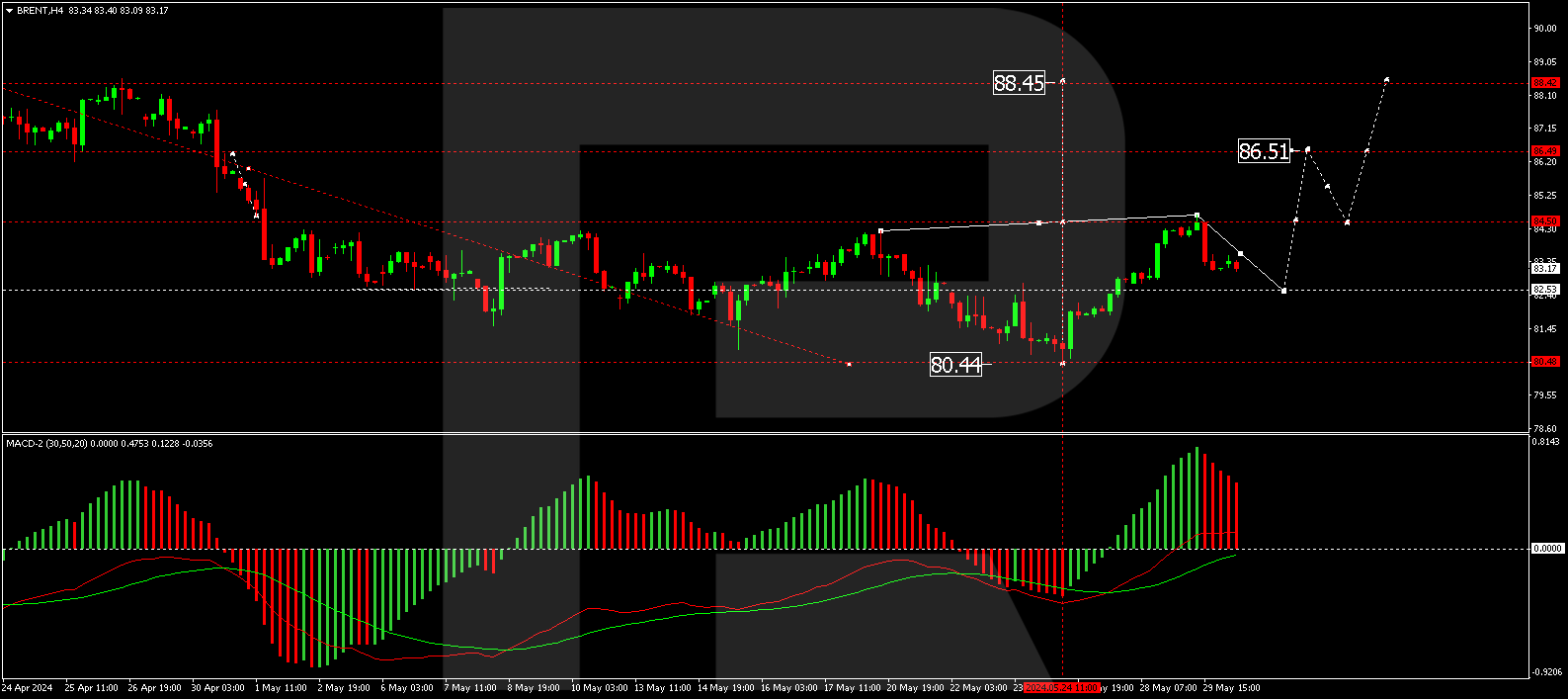
On the H4 chart, Brent oil has formed a consolidation range around the $87.50 level, with the current correction wave extending downwards. The price has already reached $83.50, and a further stretch to $82.82 is possible. Upon completing this correction, a new wave of growth towards $88.60 is anticipated, potentially continuing to $95.00. This bullish scenario is supported technically by the MACD indicator, whose signal line is below zero, suggesting a forthcoming update of the lows.

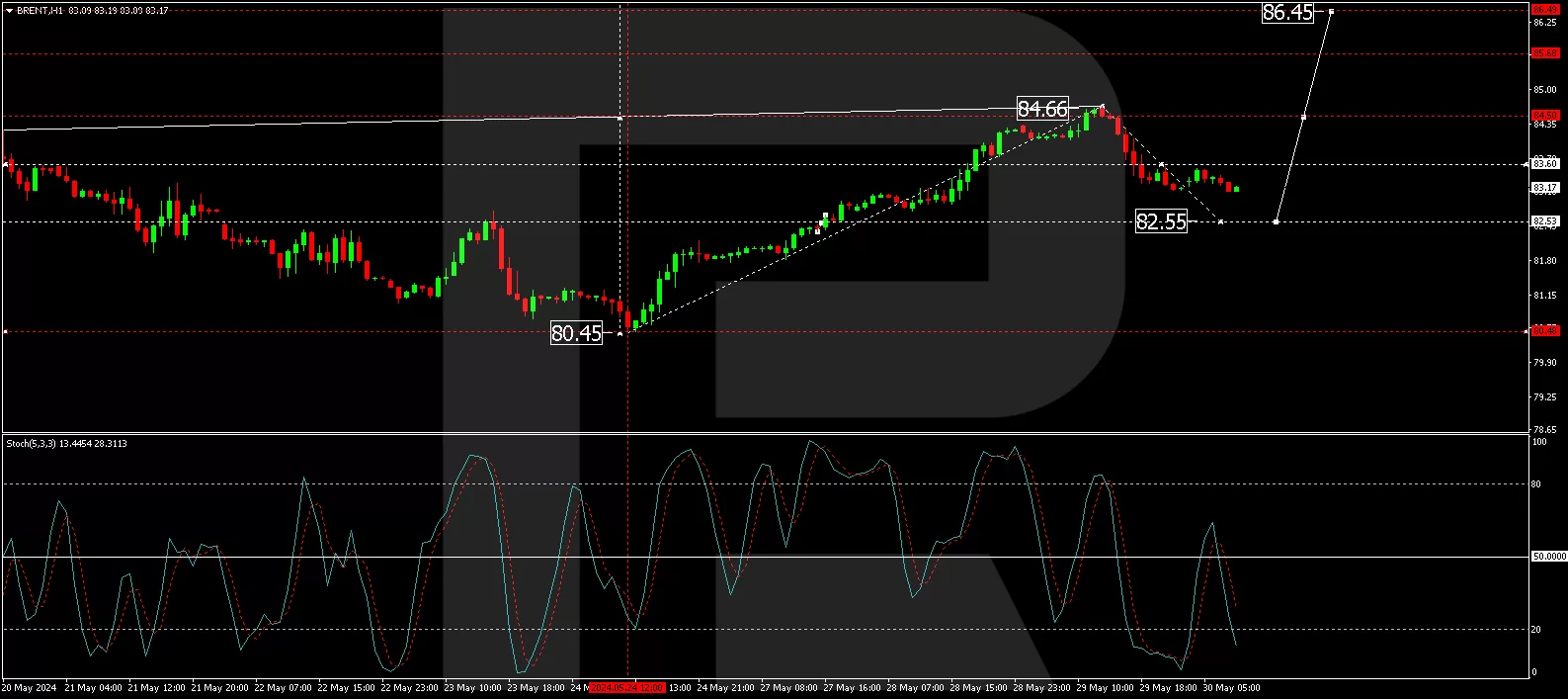
On the H1 chart, a fifth correction structure is developing towards $82.72. Once this target is achieved, a growth phase to $88.58 is expected, marking the first target of the new growth wave. This outlook is corroborated by the Stochastic oscillator, with its signal line currently above 80 and poised to descend to 20.

Disclaimer

Any forecasts contained herein are based on the author’s particular opinion. This analysis may not be treated as trading advice. RoboForex bears no responsibility for trading results based on trading recommendations and reviews contained herein.

Target Thursdays: USDJPY, Copper & EURCAD

By ForexTime

  • USDJPY sees over 700-pip swing 
  • Copper selloff rewards bears
  • EURCAD hits all bearish targets

It has been an intense trading week for financial markets.

More action could be expected due to corporate earnings and the US jobs report on Friday.

In the meantime, check out how these trading setups performed this week:


    1) USDJPY joins monster movers!

  • Where and when was Target Price (TP) published?

In our trade of the week article published on Monday 29th April:

The USDJPY demanded our attention after tumbling over 500 pips from its multi-decade top.

We highlighted that “sustained weakness below 155.00 may open a path back towards 154.20 and 153.60.”


  • What happened since TP was published?

The Yen’s aggressive appreciation on Monday morning fueled speculation around possible intervention by Japanese authorities.

A second suspected bout of intervention took place on Wednesday right after the US markets closed, sending the USDJPY as low as 153.00.

When considering how the USDJPY hit an intra-week peak at 160.22, this means the major currency pair has experienced an over 700-pip swing! 


  • How much in potential profits?

Those who took advantage of the move below 155.00 would have been rewarded 140 pips.


    2) Copper slips below $4.5

  • Where and when was Target Price (TP) published?

After hitting a fresh two-year high this week, FXTM’s new commodity Copper is under pressure.

Although the fundamentals favour further upside, in our article on Tuesday – we cautioned that “a technical throwback could be in play on the H1 charts with prices testing potential support levels”


  • What happened since TP was published?

Since punching above the $4.65 level, prices have tumbled over 3% lower amid potential profit taking.


  • How much in potential profits?

Traders who entered at $4.54 and exited at the $4.50 level would have caught a near 1% move to the downside.


    3) EURCAD hits all bearish targets

  • Where and when was Target Price (TP) published?

This technical scenario (EURCAD) is based on the FXTM Signals that are posted twice a day (before the London and New York sessions) for all FXTM clients to follow.

It can be found in the MyFXTM profile under Trading Services… FXTM Trading Signals.


  • What happened since TP was published?

The EURCAD slipped this morning as Canadian Dollar drew support from the rebound in oil prices.


  • How much in potential profits?

EURCAD has hit all its profit targets.

Traders who entered at 1.46969 and exited at the final target level of 1.46795 would have gained 17 pips.

Feel like you missed out on these profits?

You can keep following our “Daily Market Analysis” for fresh trading ideas and opportunities across global financial markets.


Forex-Time-LogoArticle by ForexTime

ForexTime Ltd (FXTM) is an award winning international online forex broker regulated by CySEC 185/12 www.forextime.com

Cybersecurity researchers spotlight a new ransomware threat – be careful where you upload files

By Selcuk Uluagac, Florida International University 

You probably know better than to click on links that download unknown files onto your computer. It turns out that uploading files can get you into trouble, too.

Today’s web browsers are much more powerful than earlier generations of browsers. They’re able to manipulate data within both the browser and the computer’s local file system. Users can send and receive email, listen to music or watch a movie within a browser with the click of a button.

Unfortunately, these capabilities also mean that hackers can find clever ways to abuse the browsers to trick you into letting ransomware lock up your files when you think that you’re simply doing your usual tasks online.

I’m a computer scientist who studies cybersecurity. My colleagues and I have shown how hackers can gain access to your computer’s files via the File System Access Application Programming Interface (API), which enables web applications in modern browsers to interact with the users’ local file systems.

The threat applies to Google’s Chrome and Microsoft’s Edge browsers but not Apple’s Safari or Mozilla’s Firefox. Chrome accounts for 65% of browsers used, and Edge accounts for 5%. To the best of my knowledge, there have been no reports of hackers using this method so far.

My colleagues, who include a Google security researcher, and I have communicated with the developers responsible for the File System Access API, and they have expressed support for our work and interest in our approaches to defending against this kind of attack. We also filed a security report to Microsoft but have not heard from them.

Double-edged sword

Today’s browsers are almost operating systems unto themselves. They can run software programs and encrypt files. These capabilities, combined with the browser’s access to the host computer’s files – including ones in the cloud, shared folders and external drives – via the File System Access API creates a new opportunity for ransomware.

Imagine you want to edit photos on a benign-looking free online photo editing tool. When you upload the photos for editing, any hackers who control the malicious editing tool can access the files on your computer via your browser. The hackers would gain access to the folder you are uploading from and all subfolders. Then the hackers could encrypt the files in your file system and demand a ransom payment to decrypt them.

Today’s web browsers are more powerful – and in some ways more vulnerable – than their predecessors.

Ransomware is a growing problem. Attacks have hit individuals as well as organizations, including Fortune 500 companies, banks, cloud service providers, cruise operators, threat-monitoring services, chip manufacturers, governments, medical centers and hospitals, insurance companies, schools, universities and even police departments. In 2023, organizations paid more than US$1.1 billion in ransomware payments to attackers, and 19 ransomware attacks targeted organizations every second.

It is no wonder ransomware is the No. 1 arms race today between hackers and security specialists. Traditional ransomware runs on your computer after hackers have tricked you into downloading it.

New defenses for a new threat

A team of researchers I lead at the Cyber-Physical Systems Security Lab at Florida International University, including postdoctoral researcher Abbas Acar and Ph.D. candidate Harun Oz, in collaboration with Google Senior Research Scientist Güliz Seray Tuncay, have been investigating this new type of potential ransomware for the past two years. Specifically, we have been exploring how powerful modern web browsers have become and how they can be weaponized by hackers to create novel forms of ransomware.

In our paper, RøB: Ransomware over Modern Web Browsers, which was presented at the USENIX Security Symposium in August 2023, we showed how this emerging ransomware strain is easy to design and how damaging it can be. In particular, we designed and implemented the first browser-based ransomware called RøB and analyzed its use with browsers running on three different major operating systems – Windows, Linux and MacOS – five cloud providers and five antivirus products.

Our evaluations showed that RøB is capable of encrypting numerous types of files. Because RøB runs within the browser, there are no malicious payloads for a traditional antivirus program to catch. This means existing ransomware detection systems face several issues against this powerful browser-based ransomware.

We proposed three different defense approaches to mitigate this new ransomware type. These approaches operate at different levels – browser, file system and user – and complement one another.

The first approach temporarily halts a web application – a program that runs in the browser – in order to detect encrypted user files. The second approach monitors the activity of the web application on the user’s computer to identify ransomware-like patterns. The third approach introduces a new permission dialog box to inform users about the risks and implications associated with allowing web applications to access their computer’s file system.

When it comes to protecting your computer, be careful about where you upload as well as download files. Your uploads could be giving hackers an “in” to your computer.The Conversation

About the Author:

Selcuk Uluagac, Professor of Computing and Information Science, Florida International University

This article is republished from The Conversation under a Creative Commons license. Read the original article.
 

Is scientific discovery driven by great individuals or by great teams?

By Denisa Mindruta, HEC Paris Business School 

“This isn’t mine; this is one for the team,” said Succession star Kieran Culkin as he accepted the Best Actor award at this year’s Golden Globes. It’s a familiar aspect of Hollywood awards speeches – a reminder that the stars dazzling us on screen could not exist without the people who support them. “It’s been said, but it’s a team effort, this show,” said Succession creator Jesse Armstrong at the awards, underlining the same sentiment.

Hollywood speeches aside, we do seem to focus on individuals when we acknowledge greatness. In business and science, the dominant cultural narrative is that the bulk of innovation is driven by a handful of exceptional individuals, or “stars.” We elevate pioneers like Steve Jobs or Albert Einstein, and reward individuals who show similar promise with resources that allow them to continue performing high-value work.

Star scientists are those who publish significantly more than their peers, producing papers with greater impact and actively participating in commercialisation ventures. However, science is rarely a solo effort. Even star scientists usually have a team ¬– a “constellation” – of collaborators behind them. Research teams have grown in size by 50% in the period between 1981 and 1999. In recent years, more than 80% of all science and engineering publications and over two-thirds of patents have been the product of multiple authors. Research collaborations that include star researchers typically achieve higher average performance than those without such individuals.

But what is the maximum impact that a single person can have on the joint performance of a collaboration? We examined the relative contributions individuals and their collaborators make to scientific innovation to understand how to optimize team composition to best perform.

Plus de trois fois sur quatre, c’est la complémentarité entre la tête d’affiche de l’équipe et le reste des membres qui apporte le plus de valeur aux recherches.
Flickr/NTNU, CC BY-SA

How star researchers improve collective performance

Star researchers improve collective performance in two ways. First, the presence and contributions of the star researcher improve the quality and output of their collaborators, leading to greater overall team success. Previous approaches have studied this so-called spillover effect by examining what happens when a star scientist leaves the group. These studies showed that when this happened, colleagues experienced a lasting 5-10% decline in publication rate.

Second, once a researcher has initial success, they find it increasingly easy to attract talent and resources. This is called the “Matthew effect,” named after a (loose) interpretation of a Biblical parable.

In practice, the Matthew effect reflects a feedback loop wherein star researchers can increase their success at a greater rate than their peers. It has been borne out by studies showing that star scientists gain preferential access to valuable resources like funding, talented graduate students, and advanced lab facilities in both in academia and in the private sector.

30 star scientists and their constellations

Prior research has treated spillover and the Matthew effect separately, but they are inextricably linked. So, we developed a model to capture this complexity.

We investigated the star-constellation relationship in collaborations that resulted in an invention. University researchers must disclose new inventions to their institutions. Because the disclosure is a legal document, it’s useful for our research because it sidesteps social noise such as favours and institutional politics that may skew rates of publication authorship. The data was taken from a U.S. university with a renowned medical school.

Analysis was performed using data on the 555 invention disclosures that were registered between 1988 and 1999. From the total cohort of 1003 scientists, of which 248 were team leaders, we identified a cohort of 30 “stars” who were in the top 5% of globally cited researchers.

Irreplaceable stars

The contribution of a star scientist to a team is dominant – i.e. their contribution exceeds that of their team – when they are “irreplaceable”. This means that they are so well-matched to the rest of the team that the constellation would be unable to produce work of the same standard without them, even with a new leader.

What makes a leader “well matched” to their team? We looked for trends in the dataset, considered the research impact, knowledge profile, and the range of seniorities in the group, so we could determine what matters the most when scientists choose collaborators.

We found that high-value team leaders tend to work with high-value collaborators, supporting the theory that star scientists attract talented constellations. Further, prominent leaders have access to, and are preferred by, collaborators with whom they share some expertise overlap, though a very high similarity makes the collaboration less favourable. Some common language and goals are a strength, but too much overlap in expertise stifles innovation.

In addition, high-value team leaders tend to work in groups where scientists of both senior and junior ranks come together. We therefore argue that diversity of perspectives and skills enables discovery. Last but not least, star scientists and their collaborators tend to share the same research profile with respect to the application domains of their research.

Star’s surprisingly small contribution

We used these findings to investigate whether the star or constellation makes the greater contribution to scientific discovery. When a star and constellation are well-matched, they produce higher quality research. For each collaboration, we calculated whether the star or constellation would be harder to replace.

To calculate the replaceability, we replaced a star or constellation with the substitute that was the second-best match. The greater the loss in research impact, the more irreplaceable the missing star or constellation was to the research.
Surprisingly, our results show that it is rare for a single person to make a more impactful contribution than their team. The relative contribution the star makes to knowledge creation surpasses the constellation’s in only 14.3% of collaborations. The constellation is the dominant party, in terms of relative value creation, in only 9.5% of cases. In more than three-quarters of cases, neither party dominates, with complementarity between star and constellation maximizing research value. In almost every pairing, innovation was a collective endeavor.

In short, to identify the drivers of innovation and discovery, we should not allow our view of the entire sky to be eclipsed by a few very bright stars.

Championing the whole team

Scientists perceived to bring star qualities are in demand and are often induced to transfer from one institution to another. This research suggests that administrators should endeavour to enable stars to move with their teams. Adjusting to work without their collaborators may have an adverse effect on the scientist’s research and their ability to attract additional talented hires. Dominating stars suffer a smaller loss without their team, but they are getting a bigger piece of a smaller pie.

However, the most significant takeaway for this research is that research credit is unfairly biased towards prominent individuals. Star scientists undoubtedly drive innovation, and a minority brings irreplaceable value. However, when considering the research output of a star, their achievements should be looked at within the context of a team. In most cases, the constellation brings a high contribution that merits recognition with IP credits, financial rents and other resources.The Conversation

About the Author:

Denisa Mindruta, Professeur Associé en Stratégie et Politique d’Entreprise, HEC Paris Business School

This article is republished from The Conversation under a Creative Commons license. Read the original article.
 

WTI oil declines on rising inventories and negotiations between Israel and Hamas. Rising unemployment in New Zealand may force RBNZ to start cutting rates earlier

By JustMarkets

At the end of Tuesday, the Dow Jones Index (US30) decreased by 1.49%, while the S&P 500 index (US500) was down 1.57%. The NASDAQ Technology Index (US100) closed negative 2.04% yesterday. Rising labor costs pushed bond yields higher and pressured stocks. The US Employment Cost Index for the first quarter rose more than expected, which is hawkish for Fed policy.

The US Federal Reserve will hold its next monetary policy meeting today. The rate is expected to be kept at 5.5% at this meeting, so traders will focus on the FOMC statement and Jerome Powell’s press conference. Higher inflation and strong activity and employment figures have led to a shift in market expectations regarding the timing of the first interest rate cut. Markets now forecast a rate cut of 3 bps by June, 20 bps by September, and 36 bps by December. This is a striking change considering that just three months ago the market was fully discounting 150 bps of rate cuts this year from the March FOMC meeting. So if Jerome Powell announces that the rate cuts have been pushed to late summer or fall/winter, that would be a major support for the US dollar and a negative for indices and precious metals.

Amazon (AMZN) reported strong first-quarter results Tuesday, led by growth in its cloud computing division and new advertising dollars from its Prime Video streaming service. Shares of Amazon.com Inc. rose about 2% in after-hours trading.

Equity markets in Europe were mostly down on Tuesday. The German DAX (DE40) fell by 1.03%, the French CAC 40 (FR40) closed down 0.99% yesterday, the Spanish IBEX 35 (ES35) decreased by 2.22%, and the British FTSE 100 (UK100) closed negative 0.04%.

The Eurozone inflation report showed a decline in the core index (excluding volatile food and energy prices) for April to a 2-year low of 2.7% y/y, which is dovish for ECB policy. ECB Governing Council spokesman Villeroy de Galhau said that Eurozone inflation data for April gives the ECB the confidence to start cutting interest rates in June. Eurozone Q1 GDP grew by 0.3% QoQ and 0.4% YoY, stronger than expectations of 0.1% QoQ and 0.2% YoY. Swaps estimate the odds of a 25 bps ECB rate cut at the next meeting on June 6 at 87%.

WTI crude oil prices fell towards $81/bbl on Wednesday, declining for the third consecutive session as an industry report pointed to a sharp rise in US crude inventories, while hopes of a ceasefire agreement in the Middle East continued to weigh on oil prices. API data showed that US crude inventories rose by 4.906 million barrels last week after declining by 3.23 million barrels the previous week, the biggest increase since mid-March. On Tuesday, the US EIA also reported that US oil production rose to 13.15 million barrels per day in February from 12.58 barrels per day in January, the biggest monthly increase in 3.5 years.

Asian markets were predominantly up yesterday. Japan’s Nikkei 225 (JP225) rose by 1.24%, China’s FTSE China A50 (CHA50) was down 0.18%, Hong Kong’s Hang Seng (HK50) was up 0.09% for Tuesday, and Australia’s ASX 200 (AU200) was positive 0.35%.

New Zealand’s unemployment rate rose to 4.3% in the first quarter, exceeding forecasts and the highest in three years, while employment unexpectedly fell by 0.2%, putting the Reserve Bank of New Zealand (RBNZ) on track to cut interest rates ahead of the US Federal Reserve. Investors are betting on a fourth-quarter RBNZ rate cut, although some expect the official money rate to remain unchanged until 2025.

Judo Bank Flash Australian manufacturing PMI rose to 49.6 in April from 47.3 a month earlier, according to the final estimate. This was the third consecutive monthly deterioration in conditions in the manufacturing sector, albeit slight. New orders for goods continued to fall, attributed to subdued market conditions and the impact of higher interest rates.

S&P 500 (US500) 5,035.69 −80.48 (−1.57%)

Dow Jones (US30) 37,815.92 −570.17 (−1.49%)

DAX (DE40) 17,932.17 −186.15 (−1.03%)

FTSE 100 (UK100) 8,144.13 −2.90 (−0.04%)

USD Index 106.26 +0.68 (+0.64%)

Important events today:
  • – New Zealand RBNZ Financial Stability Report at 00:00 (GMT+3);
  • – New Zealand Unemployment Rate (m/m) at 01:45 (GMT+3);
  • – New Zealand RBNZ Gov Orr Speaks at 04:00 (GMT+3);
  • – UK Manufacturing PMI (m/m) at 11:30 (GMT+3);
  • – US ADP Nonfarm Employment Change (m/m) at 15:15 (GMT+3);
  • – Canada Manufacturing PMI (m/m) at 16:30 (GMT+3);
  • – US ISM Manufacturing PMI (m/m) at 17:00 (GMT+3);
  • – US JOLTs Job Openings (m/m) at 17:00 (GMT+3);
  • – US Crude Oil Reserves (w/w) at 17:30 (GMT+3);
  • – US FOMC Statement at 21:00 (GMT+3);
  • – US Fed Interest Rate Decision at 21:00 (GMT+3);
  • – US FOMC Press Conference at 21:30 (GMT+3);
  • – Canada BoC Gov Macklem Speaks at 23:15 (GMT+3).

By JustMarkets


This article reflects a personal opinion and should not be interpreted as an investment advice, and/or offer, and/or a persistent request for carrying out financial transactions, and/or a guarantee, and/or a forecast of future events.