Silver prices fell to a 6-week low. Japanese authorities may intervene again to support the yen exchange rate

By JustMarkets

On Wednesday, the US stock indices ended trading in a mixed direction. At the end of the day, the Dow Jones Index (US30) rose by 0.04%, and the S&P 500 Index (US500) added 0.16%. The NASDAQ Technology Index (US100) closed positive 0.49%. Stock gains on Wednesday were capped by a rise in bond yields after hawkish comments from Fed spokesman Bowman lifted 10-year bond yields to a weekly high and dampened expectations of a Fed rate cut this year.

FedEx (FDX) is up more than 15% after reporting better-than-expected Q4 adjusted EPS and estimating 2025 adjusted EPS above consensus. Additionally, Amazon (AMZN) is up more than 3% after announcing plans to launch an online store for low-priced clothing and home goods. Apple (AAPL) shares are up more than 1% after Rosenblatt Securities upgraded the stock to “buy” from “neutral” with a $260 price target. Moderna (MRNA) is down more than 10% and topped the list of losers in the S&P 500 and Nasdaq 100 after new data showed that the efficacy of its RSV vaccine fell sharply in its second year and was lower than competing vaccines.

Markets are awaiting Friday’s release of PCE deflator data for May, the Fed’s preferred inflation gauge, to see if price pressures are easing, which could pave the way for the Fed to cut interest rates. The consensus is that the May core PCE deflator fell to 2.6% y/y from 2.8% y/y in April. If the actual data comes in line with the estimate, it will have a negative impact on the US dollar but will be positive for rising stock indices.

Equity markets in Europe were mostly down on Wednesday. Germany’s DAX (DE40) fell by 0.12%, France’s CAC 40 (FR40) closed down 0.69%, Spain’s IBEX 35 (ES35) lost 0.80%, and the UK’s FTSE 100 (UK100) closed negative 0.27%. European equity markets opened lower on Thursday as investors became more cautious and reassessed the outlook for the global economy, inflation, and interest rates. In Europe today, traders will analyze consumer and business confidence data in Italy, retail sales data in Spain, and the Bank of England’s latest financial stability report. On Thursday, the EU leaders’ summit will start in Belgium.

WTI crude prices fell to around $80.5 a barrel on Thursday, retreating further from a near two-month high. An unexpected increase in US oil inventories added to concerns about weakening demand in the world’s top oil consumer. EIA data showed that the US crude inventories rose by 3.591 million barrels last week, defying market expectations of a 3 million barrel decline.

Silver prices (XAG/USD) held below $29 an ounce, near a six-week low, and were pressured by a strong dollar and Treasury bond yields after hawkish remarks from a Federal Reserve official. Meanwhile, investors continued to assess the outlook for silver demand in China, a major consumer, as industrial use of the metal is likely to suffer due to overcapacity in solar panel production.

Asian markets were predominantly up yesterday. Japan’s Nikkei 225 (JP225) rose by 1.26%, China’s FTSE China A50 (CHA50) added 0.09%, Hong Kong’s Hang Seng (HK50) gained 0.09%, and Australia’s ASX 200 (AU200) was negative 0.71%.

Japan’s 10-year government bond yield rose to 1.1%, the highest in almost a month, while the 2-year bond yield hit a two-week high near 0.35% amid strong retail sales data and a sharply weaker yen, raising bets that the Bank of Japan (BoJ) may raise interest rates at its July meeting. The data showed that retail sales in Japan rose 3% in May from a year earlier, accelerating from an upwardly revised 2.4% increase in April and well above market expectations for a 2% rise. Meanwhile, the yen fell to 160 per dollar, hitting its lowest level since 1986.

Australia’s 10-year government bond yield climbed above 4.4% to a more than three-week high as high inflation readings heightened fears that the Reserve Bank of Australia (RBA) may raise interest rates again as early as its next meeting in August.

S&P 500 (US500) 5,477.90 +8.60 (+0.16%)

Dow Jones (US30) 39,127.80 +15.64 (+0.040%)

DAX (DE40) 18,155.24 −22.38 (−0.12%)

FTSE 100 (UK100) 8,225.33 −22.46 (−0.27%)

USD Index 106.05 +0.44 (+0.41%)

Important events today:
  • – Japan Retail Sales (m/m) at 02:50 (GMT+3);
  • – UK BoE Financial Stability Report at 12:00 (GMT+3);
  • – UK BoE Gov Bailey Speaks at 12:30 (GMT+3);
  • – US Initial Jobless Claims (w/w) at 15:30 (GMT+3);
  • – US Durable Goods Orders (m/m) at 15:30 (GMT+3);
  • – US GDP (q/q) at 15:30 (GMT+3);
  • – US Pending Home Sales (m/m) at 17:00 (GMT+3);
  • – US Natural Gas Storage (w/w) at 17:30 (GMT+3).

By JustMarkets


This article reflects a personal opinion and should not be interpreted as an investment advice, and/or offer, and/or a persistent request for carrying out financial transactions, and/or a guarantee, and/or a forecast of future events.
Yen under pressure as USD/JPY hits new highs since 1986

By RoboForex Analytical Department

The USD/JPY pair soared to 160.34 on Thursday, reaching levels not seen since 1986, as market participants increasingly anticipate potential interventions from Japanese authorities. Despite repeated verbal assurances, the Japanese government has not taken concrete financial measures, leaving the yen vulnerable.

Finance Minister Shunichi Suzuki reiterated that the government stands ready to counteract sudden and undesirable fluctuations in the yen’s value, highlighting its preparedness to engage in market operations if necessary. However, when and how these interventions might occur remains uncertain, adding to the yen’s woes.

A significant factor in the yen’s ongoing decline is the stark contrast in interest rates between the Bank of Japan, which maintains a rate close to zero, and the Federal Reserve. This disparity has been a primary driver of the yen’s weakness, with the currency losing approximately 2% against the dollar in June alone, culminating in a 14% decline over the year.

USD/JPY technical analysis

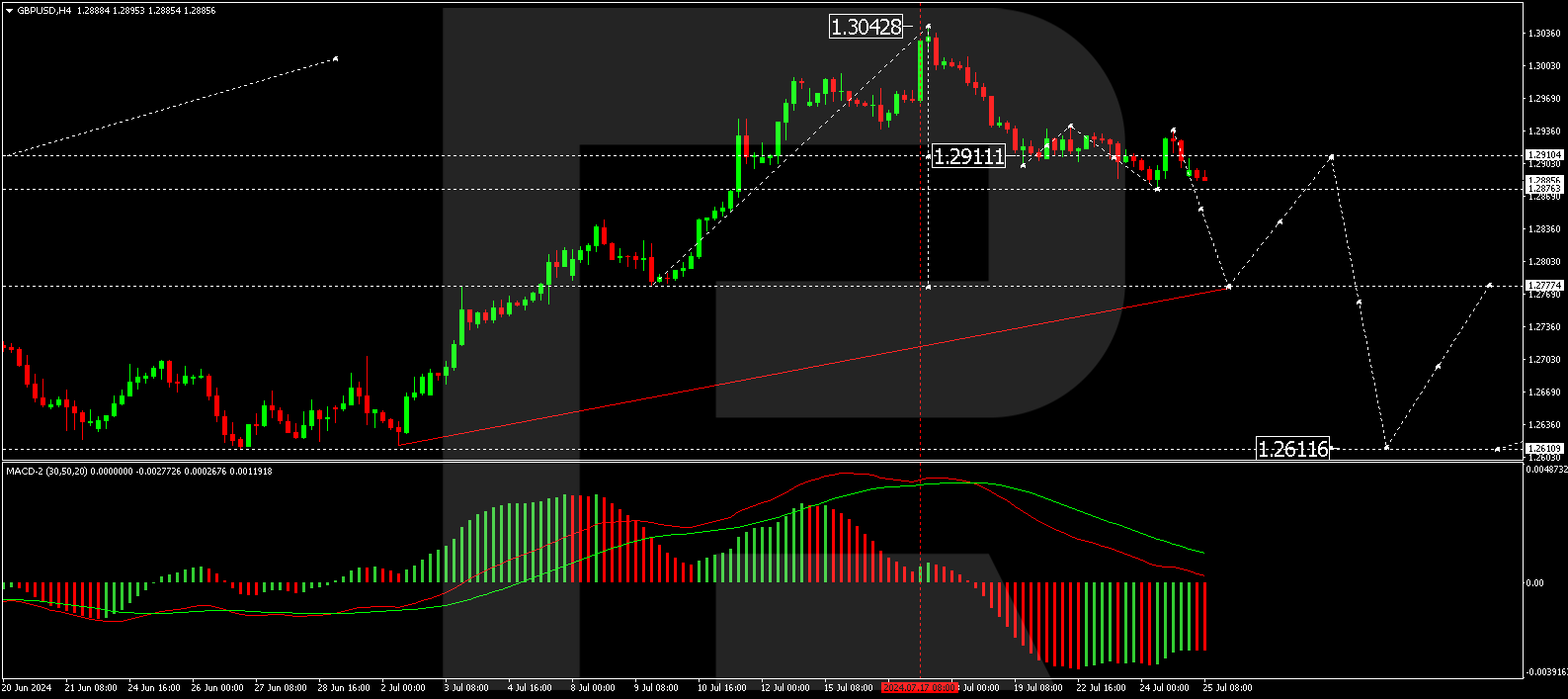
The USD/JPY has broken through the critical 160.00 level, reaching up to 160.85. The market is currently retracing to test the 160.00 level from above. Should this level hold, we anticipate further growth towards 161.30, potentially extending the bullish trend to 163.30. This bullish scenario is supported by the MACD indicator, which shows the signal line well above zero, indicating strong upward momentum.

On the H1 chart, after reaching 160.85, the pair is undergoing a correction towards 160.00. Completion of this correction could pave the way for another ascent to 161.30. This view is technically reinforced by the Stochastic oscillator, which is currently below 20 and poised for a rebound towards 80, suggesting a potential resurgence in buying pressure.

Market outlook

As the discrepancy between US and Japanese monetary policies continues to influence the USD/JPY, traders should remain alert to any signs of actual intervention by Japanese authorities. Such intervention could significantly impact market dynamics, potentially stalling or reversing the yen’s current depreciation trend.


Disclaimer

Any forecasts contained herein are based on the author’s particular opinion. This analysis may not be treated as trading advice. RoboForex bears no responsibility for trading results based on trading recommendations and reviews contained herein.

Bitcoin: Waits on key risk event

By ForexTime

  • Bitcoin ↓ over 8% on Monday
  • Roughly 2% above $60,000 support
  • Over past year US PCE triggered moves of ↑ 0.9% & ↓ 2.3%
  • Key point of interest – $60,000
  • Technical levels – $60,254.93, $57,5656.20 and $66,365.11

Bitcoin’s extended losses have set off alarm bells for bulls, with prices sinking below $60,000 for the first time since early May!

The world’s largest cryptocurrency collapsed over 8% on Monday thanks to cooling demand for Bitcoin ETFs and uncertainty over US interest rates. Developments revolving around the failed Mt. Gox exchange compounded the overall negativity, allowing sellers to dominate the scene.

Despite prices rebounding in the previous session, sentiment remains fragile with bears on standby to pounce again. In the near term, Bitcoin’s fate may be tied to Friday’s US PCE deflators.

The Fed’s preferred inflation gauge – the Core PCE has the potential to impact bets around when the central bank will cut rates in 2024. Any changes to these expectations may impact cryptocurrencies which have displayed sensitivity to interest rates.

Traders are currently pricing in a 70% probability of a 25-basis point cut in September with a move fully priced in by November.

Fun fact: Over the past year, the US PCE deflators have triggered upside moves of as much as 0.9% or declines of 2.3% in a 6-hour window post-release.

Taking a look at the technicals

With Bitcoins’ weekly price chart showing a potential double top, this PCE report could not be better timed to determine the cryptos’ next course of action- above or below the double top neckline.

Notice how volume declined into the second top of the pattern.

Bitcoin on the daily time frame may be in a potential symmetrical triangle, bouncing off the lower bound trendline (support) on yesterday’s price action.

Interestingly, this bounce off the support area of the symmetrical triangle coincides with an entry and exit out of the oversold zone of the RSI.  

The Relative Strength Index (RSI) is an indicator that highlights overbought and oversold zones.

Key levels to look out for in a decline include:

  • $60,254.93 – The neckline area of the potential double-top pattern
  • $57,5656.20 – The 200-day simple moving average (SMA)
  • $56,457.70 – The lowest price between Bitcoins all time High ($73,711.39) and the most recent swing high ($69,498.98)

In a rally, the following levels are significant points of interest


  • $66,365.11 – The 50-day simple moving average
  • $71,428 – The upper bound trendline of the symmetrical pattern


Forex-Time-LogoArticle by ForexTime

ForexTime Ltd (FXTM) is an award winning international online forex broker regulated by CySEC 185/12 www.forextime.com

AUD/USD surged, buoyed by RBA confidence and inflation growth

By RoboForex Analytical Department

The Australian dollar strengthened notably against the US dollar, with the AUD/USD pair reaching 0.6684. Australia’s May economic indicators from MI remained unchanged at zero compared to the previous value. Meanwhile, Australia’s weighted average consumer price index increased to 4.0% y/y from the last 3.6%, surpassing the less ambitious forecast of 3.8%.

Earlier statistics from Westpac also showed a rise in Australia’s consumer sentiment index in June, climbing by 1.7%, following a 0.3% decline in May.

At the Australian Banking Association conference, RBA Assistant Governor Chris Kent indicated that the Reserve Bank of Australia is not overly concerned about the growing interest in private loans among consumers. Kent highlighted the significant role that private credit plays in the market and underscored that the RBA is closely monitoring developments. However, the regulator is not overly concerned about growth in this area, as it is not particularly large in Australia.

Meanwhile, business investment is on the rise. Kent drew attention to a notable disparity between business confidence, business conditions, and consumer sentiment. The latter position appears to be below average levels.

AUDUSD technical analysis

On the H4 chart of AUD/USD, the market ended the correction at 0.6577. Today, we consider a consolidation range forming around the level of 0.6666. With an upside exit, we will consider the probability of another growth structure to the level of 0.6703 with the prospect of continued growth to 0.6744. A correction link to the level of 0.6666 (test from above) is possible, followed by potential growth towards 0.6750. Technically, the MACD indicator supports this scenario. Its signal line is above the zero mark and is directed strictly upwards.

On the H1 chart of AUD/USD, a correction to 0.6626 is executed. Today, the market broke upwards to 0.6666 and continues growing towards 0.6694 with the prospect of continuing the development of the wave structure to 0.670, the local target. Technically, this scenario is confirmed by the Stochastic oscillator. Its signal line is above the level of 80. We expect the beginning of the decline to the level of 20.


Disclaimer

Any forecasts contained herein are based on the author’s particular opinion. This analysis may not be treated as trading advice. RoboForex bears no responsibility for trading results based on trading recommendations and reviews contained herein.

RBA may raise rates amid price hikes. BoC is likely to postpone rate cuts amid inflationary pressures

By JustMarkets

The US stock indices ended trading mixed on Tuesday. At the end of Tuesday, the Dow Jones Index (US30) was down 0.76%, while the S&P 500 Index (US500) added 0.39%. The NASDAQ Technology Index (US100) closed positive 1.26%. The broader market held its ground after the US Consumer Confidence Index for June came in stronger than expected.

The Conference Board’s US Consumer Confidence Index for June fell by 0.9 to 100.4, slightly stronger than expectations of 100.0. The S&P CoreLogic Composite-20 Home Price Index in the US for April fell to 7.20% y/y from 7.46% y/y in March, stronger than expectations of 7.00% y/y. The Richmond Fed survey of business activity in the US manufacturing sector for June declined to negative 10 from 0, weaker than expectations of 3. The Chicago Fed National Activity Index for June unexpectedly rose by 0.44 to 0.18, stronger than expectations of a decline to 0.25.

On Tuesday, Fed spokeswoman Bowman’s hawkish comments proved bearish for stocks when she said she sees several upside risks to the inflation outlook and “we are still not at a point where it is appropriate to lower the discount rate.” She added that she “does not see the Fed cutting the Funds rate this year and has pushed back her estimate for a rate cut to 2025.” Fed spokeswoman Cook said it would be appropriate for the Fed to cut interest rates “at some point,” but “the timing of any such adjustment will depend on how economic data evolve and what they mean for the economic outlook and balance of risks.” Markets estimate the odds of a 25 bps rate cut at 10% at the July 30–31 FOMC meeting and 65% at the September 17–18 meeting.

Canada’s annual inflation rate for May 2024 rose to 2.9% from a three-year low of 2.7% in the previous month, contradicting market expectations of a slowdown to 2.6%. Although inflation is expected to remain near the 3% mark in the first half of the year, the halt in the disinflationary trend belied earlier bets that the Central Bank (BoC) would continue to ease monetary policy. The Canadian dollar strengthened to 1.365 per dollar, the strongest level since the beginning of the month.

Equity markets in Europe were mostly down on Tuesday. Germany’s DAX (DE40) fell by 0.81%, France’s CAC 40 (FR40) closed down 0.58%, Spain’s IBEX 35 (ES35) lost 0.48%, and the UK’s FTSE 100 (UK100) closed negative 0.41%.

European equity markets opened higher on Wednesday, building on strong gains on Wall Street. However, investors remained cautious ahead of Friday’s US PCE inflation data, which could affect the Federal Reserve’s monetary policy outlook. The GfK consumer climate indicator for Germany fell to 21.8 in July 2024 from a marginally revised 21.0 in the previous period, missing market estimates of 18.9 and marking the first decline in five months. The interruption of the recent upward trend in consumer sentiment shows that recovery from the consumer downturn will be difficult. A sustained recovery in consumer sentiment requires a slowdown in inflation.

WTI crude futures climbed above $81 a barrel on Wednesday, recovering some of the previous session’s losses, even after industry data pointed to an unexpected rise in US crude inventories, adding to fears of weaker demand in the world’s top oil consumer. API data showed that US crude inventories rose by 0.914 million barrels last week, contradicting market expectations of a 3 million barrel decline. Official data from the US EIA will be released today.

Asian markets were predominantly up yesterday. Japan’s Nikkei 225 (JP225) rose by 0.95%, China’s FTSE China A50 (CHA50) was down 0.15%, Hong Kong’s Hang Seng (HK50) added 0.25% and Australia’s ASX 200 (AU200) was positive 1.36%.

The offshore yuan depreciated to 7.29 per dollar, hitting its lowest level in seven months, mainly due to weak Central Bank guidance and a stronger US dollar. The People’s Bank of China (PBoC) set the average rate at 7.1248 per dollar, the lowest since November, suggesting the central bank may be allowing the yuan to weaken gradually.

The Australian dollar rose to $0.667, hitting a two-week high after better-than-expected domestic inflation data bolstered bets that the Reserve Bank of Australia (RBA) may raise interest rates again after a hawkish pause in June. Australia’s monthly Consumer Price Index rose to 4% in May, accelerating from 3.6% in April and beating market expectations of 3.8%. The latest figure was also the highest since November last year.

S&P 500 (US500) 5,469.30 +21.43 (+0.39%)

Dow Jones (US30) 39,112.16 −299.05 (−0.76%)

DAX (DE40) 18,177.62 −147.96 (−0.81%)

FTSE 100 (UK100) 8,247.79 −33.76 (−0.41%)

USD Index 105.62 +0.15 (+0.14%)

Important events today:
  • – Australia Consumer Price Index (m/m) at 04:30 (GMT+3);
  • – German GfK Consumer Climate (m/m) at 09:00 (GMT+3);
  • – US Building Permits (m/m) at 15:30 (GMT+3);
  • – US New Home Sales (m/m) at 17:00 (GMT+3);
  • – US Crude Oil Reserves (w/w) at 17:30 (GMT+3).

By JustMarkets


This article reflects a personal opinion and should not be interpreted as an investment advice, and/or offer, and/or a persistent request for carrying out financial transactions, and/or a guarantee, and/or a forecast of future events.
Brent crude oil hits two-month high amid geopolitical tensions

By RoboForex Analytical Department

Brent crude oil prices surged to $86 per barrel on Tuesday, marking the highest level in two months. This rise was driven by escalating geopolitical risks in Eastern Europe and the Middle East, particularly the ongoing confrontation between Israel and Hamas, which shows no sign of abating despite the involvement of international mediators backed by the US.

On the demand side, uncertainties persist. China, the world’s largest oil importer, continues to face significant economic challenges, contributing to the volatile market sentiment. The retail sector in China is under pressure following disappointing results from the mid-year online sales, with Chinese consumers showing reluctance to spend amidst concerns about personal wealth, the ongoing property market crisis, delayed wages, and high youth unemployment. These factors are critical as they jeopardise China’s GDP growth target of around 5% for the year.

Brent technical analysis

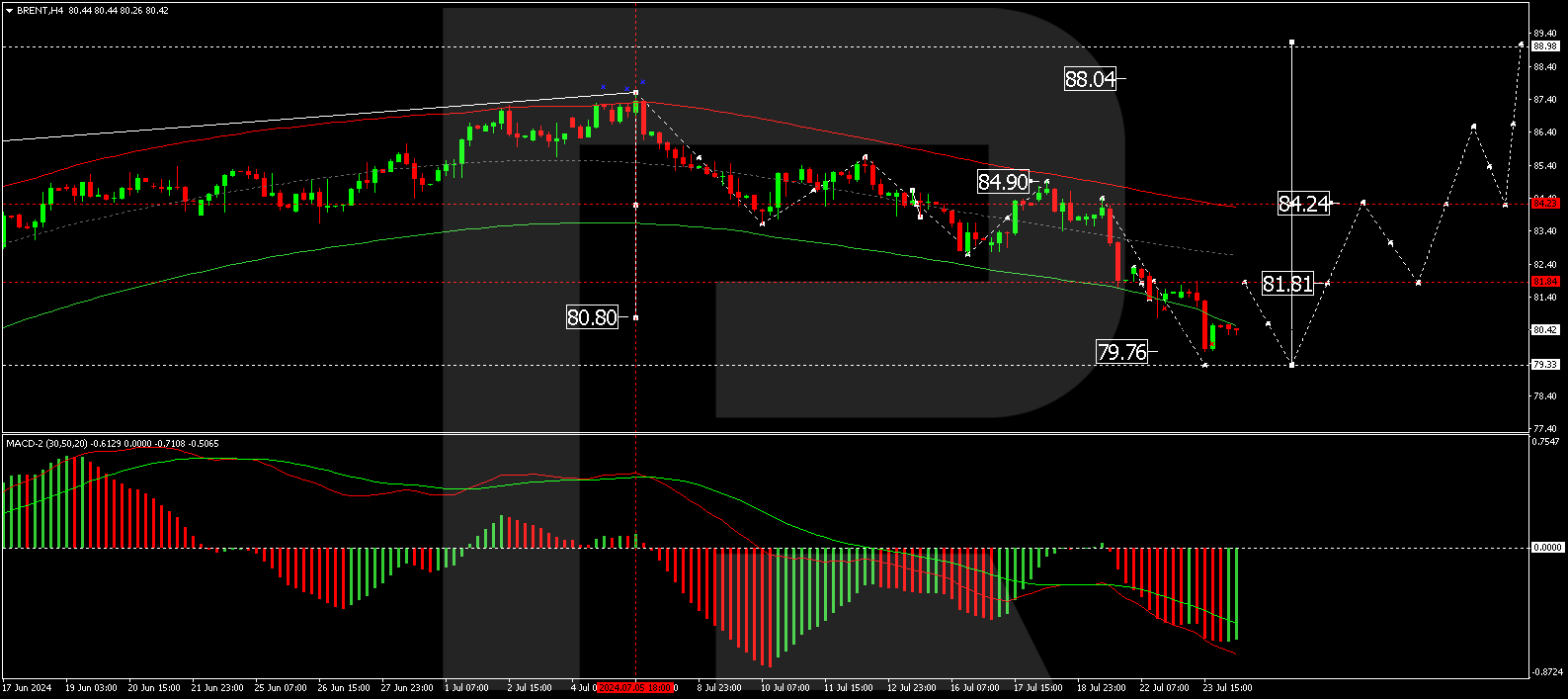
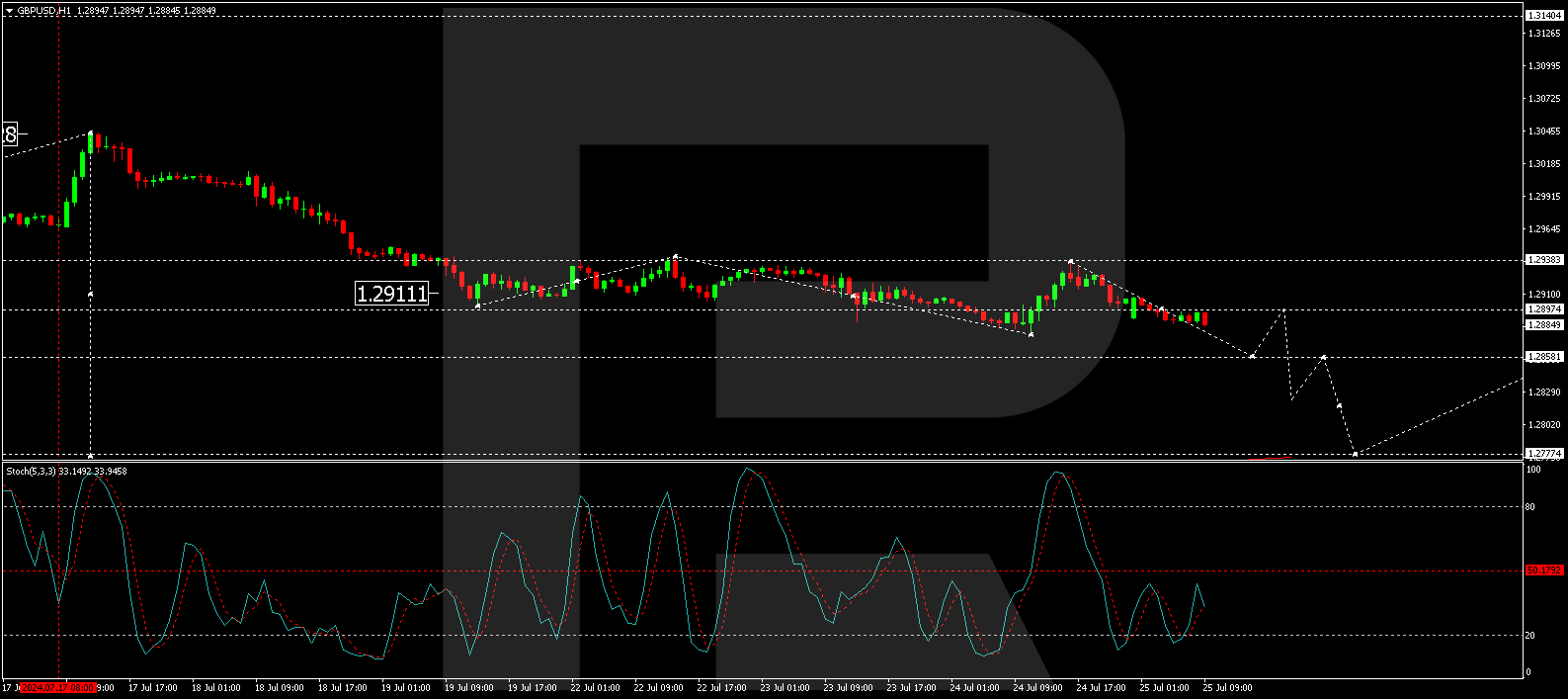
On the H4 chart, Brent is currently advancing towards the $86.50 level, which is identified as the immediate target. Once this level is reached, a potential correction to $81.60 may occur, testing from above. Subsequently, the market might initiate a new growth wave aiming for $89.00, with potential to extend up to $94.00. This bullish outlook is supported by the MACD indicator, whose signal line is above zero and climbing steeply.

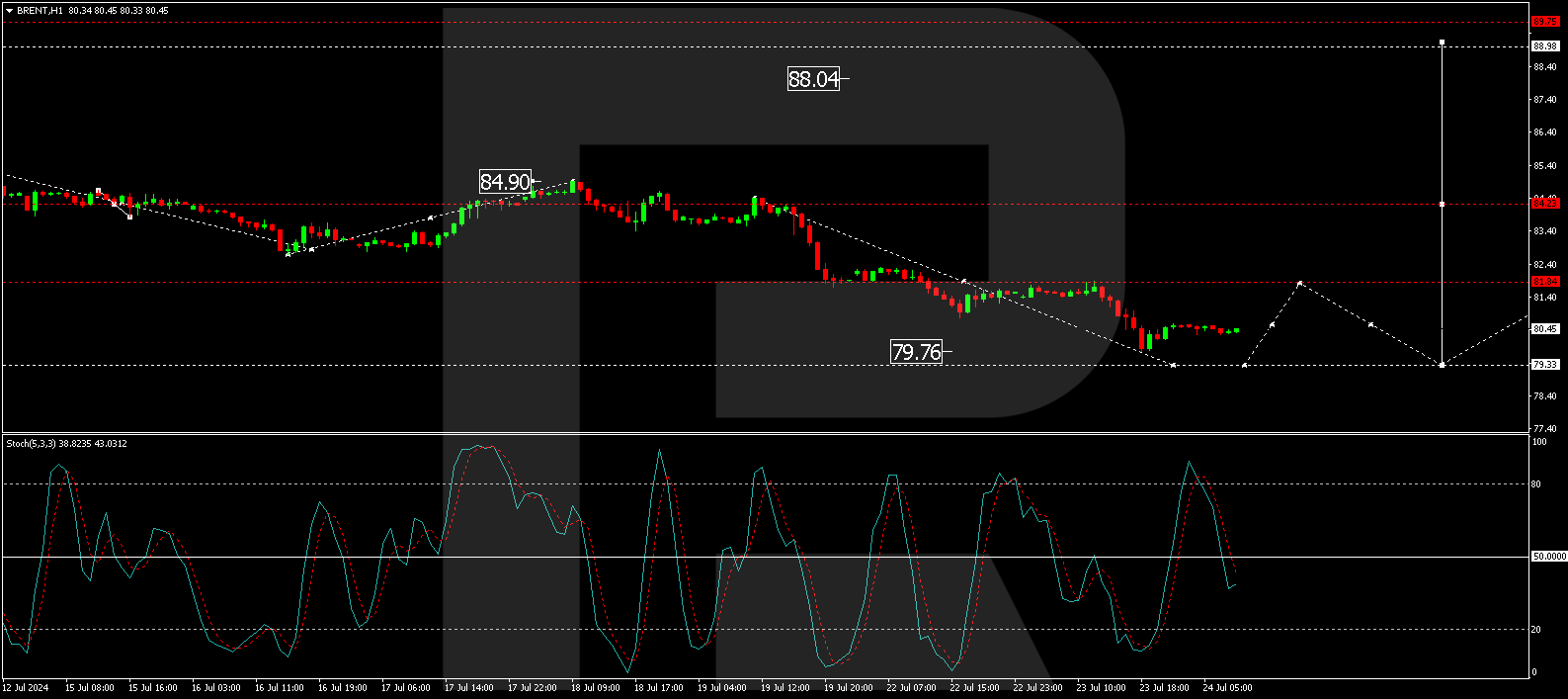
On the H1 chart, Brent found support at $84.00 and is now progressing through the latter stages of the current growth wave. The market has already achieved the $85.24 mark. We anticipate the formation of a narrow consolidation range around this level, with a breakout above potentially leading to further growth towards $86.50. This scenario is technically reinforced by the Stochastic oscillator, with its signal line poised above 20 and gearing up for an ascent to 80.

Market outlook

Investors should closely monitor developments in geopolitical hotspots and economic indicators from major economies like China and the US, as these could significantly sway oil prices. The current trajectory suggests bullish momentum for Brent crude, but the volatile nature of geopolitical events and economic data releases warrants cautious optimism.


Disclaimer

Any forecasts contained herein are based on the author’s particular opinion. This analysis may not be treated as trading advice. RoboForex bears no responsibility for trading results based on trading recommendations and reviews contained herein.

RBA and RBNZ have no plans to cut rates this year. Oil is trading at a 2-month high

By JustMarkets

On Monday, the Dow Jones (US30) Index added 0.67% and rose to a one-month high, while the S&P 500 (US500) Index fell by 0.31%. The NASDAQ Technology Index (US100) closed negative 1.09% and fell to a one-week low. Weakness in technology stocks on Monday weighed on the Nasdaq 100 and the overall market after Truist Advisory Services downgraded the technology sector to Neutral from Elevated, citing valuation issues.

The Dallas Fed’s survey of the US manufacturing outlook for June rose 4.3 to negative 15.1, slightly weaker than expectations of 15.0. Comments from FOMC officials were mixed yesterday. Chicago Fed President Goolsbee said that the Fed may need to consider whether restrictive policies are putting too much pressure on the economy. San Francisco Fed President Daly said that if inflation falls more slowly than expected, it would be appropriate for the Fed to keep interest rates high for longer, but if inflation falls quickly or the labor market cools more than expected, it would be necessary to cut rates. Markets estimate the odds of a 25bp rate cut at 10% at the July 30–31 FOMC meeting and 65% at the next meeting on September 17–18.

Equity markets in Europe were mostly up on Monday. Germany’s DAX (DE40) rose by 0.89%, France’s CAC 40 (FR40) closed up 1.03%, Spain’s IBEX 35 (ES35) added 1.27%, and the UK’s FTSE 100 (UK100) closed positive 0.53%. European equity markets opened lower on Tuesday as cautious sentiment prevailed ahead of key US inflation data, the first presidential debate between Joe Biden and Donald Trump this week, and the French elections that begin this weekend.

Germany’s IFO Business Climate Index for June unexpectedly fell by 0.7 to 88.6 against expectations of a rise to 89.6. ECB executive board spokeswoman Schnabel said yesterday that the risk of new inflation spikes means the ECB is not committing to a fixed rate and remains data-dependent. Swaps discount the odds of an ECB rate cut by 25 bps at 5% for the July 18 meeting and 66% for the September 12 meeting.

WTI crude oil prices held just below $82 a barrel on Tuesday, at their highest levels in nearly two months, as geopolitical risks in Eastern Europe and the Middle East continue to support oil prices. The EU also imposed sanctions on more than two dozen ships carrying Russian oil and banned the transshipment of Russian liquefied natural gas (LNG) into the EU for shipment to other countries. In the Middle East, the war between Israel and Hamas showed no signs of abating as international mediation backed by the US has so far failed to reach a ceasefire agreement.

Asian markets were predominantly rising yesterday. Japan’s Nikkei 225 (JP225) was up 0.54% for the week, China’s FTSE China A50 (CHA50) added 0.30%, Hong Kong’s Hang Seng (HK50) was unchanged for the day, and Australia’s ASX 200 (AU200) was negative 0.80%. Hong Kong stocks were up 135 points in Tuesday morning trading. The mood was buoyed after Chinese President Xi Jinping urged the country to boost innovation, particularly in some key technologies. Meanwhile, state media outlet Global Times reported that Beijing wants the EU to drop plans to impose preliminary tariffs on Chinese electric cars after the two sides agreed to discuss a possible compromise.

The Bank of Japan (BoJ) released a summary of opinions from its June meeting, showing that members were divided on how to proceed with the next interest rate hike. One member called for an early decision due to upside risks to inflation, while others urged caution and demanded more confirmation from upcoming data. Chief currency diplomat Masato Kanda said Japan is ready to take action against volatile yen movements at “any time,” emphasizing that currency movements should be stable and reflect fundamentals.

Malaysia’s annual inflation rate rose to 2.0% in May 2024 from 1.8% in the previous three months, exceeding market estimates of 1.9% and marking the highest level since August 2023.

The Australian dollar climbed above $0.666, hitting two-week highs and receiving support from a hawkish monetary policy outlook from the Reserve Bank of Australia (RBA), which is expected to cut interest rates much later than other major central banks. Markets have all but ruled out the possibility of an RBA rate cut this year and expect total easing to be just 43 basis points by the end of 2025.

The Reserve Bank of New Zealand (RBNZ) predicted at its last meeting in May that it would not start cutting rates until the third quarter of 2025. However, investors have fully factored in the rate cut in November, and more than 130 basis points of easing are expected by the end of 2025.

S&P 500 (US500) 5,447.87 −16.75 (−0.31%)

Dow Jones (US30) 39,411.21 +260.88 (+0.67%)

DAX (DE40) 18,325.58 +162.06 (+0.89%)

FTSE 100 (UK100) 8,281.55 +43.83 (+0.53%)

USD Index 105.49 −0.31 (−0.29%)

Important events today:
  • – Canada Consumer Price Index (m/m) at 15:30 (GMT+3);
  • – US CB Consumer Confidence (m/m) at 17:00 (GMT+3);
  • – US FOMC Cook Speaks at 19:00 (GMT+3);
  • – US FOMC Bowman Speaks at 21:10 (GMT+3).

By JustMarkets


This article reflects a personal opinion and should not be interpreted as an investment advice, and/or offer, and/or a persistent request for carrying out financial transactions, and/or a guarantee, and/or a forecast of future events.

FXTM’s Corn: Lingers near 3-month low

By ForexTime 

  • Corn ↓ 9% since start of 2024
  • Bearish on H1 but RSI near oversold
  • Technical levels – 432.00 and 423.40
  • Possible breakout on horizon?

Markets remain edgy ahead of a week packed with high-risk events that could spark fresh volatility!

Ahead of the main events, FXTM’s new Corn commodity caught our attention after lingering near 3-month lows.

Prices are under pressure on the daily charts, trading around 427 as of writing.

Note: Corn is priced per bushel. One bushel is equivalent to 60 pounds.

But before we take a deep dive into the world of Corn, here are the basics:

What is Corn?

Corn is one of the most widely grown food plants in the world.

It can be used as livestock feed, biofuel, and domestic products.

What does FXTM’s Corn track

FXTM’s Corn tracks the CME Group Corn No. 2 Yellow futures, the most liquid and active markets in grain.

Some fun facts:

  • Ancient crop originating from Mexico
  • It comes in many different colours
  • The United States is the largest producer
  • China is the biggest importer
  • ↓ almost 9% year-to-date


The lowdown…

Corn prices have dropped 3.5% this month, bringing its year-to-date losses to almost 9%.

A key force pressuring the soft commodity was growing concern about a supply gut. The bumper harvests back in 2023 fueled fears around global corn stocks increasing to the highest in six years.

Although corn prices have attempted to rebound amid weather-related issues, the path of least resistance points south.

The bigger picture

An abundance of supply may cap upside gains for corn prices.

According to the USDA, the world supply of corn is expected to hit 312 million metric tonnes for the 2023/2024 marketing year. This represents a 3.7% increase from the previous year with inventories projected to hit a six-year peak by September 2025.

Still, demand is also expected to pick up thanks to biofuel usage, animal feed, and a projected jump in exports.

Technical Outlook

Corn is under pressure on the H1 charts with prices trading below the 50, 100, and 200 SMA.

Although the soft commodity is respecting a bearish channel, the Relative Strength Index (RSI) is heading toward 30 – signalling that prices may be oversold.

  • Sustained weakness below 432.00 may open a path towards 423.40 and 420.00.
  • Should prices push back above 432.00, this could trigger an incline toward 436.00.


Forex-Time-LogoArticle by ForexTime

ForexTime Ltd (FXTM) is an award winning international online forex broker regulated by CySEC 185/12 www.forextime.com

Chevron vs. NextEra Energy: Which Dividend Stock is the Better Buy?

By The Ino.com Team

Despite the industry challenges, Chevron Corporation (CVX) and NextEra Energy, Inc. (NEE) are both gaining significant traction and rewarding shareholders with reliable dividends. But if you had to choose between them, which would be the better buy?

Chevron’s Dividend Strength Over 37 Years

Chevron is one of the largest integrated energy majors globally, with operations spanning oil production, transportation, and processing. This strategic spread helps cushion the inherent volatility in oil and gas markets, ensuring stability and sustained growth.

Recently, oil prices dipped after hitting seven-week highs. Brent crude futures slipped to $85.27 a barrel, while U.S. West Texas Intermediate crude dropped to $81.47 per barrel. Despite the cyclical nature of the oil sector, Chevron’s solid operational and financial performance continues to shine through.

In its latest earnings release, the company reported a double-digit increase in worldwide production and returned $6 billion in cash to shareholders. CVX beat first-quarter earnings estimates, with an adjusted EPS of $2.93, surpassing analysts’ expectations of $2.87. U.S. production surged to 1.57 million barrels of oil and gas per day, a 35% increase from a year ago, thanks to strong output from the Permian and Denver-Julesburg basins.

What truly sets Chevron apart is its financial muscle. The company’s debt-to-equity ratio is a mere 0.12, the lowest among its peers. This low leverage gives CVX the flexibility to support its operations and sustain its dividends even during downturns, providing a significant competitive advantage.

In the first quarter of 2024, Chevron’s return on capital employed exceeded 12%, reflecting efficient management and strategic investments. The company increased its quarterly dividend by 8% sequentially to $1.63 per share and repurchased nearly $3 billion worth of its shares.

With 36 consecutive years of dividend growth and a forward dividend yield of 4.16%, Chevron offers investors a compelling mix of income and growth potential. CVX has a four-year average yield of 4.35%, and its dividend payouts have grown at a CAGR of 6.4% over the past three years.

Moreover, the company aims to grow its annual free cash flow (FCF) by nearly 10% through 2027, even if Brent crude prices fall to $60 per barrel. With Brent crude currently around $83 per barrel, Chevron has ample room for growth. CVX’s strategy focuses on improving ROCE by investing in high-return areas like the Permian Basin, expected to drive substantial cash flow growth.

Increasing cash flow and robust dividend growth make CVX an attractive long-term investment. The company’s ability to navigate market fluctuations and maintain financial stability positions it as a top choice for investors seeking security and growth in the energy sector. Shares of CVX have gained over 4% over the past six months and nearly 5% year-to-date.

How Is NEE Positioned to Reward Shareholders?

NextEra Energy is a dual force in the energy sector, uniquely positioned with substantial operations in regulated utilities and renewable energy. As one of the largest regulated utility companies in the U.S., NEE enjoys stable earnings through its main subsidiary, Florida Power & Light (FPL).

FPL’s recent expansion efforts, including the addition of 1,640 megawatts of new solar capacity, underscore its commitment to clean energy and meeting the growing electricity demands. In the first quarter that ended March 31, 2024, FPL reported a net income of $1.17 billion or $0.57 per share, reflecting an increase of 9.5% and 7.5% year-over-year, respectively.

Simultaneously, NextEra Energy Resources, the company’s renewable energy arm, continues to advance in sustainable energy production. The segment had a record quarter, adding approximately 2,765 megawatts of new renewables and storage projects to its backlog. Its adjusted earnings for the quarter were $828 million and $0.40 per share, up from $732 million and $0.36 per share in the first quarter of 2023.

Financially, NEE’s performance remains robust. During the quarter, the company’s adjusted earnings amounted to $1.87 billion or $0.91 per share, reflecting an increase of 11.6% and 8.3%, respectively. Its adjusted EBITDA was $462 million, and $164 million cash was available for distribution. Moreover, its revenue and EPS have grown at respective CAGRs of 16.6% and 20.2 over the past three years.

Looking forward, NEE sees significant growth potential in the U.S. renewables and storage market, expecting it to triple over the next seven years from 140 gigawatts to around 375-450 gigawatts. With an existing 74-gigawatt operating fleet, split between FPL and Energy Resources, the company aims to expand to over 100 gigawatts by 2026, further strengthening its operational scale and creating additional value for its stakeholders.

On June 17, NEE paid its shareholders a quarterly dividend of $0.52 per share. With 28 consecutive years of dividend growth and a forward dividend yield of 2.84%, NEE offers an attractive proposition for income-oriented investors seeking exposure to the clean energy sector. Also, it has a four-year average dividend yield of 2.23% and has grown its dividend payouts at a CAGR of 10.2% over the past three years.

All said, NEE stands at the forefront of the energy transition, leveraging its dual strengths in regulated utilities and renewable energy to drive sustainable growth and value creation. The stock has gained over 21% over the past six months and over 19% year-to-date.

Should You Buy Chevron or NextEra Energy?

Analysts are bullish on these dividend-paying giants, each presenting significant upside potential. So, how do these two stack up?

Mizuho gave Chevron a Buy rating and raised the price target from $200 to $205, implying a substantial 23.59% upside from the current price of $156.64. This sentiment is echoed by other prominent analysts, with HSBC and Scotiabank setting price targets of $178 and $195, respectively. This results in an average price target of $186.95, suggesting a potential 16% upside.

On the other hand, NextEra Energy has also caught the eye of analysts. BMO Capital recently maintained an Overperform rating on the stock and raised the price target from $78 to $79, suggesting an 8.3% upside from the current price of $72.46.

In terms of dividend yield as a rough measure of value, CVX’s 4.2% yield is far more attractive compared to NEE’s modest 2.8%. While both stocks historically offered higher yields during oil downturns, NextEra Energy’s current yield is comparatively lower. This positions CVX as a stronger income play and suggests it may be the more attractive stock between the two.


By Ino.com – See our Trader Blog, INO TV Free & Market Analysis Alerts

Source: Chevron vs. NextEra Energy: Which Dividend Stock is the Better Buy?

Trade of the Week: USDInd set for rollercoaster ride?

By ForexTime 

  • USDInd ↑ 0.9% MTD
  • US Presidential debate & PCE deflators in focus
  • Over past year PCE deflators triggered moves of 0.3% ↑ or ↓
  • Technical levels – 106.50, 105.60 & 105.20

Watch this space because FXTM’s USDInd could be jolted by economic and political forces!

It’s all about the Biden vs. Trump faceoff and US PCE deflators which may translate to heightened dollar volatility this week.

After securing a weekly close above the 105.60 resistance, prices are turning increasingly bullish. However, the next major level for bulls to crack can be found at 106.50.

Note: FXTM’s USDInd tracks the US Dollar Index.  This measures how the dollar performs against a basket of six different G10 currencies, including the Euro, British Pound, Japanese Yen, and Canadian dollar.

The lowdown…

Dollar bulls have made a return this month thanks to stronger-than-expected US data including the solid US May jobs report. Last Friday, reports revealed that both U.S manufacturing and services sectors expanded in June – further trimming rate cut bets.

The USDInd could end H1 with a bang, here are 3 reasons why:

    1) Biden vs. Trump: US Presidential debate

The spotlight shines on the first US presidential debate on Thursday, June 27th.

Investors will most likely focus on every little detail, starting from mental states, messaging, overall accuracy of information, and policies among other things. There are just over four months till the US presidential election with national polls suggesting that Biden and Trump are neck-and-neck! This could add more flavour to the upcoming debate which may shape the overall election result.

  • Whatever the outcome of this big political event, it could trigger fresh volatility for the dollar and across financial markets.


    2) US May PCE deflators

On the data front, the Fed’s preferred inflation gauge – the Core PCE could influence expectations about when the central bank will cut rates in 2024.

Markets are forecasting PCE deflators to cool in May with the core figure falling to 2.6% year-on-year compared with the 2.8% seen in the previous month. Ultimately, more signs of cooling price pressures could boost bets around lower US interest rates.

Traders are currently pricing in a 73% probability of a 25-basis point cut in September with a move fully priced in by November.

It will be wise to keep an eye on speeches by numerous Fed officials and other US data that could also move the USDInd.

Golden nugget: Over the past year, the US PCE deflators have triggered upside moves of as much as 0.3% or declines of 0.3% in a 6-hour window post-release.


  • The USDInd may slip on more signs of cooling price pressures in the United States, with dovish comments by Fed officials fuelling the downside.
  • Should the PCE deflators print higher than expected, this may support USDInd bulls as markets further push back Fed cut expectations.


    3) Technical forces

Prices are trending higher on the daily charts with support levels at 105.60 and 105.20.

There have been consistently higher highs and lows, while the candlesticks are trading above the 50, 100 and 200-day SMA.

  • Should 105.60 prove to be reliable support, this could encourage an incline towards 106.50.
  • A daily close below 105.60 could see prices re-test 105.20.
  • Weakness below 105.20 may open the doors towards the 100-day SMA at 104.70.


Forex-Time-LogoArticle by ForexTime

ForexTime Ltd (FXTM) is an award winning international online forex broker regulated by CySEC 185/12 www.forextime.com