EUR/USD Dips to Three-Month Low Amid Strong Dollar Demand

By RoboForex Analytical Department

EUR/USD has tumbled to 1.0789, marking a near three-month low as market sentiment heavily favours the US dollar. The dollar’s strength is driven by expectations of a gradual and limited interest rate cut by the US Federal Reserve and solid prospects for Donald Trump’s re-election, which appears increasingly likely.

Concurrently, the Euro is under pressure due to a significant rate cut by the European Central Bank. This cut has set a clear downward trend for the EUR exchange rate, offering little room for recovery. This week, Fed officials advocated caution in monetary easing, suggesting that while a 50-basis-point cut by year-end is plausible, more aggressive cuts are unlikely.

The combination of Fed caution, rising US government bond yields, and the anticipated political stability under a potential second Trump term are contributing factors to the strengthening US dollar.

Today, the focus will be on key economic indicators, including Markit’s October business activity in services and industry. Additionally, data on new home sales and the weekly unemployment benefits report will be closely monitored, especially considering their importance to the Fed’s assessment of the employment landscape.

Technical analysis of EUR/USD

The EUR/USD pair has completed a downward wave to 1.0760 and is now rebounding towards 1.0880. After reaching this level, a pullback to 1.0820 is anticipated. The market may form a consolidation range at these lows, with a potential breakout upwards towards 1.0900 and possibly extending to 1.0990. The MACD indicator, currently below zero but pointing upwards, supports the possibility of a corrective rally.

On the hourly chart, EUR/USD is developing a second growth impulse towards 1.0824. Once this level is achieved, a corrective phase will be initiated, targeting 1.0790. The Stochastic oscillator, with its signal line moving towards 80 from above 50, supports this short-term bullish correction within the broader bearish context.

Disclaimer

Any forecasts contained herein are based on the author’s particular opinion. This analysis may not be treated as trading advice. RoboForex bears no responsibility for trading results based on trading recommendations and reviews contained herein.

This year’s Nobel prize in economics awarded to team that examined what makes some countries rich and others poor

By John Hawkins, University of Canberra

The 2024 Nobel Prize in Economics has been awarded to three US-based economists who examined the advantages of democracy and the rule of law, and why they are strong in some countries and not others.

Daron Acemoglu, Simon Johnson and James A. Robinson.
Nobel Prize Outreach

Daron Acemoglu is a Turkish-American economist at the Massachusetts Institute of Technology, Simon Johnson is a British economist at the Massachusetts Institute of Technology and James Robinson is a British-American economist at the University of Chicago.

The citation awards the prize “for studies of how institutions are formed and affect prosperity”, making it an award for research into politics and sociology as much as economics.

At a time when democracy appears to be losing support, the Nobel committee has rewarded work that demonstrates that, on average, democratic countries governed by the rule of law have wealthier citizens.

Diagram of wealth distribution
Johan Jarnestad/Nobel Prize Outreach

The committee says the richest 20% of the world’s countries are now around 30 times richer than the poorest 20%. Moreover, the income gap is persistent; although the poorest countries have become richer, they are not catching up with the most prosperous.

Acemoglu, Johnson and Robinson have connected this difference to differences in institutions, and they find this derives from differences in the behaviour of European colonisers in different parts of the world centuries ago.

The denser the indigenous population, the greater the resistance that could be expected and the fewer European settlers moved there. On the other hand, the large indigenous population – once defeated – ofered lucrative opportunities for cheap labour.

This meant the institutions focused on benefiting a small elite at the expense of the wider population. There were no elections and limited political rights.

In the places that were more sparsely populated and offered less resistance, more colonisers settled and established inclusive institutions that incentivised hard work and led to demands for political rights.

The committee says, paradoxically, this means the parts of the colonised world that were the most prosperous around 500 years ago are now relatively poor. Prosperity was greater in Mexico under the Aztecs than it was at the same time in the part of North America that is now called Canada and the United States.

Diagram of changing economic fortunes
Johan Jarnestad/Nobel Prize Outreach

More so than in previous years, this year’s winners have written for the public as well as the profession. Acemoglu and Robinson are probably best known for their 2013 best-seller Why Nations Fail: The Origins of Power, Prosperity and Poverty.(It has pictures and no equations.)

Last year Acemoglu and Johnson published Power and Progress: Our Thousand-Year Struggle Over Technology and Prosperity.

In May this year Acemoglu wrote about artificial intelligence, putting forward the controversial position that its effects on productivity would be “nontrivial but modest”, which is another way of saying “tiny”. Its effect on wellbeing might be even smaller and it was unlikely to reduce inequality.

Royal Swedish Academy of Sciences.

This year’s award makes the cohort of Nobel winners a little less US-dominated.

Although all three are currently working at American universities, Acemoglu is from Turkey and the others are British. There is even an Australian link. Robinson taught economics at The University of Melbourne between 1992 and 1995.

Winning the prize is life-changing for more reasons than the 11 million Swedish kroner (about $A 1.5 million) the winners share. As Nobel winners, they will have a higher profile. Their opinions will be accorded more respect by most but not all.

Sixteen former winners recently issued a widely reported statement saying they were “deeply concerned about the risks of a second Trump administration for the US economy”. Rather than address their arguments, the Trump campaign called them “worthless out-of-touch Nobel prize winners”.

The new winners might get the same treatment. Johnson has critiqued Trump’s proposal to raise tariffs. Acemoglu has called Trump “a threat to democracy”.The Conversation

About the Author:

John Hawkins, Senior Lecturer, Canberra School of Politics, Economics and Society, University of Canberra

This article is republished from The Conversation under a Creative Commons license. Read the original article.

 

USD/JPY Climbs to Three-Month Peak Amid US Dollar Strength

By RoboForex Analytical Department

The USD/JPY currency pair surged to near three-month highs, hitting 151.79, driven by the strengthening US dollar and rising US government bond yields. The appreciation of the US dollar was supported by favourable macroeconomic data from the US and ongoing demand for safe-haven assets in anticipation of the upcoming US elections.

Japan’s political landscape is uncertain as it approaches its general elections this weekend. Preliminary polls indicate that the ruling Liberal Democratic Party could potentially lose its majority, intensifying concerns over political stability and the future direction of the Bank of Japan’s monetary policy. Such political uncertainties further diminish the prospects of the Japanese yen regaining strength against a robust US dollar.

The current environment suggests that the Bank of Japan is unlikely to intervene effectively under these conditions. Market expectations are that any attempts at intervention would be futile against the prevailing strong demand for the dollar. The yen’s fate now heavily depends on the outcome of Japan’s elections and the subsequent actions of the Bank of Japan, particularly regarding interest rate decisions.

Technical analysis of USD/JPY

The USD/JPY has established a narrow consolidation range around 150.85 and has broken upwards, continuing its ascent towards the 152.52 target. Once this level is reached, a potential corrective move back down to 150.85 may occur, testing this level from above before another likely ascent to 152.72. The MACD indicator supports this bullish pattern, with its signal line well above zero and sharply upwards, indicating strong upward momentum.

On the hourly chart, USD/JPY has developed a growth structure towards 152.85. Following the achievement of this level, a corrective phase towards 150.85 is anticipated, with an initial correction target set at 151.70. The Stochastic oscillator further underscores this potential pullback, with its signal line positioned above 80 but poised to descend towards 20, suggesting an imminent downward adjustment before further gains.


Disclaimer

Any forecasts contained herein are based on the author’s particular opinion. This analysis may not be treated as trading advice. RoboForex bears no responsibility for trading results based on trading recommendations and reviews contained herein.

What France’s ‘McKinsey Gate’ scandal revealed about the four major types of consulting’s conflicts of interests

By Guillaume Carton, EM Lyon Business School 

McKinsey & Company and other consulting firms have long faced criticisms for their involvement with governments. Investigative journalists and academics alike have flagged their growing influence, citing cases like the staggering expenses of up to £1 million per day on private consultants for the UK’s Covid-19 Test-and-Trace service, or the €10.7 million in contracts paid to McKinsey by the French government during the same crisis.

The investigation into the French government’s over-reliance on McKinsey led to a Senate report and, eventually, a scandal dubbed “McKinsey Gate”. On September 18, journalist Elise Lucet brought the issue to the forefront with her investigative TV show Cash Investigation. The episode zeroed in on McKinsey’s ties to the 2017 presidential campaign of Emmanuel Macron, alongside allegations of fraud and tax evasion.

Cash Investigation is famous – or infamous, if you happen to be the subject of an episode – for its deep dives into corporate and political controversies. The show has exposed a myriad of scandals, from environmental misdoings to tax fraud. In the episode dedicated to McKinsey, Lucet was on a mission to unravel the web of influence it allegedly wove during Macron’s ascent to the presidency.

Consultants’ criticism

While the episode raised more than a few eyebrows, consultants who made the time to watch it were less than impressed. “Lame,” said one former strategy expert on social media. For consultants, the documentary’s criticism surrounding the financing of Macron’s 2017 presidential campaign remains limited to his relationship with Karim Tadjeddine, the McKinsey partner who managed the firm’s work with the French government. Similarly, the accusations of fraud and tax evasion were viewed as issues confined to McKinsey’s corporate financial practices, rather than something that implicated individual consultants.

As one senior public sector consultant put it, Lucet’s angle is “rather hackneyed.” With the industry experiencing at least 10% annual growth, consultants argue that they’re simply fulfilling demand. According to an insider working for one of these strategy consulting firms, Lucet is missing the real target – criticising consultants when the fault lies with the French government for mismanaging their services.

Has consulting lost its way?

Yet there is broader criticism that consulting firms have lost their professional ethos. Investigative journalist Duff McDonald, in his 2014 book The Firm, argued that McKinsey veered far from the ethical standards set by its founder, Marvin Bower, in the 1950s, who invented management consulting by taking inspiration from the law profession. What was once a field dedicated to advising clients in the public interest has since become a business focused on maximising profit for its partners.

This shift has led to a long series of scandals involving corruption, unethical work, and conflicts of interest. Other consulting firms, including Bain & Company and BCG, have also faced their fair share of scandals. In 2022, they were banned from bidding on South African government contracts for their role in a state capture scandal, and BCG recently agreed to forfeit $14 million in profits in Angola after admitting to bribery scandal.

While Cash Investigation‘s documentary sheds light on Macron’s ties to McKinsey and highlights the French’s government excessive spending, it pays little attention to a crucial distinction: unlike elected officials, who are accountable to the public, consultants operate in the private sphere. As a consequence, they’re driven by financial interests that may not always align with the government’s responsibility to ensure social welfare. This potential conflict of interest casts doubts on the objectivity and trustworthiness of their advice.

A closer look at recent scandals that strategy consulting firms have faced in advising governments reveals four types of conflicts of interest:

  • Personal interests and relationships: As the Cash Investigation episode revealed, Karim Tadjeddine’s connections with Macron’s party allowed McKinsey to establish a strong foothold within government decision-making. This not only advanced Tadjeddine’s career but also underscored a deeper conflict – where consultants build relationships or align themselves with key networks to secure future contracts, bonuses, or other rewards. One common avenue for such conflicts is their pro bono work, which Cash Investigation exposed as a tool that Tadjeddine used to forge connections that later led to profitable contracts.
  • Working with conflicting clients and assignments: McKinsey & Company’s involvement in the opioid crisis is a striking example. The firm provided strategic advice both to opioid manufacturers like Purdue Pharma and to the US Food and Drug Administration (FDA), which regulates the opioid market. An investigation by the US House of Representatives revealed that McKinsey failed to disclose these conflicts over a 10-year period, impacting 37 FDA contracts at a cost of over $65 million. Although Cash Investigation did not address such overlapping contracts, similar conflicts likely exist in France, where McKinsey’s work with both public and private clients raises red flags. According to the French Senate, those advising the government are legally required to declare potential conflicts of interest, yet in most cases McKinsey failed to submit these declarations.
  • Profit-centered advice: In a highly publicised case, the South African Government Commission found that Bain & Company acted unlawfully colluding with private companies to manipulate government procedures and shape policies in their favour. This highlights a crucial issue overlooked by Cash Investigation: private consultants often pursue financial interests that conflict with the government’s responsibility to serve the public good. When such firms work for governments, these their profit motive can undermine social welfare goals.
  • Revolving doors: Another conflict of interest involves leveraging personal connections within government to influence decisions. Largely overlooked by the documentary, this issue is significant: around 1% of McKinsey’s employees in France previously held high-ranking positions in the government, and several have transitioned into government roles. In an industry where networks create opportunities, this revolving door between consulting firms and government raises serious concerns about impartiality. A notable example outside France is Deloitte’s role in the UK’s Covid-19 Test and Trace program, as detailed in “The Big Con”. Deloitte’s close ties to government officials, including Cabinet Office minister Chloe Smith – who previously worked for Deloitte – likely fast-tracked the firm’s £279.5 million contract during the pandemic.

A missed opportunity

In its attempt to expose the relationship between McKinsey and the French government, Cash Investigation falls short of addressing deeper issues. It fails to fully explain how consultants have become invisible actors within governments, weakening democratic accountability. It also minimises the extent of conflicts of interest, which are far more pervasive than it acknowledges. While former Minister of Transformation and Public Function Stanislas Guerini explained in the documentary that he avoided pro-bono work following the Senate investigations, it raises the question: why focus on just one form of conflict of interest when there are many others at play?


This article was co-written with Master’s student Juan Carlos Javier Sakr.The Conversation

Guillaume Carton, Professeur associé en Stratégie, EM Lyon Business School

This article is republished from The Conversation under a Creative Commons license. Read the original article.
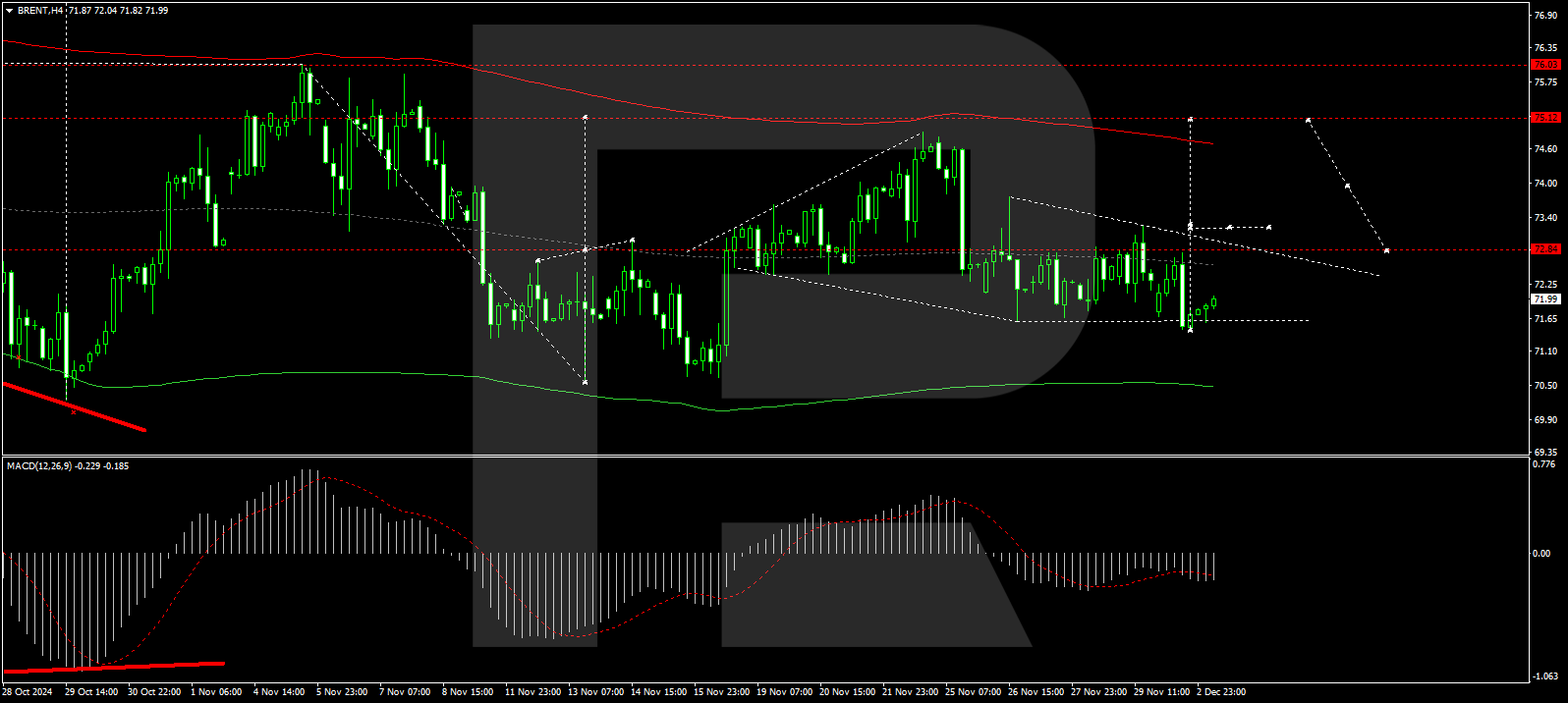
The rise in the Dollar Index is putting pressure on stock indices. MXN rate fell to a 6-week low

By JustMarkets

At Monday’s close, the Dow Jones Index (US30) was down 0.80%. The S&P 500 Index (US500) was down 0.18%. The NASDAQ Technology Index (US100) closed positive 0.18%.

On Monday, the Dollar Index approached levels not seen since early August as hopes of a near-term interest rate cut by the Federal Reserve wane. Strong US economic data, such as strong retail sales, combined with the growing likelihood of a Donald Trump presidency, as well as his proposed policies on tariffs and taxes, are lending support to the dollar.

Now that the US Federal Reserve is cutting interest rates to support the economy, optimists expect stocks could rise further. However, critics warn that stock prices look too expensive, given that they are rising much faster than corporate profits. That’s forcing companies to push for profit growth to justify their stock prices, and this week, more than 100 companies in the S&P 500 are expected to detail their performance over the summer. They include heavyweights such as AT&T, Coca-Cola, IBM, General Motors and Tesla. Boeing will report its results on Wednesday. The company’s stock is up 3.1% after reaching an agreement with the union representing striking machinists on a contract proposal. Union members could vote Wednesday on the proposal, which could end a costly strike that has halted airplane production for more than a month.

The Mexican peso fell to 20 per US dollar in October, hitting a six-week low, amid external and domestic pressures that have intensified calls for easing borrowing conditions. Fears of disruptions in Mexico’s vital auto sector were heightened by former US President Donald Trump’s threats to impose tariffs of up to 300% on Mexican-made cars, coupled with his rising electoral prospects. Meanwhile, minutes from the Bank of Mexico’s meeting emphasized a willingness to pursue a less tight monetary policy. Economists estimate a 50 basis point rate cut by the end of the year.

Equity markets in Europe steadily went down on Monday. Germany’s DAX (DE40) fell by 1.00%, France’s CAC 40 (FR40) closed down 1.01%, Spain’s IBEX 35 (ES35) lost 0.71%, and the UK’s FTSE 100 (UK100) closed down 0.48%.

WTI crude oil prices rose by 1.9% on Monday to above $70.5 per barrel after falling 8.4% last week, helped by economic stimulus measures from China, the world’s largest oil importer.

The US natural gas prices rose about 3% to above $2.3/mmbtu on Monday, recovering from a significant 14.2% drop last week, thanks to lower production and estimates of colder weather that could boost heating demand.

Asian markets were mostly down on Monday. Japan’s Nikkei 225 (JP225) fell by 0.07%, China’s FTSE China A50 (CHA50) lost 0.39%, Hong Kong’s Hang Seng (HK50) decreased by 1.57%, and Australia’s ASX 200 (AU200) was positive 0.74%.

The Australian dollar edged above $0.665 on Tuesday. Still, it remained near its lowest levels in six weeks as the US dollar and Treasury yields rose on signs of continued strength in the US economy and improved chances of a Trump victory in November’s election. Domestically, Reserve Bank of Australia Deputy Governor Andrew Hauser said earlier this week that the strong pace of job growth was a small surprise while indicating that the Central Bank was prepared to react in either direction depending on incoming data.

The New Zealand dollar rose to 0.605 against the US dollar on Tuesday after hitting a two-month low earlier in the session. The kiwi received support from the recent rate cuts in China, given that China is New Zealand’s largest trading partner. However, the local currency remains under pressure due to the strong US dollar.

S&P 500 (US500) 5,853.98 −10.69 (−0.18%)

Dow Jones (US30) 42,931.60 −344.31 (−0.80%)

DAX (DE40) 19,461.19 −196.18 (−1.00%)

FTSE 100 (UK100) 8,318.24 −40.01 (−0.48%)

USD Index 103.97 +0.48 (+0.46%)

News feed for: 2024.10.22

  • New Zealand Trade Balance (q/q) at 00:45 (GMT+3);
  • US FOMC Member Daly Speaks at 01:40 (GMT+3);
  • UK BoE Gov Bailey Speaks at 16:20 (GMT+3);
  • US FOMC Member Harker Speaks at 17:00 (GMT+3);
  • Eurozone ECB President Lagarde Speaks at 22:15 (GMT+3)

By JustMarkets


This article reflects a personal opinion and should not be interpreted as an investment advice, and/or offer, and/or a persistent request for carrying out financial transactions, and/or a guarantee, and/or a forecast of future events.

USDCAD: Waits on BoC rate decision

By ForexTime

  • BoC decision & Fed speeches/Beige book in focus
  • Trader’s see 88% probability of BoC 50bp cut on Wednesday.
  • Over past year BoC decision triggered moves of ↑ 0.3% & ↓ 0.2%
  • Bloomberg FX model – 80% – (1.3719 – 1.3940)
  • Technical levels – 1.3880 and 1.3750

The USDCAD has rallied over 2.2% this month, recently touching its highest level since early August 2024.

Prices are certainly bullish with the upside powered by a broadly stronger dollar. This can be seen in the Canadian Dollar’s performance against other G10 currencies month-to-date.

USDCAD1

More volatility could be on the cards this week due to the incoming BoC rate decision and speeches by numerous Fed officials.

Taking a quick look at the technical picture, prices are approaching weekly resistance at 1.3880. However, the Relative Strength Index (RSI) is approaching 70 – signalling that prices may be overbought.

USDCAD - w1

Here are 3 reasons why the USDCAD could see big price swings:


    1) Bank of Canada rate decision

The Bank of Canada is expected to move ahead with a jumbo 50 bp rate cut on Wednesday.

In fact, traders are currently pricing in an 88% probability that rates will be cut by 50 basis points. Traders are also pricing in a 33% probability of another 50 bp cut by December!

However, the downside surprise in September’s inflation report could prompt the BoC to opt for a 25bp move instead. Inflation in Canada fell to 1.6% in September from 2% in the previous month – the lowest since February 2021.

Golden nugget: Over the past 12 months, the BoC rate decision has triggered upside moves as much as 0.3% or declines of 0.2 % in the 6 hours after the data release.

  • Should the BoC move ahead with a 50bp cut and signal further cuts down the road, this may weaken the CAD. Such could propel prices toward 1.3880 and 1.3940 – the upper limit of Bloomberg’s FX model.
  • A less dovish than expected BoC may boost the Canadian Dollar. This could trigger a selloff toward 1.3720.


   2) Fed speeches & Beige book

A host of Fed speeches this week may provide fresh insight into the Fed’s stance on future policy moves.  It will also be wise to keep an eye on the Fed’s Beige book published on Wednesday 23rd October which could provide insight into the health of the US economy.

Traders are currently pricing in a 90% probability of a 25-basis point cut by November and 60% probability of another cut by December.

Any major shifts to these expectations could translate to dollar volatility, influencing the USDCAD as a result.


    3) Technical forces

The USDCAD is firmly bullish on the daily charts as there have been consistently higher highs and higher lows. However, the Relative Strength Index (RSI) in the daily timeframe is touching 70 -signalling that prices are heavily overbought.

  • If the upside momentum holds, this may push prices towards 1.3880 and 1.3940.
  • If bears return to the scene, this may drag prices toward 1.3750 and 1.3720.

usdcad 1

According to Bloomberg’s FX forecast model, there’s an 80% chance that USDCAD will trade within the 1.3719 – 1.3940 range over the next one week.


Forex-Time-LogoArticle by ForexTime

ForexTime Ltd (FXTM) is an award winning international online forex broker regulated by CySEC 185/12 www.forextime.com

AUD/USD Struggles for Stability: Chances are Slim

By RoboForex Analytical Department 

The AUD/USD pair is attempting a recovery toward 0.6681, though the prospects seem uncertain as the pair remains near a six-week low. The strengthening of the US dollar and the rise in US Treasury yields, driven by expectations of a confident victory for Donald Trump in the upcoming US presidential election, are weighing heavily on the Australian dollar.

Despite ongoing expectations for interest rate cuts by the US Federal Reserve in November and December, signs of stability in the US economy further bolster the US dollar. However, the market is tempering its expectations for further monetary easing next year.

On the domestic front, Australia’s recent labour market data was positive. September figures showed a job increase of 64.1k, significantly above the forecasted 25.0k. The unemployment rate held steady at 4.1%. Investors are now looking forward to upcoming PMI data, which could provide further insights into the health of Australia’s economy.

Despite these positive domestic indicators, China’s influence remains a critical factor for the Australian dollar, given its role as Australia’s primary trading partner. The market has deemed recent stimulus measures in China insufficient, adding to the challenges for the AUD.

Technical analysis of AUD/USD

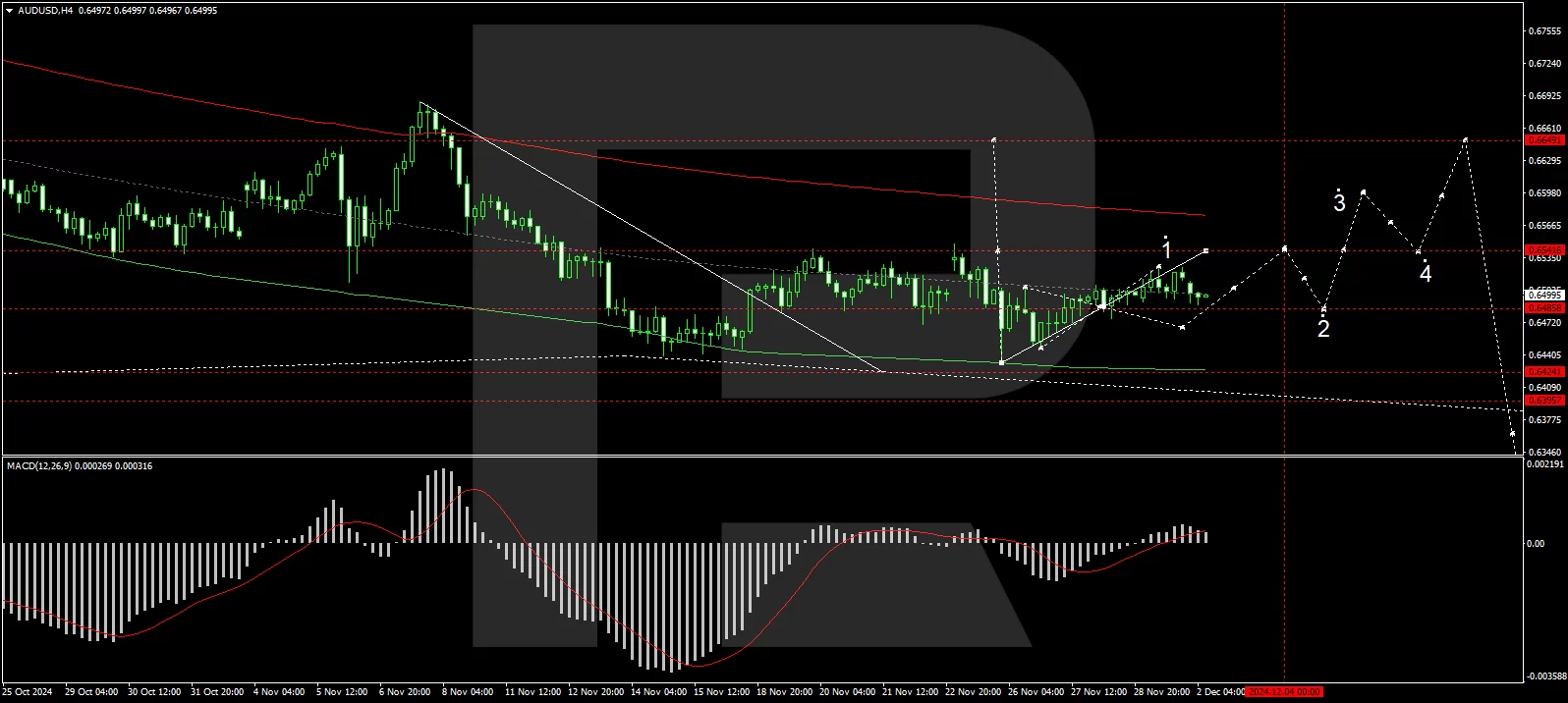
The AUD/USD is downward towards the target level of 0.6636. Upon reaching this target, the market may form a new consolidation range at these lows. If an upward breakout occurs, a correction towards 0.6790 might be considered. The MACD indicator supports this scenario, with its signal line below zero and poised for potential growth, suggesting a possible shift in momentum.

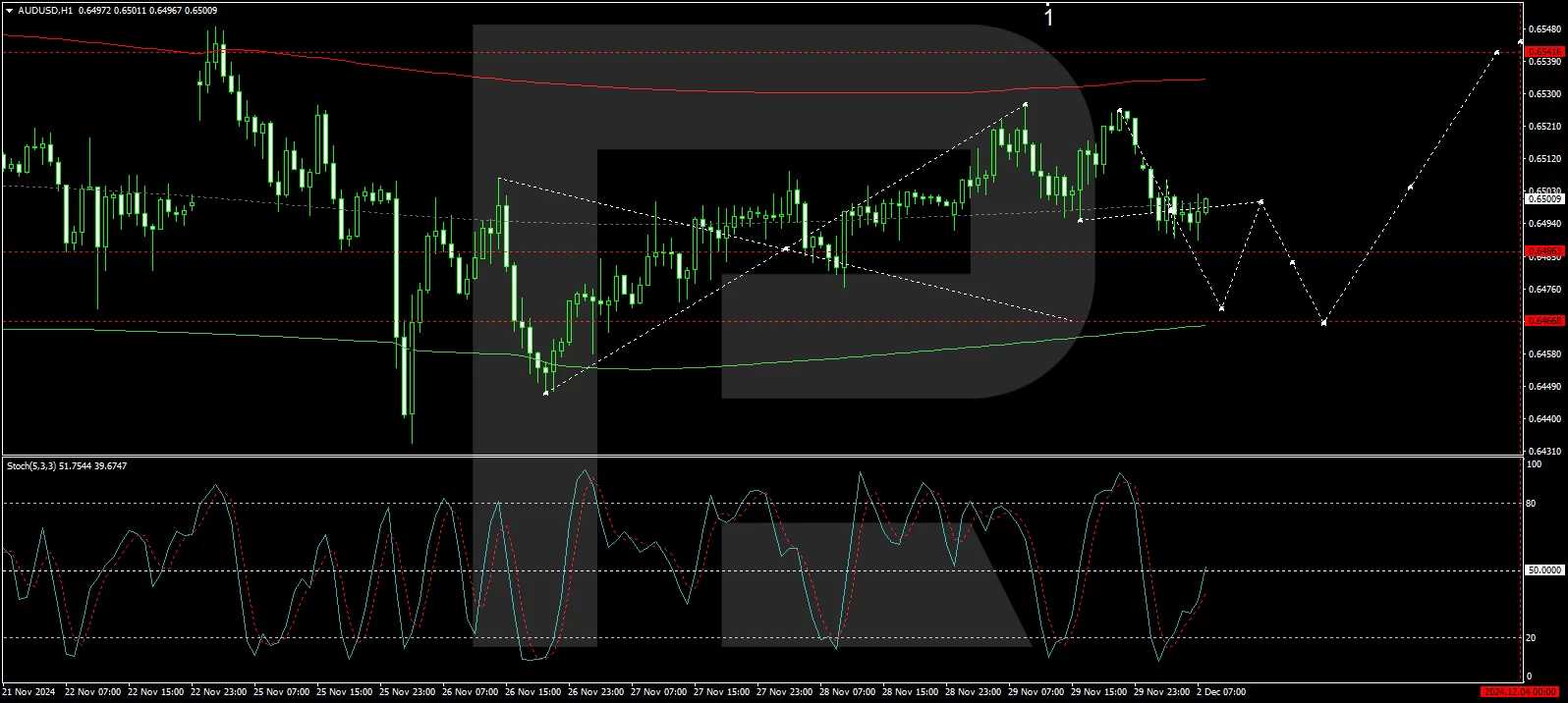
On the hourly chart, AUD/USD has completed a downward wave to 0.6650, followed by a correction to 0.6690. Another downward movement towards 0.6636 is anticipated today. A subsequent growth wave towards 0.6722 may develop if this level is reached. The Stochastic oscillator backs this outlook, with its signal line currently above 80 but expected to descend sharply towards 20, indicating the potential for further downward movement before any recovery.

Disclaimer

Any forecasts contained herein are based on the author’s particular opinion. This analysis may not be treated as trading advice. RoboForex bears no responsibility for trading results based on trading recommendations and reviews contained herein.

Do people trust AI on financial decisions? We found it really depends on who they are

By Gertjan Verdickt, University of Auckland, Waipapa Taumata Rau 

When it comes to investing and planning your financial future, are you more willing to trust a person or a computer?

This isn’t a hypothetical question any more.

Big banks and investment firms are using artificial intelligence (AI) to help make financial predictions and give advice to clients.

Morgan Stanley uses AI to mitigate the potential biases of its financial analysts when it comes to stock market predictions. And one of the world’s biggest investment banks, Goldman Sachs, recently announced it was trialling the use of AI to help write computer code, though the bank declined to say which division it was being used in. Other companies are using AI to predict which stocks might go up or down.

But do people actually trust these AI advisers with their money?

Our new research examines this question. We found it really depends on who you are and your prior knowledge of AI and how it works.

Despite the growing sophistication of artificial intelligence, investors prefer human expertise when it comes to stock market predictions, according to a new study.

Trust differences

To examine the question of trust when it comes to using AI for investment, we asked 3,600 people in the United States to imagine they were getting advice about the stock market.

In these imagined scenarios, some people got advice from human experts. Others got advice from AI. And some got advice from humans working together with AI.

In general, people were less likely to follow advice if they knew AI was involved in making it. They seemed to trust the human experts more.

But the distrust of AI wasn’t universal. Some groups of people were more open to AI advice than others.

For example, women were more likely to trust AI advice than men (by 7.5%). People who knew more about AI were more willing to listen to the advice it provided (by 10.1%). And politics mattered – people who supported the Democratic Party were more open to AI advice than others (by 7.3%).

We also found people were more likely to trust simpler AI methods.

When we told our research participants the AI was using something called “ordinary least squares” (a basic mathematics technique in which a straight line is used to estimate the relationship between two variables), they were more likely to trust it than when we said it was using “deep learning” (a more complex AI method).

This might be because people tend to trust things they understand. Much like how a person might trust a simple calculator more than a complex scientific instrument they have never seen before.

Trust in the future of finance

As AI becomes more common in the financial world, companies will need to find ways to improve levels of trust.

This might involve teaching people more about how the AI systems work, being clear about when and how AI is being used, and finding the right balance between human experts and AI.

Furthermore, we need to tailor how AI advice is presented to different groups of people and show how well AI performs over time compared to human experts.

The future of finance might involve a lot more AI, but only if people learn to trust it. It’s a bit like learning to trust self-driving cars. The technology might be great, but if people don’t feel comfortable using it, it won’t catch on.

Our research shows that building this trust isn’t just about making better AI. It’s about understanding how people think and feel about AI. It’s about bridging the gap between what AI can do and what people believe it can do.

As we move forward, we’ll need to keep studying how people react to AI in finance. We’ll need to find ways to make AI not just a powerful tool, but a trusted advisor that people feel comfortable relying on for important financial decisions.

The world of finance is changing fast, and AI is a big part of that change. But in the end, it’s still people who decide where to put their money. Understanding how to build trust between humans and AI will be key to shaping the future of finance.The Conversation

About the Author:

Gertjan Verdickt, Lecturer, Business School, University of Auckland, Waipapa Taumata Rau

This article is republished from The Conversation under a Creative Commons license. Read the original article.
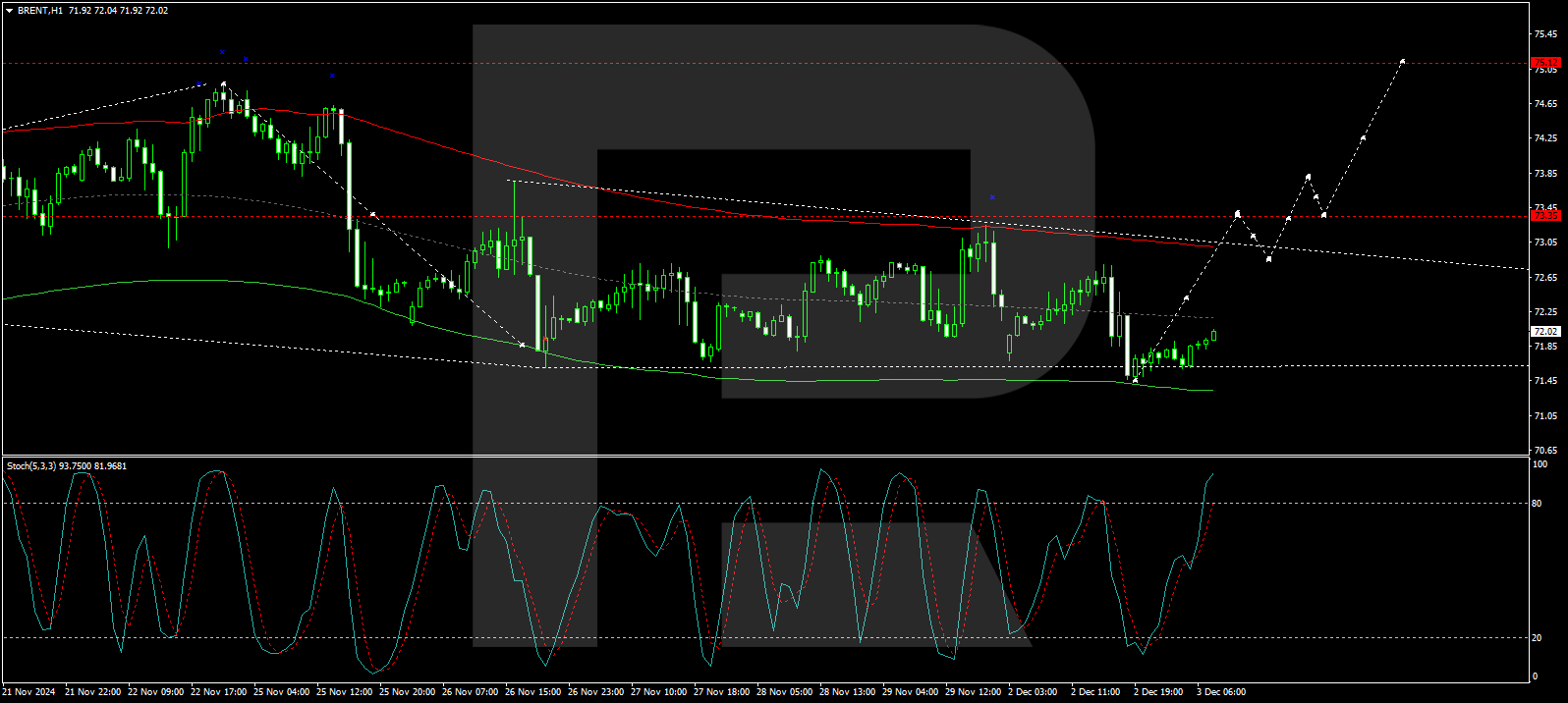
 

Oil prices were down by 10% in 2 weeks, and natural gas lost 19%. The PBoC cut interest rates

By JustMarkets

The Dow Jones (US30) Index was up 0.09% on Friday (+1.11% for the week). The S&P 500 Index (US500) was up 0.40% (for the week +0.60%). The NASDAQ Technology Index (US100) closed positive 0.63% (for the week +0.34%).

Atlanta Federal Reserve Bank President Raphael Bostic said he was in no hurry to cut interest rates to the so-called neutral level, emphasizing that policymakers intend to achieve the 2% inflation target. The Atlanta Fed chief reiterated that the central bank’s benchmark rate is still “somewhat above” the level at which it neither stimulates nor slows the economy, which he estimated at 3% to 3.5%. Bostic also said he expects inflation to fall to the Fed’s target level by the end of next year.

Netflix (NFLX) shares are up 11% after better-than-expected third-quarter earnings, revenue, and subscriber growth.

The world’s Central Bank governors and finance ministers will gather in Washington today for the annual meeting of the International Monetary Fund and the World Bank to discuss how countries can cope with low growth and high debt levels. Last week, the IMF warned that global public debt is expected to exceed $100 billion by the end of this year, driven by rising debt in the US and China. High debt levels could trigger a negative market reaction and limit budgetary efforts to respond to economic shocks.

Equity markets in Europe rose steadily on Friday. Germany’s DAX (DE40) rose by 0.38% (for the week +1.28%), France’s CAC 40 (FR40) closed 0.39% higher (for the week +0.39%), Spain’s IBEX 35 (ES35) gained 0.17% (for the week +1.78%), and the UK’s FTSE 100 (UK100) lost 0.32% (for the week +1.27%). European stocks closed solidly higher, helped by projections that the ECB will continue to cut key interest rates. Markets expect rates to be cut by 25 basis points at each meeting until mid-2025.

WTI crude oil prices fell by 2% to $69.2 a barrel, the biggest weekly decline since early September, falling more than 8%. The decline was driven by weakening demand estimates from OPEC and the IEA, slowing economic growth in China, and signs of easing geopolitical tensions in the Middle East. Both OPEC and the International Energy Agency (IEA) lowered their demand projections for 2024 and 2025. Output at China’s refineries declined for the sixth consecutive month, impacted by weak fuel demand and the rise of electric vehicles (EVs). Meanwhile, US crude oil production hit another record last week, although prices were supported by lower US crude inventories and better-than-expected US retail sales in September. In addition, investors are keeping a close eye on the possible development of the conflict between Israel and Iran, which could affect the global oil supply.

For the week, natural gas prices (XNG/USD) fell about 11% after falling 8% the week before. Traders are increasingly skeptical that extreme cold weather this winter will cause prices to spike. Gas production in the lower 48 states fell slightly in October, and production in 2024 could decline for the first time since 2020.

Asian markets were mostly down last week. Japan’s Nikkei 225 (JP225) fell by 1.65%, China’s FTSE China A50 (CHA50) lost 1.80%, Hong Kong’s Hang Seng (HK50) decreased by 2.00%, and Australia’s ASX 200 (AU200) was negative 0.87%.

Bank of Japan (BoJ) officials see no need to rush to raise interest rates this month, while they retain the option of raising rates at a later date if inflation remains in line with prognoses. Officials see only a small risk that prices will significantly exceed the Central Bank’s quarterly estimates set in July, reducing the need to act quickly. The Bank of Japan is expected to leave its benchmark rate unchanged at 0.25% at its policy meeting that ends October 31.

Traders reacted with restraint to the People’s Bank of China’s (PBoC) recent monetary easing, which sent rates to new record lows. The one-year LPR, which serves as a benchmark for most corporate and household loans, was cut by 25 bps, while the five-year LPR, often used as a benchmark for mortgages, was also cut by 25 bps to 3.6%. The decision followed PBOC head Pan Gongsheng’s announcement last week of a 20–25 bps LPR cut and his suggestion that the RRR for commercial banks could be further reduced in 4Q2.

S&P 500 (US500) 5,864.67 +23.20 (+0.40%)

Dow Jones (US30) 43,275.91 +36.86 (+0.09%)

DAX (DE40) 19,657.37 +73.98 (+0.38%)

FTSE 100 (UK100) 8,358.25 −26.88 (−0.32%)

USD Index 103.46 −0.36 (−0.35%)

News feed for: 2024.10.21

  • China PBoC Loan Prime Rate (m/m) at 04:15 (GMT+3);
  • German Producer Price Index (m/m) at 09:00 (GMT+3);
  • US FOMC Member Kashkari Speaks at 20:00 (GMT+3);
  • IMF/World Bank Annual Meetings (All Day).

By JustMarkets


This article reflects a personal opinion and should not be interpreted as an investment advice, and/or offer, and/or a persistent request for carrying out financial transactions, and/or a guarantee, and/or a forecast of future events.

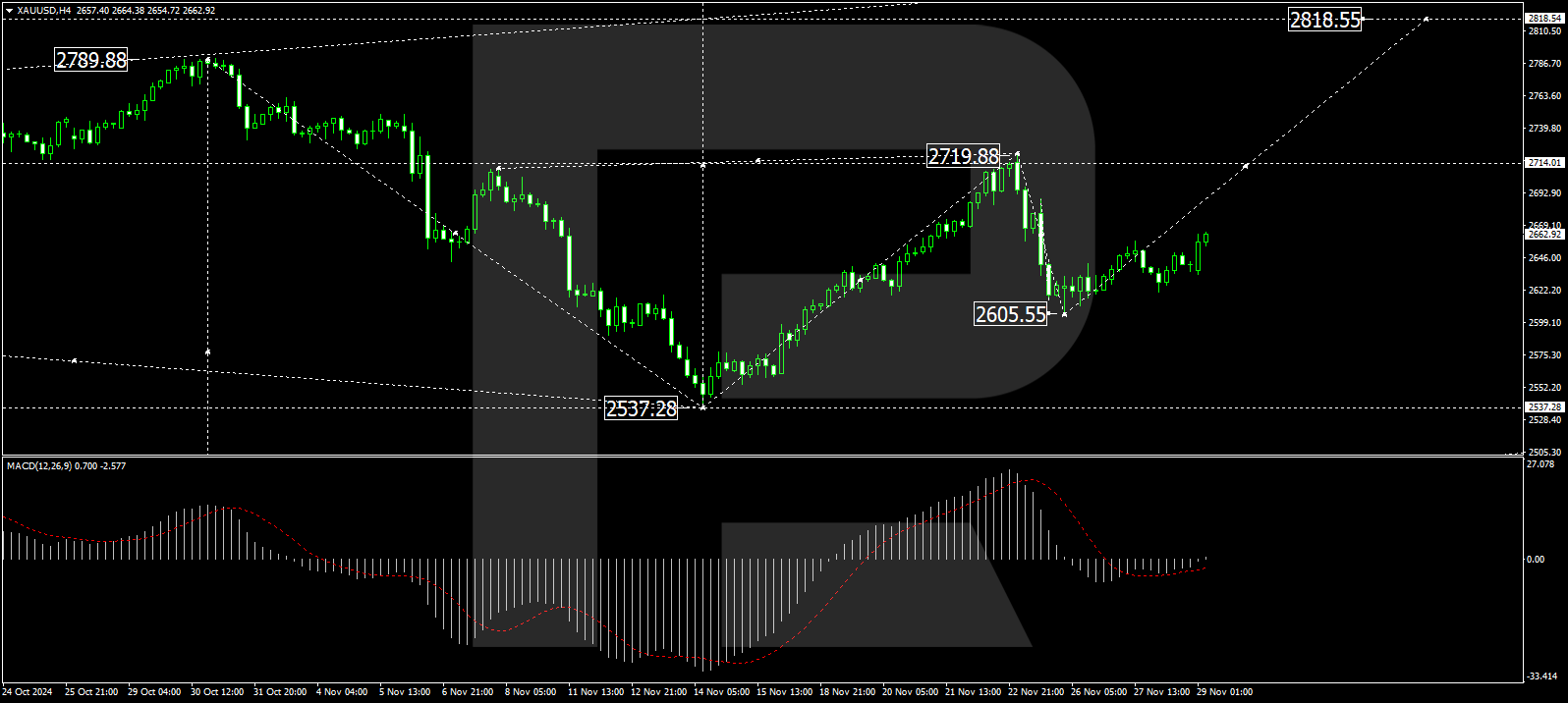
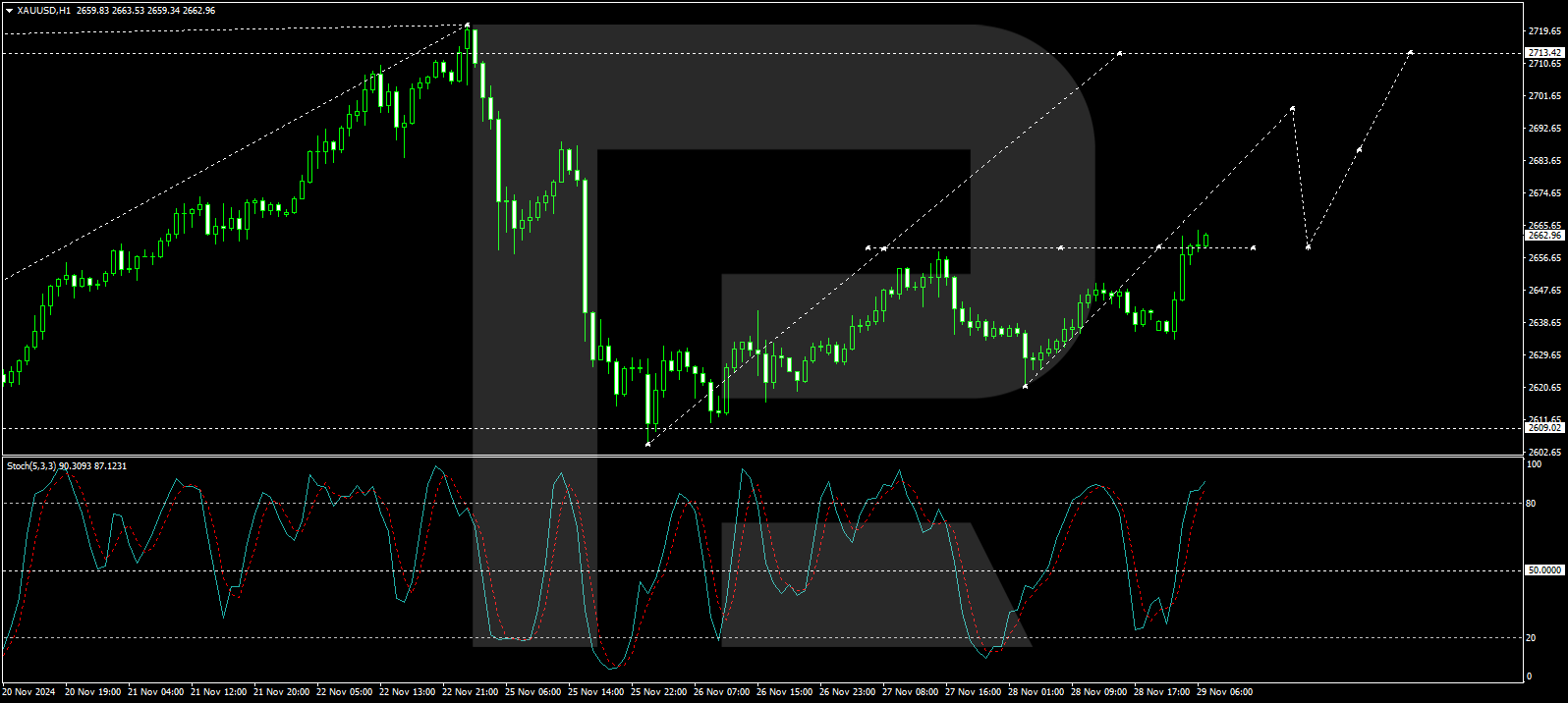
Gold Hits New Record Amid Geopolitical Tensions and US Election Uncertainty

By RoboForex Analytical Department

Gold prices surged to a new record high of 2,729 USD per troy ounce on Monday, driven by escalating conflicts in the Middle East and the heightened uncertainty surrounding the upcoming US presidential election. These persistent geopolitical factors, particularly the closely contested race between Donald Trump and Kamala Harris, have bolstered investor demand for safe-haven assets like gold.

The intensification of hostilities in the Middle East, particularly with Israel’s ongoing discussions about further actions against Iran, has significantly influenced market sentiment. Despite calls from US President Joe Biden for a ceasefire, Israel’s reluctance to make concessions has only added to the geopolitical tensions affecting global markets.

As the US election day on 5 November approaches, investors are increasingly repositioning their portfolios, favouring the stability and security that gold provides during political uncertainty. Preliminary polls indicate that the election could be one of the closest in recent history, further enhancing gold’s appeal as a protective investment.

Market analysts are now revising their expectations for gold upwards, with some speculating that prices could reach 3,000 USD per troy ounce by Q4 2025. This optimistic outlook is further supported by the surge in interest in silver, which has reached its highest price since 2012 due to similar bullish sentiments in the precious metals market.

Technical analysis of gold (XAU/USD)

The gold market has successfully breached the 2,685 level, paving the way for upward movement. After achieving a local high of 2,732, the market is currently targeting the 2,757 level. A corrective pullback to at least 2,700 is anticipated before potentially resuming the upward trajectory towards 2,757. This bullish outlook is supported by the MACD indicator, whose signal line is significantly above zero and climbing, indicating strong upward momentum.

On the hourly chart, gold has established a growth wave, peaking at 2,732, with a consolidation pattern forming just below this level. A downward correction towards 2,700 is expected shortly. Upon completing this correction, the market may initiate another upward phase, targeting a retest of 2,733, potentially extending towards 2,757. The Stochastic oscillator corroborates this scenario, currently positioned above 80 but pointing downwards, suggesting a brief consolidation or correction may occur before further gains.


Disclaimer

Any forecasts contained herein are based on the author’s particular opinion. This analysis may not be treated as trading advice. RoboForex bears no responsibility for trading results based on trading recommendations and reviews contained herein.