Archive for Opinions – Page 82

Caution: likely market correction, opportunity to invest in quality companies

By George Prior 

Stock markets are likely to fall this summer, which will provide investors a key buying opportunity to enhance their portfolios, says the CEO and founder of one of the world’s largest independent financial advisory, asset management and fintech organizations.

Nigel Green of deVere Group’s comments come as UK inflation exceeds expectations in May and as the US Federal Reserve Chair Jerome Powell confirms that interest rate hikes should be expected as inflation is “well above” where it should be.

Mr Powell stated: “Inflation pressures continue to run high, and the process of getting inflation back down to 2% has a long way to go.”

Meanwhile, UK inflation on Wednesday was higher than expected in May, as consumer prices climbed by an annual 8.7% – considerably higher than the Bank of England’s 2% target.

The deVere CEO observes: “Inflation remains high and sticky – surprisingly so – in most major developed economies.

“This puts fresh pressure on central banks to maintain interest rate hikes, or drop the pause in the case of the US Fed.”

Higher borrowing costs impact corporate profits as companies may face higher interest expenses on their existing debt or find it more expensive to finance new projects. This typically leads to a decrease in investor confidence and a decline in stock prices.

Interest rate jumps can discourage consumer borrowing and spending. When borrowing costs increase, individuals may be less willing to take on new loans for purchases such as homes, cars, or other consumer goods. This reduced consumer spending can negatively affect the earnings and profitability of businesses, leading to a decrease in stock prices.

In addition, rising interest rates make fixed-income investments, such as bonds, more attractive relative to stocks. As bond yields increase, investors may reallocate their investments from stocks to bonds, seeking higher returns with less risk.

“Therefore, investors should be cautious as we expect stock market corrections this summer,” says Nigel Green.

“This would present major buying opportunities for investors to enhance their portfolios with quality stocks at lower entry points.

“They’ll be speaking with financial advisors about potential winners and losers from such a fall.”

US stocks were down on Wednesday, with the S&P 500 and the Nasdaq dipping around 0.4%, while the Dow Jones shed 0.3%. In the UK, the benchmark FTSE 100 fell to a three-week low.

Against a backdrop of still sticky-high inflation, sectors that do well in a stagflationary environment should also be included in portfolios.

“These include commodities, such as oil, as their prices typically rise in response to inflation; consumer staples like food, and hygiene products, as demand is likely to remain relatively stable; healthcare, as it provides essential services that are less affected by economic cycles; and utilities, including electricity, gas, and water as demand will also be pretty consistent,” noted the deVere CEO recently.

“Investors should, as always, remain diversified across asset classes, sectors and regions in order to maximise returns per unit of risk (volatility) incurred.”

He concludes: “We expect further and intensifying market volatility this summer.  This will be used, as it always is, by investors to bolster their investment portfolios.

“This can prove to be an extremely effective strategy, but advice should be sought from a quality fund manager.”

About:

deVere Group is one of the world’s largest independent advisors of specialist global financial solutions to international, local mass affluent, and high-net-worth clients.  It has a network of more than 70 offices across the world, over 80,000 clients and $12bn under advisement.

Why US ‘dollar doomsayers’ could be wrong about its imminent demise

By Daniel Gros, Bocconi University 

The position of the US dollar in the global league table of foreign exchange reserves held by other countries is closely watched. Every slight fall in its share is interpreted as confirmation of its imminent demise as the preferred global currency for financial transactions.

The recent drama surrounding negotiations about raising the limit on US federal government debt has only fuelled these predictions by “dollar doomsayers”, who believe repeated crises over the US government’s borrowing limit weakens the country’s perceived stability internationally.

But the real foundation of its dominance is global trade – and it would be very complicated to turn the tide of these many transactions away from the US dollar.

The international role of a global currency in financial markets is ultimately based on its use in non-financial transactions, especially as what’s called an “invoicing currency” in trade. This is the currency in which a company charges its customers.

Global network of supply and trade

Modern trade can involve many financial transactions. Today’s supply chains often see goods shipped across several borders, and that’s after they are produced using a combination of intermediate inputs, usually from different countries.

Suppliers may also only get paid after delivery, meaning they have to finance production beforehand. Obtaining this financing in the currency in which they invoice makes trade easier and more cost effective.

In fact, it would be very inconvenient for all participants in a value chain if the invoicing and financing of each element of the chain happened in a different currency. Similarly, if most trade is invoiced and financed in one currency (the US dollar at present), even banks and firms outside the US have an incentive to denominate and settle financial transactions in that currency.

This status quo becomes difficult to change because no individual organisation along the chain has an incentive to switch currencies if others aren’t doing the same.

This is why the US dollar is the most widely used currency in third-country transactions – those that don’t even involve the US. In such situations it’s called a vehicle currency. The euro is used mainly in the vicinity of Europe, whereas the US dollar is widely used in international trade among Asian countries. Researchers call this the dominant currency paradigm.

The convenience of using the US dollar, even outside its home country, is further buttressed by the openness and size of US financial markets. They make up 36% of the world’s total or five times more than the euro area’s markets. Most trade-related financial transactions involve the use of short-term credit, like using a credit card to buy something. As a result, the banking systems of many countries must then be at least partially based on the dollar so they can provide this short-term credit.

And so, these banks need to invest in the US financial markets to refinance themselves in dollars. They can then provide this to their clients as dollar-based short-term loans.

It’s fair to say, then, that the US dollar has not become the premier global currency only because of US efforts to foster its use internationally. It will also continue to dominate as long as private organisations engaged in international trade and finance find it the most convenient currency to use.

What could knock the US dollar off its perch?

Some governments such as that of China might try to offer alternatives to the US dollar, but they are unlikely to succeed.

Government-to-government transactions, for example for crude oil between China and Saudi Arabia, could be denominated in yuan. But then the Saudi government would have to find something to do with the Chinese currency it receives. Some could be used to pay for imports from China, but Saudi Arabia imports a lot less from China (about US$30 billion) than it exports (about US$49 billion) to the country.

The US$600 billion Public Investment Fund (PIF), Saudi Arabia’s sovereign wealth fund, could of course use the yuan to invest in China. But this is difficult on a large scale because Chinese currency remains only partially “convertible”. This means that the Chinese authorities still control many transactions in and out of China, so that the PIF might not be able to use its yuan funds as and when it needs them. Even without convertibility restrictions, few private investors, and even fewer western investment funds, would be keen to put a lot of money into China if they are at the mercy of the Communist party.

China is of course the country with the strongest political motives to challenge the hegemony of the US dollar. A natural first step would be for China to diversify its foreign exchange reserves away from the US by investing in other countries. But this is easier said than done.

There are few opportunities to invest hundreds or thousands of billions of dollars outside of the US. Figures from the Bank of International Settlements show that the euro area bond market – a place for investors to finance loans to Euro area companies and governments – is worth less than one third of that of the US.

Also, in any big crisis, other major OECD economies like Europe and Japan are more likely to side with the US than China – making such a decision is even easier when they are using US dollars for trade. It was said that states accounting for one half of the global population refused to condemn Russia’s invasion of Ukraine, but this half does not account for a large share of global financial markets.

Similarly, it shouldn’t come as a surprise that democracies dominate the world financially. Companies and financial markets require trust and a well-established rule of law. Non-democratic regimes have no basis for establishing the rule of law and every investor is ultimately subject to the whims of the ruler.

When it comes to global trade, currency use is underpinned by a self-reinforcing network of transactions. Because of this, and the size of the US financial market, the dollar’s dominant position remains something for the US to lose rather for others to gain.The Conversation

About the Author:

Daniel Gros, Professor of Practice and Director of the Institute for European Policymaking, Bocconi University

This article is republished from The Conversation under a Creative Commons license. Read the original article.


Trade Of The Week: Will BoE Decision Push GBPUSD Higher?

By ForexTime 

This will be a big week for Sterling as focus falls on the latest UK CPI figures and rate decision from the Bank of England.

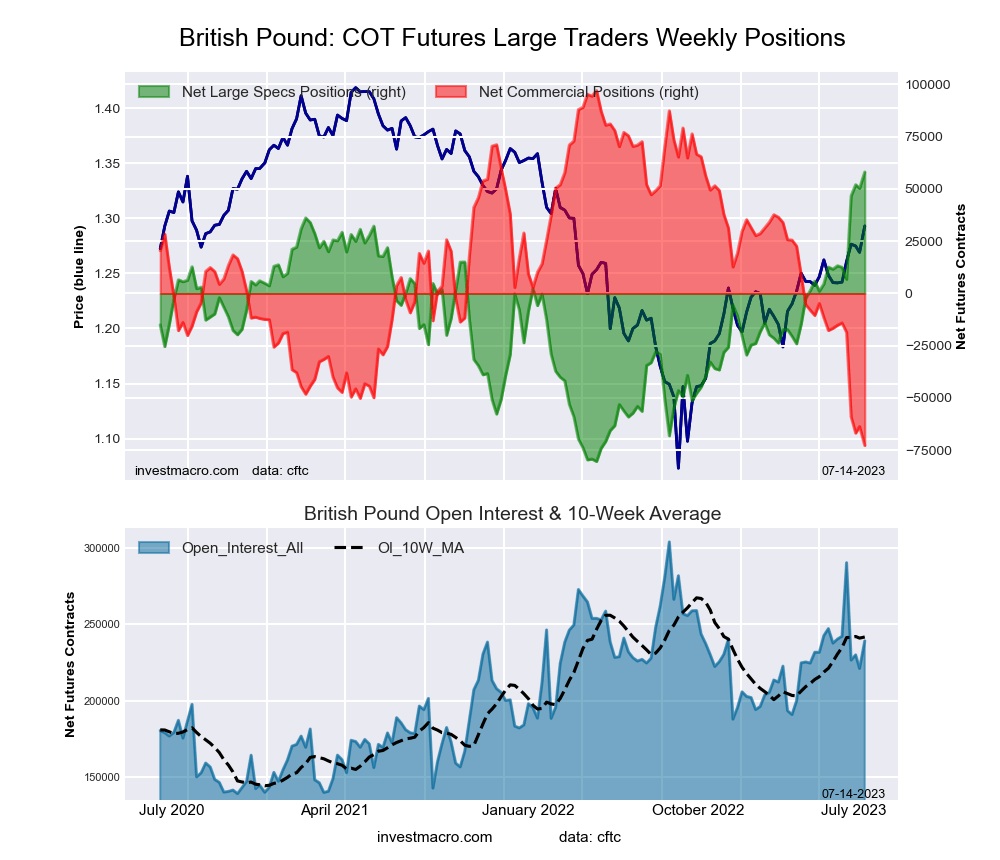
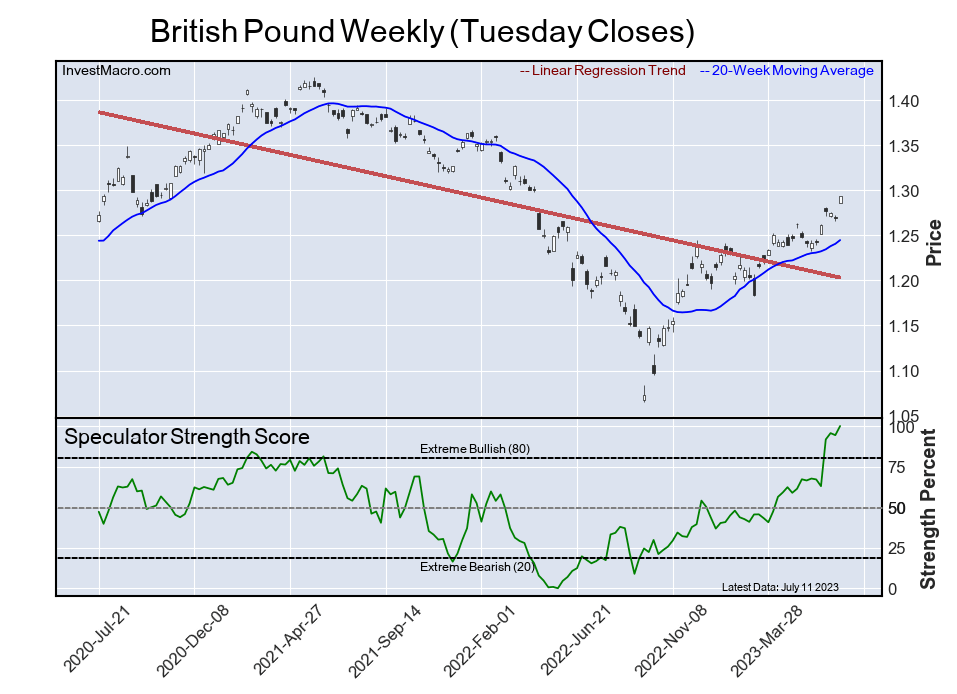
Sterling is the best-performing G10 currency year-to-date, gaining roughly 6% against the dollar thanks to fundamental and technical factors.

Indeed, investor appetite towards the British Pound continues to be supported by the resilience of the UK economy while hot inflation figures have fuelled expectations around the BoE keeping rates higher for longer. Regarding the technical picture, the GBPUSD is firmly bullish on the daily timeframe was prices trading at levels not seen in 14 months as of writing.

The GBPUSD has the potential to push higher this week and here are 3 reasons why:

  • BoE rate decision

The Bank of England (BoE) monetary policy decision will be on Thursday 22nd June. 

24 hours before the BoE decision, the latest UK inflation figures will be published with markets forecasting CPI to cool 8.4%, down from the April print of 8.7%. Given how this is still more than 4 times the BOE’s target inflation rate of 2%, this is likely to keep BoE hawks in the driving seat.

Markets widely expect the BoE to raise interest rates by 25 basis points. This would be the thirteenth straight rate hike, taking the key rate to 4.75%. Given how UK inflation remains sticky along with strong wage growth, the central bank is expected to take rates close to 6% over the coming months.

  • If the BoE strikes a hawkish note and signals further rate hikes, this is likely to push the GBPUSD higher.
  • Should the BoE sound more dovish and expresses concern over the economy, this may send the GBPUSD lower as investors re-evaluate rate hike bets.


  • Jerome Powell’s testimony 

Fed Chair Jerome Powell will provide his semi-annual monetary policy report to Congress on Wednesday and Thursday.

Although Powell is widely expected to reiterate comments from his post-Fed meeting press conference, this event still has the potential to trigger dollar volatility due to market sensitivity around rate hike expectations.

  • Dollar bulls could receive a boost if Powell sounds hawkish and offers fresh clues on Fed hike timings. A stronger dollar is seen dragging the GBPUSD lower
  • Should Powell strike a more cautious tone during Testimony, this could deflate the dollar – resulting in the GBPUSD pushing higher.


  • Technical forces favour bulls

The GBPUSD remains firmly bullish on the daily timeframe. There have been consistently higher highs and higher lows while prices are trading firmly above the 200, 100, and 50-day Simple Moving Averages. Bulls are currently approaching key weekly resistance at 1.2870 where the weekly 200 SMA resides.

A solid weekly close above this level could encourage an incline towards levels not seen since early April 2022 at 1.3100. Should prices slip back below the 1.2730 level, this may trigger a decline back to 1.2640 and 1.2550, respectively.


Forex-Time-LogoArticle by ForexTime
ForexTime Ltd (FXTM) is an award winning international online forex broker regulated by CySEC 185/12 www.forextime.com

Xi-Blinken meeting: Emerging markets hold growing appeal amid US-China rivalry

By George Prior 

The heightening US-China rivalry is fuelling international investors’ interest in emerging markets, according to the CEO and founder of one of the world’s largest independent financial advisory, asset management and fintech organizations.

The analysis from Nigel Green of deVere comes as U.S. Secretary of State Antony Blinken met with Chinese President Xi Jinping on Monday, amid simmering U.S.-China tensions.

He comments: “The intensifying rivalry between the US and China has significant implications for global markets.

“While this rivalry creates uncertainties and challenges, it also presents opportunities, particularly in emerging markets.

“Our consultants around the world have experienced a significant surge in interest from international investors about these dynamic economies as they seek diversification, growth potential, and reduced exposure to geopolitical tensions.”

The soaring demand from global investors about increasing their exposure to emerging market opportunities comes as tensions rooted in a combination of economic, geopolitical, and ideological factors between the world’s two largest economies and major superpowers continue to make international headlines.

“The economic dimension is a fundamental aspect of the rivalry. China’s rapid rise as a global economic powerhouse and its pursuit of industrial policies that include state subsidies, intellectual property concerns, and market access restrictions have generated tensions with the United States,” explains Nigel Green.

“The US accuses China of unfair trade practices, intellectual property theft, and a lack of reciprocity in market access.”

The rising rivalry also stems from competing geopolitical ambitions. China’s increasing assertiveness in the South China Sea, its Belt and Road Initiative (BRI) aimed at expanding its global influence through infrastructure projects, and its military modernisation have raised concerns among US policymakers.

“The US sees China’s rising influence as a challenge to its own status as a global superpower.”

Technological competition is a critical aspect of the rivalry. The deVere chief executive notes: “Both countries are vying for dominance in emerging technologies like 5G, artificial intelligence, quantum computing, and advanced manufacturing.

“The US has expressed concerns over China’s strategic acquisition of technology, intellectual property theft, and forced technology transfer, leading to initiatives like export controls, investment restrictions, and heightened scrutiny of Chinese tech companies.”

National security considerations also play a significant role in the rivalry with the US viewing China’s military upgrades, cyber espionage activities, and perceived threats to its allies and partners in the Asia-Pacific region as potential challenges to its strategic interests.

One of the key reasons international investors find emerging markets attractive during the US-China rivalry is diversification.

“The rivalry between these two economic giants often generates volatility in global markets, making it sensible for investors to seek alternative investment destinations. Emerging markets provide precisely that,’ affirms Nigel Green.

“By increasing exposure to these economies, investors can reduce their dependency on the performance and fluctuations of US and Chinese markets and, therefore, spread risk across a broader range of regions and industries.”

In addition, emerging markets offer vast growth potential, driven by factors such as expanding populations, rising middle-class populations, and increasing urbanisation.

“These countries present investment opportunities in sectors such as tech, infrastructure, healthcare, and renewable energy – where significant growth opportunities are happening.”

The CEO also emphasises that “non-aligned” economies are also piquing interest among global investors.

“As the rivalry between the US and China escalates, non-aligned states emerge as safe havens, relatively insulated from the direct impact of the tensions,” observes Nigel Green.

“With stable political environments and lower exposure to global power struggles, frontier markets offer investors a degree of stability and reduced risk associated with the US-China rivalry.”

The Association of Southeast Asian Nations (ASEAN) member states, such as Indonesia, Malaysia, Thailand, and Vietnam, are often viewed as non-aligned or neutral in the US-China rivalry.

Several countries in the Middle East, such as Saudi Arabia, the United Arab Emirates, and Qatar, can also be considered non-aligned markets.

Similarly, African nations, including Nigeria, Kenya, and Ethiopia, and Central and Eastern European ones, such as Poland, Hungary, and the Czech Republic.

He concludes: “It’s our experience that investors are increasingly involved in geopolitical hedging.

“These dynamic economies provide avenues to navigate the changing global landscape and capitalise on the potential rewards that emerge amid the ongoing and heightening rivalry.”

About:

deVere Group is one of the world’s largest independent advisors of specialist global financial solutions to international, local mass affluent, and high-net-worth clients.  It has a network of more than 70 offices across the world, over 80,000 clients and $12bn under advisement.

Week Ahead: Powell’s Testimony May Move These 3 Markets

By ForexTime 

Global financial markets could see increased volatility over the coming week due to Federal Reserve Chair Jerome Powell’s semi-annual testimony to Congress.

Attention will also fall on key central bank decisions including the Bank of England coupled with Fed speeches and top-tier economic data from major economies:

Monday, June 19

  • AUD: RBA meeting minutes

Tuesday, June 20

  • CNH: China loan prime rates
  • JPY: Japan industrial production
  • USD: Fed speeches

Wednesday, June 21

  • EUR: Eurozone new car registrations
  • CAD: Canada retail sales
  • GBP: UK May CPI
  • USD: Federal Reserve Chair Jerome Powell testimony

Thursday, June 22

  • CHF: Swiss National Bank rate decision
  • EUR: Eurozone consumer confidence
  • GBP: BoE rate decision
  • USD: Federal Reserve Chair Jerome Powell testimony, Fed speech

Friday, June 23

  • EUR: Eurozone S&P Global Manufacturing & Services PMI
  • JPY: Japan CPI
  • GBP: UK S&P Global/CIPS Manufacturing PMI
  • USD: S&P Global Manufacturing PMI, St. Louis Federal Reserve Bank President James Bullard speech

Just one week after the FOMC meeting brought a hawkish tilt on the rates outlook, Federal Reserve Chair Jerome Powell will be under the spotlight again. 

Powell will provide his semi-annual monetary-policy report to the House Financial Service Committee on Wednesday 21st June and Senate Banking Committee on Thursday 22nd June. Powell is widely expected to reiterate comments from his post-Fed meeting press conference, which were cautious but still opened doors for more rate hikes. Indeed, the latest dot plot indicates two more 25 basis point rate hikes in the coming months but markets think otherwise with traders only pricing in one more for 2023.

Given how markets remain highly sensitive to rate hike expectations, his testimony has the potential to spark volatility – especially if fresh clues are offered on the Fed’s next move.

With all of the above discussed, here’s how these 3 assets could react to Powell’s testimony:

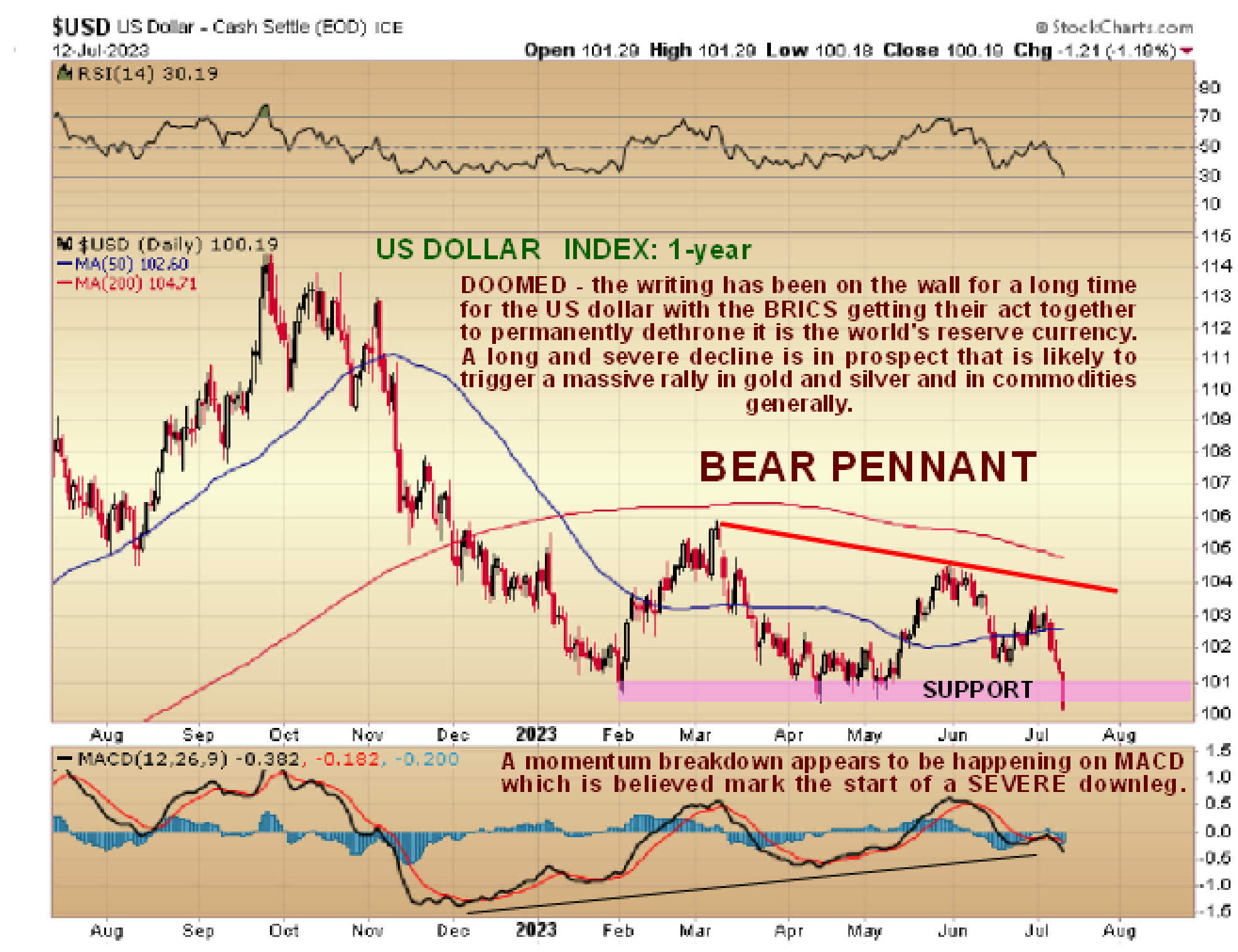
  • USD Index 

Despite receiving a boost earlier in the week from a hawkish Federal Reserve, the dollar has found itself under renewed selling pressure thanks to disappointing US economic data. This has raised questions over just how much further the Fed can raise interest rates despite the dot plot signalling two more 25 basis point hikes in the coming months.

  • The dollar could weaken further if Powell strikes a cautious tone during Testimony, which could drag prices toward 101.50 and 100.72, respectively.
  • Should Powell sound more hawkish and offer fresh clues on rate hike timings, this may offer support to the dollar, pushing prices back above 103.00.


  •     SPX500_m 

The SPX500_m is en route to ending the week at levels not seen in 14 months as disappointing economic data fuelled expectations around the Fed’s hiking campaign coming to an end. SPX500 bulls are certainly in a position with power with the index gaining over 15% year-to-date.

  • The SPX500_m could extend gains towards 4500 in the coming week if Powell sounds cautious and expresses concerns over the US economic outlook.
  • If the Fed head suggests that US rates are likely to stay higher for longer, this may cap the SPX500_m upside gains – encouraging a decline back towards 4351 higher low.

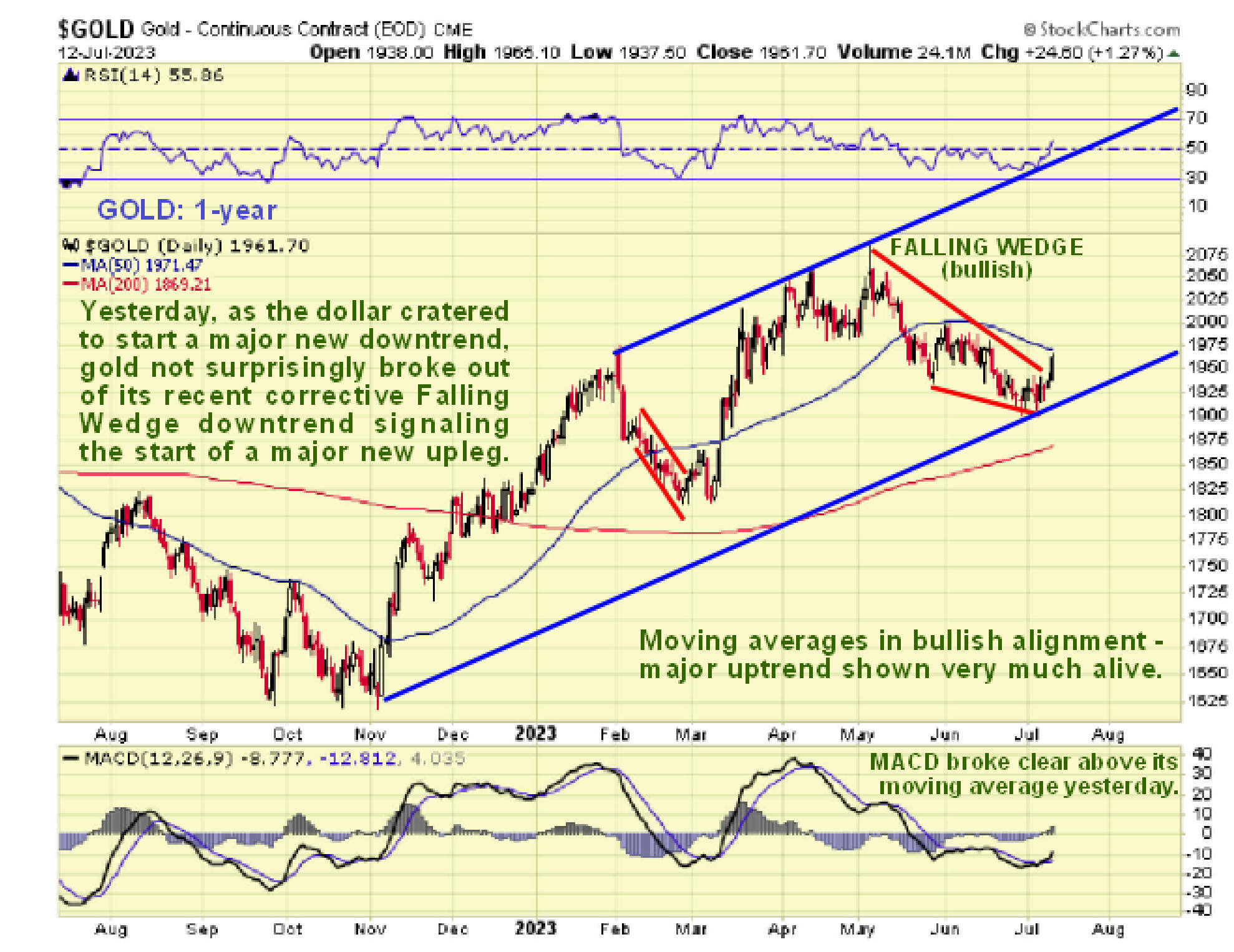
  • Gold 

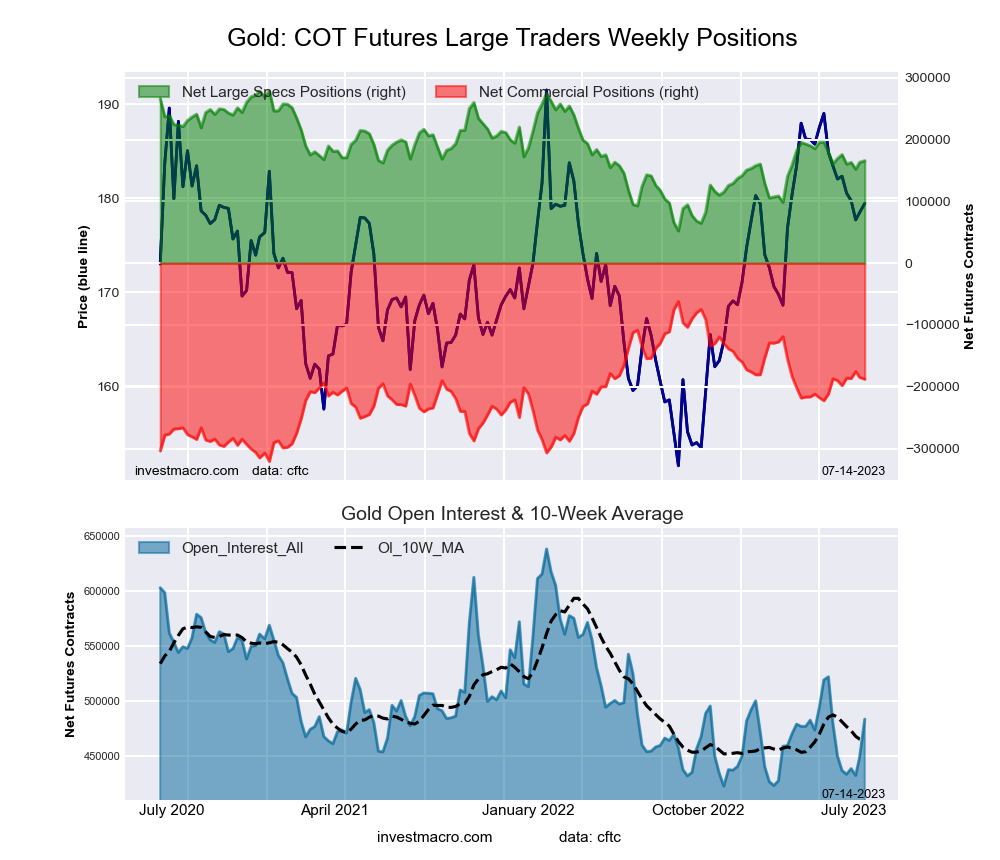
Gold still remains trapped within a range with support at $1932 and resistance at $1985. A potent fundamental spark may be required for prices to experience a decisive breakout.

  • Gold prices could push above the $1985 resistance level on growing market expectations around the Fed’s hiking cycle coming to an end. This may be fuelled by cautious remarks from Powell or Fed officials.
  • Prices could sink back towards the $1932 and $1900 if Powell’s testimony boosts the dollar and renews rate hike bets.


Forex-Time-LogoArticle by ForexTime

ForexTime Ltd (FXTM) is an award winning international online forex broker regulated by CySEC 185/12 www.forextime.com
Generative AI is a minefield for copyright law

By Robert Mahari, Massachusetts Institute of Technology (MIT); Jessica Fjeld, Harvard Law School, and Ziv Epstein, Massachusetts Institute of Technology (MIT) 

In 2022, an AI-generated work of art won the Colorado State Fair’s art competition. The artist, Jason Allen, had used Midjourney – a generative AI system trained on art scraped from the internet – to create the piece. The process was far from fully automated: Allen went through some 900 iterations over 80 hours to create and refine his submission.

Yet his use of AI to win the art competition triggered a heated backlash online, with one Twitter user claiming, “We’re watching the death of artistry unfold right before our eyes.”

As generative AI art tools like Midjourney and Stable Diffusion have been thrust into the limelight, so too have questions about ownership and authorship.

These tools’ generative ability is the result of training them with scores of prior artworks, from which the AI learns how to create artistic outputs.

Should the artists whose art was scraped to train the models be compensated? Who owns the images that AI systems produce? Is the process of fine-tuning prompts for generative AI a form of authentic creative expression?

On one hand, technophiles rave over work like Allen’s. But on the other, many working artists consider the use of their art to train AI to be exploitative.

We’re part of a team of 14 experts across disciplines that just published a paper on generative AI in Science magazine. In it, we explore how advances in AI will affect creative work, aesthetics and the media. One of the key questions that emerged has to do with U.S. copyright laws, and whether they can adequately deal with the unique challenges of generative AI.

Copyright laws were created to promote the arts and creative thinking. But the rise of generative AI has complicated existing notions of authorship.

Still from ‘All watched over by machines of loving grace’ by Memo Akten, 2021. Created using custom AI software.
Memo Akten, CC BY-SA

Photography serves as a helpful lens

Generative AI might seem unprecedented, but history can act as a guide.

Take the emergence of photography in the 1800s. Before its invention, artists could only try to portray the world through drawing, painting or sculpture. Suddenly, reality could be captured in a flash using a camera and chemicals. As with generative AI, many argued that photography lacked artistic merit. In 1884, the U.S. Supreme Court weighed in on the issue and found that cameras served as tools that an artist could use to give an idea visible form; the “masterminds” behind the cameras, the court ruled, should own the photographs they create.

From then on, photography evolved into its own art form and even sparked new abstract artistic movements.

AI can’t own outputs

Unlike inanimate cameras, AI possesses capabilities – like the ability to convert basic instructions into impressive artistic works – that make it prone to anthropomorphization. Even the term “artificial intelligence” encourages people to think that these systems have humanlike intent or even self-awareness.

This led some people to wonder whether AI systems can be “owners.” But the U.S. Copyright Office has stated unequivocally that only humans can hold copyrights.

So who can claim ownership of images produced by AI? Is it the artists whose images were used to train the systems? The users who type in prompts to create images? Or the people who build the AI systems?

Infringement or fair use?

While artists draw obliquely from past works that have educated and inspired them in order to create, generative AI relies on training data to produce outputs.

This training data consists of prior artworks, many of which are protected by copyright law and which have been collected without artists’ knowledge or consent. Using art in this way might violate copyright law even before the AI generates a new work.

Computer generated image made to look like a painting of a face with wires spilling out of its head surrounded by a field of grass and flowers.
Still from ‘All watched over by machines of loving grace’ by Memo Akten, 2021. Created using custom AI software.
Memo Akten, CC BY-SA

For Jason Allen to create his award-winning art, Midjourney was trained on 100 million prior works.

Was that a form of infringement? Or was it a new form of “fair use,” a legal doctrine that permits the unlicensed use of protected works if they’re sufficiently transformed into something new?

While AI systems do not contain literal copies of the training data, they do sometimes manage to recreate works from the training data, complicating this legal analysis.

Will contemporary copyright law favor end users and companies over the artists whose content is in the training data?

To mitigate this concern, some scholars propose new regulations to protect and compensate artists whose work is used for training. These proposals include a right for artists to opt out of their data’s being used for generative AI or a way to automatically compensate artists when their work is used to train an AI.

Muddled ownership

Training data, however, is only part of the process. Frequently, artists who use generative AI tools go through many rounds of revision to refine their prompts, which suggests a degree of originality.

Answering the question of who should own the outputs requires looking into the contributions of all those involved in the generative AI supply chain.

The legal analysis is easier when an output is different from works in the training data. In this case, whoever prompted the AI to produce the output appears to be the default owner.

However, copyright law requires meaningful creative input – a standard satisfied by clicking the shutter button on a camera. It remains unclear how courts will decide what this means for the use of generative AI. Is composing and refining a prompt enough?

Matters are more complicated when outputs resemble works in the training data. If the resemblance is based only on general style or content, it is unlikely to violate copyright, because style is not copyrightable.

The illustrator Hollie Mengert encountered this issue firsthand when her unique style was mimicked by generative AI engines in a way that did not capture what, in her eyes, made her work unique. Meanwhile, the singer Grimes embraced the tech, “open-sourcing” her voice and encouraging fans to create songs in her style using generative AI.

If an output contains major elements from a work in the training data, it might infringe on that work’s copyright. Recently, the Supreme Court ruled that Andy Warhol’s drawing of a photograph was not permitted by fair use. That means that using AI to just change the style of a work – say, from a photo to an illustration – is not enough to claim ownership over the modified output.

While copyright law tends to favor an all-or-nothing approach, scholars at Harvard Law School have proposed new models of joint ownership that allow artists to gain some rights in outputs that resemble their works.

In many ways, generative AI is yet another creative tool that allows a new group of people access to image-making, just like cameras, paintbrushes or Adobe Photoshop. But a key difference is this new set of tools relies explicitly on training data, and therefore creative contributions cannot easily be traced back to a single artist.

The ways in which existing laws are interpreted or reformed – and whether generative AI is appropriately treated as the tool it is – will have real consequences for the future of creative expression.The Conversation

About the Author:

Robert Mahari, JD-PhD Student, Massachusetts Institute of Technology (MIT); Jessica Fjeld, Lecturer on Law, Harvard Law School, and Ziv Epstein, PhD Student in Media Arts and Sciences, Massachusetts Institute of Technology (MIT)

This article is republished from The Conversation under a Creative Commons license. Read the original article.


Why the Federal Reserve’s epic fight against inflation might be over

By Ryan Herzog, Gonzaga University 

The Federal Reserve’s decision to hold rates steady signals that central bankers believe it is time to hit pause, at least temporarily, on their aggressive campaign to tame runaway inflation.
The latest data, not to mention several other factors, however, suggests it’s time for a full stop.
On June 14, 2023, the Fed chose not to lift rates for the first time in 11 meetings, leaving its target interest rate – a benchmark for borrowing costs across the global economy – at a range of 5% to 5.25%. Over 10 consecutive hikes beginning in March 2022, the Fed had raised rates a whopping 5 percentage points.

“Holding the target range steady at this meeting allows the committee to assess additional information and its implications for monetary policy,” the central bank said in a statement. The Fed indicated it still expects to raise rates two more times by the end of the year.

As an economist who follows the central bank’s actions closely, I believe there’s good reason to think the Fed’s brief hiatus is likely to turn into a permanent vacation.

Inflation is lower than it appears

The fastest rate of inflation since the 1980s is what prompted the Fed to hike interest rates so much. So it makes sense that inflation would be a key indicator of when its job is complete.

The latest consumer price index data, released on June 13, showed core inflation – the Fed’s preferred measure, which excludes volatile food and energy prices – falling to an annual rate of 5.3% in May 2023, the slowest pace since November 2021. That’s down from a peak of 6.6% in September 2022.

While the data shows inflation remains well above the Fed’s target of around 2%, there’s good reason to believe that it will continue to fall regardless of what the Fed does.

Shelter, a measure of the cost of owning or renting a home, is the largest component of the consumer price index, accounting for more than one-third of the total. In its latest report, the Bureau of Labor Statistics reported shelter costs rose 8% from a year ago. After stripping that out, inflation was up just 2.1%.

The thing is, the data reported by the bureau doesn’t reflect the reality of what’s happening in the current housing market.

The Bureau of Labor Statistics relies on a survey that gauges rental prices from 50,000 leases, many of which were signed during the rental bubble in 2021 and 2022. A better measure of current market rents is the Zillow Observed Rent Index. That index suggests rates are declining – rents rose 4.8% year over year in May, aligning with pre-pandemic rates.

Comparing the two measures suggests the official consumer price index data lags behind the market by four to six months. Using current rents would put inflation much closer to where the Fed wants it to be. Jason Furman, former chair of the government’s Council of Economic Advisors, created a modified version of core inflation – which uses a market-based measure of shelter prices – at 2.6%.

The risk of more rate hikes

Moreover, it is likely that further rate hikes will do more harm than good – particularly to the banking sector – and without helping lower inflation below its current trajectory.

Several regional lenders, including Silicon Valley Bank and First Republic, collapsed earlier this year following bank runs. Combined, they had over a half-trillion dollars in assets.

While there were several factors behind the banks’ demise, an important one was the Fed’s aggressive rate hikes, which caused the value of many of their assets to fall. The banks catered to depositors with accounts that exceeded the US$250,000 threshold protected by the Federal Deposit Insurance Corporation. These depositors ran for the hills when they learned about the extent of the bank losses.

This turmoil, in tandem with higher rates, is also cooling business activity. This means the Fed doesn’t need to go as high on rates as it otherwise would have.

Further troubles loom over the banking sector. In recent days, notable figures in the finance industry, such as Goldman Sachs CEO David Solomon and former U.S. Treasury Secretary Larry Summers, have warned that nearly $1.5 trillion in commercial real estate loans will require refinancing over the next three years.

The combination of already high interest rates and low office occupancy rates will likely force banks to absorb hundreds of billions of dollars in loan losses, inevitably putting more banks on the brink of failure.

And if the Fed keeps raising rates, the situation is likely to get a lot worse.

Don’t make the same mistakes

The Fed was behind the curve in 2021 and 2022 in realizing inflation was getting out of control, and it has been historically slow in recognizing the impact of rental rates on inflation.

The June pause in raising rates should give the Fed time to take a break, look at the data and, I hope, realize inflation is closer to its target than it appears.

But if it continues to raise rates, I believe the central bank will be repeating the same mistakes it made in the past.The Conversation

About the Author:

Ryan Herzog, Associate Professor of Economics, Gonzaga University

This article is republished from The Conversation under a Creative Commons license. Read the original article.


EU files antitrust charges against Google – here’s how the ad tech at the heart of the case works

By Eric Zeng, Carnegie Mellon University 

The European Union filed an antitrust case against Google on June 14, 2023, charging that the company abused its power in the online advertising market to disadvantage its competition. The U.S. Department of Justice filed a similar civil antitrust suit against Google on Jan. 24, 2023.

The online ad ecosystem is largely built around “programmatic advertising,” a system for placing advertisements from millions of advertisers on millions of websites. The system uses computers to automate bidding by advertisers on available ad spaces, often with transactions occurring faster than would be possible manually. Google runs the dominant advertising platform and has 28% market share of global advertising revenue.

Most websites outsource the task of selling ads to a complex network of advertising tech companies that do the work of figuring out which ads are shown to each particular person. Programmatic advertising is also a powerful tool that allows advertisers to target and reach people on a huge range of websites.

As a postdoctoral researcher in computer science, I study these technologies and companies, including how sketchy ads, like those for miracle weight-loss pills and suspicious-looking software, sometimes appear on legitimate, well-regarded websites.

Programmatic advertising, explained

The modern online advertising marketplace is meant to solve one problem: match the high volume of advertisements with the large number of ad spaces. The websites want to keep their ad spaces full and at the best prices, and the advertisers want to target their ads to relevant sites and users.

Rather than each website and advertiser pairing up to run ads together, advertisers work with demand-side platforms – tech companies that let advertisers buy ads. Websites work with supply-side platforms – tech companies that pay sites to put ads on their page. These companies handle the details of figuring out which websites and users should be matched with specific ads.

Most of the time, ad tech companies decide which ads to show through a real-time bidding auction. Whenever a person loads a website, and the website has a space for an ad, the website’s supply-side platform will request bids for ads from demand-side platforms through an auction system called an ad exchange. The demand-side platform will decide which ad in their inventory best targets the particular user, based on any information they’ve collected about the user’s interests and web history from tracking users’ browsing, and then submit a bid. The winner of this auction gets to place their ad in front of the user. This all happens in an instant.

Diagram showing the different entities involved in real time bidding, and the requests and responses
When you see an ad on a web page, behind the scenes an ad network has just automatically conducted an auction to decide which advertiser won the right to present their ad to you.
Eric Zeng, CC BY-ND

Google runs a supply-side platform, demand-side platform and an exchange. These three components make up an ad network. Google’s control of these three components sets the stage for the company to manipulate the market, as the EU and Justice Department allege the company has done. A variety of smaller companies such as Criteo, Pubmatic, Rubicon and AppNexus also operate in the online advertising market.

This system allows an advertiser to run ads to potentially millions of users, across millions of websites, without needing to know the details of how that happens. And it allows websites to solicit ads from countless potential advertisers without needing to contact or reach an agreement with any of them.

Screening out bad ads

Malicious advertisers, like any other advertiser, can take advantage of the scale and reach of programmatic advertising to send scams and links to malware to potentially millions of users on any website. I study how malicious online advertisers take advantage of this system. This means that online advertising companies have a big responsibility to prevent harmful ads from reaching users, but they sometimes fall short.

There are some checks against bad ads at multiple levels. Ad networks, supply-side platforms and demand-side platforms typically have content policies restricting harmful ads. For example, Google Ads has an extensive content policy that forbids illegal and dangerous products, inappropriate and offensive content, and a long list of deceptive techniques, such as phishing, clickbait, false advertising and doctored imagery.

However, other ad networks have less stringent policies. For example, MGID, a native advertising network my colleagues and I examined for a study and found to run many lower-quality ads, has a much shorter content policy that prohibits illegal, offensive and malicious ads, and a single line about “misleading, inaccurate or deceitful information.” Native advertising is designed to imitate the look and feel of the website that it appears on, and is typically responsible for the sketchy looking ads at the bottom of news articles. Another native ad network, content.ad, has no content policy on their website at all.

Three screenshots of misleading political ads
These political ads from the 2020 election are examples of potentially misleading techniques to get you to click on them. The ad on the left uses Donald Trump’s name and a clickbait headline promising money. The ad in the center claims to be a thank-you card for Dr. Anthony Fauci but in reality is intended to collect email addresses for political mailing lists. The ad on the right presents itself as an opinion poll but links to a page selling a product.
Screenshots by Eric Zeng

Websites can block specific advertisers and categories of ads. For example, a site could block a particular advertiser that has been running scammy ads on their page, or specific ad networks that have been serving low-quality ads.

However, these policies are only as good as the enforcement. Ad networks typically use a combination of manual content moderators and automated tools to check that each ad campaign complies with their policies. How effective these are is unclear, but a report by Confiant, a firm that tracks malware in advertising, suggests that between 0.14% and 1.29% of ads served by various supply-side platforms in the third quarter of 2020 were low quality.

Malicious advertisers adapt to countermeasures and figure out ways to evade automated or manual auditing of their ads, or exploit gray areas in content policies. For example, in a study my colleagues and I conducted on deceptive political ads during the 2020 U.S. elections, we found many examples of fake political polls, which purported to be public opinion polls but asked for an email address to vote. Voting in the poll signed the user up for political email lists. Despite this deception, ads like these may not have violated Google’s content policies for political content, data collection or misrepresentation, or were simply missed in the review process.

Bad ads by design

Lastly, some examples of “bad” ads are intentionally designed to be misleading and deceptive, by both the website and ad network. Native ads are a prime example. They apparently are effective because native advertising companies claim higher clickthrough rates and revenue for sites. Studies have shown that this is likely because users have difficulty telling the difference between native ads and the website’s content.

A grid of three native ads that look like news articles. One ad is selling CBD gummies, another is a clickbait story, and the last is trying to sell financial advice.
These are examples of native ads found on news websites. They imitate the look and feel of links to news articles and often contain clickbait, scams and questionable products.
Screenshot by Eric Zeng

You may have seen native ads on many news and media websites, including on major sites like CNN, USA Today and Vox. If you scroll to the bottom of a news article, there may be a section called “sponsored content” or “around the web,” containing what look like news articles. However, all of these are paid content. My colleagues and I conducted a study on native advertising on news and misinformation websites and found that these native ads disproportionately contained potentially deceptive and misleading content, such as ads for unregulated health supplements, deceptively written advertorials, investment pitches and material from content farms.

This highlights an unfortunate situation. Even reputable news and media websites are struggling to earn revenue, and turn to running deceptive and misleading ads on their sites to earn more income, despite the risks it poses to their users and the cost to their reputations.

This is an updated version of an article originally published on April 13, 2022.The Conversation

About the Author:

Eric Zeng, Postdoctoral Researcher in Computer Science, Carnegie Mellon University

This article is republished from The Conversation under a Creative Commons license. Read the original article.

US Federal Reserve must now stop rate hikes: deVere CEO

By George Prior 

The US Federal Reserve must now stop interest rate hikes due to the “notorious time lag” of monetary policy, warns the CEO of one of the world’s largest independent financial advisory, asset managers and fintech organizations.

The warning from deVere Group’s Nigel Green comes as the US central bank’s Chair Jerome Powell on Wednesday announced after a meeting of the FOMC (Federal Open Market Committee) – the branch of the Fed responsible for implementing monetary policy – that it would skip raising rates this month, as was widely anticipated, but will resume after this pause.

He says: “After a painful 15 months and 10 consecutive rate increases into its battle to cool red-hot inflation, the Fed has confirmed what markets had expected: that it is not raising rates this month in the world’s largest economy right now.

“This clearly indicates that the fight to combat soaring prices is, finally, being won.

“This is good news for households, businesses and those financial assets hit by the most aggressive monetary policy since the 1980s.”

However, the Fed isn’t done with raising rates at this point.

“This pause is just a ‘skip’, as we expected.

“Both core and headline inflation are coming down, but core is still pretty high. The target of 2% is still way off. And the Fed is obsessing over the tightness of the labor market as, despite the 15-month-long inflation battle, unemployment is still near record lows.

“As such, I wouldn’t be surprised at all if rates were hiked to 6% by the end of 2023.”

As the Federal Reserve will resume rate hikes this year, Nigel Green is issuing a warning to the US central bank.

“The battle against inflation is being won. This is now the time for the Fed to stop – not pause – interest rate hikes.

He says: “The time lag for monetary policies is notoriously long.

“It typically takes about 18 months to two years for the full effect of rate hikes to filter fully into the economy.

“We’re now beginning to see the drag effects on the world’s largest economy with households and businesses becoming considerably more cautious.”

He continues: “Investors are increasingly concerned that with more hikes the Federal Reserve could steer the US economy into a major recession.

“Of course, the central bank will argue it needs to continue with rate rises to bring inflation back to target.

“But it must also ensure that the tight labor market doesn’t overshadow the broader picture and continue to overdo the hikes, which would make a US recession deeper and longer.

“As the world’s largest economy, this would clearly have a serious, negative impact on the global economy.”

He concludes: “The case for stopping rate hikes is compelling.”

About:

deVere Group is one of the world’s largest independent advisors of specialist global financial solutions to international, local mass affluent, and high-net-worth clients.  It has a network of more than 70 offices across the world, over 80,000 clients and $12bn under advisement.

Golden Schizophrenia

Source: Michael Ballanger  (6/12/23) 

Michael Ballanger of GGM Advisory Inc. shares his opinion on the current state of the gold market as the U.S. federal debt rises.

Schizophrenia:the abnormal interpretation of reality.”

If this was June of 2003, and I were to tell you that in the next twenty years, U.S. Federal debt would rise from US$6.19 billion to US$31.35 trillion, you would probably assume that gold would be somewhat higher.

If this were June 2003, and I were to tell you that the Federal Reserve Board would manufacture a balance sheet explosion from US$744 billion to US$8.4 trillion, you would be correct in assuming that the prices for gold and silver would be substantially higher than US$1,981 per ounce.

In June of 2003, the price of gold was around US$350/ounce, still approximately US$500/ounce below the 1980 peak but just beginning an uptrend that would take it to the current price of US$1,980/ounce, representing a 566% increase over the twenty year period of fiscal and monetary insanity.

However, the national debt has increased by 4,715% while the Fed balance sheet has increased by 1,144% within the same time period.

Now, nowhere in the cards is it written that the U.S. national debt should be positively correlated with the price of gold, nor can the same assumption be made for the Fed balance sheet.

In fact, outside of the 1970s, there has been no time in recent history that gold was positively correlated to the published rate of inflation, and no better example exists than the period of 2020 to 2023 when inflation rates rose 236% while at the same time, gold rose a paltry 29.6 % despite massive central bank accumulation.

If I told you in June of 2003 that within twenty years, there would be two banking crises, a global economic shutdown due to a viral outbreak, and an invasion of Ukraine by Russia, you would certainly put the price of gold at a minimum of tenfold its price at the time as US$3,500/ounce would still be ridiculously low relative to the price increases in food, medicine, real estate, and other notable items.

I propose that gold, were it a human, suffers from a severe case of schizophrenia where its pricing structure is an “abnormal interpretation of reality.”

In the case of gold, it separates itself from all other assets in that it cannot be stored electronically, and it has no other counterparty laying claim to it. Also, given its historic role as a store of value, a protector of sorts against monetary and fiscal shenanigans that serve to cheapen the value of our savings which in turn are the reward for our labor, how is it that prices for everything that humans consume can experience astronomical increases in price while the 5,000-year-old haven does not follow suit?

Gold bullion is the kryptonite of the central bank “Supermen” that use money to control the citizenry. As Mayer Anselm Rothschild said back in 1790, “Permit me to issue and control the money of a nation, and I care not who makes its laws.”

Perhaps this explains the perversity of gold’s inability to interpret reality “normally” as it languishes in mediocrity.

Gold at Critical Crossroads 

Here in June of 2023, gold appears to be at critical crossroads. I have been a gold bull for most of the post-Millennium period, having fully expected the arrival of a debt crisis as the catalyst for a re-pricing of the only asset that serves as collateral currently for central banks the world over. It is collateral that remains pitifully underpriced relative to the mountains of debt, the bulk of which has been issued in the past fifteen years (since the 2008 GFC).

However, on a near-term basis, the U.S. dollar-denominated price of gold is a matter of National Security for those that recognize the downside risk to the end of dollar hegemony. With that in mind, one must factor in the interventions when one is trading gold so as the chart shown above would dictate, there have been two major runs at the old highs at US$2,089 in 2023, and both times they were soundly repelled.

 It now looks as though it is a fruitless to attempt to “call” the breakout to new highs in gold. I am therefore standing aside until the forces of true price discovery are able to overcome the interventionalists and take it through and above US$2,100/ounce with certainty.

Not even the second and third largest bank failures in U.S. history — First Republic and Silicon Valley — were enough to vault gold to new highs, and this I find staggeringly bizarre.

Nevertheless, gold sits at US$1,981 basis August and needs to reclaim the mighty US$2,000/ounce level in order to repair the damage wrought by the recent bombing to US$1,939.

I fully expected that gold would see new highs in the first half of 2023, and thus far, I have once again been vanquished by legions of NY Fed desk traders, programmed algobots operating on platforms designed by the dollar protectors, and the always dependable bullion banks that continue to spoof their way to insane trading enrichment, setting aside a sinking fund of realized profits for future and totally anticipated fines from the Justice Department and the SEC.

From the trader’s perspective, it now looks as though it is a fruitless and completely maddening exercise to attempt to “call” the breakout to new highs in gold. I am therefore standing aside until the forces of true price discovery are able to overcome the interventionalists and take it through and above US$2,100/ounce with certainty. Until then, the chop-chop one hears is the sound of the bulls’ P&Ls being decimated by bullion bank artistry at which they are supremely adept.

AI

There have been only two times in my long life that I have attempted to short a technology bubble, and both times I had my head handed to me on a platter, but not before ample servings of crow were stuffed down my throat by snot-nosed kiddies “riding the wave.”

The first time was in late 1999 when I decided that America Online was overvalued; I got sledgehammered in the put options abattoir. The second time was in 2019 when I thought the idea of an electric car running on two-hour power intervals was ridiculously overrated, so I bought a whack load of Tesla puts as it was rising, only to watch it continue to rise right on up until Feb/2020 when the rumor of a pandemic coming out of China sent it reeling lower.

Alas, by then, the Tesla put options were sawdust resting on the floor of broken dreams as the Tesla-vites and their Millennial know-it-alls wagged their fingers disdainfully, trying their best to hold back shrieks of laughter at “that old guy that doesn’t get it.”

Vancouver promoters are once again mobilizing their marketing armies to “get the word out” that Foofoo Mining Corp. is now “FULLY ENGAGES IN ARTIFICIAL INTELLIGENCE” and is working on a deal with Microsoft t find lithium and cobalt on Mars.

Well, that “old guy that doesn’t get it” is ignoring the arrival of sexagenarian memory loss and is going to once again take a royal run at the short side of a market driven largely by ten stocks all leading an entire exchange of “wannabe’s” to incorporate “AI” into their business models.

In the past month, dozens of junior mining companies, many of which switched from silver to lithium in 2022, have now told the world that they are using AI to find lithium AND silver, and furthermore, they are using it to provide life insurance for dachshunds in case they need hip replacements in their later years.

The predictability of this migration to AI is reminiscent of the one that took place in 2018 when all the junior mining explorco’s sitting at five cents with twenty bucks in working capital ( but a really “cool” website) all made the switch to “crypto” in order to catch the wave of Millennial Madness sweeping across the international trading floors.

Vancouver promoters are once again mobilizing their marketing armies to “get the word out” that Foofoo Mining Corp. is now “FULLY ENGAGES IN ARTIFICIAL INTELLIGENCE” and is working on a deal with Microsoft t find lithium and cobalt on Mars.

The QQQ’s are the ETF created to capture the NASDAQ magic in one very potent bottle, and as you can see, it is an ETF that is up 33.39% YTD coming off a three-week period in “overbought” status where the RSI got up into the low 80’s before heading south.

The MACD indicator is dangerously close to a full bearish crossover that, when combined with prices now stretched to the top of the Bollinger Bands, gives me a very warm and fuzzy feeling that a NASDAQ correction might be very close.

The CNN Fear-Greed Index, which was flashing “Extreme Fear” last October, has for the first time reached the “Extreme Greed” zone largely fueled by NASDAQ exuberance, much of which is irrational.

I fully recognize that I could be “early,” which translates into “I could be wrong,” which means that I will be three-for-three in failed attempts to second-guess the tech market, and the only thing worse than achieving this “Trifecta” of trading incompetence is the wagging of Millennial fingers in my wizened face.

Fingers crossed and rabbit’s feet engaged. . .

Junior Miners

If there is one sector that has become the poster child for a generation of Babyboomers, it is the junior resource space. I was talking to a young gentleman in his late twenties that has been in investment banking since he successfully passed his CFA designation five years ago after graduating summa cum laude (“with great distinction”) from a prestigious American university.

The conversation shifted from “central bank pivoting” to the junior resource space, and I was astonished to learn that the number of funds that specialize in junior resource companies has declined something like 75% in the last fifteen years.

Conversely, the pool of capital that was once the playground of adventurous youth has dwindled away as the number of “Special Situations/Technology” funds has increased tenfold over the same period. The kiddies are sick and tired of the old guys telling that old story about making it big in Diamondfields or Arequipa or DiaMet or even more recently, Great Bear Resources circa 2018, which seems for many like just yesterday but for this new generation of traders, five years is a lifetime.

Just as gold bullion has seen investors and traders ignore all of the inputs in the last twenty years that would and should have driven gold to US$3,500/ounce, junior miners have to be ignored despite compelling results and impressive resource growth, typically the catalysts for higher prices.

There have been some wins in the junior resource space, and while most of it was in lithium, even the hard-rock pegmatite deals are coming under pressure with the correction in the lithium price late last year. The kiddies love to tell their stories about sinking stimmy cheques into Gamestop at US$20 before riding it to US$400 per share in weeks.

They loved silver back in 2021 when a number of the high-profile silver promoters conned them into the #silversqueeze travesty, but their first foray into the metals ran into a bullion bank haymaker, and that sent the kiddies scurrying back into the darkness and have yet to return.

This young banker could talk more eloquently about lithium than most miners can, but at the end of the day, it is all about the flow of money rather than the “cost of production,” “preliminary economic analysis,” or “prefeasibility study.” If the stock is expected to go up, it must first have the blessing of a select few internet “influencers” that promote these juniors by way of podcasts or tweets, or private chatrooms. The expression “safety in numbers” is not to be confused with “misery loves company” because if there is one thing the youngsters have proven, especially to older aficionados of junior resource plays like me, it is that they can really move paper.

This thought is not a great deal removed from the title of this missive because it is the inability to interpret reality that has me staring at companies like Getchell Gold Corp. (GTCH:CSE; GGLDF:OTCQB) whose 2,059,000 ounces of gold in Nevada and 43101-compliant is valued at an incredible US$9.60 per ounce.

The sellers do not care about the “value-per-ounce,” nor do the prospective buyers because since the stock is not found on any of the “accepted websites” or featured in any of the “authorized podcasts,” it is not a stock that qualifies in the hearts and minds of the millions upon millions of Millennial and Gen-X traders that have a totally different set of investment rules.

That all changes when the underlying drivers that lead to a change in perception percolate down to the influencers who then bestow their blessings upon the deal, whatever that might be and whatever the reason. Just as gold bullion has seen investors and traders ignore all of the inputs in the last twenty years that would and should have driven gold to US$3,500/ounce, junior miners have to be ignored despite compelling results and impressive resource growth, typically the catalysts for higher prices. The juniors will change when it becomes commonplace for the kiddies to actually make money trading them, which means visibility and volumes have to increase.

No more grey-haired old men giving out key chains and calendars for business cards and referral leads as in a chapter of the classic Glengarry Glen Ross, a must-watch for the aspiring stock promoter in any era. . .


Important Disclosures:

  1. As of the date of this article, officers and/or employees of Streetwise Reports LLC (including members of their household) own securities of Getchell Gold Corp.,
  2. Michael Ballanger: I, or members of my immediate household or family, own securities of: Getchell Gold Corp.  I determined which companies would be included in this article based on my research and understanding of the sector.
  3. Statements and opinions expressed are the opinions of the author and not of Streetwise Reports or its officers. The author is wholly responsible for the validity of the statements. The author was not paid by Streetwise Reports for this article. Streetwise Reports was not paid by the author to publish or syndicate this article. Streetwise Reports requires contributing authors to disclose any shareholdings in, or economic relationships with, companies that they write about. Streetwise Reports relies upon the authors to accurately provide this information and Streetwise Reports has no means of verifying its accuracy.
  4.  This article does not constitute investment advice. Each reader is encouraged to consult with his or her individual financial professional. By opening this page, each reader accepts and agrees to Streetwise Reports’ terms of use and full legal disclaimer. This article is not a solicitation for investment. Streetwise Reports does not render general or specific investment advice and the information on Streetwise Reports should not be considered a recommendation to buy or sell any security. Streetwise Reports does not endorse or recommend the business, products, services or securities of any company.

For additional disclosures, please click here.

Michael Ballanger Disclosures

This letter makes no guarantee or warranty on the accuracy or completeness of the data provided. Nothing contained herein is intended or shall be deemed to be investment advice, implied or otherwise. This letter represents my views and replicates trades that I am making but nothing more than that. Always consult your registered advisor to assist you with your investments. I accept no liability for any loss arising from the use of the data contained on this letter. Options and junior mining stocks contain a high level of risk that may result in the loss of part or all invested capital and therefore are suitable for experienced and professional investors and traders only. One should be familiar with the risks involved in junior mining and options trading and we recommend consulting a financial adviser if you feel you do not understand the risks involved.