Archive for Forex and Currency News – Page 124

The Analytical Overview of the Main Currency Pairs on 2022.07.15

By JustForex

The EUR/USD currency pair

Technical indicators of the currency pair:
  • Prev Open: 1.0056
  • Prev Close: 1.0020
  • % chg. over the last day: -0.36%

Yesterday EUR/USD dropped below 1 for the first time in 20 years after Italian Prime Minister Mario Draghi’s party in the coalition government did not support the parliament’s vote of confidence, following which Draghi announced his resignation. However, the Italian president rejected the resignation. Inflation data will be released in Italy today. Analysts expect to see consumer prices rise by another 1.2%. The Federal Reserve officials Waller and Bullard said yesterday that they favor a 75 basis point hike at the July Central Bank meeting, making a more aggressive move of 100 basis points less likely. Still, analysts believe the US Dollar Index will continue to rise as the dollar benefits from higher rate hike prospects than other global central banks, including the European Central Bank.

Trading recommendations
  • Support levels: 1.0000
  • Resistance levels: 1.0074, 1.0147, 1.0221, 1.0284, 1.0365, 1.0415, 1.050

From the technical point of view, the trend on the EUR/USD currency pair on the hourly time frame is bearish. The situation remains the same. At the moment, the price is trading below the moving averages, and the MACD indicator is in the negative zone, but the divergence is already observed on several timeframes. Under such market conditions, sell deals can be considered from the resistance level of 1.0174 or 1.0147, but only after the additional confirmation. Buy trades are best to look for on intraday time frames from the support level of 1.0000, but only with confirmation and short targets.

Alternative scenario: if the price breaks out through the 1.0221 resistance level and fixes above, the uptrend will likely resume.

EUR/USD
News feed for 2022.07.15:
  • – Eurozone Italian Consumer Price Index (m/m) at 11:00 (GMT+3);
  • – US Retail Sales (m/m) at 15:30 (GMT+3);
  • – US NY Empire State Manufacturing Index (m/m) at 15:30 (GMT+3);
  • – US Industrial Production (m/m) at 16:15 (GMT+3);
  • – US Michigan Consumer Sentiment (m/m) at 17:00 (GMT+3).

The GBP/USD currency pair

Technical indicators of the currency pair:
  • Prev Open: 1.1889
  • Prev Close: 1.1822
  • % chg. over the last day: -0.57%

Despite positive UK GDP data from last month, key indicators of consumer confidence in the country remain low. Household spending is rising, and incomes are not keeping up with this growth. Nevertheless, economists are optimistic and confident that the UK economy will not face a recession this year, despite record levels of inflation, which is expected to peak in the fall. Goldman Sachs predicts that the positive GDP momentum will continue in the coming months and expects a GDP growth of 0.4% in the third quarter.

Trading recommendations
  • Support levels: 1.1801
  • Resistance levels: 1.1887, 1.2002, 1.2065, 1.2137

From the technical point of view, the trend on the GBP/USD currency pair on the hourly time frame is bearish. The situation is similar to the euro. The MACD indicator is in the negative zone, but there are signs of divergence. Under such market conditions, sell deals can be considered from the resistance level of 1.1887, but only after the additional confirmation. Buy trades are best to look for on intraday time frames from the support level of 1.1801, but only with confirmation and short targets.

Alternative scenario: if the price breaks out through the 1.2003 resistance level and fixes above, the uptrend will likely resume.

GBP/USD
There is no news feed for today.

The USD/JPY currency pair

Technical indicators of the currency pair:
  • Prev Open: 137.29
  • Prev Close: 138.94
  • % chg. over the last day: +1.20%

The dollar has jumped to a 24-year high against the Japanese yen as the Central Bank of Japan maintains a dovish stance. The huge gap between interest rates and the diametrically opposed monetary policy between Japan and the US has already pushed the USD/JPY to multi-year highs. Japan’s government is once again concerned about the yen’s sharp drop and will monitor the currency market with even more urgency, working closely with the Bank of Japan, Chief Cabinet Secretary Hirokazu Matsuno said on Thursday. But Mr. Matsuno would not comment on the issue of currency intervention. The Bank of Japan is expected to keep interest rates ultra-low at its next meeting on July 20-21, highlighting a growing divergence from the global wave of central bank rate hikes.

Trading recommendations
  • Support levels: 138.12, 137.44, 137.12, 136.48, 135.92, 135.40, 134.64, 134.11
  • Resistance levels: 139.10

From the technical point of view, the medium-term trend on the USD/JPY currency pair is bullish. The MACD indicator has become positive, the buyer’s pressure has increased, and the price continues an upward trend. Under such market conditions, it is best to wait for a slight pullback, as the price has deviated strongly from the average values. Buy trades can be searched for within a day from the support level of 138.12, but with confirmation. A resistance level of 139.90 may be considered for selling, but only with additional confirmation and short targets.

Alternative scenario: If the price fixes below 136.48, the downtrend will likely resume.

USD/JPY
There is no news feed for today.

The USD/CAD currency pair

Technical indicators of the currency pair:
  • Prev Open: 1.2970
  • Prev Close: 1.3115
  • % chg. over the last day: +1.17%

The Canadian dollar is a commodity currency and depends not only on the monetary policy of the Bank of Canada but also on the dynamics of the US Dollar Index and oil prices. Yesterday in the morning, the US Dollar Index rose sharply, while oil prices fell by $9. As a result, the price of USD/CAD jumped. But by the end of the day, oil prices leveled off, and the dollar rebounded from its highs, which led to a slight correction in the USD/CAD. At the moment, the central banks in the US and Canada are on a path to raising interest rates, and the size of interest rates is equivalent, so no medium-term trends should be expected here.

Trading recommendations
  • Support levels: 1.3060, 1.3024, 1.2959
  • Resistance levels: 1.3154, 1.3236

In terms of technical analysis, the trend on the USD/CAD currency pair is bullish. The price is trading above the moving averages again, but there are weak signs of divergence. Under such market conditions, it is best to look for buy trades on the lower time frames after a slight pullback to the support level of 1.3060 or 1.3024, but with confirmation. For sell deals, it is best to consider the resistance level of 1.3154, but it is also better with confirmation and short targets.

Alternative scenario: if the price breaks through and consolidates below the 1.2934 support level, the downtrend will likely resume.

USD/CAD
News feed for 2022.07.15:
  • – Canada Retail Sales (m/m) at 15:30 (GMT+3).

By JustForex


This article reflects a personal opinion and should not be interpreted as an investment advice, and/or offer, and/or a persistent request for carrying out financial transactions, and/or a guarantee, and/or a forecast of future events.

Week Ahead: Euro Volatility To Intensify Ahead Of ECB?

By ForexTime

Everybody was talking about the euro after the currency hit its lowest level in nearly two decades, flirting with parity amid the widening policy divergence between the Fed and ECB.

The price action around the psychological 1.000 level felt like a fierce tug of war between bulls and bears with no clear winner in sight. Indeed, various fundamental forces were at play – placing traders on an emotional rollercoaster ride all week!

The last few days were certainly wild for the EURUSD but this could intensify in the new trading week thanks to key economic reports and risk events. More volatility could be on the cards for the euro but before we cover what to expect from the currency, here are the scheduled economic data releases/events in the coming week:

Monday, 18 July

  • CAD: Canada housing starts
  • NZD: New Zealand CPI
  • USD: US cross-border investment
  • GBP: BoE MPC member Michael Saunders speaks

Tuesday, 19 July

  • AUD: RBA meeting minutes
  • EUR: Eurozone CPI
  • GBP: UK jobless claims, unemployment, BoE Andrew Bailey speech
  • USD: US housing starts

Wednesday, 20 July

  • CNH: China loan prime rates
  • GBP: UK CPI, PPI
  • EUR: Consumer confidence
  • USD: US existing home sales

Thursday, 21 July

  • JPY: Bank of Japan rate decision
  • EUR: ECB rate decision
  • USD: US initial jobless claims

Friday, 22 July

  • JPY: Japan CPI
  • EUR: Eurozone S&P PMI
  • GBP: UK S&P PMI
  • CAD: Retail sales

Caution is likely to remain the name of the game in the week ahead as inflation fears, recession concerns, and ongoing geopolitical risks drain investor confidence. Given how markets are quite sensitive and reactive to key economic reports, this could spark some action in the FX space with the mighty dollar seen benefiting from safe-haven flows. Over the weekend, the meeting of G20 finance ministers and central bank governors continues in Indonesia. It may be wise to also keep an eye on the final Eurozone CPI figures for July which will be released on Tuesday.

Let’s cut to the chase…

All eyes will be on the European Central Bank meeting on Thursday. The central bank is widely expected to raise interest rates for the first time since 2011! Markets are pricing a 25-basis point move which would keep rates in the Eurozone still in negative territory despite inflation hitting a new record high of 8.6% according to preliminary estimates. When considering how the euro slipped below parity, this could invite more hawks to the table…

It may not hurt to expect the unexpected from the central bank with a surprise 50-basis point hike catching markets off-guard.

Ultimately, if the central bank lets the euro weaken further – this could fuel inflationary pressures but fighting back by hiking rates could punish an economy already facing a possible recession.

Whatever happens during the ECB meeting, it may have a lasting impact on the euro. Taking a quick look at the EURUSD, it’s all about the psychological 1.0 parity level. Watch this space.

S&P 500 bears still in the building

The S&P 500 remains bashed by the risk-off sentiment and lack of appetite for risk. As recession fears and inflation jitters send investors sprinting towards safety, this continues to weigh on riskier assets. Since the start of 2022, the index has shed over 20% with prices trading around 3779. Equity bulls clearly need a lifeline and this could come in the form of US earnings. Nevertheless, the technicals remain bearish with sustained weakness under 3810 opening a path back towards 3700 and lower.


Forex-Time-LogoArticle by ForexTime

ForexTime Ltd (FXTM) is an award winning international online forex broker regulated by CySEC 185/12 www.forextime.com


Five ways that the super-strong US dollar could hurt the world economy

By Alexander Tziamalis, Sheffield Hallam University and Yuan Wang, Sheffield Hallam University 

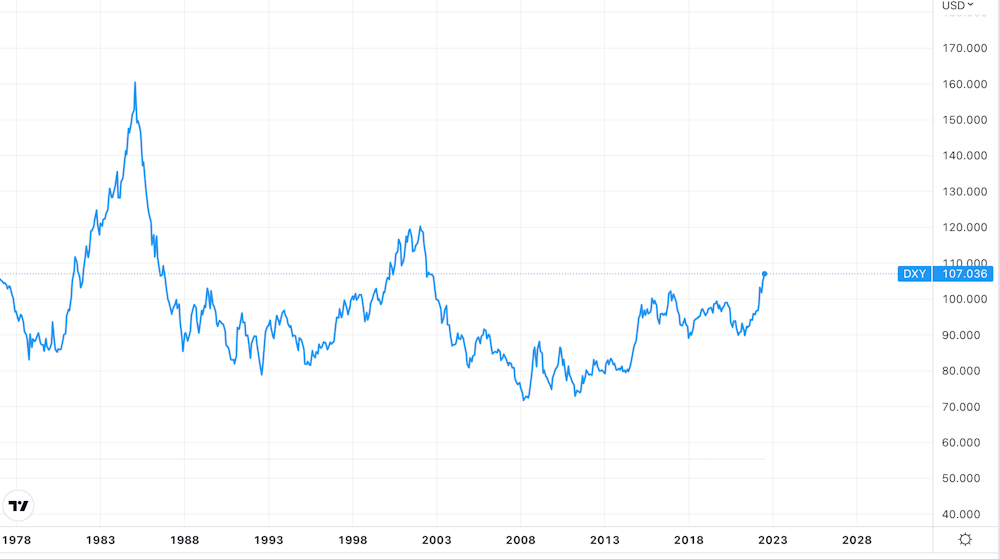
– The US dollar has been on a major surge against major global currencies in the past year, recently hitting levels not seen in 20 years. It has gained 15% against the British pound, 16% against the euro and 23% against the Japanese yen.

The dollar is the world’s reserve currency, which means it is used in most international transactions. As a result, changes in its value have implications for the entire global economy. Below are five of the main ones.

US dollar strength 1977-2022

Chart showing the strength of the dollar since 1980
The US dollar index or DXY is the US dollar measured against a basket of world currencies.
Trading View

1. Even more inflation

Petrol and most commodities such as metals or timber are usually traded in US dollars (though with exceptions). So when the dollar gets stronger, these items cost more in local currency. For example in British pounds, the cost of US$100-worth of petrol has risen over the past year from £72 to £84. And since the price per litre of petrol in US dollars has risen steeply as well, it is creating a double whammy.

When energy and raw materials cost more, the prices of many products go up for consumers and businesses, causing inflation around the world. The only exception is the US, where a stronger dollar makes it cheaper to import consumer products and therefore could help to tame inflation.

2. Low-income countries under threat

Most developing countries owe their debt in US dollars, so many owe much more now than a year ago. As a result, many will struggle to find an ever increasing amount of local currency to service their debts.

We are already seeing this in Sri Lanka, and other countries may soon follow suit. They will either have to tax their economies more, issue inflationary local money or simply borrow more. The results could be deep recession, hyper-inflation, a sovereign debt crisis or all three together, depending on the path chosen. Developing countries which fall into sovereign debt crises can take years or even decades to recover, causing severe hardship to their people.

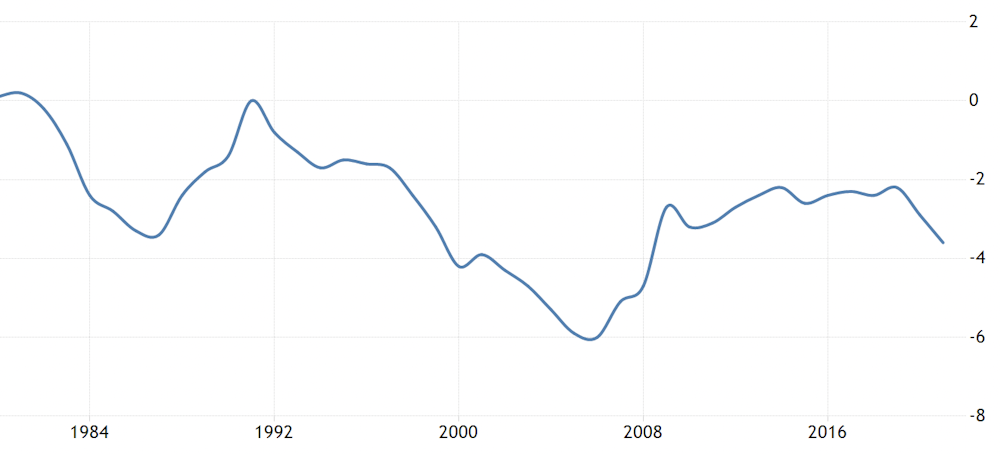
3. A bigger US trade deficit

Other countries will buy fewer US products as a result of the strong dollar.
The US trade deficit, which is the difference between the amount of exports and imports, already runs close to a mammoth one trillion dollars per year. President Joe Biden and Donald Trump before him vowed to reduce it, particularly against China. Some economists worry that the trade deficit drives up US borrowing and reflects the fact that many manufacturing jobs have moved overseas.

US trade deficit as a % GDP

Chart showing US trade deficit as a percentage of GDP
Trading Economics

4. De-globalisation to get worse

The most obvious economic policy to prevent a trade deficit from growing is the old game of imposing tariffs, quotas or other barriers on imports. Other countries tend to retaliate against such protectionism, adding their own taxes and other barriers to US products. In an era when “de-globalisation” has already begun thanks to worsening western relations with Russia and China, a stronger dollar adds to the political momentum for protectionism and threatens global trade.

5. Eurozone fears

Weaker EU member states such as Portugal, Ireland, Greece and Cyprus have become somewhat less vulnerable to investors driving up their borrowing costs to crisis levels than during the darkest days of the eurozone crisis. This is because much of their national debt is now in the hands of the the European Stability Mechanism (ESM), which was set up to help rescue them, as well as friendlier investment banks within the eurozone.

However, the stronger dollar is creating pressure for the European Central Bank to raise its own interest rates to prop up the euro and subdue the cost of imports, including energy. This will put more pressure on eurozone countries with high levels of debt. Italy, which is the ninth largest economy in the world and has government debts at a whopping 150% of GDP, would be particularly hard to bail out if the situation got out of control.

Bringing these five points together, the ultra-strong dollar is yet another reason to fear a global recession in the coming period. Higher inflation erodes consumer incomes and reduces consumption. Protectionism can reduce international trade and investment. Sovereign debt crises mean serious trouble for many developing countries and possibly even the eurozone.

Will the dollar keep rising?

The dollar has been rising for both economic and geopolitical reasons. The central bank of the US – the Federal Reserve – has been hiking interest rates aggressively and also reversing its policy of creating money via quantitative easing (QE). This is with a view to curbing inflation caused by COVID supply issues, the war in Ukraine and also QE.

The stronger US dollar is a side effect of these higher interest rates. Because the dollar now offers a higher yield when deposited in a US bank, it encourages foreign investors to sell their local currency and buy US dollars.

Of course, central banks in other jurisdictions such as the UK have also been raising interest rates, and the eurozone is planning to do likewise. But they are not acting as aggressively as the US. Meanwhile Japan is not tightening at all, so the net result is still greater overseas demand for greenbacks.

The other reason for the surging US dollar is because it is a classic safe haven when the world is worried about a recession – and the current geopolitical situation is arguably making it still more appealing. The euro has suffered from the EU’s proximity to the war in Ukraine, its exposure to Russian energy and the prospect of another eurozone crisis. It is close to dollar parity for the first time since its early years.

The British pound has been hit by Brexit and is also facing the prospect of a second Scottish independence referendum and a potential trade war with the EU over the Northern Ireland protocol. Finally, the yen belongs to an economy that seems to be slowly losing ground. Japan is ageing and is still not comfortable with migration to boost its production capabilities. A weaker yen is also the price that Japan pays for continuing QE to keep the interest rates low on its government debt.

It is difficult to predict the future direction of the US dollar when there are so many moving parts in the world economy. But we suspect that persistent inflation will force US interest rates to keep rising, and that together with geopolitical shocks from war and sovereign debt defaults, it will probably keep the dollar high. A strong US dollar is a response to troubled times.The Conversation

About the Author:

Alexander Tziamalis, Senior Lecturer in Economics, Sheffield Hallam University and Yuan Wang, Seinor Lecturer in Economics, Sheffield Hallam University

This article is republished from The Conversation under a Creative Commons license. Read the original article.


Why isn’t EURUSD below parity … yet?

By ForexTime 

First, allow me to confess: I wasn’t expecting to write this article about EURUSD parity so soon.

When I published my Q3 outlook a couple of weeks ago, there was a 72.5% chance that EURUSD would hit 1.000 sometime this quarter.

Even with such elevated odds back then, I still thought this post-parity article wouldn’t be due for another few weeks.

But here we are.

Just as a quick reminder, the stunning decline in the world’s most popular currency pair, sinking to levels not seen in two decades, only underscores the divergence between the Eurozone and the US.

Here’s a recap from the June 30th article:

  • The US economy’s healthier outlook relative to the Eurozone’s.
    After all, there’s still the Russia-Ukraine war raging off to the latter’s eastern borders.

    UPDATE: The June US nonfarm payrolls report released last Friday (July 8th) showed a still-resilient jobs market in the world’s largest economy.


  • The Fed’s plans for more incoming rate hikes appears to be less risky than the European Central Bank’s.
    The ECB is just only getting started, with two rate hikes slated for Q3.
    But markets fear that the incoming ECB hikes could inadvertently result in a sovereign debt crisis/fragmentation risks.

    UPDATE: Following yesterday’s higher-than-expected June US CPI print of 9.1% (its highest in over 40 years, since November 1981) markets have since begun to expect a historic 100 basis point hike by the Fed at its upcoming policy decision due July 27th.


But why hasn’t EURUSD broken below parity, yet?

One word: options.

At least that’s what market chatter is pointing to.

Without getting into the weeds of the derivatives market and what “options” are, the idea is that EURUSD is being “defended” at the psychologically-important 1.0000 mark by traders who are trying their utmost best from having to pay up on financial contracts if that proverbial line in the sand is crossed.

Also, it’s tough to get a true headline figure as to how many billions worth of such options are in play at present, given the OTC (over the counter) nature of such contracts, yet they appear to have done the job so far in defending EURUSD parity over recent sessions, at least at the time of writing.

Still, such a defence can only be mounted for so long, given the fundamentally-driven selling pressures on the euro listed above.


So where to next for EURUSD?

If the 1.000 mark gives way, the next notable area of “defense” (i.e. support level) for EURUSD may arrive at 0.985, where another large chunk of options are congregated.

After that, euro bears could then send EURUSD towards the 0.950 mark.


Overall, given that there are multiple tranches of such options that may need to be defended between parity and 0.95, EURUSD may only see a grinding path towards lower levels, as opposed to the rapid declines from 1.15 to 1.000 that we’ve witnessed so far this year.


Still, EURUSD could be due for an immediate technical rebound, given that its 14-day relative strength index has gone below the 30 threshold that signals oversold conditions, .


Key event to look out for:

Beside the upcoming ECB and Fed respective July policy meetings due in the next couple of weeks, a major immediate risk for the euro pertains to the Nordstream 1 pipeline.

As noted in our Week Ahead article posted last Friday, this underwater gas pipeline from Russia to Germany is undergoing maintenance since last Monday through July 21st.

Markets fear that Russia may not restart this pipeline once maintenance has been completed.

Already, the likes of French Finance Minister Bruno Le Maire has warned of such a scenario, should Russia retaliate against sanctions, warning that the continent must prepare contingency plans (such as rationing).

Such a apocalyptic event would spark an energy crisis in Europe, and further darken its economic outlook by making a recession all but certain. That could even send EURUSD careening past 0.95!


If that happens, even a hawkish-sounding ECB later this month may not be able to significantly support the ailing bloc currency, barring direct interventions to support the currency like it did back in 2000 (when EURUSD fell to the depths of 0.823 in October 2020).


Can EURUSD stage a rebound?

From a fundamental perspective, hopes for a sustained rebound in the euro would have to be underpinned by:

  • inflation having peaked and is turning over
  • Russia-Ukraine war abating
  • recovering Eurozone economy

It’s hard imaging the above-mentioned factors materialising anytime soon.

Hence, the euro is expected to maintain a downward bias against the US dollar (with the latter benefitting from its safe haven status and its higher yields versus Eurozone bond yields).


As things stand, here’s what markets are forecasting for EURUSD:

  • 0.985 = 75% chance of that level reached sometime this quarter (Q3 2022)
  • 0.950 = 55% chance of that level reached within the next 12 months

Forex-Time-LogoArticle by ForexTime

ForexTime Ltd (FXTM) is an award winning international online forex broker regulated by CySEC 185/12 www.forextime.com

Japanese Candlesticks Analysis 14.07.2022 (XAUUSD, NZDUSD, GBPUSD)

Article By RoboForex.com

XAUUSD, “Gold vs US Dollar”

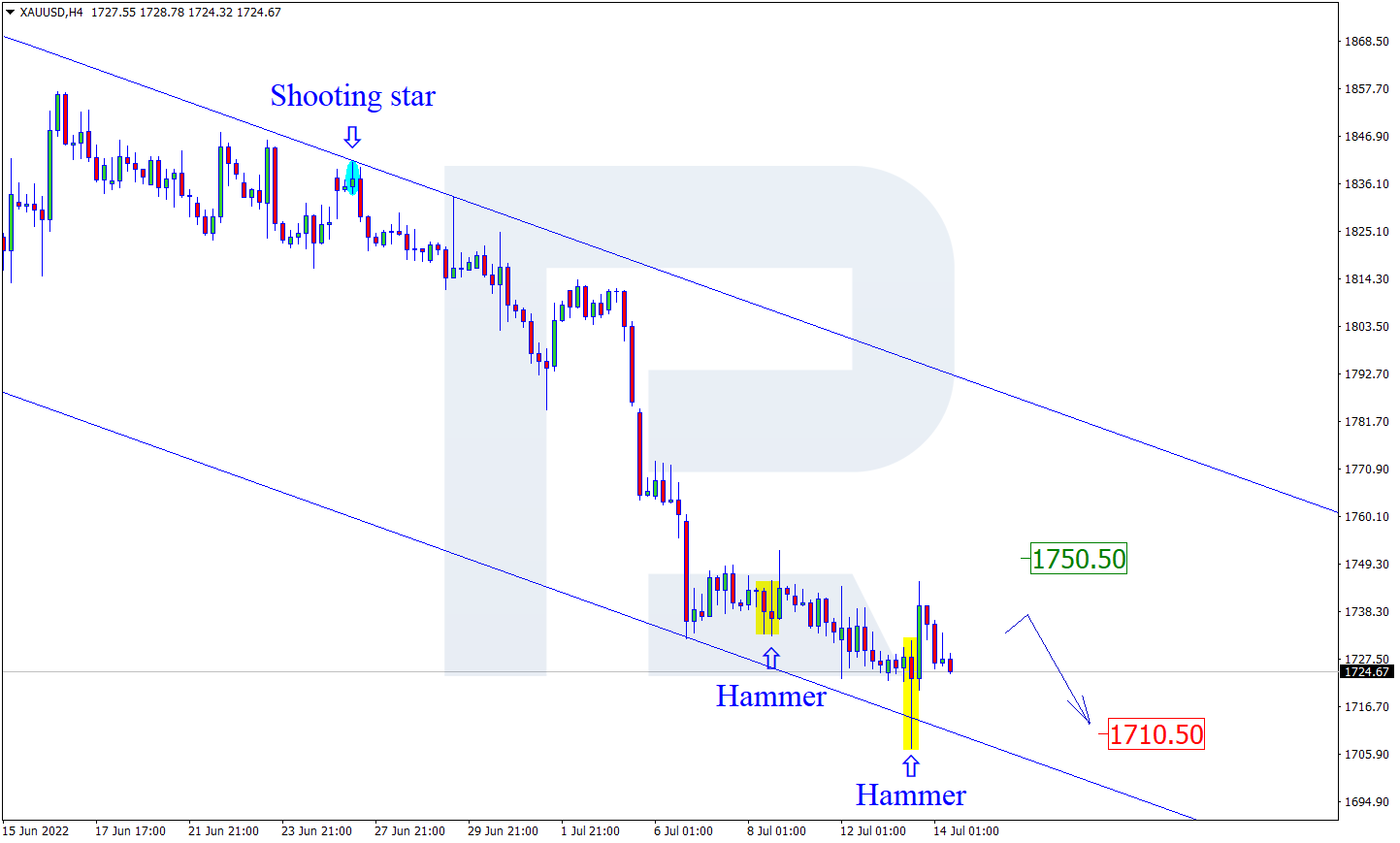
As we can see in the H4 chart, XAUUSD has formed several reversal patterns, such as Hammer, not far from the support area. At the moment, the asset may reverse in the form of a new rising impulse. In this case, the upside correctional target may be the resistance level at 1770.50. At the same time, the opposite scenario implies that the price may continue falling to reach 1710.50 without any pullbacks.

XAUUSD
Risk Warning: the result of previous trading operations do not guarantee the same results in the future

NZDUSD, “New Zealand vs US Dollar”

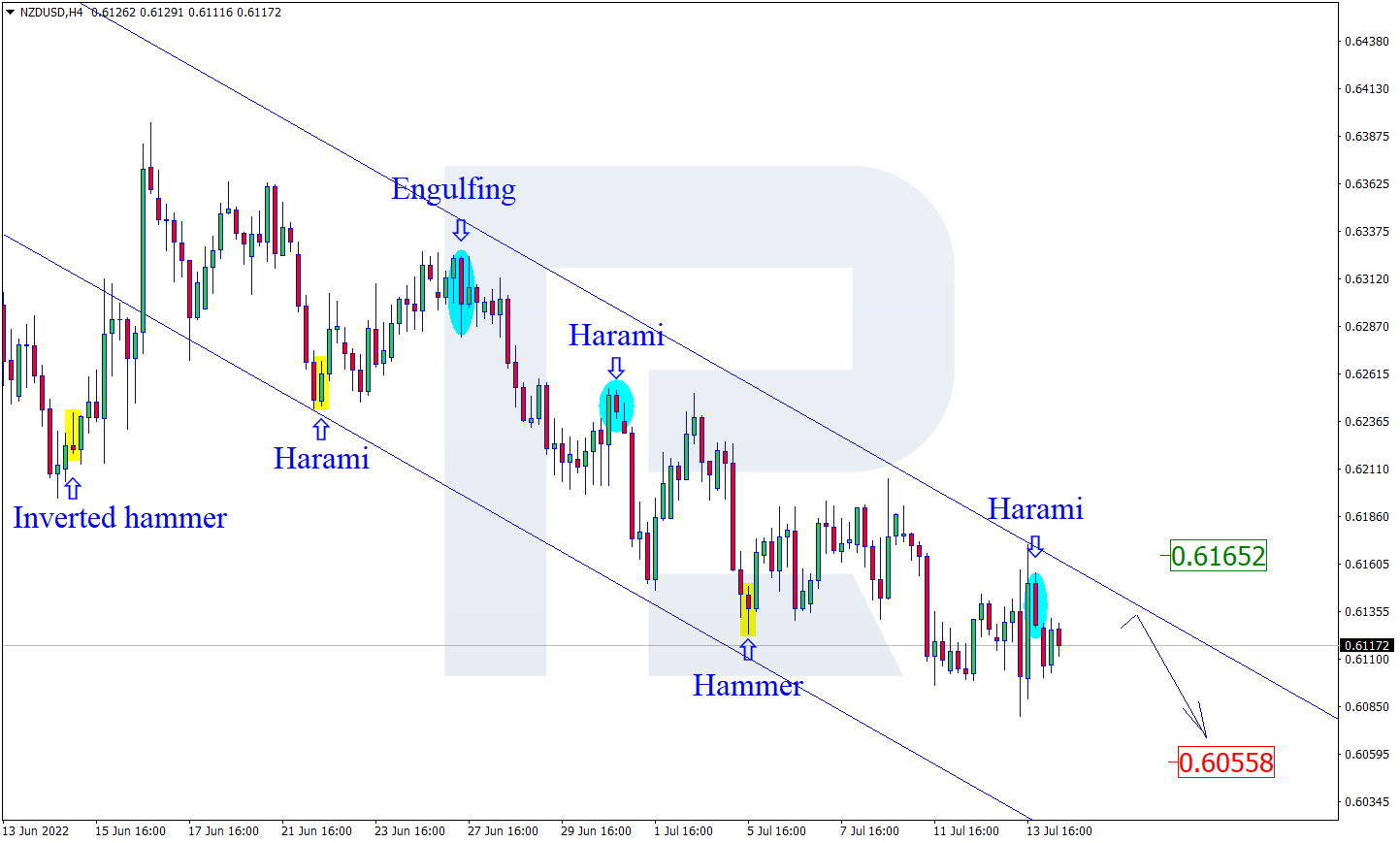
As we can see in the H4 chart, NZDUSD has formed a Harami reversal pattern during the pullback. At the moment, the asset may reverse in the form of another descending impulse. In this case, the downside target may be at 0.6055. After that, the asset may break the support level and continue moving downwards. However, an alternative scenario implies that the price may correct to reach 0.6165 first and then resume the descending tendency.

NZDUSD
Risk Warning: the result of previous trading operations do not guarantee the same results in the future

GBPUSD, “Great Britain Pound vs US Dollar”

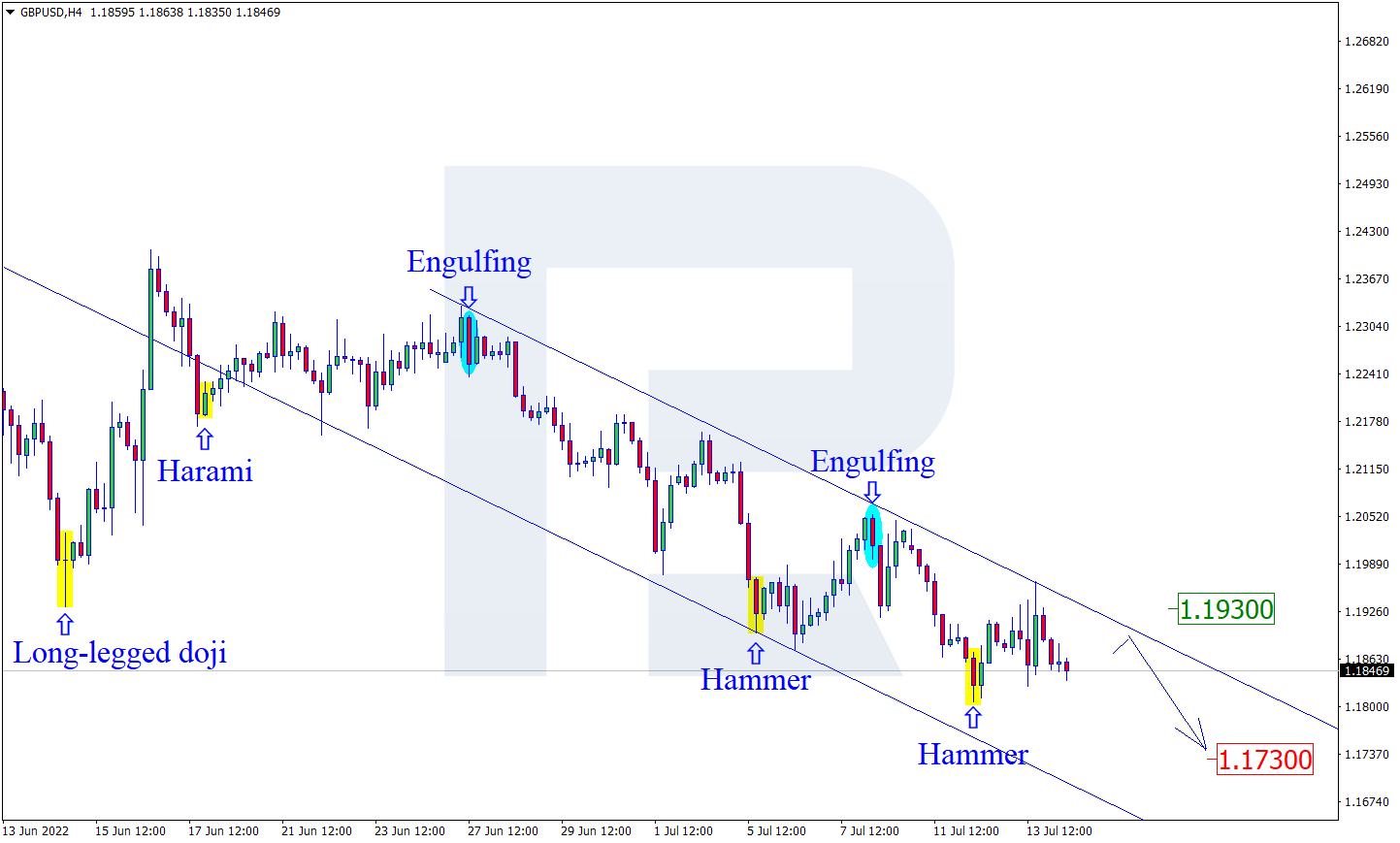
As we can see in the H4 chart, GBPUSD has formed a Hammer reversal pattern near the support level. At the moment, the pair may reverse in the form of a new ascending impulse. In this case, the upside correctional target may be the resistance area at 1.1930. Later, the market may rebound from this level and resume falling. Still, there might be an alternative scenario, according to which the asset may fall to reach the support level at 1.1730 without any corrections.

GBPUSD

Article By RoboForex.com

Attention!
Forecasts presented in this section only reflect the author’s private opinion and should not be considered as guidance for trading. RoboForex LP bears no responsibility for trading results based on trading recommendations described in these analytical reviews.

Ichimoku Cloud Analysis 14.07.2022 (EURUSD, GBPUSD, NZDUSD)

Article By RoboForex.com

EURUSD, “Euro vs US Dollar”

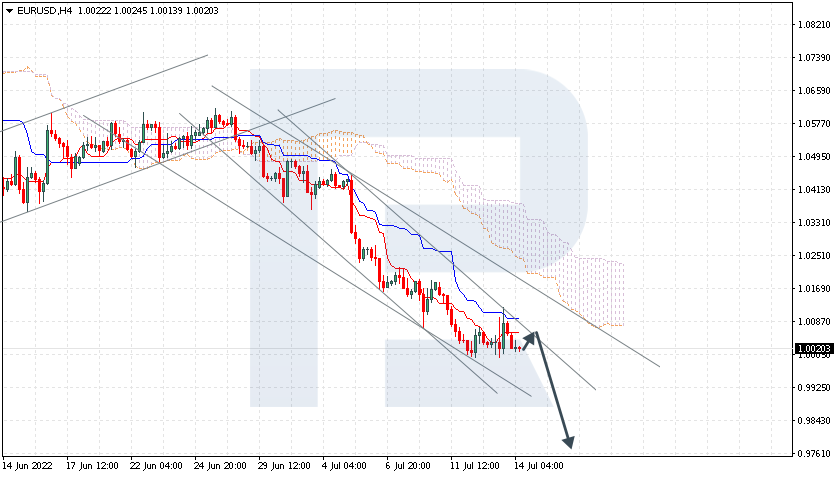
EURUSD is testing the support level. The instrument is currently moving below Ichimoku Cloud, thus indicating a descending tendency. The markets could indicate that the price may test Tenkan-Sen, at 1.0055 and then resume moving downwards to reach 0.9765. Another signal in favour of a further downtrend will be a rebound from the descending channel’s upside border. However, the bearish scenario may no longer be valid if the price breaks the cloud’s upside border and fixes above 1.0265. In this case, the pair may continue to grow towards 1.0355.

EURUSD
Risk Warning: the result of previous trading operations do not guarantee the same results in the future

GBPUSD, “Great Britain Pound vs US Dollar”

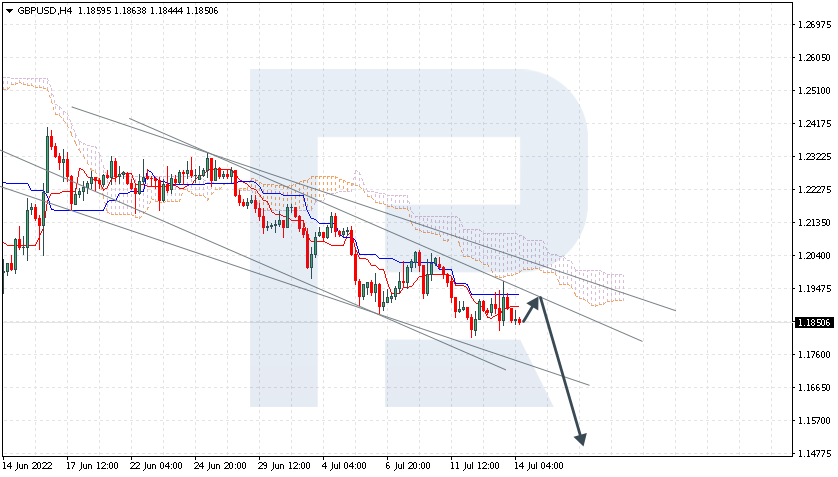
GBPUSD is rebounding from Tenkan-Sen and Kijun-Sen. The instrument is currently moving below Ichimoku Cloud, thus indicating a descending tendency. The markets could indicate that the price may test Kijun-Sen, at 1.1865, and then resume moving downwards to reach 1.1495. Another signal in favour of a further downtrend will be a rebound from the descending channel’s upside border. However, the bearish scenario may no longer be valid if the price breaks the cloud’s upside border and fixes above 1.2145. In this case, the pair may continue to grow towards 1.2235.

GBPUSD
Risk Warning: the result of previous trading operations do not guarantee the same results in the future

NZDUSD, “New Zealand Dollar vs US Dollar”

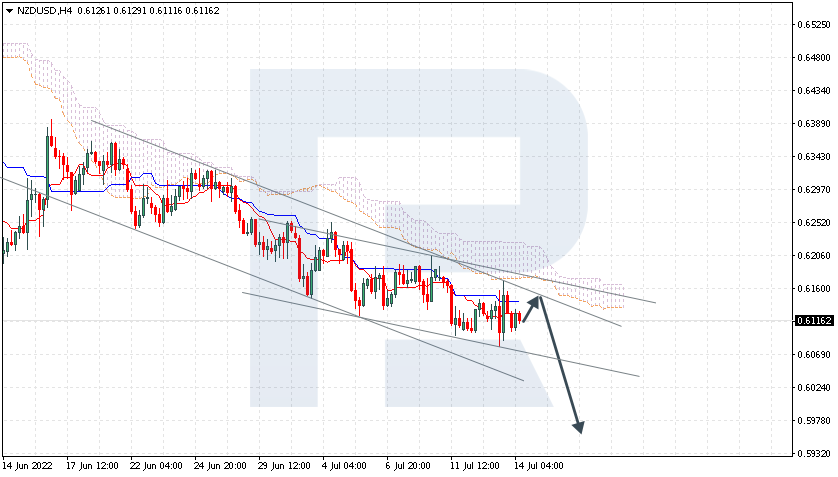
NZDUSD continues rebounding from the resistance level. The instrument is currently moving below Ichimoku Cloud, thus indicating a descending tendency. The markets could indicate that the price may test Kijun-Sen, at 0.6125 and then resume moving downwards to reach 0.5965. Another signal in favour of a further downtrend will be a rebound from the descending channel’s upside border. However, the bearish scenario may no longer be valid if the price breaks the cloud’s upside border and fixes above 0.6260. In this case, the pair may continue to grow towards 0.6350.

NZDUSD

Article By RoboForex.com

Attention!
Forecasts presented in this section only reflect the author’s private opinion and should not be considered as guidance for trading. RoboForex LP bears no responsibility for trading results based on trading recommendations described in these analytical reviews.

The Analytical Overview of the Main Currency Pairs on 2022.07.14

By JustForex

The EUR/USD currency pair

Technical indicators of the currency pair:
  • Prev Open: 1.0037
  • Prev Close: 1.0057
  • % chg. over the last day: +0.20%

US inflation has beaten analysts’ expectations. The US consumer price index reached 9.1% year-on-year, compared to expectations of 8.8%. It is the highest rate since 1981. Last month’s gain was 1.3%. The Core Index (which excludes food and energy prices) reached 5.9%, with 5.7% expected. On a monthly basis, the Core CPI rose by 0.7%. European countries also saw an increase in consumer prices. Over the past month, inflation in Germany increased by 0.1%, in France by 0.7%, and in Spain by 1.5% to 10.2% on an annualized basis. Such data has hit confidence that the pace of slowing inflation in the future will be challenging. In his speech yesterday, FOMC spokesman Bostic said that a 100 basis point rate hike is also being considered by the Committee. There is a growing possibility that the ECB will also consider a 0.5% hike, although Fed Chair Christine Lagarde has argued several times that the first hike will be 0.25%.

Trading recommendations
  • Support levels: 1.0000
  • Resistance levels: 1.0147, 1.0221, 1.0284, 1.0365, 1.0415, 1.050

From the technical point of view, the trend on the EUR/USD currency pair on the hourly time frame is bearish. At the moment, the price is trading below the moving averages. The MACD indicator is in the negative zone, but the divergence is already observed in several timeframes. Under such market conditions, sell deals can be considered from the resistance level of 1.0147, but only after the additional confirmation. Buy trades are best to look for on intraday time frames from the support level of 1.0000, but only with confirmation and short targets.

Alternative scenario: if the price breaks out through the 1.0284 resistance level and fixes above, the uptrend will likely resume.

EUR/USD
News feed for 2022.07.14:
  • – US Initial Jobless Claims (w/w) at 15:30 (GMT+3);
  • – US Producer Price Index (m/m) at 15:30 (GMT+3);
  • – US Natural Gas Storage (w/w) at 17:30 (GMT+3);
  • – US FOMC Member Waller Speaks at 18:00 (GMT+3).

The GBP/USD currency pair

Technical indicators of the currency pair:
  • Prev Open: 1.1884
  • Prev Close: 1.1889
  • % chg. over the last day: +0.04%

UK GDP unexpectedly showed a 0.5% growth in the last month, overlapping the decrease over the previous three months. Experts had expected a decline of 0.2%. At the same time, the Industrial Production Index had grown by 0.9% (expected -0.1%), while manufacturing production had added 1.5% (expected -0.6%). Such positive sentiment gave confidence to the pound sterling.

Trading recommendations
  • Support levels: 1.1801
  • Resistance levels: 1.1887, 1.2002, 1.2065, 1.2137

From the technical point of view, the trend on the GBP/USD currency pair on the hourly time frame is bearish. The MACD indicator is in the negative zone, but there are signs of divergence. Under such market conditions, sell deals can be considered from the resistance level of 1.1887, but only after the additional confirmation. Buy trades are best to look for on intraday time frames from the support level of 1.1801, but only with confirmation and short targets.

Alternative scenario: if the price breaks out through the 1.2137 resistance level and fixes above, the uptrend will likely resume.

GBP/USD
There is no news feed for today.

The USD/JPY currency pair

Technical indicators of the currency pair:
  • Prev Open: 136.86
  • Prev Close: 137.37
  • % chg. over the last day: +0.35%

The situation on the USD/JPY currency pair remains the same. The huge gap between the interest rates and diametrically opposed monetary policy has already caused USD/JPY quotes to reach multi-year highs. There were suggestions that the Bank of Japan would be forced to intervene to strengthen the currency or adjust its control of the yield curve, but no such action has been taken. Japan’s central authorities are still pushing for a weaker currency. And the situation will not change soon, so traders should not count on a price reversal based on fundamental factors.

Trading recommendations
  • Support levels: 137.44, 137.12, 136.48, 135.92, 135.40, 134.64, 134.11
  • Resistance levels: 138.89

From the technical point of view, the medium-term trend on the USD/JPY currency pair is bullish. The MACD indicator has become positive, the buyer’s pressure has increased, and the price continues an upward trend. But there are signs of divergence. Under such market conditions, buy trades can be considered within a day from the support level of 137.44, but with confirmation. A resistance level of 138.89 is good for sell deals, but only with additional confirmation and short targets.

Alternative scenario: If the price fixes below 135.93, the downtrend will likely resume.

USD/JPY
News feed for 2022.07.14:
  • – Japan Industrial Production (m/m) at 07:30 (GMT+3).

The USD/CAD currency pair

Technical indicators of the currency pair:
  • Prev Open: 1.3019
  • Prev Close: 1.2978
  • % chg. over the last day: -0.31%

The Canadian dollar strengthened after the Bank of Canada raised its benchmark interest rate by a full percentage point, surprising markets with the most significant increase since 1998. The Bank of Canada said in a statement that inflation in Canada remains more resilient than the Bank expected in its April monetary policy report and is likely to stay around 8% for the next few months. The Bank expects Canada’s economy to grow 3.5% in 2022, 1.75% in 2023, and 2.5% in 2024. Economic activity is slowing as global growth slows and monetary policy tightens. The outlook for prices suggests that inflation will begin to decline later this year, dropping to about 3% by the end of next year and returning to the 2% target by the end of 2024.

Trading recommendations
  • Support levels: 1.2959, 1.2934, 1.2894
  • Resistance levels: 1.3001, 1.3050, 1.3113

In terms of technical analysis, the trend on the USD/CAD currency pair is bullish. But there are signs of interception of the initiative. The price is trading below the moving averages, and there is slight pressure from the sellers. Under such market conditions, it is best to look for buy trades on the lower time frames from the support level of 1.2959, but with confirmation. For sell deals, it is best to consider the resistance level of 1.3001, but it is also better with confirmation and short targets.

Alternative scenario: if the price breaks through and consolidates below the 1.2894 support level, the downtrend will likely resume.

USD/CAD
There is no news feed for today.

By JustForex


This article reflects a personal opinion and should not be interpreted as an investment advice, and/or offer, and/or a persistent request for carrying out financial transactions, and/or a guarantee, and/or a forecast of future events.

Forex Technical Analysis & Forecast 13.07.2022

Article By RoboForex.com

EURUSD, “Euro vs US Dollar”

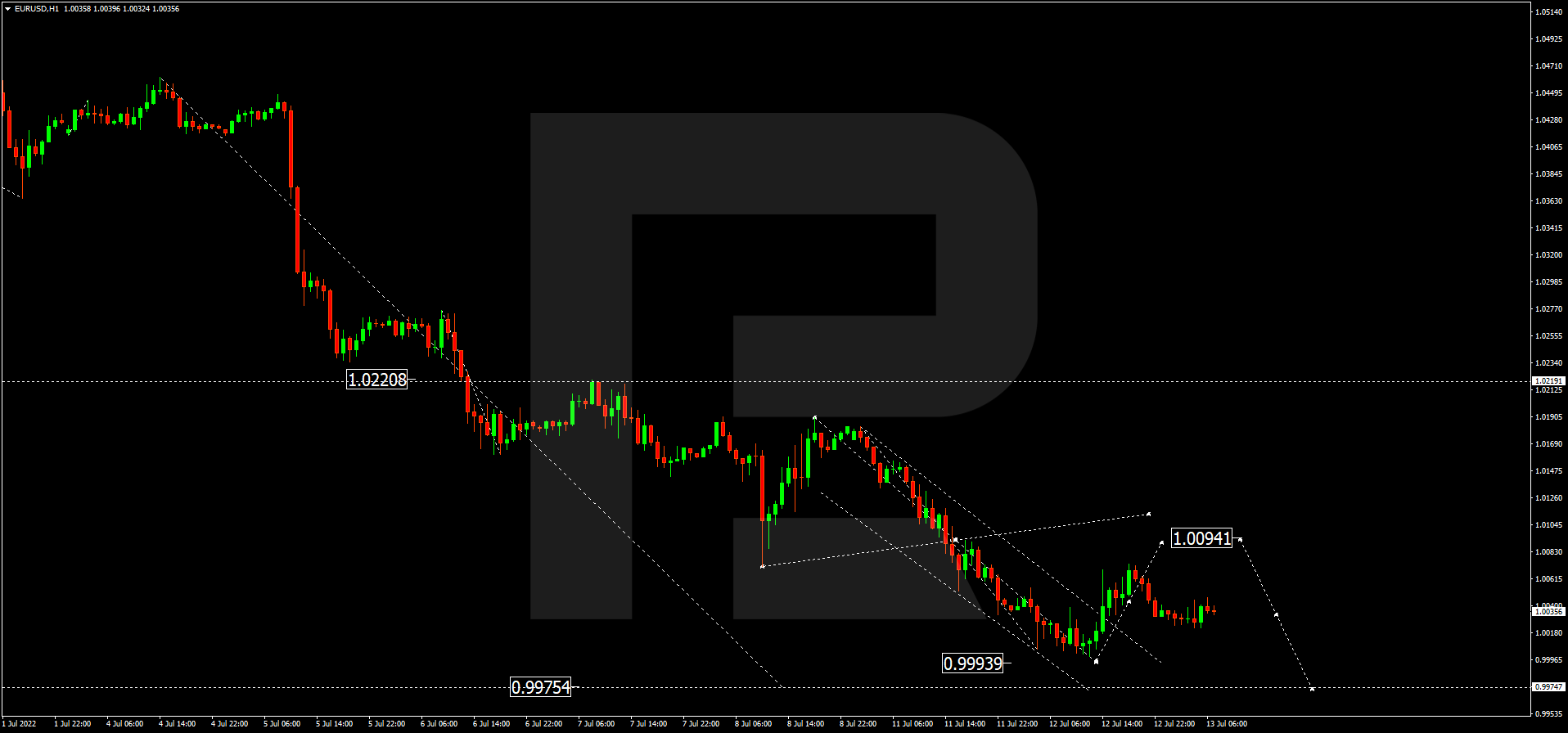
EURUSD has finished the descending wave at 0.9999. Possibly, today the pair may correct to test 1.0090 from below and then fall towards 0.9994. Later, the market may start another correction up to 1.0111 and then resume trading downwards with the target at 0.9975.

EURUSD
Risk Warning: the result of previous trading operations do not guarantee the same results in the future

GBPUSD, “Great Britain Pound vs US Dollar”

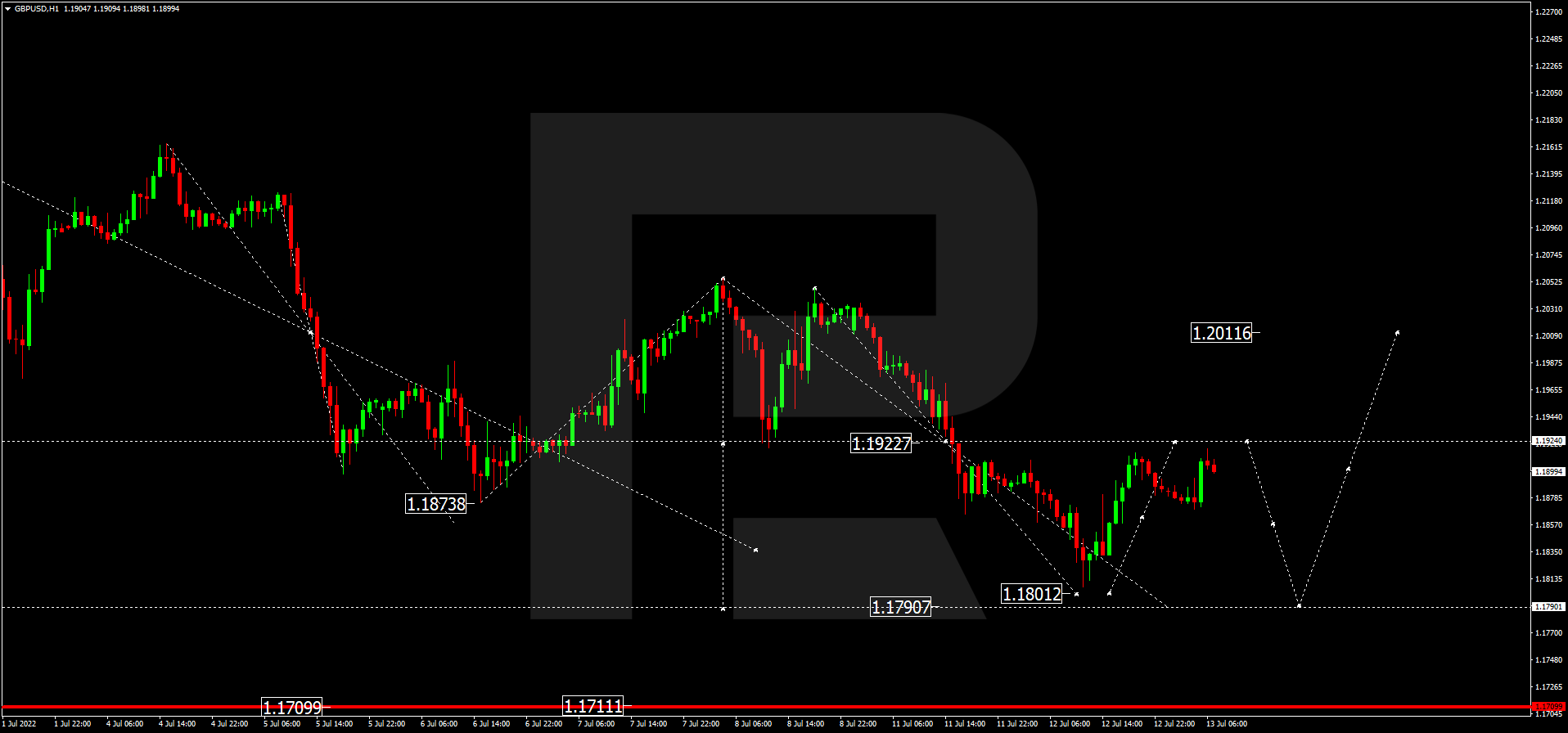
Having completed the descending wave at 1.1807, GBPUSD is expected to correct to test 1.1922 from below and may later resume falling towards 1.1801. After that, the instrument may start another correction up to 1.1930, and then resume trading within the downtrend with the target at 1.1790.

GBPUSD
Risk Warning: the result of previous trading operations do not guarantee the same results in the future

USDJPY, “US Dollar vs Japanese Yen”

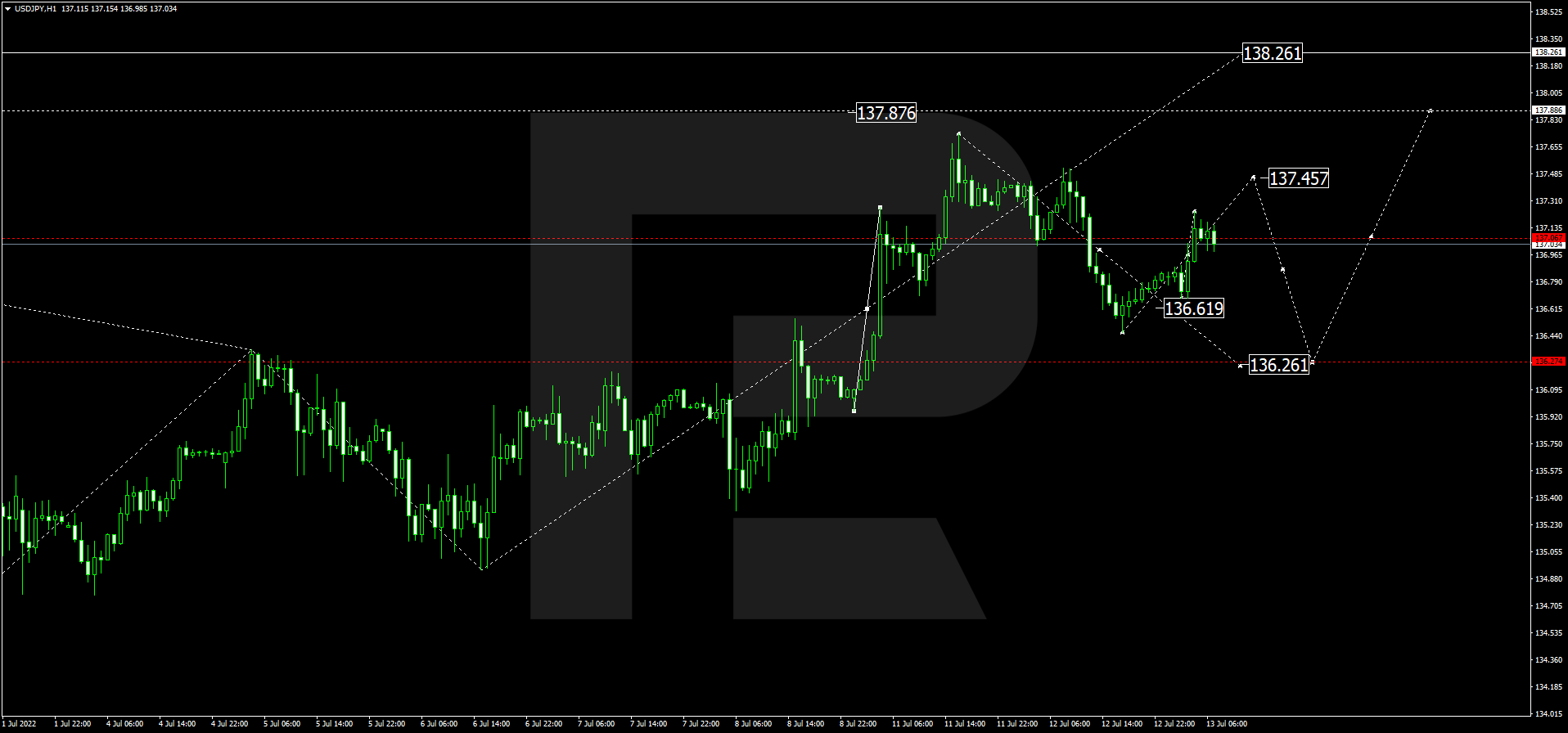
USDJPY has finished the correctional structure at 136.60; right now, it is growing towards 137.45. Later, the market may start another decline towards 136.26 and then resume trading upwards with the target at 137.87.

USDJPY
Risk Warning: the result of previous trading operations do not guarantee the same results in the future

USDCHF, “US Dollar vs Swiss Franc”

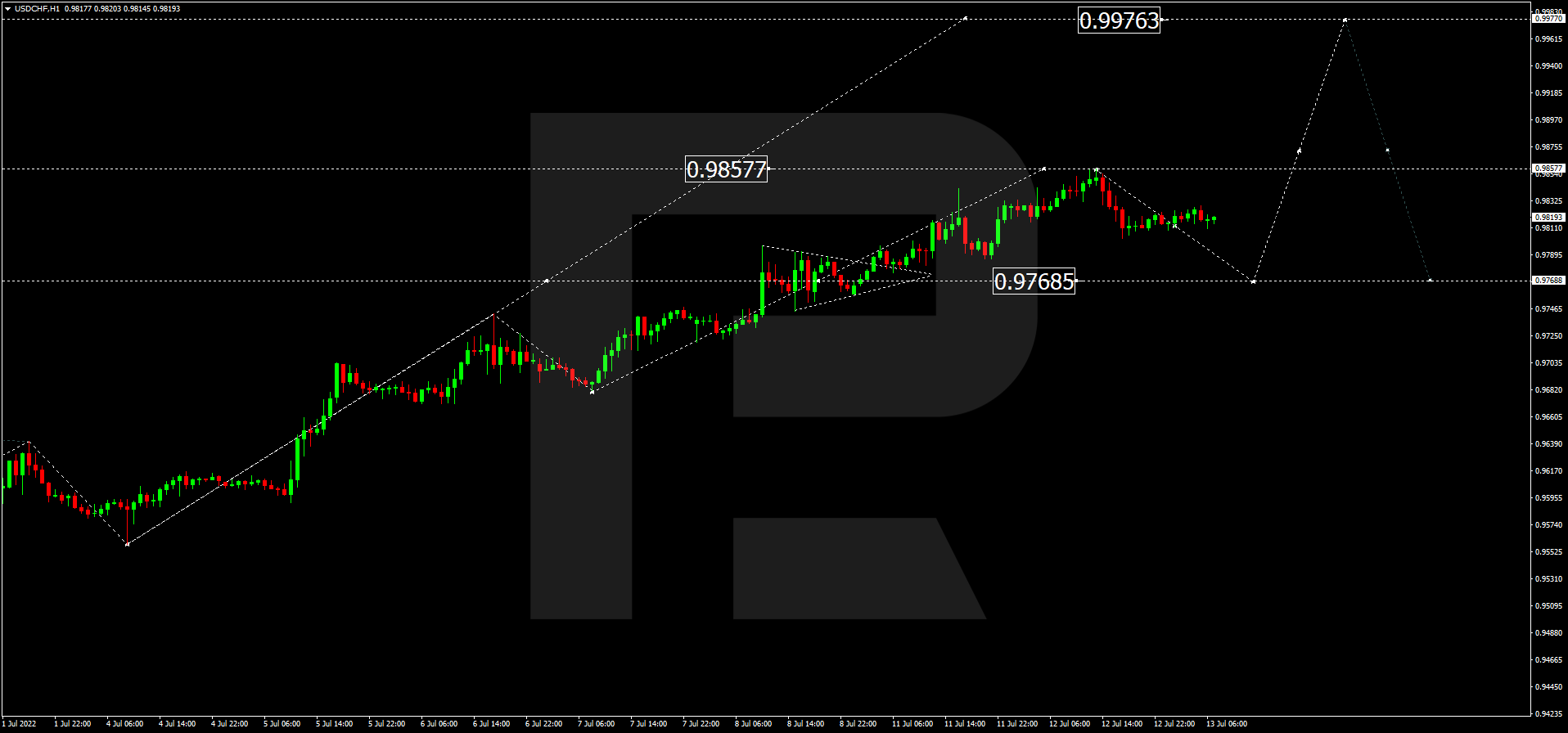
After reaching the short-term upside target at 0.9855, USDCHF is expected to correct down to 0.9786. Later, the market may start a new growth with the first target at 0.9977.

USDCHF
Risk Warning: the result of previous trading operations do not guarantee the same results in the future

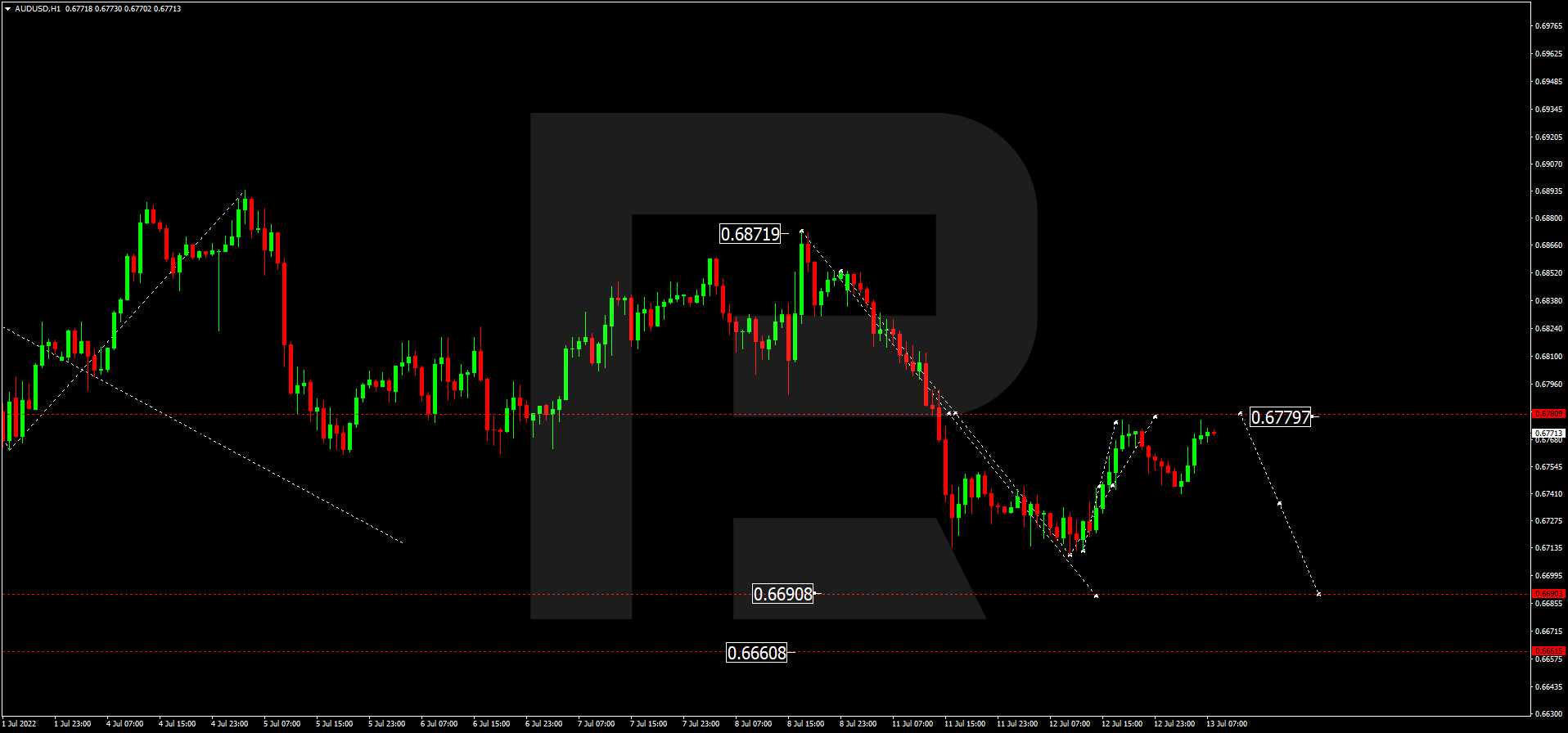
AUDUSD, “Australian Dollar vs US Dollar”

AUDUSD has finished the descending wave at 0.6710; right now, it is correcting up to 0.6779. After that, the instrument may resume trading within the downtrend with the target at 0.6690.

AUDUSD
Risk Warning: the result of previous trading operations do not guarantee the same results in the future

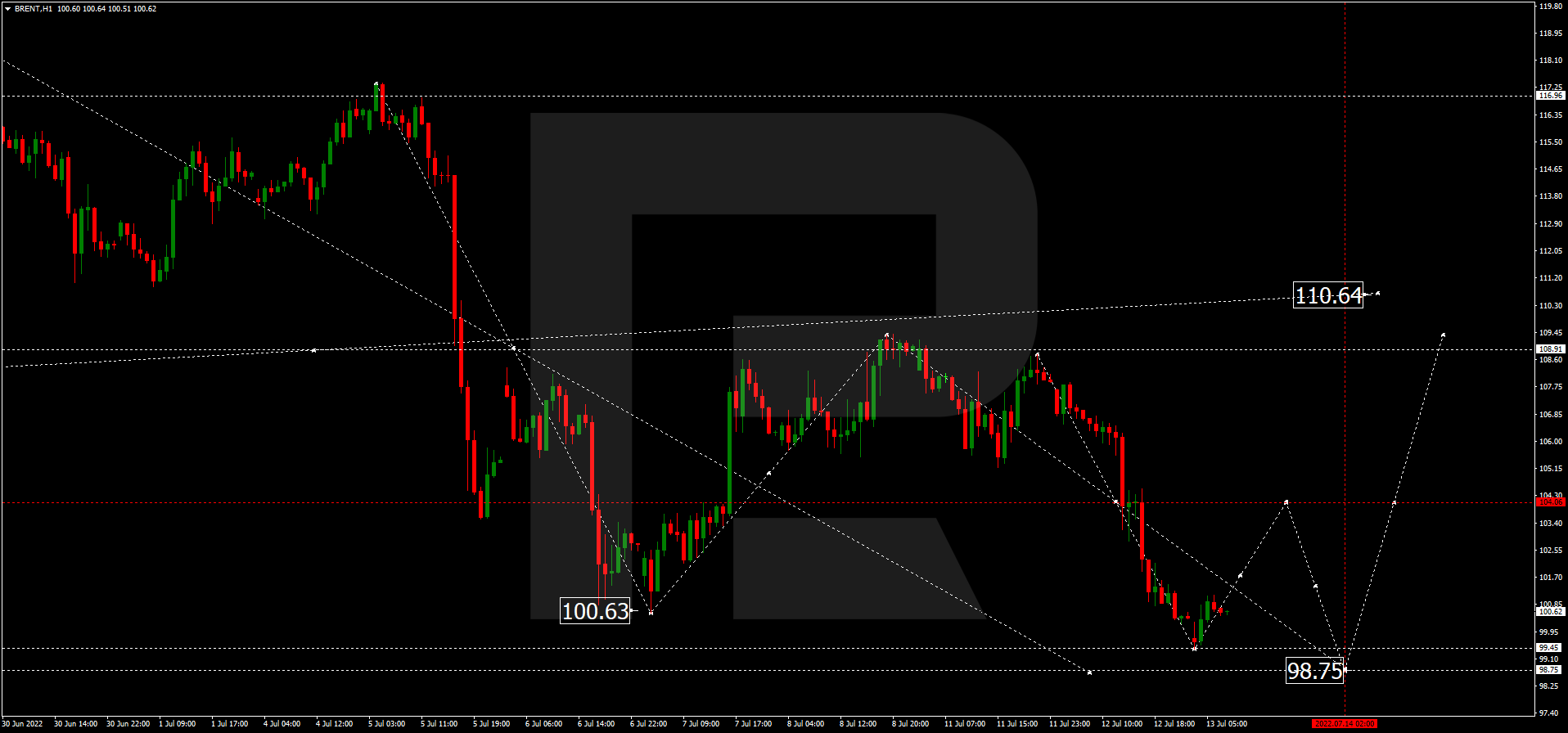
BRENT

Brent is still correcting; it has already reached the short-term target at 99.50 and may later grow to test 104.00 from below. After that, the instrument may fall towards 98.75, and then resume trading upwards with the target at 110.60.

BRENT
Risk Warning: the result of previous trading operations do not guarantee the same results in the future

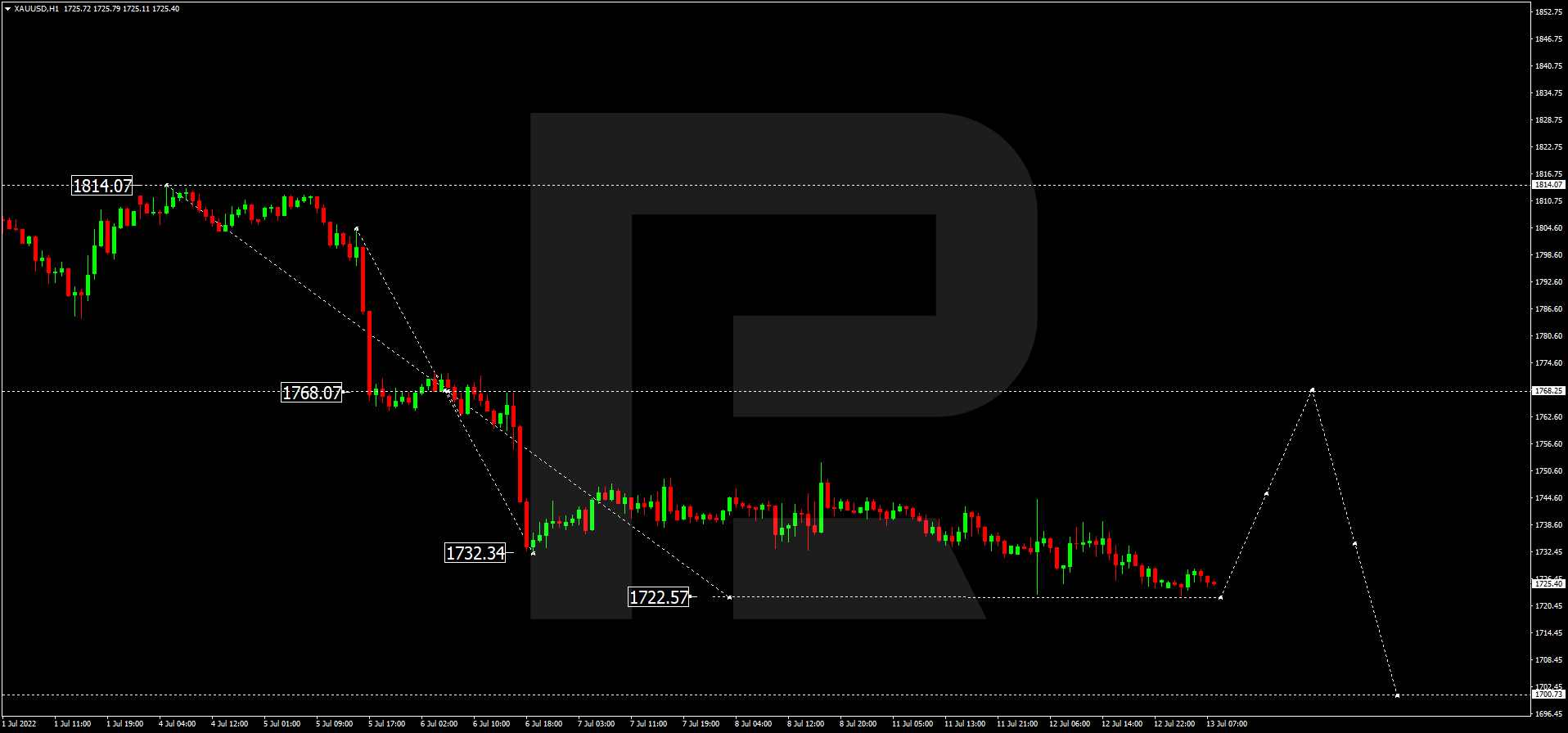
XAUUSD, “Gold vs US Dollar”

Gold continues falling towards 1722.22. After that, the instrument may correct up to 1768.00, and then resume trading downwards with the target at 1700.00.

GOLD
Risk Warning: the result of previous trading operations do not guarantee the same results in the future

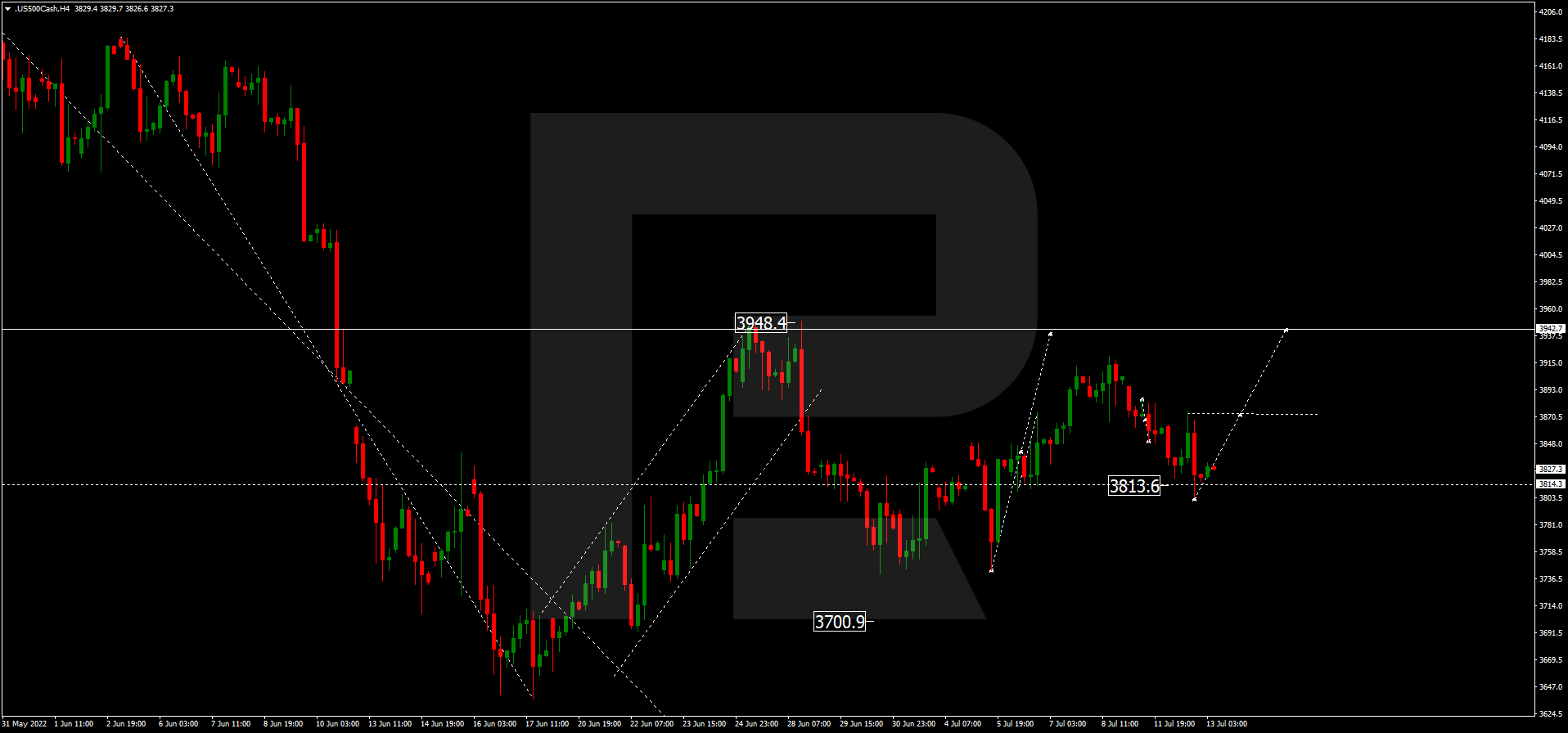
S&P 500

The S&P index has completed the descending structure at 3813.6. Today, the asset may resume growing to break 3948.4 and then continue trading upwards with the short-term target at 4040.0.

S&P 500

Article By RoboForex.com

Attention!
Forecasts presented in this section only reflect the author’s private opinion and should not be considered as guidance for trading. RoboForex LP bears no responsibility for trading results based on trading recommendations described in these analytical reviews.

The Analytical Overview of the Main Currency Pairs on 2022.07.13

By JustForex

The EUR/USD currency pair

Technical indicators of the currency pair:
  • Prev Open: 1.0036
  • Prev Close: 1.0036
  • % chg. over the last day: 0.00%

Germany’s ZEW economic sentiment indicator fell to -53.8 (expected -40.6, previous -28). For the Eurozone, the ZEW Index fell to 51.1 (expectation -39, previous -28). The report points out that the current serious concerns over energy supplies, the ECB interest rate hike announced, and further restrictions related to the pandemic in China have led to a significant deterioration in the economic outlook. Experts are assessing the current financial situation much more negatively than in the previous month and have lowered their unfavorable forecast for the next six months. Today the US and some European countries will publish inflation data. Analysts are predicting a further rise in consumer prices. The US consumer price index in June is expected to show an increase in inflation above the 8.6% level y/y.

Trading recommendations
  • Support levels: 1.0000
  • Resistance levels: 1.0185, 1.0221, 1.0284, 1.0365, 1.0415, 1.050

From the technical point of view, the trend on the EUR/USD currency pair on the hourly time frame is bearish. At the moment, the price is trading below the moving averages, and the MACD indicator is in the negative zone. Still, divergence is already observed on several timeframes. Under such market conditions, sell deals can be considered from the resistance level of 1.0185, but only after the additional confirmation. Buy trades are best to look for on intraday time frames from the support level of 1.0000, but only with confirmation and short targets.

Alternative scenario: if the price breaks out through the 1.0364 resistance level and fixes above, the uptrend will likely resume.

EUR/USD
News feed for 2022.07.13:
  • – Eurozone German Consumer Price Index (m/m) at 09:00 (GMT+3);
  • – Eurozone French Consumer Price Index (m/m) at 09:45 (GMT+3);
  • – Eurozone Spanish Consumer Price Index (m/m) at 10:00 (GMT+3);
  • – Eurozone Industrial Production (m/m) at 12:00 (GMT+3).

The GBP/USD currency pair

Technical indicators of the currency pair:
  • Prev Open: 1.1885
  • Prev Close: 1.1885
  • % chg. over the last day: 0.00%

Bank of England Governor Andrew Bailey said nothing new in his speech yesterday. The main theses are as follows: a sustained decline in inflation to the 2% target is the primary objective of the BoE with no “if” or “but.” The committee will be especially vigilant for signs of more sustained inflationary pressures and will respond strongly if necessary.

Trading recommendations
  • Support levels: 1.1877, 1.1801
  • Resistance levels: 1.2002, 1.2065, 1.2137

From the technical point of view, the trend on the GBP/USD currency pair on the hourly time frame is bearish. In contrast to the euro, the pound is showing more resilience. The MACD indicator is in the negative zone, but there are signs of divergence. Under such market conditions, sell deals can be considered from the resistance level of 1.2002, but only after the additional confirmation. Buy trades are best to look for on intraday time frames from the support level of 1.1877 or 1.1801, but only with confirmation and short targets.

Alternative scenario: if the price breaks out through the 1.2137 resistance level and fixes above, the uptrend will likely resume.

GBP/USD
News feed for 2022.07.13:
  • – UK GDP (m/m) at 09:00 (GMT+3);
  • – UK Industrial Production (m/m) at 09:00 (GMT+3);
  • – UK Manufacturing Production (m/m) at 9:00 (GMT+3).

The USD/JPY currency pair

Technical indicators of the currency pair:
  • Prev Open: 137.42
  • Prev Close: 136.85
  • % chg. over the last day: -0.42%

The situation on the USD/JPY currency pair remains the same. The massive gap between the interest rates and diametrically opposite monetary policy has already led to the USD/JPY quotes having reached multi-year highs. And the situation will not change soon, so traders should not count on a reversal of the price on fundamental factors.

Trading recommendations
  • Support levels: 136.48, 135.92, 135.40, 134.64, 134.11
  • Resistance levels: 137.12, 137.48, 138.89

From the technical point of view, the medium-term trend on the USD/JPY currency pair is bullish. The MACD indicator is in the positive zone, and the price continues to trend upward. Under such market conditions, buy trades can be considered from the support level of 136.48, but with confirmation. A resistance level of 137.12 is good for sell deals, but only with additional confirmation and short targets.

Alternative scenario: If the price fixes below 135.93, the downtrend will likely resume.

USD/JPY
There is no news feed for today.

The USD/CAD currency pair

Technical indicators of the currency pair:
  • Prev Open: 1.2995
  • Prev Close: 1.3020
  • % chg. over the last day: +0.19%

The Bank of Canada will hold its monetary policy and interest rate meeting today. Analysts expect the Bank of Canada to raise the rate by 0.5%. Still, there is a possibility of a more aggressive 0.75% increase as recent Canadian economic data show signs of a slowdown, and inflation forecasts point to further growth in consumer prices. The increase should also be evaluated in conjunction with US inflation data, as the Canadian dollar is a commodity currency and depends on the dollar index and oil prices.

Trading recommendations
  • Support levels: 1.2988, 1.2959, 1.2934, 1.2894
  • Resistance levels: 1.3050, 1.3113

In terms of technical analysis, the trend on the USD/CAD currency pair is bullish. The price is trading above the moving averages, and there is some buying pressure. Under such market conditions, it is best to look for buy trades on the lower time frames from the support level of 1.2988 or 1.2959. For sell deals, it is best to consider the resistance level of 1.3050, but it is also better with confirmation and short targets.

Alternative scenario: if the price breaks through and consolidates below the 1.2894 support level, the downtrend will likely resume.

USD/CAD
News feed for 2022.07.13:
  • – US Consumer Price Index (m/m) at 15:30 (GMT+3);
  • – Canada BoC Interest Rate Decision at 17:00 (GMT+3);
  • – Canada BoC Monetary Policy Report at 17:00 (GMT+3);
  • – US Crude Oil Reserves (w/w) at 17:30 (GMT+3);
  • – Canada BoC Press Conference at 18:00 (GMT+3).

By JustForex


This article reflects a personal opinion and should not be interpreted as an investment advice, and/or offer, and/or a persistent request for carrying out financial transactions, and/or a guarantee, and/or a forecast of future events.

Mid-week Technical Outlook: Calm Before Potential US Inflation Storm?

By ForexTime 

– An uneasy calm settled over financial markets on Wednesday as investors anxiously awaited the latest US inflation data set to be released in the afternoon.

Inflation is expected to rise 8.8% year-on-year in June compared with 8.6% in May. If expectations match reality, this would mark the fastest increase in consumer prices since the 8.9% figure in December 1981. Given how markets remain highly sensitive and reactive to anything regarding inflation, the pending report could spark fireworks across the board.

Before the report is published this afternoon at 1:30 pm BST, there are a couple of hidden jewels and gems in the FX markets to keep a close eye on.

Are dollar bulls unstoppable?

The Dollar Index (DXY) is heavily bullish on the daily charts. Prices remain in a healthy uptrend and are trading comfortably above the 50, 100, and 200-day Simple Moving Average. A strong move above 108.50 could trigger an incline to levels not seen since June 2002 at 110.00. If prices slip back below the 107.60 regions, this could trigger a technical throwback towards 106.70 and 105.50, respectively.

EURUSD hits parity…what next?

The EURUSD dream parity dream became a reality yesterday as the currency pair kissed 1.000 for the first time in 20 years. This tough psychological support may be a tough nut for bears to crack in the short term. Prices may experience a technical bounce back to 1.0200 before the selloff resumes. Should bears remain relentless and conquer this level, the EURUSD could extend the decline towards 0.9900.

GBPUSD wobbles around 1.1900

A massive selloff could be on the horizon for the GBPUSD with 1.1900 acting as a key level of interest. The trend is heavily bearish but bears need some fresh inspiration to drag the currency pair lower. A stronger dollar could trigger such a selloff, opening a path towards 1.1650. Should 1.1900 prove to be reliable support, this could trap prices back within a 160 pip range.

AUDUSD eyes 0.6700

The path of least resistance for the AUDUSD points south. There have been consistently lower lows and lower highs. Bears seem to be taking a break, resulting in prices pushing back towards 0.8800. Such a development could re-invite bears into the picture with 0.6700 acting as the first checkpoint.

USDJPY hovers around 24 years high

USDJPY bulls remain on a quest to push prices to fresh multi-decade highs

Prices are firmly bullish on the weekly charts and have already broken above the 136.70 resistance level. The breakout and daily close above 136.70 could inspire a move higher towards 138.50 and 142.00. Should bulls run out of steam, prices could decline back towards 134.00.

GBPJPY in choppy uptrend

Things still look quite choppy on the weekly timeframe. After failing to break above 167.50, bears seem to be on the prowl and ready to attack given the opportunity. Prices remain in a very wide range with a breakout needed to determine the GBPJPY medium to longer-term technical outlook. A strong breakdown and daily close under the 158.00 higher low may inspire a selloff towards 151.00. If bulls are able to push above 167.50, this could signal a move towards 170.00.

USDCAD ready to break resistance?

After bouncing within a range over the past few weeks, the USDCAD could be gearing up for a major breakout.  Technically, prices are trading above the 50, 100, and 200- day Simple Moving Average while the MACD trades to the upside. A strong move above 1.3050 could signal an incline towards levels not seen since November 2020 at 1.3200.  Should 1.3050 prove to be reliable resistance, prices could decline back towards 1.2930 and 1.2860, respectively.


Forex-Time-LogoArticle by ForexTime

ForexTime Ltd (FXTM) is an award winning international online forex broker regulated by CySEC 185/12 www.forextime.com