Archive for Forex and Currency News – Page 109

Forex Technical Analysis & Forecast 19.08.2022

Article By RoboForex.com

EURUSD, “Euro vs US Dollar”

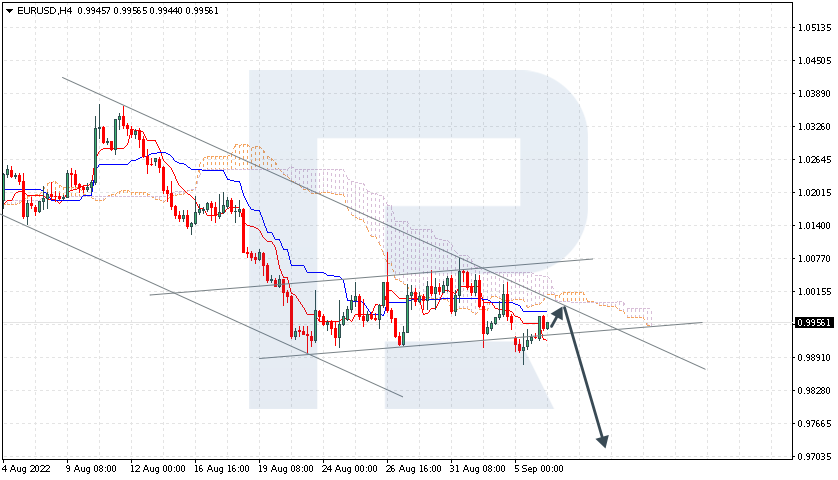
EURUSD has finished the descending wave at 1.0080; right now, it is consolidating around this level. If later the price breaks the range to the downside, the market may resume falling towards 1.0020; if to the upside – start another correction with the target at 1.0140.

EURUSD
Risk Warning: the result of previous trading operations do not guarantee the same results in the future

GBPUSD, “Great Britain Pound vs US Dollar”

After completing the descending wave at 1.1906, GBPUSD is forming a new consolidation range around this level. If later the price breaks the range to the downside, the market may resume trading downwards to reach 1.1877; if to the upside – start a new correction with the target at 1.1955.

GBPUSD
Risk Warning: the result of previous trading operations do not guarantee the same results in the future

USDJPY, “US Dollar vs Japanese Yen”

USDJPY has finished the ascending wave at 136.36; right now, it is consolidating around this level. If later the price breaks the range to the upside, the market may resume growing towards 137.47; if to the downside – start another correction with the target at 134.00.

USDJPY
Risk Warning: the result of previous trading operations do not guarantee the same results in the future

USDCHF, “US Dollar vs Swiss Franc”

After completing the ascending wave at 0.9555 and forming a new consolidation range around this level, USDCHF has broken it upwards and may soon continue growing towards 0.9610. Later, the market may fall to return to 0.9555 and then form one more ascending structure with the target at 0.9625.

USDCHF
Risk Warning: the result of previous trading operations do not guarantee the same results in the future

AUDUSD, “Australian Dollar vs US Dollar”

AUDUSD has completed the descending wave at 0.6885; right now, it is consolidating there. Today, the pair may break the range to the downside and start a new decline with the target at 0.6834, or even extend this structure down to 0.6814.

AUDUSD
Risk Warning: the result of previous trading operations do not guarantee the same results in the future

BRENT

Having formed a new consolidation range around 95.95 and breaking it upwards, Brent continues growing to reach 100.20. After that, the instrument may start another correction down to 96.00 and then resume trading upwards with the target at 101.11.

BRENT
Risk Warning: the result of previous trading operations do not guarantee the same results in the future

XAUUSD, “Gold vs US Dollar”

Gold has completed the descending wave at 1757.33; right now, it is consolidating there. If later the price breaks the range to the downside, the market may resume falling towards 1743.83; if to the upside – form one more ascending structure with the target at 1777.00.

GOLD
Risk Warning: the result of previous trading operations do not guarantee the same results in the future

S&P 500

The S&P index is falling towards 4248.4. After that, the instrument may start a new correction up to 4288.0 and then resume falling with the short-term target at 4161.0.

S&P 500

Article By RoboForex.com

Attention!
Forecasts presented in this section only reflect the author’s private opinion and should not be considered as guidance for trading. RoboForex LP bears no responsibility for trading results based on trading recommendations described in these analytical reviews.
The Analytical Overview of the Main Currency Pairs on 2022.08.19

By JustForex

The EUR/USD currency pair

Technical indicators of the currency pair:
  • Prev Open: 1.0175
  • Prev Close: 1.0086
  • % chg. over the last day: -0.88%

The Eurozone Consumer Price Index (CPI) reached 8.9% in annual terms, compared to June’s value of 8.6%. A year earlier, the figure was 2.5%. The lowest annual rates were recorded in France, Malta (both 6.8%), and Finland (8.0%). The highest annual rates were recorded in Estonia (23.2%), Latvia (21.3%), and Lithuania (20.9%). Compared to June, annual inflation declined in six members, remained stable in three, and rose in eighteen. In July, energy (+4.02%) made the largest contribution to the annual inflation rate in the Eurozone, followed by food (+2.08%). Thus, there are no signs of an inflation slowdown in the region. Analysts predict that the ECB may raise the rate by 0.75% at the next meeting.

Trading recommendations
  • Support levels: 1.0035, 1.0000
  • Resistance levels: 1.0146, 1.0230, 1.0286, 1.0365, 1.0415, 1.050

From the technical point of view, the trend on the EUR/USD currency pair on the hourly time frame is bearish. Yesterday prices started a new downward wave. The MACD indicator is in the negative zone, but there are the first signs of divergence. Under such market conditions, it is better to look for buy trades on the intraday time frames from the support level of 1.0036, but with a confirmation in the form of reverse initiative. Sell trades can be considered from resistance levels of 1.0146, but only after the additional confirmation.

Alternative scenario: if the price breaks out of the 1.0230 resistance level and fixes above, the uptrend will likely resume.

News feed for 2022.08.19:
  • – Germany Producer Price Index (m/m) at 09:00 (GMT+3).

The GBP/USD currency pair

Technical indicators of the currency pair:
  • Prev Open: 1.2045
  • Prev Close: 1.1929
  • % chg. over the last day: -0.98%

The British pound is under pressure because of the stronger dollar index, and the negative investor sentiment about the UK economy as the country enters recession. The GfK consumer confidence index fell by three points to -44 in August, the lowest-ever reading. Today the UK is expected to report a decline in July retail sales. The swap market predicts an 80% chance of a 50 basis point hike at the Bank of England meeting in mid-September and a 75 bps hike of a 20% chance.

Trading recommendations
  • Support levels: 1.1871
  • Resistance levels: 1.2000, 1.2035, 1.2167, 1.2215, 1.2294

From the technical point of view, the trend on the GBP/USD currency pair on the hourly time frame is bearish. The price is now trading below the moving averages, indicating selling pressure. The MACD indicator has become negative, and there are no signs of divergence. At the moment, it is better to look for sell trades from the resistance level of 1.2000, but only after the additional confirmation. Buy trades can be considered on intraday time frames from the support level of 1.1871, but only with confirmation.

Alternative scenario: if the price breaks out through the 1.2167 resistance level and fixes above, the uptrend will likely resume.

News feed for 2022.08.19:
  • – UK Retail Sales (m/m) at 09:00 (GMT+3).

The USD/JPY currency pair

Technical indicators of the currency pair:
  • Prev Open: 134.98
  • Prev Close: 135.87
  • % chg. over the last day: +0.66%

Japan’s National Core CPI reached 2.4% annually (the previous 2.2%). After decades of deflation, inflationary pressures are a new world for Japanese policymakers, and the Bank of Japan has to keep an eye on inflation that is slightly above the central bank’s 2% target. Unlike the US Fed and the Bank of England, the Bank of Japan is focused on stimulating the weak economy with soft, adaptive policies. Traders should not expect the yen to strengthen until the BoJ is confident that inflation is steady.

Trading recommendations
  • Support levels: 135.89, 135.35, 134.23, 133.47, 132.27, 131.08, 130.85
  • Resistance levels: 137.10, 138.25

From the technical point of view, the medium-term trend on the currency pair USD/JPY is still bullish. USD/JPY quotes continue to grow steadily, breaking through all the resistance levels. Under such market conditions, buy trades can be sought from the support level of 135.89, but with additional confirmation. For sell deals, it is possible to consider the resistance level of 137.10. Still, only with additional confirmation in the form of a reverse initiative, as fundamentally, USD/JPY quotes are inclined to grow.

Alternative scenario: If the price fixes below 134.23, the downtrend will likely resume.

News feed for 2022.08.19:
  • – Japan National Consumer Price Index (m/m) at 02:30 (GMT+3).

The USD/CAD currency pair

Technical indicators of the currency pair:
  • Prev Open: 1.2907
  • Prev Close: 1.2945
  • % chg. over the last day: +0.30%

The Canadian dollar is a commodity currency, so it depends not only on the monetary policy of the Central Bank of Canada but also on the dollar index and oil prices. Oil prices rose yesterday, but the strengthening of the dollar index was more weighty. But do not expect the USD/CAD quotes will show a long-term trend in one direction since the interest rates of the Bank of Canada and the US Federal Reserve are at the same level. And if to look at the USD/CAD chart on the daily range, you can clearly see the balance, which reflects a certain parity between the currencies.

Trading recommendations
  • Support levels: 1.2900, 1.2858, 1.2809, 1.2761
  • Resistance levels: 1.2965, 1.3006

From the point of view of technical analysis, the trend on the USD/CAD currency pair is bullish. The MACD indicator is in the positive zone. The buyer’s pressure remains, but the price is traded before the resistance level, and the divergence is increasing. Under such market conditions, buy trades should be considered on the lower time frames from the support level of 1.2900, but only with confirmation. For sell deals, it is better to consider the resistance level of 1.2965 or 1.3006, but also with confirmation.

Alternative scenario: if the price breaks down and consolidates below the 1.2809 support level, the downtrend will likely resume.

News feed for 2022.08.19:
  • – Canada Retail Sales (m/m) at 15:30 (GMT+3).

By JustForex


This article reflects a personal opinion and should not be interpreted as an investment advice, and/or offer, and/or a persistent request for carrying out financial transactions, and/or a guarantee, and/or a forecast of future events.

Ichimoku Cloud Analysis 18.08.2022 (GBPUSD, AUDUSD, USDCAD)

Article By RoboForex.com

GBPUSD, “Great Britain Pound vs US Dollar”

GBPUSD is testing the support area. The instrument is currently moving below Ichimoku Cloud, thus indicating a descending tendency. The markets could indicate that the price may test Tenkan-Sen at 1.2090 and then resume moving downwards to reach 1.1835. Another signal in favour of a further downtrend will be a rebound from the rising channel’s downside border. However, the bearish scenario may no longer be valid if the price breaks the cloud’s upside border and fixes above 1.2205. In this case, the pair may continue growing towards 1.2305. To confirm a further downtrend, the price must break the downside border of a Double Top reversal pattern and fix below 1.1955.

GBPUSD
Risk Warning: the result of previous trading operations do not guarantee the same results in the future

AUDUSD, “Australian Dollar vs US Dollar”

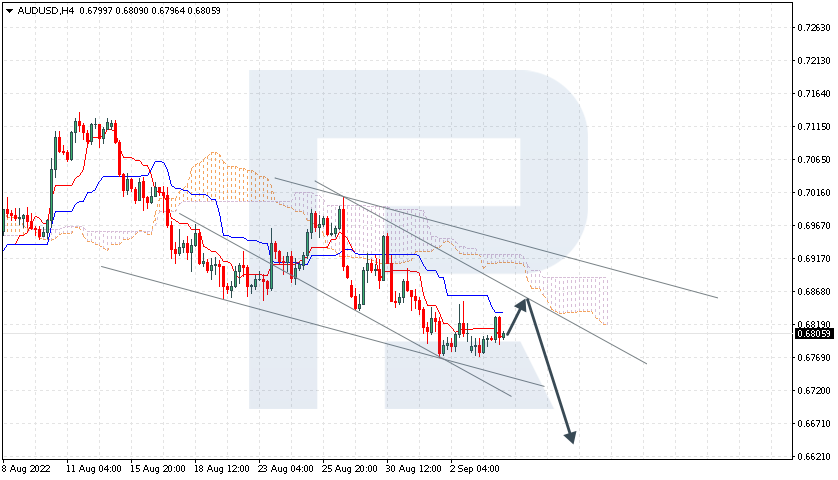
AUDUSD is rebounding from the bullish channel’s downside border. The instrument is currently moving below Ichimoku Cloud, thus indicating a descending tendency. The markets could indicate that the price may test Tenkan-Sen at 0.6965 and then resume moving downwards to reach 0.6755. Another signal in favour of a further downtrend will be a rebound from the rising channel’s downside border. However, the bearish scenario may no longer be valid if the price breaks the cloud’s upside border and fixes above 0.7095. In this case, the pair may continue growing towards 0.7190. To confirm a further downtrend, the price must break the bullish channel’s downside border and fix below 0.6820.

AUDUSD
Risk Warning: the result of previous trading operations do not guarantee the same results in the future

USDCAD, “US Dollar vs Canadian Dollar”

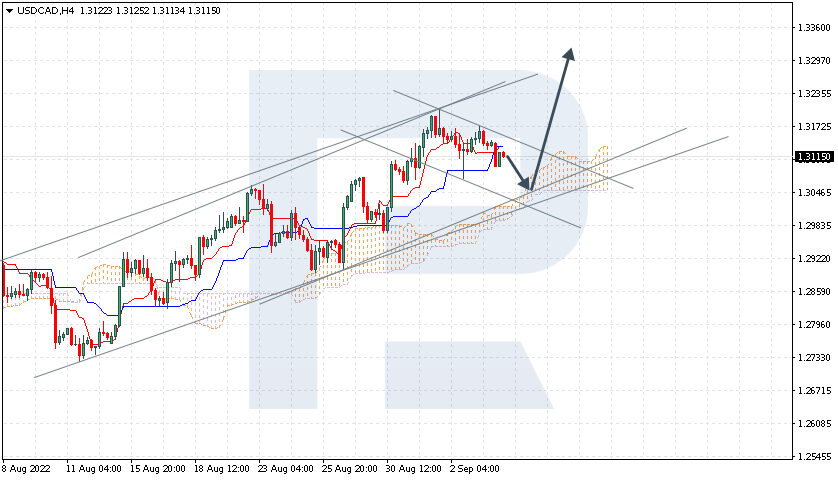
USDCAD is testing the upside border of the reversal pattern. The instrument is currently moving above Ichimoku Cloud, thus indicating an ascending tendency. The markets could indicate that the price may test the cloud’s upside border at 1.2855 and then resume moving upwards to reach 1.3135. Another signal in favour of a further uptrend will be a rebound from the descending channel’s upside border. However, the bullish scenario may no longer be valid if the price breaks the cloud’s downside border and fixes below 1.2745. In this case, the pair may continue falling towards 1.2655. To confirm a further uptrend, the price must break the upside border of the Double Top reversal pattern and fix above 1.2995.

USDCAD

Article By RoboForex.com

Attention!
Forecasts presented in this section only reflect the author’s private opinion and should not be considered as guidance for trading. RoboForex LP bears no responsibility for trading results based on trading recommendations described in these analytical reviews.

Japanese Candlesticks Analysis 18.08.2022 (XAUUSD, NZDUSD, GBPUSD)

Article By RoboForex.com

XAUUSD, “Gold vs US Dollar”

As we can see in the H4 chart, XAUUSD has formed an Inverted Hammer reversal pattern not far from the support area. At the moment, the asset may reverse in the form of a new rising impulse. In this case, the upside target may be at 1792.00. At the same time, the opposite scenario implies that the price may correct to reach 1750.50 first and then resume trading upwards.

XAUUSD
Risk Warning: the result of previous trading operations do not guarantee the same results in the future

NZDUSD, “New Zealand vs US Dollar”

As we can see in the H4 chart, NZDUSD has formed a Hammer reversal pattern close to the support area. At the moment, the asset is reversing in the form of another ascending impulse. In this case, the upside target may be at 0.6335. After that, the asset may break the resistance level and continue moving upwards. However, an alternative scenario implies that the price may correct to reach 0.6235 before resuming the uptrend.

NZDUSD
Risk Warning: the result of previous trading operations do not guarantee the same results in the future

GBPUSD, “Great Britain Pound vs US Dollar”

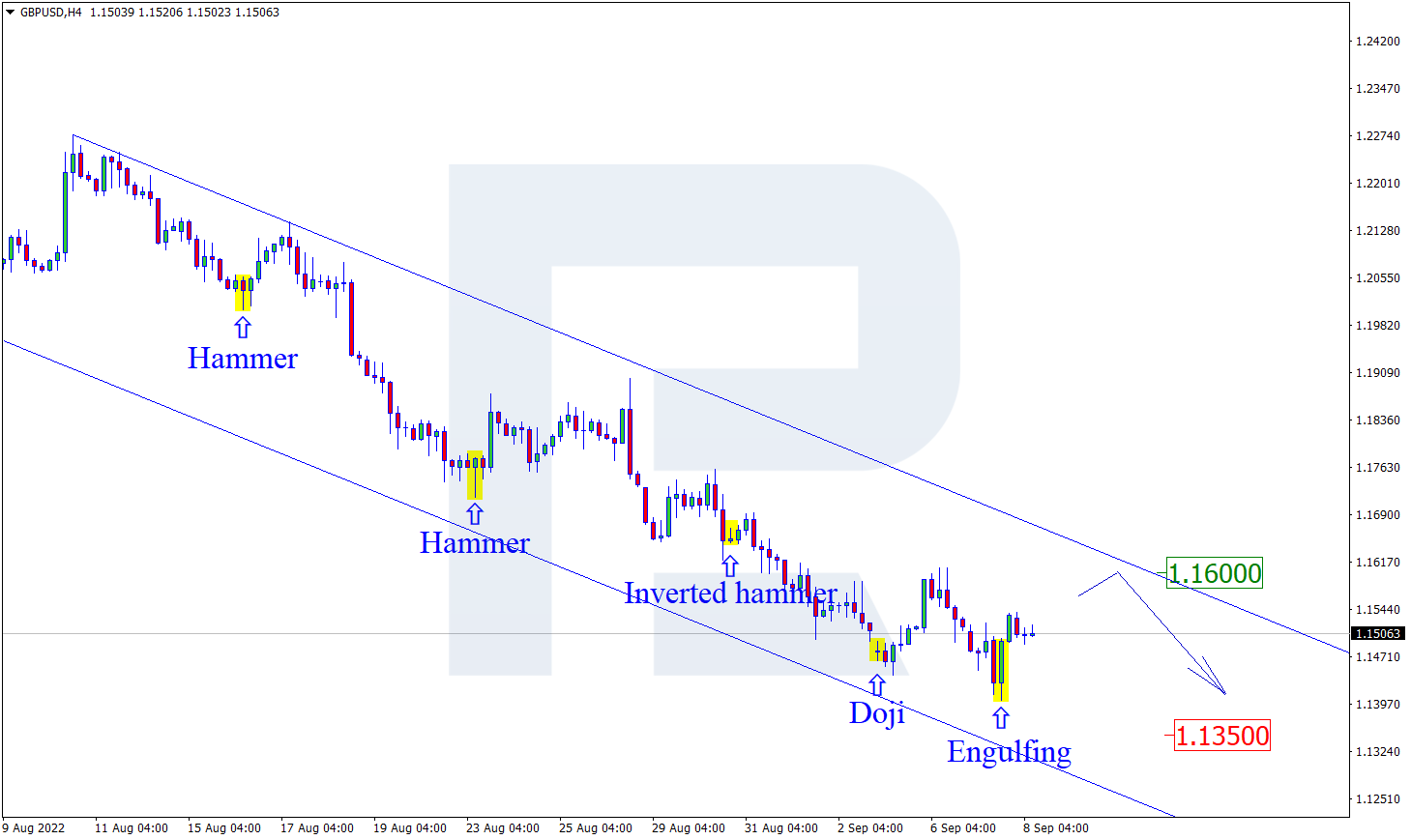
As we can see in the H4 chart, GBPUSD has formed a Hammer reversal pattern near the support level. At the moment, the pair may reverse in the form of a new ascending impulse. In this case, the upside target may be the resistance area at 1.2150. Later, the market may break this level and continue growing. Still, there might be an alternative scenario, in which the asset may correct to reach the support level at 1.2000 first and then resume the ascending tendency.

GBPUSD

Article By RoboForex.com

Attention!
Forecasts presented in this section only reflect the author’s private opinion and should not be considered as guidance for trading. RoboForex LP bears no responsibility for trading results based on trading recommendations described in these analytical reviews.

The Analytical Overview of the Main Currency Pairs on 2022.08.18

By JustForex

The EUR/USD currency pair

Technical indicators of the currency pair:
  • Prev Open: 1.0165
  • Prev Close: 1.0177
  • % chg. over the last day: +0.12%

The FOMC meeting for July showed that Fed officials are concerned the US Central Bank may raise rates too much as part of its commitment to control inflation. Some Fed participants noted that interest-rate-sensitive sectors were starting to show signs of slowing and that some felt there was a risk of over-tightening. The dollar index fell slightly after the FOMC protocol was released, giving temporary confidence to the European currency. Eurozone GDP grew by 0.6% in the second quarter of 2022 on a seasonally adjusted basis as forecasted, but analysts believe this is the last quarterly growth this year as the Eurozone economy slides into recession.

Trading recommendations
  • Support levels: 1.0136, 1.0112, 1.0035, 1.0000
  • Resistance levels: 1.0185, 1.0230, 1.0286, 1.0365, 1.0415, 1.050

From the technical point of view, the trend on the EUR/USD currency pair on the hourly time frame is bearish. The price is now trading in a narrow range. At the same time, resistance level 1.0185 has been tested more than four times, but the price failed to consolidate higher. Under such market conditions, it is best to look for buy trades on the intraday time frames from the support level of 1.0136, but with a confirmation in the form of a reverse initiative. Sell trades can be considered from resistance levels of 1.0230, but only after the additional confirmation.

Alternative scenario: if the price breaks out of the 1.0286 resistance level and fixes above, the uptrend will likely resume.

EUR/USD
News feed for 2022.08.18:
  • – Eurozone Consumer Price Index (m/m) at 12:00 (GMT+3);
  • – US Initial Jobless Claims (w/w) at 15:30 (GMT+3);
  • – US Philadelphia Fed Manufacturing Index (m/m) at 15:30 (GMT+3);
  • – US Existing Home Sales (m/m) at 17:00 (GMT+3);
  • – US FOMC Member George Speaks (m/m) at 20:20 (GMT+3).

The GBP/USD currency pair

Technical indicators of the currency pair:
  • Prev Open: 1.2079
  • Prev Close: 1.2048
  • % chg. over the last day: -0.26%

The UK Consumer Price Index rose to 10.1% in annual terms (forecast at 9.8%) in July, the highest level in 40 years. The largest upward contributions to the annual inflation rate in July 2022 came from household services (mainly due to higher prices for electricity, gas, and other fuels) and food. The Core Consumer Price Index (excluding energy and food) rose to an annualized 6.2%, up from 5.8% in June. The Bank of England warned that inflation would increase through October, with a projected peak near 13%.

Trading recommendations
  • Support levels: 1.2028, 1.2000
  • Resistance levels: 1.2167, 1.2215, 1.2294

From the technical point of view, the trend on the GBP/USD currency pair on the hourly time frame is bearish. The price is now trading below the moving averages, indicating some selling pressure. The MACD indicator becomes negative. It is best to look for sell trades from the resistance level of 1.2167, but only after the additional confirmation. Buy trades can be considered on intraday time frames from the support level of 1.2028, but only with confirmation.

Alternative scenario: if the price breaks out through the 1.2215 resistance level and fixes above, the uptrend will likely resume.

GBP/USD
There is no news feed for today.

The USD/JPY currency pair

Technical indicators of the currency pair:
  • Prev Open: 134.17
  • Prev Close: 135.07
  • % chg. over the last day: +0.67%

Several Fed policymakers have discussed the need for further rate hikes in the last few days, so the USD/JPY quotes are rising again. Fundamentally, there are no changes in monetary policy in either country at the moment. The US Fed continues the cycle of interest rate hikes, while the Bank of Japan has a soft monetary policy, which negatively affects the national exchange rate. Japan’s trade deficit reached an all-time high in July as a surge in commodity prices and a 24-year low in the yen exacerbated obstacles to the country’s economic recovery.

Trading recommendations
  • Support levels: 134.23, 133.47, 132.27, 131.08, 130.85
  • Resistance levels: 135.29, 136.02, 137.12

From the technical point of view, the medium-term trend on the currency pair USD/JPY is still bullish. USD/JPY quotes continue to grow steadily, breaking through all the resistance levels. Under such market conditions, buy trades can be sought from the support level of 134.23, but with additional confirmation. For sell deals, it is possible to consider the resistance level of 135.29, but only with additional confirmation in the form of a reverse initiative, as fundamentally, USD/JPY quotes are inclined to grow.

Alternative scenario: If the price fixes below 132.29, the downtrend will likely resume.

USD/JPY
There is no news feed for today.

The USD/CAD currency pair

Technical indicators of the currency pair:
  • Prev Open: 1.2848
  • Prev Close: 1.2914
  • % chg. over the last day: +0.51%

The Canadian dollar is a commodity currency, so it depends not only on the monetary policy of the Central Bank of Canada but also on the dollar index and oil prices. Oil prices were trading flat yesterday, and the dollar index was getting stronger before the FOMC minutes publication. As a result, before the FOMC news, the USD/CAD quotes grew due to the strengthening of the US dollar. It should be noted that the interest rates of the US and Canadian central banks are now at the same level, and the next step up is also planned at 50 bps for both banks. As a result, there is a certain parity between the currencies, and only the oil prices will introduce some imbalance.

Trading recommendations
  • Support levels: 1.2858, 1.2809, 1.2761
  • Resistance levels: 1.2926, 1.2965

From the point of view of technical analysis, the trend on the USD/CAD currency pair is bullish. The MACD indicator has become positive, and the buyer’s pressure is still present, but the price is trading in front of the resistance level. Under such market conditions, buy trades should be considered on the lower time frames from the support level of 1.2858, but only with confirmation. For sell deals, it is better to consider the resistance level 1.2965, but also with confirmation.

Alternative scenario: if the price breaks down and consolidates below the 1.2809 support level, the downtrend will likely resume.

USD/CAD
There is no news feed for today.

By JustForex


This article reflects a personal opinion and should not be interpreted as an investment advice, and/or offer, and/or a persistent request for carrying out financial transactions, and/or a guarantee, and/or a forecast of future events.

Thursday Special: My Trading Week

By ForexTime 

Hi folks,

Lukman is in the building!

It’s been another eventful week for financial markets with action across currency, commodity and stock markets.

Before we proceed, I know some of you are wondering what is going on here. Well, I have hijacked the Thursday 101 slot to share my thoughts and personal experiences with markets this week!

While this may not follow the normal style of our market reports, we still aim to provide key insight and information on market themes complemented with some trading setups to watch out for.

Game plan #1 – USD hunting gone wrong 

I marched into the trading week heavily equipped with the fundamental knowledge and technical weapons to hunt dollar bulls. With signs of easing inflationary pressures in the United States fuelling speculation around the Fed adopting a less aggressive approach towards rates, the dollar looked like an easy tasty meal. However, the greenback drew ample strength from weak Chinese economic data on Monday – eventually trampling all obstacles and G10 currencies in its path.

The bearish dollar setup I had in mind was blown out of the water. Instead of the Dollar Index (DXY) respecting the daily bearish channel, prices pushed above 106.00, signalling an incline back towards 107.30.

The same could be said for the equally-weighted dollar index which blasted back above 1.1700. Prices seem to be finding resistance around the 50-day SMA. It will be interesting to see whether this level limits further upside gains.

Game plan # 2 – If you can’t beat them…join them

After witnessing the dollar’s rebound on Monday, I decided to hitch a ride with bulls on Tuesday.

The EURUSD snatched my attention as prices tumbled back below 1.0200. Even though the currency pair remains in a range, the path of least resistance points south with 1.0100 acting as the first level of interest. Looking at the current price action, we are not expecting any fireworks for the rest of the week. But bears seem to be creating a foundation for a steeper decline in the week ahead.

Game plan #3 – Inflation heartache boost BoE hike bets

On Wednesday morning I felt nauseous and uneasy after official data revealed that UK inflation rose 10.1% in July. As the inflation menace causes havoc across the UK economy, households are feeling the squeeze. Everything from the price of food, energy, and services is increasing dangerously. Yesterday evening I witnessed a man argue with a shop owner over the price of bread and this morning I found myself in a heated conversation with my energy provider.

Rising inflation will most likely force the BoE to aggressively raise interest rates but will also fuel uncertainty over the UK’s economic outlook. Looking at the GBPUSD, it remains in a range on the daily chart with support at 1.2000. Best to revisit this next week when more life returns to the FX space.

Game plan #4 – Riding the volatile Yen wave

Hats off to my intraday traders that were able to tame the Yen beast this week.

The EURJPY and GBPJPY were untamed and ready to dish out punishment to any trader unprepared. Both tumbled on Monday, only to experience a sharp rebound on Tuesday and Wednesday! We can see some resistance around 138.00 for the EURJPY and 164.00 for the GBPJPY. Should these levels hold, the currency pairs could resume their descent in the new trading week.

Game plan #5 – Classic breakdown on gold

The last time gold secured a daily close below $1770 was at the start of the month. After flirting within a range for almost three weeks, it looks like the precious metal is ready to move lower. Interestingly, the precious metal somewhat ignored the minutes from the Fed’s July meeting. Policymakers saw inflation as a significant risk to the economy and indicated they would not pull back on rates until inflation came down. With inflation in the United States cooling to 8.5% in July, traders have cut bets over how aggressive the Fed will be on rates. In fact, markets are currently pricing in a 47% probability of a 75bp rate hike in September.

Talking technicals sustained weakness below $1770 could open the doors towards $1752 and $1724, respectfully.


Forex-Time-LogoArticle by ForexTime

ForexTime Ltd (FXTM) is an award winning international online forex broker regulated by CySEC 185/12 www.forextime.com


What are Fibonacci Retracements? How can Traders use them for Trends Trading?

Fibonacci Retracements are a common technical analysis technique in financial trading based on a famous mathematical sequence. In this article, we touch on what Fibonacci Retracements are, what levels most traders or investors use and finally, we look at a few Fibonacci Retracements Trends Trading or Trend-following examples.


What are Fibonacci Retracements?

The Fibonacci Retracement indicator is a powerful tool that can help you make better trading decisions. It is one of the most common technical analysis techniques used for analyzing the financial markets. It is based on the Fibonacci sequence, which is a series of numbers that have a special relationship to each other. Many professional traders and analysts look to fibonacci retracements, also known as fibo levels or fib levels, to predict support and resistance price areas. Retracements can be used to detect potential turning points in price as well.

To analyze price using Fibonacci Retracements, traders will frequently look for retracement levels at 23.6%, 38.2%, 50%, and 61.8% of recent prices moves. These percentages represent possible areas of support or resistance where the price may retrace before continuing in the original direction. Traders may also use Fibonacci Retracements to identify potential price turning points by looking for reversals at these same levels.

fibonacci retracement software
 

Who was Fibonacci? What are Fibonacci Numbers?

Fibonacci was an Italian mathematician from Pisa, also known as Leonardo of Pisa, who is famous for his Fibonacci numbers, a mathematical sequence that happens to appear in many places including in nature and in statistics. Fibonacci did not invent this numeric sequence as it is believed to have originated in India. His 1202 book “Liber Abaci” introduced the sequence to Western European mathematics, and the Fibonacci sequence has been used ever since in mathematical and scientific contexts.

The Fibonacci sequence appears in nature, in the arrangement of leaves on a stem, the fruit sprouts of a pineapple, the flowering of an artichoke, an uncurling fern and the arrangement of a pine cone, as well as many other places. The Fibonacci sequence is also found in the spiral galaxies of the universe. In fact, the Fibonacci sequence can be found in everything from the smallest of organisms to the largest of structures in the cosmos.

fibonacci spiral golden ratioThe Fibonacci sequence is not just a mathematical curiosity. It has applications in engineering, computer science, biology and can be used to model or predict population growth. The Fibonacci sequence is used to generate efficient algorithms and, for our focus today, can be used to help with trading in the financial markets.

The Fibonacci sequence is actually a simple straight-forward pattern. Start with 0 and 1 and add them to get 1. Then use a pattern of adding each number to the preceding number to get the next number. Follow that pattern over and over and over again. 0 and 1 equals 1. Then add 1 and 1 to equal 2. Next, 2 and 1 equals 3 and so on. So the first fifteen Fibonacci numbers look like this: 0, 1, 1, 2, 3, 5, 8, 13, 21, 34, 55, 89, 144, 233, 377. As you can see, once you get past the first five or so numbers, they can start to really add up and they just keep on going.

There is also another notable aspect to the Fibonacci sequence that is famous as well – the golden ratio. Each of the numbers in Fibonacci sequence are approximately 1.618 larger than the preceding number. This number is considered the golden ratio and this fibonacci ratio can be found in many aspects of nature and in many mathematical, scientific and artistic constructions by humans. This golden ratio can also found in the proportions of the human body.
 

How to use Fibonacci in financial trading?

Ok, since we have a general understanding of the Fibonacci numbers, how can we use them to help in our trading? Well, to be honest, there are a lot of different ways that traders use Fibonacci numbers in financial trading, probably more than any one person could ever learn. Some use them to predict market movements, while others use them to set stop-losses or take-profits. There are those who use Fibonacci numbers for both, as well as traders who use different types of Fibonacci strategies.

trading fibonacciThe most common use for Fibonacci numbers that I see is to use them for support and resistance levels. This is where the Fibo Retracements indicator comes in. The Retracement indicator allows you to display specific levels on your chart that are derived from the Fibonacci sequence. This indicator, like most indicators, can be used in conjunction with other technical analysis tools, such as trend lines and moving averages, to help confirm trading signals.

The Fibo retracement indicator is a versatile tool that can be used by traders of all levels of experience as well. It can be very easy to use once you get the hang of it. Traders, investors and analysts of all stripes use the retracements because it allows them to specifically pinpoint areas that price may return to or bounce off of.

Retracements are extensively used in just about every major market including forex, stocks, bonds, commodities and cryptocurrencies. Fibo Retracement levels can also be used for short-term trading, day trading, swing trading or long-term trading strategies. By understanding how the indicator works and how to use it, traders can improve their chances of success in the financial markets.


How to Plot the Fibonacci Retracement Levels?

The Fibonacci Retracement tool, as the name implies, is used to identify retracement levels. A retracement is a temporary reversal in the direction of a price move. It is important to remember that Fibonacci Retracement levels are not exact. They are only potential support and resistance levels. It is also important to use other technical indicators to confirm whether a retracement is likely to occur.

The most frequent and most popular Fibonacci levels that are used on most technical indicators are at 0.00%, 23.6%, 38.2%, 50.0%, 61.8%, 76.4% and 100%.

To begin using Fibonacci Retracements, you will first have to add the indicator to your charting platform or trading software. Most modern trading platforms will have a built-in Fibonacci Retracement tool or indicator and trading education content that explains how to use it. The correct retracement tool also may be found under Fibonacci Strategies, depending on your platform or software.

fibonacci find the low and high levels

In the chart above, we have started our retracement from the recent low and extended it to the recent high. This was an up-trending market, so the 1.00 or 100% level is on the bottom and the 0% level is at the top. In this time-frame, price has retraced to the 61.8% level and resumed an up-trend.

Find the Recent High and Recent Low

When you find the Fibonacci Retracement tool or indicator, you will have to find a swing high and a swing low to start your analysis. Choose the highest high and the lowest low over a certain time-frame you would like to trade. Potentially on a daily chart, you could choose prices from the past month, two months or more to analyze.

If you are analyzing a down-trending market, take your indicator and drag it from the most recent highest high to the most recent lowest low. After doing this, you should see the 1.000 (or 100%) retracement level at the top and the 0.00% retracement level at the bottom. In between, you will see the 23.6, 38.2, 50.0, 61.8 and the 76.4 fib levels as well.

If you are analyzing an up-trending market, you will see the exact opposite where 100% is at the bottom and 0.00% is at the top. This will make sense if you think about it. If price at bottom is 100% and the 0% is at top and then if price drops all the way back down from 0% to the 100% level, then price has “retraced” 100% of its previous uptrend move (and the opposite for downtrends).


Using Fibonacci Retracements for Trend Following or Trend Trading Strategies

Now that you have the Retracement Indicator on your chart, let’s start to understand how to use it. One of the best ways to utilize Fibonacci Retracements for trading, in my opinion, is to jump on an established trend. I think this is the easiest way to use Fibos and the Retracements are the perfect tool for this type of trend following execution. You can hopefully get in on a strong trend and profit without having to spot the trade before everyone else does. Let’s look at what trends are and why would we want to trade trends.

Beginners: What are Trends and Why Trade them?

When it comes to trading, there are different approaches that can be taken in order to make a profit. Some traders focus on technical analysis and try to identify patterns in order to predict future price movements. Others focus on fundamental analysis and look at factors such as economic indicators in order to make trading decisions. And then there are those who focus on trends. In my opinion, the best types of trades combine multiple types of analysis that put the odds in a trader’s favor.

Trend trading, also known as momentum trading or trend following, is a strategy that involves buying assets that are rising in price and selling them when they start to fall or when the trend is exhausted. The idea is to ride the wave of a trend and make profits along the way. Traders who follow this strategy are commonly referred to as “trend followers.” Once a trend has identified a trend, traders will need to decide when to buy and when to sell. This decision will be based on a number of factors, including the trader’s risk tolerance and their time horizon.

It’s important to note that trend trading is not without its risks and there are a few things that trend traders need to be aware of. The first is that trends don’t last forever. Trends can reverse and when this happens, traders can find themselves on the wrong side of the trade. There will be times when the price of an asset starts to fall after it has been rising for some time. It’s important to have a exit strategy in place so that you can sell before the trend reverses. Another thing to keep in mind is that not all trends are created equal. Some trends are stronger than others and last longer. These are the trends that you want to focus on.


A Fibonacci Forex Retracement Trading Example: The Trend Pullback

As a general rule, if the market is in an uptrend and you believe it will continue, then you will want to look for opportunities to buy on the price pullback at the 23.6% or the 38.2% retracement levels. Depending on what the trend looks like (early trend, late trend?) and if you have other fundamental information that makes you feel the trend will continue (how strong are the fundamental factors?), this could include the 50.0% and the 61.8% retracement levels as well.

An Example: See this classic setup in the USD/JPY currency pair on the daily chart.

When the US Dollar strength against the Japanese yen pushed a USDJPY breakout above 116.35 in March of 2022, the bull trend was on in a strong way. Fundamental forces for this market included rising inflation, stronger bond yields for the USA versus Japan and the fact that the US Federal Reserve was sharply raising its benchmark interest rate while the Bank of Japan was standing pat and still had accommodating economic policies while most other central banks were going the other way.

Depending on when you noticed this trend and the underlying fundamental picture, you could have tried to jump on this strong trading action a few different times. However, perhaps the best method would have been using the Fibonacci Retracement in mid-to-late May 2022 with a buy order around the 23.6% retracement level (already acting as support a few times by mid-May). A stop-loss order to be placed at the 38.2% retracement or just below that psychological support level of 125.00.

Daily Chart: USDJPY


This trend reversed a little below the 23.6% retracement level, bounced up and kept going higher as the interest rate differential and central bank policies continued to diverge in favor of the US. Ultimately, the trend rose to a 20-year high for the USDJPY currency pair. This was above and beyond our Fibonacci Retracement Indicator that we placed on the chart (above 0 and going). The currency pair remains in an uptrend as of August 2022.


A Stock Market Trading Example: Trend Reversal with RSI Divergence

This next trade setup is more near and dear to my heart because I love RSI Divergence! It is a setup that happens in all markets from time to time and is very easy to see if you are looking for it. I will say that it is a setup that is much rarer (for good reason) than others like say a moving average crossover or a MACD signal. I see the RSI Divergence as a trend exhaustion indicator that signals the “possibility” of an imminent trend change (look for confirming factors, either sentiment or fundamentals as well). I also like to use the RSI Divergence on the weekly charts as I find it the most reliable but it does happen on all time frames.

What is a divergence? A divergence is the difference in price between two similar acting assets or in this case, between an indicator and price that usually go in the same direction. It is important because it can be used to signal a change in market conditions.

One thing of note on the chart below is – I am using a RSI smoothed average (red line – 3 periods) of the regular RSI (which is the skinny light line). This is just my preference as I like it better than just the basic RSI.

For some context, this first half of the year in 2022 had been a tough one for stocks. The overall narrative is that stocks are going down and going to keep going down as far as the eye can see. Inflation! Bond yields to the moon! Crypto death! Technology stocks are dead! Worst Recession in History Coming! These are some of the headlines I feel were being screamed at market watchers since January. Some may eventually come true but many are probably over-hyped and sensationalized.

The SPY peaked in January 2022 around the 480.00 price level and started on a its downward path. US Treasury bonds were dropping as well with inflation rising and the Federal Reserve raising the benchmark interest rate to combat that inflation. The 10-Year bonds yields were popping (yields move in opposite of bond prices) and hit a multi-year high in June 2022 right near the 3.50% level. Then a funny thing happened, both the SPY and 10-Year yields trends stalled out over the next bunch of weeks (both markets exhibited RSI Divergences).

Here is recent setup that happened in the S&P 500 ETF (SPY)

Weekly Chart: SPY


Using the Retracement Indicator from the high point (January 2022 recent peak) to the June low point (where price hit and then bounced around above this for the next four weeks while the RSI turned higher). Here we are looking for the opposite of our prior Forex example and hope to use the 23.6% key level as a launching point. Instead of betting on a trend continuation, we are using the RSI Divergence to indicate a trend exhaustion with the hopes that the trend is reversing.

As you can see from the chart, so far so good. The exiting point for this trade is a personal choice, but with prices rising, there are multiple fibo lines that could be used as exits as well as the 50-week moving average residing up ahead. This current setup could possibly be just a blip on a larger downtrend to come but hopefully illustrates a tactic to trade a trend reversal with the help of the RSI.

Fibonacci Trading Conclusion:

I hope this article has helped to give some perspective and examples on using the Fibonacci Retracement Indicator in the markets. Hopefully it will further your education and give you another good trading tool in your arsenal. I have found in my own trading that the best way to use this Fibonacci tool is in conjunction with different trading strategies, technical indicators, fundamental indicators and sentiment indicators. I feel it is best to utilize all different types of analysis that will give me unique clues to what is or what could be happening in the market. Overall, the Retracement Indicator is a valuable tool for technical analysts and is so popular for a reason – once you get the hang of it, it can be an easy addition to your trading toolkit.


Article by Taylor Wilman for InvestMacro

Mid-Week Technical Outlook: Pound Crosses In Focus

By ForexTime 

Sterling hijacked our attention on Wednesday after official data revealed that UK inflation hit double digits for the first time in 40 years!

Consumer prices rose 10.1% in July from a year ago after a 9.4% gain in June. This was the highest reading since February 1982 as prices rose for food, housing & utilities and alcoholic beverages among other products/services. Although this red-hot CPI report will reinforce expectations over the BoE aggressively raising interest rates, it will also create more uncertainty over the UK’s economic outlook.

We saw the Pound appreciate against most G10 currencies following the report as BoE rate hike bets jumped.

GBPUSD remains in wide range

The GBPUSD remains in a wide range despite the red-hot inflation figures. Support can be found at 1.2000 and resistance around 1.2155. A solid break under 1.2000 may open the doors towards 1.1900 and lower. Alternatively, a strong breakout above 1.2155 could spark a move towards 1.2250 and 1.2350.

GBPJPY set to push higher?

It has been a roller coaster ride on the GBPJPY. Prices have been volatile, choppy and all over the place. Prices are back above the 100-day Simple Moving Average and slowing approaching 164.00. A strong move above 164.00 signal an incline towards 166.00. If bears are able to pull the GBPJPY back below 162.00, the next level of interest cant be found at 160.00.

EURGBP in downtrend

The EURGBP remains in a bearish trend as there have been consistently lower lows and lower highs. Prices are trading below the 50,100 and 200-day Simple Moving Average while the MACD trades below zero. Sustained weakness below 0.8440 could encourage a selloff towards 0.8340. A breakout above 0.8440 is likely to encourage bulls to target 0.8500.

GBPAUD heading into resistance?

Pound bulls seem to be gaining momentum on the GBPAUD with prices pushing towards the 50-day Simple Moving Average. There could be some resistance here as the 100-day SMA resides just above. If these two obstacles can be cleared, prices may test the 1.7650 level and 1.7800, respectively. Should bulls tire and prices sink back below 1.7300, the next key point can be found at 1.7000.


Forex-Time-LogoArticle by ForexTime

ForexTime Ltd (FXTM) is an award winning international online forex broker regulated by CySEC 185/12 www.forextime.com


Murrey Math Lines 17.08.2022 (USDJPY, USDCAD)

Article By RoboForex.com

USDJPY, “US Dollar vs. Japanese Yen”

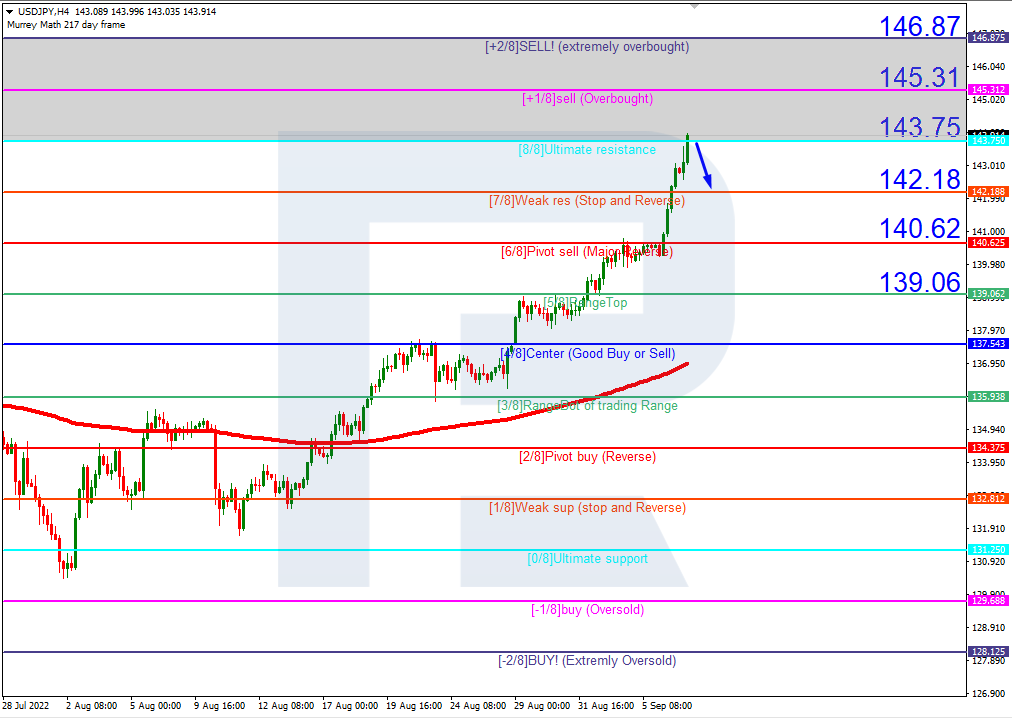
As we can see in the H4 chart, USDJPY is trading below the 200-day Moving Average to indicate a descending tendency. In this case, the price is expected to test the support at 5/8, break it, and then continue falling and reach 4/8. However, this scenario may no longer be valid if the price breaks the resistance at 6/8 to the upside. After that, the instrument may reverse and grow towards 7/8.

USDJPYH4
Risk Warning: the result of previous trading operations do not guarantee the same results in the future

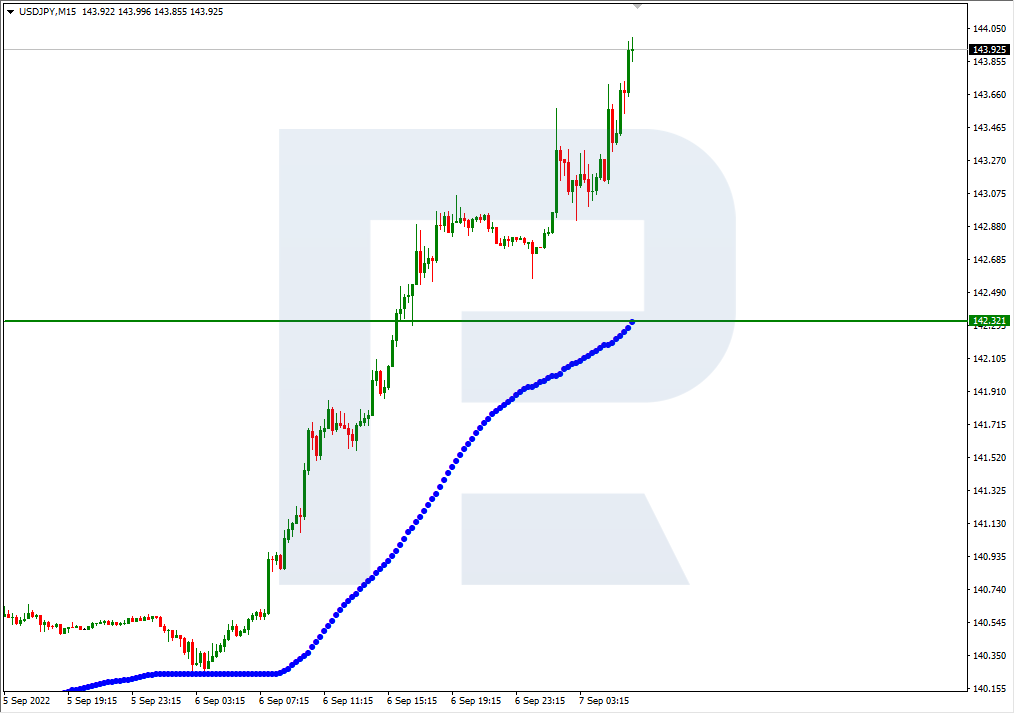
In the M15 chart, the pair may break the downside line of the VoltyChannel indicator and, as a result, continue its decline.

USDJPY_M15
Risk Warning: the result of previous trading operations do not guarantee the same results in the future

USDCAD, “US Dollar vs Canadian Dollar”

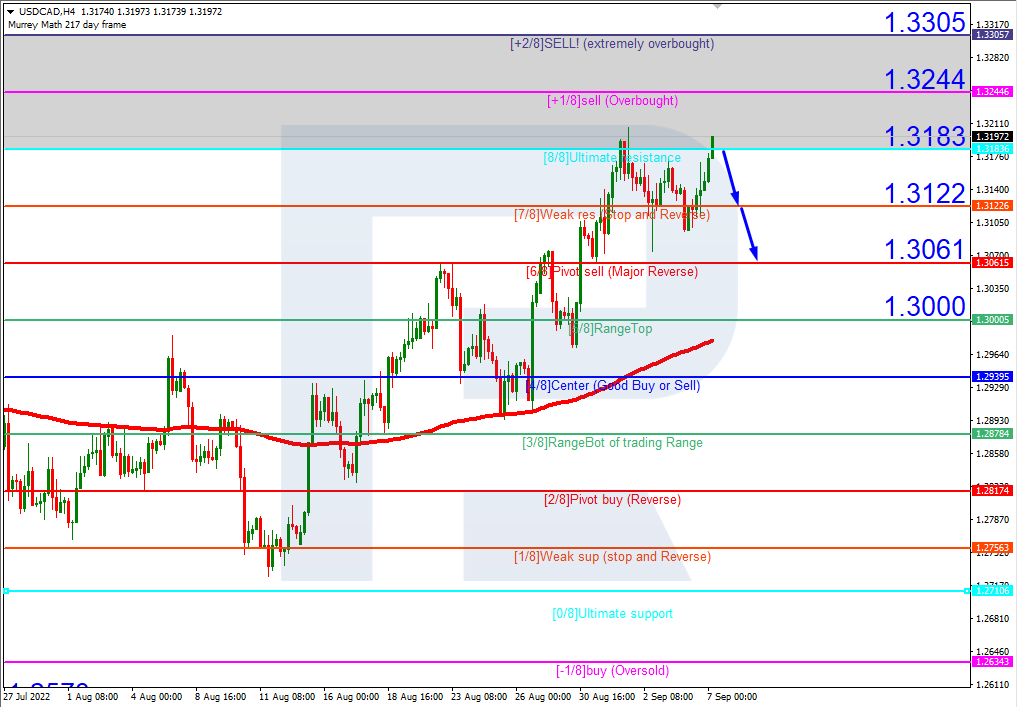
In the H4 chart, after breaking the 200-day Moving Average, USDCAD is trading below it, thus indicating a possible descending tendency. In this case, the price is expected to break 2/8 and continue falling towards the support at 1/8. On the other hand, this scenario may no longer be valid if the pair breaks the resistance at 3/8 to the upside. After that, the instrument may reverse and grow to reach 5/8.

USDCAD_H4
Risk Warning: the result of previous trading operations do not guarantee the same results in the future

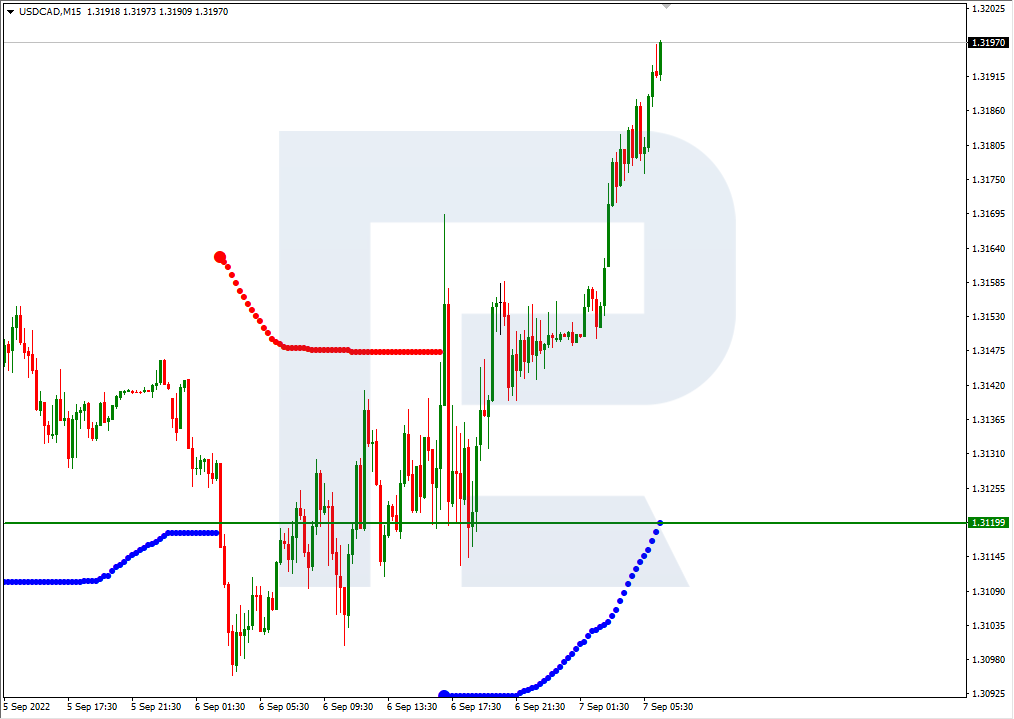
As we can see in the M15 chart, the pair has broken the downside line of the VoltyChannel indicator and, as a result, may continue trading downwards.

USDCAD_M15

Article By RoboForex.com

Attention!
Forecasts presented in this section only reflect the author’s private opinion and should not be considered as guidance for trading. RoboForex LP bears no responsibility for trading results based on trading recommendations described in these analytical reviews.

The Analytical Overview of the Main Currency Pairs on 2022.08.17

By JustForex

The EUR/USD currency pair

Technical indicators of the currency pair:
  • Prev Open: 1.0159
  • Prev Close: 1.0170
  • % chg. over the last day: +0.11%

Investors will be closely watching the FOMC minutes today, looking for new signals on how much a rate hike could come in September. Currently, federal funds futures traders are estimating a 60% chance of a 50 basis point hike and a 40% chance of a 75 basis point hike. The US Retail Sales data will also provide new insight into the condition of consumers. Sales are expected to rise 0.1% in July compared to June. Eurozone GDP for the quarter should also be on the list. Analysts expect the region’s economy to show 0.7% growth, which will be the last this year.

Trading recommendations
  • Support levels: 1.0136, 1.0112, 1.0035, 1.0000
  • Resistance levels: 1.0185, 1.0230, 1.0286, 1.0365, 1.0415, 1.050

From the technical point of view, the trend on the EUR/USD currency pair on the hourly time frame has changed to bearish. The price confidently broke through the priority change level and consolidated below the moving averages. The price is now trading in a narrow range ahead of the FOMC minutes. Under such market conditions, buy trades are best sought on intraday time frames from the support level of 1.0136, but with confirmation in the form of a reverse initiative. Sell trades can be considered from resistance levels of 1.0185 or 1.0230, but only after the additional confirmation.

Alternative scenario: if the price breaks out of the 1.0286 resistance level and fixes above, the uptrend will likely resume.

EUR/USD
News feed for 2022.08.17:
  • – Eurozone GDP (q/q) at 12:00 (GMT+3);
  • – US Retail Sales (m/m) at 15:30 (GMT+3);
  • – US FOMC Member Brainard Speaks at 16:30 (GMT+3);
  • – US FOMC Meeting Minutes (m/m) at 21:00 (GMT+3);
  • – US FOMC Member Bowman Speaks at 21:20 (GMT+3).

The GBP/USD currency pair

Technical indicators of the currency pair:
  • Prev Open: 1.2051
  • Prev Close: 1.2097
  • % chg. over the last day: +0.38%

British economists see a growing risk of recession due to a spike in inflation. Today’s inflation report may show an annualized rate of 9.8%, which is not yet the tip of the iceberg. A sub-par rate hike announced on August 4 is expected to be followed by a similar hike in September as policy makers struggle with double-digit inflation. A subsequent quarter-point hike in November would raise the Bank of England benchmark rate to 2.5%, above the previously projected peak of 2%. But there is also a high probability that the UK will avoid a recession: a slight slowdown in the fourth quarter may change to stagnation in the first months of 2023 and then resume modest growth. However, the risks of a recession are growing. The probability of recession is currently estimated at 75%.

Trading recommendations
  • Support levels: 1.2059, 1.2028, 1.2000
  • Resistance levels: 1.2167, 1.2215, 1.2294

From the technical point of view, the trend on the GBP/USD currency pair on the hourly time frame is bearish. The price is now trading at the levels of the moving averages. The MACD indicator has become positive, but buyer pressure is weak. It is best to look for sell trades from the resistance level of 1.2167, but only after the additional confirmation. Buy trades can be considered on intraday time frames from the support levels of 1.2059 or 1.2028, but only with confirmation.

Alternative scenario: if the price breaks out through the 1.2215 resistance level and fixes above, the uptrend will likely resume.

GBP/USD
News feed for 2022.08.17:
  • – UK Consumer Price Index (m/m) at 09:00 (GMT+3).

The USD/JPY currency pair

Technical indicators of the currency pair:
  • Prev Open: 133.33
  • Prev Close: 134.23
  • % chg. over the last day: +0.67%

The Japanese currency, which is affected by the difference between interest rates in the United States and Japan, rose last week on expectations that lower US inflation would mean less aggressive Fed tightening and therefore lower US yields. However, several Fed policymakers have recently been discussing the need for further rate hikes, so USD/JPY quotes are rising again. Fundamentally, no change in the monetary policy of either country is imminent at the moment.

Trading recommendations
  • Support levels: 133.47, 132.27, 131.08, 130.85
  • Resistance levels: 134.36, 136.02, 137.12

From the technical point of view, the medium-term trend on the currency pair USD/JPY is still bullish. The price has formed an accumulation zone above the 134.36 level and has now come to test this zone. But the sellers’ reaction is weak, so the price will likely continue to increase after a small pullback. Under such market conditions, buy trades can be sought from the support level of 133.47, but with additional confirmation. For sell deals, it is possible to consider the resistance level of 134.36. Still, only with additional confirmation in the form of a reverse initiative, as fundamentally, USD/JPY quotes are inclined to grow.

Alternative scenario: If the price fixes below 131.37, the downtrend will likely resume.

USD/JPY
There is no news feed for today.

The USD/CAD currency pair

Technical indicators of the currency pair:
  • Prev Open: 1.2902
  • Prev Close: 1.2842
  • % chg. over the last day: -0.47%

Canada’s Consumer Price Index for July was 7.6% y/y (forecast 7.6%), down from June’s 8.1% y/y. The core CPI was 6.1% y/y against expectations of 6.1% and 6.2% in June. Canada’s inflation is slowing, and consumer prices will likely have peaked. At the Bank of Canada’s last interest rate meeting on July 13, the Bank of Canada raised the rate by 100 bps to 2.5%, noting that inflation will remain around 8% for the next few months. The Canadian dollar has unexpectedly strengthened on inflation data, though usually, the reaction to such news is accompanied by a weakening of the national currency on expectations that the central bank will behave less aggressively. The next meeting of the Bank of Canada will be held on September 7.

Trading recommendations
  • Support levels: 1.2817, 1.2761
  • Resistance levels: 1.2903, 1.2927, 1.2965

From the point of view of technical analysis, the trend on the USD/CAD currency pair has changed to bullish. Now the price has corrected to the average value. Indicator MACD has become negative, but sellers’ pressure is weak. Under such market conditions, buy trades should be considered on the lower time frames from the support level of 1.2817 or 1.2761, but only with confirmation. It is better to consider the resistance level of 1.2903, but also with confirmation.

Alternative scenario: if the price breaks down and consolidates below the 1.2761 support level, the downtrend will likely resume.

USD/CAD
News feed for 2022.08.17:
  • – US Crude Oil Reserves (w/w) at 17:30 (GMT+3).

By JustForex


This article reflects a personal opinion and should not be interpreted as an investment advice, and/or offer, and/or a persistent request for carrying out financial transactions, and/or a guarantee, and/or a forecast of future events.