Archive for Financial News – Page 203

Relations between the US and China continue to deteriorate. The economic outlook for the Eurozone is weakening

By JustMarkets

Famous investor Warren Buffett does not believe that Congress will be unable to raise the debt ceiling and the country will default. He compared the current standoff among lawmakers to the previous one, calling such a clash “an idiotic waste of time” and calling for a complete repeal of the borrowing limit. The CEO of Berkshire Hathaway (BRKb) said limiting the borrowing ceiling never made sense because the country’s creditworthiness is growing as it grows economically.

Cathie Wood, manager of the exchange-traded fund ARK Innovation (ARKK), said Monday evening that Nvidia Corporation (NVDA) is overvalued and that Tesla Inc (TSLA) could benefit much more from recent advances in artificial intelligence. In particular, electric car maker Tesla is the “most obvious” beneficiary of recent advances in artificial intelligence, Wood said, citing the firm’s pursuit of autonomous driving technology.

Stock markets in Europe traded flat Monday. Germany’s DAX (DE30) decreased by 0.20% yesterday, France’s CAC 40 (FR40) fell by 0.21% yesterday, Spain’s IBEX 35 (ES35) lost 0.12%, and the British FTSE 100 (UK100) was not trading yesterday.

Bank of America (BoA) is cautious about the outlook for the Euro Area. Europe’s economic data is getting progressively worse. Along with a possible reduction in risk from the debt ceiling, the situation could lead to an even stronger dollar and a lower euro in the short term.

European stocks declined in trading on Monday due to losses in technology companies and bank stocks. The STOXX 600 pan-European index closed down 0.1% after recording its strongest one-day gain in nearly two months on Friday.

Spanish Prime Minister Pedro Sanchez unexpectedly announced an early national election, and his main rival declared his goal of becoming the country’s next leader after leftist parties were defeated in regional elections.

The credit agency Standard and Poor’s notified France of a possible downgrade.

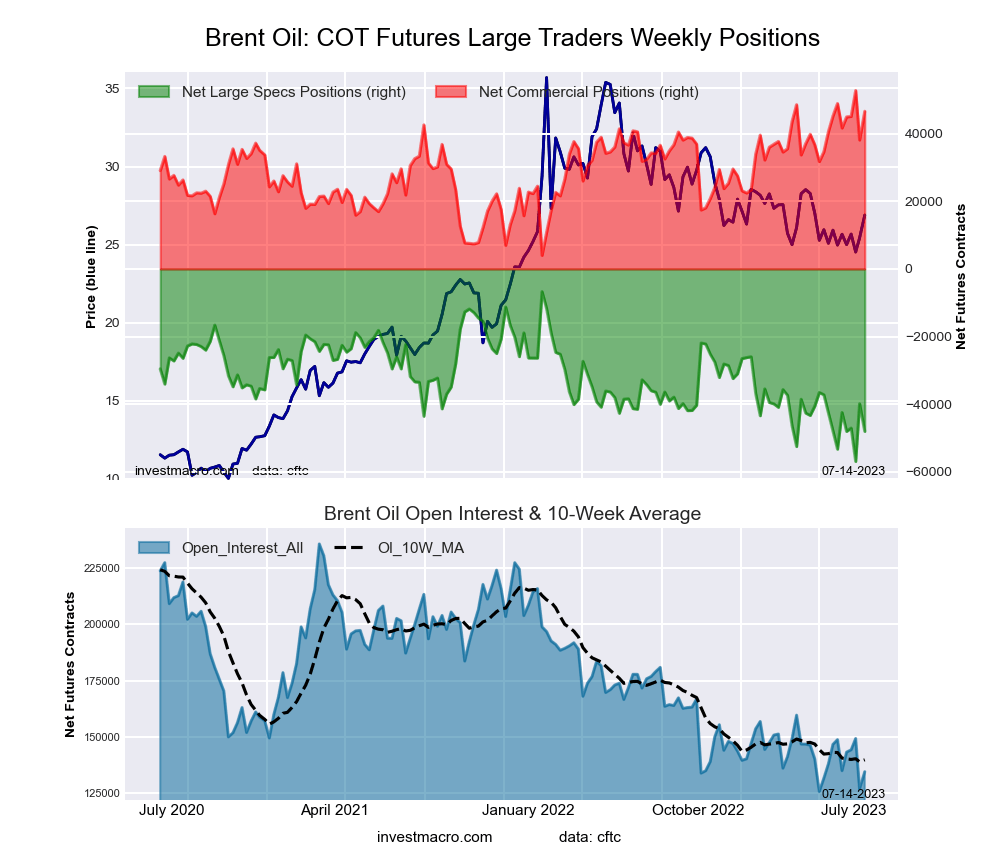
Oil prices rose in weakly volatile trading on Monday. But on Tuesday, oil started to decline again. Concerns about further interest rate hikes by the Federal Reserve and a slowdown in economic growth largely offset optimism about an increase in the US government debt ceiling. The main focus of oil traders now is the OPEC+ meeting on June 4.

Asian markets traded yesterday without a single dynamic. Japan’s Nikkei 225 (JP225) gained 1.03%, China’s FTSE China A50 (CHA50) was 0.49% lower, Hong Kong’s Hang Seng (HK50) fell by 1.04% lower on Monday, India’s NIFTY 50 (IND50) gained 0.54%, and Australia’s S&P/ASX 200 (AU200) was 0.87% higher on the day.

Most Asian stock indices fell on Tuesday as optimism over a deal to raise the US debt ceiling was offset by fears of worsening relations between Beijing and Washington amid renewed trade and political sanctions disputes. China’s CSI 300 index fell to a five-month low after China rejected a request for a meeting between US Defense Secretary Lloyd Austin and Chinese Defense Minister Li Shanfu at a forum in Singapore later this week. The deterioration in relations between the two countries also comes amid waning optimism about China’s economic recovery this year, with attention now focused mainly on the May manufacturing and service sector activity figures due Wednesday.

S&P 500 (F) (US500) 4,205.45 0.0 (0.0%)

Dow Jones (US30)33,093.34 0 (0%)

DAX (DE40) 15,952.73 −31.24 (−0.20%)

FTSE 100 (UK100) 7,627.20 +56.33 (0.74%)

USD Index 104.28 +0.08 +0.07%

By JustMarkets


This article reflects a personal opinion and should not be interpreted as an investment advice, and/or offer, and/or a persistent request for carrying out financial transactions, and/or a guarantee, and/or a forecast of future events.

Trade of the Week: EURUSD set for rebound?

By ForexTime

The euro has weakened against the US dollar by about 2.7% so far this month, as we see out the final days of May.

Could June herald better fortunes for EURUSD?


The first 2 days of the new month will feature some tier-1 events on either side of the Atlantic that may jolt global FX markets:


(1) Thursday, June 1: Eurozone May CPI

What markets want to know: 

If higher-than-expected inflation would in turn force the European Central Bank (ECB) to persist with more rate hikes.

And if so, that should prompt a recovery in EURUSD.

Market expectations:

The Eurozone’s headline inflation, as measured by the consumer price index (CPI), is forecasted to come in at 6.3%.

If so, that would be notably lower than April’s 7% figure.

Otherwise, a lower-than-expected CPI print on Thursday may ease bets surrounding ECB rate hikes, with such prospects then likely to translate into more euro declines in the CPI’s aftermath.


(2) Friday, June 2: US May nonfarm payrolls data

What markets want to know:

If there’s enough “destruction” in the US jobs market to allow the Fed to ease up on its rate hikes.

If so, that should lead to a weaker US dollar and a higher EURUSD.

Market expectations:

  • Economists are forecasting that 190,000 new jobs were added to the US economy in May, which would be its lowest tally since before the pandemic.
  • Furthermore, the unemployment rate is expected to tick higher to 3.5%, relative to April’s 3.4% unemployment rate.
  • Also, wage growth in May is expected to slow to 0.3% compared to April 2023 (month-on-month), which would be notably slower than April’s 0.5 month-on-month advance (compared to March 2023).

However, the US dollar may strengthen and drag EURUSD lower if the US jobs market continues to demonstrate its resilience.

Such resilience may be derived from either a higher-than-expected NFP headline number / lower-than-3.5% unemployment rate / faster-than-expected wage growth.


(3) All of this week: US debt ceiling developments

What markets want to know:

Whether the US Congress can approve a deal before the June 5th deadline to avert a catastrophic default.

If so, EURUSD could fall further as faith is restored in US assets and the dollar.

Market expectations:

Republicans and Democrats are in a race against time to pass the tentative deal that was reached over this past weekend between US President Joe Biden (Democrat) and House Speaker Kevin McCarthy (Republican).

Both sounded optimistic that they would garner enough support from their respective party members.

Otherwise, failure to raise the debt ceiling before the US government runs out of cash would all but seal a recession for the world’s largest economy.


EURUSD tends to climb in June

Beyond the macroeconomic events listed above, euro bulls (those hoping EUR will move higher) will also be hoping that history will be on their side once more.

Since the euro’s launch in 1999, EURUSD has posted its third-highest monthly advance on average in June:

  • June = average monthly climb of 0.34%
  • April = average monthly climb of 0.45%
  • December = average monthly climb of 1.50%

Euro bulls will be hoping that such seasonality could restore the bloc currency’s year-to-date gains.

At the time of writing, EURUSD has only climbed by a paltry 0.09% so far this year, and is precariously close to completely snuffing out its year-to-date gains over the immediate future.


From a technical perspective …

  • The formation of a long-legged doji candle on the daily charts last Friday (May 26th) may signal that EURUSD could see a trend reversal soon.

    To be fair, that reversal did play out earlier today (Monday, May 29th), only for EURUSD to unwind its early morning gains in a session likely with thinned-out liquidity given the UK/US extended weekend.

  • Also, further declines in EURUSD may see its 14-day relative strength index (RSI) break below the 30 threshold that denotes oversold conditions.

    Such a technical event (RSI crossing below 30) may trigger a technical rebound for EURUSD.

Should these technical signals fail, traders may have to rely on fundamental forces to trigger a reversal in the euro’s fortunes.


This week’s forecasted range

From current levels, Bloomberg’s FX model points to a 75% chance that EURUSD will trade within the 1.0610 – 1.0833 range over the next one-week period.

Furthermore, analyst expectations are concentrated towards the upper end of that range.


Key levels

Potential Support:

  • 1.07018 (intraday low on Friday’s doji candle)
  • 1.06556 (mid-February cycle low)
  • 1.06106 (38.2% Fibonacci retracement level from EURUSD’s long-term downtrend; also lower limit of Bloomberg model’s forecasted range)


Potential Resistance:

  • 1.07587 (intraday high on Friday’s doji candle)
  • 100-day simple moving average (SMA)
  • 1.0833 (upper limit of Bloomberg model’s forecasted range)


Ultimately, the world’s most-traded FX pair appears to have enough reasons to make potentially outsized moves this week.

And depending on how these fundamental and technical forces play out, they should present trading opportunities for investors and traders across global financial markets.


Forex-Time-LogoArticle by ForexTime

ForexTime Ltd (FXTM) is an award winning international online forex broker regulated by CySEC 185/12 www.forextime.com

Debt ceiling negotiators reach a deal: 5 essential reads about the tentative accord, brinkmanship and the danger of default

By Bryan Keogh, The Conversation and Matt Williams, The Conversation 

President Joe Biden and House Speaker Kevin McCarthy on May 27, 2023, agreed in principle to a tentative deal that would raise the debt ceiling while capping some federal spending at current levels.

The accord, if approved by both houses of Congress, would avert an unprecedented default that threatens to derail the economy and put hundreds of thousands of Americans out of work. Negotiators agreed to lift the ceiling for two years – past the 2024 presidential election – while putting a temporary cap on most nondefense spending at 2023 levels. It would also reduce planned funding for the IRS, impose new work requirements on some people who receive benefits from the federal program known as SNAP and claw back billions of unspent funds from pandemic relief programs.

The Conversation has been covering the debt ceiling drama since January, when Republicans took over the House, raising fears that brinkmanship would lead to an economic catastrophe. Here are five articles from our archive to help you make sense of a couple key aspects of the tentative deal and provide context on the debt ceiling fight.

1. What is the debt ceiling

First some basics. The debt ceiling was established by the U.S. Congress in 1917. It limits the total national debt by setting out a maximum amount that the government can borrow.

Steven Pressman, an economist at The New School, explained the original aim was “to let then-President Woodrow Wilson spend the money he deemed necessary to fight World War I without waiting for often-absent lawmakers to act. Congress, however, did not want to write the president a blank check, so it limited borrowing to US$11.5 billion and required legislation for any increase.”

Since then, the debt ceiling has been increased dozens of times. It currently stands at $31.4 trillion – a figure reached in January. The Treasury has taken “extraordinary measures” to enable the government to keep borrowing without breaching the ceiling. Such measures, however, can only be temporary – meaning at one point Congress will have to act to lift the ceiling or default on its debt obligations, which is expected to happen by June 5, according to Treasury Secretary Janet Yellen, if the deal isn’t approved in time.

2. The trouble with work requirements

One of the biggest sticking points toward the end of negotiations was work requirements for recipients of government aid. The tentative deal would raise the age for existing work requirements from 49 to 54 years on able-bodied adults who have no children. This is less than what Republicans had earlier sought. There are exceptions for veterans and the homeless.

But if the goal is to help people find jobs and make more money, work requirements don’t actually do the job, wrote Kelsey Pukelis, a doctoral student in public policy at Harvard Kennedy School who has studied the issue. Rather, they make it much harder for people who need food aid to get it.

“Our findings do suggest that work requirements restrain federal spending by reducing the number of people getting SNAP benefits,” she explained. “But our work also indicates that in today’s context, these savings would be at the expense of already vulnerable people facing additional economic hardship at a time when a new recession could be around the corner.”

3. IRS funding takes a hit

The deal also takes aim at a big boost in spending Congress gave the Internal Revenue Service beginning in 2022 to crack down on tax cheats and upgrade its software. Democrats agreed to a Republican demand to cut the extra IRS funding from $80 billion to $70 billion.

Back in August 2022, Nirupama Rao, an economist at the University of Michigan, explained why Democrats included all that funding in their Inflation Reduction Act and how it would help the IRS collect more tax revenue, since the agency does not fully collect all the taxes that are owed.

“The main target of this spending is the so-called tax gap, which is currently estimated at about $600 billion a year,” she wrote. “While an $80 billion investment that returns $204 billion already sounds pretty impressive, it may be possible that it’s a conservative estimate.”

4. The hard road to compromise

It took a long time for Republicans and Democrats to get the current agreement.

Yellen warned in January that the government was about to hit the debt limit and would be unable to pay all its bills by May or June. McCarthy and House Republicans, who hold a razor-thin majority, appeared unwilling to raise the debt ceiling unless they could extract deep spending cuts. Meanwhile, Biden refused to negotiate, insisting on a clean debt ceiling bill. Both of those positions were dropped during negotiations.

Why did it take so long for them to reach a compromise?

Blame political trends that have been accelerating for decades, explained Laurel Harbridge-Yong, a specialist in partisan conflict and the lack of bipartisan agreement in American politics at Northwestern University. Many Republicans come from very safe districts, which means their primary against other conservatives is more important than the general election. This makes it more important to stand firm and fight until the bitter end.

“So you now have many Republicans who are more willing to fight quite hard against the Democrats because they don’t want to give a win to Biden,” she wrote. “Democrats are also resistant to compromising, both because they don’t want to gut programs that they put in place and also because they don’t want to make this look like a win for Republicans, who were able to play chicken and get what they wanted.”

5. Latest in a long line of fiscal crises

This was hardly the first fiscal crisis the U.S. government has faced. In fact, there have been many – including 22 government shutdowns since just 1976.

Raymond Scheppach, a professor of public policy at University of Virginia, offered a brief history of recent crises and the damage they’ve caused – and why a default would be far more consequential than past crises.

“While these were very disruptive and damaged the economy and employment, they pale in comparison to the potential effects of failing to lift the debt ceiling, which could be catastrophic,” he wrote. “It could bring down the entire international financial system. This in turn could devastate the world gross domestic product and create mass unemployment.”

Editor’s note: This story is a roundup of articles from The Conversation’s archives. Portions of this article originally appeared in a previous article published on May 2, 2023.The Conversation

About the Author:

Bryan Keogh, Deputy Managing Editor and Senior Editor of Economy and Business, The Conversation and Matt Williams, Senior Breaking News and International Editor, The Conversation

This article is republished from The Conversation under a Creative Commons license. Read the original article.


EUR Remains Low Amidst Debt Ceiling Discussions: Technical Analysis and Market Outlook

By RoboForex Analytical Department

The EUR remains at a low level, with the most traded currency pair in the market staying near 1.0730 on Monday.

Investors continue to focus on the issue of raising the US public debt limit. There are discussions underway between Congress and the White House regarding a framework agreement on increasing the debt ceiling.

It is expected that Republicans will agree to raise the borrowing limits by 4 trillion USD over two years if the Democrats allow for restrictions on non-defense spending in 2024.

As it is a public holiday in the US on Monday, official news is anticipated in the coming days. This week, the country will release important statistics, including labor market indicators for May.

Technical analysis:

On the H4 timeframe, EUR/USD has completed a downward wave, reaching 1.0701. Currently, the market is correcting towards 1.0760. After the correction, a decline to 1.0730 can be expected. It is possible for a consolidation range to form around 1.0730. If the price breaks out of the range upwards, the correction might continue towards 1.0804, which is the initial target. This scenario is technically supported by the MACD, as its signal line is currently at lows below zero and preparing to rise towards the zero mark.

On the H1 timeframe, EUR/USD experienced a downward wave, reaching 1.0701. The market has made an upward impulse towards 1.0730 and is currently forming a consolidation range around this level. A potential upward structure might develop towards 1.0744, which is a local target. Once the price reaches this level, a decline to 1.0730 followed by a rise to 1.0760 is expected. The Stochastic oscillator confirms this scenario, as its signal line is near 80. A decline to 50 could occur today, after which a rise towards 80 may follow.

Disclaimer

Any forecasts contained herein are based on the author’s particular opinion. This analysis may not be treated as trading advice. RoboForex bears no responsibility for trading results based on trading recommendations and reviews contained herein.

Debt ceiling crisis has already hit US economic credibility, reform needed

By George Prior

The US economy and the nation’s credibility have already been damaged by the debt ceiling crisis even if a deal is struck next week, and “reform is now urgently required”, affirms the CEO of one of the world’s largest independent financial advisory, asset management and fintech organizations.

Nigel Green of deVere is speaking out following reports that Republican and White House officials are edging closer to an agreement to raise the debt limit and cap federal spending for two years.

He comments: “Tuesday is being reported as the likely day for a House vote on raising the US debt ceiling.

“Although this is not definite, and it might come right down to the wire and happen just hours before Treasury Secretary Janet Yellen says her department could run out of money.”

Regardless of whether a deal is done, and a default is avoided, which is the hope, the “US economy and the nation’s credibility have already been damaged,” says Nigel Green.

“This is evidenced by Fitch, a credit rating agency, late Wednesday putting the US government’s AAA debt rating on ‘negative watch’ as a result of the political brinkmanship between the White House and Congress over raising the debt ceiling.”

He continues: “Using the country’s debt as a political weapon, undermines confidence of investors in the US government amid concerns about the government’s ability to properly manage its finances.

“This loss of confidence will mean that it becomes more difficult for the US government to borrow money in the future, which could lead to higher interest rates and weaker economic growth.

“The debt ceiling drama also erodes some of the current global reserve currency’s credibility and reputation as a ‘safety asset’, which could have far-reaching repercussions for the US.”

The deVere CEO also recently argued that the debt ceiling crisis was the “ultimate gift” for America’s major geopolitical rival, China, which is seeking to promote the internationalisation of its own currency and to position itself as a more stable and attractive investment option, in order to attract more international investment and capital inflows.

“Whatever happens in debt ceiling talks this week between Democrats and Republicans, China’s massive PR machine is already spinning the narrative that the US is a declining power,” he noted.

With talks on a knife edge to contain this crisis, Nigel Green says that should this current situation be resolved, reform is “urgently required.”

He says: “I’m in favour of debt ceiling reforms that take away the threat of a US government default and all the implications of that, and reforms that make lawmakers in Washington truly accountable by automatically triggering spending cuts should the ceiling be reached.”

The deVere CEO and founder concludes: “We hope and expect a deal to be done to avoid a default. But it should never have got to this stage in the first place, as damage has already been done to US economic credibility.

“This must serve as a catalyst for reform.”

About:

deVere Group is one of the world’s largest independent advisors of specialist global financial solutions to international, local mass affluent, and high-net-worth clients.  It has a network of more than 70 offices across the world, over 80,000 clients and $12bn under advisement.

Demand for financial advice up 20% in year – what’s driving the surge?

By George Prior 

The rising cost of living, economic uncertainty, and geopolitical issues have driven-up demand for financial advice by 21.2% over the last year, according to one of the world’s largest independent financial advisory, asset management and fintech organizations.

As the figures from deVere Group, which are based on enquiries from new and existing clients, are released, the company’s Regional Director shares questions you should ask when seeking a financial advisor.

Of the jump in demand, James Green comments: “As these findings underscore, more and more people are recognising the value of independent advice to secure their long-term financial goals.

“The overwhelming majority of new enquiries, our consultants report, are fuelled by concerns over the rising cost of living, economic uncertainty, and/or geopolitical issues.”

He continues: “Although it now seems to be easing somewhat, the cost-of-living is still rising.

“Last year’s cost-of-living crisis brought into sharp focus the need for people to manage their finances effectively.

“With a growing number struggling to successfully balance their income with expenses, save for goals such as homeownership, education, investments or retirement, or deal with rising debt burdens, they sensibly sought professional advice.”

Economic uncertainties have also acted as a catalyst. “Volatility in and disparities between stock markets and bond markets, the looming threats of a recession, longer-term inflation issues, and interest rate agendas, have prompted a growing number of individuals to better understand the market conditions, evaluate their investment portfolios, and make informed decisions about their personal financial situation,” notes James Green.

In addition, geopolitical issues, such as the US debt ceiling and possible default crisis, Brexit, the war in Ukraine, and rising tensions between China and the US, among others, have played their part.

“Major geopolitical matters such as these both directly and indirectly affect investment portfolios. As such they can knock you off track, financially.  It’s critical to consistently review and, where necessary, adapt financial strategies to the changing economic landscape.”

The deVere Director also says that technology is a likely contributing factor to the significant surge in demand for financial advice as it becomes more accessible to a broader audience.

“Fintech apps, online platforms, and other financial planning tools have made it easier for individuals to connect with advisors and receive guidance remotely. We believe this increased accessibility has contributed to the growing demand for financial advice over the last year.”

With demand jumping by almost a quarter in just 12 months, James Green says there are certain questions you should ask when looking to work with a new financial advisor.

Here’s what you should ask:

Is your company authorised to give financial advice by the appropriate regulatory authority?

“All advice should be completed by a company and an individual registered with the jurisdiction’s appropriate authority. This can be checked immediately on that body’s website.”

Does your company have a global presence?

“It makes sense to work with a company that’s located worldwide to make sure you receive continuity of service should you ever relocate. If long term service is required be sure to check the company has offices in your potential future destinations. The company should also be regulated in all the markets in which it operates where required.”

Do you have more than one option for the financial advice given?

“An independent advisory firm should be able to offer a range of trust services, product services and investment options. Ask them to show you several different options to give you peace of mind when agreeing to the advice.”

How long has your company been in operation?

“You should choose a company that has been operating in the marketplace for more than five years. This will provide a more accurate, longer-term gauge of the firm’s quality of advice, service and compliance history.

What is the total value of your company’s assets under management?

“Assets under management that total in excess of $10bn would suggest some degree of critical mass in the industry, a significant share of the market, longevity in the industry and a robust organisational structure.”

Do you offer full disclosure?

“All negotiations should be upfront and transparent from the start. Any agreements you enter into should disclose how charges are made, how much will be charged, service expectations and levels of protection.”

He adds that you must also be able to “build rapport and trust to successfully forge a long-term relationship with your advisor.”

James Green concludes: “Soaring demand for advice must be championed across the board as it helps people to make better financial decisions, improves their financial literacy, and gives them the best chance of achieving their goals and building a more secure financial future.”

About:

deVere Group is one of the world’s largest independent advisors of specialist global financial solutions to international, local mass affluent, and high-net-worth clients.  It has a network of more than 70 offices across the world, over 80,000 clients and $12bn under advisement.

NVIDIA’s growth pushed US stocks higher. Gold hits a 2-month low

By JustMarkets

The US stock indices traded yesterday without a single trend. The Dow Jones Index (US30) decreased by 0.11%, and S&P 500 (US500) gained 0.88%. Technology Index NASDAQ (US100) added 0.11% yesterday. The rise in Nvidia stock and slight progress in the debt ceiling negotiations boosted bullish investor sentiment.

Shares of NVIDIA (NVDA) surged by 27% to $956.52 billion, bringing its market capitalization close to $1 trillion, after reporting better-than-expected first-quarter results and forecasts that markedly beat Wall Street estimates. The chipmaker said it expects second-quarter revenue of about $11 billion, well above analysts’ expectations of $7 billion, as the growing need for artificial intelligence supports the outlook for chip demand. Nvidia’s record surge led Monolith Power Systems (MPWR), which provides power management solutions for some Nvidia chips, up by 16%, while Taiwan Semiconductor Manufacturing (TSM) and Advanced Micro Devices (AMD) also got a boost.

Rating agency Fitch warned that the US credit rating could be in jeopardy as the impasse over the government debt ceiling brings the world’s largest economy closer to possible default.

An upward revision to US economic growth figures (from +1.1% to +1.3%) in the first quarter and lower-than-expected initial jobless claims, indicating a stronger economy, increased the likelihood of a Fed rate hike at the June meeting to 50% from 20% a day earlier.

Equity markets in Europe were mostly down yesterday. Germany’s DAX (DE30) fell by 0.31%, France’s CAC 40 (FR40) lost 0.33% on Thursday, Spain’s IBEX 35 (ES35) decreased by 0.43%, and the British FTSE 100 (UK100) closed negative 0.74% yesterday.

Crude oil prices fell about 3% on Thursday after Russian Deputy Prime Minister Alexander Novak, who is also the country’s oil minister, said he expected no new moves from OPEC+ at the June 4 meeting. A day ago, Saudi Arabia’s energy minister hinted at the possibility of another round of production cuts, but this information has not been confirmed. OPEC+ is highly likely to keep production unchanged.

Gold hit a 2-month low as worries about raising the US government debt ceiling and expectations of high-interest rates forced investors to switch to the dollar. Gold is inversely correlated to the dollar index and government bond yields. But the medium-term outlook for the yellow metal remains bullish as the US Federal Reserve will end its tightening cycle in the summer, which will lead to falling government bond yields.

Asian markets traded yesterday without a single dynamic. Japan’s Nikkei 225 (JP225) gained 0.39%, China’s FTSE China A50 (CHA50) fell by 0.51%, Hong Kong’s Hang Seng (HK50) ended the day down 1.93%, India’s NIFTY 50 (IND50) added 0.20%, and Australia’s S&P/ASX 200 (AU200) ended Thursday with a negative 1.05%.

The Bank of Japan (BOJ) may abandon the bond yield ceiling this year if risks such as global banking sector problems abate. Until it becomes clear that wages will continue to rise steadily next year, the Bank of Japan should refrain from raising the short-term interest rate from the current level of 0.1%. However, as long as short-term borrowing costs remain low, the Central Bank can lift the 0.5% cap on 10-year bond yields without hurting the economy too much. The Bank of Japan is likely to wait until worries about global banking problems and the US debt ceiling standoff subside.

Consumer confidence in New Zealand in May was unchanged from the previous month and remained at a low level as consumers continue to suffer from high inflationary pressures.

S&P 500 (F) (US500) 4,151.28 +36.04 (+0.88%)

Dow Jones (US30)32,764.65 −35.27 (−0.11%)

DAX (DE40) 15,793.80 −48.33 (−0.31%)

FTSE 100 (UK100) 7,570.87 −56.23 (−0.74%)

USD Index 104.24 +0.35 +0.34%

Important events for today:
  • – Japan Tokyo Core CPI (m/m) at 02:30 (GMT+3);
  • – Australia Retail Sales (m/m) at 04:30 (GMT+3);
  • – UK Retail Sales (m/m) at 09:00 (GMT+3);
  • – US Core Durable Goods Orders (m/m) at 15:30 (GMT+3);
  • – US PCE Price index (m/m) at 15:30 (GMT+3);
  • – US Michigan Consumer Sentiment (m/m) at 17:00 (GMT+3).

By JustMarkets


This article reflects a personal opinion and should not be interpreted as an investment advice, and/or offer, and/or a persistent request for carrying out financial transactions, and/or a guarantee, and/or a forecast of future events.

Here’s What Silver Investors Need to Know

Large Speculators have been making this bet on silver

By Elliott Wave International

Observations over the years reveal that hedge fund managers tend to extrapolate current trends of financial markets into the future — just like most Main Street investors.

In other words, hedge fund managers are just as much a part of the “crowd” as the little guy.

So, this 2021 headline from the American Enterprise Institute is not surprising:

The SP 500 Index Out-performed Hedge Funds over the Last 10 Years. And It Wasn’t Even Close

Hedge funds and trend followers are known as Large Speculators in the Commitment of Traders report published by the Commodity Futures Trading Commission. They usually take the opposite side of the trade from a group known as the Commercials; insiders who participate in a business related to a given commodity. The Commercials usually turn out to be on the right side of a trade.

With this in mind, let’s focus on silver. Here’s a chart and commentary from our May 15 U.S. Short Term Update:

SilverLargeSpecs

Large Specs… are strongly betting that [Silver]’s rally will continue. The middle graph on the chart shows the Large Spec net long or net short position as a percentage of total non-spreading open interest. Two weeks ago, it was 23.49%. Last week, despite a 9% decline in silver prices over just five days, Large Specs are net long 23.14%, hardly budging from their prior stance… We will keep you apprised of new developments.

The U.S. Short Term Update makes clear that Commitment of Traders positions are not a great short-term timing tool. At the same time, be aware that extreme positions often occur at key trend turns.

Also keep in mind that silver’s Elliott wave structure can help you to anticipate price turns.

Indeed, here’s a quote from the Frost & Prechter’s Wall Street classic, Elliott Wave Principle: Key to Market Behavior:

It is our practice to try to determine in advance where the next move will likely take the market. One advantage of setting a target is that it gives a sort of backdrop against which to monitor the market’s actual path. This way, you are alerted quickly when something is wrong and can shift your interpretation to a more appropriate one if the market does not do what you expect. The second advantage of choosing a target well in advance is that it prepares you psychologically for buying when others are selling out in despair, and selling when others are buying confidently in a euphoric environment.

No matter what your convictions, it pays never to take your eyes off what is happening in the wave structure in real time. Ultimately, the market is the message, and a change in behavior can dictate a change in outlook. All one really needs to know at the time is whether to be long, short or out, a decision that can sometimes be made with a swift glance at a chart and other times only after painstaking work.

If you’d like to read the entire online version of the book, you may do so for free once you join Club EWI, the world’s largest Elliott wave educational community.

A Club EWI membership is also free and members enjoy complimentary access to a wealth of Elliott wave resources on investing and trading.

Get started now by following this link: Elliott Wave Principle: Key to Market Behaviorget free access.

This article was syndicated by Elliott Wave International and was originally published under the headline Here’s What Silver Investors Need to Know. EWI is the world’s largest market forecasting firm. Its staff of full-time analysts led by Chartered Market Technician Robert Prechter provides 24-hour-a-day market analysis to institutional and private investors around the world.

Negotiations on the US debt ceiling are deadlocked. In Germany, there is a drop in business optimism

By JustMarkets

The US stock indices ended Wednesday’s trading in decline, as negotiations between the White House and Republican representatives to raise the US debt ceiling were seriously delayed. By the close of trading, the Dow Jones Index (US30) decreased by 0.77%, while the S&P 500 Index (US500) lost 0.73%. Technology Index NASDAQ (US100) fell by 0.61% yesterday.

The lack of progress on raising the US government’s $31.4 trillion debt limit before the June 1st deadline, with several rounds of inconclusive negotiations, has irritated investors as the risk of a catastrophic default grows. There are only seven calendar days left until June 1st, with about three days to process all the paperwork if there is a deal. Therefore, the US politicians have only four days left to find common ground.

The Fed meeting minutes showed that future rate hikes are less certain and preferred to keep policy flexibility as inflation continues to outpace the trend and the impact of the banking crisis remains uncertain. Some participants noted that, based on their expectation that progress in bringing inflation down to 2% may remain unacceptably slow, additional policy tightening would likely be needed at future meetings. Federal Reserve Chairman Chris Waller suggested that the Central Bank may skip a hike in June but is still leaning toward a rate hike in July depending on inflation data.

Equity markets in Europe were mostly down yesterday. Germany’s DAX (DE30) fell by 1.92%, France’s CAC 40 (FR40) lost 1.70% on Wednesday, Spain’s IBEX 35 (ES35) was down 1.14%, Britain’s FTSE 100 (UK100) closed negative 1.75% yesterday.

Germany’s leading indicator, the Ifo index, fell from 93.6 to 91.7 for the first time after a six-month rise. The first drop in the Ifo index in six months is evidence of fading optimism. Recent bank turmoil appears to have caught up with German company valuations. The report indicates that falling purchasing power, a shrinking industrial order book, and the impact of the most aggressive monetary policy tightening in decades will lead to weak economic activity in the region. In addition to these cyclical factors, the ongoing war in Ukraine, demographic changes, and the ongoing energy transition will put structural pressure on the German economy in the coming months.

The UK Consumer Price Index fell from 10.1% to 8.7% (forecast 8.2%) y/y. But core inflation (excluding food and energy prices) unexpectedly rose from 6.2% to 6.8% y/y. As a result, overall inflation declined, but inflationary pressures remain persistent in key sectors. In this situation, the British Central Bank has no choice but to keep raising rates.

WTI crude oil jumped over 2% yesterday after an excessive weekly drop in US crude inventories. Oil demand is rising in anticipation of road, air, and sea transportation in the summer, which is usually accompanied by an increase in the price of “black gold”.

Asian markets were also mostly down yesterday. Japan’s Nikkei 225 (JP225) decreased by 0.89%, China’s FTSE China A50 (CHA50) lost 1.50%, Hong Kong’s Hang Seng (HK50) ended the day down 1.62%, India’s NIFTY 50 (IND50) added 0.34%, while Australia’s S&P/ASX 200 (AU200) ended Wednesday negative 0.63%.

NVIDIA Corporation (NVDA) rose sharply yesterday after the video card maker beat expectations for its first-quarter earnings and projected higher revenue due to strong demand from artificial intelligence development. Nvidia’s positive outlook improved the outlook for the chip-making sector, with Southeast Asia a major region.

Concerns about a new wave of COVID in China hit regional stocks. The Chinese government has warned that a new outbreak could peak by the end of June. Although symptoms of a new variant of COVID are mild, markets fear further disruptions to China’s economic recovery.

S&P 500 (F) (US500) 4,115.24 −30.34 (−0.73%)

Dow Jones (US30)32,799.92 −255.59 (−0.77%)

DAX (DE40) 15,842.13 −310.73 (−1.92%)

FTSE 100 (UK100) 7,627.10 −135.85 (−1.75%)

USD Index 103.89 +0.40 +0.39%

Important events for today:
  • – German GDP (q/q) at 09:00 (GMT+3);
  • – US GDP (q/q) at 15:30 (GMT+3);
  • – US Initial Jobless Claims (w/w) at 15:30 (GMT+3);
  • – US Pending Home Sales (m/m) at 17:00 (GMT+3);
  • – US Natural Gas Storage (w/w) at 17:30 (GMT+3).

By JustMarkets


This article reflects a personal opinion and should not be interpreted as an investment advice, and/or offer, and/or a persistent request for carrying out financial transactions, and/or a guarantee, and/or a forecast of future events.

Jap225 bearish momentum to persist?

By ForexTime

The Jap225 index on the H4 time frame was in bullish territory from the beginning of May. However, bears did try to challenge their reign a few times but to no avail. This changed on 23 May when a last higher top formed at 31348. The bears got enough backing to start a shift in the market momentum.

A closer look at the Momentum Oscillator reveals a negative divergence between points “a” and “b” when comparing the tops at 30955 and 31348. This could have alerted technical traders that the bulls might be running out of steam.

Further confirmation of the increasing bearish presence in the market was displayed when the price broke through the 15 and 34 Simple Moving Averages with the Momentum Oscillator following suit by breaking through the 100 baselines into bearish terrain.

A possible critical support level formed when a lower bottom was recorded on 24 May at 30394.

If the bears manage to break through the critical support level at 30394, then three possible price targets can be set from there. Attaching the Fibonacci tool to the lower bottom at 30394 and dragging it to the resistance level at 31348, the following targets may be determined. The first target can be estimated at 30012 (161.8%). The second price target can be expected at 29822 (261.8%) and the third and final target can be estimated at 29440 (423.6%).

If the resistance level at 31348 is broken, the current scenario must be re-evaluated.

As long as the bears maintain the upper hand, the outlook for the Jap225 Index on the H4 time frame will remain bearish.


Forex-Time-LogoArticle by ForexTime

ForexTime Ltd (FXTM) is an award winning international online forex broker regulated by CySEC 185/12 www.forextime.com