Archive for Financial News – Page 19

20,000 Meters Into a Strategic Metal as Tungsten Drilling Accelerates in Europe

Source: Streetwise Reports (1/28/26)

Allied Critical Metals Inc. (ACM:CSE; ACMIF:OTCQB; 0VJ0:FSE) has launched a fully funded 20,000 meter drill campaign at its Borralha Tungsten Project in northern Portugal. Read how the 2026 program builds on expanded resources and targets multiple breccia zones ahead of planned economic studies.

Allied Critical Metals Inc. (ACM:CSE; ACMIF:OTCQB; 0VJ0:FSE) has commenced a 20,000 meter drill campaign at its 100%-owned Borralha Tungsten Project in northern Portugal. According to the company, this fully funded 2026 exploration program will target multiple zones within the Borralha property, building on the 2025 drill results and a significantly expanded Mineral Resource Estimate (MRE) announced in late 2025.

The 2026 drill program includes core and reverse circulation drilling and is intended to support multiple objectives. These include step-out and infill drilling to upgrade the current resource estimate, further testing of the Santa Helena Breccia, and exploration of other mineralized zones. The program will also provide material for metallurgical test work and generate data to support the company’s anticipated Preliminary Economic Assessment, which is targeted for completion in Q1 2026.

The company stated that drilling will also target the Venise Breccia, located north of Santa Helena, which is historically known for high-grade wolframite and molybdenum mineralization.

“We are excited to launch our most ambitious drill program to date at Borralha,” said Roy Bonnell, CEO and Director of Allied, in a company news release. “With tungsten designated a strategic critical material in the European Union and the United States, this expanded 20,000-meter program will be a cornerstone of our efforts to define Borralha’s resource potential and support advancing the project toward economic evaluation.”

The Borralha project includes bulk mineralization zones as well as high-grade breccia corridors, and has already received regulatory milestones allowing progression through engineering and permitting phases. The company noted that recent work confirmed the system’s scale and resource growth potential.

Tungsten’s Role in Defense Supply Chains, Strategic Metals, and Institutional Allocation

In a January 21 sector analysis published by Tungsten for Stainless: Canada Minerals in 2026 – Driving the Future of Critical Technology & Industry, tungsten was described as a foundational input in advanced sectors such as defense, aerospace, electronics, and stainless steel manufacturing. The report stated that “tungsten accounts for over 90% of stainless steel’s hardness additives in Canada’s high-tech exports as of 2026,” and emphasized the metal’s role in corrosion resistance, extreme heat durability, and wear tolerance. Tungsten was identified as indispensable for applications ranging from cutting tools and turbine components to protective armor and radiation shielding. According to the report, Canada’s tungsten reserves contribute significantly to global aerospace and defense output, with estimated contributions of up to 20% in those categories.

From a January 23 article from InvestorNews, tungsten’s rise to the top of global strategic materials discussions was attributed to decades of stockpile depletion and new geopolitical realities. Christopher Ecclestone of Hallgarten + Company said that “Western governments… fell asleep at the wheel,” allowing critical inventories to run down while attention shifted elsewhere. He described tungsten as “extraordinarily dense, extremely hard, essential for armor-piercing munitions and high-end tooling.” Lewis Black noted that tungsten’s value was “availability-driven,” stating, “the amount of tungsten in an end product is so small that the consumer barely notices the cost; what matters is whether any reliable non-Chinese supply exists at all.” The report also quoted Ecclestone saying that China had effectively told the world, “No more tungsten for you,” in reference to recent export restrictions affecting global access.

Muflih Hidayat, in a January 27 report, reported that institutional investment behavior in the tungsten sector was examined through the lens of capital allocation psychology. The report stated that portfolio managers viewed tungsten exposure as a strategic hedge, noting that “risk premiums that exceed traditional commodity investment frameworks” were being applied due to supply chain concerns. Tungsten’s “dual-use nature” in both military and civilian applications was described as generating “recession-resistant revenue streams,” contributing to strong institutional interest. The article noted that “institutional confidence that long-term value creation would exceed immediate discount impacts” was evident in recent oversubscribed placements, underscoring a shift toward long-term positioning over short-term valuation sensitivity.

Updated Borralha Resource and Preliminary Assessment Plans

According to a December 9 Caesar’s report titled Allied Critical Metals increases Borralha tungsten resource, Allied Critical Metals released an updated mineral resource estimate for its fully owned Borralha tungsten project in Portugal. The report stated that the project contained “13 million tonnes in the measured and indicated resource category at an average grade of 0.21% WO3, with an additional 7.7 million tonnes in the inferred resource category at an average grade of 0.18% WO3.” It further noted that the measured and indicated resources hosted “27,000 tonnes of WO3, which represents approximately 2.7 million mtu,” while the inferred category hosted “approximately 1.4 million mtu.”

The same report commented on the development context, stating that “the resource remains open in multiple directions, so it will be interesting to see how many tonnes can be added further down the road.” It also noted that the updated resource would be used for a Preliminary Economic Assessment, which “will be published in the first quarter of next year.” Regarding the mine design, the report stated that “the mine plan will likely be based on a long-hole stoping approach,” and that this was how “the 0.09% WO3 cutoff grade was established.”

In terms of processing assumptions, the report said that “initial metallurgical results indicate a low-cost gravity flow sheet with a recovery rate of 75-85%.” It also mentioned that “there is a chance to recover copper, tin, and silver as potential by-product credits,” and added that “the impact of these by-products will hopefully already be visible in the Preliminary Economic Assessment.”

Advancing Toward Economic Evaluation with Multiple 2026 Workstreams

Allied’s 2026 drill campaign at Borralha is designed to complete approximately 20,000 meters of drilling across multiple target zones. Program objectives include expanding and upgrading the current Mineral Resource Estimate through step-out and infill drilling, collecting metallurgical material to support prefeasibility analysis, and generating data to support the company’s Preliminary Economic Assessment, which is expected in Q1 2026.

Streetwise Ownership Overview*

Retail: 53%
Management & Insiders: 31%
Institutions: 16%
*Share Structure as of 1/28/2026


Drilling will also test extensions of the Santa Helena Breccia and target the Venise Breccia, a historically recognized high-grade tungsten and molybdenum structure located to the north. These efforts follow a 2025 program that yielded significant intercepts, including what the company described as some of the largest tungsten intervals ever recorded.

According to the company, updates, including initial drill results and revised resource modeling, will be released as data becomes available throughout the campaign.

Ownership and Share Structure1

Insiders own approximately 31% of Allied. About 16% is held by institutions and institutional investors, and the rest is held by retail shareholders.

The company has 170 million common shares issued and outstanding and 214 million common shares on a fully diluted basis. Its market cap is ~CA$180 million. Its 52-week range is CA$0.20–CA$1.20 per share.


Important Disclosures:

  1. Allied Critical Metals Inc. has a consulting relationship with Street Smart an affiliate of Streetwise Reports. Street Smart Clients pay a monthly consulting fee between US$8,000 and US$20,000.
  2. As of the date of this article, officers, contractors, shareholders, and/or employees of Streetwise Reports LLC (including members of their household) own securities of Allied Critical Metals Inc.
  3. James Guttman wrote this article for Streetwise Reports LLC and provides services to Streetwise Reports as an employee.
  4. This article does not constitute investment advice and is not a solicitation for any investment. Streetwise Reports does not render general or specific investment advice and the information on Streetwise Reports should not be considered a recommendation to buy or sell any security. Each reader is encouraged to consult with his or her personal financial adviser and perform their own comprehensive investment research. By opening this page, each reader accepts and agrees to Streetwise Reports’ terms of use and full legal disclaimer. Streetwise Reports does not endorse or recommend the business, products, services or securities of any company.

For additional disclosures, please click here.

1. Ownership and Share Structure Information

The information listed above was updated on the date this article was published and was compiled from information from the company and various other data providers.

FOMC expectedly holds rates steady. Oil surges to a 4-month high

By JustMarkets 

On Wednesday, the US stock indices traded mixed. By the end of the day, the Dow Jones (US30) rose by 0.03%, while the S&P 500 (US500) edged down by 0.01%. The tech-heavy Nasdaq (US100) closed higher by 0.32%. Investors adopted a wait-and-see approach ahead of major tech earnings and the anticipated Fed decision to maintain interest rates. At its January 2026 meeting, the US Federal Reserve left the federal funds rate unchanged in the 3.50-3.75% range, fully meeting market expectations. The decision follows three consecutive cuts last year that brought borrowing costs to their lowest level since 2022. However, a split emerged within the Committee: Governors Stephen Miran and Christopher Waller voted against the hold, advocating for an additional 25 bps cut. The regulator reaffirmed that future decisions will depend on incoming macroeconomic data, updated expectations, and the balance of risks. During the press conference, Fed Chair Jerome Powell emphasized that the US economy enters 2026 on a “solid footing,” stating that current rate levels are appropriate for making progress toward the Fed’s dual goals of price stability and maximum employment.

The Canadian dollar (CAD) strengthened to 1.35 against the US dollar, reaching a sixteen-month high as markets reacted to the Bank of Canada’s latest monetary policy decision and signals. Although US tariffs and ongoing trade uncertainty continue to pressure the Canadian economy (dampening exports, investment, and labor reallocation), the Bank of Canada maintains a relatively constructive macroeconomic outlook. The regulator expects moderate GDP growth of approximately 1.1% in 2026 and 1.5% in 2027, estimating that excess capacity will generally offset tariff-related cost increases, keeping inflation near the 2% target.

European equity markets mostly declined on Wednesday. Germany’s DAX (DE40) fell by 0.29%, France’s CAC 40 (FR40) dropped by 1.06%, Spain’s IBEX 35 (ES35) lost 1.10%, and the UK’s FTSE 100 (UK100) finished down 0.52%. The primary pressure came from the luxury goods sector. LVMH shares plummeted 7.3% following weak financial results, dragging the entire segment down. CEO Bernard Arnault pointed to a challenging market environment and warned that 2026 would likely be a difficult year for the industry. Investors also remained cautious ahead of the US Federal Reserve’s monetary policy announcement.
The Swiss franc (CHF) strengthened above 0.77 against the US dollar, reaching its highest level in ten years amid a global shift toward safe-haven assets and a simultaneous aversion to other traditional “haven” currencies. Despite the franc’s strength putting downward pressure on Switzerland’s already subdued inflation, expectations for further rate cuts from the Swiss National Bank (SNB) remain limited. The SNB’s policy rate has been held at 0% for six consecutive months, with central bank officials repeatedly emphasizing a cautious stance regarding a potential return to negative interest rate territory.

Platinum (XPT) prices rose toward $2,700 per ounce, returning to record levels fueled by persistent supply constraints and robust investment demand. An additional growth factor is the narrowness of the platinum market and its relatively low price compared to other precious metals, making even moderate physical purchases capable of significantly impacting price action. The structural annual supply deficit remains the key fundamental driver. Production in South Africa, which accounts for about 70% of global output, continues to face underinvestment, infrastructure disruptions, and logistical constraints. Supply risks could also intensify in Canada, another major producer, amid threats of 100% tariffs should trade agreements with China proceed.

WTI crude oil prices rose toward $64 per barrel, hitting a four-month high due to rising geopolitical risks following tough new US statements directed at Iran. President Donald Trump warned of possible further strikes while simultaneously calling for Tehran to negotiate, heightening market fears of potential disruptions to Iranian oil supplies. Fundamental data also supported the bullish move. According to the EIA report, US crude oil inventories fell by 2.3 million barrels last week, contrary to market expectations of a 1.75 million barrel increase, further strengthening the upside momentum.

Asian markets traded with mixed dynamics yesterday. Japan’s Nikkei 225 (JP225) rose by 0.05%, China’s FTSE China A50 (CHA50) edged down 0.04%, Hong Kong’s Hang Seng (HK50) surged 2.58%, and Australia’s ASX 200 (AU200) posted a negative result of 0.08%.

On Thursday, the Australian dollar (AUD) climbed above 0.70 USD, hitting a three-year high amid a gold rally and growing expectations for monetary policy tightening. All four of Australia’s major banks now consider an RBA hike likely, with market pricing reflecting a probability of over 70%. Rates are now fully priced at 3.85% by May and approximately 4.10% by September.

S&P 500 (US500) 6,978.03 −0.57 (−0.01%)

Dow Jones (US30) 49,015.60 +12.19 (+0.03%)

DAX (DE40) 24,822.79 −71.65 (−0.29%)

FTSE 100 (UK100) 10,154.43 −53.37 (−0.52%)

USD Index 96.38 +0.17% (+0.17%)

News feed for: 2026.01.29

  • Sweden Riksbank Interest Rate Decision at 10:30 (GMT+2); – SEK (HIGH)
  • Canada Trade Balance (m/m) at 15:30 (GMT+2); – CAD (MED)
  • US Trade Balance (m/m) at 15:30 (GMT+2); – USD (MED)
  • US Initial Jobless Claims (w/w) at 15:30 (GMT+2); – USD (MED)
  • US Natural Gas Storage (w/w) at 17:30 (GMT+2). – XNG (HIGH)

By JustMarkets


This article reflects a personal opinion and should not be interpreted as an investment advice, and/or offer, and/or a persistent request for carrying out financial transactions, and/or a guarantee, and/or a forecast of future events.

Today’s BoC and FOMC meetings are the focus of investors’ attention

By JustMarkets 

On Tuesday, the US stock indices traded mixed. By the end of the session, the Dow Jones (US30) declined by 0.83%, while the S&P 500 (US500) gained 0.41%. The tech-heavy Nasdaq (US100) closed higher by 0.88%. Investors continued to build positions ahead of a busy week of corporate earnings and key policy decisions. With approximately three-quarters of S&P 500 companies that have reported so far exceeding expectations, the market focus now shifts to the Federal Reserve’s decision and the accompanying signals to be announced today.

Today, the Bank of Canada (BoC) will hold its scheduled monetary policy meeting. According to the consensus among major banks, the key interest rate is expected to remain unchanged at 2.25%. The regulator has paused to assess the impact of US trade tariffs and the economic policies of Prime Minister Mark Carney’s government on exports and the broader economic balance. Markets will closely watch the Monetary Policy Report (MPR) for signals regarding the resilience of Canadian economic growth and GDP amid intensifying global uncertainty, as well as hints at the future policy trajectory. A “hawkish” scenario that emphasizes inflationary risks and a strong labor market could boost the Canadian Dollar (CAD).

European equity markets mostly rose on Tuesday. Germany’s DAX (DE40) fell by 0.15%, France’s CAC 40 (FR40) closed up 0.27%, Spain’s IBEX 35 (ES35) gained 0.70%, and the UK’s FTSE 100 (UK100) finished at 0.58%. Investors adopted a wait-and-see approach ahead of the Fed statement and US Big Tech earnings, while also digesting news regarding the EU-India trade deal. The automotive sector faced the most pressure: under the agreement, tariffs on cars were reduced from 110% to 10% for a quota of 250,000 vehicles per year. Consequently, shares of Porsche Automobil Holding, Mercedes-Benz, Volkswagen, and BMW lost between 0.6% and 2.6%.

On Wednesday, Silver prices (XAG) rose to $115 per ounce, approaching a new all-time high amid a sharp weakening of the US Dollar and increased demand for safe-haven assets. The movement was catalyzed by statements from US President Donald Trump, who indicated he was not concerned about the falling Dollar, which has dropped to four-year lows. These comments bolstered expectations that the administration is willing to tolerate a weak Dollar to enhance the competitiveness of US exports. Further support for precious metals came from political uncertainty in Washington, including threats of new trade tariffs and escalating attacks on the Federal Reserve’s independence, which are undermining investor confidence in the Greenback and US assets.

WTI Oil prices rose by approximately 2% on Tuesday, climbing toward the $62 per barrel level. Prices were supported by a severe winter storm in the US, which significantly disrupted oil production and refinery operations. Estimates suggest that US oil producers lost up to 2 million barrels per day over the weekend, roughly 15% of national output, as extreme frost strained energy infrastructure and power grids. Geopolitics also remained in focus, as the US deployed an aircraft carrier and escort ships to the Middle East, raising tension levels and supporting the risk premium in oil prices.

The US Natural Gas prices (XNG) declined by more than 7% to $6.27 per MMBtu following an unprecedented rally of approximately 117% over the previous five trading sessions. Warmer weather forecasts and early signs of production recovery following the massive disruptions triggered the correction.

Asian markets rose confidently yesterday. Japan’s Nikkei 225 (JP225) gained 0.85%, China’s FTSE China A50 (CHA50) rose by 0.37%, Hong Kong’s Hang Seng (HK50) climbed 1.35%, and Australia’s ASX 200 (AU200) posted a positive result of 0.92%.

On Wednesday, the Australian Dollar (AUD) traded near 0.699 USD, holding close to a three-year high following the release of inflation data. According to the report, annual inflation in December accelerated to 3.8% from 3.4% in November, and the monthly figure rose by 1.0%, significantly exceeding expectations of 0.7%. Closely watched core inflation also remained stubbornly high: the annual figure rose to 3.4%, well above the RBA’s target range of 2-3%. Against this backdrop, markets swiftly repriced rate expectations, with the probability of a 25 bps hike at the February 3rd RBA meeting rising to 72%, up from 63% before the inflation data release.

S&P 500 (US500) 6,978.60 +28.37 (+0.41%)

Dow Jones (US30) 49,003.41 −408.99 (−0.83%)

DAX (DE40) 24,894.44 −38.64 (−0.15%)

FTSE 100 (UK100) 10,207.80 +58.95 +(0.58%)

USD Index 95.86 -1.23% (-1.27%)

News feed for: 2026.01.28

  • Japan Monetary Policy Meeting Minutes at 01:50 (GMT+2); – JPY (MED)
  • Australia Consumer Price Index (m/m) at 02:30 (GMT+2); – AUD (HIGH)
  • German GfK German Consumer Climate (m/m) at 09:00 (GMT+2); – EUR (MED)
  • Canada BoC Interest Rate Decision at 16:45 (GMT+2); – CAD (HIGH)
  • Canada BoC Monetary Policy Report at 16:45 (GMT+2); – CAD (HIGH)
  • Canada BoC Press Conference at 17:30 (GMT+2); – CAD (HIGH)
  • US Crude Oil Reserves (w/w) at 17:30 (GMT+2); – WTI (HIGH)
  • US Fed Interest Rate Decision at 21:00 (GMT+2); – USD, XAU (HIGH)
  • US FOMC Statement at 21:00 (GMT+2); – USD, XAU (HIGH)
  • US Fed Press Conference at 21:30 (GMT+2); – USD, XAU (HIGH)
  • New Zealand Trade Balance (q/q) at 23:45 (GMT+2). – NZD (MED)

By JustMarkets


This article reflects a personal opinion and should not be interpreted as an investment advice, and/or offer, and/or a persistent request for carrying out financial transactions, and/or a guarantee, and/or a forecast of future events.

EUR/USD Updates Four-Year High: Everything Works Against the US Dollar

By RoboForex Analytical Department

EUR/USD reached 1.2000 on Wednesday after rising to 1.2082 the previous evening, marking a strong four-day rally. The pressure on the US dollar has intensified following comments from US President Donald Trump. He stated that he was not concerned about the weakening of the dollar, viewing its fall as moderate. The market interpreted this as a signal that the administration might be willing to tolerate a weaker dollar to enhance export competitiveness.

An additional blow to the dollar came from rising political uncertainty in Washington, with Trump making fresh statements about Greenland and continuing to criticise the US Federal Reserve’s independence.

Further compounding the dollar’s decline is growing speculation about a potential joint US-Japan currency intervention to support the yen, which has boosted demand for JPY.

Investors’ focus is on the Federal Reserve’s decision, due later tonight. The Fed is widely expected to maintain its current interest rate, but much attention is on potential signals regarding the timing of future rate cuts. Current expectations suggest two 25-basis-point cuts by the end of the year.

Technical Analysis

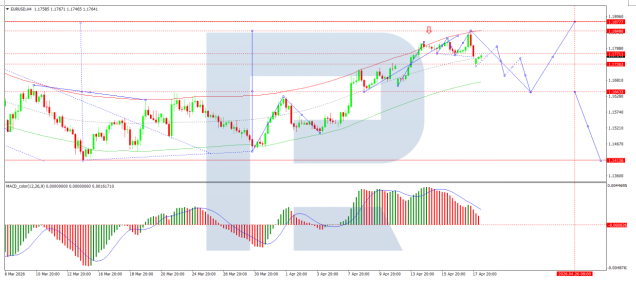
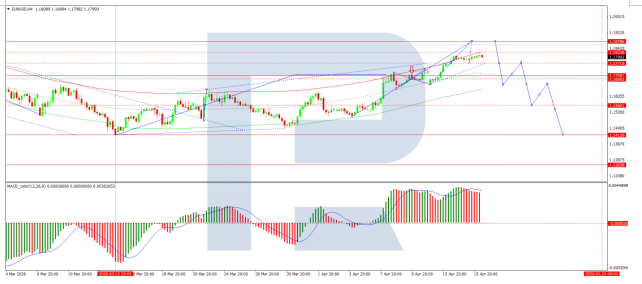
On the H4 chart, EUR/USD has formed an upward wave towards 1.2080. A breakout above this resistance level would signal a continuation of the bullish trend. For now, the pair is in a corrective phase, with support around 1.1935. The correction is confirmed by the MACD indicator, which shows the histogram and signal line above zero and forming a downward wave. After the correction, the upward trend may resume towards 1.2100 and potentially 1.2200, though corrections could occur during the rise.

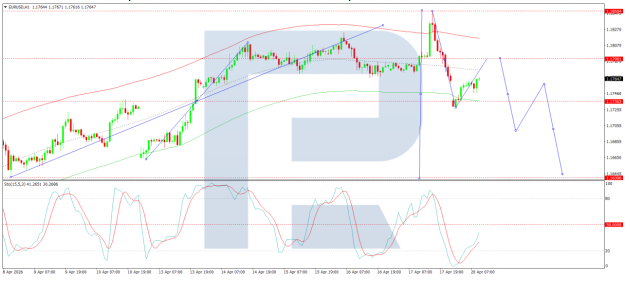
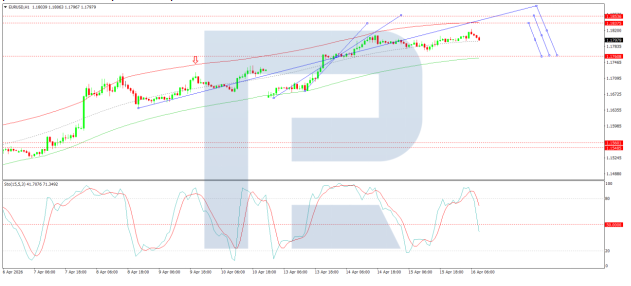
On the H1 chart, after testing resistance, EUR/USD is forming a correction. A rebound from support at 1.1935 would signal a continuation of the bullish wave. The Stochastic indicator’s signal lines are approaching the 20 level, suggesting that the correction may continue before resuming the upward trend. The next target for growth could be 1.2100.

Conclusion

The EUR/USD pair continues to show bullish momentum, supported by a weaker US dollar and rising geopolitical tensions. The ongoing correction might offer buying opportunities, with further growth likely towards 1.2100 and 1.2200, depending on the Fed’s upcoming decision and global market dynamics.


Disclaimer

Any forecasts contained herein are based on the author’s particular opinion. This analysis may not be treated as trading advice. RoboForex bears no responsibility for trading results based on trading recommendations and reviews contained herein.

Copper Targets Take Center Stage as New Drill Program Launches in Minnesota

Source: Streetwise Reports (1/26/26)

Green Bridge Metals Corp. (GRBM:CSE; GBMCF:OTC; J48:FWB) has initiated a diamond drilling program at the Titac Project, part of its South Contact District portfolio in northeastern Minnesota. The campaign aims to evaluate copper mineralization within a known titanium-bearing zone using modern geophysics and historic data.

Green Bridge Metals Corp. (GRBM:CSE; GBMCF:OTC; J48:FWB) has commenced a diamond core drilling program at its Titac Project, part of the South Contact District in northeastern Minnesota. The Phase 1 program is the first stage of targeted drilling aimed at evaluating and expanding copper mineralization at the Titac South deposit, which also hosts a titanium dioxide mineral resource outlined in an NI 43-101 Technical Report dated September 18, 2024.

According to the company, the drill program consists of six diamond core holes, each targeting a depth of approximately 300 meters, for a total of roughly 1,800 meters. The drill holes will be arranged in a fence-style section across the Titac South deposit, spaced approximately 50 meters apart.

The program’s objectives include defining the geological and structural controls on copper mineralization, validating historic copper assay results, and testing the spatial relationship between copper mineralization and geophysical anomalies.

The company stated that copper mineralization at Titac occurs primarily as chalcopyrite and is associated with an Oxide Ultramafic Intrusion (OUI) that also hosts the titanium dioxide resource. Drill targets have been prioritized where conductive and magnetic anomalies overlap, based on a 2025 VTEM airborne electromagnetic survey and modern 3D magnetic and conductivity inversions.

David Suda, President and CEO of Green Bridge Metals, said in a company news release, “The commencement of drilling at Titac is an important milestone for Green Bridge as we begin systematically testing the copper potential of a project that already hosts a titanium resource.” He added, “The strong correlation between these anomalies and known mineralization, together with the identification of several new targets, reinforces the exploration potential at Titac.”

US Policy Shifts Reshape Critical Mineral Supply Landscape

According to Catherine Boudreau, on January 7analysis of U.S. interest in Venezuelan critical minerals showed that while the country was believed to hold deposits used in artificial intelligence, defense systems, and renewable energy technologies, significant barriers limited their relevance. Experts cited political instability, lack of reliable data, illegal mining activity, and infrastructure constraints. Tom Moerenhout of Columbia University’s Center on Global Energy Policy was quoted as saying, “In theory, yes, Venezuela has a lot of interesting critical minerals resources. In practice, those resources are only relevant if they are economically recoverable reserves.” The analysis also noted that most Western mining companies remain focused on expanding existing operations rather than entering high-risk jurisdictions. 

In a separate sector assessment, Reed Blakemore and Alexis Harmon wrote on January 13 that Greenland possesses “substantial reserves of rare earth elements, uranium, and other strategically important minerals,” but faces major obstacles to development. The authors stated that Greenland lacks extensive infrastructure and emphasized that Greenland’s mineral potential is largely long-term rather than immediately actionable.

According to Muflih Hidayat on January 26, U.S. policy toward critical minerals entered a new phase with the proposal of a US$2.5 billion Strategic Resilience Reserve. The report stated that the United States maintained “100% import reliance on 12 essential minerals and 50%+ dependency on an additional 29 strategic materials,” highlighting supply chain vulnerability. It also noted China’s “90% processing dominance in rare earth elements” as a concentration risk. The analysis explained that the proposed reserve would allow above-market purchasing, counter-cyclical stockpiling, and profit reinvestment. As quoted in Congressional testimony cited in the report, “The legislation aims to provide targeted investments and stockpiling key inputs to help insulate the U.S. from foreign threats while providing a significant and cost-effective boost to the U.S. economy.”

Also on January 26, Bloomberg noted copper’s sharp price surge, stating it had “surged nearly 50% in eight months.” The report acknowledged copper’s critical role in manufacturing, clean energy, and artificial intelligence infrastructure, adding that “years of chronic underinvestment have left global mine capacity stretched to its limits.” TD Securities’ Daniel Ghali described copper’s tight supply conditions as “an unprecedented level of copper scarcity,” while Global X’s Trevor Yates said miners could remain profitable across normalized business cycles. Bloomberg also reported that unencumbered above-ground copper inventories had reached “unprecedentedly low levels,” and warned that markets could no longer withstand notable disruptions without significant pricing pressure.

Analysts Point to District-Scale Footprint and Strategic Metals Exposure

1On December 26, John Newell of John Newell & Associates published a favorable assessment of Green Bridge Metals Corp., assigning the company a Speculative Buy rating. Newell stated that the company had “quietly assembled a district-scale land position” across northern Minnesota and Ontario, with exposure to copper, nickel, platinum group metals, titanium, and vanadium. He described these commodities as being “at the center of electrification, infrastructure renewal, and defense supply chain priorities.”

Newell identified the Serpentine project as the company’s foundational asset and described it as the primary source of near-term value. He referenced an existing mineral resource estimate consisting of approximately 21.6 million tonnes of Indicated material grading 0.69% copper equivalent and 280 million tonnes of Inferred material grading 0.53% copper equivalent. He noted that platinum group elements were not included in the historical estimate and stated that this represented additional potential. Newell also highlighted the project’s level of advancement, citing access to paved roads, rail, and power, along with permitted drill pads in place for the 2025–2026 program.

From a technical perspective, Newell described the company’s share price as entering an early accumulation phase, pointing to chart patterns, flattening moving averages, and reduced selling pressure. He identified a breakout range between CA$0.14 and CA$0.16 and referenced an initial price objective near CA$0.20. The stock has since surpassed CA$0.20, and Newell noted further upside potential toward CA$0.30 and CA$0.40 under favorable market and company-specific conditions.

Earlier the same day, Michael Ballanger of GGM Advisory Inc. also issued a positive outlook on the company. Ballanger stated that he added Green Bridge Metals to his portfolio following a review of the Serpentine project and a discussion with the company’s chief executive officer. He described the Duluth Complex as “one of the most highly-prospective regions on the planet” and pointed to the geological setting and established infrastructure as key attributes.

Ballanger also drew attention to the company’s titanium exposure, noting that titanium appeared on the U.S. Geological Survey’s 2025 List of Critical Minerals. He stated, “Owning a developer with a focus on a critical metal (titanium) accomplishes” the objective of maintaining portfolio exposure to strategic assets that were not correlated with traditional markets. Ballanger referenced U.S. government funding initiatives that allocated US$37.5 million in 2025 toward titanium development and noted upcoming drill programs at the South Contact Zone and Serpentine as milestones in the company’s progression.

Multiple Exploration Streams Underway

Green Bridge Metals is undertaking several initiatives across its South Contact District portfolio, including both follow-up work at Titac and new exploration at additional project areas.

At Titac, the current Phase 1 drill program is designed to determine whether copper mineralization is confined to the Oxide Ultramafic Intrusion or extends into adjacent layered mafic intrusions. Subject to results, subsequent phases may include additional drilling at Titac South to assess continuity and extent of copper mineralization, initial drill testing at Titac North, and testing of a newly identified deep conductive and magnetic anomaly south of the current target area.

Streetwise Ownership Overview* 

Retail: 73.86%
Institutions: 15%
Strategic Investors: 10%
Management & Insiders: 1.14%
73.9%
15.0%
10.0%
*Share Structure as of 1/20/2026


Beyond Titac, the company is also advancing its Serpentine project. The company has outlined a longer-term exploration framework that includes up to 25,500 meters of infill drilling to be completed in multiple phases, along with pilot-scale metallurgical testing and work aimed at increasing the copper-equivalent grade by expanding known high-grade zones. The total multi-year exploration program has been estimated at approximately US$11.8 million. According to the company’s investor presentation, the project is permitted for exploration drilling and is near well-developed infrastructure.  Additional work at the Skibo prospect includes completion of historical core sampling and evaluation of cobalt and platinum group element byproducts. Historical results from Skibo include intervals such as 3.0 meters of 1.6% Cu, 0.4% Ni, and 18.3 g/t PGE, and 153 meters of 0.28% Cu, 0.15% Ni, and 0.37 g/t PGE.exploration activities at Serpentine are permitted for near-term work, and the project is located in a jurisdiction with existing road, rail, and processing infrastructure.

Ownership and Share Structure2

Encampment Minerals, a strategic partner and asset vendor, holds approximately 10% of Green Bridge. Four institutional investors collectively own 15% of the float. Management and insiders own a total of 1.14%, including CEO David Suda, who holds 2 million shares.

Green Bridge Metals has 196,758,632 shares outstanding and a market capitalization of CA$30 million. The company has a 52-week trading range of CA$0.08-CA$0.26.


Important Disclosures:

  1. Green Bridge is a billboard sponsor of Streetwise Reports and pays SWR a monthly sponsorship fee between US$3,000 and US$6,000.
  2. As of the date of this article, officers, contractors, shareholders, and/or employees of Streetwise Reports LLC (including members of their household) own securities of Green Bridge.
  3. James Guttman wrote this article for Streetwise Reports LLC and provides services to Streetwise Reports as an employee.
  4. This article does not constitute investment advice and is not a solicitation for any investment. Streetwise Reports does not render general or specific investment advice and the information on Streetwise Reports should not be considered a recommendation to buy or sell any security. Each reader is encouraged to consult with his or her personal financial adviser and perform their own comprehensive investment research. By opening this page, each reader accepts and agrees to Streetwise Reports’ terms of use and full legal disclaimer. Streetwise Reports does not endorse or recommend the business, products, services or securities of any company.

For additional disclosures, please click here.

  1. Disclosure for the quote from the John Newell article published on December 26, 2025
  1. For the quoted article (published on December 26, 2025), the Company has paid Street Smart, an affiliate of Streetwise Reports, between US$3,500.
  2. Author Certification and Compensation: [John Newell of John Newell and Associates] was retained and compensated as an independent contractor by Street Smart for writing this article. Mr. Newell holds a Chartered Investment Management (CIM) designation (2015) and a  U.S. Portfolio Manager designation (2015). The recommendations and opinions expressed in this content reflect the personal, independent, and objective views of the author regarding any and all of the companies discussed. No part of the compensation received by the author was, is, or will be directly or indirectly tied to the specific recommendations or views expressed.

John Newell Disclaimer

As always it is important to note that investing in precious metals like silver carries risks, and market conditions can change violently with shock and awe tactics, that we have seen over the past 20 years. Before making any investment decisions, it’s advisable consult with a financial advisor if needed. Also the practice of conducting thorough research and to consider your investment goals and risk tolerance.

  1. Ownership and Share Structure Information

The information listed above was updated on the date this article was published and was compiled from information from the company and various other data providers.

Precious metals and gas prices continue to rise.

By JustMarkets 

On Monday, the US stock indices posted solid gains. By the end of the day, the Dow Jones (US30) rose by 0.64%, while the S&P 500 (US500) increased by 0.50%. The tech-heavy Nasdaq (US100) closed higher by 0.43%. Growth was driven primarily by the technology and communication services sectors: shares of Apple, Meta, and Microsoft strengthened significantly ahead of their financial results, whereas the consumer goods sector lagged due to a decline in Tesla stock. Market focus shifted to Wednesday’s Fed meeting and speculation about the potential appointment of a new Chairman, as well as the risk of a renewed US government “shutdown” over budget disagreements. Additional uncertainty was fueled by trade threats against Canada over its potential rapprochement with China, despite Ottawa’s efforts to de-escalate the situation.

The Canadian dollar (CAD) stabilized near 1.37 against the US dollar, halting its rally near monthly highs amid a balance of supporting and restraining factors. On the one hand, the currency continues to be supported by rising oil prices, driven by a supply crunch in high-sulfur fuel amid slowing exports from Russia, disruptions in key US regions, and lower shipments from Venezuela to China. On the other hand, further upside potential is limited by rising trade and geopolitical uncertainty. Pressure on CAD resumed following President Trump’s threats to impose 100% tariffs on Canadian imports should Ottawa pursue closer ties with China.

European equity markets mostly rose on Monday. Germany’s DAX (DE40) climbed 0.13%, France’s CAC 40 (FR40) closed down 0.15%, Spain’s IBEX 35 (ES35) rose by 0.78%, and the UK’s FTSE 100 (UK100) finished 0.05% yesterday. Despite recent easing of concerns about US rhetoric on Greenland and the risk of a transatlantic trade conflict, the broader geopolitical backdrop remained tense. Macro data from Germany provided no surprises: the Ifo Business Climate Index remained at 87.6 in January, missing expectations for growth.

On Tuesday, Silver (XAG) prices surged by more than 6%, climbing above $110 per ounce and continuing a record-breaking rally. The spike was driven by a combination of geopolitical and trade risks, alongside a reallocation of capital from sovereign bonds and currencies into precious metals as safe-haven assets. Market tension was further exacerbated by President Donald Trump’s statements about a possible tariff hike on South Korean goods from 15% to 25% due to delays in ratifying a trade agreement.

Palladium (XPD) prices rose above $2,000 per ounce, reaching a three-year high as supply concerns intensified due to heightened geopolitical risks. The primary catalyst was reports of potential 100% tariffs on Canadian goods in the event of its trade rapprochement with China, fueling fears of supply disruptions to North America, given Canada’s role as a major global producer. Additional market support came from a UBS forecast revision that raised price targets, citing steady investment inflows. Demand also strengthened in China following the launch of yuan-denominated platinum futures in Guangzhou, boosting interest in platinum group metals.

The US Natural Gas (XNG) prices soared by approximately 20%, exceeding $6.3 per MMBtu, marking a high since December 2022 and continuing an extreme rally driven by weather factors. Since the beginning of last week, the increase has exceeded 90%, following a record jump of nearly 70%, which was the strongest weekly gain since records began in 1990. Extreme cold has simultaneously hit supply and sharply increased demand for heating and electricity. Frigid weather knocked out about 10% of US gas production capacity, with average January production falling from December records and daily output dropping to two-year lows. Market focus remains on the duration of these production disruptions, as their prolonged nature could lead to further price increases.

Asian markets traded with mixed results yesterday. Japan’s Nikkei 225 (JP225) fell by 1.79%, China’s FTSE China A50 (CHA50) rose by 0.34%, Hong Kong’s Hang Seng (HK50) gained 0.06%, and Australia’s ASX 200 (AU200) posted a result of 0.13%. On Tuesday morning, Hong Kong and Chinese stocks continued to rise. Support was broad-based, with the largest contribution coming from the financial sector, which grew by about 2% after Beijing announced intentions to deepen the integration of mainland Chinese and Hong Kong financial markets. Further positive sentiment was provided by Chinese macro data: industrial profits in 2025 grew by 0.6% year-on-year, a notable acceleration from the 0.1% growth recorded during the January-November period.

S&P 500 (US500) 6,950.23 +34.62 (+0.50%)

Dow Jones (US30) 49,412.40 +313.69 (+0.64%)

DAX (DE40) 24,933.08 +32.37 (+0.13%)

FTSE 100 (UK100) 10,148.85 +5.41 (+0.053%)

USD Index 97.07 -0.53% (-0.55%)

News feed for: 2026.01.27

  • Australia NAB Business Confidence at 02:30 (GMT+2); – AUD (MED)
  • US CB Consumer Confidence (m/m) at 17:00 (GMT+2); – USD (MED)
  • Eurozone ECB President Lagarde Speech at 19:00 (GMT+2). – EUR (LOW)

By JustMarkets


This article reflects a personal opinion and should not be interpreted as an investment advice, and/or offer, and/or a persistent request for carrying out financial transactions, and/or a guarantee, and/or a forecast of future events.

USD/JPY on Pause: Yen Slows After Sharp Rally

By RoboForex Analytical Department

USD/JPY settled at 154.29 on Tuesday, with the yen pausing its rally after a notable surge of nearly 3.2% in the previous two sessions. This move was driven by growing concerns about a possible coordinated currency intervention between Japan and the US.

The market was boosted by news that the Federal Reserve Bank of New York had requested USD/JPY levels from dealers on Friday. At the same time, Japanese officials confirmed that they were in close communication with the US on currency policy and potential market actions.

However, Bank of Japan (BoJ) data suggested that the sharp yen appreciation on Friday was unlikely to be due to direct intervention. This speculation intensified the market’s reaction and speculative positioning.

The yen continued to receive support from the broader weakness of the US dollar, driven by rising geopolitical risks and trade uncertainties, as well as expectations that US President Donald Trump might replace Fed Chairman Jerome Powell with a softer candidate, further pressuring the US currency.

Technical Analysis

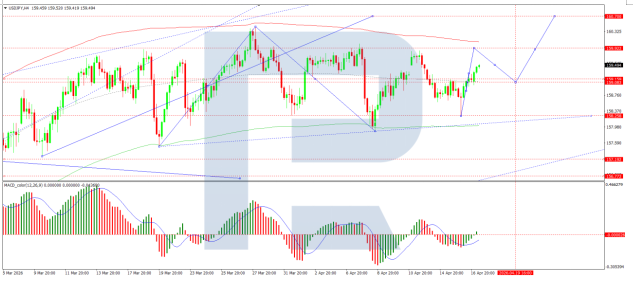
On the H4 chart, USD/JPY has formed a correction wave following the previous decline. A continuation of the growth wave to the 155.00 level is possible today. After this rise, a rebound from the resistance level is expected, with the first target for a further decline at 153.00, followed by 152.00. This scenario is confirmed by the MACD indicator, as the histogram is below zero and rising, with the signal line likely to cross the histogram and turn upwards soon.

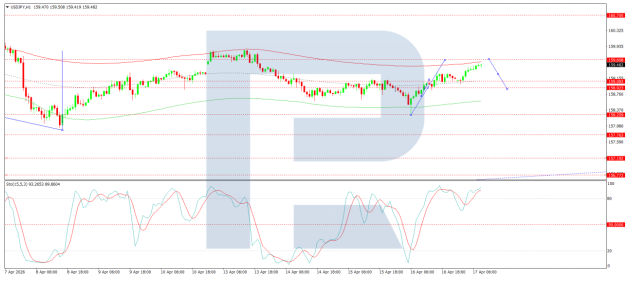
On the H1 chart, USD/JPY is testing the 153.80 mark and forming a growth wave. If the price tests the 155.00 level and rebounds, further declines could be expected, with the first support at 153.00 USD. The Stochastic oscillator supports this, as its signal lines continue to decline towards the 50.0 level. A break of this level would signal a continuation of the downward trend.

Conclusion

USD/JPY has paused its rapid ascent amid speculation of potential currency intervention. Despite a weaker US dollar and geopolitical risks, the yen’s recent strength is being tested. Technically, while the immediate outlook points to a possible short-term rise to 155.00, a rebound and subsequent decline towards 153.00 could be on the horizon, depending on how market sentiment evolves.


Disclaimer

Any forecasts contained herein are based on the author’s particular opinion. This analysis may not be treated as trading advice. RoboForex bears no responsibility for trading results based on trading recommendations and reviews contained herein.

Silver Surges Past $108 for the First Time. Natural Gas Hits $6/MMBtu

By JustMarkets

On Friday, US stock markets closed mixed. The Dow Jones (US30) declined by 0.58% (-0.74% for the week), while the S&P 500 (US500) edged up 0.03% (-0.65% for the week). The tech-heavy Nasdaq (US100) gained 0.34% (-0.41% for the week). Energy companies led the day’s gains, and the technology segment was bolstered by Nvidia (+1.5%) and AMD (+2.3%) following signals from China regarding potential orders for H200 AI chips. Conversely, a sharp 17% drop in Intel shares, triggered by a weak forecast and news of operational challenges, weighed on the semiconductor sector and pulled down Broadcom, limiting overall gains. Macroeconomic data provided a conflicting picture: the University of Michigan consumer sentiment index was revised upward to a multi-month high, yet preliminary S&P Global PMIs pointed to a moderate slowdown in both services and manufacturing.

Geopolitical tensions escalated as US President Donald Trump threatened Canada with 100% tariffs on all exports to the US if Ottawa moves forward with a trade agreement with China, labeling such a move a “strategic error.” This follows Canada’s recent steps toward Beijing, including agreements to increase Chinese EV imports. Prime Minister Mark Carney stated he expects China to lower tariffs on Canadian canola following his recent meeting with Xi Jinping, the first visit by a Canadian leader to Beijing in eight years.

The Mexican peso (MXN) strengthened past the 17.4 mark against the dollar, returning to its June 2024 highs after a brief correction. Previously, the currency faced pressure from a global flight to safety amid US-Europe trade frictions sparked by Trump’s statements on Greenland. The peso’s recovery highlights its fundamental resilience, supported by the Bank of Mexico’s hawkish stance. The suspension of the easing cycle, with the key rate held at 7%, provides attractive real yields and continues to draw foreign investor interest into local debt instruments.

European equity markets mostly trended lower on Friday. Germany’s DAX (DE40) rose by 0.18% (-0.16% for the week), while France’s CAC 40 (FR40) fell 0.07% (+0.22% for the week). Spain’s IBEX 35 (ES35) dropped 0.67% (+0.23% for the week), and the UK’s FTSE 100 (UK100) slipped 0.07% (-0.90% for the week). In a sudden pivot at the Davos conference, President Trump temporarily walked back threats of tariffs against European countries that opposed the US acquisition of Greenland, citing a “framework deal” with NATO. While this eased immediate political tension, uncertainty regarding Washington’s long-term strategy remains. Macro data showed steady private-sector expansion in the Eurozone, as reflected in PMIs, reinforcing expectations that the ECB will maintain its current policy.

Silver (XAG) made history by breaking the $ 108-per-ounce threshold, driven by a weakening dollar, geopolitical strife, and economic uncertainty. The US dollar came under pressure as markets worried Europe might leverage its vast US assets in response to the Greenland crisis. Beyond macro factors, silver’s rally was fueled by a massive short squeeze, robust retail demand, and China’s tightening of export controls on industrial metals.

On Monday, US Natural Gas prices (XNG) surged by over 17%, exceeding $6/MMBtu for the first time since late 2022, as a historic winter storm gripped the nation. Prices have nearly doubled in the last two weeks, the largest gain on record, due to forecasts for sustained arctic temperatures. Inventory reports showed a larger-than-expected withdrawal of 120 billion cubic feet, and analysts anticipate further drawdowns as heating demand intensifies.
Asian markets showed mixed performance last week. Japan’s Nikkei 225 (JP225) rose by 0.86%, while the FTSE China A50 (CHA50) fell by 2.99%. Hong Kong’s Hang Seng (HK50) gained 0.41%, and Australia’s ASX 200 (AU200) closed the week down 0.27%.

The Singapore dollar (SGD) has strengthened to approximately 1.27 against the US dollar, marking its highest level since October 2014. This appreciation is fueled by capital inflows into safe-haven assets and market expectations that the Monetary Authority of Singapore (MAS) will maintain its current policy stance. The currency remains in steady demand due to its “safe haven” status, underpinned by Singapore’s AAA-rated bond market, high stock market dividend yields, and predictable economic policy amid heightened global uncertainty.

S&P 500 (US500) 6,915.61 +2.26 (+0.03%)

Dow Jones (US30) 49,098.71 −285.30 (−0.58%)

DAX (DE40) 24,900.71 +44.24 (+0.18%)

FTSE 100 (UK100) 10,143.44 −6.61 (−0.07%)

USD Index 97.46 -0.90% (-0.92%)

News feed for: 2026.01.26

  • German Ifo Business Climate (m/m) at 11:00 (GMT+2); – EUR (MED)
  • US Durable Goods Orders (m/m) at 15:30 (GMT+2). – USD (MED)

By JustMarkets


This article reflects a personal opinion and should not be interpreted as an investment advice, and/or offer, and/or a persistent request for carrying out financial transactions, and/or a guarantee, and/or a forecast of future events.

Gold Surges Above 5,000 USD: Safe-Haven Demand Explodes

By RoboForex Analytical Department

Gold has broken through the historic 5,000 USD per troy ounce mark, rising above 5,075 USD for the first time. The metal continues its record rally as investors aggressively shift into defensive assets amid escalating trade and geopolitical uncertainty.

The main catalyst was renewed rhetoric from US President Donald Trump. Over the weekend, he stated that Washington would seek sovereignty over parts of Greenland where US military bases are located. These comments reignited market anxiety, coming just days after a temporary easing of tariff threats against several European countries.

Further pressure on global markets followed Trump’s warning to Canada. He stated that all Canadian exports to the US could face 100% tariffs if Ottawa finalises a trade agreement with China. The statement came a week after Canadian Prime Minister Mark Carney announced a preliminary deal with Beijing, which involves a mutual reduction in tariffs.

Geopolitical risks also remain elevated. Ukraine and Russia held another round of US-mediated talks without reaching an agreement, although both sides signalled readiness to continue negotiations next weekend.

As a result, rising geopolitical tensions and aggressive trade threats have sharply increased capital inflows into gold, further strengthening its role as the primary global safe-haven asset.

Technical Analysis

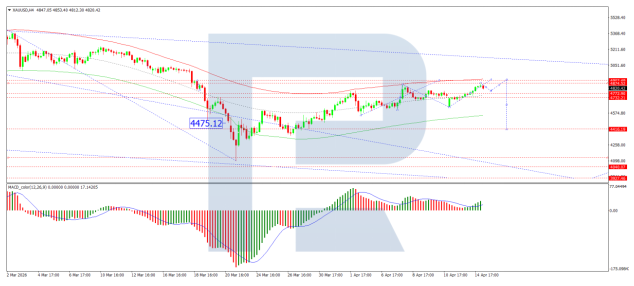
On the H4 XAUUSD chart, gold has confidently broken above 5,000 and is now developing a strong bullish wave towards the 5,215 level. After reaching this area, a corrective pullback towards 5,000 is possible. The MACD confirms strong upside momentum, with the signal line at highs and pointing firmly upwards.

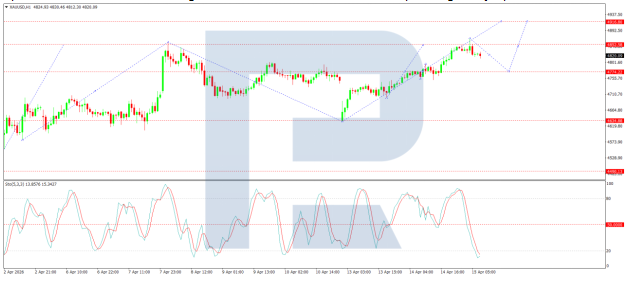
On the H1 chart, the price has broken and consolidated above the 5,050 level, which is acting as support. The trend is expected to extend towards 5,200. The Stochastic oscillator supports this bullish scenario, with the signal line above 50 and continuing to rise.

Conclusion

Gold has entered a new historical phase above 5,000 USD, driven by escalating geopolitical risks and aggressive US trade rhetoric. As long as uncertainty around global politics and trade persists, gold is likely to remain strongly supported, with further upside potential despite the risk of short-term technical corrections.


Disclaimer

Any forecasts contained herein are based on the author’s particular opinion. This analysis may not be treated as trading advice. RoboForex bears no responsibility for trading results based on trading recommendations and reviews contained herein.

COT Metals Charts: Weekly Speculator Bets led by Steel

By InvestMacro

Metals Open Interest COT Chart
Here are the latest charts and statistics for the Commitment of Traders (COT) data published by the Commodities Futures Trading Commission (CFTC).

The latest COT data is updated through Tuesday January 20th and shows a quick view of how large traders (for-profit speculators and commercial entities) were positioned in the futures markets.

Weekly Speculator Changes led by Steel

Metals Net Positions COT Chart
The COT metals markets speculator bets were overall lower this week as just one out of the six metals markets we cover had higher positioning while the other five markets had lower speculator contracts.

Leading the gains for the metals markets was Steel with an increase by 649 contracts on the week.

The markets with declines in speculator bets for the week were Silver (-6,846 contracts), Gold (-6,468 contracts), Platinum (-2,470 contracts), Copper (-866 contracts) and with Palladium (-337 contracts) also registering lower bets on the week.

5-Day Metals Market Price Performance led by Platinum

Platinum leads the past five days metals price performance as Platinum shot up by over 20%, followed by Palladium which jumped by 13.10% over that same period. Silver continued its hot streak with 11.51% gains over the past five days, followed by Gold with a rise of 8.19%. Steel was also up by 5.3% in that timeframe. Copper was the only market on the downside this week, with a minor dip by -0.68%.

The metals markets have been raging higher over the past 30 days, with Silver up by over 68%, followed by Platinum, which has seen a 67.39% gain in 30 days. Palladium is up by 37% in the past 30 days, while gold has run 18% higher and Copper is up by approximately 12%. Steel rounds out the past 30 days leaders with an approximately 10% gain.

The leaders over the past 90 days have been Silver, with a 139% gain, followed by Platinum, which is up by over 103%. Palladium has seen a 75% gain in the past 90 days, followed by Gold with a 35% rise, Copper with a 25% rise, and Steel is up over 40% in that same time. Truly an unprecedented time for metals strength.


Metals Data:

Metals Table COT Chart
Legend: Weekly Speculators Change | Speculators Current Net Position | Speculators Strength Score compared to last 3-Years (0-100 range)


Strength Scores led by Steel & Palladium

Metals Strength Scores COT Chart
COT Strength Scores (a normalized measure of Speculator positions over a 3-Year range, from 0 to 100 where above 80 is Extreme-Bullish and below 20 is Extreme-Bearish) showed that Steel (100 percent) and Palladium (98 percent) lead the metals markets this week. Copper (82.2 percent) comes in as the next highest in the weekly strength scores with Gold (71.1 percent) following.

On the lower side, Silver (44 percent) and Platinum (49 percent) come in at the lowest strength levels of the metals currently although both markets are right around the midpoint for the past 3-years (50 percent).

Strength Statistics:
Gold (71.1 percent) vs Gold previous week (73.7 percent)
Silver (44.0 percent) vs Silver previous week (53.2 percent)
Copper (82.2 percent) vs Copper previous week (83.0 percent)
Platinum (48.8 percent) vs Platinum previous week (55.0 percent)
Palladium (97.8 percent) vs Palladium previous week (100.0 percent)
Steel (100.0 percent) vs Steel previous week (96.5 percent)


Steel & Gold top the 6-Week Strength Trends

Metals Trends COT Chart
COT Strength Score Trends (or move index, calculates the 6-week changes in strength scores) showed that Steel (20 percent) and Gold (9 percent) lead the past six weeks trends for metals. Palladium (6 percent) is the next highest positive mover in the latest trends data.

Silver (-26 percent), Platinum (-12 percent) and Copper (-9 percent) lead the downside trend scores currently.

Move Statistics:
Gold (8.6 percent) vs Gold previous week (13.8 percent)
Silver (-26.0 percent) vs Silver previous week (-8.6 percent)
Copper (-9.2 percent) vs Copper previous week (0.0 percent)
Platinum (-11.9 percent) vs Platinum previous week (4.0 percent)
Palladium (6.0 percent) vs Palladium previous week (9.4 percent)
Steel (19.6 percent) vs Steel previous week (27.1 percent)


Individual Markets:

Gold Comex Futures:

Gold Futures COT ChartThe Gold Comex Futures large speculator standing this week was a net position of 244,770 contracts in the data reported through Tuesday. This was a weekly lowering of -6,468 contracts from the previous week which had a total of 251,238 net contracts.

This week’s current strength score (the trader positioning range over the past three years, measured from 0 to 100) shows the speculators are currently Bullish with a score of 71.1 percent. The commercials are Bearish with a score of 20.1 percent and the small traders (not shown in chart) are Bullish-Extreme with a score of 97.2 percent.

Price Trend-Following Model: Strong Uptrend

Our weekly trend-following model classifies the current market price position as: Strong Uptrend.

Gold Futures StatisticsSPECULATORSCOMMERCIALSSMALL TRADERS
– Percent of Open Interest Longs:56.016.311.8
– Percent of Open Interest Shorts:9.771.13.3
– Net Position:244,770-289,68944,919
– Gross Longs:295,77285,86962,136
– Gross Shorts:51,002375,55817,217
– Long to Short Ratio:5.8 to 10.2 to 13.6 to 1
NET POSITION TREND:
– Strength Index Score (3 Year Range Pct):71.120.197.2
– Strength Index Reading (3 Year Range):BullishBearishBullish-Extreme
NET POSITION MOVEMENT INDEX:
– 6-Week Change in Strength Index:8.6-10.918.2


Silver Comex Futures:

Silver Futures COT ChartThe Silver Comex Futures large speculator standing this week was a net position of 25,214 contracts in the data reported through Tuesday. This was a weekly decline of -6,846 contracts from the previous week which had a total of 32,060 net contracts.

This week’s current strength score (the trader positioning range over the past three years, measured from 0 to 100) shows the speculators are currently Bearish with a score of 44.0 percent. The commercials are Bearish with a score of 49.2 percent and the small traders (not shown in chart) are Bullish with a score of 69.6 percent.

Price Trend-Following Model: Strong Uptrend

Our weekly trend-following model classifies the current market price position as: Strong Uptrend.

Silver Futures StatisticsSPECULATORSCOMMERCIALSSMALL TRADERS
– Percent of Open Interest Longs:28.328.823.4
– Percent of Open Interest Shorts:11.759.39.5
– Net Position:25,214-46,38921,175
– Gross Longs:42,96543,72335,608
– Gross Shorts:17,75190,11214,433
– Long to Short Ratio:2.4 to 10.5 to 12.5 to 1
NET POSITION TREND:
– Strength Index Score (3 Year Range Pct):44.049.269.6
– Strength Index Reading (3 Year Range):BearishBearishBullish
NET POSITION MOVEMENT INDEX:
– 6-Week Change in Strength Index:-26.018.027.8


Copper Grade #1 Futures:

Copper Futures COT ChartThe Copper Grade #1 Futures large speculator standing this week was a net position of 52,575 contracts in the data reported through Tuesday. This was a weekly decline of -866 contracts from the previous week which had a total of 53,441 net contracts.

This week’s current strength score (the trader positioning range over the past three years, measured from 0 to 100) shows the speculators are currently Bullish-Extreme with a score of 82.2 percent. The commercials are Bearish-Extreme with a score of 10.8 percent and the small traders (not shown in chart) are Bullish-Extreme with a score of 100.0 percent.

Price Trend-Following Model: Strong Uptrend

Our weekly trend-following model classifies the current market price position as: Strong Uptrend.

Copper Futures StatisticsSPECULATORSCOMMERCIALSSMALL TRADERS
– Percent of Open Interest Longs:36.530.98.9
– Percent of Open Interest Shorts:17.655.83.0
– Net Position:52,575-69,18616,611
– Gross Longs:101,63186,07724,890
– Gross Shorts:49,056155,2638,279
– Long to Short Ratio:2.1 to 10.6 to 13.0 to 1
NET POSITION TREND:
– Strength Index Score (3 Year Range Pct):82.210.8100.0
– Strength Index Reading (3 Year Range):Bullish-ExtremeBearish-ExtremeBullish-Extreme
NET POSITION MOVEMENT INDEX:
– 6-Week Change in Strength Index:-9.26.015.0


Platinum Futures:

Platinum Futures COT ChartThe Platinum Futures large speculator standing this week was a net position of 15,124 contracts in the data reported through Tuesday. This was a weekly fall of -2,470 contracts from the previous week which had a total of 17,594 net contracts.

This week’s current strength score (the trader positioning range over the past three years, measured from 0 to 100) shows the speculators are currently Bearish with a score of 48.8 percent. The commercials are Bullish with a score of 50.3 percent and the small traders (not shown in chart) are Bullish with a score of 75.3 percent.

Price Trend-Following Model: Strong Uptrend

Our weekly trend-following model classifies the current market price position as: Strong Uptrend.

Platinum Futures StatisticsSPECULATORSCOMMERCIALSSMALL TRADERS
– Percent of Open Interest Longs:50.325.113.3
– Percent of Open Interest Shorts:31.152.74.9
– Net Position:15,124-21,7826,658
– Gross Longs:39,70919,86710,541
– Gross Shorts:24,58541,6493,883
– Long to Short Ratio:1.6 to 10.5 to 12.7 to 1
NET POSITION TREND:
– Strength Index Score (3 Year Range Pct):48.850.375.3
– Strength Index Reading (3 Year Range):BearishBullishBullish
NET POSITION MOVEMENT INDEX:
– 6-Week Change in Strength Index:-11.99.014.2


Palladium Futures:

Palladium Futures COT ChartThe Palladium Futures large speculator standing this week was a net position of 888 contracts in the data reported through Tuesday. This was a weekly decline of -337 contracts from the previous week which had a total of 1,225 net contracts.

This week’s current strength score (the trader positioning range over the past three years, measured from 0 to 100) shows the speculators are currently Bullish-Extreme with a score of 97.8 percent. The commercials are Bearish-Extreme with a score of 0.8 percent and the small traders (not shown in chart) are Bullish-Extreme with a score of 84.7 percent.

Price Trend-Following Model: Strong Uptrend

Our weekly trend-following model classifies the current market price position as: Strong Uptrend.

Palladium Futures StatisticsSPECULATORSCOMMERCIALSSMALL TRADERS
– Percent of Open Interest Longs:50.328.517.2
– Percent of Open Interest Shorts:45.742.97.4
– Net Position:888-2,7621,874
– Gross Longs:9,6445,4573,301
– Gross Shorts:8,7568,2191,427
– Long to Short Ratio:1.1 to 10.7 to 12.3 to 1
NET POSITION TREND:
– Strength Index Score (3 Year Range Pct):97.80.884.7
– Strength Index Reading (3 Year Range):Bullish-ExtremeBearish-ExtremeBullish-Extreme
NET POSITION MOVEMENT INDEX:
– 6-Week Change in Strength Index:6.0-6.44.7


Steel Futures Futures:

Steel Futures COT ChartThe Steel Futures large speculator standing this week was a net position of 11,671 contracts in the data reported through Tuesday. This was a weekly increase of 649 contracts from the previous week which had a total of 11,022 net contracts.

This week’s current strength score (the trader positioning range over the past three years, measured from 0 to 100) shows the speculators are currently Bullish-Extreme with a score of 100.0 percent. The commercials are Bearish-Extreme with a score of 0.0 percent and the small traders (not shown in chart) are Bullish-Extreme with a score of 89.7 percent.

Price Trend-Following Model: Strong Uptrend

Our weekly trend-following model classifies the current market price position as: Strong Uptrend.

Steel Futures StatisticsSPECULATORSCOMMERCIALSSMALL TRADERS
– Percent of Open Interest Longs:37.958.11.6
– Percent of Open Interest Shorts:6.890.40.5
– Net Position:11,671-12,098427
– Gross Longs:14,23521,805611
– Gross Shorts:2,56433,903184
– Long to Short Ratio:5.6 to 10.6 to 13.3 to 1
NET POSITION TREND:
– Strength Index Score (3 Year Range Pct):100.00.089.7
– Strength Index Reading (3 Year Range):Bullish-ExtremeBearish-ExtremeBullish-Extreme
NET POSITION MOVEMENT INDEX:
– 6-Week Change in Strength Index:19.6-20.533.0


Article By InvestMacroReceive our weekly COT Newsletter

*COT Report: The COT data, released weekly to the public each Friday, is updated through the most recent Tuesday (data is 3 days old) and shows a quick view of how large speculators or non-commercials (for-profit traders) were positioned in the futures markets.

The CFTC categorizes trader positions according to commercial hedgers (traders who use futures contracts for hedging as part of the business), non-commercials (large traders who speculate to realize trading profits) and nonreportable traders (usually small traders/speculators) as well as their open interest (contracts open in the market at time of reporting). See CFTC criteria here.