Archive for Financial News – Page 138

COT Metals Charts: Speculator bets led higher by Copper & Platinum

By InvestMacro

Here are the latest charts and statistics for the Commitment of Traders (COT) data published by the Commodities Futures Trading Commission (CFTC).

The latest COT data is updated through Tuesday April 9th and shows a quick view of how large traders (for-profit speculators and commercial entities) were positioned in the futures markets.

Weekly Speculator Changes led by Copper & Platinum

The COT metals markets speculator bets were higher this week as four out of the six metals markets we cover had higher positioning while the other two markets had lower speculator contracts.

Leading the gains for the metals was Copper (22,398 contracts) with Platinum (10,418 contracts), Palladium (1,436 contracts) and Silver (65 contracts) also showing positive weeks.

The markets with declines in speculator bets for the week was Gold (-4,831 contracts) with Steel (-557 contracts) also seeing lower bets on the week.


Net Speculators Leaderboard

Legend: Weekly Speculators Change | Speculators Current Net Position | Speculators Strength Score compared to last 3-Years (0-100 range)


Strength Scores led by Silver, Steel & Copper

COT Strength Scores (a normalized measure of Speculator positions over a 3-Year range, from 0 to 100 where above 80 is Extreme-Bullish and below 20 is Extreme-Bearish) showed that Silver (100 percent), Steel (91 percent) and Copper (88 percent) lead the metals markets this week. Gold (68 percent) comes in as the next highest in the weekly strength scores.

On the downside, Palladium (29 percent) comes in at the lowest strength level currently.

Strength Statistics:
Gold (67.6 percent) vs Gold previous week (69.8 percent)
Silver (100.0 percent) vs Silver previous week (99.9 percent)
Copper (87.6 percent) vs Copper previous week (62.6 percent)
Platinum (68.8 percent) vs Platinum previous week (41.0 percent)
Palladium (28.6 percent) vs Palladium previous week (19.9 percent)
Steel (91.5 percent) vs Palladium previous week (93.6 percent)


Silver & Copper top the 6-Week Strength Trends

COT Strength Score Trends (or move index, calculates the 6-week changes in strength scores) showed that Silver (59 percent) and Copper (50 percent) lead the past six weeks trends for metals. Platinum (41 percent), Gold (27 percent) and Palladium (21 percent) are the next highest positive movers in the latest trends data while Steel (6 percent) also has a positive trend.

Move Statistics:
Gold (27.3 percent) vs Gold previous week (30.1 percent)
Silver (58.7 percent) vs Silver previous week (46.6 percent)
Copper (49.5 percent) vs Copper previous week (40.5 percent)
Platinum (41.1 percent) vs Platinum previous week (0.3 percent)
Palladium (21.4 percent) vs Palladium previous week (13.6 percent)
Steel (6.3 percent) vs Steel previous week (7.6 percent)


Individual Markets:

Gold Comex Futures:

Gold Futures COT ChartThe Gold Comex Futures large speculator standing this week equaled a net position of 202,419 contracts in the data reported through Tuesday. This was a weekly decline of -4,831 contracts from the previous week which had a total of 207,250 net contracts.

This week’s current strength score (the trader positioning range over the past three years, measured from 0 to 100) shows the speculators are currently Bullish with a score of 67.6 percent. The commercials are Bearish with a score of 33.6 percent and the small traders (not shown in chart) are Bearish with a score of 45.3 percent.

Price Trend-Following Model: Strong Uptrend

Our weekly trend-following model classifies the current market price position as: Strong Uptrend. The current action for the model is considered to be: Hold – Maintain Long Position.

Gold Futures StatisticsSPECULATORSCOMMERCIALSSMALL TRADERS
– Percent of Open Interest Longs:55.425.410.2
– Percent of Open Interest Shorts:15.369.85.8
– Net Position:202,419-224,58222,163
– Gross Longs:279,799128,09451,559
– Gross Shorts:77,380352,67629,396
– Long to Short Ratio:3.6 to 10.4 to 11.8 to 1
NET POSITION TREND:
– Strength Index Score (3 Year Range Pct):67.633.645.3
– Strength Index Reading (3 Year Range):BullishBearishBearish
NET POSITION MOVEMENT INDEX:
– 6-Week Change in Strength Index:27.3-27.117.5


Silver Comex Futures:

Silver Futures COT ChartThe Silver Comex Futures large speculator standing this week equaled a net position of 53,212 contracts in the data reported through Tuesday. This was a weekly advance of 65 contracts from the previous week which had a total of 53,147 net contracts.

This week’s current strength score (the trader positioning range over the past three years, measured from 0 to 100) shows the speculators are currently Bullish-Extreme with a score of 100.0 percent. The commercials are Bearish-Extreme with a score of 3.9 percent and the small traders (not shown in chart) are Bullish with a score of 67.0 percent.

Price Trend-Following Model: Strong Uptrend

Our weekly trend-following model classifies the current market price position as: Strong Uptrend. The current action for the model is considered to be: Hold – Maintain Long Position.

Silver Futures StatisticsSPECULATORSCOMMERCIALSSMALL TRADERS
– Percent of Open Interest Longs:48.625.418.5
– Percent of Open Interest Shorts:18.166.38.2
– Net Position:53,212-71,27518,063
– Gross Longs:84,82644,36232,322
– Gross Shorts:31,614115,63714,259
– Long to Short Ratio:2.7 to 10.4 to 12.3 to 1
NET POSITION TREND:
– Strength Index Score (3 Year Range Pct):100.03.967.0
– Strength Index Reading (3 Year Range):Bullish-ExtremeBearish-ExtremeBullish
NET POSITION MOVEMENT INDEX:
– 6-Week Change in Strength Index:58.7-48.90.6


Copper Grade #1 Futures:

Copper Futures COT ChartThe Copper Grade #1 Futures large speculator standing this week equaled a net position of 42,694 contracts in the data reported through Tuesday. This was a weekly rise of 22,398 contracts from the previous week which had a total of 20,296 net contracts.

This week’s current strength score (the trader positioning range over the past three years, measured from 0 to 100) shows the speculators are currently Bullish-Extreme with a score of 87.6 percent. The commercials are Bearish-Extreme with a score of 14.5 percent and the small traders (not shown in chart) are Bullish with a score of 61.5 percent.

Price Trend-Following Model: Strong Uptrend

Our weekly trend-following model classifies the current market price position as: Strong Uptrend. The current action for the model is considered to be: Hold – Maintain Long Position.

Copper Futures StatisticsSPECULATORSCOMMERCIALSSMALL TRADERS
– Percent of Open Interest Longs:48.025.07.2
– Percent of Open Interest Shorts:33.841.44.9
– Net Position:42,694-49,5066,812
– Gross Longs:144,57275,17721,599
– Gross Shorts:101,878124,68314,787
– Long to Short Ratio:1.4 to 10.6 to 11.5 to 1
NET POSITION TREND:
– Strength Index Score (3 Year Range Pct):87.614.561.5
– Strength Index Reading (3 Year Range):Bullish-ExtremeBearish-ExtremeBullish
NET POSITION MOVEMENT INDEX:
– 6-Week Change in Strength Index:49.5-50.834.6


Platinum Futures:

Platinum Futures COT ChartThe Platinum Futures large speculator standing this week equaled a net position of 19,007 contracts in the data reported through Tuesday. This was a weekly increase of 10,418 contracts from the previous week which had a total of 8,589 net contracts.

This week’s current strength score (the trader positioning range over the past three years, measured from 0 to 100) shows the speculators are currently Bullish with a score of 68.8 percent. The commercials are Bearish with a score of 32.9 percent and the small traders (not shown in chart) are Bearish with a score of 39.2 percent.

Price Trend-Following Model: Weak Downtrend

Our weekly trend-following model classifies the current market price position as: Weak Downtrend. The current action for the model is considered to be: Hold – Maintain Short Position.

Platinum Futures StatisticsSPECULATORSCOMMERCIALSSMALL TRADERS
– Percent of Open Interest Longs:63.018.310.9
– Percent of Open Interest Shorts:39.748.24.4
– Net Position:19,007-24,3165,309
– Gross Longs:51,33014,9128,890
– Gross Shorts:32,32339,2283,581
– Long to Short Ratio:1.6 to 10.4 to 12.5 to 1
NET POSITION TREND:
– Strength Index Score (3 Year Range Pct):68.832.939.2
– Strength Index Reading (3 Year Range):BullishBearishBearish
NET POSITION MOVEMENT INDEX:
– 6-Week Change in Strength Index:41.1-36.9-3.9


Palladium Futures:

Palladium Futures COT ChartThe Palladium Futures large speculator standing this week equaled a net position of -8,766 contracts in the data reported through Tuesday. This was a weekly increase of 1,436 contracts from the previous week which had a total of -10,202 net contracts.

This week’s current strength score (the trader positioning range over the past three years, measured from 0 to 100) shows the speculators are currently Bearish with a score of 28.6 percent. The commercials are Bullish with a score of 76.0 percent and the small traders (not shown in chart) are Bearish with a score of 28.3 percent.

Price Trend-Following Model: Weak Downtrend

Our weekly trend-following model classifies the current market price position as: Weak Downtrend. The current action for the model is considered to be: Hold – Maintain Short Position.

Palladium Futures StatisticsSPECULATORSCOMMERCIALSSMALL TRADERS
– Percent of Open Interest Longs:28.055.97.4
– Percent of Open Interest Shorts:70.712.28.5
– Net Position:-8,7668,989-223
– Gross Longs:5,75611,4861,529
– Gross Shorts:14,5222,4971,752
– Long to Short Ratio:0.4 to 14.6 to 10.9 to 1
NET POSITION TREND:
– Strength Index Score (3 Year Range Pct):28.676.028.3
– Strength Index Reading (3 Year Range):BearishBullishBearish
NET POSITION MOVEMENT INDEX:
– 6-Week Change in Strength Index:21.4-19.4-15.9


Steel Futures Futures:

Steel Futures COT ChartThe Steel Futures large speculator standing this week equaled a net position of -1,271 contracts in the data reported through Tuesday. This was a weekly decline of -557 contracts from the previous week which had a total of -714 net contracts.

This week’s current strength score (the trader positioning range over the past three years, measured from 0 to 100) shows the speculators are currently Bullish-Extreme with a score of 91.5 percent. The commercials are Bearish-Extreme with a score of 9.0 percent and the small traders (not shown in chart) are Bearish with a score of 46.9 percent.

Price Trend-Following Model: Downtrend

Our weekly trend-following model classifies the current market price position as: Downtrend. The current action for the model is considered to be: Hold – Maintain Short Position.

Steel Futures StatisticsSPECULATORSCOMMERCIALSSMALL TRADERS
– Percent of Open Interest Longs:14.179.41.5
– Percent of Open Interest Shorts:19.474.71.0
– Net Position:-1,2711,138133
– Gross Longs:3,38919,032370
– Gross Shorts:4,66017,894237
– Long to Short Ratio:0.7 to 11.1 to 11.6 to 1
NET POSITION TREND:
– Strength Index Score (3 Year Range Pct):91.59.046.9
– Strength Index Reading (3 Year Range):Bullish-ExtremeBearish-ExtremeBearish
NET POSITION MOVEMENT INDEX:
– 6-Week Change in Strength Index:6.3-6.55.1


Article By InvestMacroReceive our weekly COT Newsletter

*COT Report: The COT data, released weekly to the public each Friday, is updated through the most recent Tuesday (data is 3 days old) and shows a quick view of how large speculators or non-commercials (for-profit traders) were positioned in the futures markets.

The CFTC categorizes trader positions according to commercial hedgers (traders who use futures contracts for hedging as part of the business), non-commercials (large traders who speculate to realize trading profits) and nonreportable traders (usually small traders/speculators) as well as their open interest (contracts open in the market at time of reporting). See CFTC criteria here.

COT Bonds Charts: Speculator Bets led by 10-Year & 5-Year Bonds

By InvestMacro

Here are the latest charts and statistics for the Commitment of Traders (COT) reports data published by the Commodities Futures Trading Commission (CFTC).

The latest COT data is updated through Tuesday April 9th and shows a quick view of how large traders (for-profit speculators and commercial hedgers) were positioned in the futures markets.

Weekly Speculator Changes led by 10-Year Bonds & 5-Year Bonds

The COT bond market speculator bets were mixed this week as four out of the eight bond markets we cover had higher positioning while the other four markets had lower speculator contracts.

Leading the gains for the bond markets was the 10-Year Bonds (63,072 contracts) with the 5-Year Bonds (44,881 contracts), Fed Funds (42,519 contracts), and the Ultra Treasury Bonds (17,598 contracts) also seeing positive weeks.

The bond markets with declines in speculator bets for the week were the SOFR 3-Months (-145,148 contracts), the US Treasury Bonds (-19,500 contracts), the Ultra 10-Year Bonds (-16,429 contracts) and the 2-Year Bonds (-11,716 contracts) also recording lower bets on the week.


Net Speculators Leaderboard

Legend: Weekly Speculators Change | Speculators Current Net Position | Speculators Strength Score compared to last 3-Years (0-100 range)


Strength Scores led by SOFR 3-Months & Ultra Treasury Bonds

COT Strength Scores (a normalized measure of Speculator positions over a 3-Year range, from 0 to 100 where above 80 is Extreme-Bullish and below 20 is Extreme-Bearish) showed that the SOFR 3-Months (71 percent) and the Ultra Treasury Bonds (67 percent) lead the bond markets this week. The Fed Funds (62 percent) comes in as the next highest in the weekly strength scores.

On the downside, the 5-Year Bonds (15 percent) comes in at the lowest strength level currently and is in Extreme-Bearish territory (below 20 percent). The next lowest strength scores were the Ultra 10-Year Bonds (24 percent), the 2-Year Bonds (34 percent) and the 10-Year Bonds (36 percent).

Strength Statistics:
Fed Funds (62.0 percent) vs Fed Funds previous week (52.9 percent)
2-Year Bond (33.9 percent) vs 2-Year Bond previous week (34.6 percent)
5-Year Bond (14.7 percent) vs 5-Year Bond previous week (11.8 percent)
10-Year Bond (35.7 percent) vs 10-Year Bond previous week (29.8 percent)
Ultra 10-Year Bond (24.1 percent) vs Ultra 10-Year Bond previous week (27.4 percent)
US Treasury Bond (57.3 percent) vs US Treasury Bond previous week (64.1 percent)
Ultra US Treasury Bond (66.9 percent) vs Ultra US Treasury Bond previous week (59.6 percent)
SOFR 3-Months (71.0 percent) vs SOFR 3-Months previous week (78.5 percent)


Fed Funds & 10-Year Bonds top the 6-Week Strength Trends

COT Strength Score Trends (or move index, calculates the 6-week changes in strength scores) showed that the Fed Funds (41 percent) and the 10-Year Bonds (15 percent) lead the past six weeks trends for bonds. The Ultra Treasury Bonds (10 percent) and the are the next highest positive movers in the latest trends data.

The US Treasury Bonds (-21 percent) and the SOFR 3-Months (-9 percent) leads the downside trend scores currently.

Strength Trend Statistics:
Fed Funds (40.7 percent) vs Fed Funds previous week (19.1 percent)
2-Year Bond (-0.2 percent) vs 2-Year Bond previous week (11.2 percent)
5-Year Bond (-2.8 percent) vs 5-Year Bond previous week (-3.3 percent)
10-Year Bond (14.8 percent) vs 10-Year Bond previous week (14.9 percent)
Ultra 10-Year Bond (6.2 percent) vs Ultra 10-Year Bond previous week (9.8 percent)
US Treasury Bond (-21.3 percent) vs US Treasury Bond previous week (13.6 percent)
Ultra US Treasury Bond (10.0 percent) vs Ultra US Treasury Bond previous week (3.9 percent)
SOFR 3-Months (-8.6 percent) vs SOFR 3-Months previous week (-0.8 percent)


Secured Overnight Financing Rate (3-Month) Futures:

SOFR 3-Months Bonds Futures COT ChartThe Secured Overnight Financing Rate (3-Month) large speculator standing this week totaled a net position of 207,937 contracts in the data reported through Tuesday. This was a weekly lowering of -145,148 contracts from the previous week which had a total of 353,085 net contracts.

This week’s current strength score (the trader positioning range over the past three years, measured from 0 to 100) shows the speculators are currently Bullish with a score of 71.0 percent. The commercials are Bearish with a score of 29.0 percent and the small traders (not shown in chart) are Bullish-Extreme with a score of 86.5 percent.

Price Trend-Following Model: Weak Uptrend

Our weekly trend-following model classifies the current market price position as: Weak Uptrend. The current action for the model is considered to be: Hold – Maintain Long Position.

SOFR 3-Months StatisticsSPECULATORSCOMMERCIALSSMALL TRADERS
– Percent of Open Interest Longs:16.955.70.3
– Percent of Open Interest Shorts:14.957.70.3
– Net Position:207,937-205,509-2,428
– Gross Longs:1,737,9955,712,43831,071
– Gross Shorts:1,530,0585,917,94733,499
– Long to Short Ratio:1.1 to 11.0 to 10.9 to 1
NET POSITION TREND:
– Strength Index Score (3 Year Range Pct):71.029.086.5
– Strength Index Reading (3 Year Range):BullishBearishBullish-Extreme
NET POSITION MOVEMENT INDEX:
– 6-Week Change in Strength Index:-8.68.42.5


30-Day Federal Funds Futures:

Federal Funds 30-Day Bonds Futures COT ChartThe 30-Day Federal Funds large speculator standing this week totaled a net position of -30,696 contracts in the data reported through Tuesday. This was a weekly lift of 42,519 contracts from the previous week which had a total of -73,215 net contracts.

This week’s current strength score (the trader positioning range over the past three years, measured from 0 to 100) shows the speculators are currently Bullish with a score of 62.0 percent. The commercials are Bearish with a score of 38.2 percent and the small traders (not shown in chart) are Bullish with a score of 73.2 percent.

Price Trend-Following Model: Downtrend

Our weekly trend-following model classifies the current market price position as: Downtrend. The current action for the model is considered to be: Hold – Maintain Short Position.

30-Day Federal Funds StatisticsSPECULATORSCOMMERCIALSSMALL TRADERS
– Percent of Open Interest Longs:17.566.82.0
– Percent of Open Interest Shorts:19.164.72.4
– Net Position:-30,69639,787-9,091
– Gross Longs:330,4321,262,66737,050
– Gross Shorts:361,1281,222,88046,141
– Long to Short Ratio:0.9 to 11.0 to 10.8 to 1
NET POSITION TREND:
– Strength Index Score (3 Year Range Pct):62.038.273.2
– Strength Index Reading (3 Year Range):BullishBearishBullish
NET POSITION MOVEMENT INDEX:
– 6-Week Change in Strength Index:40.7-39.0-14.6


2-Year Treasury Note Futures:

2-Year Treasury Bonds Futures COT ChartThe 2-Year Treasury Note large speculator standing this week totaled a net position of -946,290 contracts in the data reported through Tuesday. This was a weekly decline of -11,716 contracts from the previous week which had a total of -934,574 net contracts.

This week’s current strength score (the trader positioning range over the past three years, measured from 0 to 100) shows the speculators are currently Bearish with a score of 33.9 percent. The commercials are Bullish with a score of 63.8 percent and the small traders (not shown in chart) are Bullish-Extreme with a score of 86.2 percent.

Price Trend-Following Model: Strong Downtrend

Our weekly trend-following model classifies the current market price position as: Strong Downtrend. The current action for the model is considered to be: New Sell – Short Position.

2-Year Treasury Note StatisticsSPECULATORSCOMMERCIALSSMALL TRADERS
– Percent of Open Interest Longs:12.579.26.6
– Percent of Open Interest Shorts:37.057.53.7
– Net Position:-946,290835,258111,032
– Gross Longs:480,8083,054,858255,152
– Gross Shorts:1,427,0982,219,600144,120
– Long to Short Ratio:0.3 to 11.4 to 11.8 to 1
NET POSITION TREND:
– Strength Index Score (3 Year Range Pct):33.963.886.2
– Strength Index Reading (3 Year Range):BearishBullishBullish-Extreme
NET POSITION MOVEMENT INDEX:
– 6-Week Change in Strength Index:-0.21.8-8.7


5-Year Treasury Note Futures:

5-Year Treasury Bonds Futures COT ChartThe 5-Year Treasury Note large speculator standing this week totaled a net position of -1,239,420 contracts in the data reported through Tuesday. This was a weekly boost of 44,881 contracts from the previous week which had a total of -1,284,301 net contracts.

This week’s current strength score (the trader positioning range over the past three years, measured from 0 to 100) shows the speculators are currently Bearish-Extreme with a score of 14.7 percent. The commercials are Bullish-Extreme with a score of 84.6 percent and the small traders (not shown in chart) are Bullish-Extreme with a score of 84.9 percent.

Price Trend-Following Model: Strong Downtrend

Our weekly trend-following model classifies the current market price position as: Strong Downtrend. The current action for the model is considered to be: Hold – Maintain Short Position.

5-Year Treasury Note StatisticsSPECULATORSCOMMERCIALSSMALL TRADERS
– Percent of Open Interest Longs:7.583.56.8
– Percent of Open Interest Shorts:27.964.85.1
– Net Position:-1,239,4201,135,137104,283
– Gross Longs:453,7365,069,821414,045
– Gross Shorts:1,693,1563,934,684309,762
– Long to Short Ratio:0.3 to 11.3 to 11.3 to 1
NET POSITION TREND:
– Strength Index Score (3 Year Range Pct):14.784.684.9
– Strength Index Reading (3 Year Range):Bearish-ExtremeBullish-ExtremeBullish-Extreme
NET POSITION MOVEMENT INDEX:
– 6-Week Change in Strength Index:-2.85.9-6.9


10-Year Treasury Note Futures:

10-Year Treasury Notes Bonds Futures COT ChartThe 10-Year Treasury Note large speculator standing this week totaled a net position of -506,885 contracts in the data reported through Tuesday. This was a weekly increase of 63,072 contracts from the previous week which had a total of -569,957 net contracts.

This week’s current strength score (the trader positioning range over the past three years, measured from 0 to 100) shows the speculators are currently Bearish with a score of 35.7 percent. The commercials are Bullish with a score of 58.8 percent and the small traders (not shown in chart) are Bullish with a score of 75.2 percent.

Price Trend-Following Model: Strong Downtrend

Our weekly trend-following model classifies the current market price position as: Strong Downtrend. The current action for the model is considered to be: Hold – Maintain Short Position.

10-Year Treasury Note StatisticsSPECULATORSCOMMERCIALSSMALL TRADERS
– Percent of Open Interest Longs:11.377.19.3
– Percent of Open Interest Shorts:23.065.79.2
– Net Position:-506,885499,3617,524
– Gross Longs:494,9103,362,732407,654
– Gross Shorts:1,001,7952,863,371400,130
– Long to Short Ratio:0.5 to 11.2 to 11.0 to 1
NET POSITION TREND:
– Strength Index Score (3 Year Range Pct):35.758.875.2
– Strength Index Reading (3 Year Range):BearishBullishBullish
NET POSITION MOVEMENT INDEX:
– 6-Week Change in Strength Index:14.8-14.9-9.1


Ultra 10-Year Notes Futures:

Ultra 10-Year Treasury Notes Bonds Futures COT ChartThe Ultra 10-Year Notes large speculator standing this week totaled a net position of -159,423 contracts in the data reported through Tuesday. This was a weekly lowering of -16,429 contracts from the previous week which had a total of -142,994 net contracts.

This week’s current strength score (the trader positioning range over the past three years, measured from 0 to 100) shows the speculators are currently Bearish with a score of 24.1 percent. The commercials are Bullish with a score of 72.3 percent and the small traders (not shown in chart) are Bullish with a score of 70.8 percent.

Price Trend-Following Model: Weak Uptrend

Our weekly trend-following model classifies the current market price position as: Weak Uptrend. The current action for the model is considered to be: Hold – Maintain Long Position.

Ultra 10-Year Notes StatisticsSPECULATORSCOMMERCIALSSMALL TRADERS
– Percent of Open Interest Longs:14.173.810.5
– Percent of Open Interest Shorts:21.962.414.0
– Net Position:-159,423232,177-72,754
– Gross Longs:287,3291,507,019214,044
– Gross Shorts:446,7521,274,842286,798
– Long to Short Ratio:0.6 to 11.2 to 10.7 to 1
NET POSITION TREND:
– Strength Index Score (3 Year Range Pct):24.172.370.8
– Strength Index Reading (3 Year Range):BearishBullishBullish
NET POSITION MOVEMENT INDEX:
– 6-Week Change in Strength Index:6.2-7.3-0.5


US Treasury Bonds Futures:

US Year Treasury Notes Long Bonds Futures COT ChartThe US Treasury Bonds large speculator standing this week totaled a net position of -75,190 contracts in the data reported through Tuesday. This was a weekly decrease of -19,500 contracts from the previous week which had a total of -55,690 net contracts.

This week’s current strength score (the trader positioning range over the past three years, measured from 0 to 100) shows the speculators are currently Bullish with a score of 57.3 percent. The commercials are Bearish with a score of 33.0 percent and the small traders (not shown in chart) are Bullish with a score of 70.5 percent.

Price Trend-Following Model: Strong Downtrend

Our weekly trend-following model classifies the current market price position as: Strong Downtrend. The current action for the model is considered to be: Hold – Maintain Short Position.

US Treasury Bonds StatisticsSPECULATORSCOMMERCIALSSMALL TRADERS
– Percent of Open Interest Longs:15.071.512.4
– Percent of Open Interest Shorts:19.968.610.4
– Net Position:-75,19044,81530,375
– Gross Longs:228,6571,092,218189,742
– Gross Shorts:303,8471,047,403159,367
– Long to Short Ratio:0.8 to 11.0 to 11.2 to 1
NET POSITION TREND:
– Strength Index Score (3 Year Range Pct):57.333.070.5
– Strength Index Reading (3 Year Range):BullishBearishBullish
NET POSITION MOVEMENT INDEX:
– 6-Week Change in Strength Index:-21.331.7-12.4


Ultra US Treasury Bonds Futures:

Ultra US Year Treasury Notes Long Bonds Futures COT ChartThe Ultra US Treasury Bonds large speculator standing this week totaled a net position of -295,855 contracts in the data reported through Tuesday. This was a weekly lift of 17,598 contracts from the previous week which had a total of -313,453 net contracts.

This week’s current strength score (the trader positioning range over the past three years, measured from 0 to 100) shows the speculators are currently Bullish with a score of 66.9 percent. The commercials are Bearish with a score of 41.7 percent and the small traders (not shown in chart) are Bearish with a score of 36.2 percent.

Price Trend-Following Model: Strong Downtrend

Our weekly trend-following model classifies the current market price position as: Strong Downtrend. The current action for the model is considered to be: Hold – Maintain Short Position.

Ultra US Treasury Bonds StatisticsSPECULATORSCOMMERCIALSSMALL TRADERS
– Percent of Open Interest Longs:8.680.111.0
– Percent of Open Interest Shorts:27.161.611.1
– Net Position:-295,855296,883-1,028
– Gross Longs:138,4571,283,593176,373
– Gross Shorts:434,312986,710177,401
– Long to Short Ratio:0.3 to 11.3 to 11.0 to 1
NET POSITION TREND:
– Strength Index Score (3 Year Range Pct):66.941.736.2
– Strength Index Reading (3 Year Range):BullishBearishBearish
NET POSITION MOVEMENT INDEX:
– 6-Week Change in Strength Index:10.04.6-31.2


Article By InvestMacroReceive our weekly COT Newsletter

*COT Report: The COT data, released weekly to the public each Friday, is updated through the most recent Tuesday (data is 3 days old) and shows a quick view of how large speculators or non-commercials (for-profit traders) were positioned in the futures markets.

The CFTC categorizes trader positions according to commercial hedgers (traders who use futures contracts for hedging as part of the business), non-commercials (large traders who speculate to realize trading profits) and nonreportable traders (usually small traders/speculators) as well as their open interest (contracts open in the market at time of reporting). See CFTC criteria here.

COT Soft Commodities Charts: Speculator Bets led by Soybean Meal & Lean Hogs

By InvestMacro

Here are the latest charts and statistics for the Commitment of Traders (COT) reports data published by the Commodities Futures Trading Commission (CFTC).

The latest COT data is updated through Tuesday April 9th and shows a quick view of how large traders (for-profit speculators and commercial entities) were positioned in the futures markets.

Weekly Speculator Changes led by Soybean Meal & Lean Hogs

The COT soft commodities markets speculator bets were slightly lower this week as five out of the eleven softs markets we cover had higher positioning while the other six markets had lower speculator contracts.

Leading the gains for the softs markets was Soybean Meal (16,375 contracts) with Lean Hogs (9,080 contracts), Wheat (7,860 contracts), Coffee (6,081 contracts) and Cocoa (1,237 contracts) also seeing positive weeks.

The markets with the declines in speculator bets this week were Cotton (-16,089 contracts), Sugar (-11,767 contracts), Live Cattle (-11,085 contracts), Corn (-8,855 contracts), Soybean Oil (-6,775 contracts) and Soybeans (-437 contracts) also registering lower bets on the week.


Soft Commodities Net Speculators Leaderboard

Legend: Weekly Speculators Change | Speculators Current Net Position | Speculators Strength Score compared to last 3-Years (0-100 range)


Strength Scores led by Coffee & Lean Hogs

COT Strength Scores (a normalized measure of Speculator positions over a 3-Year range, from 0 to 100 where above 80 is Extreme-Bullish and below 20 is Extreme-Bearish) showed that Coffee (100 percent) and Lean Hogs (73 percent) lead the softs markets this week. Cotton (63 percent) comes in as the next highest in the weekly strength scores.

On the downside, Corn (9 percent), Soybeans (9 percent) and Soybean Meal (18 percent) come in at the lowest strength levels currently and are in Extreme-Bearish territory (below 20 percent).

Strength Statistics:
Corn (9.5 percent) vs Corn previous week (10.6 percent)
Sugar (28.8 percent) vs Sugar previous week (33.1 percent)
Coffee (100.0 percent) vs Coffee previous week (93.9 percent)
Soybeans (8.7 percent) vs Soybeans previous week (8.8 percent)
Soybean Oil (24.5 percent) vs Soybean Oil previous week (28.9 percent)
Soybean Meal (18.4 percent) vs Soybean Meal previous week (11.6 percent)
Live Cattle (31.7 percent) vs Live Cattle previous week (43.7 percent)
Lean Hogs (72.6 percent) vs Lean Hogs previous week (65.1 percent)
Cotton (63.4 percent) vs Cotton previous week (75.5 percent)
Cocoa (45.6 percent) vs Cocoa previous week (44.3 percent)
Wheat (31.1 percent) vs Wheat previous week (25.7 percent)


Coffee & Lean Hogs top the 6-Week Strength Trends

COT Strength Score Trends (or move index, calculates the 6-week changes in strength scores) showed that Coffee (22 percent) and Lean Hogs (19 percent) lead the past six weeks trends for soft commodities. Soybean Meal (18 percent), Soybean Oil (18 percent) and Soybeans (7 percent) are the next highest positive movers in the latest trends data.

Cotton (-22 percent) leads the downside trend scores currently with Live Cattle (-18 percent), Wheat (-11 percent) and Cocoa (-6 percent) following next with lower trend scores.

Strength Trend Statistics:
Corn (5.3 percent) vs Corn previous week (10.6 percent)
Sugar (0.9 percent) vs Sugar previous week (9.3 percent)
Coffee (21.8 percent) vs Coffee previous week (11.6 percent)
Soybeans (7.3 percent) vs Soybeans previous week (0.5 percent)
Soybean Oil (18.2 percent) vs Soybean Oil previous week (19.3 percent)
Soybean Meal (18.4 percent) vs Soybean Meal previous week (2.9 percent)
Live Cattle (-18.4 percent) vs Live Cattle previous week (-2.0 percent)
Lean Hogs (18.8 percent) vs Lean Hogs previous week (21.9 percent)
Cotton (-22.3 percent) vs Cotton previous week (-4.8 percent)
Cocoa (-6.4 percent) vs Cocoa previous week (-14.7 percent)
Wheat (-10.7 percent) vs Wheat previous week (-10.8 percent)


Individual Soft Commodities Markets:

CORN Futures:

CORN Futures COT ChartThe CORN large speculator standing this week came in at a net position of -190,191 contracts in the data reported through Tuesday. This was a weekly fall of -8,855 contracts from the previous week which had a total of -181,336 net contracts.

This week’s current strength score (the trader positioning range over the past three years, measured from 0 to 100) shows the speculators are currently Bearish-Extreme with a score of 9.5 percent. The commercials are Bullish-Extreme with a score of 88.9 percent and the small traders (not shown in chart) are Bullish-Extreme with a score of 100.0 percent.

Price Trend-Following Model: Downtrend

Our weekly trend-following model classifies the current market price position as: Downtrend. The current action for the model is considered to be: Hold – Maintain Short Position.

CORN Futures StatisticsSPECULATORSCOMMERCIALSSMALL TRADERS
– Percent of Open Interest Longs:17.943.510.4
– Percent of Open Interest Shorts:30.131.010.8
– Net Position:-190,191195,882-5,691
– Gross Longs:278,917677,996162,698
– Gross Shorts:469,108482,114168,389
– Long to Short Ratio:0.6 to 11.4 to 11.0 to 1
NET POSITION TREND:
– Strength Index Score (3 Year Range Pct):9.588.9100.0
– Strength Index Reading (3 Year Range):Bearish-ExtremeBullish-ExtremeBullish-Extreme
NET POSITION MOVEMENT INDEX:
– 6-Week Change in Strength Index:5.3-7.016.4


SUGAR Futures:

SUGAR Futures COT ChartThe SUGAR large speculator standing this week came in at a net position of 105,694 contracts in the data reported through Tuesday. This was a weekly fall of -11,767 contracts from the previous week which had a total of 117,461 net contracts.

This week’s current strength score (the trader positioning range over the past three years, measured from 0 to 100) shows the speculators are currently Bearish with a score of 28.8 percent. The commercials are Bullish with a score of 75.0 percent and the small traders (not shown in chart) are Bearish-Extreme with a score of 11.9 percent.

Price Trend-Following Model: Strong Downtrend

Our weekly trend-following model classifies the current market price position as: Strong Downtrend. The current action for the model is considered to be: Hold – Maintain Short Position.

SUGAR Futures StatisticsSPECULATORSCOMMERCIALSSMALL TRADERS
– Percent of Open Interest Longs:23.752.78.8
– Percent of Open Interest Shorts:11.066.28.1
– Net Position:105,694-112,2026,508
– Gross Longs:197,840439,65373,784
– Gross Shorts:92,146551,85567,276
– Long to Short Ratio:2.1 to 10.8 to 11.1 to 1
NET POSITION TREND:
– Strength Index Score (3 Year Range Pct):28.875.011.9
– Strength Index Reading (3 Year Range):BearishBullishBearish-Extreme
NET POSITION MOVEMENT INDEX:
– 6-Week Change in Strength Index:0.9-0.4-1.8


COFFEE Futures:

COFFEE Futures COT ChartThe COFFEE large speculator standing this week came in at a net position of 73,563 contracts in the data reported through Tuesday. This was a weekly boost of 6,081 contracts from the previous week which had a total of 67,482 net contracts.

This week’s current strength score (the trader positioning range over the past three years, measured from 0 to 100) shows the speculators are currently Bullish-Extreme with a score of 100.0 percent. The commercials are Bearish-Extreme with a score of 0.0 percent and the small traders (not shown in chart) are Bullish with a score of 60.0 percent.

Price Trend-Following Model: Strong Uptrend

Our weekly trend-following model classifies the current market price position as: Strong Uptrend. The current action for the model is considered to be: Hold – Maintain Long Position.

COFFEE Futures StatisticsSPECULATORSCOMMERCIALSSMALL TRADERS
– Percent of Open Interest Longs:38.934.34.2
– Percent of Open Interest Shorts:9.165.52.8
– Net Position:73,563-76,9573,394
– Gross Longs:95,93684,44810,331
– Gross Shorts:22,373161,4056,937
– Long to Short Ratio:4.3 to 10.5 to 11.5 to 1
NET POSITION TREND:
– Strength Index Score (3 Year Range Pct):100.00.060.0
– Strength Index Reading (3 Year Range):Bullish-ExtremeBearish-ExtremeBullish
NET POSITION MOVEMENT INDEX:
– 6-Week Change in Strength Index:21.8-24.236.1


SOYBEANS Futures:

SOYBEANS Futures COT ChartThe SOYBEANS large speculator standing this week came in at a net position of -158,477 contracts in the data reported through Tuesday. This was a weekly reduction of -437 contracts from the previous week which had a total of -158,040 net contracts.

This week’s current strength score (the trader positioning range over the past three years, measured from 0 to 100) shows the speculators are currently Bearish-Extreme with a score of 8.7 percent. The commercials are Bullish-Extreme with a score of 90.9 percent and the small traders (not shown in chart) are Bullish-Extreme with a score of 87.8 percent.

Price Trend-Following Model: Downtrend

Our weekly trend-following model classifies the current market price position as: Downtrend. The current action for the model is considered to be: Hold – Maintain Short Position.

SOYBEANS Futures StatisticsSPECULATORSCOMMERCIALSSMALL TRADERS
– Percent of Open Interest Longs:10.958.36.8
– Percent of Open Interest Shorts:30.038.47.7
– Net Position:-158,477165,652-7,175
– Gross Longs:90,965484,85256,884
– Gross Shorts:249,442319,20064,059
– Long to Short Ratio:0.4 to 11.5 to 10.9 to 1
NET POSITION TREND:
– Strength Index Score (3 Year Range Pct):8.790.987.8
– Strength Index Reading (3 Year Range):Bearish-ExtremeBullish-ExtremeBullish-Extreme
NET POSITION MOVEMENT INDEX:
– 6-Week Change in Strength Index:7.3-8.211.1


SOYBEAN OIL Futures:

SOYBEAN OIL Futures COT ChartThe SOYBEAN OIL large speculator standing this week came in at a net position of -10,632 contracts in the data reported through Tuesday. This was a weekly decrease of -6,775 contracts from the previous week which had a total of -3,857 net contracts.

This week’s current strength score (the trader positioning range over the past three years, measured from 0 to 100) shows the speculators are currently Bearish with a score of 24.5 percent. The commercials are Bullish with a score of 77.1 percent and the small traders (not shown in chart) are Bearish with a score of 20.8 percent.

Price Trend-Following Model: Downtrend

Our weekly trend-following model classifies the current market price position as: Downtrend. The current action for the model is considered to be: Hold – Maintain Short Position.

SOYBEAN OIL Futures StatisticsSPECULATORSCOMMERCIALSSMALL TRADERS
– Percent of Open Interest Longs:19.447.95.1
– Percent of Open Interest Shorts:21.246.44.8
– Net Position:-10,6328,8941,738
– Gross Longs:112,246277,28829,366
– Gross Shorts:122,878268,39427,628
– Long to Short Ratio:0.9 to 11.0 to 11.1 to 1
NET POSITION TREND:
– Strength Index Score (3 Year Range Pct):24.577.120.8
– Strength Index Reading (3 Year Range):BearishBullishBearish
NET POSITION MOVEMENT INDEX:
– 6-Week Change in Strength Index:18.2-16.10.4


SOYBEAN MEAL Futures:

SOYBEAN MEAL Futures COT ChartThe SOYBEAN MEAL large speculator standing this week came in at a net position of -22,062 contracts in the data reported through Tuesday. This was a weekly rise of 16,375 contracts from the previous week which had a total of -38,437 net contracts.

This week’s current strength score (the trader positioning range over the past three years, measured from 0 to 100) shows the speculators are currently Bearish-Extreme with a score of 18.4 percent. The commercials are Bullish with a score of 78.9 percent and the small traders (not shown in chart) are Bearish with a score of 41.7 percent.

Price Trend-Following Model: Downtrend

Our weekly trend-following model classifies the current market price position as: Downtrend. The current action for the model is considered to be: Hold – Maintain Short Position.

SOYBEAN MEAL Futures StatisticsSPECULATORSCOMMERCIALSSMALL TRADERS
– Percent of Open Interest Longs:19.247.210.6
– Percent of Open Interest Shorts:23.946.66.6
– Net Position:-22,0622,94619,116
– Gross Longs:90,980223,33250,302
– Gross Shorts:113,042220,38631,186
– Long to Short Ratio:0.8 to 11.0 to 11.6 to 1
NET POSITION TREND:
– Strength Index Score (3 Year Range Pct):18.478.941.7
– Strength Index Reading (3 Year Range):Bearish-ExtremeBullishBearish
NET POSITION MOVEMENT INDEX:
– 6-Week Change in Strength Index:18.4-21.138.5


LIVE CATTLE Futures:

LIVE CATTLE Futures COT ChartThe LIVE CATTLE large speculator standing this week came in at a net position of 48,971 contracts in the data reported through Tuesday. This was a weekly decline of -11,085 contracts from the previous week which had a total of 60,056 net contracts.

This week’s current strength score (the trader positioning range over the past three years, measured from 0 to 100) shows the speculators are currently Bearish with a score of 31.7 percent. The commercials are Bullish with a score of 70.8 percent and the small traders (not shown in chart) are Bullish with a score of 55.1 percent.

Price Trend-Following Model: Uptrend

Our weekly trend-following model classifies the current market price position as: Uptrend. The current action for the model is considered to be: Hold – Maintain Long Position.

LIVE CATTLE Futures StatisticsSPECULATORSCOMMERCIALSSMALL TRADERS
– Percent of Open Interest Longs:35.636.610.0
– Percent of Open Interest Shorts:18.351.712.3
– Net Position:48,971-42,479-6,492
– Gross Longs:100,435103,15228,228
– Gross Shorts:51,464145,63134,720
– Long to Short Ratio:2.0 to 10.7 to 10.8 to 1
NET POSITION TREND:
– Strength Index Score (3 Year Range Pct):31.770.855.1
– Strength Index Reading (3 Year Range):BearishBullishBullish
NET POSITION MOVEMENT INDEX:
– 6-Week Change in Strength Index:-18.422.0-5.1


LEAN HOGS Futures:

LEAN HOGS Futures COT ChartThe LEAN HOGS large speculator standing this week came in at a net position of 52,215 contracts in the data reported through Tuesday. This was a weekly increase of 9,080 contracts from the previous week which had a total of 43,135 net contracts.

This week’s current strength score (the trader positioning range over the past three years, measured from 0 to 100) shows the speculators are currently Bullish with a score of 72.6 percent. The commercials are Bearish with a score of 29.0 percent and the small traders (not shown in chart) are Bearish with a score of 46.3 percent.

Price Trend-Following Model: Strong Uptrend

Our weekly trend-following model classifies the current market price position as: Strong Uptrend. The current action for the model is considered to be: Hold – Maintain Long Position.

LEAN HOGS Futures StatisticsSPECULATORSCOMMERCIALSSMALL TRADERS
– Percent of Open Interest Longs:40.533.07.6
– Percent of Open Interest Shorts:24.046.910.2
– Net Position:52,215-43,955-8,260
– Gross Longs:128,394104,69724,100
– Gross Shorts:76,179148,65232,360
– Long to Short Ratio:1.7 to 10.7 to 10.7 to 1
NET POSITION TREND:
– Strength Index Score (3 Year Range Pct):72.629.046.3
– Strength Index Reading (3 Year Range):BullishBearishBearish
NET POSITION MOVEMENT INDEX:
– 6-Week Change in Strength Index:18.8-17.2-17.8


COTTON Futures:

COTTON Futures COT ChartThe COTTON large speculator standing this week came in at a net position of 72,676 contracts in the data reported through Tuesday. This was a weekly reduction of -16,089 contracts from the previous week which had a total of 88,765 net contracts.

This week’s current strength score (the trader positioning range over the past three years, measured from 0 to 100) shows the speculators are currently Bullish with a score of 63.4 percent. The commercials are Bearish with a score of 36.7 percent and the small traders (not shown in chart) are Bullish with a score of 55.3 percent.

Price Trend-Following Model: Weak Uptrend

Our weekly trend-following model classifies the current market price position as: Weak Uptrend. The current action for the model is considered to be: Hold – Maintain Long Position.

COTTON Futures StatisticsSPECULATORSCOMMERCIALSSMALL TRADERS
– Percent of Open Interest Longs:43.437.46.3
– Percent of Open Interest Shorts:13.769.83.7
– Net Position:72,676-79,1536,477
– Gross Longs:106,20091,58515,457
– Gross Shorts:33,524170,7388,980
– Long to Short Ratio:3.2 to 10.5 to 11.7 to 1
NET POSITION TREND:
– Strength Index Score (3 Year Range Pct):63.436.755.3
– Strength Index Reading (3 Year Range):BullishBearishBullish
NET POSITION MOVEMENT INDEX:
– 6-Week Change in Strength Index:-22.322.9-24.9


COCOA Futures:

COCOA Futures COT ChartThe COCOA large speculator standing this week came in at a net position of 34,908 contracts in the data reported through Tuesday. This was a weekly increase of 1,237 contracts from the previous week which had a total of 33,671 net contracts.

This week’s current strength score (the trader positioning range over the past three years, measured from 0 to 100) shows the speculators are currently Bearish with a score of 45.6 percent. The commercials are Bullish with a score of 50.9 percent and the small traders (not shown in chart) are Bullish with a score of 64.2 percent.

Price Trend-Following Model: Strong Uptrend

Our weekly trend-following model classifies the current market price position as: Strong Uptrend. The current action for the model is considered to be: Hold – Maintain Long Position.

COCOA Futures StatisticsSPECULATORSCOMMERCIALSSMALL TRADERS
– Percent of Open Interest Longs:35.134.28.6
– Percent of Open Interest Shorts:14.059.04.9
– Net Position:34,908-41,0186,110
– Gross Longs:58,11256,70714,165
– Gross Shorts:23,20497,7258,055
– Long to Short Ratio:2.5 to 10.6 to 11.8 to 1
NET POSITION TREND:
– Strength Index Score (3 Year Range Pct):45.650.964.2
– Strength Index Reading (3 Year Range):BearishBullishBullish
NET POSITION MOVEMENT INDEX:
– 6-Week Change in Strength Index:-6.45.93.6


WHEAT Futures:

WHEAT Futures COT ChartThe WHEAT large speculator standing this week came in at a net position of -52,397 contracts in the data reported through Tuesday. This was a weekly gain of 7,860 contracts from the previous week which had a total of -60,257 net contracts.

This week’s current strength score (the trader positioning range over the past three years, measured from 0 to 100) shows the speculators are currently Bearish with a score of 31.1 percent. The commercials are Bullish with a score of 66.2 percent and the small traders (not shown in chart) are Bullish with a score of 62.9 percent.

Price Trend-Following Model: Downtrend

Our weekly trend-following model classifies the current market price position as: Downtrend. The current action for the model is considered to be: Hold – Maintain Short Position.

WHEAT Futures StatisticsSPECULATORSCOMMERCIALSSMALL TRADERS
– Percent of Open Interest Longs:30.034.48.0
– Percent of Open Interest Shorts:43.121.18.2
– Net Position:-52,39753,124-727
– Gross Longs:119,333137,04931,819
– Gross Shorts:171,73083,92532,546
– Long to Short Ratio:0.7 to 11.6 to 11.0 to 1
NET POSITION TREND:
– Strength Index Score (3 Year Range Pct):31.166.262.9
– Strength Index Reading (3 Year Range):BearishBullishBullish
NET POSITION MOVEMENT INDEX:
– 6-Week Change in Strength Index:-10.79.213.2


Article By InvestMacroReceive our weekly COT Newsletter

*COT Report: The COT data, released weekly to the public each Friday, is updated through the most recent Tuesday (data is 3 days old) and shows a quick view of how large speculators or non-commercials (for-profit traders) were positioned in the futures markets.

The CFTC categorizes trader positions according to commercial hedgers (traders who use futures contracts for hedging as part of the business), non-commercials (large traders who speculate to realize trading profits) and nonreportable traders (usually small traders/speculators) as well as their open interest (contracts open in the market at time of reporting). See CFTC criteria here.

COT Stock Market Charts: Weekly Speculator Bets led by VIX & S&P500-Mini

By InvestMacro

Here are the latest charts and statistics for the Commitment of Traders (COT) data published by the Commodities Futures Trading Commission (CFTC).

The latest COT data is updated through Tuesday April 9th and shows a quick view of how large traders (for-profit speculators and commercial entities) were positioned in the futures markets.

Weekly Speculator Changes led by VIX & S&P500-Mini

The COT stock markets speculator bets were higher this week as five out of the seven stock markets we cover had higher positioning while the other two markets had lower speculator contracts.

Leading the gains for the stock markets was the VIX (19,009 contracts) with the S&P500-Mini (15,208 contracts), the Nasdaq-Mini (12,738 contracts), the Nikkei 225 (588 contracts) and the DowJones-Mini (366 contracts) also recording positive weeks.

The markets with the declines in speculator bets this week were the Russell-Mini (-5,442 contracts) and the MSCI EAFE-Mini (-1,699 contracts) also registering lower bets on the week.


Stock Market Net Speculators Leaderboard

Legend: Weekly Speculators Change | Speculators Current Net Position | Speculators Strength Score compared to last 3-Years (0-100 range)


Strength Scores led by DowJones-Mini & VIX

COT Strength Scores (a normalized measure of Speculator positions over a 3-Year range, from 0 to 100 where above 80 is Extreme-Bullish and below 20 is Extreme-Bearish) showed that the DowJones-Mini (88 percent) and the VIX (81 percent) lead the stock markets this week. The Russell-Mini (66 percent) comes in as the next highest in the weekly strength scores.

On the downside, the Nasdaq-Mini (51 percent) comes in at the lowest strength level currently.

Strength Statistics:
VIX (81.2 percent) vs VIX previous week (60.6 percent)
S&P500-Mini (55.4 percent) vs S&P500-Mini previous week (53.1 percent)
DowJones-Mini (87.9 percent) vs DowJones-Mini previous week (87.3 percent)
Nasdaq-Mini (50.8 percent) vs Nasdaq-Mini previous week (31.1 percent)
Russell2000-Mini (65.5 percent) vs Russell2000-Mini previous week (69.4 percent)
Nikkei USD (56.5 percent) vs Nikkei USD previous week (52.0 percent)
EAFE-Mini (56.0 percent) vs EAFE-Mini previous week (57.7 percent)


Nikkei 225 & S&P500-Mini top the 6-Week Strength Trends

COT Strength Score Trends (or move index, calculates the 6-week changes in strength scores) showed that the Nikkei 225 (25 percent) leads the past six weeks trends for the stock markets. The S&P500-Mini (24 percent), the VIX (10 percent) and the MSCI EAFE-Mini (7 percent) are the next highest positive movers in the latest trends data.

The Russell-Mini (-7 percent) leads the downside trend scores currently with the Nasdaq-Mini (-4 percent) coming in as the next market with lower trend scores.

Strength Trend Statistics:
VIX (10.2 percent) vs VIX previous week (-12.2 percent)
S&P500-Mini (24.1 percent) vs S&P500-Mini previous week (20.9 percent)
DowJones-Mini (-2.0 percent) vs DowJones-Mini previous week (-0.2 percent)
Nasdaq-Mini (-4.2 percent) vs Nasdaq-Mini previous week (-47.7 percent)
Russell2000-Mini (-6.7 percent) vs Russell2000-Mini previous week (1.4 percent)
Nikkei USD (25.5 percent) vs Nikkei USD previous week (9.2 percent)
EAFE-Mini (6.8 percent) vs EAFE-Mini previous week (23.6 percent)


Individual Stock Market Charts:

VIX Volatility Futures:

VIX Volatility Futures COT ChartThe VIX Volatility large speculator standing this week came in at a net position of -31,322 contracts in the data reported through Tuesday. This was a weekly lift of 19,009 contracts from the previous week which had a total of -50,331 net contracts.

This week’s current strength score (the trader positioning range over the past three years, measured from 0 to 100) shows the speculators are currently Bullish-Extreme with a score of 81.2 percent. The commercials are Bearish with a score of 20.7 percent and the small traders (not shown in chart) are Bullish with a score of 64.6 percent.

Price Trend-Following Model: Strong Uptrend

Our weekly trend-following model classifies the current market price position as: Strong Uptrend. The current action for the model is considered to be: Hold – Maintain Long Position.

VIX Volatility Futures StatisticsSPECULATORSCOMMERCIALSSMALL TRADERS
– Percent of Open Interest Longs:21.242.97.0
– Percent of Open Interest Shorts:29.732.78.7
– Net Position:-31,32237,550-6,228
– Gross Longs:78,019158,14225,657
– Gross Shorts:109,341120,59231,885
– Long to Short Ratio:0.7 to 11.3 to 10.8 to 1
NET POSITION TREND:
– Strength Index Score (3 Year Range Pct):81.220.764.6
– Strength Index Reading (3 Year Range):Bullish-ExtremeBearishBullish
NET POSITION MOVEMENT INDEX:
– 6-Week Change in Strength Index:10.2-5.9-20.5


S&P500 Mini Futures:

SP500 Mini Futures COT ChartThe S&P500 Mini large speculator standing this week came in at a net position of -62,914 contracts in the data reported through Tuesday. This was a weekly lift of 15,208 contracts from the previous week which had a total of -78,122 net contracts.

This week’s current strength score (the trader positioning range over the past three years, measured from 0 to 100) shows the speculators are currently Bullish with a score of 55.4 percent. The commercials are Bearish with a score of 34.1 percent and the small traders (not shown in chart) are Bullish with a score of 78.7 percent.

Price Trend-Following Model: Uptrend

Our weekly trend-following model classifies the current market price position as: Uptrend. The current action for the model is considered to be: Hold – Maintain Long Position.

S&P500 Mini Futures StatisticsSPECULATORSCOMMERCIALSSMALL TRADERS
– Percent of Open Interest Longs:13.770.713.5
– Percent of Open Interest Shorts:16.772.78.5
– Net Position:-62,914-41,924104,838
– Gross Longs:285,6901,478,906283,113
– Gross Shorts:348,6041,520,830178,275
– Long to Short Ratio:0.8 to 11.0 to 11.6 to 1
NET POSITION TREND:
– Strength Index Score (3 Year Range Pct):55.434.178.7
– Strength Index Reading (3 Year Range):BullishBearishBullish
NET POSITION MOVEMENT INDEX:
– 6-Week Change in Strength Index:24.1-25.38.6


Dow Jones Mini Futures:

Dow Jones Mini Futures COT ChartThe Dow Jones Mini large speculator standing this week came in at a net position of 16,961 contracts in the data reported through Tuesday. This was a weekly rise of 366 contracts from the previous week which had a total of 16,595 net contracts.

This week’s current strength score (the trader positioning range over the past three years, measured from 0 to 100) shows the speculators are currently Bullish-Extreme with a score of 87.9 percent. The commercials are Bearish-Extreme with a score of 11.5 percent and the small traders (not shown in chart) are Bullish with a score of 50.9 percent.

Price Trend-Following Model: Uptrend

Our weekly trend-following model classifies the current market price position as: Uptrend. The current action for the model is considered to be: Hold – Maintain Long Position.

Dow Jones Mini Futures StatisticsSPECULATORSCOMMERCIALSSMALL TRADERS
– Percent of Open Interest Longs:31.251.115.4
– Percent of Open Interest Shorts:12.971.013.8
– Net Position:16,961-18,3981,437
– Gross Longs:28,85947,29214,234
– Gross Shorts:11,89865,69012,797
– Long to Short Ratio:2.4 to 10.7 to 11.1 to 1
NET POSITION TREND:
– Strength Index Score (3 Year Range Pct):87.911.550.9
– Strength Index Reading (3 Year Range):Bullish-ExtremeBearish-ExtremeBullish
NET POSITION MOVEMENT INDEX:
– 6-Week Change in Strength Index:-2.05.2-11.4


Nasdaq Mini Futures:

Nasdaq Mini Futures COT ChartThe Nasdaq Mini large speculator standing this week came in at a net position of 7,543 contracts in the data reported through Tuesday. This was a weekly lift of 12,738 contracts from the previous week which had a total of -5,195 net contracts.

This week’s current strength score (the trader positioning range over the past three years, measured from 0 to 100) shows the speculators are currently Bullish with a score of 50.8 percent. The commercials are Bearish with a score of 36.6 percent and the small traders (not shown in chart) are Bullish-Extreme with a score of 93.3 percent.

Price Trend-Following Model: Uptrend

Our weekly trend-following model classifies the current market price position as: Uptrend. The current action for the model is considered to be: Hold – Maintain Long Position.

Nasdaq Mini Futures StatisticsSPECULATORSCOMMERCIALSSMALL TRADERS
– Percent of Open Interest Longs:25.356.516.4
– Percent of Open Interest Shorts:22.462.113.7
– Net Position:7,543-14,5036,960
– Gross Longs:65,942147,11042,695
– Gross Shorts:58,399161,61335,735
– Long to Short Ratio:1.1 to 10.9 to 11.2 to 1
NET POSITION TREND:
– Strength Index Score (3 Year Range Pct):50.836.693.3
– Strength Index Reading (3 Year Range):BullishBearishBullish-Extreme
NET POSITION MOVEMENT INDEX:
– 6-Week Change in Strength Index:-4.23.5-1.3


Russell 2000 Mini Futures:

Russell 2000 Mini Futures COT ChartThe Russell 2000 Mini large speculator standing this week came in at a net position of -27,615 contracts in the data reported through Tuesday. This was a weekly reduction of -5,442 contracts from the previous week which had a total of -22,173 net contracts.

This week’s current strength score (the trader positioning range over the past three years, measured from 0 to 100) shows the speculators are currently Bullish with a score of 65.5 percent. The commercials are Bearish with a score of 31.4 percent and the small traders (not shown in chart) are Bullish with a score of 64.7 percent.

Price Trend-Following Model: Weak Uptrend

Our weekly trend-following model classifies the current market price position as: Weak Uptrend. The current action for the model is considered to be: Hold – Maintain Long Position.

Russell 2000 Mini Futures StatisticsSPECULATORSCOMMERCIALSSMALL TRADERS
– Percent of Open Interest Longs:14.577.66.8
– Percent of Open Interest Shorts:20.473.94.5
– Net Position:-27,61517,00410,611
– Gross Longs:67,862363,61031,743
– Gross Shorts:95,477346,60621,132
– Long to Short Ratio:0.7 to 11.0 to 11.5 to 1
NET POSITION TREND:
– Strength Index Score (3 Year Range Pct):65.531.464.7
– Strength Index Reading (3 Year Range):BullishBearishBullish
NET POSITION MOVEMENT INDEX:
– 6-Week Change in Strength Index:-6.75.81.1


Nikkei Stock Average (USD) Futures:

Nikkei Stock Average (USD) Futures COT ChartThe Nikkei Stock Average (USD) large speculator standing this week came in at a net position of -1,918 contracts in the data reported through Tuesday. This was a weekly rise of 588 contracts from the previous week which had a total of -2,506 net contracts.

This week’s current strength score (the trader positioning range over the past three years, measured from 0 to 100) shows the speculators are currently Bullish with a score of 56.5 percent. The commercials are Bearish with a score of 31.3 percent and the small traders (not shown in chart) are Bullish with a score of 73.6 percent.

Price Trend-Following Model: Uptrend

Our weekly trend-following model classifies the current market price position as: Uptrend. The current action for the model is considered to be: Hold – Maintain Long Position.

Nikkei Stock Average Futures StatisticsSPECULATORSCOMMERCIALSSMALL TRADERS
– Percent of Open Interest Longs:3.068.828.2
– Percent of Open Interest Shorts:14.670.814.6
– Net Position:-1,918-3232,241
– Gross Longs:49111,3594,657
– Gross Shorts:2,40911,6822,416
– Long to Short Ratio:0.2 to 11.0 to 11.9 to 1
NET POSITION TREND:
– Strength Index Score (3 Year Range Pct):56.531.373.6
– Strength Index Reading (3 Year Range):BullishBearishBullish
NET POSITION MOVEMENT INDEX:
– 6-Week Change in Strength Index:25.5-22.22.2


MSCI EAFE Mini Futures:

MSCI EAFE Mini Futures COT ChartThe MSCI EAFE Mini large speculator standing this week came in at a net position of -10,104 contracts in the data reported through Tuesday. This was a weekly fall of -1,699 contracts from the previous week which had a total of -8,405 net contracts.

This week’s current strength score (the trader positioning range over the past three years, measured from 0 to 100) shows the speculators are currently Bullish with a score of 56.0 percent. The commercials are Bearish with a score of 41.8 percent and the small traders (not shown in chart) are Bearish with a score of 44.6 percent.

Price Trend-Following Model: Uptrend

Our weekly trend-following model classifies the current market price position as: Uptrend. The current action for the model is considered to be: Hold – Maintain Long Position.

MSCI EAFE Mini Futures StatisticsSPECULATORSCOMMERCIALSSMALL TRADERS
– Percent of Open Interest Longs:7.389.72.6
– Percent of Open Interest Shorts:9.688.61.4
– Net Position:-10,1044,5775,527
– Gross Longs:31,548389,70011,511
– Gross Shorts:41,652385,1235,984
– Long to Short Ratio:0.8 to 11.0 to 11.9 to 1
NET POSITION TREND:
– Strength Index Score (3 Year Range Pct):56.041.844.6
– Strength Index Reading (3 Year Range):BullishBearishBearish
NET POSITION MOVEMENT INDEX:
– 6-Week Change in Strength Index:6.8-7.64.2


Article By InvestMacroReceive our weekly COT Newsletter

*COT Report: The COT data, released weekly to the public each Friday, is updated through the most recent Tuesday (data is 3 days old) and shows a quick view of how large speculators or non-commercials (for-profit traders) were positioned in the futures markets.

The CFTC categorizes trader positions according to commercial hedgers (traders who use futures contracts for hedging as part of the business), non-commercials (large traders who speculate to realize trading profits) and nonreportable traders (usually small traders/speculators) as well as their open interest (contracts open in the market at time of reporting). See CFTC criteria here.

Speculator Extremes: Silver, Peso & Coffee lead Bullish Positions

By InvestMacro 

The latest update for the weekly Commitment of Traders (COT) report was released by the Commodity Futures Trading Commission (CFTC) on Friday for data ending on April 9th.

This weekly Extreme Positions report highlights the Most Bullish and Most Bearish Positions for the speculator category. Extreme positioning in these markets can foreshadow strong moves in the underlying market.

To signify an extreme position, we use the Strength Index (also known as the COT Index) of each instrument, a common method of measuring COT data. The Strength Index is simply a comparison of current trader positions against the range of positions over the previous 3 years. We use over 80 percent as extremely bullish and under 20 percent as extremely bearish. (Compare Strength Index scores across all markets in the data table or cot leaders table)


Here Are This Week’s Most Bullish Speculator Positions:

Silver


The Silver speculator position comes in as the most bullish extreme standing this week. The Silver speculator level is currently at a 100.0 percent score of its 3-year range.

The six-week trend for the percent strength score totaled 58.7 this week. The overall net speculator position was a total of 53,212 net contracts this week with a slight rise of 65 contract in the weekly speculator bets.


Speculators or Non-Commercials Notes:

Speculators, classified as non-commercial traders by the CFTC, are made up of large commodity funds, hedge funds and other significant for-profit participants. The Specs are generally regarded as trend-followers in their behavior towards price action – net speculator bets and prices tend to go in the same directions. These traders often look to buy when prices are rising and sell when prices are falling. To illustrate this point, many times speculator contracts can be found at their most extremes (bullish or bearish) when prices are also close to their highest or lowest levels.

These extreme levels can be dangerous for the large speculators as the trade is most crowded, there is less trading ammunition still sitting on the sidelines to push the trend further and prices have moved a significant distance. When the trend becomes exhausted, some speculators take profits while others look to also exit positions when prices fail to continue in the same direction. This process usually plays out over many months to years and can ultimately create a reverse effect where prices start to fall and speculators start a process of selling when prices are falling.


Mexican Peso


The Mexican Peso speculator position comes next in the extreme standings this week. The Mexican Peso speculator level is now at a 100.0 percent score of its 3-year range.

The six-week trend for the percent strength score was 22.5 this week. The speculator position registered 139,691 net contracts this week with a weekly boost of 5,961 contracts in speculator bets.


Coffee


The Coffee speculator position comes in third this week in the extreme standings. The Coffee speculator level resides at a 100.0 percent score of its 3-year range.

The six-week trend for the speculator strength score came in at 21.8 this week. The overall speculator position was 73,563 net contracts this week with a gain of 6,081 contracts in the weekly speculator bets.


Gasoline


The Gasoline speculator position comes up number four in the extreme standings this week. The Gasoline speculator level is at a 99.3 percent score of its 3-year range.

The six-week trend for the speculator strength score totaled a change of 41.2 this week. The overall speculator position was 83,347 net contracts this week with a small dip of -376 contracts in the speculator bets.


Steel


The Steel speculator position rounds out the top five in this week’s bullish extreme standings. The Steel speculator level sits at a 91.5 percent score of its 3-year range. The six-week trend for the speculator strength score was 6.3 this week.

The speculator position was -1,271 net contracts this week with a decline of -557 contracts in the weekly speculator bets.


This Week’s Most Bearish Speculator Positions:

Japanese Yen


The Japanese Yen speculator position comes in as the most bearish extreme standing this week. The Japanese Yen speculator level is at a 0.0 percent score of its 3-year range.

The six-week trend for the speculator strength score was -20.7 this week. The overall speculator position was -162,151 net contracts this week with a sharp drop by -18,921 contracts in the speculator bets.


Swiss Franc


The Swiss Franc speculator position comes in next for the most bearish extreme standing on the week. The Swiss Franc speculator level is also at a 0.0 percent score of its 3-year range.

The six-week trend for the speculator strength score was -43.7 this week. The speculator position was -31,764 net contracts this week with a decrease by -9,394 contracts in the weekly speculator bets.


US Dollar Index


The US Dollar Index speculator position comes in as third most bearish extreme standing of the week. The US Dollar Index speculator level resides at a 2.5 percent score of its 3-year range.

The six-week trend for the speculator strength score was -6.8 this week. The overall speculator position was -1,142 net contracts this week with a rise by 754 contracts in the speculator bets.


Soybeans


The Soybeans speculator position comes in as this week’s fourth most bearish extreme standing. The Soybeans speculator level is at a 8.7 percent score of its 3-year range.

The six-week trend for the speculator strength score was 7.3 this week. The speculator position was -158,477 net contracts this week with an edge lower by -437 contracts in the weekly speculator bets.


Corn


Finally, the Corn speculator position comes in as the fifth most bearish extreme standing for this week. The Corn speculator level is at a 9.5 percent score of its 3-year range.

The six-week trend for the speculator strength score was 5.3 this week. The speculator position was -190,191 net contracts this week with a decline of -8,855 contracts in the weekly speculator bets.


Article By InvestMacroReceive our weekly COT Newsletter

*COT Report: The COT data, released weekly to the public each Friday, is updated through the most recent Tuesday (data is 3 days old) and shows a quick view of how large speculators or non-commercials (for-profit traders) were positioned in the futures markets.

The CFTC categorizes trader positions according to commercial hedgers (traders who use futures contracts for hedging as part of the business), non-commercials (large traders who speculate to realize trading profits) and nonreportable traders (usually small traders/speculators) as well as their open interest (contracts open in the market at time of reporting). See CFTC criteria here.

Singapore’s central bank (MAS) maintained its monetary policy settings. The ECB hinted at a rate cut soon

By JustMarkets 

At the end of the trading day, the Dow Jones Index (US30) was down 0.01%, while the S&P 500 Index (US500) was up 0.74%. The NASDAQ Technology Index (US100) closed positive at 1.68% yesterday. Strength in technology stocks led the overall market higher on Thursday. Apple (AAPL) climbed more than 4% after it said it plans to upgrade its entire line of Mac computers with its proprietary processors designed for artificial intelligence. In addition, shares of chip companies rose Thursday on speculation that upcoming first-quarter earnings results will show strong demand for microchips.

The US Producer Price Index (displays the inflation rate between factories) for March rose by 0.2% m/m and 2.1% y/y in the US, slightly weaker than expectations of 0.3% m/m and 2.2% y/y. However, the core PPI (excluding food and energy) accelerated to 2.4% y/y from 2.0% y/y in February, slightly stronger than expectations of 2.3% y/y and the largest increase in 7 months. US weekly initial jobless claims fell by 11,000 to a 5-week low of 211,000, indicating a strengthening labor market versus expectations of 215,000. New York Fed President Williams said the Fed has made tremendous progress in balancing inflation and employment, but there is no need to lower interest rates soon. FRB Richmond President Barkin said the Fed still has some work to do to contain price pressures and could take its time in lowering interest rates. FRB Boston President Collins added that recent data has eased concerns about adjusting interest rates, although she still expects rate cuts to begin later this year.

Corporate earnings season for the first quarter begins today with results from major banks, including JPMorgan Chase (JPM), Citigroup (C), and Wells Fargo (WFC). The consensus expects first-quarter earnings for S&P 500 companies to rise an average of 3.8% quarter over quarter.

Equity markets in Europe declined on Thursday. Germany’s DAX (DE40) fell by 0.79% yesterday, France’s CAC 40 (FR40) closed down 0.27% yesterday, Spain’s IBEX 35 (ES35) lost 1.16%, and the UK’s FTSE 100 (UK100) closed negative 0.47% on Thursday.

The European Central Bank left key interest rates unchanged and hinted at the possibility of a rate cut if upcoming forecasts indicate inflationary pressures are easing. Lagarde’s speech was soft and had a dovish bias. Still, the policymaker emphasized that the ECB is not committing to a specific rate trajectory and that future decisions will be data-driven.

WTI crude oil prices rose to $86 a barrel on Friday, recovering most of the previous session’s losses, as the prospect of a wider conflict in the Middle East continued to heighten fears of further supply disruptions. Israel is reportedly preparing for a direct attack from Iran in the next 24-48 hours, as Tehran has previously pledged to retaliate to an alleged Israeli attack on its embassy in Syria. The latest rounds of ceasefire talks between Israel and Hamas have also failed, with Israeli Prime Minister Benjamin Netanyahu saying they will continue the war in Gaza.

Natural gas prices for May fell sharply on Thursday due to a larger-than-expected 24 Bcf increase in EIA natural gas inventories last week, which exceeded expectations of 15 Bcf. As of March 29, the US natural gas inventories were 38.9% above the 5-year seasonal average, indicating an oversupply of natural gas.

Asian markets were mostly down yesterday. Japan’s Nikkei 225 (JP225) was down 0.35%, China’s FTSE China A50 (CHA50) lost 0.16%, Hong Kong’s Hang Seng (HK50) decreased by 0.26% and Australia’s ASX 200 (AU200) was negative 0.44%.

The Monetary Authority of Singapore (MAS) has maintained its April 2024 monetary policy rate target, extending the pause for the fourth straight month amid heightened cost pressures. The Authority said it will maintain the prevailing pace of appreciation in the nominal effective exchange rate of the Singapore dollar. The central bank said it expects the country’s GDP growth to be 1% to 3% this year, supported by a recovery in the manufacturing and financial sectors and normalization in domestic-oriented sectors. Meanwhile, MAS forecasts that the preferred core inflation rate will remain high in the coming quarters before declining in Q4 2024 and 2025. In January-February, core inflation averaged 3.4% on an annualized basis

At its April meeting, the Bank of Korea kept the benchmark rate at 3.5%, as expected. It was the tenth consecutive meeting to keep borrowing costs unchanged, with the central bank emphasizing the need for further progress on price stability before considering monetary easing. Inflation was 3.1% in March, mainly driven by higher agricultural and global oil prices, while core inflation eased to 2.4% from 2.6% in February.

S&P 500 (US500) 5,199.06 +38.42 (+0.74%)

Dow Jones (US30) 38,459.08 −2.43 (−0.01%)

DAX (DE40) 18,097.30 −142.82 (−0.79%)

FTSE 100 (UK100) 7,923.80 −37.41 (−0.47%)

USD Index 105.27 +0.02 (+0.02%)

Important events today:
  • – China Trade Balance (m/m) at 06:00 (GMT+3);
  • – Japan Industrial Production (m/m) at 07:30 (GMT+3);
  • – German Consumer Price Index (m/m) at 09:00 (GMT+3);
  • – UK GDP (m/m) at 09:00 (GMT+3);
  • – UK Industrial Production (m/m) at 09:00 (GMT+3);
  • – UK Manufacturing Production (m/m) at 09:00 (GMT+3);
  • – UK Trade Balance (m/m) at 09:00 (GMT+3);
  • – Indian Inflation Rate (m/m) at 15:00 (GMT+3);
  • – US Michigan Consumer Sentiment (m/m) at 17:00 (GMT+3).

By JustMarkets


This article reflects a personal opinion and should not be interpreted as an investment advice, and/or offer, and/or a persistent request for carrying out financial transactions, and/or a guarantee, and/or a forecast of future events.

Australian dollar struggles amid robust US economic data

By RoboForex Analytical Department

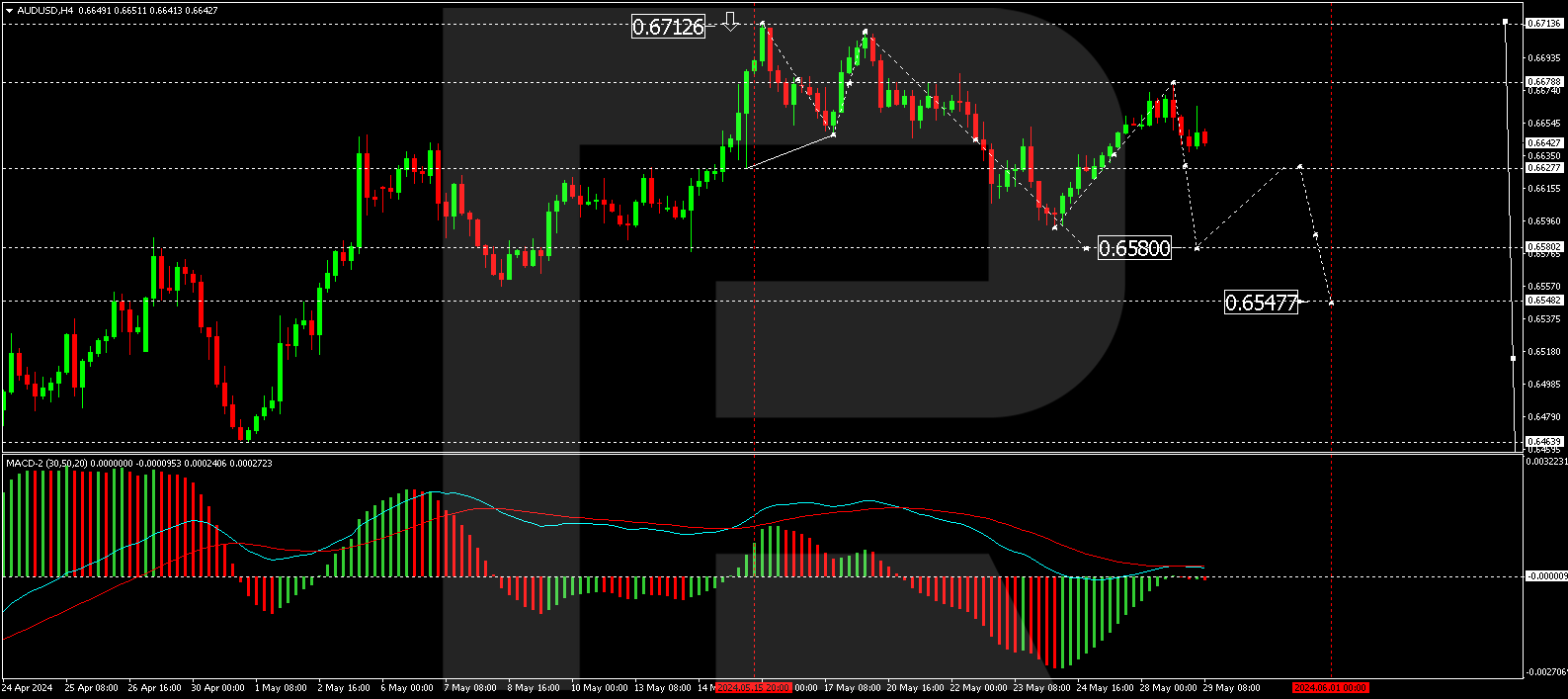
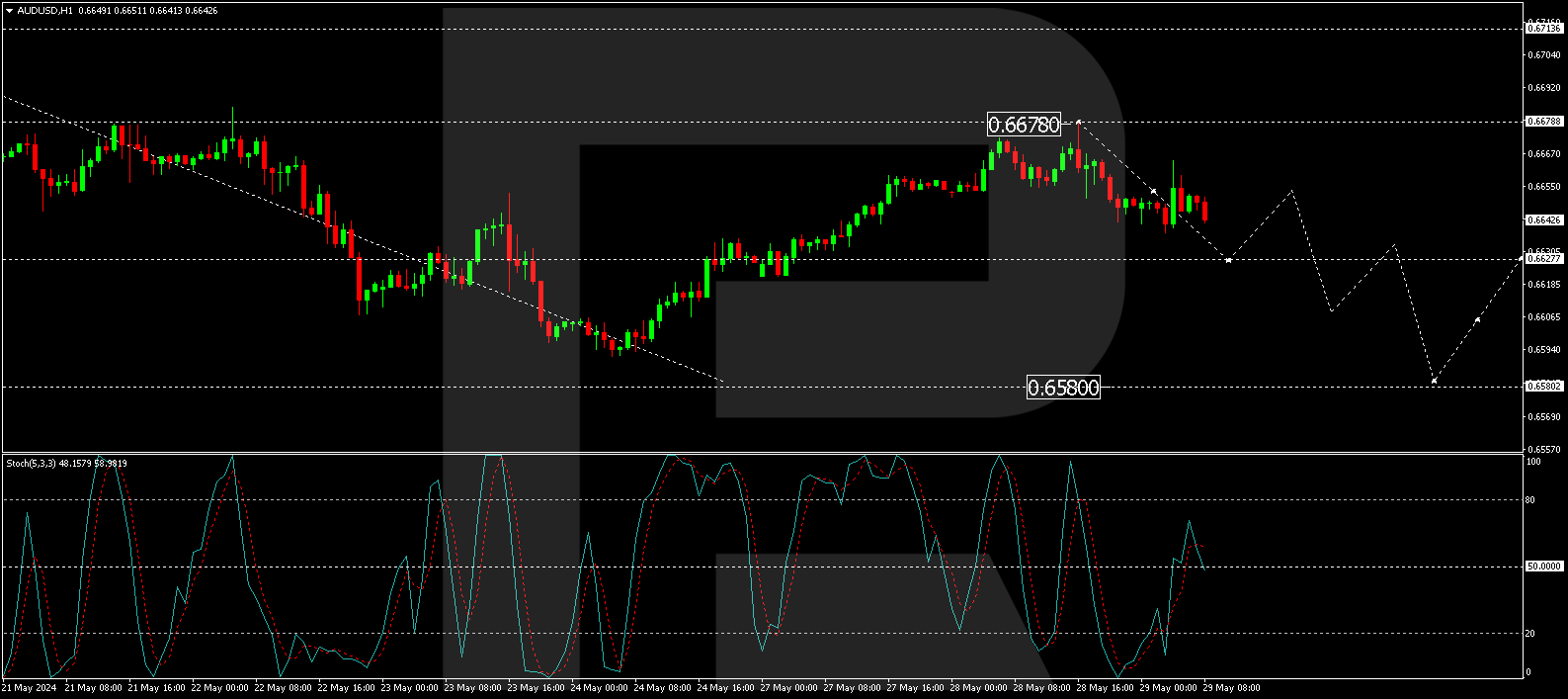
The AUD/USD pair remains under pressure, hovering around 0.6528 on Friday. Earlier this week, the Australian dollar faced significant challenges, with a sharp decline against the USD. Efforts to stabilise the exchange rate have seen limited success thus far.

The stronger-than-expected economic data from the US has dampened hopes for extensive interest rate cuts by the Federal Reserve this year. The capital market currently anticipates only a 40-basis point reduction, a downgrade from the 60-75 basis points expected at the start of the week.

The Reserve Bank of Australia (RBA) is considering initiating its monetary easing policies towards the end of 2024. However, Australia’s robust employment market and persistent consumer inflation complicate these plans. Recent data indicates that the unemployment rate dropped to 3.7% in February, the lowest since September 2023, while inflation remained steady at 3.4% for the third consecutive month.

A recent Westpac report highlights the RBA’s need for greater confidence in the inflation outlook before seriously contemplating a rate cut.

Technical analysis of AUD/USD

On the H4 chart, the AUD/USD is developing the fifth wave of decline towards 0.6832. The market has recently experienced a decline to 0.6498. A consolidation range is forming above this level today. If the pair exits this range upward, a corrective move to 0.6570 may occur. Conversely, a downward exit could lead to the continuation of the downward wave towards 0.6404. The MACD indicator supports this bearish outlook, with its signal line above zero but trending downwards sharply.

The H1 chart shows a consolidation around 0.6523. An upward breakout could lead to a correction towards 0.6570. A downward move from the range could initiate a further decline to 0.6420, potentially extending to 0.6404. The Stochastic oscillator, currently below 20, suggests a possible rise to 50, indicating potential short-term corrections within a broader downward trend.

Disclaimer

Any forecasts contained herein are based on the author’s particular opinion. This analysis may not be treated as trading advice. RoboForex bears no responsibility for trading results based on trading recommendations and reviews contained herein.

The Bank of Canada maintained its monetary policy settings. The FOMC minutes showed that policymakers will not be in a hurry to cut rates

By JustMarkets

At the end of the trading day, the Dow Jones Index (US30) was down 1.09%, while the S&P 500 Index (US500) lost 0.95%. The NASDAQ Technology Index (US100) closed yesterday negative 0.84%. A sharp rise in bond yields pressured equities yesterday after the March US Consumer Price Index exceeded expectations for the third consecutive month, reinforcing the likelihood that the Federal Reserve will not rush to cut interest rates. The annualized US inflation rate was 3.5% in March 2024, the highest since September, up from 3.2% in February and forecasts of 3.4%. In addition, core CPI (excluding food and energy) rose by 0.4% m/m to 3.8% y/y, stronger than expectations of 0.3% m/m and 3.7% y/y. Fed swap prices are now pricing in only a 50 bps rate cut this year, less than the Fed’s recent 75 bps dot plot. Markets estimate the odds of a 25 bps rate cut at 3% at the next FOMC meeting on May 1 and just 21% (vs. 70% last week) at the next meeting on June 12.

Minutes from the March FOMC meeting showed that the Federal Reserve does not believe it is appropriate to lower the target range until there is confidence that inflation is moving steadily toward 2%. The central bank still closely monitors inflation risks but expects to see some unevenness in monthly inflation readings as inflation returns to target. The so-called dot plot showed policymakers still plan to cut interest rates three times this year, matching quarterly forecasts made in December.

The Bank of Canada (BoC) kept its key rate at 5%, as expected, and refrained from hinting at the start of rate cuts because of lingering upside risks to inflation. The central bank noted that price pressures have eased across a wide range of goods and services since the last meeting but added that an uncertain macroeconomic backdrop and higher-than-expected commodity prices, including oil, prevent disinflation from converging more smoothly. Bank of Canada Governor Macklem added that while recent data indicate some progress in containing core inflation, it is still insufficient to justify monetary easing with confidence. As such, the Bank of Canada expects inflation to remain around 3% in the first half of this year and not reach the 2% target until 2025.

Equity markets in Europe traded without a single dynamic on Wednesday. Germany’s DAX (DE40) rose by 0.11%, France’s CAC 40 (FR40) closed down 0.05%, Spain’s IBEX 35 (ES35) lost 0.38%, and the UK’s FTSE 100 (UK100) closed positive 0.33% on Wednesday.

The European Central Bank (ECB) will hold a monetary policy meeting today. Market participants expect the ECB to leave the key rate unchanged at 4.5%. After last month’s meeting, the Eurozone economy has gained momentum but is still close to recession. Therefore, the ECB will likely want to get an update on inflation and labor market data before embarking on full-blown easing. Most of the central bank’s recent statements hint that a key rate cut in June is a real possibility. Therefore, given current market speculation, there is a risk that Lagarde’s statement and press conference will be less dovish than financial markets expect. In that case, the euro could get a boost to growth. But if Lagarde’s statement is confidently dovish with a hint of a real rate cut in June, the euro will continue to decline.

WTI crude oil prices rose to $85.7 a barrel on Wednesday, breaking a two-day decline, as the market reacted to the news from Gaza. Several important Hamas figures were killed in an Israeli airstrike, which could complicate ceasefire talks. Tensions in the Middle East ran high, with Israel warning OPEC representative Iran that it will attack the Islamic Republic if Tehran strikes Israel, with the US reportedly confident of an imminent strike by Iran or its supporters on Israel. The EIA reported a 5.841 million barrel rise in inventories on Wednesday, beating market expectations for a 2.366 million barrel increase.

Asian markets traded without any unified dynamics. Japan’s Nikkei 225 (JP225) was down 0.48% yesterday, China’s FTSE China A50 (CHA50) lost 0.42%, Hong Kong’s Hang Seng (HK50) was up 1.85% overnight and Australia’s ASX 200 (AU200) was positive 0.31%. Asian equity markets fell on Thursday, following a sharp decline on Wall Street overnight. Investors also priced in data that China’s consumer prices rose less than expected in March, while producer prices fell by the most in four months. Chinese consumer prices were 0.1% y/y in March 2024, compared to market forecasts of 0.4% y/y, after rising to 0.7% in the previous month. China’s lower-than-expected inflation numbers have bolstered bets on further policy easing from the PBoC.

Fitch Ratings revised its outlook on China’s sovereign credit rating to negative from stable while affirming its A+ rating amid growing concerns about the outlook for the country’s public finances. The agency cited large budget deficits and a sharp rise in government debt in recent years as undermining fiscal reserves from a rating perspective.

The Japanese yen hit a new 34-year low. Traders are now expecting currency intervention from the Bank of Japan (BoJ), seeing the 152-153 per dollar exchange rate as a potential catalyst. On Tuesday, Finance Minister Shun’ichi Suzuki said that the authorities do not rule out any measures against excessive yen movement.

S&P 500 (US500) 5,160.64 −49.27 (-0.95%)

Dow Jones (US30) 38,461.51 −422.16 (−1.09%)

DAX (DE40) 18,097.30 +20.61 (+0.11%)

FTSE 100 (UK100) 7,961.21 +26.42 (+0.33%)

USD Index 105.17 +1.03 (+0.99%)

Important events today:
  • – China Consumer Price Index (q/q) at 04:30 (GMT+3);
  • – China Producer Price Index (q/q) at 04:30 (GMT+3);
  • – Eurozone ECB Interest Rate Decision at 15:15 (GMT+3);
  • – Eurozone ECB Monetary Policy Statement at 15:15 (GMT+3);
  • – US Producer Price Index (m/m) at 15:30 (GMT+3);
  • – US Initial Jobless Claims (w/w) at 15:30 (GMT+3);
  • – Eurozone Press Conference at 15:45 (GMT+3);
  • – US Natural Gas Storage (w/w) at 17:30 (GMT+3).

By JustMarkets


This article reflects a personal opinion and should not be interpreted as an investment advice, and/or offer, and/or a persistent request for carrying out financial transactions, and/or a guarantee, and/or a forecast of future events.
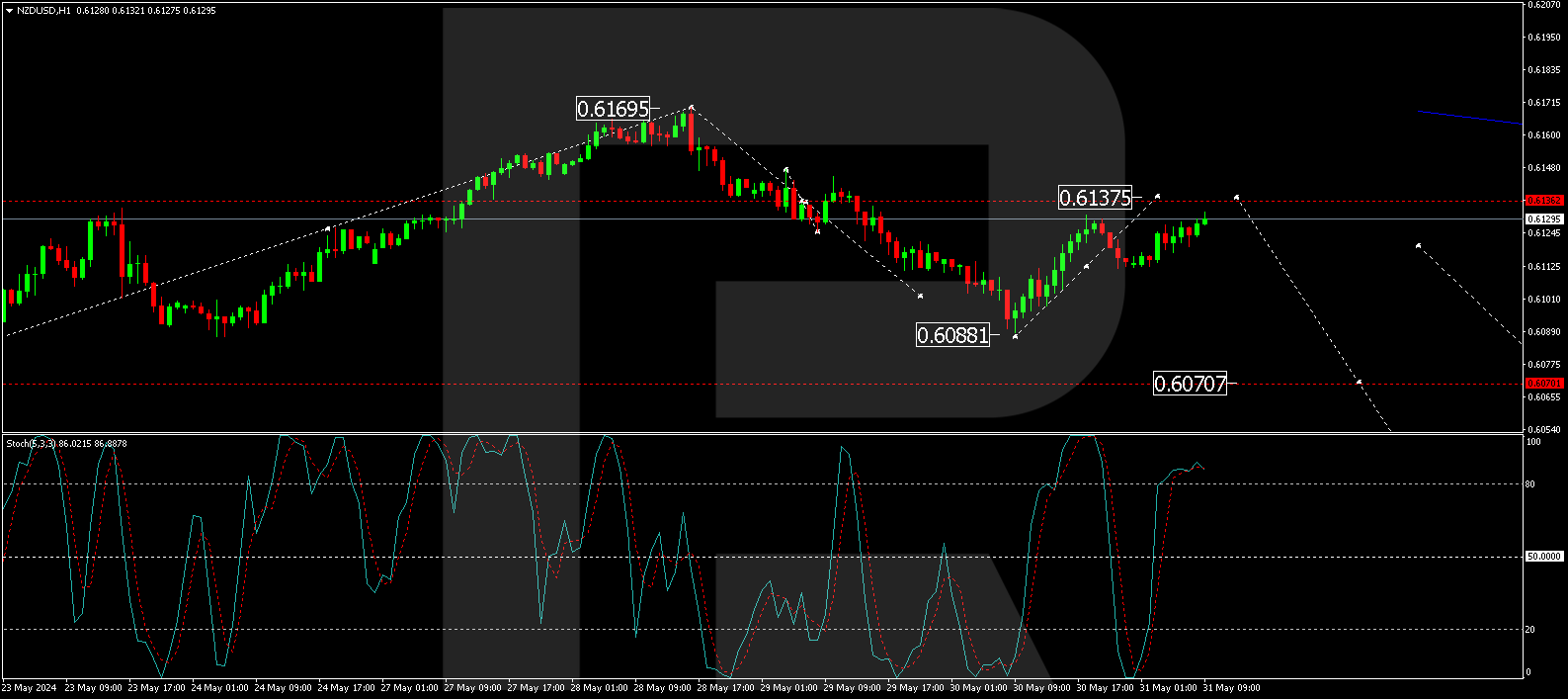
US Dollar strengthens following high inflation data

By RoboForex Analytical Department

The EUR/USD pair has experienced a significant decline, stabilising around 1.0745 by Thursday. This movement follows the US releasing inflation data that exceeded expectations, underscoring the ongoing battle against inflation. The March consumer price index (CPI) increased by 0.4% month-on-month, matching February’s rise but surpassing the anticipated 0.3%. The annual inflation rate intensified to 3.5% from 3.2%, signalling persistent inflationary pressures.

Core inflation, which excludes volatile food and energy prices, also climbed by 0.4% in March, maintaining a year-on-year core 3.8% core CPI. Such elevated inflation levels suggest that the Federal Reserve might delay interest rate cuts, a sentiment reflected in the CME’s FedWatch tool. The likelihood of a rate reduction in June sharply declined to 18% post-CPI announcement, representing a significant drop from the 50% probability seen before the data release. Expectations now lean towards September for potential Federal Reserve actions.

Market predictions have adjusted to foresee a 43-45 basis point rate cut by the Fed within this year, a sharp decline from the 75 basis points expected at the week’s start and the 150 basis points anticipated at the year’s beginning. The minutes from the Federal Reserve’s recent meeting further solidified concerns, revealing policymakers’ dissatisfaction with inflation trends even before the latest price statistics.

This series of developments has bolstered the US dollar’s strength in the currency market.

EUR/USD technical analysis

The H4 chart analysis for EUR/USD shows a correction to 1.0883, followed by a downturn to 1.0728 on the back of the recent news. A consolidation range has currently formed around this level, with a potential rise to 1.0784. A downward breakout from this range could lead to a decrease towards 1.0700. The MACD indicator, positioned below zero and trending downward, supports this potential scenario.

On the H1 chart, the downward trend towards 1.0700 continues, with a possible correction to 1.0780 expected. This may be followed by a further drop to 1.0680, representing an initial phase of a broader downtrend. The Stochastic oscillator, currently below 80, anticipates a continued decline towards 20, reinforcing the bearish outlook for the EUR/USD pair.

Disclaimer

Any forecasts contained herein are based on the author’s particular opinion. This analysis may not be treated as trading advice. RoboForex bears no responsibility for trading results based on trading recommendations and reviews contained herein.

Gold: Setting Near-Term Price Targets

This was our “initial upside target” — which has now been exceeded. What’s next?

By Elliott Wave International

Around the first week of the year, the outlook for gold was not looking promising, at least according to this Jan. 5 headline (Reuters):

Gold set for weekly decline as dollar, yields climb

The rally in gold which started in early October continued to struggle for much of the rest of January.

Even though the mainstream media was looking to so-called fundamentals — such as the action of the dollar or bond yields — Elliott Wave International focused on the patterns of investor psychology — as reflected by Elliott waves.

Indeed, on Jan. 24, the U.S. Short Term Update, a thrice weekly Elliott Wave International publication which focuses on major U.S. financial markets, said:

Spot [Gold] made its lowest close since January 17 today. Still, prices remain above $1972.89, which keeps the short-term bullish potential dominant. The [unfolding Elliott wave] should carry gold well above $2250 as the rally’s pattern progresses.

Keep in mind that when this analysis was offered more than two months ago, the price of gold was trading around $2013 — a far cry from our price target above $2250.

Now, fast forward to April 1 and this headline (CNBC):

Treasury yields jump to start second quarter

As you’ll recall, rising bond yields were mentioned in the media as a negative for gold back in January.

But what did gold do on April 1? Correct — it hit another all-time high.

Not only that, April 1 was the day that our price target was reached.

Here’s a quote from the April 1 U.S. Short Term Update:

The initial upside target for [Gold] was “above $2250,” which we first stated in the January 24 Short Term Update and reaffirmed throughout February and March. Gold hit this target today when spot prices pushed to $2263.64 intraday.

On April 2, gold traded even higher.

Remember, Elliott Wave International doesn’t make forecasts for financial markets — like gold — based on common beliefs about “fundamentals” which investors cannot count on.

Instead, we arrive at price targets based on Elliott wave analysis.

If you’d like to learn more about Elliott wave analysis, read Frost & Prechter’s Wall Street classic, Elliott Wave Principle: Key to Market Behavior. Here’s a quote from this “must read” book:

When after a while the apparent jumble gels into a clear picture, the probability that a turning point is at hand can suddenly and excitingly rise to nearly 100%. It is a thrilling experience to pinpoint a turn, and the Wave Principle is the only approach that can occasionally provide the opportunity to do so.

If you’d like to learn about the Wave Principle, know that you can gain complimentary access to the entire online version of Elliott Wave Principle: Key to Market Behavior for free.

Just follow the link and you can have the Wall Street bestseller on your computer in moments: Elliott Wave Principle: Key to Market Behavior — get free and instant access.

This article was syndicated by Elliott Wave International and was originally published under the headline Gold: Setting Near-Term Price Targets. EWI is the world’s largest market forecasting firm. Its staff of full-time analysts led by Chartered Market Technician Robert Prechter provides 24-hour-a-day market analysis to institutional and private investors around the world.