Japanese Candlesticks Analysis 09.12.2021 (USDCAD, AUDUSD, USDCHF)

Article By RoboForex.com

USDCAD, “US Dollar vs Canadian Dollar”

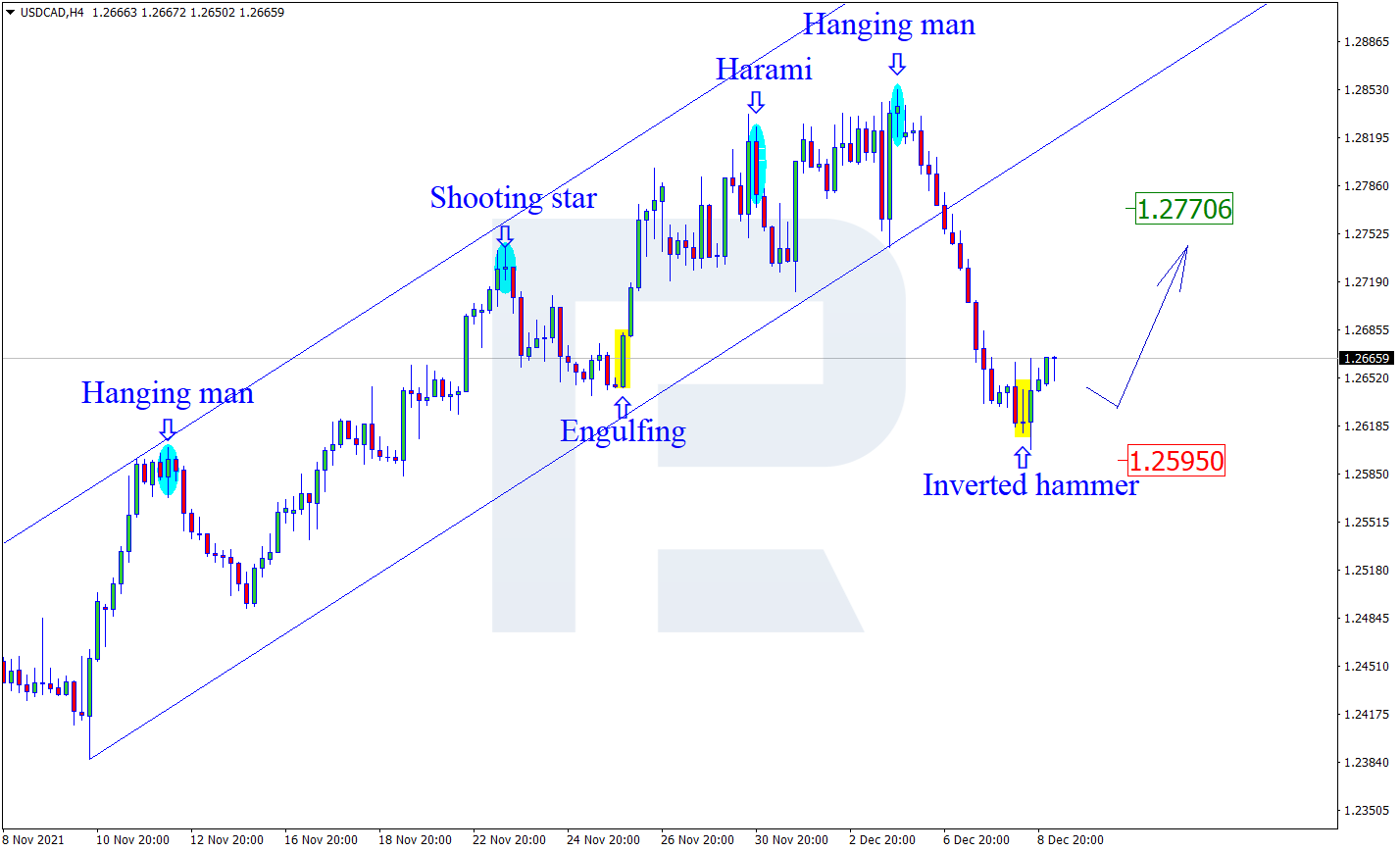
As we can see in the H4 chart, after forming several reversal patterns, including Inverted Hammer, close to the support level, USDCAD may reverse in the form of another rising wave. In this case, the upside target may be the resistance area at 1.2770. However, an alternative scenario implies that the asset may continue falling to reach 1.2595 first and then resume trading upwards.

USDCAD
Risk Warning: the result of previous trading operations do not guarantee the same results in the future

AUDUSD, “Australian Dollar vs US Dollar”

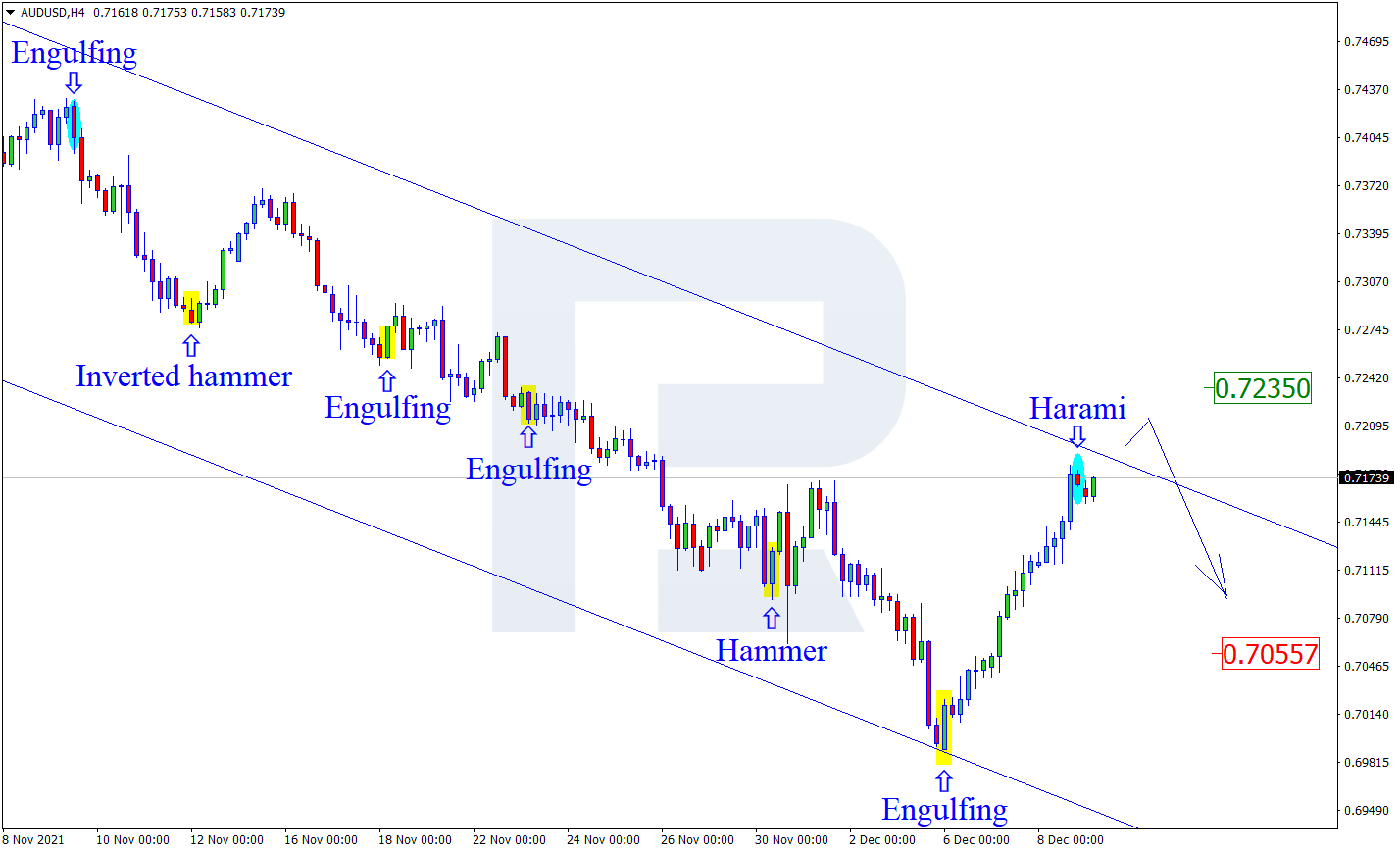
As we can see in the H4 chart, AUDUSD has formed several reversal patterns, such as Harami, near the channel’s upside border. At the moment, the asset may reverse in the form of another descending impulse. In this case, the downside target may be the support area at 0.7155. At the same time, an opposite scenario implies that the price may continue growing to reach 0.7235 before resuming its descending tendency.

AUDUSD
Risk Warning: the result of previous trading operations do not guarantee the same results in the future

USDCHF, “US Dollar vs Swiss Franc”

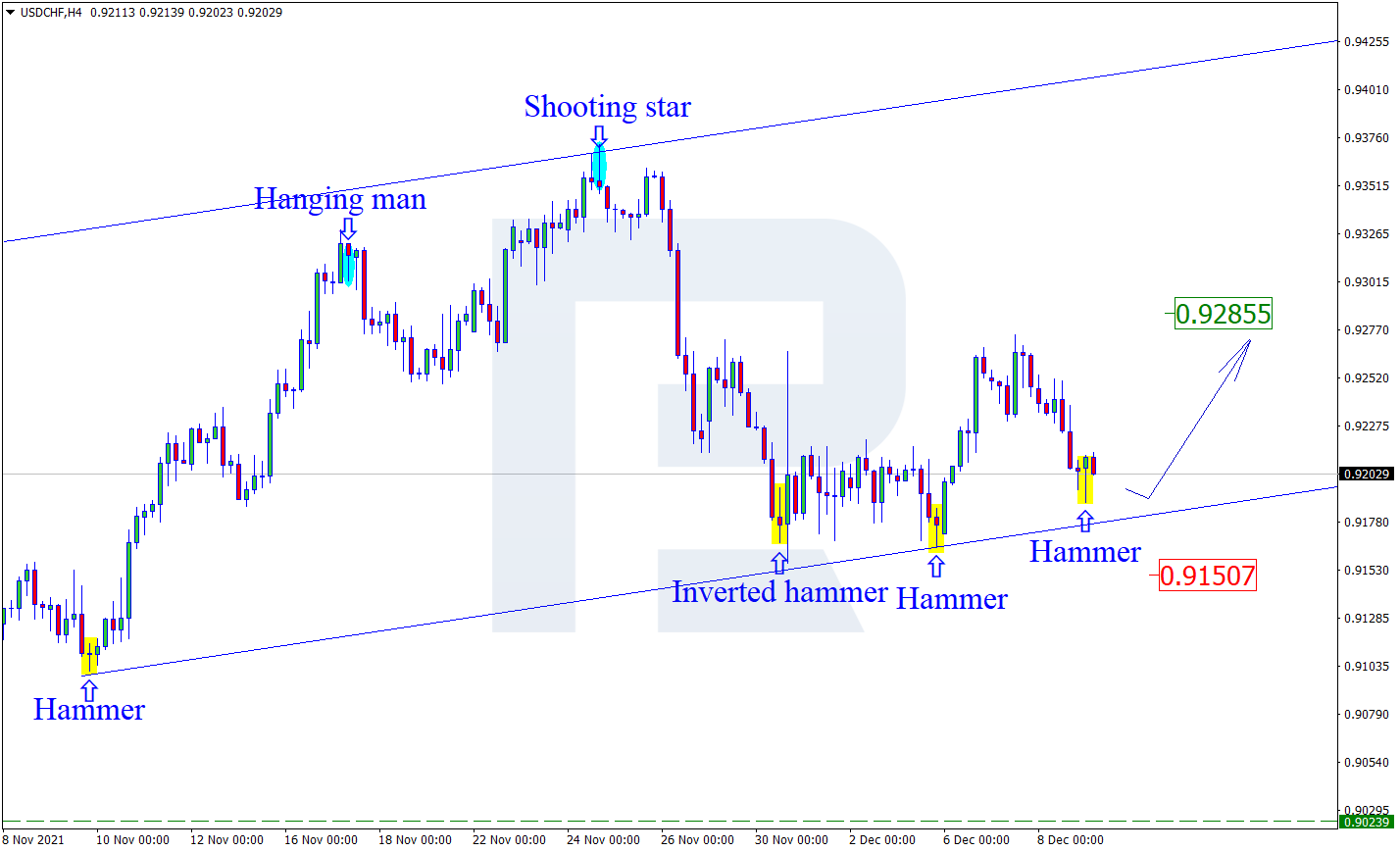
As we can see in the H4 chart, after testing the support area, the pair has formed several reversal patterns, for example, Hammer. At the moment, USDCHF is reversing in the form of a new rising wave towards the resistance level. In this case, the upside target may be at 0.9285. Still, there might be an alternative scenario, according to which the asset may continue falling to reach 0.9150 before resuming its ascending tendency.

USDCHF

Article By RoboForex.com

Attention!
Forecasts presented in this section only reflect the author’s private opinion and should not be considered as guidance for trading. RoboForex LP bears no responsibility for trading results based on trading recommendations described in these analytical reviews.

Will Fed’s major policy shift spook markets?

By George Prior

Investors should embrace expected market volatility triggered by the likely decision of the U.S. Federal Reserve to double the pace of its taper to $30 billion a month at its meeting next week.

The observation by Nigel Green, the CEO and founder of deVere Group, one of the world’s largest independent financial advisory, asset management and fintech organizations, comes as Fed Chair Jerome Powell has come out in support of a faster taper, making a sharp shift from previous suggestions.

Mr Green notes: “I believe at next week’s Fed meeting, the last of the year, we’ll see a considerable shift in policy as the Federal Reserve – the world’s de facto central bank – starts to remove its unprecedented program to help soften the economic blow from the pandemic.

“We could see the Fed hike rates sooner than is currently priced in by markets.”

He continues: “The central bank will give several months’ notice to the markets for a major policy shift. As such, if it is to maximize flexibility to raise rates, they will begin sooner rather than later, even as soon as next week.

“This will likely create some turbulence in the market, to what degree will, of course, depend on the content and tone of these discussions.”

Savvy investors will “embrace the volatility,” says the deVere boss, as it provides buying opportunities ahead of the anticipated end-of-year market rally – “despite the joke-like term, the ‘Santa Claus Rally’ is something history shows can give a big boost to portfolios.”

Mr Green says: “These investors will be taking advantage of lower values to enhance their portfolios for the longer-term growth of their wealth.

“Especially as they are already buying the Omicron-triggered dip in certain sectors that got hit by a sell-off due to an initial knee-jerk reaction to the new variant.”

The deVere CEO concludes: “Investors should not get spooked by the Fed’s probable decision to decide to double the pace of its taper to $30 billion a month at the meeting next week.

“They should remain invested, ensure portfolios are properly diversified, and use the expected temporary bout of turbulence to their financial advantage.”

About:

deVere Group is one of the world’s largest independent advisors of specialist global financial solutions to international, local mass affluent, and high-net-worth clients.  It has a network of more than 70 offices across the world, over 80,000 clients and $12bn under advisement.

Murrey Math Lines 09.12.2021 (USDCHF, GOLD)

Article By RoboForex.com

USDCHF, “US Dollar vs Swiss Franc”

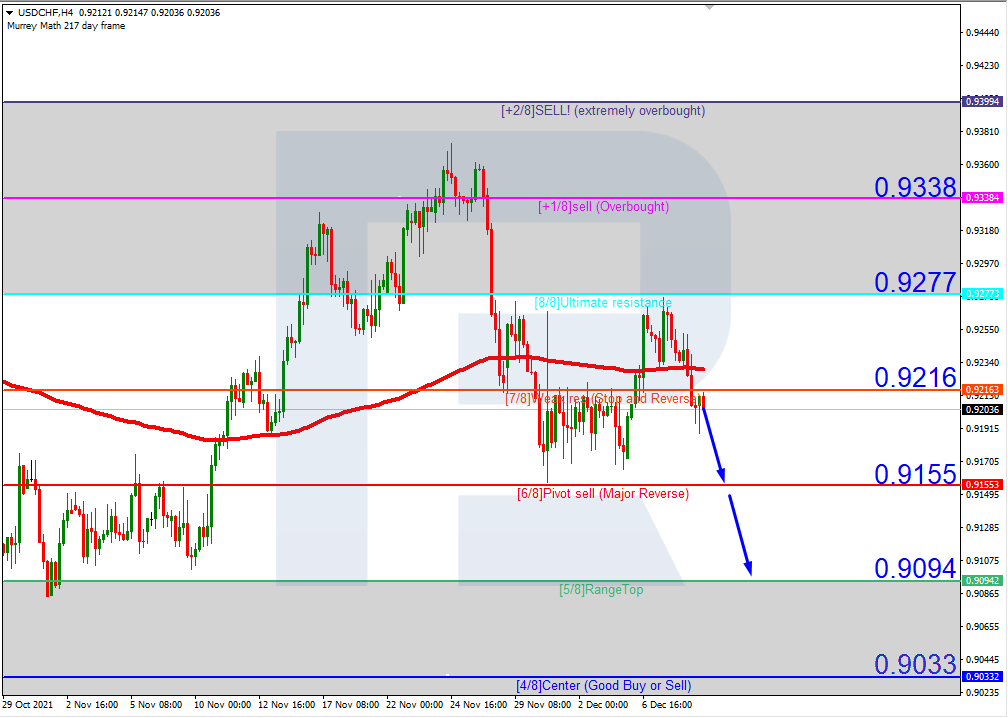
In the H4 chart, after breaking the 200-day Moving Average again, USDCHF is trading below it, thus indicating a possible descending tendency. In this case, the price is expected to test 6/8, break it, and then continue falling to reach the support at 5/8. However, this scenario may be cancelled if the price breaks the resistance at 7/8 to the upside. After that, the instrument may head towards the “overbought area” and reach 8/8.

USDCHFH4
Risk Warning: the result of previous trading operations do not guarantee the same results in the future

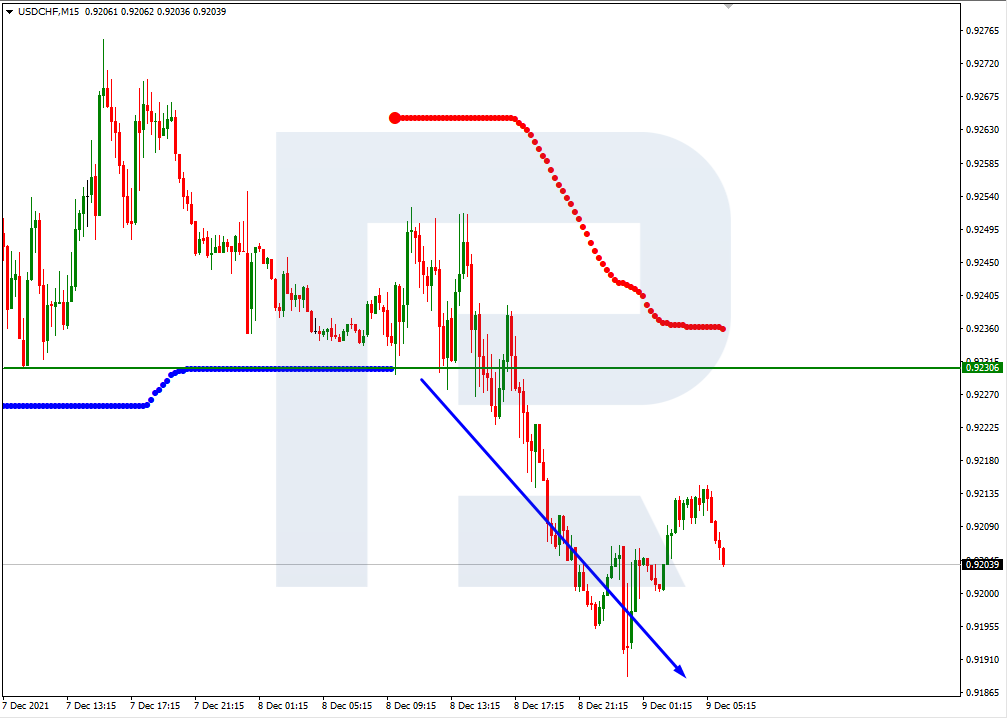
As we can see in the M15 chart, the pair has broken the downside line of the VoltyChannel indicator and, as a result, may continue trading downwards.

USDCHF_M15
Risk Warning: the result of previous trading operations do not guarantee the same results in the future

XAUUSD, “Gold vs US Dollar”

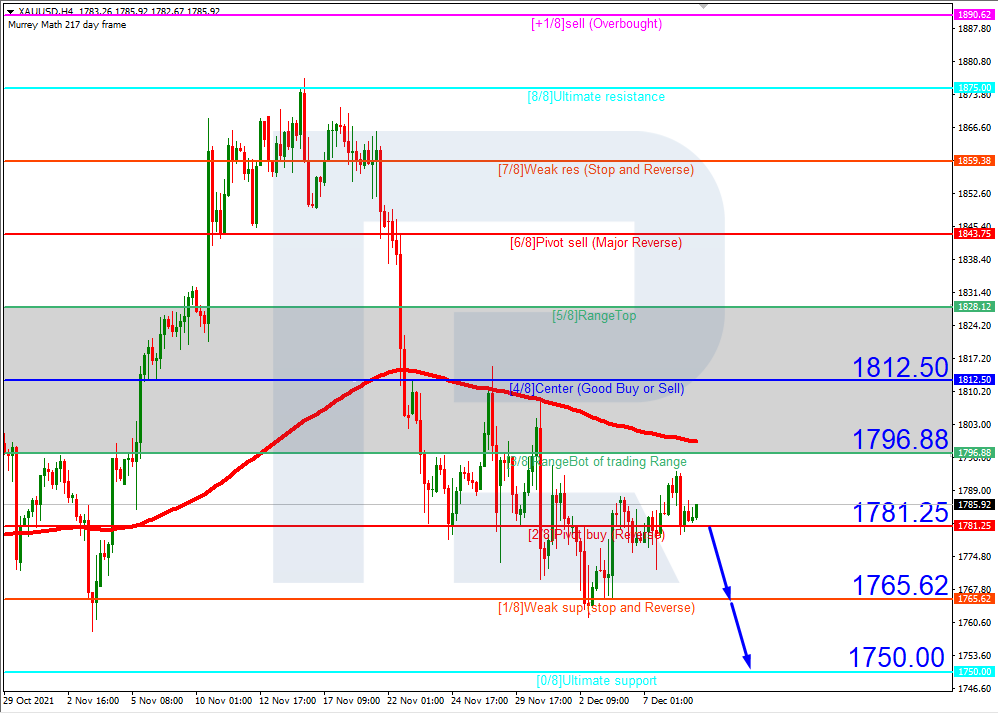
As we can see in the H4 chart, XAUUSD is trading below the 200-day Moving Average, thus indicating a possible descending tendency. In this case, the price is expected to break 2/8 and then move downwards to reach the support at 0/8. However, this scenario may no longer be valid if the price breaks the resistance at 3/8 to the upside. After that, the instrument may reverse and grow towards the next resistance at 5/8.

USDCAD_H4
Risk Warning: the result of previous trading operations do not guarantee the same results in the future

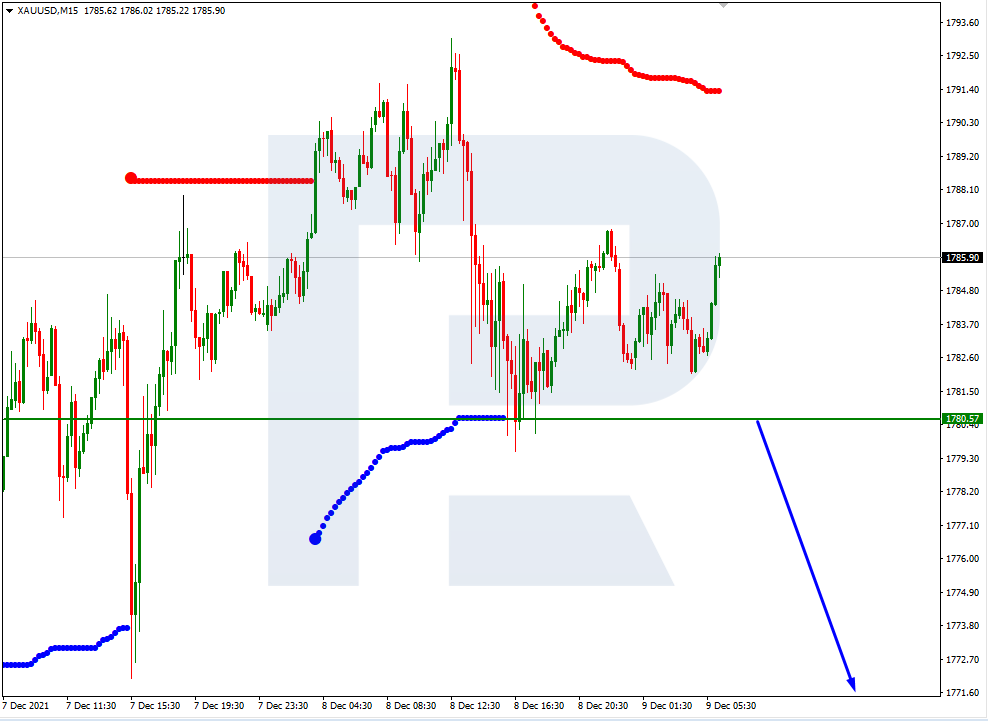
In the M15 chart, the pair may break the downside line of the VoltyChannel indicator and, as a result, continue its decline.

USDCAD_M15

Article By RoboForex.com

Attention!
Forecasts presented in this section only reflect the author’s private opinion and should not be considered as guidance for trading. RoboForex LP bears no responsibility for trading results based on trading recommendations described in these analytical reviews.

November US Inflation: How High Can It Go?

By Orbex

There are two key bits of fresh data that could influence the dollar tomorrow.

The one that is most likely to get all the attention is the release of the inflation numbers for November. And the consensus among analysts is that the results will not be very helpful for the Fed or the Biden Administration. That said, the outcome could add to the obstacles in getting the Build Back Better spending bill through Congress.

Of course, by now the Fed has acknowledged that inflation isn’t transitory, and has taken on a decidedly hawkish tone. But the market is starting to come to the conclusion that the Fed will have to speed up the pace of the taper if they want to keep inflation under control.

There is a growing feeling among analysts that the Fed might actually announce a larger taper at their meeting next week.

Pressures and counter pressures

Higher inflation during the busy shopping season ahead of the holidays isn’t all that unusual. Regulators insist that the primary cause of inflation is the supply chain problems. And that isn’t something that monetary policy can address.

Recently, the Biden Administration was cheering on reports that the number of containerships waiting to enter California ports had diminished.

However, further analysis suggests that this is merely a technicality. In fact, ships are waiting further offshore, or are “slow steaming” to the ports since there isn’t any place for them to dock. The number of ships loitering before entering a harbor has actually continued to increase over the last month.

It’s not us, so what can we do?

The Fed’s reliance on the idea that supply chain problems are the primary cause of inflation could incline them towards sticking to their policy targets.

After the next meeting, there will be a new, generally dovish composition to the FOMC for next year. Some feel that this might be the last chance the Fed has to adjust its bond-buying targets.

However, that doesn’t mean that the market will react in line with what the Fed is thinking. Higher inflation comes with the understanding that even if the Fed doesn’t act, then bond yields will rise.

So, we could see a market reaction to higher inflation, regardless of what the Fed is likely to do. Higher inflation generally means that the dollar should get stronger in comparison to other currencies, whereas gold and other store of value assets should appreciate even more.

If inflation comes in below expectations, then we could see some retracement in safe havens, and support for the stock market.

What to look out for

Analysts project headline inflation to come in at 0.7%, showing a slowing of the pace from 0.9% in October. This could be an indication that inflation is slowing in the near term. But the annual change in prices could show an increase to 6.8%, from 6.2% in the prior reading.

Core inflation, which is tracked by the Fed, is expected to show a similar pattern. Analysts expect the annual core CPI change to come in at 4.9%. This figure is more than double the target rate, and up from 4.6% prior. Nonetheless, monthly CPI change could decelerate a bit to 0.5% from 0.6% prior.


Orbex-LogoArticle by Orbex

Orbex is a fully licensed broker that was established in 2011. Founded with a mission to serve its traders responsibly and provides traders with access to the world’s largest and most liquid financial markets. www.orbex.com

USDJPY Has The Intervening Wave Ⓧ Ended?

By Orbex

USDJPY

In the current structure of USDJPY a large triple zigzag consisting of primary sub-waves Ⓦ-Ⓧ-Ⓨ-Ⓧ-Ⓩ is developing.

Most likely, the four parts of this triple zigzag have ended. The last actionary wave Ⓩ is currently under development. This wave will most probably take the form of an intermediate double zigzag (W)-(X)-(Y).

We could be in the final part of the intermediate actionary wave (Y), which could take the form of a triple zigzag W-X-Y-X-Z. Its end is expected near 117.17. At that level, wave Ⓩ will be at 200% of wave Ⓨ.

After reaching the highest point, the market could begin to build a new bearish trend, which will update the previous low of 109.10. The intermediate intervening wave (X) formed this.

USDJPY

Let’s look at an alternative scenario. Perhaps the construction of the bearish primary is still ongoing.

It seems to take the form of a double zigzag (W)-(X)-(Y) of the intermediate degree. The first actionary sub-wave (W) is complete, even though it is not visible on the current chart. Not so long ago, the ascending intervening wave (X) was completed, consisting of minor sub-waves A-B-C.

In the near future, prices could lower towards the 109.74 area.


Orbex-LogoArticle by Orbex

Orbex is a fully licensed broker that was established in 2011. Founded with a mission to serve its traders responsibly and provides traders with access to the world’s largest and most liquid financial markets. www.orbex.com

The Analytical Overview of the Main Currency Pairs on 2021.12.09

by JustForex

The EUR/USD currency pair

Technical indicators of the currency pair:
  • Prev Open: 1.1266
  • Prev Close: 1.1340
  • % chg. over the last day: +0.65%

Yesterday, the European currency strengthened on the back of the dollar index decline, but the situation in the Eurozone remains tense. First, analysts predict a rise in inflation in the region next year as well. Secondly, the energy crisis leads to the bankruptcy of businesses and raises the prices of electricity and natural gas to new highs. Third, supply problems haven’t gone anywhere. Fourth, the ECB has no plans to cut the PEPP program until March 2022. All this suggests that there are no reasons for the Euro strengthening now from a fundamental point of view.

Trading recommendations
  • Support levels: 1.1265, 1.1230, 1.1168
  • Resistance levels: 1.1360, 1.1436, 1.1535, 1.1613, 1.1667, 1.1717

From a technical point of view, the EUR/USD on the hour time frame is still bearish, but the price is approaching the priority change level. Buyers continue to show initiative. At the moment, the price has already been trading above the moving average. The MACD indicator is in the positive zone, with no signs of reversal. Under such market conditions, traders should consider sell positions from the priority change level of 1.1360. Buy trades can be considered on lower time frames, but only with short targets.

Alternative scenario: if the price breaks out through the 1.1360 resistance level and fixes above, the mid-term uptrend will likely resume.

EUR/USD
News feed for 2021.12.09:
  • – US Initial Jobless Claims (w/w) at 15:30 (GMT+2).

The GBP/USD currency pair

Technical indicators of the currency pair:
  • Prev Open: 1.3231
  • Prev Close: 1.3203
  • % chg. over the last day: -0.21%

The British pound fell to a one-year low Wednesday after British Prime Minister Boris Johnson imposed tighter restrictions in England to counter the spread of the Omicron variant. Now people need to work from home, wear masks in public places, and use vaccination passes.

Trading recommendations
  • Support levels: 1.3188
  • Resistance levels: 1.3232, 1.3289, 1.3326, 1.3434, 1.3507, 1.3575, 1.3685

On the hourly time frame, the trend on GBP/USD is bearish. The British pound is under sellers’ pressure. The MACD indicator is in the negative zone, but there are signs of divergence on several time frames, which means that a technical rebound should be expected. Under such market conditions, traders should consider sell positions from the resistance levels around the moving average or from the upper border of the descending channel. Buy trades should be considered from the support level of the higher time frame, but only with additional confirmation.

Alternative scenario: if the price breaks out through the 1.3326 resistance level and consolidates above, the bullish scenario will likely resume.

GBP/USD
There is no news feed for today.

The USD/JPY currency pair

Technical indicators of the currency pair:
  • Prev Open: 113.55
  • Prev Close: 113.68
  • % chg. over the last day: +0.11%

From a fundamental point of view, there is no reason for the JPY to strengthen right now. Firstly, Japan has downgraded GDP in Q3 due to a bigger drop in consumer spending. Second, the risks associated with the Omicron option are decreasing, causing investors to shift assets from the safe haven currency to other riskier and more profitable assets. Third, Japan’s central bank introduced a record $490 billion stimulus package to support the economy.

Trading recommendations
  • Support levels: 112.62, 112.30
  • Resistance levels: 113.94, 114.17, 115.15, 115.50

The global trend on the USD/JPY currency pair is bearish. But the pressure of buyers is increasing, and the price is approaching the priority change level. Under such market conditions, traders can look for sales from the priority change level but with additional confirmation. Buy positions should be considered from the lower border of the corridor, but with additional confirmation in the form of a buyers’ initiative.

Alternative scenario: if the price rises above 114.17, the uptrend will likely resume.

USD/JPY
There is no news feed for today.

The USD/CAD currency pair

Technical indicators of the currency pair:
  • Prev Open: 1.2636
  • Prev Close: 1.2650
  • % chg. over the last day: +0.11%

Canada’s central bank left its key interest rate unchanged as expected. The statement also said the bank does not plan to raise its key rate until April-September of next year. But the Bank of Canada is keeping a close eye on inflation expectations and labor costs in order to control the growth.

Trading recommendations
  • Support levels: 1.2638, 1.2597, 1.2502, 1.2416
  • Resistance levels: 1.2726, 1.2776, 1.2828

From a technical point of view, the USD/CAD currency trend has changed to bearish. The MACD indicator has become inactive. Under such market conditions, it is better to look for buy trades from the 1.2638 support level, but only after additional confirmation in the form of a buyers’ initiative. It is better to consider sell deals from the resistance levels near the moving average.

Alternative scenario: if the price breaks out through the 1.2776 resistance level and fixes above, the downtrend will likely be broken.

USD/CAD
There is no news feed for today.

by JustForex


This article reflects a personal opinion and should not be interpreted as an investment advice, and/or offer, and/or a persistent request for carrying out financial transactions, and/or a guarantee, and/or a forecast of future events.

Brazil raises rate 7th time, to ‘persevere’ with tightening

By CentralBankNews.info

Brazil’s central bank raised it benchmark interest rate for the seventh time and said it expects to raise the rate by the same magnitude at its next policy meeting, saying emphatically it “will persevere in its strategy until it consolidates not only the disinflation process but also the anchoring of expectations around its goals.”
The Central Bank of Brazil (BCB) raised its Selic rate by 150 basis points to 9.25 percent and has now raised it by 7.25 percentage points this year following rate hikes in March, May, June, August, October and today.
Brazil becomes the fourth central bank to raise its rates in December, following in the heels of Moldova, Georgia and Poland, with number of rate hikes by 38 central banks so far this year rising to 106 as compared with only 15 rate cuts, a ratio of 7:1.
Apart from Zimbabwe, Brazil has been the most aggressive central bank worldwide in its monetary tightening, with Angola taking the second place by raising its rate 4.50 percentage points.
Zimbabwe has raised its main interest rate by 25 percentage points to 60 percent, and said earlier this week the rate hikes had helped stabilize the exchange rate and consumer prices.
      BCB’s monetary policy committee Copom is next scheduled to meet on Feb. 2, 2022.
      Today’s rate hike follows a continuous rise in Brazil’s inflation rate this year to 10.67 percent in October from 4.56 percent in January and 10.25 percent in September, well in excess of the central bank’s target this year of 3.75 percent, plus/minus 1.5 percentage points.
       Copom said the rise in inflation has been higher than it expected, both in the more volatile components and in those prices linked with underlying inflation and above the range that is compatible with reaching its inflation target.
      “The Copom considers that, given the increase in its projection and the risk of unanchoring expectations for longer term, it is appropriate for the monetary tightening cycle to advance significantly in contractionary territory,” a unanimous Copom said.
       Copom also said a further loosening of fiscal policy in response to the pandemic would worsen the fiscal trajectory, raising the risk premium for Brazilian assets and loosening inflation expectations.
      “This implies a higher probability of inflation trajectories higher than projected under the baseline scenario,” Copom said.
       Copom projects inflation of around 10.2 percent for 2021, 4.7 percent for 2022 and 3.2 percent for 2023, with the assumption that interest rates rise to 9.25 percent this year.
       In 2022 interest rates are assumed to continue to rise and peak at 11.75 percent before easing to 11.25 percent by the end of the year and then decline to 8.0 percent in 2023.
     The Central Bank of Brazil issued the following statement:

“At its 243rd meeting, the Monetary Policy Committee (Copom) unanimously decided to raise the Selic rate to 9.25% pa

The update of Copom’s basic scenario can be described with the following observations:

  • In the external scenario, the environment became less favorable. Some central banks of major economies have clearly expressed the need to be cautious in the face of higher persistence of inflation, making financial conditions more challenging for emerging economies. In addition, the possibility of a new wave of Covid-19 during winter and the emergence of the Ômicron variant add uncertainty about the pace of recovery in the central economies;
  • Regarding Brazilian economic activity, indicators released since the last meeting once again show a moderately lower-than-expected evolution;
  • Consumer inflation remains high. The rise in prices was higher than expected, both in the more volatile components and in items associated with underlying inflation;
  • The various measures of underlying inflation are above the range compatible with the achievement of the inflation target;
  • Inflation expectations for 2021, 2022 and 2023 calculated by the Focus survey are around 10.2%, 5.0% and 3.5%, respectively; and
  • In the basic scenario, with a trajectory for the interest rate extracted from the Focus survey and an exchange rate starting from USD/BRL 5.65*, and evolving according to the purchasing power parity (PPP), Copom’s inflation projections are around 10.2% for 2021, 4.7% for 2022 and 3.2% for 2023. This scenario assumes a trajectory of interest rates that rises to 9.25% per year this year and to 11.75% per year during 2022, ending the year at 11.25%, and reduces to 8.00% pa in 2023. In this scenario, projections for regulated price inflation are 16.7% for 2021, 3.8% for 2022 and 5.2% for 2023. The “water scarcity” tariff flag is adopted in December 2021 and the hypothesis of a “red level 2” tariff flag in December 2022 and December 2023.

The Committee emphasizes that, in its basic scenario for inflation, risk factors remain in both directions.

On the one hand, a possible reversal, albeit partial, of the increase in international commodity prices in local currency would produce an inflation trajectory below the baseline scenario.

On the other hand, further extensions of fiscal policies to respond to the pandemic that put pressure on aggregate demand and worsen the fiscal trajectory could raise the country’s risk premiums.

Despite the more positive performance of public accounts, the Committee assesses that questions regarding the fiscal framework increase the risk of uncoupling inflation expectations, maintaining the upward asymmetry in the balance of risks. This implies a higher probability of inflation trajectories higher than projected under the baseline scenario.

Considering the basic scenario, the balance of risks and the wide range of available information, the Copom unanimously decided to raise the basic interest rate by 1.50 percentage points, to 9.25% pa. The Committee understands that this decision reflects its baseline scenario and a balance of risks of variance greater than usual for prospective inflation and is compatible with the convergence of inflation to the targets over the relevant horizon, which includes calendar years 2022 and 2023. Without prejudice to its fundamental objective of ensuring price stability, this decision also implies smoothing out fluctuations in the level of economic activity and promoting full employment.

The Copom considers that, given the increase in its projections and the risk of unanchoring expectations for longer terms, it is appropriate for the monetary tightening cycle to advance significantly in contractionary territory. The Committee will persevere in its strategy until it consolidates not only the disinflation process but also the anchoring of expectations around its goals.

For the next meeting, the Committee foresees another adjustment of the same magnitude. The Copom emphasizes that the future steps of monetary policy can be adjusted to ensure the convergence of inflation to its targets, and will depend on the evolution of economic activity, the balance of risks and inflation projections and expectations for the relevant monetary policy horizon.

The following Committee members voted for this decision: Roberto Oliveira Campos Neto (chairman), Bruno Serra Fernandes, Carolina de Assis Barros, Fabio Kanczuk, Fernanda Magalhães Rumenos Guardado, João Manoel Pinho de Mello, Maurício Costa de Moura, Otávio Ribeiro Damaso and Paulo Sérgio Neves de Souza.

*Value obtained through the usual procedure of rounding the average quotation of the USD/BRL exchange rate observed in the five business days ending on the last day of the week prior to the Copom meeting.”

www.CentralBankNews.info
Intraday Market Analysis – USD Continues To Soften

By Orbex

USDCAD tests key support

USDCAD

The Canadian dollar inched lower after the BOC left its interest rate unchanged as expected. The pair has met stiff selling pressure at the supply zone around 1.2850, a triple top on the daily chart.

A drop below 1.2720 has forced out short-term buyers. 1.2580 is the next support and it sits on the 30-day moving average. A bearish breakout would deepen the correction to the psychological level of 1.2500.

On the upside, the bulls will need to clear 1.2770 before they could have another attempt at the supply zone.

USOIL rebounds from demand zone

US OIL

WTI crude bounces back on signs that the new virus strain has a limited impact on demand.

Price action met strong buying interest near last August’s lows at 62.00, a major support from the daily chart to keep the uptrend intact. A bullish RSI divergence in this congestion area indicates a loss of momentum in the bearish drive.

Then a rally above 69.30 forced the sellers to exit, opening the door for an extension towards 79.00. The initial surge has pushed the RSI into the overbought territory. 68.00 is an immediate support.

GER 40 to test major resistance

GER 40

The Dax 40 recoups losses as fears of the omicron variant start to subside.

Last October’s lows near 14900 have proven to be a solid support. The rally above 15520 stirred up volatility as the last sellers rushed to the exit. The bulls are pushing towards 15920, where the index took a nosedive in late November.

A bullish breakout could attract more buying interest and turn market sentiment around. Meanwhile, an overbought RSI has caused a pullback, giving time for the bulls to accumulate. 15300 is the closest support.


Orbex-LogoArticle by Orbex

Orbex is a fully licensed broker that was established in 2011. Founded with a mission to serve its traders responsibly and provides traders with access to the world’s largest and most liquid financial markets. www.orbex.com

Pfizer and BioNTech are confident that 3 doses of vaccine will completely neutralize the Omicron strain

by JustForex

The US stock market continued to rise yesterday. By the close of the NYSE, Dow Jones index (US30) gained by 0.10%, S&P 500 (US500) added 0.31%, and the technology NASDAQ Composite (US100) jumped by 0.64%. Apple (+2.28%) and Disney (+1.64%) were the gainers among the Dow Jones index components. The leaders in growth among the components of the S&P 500 index were airline and cruise companies because of declined concerns about the economic impact of the OMICRON COVID-19.

Published preliminary results of Pfizer and BioNTech laboratory studies regarding the efficacy of the Omicron vaccine showed that 3 doses of the vaccine would completely neutralize the Omicron strain. Pfizer also said it would submit the full results of its Covid-19 drug, Paxlovid, to the FDA in the coming days.

Economists predict a complete reduction in bond purchases by the Federal Reserve by the end of March next year.

Canada will join the US in a diplomatic boycott of the 2022 Winter Games in Beijing.

Canada’s central bank expectedly left its key interest rate unchanged. The statement also said the bank has no plans to raise its key rate until April-September next year. Meanwhile, the Bank of Canada is keeping a close eye on inflation expectations and labor costs to control the growth.

The European Center for Disease Prevention and Control reports that all Omicron cases in Europe for which severity information is available were either asymptomatic or soft.

Europe’s stock indices closed in the negative area yesterday. German DAX (DE30) and French CAC 40 (FR40) lost 0.6% each, British FTSE 100 (UK100) decreased by 0.04%, Spanish IBEX 35 (ES35) fell by 0.9%. The British pound fell to a one-year low on Wednesday after British Prime Minister Boris Johnson imposed tighter restrictions in England to counter the spread of the Omicron variant. Now people need to work from home, wear masks in public places, and use vaccination passes.

Olaf Scholz, German Finance Minister and a leader of the country’s Social Democratic Party has been elected to the post of Chancellor of the Federal Republic of Germany. Scholz changed Angela Merkel, who led Germany for 16 years, and decided not to nominate her candidacy.

US oil production increased by 100,000 bpd to 11.7 million bpd for the week. Oil prices continue to rise since the spread of the Omicron strain will not have as severe an impact on the global economy as originally expected.

Asia-Pacific stock markets are trading without a single dynamic today after Chinese inflation data and also in anticipation of US inflation data, which could influence the Federal Reserve’s (Fed) decision to speed up stimulus cuts. Hong Kong’s Hang Seng Index (HK50) increased by 1.13%, Japan’s Nikkei 225 Index (JP225) decreased by 0.47%, and Australia’s S&P/ASX 200 Index (AU200) lost 0.28%.

The growth of the food costs in China pushed China’s consumer inflation last month to its highest level in nearly a year and a half. However, thanks to a “general easing of price pressures” by the People’s Bank of China, exorbitantly high producer inflation eased in November. China’s consumer price index increased from 1.5% to 2.3%, while the producer price index fell from 13.5% to 12.9%.

Main market quotes:

S&P 500 (F) (US500) 4,701.21 +14.46 (+0.31%)

Dow Jones (US30) 35,754.75 +35.32 (+0.099%)

DAX (DE40) 15,687.09 −126.85 (−0.80%)

FTSE 100 (UK100) 7,337.05 −2.85 (−0.039%)

USD Index 95.93 -0.44 (-0.46%)

Important events for today:
  • – Australia RBA Governor Lowe Speaks at 00:00 (GMT+2);
  • – China Consumer Price Index (m/m) at 03:30 (GMT+2);
  • – China Producer Price Index (m/m) at 03:30 (GMT+2);
  • – US Initial Jobless Claims (w/w) at 15:30 (GMT+2);
  • – US Natural Gas Storage (w/w) at 17:30 (GMT+2).

by JustForex


This article reflects a personal opinion and should not be interpreted as an investment advice, and/or offer, and/or a persistent request for carrying out financial transactions, and/or a guarantee, and/or a forecast of future events.

Germany: the three biggest issues facing Chancellor Olaf Scholz

By Niccolò Pisani, International Institute for Management Development (IMD) 

Olaf Scholz is soon to be sworn in as the new chancellor of Germany after nearly two months of intense negotiations between the Social Democrats (SPD), Greens, and liberal Free Democrats (FDP).

It is a complex coalition as the three allies had different – at times opposing – priorities ahead of the elections. On taxation, for instance, the Greens and SPD promised to raise taxes on high-earners, while the FDP was strongly opposed. With the SPD receiving six ministries on top of the chancellery and the Greens and FDP on five and four respectively, Scholz must unite them while providing the leadership expected from the chancellor of Europe’s largest economy.

In the press conference to announce the coalition agreement, there was much discussion about public investment, workers’ rights and of course the COVID-19 pandemic. But while these matters are key and attract widespread media attention in Germany, there are ultimately three issues that will forge the future of the German locomotive – and also the entire EU economy.

1. Russia and China

The next German foreign minister will be Annalena Baerbock, the Green co-leader. The Greens repeatedly criticised Angela Merkel for prioritising German commercial interests at the expense of core western values, and much of this related to China and Russia.

For instance, Merkel backed the Nord Stream 2 pipeline between Russia and Germany, despite longstanding opposition from the US among others. One objection to the pipeline is that it makes Russia less dependent for supplying Europe via another pipeline that goes through Ukraine, so it enables Putin to squeeze Ukraine’s income from supplying gas for political advantage.

As for China, Merkel pushed the EU-China Comprehensive Agreement on Investment over the finish line in late 2020 despite widespread criticism. The agreement, which gives the two sides better access to one another’s markets, is now on hold and still needs to be ratified. Yet it shows the extent to which Merkel’s government was on good terms with China.

The question is to what extent this approach will now change under Scholz and Baerbock, who has said that her objective is a foreign policy “guided by human rights and values”. The language she has used – for instance when stating that territorial disputes in the South China Sea must be resolved according to international maritime law, or when criticising Russia’s suppression of civil rights – calls for significant changes in the relationship between Germany and both nations.

But Germany’s economy is deeply interconnected with both countries, especially with China. The position that Scholz will take will define his chancellorship and also inexorably shape the EU’s relationship with these two countries.

2. Germany’s green transition

The announced objective of the newly formed coalition is that renewables will account for 80% of German electricity by 2030 – a substantial increase from the approximately 45% registered in 2020. In the recent coalition press conference, Scholz reiterated that the coalition intends to execute the “biggest industrial modernisation project Germany has undertaken in more than 100 years”.

But this requires gigantic investments in climate protection, and the modernisation of the country’s bureaucracy, digitisation and more. The Greens favour paying for this by changing Germany’s rule that it can only borrow up to 0.35% of its GDP in any given year, but the FDP is opposed and so the debt brake is going to remain.

So, who will pay for the green transition bill? On this crucial question, Scholz and his coalition allies have not really provided any answers. And it is unlikely that additional resources will come from higher growth.

Germany continues to be Europe’s largest economy and was the world’s third-largest exporter after China and the US in 2020. But increasing international competition, China’s growing inward focus, and growing protectionism may well cap Germany’s growth rate in the coming years.

3. The EU’s most indebted nations

The creation of the EU’s €750 billion (£638 billion) coronavirus recovery fund earlier in 2021 has been seen as a defining moment for the bloc. It means that the member countries have for the first time agreed to raise their common debt to ensure that those most hit by the pandemic will be able to alleviate the negative consequences and invest in recovery plans to allow for higher growth across the region.

Merkel was only able to convince her political allies at home to agree to this by assuring them it was a one-off measure. Yet numerous EU nations such as Greece, Italy and Portugal had debts that were already verging on unsustainable pre-COVID-19, and the pandemic has further exacerbated their problems. The debate about whether the rest of the EU should bail them out is therefore bound to come to a head sooner or later.

Current FDP leader Christian Lindner is widely seen as a fiscal hawk for his insistence in claiming that Europe (as well as Germany) should go back to the strict rules on debt that were in place before the pandemic, thus keeping public debt below 60% and public deficits below 3% of GDP. In stark contrast, the Greens favour an expansive fiscal policy in which the EU borrows more to stimulate its economy.

For the moment, at least for Germany, the FDP has set the rules as the debt brake has been confirmed. But will this approach be pushed to EU budgeting as well? We will soon find out. On this very issue, Scholz will set his reputation in Brussels and beyond.The Conversation

About the Author:

Niccolò Pisani, Professor of Strategy and International Business, International Institute for Management Development (IMD)

This article is republished from The Conversation under a Creative Commons license. Read the original article.