What To Expect Out Of Tomorrow’s FOMC Meeting

By Orbex

There is a pretty strong consensus forming that the Fed is going to increase the pace of the taper at their next meeting. But they haven’t so much agreed on how much that increase will be.

That allows for some wiggle-room in market forecasts. So, we could have a larger market reaction to the data, and this could be more pronounced in light of the circumstances.

Last Friday, the market had a modestly positive reaction to record CPI data. That’s because it was expecting even worse data than the average of economists.

The market does appear to agree with the Fed that inflation will moderate over time, but it has a much longer horizon than the Fed does. This difference could put the Fed into a difficult place in the coming months as it struggles to provide liquidity while also tamping down inflation.

What’s the big problem?

The US Treasury market is starting to show signs of liquidity strain as the Fed cuts back on its buying. Specifically, the Fed is tapering in the least-sought after bonds, making liquidity in that section even tighter.

A measure of liquidity is what is known as the “Average Yield Error”, or AYE. Basically, this measures how easy it is for sellers to get the price they want for their bonds. If there is less liquidity in the market, then they have to sell at a lower price or a “yield error”.

AYE is at the highest level since the start of the pandemic, when there was an extraordinary liquidity crunch. This is despite there still being a record amount of treasuries parked in the reverse repo facility in the Fed.

What this means in simple English is that people just don’t want to buy bonds.

It’s not the norm

Why wouldn’t people want to buy bonds? Well, if the bond is paying 1.5% interest, and inflation is at 6.8% – anyone holding that treasury is losing 5.7% annually from purchasing power erosion.

That’s not a good investment. The low liquidity in the treasury market might not be due to a lack of funds, but simply because there is a lack of interest in buying. If the Fed increases its taper, that means there will be even less buying in the market.

The logical result of an increased taper at tomorrow’s meeting would be an exaggerated increase in yields and a potential worry for a lack of market liquidity.

The Fed might look at this, consider that the risk of liquidity is greater, and decide to hold off on raising the taper. On the other hand, they might see the potential increase in yields as beneficial for their policy, and go ahead with the increased taper.

What does the market expect?

Most analysts are suggesting that the Fed will double their taper, from the $15B now to $30B. That would allow them to stop buying bonds by March, and be in a position to raise rates as early as May.

Other analysts have pointed to the liquidity concerns and suggested that the Fed might split the difference and increase the taper by $7.5B. That would imply that the Fed would finish its bond-buying program by June. And they wouldn’t raise rates until Q3 of next year. That is several months after where the market is pricing it in, so we could see a softening of the dollar if that were to happen.

Generally speaking, the market appears to have gone all-in on expectations of a harsh taper and fast rate rise. So even if there is an increase in the taper, we could get a positive reaction out of stocks. This could also happen if we get comments from Powell after the meeting, addressing liquidity issues.


Orbex-LogoArticle by Orbex

Orbex is a fully licensed broker that was established in 2011. Founded with a mission to serve its traders responsibly and provides traders with access to the world’s largest and most liquid financial markets. www.orbex.com

Pakistan raises rate 3rd time, expects to maintain rates

By CentralBankNews.info

 Pakistan’s central bank raised its monetary policy rate for the third time but said it now “expects monetary policy settings to remain broadly unchanged in the near-term” as its goal of “mildly positive interest rates on a forward-looking basis was now close to being achieved.”
The State Bank of Pakistan’s (SBP) monetary policy committee (MPC) raised its policy rate by 100 basis points to 9.75 percent and has now raised it 2.75 percentage points following rate hikes in September, November and today.
SBP said the goal of today’s rate hike was to “counter inflationary pressures and ensure that growth remains sustainable,” adding economic data since the last policy decision had remained robust while inflation and the trade had risen further due to high global prices and domestic economic growth.
“The MPC noted that recent data releases confirm that the emphasis of monetary policy on moderating inflation and the current account deficit remains appropriate,” SBP said.
Pakistan’s inflation rate rose to 11.5 percent in November from 9.2 percent in October and SBP raised its forecast for inflation to average 9-11 percent in the current 2022 fiscal year, which began July 1, from the November forecast of 7-9 percent.
However, SBP expects inflation to decline toward its medium-term target range of 5-7 percent in fiscal 2023 as global commodity prices retrench, administered price increases dissipate and the impact of demand-moderating policies materialize.
The rise in global commodity prices has significantly boosted the cost of imports, widening Pakistan’s trade deficit to US$5 billion and the current account deficit, which it now expects to reach around 4 percent of gross domestic product, higher than earlier projected.
And while the twin deficits are likely to remain high in coming months, they are expected to gradually narrow in the second half of fiscal 2022 and the MPC expects the current account deficit to be fully financed from external flows.
“As a result, foreign exchange reserves should remain at adequate levels through the rest of the fiscal year and resume their growth trajectory as global commodity prices ease and import demand moderates,” SBP said,
Pakistan’s economy grew 3.94 percent in the 2021 fiscal year, up from a contraction of 0.47 percent in the previous year and the central bank said high-frequency data showed economic growth remained robust while the outlook for agriculture remains robust and sales tax on services was robust.
SPB forecast growth in this fiscal year would be close to the upper end of the forecast range of 4-5 percent and while the emergence of the new COVID-19 variant, Omicron poses some concern, it added there is limited information about its severity at this stage.
“The MPC noted that Pakistan had successfully coped with multiple waves of the virus, which supported a positive outlook for the economy.”


The State Bank of Pakistan released the following statement:

“1. At today’s meeting, the Monetary Policy Committee (MPC) decided to raise the policy rate by 100 basis points to 9.75 percent. The goal of this decision is to counter inflationary pressures and ensure that growth remains sustainable.

2. Since the last meeting on 19th November 2021, indicators of activity have remained robust while inflation and the trade deficit have risen further due to both high global prices and domestic economic growth. In November, headline inflation increased to 11.5 percent (y/y). Core inflation in urban and rural areas also rose to 7.6 and 8.2 percent, respectively, reflecting domestic demand growth. On the external side, despite record exports, high global commodity prices contributed to a significant increase in the import bill. As a result, the November trade deficit rose to $5 billion based on PBS data.

3. The MPC noted that recent data releases confirm that the emphasis of monetary policy on moderating inflation and the current account deficit remains appropriate. Following today’s rate increase and given the current outlook for the economy, and in particular for inflation and the current account, the MPC felt that the end goal of mildly positive real interest rates on a forward-looking basis was now close to being achieved. Looking ahead, the MPC expects monetary policy settings to remain broadly unchanged in the near-term.

4. In reaching its decision, the MPC considered key trends and prospects in the real, external and fiscal sectors, and the resulting outlook for monetary conditions and inflation.

Real sector

5. High-frequency indicators of domestic demand released since the last meeting, including electricity generation, cement dispatches, and sales of fast-moving consumer goods and petroleum products, and continued strength in imports and tax revenues suggest that economic growth remains robust. The outlook for agriculture continues to be strong, supported by better seed availability and an expected increase in the area under wheat cultivation. Meanwhile, robust growth in sales tax on services also suggests that the tertiary sector is recovering well. While some activity indicators are moderating on a sequential basis, partly as a result of recent policy actions to restrain domestic demand, growth this fiscal year is expected to be close to the upper end of the forecast range of 4-5 percent. This projection factors in the expected impact of today’s interest rate decision. The emergence of the new Coronavirus variant, Omicron, poses some concerns, but at this stage there is limited information about its severity. The MPC noted that Pakistan had successfully coped with multiple waves of the virus, which supported a positive outlook for the economy.

External sector

6. Despite strong exports and remittances, the current account deficit has increased sharply this year due to a rise in imports, and recent outturns have been higher than earlier expected. Based on PBS data, imports rose to $32.9 billion during July-November FY22, compared to $19.5 billion during the same period last year. Around 70 percent of this increase in imports stems from the sharp rise in global commodity prices, while the rest is attributable to stronger domestic demand. Due to the higher recent outturns, the current account deficit is projected at around 4 percent of GDP, somewhat higher than earlier projected. While in the near term monthly current account and trade deficit figures are likely to remain high, they are expected to gradually moderate in the second half of FY22 as global prices normalize with the easing of supply disruptions and tightening of monetary policy by major central banks. In addition, recent policy actions to moderate domestic demand―including policy rate hikes and curbs on consumer finance―and proposed fiscal measures, should help moderate growth in import volumes through the rest of the year.

7. In this context, the MPC emphasized that the monetary policy response to arrest the deterioration in the current account deficit has been timely. Together with the natural moderating influence of the flexible and market-determined exchange rate, the MPC felt that this response would help achieve the goal of a sustainable current account deficit this fiscal year. Moreover, the MPC noted that the current account deficit is expected to be fully financed from external inflows. As a result, foreign exchange reserves should remain at adequate levels through the rest of the fiscal year and resume their growth trajectory as global commodity prices ease and import demand moderates.

Fiscal sector

8. During July-November FY22, fiscal revenue growth has been strong, driven by a broad-based and abovetarget increase in FBR tax collections (36.5 percent (y/y)). However, lower petroleum development levy (PDL) collection led to a decline in non-tax revenues (22.6 percent (y/y) in Q1 FY22). On the expenditure side, development spending and subsidies and grants have increased significantly during this period. The government intends to introduce legislation to increase revenues through elimination of certain tax exemptions and reduce current and development expenditures. These measures would help moderate domestic demand, improve the current account outlook, and complement recent monetary policy actions.

Monetary and inflation outlook

9. Since the last meeting, despite a moderation in consumer loans, overall credit growth has remained supportive of growth. Meanwhile, across all tenors, secondary market yields, benchmark rates and cut-off rates in the government’s auctions have risen significantly. The MPC noted that this increase appeared unwarranted.

10. The momentum in inflation has continued since the last MPC meeting, as reflected in a significant increase in both headline and core inflation in November. Due to recent higher than expected outturns, SBP expects inflation to average 9 – 11 percent this fiscal year. The pick-up in inflation has been broad-based, with electricity charges, motor fuel, house rent, milk and vegetable ghee among the largest contributors. On a sequential basis, inflation rose 3 percent (m/m) in November. Looking ahead, based on this momentum and the expected path of energy tariffs, inflation is likely to remain within the revised forecast range for the remainder of the fiscal year. Subsequently, as global commodity prices retrench, administered price increases dissipate, and the impact of demand-moderating policies materializes, inflation is expected to decline toward the medium-term target range of 5-7 percent during FY23. The MPC will continue to carefully monitor developments affecting medium-term prospects for inflation, financial stability and growth.”

www.CentralBankNews.info

USOIL Final Leg Of The Bullish Impulse

By Orbex

USOIL

The current USOIL structure suggests the development of a global upward impulse c of the cycle degree. This consists of primary sub-waves ①-②-③-④-⑤.

By the beginning of December, the market completed a downward price movement within the primary fourth correction. It looks like a zigzag pattern (A)-(B)-(C).

After the end of the wave ④, we saw a price reversal and growth in an impulse form. We can assume that the initial part of the primary fifth wave is under construction.

The end of the entire wave ⑤ is likely to reach the 93.76 area. At that level, it will be at 76.4% of primary impulse ③.

USOIL

An alternative scenario shows the intermediate correction wave (4). This is part of the primary third wave which can take the form of a minor triple zigzag.

Perhaps the level of 85.50 ended the impulsive motion of the bullish intermediate wave (3).

In the short term, a correction is likely in the minor wave X near 59.55. At that level, wave (4) will be at 61.8% of impulse wave (3).

After reaching the specified price mark, the market could rise above the maximum of 85.50, which was marked by wave (3).


Orbex-LogoArticle by Orbex

Orbex is a fully licensed broker that was established in 2011. Founded with a mission to serve its traders responsibly and provides traders with access to the world’s largest and most liquid financial markets. www.orbex.com

Murrey Math Lines 14.12.2021 (AUDUSD, NZDUSD)

Article By RoboForex.com

AUDUSD, “Australian Dollar vs US Dollar”

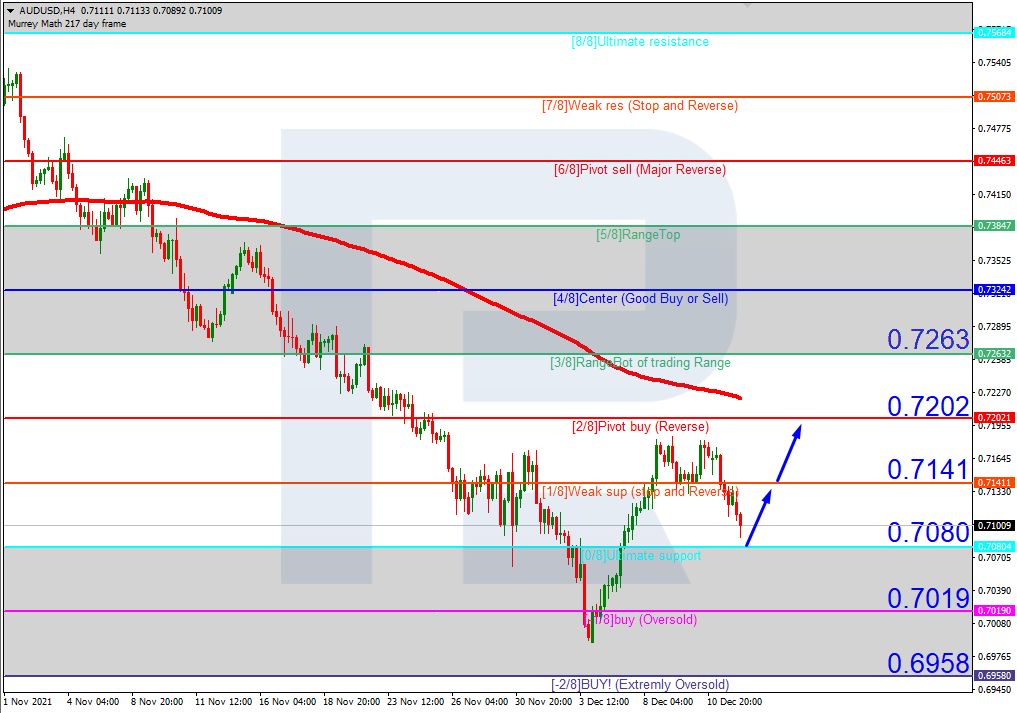
In the H4 chart, AUDUSD is approaching the “oversold area” again. In this case, the price is expected to test 0/8, rebound from it, and then grow to reach the resistance at 2/8. However, this scenario may no longer be valid if the price breaks the support at 0/8 to the downside. After that, the instrument may continue falling towards -1/8.

AUDUSDH4
Risk Warning: the result of previous trading operations do not guarantee the same results in the future

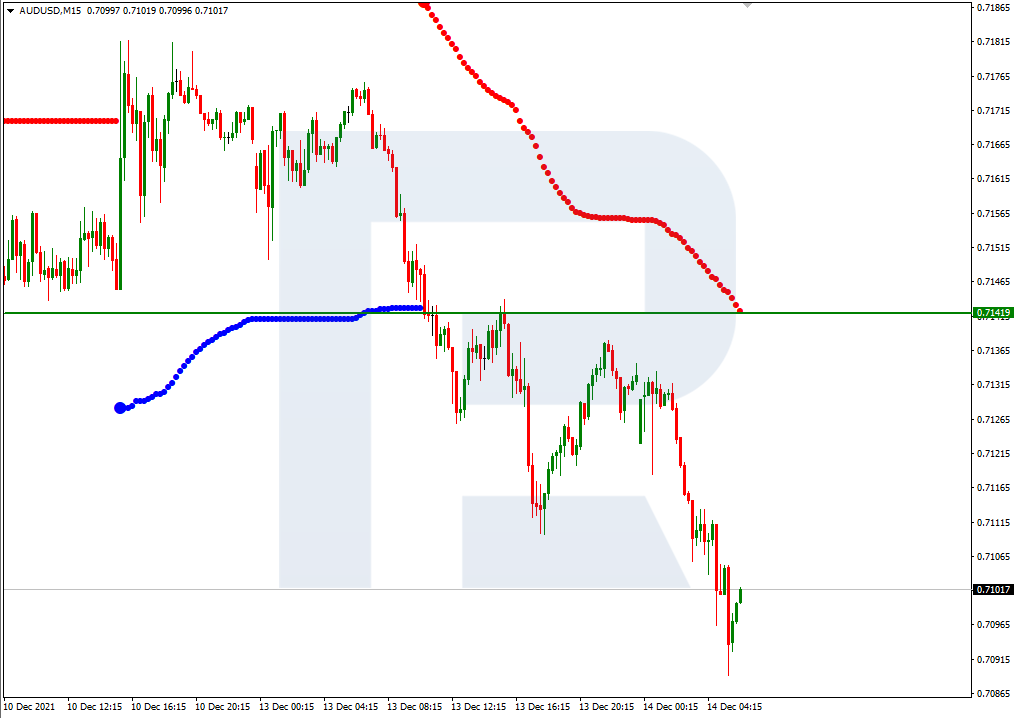
As we can see in the M15 chart, the upside line of the VoltyChannel indicator is pretty far away from the price, that’s why the pair may resume trading upwards only after rebounding from 0/8 in the H4 chart.

AUDUSD_M15
Risk Warning: the result of previous trading operations do not guarantee the same results in the future

NZDUSD, “New Zealand Dollar vs US Dollar”

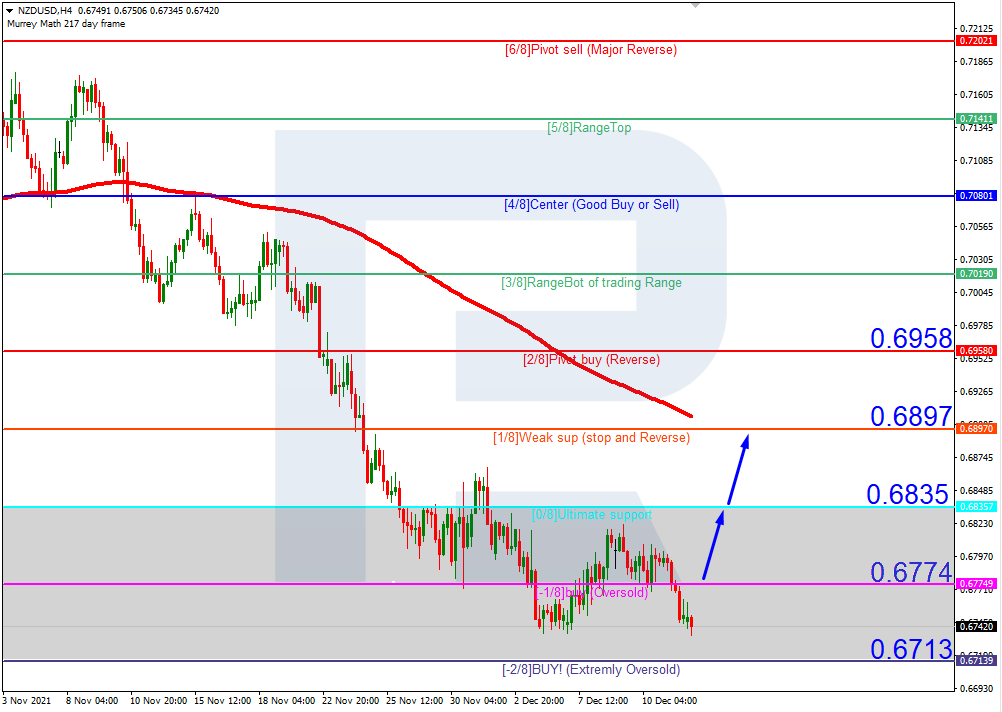
As we can see in the H4 chart, NZDUSD is trading within the “oversold area”. In this case, the price is expected to test -1/8, break it, and then continue growing to reach the resistance at 1/8. Since the current trend is descending, this upward movement should be considered as a correction. However, this scenario may no longer be valid if the price breaks the support at -2/8 to the downside. After that, the lines in the chart will be redrawn, thus helping us to define new downside targets.

NZDUSD_H4
Risk Warning: the result of previous trading operations do not guarantee the same results in the future

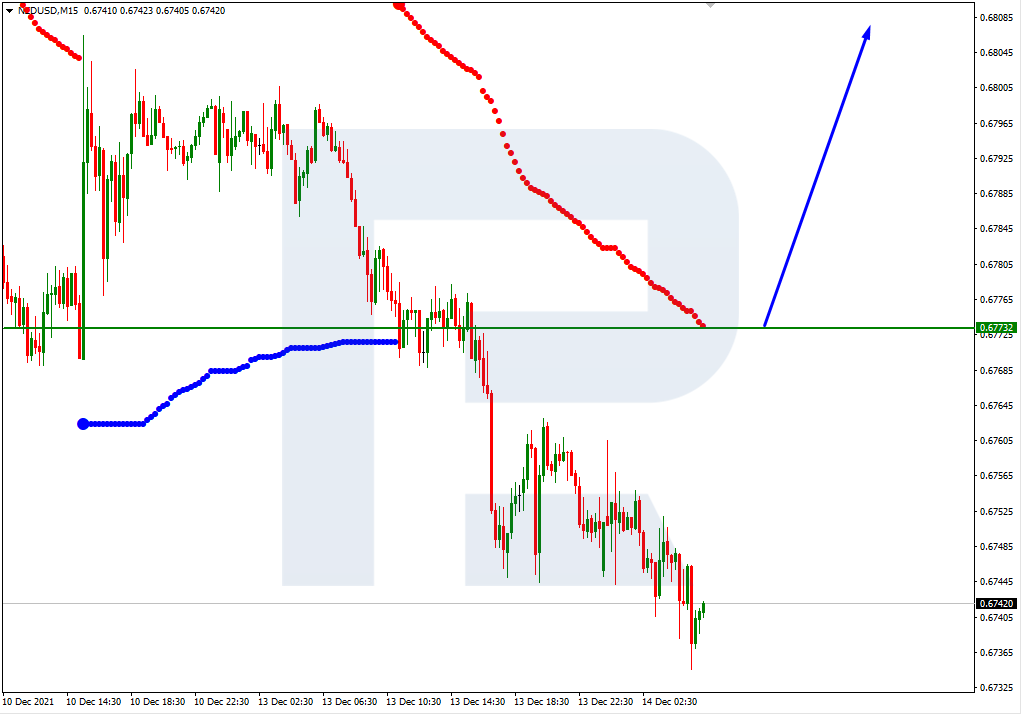
In the M15 chart, the pair may break the upside line of the VoltyChannel indicator and, as a result, continue its growth.

NZDUSD_M15

Article By RoboForex.com

Attention!
Forecasts presented in this section only reflect the author’s private opinion and should not be considered as guidance for trading. RoboForex LP bears no responsibility for trading results based on trading recommendations described in these analytical reviews.

Forex Technical Analysis & Forecast 14.12.2021

Article By RoboForex.com

EURUSD, “Euro vs US Dollar”

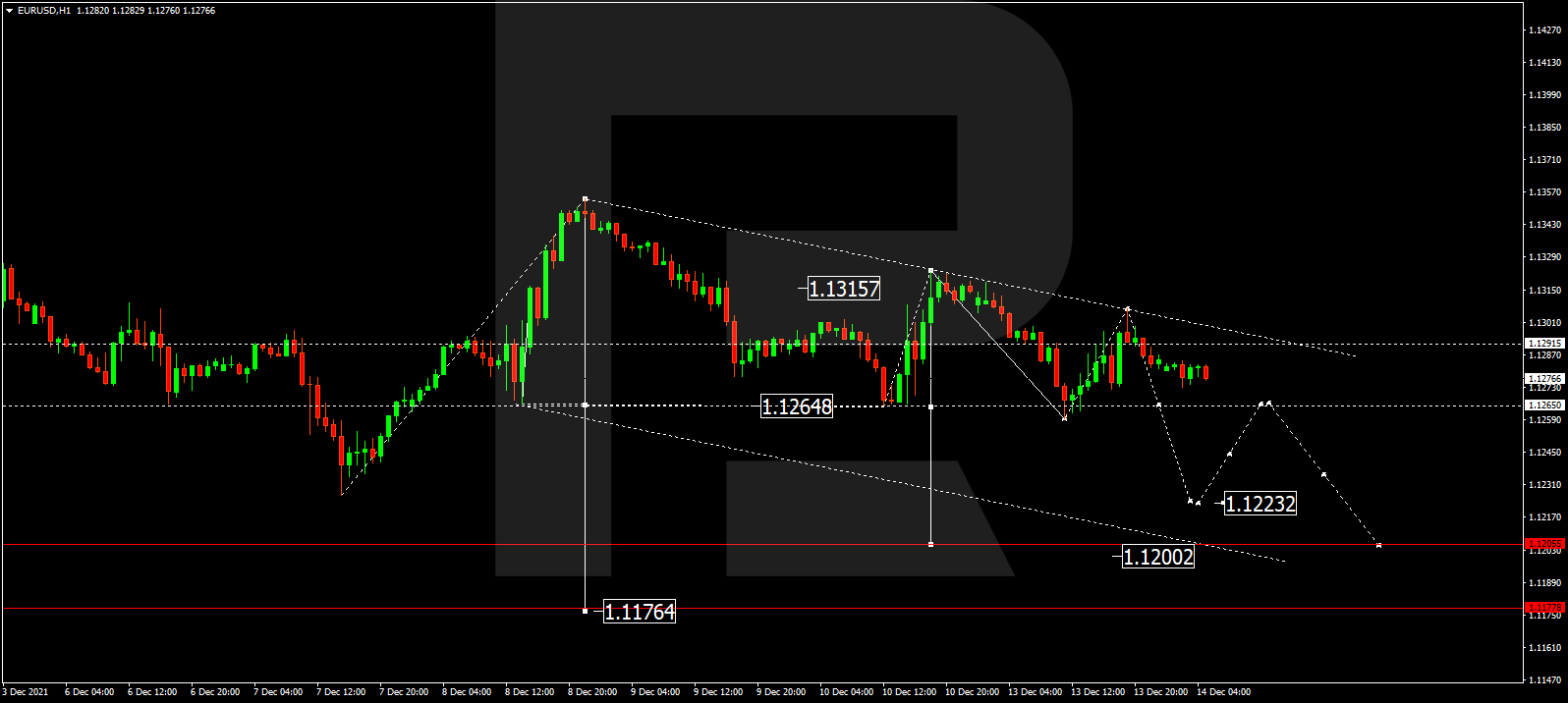
EURUSD has completed another descending along with the correction towards 1.1290; right now, it is falling to reach 1.1200 and may later start a new correction to return to 1.1290. After that, the instrument may resume trading downwards with the target at 1.1180.

EURUSD
Risk Warning: the result of previous trading operations do not guarantee the same results in the future

GBPUSD, “Great Britain Pound vs US Dollar”

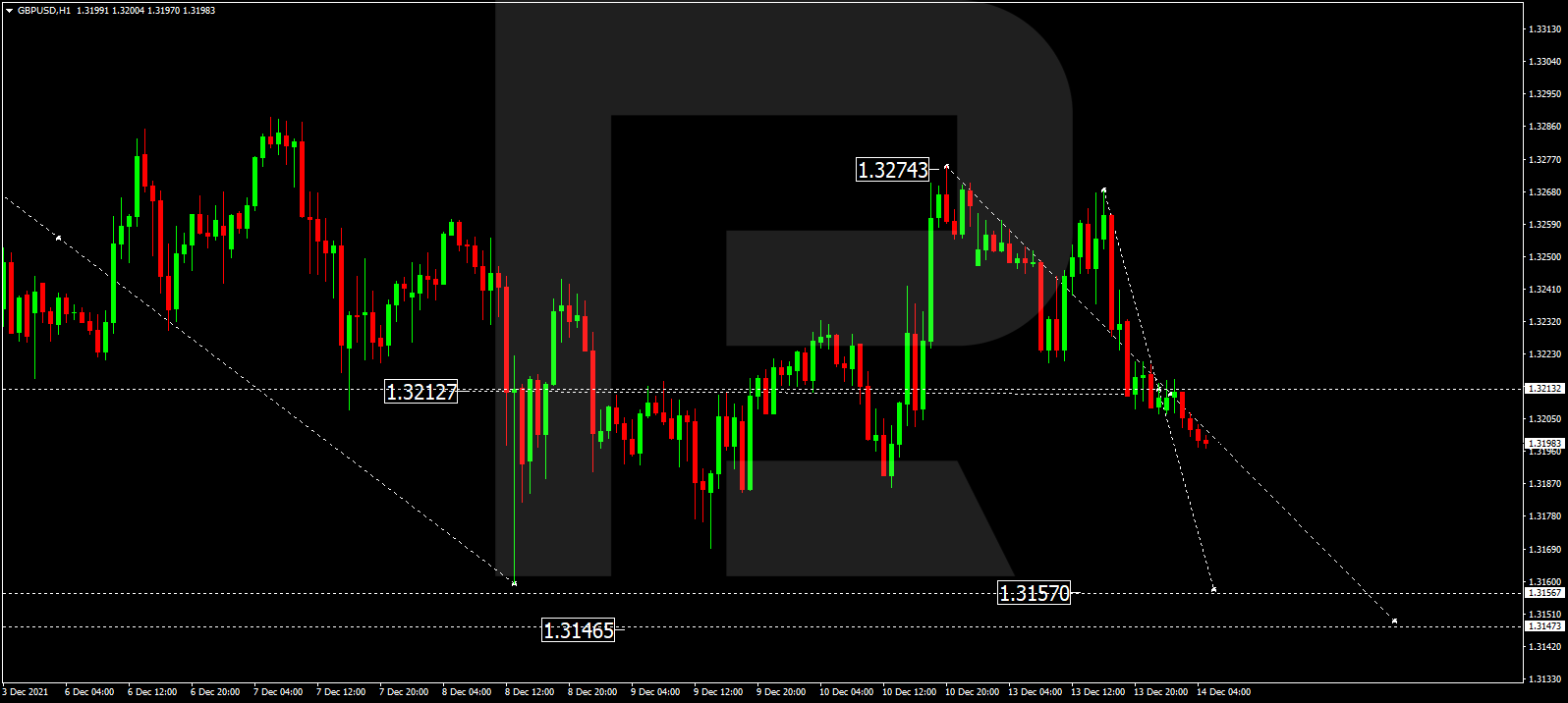
After finishing the descending structure at 1.3212 and forming a new consolidation range around this level, GBPUSD has broken it to the downside. Today, the pair may continue falling towards 1.3160. Later, the market may correct to return to 1.3212 and then resume trading downwards with the target at 1.3150.

GBPUSD
Risk Warning: the result of previous trading operations do not guarantee the same results in the future

USDRUB, “US Dollar vs Russian Ruble”

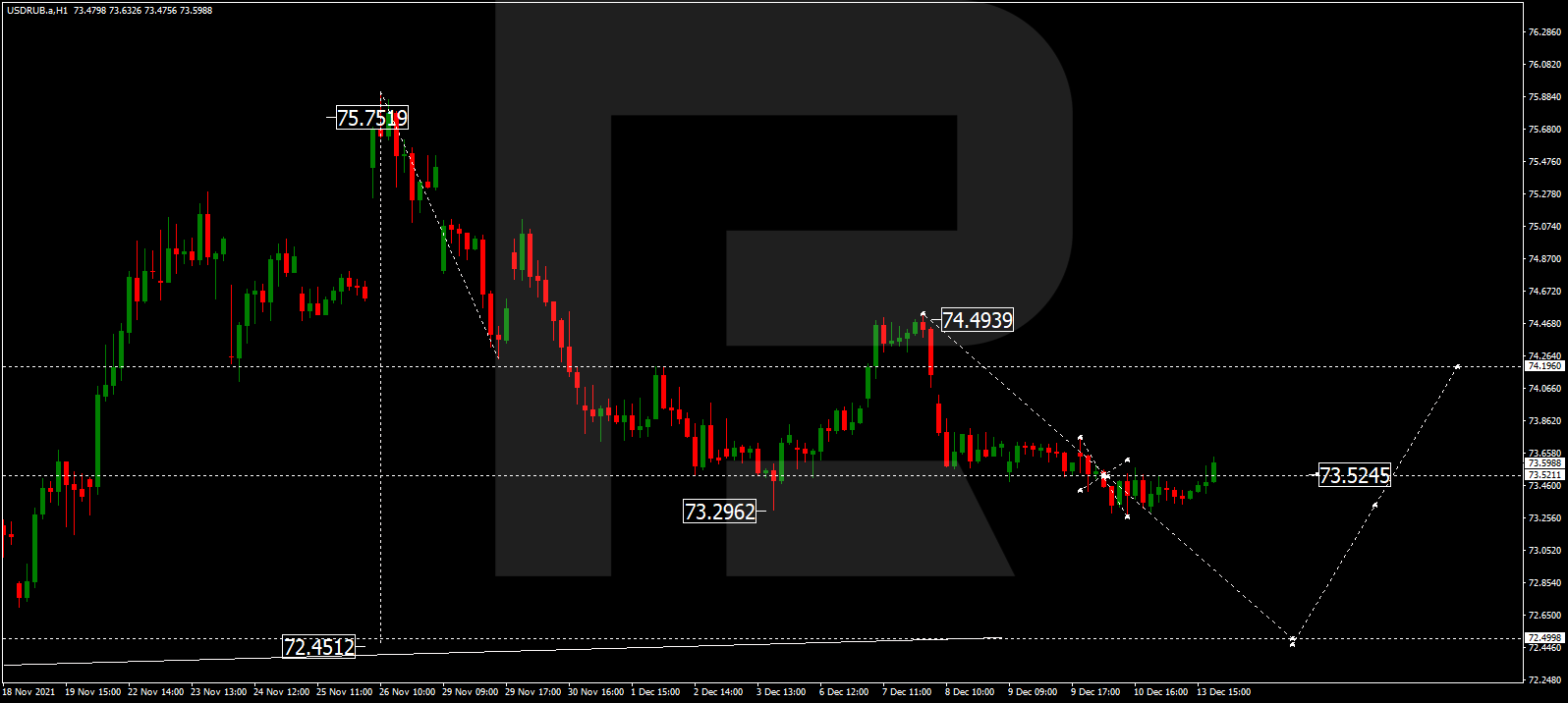
USDRUB is consolidating around 73.50 without any specific direction. Possibly, the pair may break the range to the downside and resume falling with the first target at 72.50. Later, the instrument may start a new correction towards 74.20.

USDRUB
Risk Warning: the result of previous trading operations do not guarantee the same results in the future

USDJPY, “US Dollar vs Japanese Yen”

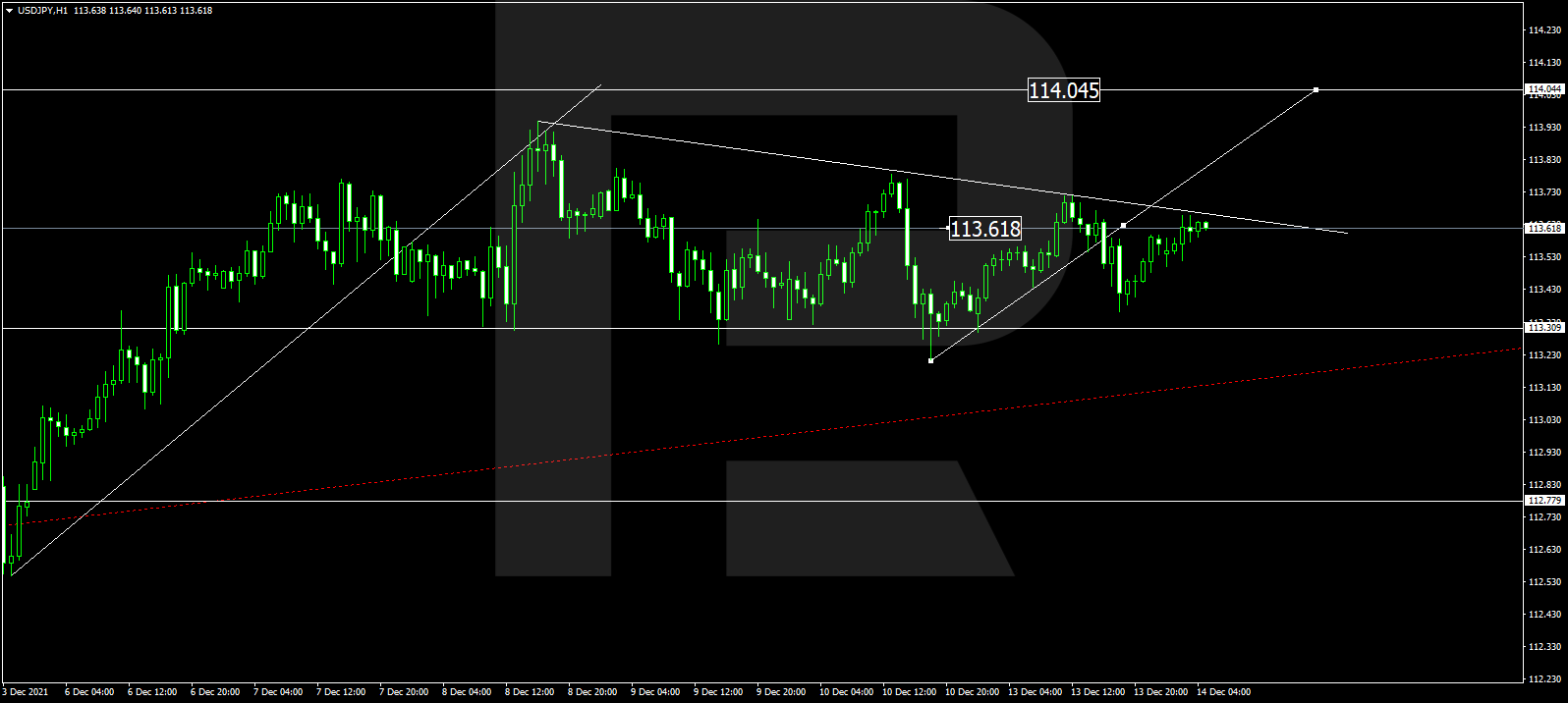
USDJPY is forming a narrow consolidation range around 113.55. Possibly, today the pair may break the range to the upside and reach 114.04. Later, the market may start a new correction to return to 113.55 and then resume trading upwards with the target at 114.55.

USDJPY
Risk Warning: the result of previous trading operations do not guarantee the same results in the future

USDCHF, “US Dollar vs Swiss Franc”

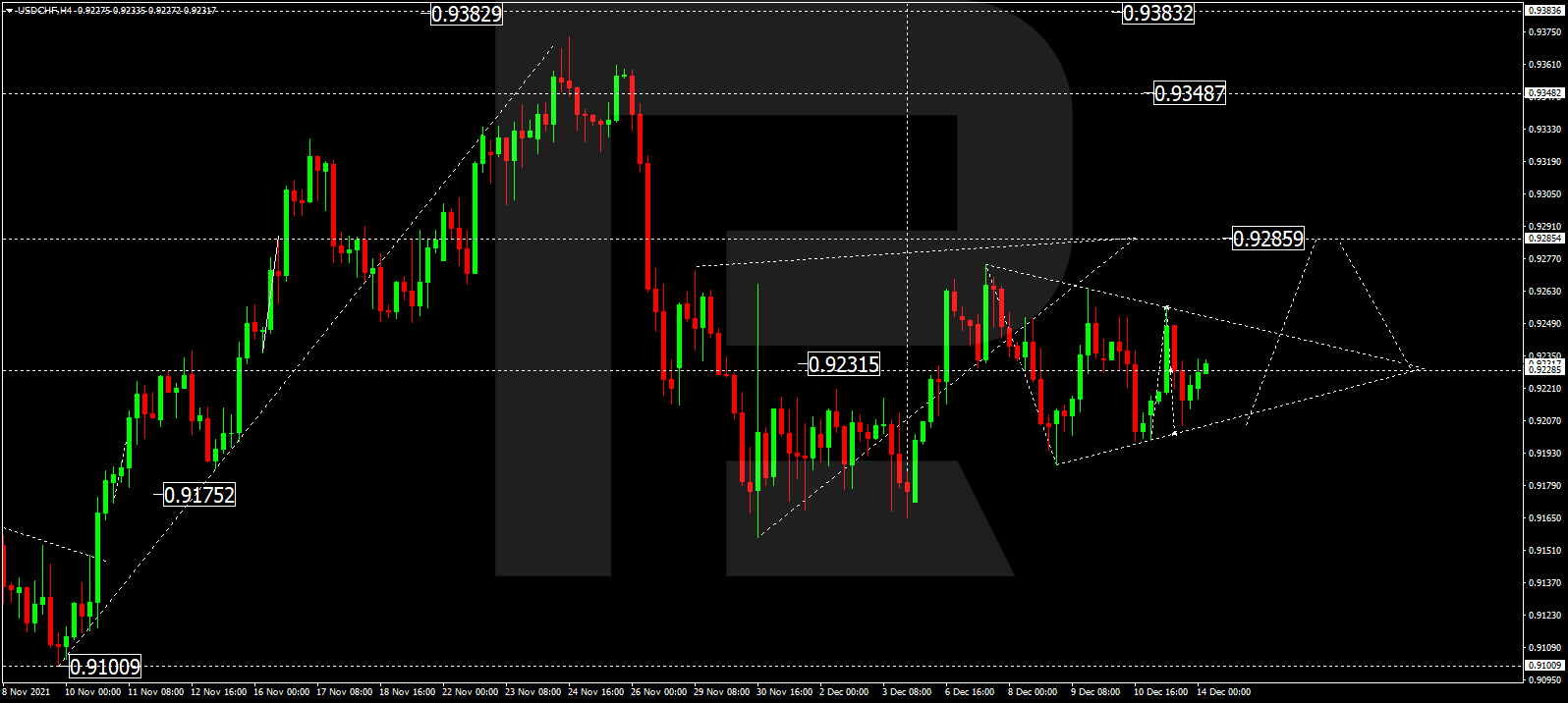
USDCHF is consolidating around 0.9229 without any particular direction. Possibly, the pair may break this range to the upside and resume growing towards 0.9286. Later, the market may correct to reach 0.9233 and then form one more ascending structure with the target at 0.9350.

USDCHF
Risk Warning: the result of previous trading operations do not guarantee the same results in the future

AUDUSD, “Australian Dollar vs US Dollar”

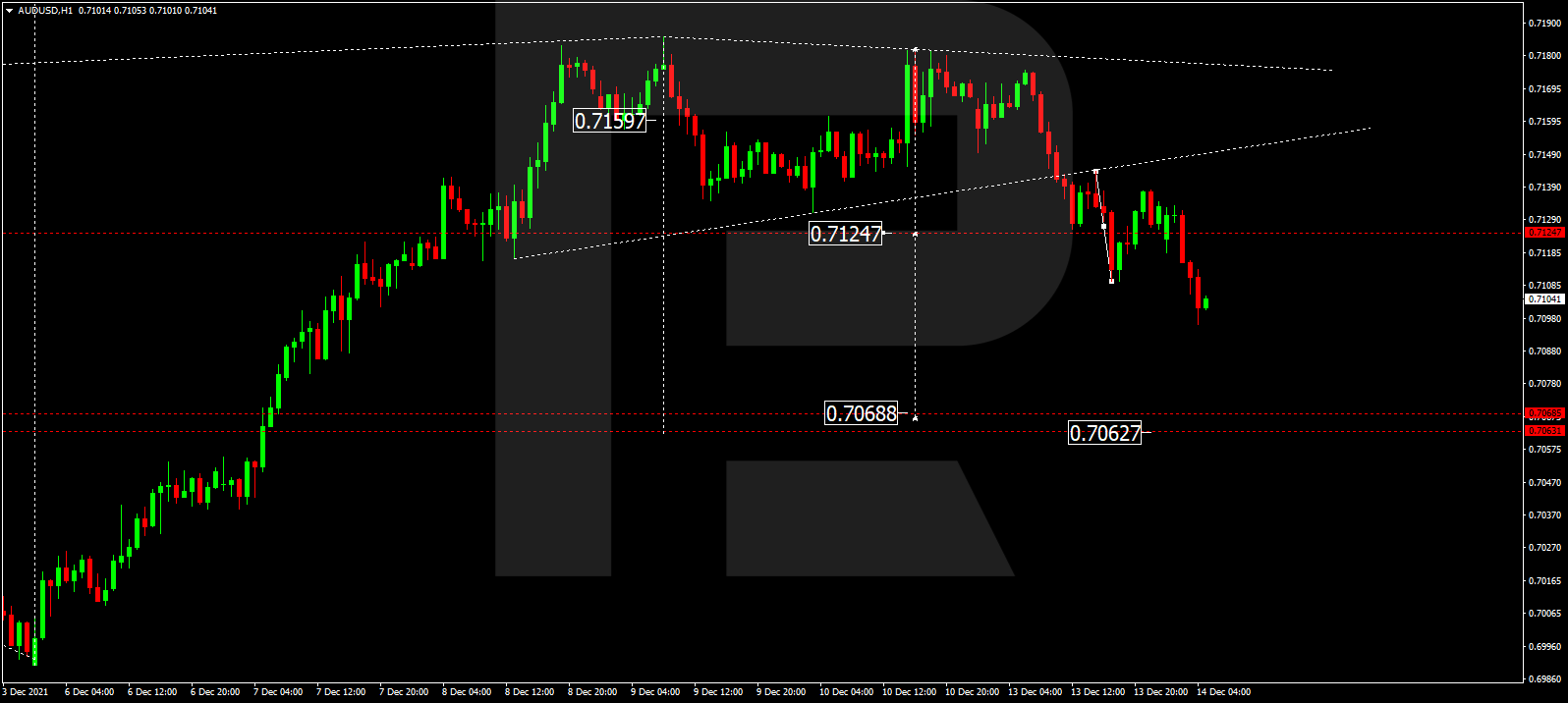
AUDUSD has broken 0.7125; right now, it is still falling towards 0.7068. Later, the market may correct to return to 0.7125 and then resume trading downwards with the target at 0.7060.

AUDUSD
Risk Warning: the result of previous trading operations do not guarantee the same results in the future

BRENT

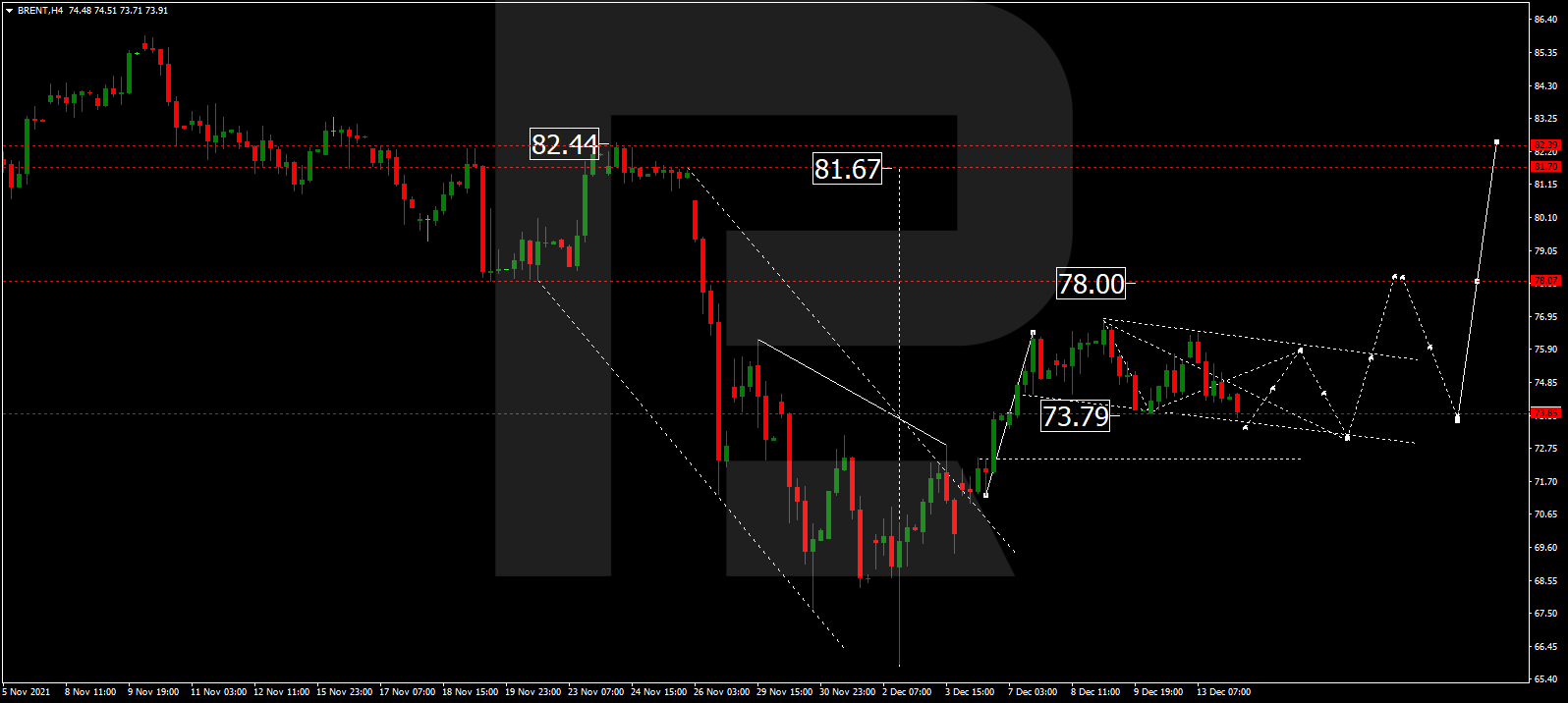
Brent is consolidating around 74.94. Possibly, today the asset may expand the range down to 73.00. Later, the market may form one more ascending structure with the short-term target at 78.00.

BRENT
Risk Warning: the result of previous trading operations do not guarantee the same results in the future

XAUUSD, “Gold vs US Dollar”

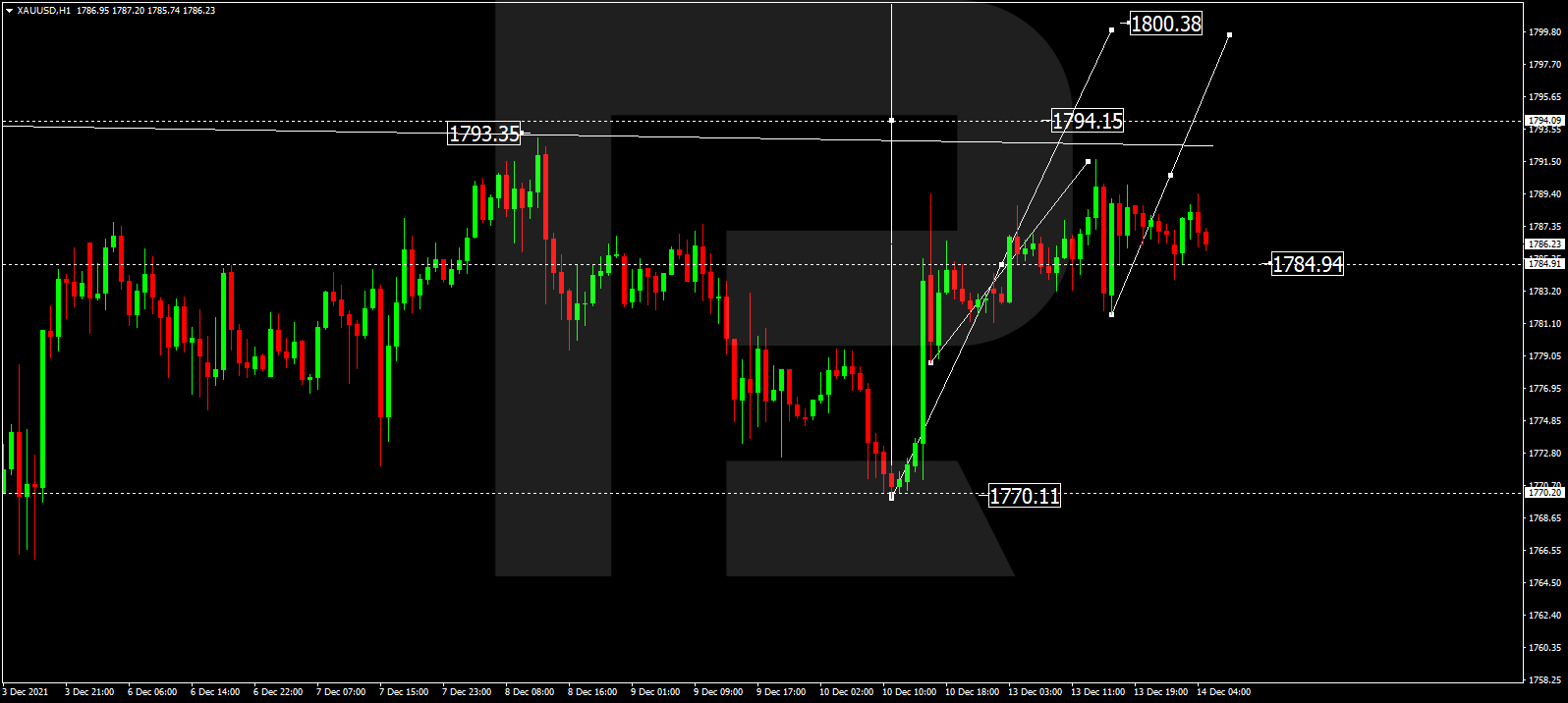
Gold is consolidating around 1784.94. Possibly, the metal may expand the range down to 1779.00 and then resume growing with the target at 1800.00.

GOLD
Risk Warning: the result of previous trading operations do not guarantee the same results in the future

S&P 500

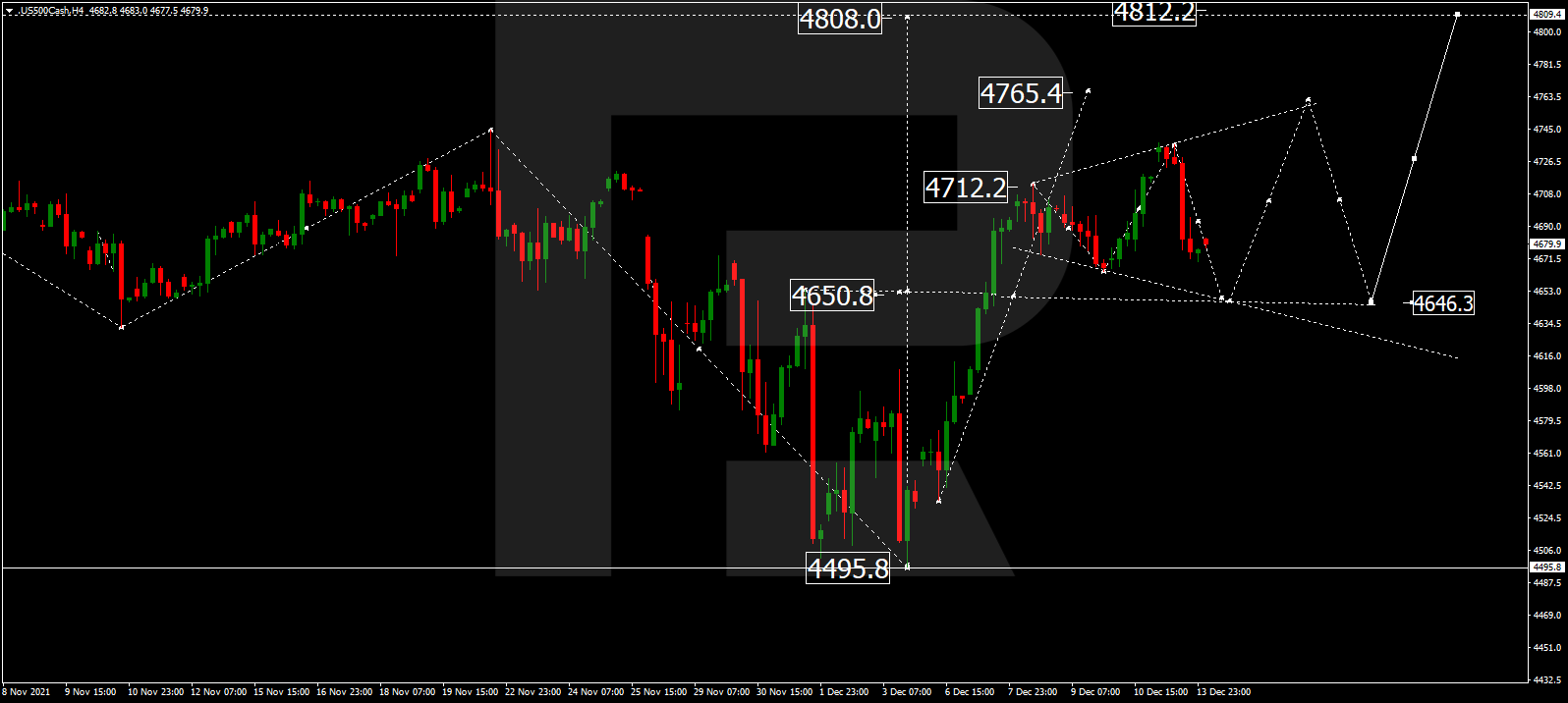
The S&P index is consolidating around 4690.0. Possibly, today the asset may fall towards 4646.4 and then resume growing to reach 4777.0. After that, the instrument may start another correction to return to 4646.0 and then form one more ascending wave with the target at 4800.0.

S&P 500

Article By RoboForex.com

Attention!
Forecasts presented in this section only reflect the author’s private opinion and should not be considered as guidance for trading. RoboForex LP bears no responsibility for trading results based on trading recommendations described in these analytical reviews.

The Analytical Overview of the Main Currency Pairs on 2021.12.14

by JustForex

The EUR/USD currency pair

Technical indicators of the currency pair:
  • Prev Open: 1.1308
  • Prev Close: 1.1285
  • % chg. over the last day: -0.20%

The energy crisis is getting worse in Europe. Since early October, European natural gas futures increased to their highest level amid growing concern that Russia’s Nord Stream 2 pipeline will not work this winter. Analysts believe that amid rising inflation expectations, the ECB needs to tighten monetary policy as soon as possible, or consumer prices will be even higher.

Trading recommendations
  • Support levels: 1.1265, 1.1230, 1.1168
  • Resistance levels: 1.1360, 1.1436, 1.1535, 1.1613, 1.1667, 1.1717

From a technical point of view, the EUR/USD on the hour time frame is still bearish. The price is trading in the corridor, and there is a narrowing of liquidity in the form of a pattern “triangle.” The MACD indicator has become inactive. Under such market conditions, traders should consider sell positions from the priority change level of 1.1360 or if the price shows a true breakdown of the triangle pattern. Buy trades can be considered if the price shows a true breakout of the triangle pattern.

Alternative scenario: if the price breaks out through the 1.1360 resistance level and fixes above, the mid-term uptrend will likely resume.

EUR/USD
News feed for 2021.12.14:
  • – Eurozone Industrial Production (m/m) at 12:00 (GMT+2);
  • – US Producer Price Index (m/m) at 15:30 (GMT+2).

The GBP/USD currency pair

Technical indicators of the currency pair:
  • Prev Open: 1.3256
  • Prev Close: 1.3211
  • % chg. over the last day: -0.34%

British Prime Minister Boris Johnson announced Monday that at least one person has died in the United Kingdom after contracting a variant of the Omicron coronavirus. Last week, Johnson asked the public to work from home and wear masks on public transport if possible. On Sunday, he urged the country to make booster vaccinations to prevent overburdening health services, warning that a new wave of cases was approaching. The UK will report today on the state of the labor market.

Trading recommendations
  • Support levels: 1.3188
  • Resistance levels: 1.3252, 1.3321, 1.3434, 1.3507, 1.3575, 1.3685

On the hourly time frame, the trend on GBP/USD is bearish. The MACD indicator is negative again. Under such market conditions, traders should consider sell positions from the resistance levels around the moving average. Buy trades should be considered from the support levels on lower time frames, but only with additional confirmation.

Alternative scenario: if the price breaks out through the 1.3321 resistance level and consolidates above, the bullish scenario will likely resume.

GBP/USD
News feed for 2021.12.14:
  • – UK Average Earnings Index (m/m) at 09:00 (GMT+2);
  • – UK Average Earnings Index (m/m) at 09:00 (GMT+2);
  • – UK Unemployment Rate (m/m) at 09:00 (GMT+2).

The USD/JPY currency pair

Technical indicators of the currency pair:
  • Prev Open: 113.27
  • Prev Close: 113.57
  • % chg. over the last day: +0.26%

The situation with the Japanese Yen remains the same. Against the background of a large-scale economic stimulation by the central bank of Japan, the fundamental outlook for the yen looks gloomy. Meetings of the central banks of the USA and Japan will take place this week. If the Fed accelerates the reduction of the QE program and the Bank of Japan leaves its monetary policy unchanged, which is highly likely, USD/JPY quotes may return to a bullish trend.

Trading recommendations
  • Support levels: 113.30, 112.62, 112.30
  • Resistance levels: 113.94, 114.17, 115.15, 115.50

The global trend on the USD/JPY currency pair is bearish. The price is trading in a wide corridor. The pressure of buyers is increasing, and the price is approaching the priority change level. Under such market conditions, traders can look for sell positions from the priority change level but with additional confirmation. Buy positions should be considered from the lower border of the corridor, but with additional confirmation in the form of a buyers’ initiative or after the price breakout of the priority change level.

Alternative scenario: if the price rises above 114.17, the uptrend will likely resume.

USD/JPY
News feed for 2021.12.14:
  • – Japan Industrial Production (m/m) at 06:30 (GMT+2).

The USD/CAD currency pair

Technical indicators of the currency pair:
  • Prev Open: 1.2724
  • Prev Close: 1.2808
  • % chg. over the last day: +0.66%

Crude oil prices fell on news of the first death in the UK from the Omicron strain and WHO warnings that Omicron poses a “very high” global risk because it is not vaccine-proof. The Canadian dollar is a commodity currency, so amid a decline in oil prices and a rise in the dollar index, USD/CAD quotes increased.

Trading recommendations
  • Support levels: 1.2776, 1.2721, 1.2677, 1.2638
  • Resistance levels: 1.2828

From a technical point of view, the trend of the USD/CAD currency pair has changed to bullish. Yesterday, the price broke through and consolidated above the priority change level. The MACD indicator became positive, and there are no signs of a reversal. Under such market conditions, it is better to look for buy deals from the support levels near the moving average. It is best to look for sell deals from the resistance levels of higher time frames.

Alternative scenario: if the price breaks down through the 1.2677 support level and fixes below, the downtrend will likely resume.

USD/CAD
There is no news feed for today.

by JustForex


This article reflects a personal opinion and should not be interpreted as an investment advice, and/or offer, and/or a persistent request for carrying out financial transactions, and/or a guarantee, and/or a forecast of future events.

Intraday Market Analysis – USD In Brief Consolidation

By Orbex

USDCHF looks for breakout

USDCHF

The US dollar consolidates ahead of the Federal Reserve meeting.

The pair is grinding for support above 0.9160 after it gave up most gains from the November rally. Overall sentiment remains positive as long as price action stays above the daily support at 0.9100. The current consolidation is a sign of accumulation from the long side.

A close above the immediate resistance at 0.9270 would propel the greenback to the previous peak at 0.9360. On the downside, between 0.9160 and 0.9195 lies an important demand zone.

US 30 to test previous peak

DJIA

The Dow Jones 30 inches lower as investors look ahead to Fed’s aggressive tapering.

By lifting offers around the psychological level of 36000, a major resistance on the daily chart, the bulls may have turned sentiment around. As the index falls back in search of support, the RSI’s oversold situation may catch buyers’ attention.

A break above 36350 may resume the uptrend. Otherwise, 35620 is the closest support where buyers could jump in for fear of missing out. Further down, 34800 would be a second line of defense.

GER 40 seeks support

GER 40

The Dax 40 treads water as major central banks are set to update their policies.

An initial surge above 15500 has prompted the bears to cover. Then the index found support at the 38.2% (15550) Fibonacci retracement level while an oversold RSI attracted buying interest. And that is a sign of underlying strength in the rebound.

A bullish MA cross indicates an acceleration on the upside. A break above 15840 may send the price to the all-time high at 16300. In case of a deeper pullback, 15300 is a critical level to keep the rebound relevant.


Orbex-LogoArticle by Orbex

Orbex is a fully licensed broker that was established in 2011. Founded with a mission to serve its traders responsibly and provides traders with access to the world’s largest and most liquid financial markets. www.orbex.com

First Omicron strain death increased uncertainty about further global economic recovery

by JustForex

The US stock markets fell sharply on Monday amid new concerns about the economic impact of the Omicron Covid-19 variant and in anticipation of a monetary policy update from the US Federal Reserve. Analysts are increasingly inclined to believe that the Fed will accelerate QE program cuts at its meeting tomorrow. The Dow Jones Industrial Average (US30) decreased by 0.89% yesterday, the S&P 500 (US500) fell by 0.9%, and the Nasdaq Composite (US100) lost 1.4%.

Meanwhile, the World Health Organization said Monday that Omicron poses a “very high” global risk because there is evidence that it is not vaccine-resistant.

European Union foreign ministers said Monday that any Russian aggression against Ukraine would have serious economic and political consequences for Russia.

European stock markets also closed lower yesterday. The British FTSE 100 (UK100) decreased by 0.8%, the German DAX (DE30) decreased by 0.01%, the French CAC 40 FR40 lost 0.7%, and the Spanish IBEX 35 (ES35) fell by 0.5%. Europe’s energy crisis is getting worse. European natural gas futures increased to their highest level since early October amid growing concern that Russia’s Nord Stream 2 pipeline will not work this winter. British Prime Minister Boris Johnson announced on Monday that at least one person had died in the United Kingdom after being infected with a variant of the Omicron coronavirus and warned that a new wave of cases was approaching. The Bank of England is likely to keep monetary policy unchanged at its meeting this week as the latest GDP data was disappointing, and in addition, authorities are imposing new restrictions to curb the spread of COVID-19. Germany has seen an acceleration in the pace of wholesale price growth. Analysts believe that amid rising inflation expectations, the ECB needs to tighten monetary policy in the region as soon as possible; otherwise, consumer prices will become even higher.

Crude oil prices, which increased about 8% last week, fell because of news of the first death in Britain from the Omicron variant and WHO warnings of a new global risk. With restrictions imposed in Europe and Asia, it is clear that Omicron will seriously hamper oil demand, especially before the holidays. Nevertheless, OPEC+ raised its global oil demand forecast for the first quarter of 2022.

Asian stock indices are falling because of new Omicron risks. Hong Kong’s Hang Seng Index (HK50) decreased by 1.36%, also driven by lingering concerns about the health of China’s real estate sector. Japan’s Nikkei 225 stock index (JP225) decreased by 0.73%, and Australia’s ASX 200 index (AU200) remained unchanged.

On Tuesday, the Asian Development Bank lowered its growth forecast for developing Asia this year to reflect risks and uncertainties stemming from a variant of the Omicron coronavirus. The Bank of Japan offered to bring a total of $97 billion to the markets by buying temporary government bonds over two days to counter rising short-term interest rates.

Main market quotes:

S&P 500 (F) (US500) 4,668.97 −43.05 (−0.91%)

Dow Jones (US30) 35,650.95 −320.04 (−0.89%)

DAX (DE40) 15,621.72 −1.59 (−0.01%)

FTSE 100 (UK100) 7,231.44 −60.34 (−0.83%)

USD Index 96.35 +0.26 (+0.27%)

Important events for today:
  • – Japan Industrial Production (m/m) at 06:30 (GMT+2);
  • – UK Average Earnings Index (m/m) at 09:00 (GMT+2);
  • – UK Claimant Count Change (m/m) at 09:00 (GMT+2);
  • – UK Unemployment Rate (m/m) at 09:00 (GMT+2);
  • – Eurozone Industrial Production (m/m) at 12:00 (GMT+2);
  • – US Producer Price Index (m/m) at 15:30 (GMT+2);
  • – New Zealand RBNZ Gov Orr’s Speech at 21:00 (GMT+2).

by JustForex


This article reflects a personal opinion and should not be interpreted as an investment advice, and/or offer, and/or a persistent request for carrying out financial transactions, and/or a guarantee, and/or a forecast of future events.

Caution prevails as investors eye Omicron and Fed meeting

By Lukman Otunuga Senior Research Analyst, ForexTime

An air of caution gripped Asian markets on Tuesday as growing unease over the spread of the Omicron variant drained risk sentiment. The dollar held its ground despite US Treasury yields slipping in the previous session, while gold prices remained range bound, waiting for a fresh directional catalyst.

European equity futures are mixed this morning with investors clearly on edge ahead of a week dominated by central bank decisions and key economic reports. Any decisions made on monetary policies will set the tone for the rest of 2021 while heavily impacting risk markets.

With the Bank of England, Bank of Japan, European Central Bank, and Swiss National Bank all expected to keep monetary policy unchanged, all eyes will be on the FOMC meeting on Wednesday. Expectations remain elevated over the Fed announcing a faster pace of tapering in the face of rising inflation and using more hawkish language than has been seen in previous statements. If this does become reality, it could weigh on stock markets while boosting the dollar.

Investors eye Fed decision

The Federal Reserve’s December policy meeting remains the main event for markets this week. With US inflation surging to its highest level in nearly 40 years, equity markets still volatile and the Omicron variant fueling economic uncertainty, it will be interesting to see what policymakers at the Fed have to say.

Back in November, the FOMC made an official announcement on tapering. Fast-forward to today and the central bank is set to announce an acceleration of tapering from January 2022, with consensus expecting the pace to double in speed, in order to counter inflation. This has boosted expectations over the Fed hiking interest rates sooner than expected with traders currently pricing in a 73% probability of at least one rate hike by early May 2022 and fully pricing a 25-basis point hike by mid-June 2022.

Much attention will be directed towards the Fed’s new dot plot and updated economic forecasts. Back in September, policymakers were forecasting one rate hike in 2022, followed by three in 2023 and another three in 2024. The new dot plot is expected to show the majority of Fed members now expect two rate hikes in 2022.

Currency spotlight – AUDUSD

The Australian dollar stumbled into Tuesday’s session under pressure as virus cases surged in the country’s most populous state. Daily Covid-19 infections jumped to their highest level in more than two months, fueling concerns over the economic outlook. However, there was some good news as reports showed that business confidence remained well above its long-term average, despite dropping sharply to 12 in November from a downwardly revised 20 in October.

Taking a look at the technical picture, the AUDUSD remains under pressure on the daily charts. Sustained weakness below 0.7180 could encourage a decline towards 0.7080 and 0.7000, respectively.

Commodity spotlight – Gold

Gold could enter the holiday season with a bang due to key central bank meetings, economic data and developments revolving around the Omicron variant. Prices have been trapped within a range over the past few weeks with bulls and bears waiting for a fresh directional catalyst.

This may come in the form of the Federal Reserve meeting or other economic events that could impact risk sentiment. Should the Fed step up the gear on tapering, this is likely to punish gold prices as the dollar appreciates, yields rise and rate hike expectations jump. In the meantime, support can be found at $1765 and resistance around the psychological $1800 level.

Disclaimer: The content in this article comprises personal opinions and should not be construed as containing personal and/or other investment advice and/or an offer of and/or solicitation for any transactions in financial instruments and/or a guarantee and/or prediction of future performance. ForexTime (FXTM), its affiliates, agents, directors, officers or employees do not guarantee the accuracy, validity, timeliness or completeness, of any information or data made available and assume no liability as to any loss arising from any investment based on the same.


Forex-Time-LogoArticle by ForexTime

ForexTime Ltd (FXTM) is an award winning international online forex broker regulated by CySEC 185/12 www.forextime.com

Trade Of The Week: Will Central Bank Combo Trigger EURUSD Breakout?

Lukman Otunuga

By Lukman Otunuga Senior Research Analyst, ForexTime

Watch this space as the EURUSD could enter the holiday season with a bang!

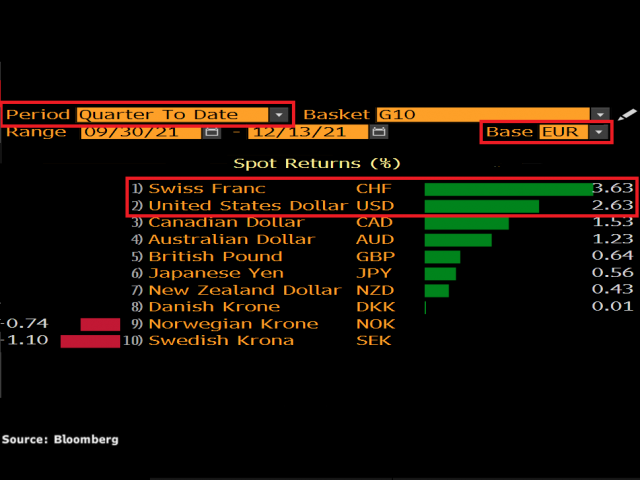
Later in the week, investors will be served a central bank combo featuring the Federal Reserve (Fed) and European Central Bank (ECB). Expectations remain elevated over the policy divergence between the Fed and ECB dragging the EURUSD lower this month. But before we discuss what to expect from these two central bank heavyweights, it is worth keeping in mind that the euro has depreciated against most G10 currencies since the start of December. Things also look rough for the currency quarter-to-date, especially against the Swiss franc and dollar.

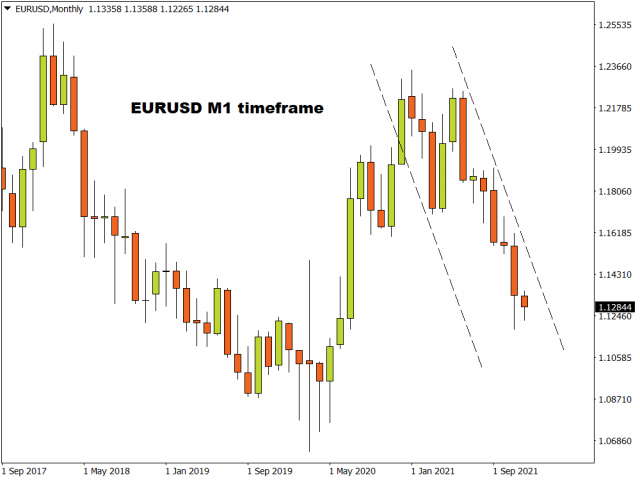
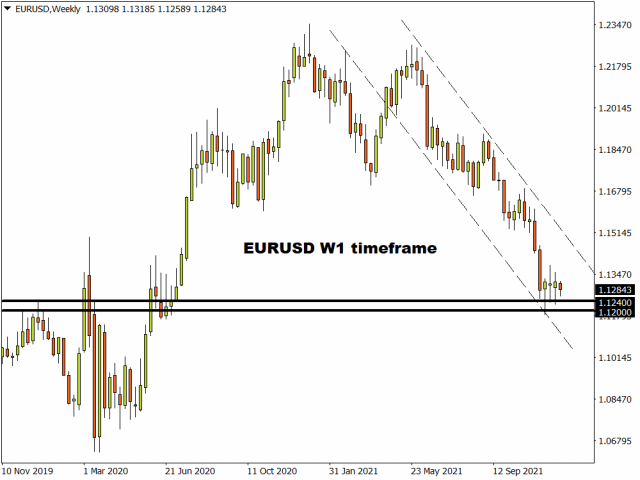
On the monthly charts, bears remain in the driving seat as there have been consistently lower lows and lower highs.

The same can be said on the weekly timeframe, but strong support can be found around 1.1240 – 1.1200.

While the policy meetings between the two banks could trigger volatility, the question remains whether this will be enough to push the EURUSD out of its current range?

What to expect from the Fed?

Grab your popcorn and find a comfy seat as the Federal Reserve’s December policy meeting could be entertaining. With US inflation increasing at the fastest pace in nearly 40 years, equity markets on a rollercoaster ride, and the Omicron variant fuelling uncertainty – everyone wants to know what steps the Fed will take.

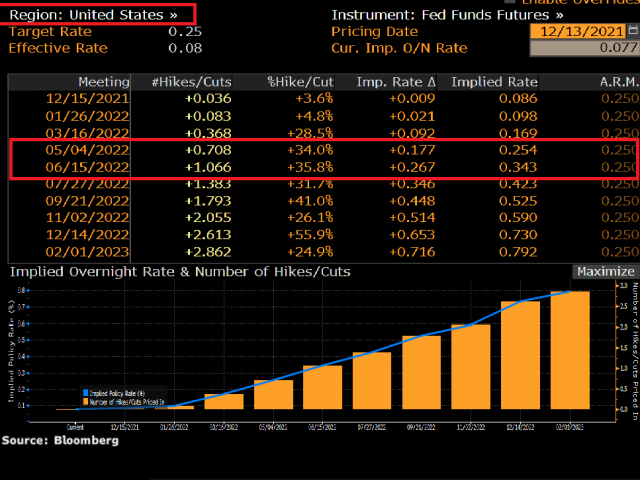
After ‘talking above talking about tapering’ for many months, the Federal Reserve made an official announcement in November on tapering their bond purchases in their quantitative easing program. Fast-forward today, the Fed is expected to announce an acceleration of tapering from January 2022 to counter inflation. This move will also allow US interest rates to be raised sooner than expected. In fact, traders are currently pricing in a 71% probability of at least one rate hike by early May 2022 and fully pricing a 25-basis point hike by mid-June 2022.

Nevertheless, it may be wise to keep a close eye on the Fed’s new dot plot and updated economic forecasts. Remember back in September, policymakers pencilled the odds of one rate hike in 2022, followed by three in 2023 and another three in 2024. The new dot plot is expected to show the majority of Fed members now expect two rate hikes in 2022. This could inject dollar bulls with renewed confidence against the euro and other G10 currencies.

How about the ECB meeting?

The ECB faces questions over its asset purchases as this meeting was expected to be something of a “big bang”.

Given how the fourth wave of Covid-19 is sweeping across Europe and the Omicron menace disrupting economic activity, the central bank is likely to strike a cautious note. Markets expect the ECB to confirm that the 1.85 trillion-euro Pandemic Emergency Purchase Programme (PEPP), launched in March 2020 will end in March 2022. It will be interesting to see whether the ECB still sees inflationary pressures as transitory, especially when considering how eurozone inflation is currently at a record high of 4.9%. One key question is how the ECB feels about Omicron and what this means for the economic outlook. Should the central bank maintain a highly accommodative stance with doves in the driving seat, this is likely to pressure the euro beyond this month.

EURUSD poised to break below 1.12?

The policy divergence between the Federal Reserve and European Central Bank remains an ongoing theme that continues to pressure the EURUSD.

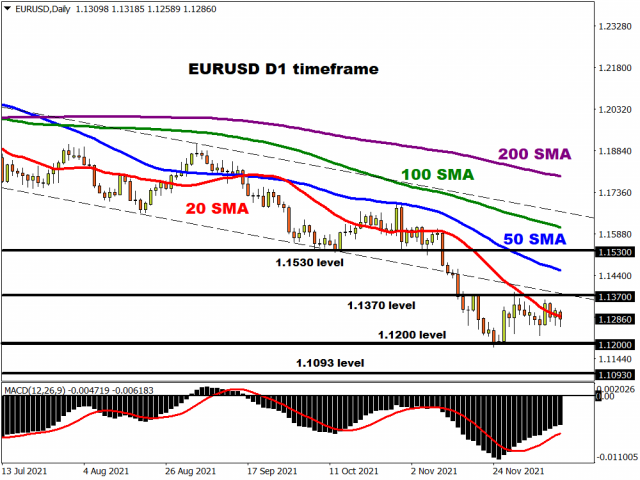
Taking a look at the technical picture, the EURUSD remains in a range on the daily charts with support at 1.1200 and resistance at 1.1370. With prices trading below the 200, 100, and 50-day Simple Moving Average, bears remain in a position of power. A breakout could be on the horizon with the central bank meetings acting as the fundamental catalyst for bulls or bears. Should prices secure a solid daily close below 1.1200, this could open the doors towards 1.0930. Alternatively, a breakout above 1.1370 may see prices challenge 1.1530.

Disclaimer: The content in this article comprises personal opinions and should not be construed as containing personal and/or other investment advice and/or an offer of and/or solicitation for any transactions in financial instruments and/or a guarantee and/or prediction of future performance. ForexTime (FXTM), its affiliates, agents, directors, officers or employees do not guarantee the accuracy, validity, timeliness or completeness, of any information or data made available and assume no liability as to any loss arising from any investment based on the same.


Forex-Time-LogoArticle by ForexTime

ForexTime Ltd (FXTM) is an award winning international online forex broker regulated by CySEC 185/12 www.forextime.com